
Table 1
Traditional vs alternative pedagogies in primary education.
| Aspect | Traditional pedagogy | Alternative pedagogy |
|---|---|---|
| Learning focus | Knowledge transmission | Experience-based knowledge construction |
| Role of the teacher | Authority figure, transmitter | Facilitator, guide |
| Student’s role | Passive recipient | Active participant |
| Evaluation method | Standardized testing | Formative, portfolio-based, self-assessment |
| Classroom organization | Rigid, frontal instruction | Flexible, centers or group-based |
| Parent involvement | Occasional, limited | Continuous, collaborative |
Source: Author’s contribution.
Table 2
Behavioral observations by category.
| Aspect | Observation |
|---|---|
| Active participation | Over 80% of the pupils engaged actively in all classes |
| Collaboration skills | Improved teamwork and mutual help noted in Classes A and C |
| Reduction in disruptive behavior | Disruptive behaviors reduced by 40% overall |
Source: Author’s contribution.
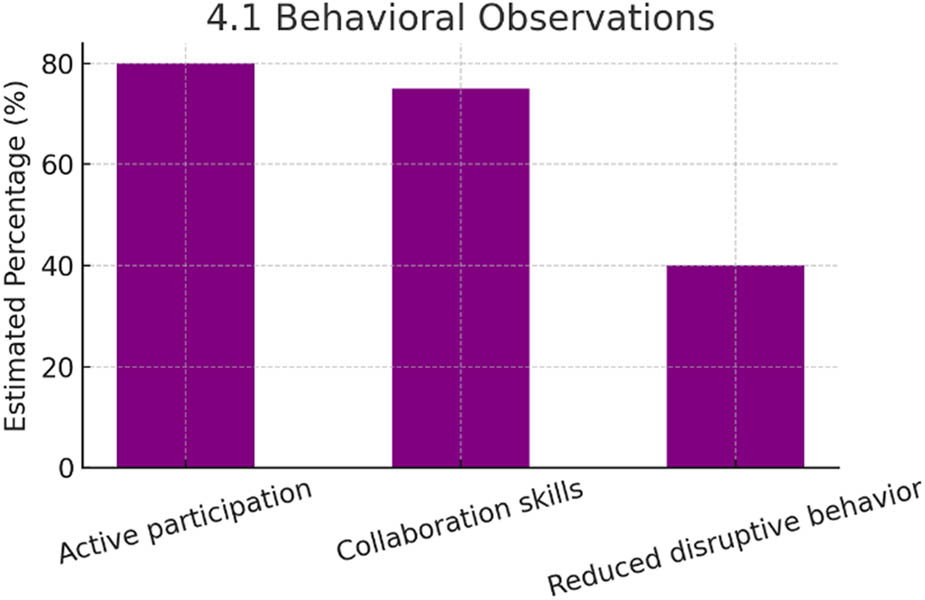
Figure 1
Behavioral observations.
Source: Author’s contribution.
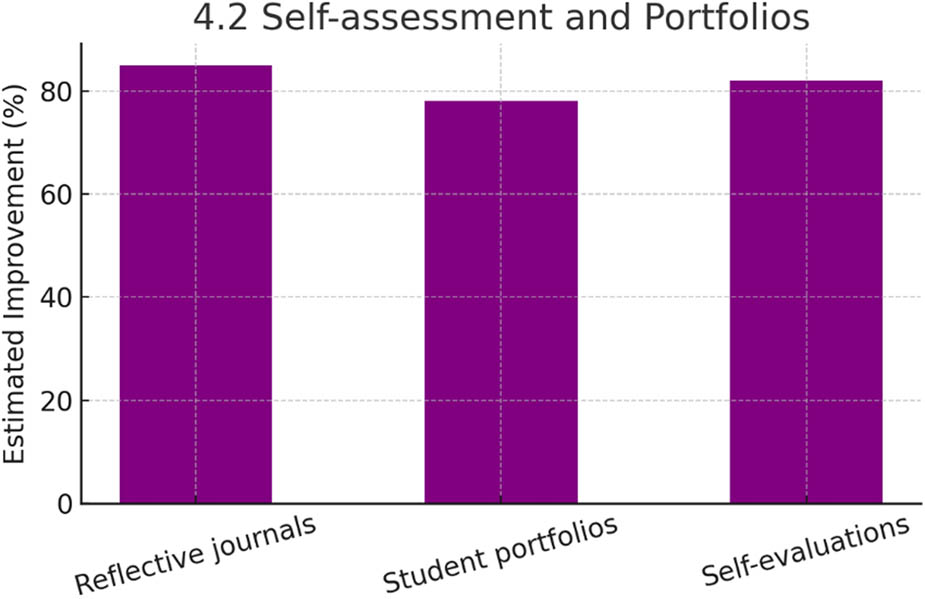
Figure 2
Self-assessment and portfolios.
Source: Author’s contribution.
Table 3
Progress indicators in self-assessment activities (estimated %).
| Aspect | Outcome |
|---|---|
| Reflective journals | Enhanced introspection and emotional expression |
| Student portfolios | Improved written expression, creativity, and thinking structure |
| Self-evaluations | Positive self-image, especially in Class C (Montessori) |
Source: Author’s contribution.
Table 4
Parental feedback.
| Feedback aspect | Percentage | Comment/observation |
|---|---|---|
| School enthusiasm | 89 | A visible increase in school enthusiasm |
| Autonomy at home | 74 | Higher levels of autonomy in completing school tasks at home |
| Parental engagement | 66 | Improved communication and more open relationship between school and family |
Source: Author’s contribution.
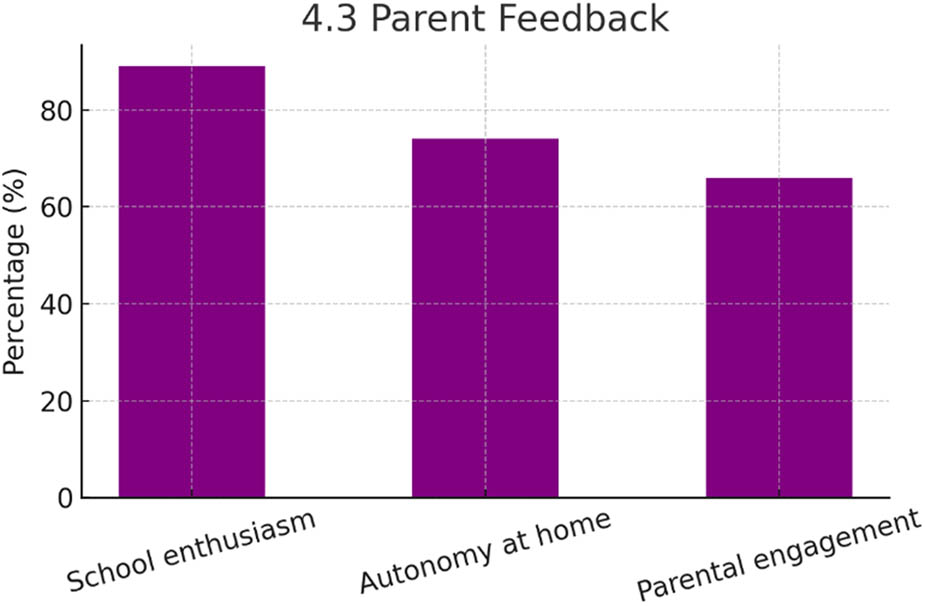
Figure 3
Parental feedback on student development.
Source: Author’s contribution.
Table 5
Limitations and challenges.
| Challenge | Comment |
|---|---|
| Extended preparation time | Teachers required more time for differentiated planning |
| Parental skepticism | Some parents resisted non-traditional approaches |
| Ongoing teacher training required | Training in alternative pedagogies is crucial for sustainable change |
Source: Author’s contribution.