Introduction
Helminths are parasitic worms affecting billions of people and animals worldwide, with the highest burden in tropical and subtropical regions. They are broadly classified into two major phyla: Nematoda (roundworms) and Platyhelminthes (flatworms), the latter including Cestoda (tapeworms) and Trematoda (flukes) (Milgroom, 2023). Among them, zoonotic helminths pose a major health and economic challenge because they can infect both humans and animals, often through complex life cycles involving intermediate hosts. Some species form larval cysts that cause chronic diseases requiring medical or surgical interventions. (Torgerson & Macpherson, 2011). Within the flatworm group, Taenia solium and Echinococcus granulosus cause cysticercosis and cystic echinococcosis (CE), respectively, while trematodes like Fasciola hepatica cause fasciolosis, a liver disease affecting humans and ruminants.
CE is a zoonotic parasitic infection caused by the larval stage of the tapeworm E. granulosus, sensu lato, (Taeniidae family) (Vuitton et al., 2020). It primarily affects humans and livestock in rural and pastoral regions, especially in tropical and subtropical areas. The World Health Organization (WHO) classifies CE as a neglected tropical disease (NTD) due to its chronic progression, socio-economic burden, and limited visibility in global health agendas (WHO, 2024; CDC, 2024).
High infection rates among dogs, coupled with ecological and socioeconomic factors, lead to extensive human exposure (Ghatee et al., 2020). CE affects an estimated one million people annually and remains endemic in several regions where livestock breeding is practiced including Mediterranean area, Eastern Africa, Central Asia, Western China and South America (Wen et al., 2019; WHO, 2021). The global burden includes 184,000 disability-adjusted life years (DALYs) lost annually, $ 764 million in human-related economic losses, and an estimated $3 billion in combined control costs (Tamarozzi et al., 2020; WHO, 2021). Inadequate surveillance and underreporting further obscure burden estimates. Despite its widespread distribution and impact, CE continues to be categorized as both a neglected tropical and, a neglected zoonotic disease (Ohiolei et al., 2020; Bosco et al., 2021).
The transmission cycle of E. granulosus, s.l. occurs between definitive hosts (dogs, and other canids) and intermediates hosts (IH), such as sheep, goats and cattle, thereby exposing human populations through environmental contamination or direct contact with infected animals (Agyare et al., 2023). Ingestion of pasture contaminated with parasite eggs, excreted by infected dogs, leads to infection in IH. The cycle completes when definitive hosts ingest cysts (metacestodes), present in the liver and lungs of infected animals, particularly sheep and goats. Humans may also become infected by accidentally ingesting parasite eggs from contaminated soil, water, or vegetables, rendering humans accidental intermediate hosts. Hydatid cysts typically develop in the liver and lungs, but may also occur the, abdominal cavity, brain or other organs causing a wide range of clinical symptoms depending on cysts size and location (Rinaldi et al., 2014; Romig et al., 2017).
Treatment commonly relies on benzimidazole-based drugs such as albendazole and mebendazole, which are effective against small, inactive cysts. For large or active cysts, surgery remains the mainstay of treatment (Hossein et al., 2022). However, surgery carries significant risks, including cyst rupture and secondary cyst formation. To prevent recurrence, scolicidal agents such as silver nitrate, hypertonic saline, and formalin are often applied intraoperatively (Shahnazi et al., 2014; Cheraghipour et al., 2024). While effective, these substances are associated with adverse effects, such as bile duct fibrosis, cirrhosis, and organ necrosis (Ya-Min et al., 2018). Moreover, the rising risk of drug resistance further challenges conventional therapies. These limitations highlight the urgent need for safer and more effective alternatives.
Medicinal plants have enormous potential to provide new drugs and are a source of natural compounds that could be effective against E. granulosus, s.l.
Another zoonotic cestode of major importance is T. solium, the pork tapeworm which causes cysticercosis in humans. This disease is caused by the larval stage (cysticerci) and represents a serious public health problem and economic burdens, particularly in developing countries. The infection can affect, subcutaneous tissue, eyes and, most critically, the central nervous system (CNS). When the CNS is involved, the condition is termed neurocysticercosis (NCC), the most prevalent parasitic infection of the CNS worldwide (García et al., 2020; Bustos et al., 2021).
Neurocysticercosis is the most severe form of cysticercosis and a leading cause of acquired epilepsy in endemic regions (Ndimubanzi et al., 2010; Butala et al., 2021). T. solium is endemic in areas with poor sanitation, free-range pig farming, and inadequate meat inspection, particularly in Latin America, sub-Saharan Africa, and parts of Southeast Asia (WHO, 2020). According to WHO, NCC remains the most prevalent preventable cause of epilepsy on a global scale, accounting for up to 56 % of epilepsy cases in endemic zones. The condition may also be fatal, particularly due to complications arising surgical removal of brain cysts (Bustos et al., 2023).
The parasite requires two vertebrate hosts to complete its life cycle: pigs as intermediate hosts and humans as both definitive and accidental intermediate hosts. Human cysticercosis occurs through accidental ingestion of eggs excreted in the feces of individuals with taeniasis, emphasizing the significant role of hygiene and environmental contamination in disease transmission (Okello & Thomas, 2017; Garcia et al., 2020). Pigs acquire infection by ingesting contaminated feed, water, or soil, perpetuating the cycle within endemic communities.
The diagnosis of taeniasis and cysticercosis generally combines serological assays, neuroimaging (MRI and CT scans), and stool examinations. Although taeniasis is typically treated with praziquantel or niclosamide, their high-cost limits access in low-resource settings (De Coster et al., 2018; CDC, 2024). In contrast, management of NCC is more complex and requires a combination of antiparasitic and anti-inflammatory drugs, or surgical intervention, depending on cyst location and stage taeniasis (White et al., 2018; Pineda & White, 2022). Treatment challenges include adverse drug effects, prolonged regimens, limited healthcare access, and emerging resistance. Control strategies such as mass drug administration, improved sanitation, health education and pig vaccination face significant challenges in endemic areas (Okello & Thomas, 2017). Given these limitations, there is an increasing interest in alternative approaches, including plant-based remedies.
While E. granulosus, s.l. and T. solium are the most important cyst-forming cestodes of zoonotic concern, another major helminthic infection is fasciolosis, caused by the liver flukes F. hepatica. Fasciolosis, a zoonotic trematode infection, is an emerging global public health concern (Mia et al., 2021), affecting an estimated 2.4 million people worldwide, with over 180 million at risk, particularly in rural, livestock-dependent communities across Asia, Africa, and South America (WHO, 2020). The disease also causes substantial economic losses exceeding $3 billion annually, primarily due to reduced milk and meat production from declining ruminant populations (Elelu & Eisler, 2018; Nyagura et al., 2022). Although classified by the WHO as a neglected tropical disease, Fasciolosis is increasingly recognized as an emerging parasitic infection with rising prevalence in multiple countries (WHO, 2021).
This foodborne zoonosis disease is caused by two liver fluke species: Fasciola hepatica, predominant in subtropical areas, and F. gigantica, found mainly in tropical regions. Mixed infections occur in parts of Africa where both species coexist (WOAH, 2022). Their life cycle involves freshwater snails, as intermediate hosts and herbivorous mammals (goats, cattle and sheep) as definitive hosts. Humans can become accidental hosts by ingesting contaminated water or aquatic plants carrying metacercariae (Mas-Coma et al., 2018). Once ingested, larvae migrate to the liver, and develop into adult flukes that can persist for years, causing hepatic damage and other clinical symptoms (Gabrashanska et al., 2016; Zhang et al., 2021).
Treatment relies primarily on triclabendazole (TCBZ), which is effective against both adult and immature flukes, and albendazole (ABZ), which is limited to adult stages (Okeke et al., 2023; Herrera-Torres et al., 2025). However, increasing resistance threatens the long-term effectiveness of these drugs (Caravedo & Miguel, 2020). Diagnosis is frequently delayed due to nonspecific symptoms and limited availability of advanced tests (serology, PCR) in endemic regions (Pınarlık et al., 2023). These therapeutic and diagnostic challenges underscore the urgent need for alternative control strategies. Given these therapeutic limitations and the rising global prevalence of fasciolosis, alternative control measures are urgently needed. Plant-derived anthelmintic agents offer a promising avenue for safer and more sustainable management of liver fluke infections.
Africa is renowned for its rich botanical diversity, which is reflected in the wide variety of medicinal plants used by traditional healers and communities across the continent. These plants play a central role in African traditional medicine, particularly for the treatment of parasitic diseases such as helminth infections. In rural areas, where access to conventional healthcare is limited, plant-based remedies remain the most affordable and accessible therapeutic option. Deeply rooted in indigenous knowledge and cultural practices, they have been instrumental in reducing the burden of parasitic infections and safeguarding community health (James et al., 2018; Dinat et al., 2023).
This ethnopharmacological heritage has sparked growing interest within the scientific community in the antiparasitic potential of African flora, particularly as an alternative source of protoscolicidal agents (Yones et al., 2011; Benmarce et al., 2024a). In addition to E. granulosus,s.l., several studies have highlighted the efficacy of traditional African medicinal plants against T. solium and F. hepatica offering promising leads for the development of novel anti-cysticercal and anti-fasciolicidal compounds (Kabululu & Boa., 2021; Zulqarnain et al., 2024), These plant-based therapies may help overcome major challenges such as drug resistance, toxicity, and limited access to treatment in endemic regions. However, despite this growing body of research, significant gaps remain in the literature regarding the specificity of helminth targets and the geographical origin of the plant species investigated. Most existing reviews generalize the anthelmintic potential of medicinal plants without distinguishing between the parasitic taxa affected, thereby limiting insights into species-specific pharmacological activity. Furthermore, although African flora is rich in ethnopharmacological applications, it remains underrepresented in comparative analyses and global databases of antiparasitic natural products. In this context, we conducted this scoping review to map and analyze the ethnobotanical and pharmacological evidence on African medicinal plants targeting three zoonotic helminths: E. granulosus, T. solium, both known for their cyst-forming larval stages, and F. hepatica, which primarily affects the hepatobiliary system in its adult form.
This scoping review highlights the contributions of African scientists to the ethnobotanical identification and validation of effective agents derived from African medicinal plants against zoonotic helminths, focusing particularly on E. granulosus, T. solium and F. hepatica. Furthermore, it summarizes recent progress in discovering promising plant-based compounds, serving as a reference and source of motivation for researchers seeking to develop affordable, effective alternatives for managing neglected tropical diseases.
Material and Method
This research adheres to the methodological framework of a scoping review, as originally outlined by Arksey and O’Malley (2005) and subsequently refined by the Joanna Briggs Institute (JBI) guidelines (Peters et al., 2020). This approach was selected to comprehensively map the extent, nature, and characteristics of the available evidence, while also identifying gaps in the literature to guide future research. The aim is to systematically map the existing scientific evidence concerning African medicinal plants with anthelmintic properties that target specific zoonotic parasites known to form cysts, such as E. granulosus, s.l. and T. solium as well as F. hepatica, based on ethnobotanical, and pharmacological studies. To ensure transparency, reproducibility and methodological rigor, the review adhered to the PRISMA-ScR (Preferred Reporting Items for Systematic Reviews and Meta-Analyses extension for Scoping Reviews) guidelines (Tricco et al., 2018).
Identifying the research questions
We addressed the overarching research question, “Which African medicinal plants have documented anthelmintic activity against zoonotic parasites such as E. granulosus s.l., T. solium, and F. hepatica”? The review included all primary research on this topic in our defined geographical area: Africa. Specifically, we addressed the following sub-questions: (1) Which African plant species have been investigated? (2) What types of studies (in vitro or in vivo) have been conducted? (3) Which plant parts, extraction methods and concentrations were used? (4) What are the major phytochemical constituents that have been identified, and what mechanisms of action have been proposed? (5) Which African countries have contributed to this research? We conducted a comprehensive literature search to identify all relevant studies that could help answer these questions and map the existing scientific evidence in this area.
Search strategy
A systematic search was conducted of the following databases to identify relevant literature on the use of African medicinal plants as anthelmintic agents: African Journals Online (AJOL), PubMed, Scopus, Web of Science, and Google Scholar. The search included All English language studies published between 2005 and May 2025. The search strategy employed Boolean operators and subject-specific keywords, including “African medicinal plants” as well as the names of African countries, “ethnobotanical”, “anthelmintic activity”, “natural compounds”, and parasite specific terms such as “Echinococcus granulosus”, “Taenia solium”, and “Fasciola hepatica”, with MeSH terms applied where appropriate. Grey literature was explored through Google Scholar, and the reference lists of randomly selected articles were manually searched using a “snowball” technique to identify any further sources missed in the initial search until saturation was reached. Filters were applied to focus on ethnobotanical and pharmacological studies featuring bioactive plant compounds, and a PRISMA flow diagram was used to document the selection process and ensure transparency.
A supplementary search of African ethnobotanical literature was conducted to identify medicinal plants traditionally used against general helminth infections in humans or animals. Only studies meeting strict inclusion criteria, such as field-based ethnobotanical surveys and documented uses related to helminth parasites were included. Although not species-specific, this additional data aimed to highlight traditional knowledge that could inform future research on potential anthelmintic plant candidates.
Study selection
Publications identified through the search strategy were imported into the Zotero reference management software. Duplicate entries were automatically detected and verified manually to ensure they were removed accurately. Study screening was conducted in two stages: first, titles and abstracts were assessed; then, full texts were evaluated according to predefined eligibility criteria. The snowballing technique was also applied by manually reviewing the reference lists of included articles to identify further relevant studies. The entire selection process was documented using a PRISMA-ScR flow diagram.
Inclusion criteria
We included original, peer-reviewed research articles reporting ethnobotanical surveys, in vitro and/or in vivo experiments, and/or pharmacological screening procedures evaluating African medicinal plants or plant-derived products as potential anthelmintic agents. Only studies explicitly reporting anthelmintic properties or related therapeutic potential were retained, focusing on zoonotic cyst-forming helminths and liver fluke. This approach ensured that our review included research that validates the relevance of medicinal plant use in African contexts.
Exclusion criteria
Studies were excluded if they investigated on non-African plant species, presented only epidemiological data or ethnobotanical surveys without pharmacological evaluation, or if they did not assess anthelmintic activity against E. granulosus, T. solium, or F. hepatica. Further exclusions applied to articles lacking full-text access or were published in languages other than English.
Data extraction
Relevant information for each study was collected using a standardized charting form developed in Microsoft Excel, in line with the methodological recommendations of Arksey and O’Malley (2005) and Levac et al. (2010). Two independent reviewers systematically extracted data from each included article, resolving any discrepancies through discussion or, when necessary, consultation with a third reviewer. Extracted data included author name, year of publication, countries in which studies were conducted, study type (e.g. ethnobotanical survey, in vitro, in vivo or combination) and plant-related data (e.g. scientific name, plant part used, extraction method, solvent used and mode of administration). Parasitic targets were recorded, with a focus on E. granulosus, T. solium, and F. hepatica. The experimental models used were also recorded, including host species used in in vivo studies and the culture systems for in vitro assays, along with the dosage or concentration used. Pharmacological outcomes were also recorded, including antiparasitic activity, larval mortality, inhibition rates, exposure time and, where applicable, comparisons with reference drugs. When available, mechanisms of action, phytochemical constituents, and toxicity data were also extracted. Ethnopharmacological information, such as traditional uses, preparation methods, and routes of administration, was recorded to contextualize plant use. The botanical identities and African origins of the plants were verified using authoritative taxonomic resources, including the International Plant Names Index (IPNI) (www.ipni.org) and the Global Plants database on JSTOR (plants.jstor.org/plants/browse).
Synthesis
The included studies were compiled and summarized in a table to provide a comprehensive overview of the current evidence. Cestodicidal and trematodicidal activities, such as mortality rates, effective concentrations, and exposure durations, were compared across studies. A narrative synthesis was conducted to integrate quantitative trends with qualitative insights, highlighting potential mechanisms of action and common methodological limitations. Ethnobotanical insights were analyzed narratively to emphasize how traditional knowledge has guided experimental validation. This approach strengthens the evidence base and reveals knowledge gaps in research related to plant-based therapies for zoonotic helminths in Africa, including cyst-forming species and F. hepatica.
Results
The selection process for eligible studies is illustrated in Figure 1. A comprehensive search was conducted across five electronic databases: AJOL (n = 148), Google Scholar (n = 377), PubMed (n = 13), Scopus (n = 169), and Web of Science (n = 109). After removing duplicate records, 485 studies remained for screening. Following title and abstract review, 288 of these were excluded. The full texts of 197 articles were assessed for eligibility, and 78 studies ultimately, met the inclusion criteria and were incorporated into the scoping review. Of these, 31 were ethnobotanical studies and 47 were pharmacological studies, spanning the publication period from January 2005 to May 2025 (Fig. 1).
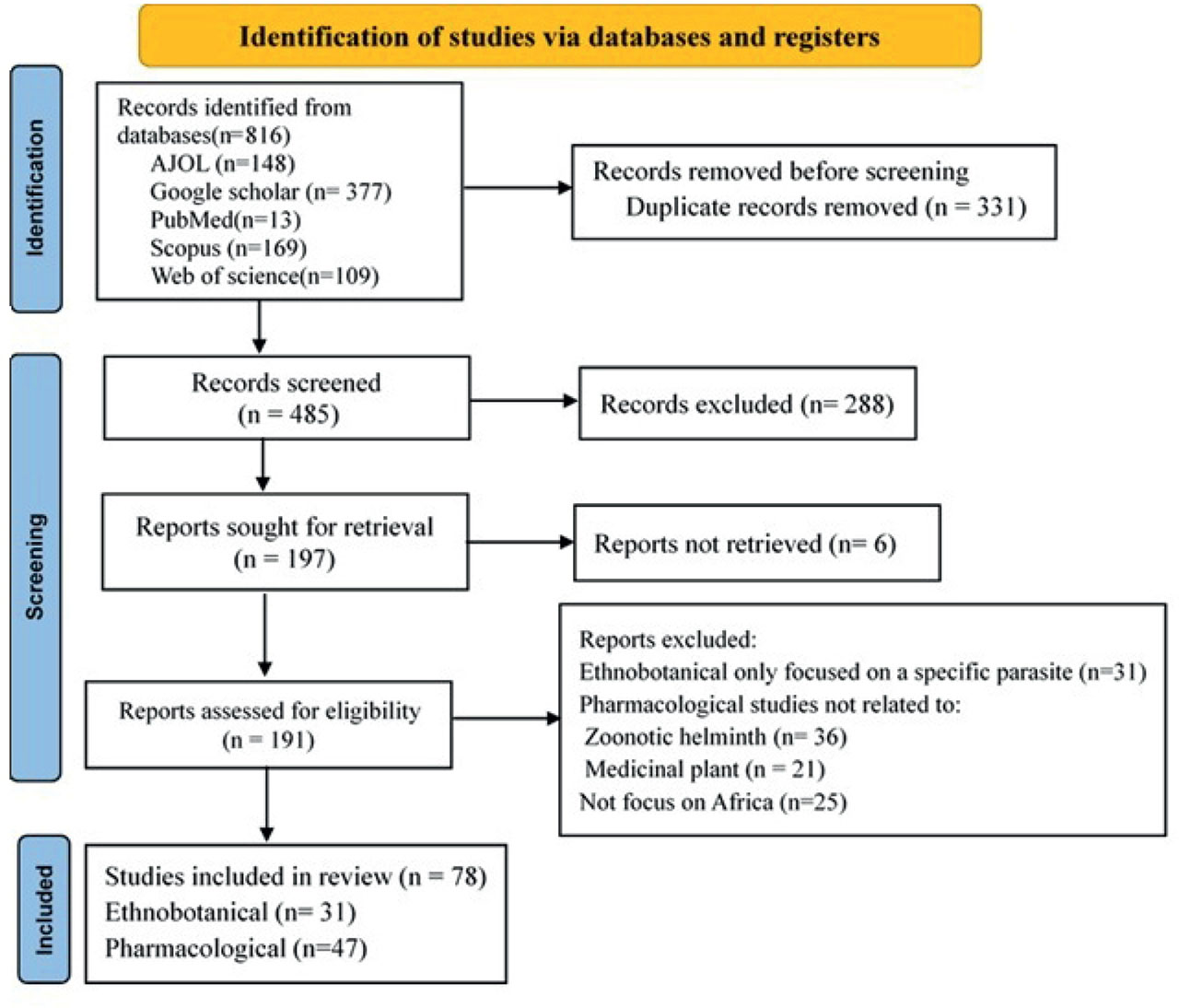
Fig. 1.
PRISMA-ScR flow diagram illustrating the study selection process. The diagram summarizes the number of records identified, screened, excluded, and finally retained for analysis according to the PRISMA-ScR guidelines.
Ethnobotanical knowledge of African medicinal plants with Anthelminthic uses
A total of 31 ethnobotanical studies were reviewed, revealing significant variation in the number of plant species reported. For studies addressing helminths broadly, the ten most frequently cited species were selected based on author-reported frequency. By contrast, all species were retained in studies specifically focused on cestodes and Fasciola spp.
This approach yielded 207 plant species traditionally used to treat helminth infections in humans and livestock across 14 African countries. Ethiopia, South Africa, and Nigeria contributed the highest number of studies (Fig. 2). The most represented plant families were Fabaceae, Asteraceae, and Euphorbiaceae. Frequently cited species included Carica papaya, Vernonia amygdalina, Khaya senegalensis, and Piliostigma thonningii. Several species documented in this review were reported as being used concurrently in humans and livestock. This dual ethnopharmacological relevance illustrates the overlap between traditional human medicine and veterinary practices, and is summarized in Supplementary Table S1, which provide detailed species-level information. Leaves were the most commonly used plant part, typically prepared through maceration, decoction, or infusion.
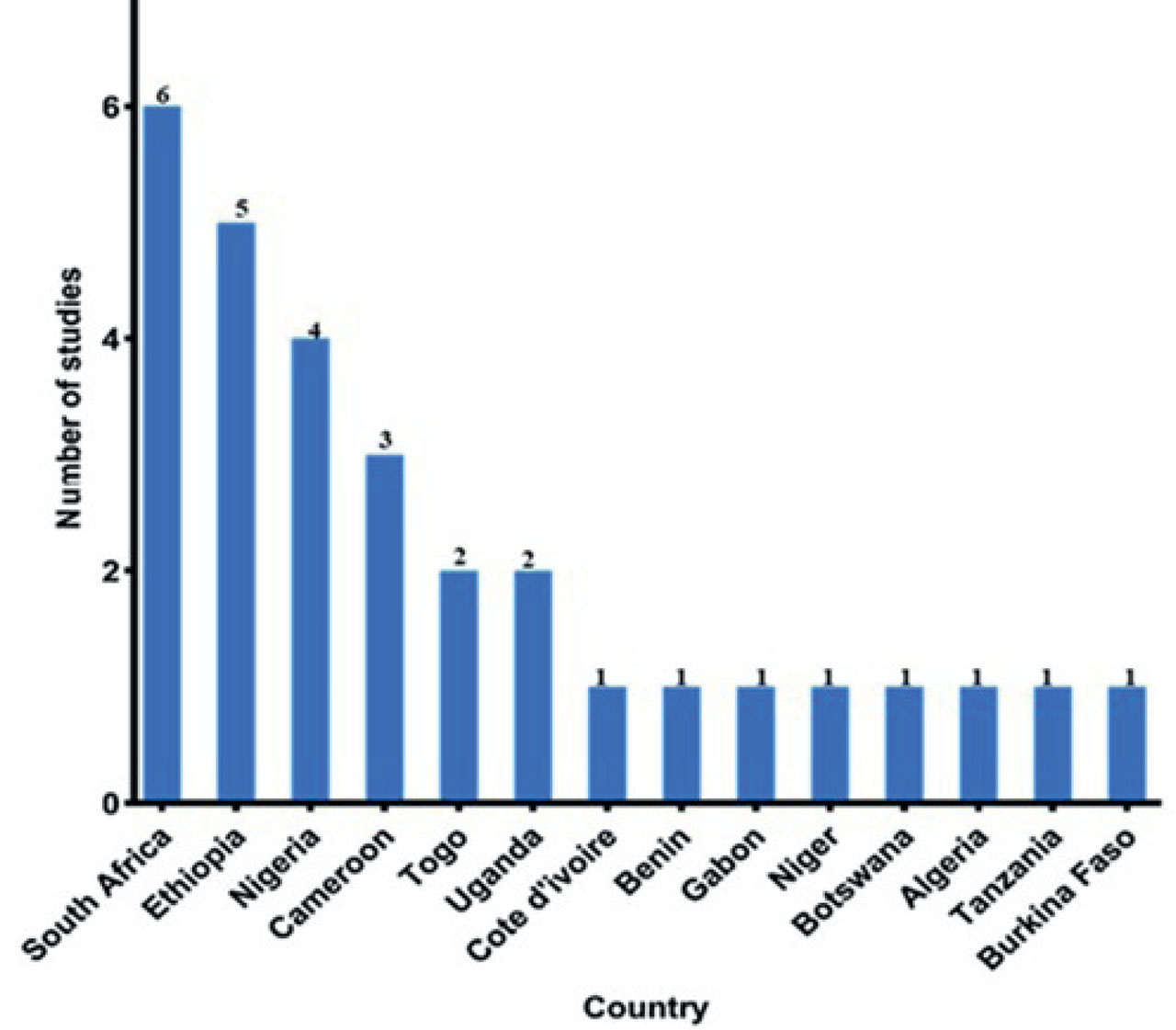
Fig. 2.
Distribution of research articles on the anthelmintic activity of indigenous African plants by country. The bar chart illustrates the number of studies conducted in each country, highlighting regional disparities in research output across the continent.
Ethnobotanical reports targeting Cestodes and Trematodes
Ten ethnobotanical studies specifically addressed the use of medicinal plants against T. solium and Fasciola spp. in both human and veterinary contexts, with no reports targeting E. granulosus. As shown in Figure 3, most investigations were conducted in Ethiopia and Nigeria. The terminology used varied, with some authors using general terms like “tapeworms” and others specifying “cestodes.” The detailed list of plant species and their traditional applications can be found in Supplementary Table S2, which will be a valuable resource for future pharmacological research.
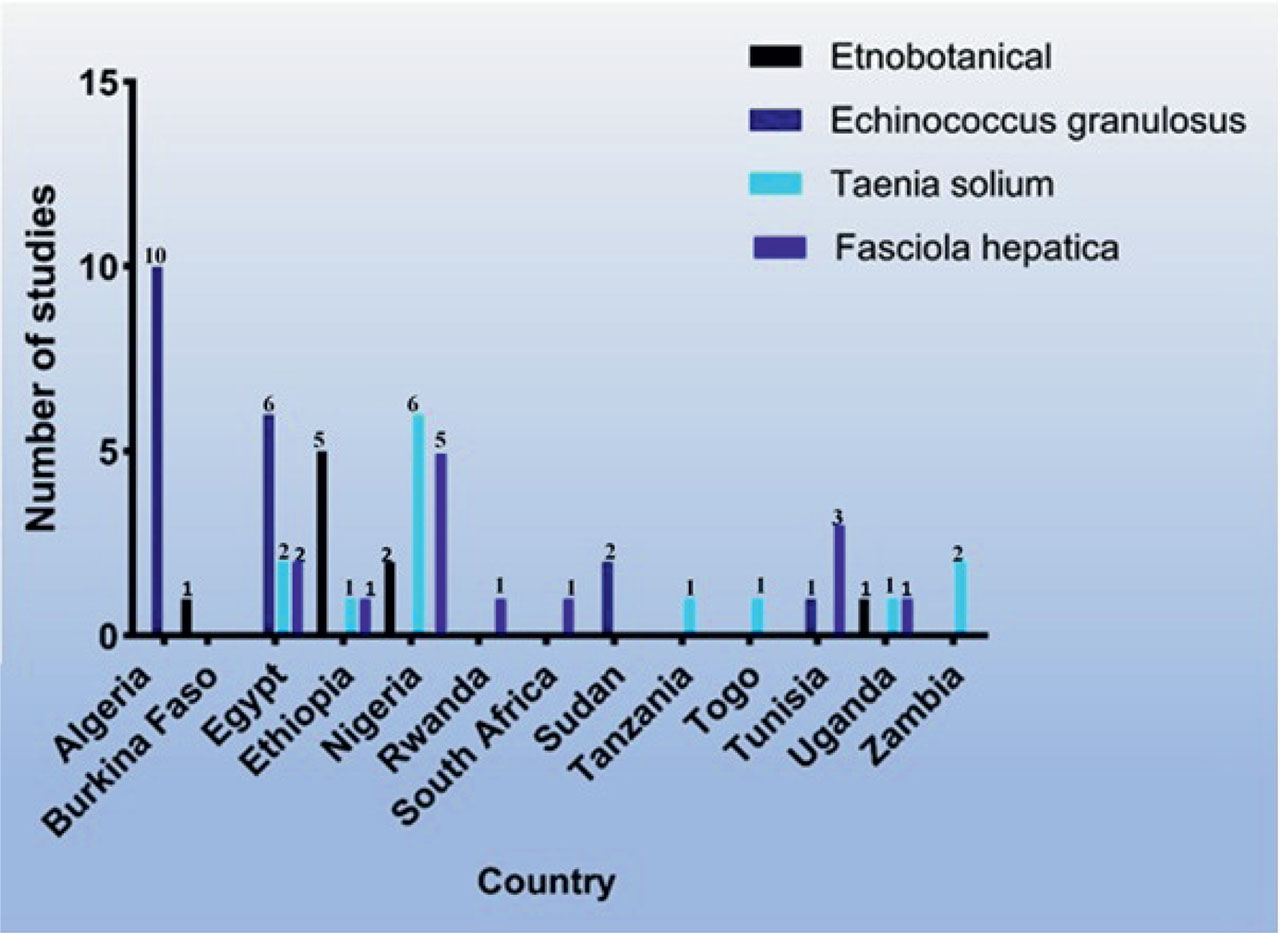
Fig. 3.
Geographic distribution of African medicinal plant studies: Ethnobotanical ( ) data focus on cestodes and trematodes, while pharmacological studies investigate activity against Echinococcus granulosus (
 ), Taenia solium (
 ), and Fasciola hepatica (
 ). The map highlights regions with concentrated research efforts, illustrating disparities in scientific documentation and the therapeutic potential of traditional plant species across the continent.
Pharmacological validation of African medicinal plants against cyst-forming zoonotic helminths and Fasciola hepatica
From the total dataset, 47 pharmacological studies met the inclusion criteria, evaluating African medicinal plants against three zoonotic helminths using both in vitro and in vivo approaches. Among them, 19 studies focused on E. granulosus, 14 on T. solium, and 14 on F. hepatica Figure 3 shows the geographic distribution of these studies, highlighting the countries where research was conducted and the number of studies per country.
Echinococcus granulosus
A total of 18 plant species from nine botanical families were reported to demonstrate pharmacological activity against E. granulosus. The Lamiaceae and Myrtaceae families were the most represented, particularly in studies from Algeria (n = 10) and Egypt (n = 6). Various plant parts were tested using different extraction methods, with aqueous extracts and essential oils being the most frequently employed. A detail overview is provided in Table 1.
Table 1.
African medicinal plants with in vitro activity against Echinococcus granulosus protoscoleces.
| Family | Botanical name | Part used | Extract | Phytochemical component | Minimal effective concentration | Exposure (Time min) | Scolicidal activity (%) | Country | References |
|---|---|---|---|---|---|---|---|---|---|
| Amaranthaceae | Atriplex halimus L. | Leaves | Aqueous | Polyphenol/Flavonoid | 150 mg/ml | 60 | 100 | Algeria | Benmarce et al., 2024a |
| Phenolic compound (ferulic acid, carboxylic acid) | 60 mg/ml | 120 | 99.36 | Algeria | Bouaziz et al., 2021 | ||||
| Alkaloids (Berberine) Flavonoid | |||||||||
| Lythraceae | Lawsonia inermis L. | Leaves | Aqueous | N/A | 12.5 % w/v | 10 | 100 | Sudan | Elowni et al., 2020 |
| Lamiaceae | Thymus fontanesii de Noé | Leaves | Essential oil | Carvacrol (59.68 %) | 9.25 mg/ml | 5 | 100 | Algeria | Selles et al., 2024 |
| γ-terpinene (13.72 %) | |||||||||
| p-cymene (12.10 %) | |||||||||
| Thymus pallescens de Noé | Leaves | Essential oil | Carvacrol (57.37 %) | 9.1 mg/ml | 5 | 100 | Algeria | Kadari et al., 2025 | |
| Terpinene (14.09 %) | |||||||||
| P-cymene (10.64 %) | |||||||||
| Thymus capitatus (L.) Hoffmanns. & Link | Leaves | Essential oil | Carvacrol (82.4 %) | 2 mg/ml | 5 | 100 | Tunisia | Hizem et al., 2020 | |
| P-cymene (5.3 %) | |||||||||
| Thymus vulgaris L. | Aerial parts | Alcoholic | Thymol (65.4) | 2.5 mg/ml | 103.680 | 100 | Egypt | Yones et al., 2011 | |
| Carvacrol (5.4) | |||||||||
| Borneol (0.7) | |||||||||
| Salvia officinalis L. | Aerial parts | Alcoholic | Menthol Apigenin-7-O-glucoside | 2.5 mg/ml | 8.640 | 100 | Egypt | Yones et al., 2011 | |
| Malvaceae | Hibiscus sabdariffa L. | Calyces | Aqueous | N/A | 12.5 % w/v | 10 | 100 | Sudan | Elowni et al., 2020 |
| Myrtaceae | Myrtus communis L. | Leaves | Aqueous | Polyphenol/Flavonoid | 100 mg/ml | 60 | 100 | Algeria | Benmarce et al., 2024b |
| Ethanolic | Polyphenol/Flavonoid | 100 mg/ml | 5 | 98.8 | Algeria | Benmarce et al., 2024b | |||
| Syzygium aromaticum (L.) Merr. & L.M. Perry | Flower buds | Essential oil | Eugenol (78.72 %) | 0.015 mg/ml | 5 | 100 | Algeria | Selles et al., 2020 | |
| β-Caryophyllene (8.82 %) | |||||||||
| Eugenyl acetate (8.74 %) | |||||||||
| Punicaceae | Punica granatum L. | Fruit/peel | Aqueous | N/A | 16 mg/ml | 2880 | 100 | Algeria | Labsi et al., 2016 |
| Peel | Hydroalcoholic | N/A | 100 mg/ml | 120 | 89.7 | Egypt | EL-Bahy et al., 2019 | ||
| Ranunculaceae | Nigella sativa L. | Seed | Essential oil | N/A | 100 mg/ml | 120 | 100 | Egypt | EL-Bahy et al., 2019 |
| Rutaceae | Citrus limon (L.) Osbeck | Fruits | Aqueous | N/A | 0.5 ml | 5 | 99.46 | Algeria | Mohammed & Mokhtrari, 2019 |
| Zingiberaceae | Zingiber officinale Roscoe | Rhizome | Aqueous | [6]-gingerol | 0.001 mg/ml | 1440 | 51.80 | Algeria | Amri & Touil-Boukoffa, 2016 |
In vitro scolicidal activities
Fourteen plant species were identified in studies reporting in vitro activity against E. granulosus protoscoleces. Syzygium aromaticum and Thymus capitatus demonstratred the most potent scolicidal effects. As summarized in Table 1, the essential oils of both species achieved 100 % mortality within 5 minutes of exposure at concentrations of 0.015 mg/ml and 2 mg/ml, respectively.
In vivo activities
Several plant species have been investigated for their preventive or therapeutic properties against E. granulosus, with the aim of developing alternative treatment for cystic echinococcosis. According to the results summarized in Table 4, three plant species have been scientifically validated in vivo for their scolicidal activity: Allium sativum, Punica granatum, and Nigella sativa. Aqueous extracts garlic, pomegranate peel, as well as N. sativa oil, were tested in female Swiss albino mice, with the lowest effective dose reported at 1.14 mg/kg body weight. Notably, N. sativa oil significantly reduced cyst viability, and induced structural degeneration of the germinal layer.
Scolicidal activities of phytochemical
Seven active compounds isolated from five medicinal plants have been reported to exhibit activity against E. granulosus: Ferulic acid, berberine, carvacrol, thymol, menthol, eugenol, and [6]-gingerol. Among these, only three of these compounds (thymol, menthol, and, [6]-gingerol) have been investigated in vitro. Thymol and menthol showed significant activity at a concentration of 50 μg/ml after 48 hours, while [6]-gingerol was effective at 100 μg/ml after 24 hours (Table 1). No isolated compound has undergone in vivo testing. To provide a clearer overview, the chemical structures of these bioactive compounds are shown in supplementary Table S3. Collectively, these findings demonstrate that several essential oils and crude extracts show promising activity against E. granulosus, although in vivo studies are limited. Building on this, other researchers have investigated African medicinal plants for their effectiveness against T. solium, the etiological agent of cysticercosis.
Taenia solium
A review of 14 studies conducted across six African countries identified 17 plant species investigated, for their activity against T. solium. The Euphorbiaceae and Moringaceae families were the most widely studied. Research focused on various plant parts, such as leaves, roots, bark, stems, and fruits, which are commonly used in traditional medicine for their therapeutic properties.
Geographically, Nigeria reported the highest number of studies (n=6), followed by Zambia (n=3). Egypt and Togo each contributed two studies, while Uganda and Tanzania reported one study each (Fig. 3). Regarding extraction methods, most studies employed crude plant extracts, with methanol being the most frequently used solvent, followed by ethyl acetate and hydroethanolic mixtures (Table 2).
Table 2.
Medicinal plants evaluated in vitro against Taenia solium.
| Family | Scientific name | Part used | Extract | Phytochemical compound | Outcome of assay | Country | References |
|---|---|---|---|---|---|---|---|
| Asclepiadaceae | Calotropis procera (Aiton) W.T. Aiton | Roots | Methanol | Alkaloids, Flavonoids | At 25 – 50 mg/ml, caused paralysis at 6 min, and death at 8.75 min; | Nigeria | Babaloba & Umar, 2021 |
| Petroleum ether | Alkaloids, tannins | Paralysis in 11 min and death in 20 min | |||||
| Fabaceae | Berlinia confusa Hoyle | Stem Bark | Ethyl acetate | 1-O-docosanoyl-sn-glyceride | Extracts and isolated compounds exhibited concentration-dependent activity; at 10 – 100 mg/ml, caused death of adult worms after 180 min of exposure. | Nigeria | Lasisi & Idowu, 2014 |
| 1-O-(13-methyltetradecanoyl) | |||||||
| 1-O-pentadecanoyl-sn-glycerol | |||||||
| Betulinic acid | |||||||
| Sitosteryl-β-D-glucoside | |||||||
| Malvaceae | Sida acuta Burm.f. | Leaves | Methanol | Alkaloid, flavonoid | Exhibited 100 % mortality worms at 100 mg/ml after 10 min | Nigeria | Usman et al., 2023 |
| Ethyl acetate | Alkaloid, flavonoid | Exhibited 100 % mortality worms at 100 mg/ml after 25 min | |||||
| Moringaceae | Moringa oleifera Lam. | Leaves | Aqueous | Flavonoid, tannins | 15 % evagination rate at 0.6 mg/μL after 6 h | Zambia | Hatwiko et al., 2025 |
| Lamiaceae | Vitex doniana Sweet | Bark | Hydroethanolic | N/A | 64 % metacestodes evagination at 50 μg/ml | Zambia | Musale et al., 2023 |
| Phyllanthaceae | Flueggea virosa (Roxb. ex Willd.) Royle | Root bark | Hydroethanolic | N/A | 52 % metacestodes evagination at 50 μg/ml | Zambia | Musale et al., 2023 |
| Sapindaceae | Dimocarpus longan Lour. | Leaves | Ethanolic | Flavonoids, tannins Saponins | Strong paralytic but, weaker lethal effects in adult at 100 mg/ml | Uganda | Odoma et al., 2025 |
| Zingiberaceae | Aframomum melegueta K. Schum. | Seed | Hydroethanolic | Alkaloids, terpenoid | Exhibited larvicidal effect at 20 mg/ml after 4h | Togo | Duti et al., 2025 |
| Annonaceae | Xylopia aethiopica (Dunal) A. Rich. | Fruits | Hydroethanolic | Alkaloids, terpenoid | 100 % larvicidal effect at 20 mg/ml after 4h | Togo | Duti et al., 2025 |
| Euphorbiaceae | Euphorbia hirta L. | Leaves | Methanol | Alkaloid, Saponin β-Amyrin | 10 – 50 mg/ml caused dose- and time-dependent inhibition of worm’s viability. | Nigeria | Ogunmefun et al., 2023 |
| Hexane | Paralysis in 15 min and death in 45 min | ||||||
| Rubiaceae | Nauclea latifolia Sm. | Leaves | Methanol | Flavonoid Benzene-1,2,4-trimethyl | At 10–50 mg/ml, Paralysis 8 mim, death in 42 min | Nigeria | Ogunmefun et al., 2023 |
| Hexane | Paralysis in 13 min, death in 40 min | ||||||
| Euphorbiaceae | Acalypha wilkesiana Müll.Arg. | Leaves | Ethyl acetate | N/A | Paralysis of adult worms in 1 min, death in 2 min, at 100 mg/ml significantly more anthelmintic than piperazine citrate | Nigeria | Onocha & Olusanya, 2010 |
In vitro activity of plant extracts
As summarized in Table 2, the cysticercocidal effects of medicinal plants varied among the 12 plant species assessed for in vitro activity against T. solium metacestodes or adult worms. The methanolic root extract of Calotropis procera (Asclepiadaceae) demonstrated the highest activity, including rapid paralysis and death of adult worms within 6 – 8 min at 25 – 50 mg/ml. Petroleum ether extracts of the same species, produced similar effects within 11 – 20 min.
Similarly, methanolic leaf extracts of Sida acuta caused 100 % worm mortality at 100 mg/ml within 10 min. Two Euphorbiaceae species also showed potent effects: methanolic extracts of Euphorbia hirta leaves induced dose- and time-dependent inhibition of worm viability at concentration of 10 – 50 mg/ml, while ethyl acetate extracts of Acalypha wilkesiana leaves induced paralysis within one minute and complete mortality within 2 min at 100 mg/ml.
In vivo activity against Taenia solium
As detailed in Table 4, four in vivo studies investigated the cysticidal activity of medicinal plants against T. solium. Two studies, conducted in Egypt, evaluated methanolic extracts of Balanites aegyptiaca (Zygophyllaceae) fruits and Moringa oleifera (Moringaceae) seeds in male BALB/c experimentally infected with T. solium. After 16 weeks of treatment, reductions in cyst numbers of up to 88 % were observed.
In Tanzania, three plant-based preparations were tested in naturally infected pigs. Root powder of Sericocomopsis hildebrandtii (Amaranthaceae), administered at 8 g per day for 16 weeks, significantly reduced in cyst numbers, whereas a mixed plant powder preparation containing Carissa edulis (Apocynaceae) and Ximenia americana (Olacaceae), showed no significant difference in cyst burden compared to untreated controls.
Activity of phytocompounds on Taenia solium
The reported active compounds include, β-amyrin, benzene-1,2,4-trimethyl, 1-O-docosanoyl-sn-glyceride, 1-O-(13-methyltetradecanoyl), 1-O-pentadecanoyl-sn-glycerol, betulinic acid, and sitosteryl-β-D-glucoside. In vitro assays of five of these compounds (excluding benzene-1,2,4-trimethyl, and β-amyrin) demonstrated concentration-dependent activity. Adult worms died after 180 min of exposure at concentrations ranging from 10 to 100 mg/ml. Most of these compounds were isolated from the stem bark of B. confusa (Table 2). There have been no reports of in vivo testing of these isolated compounds. The chemical structures of these bioactive molecules are represented in supplementary Table S3.
Overall, research on T. solium highlights several promising candidates but remains inconsistent and under-validated in vivo. In parallel, increasing attention has been directed towards F. hepatica, another zoonotic parasite of both veterinary and public health concern.
Fasciola hepatica
A total of 22 medicinal plant species from 14 botanical families were investigated for their in vitro and in vivo activity against F. hepatica. The most frequently represented families were Fabaceae, Lamiaceae, Apiaceae, Moringaceae, and Solanaceae (Table 3). In terms of geographical distribution, Nigeria contributed the largest number of plants studies (n = 6), followed by South Africa (n = 5). Tunisia and Ethiopia each reported four studies, while Egypt and Uganda each contributed one (Fig. 3).
Table 3.
Medicinal plants evaluated in vitro against Fasciola hepatica
| Family | Plant species | Part used | Extract | Phytochemical Component | Outcome of assay | Country | References |
|---|---|---|---|---|---|---|---|
| Apiaceae | Foeniculum vulgare Mill. | Stem | Ethanolic | N/A | Exhibited 90 % ovicidal effect after 15 days of exposure to a 20 % concentration | South Africa | Ahmed et al., 2024 |
| Apocynaceae | Calotropis procera (Aiton) W.T. Aiton | Leaves | Ethanolic | N/A | At a 100 mg/ml concentration, showed larvicidal activity with LC50 = 4.61 mg/ml after 26.67 min | Nigeria | Okeke et al., 2023 |
| Asparagaceae | Sansevieria trifasciata Prain | Leaves | Ethanolic | Flavonoids, Tannins | death of adult worm at 200 mg/ml after 97.83 min | Rwanda | Karomo & Rwai, 2016 |
| Asteraceae | Artemisia afra Jacq. ex Willd. | Stem | Ethanolic | N/A | Exhibited 60 % ovicidal effect after 15 days of exposure to a 20 % concentration | South Africa | Ahmed et al., 2024 |
| Bromeliaceae | Ananas comosus (L.) Merr. | Leaves | Ethanolic | N/A | 80 % ovicidal effects at 5 %concentration after 15 days | South Africa | Ahmed et al., 2024 |
| Capparaceae | Capparis spinosa L. | Aerial parts | Ethyl acetate | Sterols, Carotenoids, Triterpenoids | After 48 h, strong larvicidal activity with deterioration rates between 30.39 % and 91.52 % concentration | Tunisia | Njeh et al., 2015 |
| Rubiaceae | Morinda lucida Benth | Leaves | Ethanolic | N/A | LC50 = 24 mg/ml after 40 min | Nigeria | Okeke et al., 2023 |
| Solanaceae | Solanum nigrum L. | Unripe fruit | Metanolic | N/A | 65.6 % deterioration of rediae 77.8 % deterioration of cercariae 27.6 % deterioration of intraredial germinal masses after 48 h exposure time | Tunisia | Hammami & Ayadi, 2008 |
| Solanum elaeagnifolium Cav. | Seeds | Methanolic | Alkaloid /Saponin | LC50 =0.94 mg/l after 48 h | Tunisia | Njeh et al., 2015 | |
| β-solamarine | LC50 = 0.49 mg/l after 48 h | ||||||
| Fabaceae | Dalbergiella welwitschia (Baker) Baker f. | Leaves | Methanolic | N/A | paralysis of adult worm in 12.86 min, death in 21.29 min. | Nigeria | Ofodile et al., 2019 |
| Aqueous | N/A | paralysis of adult worm in 10.79 min, death in 19.47 min significantly more anthelmintic than albendazole. | |||||
| Methanolic | Alkaloid, Saponin, tannins | Caused death of adult worm at 100 mg/ml concentration between 36 – 81 min | Nigeria | Olusegun et al., 2013 | |||
| Berlinia confusa Hoyle | Stem Bark | Ethyl acetate | 1-O-docosanoyl-sn-glyceride | Extracts and isolated compounds exhibited concentration-dependent activity; at 10 – 100 mg/ml, caused death of adult worms after 30.99 min of exposure. | |||
| 1-O-(13-methyltetradecanoyl)-sn-glycerol | |||||||
| 1-O-pentadecanoyl-sn-glycerol | |||||||
| Betulinic acid | |||||||
| Sitosteryl-β-D-glucoside | |||||||
| Lamiaceae | Ocimum gratissimum L. | Leaves | Aqueous | N/A | LC50 =2.02 mg/ml after 5h at 2 – 10 mg/ml | Nigeria | Ibekwe & Bikom, 2019 |
| Leonotis nepetifolia (L.) R.Br. | Leaves | Aqueous | Tannins (0.2362 mg/mL) | LC50=0.698 mg/mL after 6h at 2 – 10mg/ml | Uganda | Ssenkuban et al., 2022 | |
| Ethanolic | Tannins (0.005 mg/mL) | LC50= 2.521 mg/mL after 6h at 2 – 10mg/ml | |||||
| Moringaceae | Moringa oleifera Lam. | Seeds | Methanolic | N/A | At 1 – 5 mg/ml, caused dose- and time-dependent inhibition of egg viability and hatching after 72h | Egypt | Kandil., et al., 2018 |
| Leaves | Ethanolic | N/A | Exhibited 83 % ovicidal effect after 15 days at 5 % concentration. | South Africa | Ahmed et al., 2024 | ||
| Poaceae | Cymbopogon nardus (L.) Rendle | Leaves | Ethanolic | N/A | Exhibited 62 % ovicidal effect at 20 % Concentration after 15 days | South Africa | Ahmed et al., 2024 |
| Ranunculaceae | Clematis flammula L. | Flowers | Ethyl acetate | Polyphenol/Flavonoid | LC50 = 11.65 mg/L after 48h, cercariae deterioration rate ≈ 97 % | Tunisia | Saidi et al., 2017 |
| Hexane | Polyphenol/Flavonoid Anemonin | LC50 = 11.87 mg/l, deterioration rate > 35.39 % | |||||
| LC50 = 9.64 mg/l strong cercaricidal activities (97 % deterioration rate) | |||||||
| Rosaceae | Hagenia abyssinica (Bruce) J.F. Gmel. | Flowers | Ethyl acetate | quercetin 3-O-β glucoside; Rutin | Caused death of worms at 100 μg/mL concentration within 41 min of exposure. | Ethiopia | Thomsen et al., 2012 |
In vitro fasciolicidal activity
As presented in Table 3, the fasciolicidal activity of the plant extracts was assessed using various metrics, including lethal concentration (LC50) values and the time required to induce paralysis or mortality across the different life stages of F. hepatica (cercariae, metacercariae and adult flukes). Analysis of the selected studies revealed that Calotropis procera and Morinda lucida, both from Nigeria, exhibited the most potent activity, as reflected by their low LC50 values. By contrast, the activity of other plants such as Dalbergia welwitschii and Hagenia abyssinica was evaluated based on paralysis and mortality times.
In vivo fasciolicidal activity
Two in vivo studies evaluating the fasciolicidal activity of African medicinal plants were identified. In Egypt, a powdered mixture of the roots of Cuminum cyminum, Trachyspermum ammi, Foeniculum vulgare and Pimpinella anisum was administered to donkeys experimentally infected with F. hepatica. At a dose of 1.200 mg/kg body weight over four weeks, the treatment significantly reduced helminth egg counts without liver or kidney toxicity. Another study assessed methanolic seed extract of M. oleifera in experimentally infected rabbits. Administered at 150 mg/kg for three consecutive days, the treatment markedly reduced faecal egg counts, and no flukes were recovered at necropsy, indicating complete parasite clearance. Detailed information is presented in Table 4.
Table 4.
In vivo efficacy of African medicinal plants against helminths of zoonotic relevance.
| Parasite | Family | Botanical Name | Part used | Extract | Animal Model | Dose | Time (Weeks) | Outcome result | Country | References |
|---|---|---|---|---|---|---|---|---|---|---|
| Echinococcus granulosus | Amaryllidaceae | Allium sativum L. | Whole garlic cloves | Aqueous | Mice (Swiss albino) | 50 mg/kg | 8 | Serum nitric oxide levels and pathological changes in liver parenchyma was assessed to reflect the effect of oral administration of A. sativum on cystic echinococcosis. | Egypt | Ali et al., 2016 |
| Punicaceae | Punica granatum L. | Fruit peel | Aqueous | Mice (Swiss albino) | 650 mg/kg | 8 | 63.08% cyst growth inhibition; cyst weight reduction; improved liver histology; ↓ NO, TNF-α, iNOS, NF-κB, CD68; reduced macrophage infiltration and fibrosis | Algeria | Labsi et al., 2016 | |
| P. granatum L. | Peel | Aqueous | Mice (Swiss albino) | 650 mg/kg | 8 | The association of ABZ and PGE enhanced a significant reduction of the rate of hydatid cyst growth inhibition in comparison to the infected or ABZ-treated groups | Algeria | Labsi et al., 2019 | ||
| Ranunculaceae | Nigella sativa L. | Oil | Aqueous | Mice (Swiss albino) | 1.14 mg/kg | 8 | Cysts were reduced in size and germinal layer of cysts lost their multicellular structure feature. | Egypt | Nagati et al., 2020 | |
| Fasciola hepatica | Apiacea | Cuminum cyminum L. | Roots | Mixture | Donkeys | 1200 mg/kg | 4 | Dose-dependent reduction in helminth egg counts; improved hematological and serum protein profiles; no liver/kidney toxicity; significant weight gain at highest dose. | Egypt | Al-Hoshani et al., 2024 |
| Trachyspermum ammi (L.) Sprague | ||||||||||
| Foeniculum vulgare Mill. | ||||||||||
| Pimpella anisun L. | ||||||||||
| Moringaceae | Moringa oleifera Lam. | Seeds | Methanol | Rabbits | 150 mg/kg | 3 days | Significantly reduced fecal egg counts, No flukes were recovered at necropsy | Egypt | Kandil et al., 2018 | |
| Taenia solium | Zygophyllaceae | Balanite aegyptiaca (L.) Delile | Fruits | Methanol | Mice BALB/c | 9 mg/kg | 16 | 88% reduction of cyst | Egypt | Kandil et al., 2024 |
| Moringaceae | Moringa oleifera Lam. | Seeds | Methanol | Mice BALB/c | 150 mg/kg | 16 | 72.23% reduction of cyst | Egypt | Kandil et al., 2024 | |
| Amaranthaceae | Hildebrandtii sericocomopsis Schinz | Roots | Powder | Pigs naturally infected by T. solium cysticerci | 8 g | 16 | significant reduction of cyst numbers | Tanzania | Kabululu & Boa, 2021 | |
| Apocynaceae | Carissa edulis (Forssk.) Vahl | Mixture powder | 4 g Each | 16 | No difference was observed between the control and the concoction | Tanzania | Kabululu & Boa, 2021 | |||
| Olacaceae | Ximenia americana L. |
Active phytocompounds against Fasciola hepatica
Nine active phytochemical compounds have been identified from three medicinal plants with reported activity against F. hepatica. These include β-solamarine from S. elaeagnifolium, 1-O-docosanoyl-sn-glyceride;1-O-(13-methyltetradecanoyl)-sn-glycerol; 1-O-pentadecanoyl-sn-glycerol, betulinic acid, and sitosteryl-β-D-glucoside from B. confusa, anemonin from C. flammula, and quercetin-3-O-β-glucoside and rutin from H. abyssinica. These compounds were identified in in vitro studies, some of which demonstrated strong cercaricidal activity, while the effects of others were concentration and time dependent. A detailed overview of their sources, chemical profiles (Supplementary Table S3), and biological activities is provided in Table 3.
Altogether, these studies indicate promising anti-Fasciola activity for several African medicinal plants, although in vivo studies remain scarce reflecting a gap similar to that observed for E. granulosus and T. solium. A cross-parasite comparison highlights common trends and research priorities.
Across all three parasites, most studies remain limited to in vitro evaluation. Only a handful of species have been validated in vivo, and isolated compounds are rarely tested beyond initial assays. Algeria and Nigeria have contributed the highest number of pharmacological studies, reflecting both research capacity and local disease burden.
Discussion
The emergence of resistance to current anthelmintic treatments, particularly those used against zoonotic helminths such as E. granulosus, T. solium, and F. hepatica, is a growing concern in both human and veterinary medicine. Given the increasing rate of resistance, it is imperative to explore alternative and complementary options for new anthelmintic drugs, including those derived from African medicinal plants. However, the findings of this scoping review reveal that, although many plant species have demonstrated promising antiparasitic activity in vitro, few have been evaluated in vivo, and virtually none have progressed to preclinical or clinical evaluation. These findings underscore a critical research gap, particularly in Africa, and align with previous observations made by Jota et al. (2022), who similarly emphasized the expanded pharmacological and clinical investigations in the region.
Ethnopharmacological studies
Ethnopharmacology studies the relationship between plants, their bioactive compounds, and their traditional uses by indigenous cultures for medicinal purposes (Mekonnen et al., 2022). Within this framework, African medicinal plants constitute a vital component of the global ethnopharmacological landscape, comprising a vast array of species used by local communities across the continent for healing purposes. Among their many applications, medicinal plants play a particularly important role in the treatment of helminthic infections, where traditional knowledge and biodiversity converge to inform therapeutic practices.
Several studies identified in this review document medicinal plants traditionally used by local communities in 14 African countries to combat helminth infections. These findings emphasize the diversity of local therapeutic practices and highlight the importance of ethnobotanical knowledge in managing parasitic diseases. They also provide a strategic framework for identifying promising plant-based therapies while preserving and validating indigenous medicinal traditions.
However, the uneven geographical distribution of ethnobotanical studies across Africa remains a concern. Countries such as South Africa and Ethiopia stand out for the intensity of their research efforts, supported by their rich biodiversity and well-established traditional medicine networks (Abdalla & McGaw 2018; Agidew, 2022). By contrast, many other regions with comparable ecological and cultural potential remain underrepresented. Addressing this imbalance is essential to ensure that the full spectrum of Africa’s ethnobotanical heritage is explored and documented.
Among the plant species identified in this review as traditionally used to treat helminth infections in both humans and animals across different regions of Africa, certain species including Carica papaya, Vernonia amygdalina, Khaya senegalensis and Piliostigma thonningii were repeatedly cited in multiple countries. Their recurrent use reflects both broad-spectrum bioactivity, which has made them reliable remedies in various ethnomedical systems, and the shared therapeutic knowledge among communities across ecological and cultural boundaries. This diversity illustrates the ecological richness of the continent and the depth of indigenous medical traditions passed down through generations.
Despite this impressive inventory, it is noteworthy that over 60 % of the documented species have not yet been subjected to pharmacological evaluation, leaving their anthelmintic potential scientifically unverified. This gap underscores the urgent need to bridge traditional knowledge with modern pharmacological research. Validating these plants through rigorous scientific methods could lead to the development of novel, accessible, and culturally appropriate treatments for helminthiasis, particularly in resource-limited settings.
Previous research has emphasized that ethnobotanical surveys are often more successful and cost-effective at identifying biologically active plants than random or taxonomic approaches (Süntar, 2020; Pirintsos et al., 2022). This efficiency is further enhanced when researchers engage in the targeted selection of informants, thereby gaining access to specialist knowledge and culturally embedded therapeutic practices (Eiki et al., 2021). At the same time, it is important to recognize that ethnobotanical data may be influenced by informant recall or reporting biases, and that traditional use does not always directly correlate with pharmacological efficacy.
Taken together, these ethnopharmacological insights provide a solid foundation for identifying plant species with potential anthelmintic properties. However, progressing from traditional knowledge to evidence-based therapeutics requires rigorous pharmacological evaluation against specific helminth pathogens. Bridging indigenous practices with modern science, several experimental studies have investigated the efficacy of selected medicinal plants against E. granulosus (Ali et al., 2020; Hadi et al., 2024), T. solium, (Bizhani, 2015; Romero-Benavide et al., 2017) and F. hepatica (Zulqarnain et al., 2024). These parasites are responsible for major zoonotic and neglected tropical helminth diseases across Africa and beyond (WHO, 2024). This pharmacological approach not only validates traditional therapeutic practices but also opens new avenues for the development of culturally relevant, plant-based anthelmintic agents.
Pharmacological validation of African Medicinal Plants
Beyond documenting ethnobotanical knowledge, this review critically evaluated the pharmacological evidence supporting anthelmintic properties of African medicinal plants against E. granulosus, T. solium, and F. hepatica. Although a wide range of plant species are traditionally employed to manage helminth infections, only a limited subset has been experimentally validated, revealing a clear imbalance in research efforts.
This discrepancy is particularly evident in Africa, where traditional medicine remains a cornerstone of primary healthcare (Ataba et al., 2012; Nargawe et al., 2023). However, research infrastructure and funding opportunities are often limited (WHO, 2013). Furthermore, national and international funding agencies tend to prioritize high-profile diseases such as malaria, cancer, HIV/AIDS, and tuberculosis, resulting in underfunding of zoonotic helminthiases despite their substantial impact on rural, and livestock-dependent communities (Montresor et al., 2020; Thompson et al., 2023).
Additional barriers include the absence of standardized extraction protocols, limited application of bioassay-guided fractionation, and a lack of interdisciplinary collaboration between ethnobotanists, pharmacologists, and parasitologists (Süntar, 2020; Pirintsos et al., 2022). These combined constraints may explain why only a small proportion of medicinal plant species traditionally used against helminths have been scientifically investigated for their efficacy against these neglected zoonotic parasites.
A total of 14 plant species were reported to be pharmacologically evaluated for their scolicidal activity against protoscoleces of E. granulosus, with a majority belonging to the Lamiaceae family. Their extensive use may be explained by traditional beliefs, high species abundance, and their richness in phenolic compounds, essential oils, and saponins know for antiparasitic effects (Raja, 2012; Ali et al., 2020). Lamiaceae plants are also valued for their aromatic properties, resilience in hot climates, and ease of cultivation (Maggiore et al., 2015).
Geographically, more than half of studies (52.63 %) were conducted in Algeria, where CE is endemic due to widespread sheep and goat farming (Benchikh et al., 2020; WHO, 2021). Access to hydatid cyst material from slaughterhouses facilitates in vitro assays. Algeria’s strong ethnobotanical heritage, biodiversity, and specialized research groups further support pharmacological exploration of traditional remedies. Other countries such as Egypt, Sudan, and Tunisia contributed 47.37 % of the studies, though in smaller numbers highlighting CE as an underrecognized public health threat in Africa.
The extensive use of essential oils as well as aqueous, and ethanolic extracts emphasizes the crucial role of solvents in extracting bioactive compounds from various plants parts. among these, aqueous and ethanolic preparations are the most commonly used in traditional medicine, and frequently used in the form of decoctions, infusions, or macerations (Anywar et al., 2016). Ethanol is also traditionally used and is often derived from locally available alcoholic beverages such as palm wine, which is a common extraction medium used by African herbalist (Wabo et al., 2011). This traditional familiarity may explain the widespread use of ethanol in experimental pharmacology.
Due to their polar nature, both water and ethanol are highly effective in extracting bioactive compounds known for their antiparasitic properties (Altemimi et al., 2017). Their frequent use in pharmacological studies reflects not only their ethnomedical relevance but also their proven efficiency in concentrating therapeutic agents. In contrast, essential oils also widely utilized exhibit strong anthelmintic activity (Ribeiro et al., 2014). Rich in secondary metabolites, these oils interfere with the biochemical and physiological functions of parasites, contributing to their therapeutic potential.
Most studies focused on in vitro evaluation, this might be because in vitro assays are less expensive, quicker, and produce faster results, enabling large scale screening of plants (Calixto, 2019). Furthermore, these studies measured the direct effect of anthelmintic activity on the process of hatching, development, and motility of parasites, without interfering with the hosts internal physiological functions (Al-Shaibani et al., 2008). In many African contexts, infrastructural and financial constraints further limit the feasibility of conducting controlled animal studies (Abebe, 2021). Another advantage of in vitro studies is that, after getting reliable results have been obtained, the extract/compound could be evaluated in vivo (Zips et al., 2005). However, compounds/extracts that are effective in vitro may not be active in vivo to the same extent (Sangster & Gill, 1999). This type of difference in activity when evaluating new anthelmintic substances is fairly common, and it can be attributed to different factors, including the bioavailability, intrinsic pharmaceutics of the compound evaluated, the possible damage, or insolubility of the compounds in the rumen of animals, and protective mechanisms of parasite (Buttle et al., 2011). This limitation signifies the importance of pharmacokinetic and pharmacodynamic studies for the industrial development of new anthelmintic products against E. granulosus.
Among the most potent agents, essential oils from Syzygium aromaticum (clove) and Thymus capitatus showed rapid scolicidal effects at low concentrations (Selles et al., 2020; Hizem et al., 2020). This potent activity probably be due to major phenolic monoterpene components such as eugenol, carvacrol, and thymol, which are well-documented broad-spectrum antimicrobial and anthelmintic properties (Marchese et al., 2017). These compounds primarily act by disrupting parasite cell membranes, increasing permeability, and causing leakage of intracellular components, ultimately leading to rapid parasite death. This mechanism may explain why essential oils from S. aromaticum and T. capitatus exhibit rapid protoscolicidal effects compared to aqueous or ethanolic extracts. The mechanism of action of phenolic monoterpenes has not evaluated against protoscoleces yet, however, studies on other eukaryotic cells revealed that phenolic monoterpenoids mainly act on the plasma and mitochondrial membranes, induce cell apoptosis (Deb et al., 2011).
Three plant species A. sativum, P. granatum, and N. sativa were used in vivo against protoscoleces, using female Swiss albino mice (Mus musculus). Mice remain the most commonly used model for in vivo echinococcosis studies, owing to its genetic similarity to humans, well-characterized immune system, and practical advantages such as small size, short generation time, and easy to breed, which make them cost-effective and efficient hosts experimentation (Kuster et al., 2013). Importantly, female mice are particularly preferred in experimental echinococcosis models as they are more susceptible to infection, consistent cyst development, and reduced behavioral variability, which enhances reproducibility and reliability of results (Zhu et al., 2021), These features collectively underscore the indispensable role of murine models in parasitological and pharmacological research.
Overall, these findings indicate that in vivo studies against E. granulosus remain extremely scarce and limited to a few plant species, highlighting the urgent need for broader and more standardized animal studies before considering translation into clinical practice. Notably, this limitation is not restricted to Africa; several studies have similarly emphasized the global scarcity of in vivo pharmacological studies on medicinal plants against hydatidosis (Ali et al., 2020; Alvi et al., 2022).
Phytochemical analysis confirms the presence of diverse active compounds, including secondary metabolites such as flavonoids, alkaloids, terpenoids, and phenolic compounds, which have been reported to exhibit scolicidal activity against E. granulosus (Ali et al., 2020; Hadi & Thuwaini, 2024). Major molecules such as Ferulic acid, berberine, carvacrol, thymol, menthol, eugenol, and [6]-gingerol have been identified. These phytochemicals may induce their anthelminthic effects alone or synergistic manner, thereby enhancing their efficacy. This activity is attributed to well-documented pathways including, the disruption of parasite cell membranes, interference with mitochondrial function, the induction of oxidative stress, and the inhibition of essential enzymatic systems (Meena et al., 2009; Ali et al., 2020). Moreover, the enhanced efficacy of crude plant extracts may be attributed to the additive or synergistic interactions among multiple phytochemicals, which not only improve antiparasitic potency but also reduce the risk of resistance development (Alvi et al., 2022). This suggests that the pharmacological potential of medicinal plants may stem not only from isolated bioactive compounds but also from the complex interplay of multiple metabolites within crude extracts. this reinforces the value of whole-plant formulations in anthelmintic therapy.
However, only thymol, menthol, and [6]-gingerol have been individually tested in vitro against E. granulosus protoscoleces, showing significant activity at micromolar concentrations (Yones et al., 2011; Amri &Touil-Boukoffa, 2016). Like other monoterpenes such as carvacrol, and β-myrcene, the scolicidal activity of thymol is largely attributed to their ability to disrupt the lipid fraction of parasite cell membranes. This disruption alters membrane permeability, causes leakage of intracellular contents, and interferes with membrane-bound proteins such as ATPases and receptors. Specifically, thymol induces profound morphological damage in protoscoleces, including soma shrinkage, hook loss, tegumental bleb formation, and destruction of microtriches alterations that impair nutrient absorption and trigger lethal stress responses (Elissondo et al., 2008; Maggiore et al., 2015).
Regarding cysticercocis, 17 plant species, were pharmacologically evaluated for their antiparasitic potentials against T. solium. with most belonging to the families Euphorbiaceae and Moringaceae. Euphorbiaceae species are widely distributed across tropical regions, particulary in Africa and Asia, where they are commonly used for medicinal purposes (Ernst et al., 2015). The Moringaceae family, prominent in in North and East Africa, is also well known for its medicinal applications. Its members contain a broad spectrum of secondary metabolites including flavonoids, alkaloids, tannins, terpenoids, phenolic compounds, and saponins which are associated with diverse biological activities (Akabari et al., 2022).
Most studies (42.85 %) were conducted in Nigeria. The large number of studies on T. solium in Nigeria could be due to the diversity of plant species found in the different agroclimatic zones as well as the existence of an established traditional medical system. Moreover, the high prevalence of human cysticercosis highlights the significant public health burden posed by this zoonotic disease in Nigeria (Melki et al., 2018). This epidemiological data, combined with the country’s extensive ethnobotanical knowledge, provides a compelling rationale for the focus on T. solium research in Nigeria. The remaining 57.15 % of studies were distributed among other countries including Zambia, Egypt, Togo, Uganda, and Tanzania. This uneven distribution probably reflects differences in research capacity and funding availability, as well as the varying endemicity of cysticercosis and taeniasis across these regions.
Among all the plant parts (leaves, roots, root bark, stems, and fruits), leaves were the most frequently used for the anthelmintic validation of medicinal plants against cysticercocis. They can be easily harvested without extensively harming plants, which makes them ideal for frequent and safe use in herbal preparations and extracts. Leaves synthesize most secondary metabolites, which cause various medicinal effects (Tariq et al., 2017). Plant roots contain various nutrients and can be a rich source of potent bioactive compounds, which could explain their use in medicines. Nevertheless, root collection can cause the death of the plant and pose a serious threat to plant conservation (Raja, 2012).
The identification of plant-derived anthelmintic compounds usually starts with the solvent-based extraction of bioactive molecules. This scoping review, found that methanol, ethyl acetate, and hydroethanolic were the most frequently used solvents for isolating compounds with cysticercocidal activity. Methanol, due to its high polarity, is particularly effective in extracting phenolic compounds and alkaloids, which are known for their antiparasitic properties and high yield (Truong et al., 2019). Ethyl acetate, which has intermediate polarity, is better suited to isolating flavonoids and terpenoids. Meanwhile, hydroethanolic blends (ethanol/water) provide a balanced polarity range, enabling the simultaneous extraction of diverse compounds such as saponins, tannins, and glycosides, all of which may contribute to antiparasitic effects. These solvent-specific extraction strategies are well documented in phytochemical research and support the targeted isolation of potential therapeutic relevant compounds (Goti & Dasgupta, 2023).
This review examined the anti-cysticercosis activity of several plant species, revealing notable difference in efficacy across studies conducted in various African countries. These variations could be attributed to differences in phytochemical composition, influenced by both the choice of extraction solvent and the geographical origin of the plant (Mwamatope et al., 2021). As a result, even the same plant species may exhibit different levels of activity depending on where and how it was collected, selecting an appropriate solvent is therefore essential to optimize the extraction of bioactive compounds and enhance the observed biological effects.
In vitro studies highlight four plants species Calotropis procera, Sida acuta, Euphorbia hirta, and Acalypha wilkesiana for their strong activity against T. solium, characterized by remarkable efficacy at low concentrations (10 – 50 μg/ml) and rapid action times (1 – 20 min). From a pharmacological standpoint, such rapid and low-dose effectiveness is highly desirable, as it minimizes host toxicity and reduces the need for prolonged exposure to bioactive compounds (Hoste et al., 2012; Lifschitz et al., 2017).
This potent activity observed suggests the presence of bioactive compounds such as alkaloids, flavonoids, tannins, and saponins, well known for their antiparasitic properties. The extracts induced rapid paralysis, followed by worm death, indicating a possible direct mechanism of action on the parasite’s neuromuscular or metabolic systems. Indeed, some flavonoids have been demonstrated to interfere with the neuromuscular system of helminths, leading to reduced motility and subsequent paralysis (Mordvinov et al., 2021). Similarly, alkaloids and terpenoids are known to disrupt energy metabolism and membrane integrity in parasites, further supporting the hypothesis that these effects may be due to the combined actions of multiple phytochemical classes. Such performance highlights the potential of these plants as promising candidates for phytotherapeutic interventions against cysticercosis, particularly in endemic regions with limited access to conventional treatments.
Two in vivo studies were identified that evaluated the efficacy of plant species in the treatment of cysticercocis caused by T. solium. The first, conducted in BALB/c mice, assessed methanolic extracts of Balanites aegyptiaca fruits and M. oleifera seeds, (Kandil et al., 2024). The second, more relevant in terms of translational value, evaluated three plant-based preparations directly in pigs, the natural intermediate hosts of T. solium. These included root powder of Sericocomopsis hildebrandtii, and a mixed powder preparation containing Carissa edulis and Ximenia americana (Kabululu & Boa, 2021). Using pigs as the model organism provides a physiologically and immunologically appropriate system of natural infection, enabling a more accurate assessment of therapeutic potential and safety. In vivo testing in the natural host allows for comprehensive evaluation of the parasite’s full developmental cycle, host-specific immune responses, and pharmacokinetic behavior of the treatments, thereby enhancing the translational value of the findings (Sreedevi, 2013). results revelated that, S. hildebrandtii root powder significantly reduced cyst numbers in naturally infected pigs, whereas the mixed preparation of C. edulis and X. americana showed no measurable effect compared to untreated controls.
This disparity may be attributed to the complex interactions between the various bioactive compounds present in the combined plant extracts. In some cases, these mixtures can produce additive or synergistic effects, thereby enhancing therapeutic efficacy. However, antagonistic interactions are also possible, where one compound inhibits or counteracts the activity of another, leading to reduced overall effectiveness. As Chaachouay (2025) has noted, plant bioactive such as flavonoids, alkaloids, and terpenoids can interact in unpredictable ways either amplifying or suppressing pharmacological outcomes depending on their chemical compatibility and concentration ratios. Similarly, Donkor et al. (2023) demonstrated that while some combinations of plant extracts yielded synergistic antimicrobial effects, others showed indifference or antagonism. These findings underscore the importance of rigorous formulation and testing of multi-herb therapies.
Several bioactive compounds isolated from the ethyl acetate extract of of Berlinia confusa stem bark including 1-O-docosanoyl-sn-glyceride, 1-O-(13-methyltetradecanoyl)-sn-glycerol, 1-O-pentadecanoyl-sn-glycerol, betulinic acid, sitosteryl-β-D-glucoside, exhibited notable anthelmintic activity against T. solium and F. hepatica, outperforming the standard drug, piperazine citrate in vitro (Lasisi & Idowu, 2014). Among these, betulinic acid, a pentacyclic triterpenoid, emerged as the most potent, with mean paralysis and death times of 130 and 180 min, respectively. This aligns with earlier finding by Enwerem et al. (2001), who highlighted its broad-spectrum anthelmintic efficacy.
Although the precise mechanisms by which these compounds exert their antiparasitic effects remain under investigation, their chemical structures and documented biological activities suggest several possible pathways, such as the disruption of parasite membrane integrity, interference with sterol or lipid metabolism, and induction of oxidative stress, which leads to apoptotic-like death in parasite cells.
While E. granulosus and T. solium have received considerable attention in studies involving medicinal plants, F. hepatica also represents a zoonotic helminth of significant veterinary and public health concern. In line with our review objectives, we identified studies investigating the fasciolicidal potential of African medicinal plants. These findings expand the scope of evidence beyond cyst-forming parasites and highlight the broader applicability of plant-based interventions against diverse helminthic infections.
Fourteen pharmacological studies were identified, documenting 22 plant species from 14 botanical families reported as fasciolicides. These investigations were conducted in Nigeria, South Africa, Tunisia, Ethiopia, Egypt and Uganda, with the highest numbers of citations from Nigeria and South Africa. This prominence likely reflects the widespread reliance on traditional medicine in both countries where the majority of the populations rely on plant-based remedies for primary healthcare. the prevalence of parasitic infections, such as F. hepatica, particularly in rural areas with limited access to conventional medical services, further reinforces this trend.
In Nigeria, for instance, prevalence rates of fasciolosis in ruminants have reached up to 40.5 %, posing significant economic challenges (Mohammed et al., 2019).
In South Africa, fasciolosis has been reported in cattle across six provinces, with both F. hepatica and F. gigantica identified as the causative agents (Nukeri et al., 2025). Although human infections are less common, they remain underdiagnosed, with consumption of contaminated watercress recognized as a risk factor. These epidemiological patterns help explain the concentrated research efforts on fasciolicidal plants in these countries.
Of the 14 studies reviewed, 12 were conducted in vitro, forming the primary evidence base for the fasciolicidal potential of medicinal plant extracts. A total of 22 plant species were identified, with Calotropis procera (Apocynaceae) and Morinda lucida (Moringaceae), both investigated in Nigeria, exhibited the most potent activity, as reflected by low LC50 values and short exposure periods required to induce mortality in F. hepatica (Okeke et al., 2023). These results mirror those observed in studies on T. solium, reinforcing the importance of high efficacy at low concentrations and rapid onset of action as key pharmacological attributes for candidate anthelmintics. In the context of fasciolosis, such properties are particularly valuable, as they support effective parasite clearance, reduce dosing frequency, and help mitigate, resistance critical considerations for sustainable control strategies (Fairweather & Boray, 1999; Keiser & Utzinger, 2004).
However, the heterogeneity of reporting metrics across the included studies such as LC50 values, time-to-paralysis, time-to-mortality, and extract concentrations, presents a significant challenge for direct comparisons of fasciolicidal potency between plant species. This underscores the need for standardized methodologies and consistent reporting frameworks to enable more robust cross-study evaluations.
The identification of only two in vivo studies highlights a significant gap in the current evidence base regarding the fasciolicidal efficacy of African medicinal plants under physiological conditions. Both studies, conducted in Egypt, reported promising outcomes: the polyherbal Apiaceae root mixture led to reduced egg counts and improved weight gain in donkeys without causing organ toxicity, while Moringa oleifera seed extract achieved complete parasite clearance in experimentally infected rabbits, as confirmed by the absence of parasites at necropsy. Although these results suggest potential therapeutic value, the limited number of in vivo investigations restricts the ability to generalize and underscores the need for further validation in diverse host models and ecological settings. Moreover, variations in dosage, treatment duration, and host species complicate direct comparison and highlight the importance of standardized protocols in future research.
Overall, this scoping review provides evidence that African medicinal plants are a valuable source of novel anthelmintic agents targeting helminths of major veterinary and public health relevance, such as E. granulosus, T. solium and F. hepatica. The diversity of bioactive plant species and families reported, combined with their widespread use in traditional medicine, reflects the cultural reliance on phytotherapy and the urgent need for alternative therapeutic strategies in regions where these parasitic infections are endemic. However, most of the identified studies were in vitro, highlighting the need for in vivo study, toxicity profiling and bioassay-guided isolation of active compounds to inform future drug development.
One health strategies
Building on the ethnopharmacological and pharmacological evidence summarized above, it is important to situate African medicinal plants within a broader integrative framework. The One Health perspective provides a valuable lens to understand how plant-based remedies can simultaneously address human health, veterinary needs, and environmental transmission pathways of zoonotic helminths. This scoping review maps the current evidence on African medicinal plants with anthelmintic properties, highlighting their relevance across human, animal, and environmental health domains. By synthesizing ethnobotanical and pharmacological studies, it demonstrates how traditional remedies used in rural communities may reduce human morbidity, improve livestock health, and limit environmental contamination, thereby targeting key transmission pathways. Although methodological heterogeneity and the absence of clinical trials limit direct application, the evidence charted here provides a foundation for future interdisciplinary research. Integrating African ethnopharmacological knowledge into One Health strategies may foster sustainable, accessible, and culturally relevant solutions for helminth control in endemic regions. Nevertheless, several limitations inherent to this scoping review must be acknowledged to contextualize these findings.
Limitations of this review
Although this scoping review covers a broad span of peer-reviewed evidence and helps, to identify key research gaps, several limitations must be acknowledged. Most pharmacological evidence is based on in vitro studies, restricting direct extrapolations to in vivo or clinical settings. Methodological variability including differences in experimental design, sample sizes, extraction methods, dosages, models, and treatment durations hinders reproducibility and cross-study comparisons. The absence of standardized assays and limited replication further weaken the reliability of findings. Few studies have isolated or identified the specific bioactive compounds responsible for the observed anthelmintic effects. Moreover, none reported toxicity assessments of the tested extracts, which represents a critical gap for evaluating safety.
Ethnobotanical surveys often addressed helminths in general rather than, zoonotic species specifically, reducing the precision of findings. The exclusion of non-English publications may have led to omission of relevant regional research. Additionally, the lack of clinical trials prevents assessment of safety and efficacy in human populations. Some surveys also lacked details on preparation methods and dosages, limiting practical application.
Recognizing these limitations is essential to guide future research. Priorities should include standardized methodologies, larger sample sizes, reproducible bioassays, and bioassay-guided isolation of active compounds to support drug development. Despite these constraints, this scoping review provides valuable insights into the evidence base surrounding African medicinal plants used against zoonotic helminths such as E. granulosus, T. solium, and F. hepatica.
Conclusion
This review highlights the significant potential of African medicinal plants with anthelmintic activity against key zoonotic helminths, including E. granulosus, T. solium and F. hepatica. Evidence from traditional practices and experimental studies underscores their promise as part of integrated parasite control strategies that also encompass public health measures such as education and improved sanitation. However, most investigations have relied on crude extracts with limited characterization of bioactive constituents, and research has largely remained confined to in vitro models. In vivo studies are scarce, and no clinical trials have been conducted to date. To bridge the gap between laboratory findings and clinical application, future research should prioritize mechanistic studies, bioassay-guided isolation and structural elucidation of bioactive compounds, as well as comprehensive toxicity profiling. Collaborative efforts among ethnobotanists, pharmacologists, and drug discovery scientists will be crucial to translate these promising leads into standardized and clinically applicable therapeutics. Integrating traditional knowledge with modern drug discovery pipelines offers a realistic path toward affordable, plant-based interventions that address the dual challenges of anthelmintic resistance and limited drug accessibility in endemic regions. Well-designed clinical trials will ultimately be essential to validate safety and efficacy, transforming these natural resources into effective therapeutic agents.
Notes
Acknowledgements
The first author gratefully acknowledges the support of the Scientific and Technological Research Council of Türkiye (TÜBİTAK) and The World Academy of Sciences (TWAS) through the TWAS-TÜBİTAK Postdoctoral Fellowship Programme. This research was carried out at the Department of Parasitology, Faculty of Veterinary Medicine, Fırat University, whose facilities and academic environment greatly contributed to progress of the study.
Notes
Supplementary material associated with this article can be found, in the online version, at https://doi.org/10.2478/helm-2025-0037.