Introduction
Schistosomiasis, a neglected tropical disease (NTD) caused by parasitic flatworms of the genus Schistosoma, remains a public health concern in sub-Saharan Africa (Buonfrate et al., 2025), especially in Eswatini (Maseko et al., 2023). On a global scale, the disease imposes a massive health burden, with approximately 251.4 million people requiring preventive treatment annually (World Health Organization, 2020). Among these, urogenital schistosomiasis is estimated to affect ~112 million people worldwide, and is an important cause of hematuria and chronic urinary tract morbidity (Buonfrate et al., 2025). In Eswatini, the disease is primarily caused by S. haematobium, which relies on freshwater snails of the genus Bulinus, particularly B. globosus, and potentially B. truncatus and B. africanus (Pitchford, 1958; Wilson, 2020; Mansour et al., 2024). These snails act as intermediate hosts and shed cercariae that infect humans during routine domestic, occupational, agricultural, or recreational contact with infested freshwater (Nelwan, 2024).
The urogenital form is increasingly recognized for its implications for female reproductive health, including infertility, ectopic pregnancy, and cervical lesions (Kjetland et al., 2012; Tetteh et al., 2024). Female genital schistosomiasis (FGS) is a chronic manifestation of urogenital schistosomiasis that arises when S. haematobium eggs become trapped in the cervicovaginal and vulvar mucosa, eliciting granulomatous inflammation, fibrosis, and characteristic mucosal lesions (e.g., sandy patches and contact bleeding). Clinically, FGS has been linked to pruritus, abnormal vaginal discharge, dyspareunia, and postcoital bleeding, and it is increasingly recognized as a condition that may facilitate the acquisition of sexually transmitted infections through mucosal disruption and inflammatory immune activation (Isaiah et al., 2023; Rossi et al., 2024; Tetteh et al., 2024). Despite these reproductive health implications, FGS remains underdiagnosed and underreported, in part because its clinical presentation overlaps with common reproductive tract infections and cervical pathology, and because routine diagnostic pathways for schistosomiasis often focus on urinary egg detection rather than genital assessment. Moreover, adult women have historically been less consistently reached by praziquantel preventive chemotherapy, as mass drug administration (MDA) programs have largely prioritized school-aged children, potentially allowing genital morbidity to persist beyond adolescence (King & Bertsch, 2015; Inobaya et al., 2018).
In Eswatini, available evidence indicates ongoing transmission of S. haematobium in multiple settings, with prior studies documenting substantial infection prevalence in schoolchildren and, in some areas, young adults - particularly in the Lowveld, where environmental conditions and freshwater contact can sustain transmission (Chu et al., 2010; Liao et al., 2011; Maseko et al., 2023). These observations underscore the need for updated epidemiological data among women of reproductive age and for integrating schistosomiasis considerations into reproductive health platforms in endemic regions. However, limited research exists regarding the burden of urinary schistosomiasis among adult women, who may serve as reservoirs of transmission and suffer disproportionately from reproductive complications.
To address this gap, we conducted a facility-based cross-sectional study among women aged 20 – 49 years attending routine cervical cancer screening at Sithobela Health Centre in the Lowveld region of Eswatini. We estimated the prevalence of S. haematobium infection using urine microscopy and examined sociodemographic and water-related exposures (including domestic water source and freshwater-contact activities) associated with infection. By leveraging an existing reproductive health service platform, these findings provide context-specific evidence to inform integrated screening, targeted health education, and broader schistosomiasis control strategies for women of reproductive age in schistosomiasis-endemic settings.
Materials and Methods
Study design and setting
A facility-based cross-sectional study was conducted over a two-month period from September to October 2023 at Sithobela Health Centre (Fig. 1), located in the Lowveld region of Eswatini (26°52′S, 31°36′E). Sithobela is a rural community with a population of approximately 28,080, including an estimated 5 576 women of reproductive age (20 – 49 years) (The Kingdom of Swaziland, 2017). The region is endemic for S. haematobium infection and was purposively selected due to its documented burden of schistosomiasis in nearby communities (Chu et al., 2010; Maseko et al., 2023).
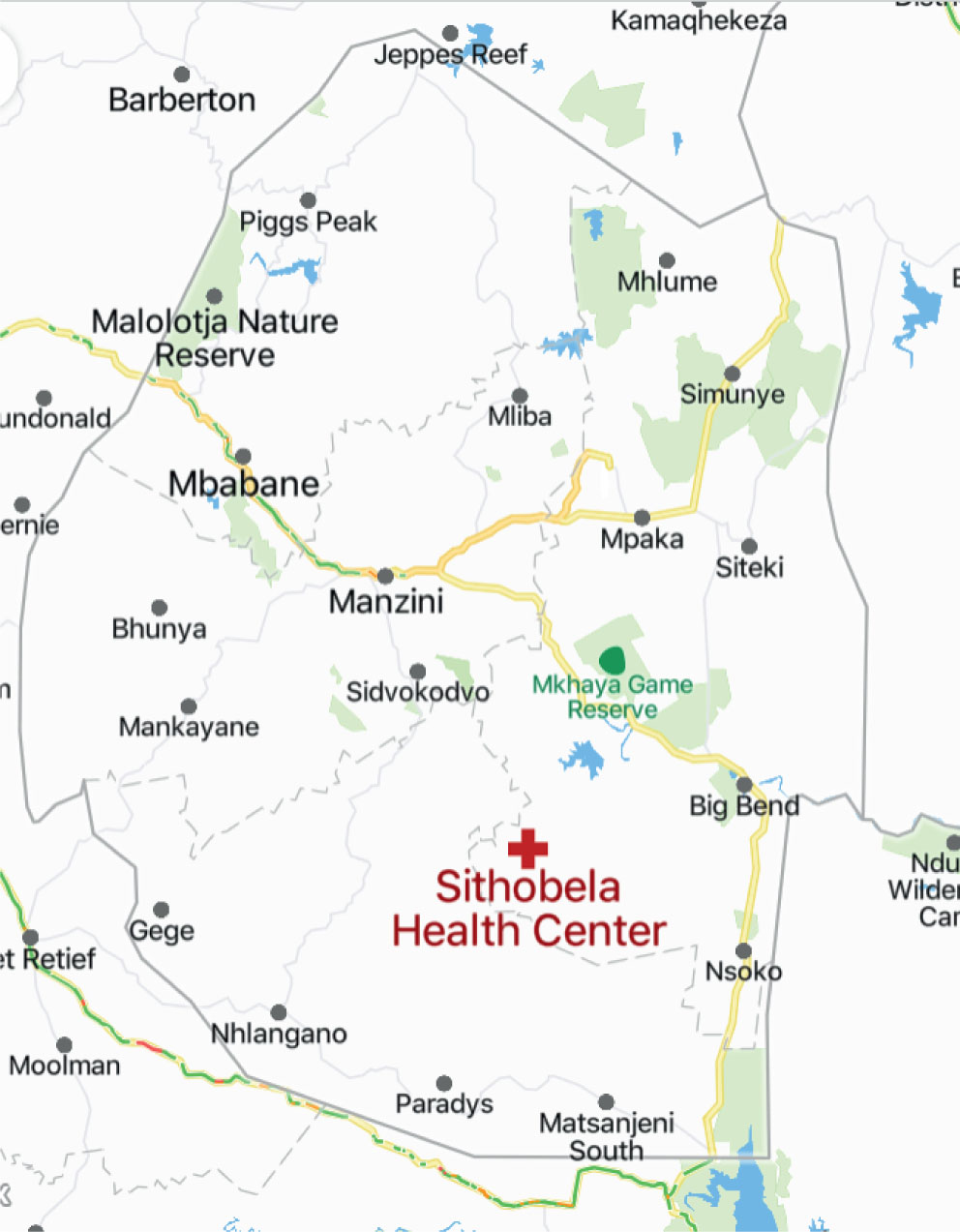
Fig. 1.
Sithobela Health Centre located in the Lowveld region of Eswatini.
Study population and eligibility criteria
The study targeted women aged 20 – 49 years who were attending routine cervical cancer screening services at the Sithobela Health Centre. Eligibility criteria included informed consent, residency in the area, and non-pregnancy status. Women were excluded if they had received praziquantel within the previous six months or declined to participate.
Sample size and sampling
Using the Raosoft® Sample Size Calculator (Raosoft Inc., 2004; http://www.raosoft.com/samplesize.html), with a 95 % confidence level, 5 % margin of error, and an estimated population size of 5 576, a minimum sample of 360 participants was calculated. Participants were recruited via convenience sampling during clinical visits over the study period. Specifically, all eligible women presenting for routine cervical cancer screening during the study period were approached and enrolled if they provided informed consent.
Data collection
Data were collected using a semi-structured questionnaire administered in siSwati or English, according to participant preference. The instrument was pre-tested to ensure cultural appropriateness and clarity. Variables captured included age, educational attainment, occupation, marital status, domestic water source(s), frequency and purpose of freshwater contact, and history of praziquantel treatment. Occupation was self-reported and recorded as unemployed, formally employed, self-employed (with specification), student/scholar, or other (with specification). Housewives/homemakers were coded as unemployed. Informal traders and subsistence/small-scale farmers were coded as self-employed (or, if initially recorded as “other,” subsequently recoded to the closest category). For analysis, occupation was dichotomized as employed (formally employed + self-employed) versus unemployed (unemployed + student/scholar).
The primary domestic water source was self-reported and categorized as tap water, river water, open well, or protected well. In this context, “tap water” referred to household and/or community taps/standpipes, while wells were described as either open community wells or protected wells located near streams. Because the openwell category was small (n = 20), open wells and protected wells were combined for regression analyses. Field staff received training before data collection to promote standardized administration and accurate recording.
Urine sample collection and laboratory analysis
A single 10-ml mid-morning urine specimen was collected from each participant. Urinary schistosomiasis was defined as the detection of S. haematobium ova on microscopy of the examined 10-ml urine aliquot (≥ 1 egg/10 ml = positive). Egg counts were recorded as the number of ova per 10 ml; however, infection status (positive/negative) was used as the primary outcome in regression analyses. Each specimen was labeled using an anonymized unique participant ID and transported in a cooler box with four ice packs to the National Neglected Tropical Diseases Laboratory for same-day processing.
Upon arrival, urine samples were mixed by gentle inversion, and a 10-ml aliquot was transferred into a 15-ml conical tube. Merthiolate-formalin (1 ml) was added for preservation. Samples were then subjected to sedimentation, and the resulting pellet was examined microscopically at 10× and 40×. The number of S. haematobium ova was recorded per 10 ml of urine. For quality assurance, 10 % of slides were randomly selected and independently re-examined by a second trained microscopist.
Data management and statistical analysis
Data were entered into Microsoft Excel, checked for completeness and consistency, cleaned, and then exported to Stata version 18.0 (StataCorp LLC, College Station, TX, USA) for analysis. Participant characteristics were summarized using descriptive statistics. Bivariate associations with infection status were evaluated using chi-square tests or Fisher's exact tests, as appropriate. For multivariable logistic regression, candidate covariates were identified based on a priori epidemiologic considerations (sociodemographic variables and plausible exposure-related factors captured in the questionnaire) and bivariate screening (e.g., p < 0.20). Age and education were retained in the multivariable model as potential confounders regardless of bivariate p-values. Multicollinearity among covariates was assessed using correlation diagnostics and variance inflation factors; variables exhibiting problematic collinearity were not retained in the final model. Statistical significance was defined as p < 0.05. Age was summarized both continuously and categorically. For regression analyses, age was dichotomized at the sample median (26 years) into ≤ 26 versus > 26 years to ensure adequate cell sizes and improve the stability of model estimates.
Ethical Considerations
This study received ethical approval from the Eswatini Health and Human Research Review Board (EHHRRB: 179/2023). Participant information sheets and consent forms were provided in both siSwati and English. For participants unable to read, trained study staff read the documents aloud and explained the study in the participant's preferred language (typically siSwati) in the presence of a literate witness, and consent was documented using a thumbprint. All participants provided informed consent; for illiterate participants, consent was obtained verbally in the presence of a literate witness and recorded via thumbprint.
Personal identifiers were removed and stored separately from study data, which were kept on password-protected devices accessible only to the research team. All procedures were conducted in accordance with the Declaration of Helsinki and applicable guidelines for human research ethics.
Results
A total of 360 women aged 20 – 49 years (median age, 26 years) participated in the study, with the largest proportion (45.6 %) in the 20 – 25-year age group. Overall urinary schistosomiasis prevalence was 10.83 % (39/360). Among the 39 women with eggs detected, cases were distributed across 5-year age bands as follows: 20 – 25 (n = 9), 26 – 30 (n = 7), 31 – 35 (n = 11), 36 – 40 (n = 6), 41 – 45 (n = 4), and 46 – 49 (n = 2). Bivariate analysis showed a higher prevalence among women older than the median age (15.0 %) than among those aged ≤ 26 years (7.0 %; p < 0.01). Prevalence was higher among women with primary education (13.2 %) than among those with secondary education or above (9.9 %; p = 0.041). Unemployed women had the highest prevalence (11.2 %), followed by employed women (10.3 %); however, occupation was not significant in the multivariable model (p = 0.79) (Table 1).
Table 1.
Sociodemographic, environmental, and behavioral characteristics of women attending cervical cancer screening in Sithobela, Eswatini, by Schistosoma haematobium infection status.
| Positive Cases | % | p-value* | |
|---|---|---|---|
| Age Group (Median=26) | |||
| ≤Median (N=186) | 13 | 6.99 | < 0.01 |
| >Median (N=173) | 26 | 15.03 | |
| Education | |||
| Primary (N=106) | 14 | 13.21 | 0.4 |
| Secondary and above (N=253) | 25 | 9.88 | |
| Occupation | |||
| Unemployed (N=242) | 27 | 11.16 | 0.79 |
| Employed (N=117) | 12 | 10.26 | |
| Residence Distance from Open Water Source | |||
| <1KM (N=110) | 11 | 10 | 0.3 |
| 1KM (N=162) | 15 | 9.26 | |
| >1KM (N=87) | 13 | 14.94 | |
| Main Source of Water for Domestic Use | |||
| Tap Water (N=109) | 24 | 22.02 | < 0.01 |
| Open or Protected Wells (N=205) | 10 | 4.88 | |
| River (N=45) | 5 | 11.11 | |
| The Activities that Lead to Contacting Water Bodies | |||
| Washing (N=177) | 19 | 10.73 | 0.18 |
| Agriculture Activities (N=51) | 6 | 11.76 | |
| Fetching Water (N=65) | 3 | 4.62 | |
| Bathing (N=66) | 11 | 16.67 | |
| Schistosomiasis Treatment History (praziquantel) | |||
| No (N=337) | 37 | 10.98 | 0.78 |
| Yes (N=22) | 2 | 9.09 | |
| Total (N=359) | 39 | 10.86 | |
In multivariable logistic regression, women older than the median age had higher odds of infection than younger women (AOR 2.29, [95 % CI 1.04 – 5.05]; p = 0.04). Secondary education or above was associated with lower odds of infection compared with primary education (AOR 0.38, [95 % CI 0.16 – 0.89]; p = 0.03). Employment status was not significantly associated with infection, as employed individuals had similar odds of infection compared with unemployed individuals (AOR 0.89, [95 % CI 0.39 – 2.02]; p = 0.79). Compared with individuals residing < 1 km from an open water source, those living approximately 1 km away showed lower odds of infection (AOR 0.51, [95 % CI 0.19 – 1.31]; p = 0.16), whereas those residing > 1 km away had higher odds, although neither association was statistically significant (AOR 1.60, [95 % CI 0.62 – 4.15]; p = 0.33). The main source of water for domestic use was associated with infection risk. Compared with tap water (reference), use of open or protected wells was associated with significantly lower odds of infection (AOR 0.14, [95 % CI 0.05 – 0.35]; p < 0.01), whereas reliance on river water showed no significant association (AOR 0.46, [95 % CI 0.14 – 1.55]; p = 0.21). Activities leading to contact with water bodies were not significantly associated with infection. Compared with agricultural activities (reference), fetching water (AOR 0.60, [95 % CI 0.12 – 2.98]; p = 0.53) and washing or bathing (AOR 0.64, [95 % CI 0.21 – 1.98]; p = 0.44) showed no significant associations.
Compared with individuals without a history of praziquantel treatment, those who had received praziquantel showed no difference in odds of infection (AOR 0.91, [95 % CI 0.18 – 4.68]; p = 0.90) (Table 2).
Table 2.
Multivariable logistic regression of factors associated with Schistosoma haematobium infection among women attending cervical cancer screening in Sithobela, Eswatini.
| Multivariate Analysis | |||
|---|---|---|---|
| Variables | Adjusted OR | 95% C.I. | p-value |
| Age Group (Median=26) | |||
| ≤Median (N=186) | 1.00 | ||
| >Median (N=173) | 2.29 | 1.04–5.05 | 0.04 |
| Education | |||
| Primary (N=106) | 1.00 | ||
| Secondary and above (N=253) | 0.38 | 0.16–0.89 | 0.03 |
| Occupation | |||
| Unemployed (N=242) | 1.00 | ||
| Employed (N=117) | 0.89 | 0.39–2.02 | 0.79 |
| Residence Distance from Open Water Source | |||
| <1KM (N=110) | 1.00 | ||
| 1KM (N=162) | 0.51 | 0.19–1.31 | 0.16 |
| >1KM (N=87) | 1.60 | 0.62–4.15 | 0.33 |
| Main Source of Water for Domestic Use | |||
| Tap Water (N=109) | 1.00 | ||
| Open or Protected Wells (N=205) | 0.14 | 0.05–0.35 | < 0.01 |
| River (N=45) | 0.46 | 0.14–1.55 | 0.21 |
| The Activities that Lead to Contacting Water Bodies | |||
| Agriculture Activities (N=51) | 1.00 | ||
| Fetching Water (N=65) | 0.60 | 0.12–2.98 | 0.53 |
| Washing or Bathing (N=243) | 0.64 | 0.21–1.98 | 0.44 |
| Schistosomiasis Treatment History (praziquantel) | |||
| No (N=337) | 1.00 | ||
| Yes (N=22) | 0.91 | 0.18–4.68 | 0.90 |
| Total (N=359) | |||
Discussion
Urinary schistosomiasis was detected in 10.83 % of women of reproductive age attending cervical cancer screening at Sithobela Health Centre, confirming ongoing S. haematobium transmission in this endemic Lowveld setting. This prevalence is within the range reported across sub-Saharan Africa. Still, it varies substantially by ecology, water-contact patterns, sanitation, and access to preventive chemotherapy, as highlighted in recent syntheses of schistosomiasis epidemiology and risk factors (Inobaya et al., 2018; Wilson, 2020; Nelwan, 2024; Buonfrate et al., 2025). Importantly, our findings complement earlier evidence from Eswatini documenting notable infection levels in school-aged children and young populations in high-transmission areas, underscoring that risk may persist beyond childhood in settings where exposure continues (Chu et al., 2010; Liao et al., 2011; Maseko et al., 2023).
The prevalence observed in this study is lower than the 17.4 % reported among women in central Malawi by Kjetland et al. (2012) but remains consistent with the moderate transmission zone profile described by the WHO (World Health Organization, 2020). In Eswatini, prior studies have primarily focused on school-aged children (Chu et al., 2010; Liao et al., 2011; Maseko et al., 2023), reporting higher prevalence rates up to 21 %. Variation in prevalence by age may reflect behavioral and role-related changes in freshwater contact across adulthood, as well as cohort differences in prior access to praziquantel (Trienekens et al., 2022); however, residual confounding is possible. Importantly, our findings confirm that urinary schistosomiasis persists into adulthood among women living in endemic areas.
Women older than the median age in the sample had higher odds of infection. This pattern may reflect cumulative lifetime exposure to cercariae-infested freshwater and/or long-term persistence of untreated or partially treated infections (Shams et al., 2022). Cohort differences in access to praziquantel could also contribute, as schistosomiasis control programs have less consistently reached adult women; irregular or intermittent treatment may allow infections to persist among older women (Mishra et al., 2019). In addition, age may serve as a proxy for differences in household responsibilities and water-contact behaviors that were not fully captured by our activity indicators, raising the possibility of residual confounding. Although female genital schistosomiasis (FGS) was not clinically assessed in this study, S. haematobium infection remains highly relevant to women's reproductive health. FGS is a well-recognized manifestation of urogenital schistosomiasis and may be underdiagnosed in endemic settings because its signs and symptoms can overlap with other reproductive tract infections and with cervical pathology, including malignancy, as reported in the literature (Engels et al., 2020; Manciulli et al., 2023; Mberu et al., 2025).
Our findings show that women with lower educational attainment had significantly higher odds of infection, echoing studies that link health literacy and socioeconomic status to schistosomiasis risk. Education may influence awareness of waterborne disease transmission and the adoption of protective behaviors, such as avoiding open water sources (Rite et al., 2020; Cedric et al., 2023; Buonfrate et al., 2025).
Additionally, although unemployed women had higher crude infection rates, employment status was not significantly associated with infection in the multivariable analysis. This suggests that reliance on natural water sources for domestic or economic activities is not adequately captured by employment status alone in this study. Water-contact behaviors may be shared among employed and unemployed women, and environmental exposure related to household water use likely plays a more critical role than occupational classification. These patterns align with Zewdie et al. (2024), who identified informal labor roles involving frequent contact with open water bodies as a determinant of water exposure and infection risk for pregnant women in North-Central Ethiopia. Consequently, employment status may not function as an independent predictor of infection risk in this population.
Similarly, residence distance from open water sources was not significantly associated with infection, supporting previous observations that spatial proximity alone is an imprecise proxy for exposure, as daily movement patterns, access to alternative water supplies, and heterogeneity in water-contact behavior may outweigh simple distance measures (Simoonga et al., 2009; Trienekens et al., 2022). The lower odds of infection among women who reported open or protected wells as their primary domestic water source, compared with those who reported tap water, were unexpected. However, schistosomiasis transmission is primarily driven by direct skin contact with freshwater containing cercariae, and the variable “main domestic water source” may not capture the most etiologically relevant exposures. Although most participants cited protected wells (51.67 %) or tap water (30.28 %) as their primary household source, direct contact with open water bodies was still common in this cohort, most frequently for washing clothes (49.17 %), bathing (18.33 %), fetching water (18.06 %), and agricultural activities (14.44 %). This pattern helps explain why transmission can persist even where protected sources are available, because risk is shaped more by freshwater-contact behaviors than by the household drinking-water source alone.
In this setting, water contact for routine household tasks was frequent, and women may report a single “main” source (e.g., tap water) while continuing to use rivers or other open water sources for specific activities. Accordingly, this finding should be interpreted with caution. The observed association may reflect exposure misclassification and/or residual confounding, such as unmeasured differences in proximity to transmission sites, frequency and duration of water contact, or other contextual factors, rather than an actual protective effect of well use (Simoonga et al., 2009; Muhumuza et al., 2015). Moreover, the absence of a significant association with river water use may be attributable to limited statistical power or variability in frequency and intensity of exposure. Collectively, these findings reinforce the central role of water source characteristics and sustained environmental exposure in shaping infection risk, highlighting the need for integrated control strategies beyond individual-level behavioral or treatment measures.
Recent WHO guidance recommends preventive chemotherapy with praziquantel at ≥ 75 % coverage in endemic communities (prevalence ≥10 %), targeting all age groups from 2 years, including adults and women (including pregnant women after the first trimester and lactating women), to reduce morbidity and accelerate progress toward elimination (WHO, 2020, 2022). In urogenital schistosomiasis-endemic settings in sub-Saharan Africa, expanding MDA beyond school-aged children is increasingly emphasized to address persistent adult infection reservoirs and to reduce chronic morbidity among women of reproductive age, including genital disease risk (Oluwole et al., 2025).
Incorporating schistosomiasis screening into reproductive health services, such as cervical cancer screening programs, may provide a cost-effective platform to address this gap. This integration is supported by prior research highlighting co-morbidity and overlapping symptoms between FGS and cervical pathologies (Kjetland et al., 2012; Engels et al., 2020).
This study has several limitations. First, the use of a single mid-morning urine sample (rather than repeated samples) may have underestimated prevalence due to day-to-day fluctuation in egg excretion, reflecting logistical and resource constraints within routine service delivery. Second, because recruitment was restricted to women attending cervical cancer screening at a single facility, the sample may not represent all women of reproductive age in Sithobela. Women who participate in screening may differ from non-attendees (e.g., in health-seeking behavior and sociodemographic characteristics), and the age distribution of our sample (with a high proportion aged 20 – 25 years) may reflect the profile of screening attendees during the recruitment period rather than the broader community. We did not assess cervical screening coverage in Sithobela; therefore, findings should be generalized primarily to women attending screening at Sithobela Health Centre and interpreted cautiously for the wider population.
Conclusion
This study found a substantial prevalence (10.83 %) of S. haematobium infection among women aged 20 – 49 years attending cervical cancer screening in Sithobela, Eswatini. Despite the availability of protected water sources, exposure to potentially infested freshwater remains common through domestic and occupational activities. The findings underscore that urinary schistosomiasis is not confined to school-aged children and that women of reproductive age continue to experience a largely under-recognized burden of infection.
Educational attainment and employment status were significantly associated with infection risk, highlighting the influence of socioeconomic conditions on exposure and vulnerability.
Together, these findings support the expansion of schistosomiasis control strategies in Eswatini to explicitly include adult women, particularly those living in rural or underserved settings. Integrating schistosomiasis screening into existing reproductive health services— such as cervical cancer screening programs-represents a pragmatic approach to improving case detection among women at risk, while maximizing the use of established health-care platforms. Beyond individual-level interventions, sustained transmission in endemic settings underscores the importance of complementary environmental and ecological control measures. Recent evidence from irrigation-based systems in East Africa demonstrates that biological control of intermediate host snails can substantially reduce transmission pressure and reinfection risk, thereby strengthening the overall effectiveness of mass drug administration programs (Maina et al., 2025). Embedding schistosomiasis considerations within reproductive health services may also facilitate future assessment of female genital schistosomiasis, including targeted genital examination and colposcopy guided by WHO visual tools in appropriate clinical or research contexts. Further longitudinal and community-based studies are warranted to evaluate the reproductive health consequences of Schistosoma haematobium infection and to assess the combined impact of expanded chemotherapy and complementary snail control strategies. Addressing this historically overlooked population will be essential for progress toward the WHO goal of eliminating schistosomiasis as a public health problem.