Introduction
Entomopathogenic nematodes (EPNs) are obligate parasites of insects and are used for biological control of important insect pests (Shapiro-Ilan et al., 2022). The two major genera are Heterorhabditis (Rhabditida: Heterorhabditidae) and Steinernema (Rhabditida: Steinernemadidae) with 121 species described to date (Bhat et al., 2020). The species have symbiotic associations with pathogenic bacteria with species of Heterorhabditis associated with species of Photorhabdus (Enterobacterales: Morganellaceae) and species of Steinernema with species of Xenorhabdus (Morganellaceae) (Poinar, 1990). Virulence depends on the species and strain of the nematodes and the symbiotic bacteria they contain (Sharmila et al., 2018).
Recently, several EPNs belonging to genus Oscheius (Rhabditida: Rhabditidae) have been recorded in China, Iran, Iraq, and Mexico (del Ochio Castro-Ortega et al., 2019; Al-Zaidaw et al., 2019; Ghavamabad et al., 2021). They include Oscheius myriophilus (Poinar), which is associated with two symbiotic bacteria, Serratia nematodiphila Zhang et al. (Zhang et al., 2009) and S. marcescens Bizio (Enterobacterales: Yerssiniaceae) (Zhang et al., 2009; Ghavamabad et al., 2021). These nematodes can infect insects belonging to the orders, Lepidoptera, Coleoptera, Orthoptera, Diptera, Thysanoptera and Siphonaptera (Puza & Mracek, 2010).
The brown marmorated stink bug (Halyomorpha halys (Stål) (Hemiptera: Pentatomidae) is thought to be native to Asia. Since 2007, it has become a serious invasive pest in Europe where it was first recorded in Switzerland in 2007 (Wermelinge et al., 2008; Heckmann, 2012; Callot & Brua, 2013; CABI/EPP, 2013; Haye et al., 2014; Vétek et al., 2014). It is also found across North America in five states in Canada and 46 in the United States, where it was present in Pennsylvania as early as 1999 (Rice et al., 2014). It feeds on more than 100 plant species (Schumm et al., 2020) and causes significant economic losses to agriculture and forestry (Rice et al., 2014; Valentin et al., 2017; Kistner, 2017) as it feeds on fruit, nut, vegetable, ornamental, and field crops (Hodgson & Leskey, 2014). Moreover, the aggregation of H. halys in buildings and houses (Acheampong, 2023), a characteristic of H. halys in winter, can cause a nuisance in indoor living spaces (Inkley, 2012). Several studies (Guide et al., 2019; Burjanadze et al., 2020; Nanzer et al., 2021; Cecconello et al., 2022) have demonstrated the virulence of EPNs against stink bugs. In Việt Nam, most of EPN species have been described from natural forests; 14 EPN species belonging to the genera Steinernema and Heterorhabditis have been found (Trinh et al., 2021). In order to identify native species and their exploitation for insect pest management, a survey EPN were carried out on in coastal region of Central Việt Nam, located in the tropical savanna climate zone in 2022. Given the severity of H. halys and the need for better and environmentally-friendly control methods for this insect, we evaluated the virulence four EPN species, including one belonging to the genus Oscheius, that isolated naturally from soil in southern Việt Nam and compared them with that of a commercially available strain of S. carpocapsae All strain The study was undertaken under laboratory conditions at the Plant Protection Research Institute (PPRI), Hà Nội.
Material and Methods
Brown marmorated stink bug sources and rearing techniques
Halyomorpha halys adults were collected in citrus orchards in Kim Bôi (20.6901°N, 105.5240°E 70 m ASL), in Hòa Bình province, northern Việt Nam. A colony was maintained in the laboratory at 25°C, 60 % RH, and 16:8 (L:D) photoperiod using French bean (Phaseolus vulgaris L.) pods as food.
Nematode strains and production
With the exception of S. carpocapsae, nematodes were isolated from soil samples collected at the locations in southern Việt Nam listed in Table 1. The nematodes were baited from soil samples using the methods described in Kaya H K, Stock P (1997). Steinernema carpocapsae All strain was sourced from South Korea.
Table 1.
Locations where the EPNs were collected in southern Việt Nam. These nematodes were collected in 2022.
| EPN Species | Location | GPS coordinates |
|---|---|---|
|
| 11.7748°N, 109.2048°E, 9 m ASL |
|
| 11.7858°N, 109.1899 °E, 9 m ASL |
|
| 12.2684°N, 109.1406°E, 580 m ASL |
|
| 11.7748 °N, 109.2048 °E, 9 m ASL |

Fig. 1:
Vinh Hai village, Ninh Hai district, Ninh Thuan province.
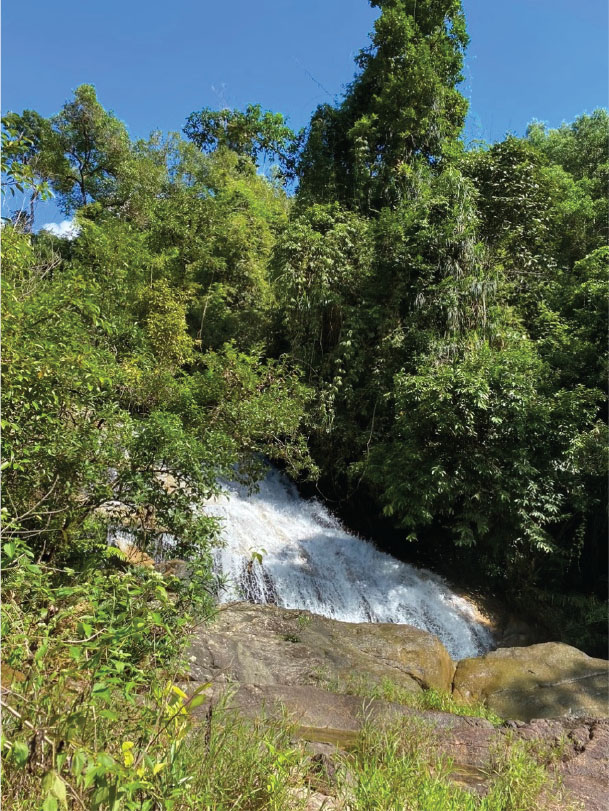
Fig. 2.
Hon Ba Nature Reserve, Khanh Son district, Khánh Hòa province.
Cultures of EPNs were maintained at the Entomology and Nematology Department at PPRI using late instar larvae of the greater wax moth (Galleria mellonella (L.) (Lepidoptera: Pyralidae)) maintained at 25 °C as described in Shapiro-Ilan et al. (2016). After being harvested from the moth larvae, the nematodes were stored at 10 – 18 °C depending on the species of EPN. EPNs were used in the bioassays within 2 weeks of being harvested.
Bioassay conditions
The bioassays to determine virulence were conducted in the laboratory at 25°C, 70 % RH for each of the EPN species as listed in Table 1.
Halyomorpha halys stages
Third instar nymphs and adults were used to evaluate the virulence of H. indica, O. myriophila, S. carpocapsae, and S. pakistanense. Third instar nymphs only were used to evaluate the virulence of S. eapokense.
EPN concentrations
For both the third instar nymphs and adult stages of H. halys, six EPN concentrations were used: 1000; 800; 600; 400; 200; and 100 infective juveniles (IJs)/insect.
Bioassay arena
For adults, 90 mm diameter plastic Petri dishes were used. Each Petri dish was lined with a filter paper and moistened with 1 mL of water containing EPN inoculum. Fine nylon mesh was used to cover 40 mm holes cut in the lids of each dish. A control Petri dish received 1 mL of water only. A 20 mm piece of French bean pod was placed in each Petri dish to provide the food for the insects.
For third instar nymphs, 60 mm diameter plastic Petri dishes were used. Each Petri dish was lined with a filter paper and moistened with a volume of 0.6 mL of water containing EPN inoculum. Fine nylon mesh was used to cover 30 mm holes cut in the lids of each dish. Control Petri dishes received 0.6 mL of water only. A 20 mm piece of French bean pod was placed in each Petri dish to provide the food for the insects. The piece of bean pot was replaced every two days.
At each concentration of IJs, 10 insects were used. Each insect was placed in a separate Petri dish. The number of alive and dead adult and third instar H. halys were recorded 2, 3, 4, 5, 6, 7 days after application. Each cadaver was dissected using forceps and needles in a plastic 90 mm Petri dish. The contents of each dish were then transferred to a Doncaster counting dish (Doncaster, 1962) and counted under a Labomed CZM4 Stereo Binocular Microscope fitted with a light/dark field base. All nematodes from each cadaver were counted.
Statistical analysis
Data were corrected for control mortality (Abbott, 1925) and log(x + 1) transformed when necessary to meet assumptions of normality and homogeneity of variances. A two one-way full factorial analysis of variance (ANOVA), and Duncan multiple comparison method e.g., nematode species × exposure dose, with time intervals (as blocking) was used to determine the differences of nymph mortality in the plate assay and reproduction tests. In addition, in the plate assays, LC50 and LT50 values were determined using the Probit procedure for each EPN species, and the LC50 and LT50 differences between nematode species were considered significant when the 95 % fiducial limits did not overlap. Data are presented as means ± standard errors of the mean. All statistical analyses were conducted using SPSS software. (SPSS Statistics, SPSS Inc., Chicago, IL, USA), using p < 0.05 to assess the statistical differences.
Ethical Approval and/or Informed Consent
Ethics approval and consent to participate are not applicable. The entomopathogenic nematodes were isolated from soil samples following the methods described in Kaya HK, Stock P (1997).
Results
Heterorhabditis. indica, O. myriophila, S. carpocapsae, S. eapokense, and S. pakistanense caused significant mortality of third instar H. halys nymphs. A H. halys was dead after infected with EPNs and the EPNs found when the cadaver was dissected are shown in Figures 4 & 5. Insect mortality increased as nematode concentrations in treatments increased (Table. 6). Concentrations of 800 and 1000 IJs/nymph of S. carpocapsae caused 100 % mortality. The virulence of the other nematodes was lower. H. indica caused 100 % mortality but only at a dose of 1000 IJs/nymph. At this dose, S. pakistanense killed ~90 % of nymphs, S. eapokense ~80 % and O. myriophila~70 %.
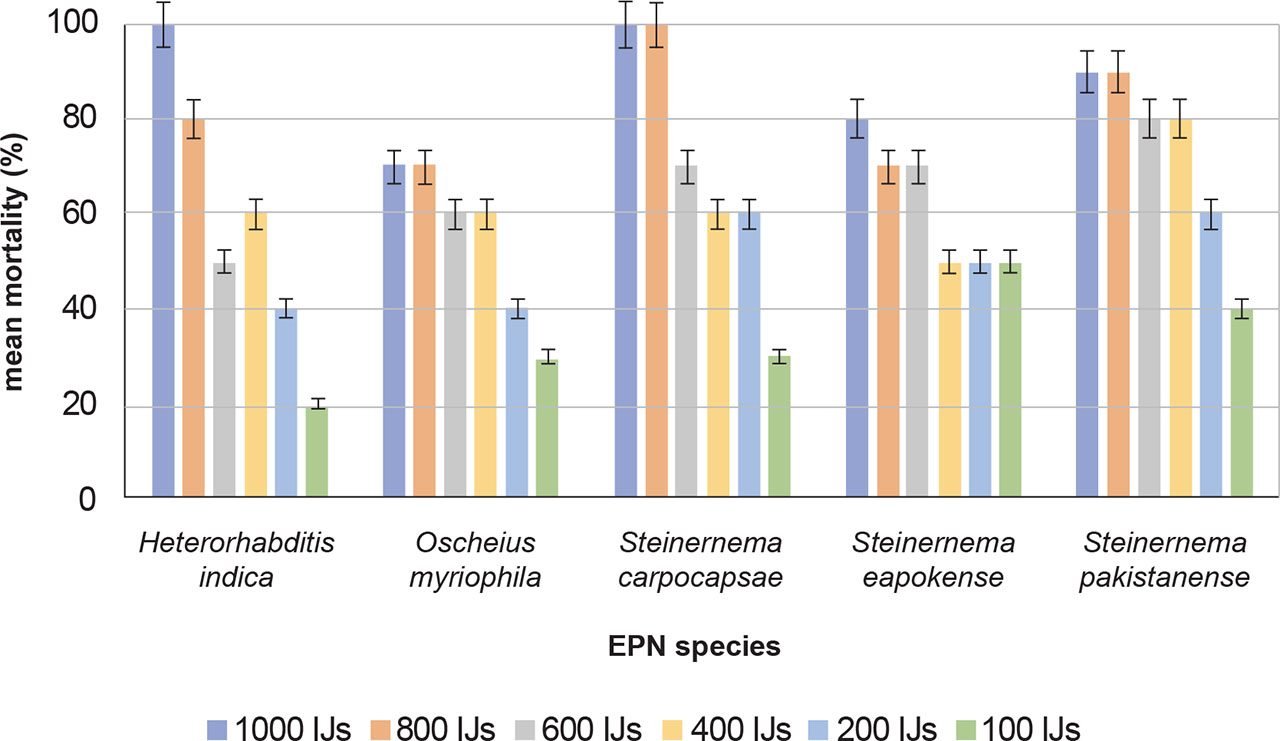
Fig. 3.
Virulence of Heterorhabditis indica, Oscheius myriophila, Steinernema carpocapsae, S. eapokense, and S. pakistanense, and against third instar H. halys nymphs under laboratory conditions. Bars represent the standard errors of the means. IJs = infective juveniles.
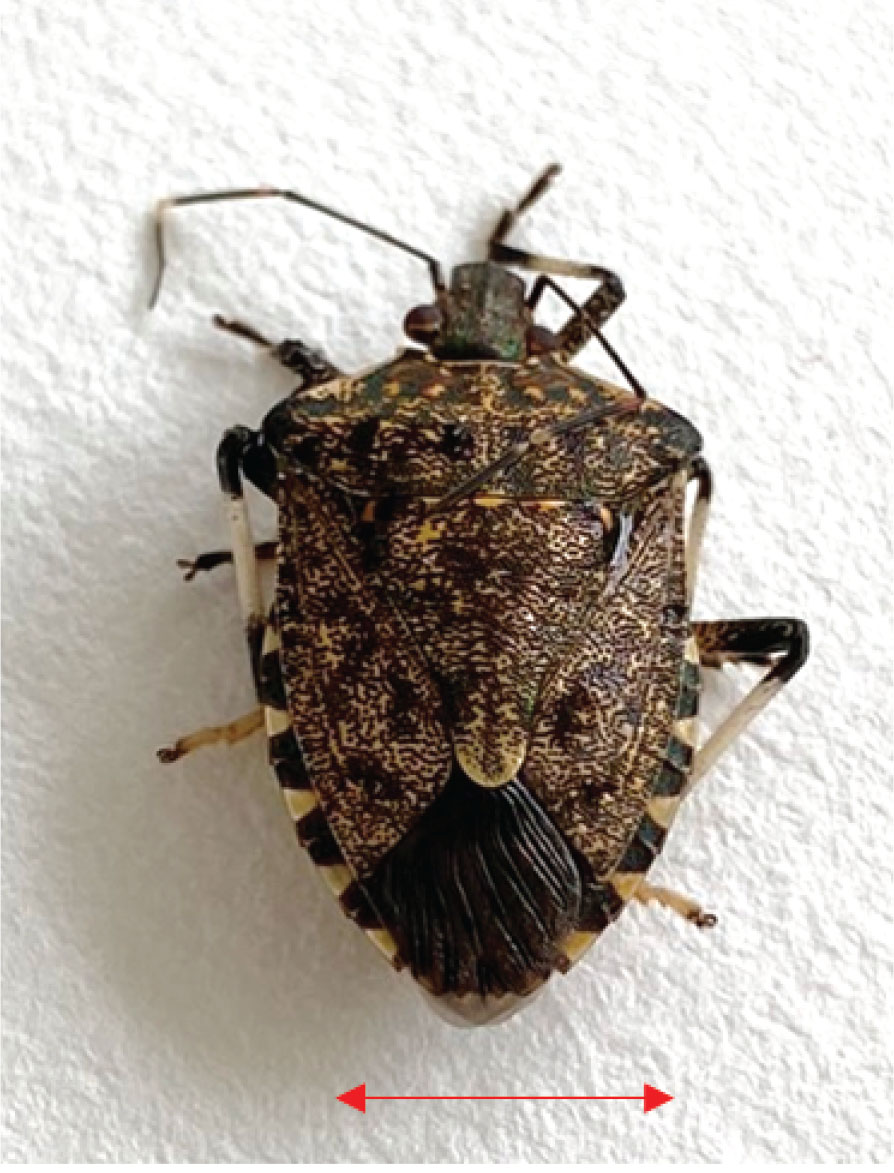
Fig. 4.
BMSB adult cadaver after infected by EPNs (scale bar= 5mm).
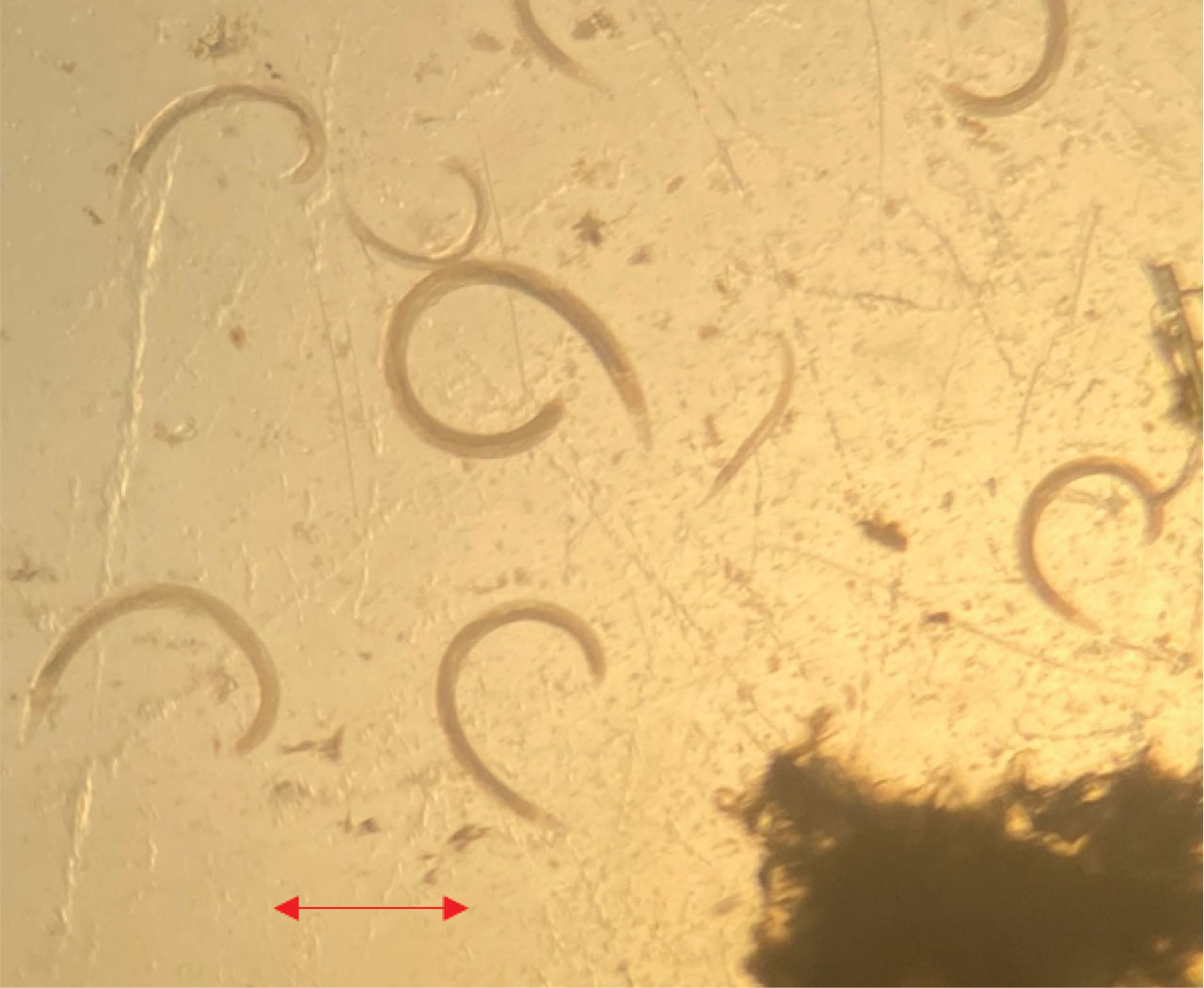
Fig. 5.
EPNs dissected from H. halys cadaver infected by EPNs (scale bar=1mm).
Concentrations of H. indica, O. myriophila, S. carpocapsae and S. pakistanense required to cause 50 % mortality of third instar H. halys nymphs are presented in Table 2. The LC50 was lowest for S. pakistanense. The LC50 values for H. indica and O. myriophilus were higher than the values recorded for the two Steinernema species. The results indicate that the two Steinernema species have higher virulence against third instar H. halys nymphs than H. indica and O. myriophilus.
Table 2.
Median lethal concentrations (LC50) of Heterorhabditis indica, Oscheius myriophila, Steinernema carpocapsae, S. eapokense and S. pakistanense against third instar BMSB nymphs. df = degrees of freedom.
| EPN species | Slope | LC50 | Lower 95% limit | Upper 95% limit | χ2-test | df | Sig. |
|---|---|---|---|---|---|---|---|
| Heterorhabditis indica | 1.015 | 248 | 113 | 380 | 9.638 | 16 | 0.885 |
| Oscheius myriophilus | 0.845 | 247 | 79 | 412 | 4.349 | 16 | 0.998 |
| Steinernema carpocapsae | 2.062 | 167 | 112 | 217 | 11.622 | 16 | 0.77 |
| Steinernema eapokense | 1.012 | 193 | 72 | 303 | 3.304 | 16 | 1 |
| Steinernema pakistanense | 1.484 | 118 | 53 | 178 | 4.878 | 16 | 0.996 |
The lethal times (LT50) for treatment concentrations of 200 IJs to cause 50 % mortality of third instar H. halys nymphs was lowest for S. pakistanense (2.955 days), followed by S. carpocapsae (3.787 days) (Table 3). The LT50 value for H. indica was highest (6.195 days).
Table 3.
Median lethal times (LT50) for Heterorhabditis indica, Oscheius myriophila, Steinernema carpocapsae, S. eapokense and S. pakistanense against third instar BMSB nymphs.
| EPN | Slope | LT50 | Lower 95% limit | Upper 95% limit | χ2-test | df | Sig. |
|---|---|---|---|---|---|---|---|
| Heterorhabditis indica | 1.185 | 6.195 | 5.188 | 8.594 | 11.379 | 16 | 0.785 |
| Oscheius myriophilus | 1.367 | 5.45 | 4.711 | 6.727 | 1.733 | 16 | 1 |
| Steinernema carpocapsae | 0.62 | 3.787 | 2.204 | 5.38 | 1.678 | 16 | 1 |
| Steinernema eapokense | 0.69 | 6.645 | 4.966 | 18.019 | 1.228 | 16 | 1 |
| Steinernema pakistanense | 0.554 | 2.955 | 0.702 | 4.136 | 1.944 | 16 | 1 |
Heterorhabditis indica, O. myriophila, S. carpocapsae and S. pakistanense all caused 100 % mortality of H. halys adults at 800 and 1000 IJs/adult (Fig. 3, and 100 % was also recorded for 400 and 600 IJs of S. carpocapsae. With the exception of H. indica, all nematode concentrations caused ≥ 60 % mortality. The highest mortality was caused by S. carpocapsae followed by S. pakistanense. O. myriophila was less effective than the other species (Fig. 6).
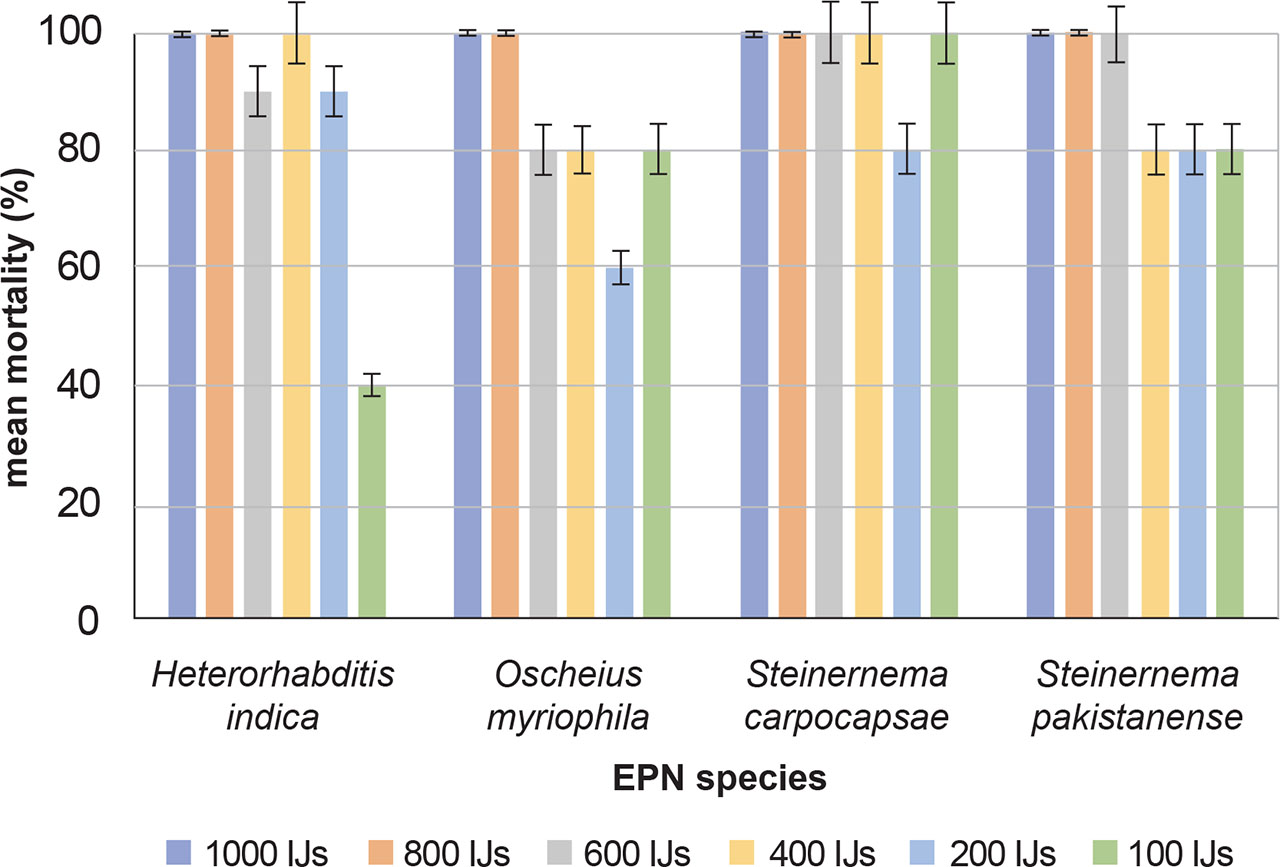
Fig. 6.
Virulence of Heterorhabditis indica, Oscheius myriophila, Steinernema carpocapsae, and S. pakistanense against BMSB adults under laboratory conditions. Bars represent the standard errors of the means. df = degrees of freedom.
The concentrations of H. indica, O. myriophila, S. carpocapsae and S. pakistanense required to cause 50 % mortality of BMBS adults are presented in Table 4. For each of the four species, the LC50 values were lower than those for third instar nymphs. The lowest LC50 value was recorded for S. pakistanense followed by S. carpocapsae. The LC50 values recorded for H. indica and O. myriophilus were higher than for the two Steinernema species. For H. halys adults, the LT50 value for the O. myriophilus was longest, followed by S. pakistanense. The LT50 was lowest for S. carpocapsae (1.618 days) (Table 5).
Table 4.
Median lethal concentrations (LC50) of Heterorhabditis indica, Oscheius myriophila, Steinernema carpocapsae and S. pakistanense against BMSB adults.
| EPN species | Slope | LC50 | Lower 95% limit | Upper 95% limit | χ2-test | df | Sig. |
|---|---|---|---|---|---|---|---|
| Heterorhabditis indica | 1.833 | 46 | 9 | 84 | 12.401 | 16 | 0.716 |
| Oscheius myriophilus | 1.447 | 122 | 53 | 183 | 5.865 | 16 | 0.989 |
| Steinernema carpocapsae | 1.383 | 31 | 0 | 63 | 1.791 | 16 | 1 |
| Steinernema pakistanense | 1.656 | 49 | 9 | 91 | 9.826 | 16 | 0.876 |
Table 5.
Median lethal time (LT50) of Heterorhabditis indica, Oscheius myriophila, Steinernema carpocapsae and S. pakistanense against adult BMSB.
| EPN species | Slope | LT50 | Lower 95% limit | Upper 95% limit | χ2-test | df | Sig. |
|---|---|---|---|---|---|---|---|
| Heterorhabditis indica | 2.099 | 2.975 | 2.577 | 3.322 | 16.2 | 16 | 0.639 |
| Oscheius myriophilus | 0.795 | 5.606 | 4.418 | 9.349 | 0.904 | 16 | 1 |
| Steinernema carpocapsae | 2.106 | 1.618 | 0.969 | 1.994 | 5.73 | 16 | 0.991 |
| Steinernema pakistanense | 1.252 | 3.362 | 2.701 | 3.93 | 3.191 | 16 | 1 |
The mean numbers of nematodes in the cadavers are presented in Tables 6 and 7. The higher the concentrations of inoculum the more nematodes were found in the cadavers of both the nymphs and adults. For both stadia, numbers were significantly highest for S. carpocapsae and lowest for H. indica for all concentrations of inoculum. Numbers for the other two species were intermediate with little difference occurring between the two species.
Table 6.
Mean numbers of nematodes recorded in cadavers of third instar BMSB nymphs following death of nymphs treated with 100 to 1000 infective juveniles (IJs) of Heterorhabditis indica, Oscheius myriophila, Steinernema carpocapsae, S. eapokense and S. pakistanense.
| EPN species | Nematode concentration (IJs) applied | |||||
|---|---|---|---|---|---|---|
| 1000 | 800 | 600 | 400 | 200 | 100 | |
| Heterorhabditis indica | 6.27aC | 4.07aBC | 3.4aBC | 2.8aAB | 1.73aAB | 0.87aA |
| Oscheius myriophilus | 10.47aC | 5.4aB | 2.33aAB | 1.93aA | 1.4aA | 0.8aA |
| Steinernema carpocapsae | 28.8bE | 20.07bDE | 12.33bCD | 9.2bBC | 5.47bB | 2.13bA |
| Steinernema eapokense | 13.13aC | 8.13aBC | 4.8aAB | 3.071aAB | 3.27abcAB | 2.53A |
| Steinernema pakistanense | 38.33bF | 31.2bEF | 16.53bCD | 11.07bBC | 6.27bAB | 2.47bA |
Table 7.
Mean numbers of nematodes recorded in cadavers of adults following death of adults treated with 100 to 1000 IJs of Heterorhabditis indica, Oscheius myriophila, Steinernema carpocapsae and S. pakistanense
| EPN species | Nematode concentration (IJs) applied | |||||
|---|---|---|---|---|---|---|
| 1000 | 800 | 600 | 400 | 200 | 100 | |
| Heterorhabditis indica | 8.8aC | 6.2aBC | 9.6C | 6BC | 4.93aB | 0.93aA |
| Oscheius myriophilus | 16.27aD | 8.07aCD | 12.6CD | 7.33CD | 5.47abB | 1.27aA |
| Steinernema carpocapsae | 47.67bC | 38.47bC | 11.73B | 10.33B | 8.27bB | 3.07bA |
| Steinernema pakistanense | 11.67aD | 8.87aCD | 14.8CD | 7CD | 4.6abB | 1.67abA |
Discussion
All five nematode species used in this study, including those isolated from soils samples collected in various locations in southern Việt Nam, showed virulence against third instar nymphs and adults of H. halys under laboratory conditions. The highest virulence was shown by the commercial strain of S. carpocapsae; this species had the lowest LC50s, LT50s and highest numbers of nematodes in cadavers for both nymphs and adults. However, our results suggest that the strain of S. pakistanense isolated from Việt Nam has the potential for highly effective biological control of H. halys, as the LC50s, LT50s and numbers of nematodes in cadavers were only slightly different from those of S. carpocapsae. The variation of the efficacy of the EPN species in this and other studies demonstrates that the selection of appropriate EPN species and strains is important for achieving effective control of H. halys.
The potential of entomopathogenic nematodes for the control of H. halys was evaluated in experimental trials in Georgia by Burjanadze et al. (2020). The study indicated that Italian strains of Heterorhabditis bacteriophora Poinar and S. apuliae Triggiani, Mrácek & Reid had higher efficacy against H. halys than Georgian strains of H. bacteriophora and S. borjomiense Gorgadze et al. (2017), reaching 95.5 % and 60 % mortality at concentration of 1000 IJs/adults. In our bioassays, H. indica, O. myriophilus, S. carpocapsae and S. pakistanense caused 100 % mortality against H. halys adults at 1000 IJs/adult. In addition, the LC50 values of the four species in our study were higher than for the EPNs evaluated by Burjanadze et al. (2020). The differences between the current study and the one by Burjanadze et al., (2020) are likely due to the species of EPN used and the assay conditions. A second study by Gorgadze et al., (2017) tested five EPNs (three local, Georgian strains of S. gurgistana Gorgadze & Lortkipanidze, S. tbilisiensis Gorgadze et al., and S. thesami Gorgadze and two introduced strains of S. carpocapsae and H. bacteriophora) against third and fifth instar nymphs of H. halys at concentrations of 100 and 200 nematodes per insect. At the higher concentration, the nematodes were applied in combination with the entomopathogenic fungus, Isaria fumosorosea Wize (Hypocreales: Cordycipitaceae). The results of this study indicated that the introduced strains of S. carpocapsae and H. bacteriophora were more effective against third and fifth instar nymphs than the local Georgian species. The results of the current study are similar in that the local Vietnamese strains were not as virulent as the introduced strain of S. carpocapsae. The study by Gorgadze et al. (2017) also suggested the combination of EPNs and entomopathogenic fungi gives higher efficacy than when applied separately.
In Slovenia, O. myriophilus has been shown to be pathogenic towards the slugs, Arion vulgaris Moquin-Tandon and Deroceras reticulatum (Müller) and the snail, Cernuella virgata (Da Costa) (Mollusca: Gastropoda) (Laznik et al., 2023). In Iran, Ghavamabad et al. (2021) have found this nematode affecting the forest tree pests, Cydalima perspectalis (Walker) (Lepidoptera: Crambidae) and Hyphantria cunea (Drury) (Lepidoptera: Erebidae). Onwong et al. (2023) showed that a Thai strain of O. myriophilus was pathogenic towards Galleria mellonella L. (Lepidoptera: Pyralidae), Spodoptera litura F., and Spodoptera exigua Hübner (Lepidoptera: Noctuidae). However, the strain was not as effective at killing fifth-instar larvae of G. mellonella as strains of S. carpocapsae and H. bacteriophora. We report for the first time the pathogenicity of O. myriophilus towards H. halys, but like the study by Onwong et al. (2023), it was not as effective as S. carpocapsae and was the least effective of the four species isolated from soil in southern Việt Nam.
The efficacy of EPNs depends on various abiotic factors such as ultraviolet radiation, adequate soil moisture, relative humidity, and temperatures (Gaugler & Boush, 1978; Shapiro-Ilan et al., 2022), and there are ways to optimise the applications conditions and increase the efficacy of EPN for use in the field. Early morning or afternoon application have been recommended to eliminate the impact of the ultraviolet radiation on the virulence of EPNs under field application (Shapiro-Ilan et al., 2022). In addition, the successful application of EPNs is more likely to be achieved when applying to the soil or cryptic habitats (Shapiro-Ilan et al., 2022). This suggests that the application of EPNs to control overwintering H. halys populations could be of high potential and feasible. For field conditions, particularly foliar application, the manner in which the inoculum is formulated has been used improve to enhance the efficacy of EPNs (Schroer & Ehlers., 2005; Fallet et al., 2022). Of the nematode species used in this study, the commercial strain of S. carpocapsae was most virulent against H. halys. However, our results suggested that the strain of S. pakistanense isolated from soil in southern Việt Nam has potential for the biological control of H. halys. To achieve this potential however, further work is needed, in particular trials in the field and the evaluation different formulations of inoculum.
Acknowledgements
The study was funded by Ministry of Science and Technology of Việt Nam through the project ‘Biological control of some key insect pests (thrips and brown marmorated stink bug) on fruit trees and vegetables in Viet Nam and Hungary, project code NĐT.62.HU/19.
Notes
[4] Conflict of Interests
The authors declare that they have no conflict of interests.