Fig. 1
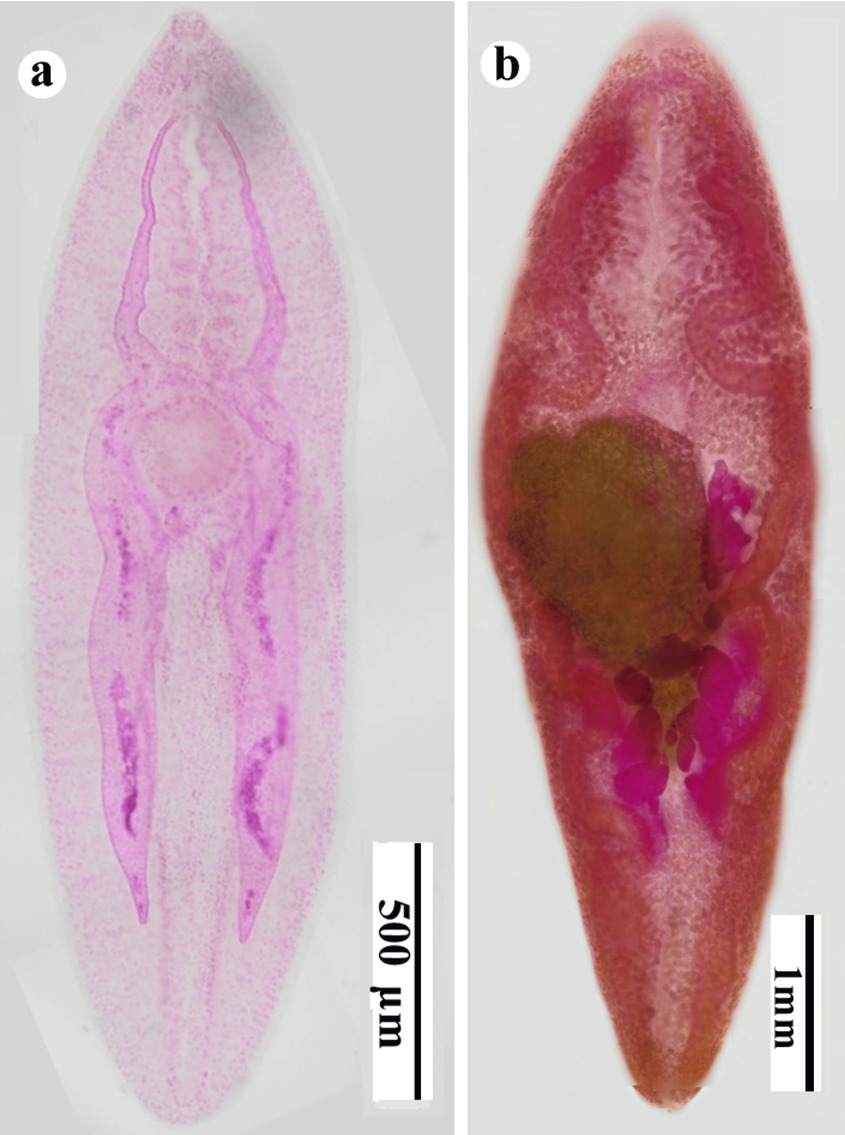
Metacercaria and adult worms stained magenta with hydrochloric acid.
A metacercaria isolated from a crab (a), and an adult worm recovered from the lung tissue of a rat (b).
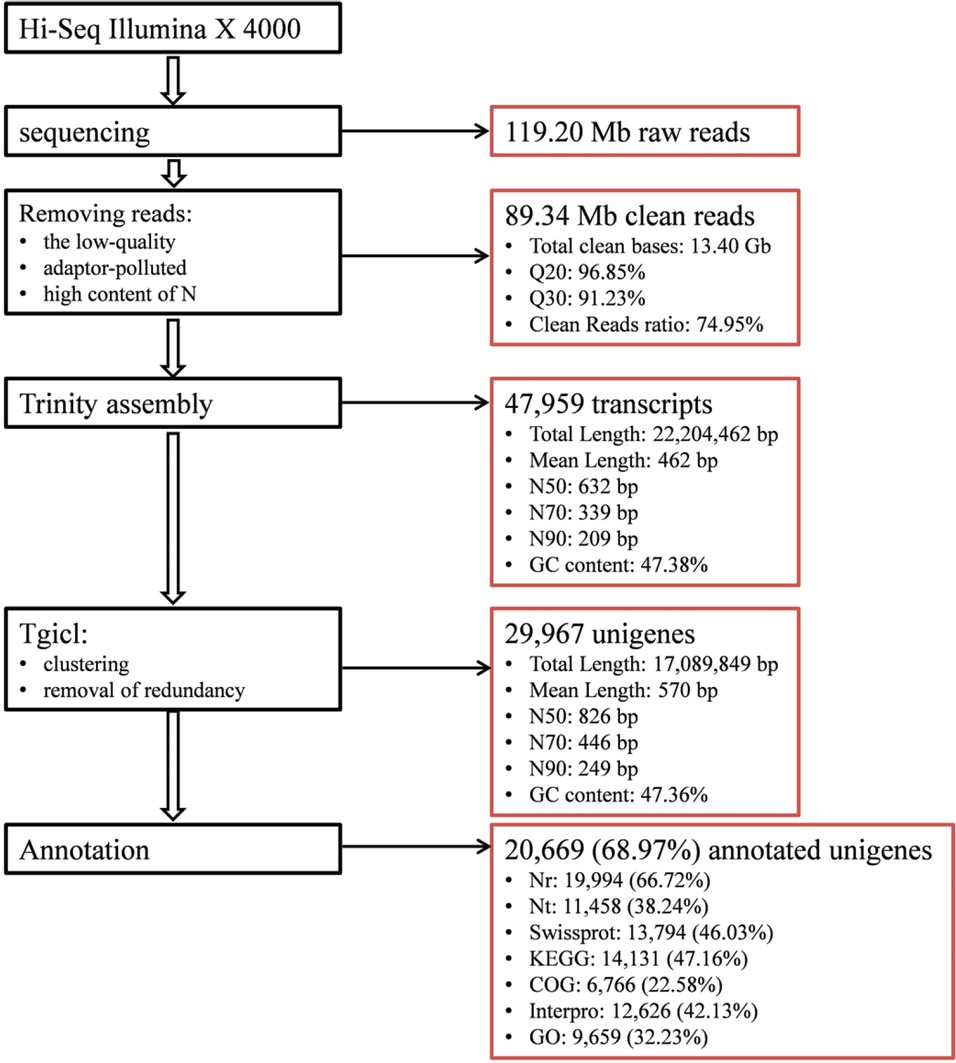
Fig. 2
Sequencing, pretreatment, and annotation of Paragonimus proliferus transcriptome. The transcriptome of adult P. proliferus was sequenced using RNA-Seq (Hi-Seq Illumina X 4000). A total of 119.20 Mb raw reads were obtained, and 89.34 clean reads remained after removing low-quality and adaptor-polluted reads and reads with a high N content. The total number of clean bases, Q20, Q30, and clean reads ratio were 13.40 Gb, 96.85%, 91.23%, and 74.95, respectively. Trinity assembly of the clean reads generated 47,959 transcripts (total length: 22,204,462 bp, mean length: 462 bp, N50: 632 bp, N70: 339 bp, N90: 209 bp, GC content: 47.83%). A total of 29,967 unigenes (total length, 17,089,849 bp; mean length, 570 bp; N50, 826 bp; N70, 446 bp; N90, 249 bp; GC content, 47.36%) were further obtained after clustering and removal of redundant sequences using Tgicl. Finally, a total of 20,669 (68.97%) unigenes were annotated using seven functional databases: NR, 19,994 (66.72%); NT, 11,458 (38.24%); Swiss-Prot, 13,794 (46.03%); KEGG, 14,131 (47.16%); COG, 6,766 (22.58%); Interpro, 12,626 (42.13%); and GO, 9,659 (32.23%).
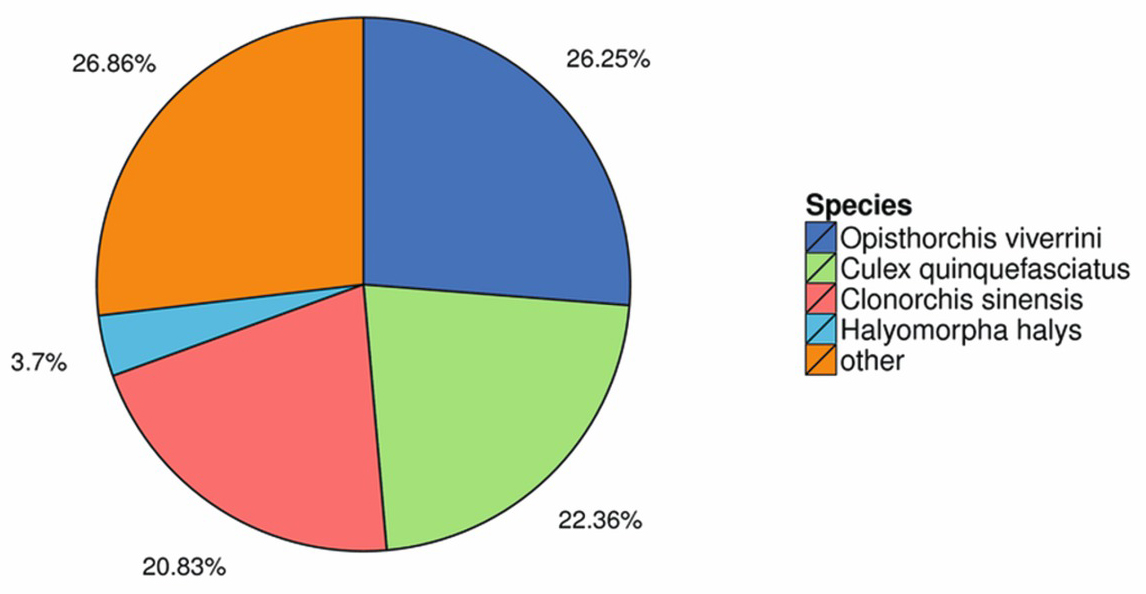
Fig. 3
Species distribution of annotated unigenes in the Paragonimus proliferus transcriptome. A total of 26.25%, 22.36%, 20.83%, and 3.7% of the annotated unigenes belonged to the genera and species Opisthorchis viverrini, Culex quinquefasciatus, Clonorchis sinensis, and Halyomorpha halys, respectively, whereas 28.86% belonged to other species.
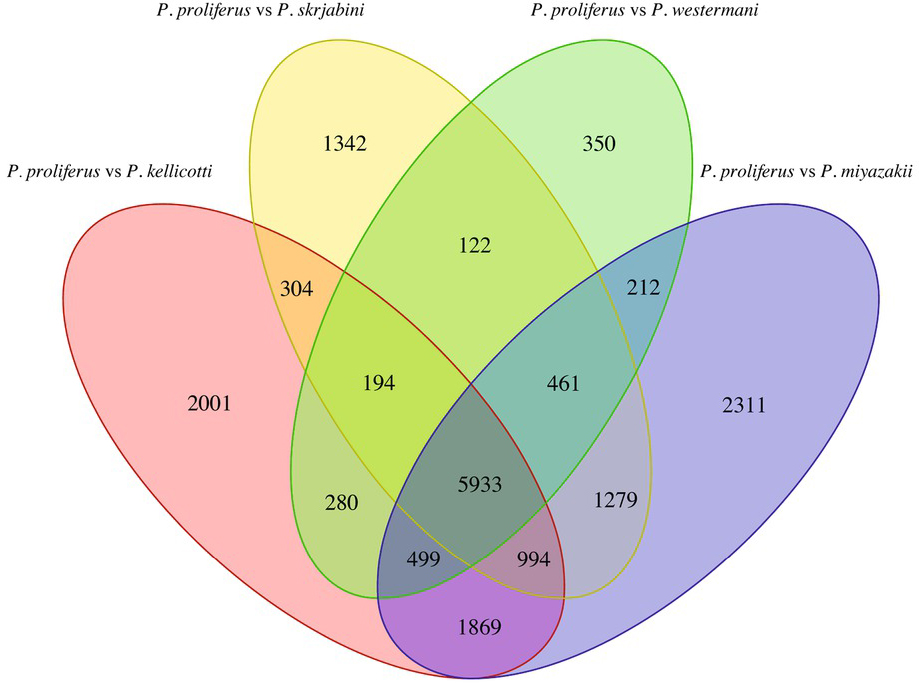
Fig. 4
Venn diagram showing homologous genes among comparisons of Paragonimus proliferus vs. Paragonimus skrjabini, Paragonimus kellicotti,Paragonimus miyazakii, or Paragonimus westermani.
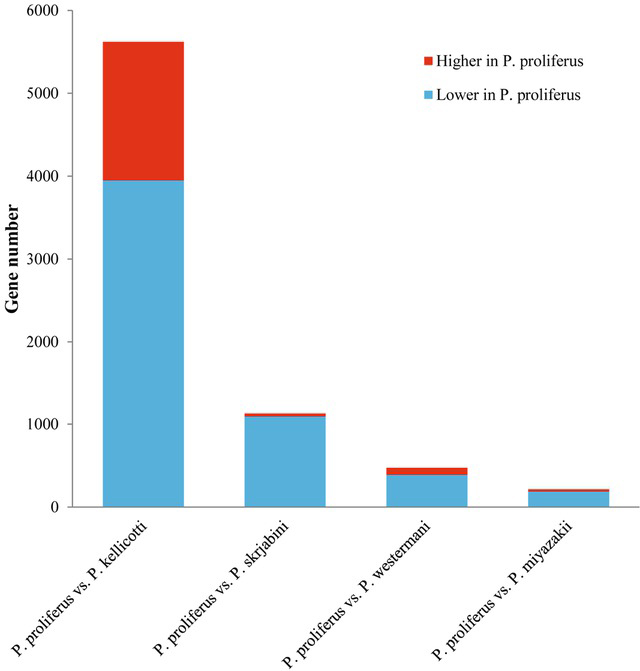
Fig. 5
Changes in expression of differentially expressed homologous genes between Paragonimus proliferus and four other common Paragonimus species. A total of 3950/5622 (70.26 %), 1049/1084 (96.77 %), 388/473 (82.03 %), and 189/214 (88.32 %) genes were expressed at lower levels in P. proliferus compared to Paragonimus kellicotti, Paragonimus skrjabini, Paragonimus westermani, and Paragonimus miyazakii, respectively.
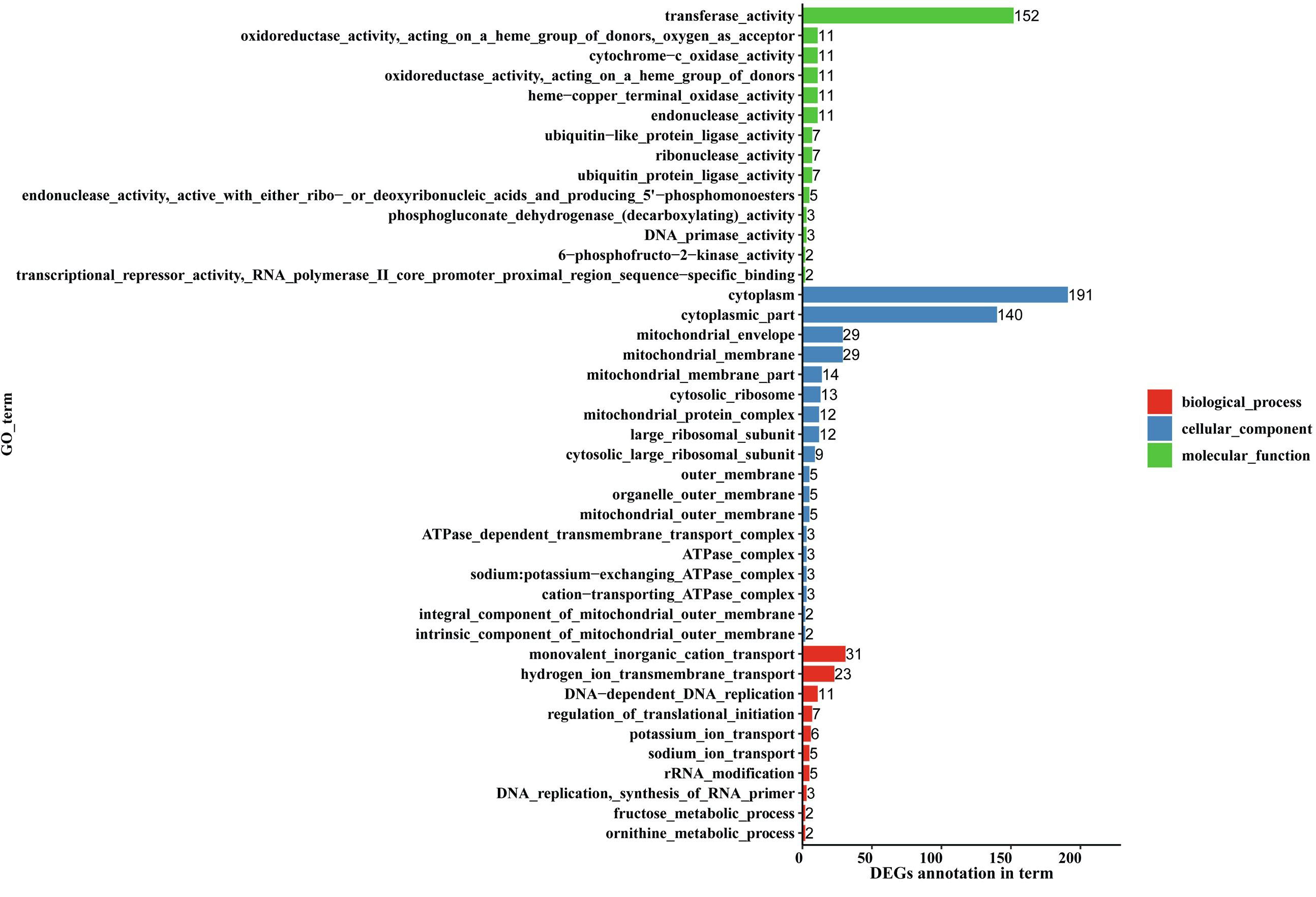
Fig. 6
Forty-two Gene Ontology (GO) terms significantly enriched by differentially expressed homologous genes (P < 0.05).
Eight genes were assigned to cellular components (CC), 10 to biological processes (BP), and 14 to molecular functions (MF).
Table 1
Top 13 Kyoto Encyclopedia of Genes and Genomes (KEGG) pathways significantly enriched by differentially expressed homologous genes (P < 0.05).
| Pathways | Involving genes | P value | Pathway ID | Level 2 |
|---|---|---|---|---|
| Bladder cancer | 8 | 0.006593 | ko05219 | Cancers: Specific types |
| Melanoma | 9 | 0.02046 | ko05218 | Cancers: Specific types |
| Thyroid cancer | 9 | 0.03693 | ko05216 | Cancers: Specific types |
| Pyruvate metabolism | 20 | 0.03104 | ko00620 | Carbohydrate metabolism |
| Bile secretion | 14 | 0.04864 | ko04976 | Digestive system |
| Aldosterone-sodium reabsorption regulated | 12 | 0.002475 | ko04960 | Excretory system |
| Primary immunodeficiency | 6 | 0.02711 | ko05340 | Immune diseases |
| Terpenoid backbone biosynthesis | 10 | 0.03597 | ko00900 | Metabolism of terpenoids and polyketides |
| DNA replication | 17 | 0.01765 | ko03030 | Replication and repair |
| FoxO signaling pathway | 24 | 0.0109 | ko04068 | Signal transduction |
| TGF-beta signaling pathway | 15 | 0.01839 | ko04350 | Signal transduction |
| VEGF signaling pathway | 11 | 0.03018 | ko04370 | Signal transduction |
| mTOR signaling pathway | 13 | 0.03336 | ko04150 | Signal transduction |
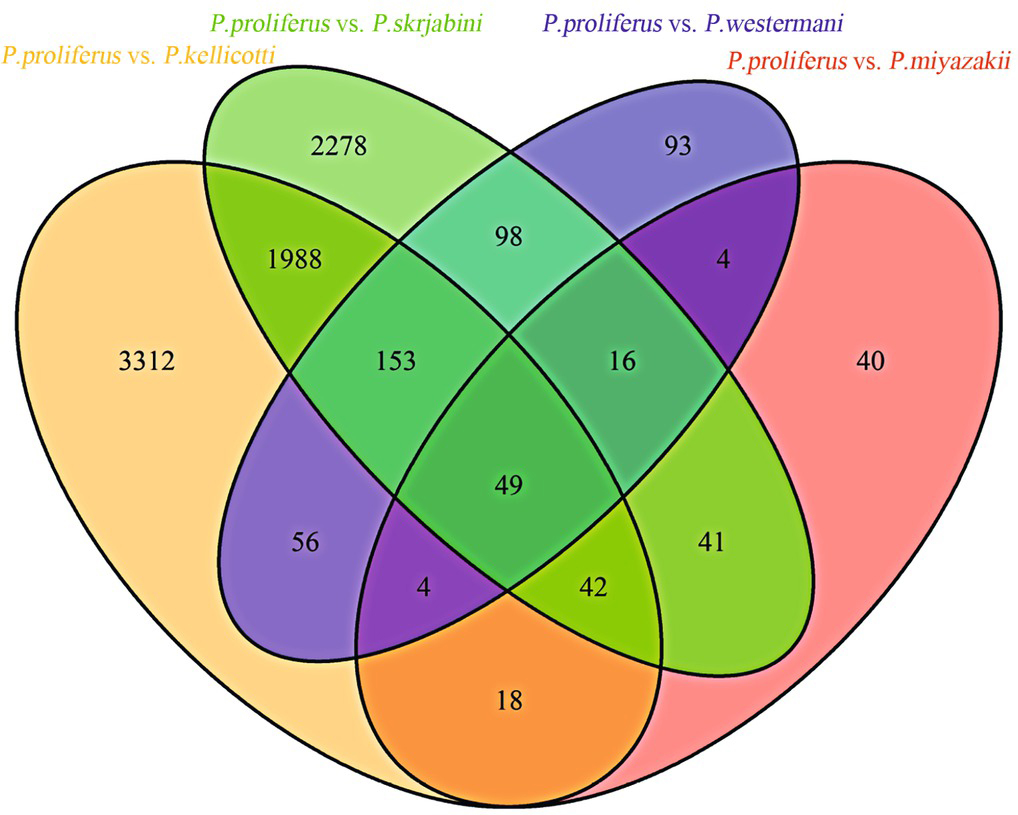
Fig. 7
Venn diagram showing 49 core genes identified from the 8192 differentially expressed homologous genes.
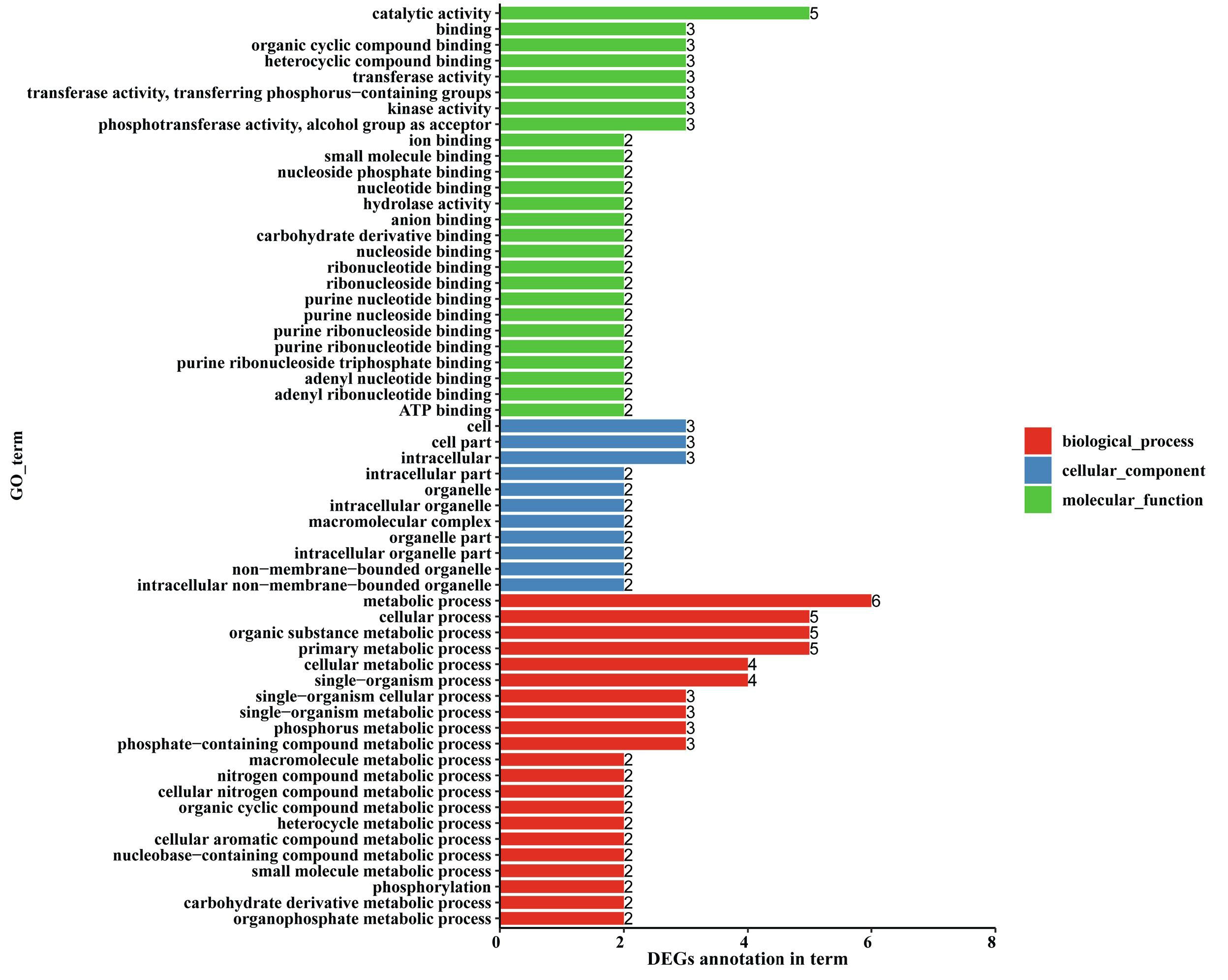
Fig. 8
Fifty-eight Gene Ontology (GO) terms (11 cellular components [CC], 21 biological processes [BP], and 26 molecular functions [MF]) enriched by core genes. Four BP (phosphate-containing compound metabolic process, organophosphate metabolic process, phosphorus metabolic process, and carbohydrate derivative metabolic process) and three MF (phosphotransferase activity/alcohol group as acceptor, kinase activity, and transferase activity/transferring phosphorus-containing groups) were significantly enriched at P < 0.05.
Table 2
Annotation information for the 16 core genes.
| Gene-ID | Database | Annotated ID | Description |
|---|---|---|---|
| TR11359|c0_g1 | KEGG | smm:Smp_137080 | multidrug resistance protein; K05658 ATP-binding cassette, subfamily B (MDR/TAP), member 1 [EC:3.6.3.44] |
| TR12766|c0_g1 | KEGG | oas:101108295 | tubulin alpha-3 chain; K07374 tubulin alpha |
| TR16634|c0_g1 | KEGG | smm:Smp_164960 | phosphatidylinositol-45-bisphosphate 3-kinase catalytic subunit alpha PI3K; K00922 phosphatidylinositol-4,5-bisphosphate 3-kinase [EC:2.7.1.153] |
| TR17957|c0_g1 | KEGG | fab:101816860 | WASF2; WAS protein family, member 2; K05748 WAS protein family, member 2 |
| TR89500|c0_g1 | KEGG | smm:Smp_159120 | family C48 unassigned peptidase (C48 family); K08596 sentrin-specific protease 7 [EC:3.4.22.68] |
| TR10230|c0_g1 | NR | gi|358340450|dbj|GAA48338.1| | retrovirus-related Pol polyprotein from transposon opus [Clonorchis sinensis] |
| TR11281|c0_g1 | NR | gi|358253292|dbj|GAA52762.1| | serine/threonine-protein phosphatase 2A regulatory subunit B′′ subunit alpha [Clonorchis sinensis] |
| TR15039|c0_g2 | NR | gi|684389238|ref|XP_009169318.1| | hypothetical protein T265_05919 [Opisthorchis viverrini] >gi|663050934|gb|KER26939.1| hypothetical protein T265_05919 [Opisthorchis viverrini] |
| TR18101|c0_g1 | NR | gi|684372571|ref|XP_009164145.1| | hypothetical protein T265_01791 [Opisthorchis viverrini] >gi|663056274|gb|KER32181.1| hypothetical protein T265_01791 [Opisthorchis viverrini] |
| TR22019|c0_g1 | NR | gi|358337500|dbj|GAA32515.2| | cell wall protein Awa1p [Clonorchis sinensis] |
| TR18820|c0_g1 | SwissProt | sp|Q64640|ADK_RAT | Adenosine kinase OS=Rattus norvegicus GN=Adk PE=1 SV=3 |
| TR18976|c0_g1 | SwissProt | sp|Q9D6Z1|NOP56_MOUSE | Nucleolar protein 56 OS=Mus musculus GN=Nop56 PE=1 SV=2 |
| TR20969|c0_g1 | SwissProt | sp|Q5EB30|ODF3A_XENTR | Outer dense fiber protein 3 OS=Xenopus tropicalis GN=odf3 PE=2 SV=1 |
| TR21606|c0_g1 | SwissProt | sp|Q9P2D7|DYH1_HUMAN | Dynein heavy chain 1, axonemal OS=Homo sapiens GN=DNAH1 PE=2 SV=4 |
| TR275|c0_g1 | SwissProt | sp|Q6DTY7|F264_MOUSE | 6-phosphofructo-2-kinase/fructose-2,6-bisphosphatase 4 OS=Mus musculus GN=Pfkfb4 PE=2 SV=4 |
| TR50927|c0_g1 | SwissProt | sp|Q3UM45|PP1R7_MOUSE | Protein phosphatase 1 regulatory subunit 7 OS=Mus musculus GN=Ppp1r7 PE=1 SV=2 |
Table 3
Top 28 Kyoto Encyclopedia of Genes and Genomes (KEGG) pathways significantly enriched by core genes (P < 0.05).
| Pathway | Pathway ID | Level 2 | Pvalue | Involving DEHGs |
|---|---|---|---|---|
| Choline metabolism in cancer | ko05231 | Cancers: Overview | 0.004227 | PI3K;WASF2 |
| MicroRNAs in cancer | ko05206 | Cancers: Overview | 0.01585 | PI3K;MRP |
| Melanoma | ko05218 | Cancers: Specific types | 0.02688 | PI3K |
| Acute myeloid leukemia | ko05221 | Cancers: Specific types | 0.0292 | PI3K |
| Non-small cell lung cancer | ko05223 | Cancers: Specific types | 0.03013 | PI3K |
| Pancreatic cancer | ko05212 | Cancers: Specific types | 0.03338 | PI3K |
| Endometrial cancer | ko05213 | Cancers: Specific types | 0.04168 | PI3K |
| Chronic myeloid leukemia | ko05220 | Cancers: Specific types | 0.04397 | PI3K |
| Colorectal cancer | ko05210 | Cancers: Specific types | 0.04718 | PI3K |
| Fructose and mannose metabolism | ko00051 | Carbohydrate metabolism | 0.04352 | PFK-2/FBPase2 |
| Apoptosis | ko04210 | Cell growth and death | 0.03661 | PI3K |
| Carbohydrate digestion and absorption | ko04973 | Digestive system | 0.0292 | PI3K |
| Type II diabetes mellitus | ko04930 | Endocrine and metabolic diseases | 0.02781 | PI3K |
| Regulation of lipolysis in adipocytes | ko04923 | Endocrine system | 0.03292 | PI3K |
| Thyroid hormone signaling pathway | ko04919 | Endocrine system | 0.03431 | PI3K;PFK-2/FBPase2 |
| Prolactin signaling pathway | ko04917 | Endocrine system | 0.03754 | PI3K |
| Aldosterone-regulated sodium reabsorption | ko04960 | Excretory system | 0.03013 | PI3K |
| Fc gamma R-mediated phagocytosis | ko04666 | Immune system | 0.005578 | PI3K;WASF2 |
| Toll-like receptor signaling pathway | ko04620 | Immune system | 0.02641 | PI3K |
| Fc epsilon RI signaling pathway | ko04664 | Immune system | 0.03477 | PI3K |
| B cell receptor signaling pathway | ko04662 | Immune system | 0.03754 | PI3K |
| Bacterial invasion of epithelial cells | ko05100 | Infectious diseases: Bacterial | 0.02904 | PI3K;WASF2 |
| Chagas disease (American trypanosomiasis) | ko05142 | Infectious diseases: Parasitic | 0.04214 | PI3K |
| ABC transporters | ko02010 | Membrane transport | 0.0426 | MRP |
| AMPK signaling pathway | ko04152 | Signal transduction | 0.007408 | PI3K;PFK-2/FBPase2 |
| Jak-STAT signaling pathway | ko04630 | Signal transduction | 0.03615 | PI3K |
| VEGF signaling pathway | ko04370 | Signal transduction | 0.03846 | PI3K |
| mTOR signaling pathway | ko04150 | Signal transduction | 0.04901 | PI3K |