
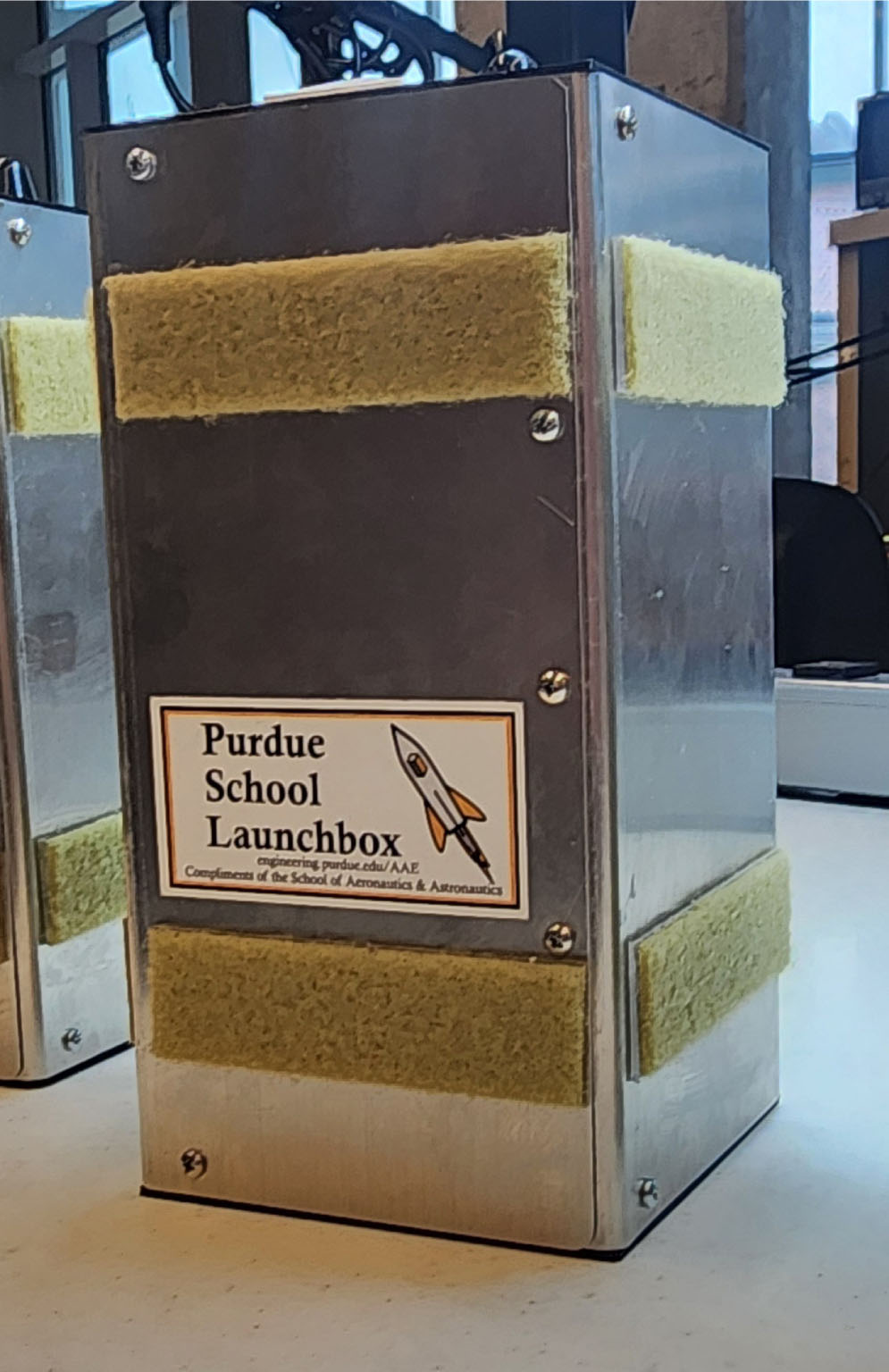
Figure 1.
The Purdue School Launch box that housed the experiment. The dimensions for the box are standard 2U CubeSat (10cm × 10cm × 20cm)
Table 1.
Lesson opportunities in an energy-based view of the popping of a kernel of popcorn.
| Event | Cause | Description |
|---|---|---|
| Popping | A kernel pops when it bursts from high pressure inside. | This introduces concepts of gas pressure, material strength, and sudden energy release, and is easily extended to safety with pres- surized vessels in the lab and the kitchen. |
| High pressure | The high pressure is created by steam, confined by the ap- proximately rigid hull of the kernel. | Gas processes are introduced. |
| Steam | Boiling of moisture in the kernel. | Introduction to states of matter and latent heat of vaporization. |
| Energy to boil | The effect of power supplied over a duration of time. | How energy and power are related and visible in everyday life |
| Thermal control | Radiation and convection work against popping in this system. | The effect of lunar-g on convective losses can be discussed. |
| Heating | The Ni-Chrome wire transforms electrical current into heat, which increases the temperature of the kernel. | Resistive heating, electrical current and voltage; Ohm’s Law. |
| A source of energy | Batteries. | The energy to drive current through the wire is supplied by Blue Origin’s batteries. |
| Batteries | Energy is stored in chemical bonds. | Energy in different forms, primary versus rechargeable batteries. |
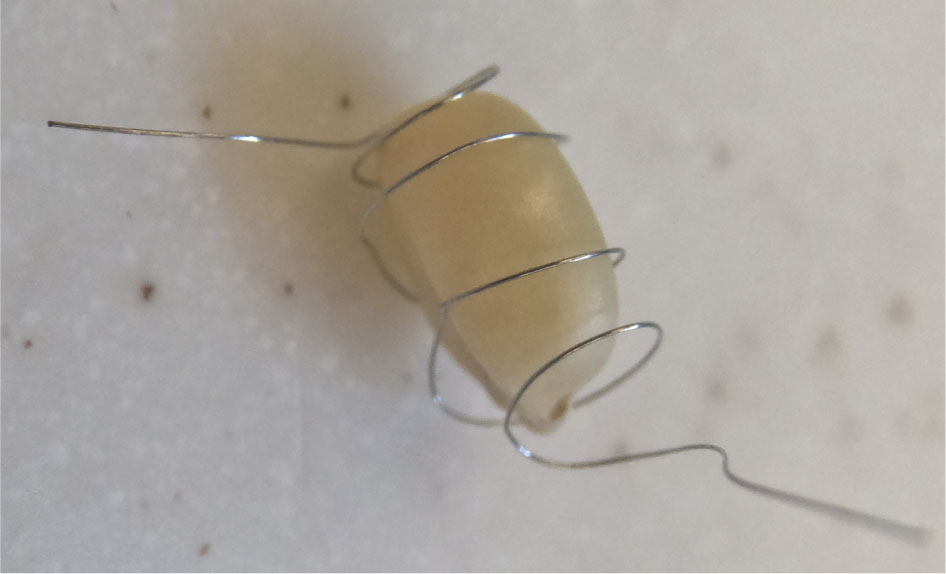
Figure 2.
Example of a single popcorn kernel wrapped in Ni-Chrome wire as used in this experiment. The Ni-Chrome wire is 36-gauge in diameter, and the kernel is approximately 0.8cm long and 0.4cm in diameter.
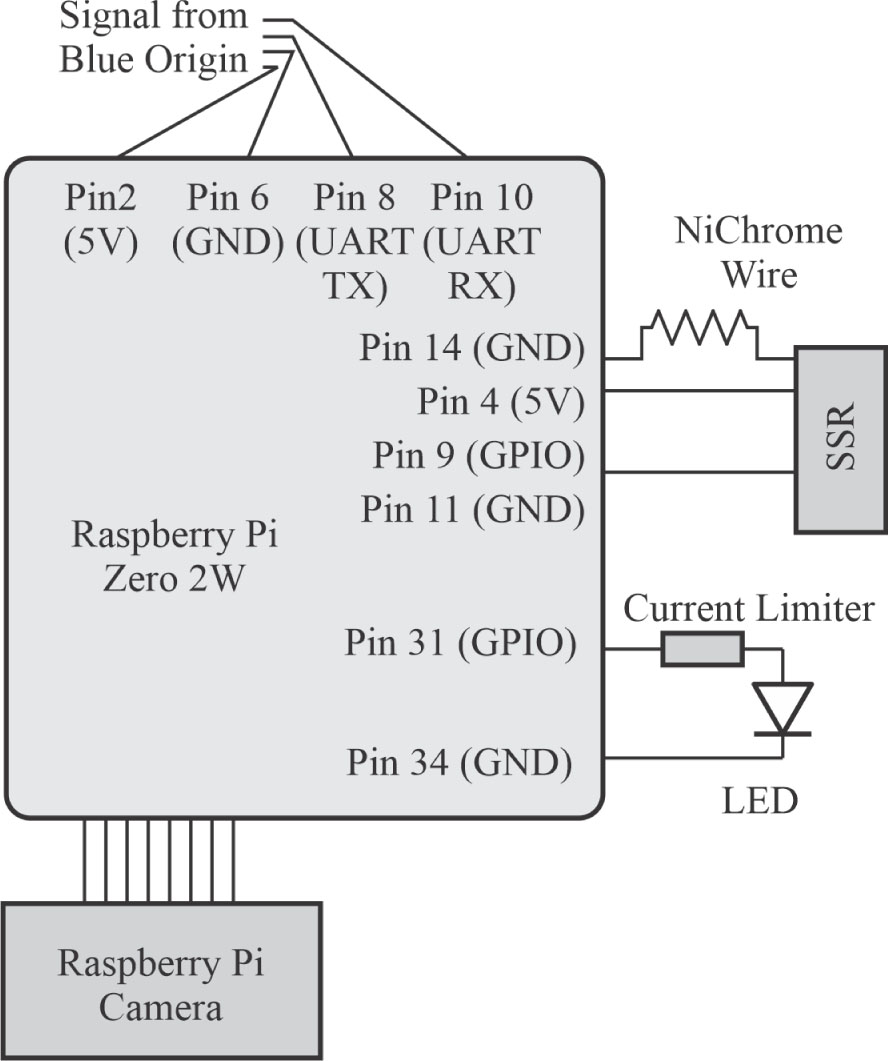
Figure 3.
Control circuit for the popcorn experiment.
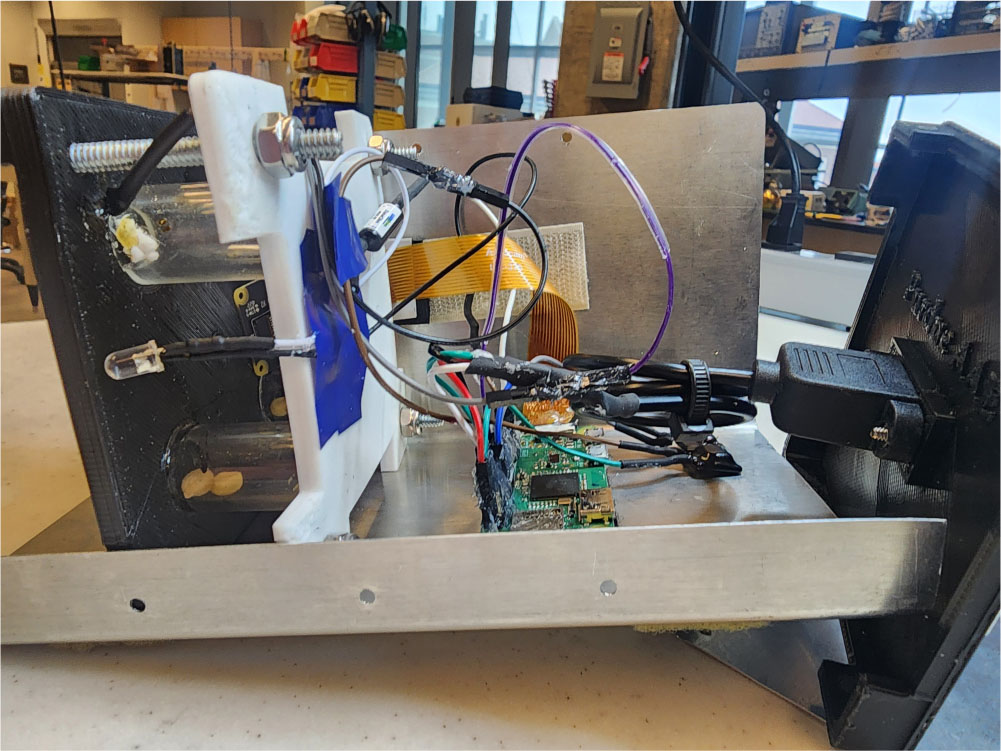
Figure 4.
View of the internal hardware of the experiment. The dimensions for the box are standard 2U CubeSat (10cm × 10cm × 20cm).
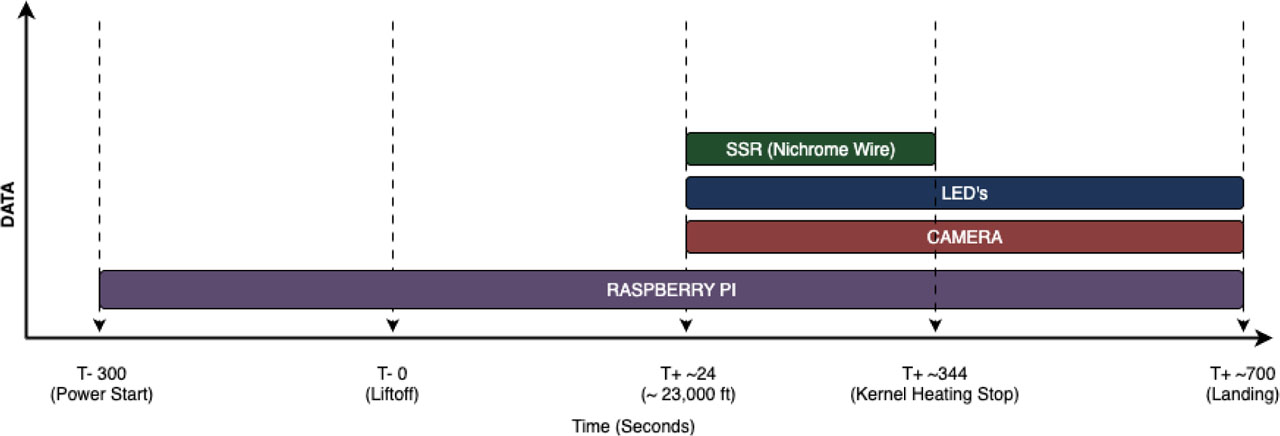
Figure 5.
Timeline of events for the popcorn experiment.
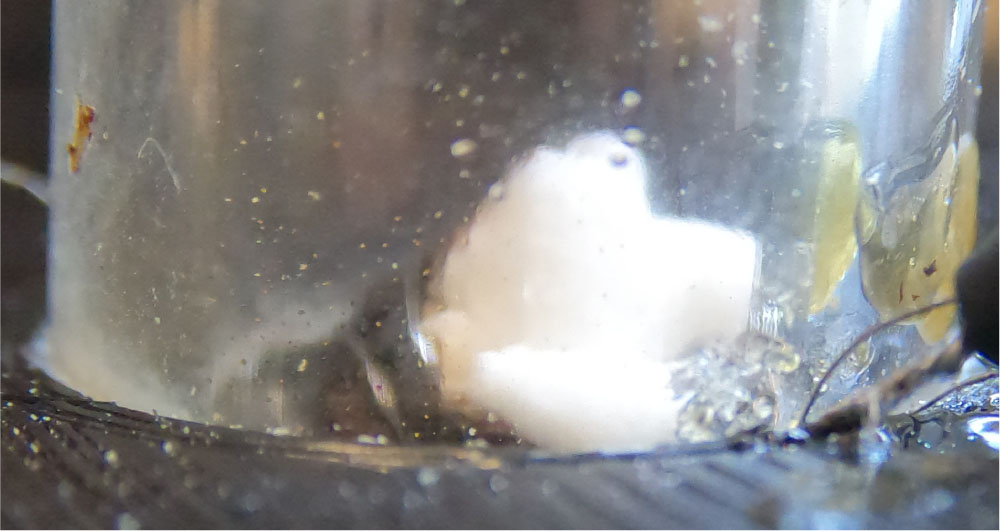
Figure 6.
One popped kernel of popcorn after the mission. The acrylic tube visible here served to constrain the Ni-Chrome wire and kernel during the mission. The tube dimensions are: inner diameter 1.27 cm, outer diameter 1.9 cm, height 2.54 cm.