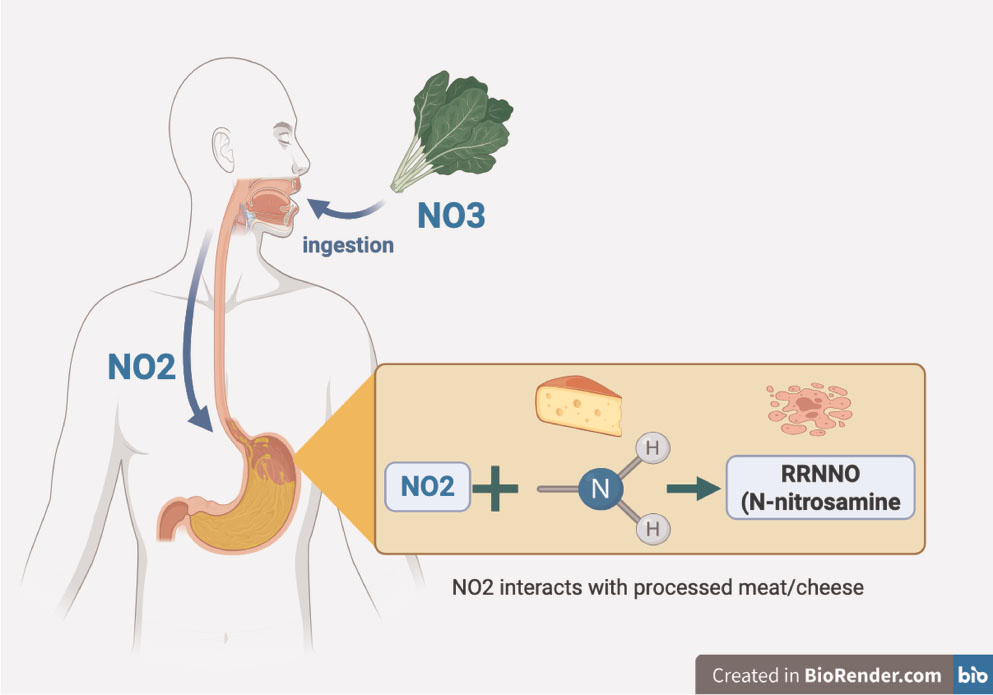
Figure 1.
Schematic representation of the metabolic conversion of dietary NO3− into NO2− and the potential formation of carcinogenic nitrosamines under acidic gastric conditions when nitrate-rich vegetables are consumed alongside NO2−-containing preserved foods.
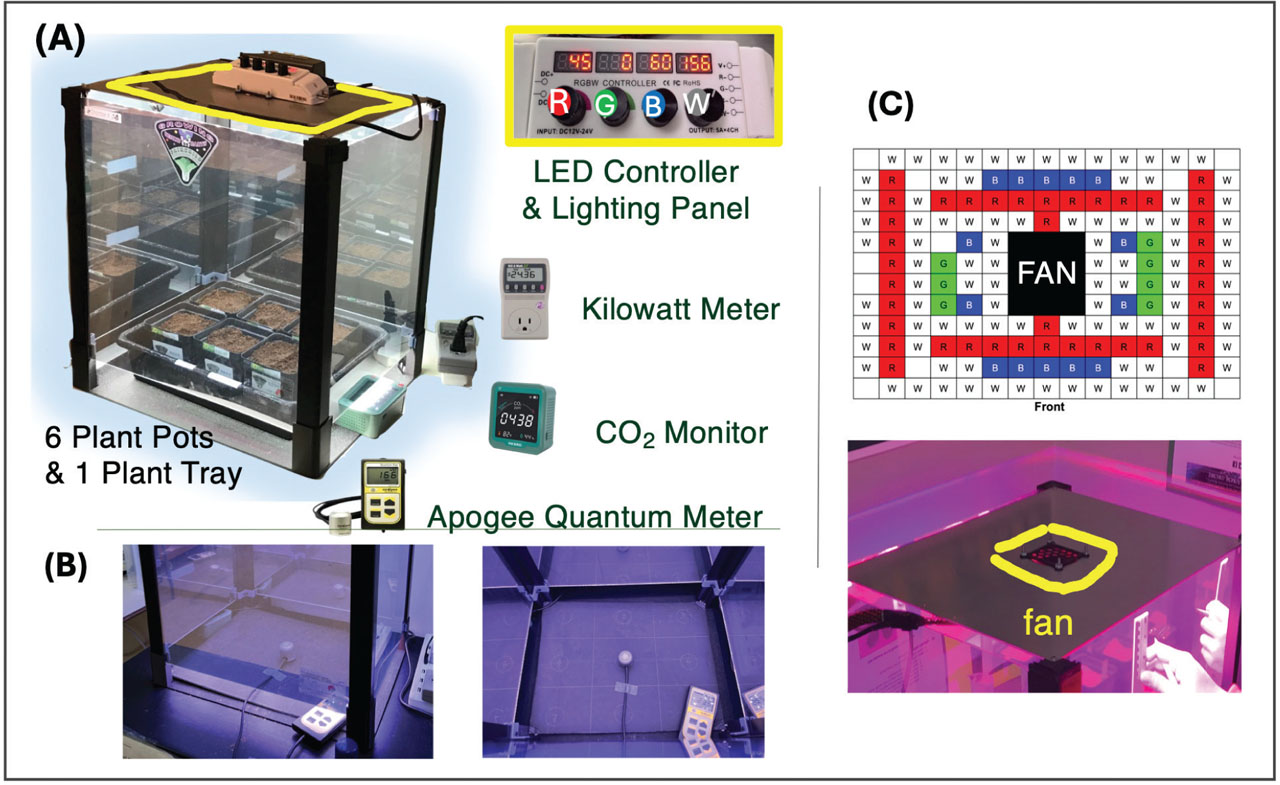
Figure 2.
GBE Growth Chamber Setup. (A) The chamber included an LED lighting panel (equipped with red, green, blue, and white LEDs), an LED controller, four reflective side panels, a circulation fan, and environmental sensors (CO2 monitor, kilowatt meter, and quantum meter) to mirror key functions of Veggie and APH operated on the ISS. (B) The quantum meter was placed at the bottom center of the chamber to measure the chamber light intensity in μmol·m−2·s−1 PPFD. (C) LED distribution pattern drawing (top) and a real-world view of the chamber fan (bottom).
Table 1.
Cultivars Tested in This Study. Seed selections were based on the Growing Beyond Earth (GBE) seed list from 2015–2022 and research protocol 2023. Cultivars labeled with “IR” indicate neutron-irradiated seed groups.
| Species | Common name | Cultivar /Variety | Manufacturer (GBE ID) |
|---|---|---|---|
| Lactuca sativa | Red Romaine lettuce | ‘Outredgeous’ | Johnny's Seeds (GBE 1, GBE 1IR) |
| Brassica rapa var. nipposinica | Mizuna | ‘Mizuna’ | Johnny's Seeds (GBE 24, GBE24IR) |
| Brassica rapa var. chinensis | Pak Choi | ‘Extra dwarf’ | Kitazawa Seeds Co. (GBE 56, GBE56IR) |
| Brassica carinata | Mustard (JS) | ‘Amara’ | Johnny's Seeds (GBE 113, GBE113IR) |
| Brassica rapa var. chinensis | Hybrid Leafy Asian Green/Pak Choi | ‘Rosie F1’ | Johnny's Seeds (GBE 120, GBE120IR) |
| Brassica juncea | Mustard Green | ‘Scarlet Frills’ | Johnny's Seeds (GBE 195, GBE195IR) |
| Brassica juncea | Mustard Green | ‘Garnet Giant’ | Johnny's Seeds (GBE 196, GBE196IR) |
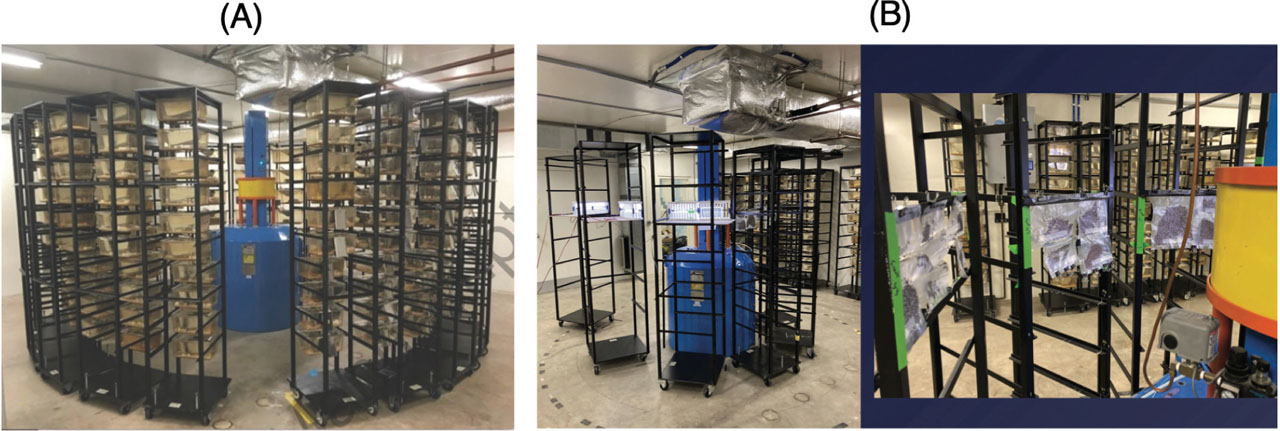
Figure 3.
Neutron Radiation Facility at Colorado State University. (A) Rodent radiation experiment setup, showing neutron radiation source in the center. (B) Plant seed radiation setup, illustrating the positioning of seed packets for uniform neutron exposure. Both images are from Dr. Alexander Meyers' 2023 presentation, used with permission.
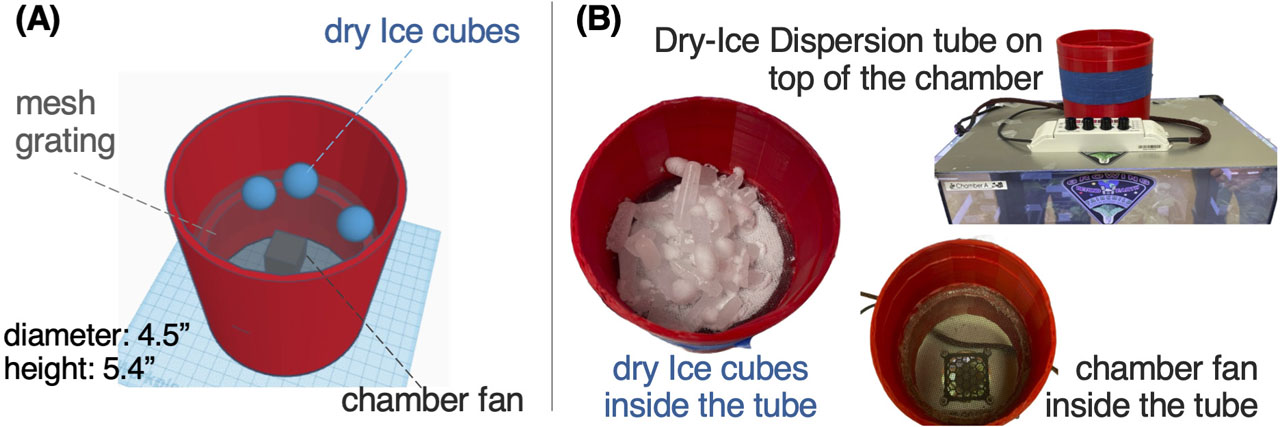
Figure 4.
Custom-designed 3D-printed dry-ice CO2 dispersion tube setup. (A) A computer-assisted design (CAD) drawing for the system and (B) a real-life image of the system.
Table 2.
Experimental Design outlining control and experimental variables.
| Conditions | Control | Experimental |
|---|---|---|
| Photoperiod | 12/12 | 12/12 |
| Seeds | Non-irradiated | Irradiated |
| Light Intensity | 230 μmol·m−2·s−1 LED (R25G0B25W180) | 305 μmol·m−2·s−1 LED (R25G0B25W255) |
| CO2 (Light Intensity Trials) | ~ 500 ppm | ~ 500 ppm |
| CO2 (CO2 Trials) | ~ 500 ppm | Exp. 1: ~1000 ppm (+ 2500g dry ice) |
| Exp. 2: ~1250 ppm (+ 5000g dry ice) | ||
| Exp. 3: ~1500 ppm (+ 7500g dry ice) |
Table 3.
Summary of CO2 estimation parameters and modeled internal concentrations for each experimental chamber.
| Trial | Dry Ice (g) | Temp (°C) | RH (%) | CO2 (ppm) |
|---|---|---|---|---|
| Exp. 1 | 7725.4 | 16.3 ± 0.7 | 36.2 ± 1.2 | 1490 ± 188 |
| Exp. 2 | 4801.3 | 17.8 ± 0.5 | 38.3 ± 0.9 | 1192 ± 68 |
| Exp. 3 | 3997.0 | 20.3 ± 0.8 | 37.0 ± 1.0 | 1160 ± 145 |
Table 4.
Environmental Data: Average environmental growth conditions measured across all trials. Chamber temperature (Temp °C), relative humidity (RH, %), total water usage (Water, mL), and external CO2 (ppm) were recorded on weekdays; values are reported as mean ± standard error of the mean (SEM).
| Trials | Temp (°C) | RH (%) | Water (mL) | CO2 (ppm) |
|---|---|---|---|---|
| 86 GBE Schools (6 Testing Cultivars) | 23.8 ± 0.4 | 42.9 ± 1.3 | 5502.7 ± 339.9 | N/A |
| Light Intensity Trial: Control | 21.9 ± 0.2 | 35.2 ± 2.0 | 4708.3 ± 809.3 | 505.6 ± 6.1 |
| Light Intensity Trial: Exp. | 26.4 ± 0.4 | 28.0 ± 1.2 | 4408.3 ± 391.4 | 517.8 ± 16.0 |
| CO2 Trial: Control | 23.8 ± 0.2 | 33.6 ± 1.9 | 4700 ± 195.8 | 500 ± 20.0 |
| CO2 Trial: Exp. 1 | 16.3 ± 0.7 | 36.2 ± 1.2 | 9700.0 | 1135.4 ± 39.4 |
| CO2 Trial: Exp. 2 | 17.8 ± 0.5 | 38.3 ± 0.9 | 6450.0 | 1215.0 |
| CO2 Trial: Exp. 3 | 20.3 ± 0.8 | 37.0 ± 1.0 | 5000.0 | 1215.0 |
Table 5.
Spaceflight Suitability Matrix.
| Traits | Weight | Factor (Category) | Justification with References |
|---|---|---|---|
| Germination (%) | 1.5 | Plant growth (Establishment) | Ensures successful crop establishment under variable spaceflight conditions (Massa et al., 2015). |
| Edible Biomass (g) | 2 | Plant Growth (Yield) | Maximizes harvestable mass per unit area in bioregenerative systems (Darby et al., 2024; Massa et al., 2015). |
| Plant Volume (cm3) | 1.5 (inverted) | Plant Growth (Morphology) | Compact morphology supports limited-volume growth in spacecraft systems (Massa et al., 2015). |
| K (mg/g) | 2 | Nutritional (beneficial) | Essential for nerve function and cardiovascular regulation under microgravity (Darby et al., 2024). |
| Mg (mg/g) | 1.5 | Nutritional (beneficial) | Supports enzyme activity and chlorophyll production; however, this support may decline under elevated CO2 levels (Massa et al., 2015). |
| Ca (mg/g) | 1 | Nutritional (beneficial) | Protects bone health, which is compromised in microgravity (Darby et al., 2024; Massa et al., 2015). |
| Fe (μg/g) | 1.5 (inverted) | Nutritional (risk) | Excess Fe contributes to the risk of oxidative stress and bone loss (Darby et al., 2024; Smith & Zwart, 2020). |
| Nitrate (NO3−) (mg/g) | 1.5 (inverted) | Nutritional (risk) | High nitrate intake may form carcinogenic nitrosamines in space diets (Darby et al., 2024; Karwowska & Kononiuk, 2020). |
Table 6.
Nutrient Ranking Matrix for Hybrid Leafy Asian Green Plant Leaf Tissue under Varying CO2 and Radiation Treatments.
| Treatment | K | Mg | Ca | Fe | Sum | Ranking |
|---|---|---|---|---|---|---|
| 500 ppm C02 non-IRR | 0.00 | 0.32 | 1.00 | 0.00 | 1.32 | 8 |
| 1000 ppm C02 non-IRR | 1.79 | 0.00 | 0.45 | 0.21 | 2.45 | 5 |
| 1250 ppm C02 non-IRR | 2.00 | 1.21 | 0.00 | 0.95 | 4.16 | 2 |
| 1500 ppm C02 non-IRR | 1.93 | 1.35 | 0.17 | 0.65 | 4.10 | 3 |
| 500 ppm C02 IRR | 0.01 | 0.27 | 0.97 | 0.46 | 1.71 | 7 |
| 1000 ppm C02 IRR | 1.92 | 1.50 | 0.12 | 1.50 | 5.04 | 1 |
| 1250 ppm C02 IRR | 1.15 | 1.24 | 0.03 | 0.49 | 2.91 | 4 |
| 1500 ppm C02 IRR | 1.42 | 0.00 | 0.48 | 0.03 | 1.93 | 6 |
[i] Note: Composite scores based on normalized and weighted nutrient values (K, Mg, Ca, and Fe), using the trait weights listed in Table 5. Nutrient values were derived from leaf tissue collected at harvest. All values were normalized on a 0–1 scale; weights were then applied to generate scores.
Table 7.
Normalized, Weighted Rankings of Red Romaine Lettuce Grown Under Different Light Intensity and Radiation Treatments.
| 230 PPFD NonIRR | 230 PPFD IRR | 305 PPFD NonIRR | 305 PPFD IRR | |
|---|---|---|---|---|
| Germination ×1.5 | 0.17 | 1.50 | 0.00 | 0.00 |
| Edible Biomass ×2 | 0.00 | 0.39 | 1.27 | 2.00 |
| Volume ×1.5 (inverted) | 1.26 | 1.06 | 1.50 | 0.00 |
| K ×2 | 0.55 | 2.00 | 0.00 | 0.61 |
| Mg ×1.5 | 0.75 | 1.50 | 0.75 | 0.00 |
| Ca ×1 | 0.00 | 1.00 | 1.00 | 0.75 |
| Fe ×1.5 (inverted) | 1.49 | 1.50 | 0.00 | 1.34 |
| NO3− ×1.5 (Inverted) | 1.50 | 1.00 | 1.38 | 0.00 |
| Composite score (sum) | 5.71 | 9.95 | 5.89 | 4.70 |
| Ranking | 3 | 1 | 2 | 4 |
[i] Note: Rankings are based on plant growth factors (germination, edible biomass, and volume) and nutritional factors (K, Mg, Ca, Fe, and NO3−) listed in Table 5. Nutrient values were derived from leaf tissue collected at harvest. All values were normalized on a 0–1 scale; weights were then applied to generate scores.
Table 8.
Normalized, Weighted Rankings of Hybrid Leafy Asian Green Grown Under Varying CO2 and Radiation Treatments.
| 500 N | 1000 N | 1250 N | 1500 N | 500 I | 1000 I | 1250 I | 1500 I | |
|---|---|---|---|---|---|---|---|---|
| Germination | 1.43 | 0.00 | 1.50 | 1.50 | 1.50 | 0.74 | 1.50 | 1.12 |
| Edible Biomass | 0.11 | 1.63 | 2.00 | 0.23 | 0.05 | 0.21 | 1.86 | 0.00 |
| Volume | 1.40 | 0.36 | 0.44 | 0.44 | 1.50 | 1.46 | 0.00 | 1.37 |
| K | 0.00 | 0.22 | 2.00 | 1.93 | 0.01 | 1.92 | 1.15 | 1.42 |
| Mg | 0.32 | 1.50 | 1.21 | 1.35 | 0.26 | 1.50 | 1.24 | 0.00 |
| Ca | 1.00 | 0.55 | 0.00 | 0.17 | 0.97 | 0.12 | 0.03 | 0.48 |
| Fe | 0.00 | 1.21 | 0.95 | 0.65 | 0.46 | 1.50 | 0.49 | 0.03 |
| NO3− | n/a | 0.00 | 0.45 | 0.00 | n/a | 0.62 | 0.95 | 1.40 |
| Sum (Excl. NO3−) | 4.26 | 5.47 | 8.09 | 6.27 | 4.76 | 7.45 | 6.27 | 4.42 |
| Sum (Incl. NO3−) | n/a | 5.47 | 8.54 | 6.27 | n/a | 8.07 | 7.22 | 5.83 |
| Ranking (Excl. NO3−) | 8 | 5 | 1 | 3 | 6 | 2 | 3 | 7 |
| Ranking (Incl. NO3−) | 6 | 1 | 4 | 2 | 3 | 5 |
[i] Note: Rankings are based on plant growth and nutrient factors (see Table 5), with nutrient values derived from harvested leaf tissue. All values were normalized (0–1 scale) and weighted before scoring. Composite scores are shown both with and without NO3− due to limited data in some treatments. Column abbreviations indicate CO2 concentration in ppm and irradiation condition: N = Non-IRR (nonirradiated), I = IRR (irradiated). For example, 500N = ~500 ppm CO2, nonirradiated.
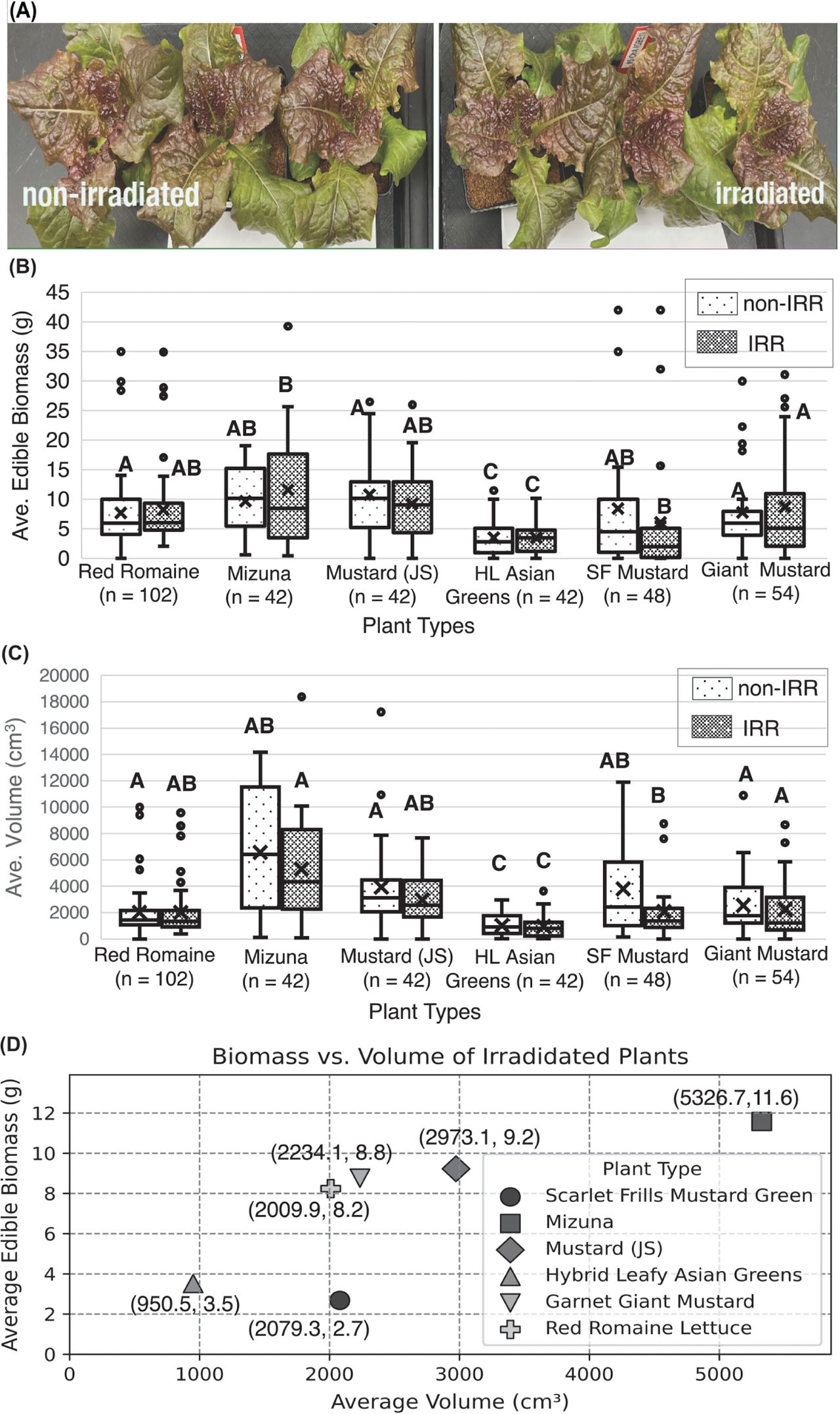
Figure 5.
(A) Red romaine lettuce morphology under 230 μmol·m−2·s−1 PPFD treatment. (B) Boxplot analyses of edible biomass across six cultivars. Data are presented as mean ± SEM, with varying sample sizes per cultivar (n = 42–102). Letters indicate statistically significant differences across plant types. (C) Boxplot analyses of plant volume across six cultivars. Data are presented as mean ± SEM, with varying sample sizes per cultivar (n = 42–102). Letters indicate statistically significant differences across plant types. (D) A scatter plot of average edible biomass versus plant volume for irradiated plants across six testing cultivars.
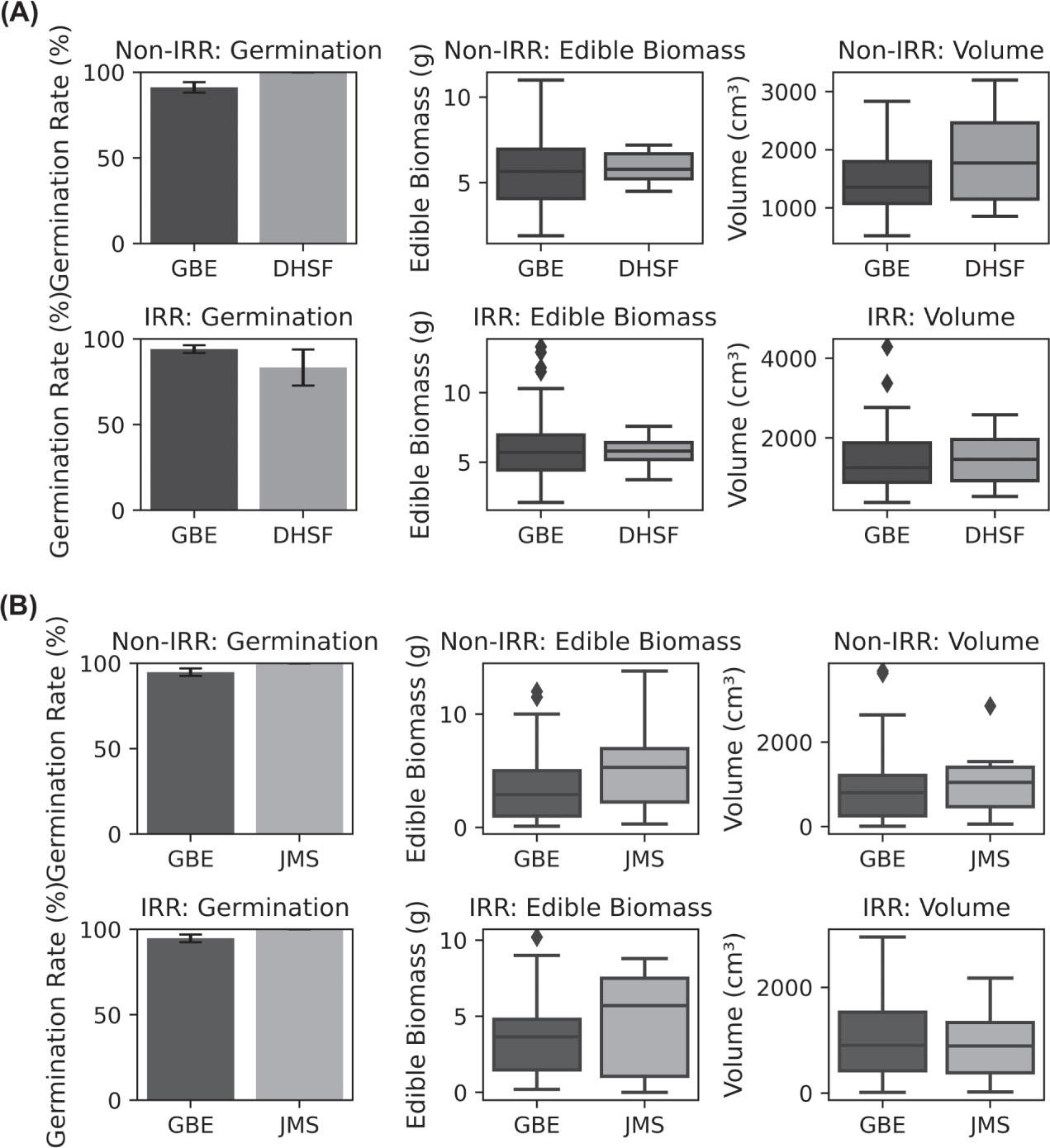
Figure 6.
(A) Comparison of germination rates, edible biomass, and plant volume between GBE schools (n = 102) and DHSF (n = 6) for irradiated and nonirradiated red romaine lettuce. Data are presented as mean ± SEM. (B) Comparison of germination rates, edible biomass, and plant volume between GBE schools (n = 42) and JMS (n = 6) for irradiated and nonirradiated hybrid leafy Asian green. Data are presented as mean ± SEM.
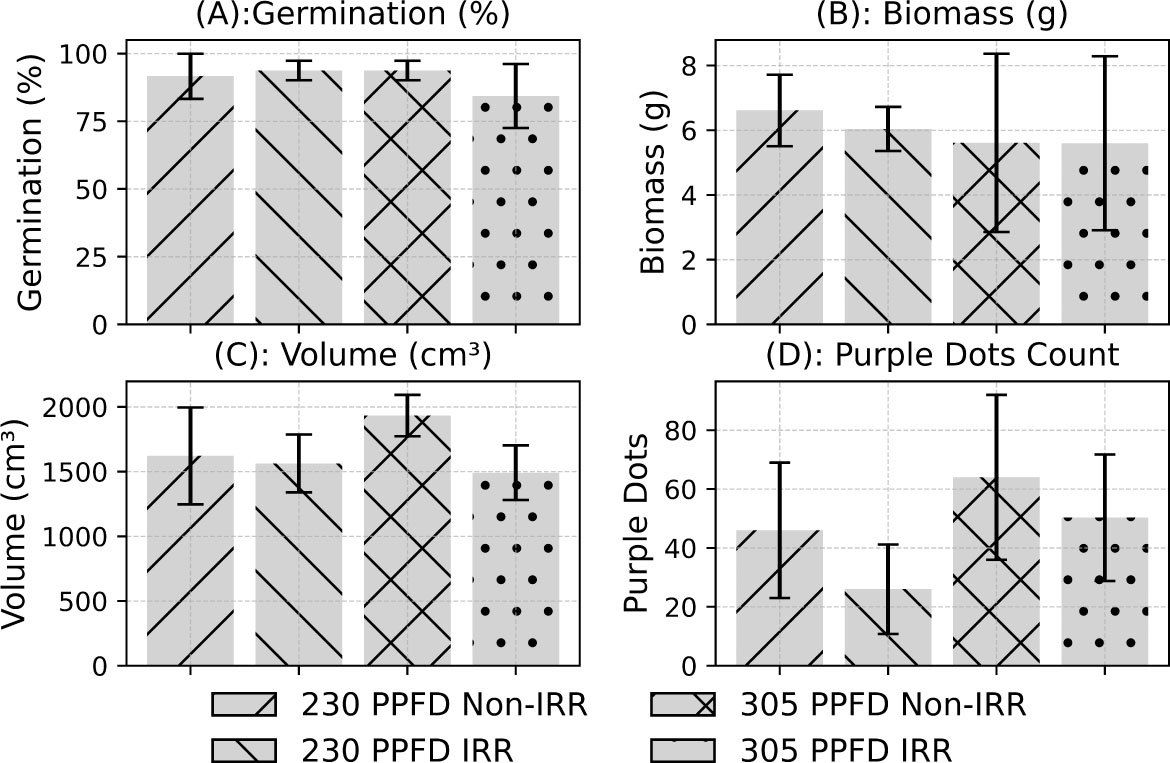
Figure 7.
Effects of light intensity (230 vs. 305 μmol m−2 s−1 PPFD) and neutron irradiation on red romaine lettuce's germination (A), biomass (B), volume (C), and purple dot count (D). No significant differences were detected across treatments. Data are mean ± SEM (n = 6 per treatment).
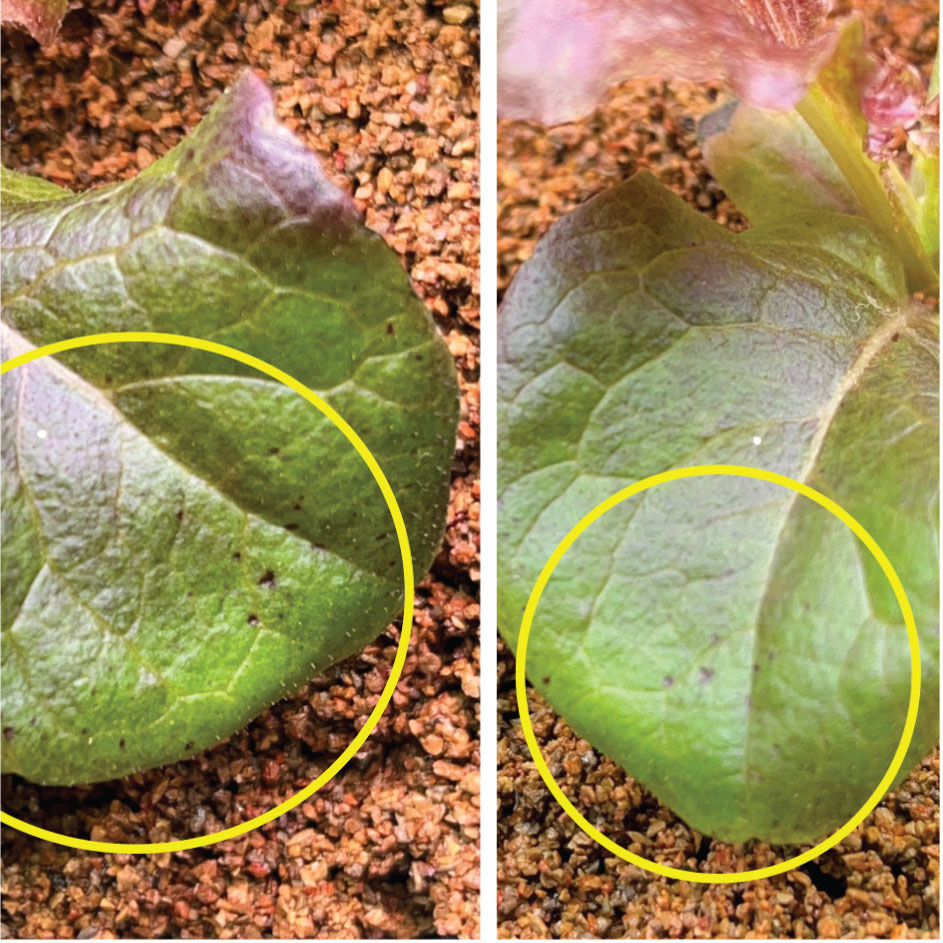
Figure 8:
A representative image illustrates the purple pigmentation occurrence of red romaine lettuce.
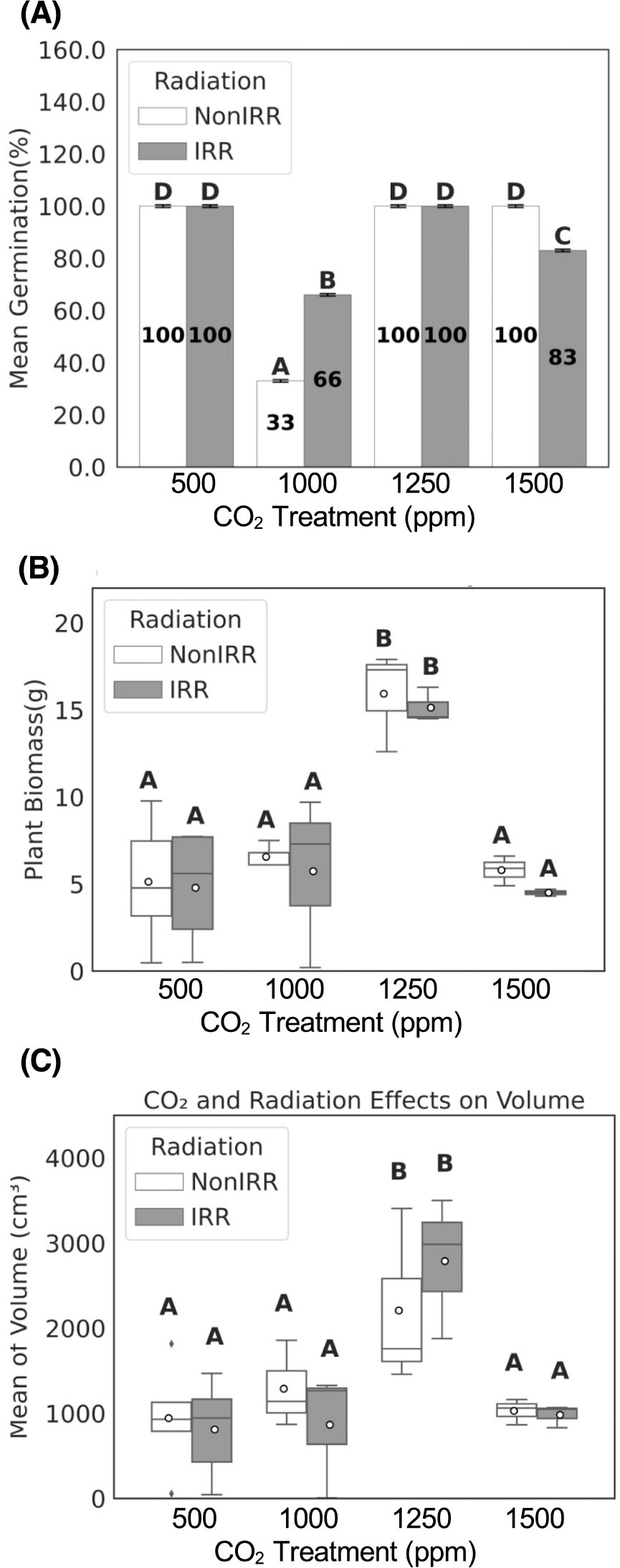
Figure 9:
Effects of CO2 enrichment and seed irradiation on harvested hybrid leafy Asian green. (A) Germination rate (%), (B) edible biomass (g), and (C) plant volume (cm3) are shown for four CO2 levels: ~500 ppm (control, n = 15 per radiation group), ~1000 ppm, (n = 3 per group ), ~1250 ppm (n = 3 per group), and ~1500 ppm (n = 3 per group), with each group, including both nonirradiated (Non-IRR) and irradiated (IRR) plants. Data are presented as mean ± SEM.
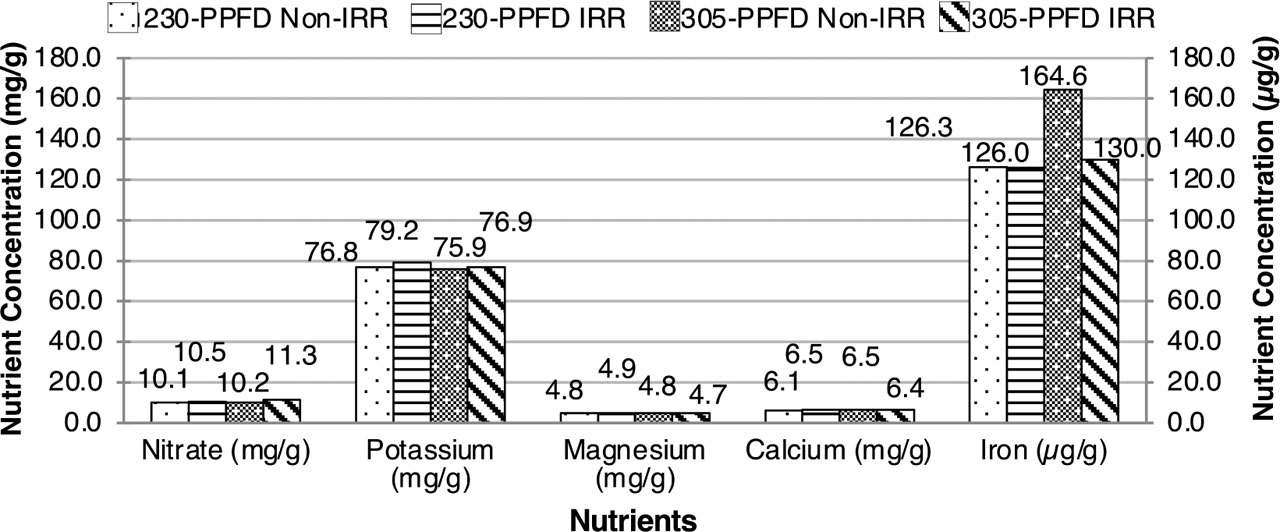
Figure 10.
Nutrient composition analysis of harvested rred romaine lettuce plant leaf tissue under two light intensities. Data are mean ± SEM (n = 6 per treatment).
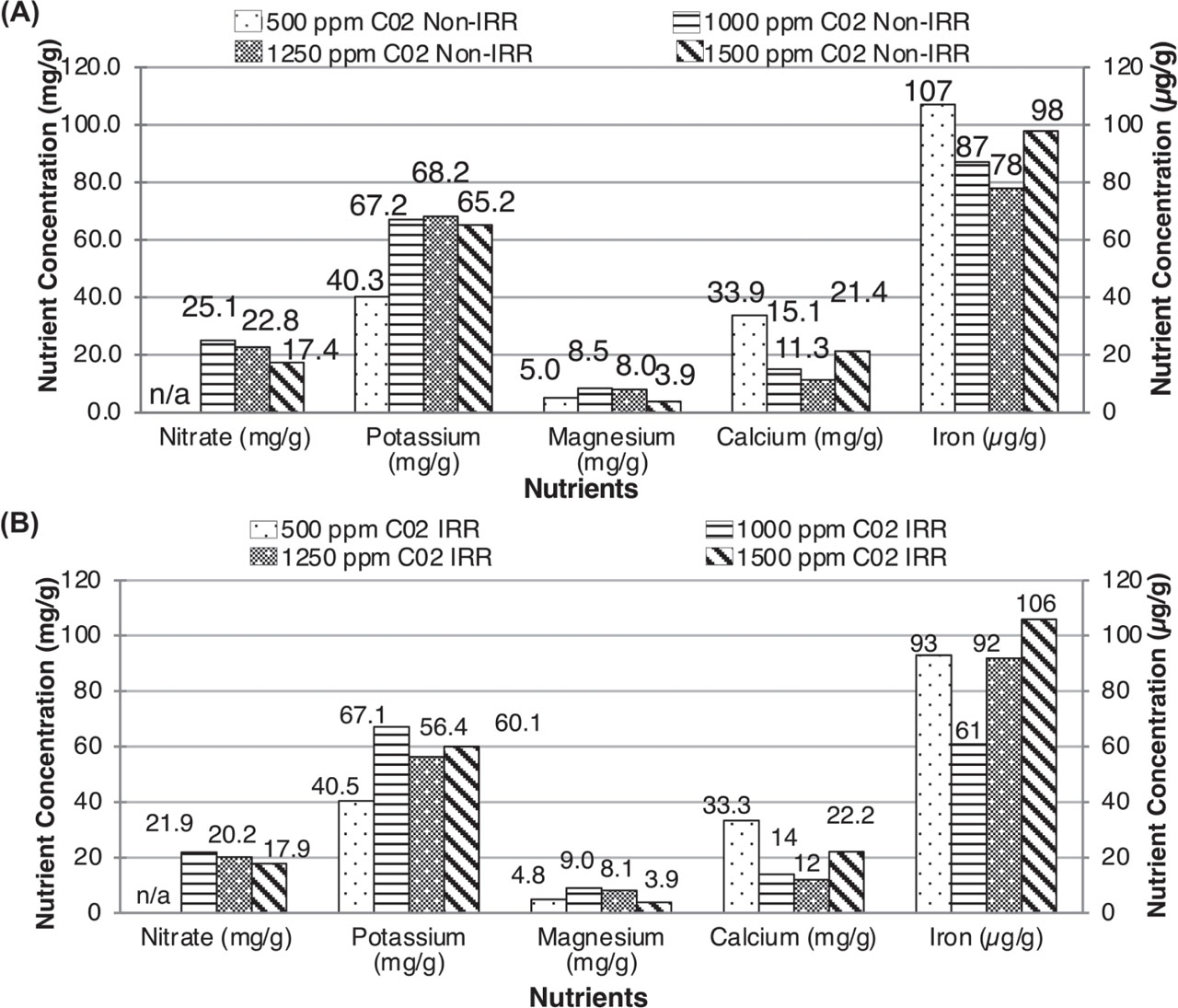
Figure 11.
(A) Nutrient composition analysis of harvested nonirradiated (Non-IRR) hybrid leafy Asian green plant leaf tissue under varying CO2 levels. Data are mean ± SEM (n = 3 per treatment). (B) Nutrient composition analysis of harvested irradiated (IRR) hybrid leafy Asian green plant leaf tissue under varying CO2 levels. Data are mean ± SEM (n = 3 per treatment).
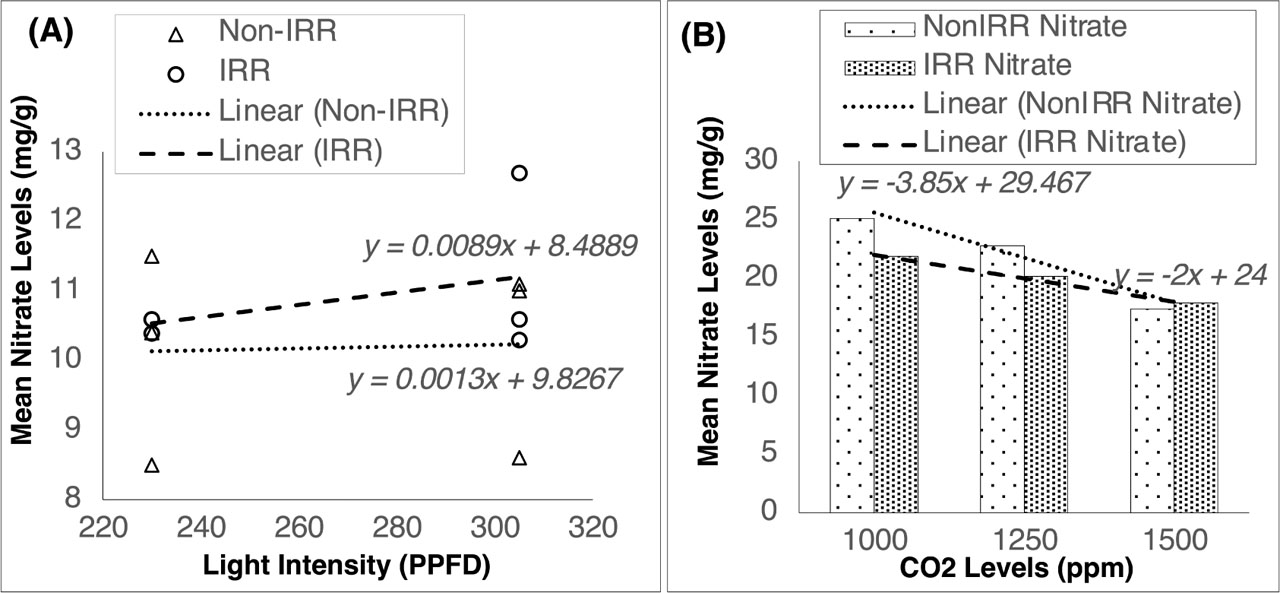
Figure 12.
(A) Effects of light intensity on NO3− concentrations of harvest nonirradiated (Non-IRR) and irradiated (IRR) red romaine lettuce plant leaf tissue. Data are mean ± SEM (n = 6 per treatment). (B) Effects of CO2 on NO3− concentrations of harvested (Non-IRR) and irradiated (IRR) hybrid Asian leafy green plant leaf tissue. Data are mean ± SEM (n = 3 per treatment).