
1. Introduction
Luminescent fabric is a kind of new textile material with self-emitting function, and it can be identified and recognized in the absence of light sources [1,2,3,4], which has attracted much attention in nocturnal safety clothing design. Luminescent children safety clothing [5,6,7] and luminescent running sport clothing developed by luminescent fabric could theoretically enhance the recognition of children and runners, which would effectively reduce the probability of traffic accidents caused by insufficient lighting. Luminescent work clothing for special workers (for example, mine workers and tunnel builders) can improve the working convenience under special environment by emitting light, and it is also conducive to carry out rescuing when an accident occurs in a dark working environment [8,9,10].
Luminous fabrics are generally manufactured with luminous fibers [11,12,13,14] in weaving way or rare earth luminous materials [15,16,17,18] in coating way. Both luminous fibers and luminous materials can absorb visible and ultraviolet light, and exhibit excellent luminescence performance, such as high luminance, long afterglow, and no radioactivity [19,20,21]. Theoretically, luminescent fabrics have the same above remarkable characteristics, which would greatly drive luminescent fabrics to be widely used in functional safety clothing for nocturnal environment. At present, the luminescence mechanism [22,23] and visual performance [24,25] of luminous fibers and luminous materials [26,27,28] are extensively investigated. However, there are few research on the design of luminescent functional clothing with luminescent fabrics, and there is no study about the visibility of nocturnal safety clothing.
The visibility and identifiability are important function of nocturnal safety clothing design [29,30,31]. The better the visibility of nocturnal safety clothing, the more powerful the function of it. In order to study and evaluate the visibility of nocturnal safety clothing, two groups of samples were made with luminescent fabrics of different weaving method and color, and then afterglow spectrum, visible duration and visible distance, fixation location, and fixation frequency of samples were measured. Based on the experimental data, the visibility performance of nocturnal safety clothing was analyzed, and the relationship between weaving method and color of luminescent fabrics and the visibility of nocturnal safety clothing is discussed. The execution of the study will theoretically promote the application of luminescent fabrics in functional safety clothing design.
2. Experimental Procedures
2.1. Materials
Luminescent woven fabric was woven with luminous fibers as warp yarn and weft yarn in an interweaving approach. The structure parameters were set with Rj = Rw = 2, Sj = Sw = 1, and the warp and weft density of 200 × 240 (root/10 cm).
Luminescent-coated fabrics: They are woven by coating luminescent coating paste on the surface of normal fabric. The luminescent coating paste is prepared by mixing luminous materials SrAl2O4:Eu2+, Dy3+, pigments, and textile auxiliaries.
Luminescent embroidered thread: It is prepared by twisting luminous fibers.
Basic T-shirt: A kind of basic T-shirt style with white color, round neck, and short sleeves.
Luminescent woven fabrics and luminescent-coated fabrics were purchased from Jiangsu Guoda Complete Wiring Equipment Co., Ltd (Wuxi, China). Luminescent embroidered thread and basic T-shirt were supplied by Changshu Jianghui Fiber Products Technology Co., Ltd (Changshu, China).
2.2. Preparation of Nocturnal Safety Clothing
Nocturnal safety clothing samples were prepared with luminescent woven fabric, luminescent-coated fabrics and luminescent embroidered thread by forming a 10 cm × 10 cm square luminous area on the chest part of the basic T-shirt clothing. In this work, the visibility of nocturnal safety clothing was studied based on two aspects of luminescent fabric weaving method and fabric color. Therefore, two group clothing samples are designed. The production schemes of the first group clothing samples with different fabric weaving method and second group clothing samples with different fabric color are shown in Tables 1 and 2 separately. The two group clothing samples are shown in Figures 1 and 2, and the pictures 1a and 2a of samples are taken in the normal light environment while the pictures 1b and 2b are taken in the dark.
Table 1
Production schemes of the first group clothing samples.
| Sample name | Fabric material | Color | Weaving method |
|---|---|---|---|
| SP1-WF | Woven fabric | White | Weaving |
| SP2-EF | Embroidered thread | White | Embroidering |
| SP3-SF | Coated fabric | White-blue | Coating |
| SP4-WC F | Coated fabric | White | Coating |
Source: Author’s contribution.
Table 2
Production schemes of the second group clothing samples.
| Sample name | Fabric material | Color | Weaving method |
|---|---|---|---|
| SP4-WCF | White-coated fabric | White | Coating |
| SP5-PCF | Pink-coated fabric | Pink | Coating |
| SP6-BCF | Blue-coated fabric | Blue | Coating |
| SP7-YCF | Yellow-coated fabric | Yellow | Coating |
Source: Author’s contribution.
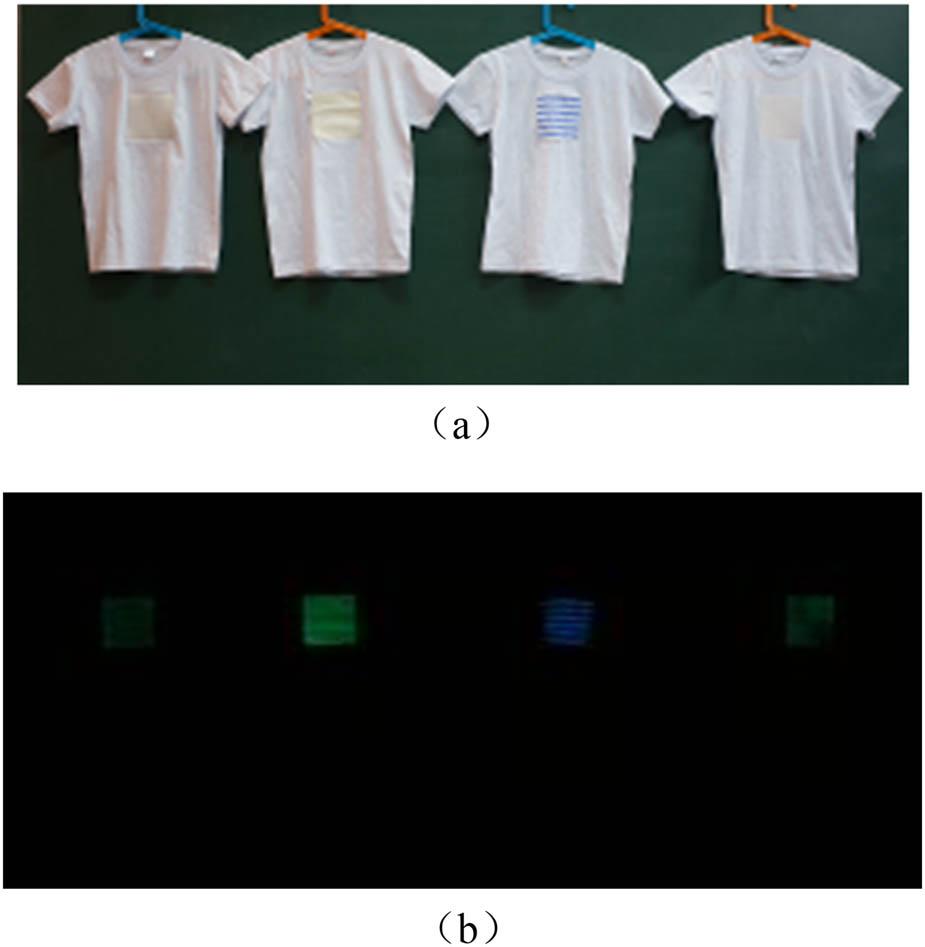
Figure 1
The first group clothing samples. (a) With light. (b) Without light.
Source: Author’s contribution.
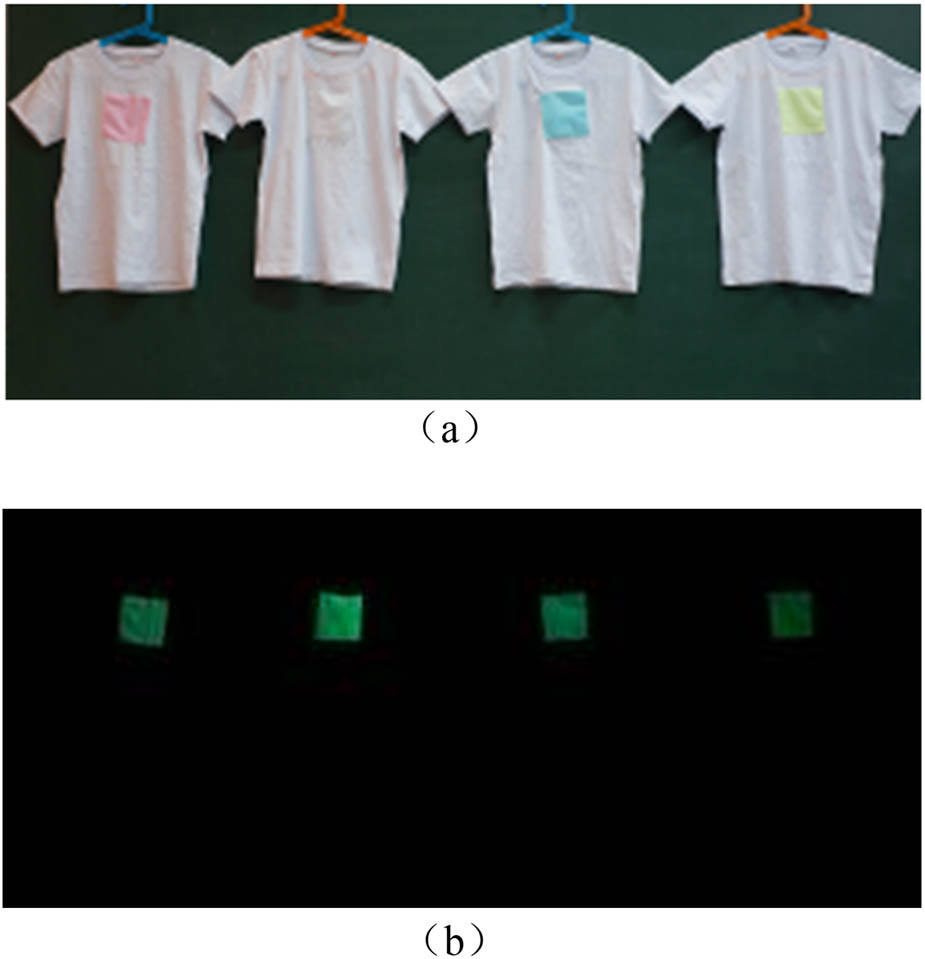
Figure 2
The second group clothing samples. (a) With light. (b) Without light.
Source: Author’s contribution.
2.3. Characterization
X-ray diffraction (XRD) testing: Bruker AXS D8 Advance Diffractometer was used to measure XRD pattern with a Cu X-ray tube at 40 kV, 30 mA.
FTIR testing: FTIR spectra were recorded with Nicolete iS10 FT-IR spectrometer in the range of 400–4,000 cm−1.
Emission testing: The emission spectra were obtained using a 650–60 type fluorescence spectrophotometer (Hitachi Inc.) with an excitation wavelength of 320 nm.
Emissive color characteristic testing: The colorimetric parameters were measured using a PR-650 Spectra Scan from Photo Research, USA.
Afterglow spectrum testing: The afterglow decay profiles of the two group clothing samples were measured by PR-305 long wavelengths fluorescence tester with 60 min delay time in 1 s time intervals. Prior to the measurement, the samples were put in darkness for 12 h.
Visible duration and visible distance testing: The design of the experimental environment is shown in Figure 3. Each group clothing samples were placed at the positions of A, B, C, and D, respectively, and five observers were set at 3, 5, 10, and 20 m away from the clothing samples. At the moment of 5, 10, and 20 min after the clothing samples stopping from being illuminated, the observers gave their evaluation values about the identifiability of the clothing samples according to the evaluation criteria shown in Table 3. And then the obtained data were analyzed.
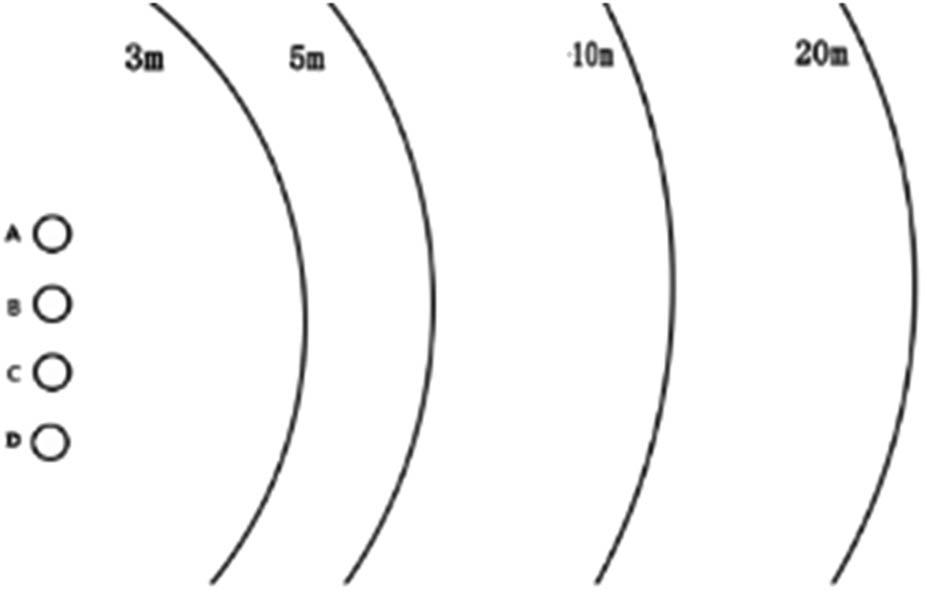
Figure 3
The design of the experimental environment.
Source: Author’s contribution.
Table 3
Evaluation criteria.
| Value | Identifiability of the clothing samples |
|---|---|
| 5 | Excellent, can be recognized exactly |
| 4 | Good, can be recognized easily |
| 3 | Average, can be recognized normally |
| 2 | Fair, can be recognized partly |
| 1 | Poor, can be recognized slightly |
Source: Author’s contribution.
The experiment was carried out in a darkroom. First, the clothing samples were placed in the darkroom for 24 h to ensure the brightness was completely attenuated. And then, the clothing samples were illuminated by 25 W (D65) Philips cold light lamp for 15 min, and put on the positions of A, B, C, and D immediately.
Eye tracking experiment: Eyelink 1000 was used to record the fixation location, fixation frequency, and fixation duration of the clothing samples.
3. Results and Discussion
3.1. XRD Characteristic
The XRD patterns for both the luminous material and the luminous fiber are shown in Figure 4. Sharp diffraction peaks were observed at 2θ = 20.1°, 28.5°, 29.3°, and 35.1° in both samples, with the luminous material exhibiting more pronounced signals. Comparison of the X-ray pattern of the phosphor with JCPDS standard card 34-0379 indicated that the sharp peaks are the ones of long afterglow phosphorescent materials SrAl2O4:Eu2+, Dy3+.
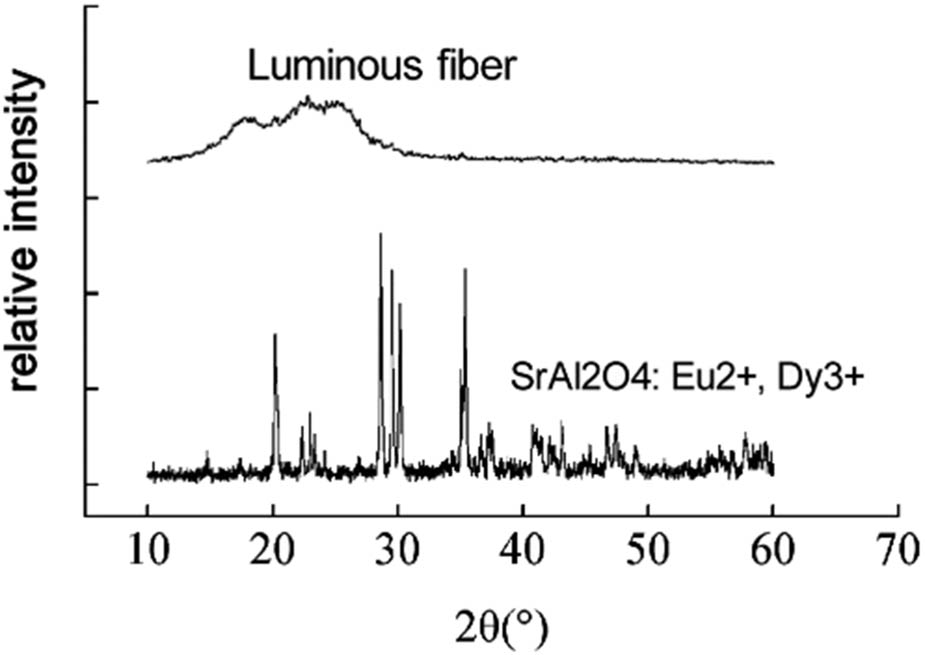
Figure 4
The XRD patterns of the luminous material and the luminous fiber.
Source: Author’s contribution.
3.2. FTIR Characterization
The FTIR spectrum for both the luminous material and the luminous fiber are shown in Figure 5. Key absorption bands correspond to characteristic groups such as N–H, C═O, C–H, and C–N vibrations, indicating the presence of amide groups in the fiber matrix. Importantly, a weak band around 520 cm⁻1 attributed to Eu–O stretching vibration suggests the formation of coordination bonds between Eu2+ ions and the luminous fiber, while the overall macro molecular structure of the fiber remains largely unaffected by the luminous material SrAl2O4:Eu2+, Dy3+.
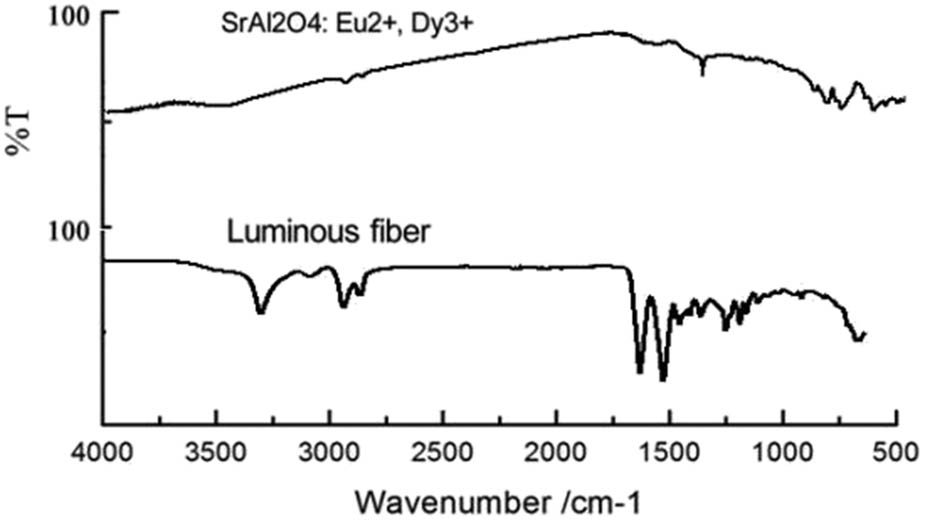
Figure 5
The FTIR spectra of the luminous material and the luminous fiber.
Source: Author’s contribution.
3.3. Emission Characterization
The Emission spectra for both the luminous material and the luminous fiber are shown in Figure 6. The two spectra exhibit similar profiles, with a characteristic emission peak centered at 520 nm. This peak corresponds to the 4 f65 d1 → 4 f⁷ transition of Eu2+ in the SrAl2O4:Eu2+, Dy3+ phosphor. The results confirm that the luminous performance of the fiber originates directly from the luminous material.
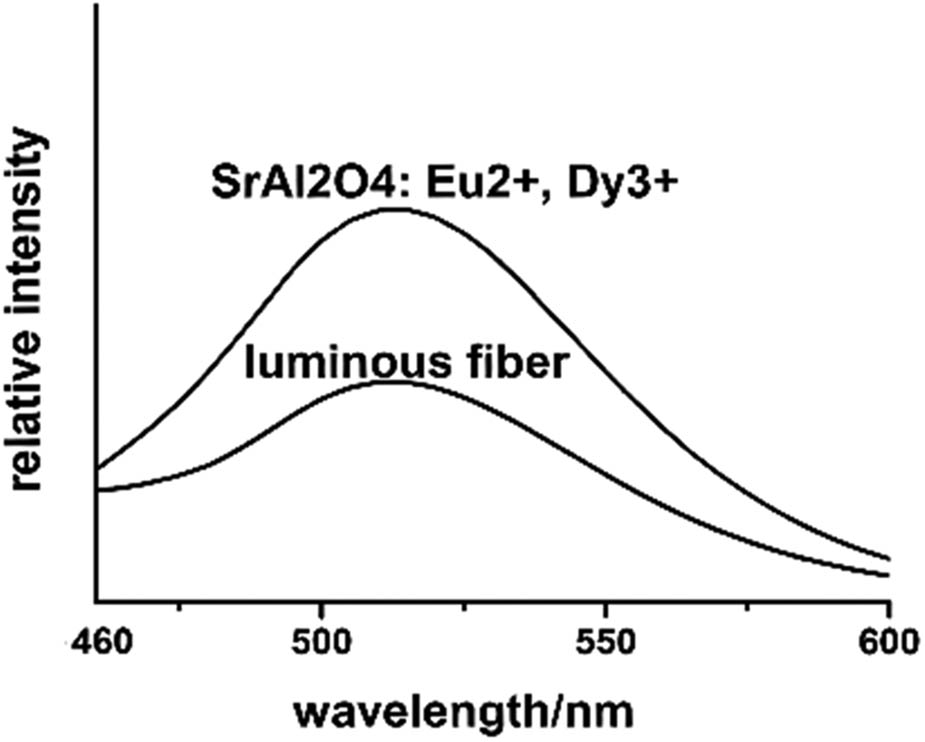
Figure 6
The Emission spectra of the luminous material and the luminous fiber.
Source: Author’s contribution.
3.4. Emissive Color Characteristic
The colorimetric parameters for both the luminous material and the luminous fiber are shown in Table 4. Based on the chromaticity coordinates (x, y), the positions of the luminous material and the luminous fiber are plotted on the CIE chromaticity diagram, as shown in Figure 7. It can be observed that the colors of both the luminous material and the luminous fiber fall within the green region of the diagram. This result is consistent with the actual color observed in the sample images of Figures 1 and 2. Meanwhile, the dominant wavelength (530 and 515 nm) reported in Table 2 is consistent with the emission peak (520 nm) present in Figure 6.
Table 4
Colorimetric parameters.
| Sample | Chromaticity coordinates | Dominant wavelength | Purity | |
|---|---|---|---|---|
| X | Y | |||
| SrAl2O4:Eu2+, Dy3+ | 0.2640 | 0.4605 | 530 | 0.3880 |
| Luminous fiber | 0.2025 | 0.5360 | 515 | 0.656 |
Source: Author’s contribution.
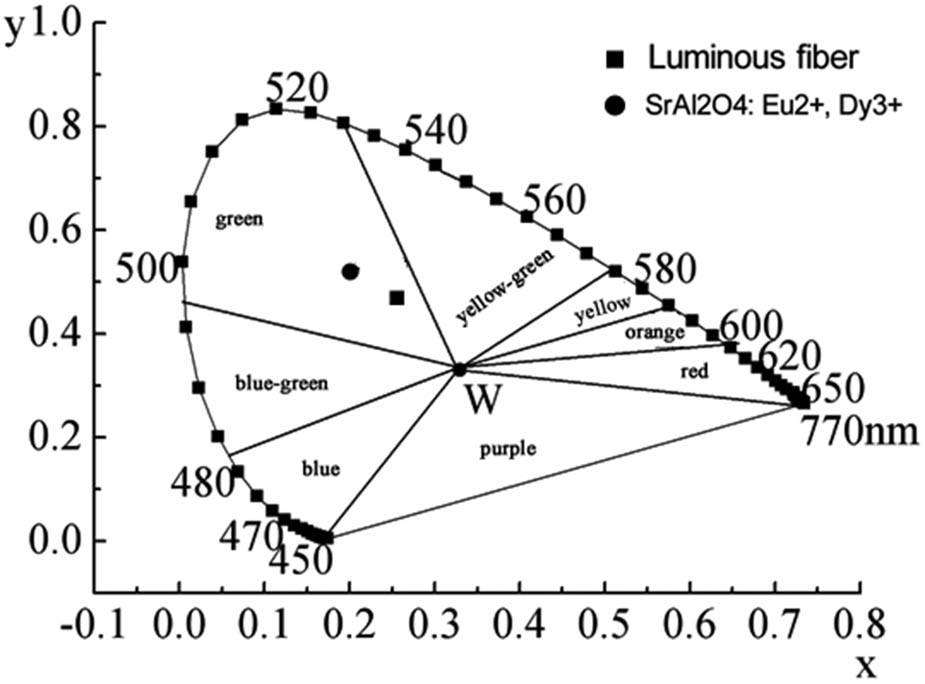
Figure 7
The CIE chromaticity diagram of the luminous material and the luminous fiber.
Source: Author’s contribution.
3.5. Afterglow Spectrum
Figure 8 shows the afterglow spectrum of the first group clothing samples. It could be seen that the brightness of the SP4-WCF was much greater than that of the other samples, especially the initial brightness, which was tested at the moment of stopping from being illuminated. The afterglow spectrum of SP1-WF, SP2-EF, and SP3-SF were similar, and the initial brightness of the three samples did not differ much. From the above, the conclusion was that white-coated nocturnal safety clothing could be more recognizable than others because of its higher brightness. However, it was also seen from Figure 8 that the decay of the brightness carried with exponential function, and afterglow attenuation occurred mainly in the first 5 min (300 s), after which the brightness tended to be a plateau with time for around 10 h and it was called plateau brightness. Therefore, we could say that the plateau brightness had a higher use value theoretically and it could embody the visibility and identification of the clothing samples accurately.
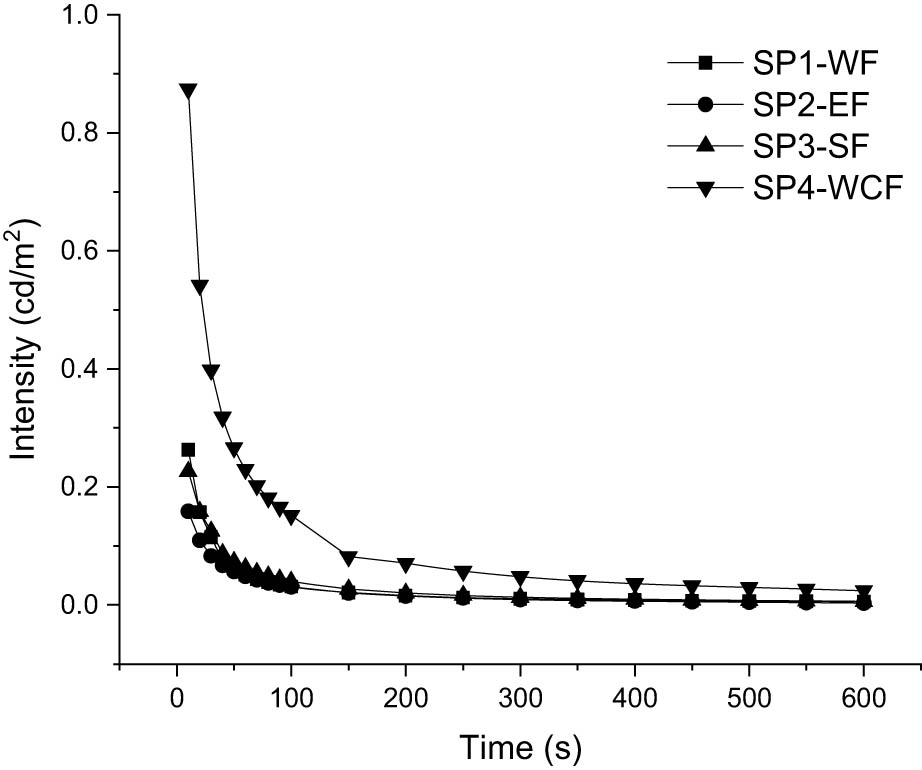
Figure 8
The afterglow spectrum of the first group clothing samples.
Source: Author’s contribution.
Table 5 shows the initial brightness and plateau brightness of the first group clothing samples. From Table 5, both initial brightness and plateau brightness of SP4-WCF were higher than that of other samples, which proved that the white-coated nocturnal safety clothing had higher recognition characteristics than other clothing. The values of initial brightness and plateau brightness of woven nocturnal safety clothing and striped nocturnal safety clothing were behind the white-coated nocturnal safety clothing, and the SP2-EF was the worst, which indicated that embroidered nocturnal safety clothing was hard to be identified. On the other hand, the initial brightness of SP4-WCF degraded from 0.8742 to 0.0477 cd/m2 after 300 s, which illustrated that the brightness of SP4-WCF had a very fast rate of decay and led to a phenomenon of the plateau brightness of SP4-WCF approaching with others. However, this proximity did not affect the result that the white-coated nocturnal safety clothing had higher brightness and visibility than other clothing samples.
Table 5
Initial brightness and the plateau brightness of the first group clothing samples (cd/m2).
| Samples | Initial brightness | Plateau brightness |
|---|---|---|
| SP4-WCF | 0.8742 | 0.0477 |
| SP5-PCF | 0.6087 | 0.0361 |
| SP6-BCF | 0.3870 | 0.0386 |
| SP7-YCF | 0.4191 | 0.0238 |
Source: Author’s contribution.
The afterglow spectrum and the initial brightness and the plateau brightness of the second group clothing samples are shown in Figure 9 and Table 6. It is seen from Figure 9 that the SP4-WCF had the highest brightness, followed by the SP5-PCF and the SP6-YCF, and the SP7-BCF ranked last. The brightness of the second group clothing samples had the same decay principle of exponential function as the first group clothing samples. From Table 6, the brightness of second group clothing samples could be obviously classified into two levels with the initial brightness: the high included the SP4-WCF and the SP5-PCF with the initial brightness value of 0.8742 and 0.6087 cd/m2 separately, and the low included the SP6-BCF and the SP7-YCF with the initial brightness value of 0.3870 and 0.4191 cd/m2 separately. Therefore, the conclusion was that the white- and pink-coated nocturnal safety clothing had better visibility than the bule- and yellow-coated nocturnal safety clothing in the initial 5 min phase. However, from Table 6, it was clear that the plateau brightness of the SP4-YCF (0.0477 cd/m2) and the SP5-PCF (0.0361 cd/m2) were almost equivalent to that of the SP6-BCF (0.0386 cd/m2) and the SP7-YCF (0.0238 cd/m2), which indicated that the second group clothing samples had the same visibility after stopping from being illuminated for 5 min.
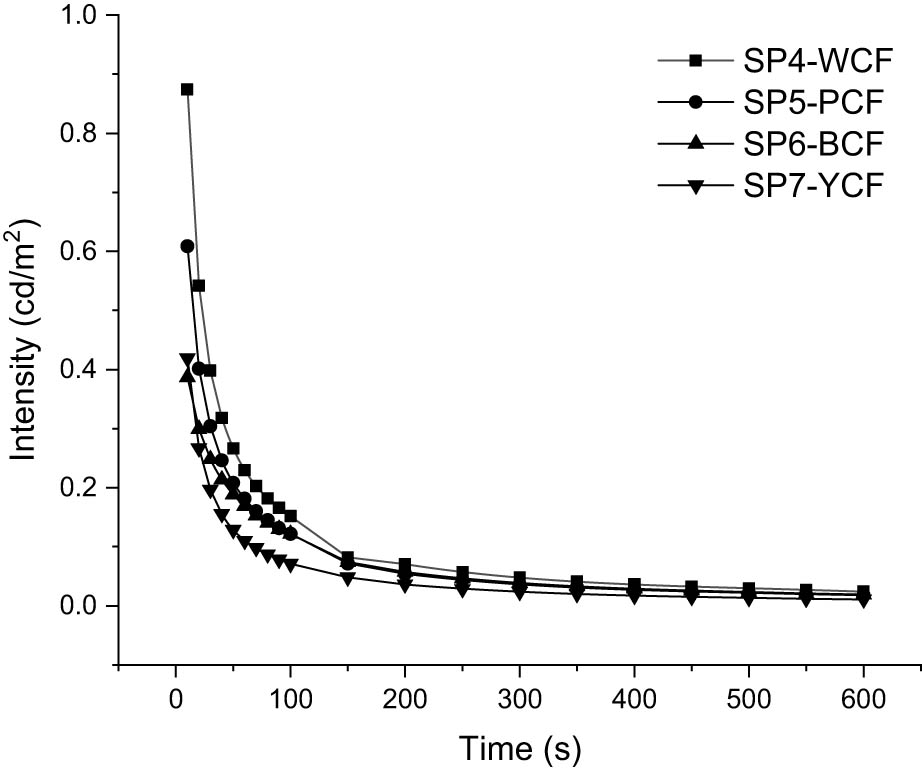
Figure 9
The afterglow spectrum of the second group clothing samples.
Source: Author’s contribution.
3.6. Visible Duration and Visible Distance
The visibility values of the first group clothing samples are shown in Table 7. The visual score of the SP4-WCF was more than 1 at the testing distance of 20 m with the moment of 20 min, which provided more reliable evidence that the best visibility belonged to the white-coated nocturnal safety clothing. The visibility of the SP1-WF was behind the SP4-WCF based on the visual score remaining above 2 at the testing distance of 20 m with the moment of 5 min. The visual score of the SP2-EF and the SP3-SF approached 1 at the testing distance of 10 m with the moment of 10 min, which demonstrated that the two clothing samples had the lowest visibility. From this, it was shown that the woven fabric and coated fabric were more fit for nocturnal safety clothing design.
Table 7
Visibility values of the first group clothing samples.
| Distance (m) | Time (min) | Sample | |||
|---|---|---|---|---|---|
| SP1-WF | SP2-EF | SP3-SF | SP4-WCF | ||
| 3 | 0 | 3.4 | 2.2 | 2.8 | 4.8 |
| 5 | 3.2 | 1.8 | 2.8 | 4.8 | |
| 10 | 2.4 | 1.4 | 2.6 | 4.4 | |
| 20 | 2.8 | 1.4 | 2.4 | 3.8 | |
| 5 | 0 | 3.6 | 3 | 2.4 | 4.8 |
| 5 | 3.2 | 2 | 2.4 | 4.8 | |
| 10 | 2.6 | 1.6 | 1.8 | 3.8 | |
| 20 | 2.2 | 1.4 | 1.6 | 3.2 | |
| 10 | 0 | 3.4 | 2.2 | 1.8 | 4.6 |
| 5 | 2.4 | 1.2 | 1.2 | 3.8 | |
| 10 | 1.8 | 1.4 | 1.4 | 2.8 | |
| 20 | 1.4 | 1.2 | 1.2 | 2.4 | |
| 20 | 0 | 3 | 2 | 1.2 | 4.4 |
| 5 | 2.2 | 1 | 1 | 3.2 | |
| 10 | 1 | 1 | 1 | 2 | |
| 20 | 1 | 1 | 1 | 1.2 | |
Source: Author’s contribution.
To further study the influence of weaving method on the visibility of nocturnal safety clothing, the regression equation of visual score y and the factor of visible distance x 1 and visible duration x 2 were found by regression analysis of the above experiment data, shown in Table 8. It could be seen that the goodness of fit was high, and the F test was obvious, which showed that the longer the time and the farther the distance, the worse the visibility performance. The visual scores of the four samples differed greatly and were observed to undergo a big change with visible duration and visible distance. Therefore, the conclusion was that weaving method had a great influence on the visible duration and visible distance of nocturnal safety clothing.
Table 8
Data regression analysis of the first group clothing samples.
| Sample | Regression equation | R2 | F |
|---|---|---|---|
| SP1-WF | y = 3.799942 − 0.07052 x 1 − 0.074857 x 2 | 0.535249 | 44.34004 |
| SP2-EF | y = 2.369090 − 0.035694 x 1 − 0.047714 x 2 | 0.29331 | 15.97933 |
| SP3-SF | y = 2.808598 − 0.085116 x 1 − 0.024286 x 2 | 0.465534 | 33.53452 |
| SP4-WCF | y = 5.533728 − 0.101445 x 1 − 0.102286 x 2 | 0.729539 | 103.8496 |
Source: Author’s contribution.
Table 9 shows the visibility values of the second group clothing samples and Table 10 shows the regression equation of visual score y and the factor of visible distance x 1 and visible duration x 2. From Table 8, the visibility values of the four samples were over 1.4 at the test distance of 10 m with the moment of 20 min, and the minimum visibility values of the four samples were over 2.2 at each distance of 5 min (the time point of the plateau brightness), which indicated that all the four samples had good visibility performance. The visibility values of the four samples were very close at each point of testing time and distance except the SP4-WCF, which had a higher visibility value, which illustrated that the effect of the fabric color on the visible duration and visible distance of nocturnal safety clothing was not obvious. From Table 10, the goodness of fit was high, and the F test was obviously the same as the first group samples. However, different with the first group samples, the visual scores of the second clothing samples had no obvious change with time and distance, which also supported the view that the fabric color had a certain degree of influence on the visibility performance of nocturnal safety clothing insignificantly.
Table 9
Visibility values of the second group clothing samples.
| Distance (m) | Time (min) | Samples | |||
|---|---|---|---|---|---|
| SP4-WCF | SP5-PCF | SP6-BCF | SP7-YCF | ||
| 3 | 0 | 4.8 | 4.4 | 4.6 | 4.2 |
| 5 | 4.6 | 3.8 | 4.2 | 3.6 | |
| 10 | 4.2 | 3.2 | 3.4 | 2.4 | |
| 20 | 3.6 | 1.8 | 2.4 | 1.6 | |
| 5 | 0 | 5 | 4.2 | 4.4 | 4.2 |
| 5 | 5 | 3.8 | 4 | 3.4 | |
| 10 | 3.6 | 2.4 | 2.6 | 2.4 | |
| 20 | 2.6 | 1.8 | 1.6 | 1.6 | |
| 10 | 0 | 5 | 4.6 | 4.4 | 4.6 |
| 5 | 4.8 | 3.8 | 3.8 | 3 | |
| 10 | 3 | 2.4 | 2.2 | 1.8 | |
| 20 | 2.2 | 1.4 | 1.4 | 1.4 | |
| 20 | 0 | 4.8 | 3.4 | 3.8 | 3.4 |
| 5 | 3.6 | 2.2 | 2.4 | 2.2 | |
| 10 | 2 | 1 | 1 | 1 | |
| 20 | 1.6 | 1 | 1 | 1 | |
Source: Author’s contribution.
Table 10
Data regression analysis of the second group clothing samples.
| Sample | The regression equation | R2 | F |
|---|---|---|---|
| SP4-WCF | y = 5.582890 − 0.073988 x 1 − 0.126286 x 2 | 0.715723 | 96.93141 |
| SP5-PCF | y = 4.724855 − 0.076301 x 1 − 0.134286 x 2 | 0.620722 | 63.00868 |
| SP6-BCF | y = 4.964480 − 0.084682 x 1 − 0.138286 x 2 | 0.65425 | 72.85224 |
| SP6-YCF | y = 4.366199 − 0.061705 x 1 − 0.133429 x 2 | 0.580065 | 53.1809 |
Source: Author’s contribution.
3.7. Visual Perception
Visual fixation is the basis and premise of visual perception, and it is also the medium between external stimuli and human psychological perception. The change in fixation point indicates the change in perceived objects, which leads to the change in psychological perception content. Eye tracking technology [32,33,34] studies the individual’s inner cognitive process by recording the eye movement trajectory. In this study, the data of visual perception tested by eye tracking technology was used for further studying the influence of fabric weaving method and color on the visibility and identification of nocturnal safety clothing.
Figure 10 shows the eye tracking thermal map of the first group clothing samples. Fixation location is the distribution of the fixation of a target or an area, which is shown by an eye tracking thermal map. In the map, red represents the target or area with the most attention, and yellow and green represent the ones with the less attention. From Figure 10, the fixation location was focused on the SP3-SF and SP4-WCF, which resulted in a very interesting phenomenon that the striped nocturnal safety clothing got a same fixation level with the white-coated nocturnal safety clothing even though the brightness of the SP3-SF was much lower than that of the SP4-WCF. Meanwhile, the SP1-WF had a lower fixation level, even though it had a good brightness as shown in Figure 8. The reason was probably that visual perception was a complex process affected by both weaving method and color, and the stripe pattern formed by coating with two colors could greatly offset the disadvantage of visual perception caused by its insufficient brightness.
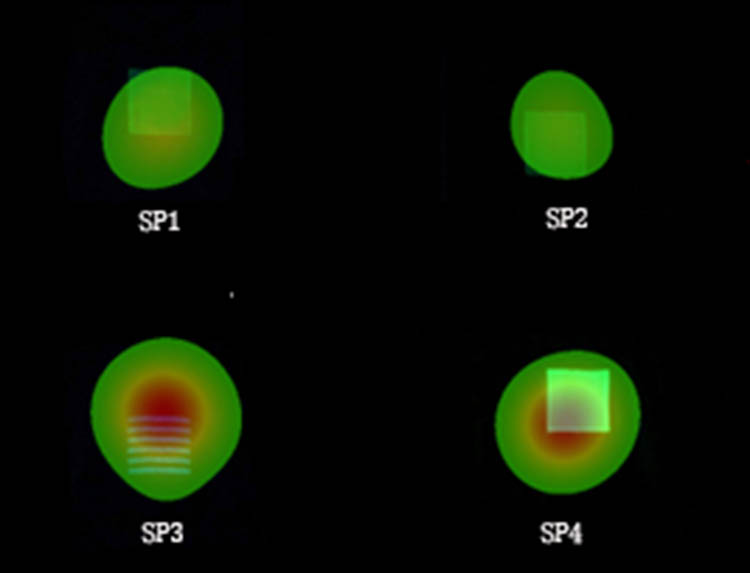
Figure 10
Eye tracking thermal map of the first group clothing samples.
Source: Author’s contribution.
The eye tracking thermal map of the second group clothing samples is presented in Figure 11. The fixation location mainly landed on the sample of the SP4-WCF, and then the SP5-PCF and SP6-BCF. The SP7-YCF received little attention. Therefore, the visual perception order of the second group samples was as follows: SP4-WCF>SP5-PCF = SP6-BCF>SP7-YCF, which was inconsistent with the brightness order of the four samples shown in Figure 9. These results demonstrated that the visibility of nocturnal safety clothing with pure color was mainly determined by brightness.
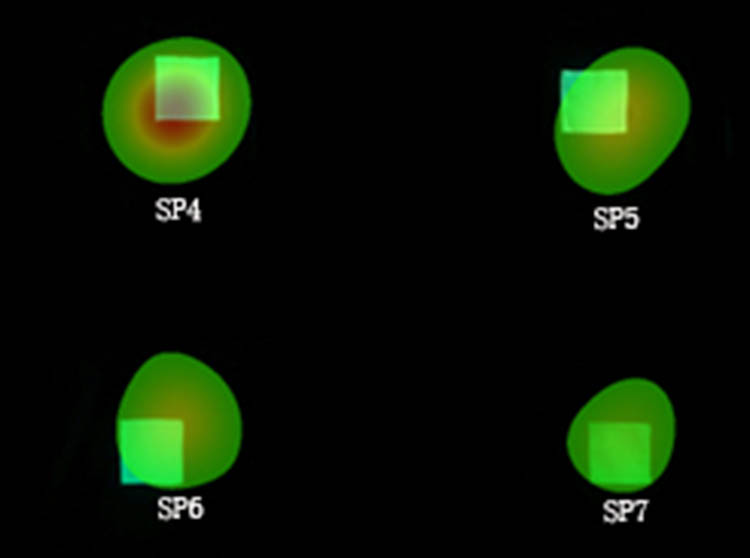
Figure 11
Eye tracking thermal map of the second group clothing samples.
Source: Author’s contribution.
Table 11 shows the fixation frequency of the first group clothing samples. Fixation frequency refers to the number of times a target is being fixated on. The more the number of times of fixation, the stronger the target being identified. From Table 11, it is seen that the SP3-SF had the highest fixation frequency with four times, while the SP2-EF had the lowest fixation frequency with 1.23 times. To clarify the effect of fabric weaving method on the fixation frequency, the data were analyzed by analysis of variance. And it was shown that the fabric weaving method had a significant influence on the fixation frequency of the clothing samples based on the values of F = 5.91 > F 0.05 and P = 0.002 < 0.05. In addition, there was no obvious difference in fixation frequency between SP3-SF and SP4-WCF based on the values of |t| = 0.85 < t (critical value), P (critical value) = 0.407 < 0.05. And the fixation frequency of the SP3-SF was much higher than that of the SP2-EF and SP1-WF based on the values of t 1 = 3.68 > t (critical value), P 1 (critical value) = 0.001 < 0.05, t 2 = 2.13 > t (critical value), and P 2 (critical value) = 0.044 < 0.05. From the above analysis, the visual perception of the striped nocturnal safety clothing and white-coated nocturnal safety clothing was better than that of the woven nocturnal safety clothing and embroidered nocturnal safety clothing, which was consistent with the conclusion of Figure 10.
Table 11
Fixation frequency of the first group clothing samples.
| Sample | SP1-WF | SP2-EF | SP3-SF | SP4-WCF |
|---|---|---|---|---|
| Fixation frequency | 2.15 | 1.23 | 4.00 | 3.31 |
| Standard deviation | 1.86 | 1.01 | 2.52 | 1.55 |
Source: Author’s contribution.
Table 12 shows the fixation frequency of the second group clothing samples. It is seen that the SP4-WCF had the highest fixation frequency with 3.85 times, while SP7-YCF had the lowest fixation frequency with 1.62 times. The variance analysis of the data showed that the fabric color also affected the fixation frequency of the clothing samples based on the values of F = 6.50 > F 0.05 and P = 0.001 < 0.05. Additionally, the fixation frequency of the SP4-WCF was much higher than that of the SP6-BCF and SP7-YCF based on the values of t 1 = 3.77 > t (critical value), P 1 (critical value) = 0.001 < 0.05, t 2 = 3.63 > t (critical value), and P 2 (critical value) = 0.001 < 0.05, and there was no obvious difference in fixation frequency between SP5-PCF and SP4-WCF based on the values of |t| = 1.14 < t (critical value), P (critical value) = 0.264>0.05. Therefore, the visual perception of the white- and pink-coated nocturnal safety clothing was better than that of the blue-coated nocturnal safety clothing and yellow-coated nocturnal safety clothing, which was consistent with the conclusion of Figure 11.
4. Conclusion
(1) The luminescent performance of luminescent fabrics is dictated by the luminous material and the luminous fiber, both of which exhibit the characteristic green emission at 520 nm originating from the Eu2+ ions.
(2) The effect of fabric weaving method on the brightness of nocturnal safety clothing was great, and the effect of color was not significant. The brightness of coated nocturnal safety clothing was higher than that of woven nocturnal safety clothing and embroidered nocturnal safety clothing, and the plateau brightness of the color-coated nocturnal safety clothing (the second group clothing samples) was similar. This illustrated that using the coated luminous fabrics was advantageous in designing the nocturnal safety clothing with high visibility performance.
(3) The effect of fabric weaving method on the visible duration and visible distance of luminescent nocturnal safety clothing was great, but the effect of fabric color was not obvious. The coated nocturnal safety clothing maintained better visible duration and visible distance than woven nocturnal safety clothing and embroidered nocturnal safety clothing, and all the color-coated nocturnal safety clothing (the second group clothing samples) had good visibility performance with the visibility values over 2.2 at each distance of 5 min (the time point of the plateau brightness).
(4) Effect of both the fabric weaving method and color on the visual perception of nocturnal safety clothing were great. Based on the test of fixation location and fixation frequency, the striped nocturnal safety clothing had the best visibility performance, followed by pure color-coated nocturnal safety clothing, and then the woven nocturnal safety clothing and embroidered nocturnal safety clothing.
Acknowledgement
The authors gratefully acknowledge the financial support for this work from the Open Project Program of Fujian Province University Engineering Research Center of Textile and Clothing, Minjiang University, China (No. MJFZ17104).
Funding information
This work was supported by the Open Project Program of Fujian Province University Engineering Research Center of Textile and Clothing, Minjiang University, China (Grant No. MJFZ17104), and Science and technology project of Fujian Province (No. 2023H4019).
Author contributions
Conceptualization and original draft writing: Yanhong Yan; performance testing and data analysis: Hongtuo Li, Ruixin Xu; manuscript review and revision: Yonggui Li.
Conflict of interests
Authors state that no conflict of interest.
Data availability statement
The data that support the findings of this study are available from the corresponding author upon reasonable request.