
1. Introduction
China is a major tea-producing country with a wide variety of tea types and extensive planting areas. In addition to sales and personal use, a large number of tea by-products are discarded every year. According to literature [1,2,3,4], fresh tea leaves contain 75% to 78% water. The remaining dry matter can be divided into inorganic and organic compounds. The organic compounds consist of approximately 24% cellulose, 6.5% pectin, 17% protein, 4% caffeine, 22% polyphenols, about 14% catechins, and about 3% enzymes. The main inorganic components are various inorganic mineral elements like potassium, calcium, magnesium, cobalt, iron, etc. Through deep processing of discarded tea leaves, tea pigments, vitamins, and preservatives can be extracted. Among these, tea polyphenols are an important component of tea, referring collectively to the polyphenolic substances extracted from tea leaves, including phenolic acids, flavanol, flavonoids, anthocyanins, and flavanols (flavanols, also known as catechins, account for 60% to 80% of tea polyphenols).
Currently, there are three common extraction techniques for tea polyphenols: 1) The boiling water immersion method, where the tea leaf sample is ground and placed in a conical flask with distilled water, boiled, and then immersed in a boiling water bath, followed by hot reduced pressure filtration. 2) The ultrasonic extraction method, where the ground tea leaf sample is placed in a conical flask, added with 70% ethanol by volume, adjusted to pH 1-2 with a small amount of concentrated hydrochloric acid, then placed in an ultrasonic cleaner so that the water level in the cleaner is level with the liquid in the flask, and extracted using ultrasonic radiation. 3) The ethyl acetate extraction method, where the ground tea leaf sample is placed in a conical flask, immersed in 90°C distilled water and stirred, then filtered, and the filtrate is transferred to a separatory funnel. The filtrate is then successively extracted with ethyl acetate, dried with anhydrous sodium sulfate, and the ethyl acetate solvent is removed under reduced pressure to obtain a white powdery tea polyphenol [5].
Tea polyphenols, extracted from tea leaves, are known for their numerous health benefits, including antioxidation, antibacterial effects, and UV protection. These properties make tea polyphenols a promising candidate for textile finishing, providing functional attributes to fabrics. Previous research has shown the potential of tea polyphenols in enhancing the performance of textiles. For instance, Lambrecht et al. (2023) demonstrated that chitosan pre-mordanted cotton dyed with red tea extract significantly increased the absorption of polyphenols and tannins, resulting in a doubled UPF (Ultraviolet Protection Factor) compared to untreated cotton [6]. However, while this study provides a solid foundation for the application of tea polyphenols in textile dyeing, it primarily focuses on the enhancement of UV protection, with less emphasis on other functional properties such as antibacterial effects and colorfastness.
Ma and Pan (2021) studied the dyeing properties of cotton-linen fabrics using polyphenol dye extracted from Tieguanyin tea stems. They identified optimal extraction conditions that achieved the highest polyphenol content and demonstrated that post-mordanting with aluminum potassium sulfate improved colorfastness and maintained the fabric’s color stability [7]. Although this research offers valuable insights into the dyeing process and the maintenance of color stability, it relies heavily on the use of aluminum potassium sulfate, a mordant that can contribute to environmental pollution. The study also does not extensively explore the potential antibacterial and UV protection properties imparted by tea polyphenols.
Wei et al. (2020) explored the dyeing process of polyester fabrics with tea polyphenols, highlighting that the antibacterial rate significantly increased when the fabric was post-mordanted with copper sulfate [8]. This study underscores the antibacterial potential of tea polyphenols but similarly depends on a heavy metal mordant, which poses environmental concerns. Additionally, the focus on polyester fabrics limits the applicability of the findings to other types of textiles, such as cotton, which are more commonly used in clothing.
Despite these advances, most studies have focused on mordant dyeing with heavy metal salts, which can cause environmental pollution. This study aimed to address this issue by developing an environmentally friendly dyeing process using tea polyphenols on chitosan-modified cotton fabrics. Specifically, the objectives were to optimize the dyeing parameters and evaluate the resulting fabric properties, such as colorfastness, antibacterial activity, UV protection, and odor resistance. This research seeks to provide a reference for the further application of tea polyphenols in functional textile materials.
Furthermore, the existing literature often lacks a comprehensive examination of the interplay between various functional properties provided by tea polyphenols. For example, while some studies focus on UV protection, others emphasize antibacterial effects or colorfastness, but few consider all these properties simultaneously. This fragmented approach limits the understanding of how these properties can be synergistically enhanced in a single fabric treatment process. Additionally, the reliance on heavy metal mordants in many studies poses significant environmental risks, necessitating the exploration of alternative mordant-free or environmentally benign processes.
This study builds on the foundation of previous research by focusing on the top dyeing of cotton fabrics with tea polyphenols, investigating optimal dyeing conditions, and assessing the functional properties of the dyed fabrics. By addressing the gaps in existing research, this study aimed to develop a more holistic and environmentally sustainable approach to textile finishing with tea polyphenols, enhancing fabric performance while minimizing environmental impact.
2. Experimental Section
2.1. Materials and Reagents
Materials: Self-woven plain cotton fabric (both warp and weft yarns are 18.2 tex, warp density 320 threads/10 cm, weft density 240 threads/10 cm).
Reagents: Chitosan (80% deacetylation degree, number-average molecular weight MW=500,000), tea polyphenols (Beijing Science-Expo Biotechnology Co., Ltd.), hydrochloric acid (Beijing Chemical Factory), acetic acid, soap flakes (Tianjin Chemisky European Chemical Reagent Co., Ltd.), Potassium Bromide (Chengdu Union Chemical Reagents Research Institute).
2.2. Instruments and Equipment
SU3500 Electron Microscope (Hitachi Analytical Instruments (Shanghai) Co., Ltd.)
TENSOR II Fourier Transform Infrared Spectrometer (Bruker Corporation, Germany)
YG(B)912E Textile UV Protection Performance Tester (Wenzhou Darong Textile Instrument Co., Ltd.)
CZ-C-408A Programmable Constant Temperature and Humidity Test Machine (Dongguan Zhongzhi Testing Instrument Co., Ltd.)
Datacolor 600 Spectrophotometer (Datacolor, USA)
Y802N Eight-Basket Constant Temperature Oven
YG982 Standard Light Source Box
SW-12D Wash Fastness Tester
Y571B Friction Color Fastness Tester (all purchased from Changzhou Shuanggu Textile Instrument Co., Ltd.).
2.3. Experimental Methods
2.3.1. Chitosan Modification of Cotton Fabric
A certain amount of chitosan was dissolved in a 4% acetic acid solution to achieve complete dissolution, resulting in chitosan solutions with mass fractions of 1%, 2%, 3%, 4%, and 5%. The cotton fabric was subjected to two immersion and two roll modification dyeing (with a residual ratio of 85%) using the prepared chitosan solutions. After immersion and roll treatment, the cotton fabric was pre-baked in an oven at 100°C for 3 minutes, followed by baking at 170°C for 2 minutes.
2.3.2. Functional Dyeing Process Parameters
The dyeing process is depicted in Figure 1. The liquor ratio was set at 1:30; the tea polyphenol dosage (o.w.f) ranged from 4% to 8%; the temperature varied from 40 to 90°C,; the dyeing time ranged from 40 to 90 minutes, and pH values were adjusted between 4 and 9.

Fig. 1
Dyeing process
2.4. Process Optimization
Utilize the K/S value and chromaticity as reference indices to optimize the dyeing process described above.
K/S Value and Chromaticity Test: Using a Datacolor 600 type colorimeter, measure at 8 points on the fabric to determine the K/S value of the dyed fabric. Measurements are taken under a D65 light source and a 10° field of view, and the average value is calculated from 5 readings.
2.5. Testing and Characterization of Dyed Fabric Performance under Optimal Process Conditions with Different Concentrations of Tea Polyphenols
2.5.1. Microscopic Morphology Observation
Using the SU3500 electron microscope at 2500x magnification, observe the scanning electron microscope images of the fabric dyed with 4% to 8% tea polyphenols (o.w.f) under the optimal process conditions.
2.5.2. Infrared Spectroscopy Curve Testing
Using a Fourier Transform Infrared Spectrometer, test the infrared spectroscopy curves of fabric dyed with 4% to 8% tea polyphenols (o.w.f) under the optimal process conditions, in the range of 4000 to 400 cm−1.
2.5.3. Testing of Colorfastness Properties
According to ISO 105-B02:2014 ‘Textiles - Tests for color fastness - Part B02: Colorfastness to artificial light: Xenon arc fading lamp test’, ISO 105-C10:2006 ‘Textiles - Tests for color fastness - Part C10: Colorfastness to washing with soap or soap and soda’, and ISO 105-X12:2001 ‘Textiles - Tests for color fastness - Part X12: Colorfastness to rubbing’, measure the sunfastness, washfastness, and rubfastness of the fabric dyed with 4% to 8% tea polyphenols (o.w.f) under the optimal process conditions.
2.5.4. Testing of Antibacterial and UV Protection Properties
Referring to GB/T 20944.3-2008 ‘Textiles - Evaluation for antibacterial activity - Part 3: Shake flask method’, determine the antibacterial rates against Staphylococcus aureus and Escherichia coli for fabric dyed with 4% to 8% tea polyphenols (o.w.f) under the optimal process conditions.
According to GB/T 18830-2002 ‘Textiles - Evaluation for solar ultraviolet radiation protective properties’, determine the Ultraviolet Protection Factor (UPF) and Ultraviolet Transmission (T%) for fabric dyed with 4% to 8% tea polyphenols (o.w.f) under the optimal process conditions.
2.5.5. Testing of Fabric Odor-Removing Performance
Deodorizing performance was assessed using the Japan Fiber Evaluation Technology Association SEK Mark Fiber Product Certification Standard 21. Odor gas was ammonia, with an initial volume fraction of 0.01%. The test duration was 2 hours.
3. Results and Discussions
3.1. Process Optimization Analysis
To facilitate analysis, this study employed a single-factor variable analysis method. Specifically:
(1) Impact of Chitosan Concentration on Cotton Fabric Dyeing K/S Value
With a fixed pH value of 6, tea polyphenol o.w.f concentration of 6%, temperature at 50°C, and a 60-minute duration, the influence of varying chitosan modification concentrations ranging from 0% to 5% on the K/S value of the dyed fabric was assessed. The results are illustrated in Fig. 2-a). From the trend in the curve, it is evident that the K/S value of the dyed fabric increases with the mass fraction of chitosan, with the increment slowing down when the chitosan mass fraction exceeds 3%. This phenomenon can be attributed to the introduction of numerous charged functional groups, such as -NH2 and -OH, into the cotton fabric through chitosan modification (see molecular structure in Fig. 3). This enhances the electrostatic attraction between the charged groups in tea polyphenols, improving the fabric’s dye absorption. As the adsorption capacity of cotton fabric for chitosan is fixed, the improvement in tea polyphenol dye due to chitosan tends to stabilize when the fabric’s adsorption of chitosan reaches its peak. Therefore, the optimal concentration for chitosan modification of cotton fabric is around 3%.
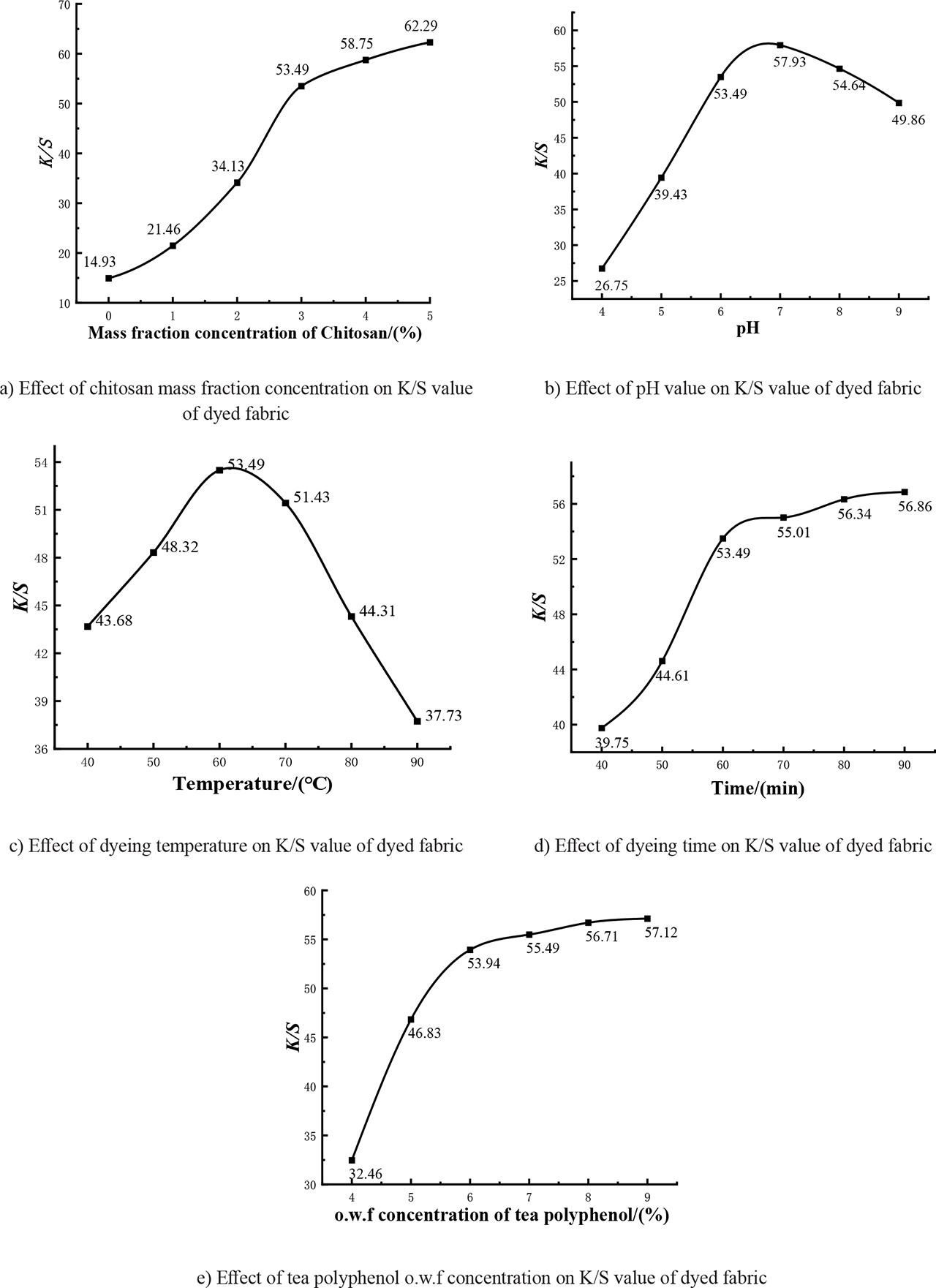
Fig. 2
Influence of variations in dyeing process parameters on K/S value of dyed fabric.
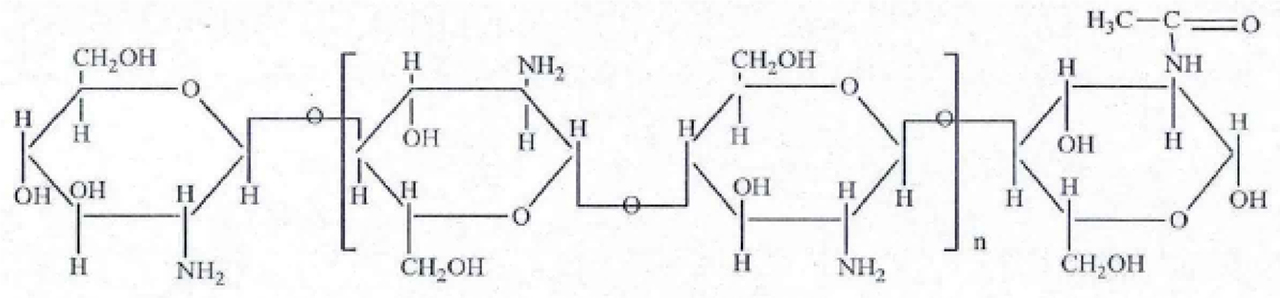
Fig. 3
Chitosan molecular structure
(2) Impact of Chitosan Concentration on K/S Value of Modified Cotton Fabric
With a fixed chitosan mass fraction concentration of 3%, tea polyphenol o.w.f concentration of 6%, temperature at 50°C, and a 60-minute duration, the effect of varying pH values from 4 to 9 on the K/S value of the dyed fabric was examined. A curve depicting changes in the K/S value with the pH value is shown in Fig. 2-b). It is observed that the K/S value of the dyed cotton fabric increases with an increase in the pH value, reaching its peak within the pH range of 6 to 7, and then gradually decreases. This phenomenon is attributed to the fact that tea polyphenols are easily oxidized to quinones in alkaline environments, leading to partial degradation and compromising the dyeing effect on the modified cotton fabric. Considering that cotton fiber structure belongs to natural cellulose, it is susceptible to hydrolysis in acidic environments. Therefore, it is determined that tea polyphenols should be applied to the modified cotton fabric under weakly acidic conditions, with a pH in the range of 6 to 7.
(3) Effect of Finishing Solution Temperature on K/S Value of Modified Cotton Fabric
With a fixed chitosan mass fraction concentration of 3%, tea polyphenol o.w.f concentration of 6%, pH at 7, and a 60-minute duration, the effect of varying temperatures from 40°C to 90°C on the K/S value of the dyed fabric was investigated. A curve illustrating changes in the K/S value with temperature is depicted in Fig. 2-c). It is observed that the K/S value of the dyed fabric increases with rising temperature when below 60°C. When the temperature surpasses 60°C, the K/S value decreases with increasing temperature. This phenomenon is attributed to the influence of temperature on tea polyphenols. At temperatures below 60°C, tea polyphenols are affected by temperature, leading to enhanced molecular Brownian motion, thereby improving the dye absorption of the modified cotton fabric. However, at temperatures above 60°C, the oxidation of tea polyphenols intensifies [9]. Simultaneously, at higher temperatures, the adsorption of tea polyphenols onto the modified cotton fabric becomes an exothermic process. The elevated temperature reduces the adsorption capacity of the modified cotton fabric for tea polyphenols, causing it to shift towards desorption. Therefore, it is confirmed that 60°C is the optimal dyeing temperature for tea polyphenols on the modified cotton fabric.
(4) Effect of Processing Time on K/S Value of Modified Cotton Fabric
With a fixed chitosan mass fraction concentration of 3%, tea polyphenol o.w.f concentration of 6%, pH at 7, temperature at 60°C, and varying processing times from 40 to 90 minutes, the impact of the processing time on the K/S value of the dyed fabric was studied. A curve illustrating changes in the K/S value with the processing time is shown in Fig. 2-d). It is evident from the graph that the K/S value of the dyed fabric increases with the extended processing time. However, when the processing time exceeds 60 minutes, the tea polyphenols’ dyeing efficiency on the modified cotton fabric stabilizes. This indicates that under these conditions, the adsorption of tea polyphenols onto the modified cotton fabric reaches its maximum, and further increasing the processing time would only add to production costs. Therefore, it can be determined that the optimal processing time for tea polyphenols on the modified cotton fabric is 60 minutes.
(5) Effect of Finishing Solution Tea Polyphenol Concentration on K/S Value of Modified Cotton Fabric
Following the functional dyeing process parameters outlined in section 2.3.2, with pH at 7, temperature at 50°C, a 60-minute duration, and adjusted tea polyphenol concentrations, the influence of varying concentrations on the dyeing efficiency of tea polyphenols on the modified cotton fabric was investigated. A curve showing changes in dyeing efficiency with time can be seen in Figure 2.
With a fixed chitosan mass fraction concentration of 3%, pH at 7, temperature at 60°C, and a 60-minute processing time, the effect of varying tea polyphenol o.w.f concentrations from 4% to 9% on the K/S value of the dyed fabric was examined. A curve illustrating changes in the K/S value with tea polyphenol concentration is displayed in Fig. 2-e). It is apparent from the graph that the K/S value of the dyed fabric increases with higher tea polyphenol concentration in the finishing solution. However, when the finishing solution concentration exceeds 6% o.w.f, the dyeing efficiency of tea polyphenols on the modified cotton fabric stabilizes. This indicates that under these conditions, the adsorption of tea polyphenols onto the modified cotton fabric reaches its maximum, and further increasing the finishing solution concentration would only add to production costs. Therefore, it can be confirmed that the optimal finishing solution concentration for tea polyphenols on the modified cotton fabric is above 6% o.w.f.
In summary, based on comprehensive analysis, the optimal process parameters for tea polyphenol dyeing on cotton fabric are as follows: using chitosan-modified cotton fabric with a mass fraction concentration of 3%; the ideal dyeing conditions are a pH of 7, temperature of 50°C, duration of 60 minutes, and a tea polyphenol o.w.f concentration exceeding 6%.
3.2. Microscopic Morphology Analysis
Scanning electron microscope (SEM) photographs of the dyed fabrics with different o.w.f concentrations of tea polyphenols are shown in Figure 4. It can be observed from the figure that with the increase in the concentration of tea polyphenols, agglomeration and flocculation occur on the surface of the dyed fabric fibers. This is because tea polyphenol particles disperse into fine particles in water, and when the concentration of tea polyphenols is too high, re-crystallization of the tiny particles occurs, causing the dye to precipitate and deposit on the walls of the dyeing machine or on the fibers. Additionally, the dye particles come close to each other and aggregate or form clusters under the influence of electrical charges. Therefore, based on microscopic morphology observations, it is considered optimal to use a tea polyphenol o.w.f concentration of 6%.
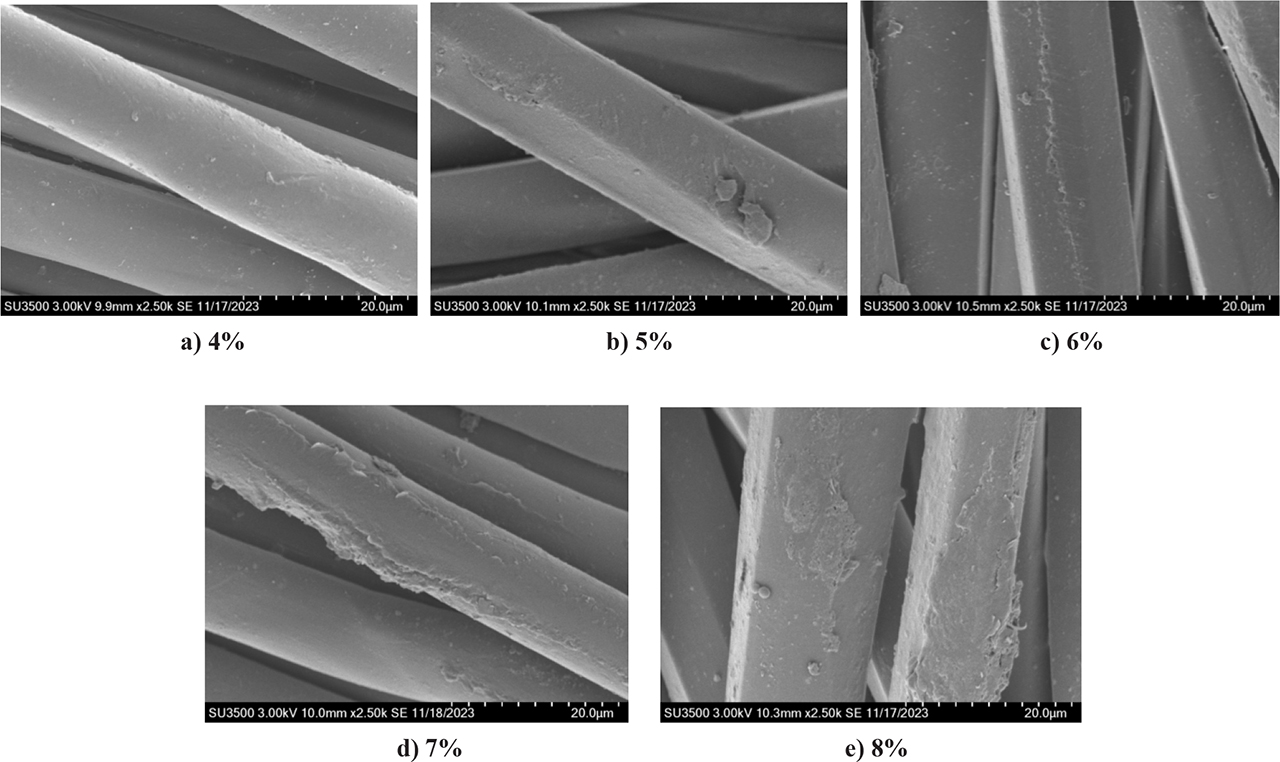
Fig. 4
Scanning electron microscope photographs of dyed fabrics with different o.w.f concentrations of tea polyphenols
3.3. Infrared Spectroscopy Curve Analysis
Infrared spectroscopy curves of the dyed fabrics with different o.w.f concentrations of tea polyphenols are shown in Figure 5. It can be seen from the figure that the infrared spectroscopy curves for the chitosan-treated cotton fabrics dyed with different o.w.f concentrations of tea polyphenols are roughly the same. The absorption peak near 1695 cm−1 is caused by C=O vibration; the peaks near 1520 and 1450 cm−1 are due to C=C vibrations in the benzene ring; the peaks near 1145 and 1035 cm−1 are due to C-O-C stretching vibrations, and the peak near 825 cm−1 is due to out-of-plane C-H deformation vibrations in the benzene ring. These absorption peaks confirm the presence of tea polyphenols on the dyed fabrics. With the increase in the concentration of tea polyphenols, the intensity of the absorption peaks increases, indicating an increase in the number of tea polyphenol functional groups. Therefore, it can be concluded that tea polyphenols have good dyeing performance on chitosan-treated cotton fabrics.
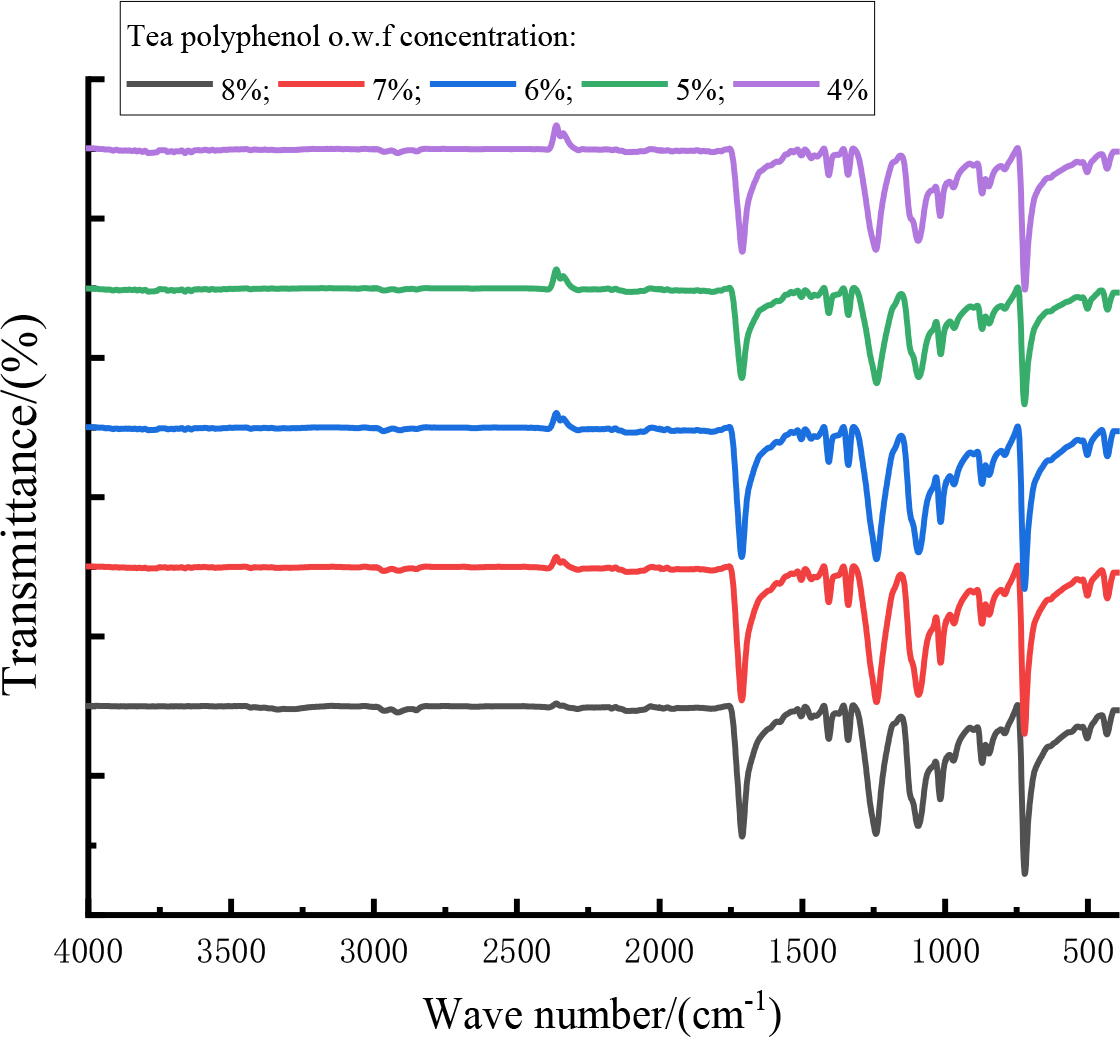
Fig. 5
Infrared spectroscopy curves of dyed fabrics with different o.w.f concentrations of tea polyphenols
3.4. Color Fastness Analysis
Under optimal processing conditions, the test results of various colorfastness indicators for tea polyphenol dyed and finished modified cotton fabrics are shown in Table 1. The test results from the table indicate that for the modified cotton fabrics with an o.w.f concentration of tea polyphenols below 6%, the colorfastness to sunlight, washing, and rubbing all improve to different extents as the concentration of tea polyphenols increases. This is due to the cationization of the amino groups in the molecular structure of the chitosan after acid treatment. After acidified chitosan modification of the cotton fabric, the affinity of the fiber surface and internal molecular structure of the fabric to the anionic structure of tea polyphenols is greatly enhanced, which also improves the dye uptake, thus stabilizing the color of the dyed fabric, reducing floating color, improving color fixation, and increasing rubbing fastness [10–11]. However, when the concentration of tea polyphenols o.w.f exceeds 6%, the colorfastness to sunlight continues to improve, while the colorfastness to washing and rubbing shows a downward trend. This is due to the re-crystallization of tiny particles of tea polyphenols under water and rubbing conditions, causing the dye to precipitate and form aggregated clumps. These clumps dissolve again in water or are stripped away by rubbing, leading to a decrease in colorfastness. Therefore, it is crucial to control the concentration of tea polyphenols for functional dyeing of modified cotton fabrics.
3.5. Analysis of Antibacterial Performance, UV Protection, and Deodorizing Performance
Under optimal process conditions, the test results of the antibacterial and ultraviolet protection properties of tea polyphenol dyed and finished modified cotton fabrics are shown in Table 2. It can be seen from Table 2 that with the increase in the o.w.f concentration of tea polyphenols, the antibacterial properties, UV protection properties, and ammonia odor reduction rate of the dyed and finished cotton fabrics all improve to varying degrees. When the tea polyphenol o.w.f concentration exceeds 6%, the increase in these indicators slows down. This is attributed to the increased adsorption of tea polyphenols on the surface of the cotton fabric, as can be understood from Figure 2-e). The test results indicate that tea polyphenol functional dyed and finished modified cotton fabrics possess good antibacterial and UV protection properties. This is because the main components of tea polyphenols are catechins, whose phenolic hydroxyl groups in the molecular structure can form hydrogen bonds with carboxyl, amino, and peptide groups in the proteins of bacterial cell walls, cell membranes, and peptidoglycans. The benzene ring structure can form hydrophobic interactions with the aforementioned structures, thereby inhibiting and killing bacteria [12–13]. The antibacterial effect on Escherichia coli is slightly superior to that on Staphylococcus aureus, which can be attributed to the difference in bacterial types [14]. The excellent UV protection of tea polyphenol-dyed modified cotton fabrics is based on two factors: firstly, the amino groups in the molecular structure of chitosan, after acid treatment, become cationized, enhancing its adsorption capacity for tea polyphenols [15]; secondly, chitosan itself contributes to the UV protection of cotton fabrics. Thus, it can be concluded that tea polyphenol-dyed modified cotton fabrics possess good antibacterial performance and UV protection, and combined with the findings from Section 3.2 on color fastness, these properties are expected to be long-lasting.
Tab. 2.
Test results of antibacterial and ultraviolet protection properties of tea polyphenol dyed and finished modified cotton fabrics
| Tea polyphenols o.w.f concentration/% | Antibacterial performance (%) | UV protection | Deodorization rate (%) | |||
|---|---|---|---|---|---|---|
| Escherichia coli | Staphylococcus aureus | UPF | T %(UVA) | T(UVB) % | ||
| 0 | 49.95 | 58.95 | 11.86 | 14.74 | 11.93 | —— |
| 4 | 53.62 | 63.44 | 20.38 | 10.92 | 9.37 | 85.68 |
| 5 | 58.91 | 67.53 | 29.72 | 6.67 | 5.82 | 86.13 |
| 6 | 78.49 | 72.68 | 38.27 | 3.14 | 1.59 | 86.52 |
| 7 | 80.21 | 73.32 | 41.73 | 3.02 | 1.36 | 87.07 |
| 8 | 81.16 | 75.65 | 43.81 | 2.86 | 1.24 | 87.21 |
Furthermore, as evident from the table, the modified cotton fabrics acquired deodorizing functionality. This is attributed to the phenolic hydroxyl groups in tea polyphenols, which can undergo condensation and neutralization reactions with amine and ammonia groups, thereby eliminating odorous substances present in the environment.
4. Conclusion
This study aimed to explore the application of tea polyphenols in the functional finishing of chitosan-modified cotton fabrics by optimizing dyeing parameters and evaluating the dyed fabrics’ properties, such as colorfastness, antibacterial activity, UV protection, and odor resistance. The experimental results showed that when using chitosan-modified cotton fabrics with a tea polyphenol mass fraction exceeding 6%, the fabrics achieved colorfastness levels of 4 or higher in terms of sunlight fastness, washing fastness (dry and wet states), and rubbing fastness. Additionally, the dyed modified cotton fabrics exhibited excellent antibacterial, UV protection, and deodorizing properties. These findings provide a reference for further expanding the application of tea polyphenols in functional textile materials.
However, while this study achieved significant results, it is essential to place these findings within a broader scientific context and critically analyze and compare them with other researchers’ results.
Lambrecht et al. (2023) demonstrated that chitosan pre-mordanted cotton dyed with red tea extract significantly increased the ultraviolet protection factor (UPF), doubling it compared to untreated cotton. Our study further validates the effectiveness of tea polyphenols in enhancing the UV protection performance of fabrics, indicating that chitosan-modified cotton fabrics dyed under appropriate conditions with tea polyphenols not only show significant improvements in UV protection but also exhibit excellent antibacterial and deodorizing properties.
Ma and Pan (2021) studied the dyeing properties of cotton-linen fabrics using polyphenol dye extracted from Tieguanyin tea stems, finding that the highest polyphenol content was achieved under optimal extraction conditions, and post-mordanting with aluminum potassium sulfate improved colorfastness and color stability. In contrast, our study opted for chitosan as the modifying agent, avoiding the use of heavy metal mordants that could cause environmental pollution, while also achieving excellent colorfastness and functional effects. This highlights the potential of chitosan in the tea polyphenol dyeing process, being both environmentally friendly and significantly enhancing fabric functionality.
Wei et al. (2020) explored the dyeing process of polyester fabrics with tea polyphenols, highlighting a significant increase in the antibacterial rate when post-mordanted with copper sulfate. While this study underscores the antibacterial potential of tea polyphenols, the use of heavy metal mordants poses environmental risks. Our study shows that by using chitosan modification, excellent antibacterial effects can be achieved without the use of heavy metal mordants, which is significant for environmental protection and sustainable development.
Moreover, existing literature often lacks a comprehensive examination of the interplay between various functional properties provided by tea polyphenols. For example, while some studies focus on UV protection, others emphasize antibacterial effects or colorfastness, but few consider all these properties simultaneously. This fragmented approach limits the understanding of how these properties can be synergistically enhanced in a single fabric treatment process. This study addresses this gap by comprehensively evaluating the multiple functional properties of tea polyphenols on chitosan-modified cotton fabrics, proposing a more holistic and environmentally friendly approach to textile finishing with tea polyphenols.
In summary, this study not only verifies the multiple functional effects of tea polyphenols on chitosan-modified cotton fabrics but also achieves an environmentally friendly and efficient green dyeing process through optimized dyeing conditions. These results provide a solid scientific basis for further exploring the application of tea polyphenols in functional textile materials and offer a valuable reference and inspiration for researchers in related fields.