
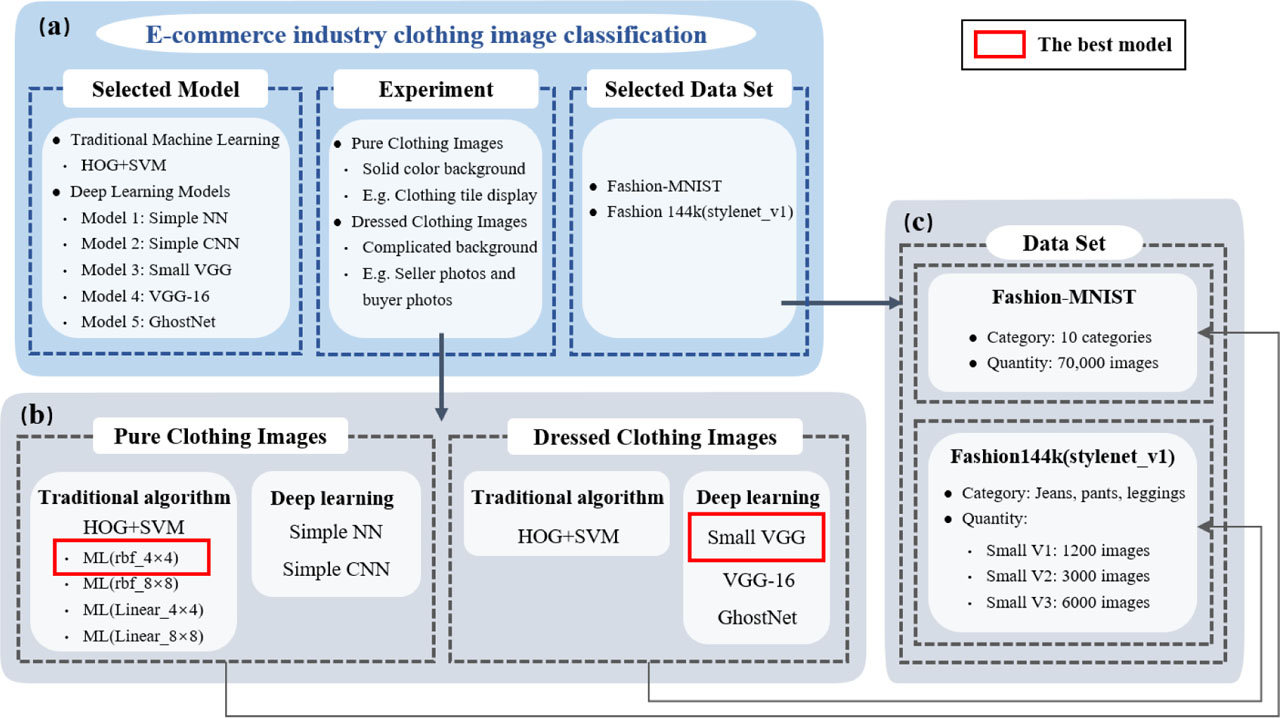
Fig. 1
Research object and methodology

Fig. 2
Flow chart of clothing image classification
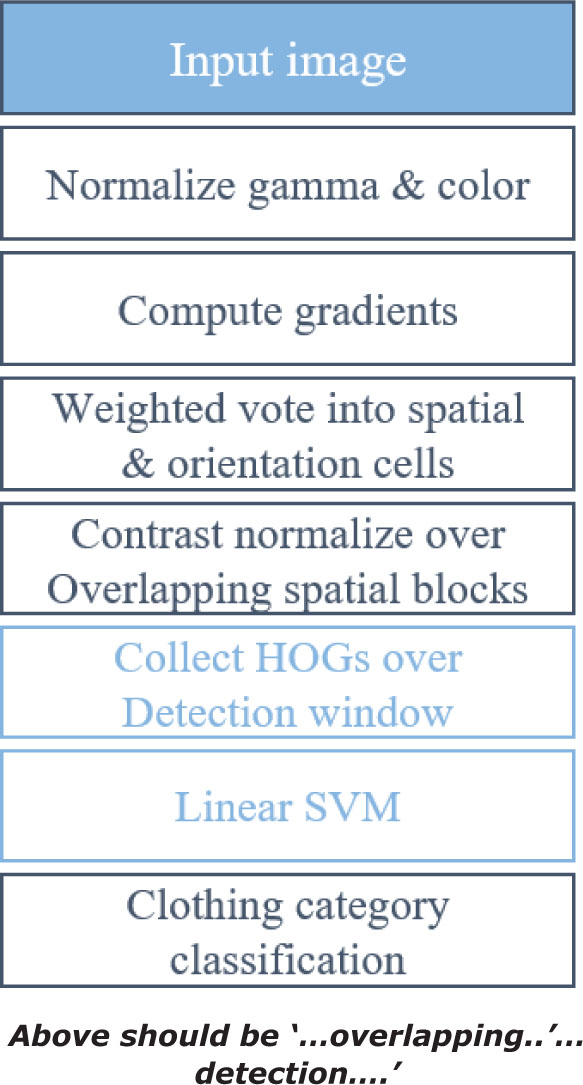
Fig. 3
Schematic diagram of HOG+SVM algorithm
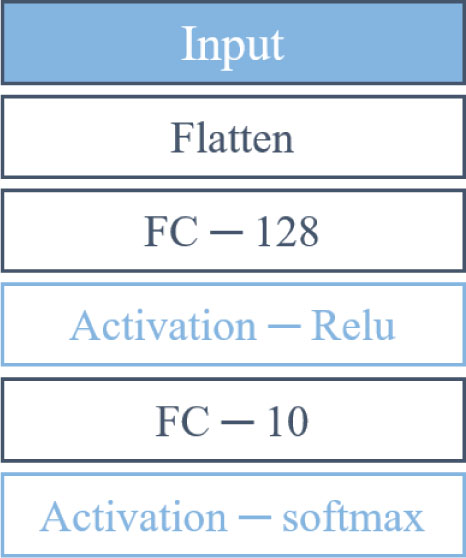
Fig. 4
Architecture of a simple NN
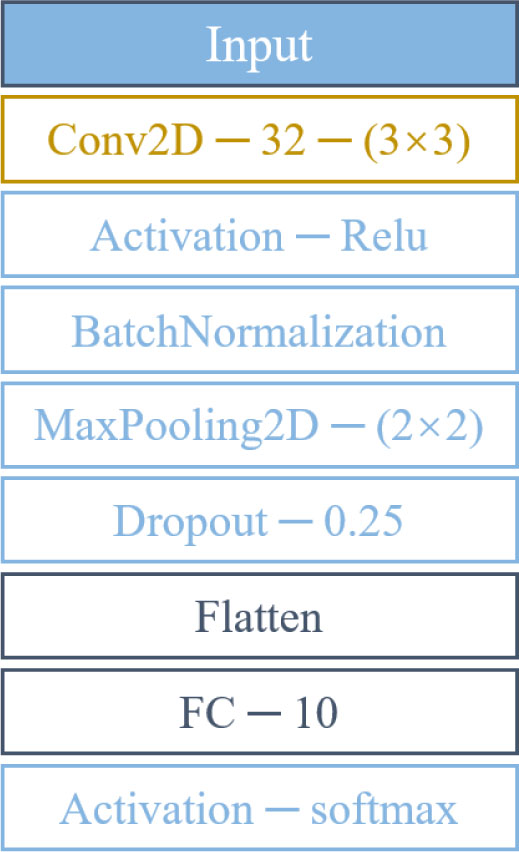
Fig. 5
Architecture of the CNN
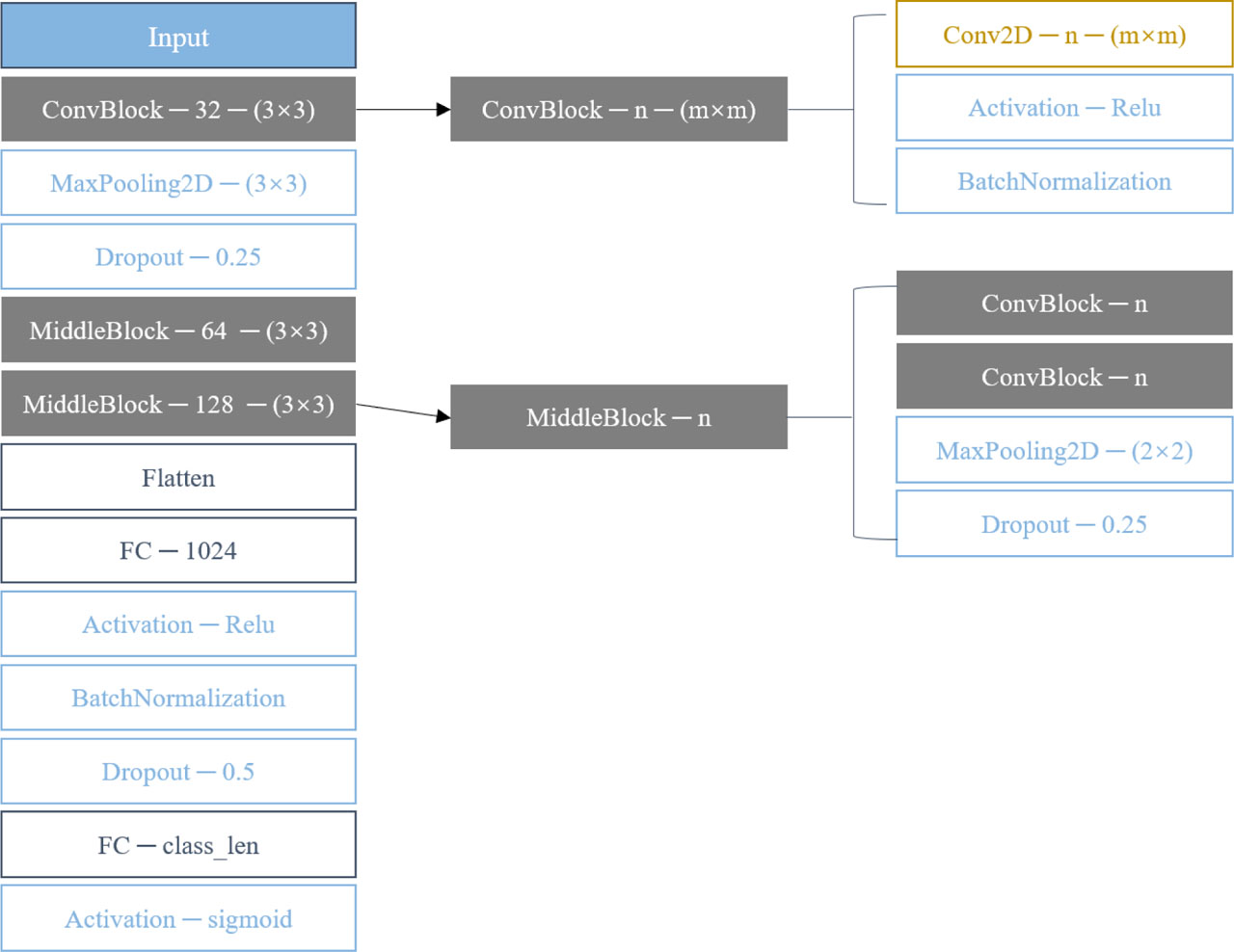
Fig. 6
Architecture of small VGG
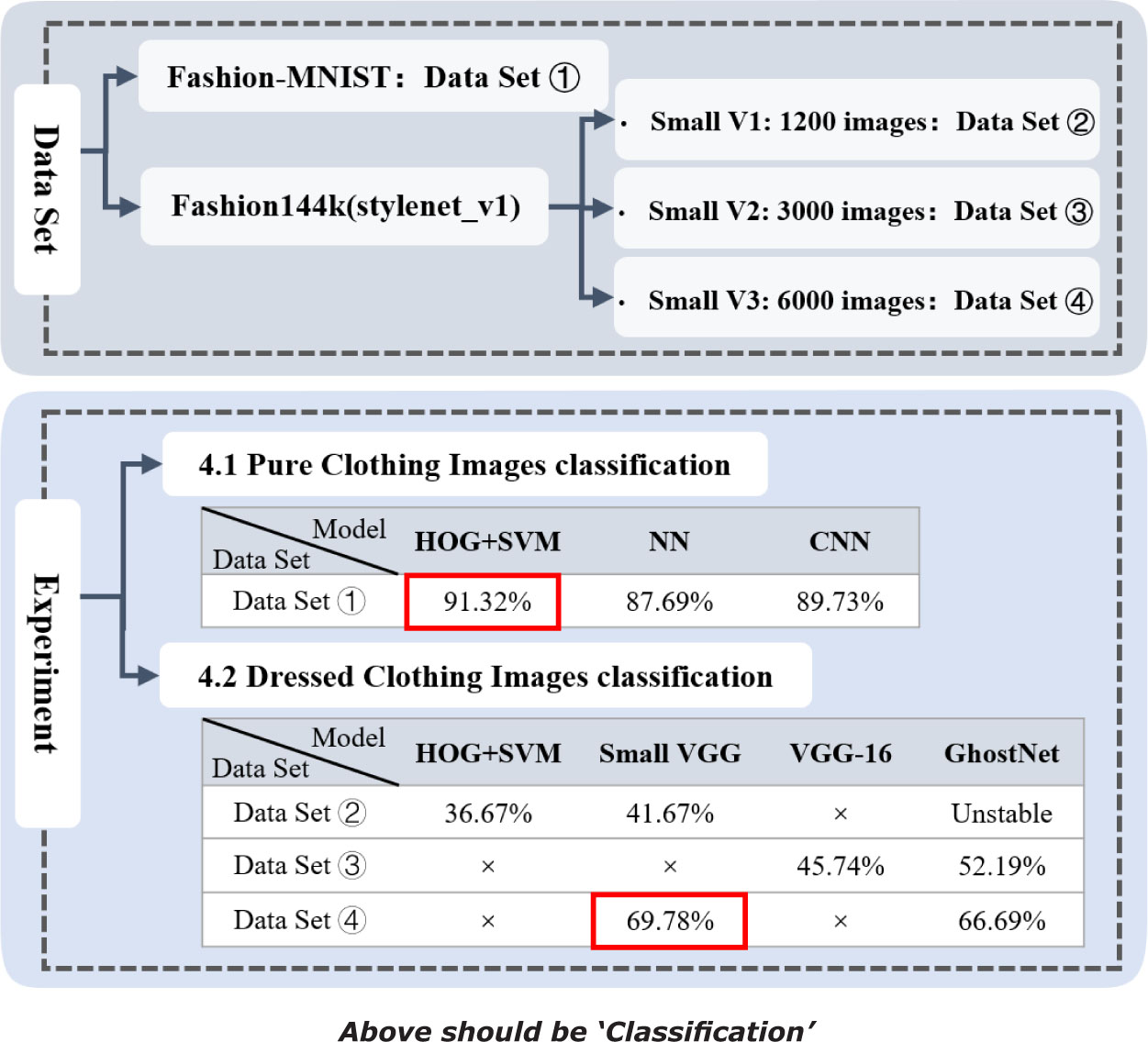
Fig. 7
Experimental flow chart
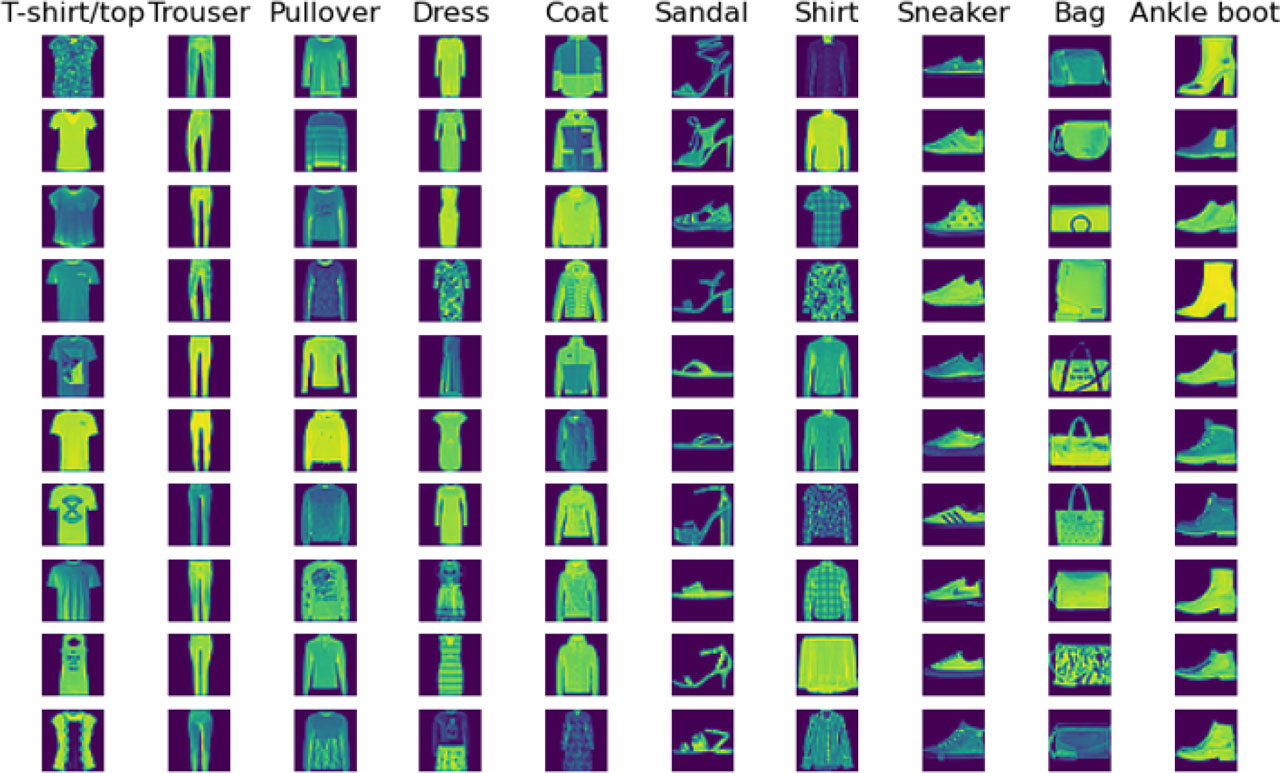
Fig. 8
Examples and categories of the Fashion-MNIST dataset
Table 1
Fashion-MNIST dataset label description
| Description | T-shirt/top | Trouser | Pullover | Dress | Notes |
|---|---|---|---|---|---|
| Label | 0 | 1 | 2 | 3 | 4 |
| Description | Sandal | Shirt | Sneaker | Bag | Ankle boot |
| Label | 5 | 6 | 7 | 8 | 9 |

Fig. 9
Accuracy comparison of HOG+SVM, NN, and CNN.
Table 2
Highest accuracy comparison of different models
| Name | Highest Accuracy |
|---|---|
| ML (rbf_4x4) | 91.3% |
| CNN | 89.7% |
| ML (Linear_4x4) | 88.9% |
| NN | 87.7% |
| ML (rbf_8x8) | 86.7% |
| ML (Linear_8x8) | 83.1% |
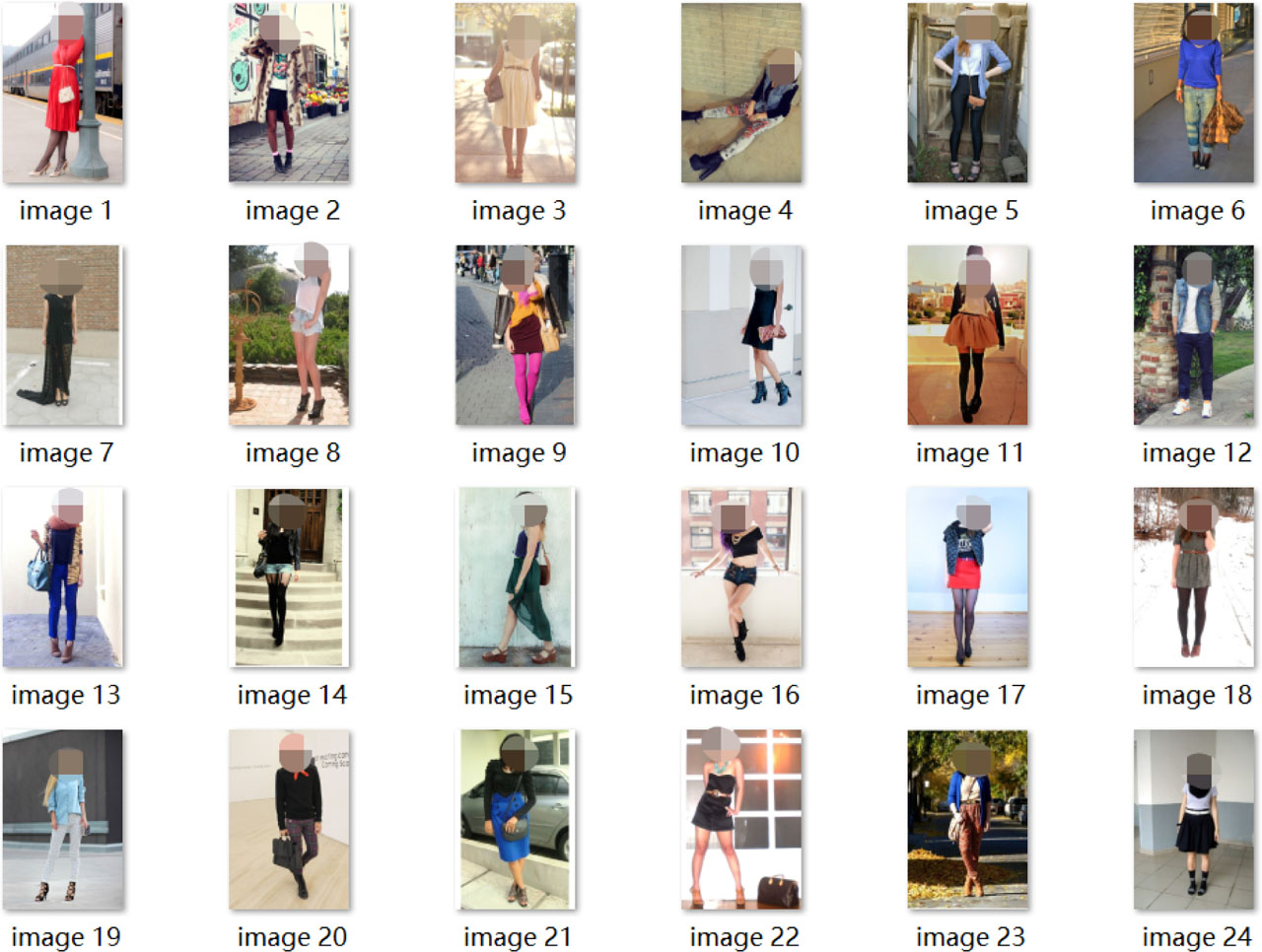
Fig. 10
Example images of the Fashion144k dataset
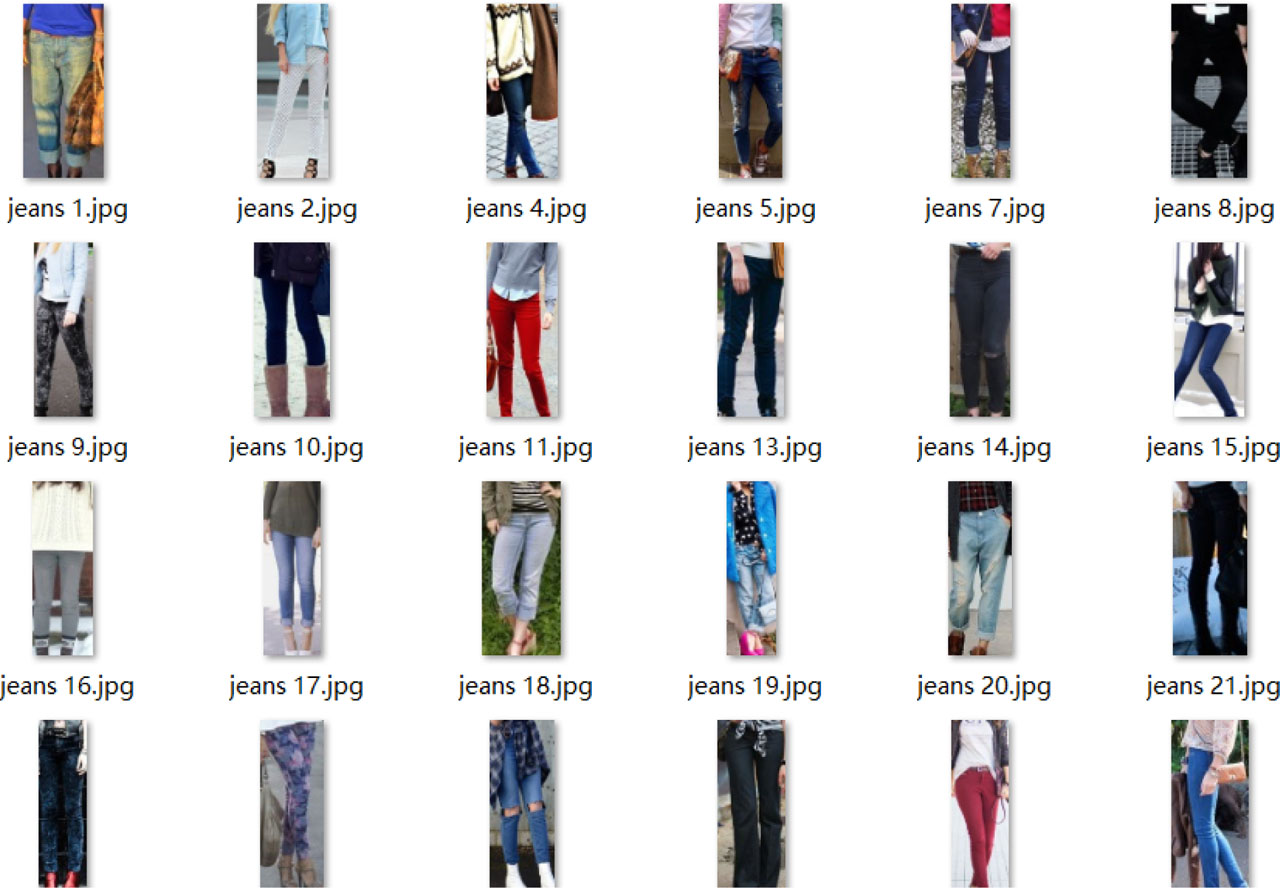
Fig. 11
Example images of the SmallV1 dataset
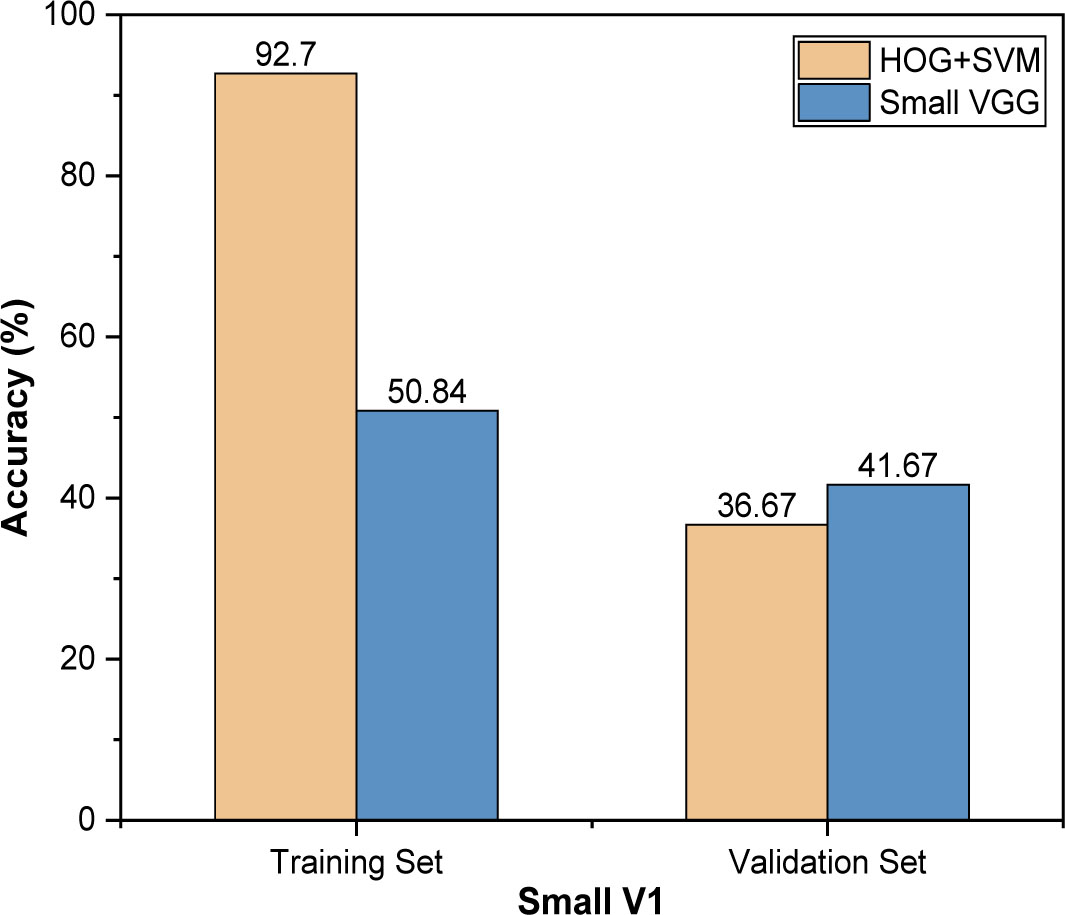
Fig. 12
Recognition accuracy of HOG+SVM and Small VGG for the SmallV1 dataset
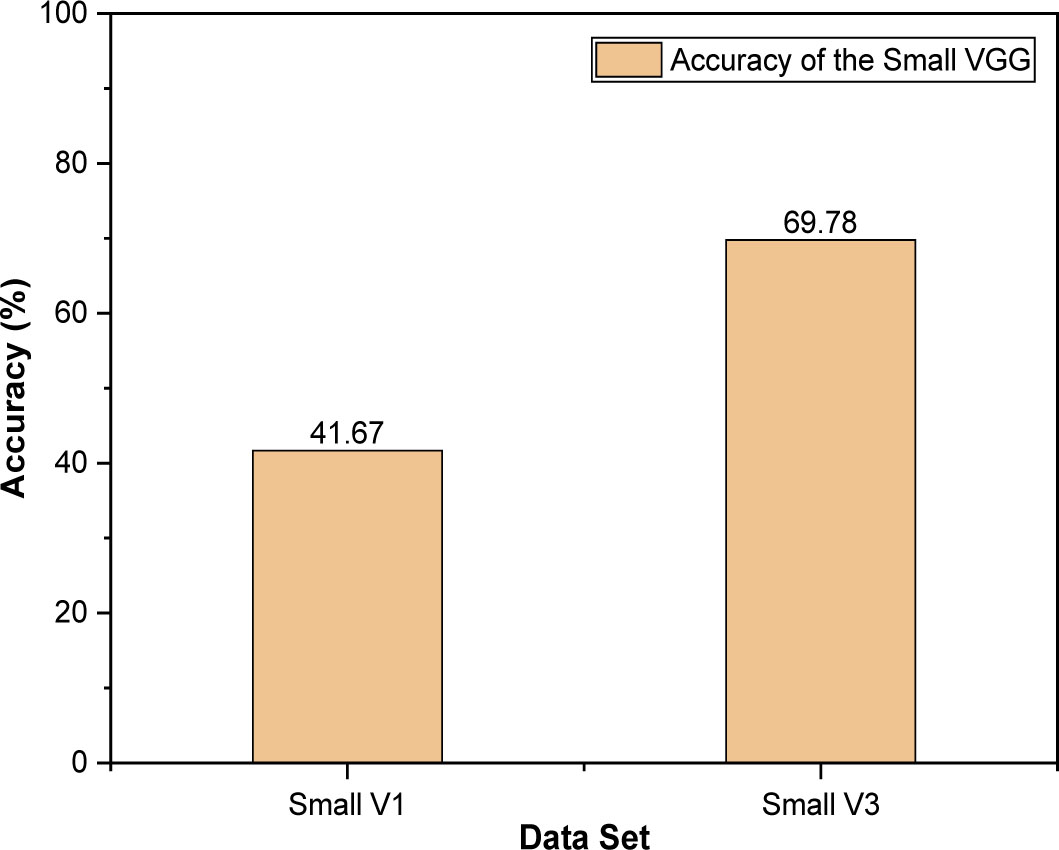
Fig. 13
Recognition accuracy of Small VGG network models in different datasets
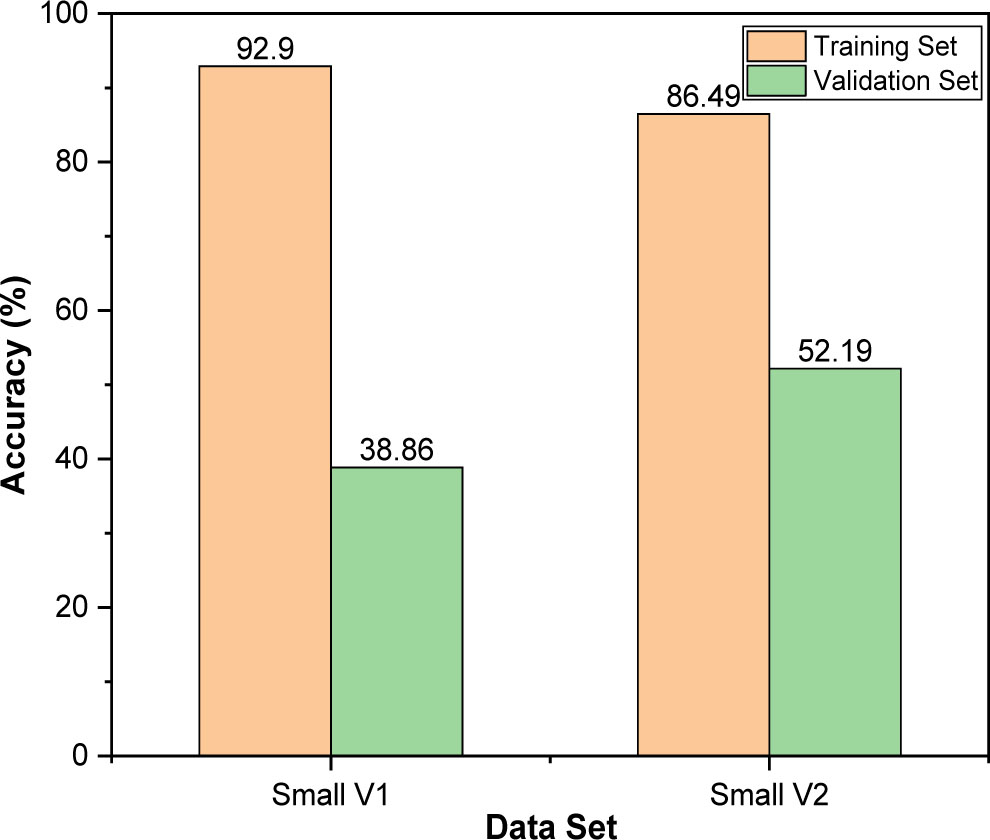
Fig. 14
Recognition accuracy of the GhostNet model for different datasets
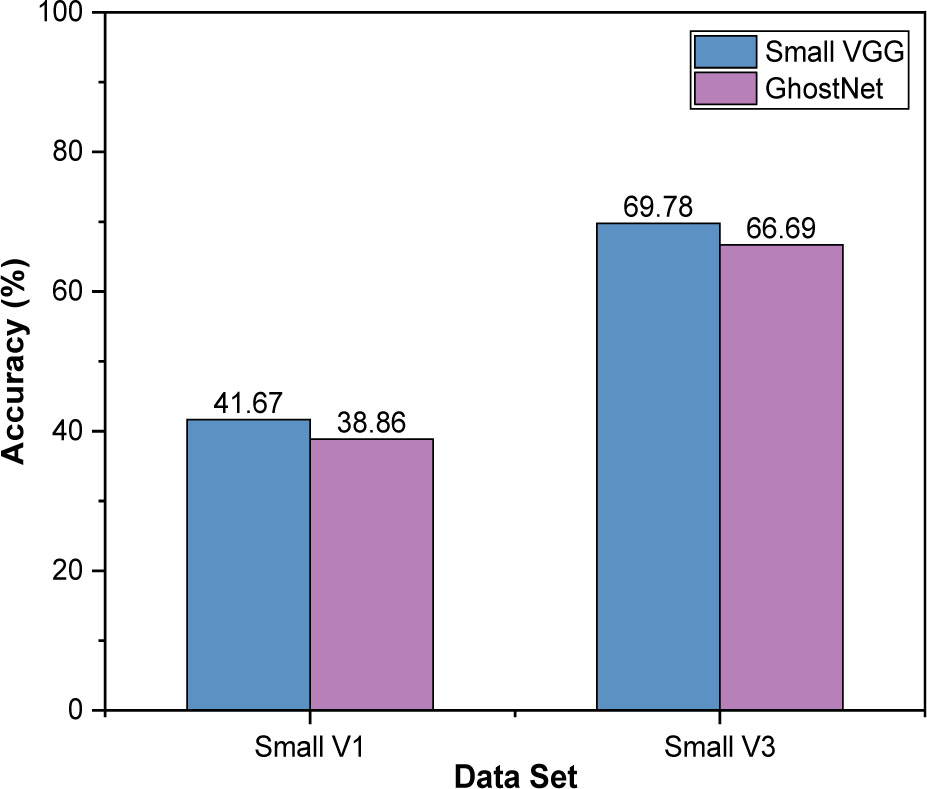
Fig. 15
Accuracy of Small VGG and GhostNet for different numbers of datasets