
Introduction
Mountain forests play an important role in all sectors of the national economy and are among the key factors ensuring the long-term stability of ecosystems that have developed over centuries (Viter, 2017). In the Ukrainian Carpathians, these forests exhibit not only productive but also protective, waterregulating, and biodiversity-conserving functions. At the same time, the increasing demand for timber intensifies anthropogenic pressure on forest ecosystems, particularly during logging operations in complex mountainous terrain.
One of the most underestimated consequences of timber harvesting is damage to residual trees. Unlike immediate soil disturbance or destruction of regeneration, the negative effects of mechanical injuries to standing trees often become evident only after several years. Such injuries create entry points for pathogens and decay fungi, contribute to the development of rot, and facilitate the spread of secondary pests, ultimately reducing tree vitality and timber quality. As a result, mechanical damage affects not only the physiological condition of individual trees but also leads to long-term ecological and economic losses at the stand level (Clatterbuck, 2006).
Maintaining the resilience and stability of forest ecosystems under forest management is a core objective of modern forestry science and practice. This challenge is especially pronounced in mountainous regions such as the Ukrainian Carpathians, where steep slopes, heterogeneous stand structure, and difficult operating conditions significantly increase the risk of damage to soils, advance regeneration, and residual trees during final fellings. Numerous studies in the region have addressed the negative impacts of logging on forest soils (Kudra, 2008; Olijnyk & Tkachuk, 2016; Oliinyk & Rak, 2017) and on regeneration and undergrowth (Viter, 2010; Byblyuk et al., 2016; Viter, 2017; Malon, 2024). Although the technical aspects of timber harvesting have been widely studied (Luty, 2002; Adamowskij & Bakay, 2004; Korzhov & Kudra, 2014), the issue of damage to residual trees – particularly injury typology, post-logging physiological condition, and long-term effects on tree vitality – remains insufficiently explored in the Carpathian region, especially from the perspective of sustainable forest management.
At the same time, damage to residual trees has been the subject of extensive research in other European countries. These studies examined the extent and characteristics of tree damage in both broadleaf forests (Spinelli et al., 2010; Mederski et al., 2011; Danilović et al., 2015; Tsioras & Liamas, 2015; Ursić et al., 2022) and coniferous forests (Athanassiadis, 1997; Modig et al., 2012; Bembenek et al., 2013a; Bembenek et al., 2013b; Hwang et al., 2018), highlighting the influence of felling systems, skidding methods, and stand structure on damage intensity. However, comparable quantitative assessments for mixed beech-fir stands in the mountainous forests of the Ukrainian Carpathians are still limited.
The first entry of uniform shelterwood felling in beech-fir stands is a particularly critical phase of forest management, as it largely determines the future condition and stability of the stand. This intervention is accompanied by substantial changes in microclimate, light availability, spatial structure, and mechanical stability of remaining trees, while simultaneously creating conditions for natural regeneration. Consequently, the first entry represents not only a technological operation but also an ecologically sensitive stage, during which minimizing damage to residual trees is of paramount importance. Under current climate change conditions, additional stress caused by mechanical injuries may further reduce the adaptive capacity of mountain forest stands, increasing their vulnerability to biotic and abiotic disturbances.
Therefore, the aim of this study is to provide a quantitative assessment of the impact of logging operations on the condition of residual trees during the first entry of uniform shelterwood felling in beech-fir stands of the mountainous forests of the Ukrainian Carpathians. To achieve this aim, the study focuses on recording damaged residual trees and analyzing the relationships between harvesting intensity, skidding operations, and key damage indicators, including damage location, severity, wound size, and distance from skid trails.
Materials and Methods
The study was conducted in the northwestern part of the Ivano-Frankivsk region, within the Kalush administrative district, which, according to forest management zoning, belongs to the Carpathian Forest Management District. The research focused on eleven clearcut areas of final harvesting, where the first stage of a uniform two-stage shelterwood cutting was carried out within the State Specialized Forestry Enterprise “Forests of Ukraine”.
The experimental plots are located at altitudes of 800–850 m above sea level and are situated on slopes with gradients of 15–30°. The studied logging sites represent two forest types: moist beech–spruce subalpine forest, and moist spruce-fir submontane forest. The composition of the parent stands is heterogeneous; on almost all plots, beech (Fagus sylvatica L.) is the dominant species, while fir (Abies alba Mill.) and spruce (Picea abies (L.) H. Karst.) are present in smaller proportions, typically ranging from one to three units in the composition. A detailed description of the research sites is provided in Table 1.
Table 1.
Characteristics of the research object.
| No. of the research plot | Location | Area, ha | Year of felling | Harvestable volume, m3 | ||||
|---|---|---|---|---|---|---|---|---|
| Forestry district | Forest range | Forest compartment | Forest subcompartment | total | per ha | |||
| 1 | Vygoda | Shevchenkivske | 15 | 33.4 | 0.8 | 2023 | 174 | 217.5 |
| 2 | Vygoda | Shevchenkivske | 15 | 33.5 | 0.9 | 2023 | 86 | 95.6 |
| 3 | Vygoda | Shevchenkivske | 26 | 14.0 | 1.0 | 2023 | 190 | 190.0 |
| 4 | Vygoda | Slobidske | 10 | 13.2 | 1.0 | 2023 | 110 | 110.0 |
| 5 | Vygoda | Slobidske | 23 | 12.1 | 0.9 | 2023 | 111 | 123.3 |
| 6 | Broshnivske | Lypovetske | 40 | 23.2 | 0.7 | 2023 | 178 | 254.3 |
| 7 | Vygoda | Slobidske | 23 | 27.4 | 1.0 | 2024 | 131 | 131.0 |
| 8 | Broshnivske | Luhivske | 4 | 1.0 | 1.0 | 2024 | 70 | 70.0 |
| 9 | Osmolodske | Perehinske | 25 | 1.0 | 0.6 | 2024 | 66 | 110.0 |
| 10 | Osmolodske | Perehinske | 17 | 6.2 | 1.0 | 2024 | 48 | 48.0 |
| 11 | Osmolodske | Perehinske | 23 | 14.4 | 0.6 | 2024 | 63 | 105.0 |
Timber harvesting during the first entry of the uniform two-stage shelterwood cutting included tree felling using gasoline-powered chainsaws, delimbing on the logging site, and skidding to the landing area with a heavy crawler tractor. The operations were carried out during the spring and autumn seasons of 2023 and 2024.
To analyze the damage caused by logging operations during the first entry of the final felling in beech-fir stands, the condition of residual trees (those not designated for felling) was assessed after completion of all felling activities (tree cutting, delimbing, and skidding). The type of damage was identified through visual inspection, while other wound parameters were measured using a measuring tape – for instance, wound area was calculated as the product of the maximum width and maximum length of the wound.
On the studied plots, data were collected on:
- the total number of damaged residual trees, and
- the total number of standing trees not designated for felling.
The percentage of damaged residual trees, which reflects the level of disturbance from a particular logging operation, was calculated as the ratio of the number of damaged trees to the total number of residual trees remaining in the stand after the first entry. Damage in the stand resulting from logging operations was assessed based on the following parameters:
- Location of damage: stem and root collar (Figure 2), or roots (Figure 1);
- Severity of damage: Dark only (Figure 3), wood exposed but undamaged (Figure 4), wood damaged (Figure 5);
- Wound size: up to 10 cm2, 11–100 cm2, and over 100 cm2;
- Distance from the edge of the skid trail: up to 1 m, 1–5 m, and over 5 m.
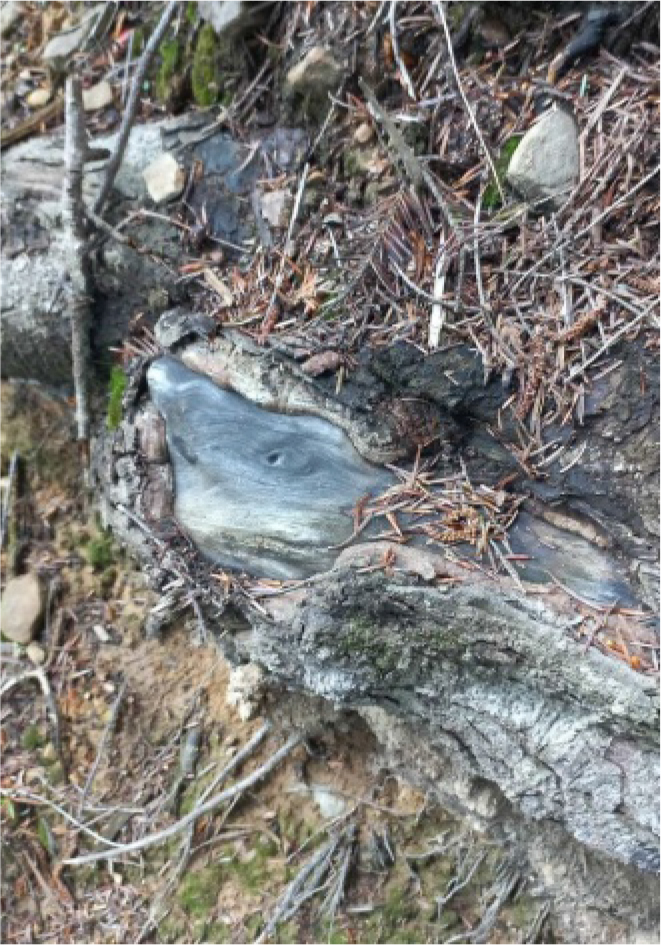
Figure 1.
Damaged roots (photo: A. Malon).
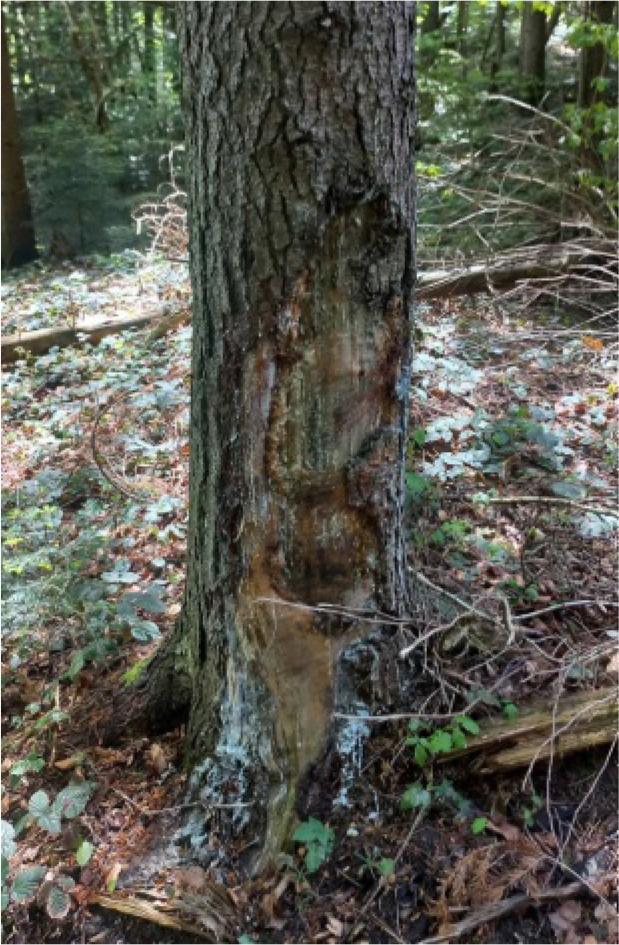
Figure 2.
Damaged trunk and root collar (photo: A. Malon).
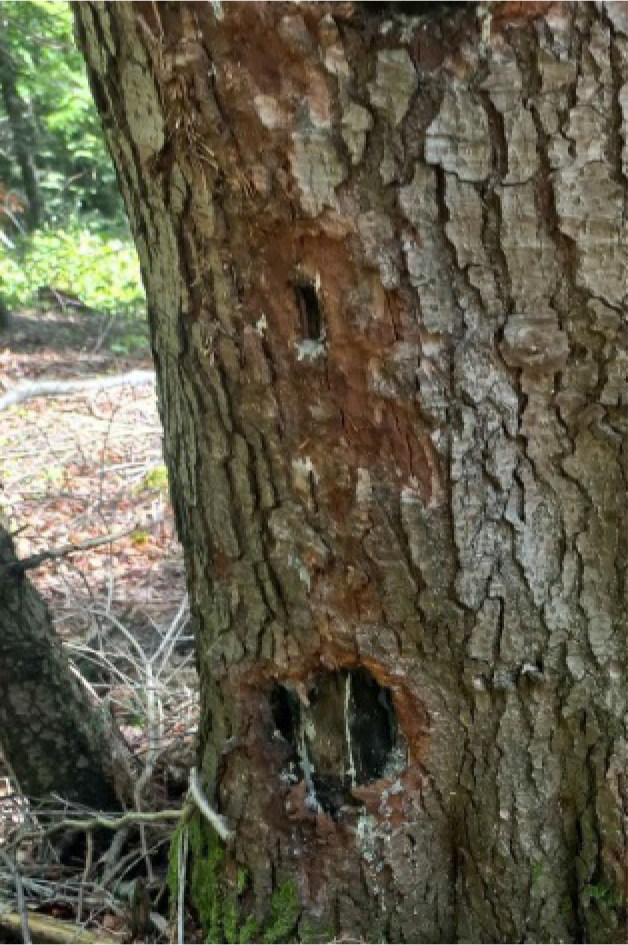
Figure 3.
Outer bark layer damaged (photo: A. Malon).
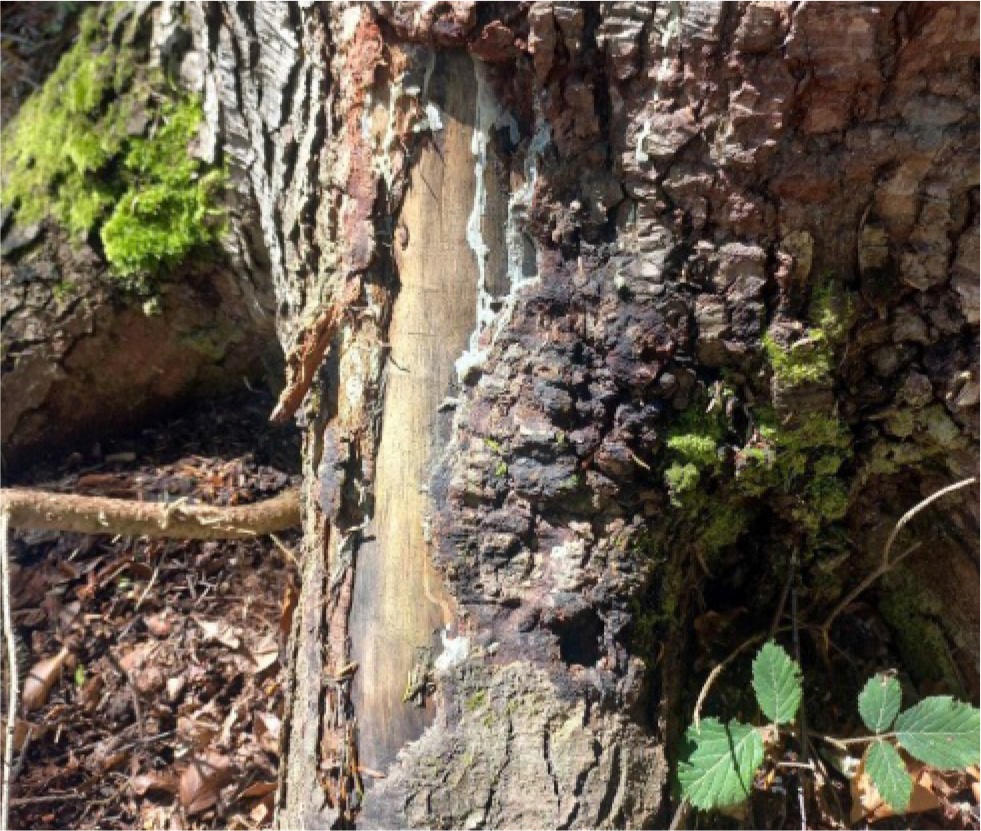
Figure 4.
Exposed but undamaged wood (photo: A. Malon).
Note: Time of documented damage – June 2025; time of logging activity – March 2023 and October 2024.
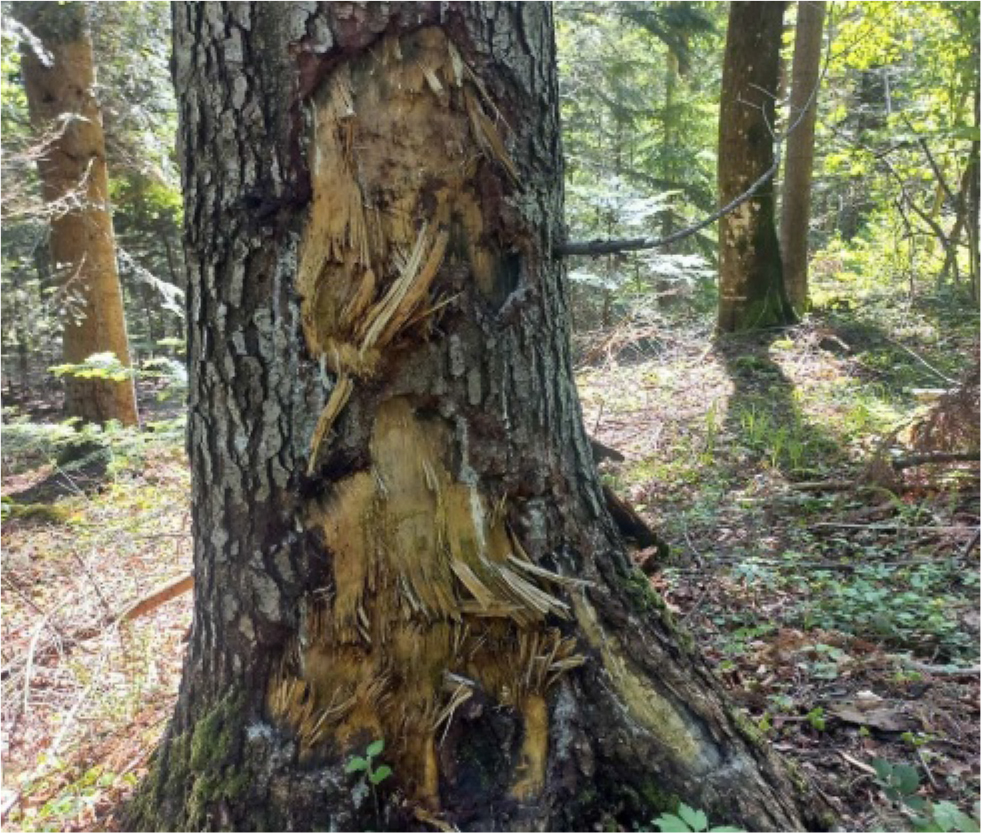
Figure 5.
Damaged wood (photo: A. Malon). Malon).
Calculations and statistical analyses of the collected data were performed using Microsoft Excel. For the location of damage and degree of damage, the mean (Mean), standard deviation (SD), and standard error (SE) were calculated, and paired t-tests were applied to compare mean values. The wound size was analyzed using Mean, SD, SE, and ANOVA to assess statistically significant differences between groups. To evaluate the relationship of wound distance from the skidding trail, Mean, SD, SE, and correlation analyses (Pearson and Spearman) were performed.
Results
Following the completion of the first entry of uniform two-stage shelterwood cutting on the 11 studied sites, the number of residual trees not designated for harvesting ranged from 188 to 410 per hectare, with an average of 315 trees per hectare (Table 2).
Table 2.
Overview of damage results in the studied plots.
| No. of the research plot | 1 | 2 | 3 | 4 | 5 | 6 | 7 | 8 | 9 | 10 | 11 | Average value | Standard Deviation/Standard Error | |
|---|---|---|---|---|---|---|---|---|---|---|---|---|---|---|
| Number of appraised trees, pcs | in the area | 150 | 231 | 320 | 278 | 351 | 254 | 410 | 389 | 154 | 279 | 201 | 274.27 | 87.84/26.50 |
| per 1ha | 187.5 | 256.7 | 320.0 | 278.0 | 390.0 | 362.9 | 410.0 | 389.0 | 256.7 | 279.0 | 335.0 | 314.98 | 69.69/21.02 | |
| Number of damaged trees, pcs | in the area | 16 | 35 | 26 | 24 | 35 | 26 | 32 | 35 | 21 | 14 | 16 | 25.45 | 7.97/2.40 |
| per 1ha | 20.0 | 38.9 | 26.0 | 24.0 | 38.9 | 37.1 | 32.0 | 35.0 | 35.0 | 14.0 | 26.7 | 29.78 | 8.25/2.49 | |
| Damage intensity, % | 10.67 | 15.15 | 8.13 | 8.63 | 9.97 | 10.24 | 7.80 | 9.00 | 13.64 | 5.02 | 7.96 | 9.28 | 2.81/0.85 | |
It was found that the number of damaged residual trees per hectare varied from 14 to 39, averaging 30 trees per hectare. The damage intensity – defined as the percentage of damaged trees among all remaining trees – ranged from 5.0% to 15.2%, with an average value of 9.3%.
Regarding the location of damage, it was found that the stem and root collar are most frequently injured during logging operations – 74.8% compared to 25.3% for root damage (Table 3). On the studied plots, this indicator varied from 65.6% to 80.8% for stem and root collar injuries. The relatively narrow range suggests a high sensitivity of this tree part to any mechanical stress. For roots, the proportion ranged from 19.2% to 34.4%, indicating a lower stability and consistency in root damage, which likely depends on factors such as soil type, moisture levels, and technical approaches used during harvesting. Based on the paired t-test comparing damage to the trunk and roots, the difference was found to be statistically significant (t ≈ 16.7; df = 10; p < 0.05), with trunk damage being significantly greater than root damage.
Table 3.
Proportion of damaged trees depending on the location and severity of damage.
| No. of the research plot | 1 | 2 | 3 | 4 | 5 | 6 | 7 | 8 | 9 | 10 | 11 | Average value | Standard deviation/standard error |
|---|---|---|---|---|---|---|---|---|---|---|---|---|---|
| Location of damage | |||||||||||||
| Trunk and root collar | 75.0 | 71.5 | 80.8 | 75.0 | 68.6 | 71.4 | 65.6 | 80.0 | 71.4 | 78.6 | 74.9 | 74.75 | 4.83/1.46 |
| Roots | 25.0 | 28.5 | 19.2 | 25.0 | 31.4 | 28.6 | 34.4 | 20.0 | 28.6 | 21.4 | 25.1 | 25.25 | 4.83/1.46 |
| Degree of damage | |||||||||||||
| The outer layer of bark is damaged | 3.8 | 19.0 | 12.5 | 25.0 | 17.1 | 7.7 | 6.3 | 37.5 | 22.9 | 28.6 | 28.6 | 19.00 | 11.37/3.43 |
| Complete destruction of the bark without damage to the wood | 34.6 | 57.1 | 43.8 | 41.7 | 40.0 | 23.1 | 37.5 | 43.8 | 51.4 | 57.1 | 42.9 | 43.00 | 10.57/3.19 |
| The wood is damaged | 61.5 | 23.8 | 43.8 | 33.3 | 42.9 | 69.2 | 56.3 | 18.8 | 25.7 | 14.3 | 28.6 | 38.00 | 17.06/5.14 |
| The distribution share of damage by wound size | |||||||||||||
| up to 10 cm2 | 15.4 | 47.6 | 18.8 | 29.2 | 22.9 | 11.5 | 15.6 | 37.5 | 34.3 | 42.9 | 40.0 | 28.70 | 12.60/3.80 |
| 11 to 100 cm2 | 30.8 | 38.1 | 37.5 | 50.0 | 37.1 | 38.5 | 37.5 | 56.3 | 51.4 | 42.9 | 51.4 | 42.85 | 8.75/2.64 |
| more than 100 cm2 | 53.8 | 14.3 | 43.8 | 20.8 | 40.0 | 50.0 | 46.9 | 6.3 | 14.3 | 14.3 | 8.6 | 28.45 | 17.90/5.40 |
| Proportion of damaged trees depending on the distance from the skid trail | |||||||||||||
| up to 1 m | 57.7 | 23.8 | 62.5 | 22.9 | 45.7 | 76.9 | 46.9 | 12.4 | 33.2 | 28.6 | 22.9 | 39.40 | 20.23/5.84 |
| 1 to 5 m | 23.1 | 71.4 | 25.1 | 57.1 | 22.9 | 19.2 | 21.9 | 62.4 | 33.2 | 36.0 | 42.9 | 37.75 | 18.98/5.48 |
| more than 5 m | 19.2 | 4.8 | 12.4 | 20.1 | 31.4 | 3.9 | 31.3 | 24.7 | 33.2 | 36.0 | 34.3 | 22.85 | 11.56/3.34 |
As for the degree of damage, it was found that exposed but undamaged wood has the largest share (43.0%). Across the studied plots, this indicator varies from 23.1% to 57.1% of the total number of damaged trees. Bark damage without damage to the wood is observed in only 19.0% of trees (minimum 3.8%, maximum 37.5%). Another 38.0% of trees have deep wood damage, which already threatens their physiological stability (on study plot No. 10 it is 14.3%, while on plot No. 6 it reaches 69.2%). Paired t-tests revealed that the proportion of trees with outer bark damage was significantly lower than that of trees with complete bark destruction (t = -7.68, df = 10, p < 0.001). Other comparisons – between outer bark damage and wood damage (t = -1.62, p = 0.14) and between complete bark destruction and wood damage (t = 0.90, p = 0.39) – did not show statistically significant differences, indicating that the most pronounced difference is in the degree of bark damage, while deep wood damage and complete bark destruction occur at comparable levels across plots.
In terms of total wound area, the largest share of trees has wounds of medium size (11–100 cm2), observed in 42.9% of the cases (ranging from 30.8% on plot No. 1 to 56.3% on plot No. 8). Wounds larger than 100 cm2 make up 28.5%, and small wounds (up to 10 cm2) – 28.7%. A one-way ANOVA revealed a statistically significant difference between groups based on wound size (F (2, 30) = 4.03, p < 0.05), indicating that the average extent of tree damage depends on the wound size class.
After analyzing the study results, it was found that the largest share of damage (39.4%) was recorded at a distance of up to 1 meter from the skidding trail tracks. However, at a distance of more than 5 metres this figure is only 22.9%. Some plots (e.g. plot No. 6) have extreme values (76.9% of damaged trees within 1 meter), indicating intensive use of machinery without sufficient buffer zones. Pearson’s correlation analysis (n = 11) revealed a strong and statistically significant negative relation-ship between the proportion of damaged trees located up to 1 m and 1–5 m from the skid trails (r = -0.82, p = 0.002). The relationship between the up to 1 m and more than 5 m distance classes was moderate but not statistically significant (r = -0.43, p = 0.18). A weak and nonsignificant correlation was observed between the 1–5 m and more than 5 m distance classes (r = -0.16, p = 0.63).
Further, in order to establish the dependency of the volumes of felled and transported timber on the location of damage, the degree of damage, wound size, and distance of the wounds from the edge of the skidding trail of the remaining trees, Figures 6–9 were constructed. Analysis of Figure 6 indicates that, despite the increase in skidding volume, no clear visual trend can be discerned: the proportion of damaged trees does not appear to increase proportionally with the volume of felled and transported timber.
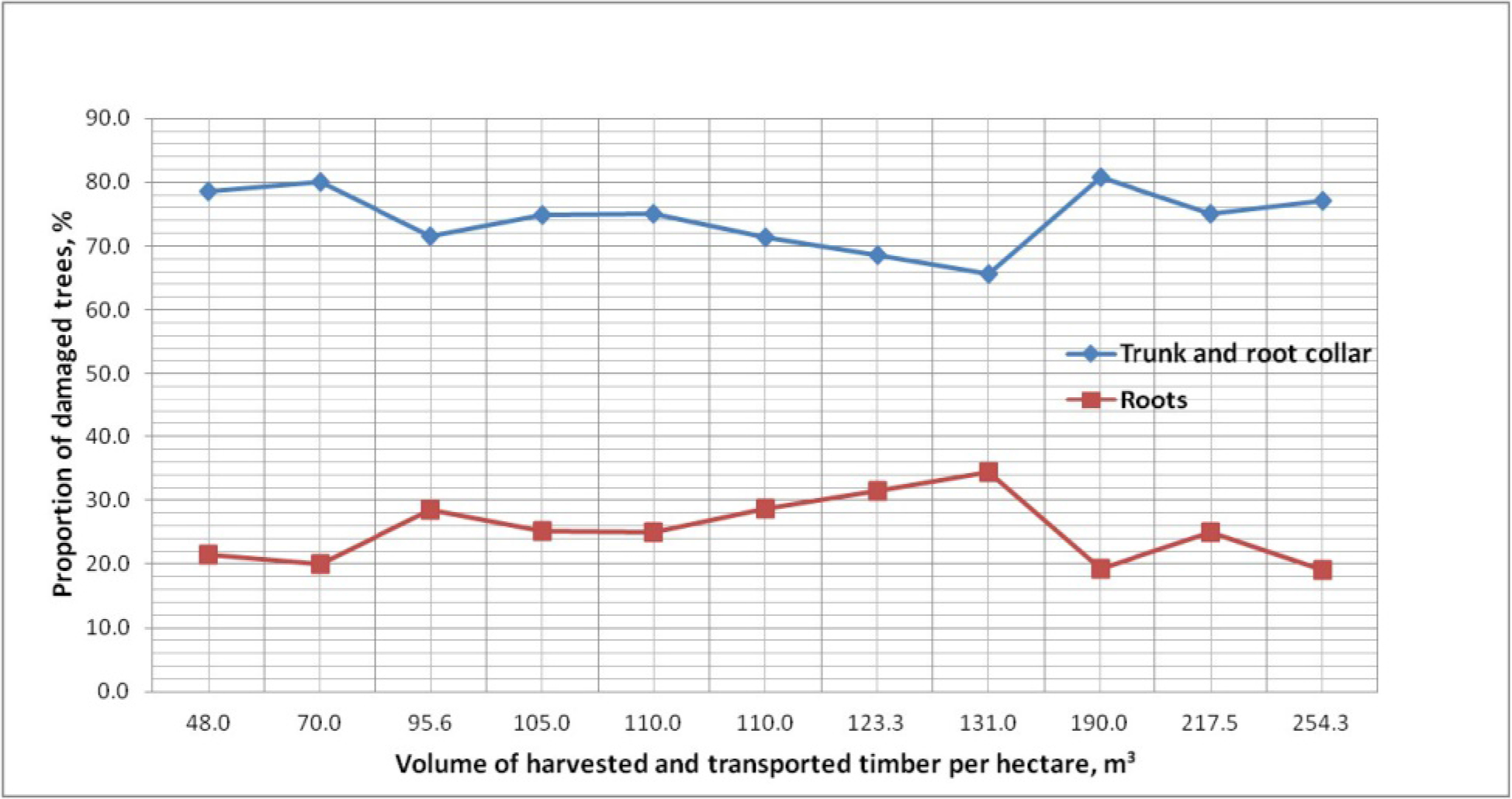
Figure 6.
Relationship between the location of wood damage and the volume of felled and transported timber.
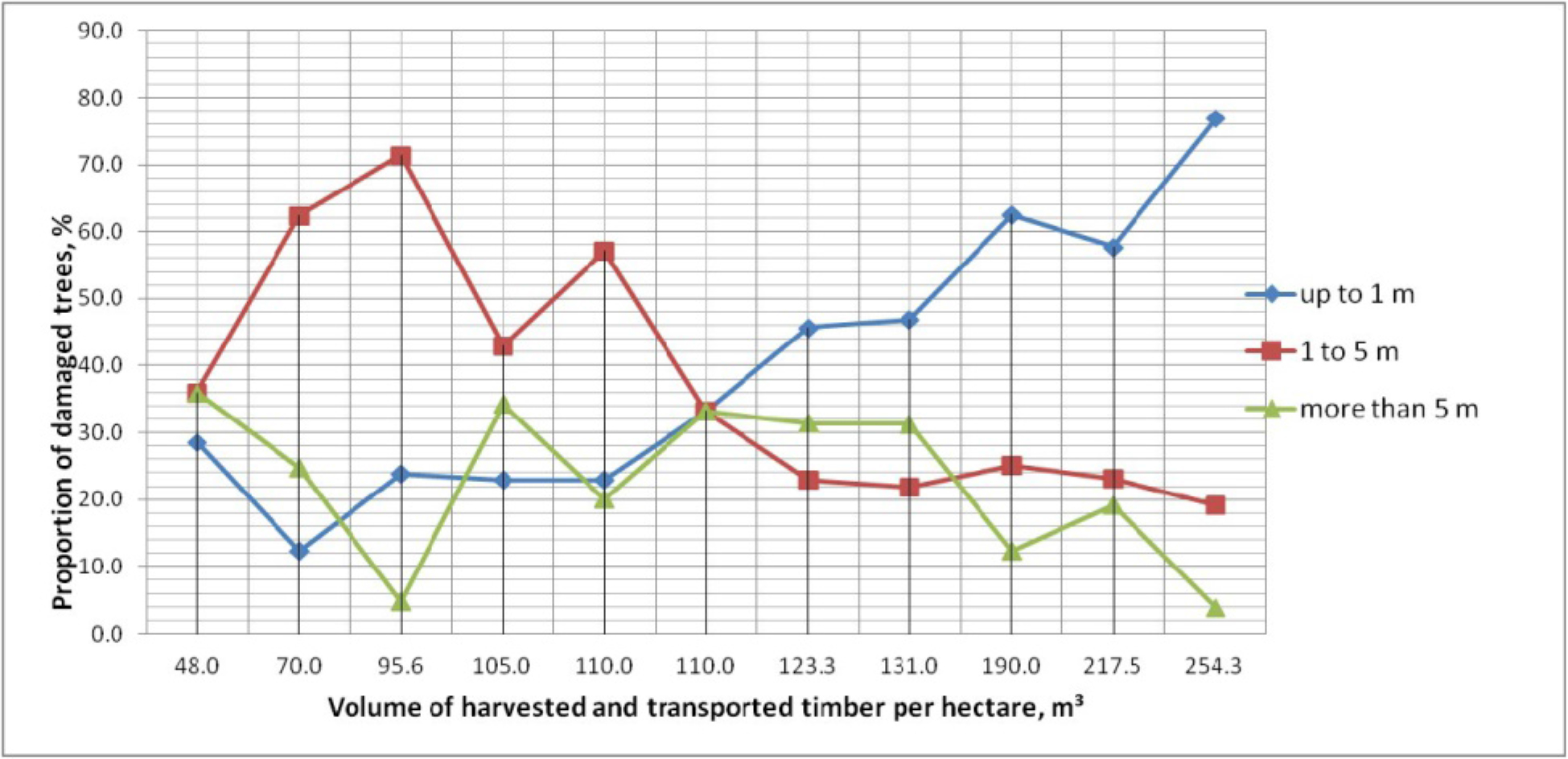
Figure 7.
Relationship between the distance of damaged wood and the volume of felled and transported timber.
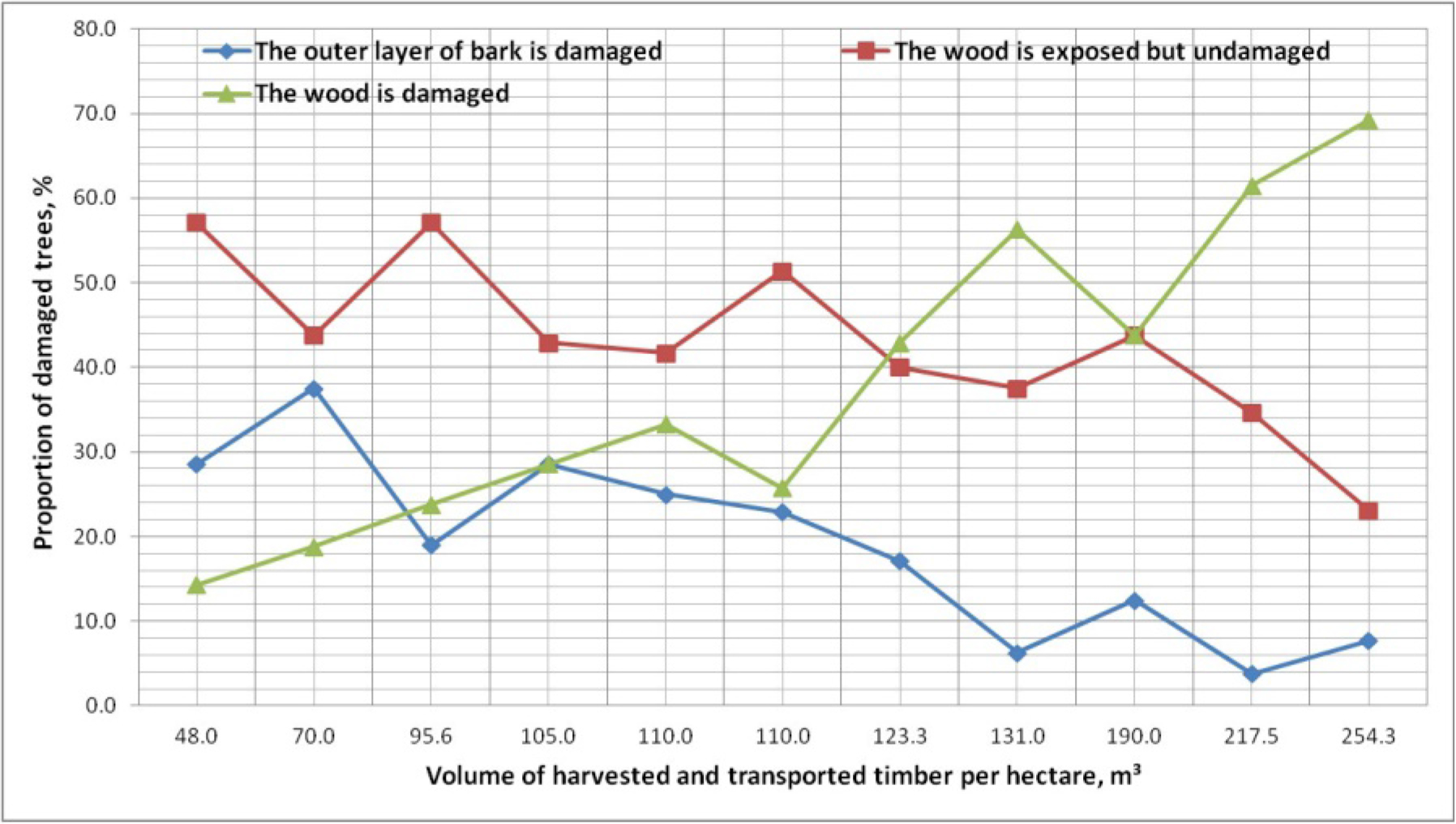
Figure 8.
Relationship between the degree of wood damage and the volume of felled and transported timber.
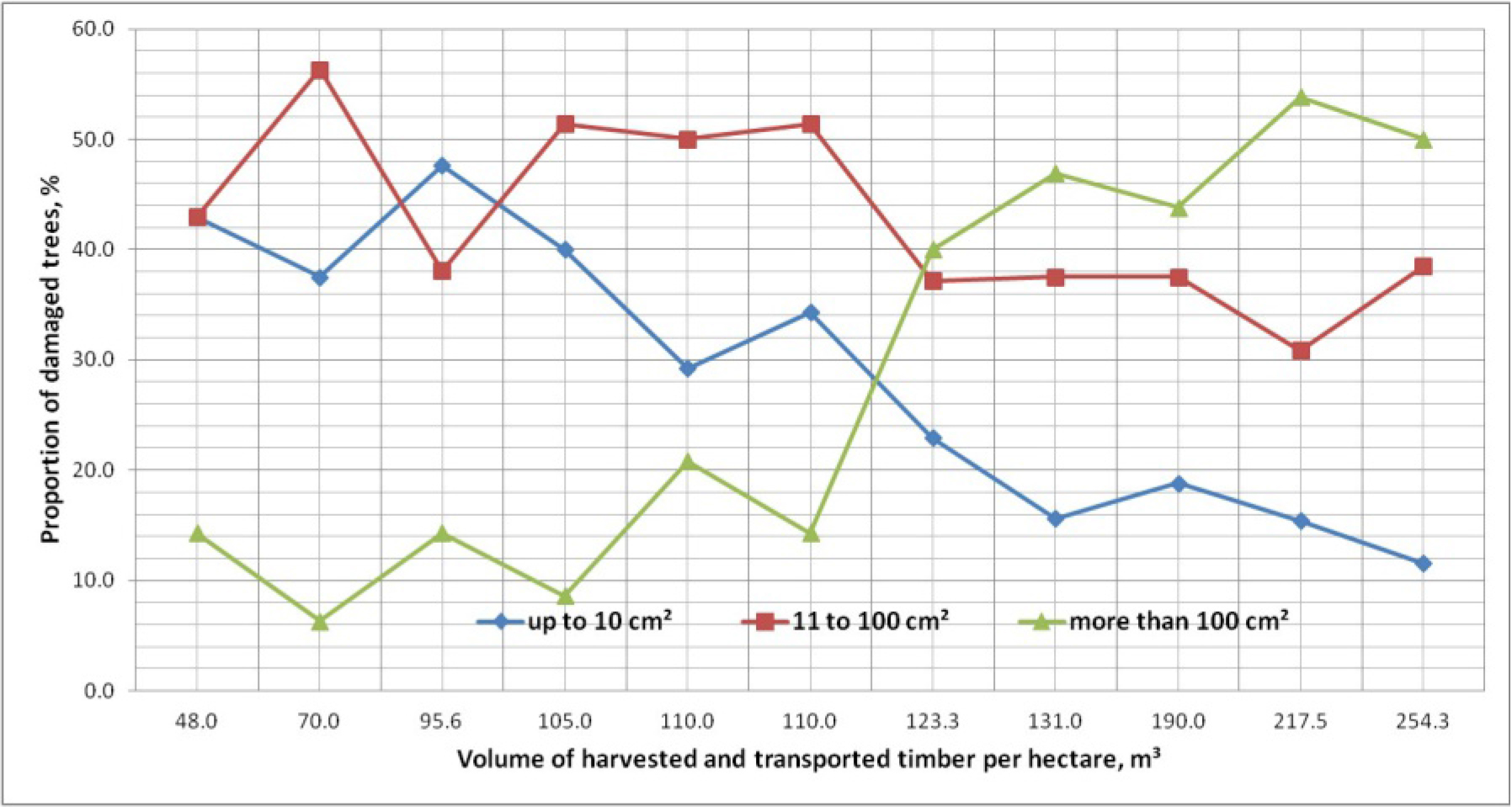
Figure 9.
Relationship between wood wound size and the volume of felled and transported timber.
At a distance of up to 1 meter from the edge of the skidding trail tracks, an increase in the proportion of damaged trees is observed with the growth of skidding volume – from approximately 28.6% (48 m3 ha−1) to a peak of around 76.9% (254.3 m3 ha−1) (Figure 7). This indicates a direct negative impact of intensive mechanical load near the machinery operating routes.
The proportion of damaged trees within the 1–5 m zone is dominant in areas with lower skidding volumes. As the volume of felled and skidded timber increases, the share of damaged trees in this zone decreases from 36.0% (48 m3 ha−1) to 19.2% (254.3 m3 ha−1). This dynamic may indicate a redistribution of impact intensity: as the load increases, the damage becomes concentrated closer to the skid trail. In the zone beyond 5 metres, the proportion of damaged trees is the lowest, ranging from 3.9% to 36.0%. This confirms that the impact of skidding in this area is minimal or indirect. Based on the analysis of Figure 8, it was found that the proportion of trees with minor damage decreases as the skidding volume increases: from 37.5% (70 m3 ha−1) to 7.7% (254.3 m3 ha−1).
A clear dependency is observed: the proportion of trees with damaged wood increases from 14.3% (at 48 m3 ha−1) to 69.2% (at 254.3 m3 ha−1), with a particularly sharp growth observed after the threshold of 123 m3 ha−1. This is a critical indicator, as deep injuries significantly impair tree vitality, promote infection entry, and reduce the commercial quality of timber in the future.
Exposed but undamaged wood: there is no clear trend of increase or decrease. High values are observed throughout the entire range.
The relationship between wound size and the volume of felled and transported timber is shown in Figure 9. It was found that the proportion of wounds up to 10 cm2 gradually decreases with increasing skidding volumes: from 47.6% to less than 11.5%. This type of damage predominates under low load conditions but becomes less significant during intensive operations. This indicates that mechanical impact becomes more severe, resulting in more extensive damage.
The proportion of medium-sized wounds (11–100 cm2) remains consistently high (30.8%–56.3%) across nearly all plots, regardless of skidding volume. A clear increase in the proportion of large wounds (over 100 cm2) is observed with rising skidding volumes – from 6.3% to over 50%. A particularly sharp increase occurs when harvesting volumes reach 110–123 m3 ha−1. This is especially dangerous for residual trees, as large wounds cause serious disruptions to physiological processes in the wood and increase the risk of tree mortality or loss of structural stability.
Discussion
The results indicate that damage to residual trees after the first entry of shelterwood cutting is concentrated near the skid trails and intensifies with increasing harvesting volume. Statistically significant differences confirm that stem and root collar damage predominates over root damage, reflecting the high sensitivity of above-ground tree parts to mechanical impacts. The strong negative Pearson correlation between damage at distances of up to 1 m and 1–5 m from the skid trails demonstrates a redistribution of damage toward the immediate vicinity of machinery routes under higher operational intensity. In addition, significant differences among wound size classes and the increasing share of deep wood damage highlight the elevated risk to tree vitality during intensive skidding operations.
Despite the importance of studying the effects of logging on the condition of residual trees during selective cutting, few studies exist in Ukrainian scientific literature. For example, Ivanyuk et al. (2024), investigating the impact of forest management practices on spruce forests in the Ukrainian Carpathians, reported that 46.6% of the trees in the research area had minor crown damage (up to 10%), 38.7% had moderate damage (30–35%), 10.9% suffered from severe damage (50–55%), and 3.8% exhibited very severe damage (over 60%). In our study, the average intensity of damage to residual trees after the first stage of uniform shelterwood harvesting (two-stage system) was 9.3%, which is close to the results observed in alder stands in Poland (8.3%; Grzywiński et al., 2019) and slightly higher than in pine stands (5%; Karaszewski et al., 2013), where the oldest stands experienced the least damage.
In broadleaved forests, Nikooy et al. (2010) reported that 19.7% of residual trees were damaged, with similar levels reported by other authors (Jourgholami, 2012; Tavankar et al., 2013; Mirkala, 2017). For instance, Mirkala (2017) analyzed trees along winching zones and skidding trails, finding damage of 18–19.5% along the winching strips and 25.4–31% along the skidding trails. Jourgholami (2012) observed injuries on 16.4% of residual trees, of which 46% were minor, with the majority of stem injuries occurring within the first 1 m from the ground and 3 m from the centerline of the skidding trails (86.4%). Tavankar et al. (2013) found that during felling, 1.4% of trees were destroyed and 3.4% damaged, while during skidding, 5.2% were destroyed and 11.1% damaged.
Studies in Carpathian spruce stands with occasional beech and larch, where thinning operations were conducted using a harvester and forwarder, reported a 7.5% damage during mechanized harvesting (Câmpu & Borz, 2017). In contrast, Heitzman & Grell (2002) observed 25–46% of trees damaged along forwarder routes during thinning, and Korten (2004) reported root damage in 15.1% of spruce stands after felling with a tracked harvester.
Regarding wound size, Dudáková et al. (2020) reported average wound areas of 142–222 cm2 (medium to large wounds). In our study, most wounds (42.9%) ranged from 11–100 cm2, and only 28.7% exceeded 100 cm2. Grzywiński et al. (2019) found that more than 50% of injuries were small (<10 cm2), with medium (11-100 cm2) and large (>100 cm2) wounds accounting for 23.8% and 22.6%, respectively. Nikooy et al. (2010) observed an average wound size per tree of 290.3 cm2 (minimum – 16 cm2, maximum – 3200.2 cm2), with 57.1% of wounds located below 1 m from the ground.
Considering species composition, the least damage occurs in trees with thick bark, such as oak or pine, as thicker bark provides better protection to the cambium against mechanical injuries (Dudáková et al., 2020). Seasonality did not significantly affect wound size or depth (Grzywiński et al., 2019). Most injuries were limited to the phloem (80%), with the remainder reaching the xylem. Picchio et al. (2019) reported bark removal up to 70% in pine stands and 30-40% in beech, with at least 30% of injuries affecting the xylem in both species. In our study, the highest proportion of damage involved bark detachment (43%), followed by deep xylem injuries (38%), and minor bark scratches (19%).
The highest frequency of damage occurred within 1 m of the skidding trails, consistent with findings from other authors (Heitzman & Grell, 2002; Modig et al., 2012; Badraghi et al., 2015; Grzywiński et al., 2019). Our results indicate a clear spatial-quantitative pattern of skidding-related damage, with a noticeable increase in severe wounds (>100 cm2) when skidding volumes exceeded 110-123 m3 ha−1.
These findings regarding the first stage of uniform shelterwood harvesting in mountain beech-fir forests are important, as they highlight the specific effects on residual trees in Carpathian Forest stands rather than characterize timber harvesting as a general process.
The scientific novelty of the study lies in the provision of new data on the condition of residual trees in mountain beech-fir stands following the first stage of uniform shelterwood harvesting (two-stage system) under Carpathian conditions.
Regarding the practical significance of the study, the results can inform timber harvesting technologies by accounting for the specifics of final felling in beech-fir forests, allowing operations to be conducted with minimal negative impact on residual trees.
Conclusions
It was established that after the first stage of uniform shelterwood harvesting (two-stage system), the number of residual trees ranges from 188 to 410 trees ha−1, indicating a sufficient density of the remaining stand. At the same time, the average damage intensity during harvesting is 9.3%, which poses a significant risk for the future viability of forest stands.
The stem and root collar are the most vulnerable to skidding, and even at low skidding volumes, the proportion of damaged trees exceeds 70%. Damage to the root system is less consistent and varies depending on local conditions (soil type, moisture, work techniques), which can affect the long-term stability of trees.
A significant portion of damage (43%) consists of exposed but undamaged wood, indicating relatively superficial injuries. However, 38% of cases involve deep wood damage, which seriously threatens the physiological stability of trees and may lead to their death. The average wound size is predominantly medium (11–100 cm2), which can result in a gradual deterioration of tree condition and increased susceptibility to diseases.
The distance from the skidding trail significantly affects damage intensity: the highest share of injured trees (39.4%) is within 1 meter of the trail, decreasing to 22.9% at distances greater than 5 metres. The area beyond 5 metres is considered relatively safe; however, some variation suggests the influence of secondary factors (e.g. log roll-back, machine maneuvering). A plot with extreme damage levels (e.g. 76.9% within 1 meter) indicates insufficient protection of residual trees and the need for strengthening buffer zones.
Increasing the volume of felled and skidded timber leads to a higher proportion of trees with deep wood injuries, negatively affecting their viability and future wood quality. A high share of trees with exposed but undamaged wood indicates a potentially critical risk zone – such trees may quickly lose vitality under additional stress. It was found that beyond 120 m3 ha−1, there is a sharp increase in deep injuries.
The wound size on trees increases with the intensity of skidding during the first stage of uniform shelterwood harvesting: under heavy logging, the proportion of large wounds (>100 cm2) rises, indicating more severe mechanical damage. This demonstrates that intensive logging increases the risk of serious tree injuries.
To minimize damage to residual trees, it is necessary to implement clearer protective zones around skidding trails, control the intensity and technology of skidding, and improve personnel training. Special attention should be paid to protecting tree stems and root collars, as these parts are the most vulnerable to injury.