
Introduction
Larches (Larix spp.) are deciduous conifers, and their extensive and species-richest habitat spans Eurasia, frequently containing several transitional taxa. The most extensive continuous range extends from West Europe to the Far East. In Estonia, larch has been cultivated for a couple of centuries. In the paper, our focus is on the European (Larix decidua Mill.), Russian (L. archangelica C. Lawson, syn. L. sukaczewii Dylis) and Japanese (L. kaempferi (Lambert) Carriére, syn. L. leptolepis (Siebold & Zucc.) Gordon), as well as the Dunkeld larch (L. × marschlinsii Coaz, syn. L. × eurolepis A.Henry, L.× henryana Rehder). The European larch is best known for its three variations (subspecies or geographic races): L. decidua var. / subsp. carpatica Domin, L. decidua var. / subsp. decidua Mill. (typical variation or subspecies) and L. decidua var. / subsp. polonica (Racib. ex Wóycicki) Ostenf. & Syrach. The most significant genetic difference was observed between the Alpine and the Central European groups (Stolarek et al., 2023), encompassing the Sudetes, Polish lowland, and the Carpathians. Within the Central European group, the ecotypes exhibit a relatively close connection. The core genetic structure revealed at least seven clusters within primaeval European larch populations, with four clusters identified in the Alps and three or potentially four clusters found beyond, especially in the East Sudetes, Polish lowlands, High Tatras, and potentially the Southeast Carpathians (Dudová & Szabó, 2022). Morphological differences have been observed among L. decidua var. / subsp. sudetica, L. decidua var. / subsp. tatrensis and L. decidua var. / subsp. tyrolensis, along with variations in other intraspecific entities (Mitchell, 1972; Farjon & Filer, 2013). The European larch possesses another distinctive trait: its cones exhibit some similarity to those of the Japanese larch and even more closely resemble those of the Dunkeld larch. Notably, the upper edge (lip) of the seed scales of these larch species curves outward rather than downward. This characteristic was illustrated by the Russian scientist Jevgeni G. Bobrov (1972) in his monograph (Sander et al., 2007; Sander, 2015). Bobrov (1972) remarks, “What is even more striking is that for a full century and a half, dendrologists have presented or introduced seemingly special larches in the Russian part of North Europe. Oftentimes, dendrologists describe with various binary epithets a hybrid as a direct or reverse crossing of a pair of species. Let us term it, for instance, the hybrid of L. leptolepis × L. decidua. Hence, the hybrid is named L. henryana. When originating from a direct crossing, the hybrid was called L. marschlinsii; conversely, however, it was called L. eurolepis”. If we adhere to the concept of morphological species, it is imperative to take into account factors such as introduction and several other relevant considerations.
The claim that a 150-year continuity of a 1972 hybrid (L. × marschlinsii or L. × eurolepis) can be established solely based on morphological characteristics is unfounded (Bobrov, 1972). This assertion is erroneous because the Dunkeld larch originated in the latter decades of the 19th century in England (Mitchell, 1972). Furthermore, this has been confirmed by genetic studies of similar trees in Estonia. Although the cone of the Euro-Japanese larch bears a stronger resemblance to that of the Japanese larch, its scales are less curved downwards. Cone photos of European larch posted online show similarities to Dunkeld or Japanese larch cones (Figure 1). Both Euro-Japanese and European larch cones display variability, making identification based solely on an occasional cone unreliable (Erik, 2009).
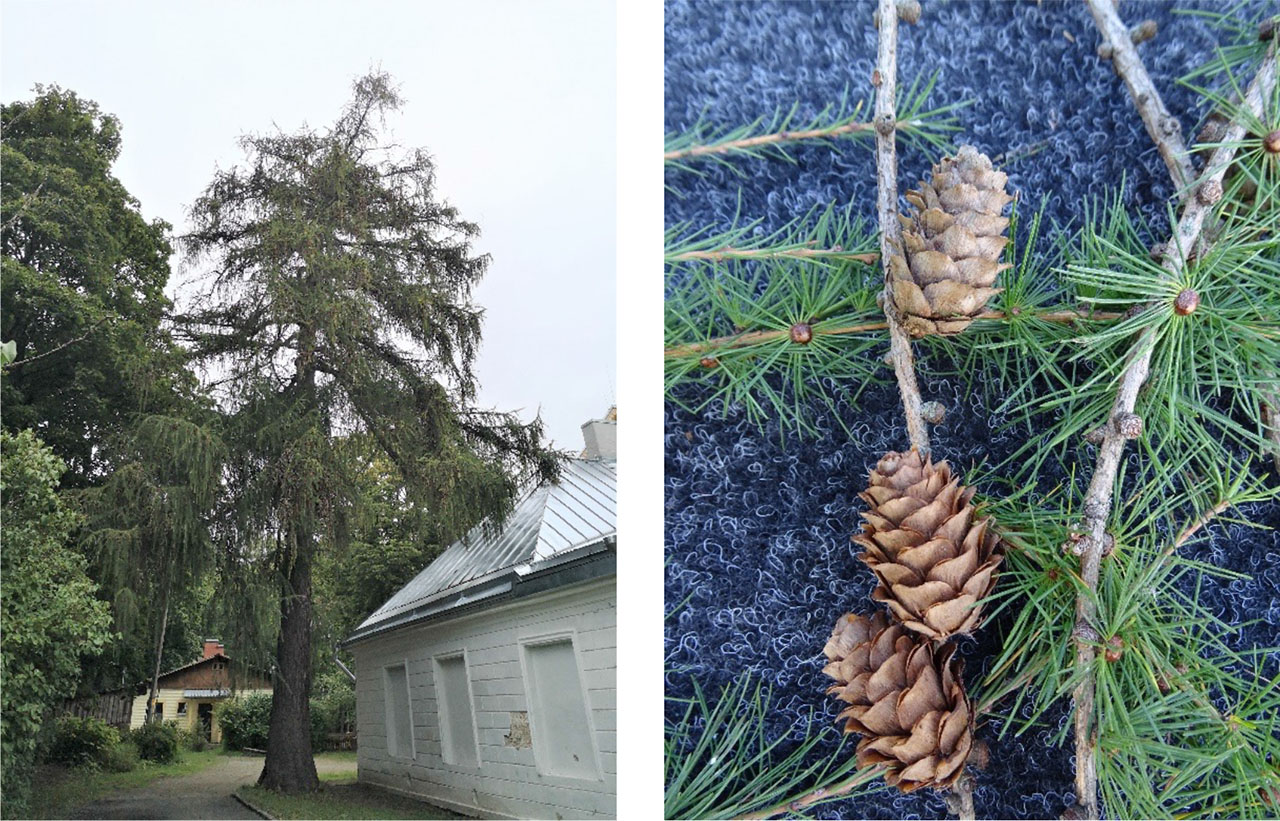
Figure 1.
Larch posted online show similarities to Dunkeld or Japanese larch cones. Trees are located close to Tallinn at the previous Aruküla Manor Park. (Photo author: Sulev Järve).
The first seeds of the Japanese larch were dispatched to England in 1861 by the Japanese flora researcher John Gould Veitch. These seeds were subsequently planted and matured into trees. From one of these trees, the seeds were collected and sent to Hunnewell Pinetum in the USA, resulting in the reported presence of 54 trees by 1892 (Wilson, 1916; Wyman, 1952). In England, the number of trees originating from the original seeds or their seedlings remained limited initially, mainly due to the scarcity of mature trees. However, the significance of the species gradually increased as more seeds were imported and larches were planted in various locations. As these trees matured, they eventually reached ten years of age and began producing seeds (Elwes & Henry, 1907).
Japanese larch plantations were established in substantial areas in the western part of England, particularly in Wales. Additionally, smaller stands of these larches were established in the majority of forests. While Japanese larches were relatively rare in parks, they were occasionally found in smaller gardens. Kew Botanical Gardens documented the oldest known Japanese larch specimen, which was planted in 1868. This tree reached a height of 63 feet (19.2 m) with a breast height diameter of 4 feet and 4 inches (132 cm) (Mitchell, 1972).
Around the same period, botanist Carl Johann Maximowicz introduced the Japanese larch to St. Petersburg Imperial Botanical Gardens. Maximowicz resided in Japan between 1860 and 1864, during which he collected botanical and zoological specimens (Le Lièvre, 1997; Grabovskaya-Borodina, 2016). It is worth noting that in 1860, both Veitch and the renowned botanist, traveller, and plant hunter Robert Fortune (Le Lièvre, 1997) were in Japan. In 1863, Maximowicz dispatched Japanese larch seeds to St. Petersburg, resulting in the growth of several trees (The Encyclopaedia of Ornamental Garden Plants, 2022; Sander, 2015). However, the extent to which this species spread within St. Petersburg and to other areas remains uncertain. Although confirmation of seed distribution from St. Petersburg to Estonia is not established, it is plausible that they may have disseminated through seed shops. The Peter the Great Botanical Garden of the Komarov Institute of Botany of the Russian Academy of Sciences in St. Petersburg (formerly the Imperial St. Petersburg Botanical Garden) has a collection of 148 larches representing 16 species (22 taxa), with the oldest trees reaching 200 years of age (Firsov et al., 2016). However, Firsov (2022 pers. comm.), a Russian researcher, suggested that there are only three trees of Larix kaempferi from Maximowicz dating back to 1863 in the Peter the Great Botanical Garden. One of these trees appears to be an atypical hybrid.
A report from 1892 by the Baltic Forest Society (Verein baltischer Forstwirthe) disclosed that planting experiments were conducted at Skrīveri Manor (Gut Römershof) in North Latvia, where 39 tree species were planted, including the Japanese larch (Larix leptolepis Murr.) (Walbe, 1900). Subsequently, in 1894, the tree nursery offered Japanese larch saplings for sale, described them as three feet (0.91 m) in height and characterized by blue-green needles (Japanische Lärche, mit blaugrünen Nadeln) (Engelhardt, 1894). However, the precise origin of these saplings remains uncertain.
In Estonia, the Japanese larch was initially introduced to several sites during the last decade of the 19th century, notably to the Peravalla (now Järvselja) Forest District in Kastre Manor, as well as the estates of the von Ungern-Sternberg family in Kõrgessaare (Gut Hohenholm) and Hiiu-Suuremõisa (Gut Grossenhof) on the Island of Hiiumaa, situated in Western Estonia. Between 1884 and 1914, these manors witnessed deliberate efforts to spread and cultivate alien tree species, including the Japanese larch, spearheaded by forester Karl Friedrich Wilhelm Ahrens (1855–1938), of German descent. Dendrochronological studies suggest that the Japanese larches in the park forest of Sangaste Manor were likely planted around 1914 (Berg, 1924). Over the period from 1901 to 2007, the presence of Japanese larch was documented in 60 locations across Estonia by various individuals. Among these sites, 32 were former manor and parsonage parks (Sander, 2014; 2015). In 1900, Peravalla Forest District obtained two “lods” (26 grams) of Japanese larch seeds from an unknown source. Subsequently, in 1907, a substantial quantity of four pounds (1.5 kg) was acquired from the Gögginger seed shop in Riga. Additionally, in 1908, the same seed shop provided them with one “lod” (13 grams) of Japanese larch seeds (Haller, 1929).
The dispersion patterns of the Dunkeld larch have been comprehensively described in Europe (Coaz, 1917; Henry & Flood, 1919; Nelson, 1980). In England, data has been compiled for 25 trees across 23 different sites. Among these, the oldest, planted in 1897, has reached an impressive height of 97 feet (29.6 m) with a breast height diameter (DBH) of 3 feet 7 inches (93 cm, as recorded in 1955) (Mitchell, 1972). The Dunkeld larch is known for its vigorous growth. In most instances, the European larch serves as the pollen donor, while the Japanese larch serves as the seed parent. Some studies have revealed the presence of hybrid vigor (heterosis) in Dunkeld larches, with certain traits (such as stem and needle biomass) exhibiting greater growth rates compared to both European and Japanese larches (Matyssek & Schulze, 1987a; 1987b). Oleksyn & Fritts (1991) demonstrated, based on insights from various authors, that Dunkeld larches (L. × eurolepis) can surpass their parent species in terms of stem diameter and timber volume. Similarly, it is asserted that European larches with the highest growth rates exhibit comparable rates in their hybrids. Additionally, reports indicate that the most significant gains in height and stem diameter for Euro-Japanese larches occur between 10 and 20 years of age. Hybrid larches exhibited greater growth rates in annual ring widths between 20 and 35 years, although growth rates were much lower at ten years or younger. Estonian data also indicates higher growth rates in young Dunkeld larches, although comparisons remain complicated due to numerous influencing factors.
In France, the genetic influence of parent species on hybrid phenotypes was examined using a factorial mating design that involved clones of the European larch of Sudetes provenance as the maternal parent and Japanese larch as the paternal parent. The study focused on various properties, including the growth rates of Dunkeld larches up to the age of 16, as well as their architectural features and timber-related parameters. The findings revealed that the properties under investigation could be categorized into three groups based on the determinative level of the parental species:
(i) height gain is influenced to a similar extent by both parent species,
(ii) diameter at breast height (DBH), stem volume, and tree architecture properties are strongly determined by the Japanese larch, and
(iii) timber quality parameters are predominantly determined by the European larch (Pâques, 2004).
Dunkeld larches have also been documented in Estonia (Kasesalu, 1999; Erik, 2004, 2009; Sander & Läänelaid, 2006, 2007; Sander et al., 2007). According to studies by Bobrov and the Finnish larch researcher Tapio Uusikivi (2001, 2008), trees aged 200 years were identified in Estonia (Sander, 2008; Sander & Läänelaid, 2006). However, the taxonomic identification was later deemed incorrect (Paves, 2007; Erik, 2009), as further supported by genetic studies. It has even been asserted that trees exceeding 110 years in age cannot possibly be Dunkeld larches (Erik, 2009). Nonetheless, a definitive age limit cannot be established due to the uncertainty surrounding the timing and extent of the potential arrival of Japanese larch from St. Petersburg to Estonia. Furthermore, there are no reports regarding the occurrence of hybrid development in Estonia.
Until 1940, forest plantations established in Estonia predominantly consisted of Russian larches (Laas, 1967). In the late 18th century, Arkhangelsk was the recommended site for acquiring seeds, while in the second half of the 19th century, seeds were obtained from Yekaterinburg. It appears that no seeds of Siberian larch (s. str.) were brought to Estonia by the Siberian explorers of the 18th century, including the German-born botanists mentioned by Carl Christian Friedrich Ledebour (1833) who resided in Tartu. These botanists include Peter Simon Pallas (1741–1811), who explored the Caspian Sea, the Ural and Altai Mountains, and the upper Amur River, as well as Johann August Carl Sievers (1762–1795), known for his explorations in Central Asia, Siberia, and other Asian regions. In the 19th century, Ledebour appears to have been the first to facilitate the introduction of the species’ seeds to this region. However, it is unknown what quantity of the Siberian larch seeds described by Ledebour (1833) made their way here from his Altai expedition in 1826–1827, and how widely they were disseminated through the Botanical Garden of the University of Tartu. It is known that Siberian larch seeds were introduced here by Alexander Theodor von Middendorf (Tammiksaar & Stone, 2007), who conducted an exploratory expedition to North Siberia and the Far East in 1842–1845. Specifically, Middendorf supplied the seeds to Berend (Boris) Johann von Üexküll (BBLd, 2019), who used them in the park of either Lossi-Vigala (Schloß Fickel) or Vana-Vigala (Alt Fickel), both of which were owned by him. It remains uncertain to what extent the seeds of the species were subsequently introduced here by Siberian researchers. Manor parks and collections lack accurate data regarding the distribution of Siberian larch.
The classification of the Russian larch and the Siberian larch (s. str.) as either the same species or distinct entities has been a subject of debate among authors. Notable genetic disparities between the two species lend credence to the latter perspective (Araki et al., 2008; Orlova, 2012; Kozhin & Sennikov, 2016). In Estonia, the recognition of the Russian larch as a distinct species (L. sukaczewii Dylis) gained traction following Nikolai V. Dylis’s (1947) research publication in 1947. However, global acceptance was hindered by inaccurate or inconsistent nomenclature. The name “L. russica (Endl.) Sabine ex Trautvetter” was subsequently adopted for the Russian larch based on a description published in 1884. The impact of the dendrology textbook published in 1967 further solidified this distinction in Estonia (Laas, 1967). Within the textbook, Russian and Siberian larches were described separately. However, the species name was presented as “L. rossica Iljinski” (syn. L. sukaczewii Dyl.) and later as “L. russica (Endl.) Sabine ex Trautv.” (syn. L. sukaczewii Dyl., L. rossica Iljinski) (Laas, 1987). In Eino Laas’s conifer monograph, a lecturer at the Estonian University of Life Sciences (Laas, 2004), the Siberian larch (L. sibirica Ledeb.) encompassed the Russian larch (including L. sukaczewii Dyl. = L. russica (Endl.) Sabine ex Trautv.). Subsequently, based on habitat and cone characteristics, Laas distinguished between and described variations of Russian (L. sibirica var. rossica Szaf.) and Siberian (L. sibirica var. altaica Szaf.) larches. This approach was derived from the perspectives of the Polish botanist, palaeobotanist, and quaternary geologist Władysław Szafer (1913). The first individual in Estonia to regard the Russian larch as a variation (L. sibirica var. rossica Szaf.) was the botanist Haide-Ene Rebassoo, based on her nature observations in 1957 (Sander, 2020).
The English botanist and nursery owner Peter Lawson & Son (1836), Charles Lawson, assigned the name L. arhangelica C. Lawson to the Russian larch (from Arkhangelsk provenance). However, this designation did not gain global acceptance as a new species due to the lack of a formal description in Lawson’s paper. In his publication, Lawson referred to it as “Larix arhangelica – Archangel or Russian Larch,” describing it as hardy and compact but not a vigorously growing species. Nonetheless, this designation is considered a nomen nudum (Bobrov, 1972). The nomenclature for this species remains unresolved, and the term L. archangelica continues to be used out of established tradition. Generally, this species is commonly known as the Russian larch, while the Siberian larch is explicitly recognized as L. sibirica s. str., as outlined by Kozhin & Sennikov (2016).
Estonian dendrologist Aleksei Paivel conducted a comprehensive assessment of green areas and parks in 33 cities, approximately 1,200 former manor parks, and 17 arboreta and tree nurseries from 1954 to 1960 (Paivel, 1968). Subsequent inventories of the same sites, as well as new ones, were carried out. Based on all the collected data, a preliminary handwritten study of conifers on approximately 2,000 sites was completed in the 1970s. The scientific analysis of the study was published (Sander, 2006), which estimated the introduction of Russian and Siberian (s. str.) larches to have occurred before 1805. However, the reference to the Siberian larch appears erroneous, as it was unlikely to have been found in Estonia then. According to the study, the most prevalent conifers, following the northern white-cedar (Thuja occidentalis L.) with 710 growth sites, were European and Russian larches, with 543 and 436 growth sites, respectively. However, the distribution of the Siberian larch remained unknown (Sander et al., 2006). In Estonia, European and Russian larches frequently grew together in parks of former manors and summer mansions around Tallinn, including trees over 200 years old from both species. During that time, no differentiation was made between them, and they were considered a single species. The classification of these larches began with Carl von Linné’s designation, Pinus Larix L., serving as the starting point.
The objective of this paper is threefold. Firstly, we aim to elucidate the relationship between the historical background of the studied locations and the age of the various species of larches planted within them. Secondly, we seek to identify the timing of the introduction of Japanese larches and investigate the potential evolution of Dunkeld larches. Thirdly, our aim is to authenticate larch species using morphometric traits and genetic markers. This paper is built on our previous writings (Pâques et al., 2022a; 2022b; 2023).
Materials and Methods
Individual larch trees within five former manor parks in South Estonia – Kastre and its Peravalla forest district, Mäksa, Kabina, and Mõniste (formerly part of the Russian Empire before 1918 and earlier the province of Livonia) – were studied. Four of these locations are situated in Tartu County, while one (Mõniste) is in Võru County. The sites and taxonomy of the larches were analysed with regard to their history, age, and genetics. Additionally, dendrochronological research methods were used. In our dendrochronological studies, the girth of trees was measured at one-centimetre intervals at a height of 1.3 meters in two directions. Cores were extracted using the Suunto increment borer, with a length of 40 cm, and the Haglöf increment borer, with a length of 60 cm, from the north and south sides of the trunk. The cores were carefully marked and placed into plastic tubes for further analysis.
In the dendrochronology laboratory in Tartu, tree ring widths were meticulously measured with a precision of 0.01 mm using the stereomicroscope Leica S4E and the measuring device Lintab (Rinntech). The measurements were recorded in Heidelberg format within the TSAP-Win program (Rinntech). To ensure accuracy, all measured tree ring series were compared to each other on graphs to detect any potential measurement errors and to synchronize the series. The northern and southern increment series of each tree were averaged to mitigate potential differences arising from eccentric growth. Various parameters, including girth, bark thickness, average ring width, and trunk radius dynamics, were computed for each tree throughout its lifespan. Due to the eccentricity of tree trunks, the borer passed slightly off-centre from the pith, rendering precise determination of the exact age of trees through annual ring counts impractical. Instead, the best-fitting trend for the radius curve was identified, and its intersection with the time axis indicated the year of zero radius, representing the year when the trunk’s height was less than the sampling height of 1.3 meters. A lower-degree polynomial trend was found to be the most suitable type for this purpose. These polynomial trends were applied under the assumption that trunk radius increases evenly over the tree’s lifespan.
For the genetic analysis, morphological samples from European, Dunkeld, and Japanese larches were collected from Estonia and sent to the laboratory in optimal condition via courier service. However, there were sampling errors, resulting in the inadvertent inclusion of Russian and Siberian (s. str.) larch samples, leading to some confusion in genetic identifications. The genetic analysis of the larches was conducted by L. E. Pâques at the Laboratory of Integrated Biology for Valorization of Genetic Diversity of Trees and Forests of the INRAE (Institut National de Recherche pour l’Agriculture, l’Alimentation et l’Environnement). The methodology was based on a study by Acheré et al. (2004), summarized briefly here. Large datasets from European and Japanese larch trees, representing their natural geographic ranges, were utilized to develop two specific molecular markers. These markers were designed to distinguish between European larch (EL) and Japanese larch (JL), as well as to identify first-generation hybrids between the two (ELxJL or JLxEL). Ultimately, two discriminant markers were chosen: one from the maternal side (f13 from the mtDNA) and the other from the paternal side (II-TaqI from cpDNA). This approach enabled the identification of the species of both parents for a given individual from which DNA was extracted, typically from bud, needle, or cambium samples, and subsequently analysed.
Results
The history of the manors under study
We will focus on the period from the late 17th century, specifically on Kastre Manor, Mäksa Manor, and the Poka Manor (Stryk, 1877). Count Gotthard Andreas Manteuffel sold Kastre Manor (Gut Kaster, 58°22′36″N, 27°4′10″E) in 1790 to Carl (Karl) Otto von Löwenstern. Mäksa Manor (Gut Mäxhof, 58°22′38.4″N, 26°58′40.8″E) had already been acquired by Carl Dietrich von Löwenstern, the owner of Poka Manor (Gut Heidohof), in 1756, and later by Carl Otto von Löwenstern in 1787. In 1835, the heirs of Löwenstern pledged the manors of Poka, Mäksa, and Kastre to Gotthard von Liphart (Lipard), who subsequently became their owner in 1839. In 1850, Liphart sold all three manors to Otto Reinhold von Essen (1798–1863), who established a fideicommissum for the family estates. In 1865, the ownership of the three manors passed to Otto Reinhold’s son Nikolai von Essen (1839–1900), and in 1902, to Nikolai’s brother, Otto Peter von Essen (1843–1909), who also served as the Russian consul general in Breslau. The manors remained in the possession of Otto Peter’s son Alexander Jakob (Jacob) Otto von Essen (1878–1939) until their expropriation (EAA 1411; EAA 2381.2.371; EAA 4373).
Nikolai von Essen, a State Councillor who had received education at the prestigious military school in St. Petersburg, the Page Corps, retired from the military in 1860. He actively managed his manors and held significant roles such as Vice President of the Livonian Public Welfare and Economic Society (Livländische Gemeinnützige und Ökonomische Sozietät) and President of the Society for the Advancement of Livonian Agriculture and Industry (Livländischer Verein zur Förderung der Landwirtschaft und des Gewerbefleisses). In 1883, Martin Maurach assumed the position of forester in Essen’s owned manors. Subsequently, in 1887, a structural reform resulted in the establishment of the forest districts of Kastre-Edevalla (Eesvalla) and Kastre-Peravalla (now Järvselja). When Maurach relocated to Peravalla, Ernst Fricke assumed the role of forester in Edevalla and Poka. From 1887 to 1897, various native and alien tree seeds were procured for Peravalla. For instance, in 1887, 20 pounds of European larch seed (equivalent to 8.2 kg) were obtained from H. Keller’s seed shop (Heinrich Keller und Sohn) in Darmstadt (Haller, 1929). It is noteworthy that H. Keller’s seed shop, established in 1798, was one of the largest in Germany during the latter half of the 19th century (Wagemann, 2022).
Kabina Manor (Gut Kabbina, 58°20′38″N, 26°50′31″E) was acquired by Otto von Löwenstern in 1834. Subsequently, it was sold to Baron Carl Bruiningk in a subsequent property division in 1862. In 1869, the manor was purchased for 30,000 roubles by the young Baron Ernst Magnus Nolcken, born in 1847, who later, in 1875, sold it for 16,000 roubles to his father, Ernst Friedrich Nolcken. Notably, on June 2, 1870, the first children’s song festival was held in the manor park, marking the beginning of a tradition that has since become a cherished part of Estonian cultural history.
Mõniste Manor (Gut Menzen, 57°37′1.85″N, 26°36′33.16″E) was pledged to Carl Reinhold von Kosküll by the Uexküll brothers. In 1765, Carl Reinhold von Kosküll became its owner. The Kosküll family retained ownership of the manor until 1826 when Theodor Heinrich von Kosküll pledged it to Bernhard von Wulff, who subsequently became the owner in 1837. The manor remained in the possession of the Wulff family until its expropriation in 1919, with the last owner being Herman Maximilian von Wulff. After 1837, the Wulffs initiated the construction of a new mansion (now extinct) and established the park in 1840 (EAA 1398). The park at Mõniste now belongs to Rõuge Rural Municipality, while the remaining properties are privately owned.
Currently, a nursing home called Härmalõng operates at Kastre. In 1921, by a decree of the Government of the Republic of Estonia, the Kastre-Peravalla forest district of the expropriated Kastre Manor was transferred to the University of Tartu (UT) and developed into the Järvselja Educational and Experimental Forest Centre for the students and staff of the Department of Forestry within the Faculty of Agriculture at UT. Since 1997, it has been managed by the Foundation of the Järvselja Educational and Experimental Forest District of the Estonian University of Life Sciences.
The parks and larches at the manors
The parks of the four manors were designed diversely, and old non-native trees can still be found there today. At Kastre (with 30 species as of 2006) and Mäksa (with 23 species as of 2006), one can find the balsam fir (Abies balsamea (L.) Mill.) and Siberian fir (A. sibirica Ledeb.), Swiss pine (Pinus cembra L.), eastern white pine (P. strobus L.), Douglas fir (Pseudotsuga menziesii (Mirbel) Franco), silver poplar (Populus alba L.), and balsam poplar (P. balsamifera L.). In Kabina Park (with 18 species in 1957–1960 and 11 in 1985), one could find balsam poplar, the laurel poplar (P. laurifolia Ledeb.), and the spirea (Spiraea media Schmidt) (Elliku & Paivel, 1989a, 1989b; Elliku et al., 2002; Konsa & Sinijärv, 2012). The park also included a large park-forest extending into the Väike-Kabina farming division. This predominantly pine forest was complemented with lindens, maples, and abundant ornamental shrubs (Ranniku, 1978).
These parks accommodate numerous larches (Berg, 1900). Kastre Manor, including Järvselja (Forstei Perrawald), gained attention in 1900 when the owner of the manors, who shared a passion for forests, visited these areas along with other people (Berg, 1900). The forests of Kastre Manor were well-maintained, and the estate was efficiently managed. There are no records of larch trees in the manor park, although the report’s author, Count Friedrich Berg, should have observed the approximately 100-year-old trees. However, there is a more detailed section regarding European and Siberian larches at Järvselja.
Kastre Park accommodates European larches (L. decidua) as well as Siberian larches, specifically Russian larches originating from the lowland of the northeastern part of East Europe and the Urals (L. archangelica C. Lawson, syn. L. sukaczewii Dylis) (Kozhin & Sennikov, 2016). To distinguish the Siberian larches from the Russian larches, it must be regarded in a narrow sense (s. str.); this species is also present among the younger trees in Kastre. Twelve trees were examined at Kastre, including seven Russian larches in front of the main building. The specific provenance of the trees was further confirmed by the observation that their canopies turned yellow on 27 October 2016, while the canopy of the European larches remained green. Three European larches were investigated to the south of this area and two trees from each species were examined further to the southwest. The breast height diameter (DBH) of 11 trees measured between 73 and 88 cm, while one, evidently the youngest, had a DBH of 53 cm as of 2022.
In Mäksa Park, European larches were well-known, and among them was also a rare Japanese larch (Larix kaempferi) or Dunkeld larch (Larix × marschlinsii). Kabina Park documented European larches (1957–1960, 1985) and more broadly Siberian larches (1957–1960) (Elliku & Paivel, 1989a, 1989b; Elliku et al., 2002). Conifers in Mõniste Park (44 species, 2006) included the Siberian fir (Abies sibirica) and the Swiss pine (Pinus cembra) (Konsa & Sinijärv, 2012). In 1985, naturally propagated large Dunkeld larches, reaching a maximum height of 30.5 m, and DBH of up to 90 cm, were recorded (Elliku & Roht, 1985). Subsequently, there was mention of a tree with similar characteristics (height = 30 m, DBH = 96 cm, 2006) located near the local bus stop (Konsa & Sinijärv, 2012). Järvselja Centre accommodates a diverse collection of larches, including European, Japanese, Russian, and Dunkeld larches. At one point, there were two 100-year-old Japanese larches in the area, one of which still stands today (Laas, 2004).
Regarding the Dunkeld larches, it was noted in the publication (Laas, 1967) that both trees, approximately 40 years old, share some external similarities, although there are variations in cone shape and other morphological traits. Significant resemblances could be observed when comparing the morphological properties of these trees with descriptions provided by experts like Ludwig Beissner & Jost Fitschen (1930).
The ages of the larches
The ages of the larches were determined by the dendrochronological method using the increment borer at breast height (1.3 m) in five locations in 2008, 2015, and 2016. Four of the locations were in Tartu County (Kastre, Järvselja, Mäksa, and Kabina) and one in Võru County (Mõniste) (Pâques et al., 2022a; Pâques et al., 2022b).
In Kastre Manor Park, two closely standing larches, one European and one Russian, were analysed in 2015. The Russian larch (DBH = 82 cm) had an increment sample (including bark thickness, which was 3 cm) that revealed 118 annual rings, with 14 of them in sapwood. The European larch (DBH=86 cm, bark thickness 7 cm) was counted to have 119 annual rings, with 23 in sapwood. Both increment cores nearly reached the pith, and the growth curves showed good growth rates for these larch trees. The zero-radius year of these larches is estimated to be 1895, suggesting that they were likely planted that year. In 2016, the ages of six larches (DBH=72–88 cm) were determined. Analysis revealed that the zero-radius year for the four Russian larches growing near the main building was approximately 1820. These larches were presumably planted during the era of Carl Otto von Löwenstern, possibly in connection with the completion or renovation of the former manorial palace. The zero-radius year for the two European larches situated south of them is likely 1895. The thickness increment of these 70–75-years younger European larches is similar to the Russian larches. This may suggest that they are first-generation hybrids, although this has not been conclusively confirmed. If the larches in Kastre were planted as saplings at a height of 1.3 meters, it would have occurred around 1820 and 1895.
At Järvselja Centre, the ages of five larches were investigated. In 2008, the age of two adjacent Dunkeld (H = 23.5 m, DBH = 91 cm; H = 27.9 m, DBH = 82 cm, 2022) larches were morphologically determined. As the stems were decayed on the inside, the short bore samples failed to provide the zero radius. Based on the probable growth trends, however, the plantation year of the Dunkeld larches was estimated to be in the 1920s, which also tallies with literary data. In the 2016 study, three increment samples were taken: 1) from one of the close group of Japanese larches (DBH = 70 cm, rough bark thickness ~ 3 cm); 2) from the largest and oldest extant Japanese larch (DBH = 87 cm, rough bark thickness ~ 3 cm); and 3) from a thick-stemmed European larch (DBH = 107 cm, rough bark thickness ~ 8 cm).
Among the examined larch trees, the youngest was one of the three Japanese larches, planted in 1935. It appeared that all the other larches in this area share the same age. The older trees include a Japanese larch from 1907 and a European larch from 1895. Hence, the latter likely originates from the initial round of planting.
In Mäksa Manor Park, European larches are predominantly organized into two main groups, interspersed with several individual trees across the area. In 2015, increment bore samples were used to determine the ages of five European larch specimen (DBH between 84 and 119 cm). The count of annual rings observed varied from 110 (spanning the years 1906 to 2015) to 145 (encompassing the period from 1871 to 2015), with 16 to 25 rings evident in sapwood. Notably, one of the samples penetrated to the core of the stem, whereas the others terminated at diverse distances from this core. These findings imply that the larch trees were likely planted between the years 1870 and 1880, indicative of a phase characterized by more concentrated plantation efforts.
In Kabina Manor Park, the ages of four European larches (DBH from 76 to 108 cm, in 2015) were examined. These trees were growing within a 400 m2 area predominantly populated by false spirea (Sorbaria sorbifolia (L.) A. Braun). The three thickest-stemmed larches exhibited a rough bark thickness of 8 cm, while the smaller tree had a bark 3 cm thick. The analysis of annual ring counts revealed ages of 146, 148, and 153 years, respectively. According to growth curve assessments, these larch trees likely originated during the period between 1855 and 1865. It is probable that they were planted by Otto von Löwenstern during his ownership of Kabina Manor.
In Mõniste Manor Park, the ages of four European larch trees (DBH from 72 to 108 cm) were investigated in 2008. Analysis of tree-ring counts suggested that these larches were likely planted between the years 1825 and 1840. Consequently, it is plausible that these larches were among the initial trees planted in the park during the tenure of Bernhard von Wulff, potentially preceding the construction of the new manor building. In summary, it appears that all the larch trees within these parks were planted between the years 1820 and 1940.
Genetic characterization of larch trees
A total of 28 trees were collected and analysed in 2008, 2016 and 2017. However, due to technical constraints, 10 of these trees were subjected to re-sampling and re-analysis in 2023, as documented by Pâques et al. (2023) in Table 1 (no. 1–28). In Kastre Park, eleven samples were analysed, consisting of six European (EL) and five Russian (RL) larches (Table 1). One particular tree (no. 10) displayed atypical molecular characteristics (JL weak × EL), rendering its definitive classification as European larch uncertain. This tree was among those selected for re-sampling. Situated within a group of three trees, with the other two being EL×EL hybrids, it stood out due to its thinner trunk (DBH=53 cm) compared to the others (DBH=74 and 86 cm), suggesting a potentially younger age. Genetic analysis suggests the possibility of this tree being a Larix decidua × L. russica or L. decidua × L. sibirica (s.l.), especially considering the 200-year-old Russian larches growing nearby. However, the precise cause of these unexpected genetic results remains unexplained.
Table 1.
Result of molecular analysis (with the mitochondrial F13 and LL cytoplasmic markers) for the 28 trees collected in three parks and Järvselja Centre. Abbreviations: JL – Japanese larch; EL – European larch; JLweak×EL – Japanese larch, weak relation with European larch.
| Tree no | Sample no | Date of collection | Species according to morphology/historical records | DBH (cm) in 1.3 m | Tree planting time based on tree-ring data | Mother | Father | Species according to markers |
|---|---|---|---|---|---|---|---|---|
| South Estonia, Tartu County, Kastre village, the former Kastre Manor park, present Nursery Home „Härmalõng”. | ||||||||
| 1/1 | 1 | 6/02/2017 | L. sibirica (s.l.) | 76 | 1820 | JL | EL | JL×EL |
| 2/2 | 2 | 6/02/2017 | L. sibirica (s.l.) | 88 | 1820 | JL | EL | JL×EL |
| 3/3 | 3 | 6/02/2017 | L. sibirica (s.l.) | 72 | 1820 | JL | EL | JL×EL |
| 4/4 | 4 | 6/02/2017 | L. sibirica (s.l.) | 87 | 1820 | JL | EL | JL×EL |
| 5/5 | 12 | 21/03/2017 | L. decidua | 72 | 1895 | EL | EL | EL×EL |
| 6/6 | 14 | 21/03/2017 | L. decidua | 87 | 1895 | EL | EL | EL×EL |
| 7/7 | 15 | 21/03/2017 | L. sibirica (s.l.) | 84 | 1895 | JL | EL | JL×EL |
| 8/8 | 7 | 1/04/2023 | L. decidua | 74 | ? | EL | EL | EL×EL |
| 9/9 | 8 | 1/04/2023 | L. decidua | 86 | ? | EL | EL | EL×EL |
| 10/10 | 3 | 1/04/2023 | L. decidua | 53 | ? | JLweak×EL | EL | JLweak×EL |
| 11/11 | 10 | 14/10/2016 | L. decidua | 73 | 1895 | EL | EL | EL×EL |
| South Estonia, Tartu County, Järvselja village, the former Kastre Manor forest district, present centre of Foundation of the Järvselja Educational and Experimental Forest District of the Estonian University of Life Sciences. | ||||||||
| 12/12 | 5 | 6/02/2017 | L. decidua | ? | ? | EL | EL | EL×EL |
| 13/13 | 6 | 6/02/2017 | L. sibirica (s.l.) | ? | ? | JL | EL | JL×EL |
| 14/14 | 1 | 1/04/2023 | L.×marschlinsii (L.×eurolepis) | 82 | 1920s | JL | EL | JL×EL |
| 15/15 | 5 | 1/04/2023 | L.×marschlinsii | 95 | 1920s | JL | EL | JL×EL |
| 16/16 | 3 | 14/10/2016 | L. kaempferi | 70 | 1930s (1934) | JL | JL | JL×JL |
| 17/17 | 4 | 14/10/2016 | L. kaempferi | 48 | 1930s (1934) | JL | JL | JL×JL |
| 18/18 | 5 | 14/10/2016 | L. kaempferi | 69 | 1930s (1934) | JL | JL | JL×JL |
| 19/19 | 7 | 14/10/2016 | L. kaempferi | 88 | 1907 | JL | JL | JL×JL |
| 20/20 | 9 | 1/04/2023 | L. decidua | 104 | 1895 | EL | EL | EL×EL |
| 21/21 | 6 | 1/04/2023 | L. decidua | 83 | ? | EL | EL | EL×EL |
| 22/22 | 10 | 1/04/2023 | L. decidua | 83 | ? | EL | EL | EL×EL |
| South Estonia, Tartu County, Mäksa village, the former Mäksa Manor, the present in private ownership. | ||||||||
| 23/23 | 1 | 16/09/2016 | L. decidua | 101 | 1870–1880 | EL | EL | EL×EL |
| 24/24 | 2 | 16/09/2016 | L. decidua | 85 | 1870–1880 | EL | EL | EL×EL |
| 25/25 | 3 | 16/09/2016 | L. decidua | 64 | 1870–1880 | EL | EL | EL×EL |
| 26/26 | 4 | 16/09/2016 | L. decidua | 101 | 1870–1880 | EL | EL | EL×EL |
| 27/27 | 5 | 16/09/2016 | L. decidua | 48&96 | 1870–1880 | EL | EL | EL×EL |
| South Estonia, Võru County, Mõniste village, the former Mõniste Manor. Park belongs to the Rõuge Rural Municipality. | ||||||||
| 28/28 | 7 | 08/2016 | L.×marschlinsii | 97 | 1825–1840 | EL | EL | EL×EL |
The remaining five trees (trees no. 5, 6, 8, 9 and 11) were conclusively identified as European larches (EL×EL). However, caution warranted regarding the interpretation of the results concerning the five Russian larches (trees no. 1–4, 7), which were not initially included for analysis using molecular markers. The molecular markers employed were not specifically designed to differentiate Russian and Siberian larches from other species. In this context, alternative markers, such as those developed by Gros-Louis et al. (2005), would have been more suitable. Without additional evidence, such as morphological or historical data, relying solely on these markers for species identification of an unknown tree may lead to inaccuracies, particularly in regions where Siberian larch could be present. Notably, Siberian larch and Japanese larch × European larch hybrids would share an identical molecular profile.
At the Järvselja centre, genetic samples were collected from 11 local larches (Table 1). Among these, four trees (numbers 12, 20, 21, and 22) were identified as European larches, four trees (numbers 16–19) as Japanese larches and two trees (numbers 14 and 15) as Dunkeld larches. Unfortunately, one Siberian larch (number 13) was mistakenly identified as a Japanese larch x European larch hybrid for reasons previously discussed. All genetic identifications were consistent with morphological determinations.
The dimensions of the two Dunkeld larches were recorded by dendrologist Aleksei Paivel, Sector Manager at the Tallinn Botanical Garden of the Estonian Academy of Sciences. Evidently, the larch records date from the same year A. Paivel visited Järvselja. According to Paivel, there were two 40-year-old Dunkeld larches at Järvselja, with heights (H) and diameters at breast height (DBH) of 17.5 m and 49 cm, and 17 m and 44 cm, respectively (Sander, 2006) (Figure 2). The later dimensions of the two Dunkeld larches at Järvselja Centre were as follows: the thicker-stemmed tree, H = 21.3 m, DBH = 68 cm (1985); H = 21.5 m, DBH = 72 cm, and DBH = 63 cm (1995); H = 23.5 m, DBH = 91 cm; H = 27.9 m, DBH = 82 cm (2022) (Sander, 2015 unpubl.; Pâques et al., 2022a). The identification of the two larches, the products of natural cross-pollination, was based on Beissner & Fitschen’s (1930) description of Dunkeld (L. eurolepis) larches, with which they showed a high degree of similarity. Dendrologist and later professor Endel Laas (1915–2009) from the Estonian Agricultural Academy (now the Estonian University of Life Sciences) noted in 1967: “Both trees, aged approximately 40 years, are rather similar in appearance, although there are differences in cone shapes as well as other morphological features” (Laas, 1967; Laas, 1987). Dunkeld larches have been described in Estonia on several occasions. Here, we present the initial description (Laas, 1967): “Young shoots are yellow, with a slightly reddish hue. The needles are 2–3.5 (1.5–4) cm long and 0.7–1 (1.5) mm wide, with two bluish-white stomatal strips on the upper and lower side of the needle. Female inflorescences (cones) are pinkish red, ripe cones are light brown. Seed scales are tightly placed and have a slightly recurved upper edge. Bract scales are only visible in the cone’s lower part”. Variances between European and Japanese larches have also been noted as morphological differences. Thus, this taxon includes L. × eurolepis and L. leptolepis × L. decidua (Laas, 1967). It has also been emphasised by Paves (2007): “A very good criterion to distinguish European larches is the delayed yellowing of needles in autumn. In the Järvselja dendrogarden and arboretum, where several species of larches grow close to one another, only European larch needles were green on 30 October 2006 whereas those of Dunkeld larches were yellow and fallen off”.
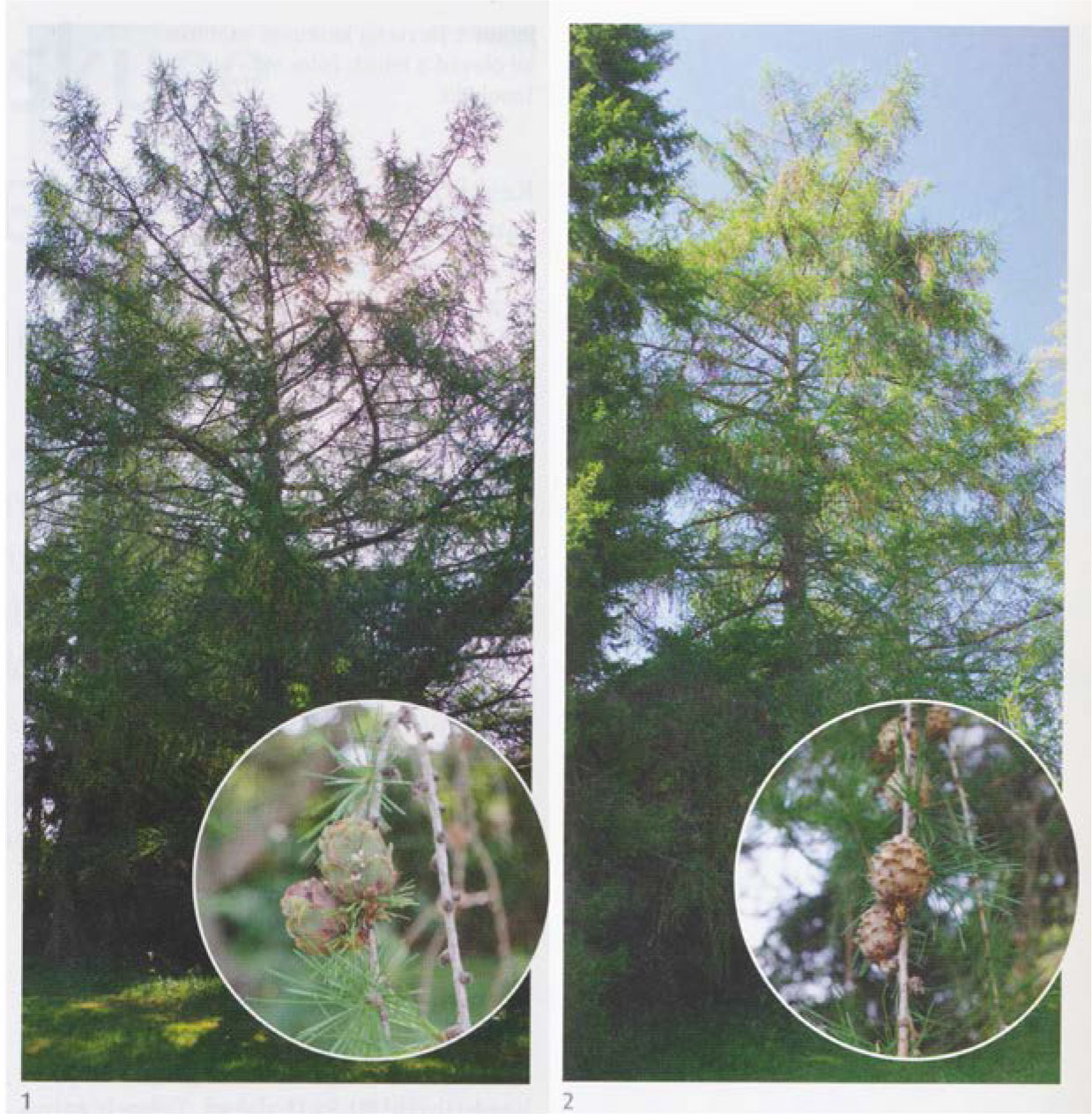
Figure 2.
Two trees of Larix x marschlinsii Coaz at Järvselja park on 3 April 2022 (Author: Tanel Piir).
Two genetically identified Dunkeld larches (trees no. 14 and 15), supported by some morphological features, are the progeny of two (now one) old Japanese larches and European larches. Seeds and scions have been collected from these trees, and phenological observations have been conducted. In 1951, an approximately 0.5 ha plantation of four-year saplings of European, Russian, Japanese, Dunkeld and Kurile (L. gmelinii var. japonica) larches was established on a former farmland in compartment number 17 of Apnasaare Section of Järvselja Forest District. At 15 years of age, these five species revealed no substantial differences. However, at the same age, the height of Dunkeld larches exceeded that of the others, particularly Kurile and Siberian (s.l.), larches (DBH = predominantly 15.5 cm, 12.0 cm and 10.0 cm). The Dunkeld larch shed pollen in early May, later than the European but earlier than the Japanese larch, while its seeds mature in October. The seed quality was low, with maturation and germination rates remaining below 15%. Winter frost caused no harm to mature trees, whereas young trees were occasionally damaged by autumn frosts (Kasesalu, 1999; Kasesalu, 2002; Paves, 2007). At 52 years old, Dunkeld larches reached a total height of <36 m and a diameter of approximately ~ 50 cm (Paves, 2004). In Japanese larch, the three younger trees (numbers 16, 17, and 18) grew together in a group and were planted in the 1930s (Figure 3). However, the oldest Japanese larch (number 19) was planted around 1907.
In Mäksa Park, an analysis was conducted on five larches with a diameter of 64 to 101 cm. All the samples were identified as European larches (Figure 4), indicating that both the maternal and paternal trees were of the European larch species. Records from 1957–1960, 1985 and 2006 had previously noted a Dunkeld larch among the European larches in Mäksa Park (Elliku & Paivel, 1989a; 1989b; Konsa & Sinijärv, 2012). Unfortunately, dendrometric measures for this Dunkeld larch were not provided, and no herbarium material was retained. Instead, references were made to a Japanese larch (H = 28 m, DBH = 75 cm) (Laas, 1987, 2004).
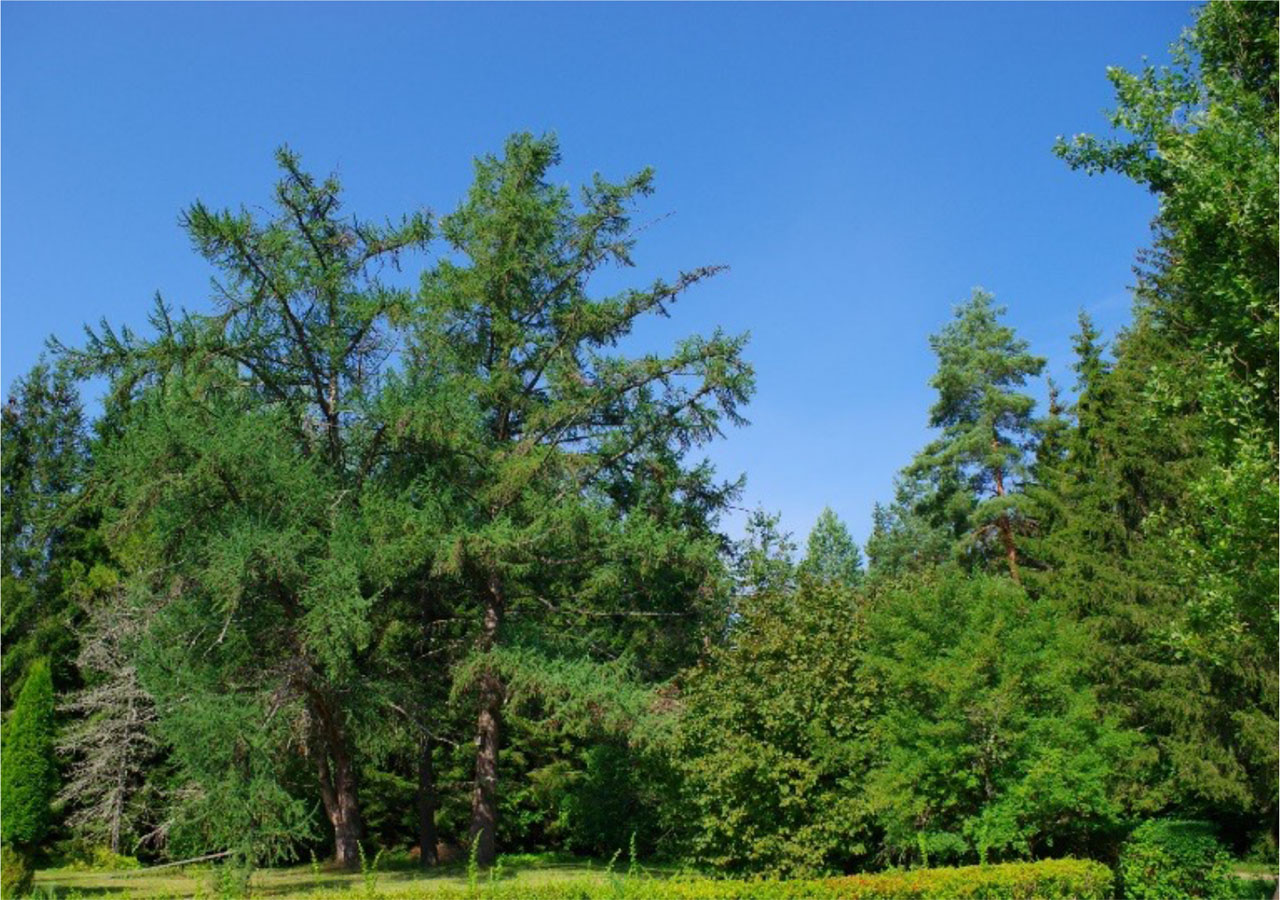
Figure 3.
Järvselja, three Japanese larch trees (Larix kaempferi (Lamb.) Carrière) on 17 August 2022 (Author Tanel Piir).
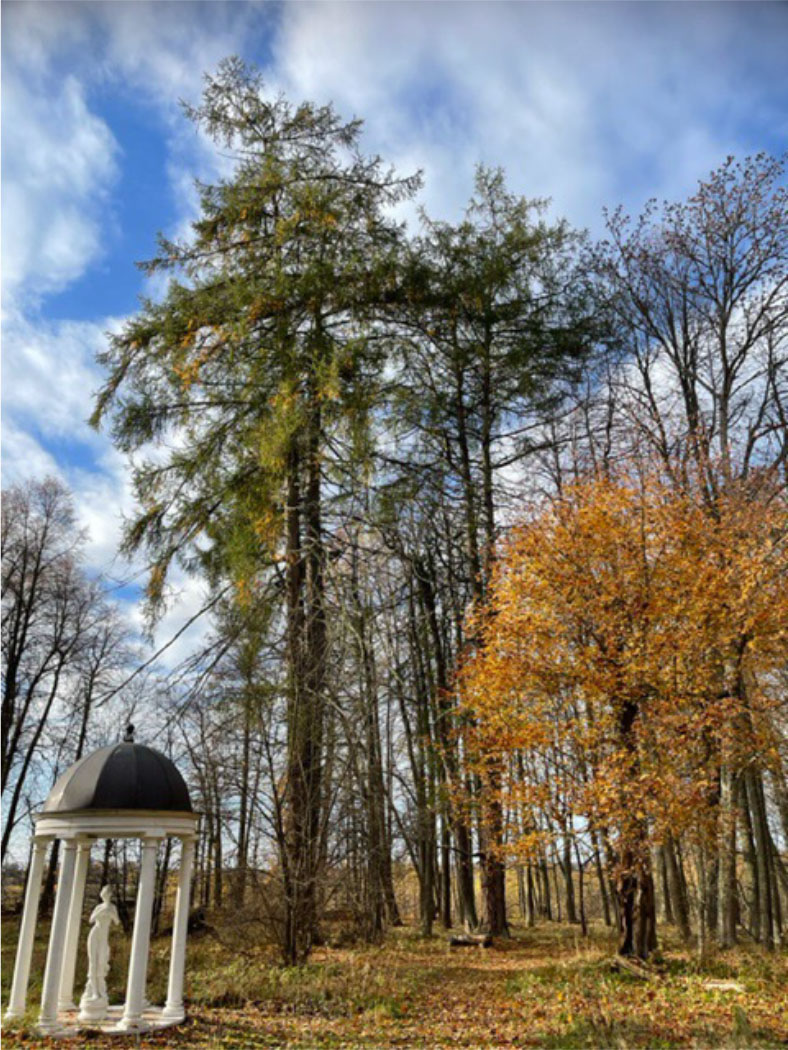
Figure 4.
Larch tree group at previous Mäksa Manor Park on 22 October 2023 (Author Aleg Kirs).
Discussion and Conclusions
This paper explores the history of larch trees in four former manors in South Estonia: Kastre Manor and its Kastre-Peravalla forest district (now Järvselja Educational and Experimental Forest Centre), and the manors of Mäksa, Kabina, and Mõniste. Historical records reveal that from the later part of the 18th century, these manors underwent a series of ownership changes. Consequently, the composition of tree species in their parks became highly diverse, even including some rare species. Among the foreign tree species commonly found in Estonian parks, aside from the northern white cedar, are the European and Russian larches, which were planted at various points in time, spanning more than two centuries (Sander et al., 2006).
The ages of individual trees were determined through tree-ring analysis, while the species were differentiated based on their morphological and genetic characteristics. Most of the larches in this study, were planted during the Imperial Russian era, from 1820 to 1907. The oldest larches identified were Russian larches in the former Kastre Manor Park, likely planted around 1820 or even earlier. Subsequently, from 1895 onward, larches were planted in both the park and the Peravalla forest district of Kastre Manor. Toward the end of the 19th century, a park was established near the Peravalla Forest District Centre, and it is believed that the seedlings for this park were collected from Kastre Manor (Kasesalu, 2002). It is plausible that Russian larch seeds were collected from the Russian larches in Kastre Park, likely planted around 1820. In addition to the European larch planted in the Peravalla forest district around 1895, the largest Japanese larches were probably planted in 1907. This suggests that the seeds for these Japanese larches might have been sourced from an undisclosed location in 1900 (Haller, 1929). Two Dunkeld larches and one from a group of three younger Japanese larches dated back to plantings in the 1920s and 1930s, respectively.
In Mäksa Park, the local European larches were of particular interest. According to the literature, they were accompanied by a Japanese larch (Laas, 1987; Laas, 2004) or, based on the recording years, potentially a Dunkeld larch (1957–1960, 1985, 2006). Although a study from 1987 even provided the dimensions of the tree (H = 28 m, DBH = 75 cm), there were no subsequent records of its dimensions or herbarial material (Laas, 1987; Elliku & Paivel, 1989a, 1989b; Laas, 2004; Konsa & Sinijärv, 2012). In 2006, dendrologist Jüri Elliku commented that the cones of the tree resembled those of a Dunkeld larch (Abner, 2022 pers. comm.). However, the presence of the Dunkeld larch should have been confirmed based on the identified years. In 2006 and 2022, it grew within a group of eight trees (DBH = 66–103 cm, 2022). However, neither the tree nor its cones have been found yet. In late autumn (13 Nov.) 2022, the group of European larches had yellow needles, but two trees had already shed their needles. Unfortunately, it was impossible to make a morphological determination to confirm whether they were Russian or Siberian (s. str.) larches or perhaps other species. The main reason for this was the absence of cones; additionally, the branches were situated at a considerable height, making it impractical to collect samples (Kullamäe, 2022 pers. comm.).
In North Estonia, specifically in the Tallinn Botanical Garden near the sea coast, the European larch displayed yellow needles during autumn on November 9, 2022. Some branches still held a few green needles, but most were just about to drop. The Japanese larch had shed most of its needles, with the remaining ones turning brown and falling off. In contrast, the foliage of the Dunkeld larch, although partly lost, appeared somewhat yellowish brown (Abner, 2022 pers. comm.).
Therefore, the primary distinguishing characteristics of the Dunkeld larch included its delayed needle yellowing compared to the European and the Japanese larches and the tendency of its needles to persist on sprouts, often until the following year. These differences were reportedly most pronounced in seedlings. The Russian larch was the first to turn yellow, followed by the Japanese and European larch. The Dunkeld larch was the last to undergo chlorosis, and in some autumns, its transformation did not occur until after early frosts in Estonia (Erik, 2009). Thus, the previous assertion by Paves (2007) may not be entirely correct. Erik’s (2009) observation is based on the autumnal changes in crown colour, shapes, bark and needles of Dunkeld larch trees grown from seeds originating in Denmark in the Söe Arboretum’s F1 generation. The five European larches (DBH=84–101 cm; Table 1: no. 23–27) in the Mäksa Park were determined to have been planted in the 1870s (Pâques et al., 2022b). Therefore, it is highly unlikely that Mäksa Park contains a Japanese or Dunkeld larch of that age. Regarding the larches in the remaining two parks, the planting date of four trees in Mõniste Park, which were planted between 1825 and 1840, becomes significant. This suggests that the local Dunkeld larches (Elliku & Roht, 1985; Konsa & Sinijärv, 2012) have been incorrectly identified based solely on age.
In summary, the larches in the studied locations were planted at various times, including 1820 and 1895 in Kastre; 1895, 1907, and 1920–1940 in Järvselja; 1825–1840 in Mõniste; 1855–1865 in Kabina; and 1870–1880 in Mäksa. This reveals a 200-year process of larch planting in these areas. It also sheds light on the age of Dunkeld larches in relation to the emergence of this early 20th-century hybrid in Europe and the USA. The ages of individual Japanese and Dunkeld larches provide insights into larch taxonomy and to the earliest documented records of Dunkeld larches in Russia. According to Bobrov (1972), hybrid larches have been recognized as distinct entities in the North European part of Russia for approximately 150 years. These hybrid larches were described using various binomial names, suggesting direct or reverse crosses between specific larch species. Bobrov (1972) referred to them as the hybrid L. leptolepis×L. decidua. In Estonia, these hybrids, often identified by cones with recurved seed scale tips resembling Dunkeld larches, have been observed among older trees in various locations. However, the ages of these trees, which can reach up to 200 years, surpass the presumed introduction date of the hybrid or Japanese larch. Trees exhibiting similar cones have been identified within the natural distribution range of European larch. Genetic analysis of these trees has caused taxonomic confusion, ultimately leading to their classification as European larches, specifically as L. decidua f. (forma) kaempferi or f. marschlinsii according to Bobrov’s (1972) nomenclature.
Historically, much confusion surrounding larch species identification can be attributed to inaccuracies in inventories and data collection methods. Errors in identifying larches have occurred, compounded by the wide variation in features, especially regarding cones. Additionally, the full extent of larch species, including their natural transitions and distribution, has not been fully understood. This lack of comprehension is particularly evident in the extensive larch habitat spanning from Europe to Japan and even into southern China. The confusion surrounding larch species identification has been aggravated by cultivated species, where factors such as the introduction time and inter-species and inter-population hybridisation have not been adequately considered. Eurasian larch species are relatively closely related, thus hybridising more easily, making distinguishing between larch species among cultivated trees a complex task. In Russian urban parks and forest plantations, double and triple hybrids have been identified based on their morphological and wood properties (Orlova et al., 2014). However, this approach has also led to taxonomic confusion, as traditional species identification has relied on the morphological characteristics of trees growing in their natural habitat.
The cytoplasmic and mitochondrial molecular markers used in this study proved to be effective in accurately identifying European larch, Japanese larch, and their hybrids, surpassing what morphological markers alone can achieve. In most cases, they provided confirmation of previously made taxonomic identifications. However, there was an exception with tree number 28 in Mõniste Manor, which was identified as a European larch rather than a hybrid. It is worth noting that these markers were not designed to identify Siberian larches, and their limitations in this regard were expected. Other markers, such as those developed by Gros-Louis et al. (2005), should be considered for future studies to identify Siberian larches.
In conclusion, individual tree dating is crucial in refining tree taxonomy, particularly when combined with information about the introduction year and genetic studies. This approach provides insights into a tree’s evolutionary process, especially hybridisation, and the knowledge gained through these methods contributes to more accurate and detailed botanical classifications.
Acknowledgements
We express our deep gratitude to Dr. Alar Läänelaid, Associate Professor Emeritus at the University of Tartu, for his invaluable cooperation in our dendrochronological research, despite his decision not to co-author this article. Our thanks also extend to Ulvi Kullamäe, Master of Forestry in Kastre; Dr. Heino Kasesalu in Järvselja; Dr. Raivo Kalle in Venice; Dr. Larisa Orlova; and Dr. Gennadi Firsov in St. Petersburg, for their assistance in the preparation of this article.