
Table 1.
Literature retrieval strategies.
| Steps | Strategies |
|---|---|
| #1 | TS = (“stroke” OR “apoplexy” OR “cerebrovascular accident” OR “cerebral hem OR rhage” OR “cerebral thrombosis”) |
| #2 | TS = (“cognitive function” OR “cognitive dysfunction” OR “cognitive impairment” OR “cognitive decline” OR “cognitive dis OR der” OR “cognitive deficit” |
| #3 | TS = (“cognitive reserve”) |
| #4 | #1 DNA #2 AND #3 |
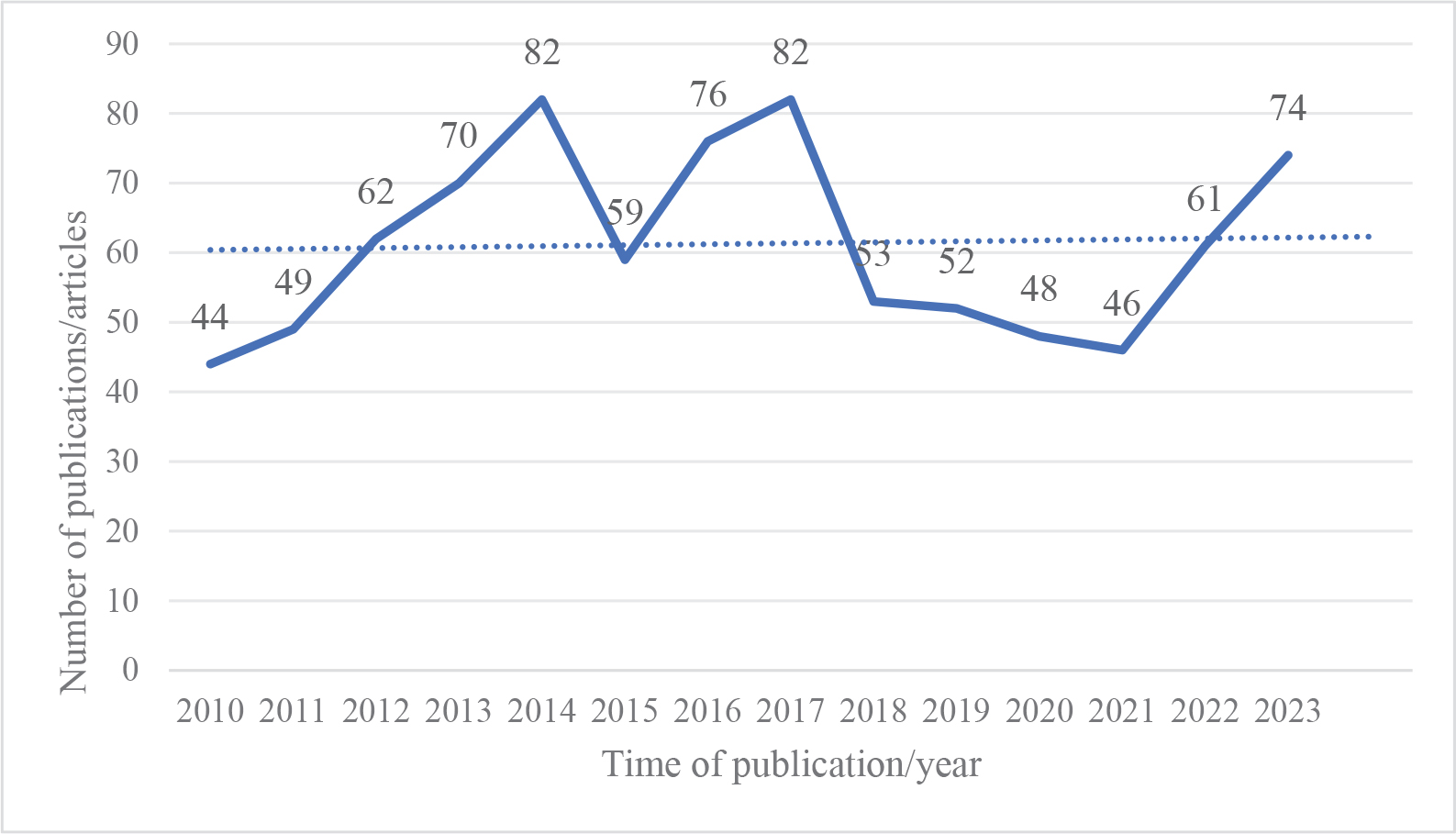
Figure 1.
The application of cognitive reserve in stroke cognitive impairment (Web of Science database).
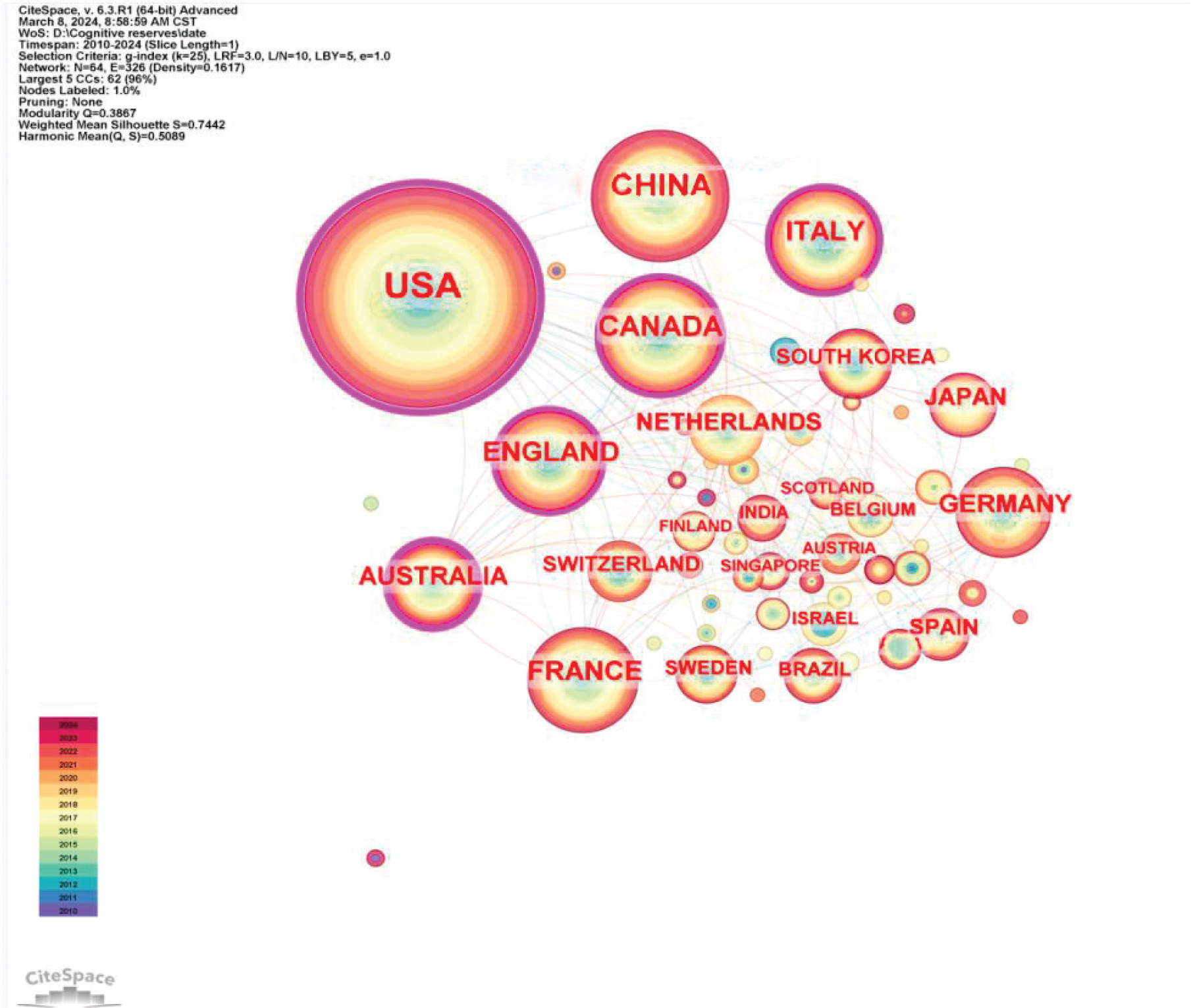
Figure 2.
The application of cognitive reserve in stroke cognitive impairment.
Note: N = 54 (involving 54 countries), E = 326 (326 lines, representing the relationship between countries), Q = 0.3867 (>0.3), and S = 0.7442 (>0.7), which means that the distribution credibility is convincing. Larger node circles indicate a higher volume of research output from more countries. More lines signify increased co-authorship frequency among countries, indicating closer collaboration.
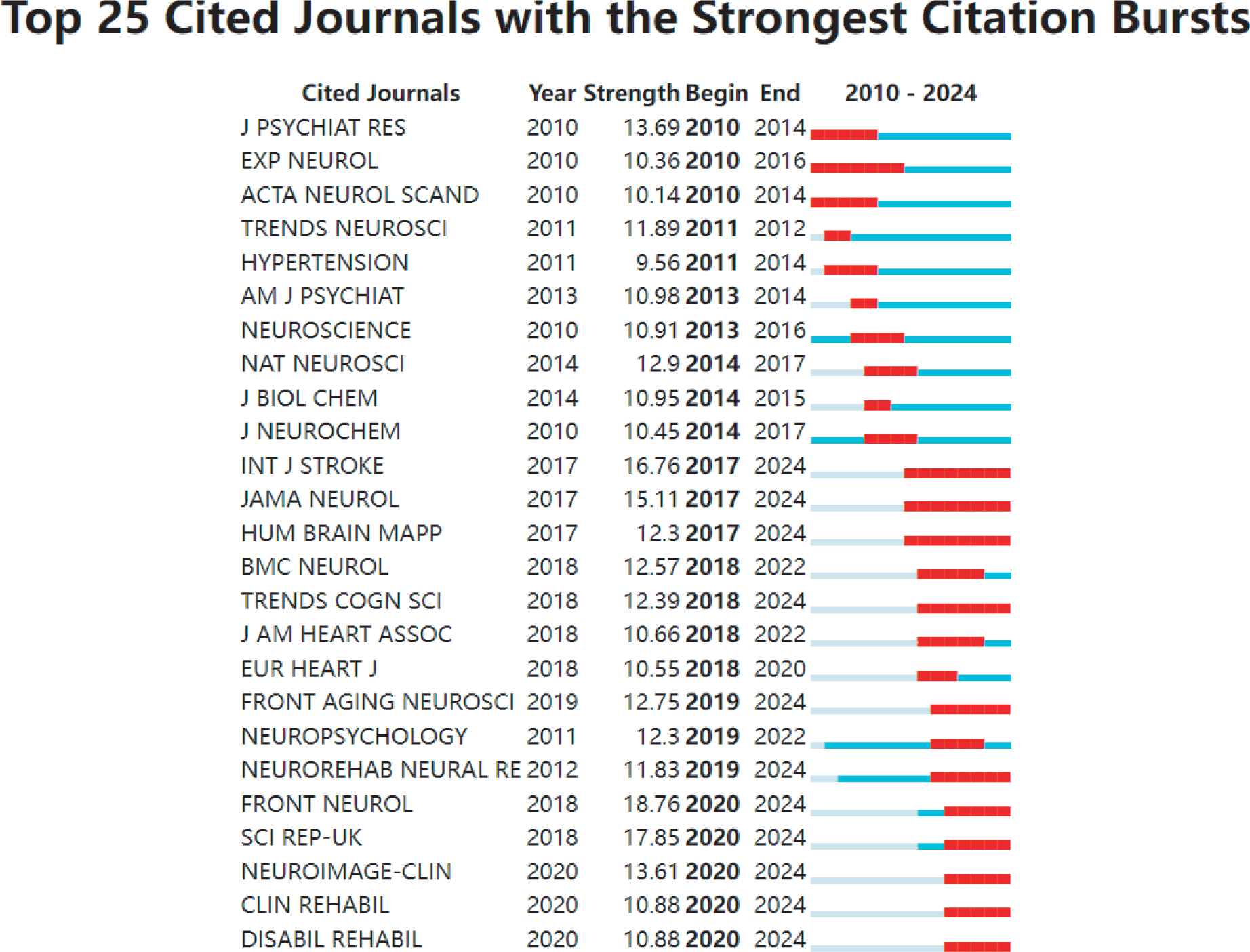
Figure 3.
Distribution of co-cited journals in the application of cognitive reserve in stroke cognitive impairment (Web of Sciences Database).
Note: A “burst journal” refers to a journal that experiences a sudden surge in citations within a specific timeframe. The chart displays the top 25 journals with citation bursts, based on an analysis of 860 articles published between January 2010 and January 2024. The red squares represent the Year in which the burst occurred; “Year” represents the earliest year in which the cited journal article appeared. “Strength” indicates the citation frequency. “Begin” and “End” correspond to the start and conclusion of the citation burst, respectively.
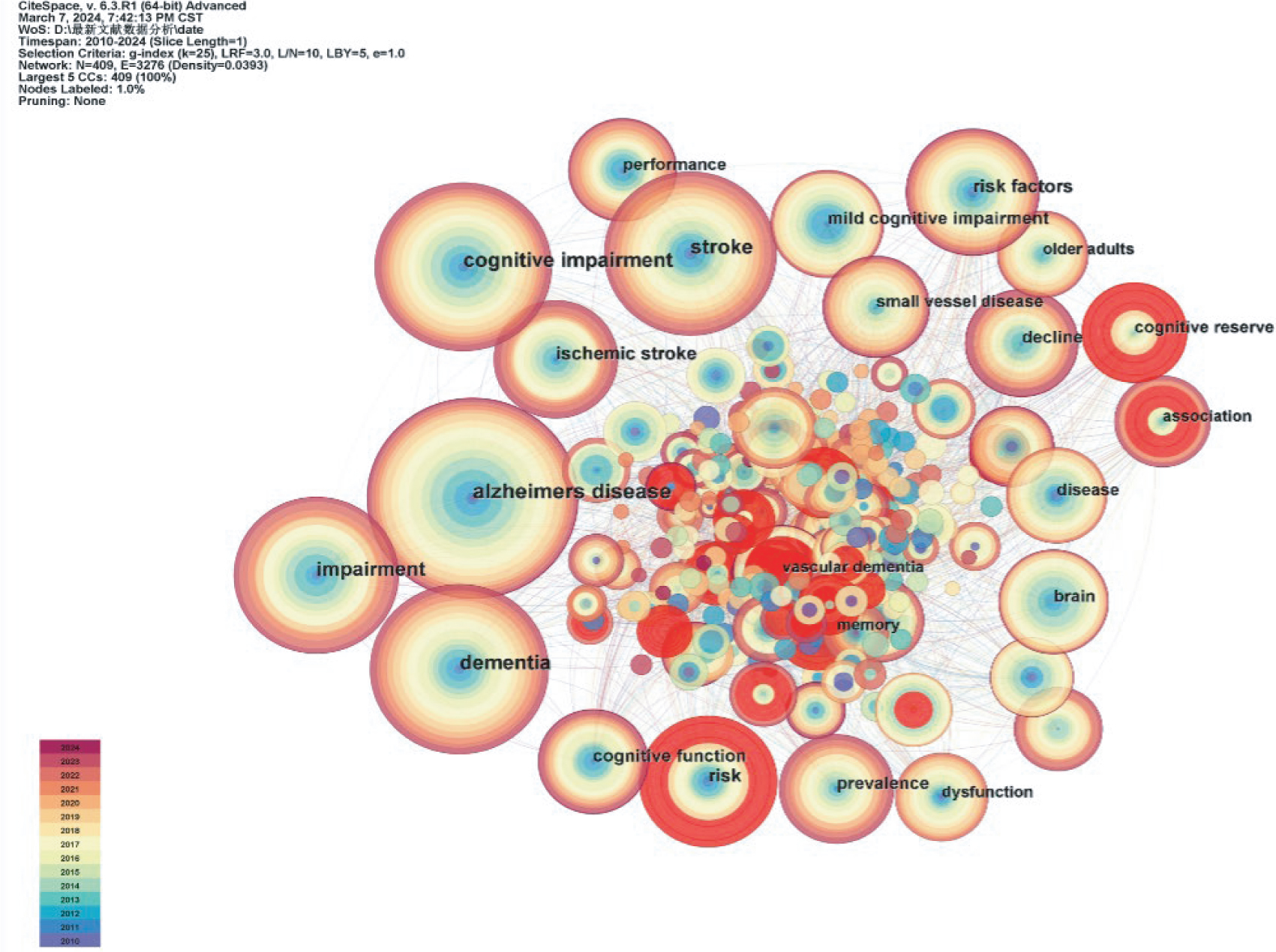
Figure 4.
Co-occurrence distribution of keywords in the application of cognitive reserve in stroke cognitive impairment (Web of Sciences Database).
Note: In the keyword co-occurrence graph, the node size corresponds to the frequency of keyword occurrence, which is the research hot word in this field and also the research direction.
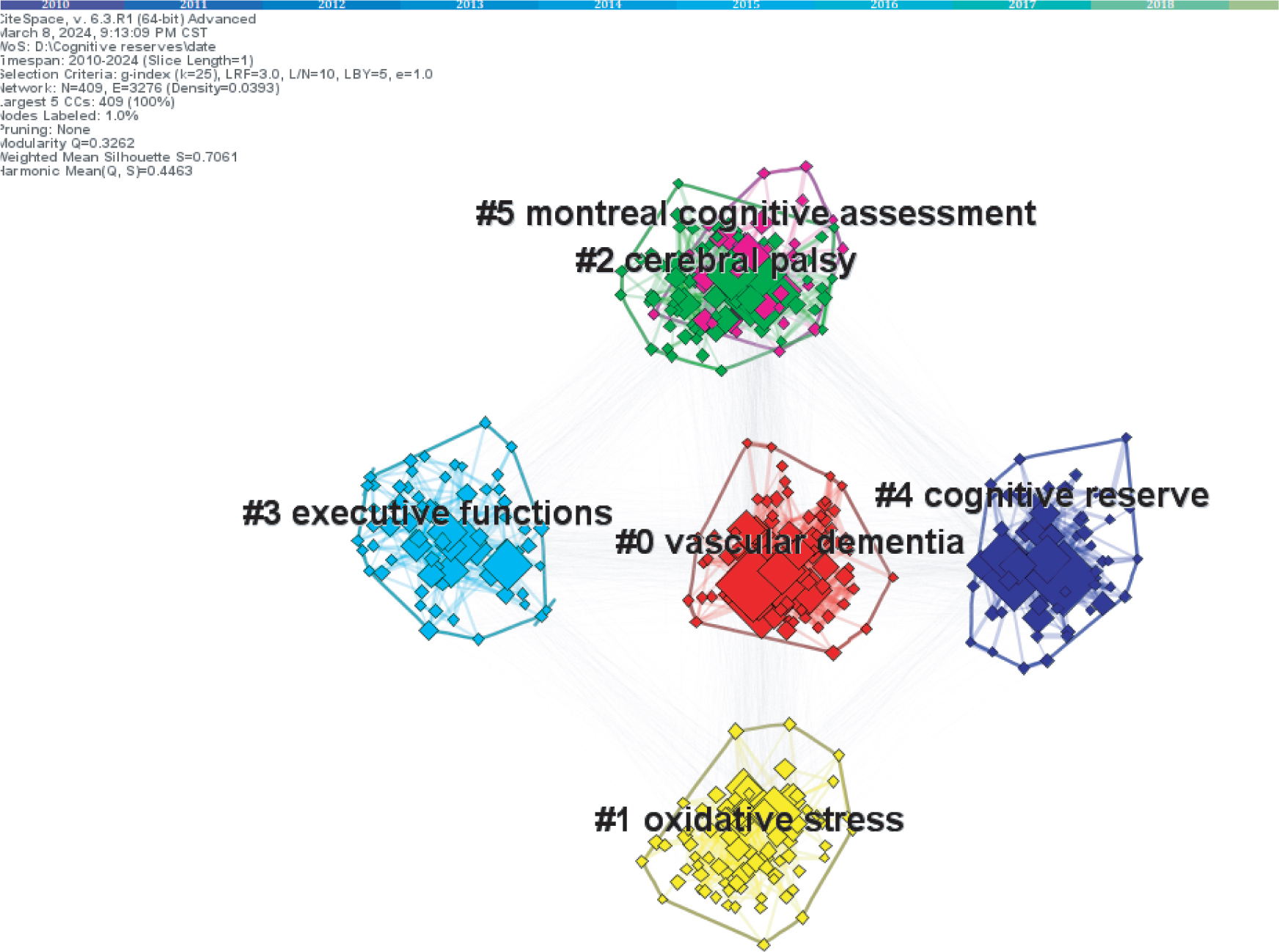
Figure 5.
Application of cognitive reserve in cognitive impairment in stroke (Web of Sciences Database).
Note: In the keyword cluster network diagram, larger nodes indicate a greater number of published articles, red, yellow, green, light blue, dark blue, red represent 6 different clusters (divided into #0 vascular dementia; #1 Oxidative stress; #2 Cerebral paralysis; #3 Execution ability; #4 Cognitive reserve; and #5 Montreal cognitive assessment), and thicker lines denote a higher correlation between keywords. Q = 0.3262, (>0.3), S = 0.7061 (>0.7), and clustering is efficient and convincing.
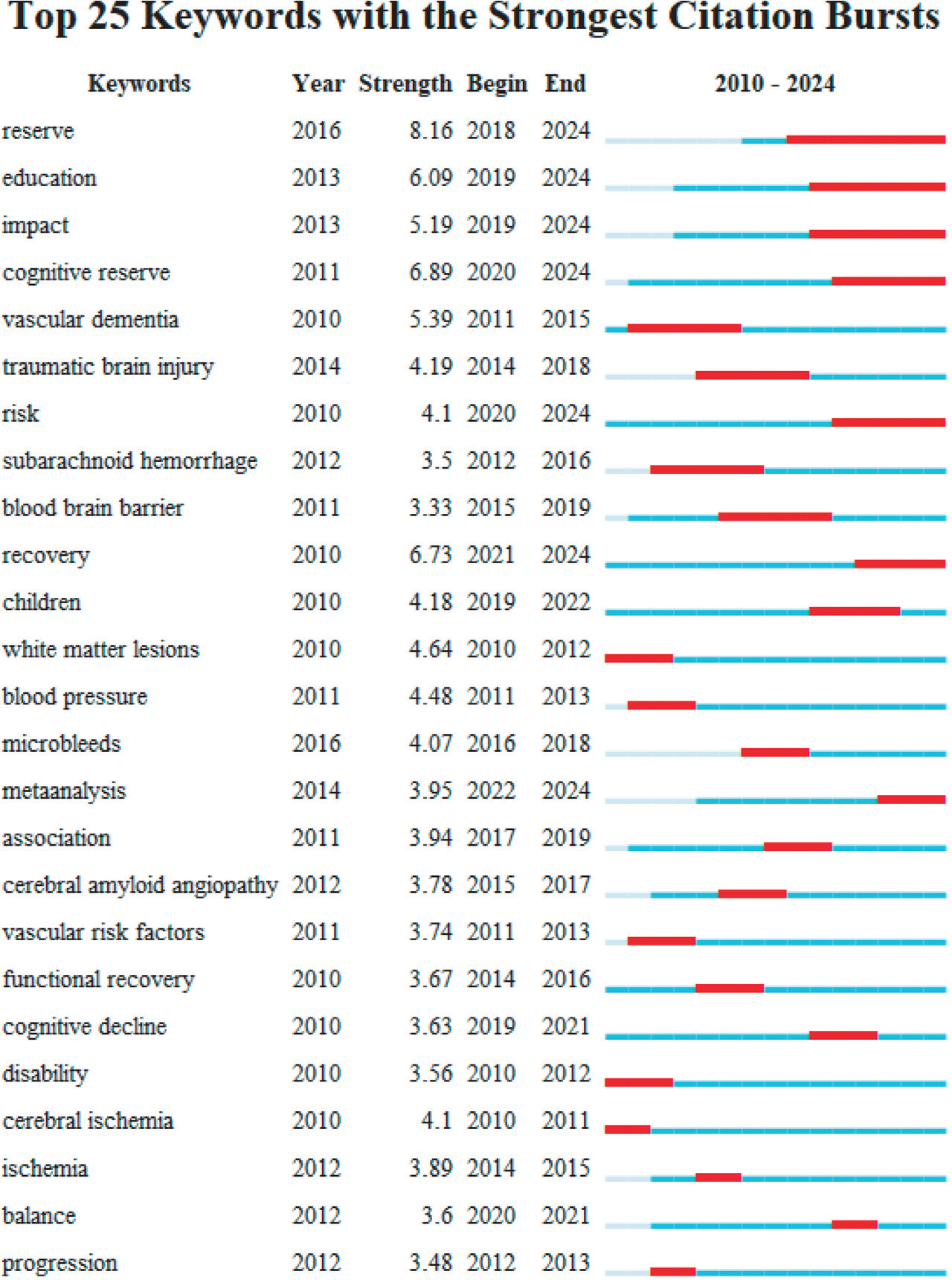
Figure 6.
The application of cognitive reserve in cognitive impairment in stroke: keyword outbreak distribution map (Web of Sciences Database).
Note: Keyword burst analysis chart. “Keywords” represents the outburst keywords (the top 5 are as follows: in order, (reserve, education, cognitive reserve, influencing factors, and rehabilitation); the red squares represent the year in which the outbreak occurred, “year” represents the earliest year in which the keyword appeared, “Strength” represents the frequency of occurrence, and “Begin” and “End” represent the beginning and end of the keyword outbreak, respectively.
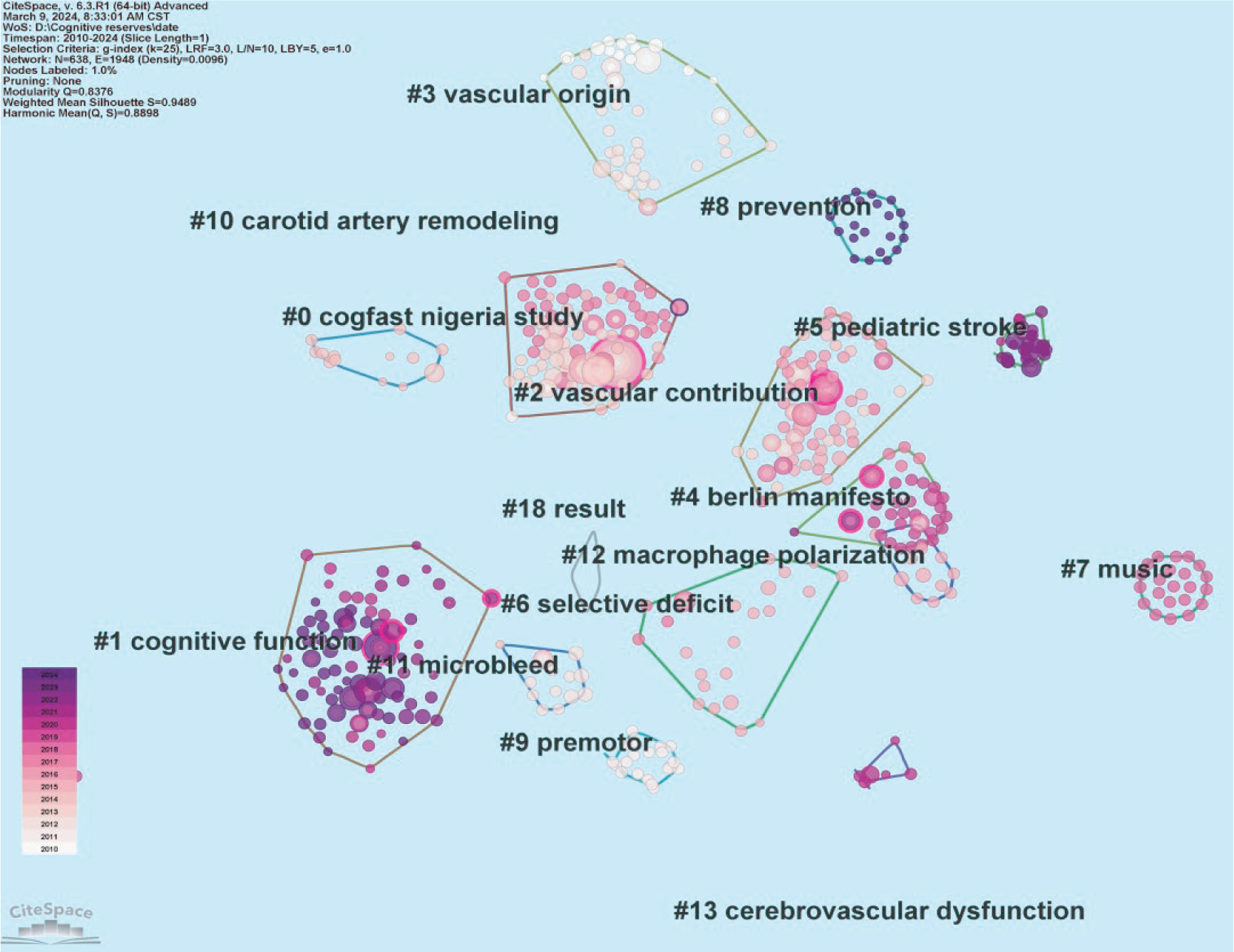
Figure 7.
Distribution of co-cited literature on the application of cognitive reserve in stroke cognitive impairment (Web of Sciences Database).
Note: In the literature co-citation cluster graph, the color of the cluster represents the year in which the co-citation relationship first appeared in the cluster, the size of the node represents the citation frequency of the literature, and the color of the connection represents the time of the first citation. The clusters in the figure are as follows: #0 CogFAST Nigeria study, #1 cognitive function, #2 vascular contribution, #3 vascular origin #4 berlin manifesto, #5 pediatric stroke, #6 selective deficit, #7 music, #8 prevention, #9 premotor, # 10 carotid artery remodeling, #11 microbleed, #12 carotid artery resection polarization, #13 cerebrovascular dysfunction, #18 result, and cerebrovascular dysfunction. In the recent 5 years (2020–2024), literature clustering in the common citation map of research hotspots is as follows: #1 cognitive function, #5 pediatric stroke, #8 prevention, #11 microbleed, and #12 macrophage polarization. Q = 0.8376 (>0.3), S = 0.9489 (>0.7, close to 1), and clustering was efficient and feasible.
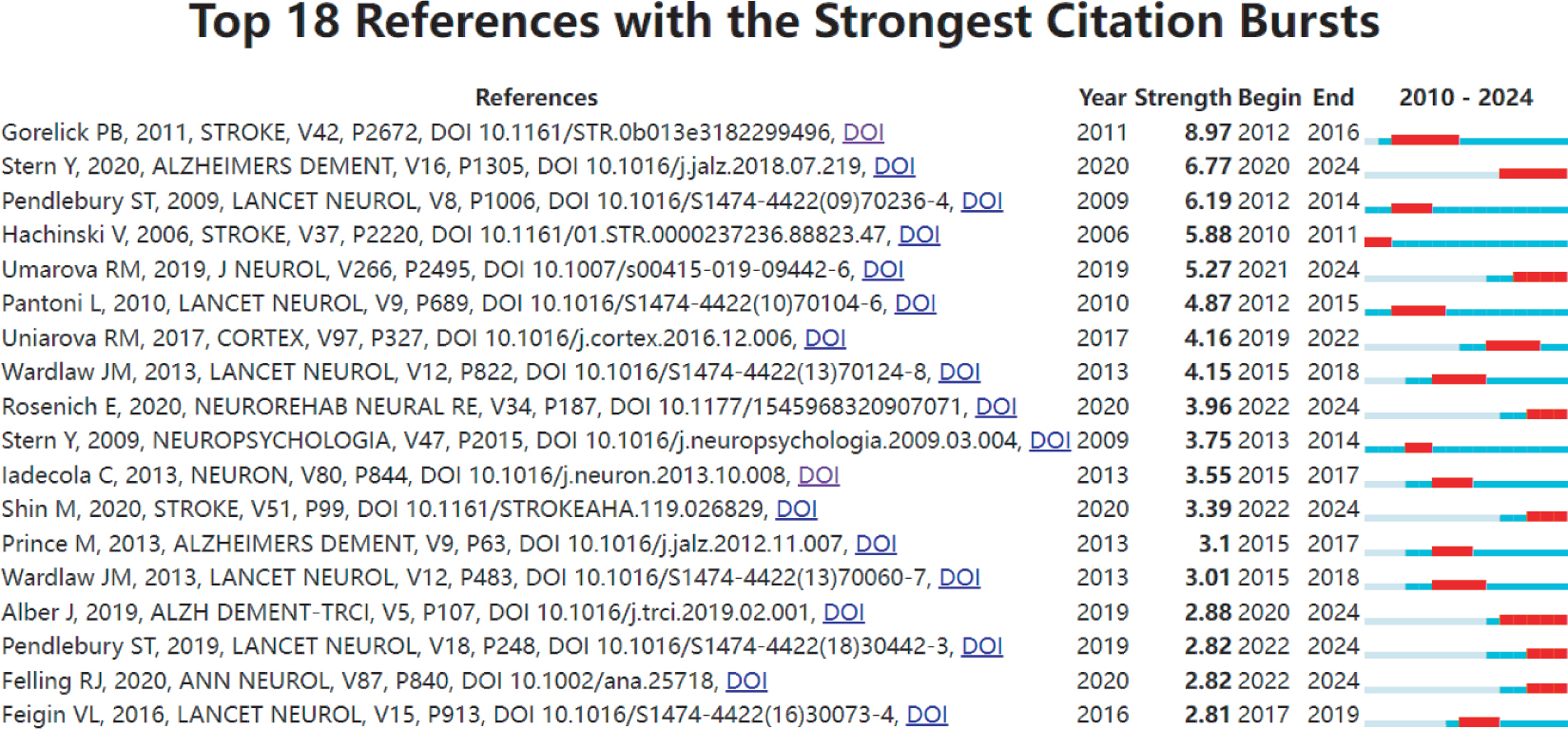
Figure 8.
The application of cognitive reserve in cognitive impairment in stroke (Web of Sciences Database).
Note: Analysis of Emerging Co-cited References. Red squares indicate the years of significant citation spikes, “Year” denotes the initial appearance of the citation, “Strength” signifies the occurrence frequency, while “Begin” and “End” mark the start and conclusion of the citation surge, respectively.
Table 2.
Top 10 most-cited articles on the application of cognitive Reserve in stroke cognitive impairment (Web of Sciences Database).
| Author/year of publication | Centrality | Research results | Theme | Quote |
|---|---|---|---|---|
| Gorelick et al.10 | 0.28 | Vascular contributions to cognitive impairment and dementia are important. | Definitions of vascular cognitive impairment neuropathology, basic science, and pathophysiological aspects, role of neuroimaging and vascular and other associated risk factors, and potential opportunities for prevention and treatment are reviewed. | 33 |
| Stern et al.11 | 0.13 | Reserve, Resilience, and Protective Factors resilient against aging or disease are important | Whitepaper: Defining and investigating cognitive reserve, brain reserve, and brain maintenance | 14 |
| Pendlebury and Rothwell17 | 0.05 | The likely effect of optimum acute stroke care and secondary prevention in reducing the burden of dementia. | Assess the heterogeneity in the reported rates and identify risk factors for prestroke and poststroke dementia. | 14 |
| Pantoni18 | 0.03 | Small vessel disease should be a main target for preventive and treatment strategies, but all types of presentation and complications should be taken into account. | Cerebral small vessel disease: from pathogenesis and clinical characteristics to therapeutic challenges | 14 |
| Wardlaw et al.12 | 0.24 | Completed a structured process to develop definitions and imaging standards for markers and consequences of Cerebral small vessel disease | Neuroimaging standards for research into small vessel disease and its contribution to aging and neurodegeneration | 11 |
| Umarova et al.13 | 0.01 | Cognitive reserve contributes to inter-individual variability in the initial severity of cognitive deficits and disability in acute stroke, and may suggest individualized rehabilitation strategies. | Cognitive reserve impacts on disability and cognitive deficits in acute stroke. | 10 |
| Hachinski et al.19 | 0 | Using the same standards will help identify individuals in the early stages of cognitive impairment, and will make studies comparable. | Vascular cognitive impairment harmonization standards. | 10 |
| Shin et al.14 | 0.06 | Education and occupation can buffer an individual against cognitive impairment caused by stroke and promote rapid cognitive recovery early after stroke. | Effect of cognitive reserve on risk of cognitive impairment and recovery after stroke | 9 |
| Uniarova16 | 0 | This alternative view of how neglect and other cognitive deficits occur and recover promotes discussion about plasticity and recovery to a general rather than a single stroke-based domain, providing more efficiency in recovery research. | Discussed how individual susceptibility to stroke lesion might explain the reported discrepancies in lesion anatomy, non-spatial deficits, and recovery courses. | 9 |
| Rosenich et al.15 | 0.01 | Clinicians and researchers to better consider the role of premorbid factors in the stroke, lifestyle-related variables, such as cognitive reserve, in facilitating successful neurological outcomes and recovery following stroke. | The potential significance of cognitive reserve in the context of stroke, | 8 |