
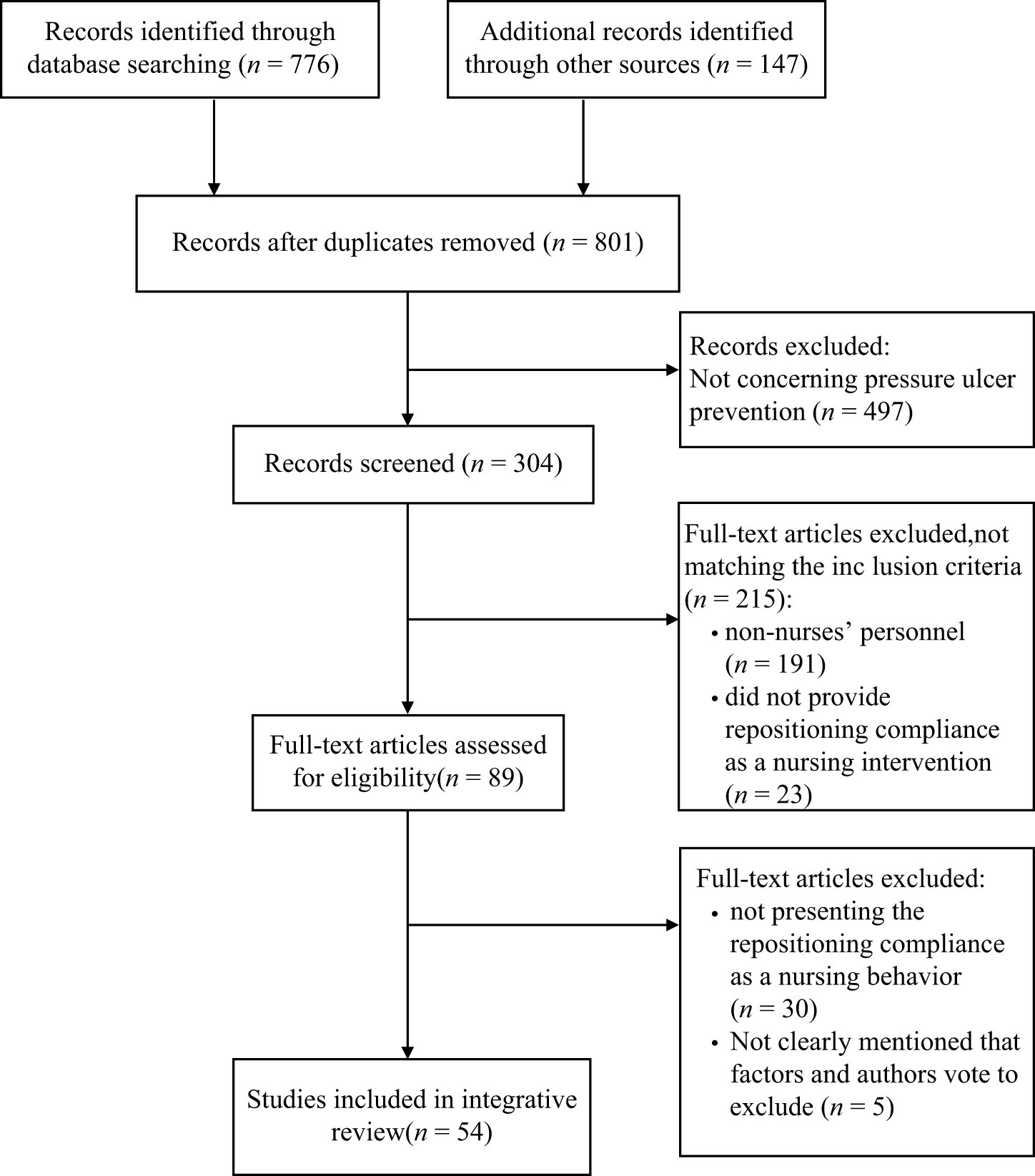
Figure 1
PRISMA chart.
Table 1
Summary of available studies that present the motivations for repositioning compliance.
| Author and country | Population and sample | Design (level of evidence) | Findings |
|---|---|---|---|
| Alexander et al. USA | Nurses in nursing homes N = 2 | Observational (VI) | Face-to-face communication is increased when an IT system with a low level of sophistication that includes the repositioning decision is used to prevent pressure injuries, and a higher level of care is provided when a highly sophisticated IT system is used. |
| Ali et al. Egypt | Nurses in a hospital N = 83 | Longitudinal study (VI) | The changes in nurses’ performance regarding pressure injury prevention, which includes repositioning, resulted from changes in the administrative focus and the involvement of nurses in the responsibilities. |
| Amon et al. USA | Medical-surgical telemetry patients Sample: One unit with 32 beds | Pre-post Intervention (III) | The incidence of pressure ulcer PU was reduced as a result of compliance with pressure injury prevention policies, including repositioning. |
| Angmorterh et al. UK | Nursing students N = 49 | Prospective experimental (III) | The pressure placed on volunteers when moving the patient on the radiology trolley is high, and the settings are not convenient for the repositioning of the patient during the diagnostic procedures in radiology. |
| Athlin et al.5 Sweden | Nurses N = 30 | Qualitative content analysis (VI) | Pressure injury prevention compliance, including repositioning, is associated with:
|
| Beeckman et al. Belgium | Hospitalized patients N = 2,105 | Cross-sectional study (VI) |
|
| Beeckman et al. Belgium | Patients in nursing homes N = 464 | RCT (II) | After implementing the supported clinical decision, nurses’ knowledge and positive attitudes increased but did not result in significant changes in their compliance toward pressure injury prevention, including repositioning, while increased compliance with the pressure injury prevention policy was observed for patients in wheelchairs. |
| Behrendt et al. UK | Hospitalized critical care patients N = 422 Experimental group = 213 Control group = 209 | Prospective control study (IV) | Following the implementation of specific equipment that provides continuous and consistent visual feedback for nurses, nurses exhibit better compliance with repositioning. No further education or any further policy changes were implemented. |
| Black and Maegley USA | Hospitalized patients 23 beds in a medical-surgical unit | Quality improvement project (III) | The project demonstrates changes in the nurses’ compliance with pressure injury prevention, including repositioning, after the application of a new policy, forms, and follow-up system. |
| Cameron et al. UK | Nurses in the NHS | Quality improvement project (III) | The project presents the experiment performed in the NHS to provide the pressure ulcer prevention program online. The project assumes an increase in pressure ulcer prevention compliance, including repositioning. |
| Chaboyer et al. Australia | Hospitalized patients N = 1,600 | Clustered randomized control trial (II) | The study shows a decrease in the incidence of pressure ulcers and an increase in prevention following the application of the pressure injury prevention care program, including repositioning, but statistically significant differences were not observed between the overall compliance of nurses in both groups. |
| Choi et al. USA | Nurses in critical care facilities N = 15 | Quality improvement project (III) | The low compliance of nurses is associated with:
|
| Courvoisier et al. Switzerland | Patients in nursing homes N = 2,671 | Cross-sectional study (VI) | The study reported relations between the prevalence of pressure ulcers and the type and size of nursing homes. |
| Co x USA | Hospitalized critical care patients N = 347 | Retrospective correlational design (IV) | The study concludes that the predictability of the Braden scale is questionable. The most reliable predictions were based on patient mobility and friction/shear. Many risk factors have been identified empirically; however, a consensus on the most important risk factors is lacking. 18.7% of patients developed a pressure ulcer. A pressure ulcer is preventable. A pressure ulcer is associated with prolonged hospitalization. |
| Cub ukcu Turkey | Patients in nursing home care units N = 786 | Cross-sectional study (VI) | The study concludes that pressure ulcer development is associated with the Braden score, weak nutritional conditions, and chronic illnesses. The identification of these factors during the initial assessment of patients supports proper pressure ulcer prevention measures. |
| Cyriacks and Spencer USA | Hospitalized patients 32 beds in a pulmonary unit | Quality improvement project (III) | The study shows increased repositioning compliance following the redistribution of the nursing staff and creation of a turning team from nurses on duty. |
| Dellefield and Magnabosco USA | Nurses in hospitals N = 16 | Triangulation study design (III) |
|
| Feng et al. China | Nurses in hospital N = 275 | Pre-/post-intervention quasi-experimental study (III) | Improvements in the knowledge and attitudes of nurses toward pressure ulcer prevention and repositioning through an awareness campaign are associated with higher levels of compliance and a lower incidence of pressure ulcers. |
| Fossum et al. Norway | Nurses in a nursing home N = 15 | Quasi-experimental study (III) |
|
| Gunningberg et al. Sweden | Patients in the geriatric/internal medical ward N = 190 | Pragmatic randomized trial (III) |
|
| Hanna et al. USA | Nurses working in different organizations N = 429 | Cross-sectional study (VI) |
|
| Hartmann et al. USA | Nurses in a nursing home N = 23 | Qualitative study (VI) | Staff provided the following indirect impressions of the facilitators and barriers associated with pressure ulcer prevention:
|
| Hall and Clark USA | Patients in a medical unit and surgical ICU N = 100 | Pre- and Post-intervention (III) | The study concludes that the device reduces the repositioning burden among nurses, increases repositioning compliance, and reduces the HAPU among the selected units. |
| Kalisch et al. USA | Nurses in hospitals N = 4,086 | Cross-sectional study (VI) |
|
| Kalisch et al. USA | Patients and relatives in hospitals N = 729 | Cross-sectional study (VI) | Patients with pressure ulcers (they did not receive the proper prevention measures, including repositioning) reported higher rates of missed nursing care in the following areas:
|
| Källman and Suserud Sweden | Nurses in a hospital N = 154 | Cross-sectional study (VI) |
|
| Källman et al., Sweden | Hospitalized patients N = 62 | Non-experimental, observational study (VI) | The study concludes that repositioning compliance is associated with:
|
| Knibbe et al. Netherlands | Patients in nursing homes N = 13 | Quasi-experimental pre- post-intervention study (III) | The case reports did not reveal a significant difference in nurses’ compliance with repositioning before and after implementing repositioning facilities. However, the study presents the importance of the availability of this device in reducing nurses’ working-related hazards. |
| Kwong et al. Hong Kong | Patient and nurses in nursing homes N = 474 | Action research of three main steps (III) | The changes in nurses’ behavior in complying with repositioning resulted from the factors listed below:
|
| Lavallée et al. UK | Nurses in the hospital N = 25 | Qualitative study (VI) | The study defined seven domains that interact as barriers or facilitators in manipulating nurses’ behavioral compliance, which are listed below.
|
| Lu et al. China | Bedridden patients in a gynecological unit N = 150 | RCT – Two armed (II) | The report shows a significant increase in the implementation of pressure ulcer prevention measures (including repositioning) after applying the protocol. Significant reductions in pressure ulcer incidence were also observed after applying the clinical guideline. |
| Mallah et al. Lebanon | Patients in a hospital N = 468 | Quasi-experimental pre- post-intervention study (III) |
|
| Meesterberends et al. | Patients in nursing homes N = 547 Germany and The Netherlands | Prospective multicenter cohort study (IV) |
|
| Mendoza et al. Saudi Arabia | Inpatient units N = 17 | Pre- and post-intervention (III) | An awareness campaign increases nurses’ compliance in preventing pressure ulcers. |
| Moore and Price Ireland | Nurses in a hospital N = 121 | Cross-sectional study (VI) |
|
| Moya-Suárez et al. Spain | Nurses working in hospitals N = 249 | Cross-sectional study (VI) |
|
| Peterson et al. USA | Patients in a hospital N = 23 | Observational study (VI) |
|
| Renganathan et al. India | Hospitalized critical care patients N = 40 | Prospective, non-randomized, multiphase, multicenter trial (III) | The use of a continuous repositioning monitoring system increases nurses’ compliance with the repositioning protocols. |
| Rich et al. USA | Hospitalized patients N = 269 | Observational study (VI) |
|
| Saliba et al. UK | Patients in nursing homes N = 834 | Retrospective analysis (III) |
|
| Samuriwo UK | Nurses in nursing homes N = 16 | Qualitative grounded theory (VI) |
|
| Samuriwo UK | Nurses in nursing homes N = 16 | Qualitative grounded theory “Reanalyzed data” (IV) | The reanalysis of the data also concludes a substantial role for multidisciplinary teamwork and nursing empowerment in compliance with pressure ulcer prevention measures, including repositioning. |
| Still et al. USA | Hospitalized critical care patients in a surgical ICU N = 507 | Pre- and post-intervention quasi-experimental study (III) | Significant changes in repositioning compliance were observed after the staff were redistributed to establish a turning team in the unit. |
| Strand and Lindgren Sweden | Nurses in intensive care units N = 146 | Cross-sectional study (VI) |
|
| Schutt et al. USA | Hospitalized patients N = 138 | Quasi-experimental pre- post-intervention study (III) |
|
| Sving et al. Sweden | nurses in hospitals N = 9 | Triangulation study design (III) |
|
| Sving et al. Sweden | Hospitalized patients N = 825 | Descriptive cross-sectional study (VI) |
|
| Tannen et al. Germany and Netherland | Hospitalized patients and residents in nursing homes N = 21,378 (H) N = 15,579 (NHs) | Cross-sectional study (VI) | The study defines the differences in pressure ulcer prevention, including the repositioning compliance between two countries as related to:
|
| Tayyib and Coyer Saudi Arabia | Hospitalized critical care patients N = 140 | Clustered randomized control trial (II) |
|
| Tayyib et al. Saudi Arabia | Hospitalized patients N = 28 | Prospective observational study (VI) |
|
| Ünver et al. Turkey | Nurses in a hospital N = 101 | Cross-sectional study (VI) |
|
| Webster et al. Australia | Hospitalized patients with pressure ulcers N = 133 Surgical unit: 58 Medical unit: 73 Cancer unit: 2 | Retrospective cohort study (IV) | The study reviewed the long-term effects of applying protocols on the compliance level. The study supports the hypothesis that nurses’ long-term compliance will increase when a bundle of care or protocols to organize the care is available. |
| Weiner et al. Israel | Nurses in a hospital N = 48 | Post-test (III) | The study classifies the participants into three groups in which repositioning was performed with different levels of assistance for patients with different weights. The equipment plays an important role in reducing low back pain among nurses, which improves compliance. The study concluded that the sliding sheet is the only assistive equipment that allows all nurses to perform all required repositioning. |
| Wogamon USA | Nursing assistants in hospitals N = 33 | Non-randomized trial (III) |
|
Table 2
Frequency of factors influencing repositioning compliance reported among the studies.
| Factor | Frequency of studies |
|---|---|
| Individual factor – Attitude | 15 |
| Individual factor – Knowledge | 10 |
| Individual factor – Skill | 5 |
| Environmental – Managerial follow-up | 3 |
| Environmental – Staffing | 15 |
| Environmental – Teamwork | 7 |
| Environmental factor – Equipment | 12 |
| Environmental factor – Quality projects | 15 |
| Environmental – Digital visualization | 3 |
| Patient factor – Age | 2 |
| Patient factor – Weight | 2 |
| Patient factor – Medical condition | 8 |
| Total | 97 |
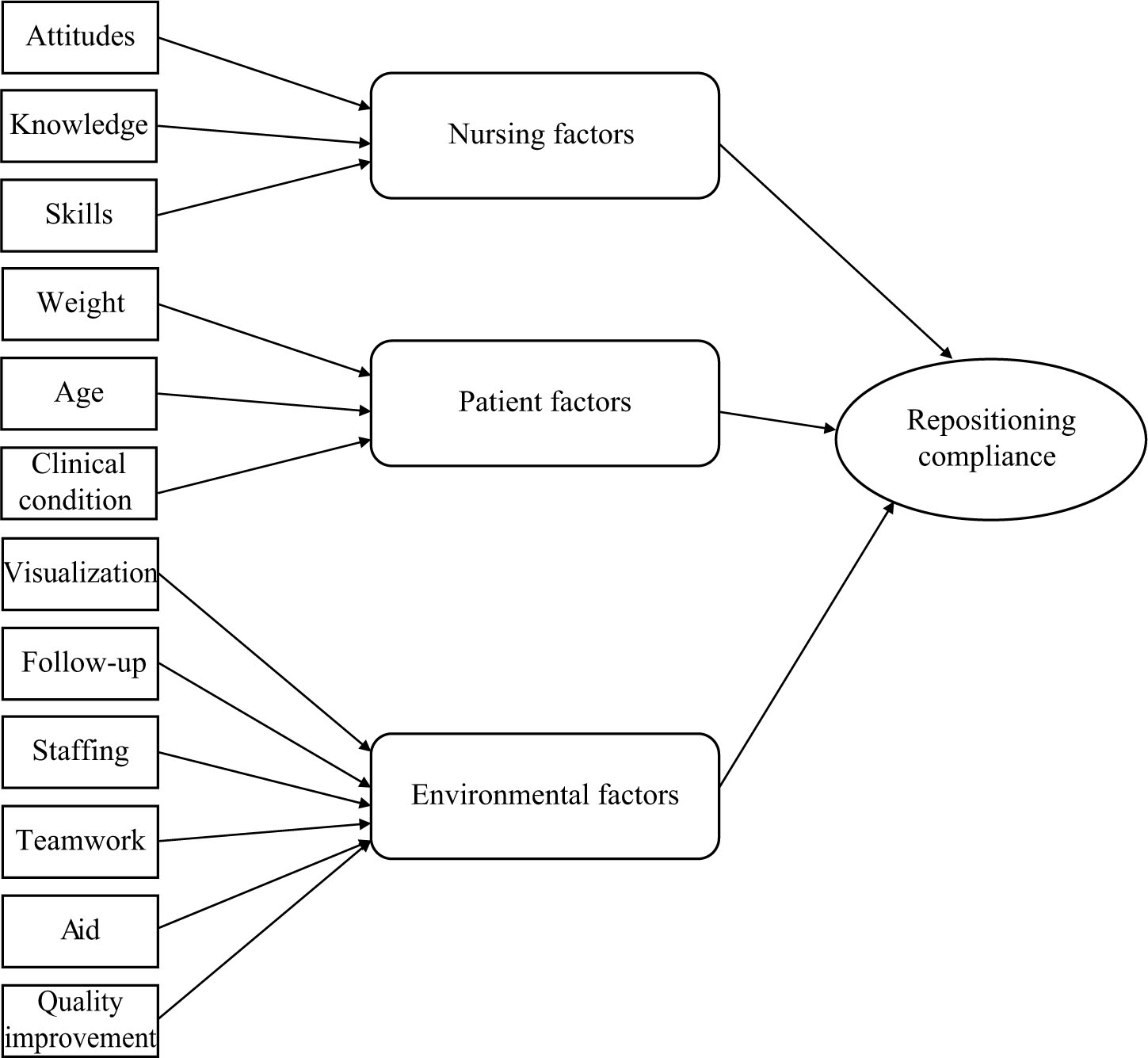
Figure 2
Presentation of the factors.