

1. Introduction
Nowadays, many countries strive to implement a knowledge-based economy in which innovation, defined as “the use of new ideas, products or methods where they have not been used before” (Eurostat, 2024), is the main impetus for economic development. And there is a growing body of literature that recognizes the importance of cities in this context. Sobolewska (2018), among others, noted that since the beginning of their existence, cities have served as incubators for the broadly understood idea we call innovation, and urban centers seem to have always been the driving force of economies.
Capital cities are an integral part of Regional Innovation Systems (RIS) (Yu et al., 2023). Perhaps, they are the most important parts of the systems because decisions made by the government, most often located within it, as well as local government activities, significantly affect other urban units in a given country, which often follow the example of the capital city. Even though, however, cities, especially capital cities, concentrate on various entities’ innovative activities, they are rarely analyzed in the literature. And if they are, the analysis is quite limited, either territorially (limited only to one country), or thematically, as will be presented later in the article. One cannot disagree with Florida et al. (2017, p. 8), who claimed that “the firm has been too much the centre of the literature on the geography of innovation and entrepreneurship and that it is time to put the city at the very centre. (…) the city, the region, and the place are not just the containers where innovation and entrepreneurship happen, they are the key mechanisms which enable them.”
It is also worth noting that an OECD report (2021) indicated that the appropriate use of innovation and data in cities can contribute to the greater well-being of their residents. And the EU’s Innovative Cities initiative, funded under Horizon 2020 and Horizon Europe for Innovative Cities, promotes an integrated vision for innovative urban planning and design in Europe that involves citizens as “city makers” who innovate and participate in governance and policymaking. Since cities are hubs that connect global networks of skills, knowledge, capital, public and private values, they are crucial for innovation (European Commission, 2020). Therefore, it was decided to assess the innovation of European capitals and cities in a broader context than has been analyzed so far using data from the European Regional Innovation Scoreboard (ERIS). Fischer et al. (2001), in an attempt to assess innovation in three European metropolises, pointed out that the transfer of knowledge related to innovation is embedded in socio-economic networks based on close interaction between people. It is through personal contacts, which may be of both formal and informal nature, that tacit (implicit) knowledge can be exchanged. Obtaining it outside the city of the company’s headquarters has a much higher cost than within the city limits. The transfer of such knowledge is facilitated by a relaxed atmosphere and looser interactions between people. However, the ERIS study lacks this dimension of interpersonal interaction and the culture of society’s openness to innovation. The adopted research convention is in line with the trend of a broader analysis of innovation that can be observed in the literature on the subject (Łącka and Brzezicki, 2022; Wang et al., 2023).
This research aimed to assess the innovation level of European cities and capitals in a broader context, not only through the prism of hard data, but also through soft data influencing the innovation-friendly climate. Currently, the EU supports the innovation of cities through various programs and initiatives to foster smart, sustainable, and inclusive urban development. Besides Horizon, there are various types of funds like theEuropean Regional Development Fund, European Social Fund, or Cohesion Fund. Therefore, the authors decided to examine how this translates into the actual state of innovation. The research problem was to analyze whether the membership of a given country in the European Union (EU) affects the level of innovation in its capital.
The structure of the article enables the realization of this aim. It starts with a problem statement, reviewing existing literature, methodology, presenting results, and concluding with interpretations and recommendations. Using quantitative data from the ICI allows the article to analyze city-level innovation in Europe comprehensively.
2. Literature Review
A large and growing body of literature has investigated the level, determinants and importance of innovation at national and regional levels (López-Rubio et al., 2020; Narayanan et al., 2022). However, the authors use almost exclusively European Innovation Scoreboard data to evaluate RIS (Teirlinck and Spithoven, 2023) and NIS (Łącka and Brzezicki, 2021), especially when comparing between European countries, which is a fundamental research limitation. Most often, the groups that have the most significant impact on the innovation of a region or country include universities (Łącka and Brzezicki, 2023), enterprises (Rossetto et al., 2018; Saunila, 2020), scientific and research institutes (Brzezicki and Prędki, 2023), and science and research parks (Albahari et al., 2023). It should be stressed here that currently, one can observe a growing recognition of the significant role of two groups that cooperate with universities, i.e., scientific and research institutes and science and research parks (Theeranattapong et al., 2021). Only a few studies, however, address the analysis of urban innovation. One of the reasons for this is limited access to data at such a low level of aggregation, and the other one is a greater difficulty in formulating generalized results than in the case of regions or countries that cover a larger territorial area, or assessing regional decisions implemented by central or regional authorities.
The analysis of the evaluation of urban innovation with the determination of the level of innovation of each city applies only to China (Table 1). Apart from two exceptions (López-Ruiz et al., 2014; Penco et al., 2020), there have been no studies on other territorial areas (neither on other countries, nor comparisons of cities between countries).
Table 1
Literature review on cities’ innovation research(Source: Own elaboration)
| Authors | Topics | Country | Cities | Period |
|---|---|---|---|---|
| Liu et al. (2024) | Green Innovation | China | 284 | 2005–2020 |
| Wang et al. (2023) | Ecological Efficiency, Ecological Innovation, Residents’ Well-Being | China | 92 | 2013–2019 |
| Yu et al. (2023) | Agglomeration and flow of innovation | China | 283 | 2004–2017 |
| Wu and Fan (2023) | Green Innovation | China | 34 | 2011–2020 |
| Guo et al. (2023) | Green Innovation, urban innovation ecosystem | China | 71 | No inform. |
| Yao et al. (2022) | Green Innovation | China | 110 | 2006–2020 |
| Zhang et al. (2022) | Urban innovation chains | China | 21 | 2020 |
| Wang et al. (2021) | Innovation from within cities to between cities | China | 285/75 | 2003–2017 |
| Wang et al. (2021) | Green Innovation | China | 8 | 2012–2018 |
| Zeng et al. (2021) | Green Innovation | China | 26 | 2011–2017 |
| Fan et al. (2020) | Collaborative innovation between cities | China | 283 | 2003, 2016 |
| Penco et al. (2020) | Knowledge-based urban environments and entrepreneurship | Europe | 60 | 2013–2016 |
| López-Ruiz et al. (2014) | Knowledge-city index construction: An intellectual capital perspective | Europe | 158 | 2009 |
It is worth noting that much of the existing literature on city innovation pays particular attention to the issues of green innovation; the topic of cooperation between cities on innovation and the cities’ innovation has also been analyzed, although to a much lesser extent.
And so, Guo et al. (2023) showed a positive correlation between high openness of the cities and their green innovation efficiency. Moreover, they pointed out that it is impossible to increase the efficiency of green innovation in a city if every innovation factor performs poorly. Zhang et al. (2022) divided the urban innovation chain into the following three stages: primary, technological, and innovation transformation. The capacity of the urban innovation chain had a positive impact on city innovation. The authors noted that when overall urban innovation performance was highest, the contribution of the original innovation creation capability was much greater than that of the other two innovation chain capabilities. An appropriate innovation chain, therefore, promotes the development of strategic emerging industries in the initial phase of innovation creation.
Yao et al. (2022) showed that there are spatial and temporal differences in the effectiveness of green innovations in the Yangtze River Economic Belt. Moreover, they noted that the efficiency of green innovations in the analyzed region showed the following “increase-decrease-growth” trend until finally gradually approaching a single equilibrium point. This means that in the initial phase, innovations will be dynamically developed. Under the influence of market verification, there is a decline and survival of the best of them, and then, an increase resulting from renewed interest in innovations and the implementation of a more effective innovation chain until the market situation stabilizes. The results of the research presented by Wang et al. (2021) show that the effectiveness of collaborative innovation in Chinese cities was increasing. It was noticed that the efficiency of “from research to production” is much higher than “from science to research.”
Fan et al. (2020) analyzed intra-regional and interregional collaborative innovation. The authors indicated that both intra-regional and inter-regional innovations based on cooperation promote regional innovation, but it is internal factors that mainly influence the regional effectiveness of innovation. In contrast, intra-regional collaborative innovations promote local innovation and innovation efficiency in other regions. However, its impact on the local region is higher than that of other regions. Moreover, it was noted that there was a time lag in promoting regional innovation efficiency based on cooperation and interaction between innovations.
It is worth noting that López-Ruiz et al. (2014) proposed a novel methodology for measuring intangible capital in European cities as the ability of knowledge cities to grow based on intellectual capital using a composite index of seven intangible factors divided into 19 dimensions with 73 different indicators. However, it should be noted that the authors focused on a narrow area related to innovation, which significantly limits its application. The authors themselves indicated that the proposed model required further in-depth research. However, the research of López-Ruiz et al. (2014) has revealed that a set of relevant data that can better illustrate and capture the difference in the level of innovation of different territorial units is still being sought.
A similar study was conducted by Penco et al. (2020), who, using a sample of 60 cities, including all capital cities in the EU and 32 non-capital cities in the EU that are considered important knowledge centers, attempted to answer the following question: Does the knowledge city environment stimulate entrepreneurship? Unlike other studies, they used a variety of data sources. They adopted different evaluation perspectives, including the Economy and knowledge economy perspective (EKE), Environmental and infrastructural perspective (ENI), Social and talent-cultural perspective (STC), Urban innovation system perspective (UIS), and Entrepreneurship (ENT). Based on all perspectives, they developed a new innovative multidimensional index, namely, the Knowledge Based City Developing Entrepreneurship (KBCDE). The findings of Penco et al. (2020, p. 9) indicate that “The STC and the UIS dimensions are considered significant for constructing a strong knowledge-based urban environment. The knowledge-based urban environment results from a mix of ‘built-in asset’ factors connected to the multicultural and social environment, along with policy-related factors aimed at enhancing innovation and knowledge production. The findings reveal that a high KCBED score is a valuable predictor of ENT at the city level, confirming that a knowledge city environment stimulates the creation of new and innovative entrepreneurial activities.”
Qian (2016) emphasizes that cognitive, social, managerial, technical, and problem-solving skills foster high-tech start-up activity in U.S. metropolitan areas, highlighting the importance of practical skills over formal education. Similarly, Berger and Frey (2017) argue that new industries emerge where human capital is strong and where labor markets specialize in skill-intensive sectors. Together, these studies suggest that cities’ innovation capacity depends less on formal educational attainment and more on actual and applicable skills within urban communities.
To sum up, despite limited data on urban innovation, cities are seen as vital innovation hubs. Research also explores factors like knowledge agglomeration, green innovation, collaborative efforts, and the importance of human capital in fostering entrepreneurship and technological progress in cities. Different methodologies are proposed to measure innovation performance across regions and cities. This study poses two key hypotheses:
H1: EU capital cities exhibit higher innovation levels than capitals of non-EU European countries.
H2: Secondary cities in a country do not exhibit a significantly lower innovation level than their capital.
It is worth noting that the research concept proposed in the study partially fills the research gap identified by Shearmur (2012), who pointed out the need to examine how various environments, including urban ones, contribute to creating, developing, and marketing new ideas and products.
3. Methodology
This study draws on the 2024 Innovation Cities Index by 2ThinkNow (2024b), which evaluates cities’ innovation capacity using 162 indicators (2ThinkNow, 2024d) grouped into three categories: Cultural Assets, Human Infrastructure, and Connected Markets (Figure 1). These indicators cover aspects ranging from digital infrastructure and skills to entrepreneurship, cultural vitality, and urban mobility. Together, they provide a comprehensive framework for comparing the innovation performance of cities within and beyond the EU.
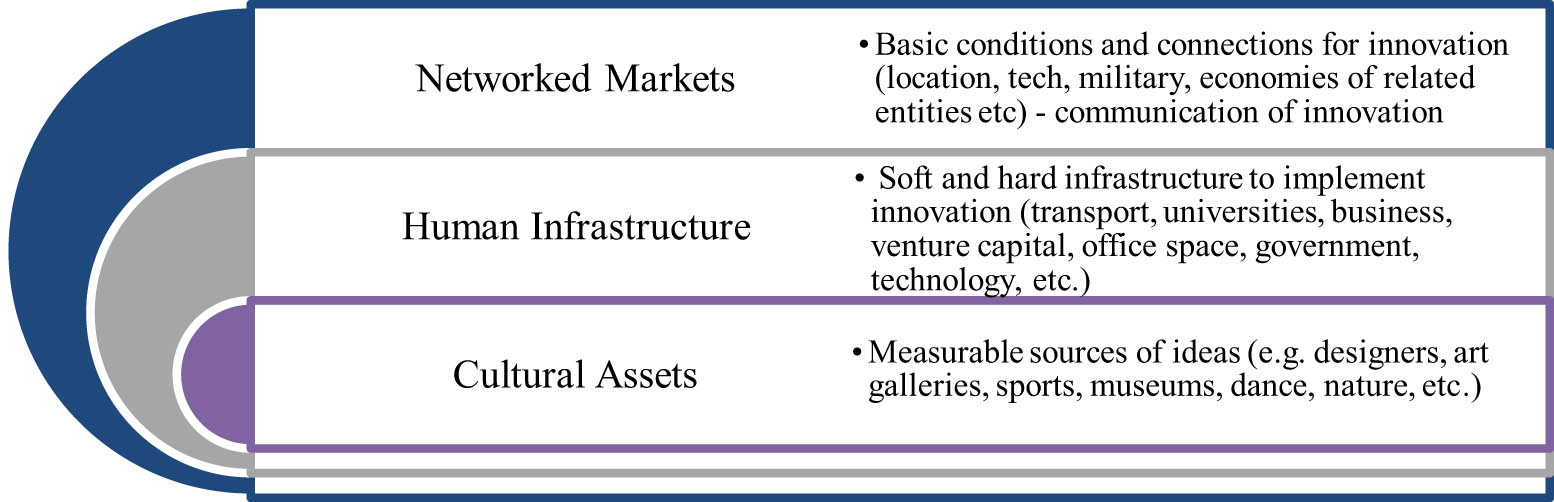
Figure 1
Cities in the Innovation Cities Index are scored for innovation on three factors
(Source: Own elaboration based on 2ThinkNow, 2024a)
The authors of the index indicate that such a wide range of indicators included in the study is related to the innovation process, which begins with the transformation of ideas and ends with implementations and communicating to the public through various marketing communication channels about the appearance of new, innovative products and services. Those indicators can be used by a wide range of stakeholders, including city planners, government agencies, businesses, and investors. These groups can leverage the data to make informed decisions about urban development, innovation strategies, infrastructure investments, and economic growth initiatives. This article includes only the latest data from 2023. The selection of objects for research was purposeful. The authors concentrated on European cities. Among them, 25 are the capitals of countries belonging to the EU (Figure 2) and the 9 capitals of the remaining non-EU members (Figure 3). A total of 139 European cities, for which adequate data were available, were included in the study (Figure 5). The study consisted of statistical analysis of the obtained results, starting from data selection, through their multivariate grouping and comparison. As noted earlier, in the construction of the ICI synthetic index, more than 160 variables are used, consisting of: Cultural Assets, Human Infrastructure, and Networked Markets.
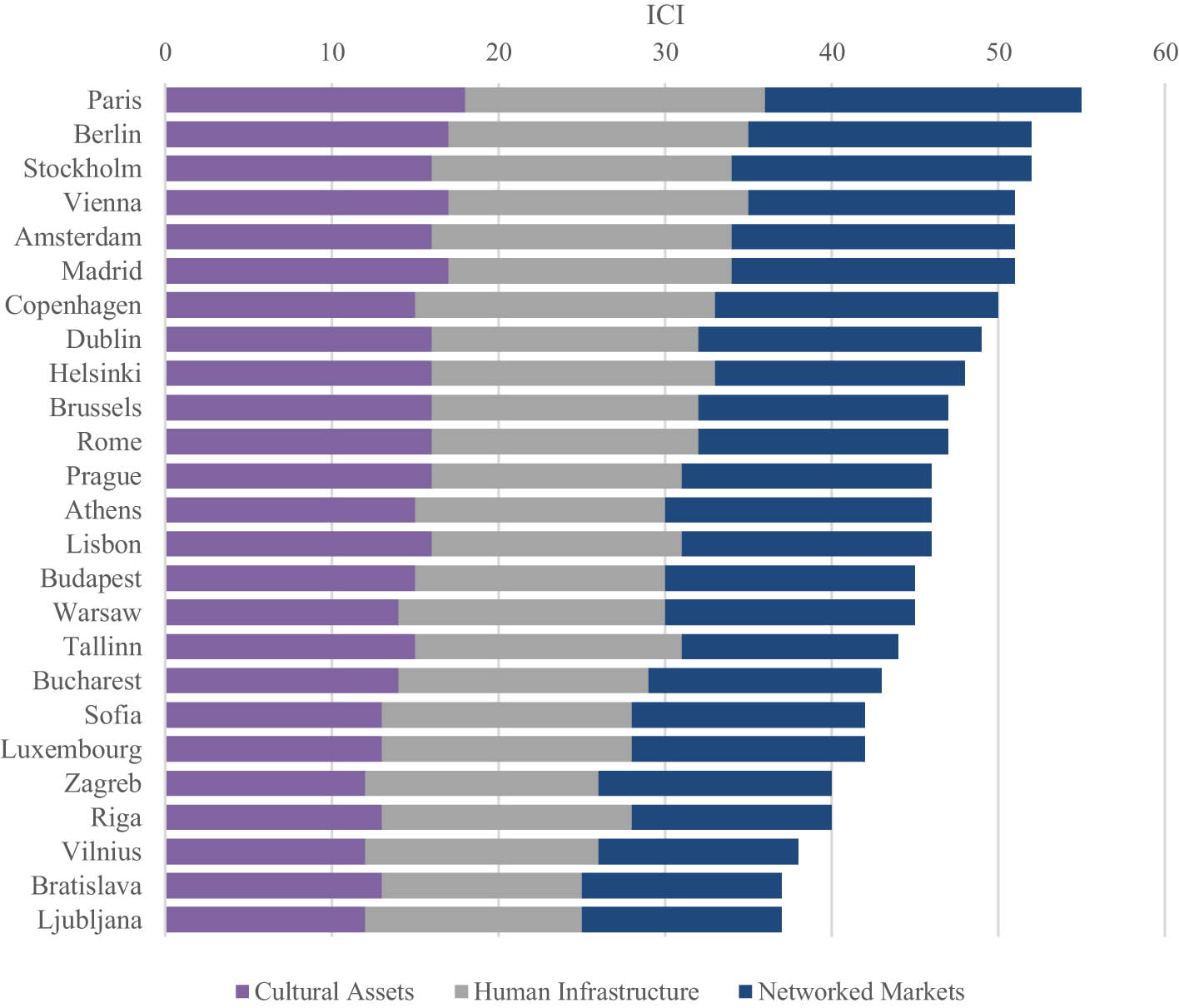
Figure 2
Innovation performance of European Union capitals in 2023
(Source: Own elaboration based on 2ThinkNow, 2024c)
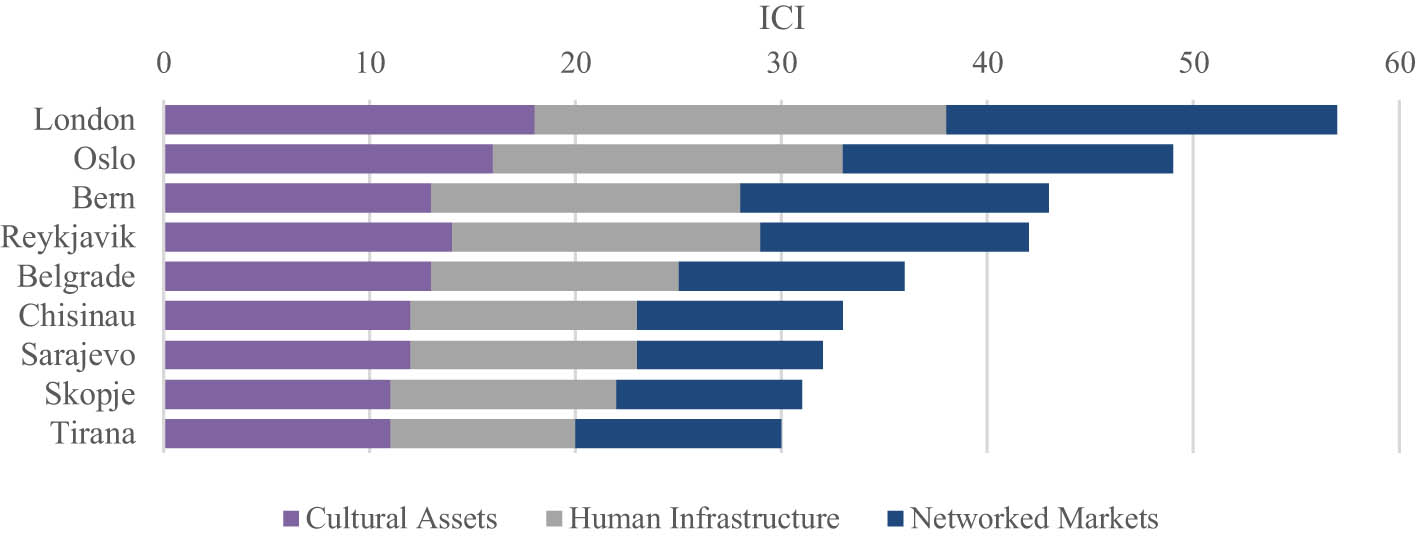
Figure 3
Innovation of non-EU capitals in 2023
(Source: Own elaboration based on 2ThinkNow, 2024c)
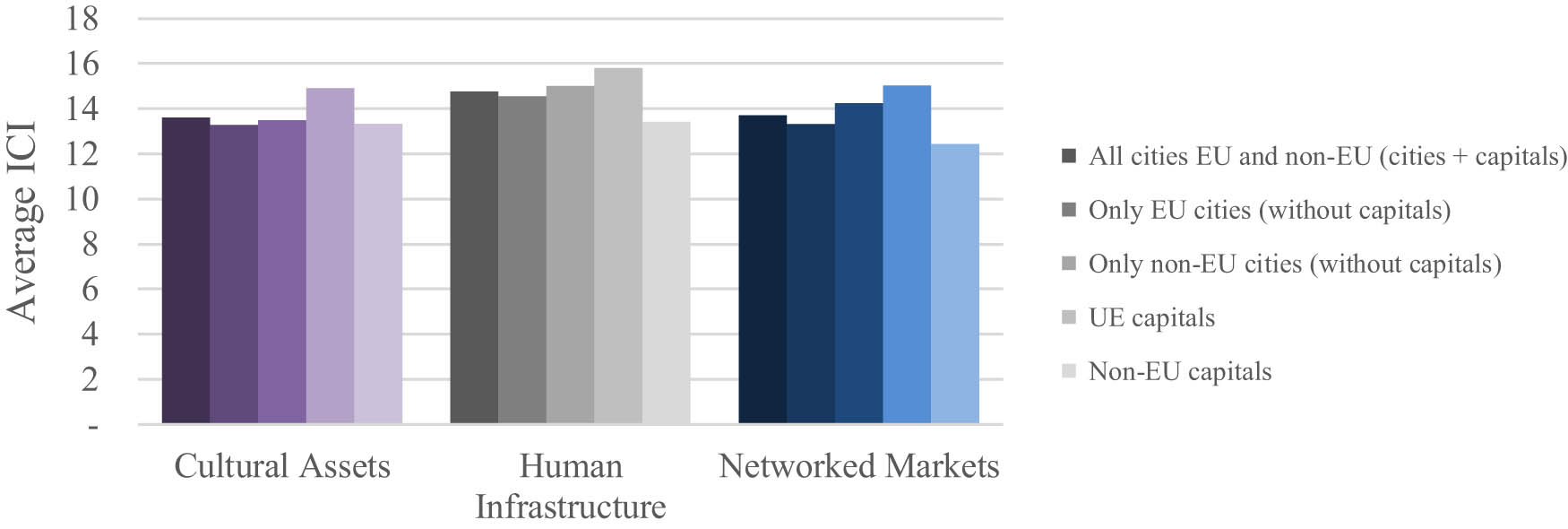
Figure 4
Ranking of innovative cities in Europe in 2023 (places 1–139)
(Source: Own elaboration based on 2ThinkNow. 2024c)
4. Results
The overall results reveal that human infrastructure is the most prominent component in EU capitals, with top values in cities like Stockholm, Amsterdam, and Berlin (Figure 2), while London leads among non-EU capitals (Figure 2). This means that in these capitals, with regard to other EU capitals, the soft and hard infrastructure conducive to the growth of innovation was best developed. In Berlin alone, there are four state universities (the Free University of Berlin, Humboldt University of Berlin, Technical University of Berlin, and Berlin University of the Arts) and seven clusters of excellence, four art colleges, seven vocational colleges, about 30 private universities, and more than 70 non-university research institutions.
In the case of non-EU capitals, London was the only European capital for which the Human Infrastructure component took the maximum value. London’s infrastructure plan presents a holistic approach to areas such as transportation, including green infrastructure, water and energy services, housing, digital connectivity, social infrastructure, and the circular economy. User-oriented innovation and research projects are supported by various sensors, the Internet of Things (IoT), and Wi-Fi services (Feher and István, 2020).
In the next step of the analysis, the average values of three components were calculated: (1) in total for selected cities and capitals of countries belonging to and outside the EU (139 cities and 34 capitals), (2) for selected cities of EU countries (excluding capitals), (3) for selected cities from non-EU countries (excluding capital cities), (4) for capitals of EU countries and (5) capitals of non-EU countries, in 2023. On average, all analyzed groups achieved the highest value by the Human Infrastructure component. It is worth emphasizing that the highest average value was for the group consisting only of the capitals of EU countries and the lowest average value for the group consisting only of the capitals of non-EU countries (Figure 4).
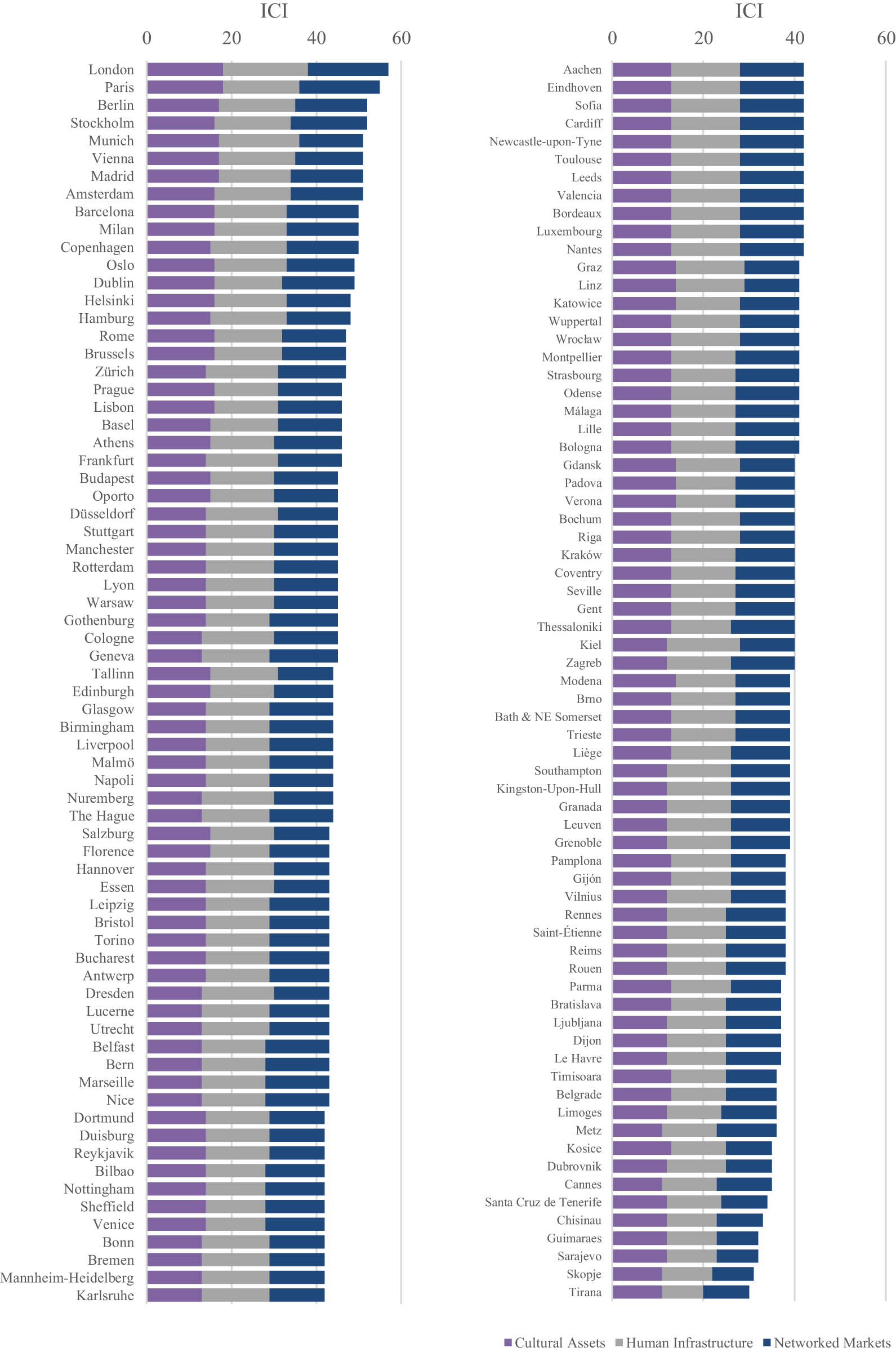
Figure 5
Level of the three main innovation drivers in each group of European cities and capitals in 2023
(Source: Own elaboration based on 2ThinkNow, 2024c)
It is worth noting that for non-EU countries, the average values of the three analyzed components took on higher values in cities that did not have capital status, which means that they were more innovative in 2023. This was particularly true for Switzerland, where all cities included in the study achieved a higher ICI value than Bern. These cities are: Zurich, Basel, Geneva, and Lucerne. Basel, for example, borders France and Germany, which gives it an international standing. Key companies in the financial and logistics sectors, as well as the pharmaceutical industry, including Roche, Novartis, Syngenta, and Actelion, shape the city economically and urbanistically. Zurich, in turn, offers more than 300,000 jobs that attract people from all over German-speaking Switzerland. Zurich’s major financial players (UBS, Credit Suisse, Zurich Insurance, and others) are global industry leaders. The high reputation of knowledge institutions (most notably ETH Zurich) and excellent international connections to Zurich-Kloten Airport have made Zurich one of Europe’s most innovative and cosmopolitan cities for many years.
For EU countries, the average values of Cultural Assets, Human Infrastructure, and Networked Markets were higher for their capitals than for other selected cities. This finding confirms that EU capital cities exhibit higher innovation levels than capitals of non-EU European countries (H1). The leading result for the current non-EU capital, London, may be due to its financing from EU funds before 2020 (before Brexit). The largest disparities between the capital and other selected cities were in Germany and France. Thus, the second hypothesis (H2: Secondary cities in a country do not exhibit a significantly lower innovation level than their capital) was rejected.
In the next step of the analysis, a ranking of European cities (including capitals) was prepared on the basis of the ICI index (Figure 5). Among the 10 most innovative European cities in 2023 were London (UK), Paris (France), Berlin (Germany), Stockholm (Sweden), Munich (Germany), Vienna (Austria), Madrid (Spain), Amsterdam (Netherlands), Barcelona (Spain), Milan (Italy), and Copenhagen (Denmark). This means that the group mainly included the capitals of EU countries. On the other hand, the least innovative cities in 2023 included Kosice (Slovakia), Dubrovnik (Croatia), Cannes (France), Santa Cruz De Tenerife (Spain), Chisinau (Moldova), Guimarães (Portugal), Sarajevo (Bosnia and Herzegovina), Skopje (Northern Macedonia), and Tirana (Albania).
In line with the similar innovation of capitals and cities observed in a given country, it was decided to examine the mutual relations between these agglomeration units. In order to carry out this research stage, the countries with the largest number of cities included in the study were selected first. Nine countries with the largest number of cities, i.e., from 22 to 5 territorial units, were qualified for the final research stage.
The cities in a given country were ranked in descending order according to the overall innovation score. The two most innovative cities and the country average of the ranking results are presented in Figure 6. It was observed that out of nine countries, in as many as seven cases, apart from Italy and Switzerland, the capitals of the countries were in the first place in the ranking in a given country. It is possible that, in part, these results may be due to the large impact of the local provision of key enabling technologies (KETs) in these territorial units. According to a study by Montresor et al. (2023, p. 851), “KETs therefore appear to be ‘enabling’ of technological innovations that are unique in recombination across the board. However, KETs promote ‘new-to-the-region’ innovations more than ‘new-to-the-world’ innovations, representing a policy leverage to which regions could resort in targeting the local replication of technological advancements already present at the global frontier for some time.” A study by MacDonald and Selmanovic (2024), on the other hand, suggests that the knowledge spillover effect quickly disappears at distances of 30–80 km. This may indicate, on the one hand, that innovative activities and decisions made locally very rarely translate to a broader territorial area. On the other hand, the nature of innovation is actually not as significant as it may seem from the perspective of local policymakers. Only a handful of cities, and mostly the capitals of countries, can achieve significantly more benefits than other territorial units.
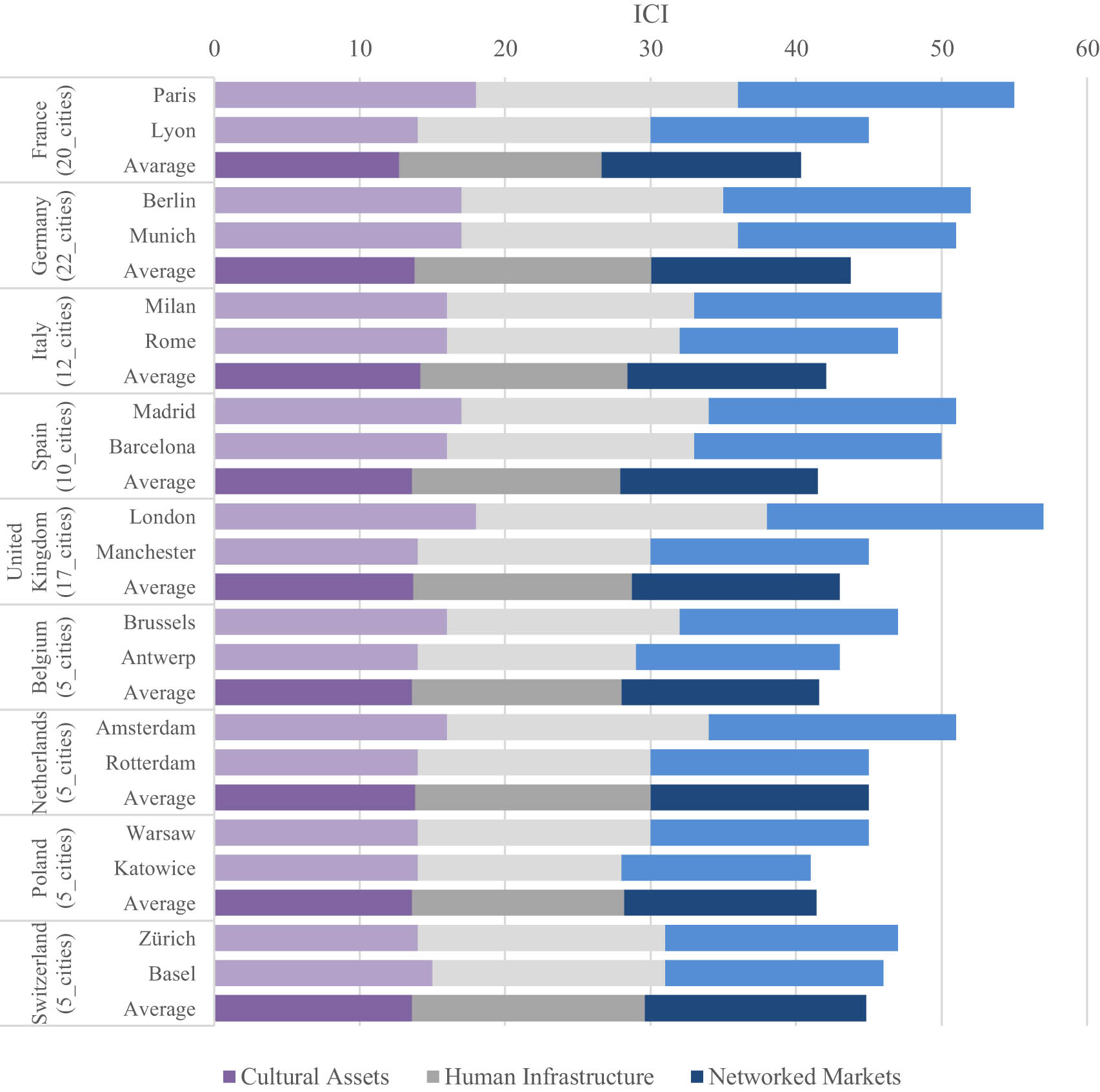
Figure 6
Ranking of city innovation in the countries with the most cities in 2023 (the two most innovative cities and the country average)
(Source: Own elaboration based on 2ThinkNow, 2024c)
It was noted that there are two groups of countries where either the capital’s score is significantly higher than the second-ranked city, or the differences between them are small. In the case of France, the United Kingdom, the Netherlands, Belgium, and Poland, the differences between the first and second place in the ranking are large. In contrast, in the case of Germany and Spain, they are small.
Small differences in innovation indicators between cities in a country may indicate a more even development of urban agglomerations (a kind of innovation convergence effect), as well as a need to quickly change the direction of development in the territorial space in a given country to alternative locations, if necessary. In this case, countries should be more resilient to external shocks such as the COVID-19 pandemic and economic shutdown, as the negative effects are spread evenly across all cities, unlike in countries where the capital city plays a dominant role.
5. Discussion
The analysis of the Innovation Cities Index (ICI) reveals several key insights regarding innovation performance in European capitals and cities. First, the Human Infrastructure component consistently scores the highest across EU and non-EU capitals, underscoring the critical role of soft and hard infrastructure in fostering innovation. Notably, cities like Berlin, Amsterdam, Stockholm, and London excel in this area, driven by robust educational institutions, research clusters, and urban infrastructure. The dominance of these capitals in the rankings is consistent with existing literature, which emphasizes the role of human capital and institutional networks in innovation development.
A comparison of the results of our analysis with the results of the analysis entitled “European Innovation Capital (iCapital)” (European Innovation Council, 2024) indicates that the European innovation plebiscite, to some extent, influences the level of innovation of European cities in our ranking. In 2023, Lisbon was the most innovative capital, while Warsaw ranked second. It is worth noting that when thinking about urban innovation, air pollution should not be forgotten, as according to research (Song et al., 2023), poor air quality lowers the level of innovation and contributes to the relocation of high-quality human capital to regions with cleaner air. It should be noted that Poland implemented a nationwide “Clean Air” program several years ago, which likely contributed to Warsaw’s runner-up title in the iCapital competition.
In the context of the conducted analysis, it is worth mentioning the results of research conducted by Han et al. (2023) in China regarding the program of awarding the honorary title of a civilized city to units that are a symbol of the city’s comprehensive ability to develop. It turns out that the program is highly successful as it has effectively improved the level of innovation in cities. The honorary title promotes the urban level of innovation by promoting the agglomeration of human capital, improving the level of computerization, and increasing investment in scientific and technological innovations. The results of Chinese studies indicate that comprehensive urban development contributes to greater innovation activity. The countries’ capitals, due to the wide range of different functions they have to fulfill, are, in a way, the most privileged group of territorial units where the greatest diffusion of innovation activities takes place.
In most cases, national capitals lead over other cities in a country in terms of innovation. This may be because they have an advantage in natural, economic, and social factors, which, according to the literature (Zhang et al., 2023), are the three main determinants of innovation and urban development.
Dai et al. (2023), indicated that in Chain, the city’s level of administrative development (including institutional status) and investment in research and development are the strongest factors influencing innovation. These conclusions are in line with the results of a study conducted by Makkonen and Mitze (2024), which indicate that firms located in urban regions have been more successful in applying for competitive public funding for research, development, and innovation than firms in rural areas. Intraregional and interregional linkages are also worth noting – as Cao et al. (2022) showed, they have an inverted U-shape and a positive relationship with urban innovation capacity, respectively. The many and varied interactions between institutions, businesses, and people of both formal and non-formal nature result in an increased array of information transmission channels. Also, it increases the likelihood of generating new knowledge by merely combining several facts into a coherent theoretical framework or inspiring the search for a different solution to a given problem, fostered by more loose contacts and the free exchange of ideas among community members.
In summary, the results highlight the importance of human infrastructure, international connectivity, and urban planning in shaping a city’s innovation potential. Capitals continue to lead in innovation, but non-capital cities, particularly in non-EU countries, show strong potential for innovation leadership, suggesting the need for a more nuanced understanding of regional innovation dynamics. These findings have important implications for policymakers aiming to promote balanced and resilient innovation ecosystems across both capital and non-capital cities.
6. Conclusions
The study results indicate that EU member states’ capitals achieve higher levels of innovation than other capitals, which means that the first hypothesis (H1) was confirmed. This is probably partly the result of initiatives undertaken within the EU to meet the challenge of sustainable urbanization by programming research and innovation in cities (Bylund, 2020). It should be noted, however, that our research shows that countries that once belonged to the EU or have agreements on close cooperation with the EU, even though they do not belong to the community, achieve a higher level of innovation in their capitals than other non-EU capitals.
The results of our study indicated that there are two groups of countries in which the difference between the innovation performance of the capitals, relative to the second city in the ranking, is either large or small. Therefore, the second hypothesis (H2), relating to inferior differences between the capital and other cities in a country, was rejected. In the case of large differences, analogies can be drawn with the results of the study carried out by Dai et al. (2023), who pointed out that China’s capital city plays a dominant role in the country and significantly affects the level of innovation of other cities. The results of Lee and Rodríguez-Pose (2014) suggest that companies in regions with a high share of employment in creative industries are much more likely to introduce entirely new (innovative) products and processes than companies operating in other regions. Companies in other places create new products and processes, but these are not innovations, only new developments within a given company. The presented results indicate that the research convention adopted in this study, which goes beyond the standard ERIS approach to examining innovation, better suits the contemporary realities of innovation processes taking place in cities.
The ranking of the top ten innovative cities in Europe, dominated by EU capitals, aligns with the observation that urban centers, particularly capitals, serve as incubators for innovation. These findings reinforce the argument that the concentration of knowledge, infrastructure, and institutional support in capital cities makes them natural leaders in innovation. The significant innovation gap observed between the most and least innovative cities, such as London and Tirana, further underscores the uneven development of innovation across Europe. The empirical and cognitive value of this study lies in the various factors that build urban innovation, demonstrated in the course of primary and secondary research.
Although this research filled the research gap found, it also has its limitations, which should be addressed in future analyses. The study used only one source of data. It was an alternative to previous studies and, as such, was a valuable basis for generating new knowledge. Nevertheless, one should bear in mind that there are also other sources of relevant data, e.g. OECD (2021), Global Innovation Hubs Index (Center for Industrial Development and Environmental Governance, 2020), European Digital Social Innovation Index (Nesta, 2019). The Cities of the Future Index (EasyPark, 2021), which should be used in the future. Incorporating qualitative methodologies in future studies may enhance the analytical depth and provide a more nuanced understanding of the interpersonal and cultural dimensions of urban innovation. In the future, the research should also address the topic of smart cities, the concept of which goes much beyond innovation (Bitkowska et al., 2020). The concept is to use the relationship between human and social capital and modern information and communication technologies in order to create sustainable economic growth of the city, which affects the well-being and improvement of the quality of life of its inhabitants.
The findings of this study offer practical guidance for urban policymakers aiming to foster innovation ecosystems. Emphasis should be placed on strengthening human infrastructure and promoting balanced development across cities to enhance resilience and innovation diffusion. Future research could explore longitudinal changes in city-level innovation, integrate alternative data sources such as the OECD or Global Innovation Hubs Index, and examine the role of smart city initiatives. A mixed-methods approach, combining quantitative indices with qualitative insights, may provide a more nuanced understanding of urban innovation dynamics.
Funding Information
Authors state no funding involved.
Conflict of Interest Statement
Authors state no conflict of interest.