

1. Introduction
Entrepreneurship significantly drives economic dynamics by fostering innovation, creating employment opportunities, enhancing competition, and elevating community welfare. Business or enterprise development activities are pivotal in this regard (Bacq, et al., 2022; Md Saad, et al., 2022; El Amine Abdelli, et al., 2023; Doan, 2024). Micro, small, and medium enterprises (MSMEs) play an important part in Indonesia’s economy, providing 61.07% of the national gross domestic product (GDP), equivalent to IDR 8,573.89 trillion annually. These enterprises employ 97% of the Indonesian workforce, highlighting their critical role in job creation and in mitigating poverty and unemployment. In addition, MSMEs account for 60.4% of the total investments and 15% of the country’s exports, underscoring their significance in stabilizing the domestic economy and enhancing global trade engagements (Prasetyo, 2020; Prijadi, et al., 2020; Susan, 2020; Saputera, et al., 2021; Abduh, et al., 2024).
MSMEs represent a vital component of Indonesia’s economic structure. With an estimated 64.2 million MSMEs across the nation, these businesses account for approximately 60.6% of the national GDP. In addition, MSMEs are key in providing employment opportunities, with a workforce absorption rate reaching 97% (Gandhi, Nurcahyo and Gabriel, 2021; Abduh, et al., 2024). In East Java, small-scale clothing industries have developed from home-based businesses to significant market players, exporting products internationally (Alfin, 2015). The textile industry, a major contributor to the fashion sector, is also a significant source of environmental waste, notably through its use of synthetic dyes (Manzoor and Sharma, 2019; Singha, et al., 2021; Abdelrahman and Khattab, 2021; Yousaf and Aqsa, 2023; Junita, et al., 2024; Qianwen, et al., 2024; Ramamurthy, et al., 2024). The fast fashion trend, which prioritizes production speed and cost reduction, has led to increased waste and environmental degradation (Mukherjee, 2015; Niinimäki, et al., 2020; Subramanian, et al., 2022; Wren, 2022; Ting and Stagner, 2023; Anisah, et al., 2024; Seidu, et al., 2024).
The green industry strives to integrate industrial advancement with environmental sustainability, delivering advantages such as decreased CO2 emissions and enhanced energy efficiency (Apriyanti, et al., 2018). Industries are increasingly motivated to implement green practices as a strategic approach to enhance their corporate reputation, a critical driving force in their adoption (Mardika Putra, et al., 2020). The Indonesian government implemented green industry standards under Act No. 3/2014, with the Ministry of Industry providing implementation guidance. These standards are designed to reduce resource consumption and emissions, thereby fostering sustainable industrial practices. In Surabaya, the local government has identified medium-sized enterprises to implement green industry principles. These enterprises receive technical support to achieve full compliance with green standards, serving as pilot projects to promote widespread adoption across the sector (Pradhita, et al., 2020). The concept of industrial symbiosis, where waste from one industry is reused as raw material for another, is being explored. This strategy aims to create a network of industries that efficiently manage waste and resources, contributing to a sustainable industrial ecosystem (Anityasari and Rachmat, 2015).
An innovative approach to mitigating the environmental impact of textile production is the ecoprint technique, which utilizes natural materials for dyeing through processes such as pounding, steaming, and boiling. This method offers a unique, creative, and sustainable solution within the fashion industry, transforming natural resources into high-value artisanal products, thereby presenting a novel and exclusive business opportunity (Gupta and Dave, 2021; Priya, et al., 2021; Nurmasitah, et al., 2022; Pratiwi and Sulistyati, 2022; Wahyuningsih, et al., 2022; Sholikhah, et al., 2022, 2023; Andajani, et al., 2023; Risnasari, et al., 2024;). According to the Indonesian Ecoprinter Association (AEPI), there are 1,502 ecoprint MSMEs in Indonesia, with 245 located in East Java and 126 in Gerbangkertosusila. Within MSMEs in Gerbangkertosusila, ecoprints have emerged as a growing sector that blends eco-conscious production with local cultural heritage. This sector has gained attention due to the rising consumer demand for sustainable products, making it an ideal setting for exploring green marketing strategies and consumer behavior.
Green advertising aims to highlight the environmental benefits of eco-friendly products, thereby encouraging their adoption among consumers. Previous studies have demonstrated that such advertising can significantly boost consumers’ intentions to buy green products (Bi, et al., 2023; Obaid and Rashid, 2024; Soomro, et al., 2025). This effect primarily stems from the influence of green advertising on perceived value and the development of favorable attitudes toward environmentally responsible products (Bi, et al., 2023; Yu, 2023). Furthermore, green advertising contributes to shaping various dimensions of perceived value (Essiz and Senyuz, 2024; Wang and Musa, 2024).
Environmental knowledge (EK) is defined as an individual’s comprehension and awareness of ecological issues and related concepts (Ren, et al., 2021; Xie and Lu, 2022; Sinha and Annamdevula, 2025). Consumers with greater environmental awareness and a positive perception of a company’s green image tend to show stronger preferences for eco-friendly products (El Nemar, et al., 2022). However, the effect of EK on pro-environmental behavior is often mediated by additional factors such as perceived value (Kumar, et al., 2019). Specifically, environmental awareness enhances perceived value, which in turn fosters environmentally responsible behaviors (Du, et al., 2020).
The concept of green perceived value (GPV) plays a crucial role in determining consumers’ intentions to purchase green products. When consumers perceive higher value in eco-friendly offerings, their willingness to buy these products increases (Cheung, et al., 2015; Wang, 2017; Nguyen Tran Cam, 2023). Moreover, social influence can amplify this relationship. Social norms and peer behaviors can elevate the social value consumers associate with green products, thereby enhancing purchase intentions. Strong social influence not only reinforces perceived advantages, but also mitigates the perceived risks associated with buying green products (Le, et al., 2024; Wang, et al., 2024, 2025).
EK and green advertising impact green purchase decisions using GPV as a mediating variable. This research advances green marketing and consumer behavior. The study examines the ecoprint industry among MSMEs in Gerbangkertosusila, Indonesia, to investigate local customer behavior and market circumstances. The research proposes an integrated model for eco-conscious decision-making by evaluating how these elements affect sustainable purchase habits.
This study helps explain the green buying decisions of MSMEs and supports organizations in developing effective green marketing strategies. The research also advances sustainable consumer behavior discourse. It provides a localized perspective on the ecoprint segment in Gerbangkertosusila to help MSMEs in similar growing markets adopt more sustainable and consumer-aligned strategies.
2. Literature Review and Hypothesis Development
2.1. Environmental Knowledge
EK encompasses more than just specific geographic or biological facts; it involves a broad understanding of the biophysical environment (Duvall, 2020). This knowledge also includes human discussions on how we interact with the environment, recognizing, interpreting, and taking actions to protect or enhance environmental health (Zareie and Jafari Navimipour, 2016). It is acquired through direct interaction with the environment, cultural exchange, and formal education, passed down through generations via adaptive processes and cultural transmission (Harrington, 2015; Bocco and Winklerprins, 2016).
The importance of EK for sustainable development lies in its ability to provide a comprehensive perspective on the biophysical world, supporting decisions related to resource management (Duvall, 2020). It is essential for identifying, diagnosing, and addressing environmental challenges and for informed governance (van der Molen, 2018). Various factors shape EK, with demographic factors such as age and education having a significant impact, while income and gender tend to have a lesser effect. The cultural and social context also influences EK, as it varies among communities, often shaped by local customs, traditions, and labor experiences. Furthermore, economic development plays a critical role, as research indicates a negative correlation between ecological knowledge and income levels, with more industrialized regions generally displaying lower environmental awareness. These factors collectively shape the scope and nature of EK within different groups (Pilgrim, et al., 2008; Orr and Hallmark, 2014; García-Jiménez, et al., 2022).
EK is vital for cultivating positive environmental attitudes, which in turn affect eco-friendly behavior. However, simply possessing knowledge may not directly result in green purchase intentions. Rather, it works through intermediary factors such as perceived value. Perceived value, which encompasses health, emotional, image, and environmental benefits, is essential in bridging the gap between EK and sustainable actions. It plays a key role in shaping positive attitudes and behaviors toward the environment, thus encouraging green purchasing decisions.
As individuals cultivate a deeper understanding of ecological issues, they increasingly tend to prioritize actions that reflect environmental responsibility. The understanding of environmental factors profoundly shapes perceived value, subsequently guiding behavior. For example, individuals with a heightened consciousness regarding environmental issues tend to be more receptive to adopting sustainable practices (Du, et al., 2020; Ren, et al., 2021; Dutta, et al., 2022). The perceived value acts as a mediator, enhancing the influence of EK on pro-environmental behaviors (Du, et al., 2020; Ren, et al., 2021; Xie and Lu, 2022; Sinha and Annamdevula, 2025). Within the framework of sustainable procurement, the perceived value serves as a mediator in the connection between environmental awareness and purchasing intentions. For instance, heightened environmental consciousness within the fashion sector enhances perceived value, encouraging Generation Z to opt for sustainable purchasing decisions (De Jesus, et al., 2024). As a result, the subsequent hypotheses were put forth:
H1: EK influences GPV.
H3: EK influences green purchase decision mediated by GPV.
2.2. Green Advertising
Green advertising refers to a marketing approach that emphasizes the environmental advantages of products or services to attract consumers who are environmentally aware. It forms an integral part of green marketing, which seeks to reduce environmental harm and encourage sustainable consumption patterns (Pillai and Jothi, 2020; Nayak, et al., 2024). The main aim of green advertising is to convey a company’s environmental efforts, establish trust, educate consumers, and promote engagement. For green advertising to be impactful, it must combine functional, emotional, and experiential components to enhance consumer interaction and experience (Kumar, et al., 2019). Popular green advertising techniques involve utilizing ecolabels, highlighting the environmental benefits of products, and ensuring sustainability throughout their lifecycle (Kaur, et al., 2024). Advertisements that are well crafted and compelling tend to capture consumer attention more effectively and encourage pro-environmental actions (Shen, et al., 2020). With rising awareness of environmental issues, green advertising significantly influences consumer purchase intentions and fosters brand loyalty (Pancić, et al., 2023).
One of the primary obstacles in green advertising is overcoming consumer skepticism and maintaining the authenticity of environmental claims. To build trust and avoid accusations of greenwashing, companies must focus on transparency and honesty in their messaging. Over the last two decades, green advertising has undergone considerable evolution, with an increasing emphasis on sustainability and corporate environmental responsibility (Leonidou and Leonidou, 2015). The impact of green advertising can be strengthened by incorporating messages and visuals that highlight the ecological benefits of a product (Suttikun, et al., 2024).
Green advertising influences multiple aspects of perceived value, encompassing functional, social, emotional, conditional, and epistemic values (Wang and Musa, 2024). The influence of various promotional pricing strategies on consumers’ perception of value and their purchasing behavior is diverse. Individuals who prioritize environmental considerations are more likely to react positively to promotions framed in terms of gains, whereas those with lesser environmental concerns typically exhibit a greater susceptibility to promotions that emphasize loss avoidance (Weisstein, et al., 2014). The perceived value frequently serves as an intermediary between advertising, social influence, and the decisions made regarding purchases (Hewei, 2022). In light of this, the subsequent hypotheses have been put forth:
H2: Green advertising influences GPV.
H4: Green advertising influences green purchase decision mediated by GPV.
2.3. Green Perceived Value
Green perceived value (GPV) denotes the significance that consumers attribute to products, grounded in their ecological benefits. This notion is intricate, encompassing multiple fundamental elements. The functional value pertains to the tangible advantages of a product, encompassing its efficacy and efficiency. The significance of emotional value is linked to the affirmative sentiments – such as pride or joy – that emerge from the selection of environmentally sustainable products. The concept of social value encapsulates the notion that consumers perceive the utilization of environmentally friendly products as a pathway to gaining societal endorsement. Finally, the significance of environmental value highlights the immediate ecological benefits, including the conservation of resources and mitigation of pollution (Sangroya and Nayak, 2017; Woo and Kim, 2019; Wang, et al., 2021).
GPV significantly impacts consumers’ motivations to acquire sustainable products. The perception of increased value associated with green products significantly enhances the probability of their purchase (Cheung, et al., 2015; Wu, et al., 2024). To engage and retain environmentally aware consumers, it is imperative for businesses to improve every facet of GPV, encompassing functional advantages, emotional and social incentives, as well as the ecological footprint (Román-Augusto, et al., 2022). Informing consumers regarding the advantages of eco-friendly products can enhance their perceived worth and promote sustainable consumption practices (Chi, et al., 2021; Ng, et al., 2025).
Individuals tend to opt for environmentally friendly products when they recognize their inherent value (Nguyen Tran Cam, 2023; Alkhawaldeh, et al., 2024). Moreover, the perceived value plays a crucial role in shaping consumers’ readiness to pay a premium, as an elevated GPV frequently rationalizes increased pricing (De Medeiros, et al., 2016; Li, et al., 2019). Strategically implemented green marketing approaches that elevate brand perception and GPV play a crucial role in shaping consumer purchasing behavior. Moreover, the establishment of credible and authentic green claims is essential for fostering consumer trust and enhancing perceived value (Ng, et al., 2024). Effective green marketing strategies that enhance brand perception and GPV are key to influencing consumer buying decisions. Furthermore, credible and authentic green claims are vital for building consumer trust and increasing perceived value (Fatmawati and Alikhwan, 2021; Fang, 2024). In light of these observations, the subsequent hypothesis is put forth:
H5: GPV influences green purchase decision.
2.4. Social Influence
Social influence includes both deliberate efforts to change another individual’s beliefs or behaviors and inadvertent effects, where the recipient may remain oblivious to the attempt at influence. In ambiguous circumstances, individuals often look to the conduct of others to inform their own decisions and experience a compulsion to return kindnesses (Gass, 2015). Direct social influence manifests through explicit interactions, whereas indirect influence emerges from the accessibility of information regarding the actions of others, exemplified by online comments (Cheng, et al., 2015).
The concept of social value, encompassing the perceived societal advantages associated with the acquisition of environmentally sustainable products, is instrumental in influencing intentions to engage in green purchasing behaviors. The impact of this influence becomes particularly evident when one examines social norms and societal expectations. The influence of social norms is evident in their role in shaping consumer attitudes and perceptions regarding green products, thereby impacting purchasing decisions (Caniёls, et al., 2021; Wang, et al., 2024). The interplay of social influence, encompassing familial interactions and societal norms, can shape the connection between the perceived worth of eco-friendly products and consumer purchasing decisions. For example, research has shown a significant correlation between familial influence and environmentally conscious purchasing behaviors (Harahap, et al., 2018). Furthermore, the influence of cultural beliefs and regional contexts on the perceived value of green products can significantly shape purchasing decisions Click or tap here to enter text (Van Hoang and Tung, 2024).
Social influence plays a pivotal role in shaping intentions toward environmentally friendly purchases, fostering heightened awareness of sustainability and promoting green consumption behaviors (Gandhi and Sheorey, 2019; Joshi and Srivastava, 2020; Diep Le, 2021; Islam, et al., 2024; Le, et al., 2024). The influence of social norms and public opinion is crucial in molding attitudes toward environmentally friendly products and encouraging sustainable purchasing behaviors (Chen and Xia, 2020; Parashar, et al., 2021; Sun, et al., 2022). The environmentally friendly actions of colleagues in the workplace may subtly shape an observer’s choices regarding sustainable purchases, facilitated by an awareness of ecological concerns (Yao, 2024). The dynamics of social influence significantly shape the interplay between perceived value of eco-friendliness and consumer purchasing choices. For instance, the significance of social value and subjective norms can enhance the perceived importance of environmentally friendly products, consequently raising the probability of their acquisition (Yeoh and Paladino, 2013; Zhuang, et al., 2021; Wang and Musa, 2024). The impact of social influence is clear in the manner in which societal values and norms can mold the connection between perceived environmental value and consumer behavior, emphasizing the importance of social acceptance and peer pressure in driving ecofriendly purchasing choices (Parker, et al., 2023; Corbos, et al., 2024). In light of this, the subsequent hypotheses are put forth:
H6: GPV influences green purchase decision mediated by social influence.
H7: Social influence influences green purchase decision.
2.5. Green Purchase Decision
Choosing items that are considered ecologically sustainable is known as a “green purchase decision,” and it is impacted by the consumer’s assessment of the environmental effect of the product. Preference for environmentally friendly solutions, prioritizing sustainable alternatives, and a dedication to expanding the usage of environmentally responsible products are some of the factors influencing such selections (Nekmahmud and Fekete-Farkas, 2020).
Social norms and peer pressure play a major role in influencing customers’ decisions to purchase ecofriendly goods. In addition to wider societal standards, social pressures can originate from people’s intimate social circles, including friends and family (Atthirawong, et al., 2018; Nia, et al., 2018; Panda, et al., 2024; Sapsanguanboon and Faijaidee, 2024). In this decision-making process, the whole perceived value – which includes both price and benefits – is crucial (Atthirawong, et al., 2018). By emphasizing the environmental benefits of products, green advertising also significantly influences consumer purchasing behavior (Ramanust, et al., 2020; Ch, et al., 2021; Obaid and Rashid, 2024). Peer pressure and social influence are significant factors in green buying decisions, and marketing campaigns that capitalize on peer approval and societal norms make eco-friendly items seem more appealing (Duque Oliva, et al., 2024).
To formulate the study framework that will support the hypotheses, a thorough examination of relevant literature and academic journals was conducted (see Figure 1).
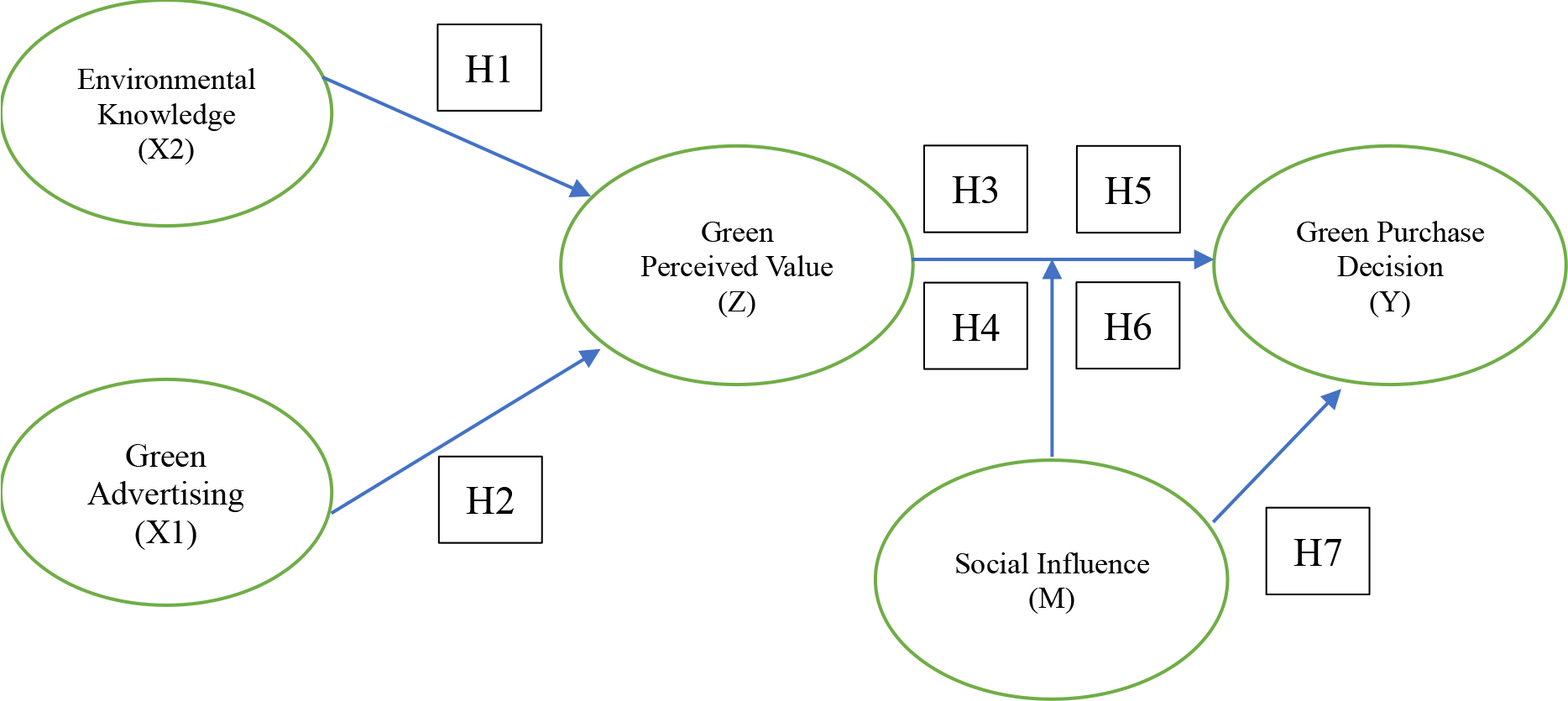
Figure 1.
Conceptual Framework
(Source: Authors’ own research)
3. Data and Methodology
This research employed a descriptive research design in conjunction with a cross-sectional approach to enable the simultaneous investigation of both independent and dependent variables. The cross-sectional design was chosen for its capability to assess the relationships between variables at a specific point in time, offering a clear representation of these interactions within the Ecoprint MSMEs context (Creswell, 2009). This approach is especially useful for understanding patterns and relationships in consumer behavior within a defined environment.
A structured questionnaire was used to gather data and was designed to capture quantitative information from participants. The study focused on consumers of Ecoprint SMEs in the Gerbangkertosusila area, with 126 Ecoprint SMEs in total. Due to the uncertain size of the population, snowball sampling was applied. This nonprobability sampling method is ideal for reaching participants in populations that are hard to enumerate or locate. Snowball sampling was particularly beneficial for finding and recruiting participants through referrals from initial respondents, allowing for access to a wider sample. The study sample size, determined using the Lemeshow formula (Lwanga and Lemeshow, 1991), was set at 96 respondents to ensure sufficient statistical power and reliability in the results.
For data analysis, structural equation modeling (SEM) was used with SmartPLS version 3.0. SEM is an advanced statistical technique that enables the examination of intricate relationships among multiple variables, making it a suitable method for exploring the interactions between variables in this study. The use of SmartPLS provided a thorough analysis of both direct and indirect effects within the framework of Ecoprint SMEs.
4. Result
According to Hair, et al. (2009), an R-squared value of 0.67 indicates that the model demonstrates strong explanatory power, whereas a value of 0.33 reflects moderate explanatory capacity and 0.19 is considered weak. Therefore, based on these values, the model exhibits strong explanatory strength for GPV and moderate explanatory strength for green purchase decision, as can be seen in Table 1.
According to Hair, et al. (2009), F-squared values of 0.02, 0.15, and 0.35 signify whether the influence of a latent variable predictor on the structural model is weak, moderate, or strong, respectively.
The results presented in Table 2 reveal that EK has a strong effect on green purchase decision, reflecting a significant influence. In contrast, green advertising has a weak effect on green purchase decision, indicating a minimal impact. GPV shows a moderate effect on green purchase decision, suggesting a moderate level of influence. Moderating effect is found to have a weak influence, while social influence exhibits a moderate effect, highlighting a moderate impact on the model.
Table 2.
F-Squared Test Result
| Green Purchase Decision | Green Perceived Value | Category | |
|---|---|---|---|
| EK | 29.668 | Strong | |
| GA | 0.122 | Weak | |
| GPV | 0.391 | Moderate | |
| Moderating Effect | 0.014 | Weak | |
| SI | 0.286 | Moderate |
The research hypothesis is supported when the observed t-value surpasses the critical threshold of 1.96, with accompanying P-values below 0.05 (Hair, et al., 2009). Based on the results shown in Table 3, the path coefficient analysis reveals that Hypothesis 1, which examines the relationship between EK and GPV, is supported. Hypothesis 2 (Green Advertising → GPV) is also supported. Moreover, Hypothesis 3 (EK → GPV → Green Purchase Decision) is supported. Similarly, Hypothesis 4 (Green Advertising → GPV → Green Purchase Decision) is supported. Hypothesis 5 (GPV → Green Purchase Decision) is strongly supported. However, Hypothesis 6 (Moderating Effect → Green Purchase Decision) is not supported, as it does not meet the significance threshold. Lastly, Hypothesis 7 (Social Influence → Green Purchase Decision) is supported. These findings indicate significant positive relationships for most hypotheses, except for the moderating effect.
Table 3.
Path Coefficient Test Result
| T Statistics | P-values | Decision | |
|---|---|---|---|
| EK -> GPV | 61.478 | 0.000 | Hypothesis 1 supported |
| GA -> GPV | 2.880 | 0.004 | Hypothesis 2 supported |
| EK -> GPV -> GPD | 5.828 | 0.000 | Hypothesis 3 supported |
| GA -> GPV -> GPD | 2.354 | 0.019 | Hypothesis 4 supported |
| GPV -> GPD | 5.730 | 0.000 | Hypothesis 5 supported |
| Moderating Effect 1 -> GPD | 1.328 | 0.185 | Hypothesis 6 not supported |
| SI -> GPD | 4.510 | 0.000 | Hypothesis 7 supported |
5. Discussion
5.1. The Impact of EK on GPV
EK positively impacts the perceived value, which in turn affects environmentally conscious behaviors (Ren, et al., 2021). The perceived value, representing the benefits people associate with participating in ecofriendly actions, is largely influenced by their EK (Du, et al., 2020; Ren, et al., 2021; Dutta, et al., 2022). In the realm of green purchasing, both EK and environmental concern notably enhance perceived value, which promotes a favorable attitude toward sustainable behaviors and increases the likelihood of making eco-friendly purchases (Kumar, et al., 2019). This research reveals that those who are more environmentally conscious are also more likely to value sustainability and take part in initiatives to protect the environment. Perceived green value is favorably affected by environmental awareness, according to this study’s results.
5.2. The Impact of Green Advertising on GPV
Green advertising plays a key role in shaping consumers’ views on functional, social, emotional, conditional, and epistemic values, all of which affect their willingness to buy eco-friendly products. Social, emotional, and conditional values act as vital mediators in the indirect influence of green advertising on purchase intent (Wang and Musa, 2024). The framing of green advertising, such as whether it emphasizes the future or the past, can alter various dimensions of perceived value. Messages that focus on the future tend to enhance emotional value, while those centered on the past tend to strengthen perceptions of environmental value (Zhang, Liu and Li, 2024). Moreover, the type of green message, whether emphasizing warmth or competence, can lead to varying effects on perceived value. Warmth-oriented messages are especially effective in increasing purchase intentions when linked with green appeals (Zhang, Chen and Li, 2024). To optimize its impact, green advertising should emphasize emotional and social advantages. This research verifies that green advertising positively affects the perceived value of eco-friendly products.
5.3. The Impact of EK on Green Purchase Decision Mediated by GPV
GPV and other intermediate elements are influenced by EK, which in turn impacts green purchasing behavior (Kaur, et al., 2024; Sinha and Annamdevula, 2025). GPV mediates the link between this information and green buying behavior, which has a large impact (Li, et al., 2013; De Jesus, et al., 2024). Several studies have found that GPV acts as a mediator between EK and green purchasing intentions (Li, et al., 2013; Wang, 2017; Wu, et al., 2024; Sinha and Annamdevula, 2025). Although EK is not always a direct driver of green purchase intentions, it is a crucial mediator when paired with factors like GPV. GPV mediates the relationship between environmental awareness and green purchasing decisions, as this study shows (Sinha and Annamdevula, 2025).
5.4. The Impact of Green Advertising on Green Purchase Decision Mediated by GPV
Green advertising has a significant impact on consumers’ green purchasing intentions by altering their perceived values across several dimensions, including social, emotional, conditional, and functional (Wang and Musa, 2024). Furthermore, green advertising’s promises boost the brand’s image and perceived value – two important factors in consumers’ purchasing decisions (Fatmawati and Alikhwan, 2021). Those consumers who care more about the environment are more likely to respond to ads that highlight ways to acquire advantages, whereas those who care less about the environment are more likely to respond to ads that highlight ways to reduce losses (Weisstein, Asgari and Siew, 2014). The link between green marketing methods (such as green pricing and promotion) and purchase intentions is mediated by GPV. An increase in the likelihood of environmentally conscious purchases may be achieved by the strategic use of green marketing to boost GPV (Saleh, et al., 2024). Investigating the function of GPV as a mediator between environmentally conscious advertising and consumer actions is an important new avenue for research.
5.5. The Impact of GPV on Green Purchase Decision
The extent to which customers intend to make environmentally conscious purchases is strongly impacted by their GPV. It encompasses several dimensions, including functional, social, emotional, and conditional elements (Saputri, et al., 2024; Wang and Musa, 2024). Consumers’ views toward environmentally friendly items are influenced by their perceptions of value, which in turn impacts their intentions to buy (Liao, et al., 2021; Zhuang, et al., 2021). Optimism about purchasing environmentally friendly goods increases when their perceived value rises (Zhuang, et al., 2021; Zhao, et al., 2024). This study lends credence to the idea that customers’ impressions of a product’s worth have a substantial impact on whether or not they decide to buy it.
5.6. The Impact of GPV on Green Purchase Decision Moderated by Social Influence
When it comes to eco-friendly clothing, social pressure from friends and family plays a significant role in influencing consumers’ decisions to buy (Ge, 2022; Khare, 2023). Both social influence and the perceived worth of an item have a significant impact on consumers’ final decisions to buy, according to studies. Consumers are largely influenced by their social circles and the perceived worth of products when making purchase decisions. The results show that GPV has a significant effect on green purchasing decisions, and social influence does not mitigate this effect (Mahadevan, et al., 2024). One possible explanation for the absence of a moderating impact is that customers in this study are more driven by personal ideals like sustainability and environmental consciousness than by external social forces. Prioritizing one’s own principles over external societal influences may mitigate the impact of social influence on conduct. Furthermore, it is likely that the social effect in this setting was not strong enough to moderate the link, indicating that individual motives, rather than external influences, are the primary determinants of eco-friendly product purchases.
5.7. The Impact of Social Influence on Green Purchase Decision
People are more inclined to buy eco-friendly goods if they think their friends and family are also doing the same (Le, et al., 2024). Social influence can be a strong strategy for promoting environmentally conscious buying, especially among female consumers (Islam, et al., 2024). People are more likely to make sustainable choices when they see that other people are also making environmentally conscious decisions (Chen and Xia, 2020; Jana, et al., 2024). Seeing coworkers being environmentally conscientious can indirectly influence a person to purchase more sustainable items (Yao, 2024). Social media, influencer partnerships, and public awareness campaigns are all ways that businesses may use social influence to their advantage when trying to sell environmentally friendly products. This information may also be used by policymakers to create rules and programs that promote sustainable and responsible actions among both consumers and businesses (Gandhi and Sheorey, 2019; Phan, et al., 2023; Sapsanguanboon and Faijaidee, 2024). The results of this study show that customers are significantly and positively impacted by social influence when making decisions to purchase environmentally friendly items.
6. Conclusions
Findings from this study highlight the most important aspects of ecoprinting for MSMEs in Gerbangkertosusila, Indonesia. It shows that people’s green purchasing decisions are affected by their GPV, which is in turn affected by their environmental understanding and green advertising. Environmentally conscious consumers tend to regard eco-friendly items more highly, and green advertising only serves to heighten this view. Researchers discovered that GPV significantly mediated the relationship between environmental literacy, green advertising, and final purchase decisions. However, social influence had no moderating effect on the correlation between perceived value and environmentally conscious purchasing decisions. This provides additional evidence that individual motives, rather than societal pressures, are the primary drivers of environmentally conscious consumption. The results provide important information for MSMEs looking to enhance their green marketing campaigns by increasing awareness of environmental issues and promoting sustainable consumption through green advertising.
7. Practical Implications
The results of this study provide several actionable insights for businesses, particularly MSMEs in the ecoprint sector. Firstly, businesses should prioritize enhancing consumer EK through educational initiatives and green advertising, as awareness of environmental issues plays a crucial role in influencing green purchase decisions. Companies can leverage green advertising by showcasing the functional, emotional, and social advantages of their products, ensuring their marketing strategies resonate with environmentally aware consumers. In addition, highlighting the GPV of products – such as their environmental benefits and sustainability – can encourage eco-friendly purchasing intentions, boost brand loyalty, and promote sustainable consumer behavior. MSMEs should also consider collaborating with influencers and using social media and community involvement to strengthen the culture of sustainability. Furthermore, businesses must maintain transparency and credibility in their environmental claims to avoid skepticism and concerns about greenwashing, which could harm their reputation.
8. Limitation
Despite its useful findings, this study has several shortcomings. To begin with, it may not be representative of the MSME landscape or other product categories outside of the ecoprint industry in the Gerbangkertosusila region. This means the results might not apply to other sectors or areas of the world. Secondly, the study does not take into account the potential evolution of consumer behavior or opinions as it utilizes a crosssectional methodology, which only captures relationships at one moment in time. How environmental awareness and green advertising impact consumer choices over time might be better understood with a longitudinal study. Thirdly, there is a possibility of biases, such as social desirability or response biases, due to the fact that the research is based on self-reported data from 96 individuals. Finally, while the study does look at a few things that weigh into people’s decisions to buy environmentally friendly products, it does not take into consideration other things that may affect such decisions, including financial limitations or external market forces.
Notes
[8] 9 Financing
This paper was financed only by authors.
[9] Conflicts of interest 10 Conflict of interest declaration
There is no conflict of interest.