

1. Introduction
The hotel industry faces several significant challenges regarding sustainability, particularly in its Environmental, Social, and Governance (ESG) performance. According to the Sustainability Accounting Standards Board (SASB, 2025), the most material sustainability topics for hotels include, but are not limited to, the following environmental and social issues: waste management, energy management, water management, climate change adaptation, indoor air quality, labor practices, supply chain management, ecological impacts, human rights and community relations, and data security and privacy. Corporate social responsibility (CSR) has emerged as a new management model, affecting the entirety of a company’s business operations aiming to responsibly govern each financial, social, and environmental action and behavior (Porter and Kramer, 2019; Matten and Moon, 2020). A “business case” has been made for the benefits of businesses adopting CSR practices, such as the production of financial gains due to risk reduction and strengthening reputation, creating a market advantage, and synergic value creation (Carroll and Shabana, 2010).
However, despite the significant environmental and social impact of hotels, the global hotel industry is not at the forefront of CSR and sustainability development, as shown by a large-scale analysis of sustainability reporting of the world’s largest hotel companies for the reporting year 2010 (De Grosbois, 2012) and also by a lack of ESG performance measurements in hotels in developing countries (Lin, et al., 2024), and a minority of hotels take action to manage their overall impact (Papafloratos, Pantazi and Vlachos, 2025).
Nevertheless, this seems to be changing with the arrival of the European Corporate Sustainability Reporting Directive (CSRD), which enforces the new European Sustainability Reporting Standards (ESRS). ESRS require specific key performance indicators (KPIs) for all large companies that meet two out of the following three criteria: an average of more than 250 employees during the year, €50 million in net turnover (revenues), and €25 million in assets. Thus, large hotels are more likely to produce sustainability reports following ESRS under this new European legal framework as it is not rare to exceed the assets and employees’ threshold.
Perspective hotel customers are favorably inclined toward sustainability reporting (Ettinger, et al., 2021), and effective ESG reporting can present many opportunities for the hotel industry (Legrand and Matthew-Bolofinde, 2022). Besides legal compliance, by addressing the requirements of sustainability reporting, hotels can enhance their everyday operations and managerial processes, innovate with new practices and offerings for their guests, strengthen their relationships with local communities and stakeholders, and reestablish their business models and strategies. There is an increasing need for environmentally friendly and sustainable tourism, and the sustainable practices of hotels enhance guests’ satisfaction and loyalty (Lee, Lee and Gunarathne, 2019; Modica, et al., 2020).
This paper uses the case of Greece, a country that heavily relies on tourism, and focuses on the topic of solid waste management. Solid waste management has not only been identified as a material topic by SASB for the hotel industry, but has also been highlighted in literature as a significant (material) sustainability issue for the industry (Sobti, et al., 2024). It is notable that a more holistic and systematic approach is needed when measuring waste management-related KPIs in hotels (Voukkali, et al., 2023).
Therefore, we used waste management to research any gap between the existing sustainability public disclosures in the hotel industry and the new requirements introduced by the CSRD in Europe. Our paper employs content analysis of the secondary data published in 49 sustainability reports by hotel companies in Greece. This paper contributes to the discourse of CSRD readiness in sutainability reporting, using empirical findings in research from the Greek context. Given the limited insight from empirical evidence of hotel waste management, our study compares the published information on hotels' waste management with the requirements of ESRS and the well-established reporting standards, namely Global Reporting Initiative (GRI) Universal Standards, on this particular topic. The paper uses the integration of ESG indicators, used for sustainability disclosures, into the strategic management proposed by CSR, viewing the new regulation for sustainability reporting as an opportunity for the development and improvement of hotel operations and strategies, rather than merely a regulatory obligation and a reporting, ticking the box exercise.
This paper highlights an underresearched area that needs investigation and may act as a benchmark for international cross-country comparisons. It aims to expand literature on sustainability in the tourism sector and offer a landscape of the integration of sustainability in the tourism and hospitality sector in Greece through the case of hotels. Furthermore, it helps the hotel industry to better understand the requested KPIs that the new legal European context enforces through CSRD and aspires to motivate hotel industry to move from the ticking the box compliance to strategic sustainability integration using the case of the specific topic of waste management. This can be utilized as an improvement tool for operations efficiency and enhancement of social and environmental performance. The implementation of CSRD has been recognized as beneficial development in solid waste management in large hotel chains in Europe (Camilleri-Fenech, 2024). The main novelty of our research is assessment of the reporting company’s readiness by conducting a gap analysis of the solid waste–related metrics disclosed in their reports.
The paper is structured in the following sections. First, in the introduction, it establishes the contextual framework for the study’s objectives and relevance to the current scientific discourse about the role sustainability disclosure can play on waste management in the hotel industry. Second, it reviews relevant literature that reveals the significant (material) waste management topics encountered by the global hotel industry. Third, it describes the methods and techniques used for data collection and analysis. Fourth, it explores the results in the discussion section. Finally, it concludes with the significance and possible future directions of the research.
2. Literature Review
2.1. Solid Waste Management in the Hotel Industry
To properly contextualize our research, we conducted a literature review to examine the current sustainable waste management issues in the hotel industry around the world.
Food waste is unavoidable in the hospitality industry; luxury hotels, as expected, create more food waste, as they aim to fulfill their guests’ high expectations in terms of variety and quality of food (İlyasov and Tekin, 2017). Some of the principal challenges related to food waste are quantifying and reporting food waste throughout its value chain (Chinie, 2020). A UK study indicated that, despite significant managerial awareness, passive strategies such as onsite food waste separation and disposal yielded limited results due to insufficient resources, irresponsible consumer behavior, stringent business policies, and inadequate governmental support (Filimonau and Todorova, 2020).
The most commonly mentioned practices for food waste prevention included food waste tracking on a daily basis, purchasing of higher-quality ingredients, smart food merchandising, flexible menu design through creation of various uses for ingredients, effective staff training to establish a sustainable company culture, and enhanced customer engagement. Some commonly mentioned practices with regards to food waste management comprise donating the leftovers to local charity organizations, feeding animals or using them in agricultural production, or sending the waste to landfills, which is the least desirable alternative (Karakas, 2021).
Another parameter than can have a significant effect on the amount of food waste produced is proper food storage and a “first in–first out” management system (Srijuntrapun, Sukwong and Marshall, 2022). A good example of how important waste monitoring can be is a case study focused on the generation of breakfast buffet leftovers in four hotels in Germany (Leverenz, et al., 2021). A food waste monitoring system was developed and operated by staff members. The self-reporting tracking system contributed to improving operational kitchen processes, such as refilling the breakfast buffet, and resulted in food waste being reduced by 64.3%.
Another study presented evidence on how two simple and nonintrusive “nudges” – smaller plate size and providing social cues – contributed to reduce the amount of food waste in hotel restaurants by around 20% (Kallbekken and Sælen, 2013). This proves that smart initiatives and customer engagement, along with raising awareness, can have a significant impact on food waste minimization.
New food composting technologies, which are advanced yet affordable and include innovative chemical and biological approaches, help reduce the negative impact food waste can have (Okumus, et al., 2020).
A study (Han, et al., 2018) tested the role of guests’ perceptions regarding hotel practices of waste reduction management and examined the relationship between guest participation in green initiatives and loyalty. The results revealed that hotel waste reduction practices increased awareness and pro-environmental intentions of clients.
The importance of engaging feedback from guests and taking into account their clients’ suggestions, for example, introducing reusable plastic cups and dispensers for toiletries, is highlighted in another study (Camilleri-Fenech, et al., 2020). Research indicates that hotels that introduce such initiatives enhance their attractiveness to guests, in addition, incorporating green behaviors in the hotels’ practices had a significant effect on clients’ behavior (Han, Chua and Hyun, 2020).
To improve the quality of solid waste management, it is required to raise environmental commitment of managers and increase the environmental awareness of guests and staff. In Nigeria, for example, governmental involvement is required in the form of educating hotel guests and providing environmental training and “green” incentives to hoteliers (Filimonau and Tochukwu, 2020).
Changing employees’ behavior can be critical to tackling waste production and management. Positive attitudes and strong subjective norms can propel employees toward adopting pro-environmental behaviors, which result in reduced waste or better management, whereas lack of control and guidance, on the implementation of waste management practices, acts as a constraining force (Chawla, Lugosi and Hawkins, 2022).
Sustainable purchasing practices allow an organization to offset financial and environmental risk, rather than inheriting it from their suppliers (Bukhari and Jain, 2022). Examples of sustainable purchasing include purchasing from small and local suppliers, selecting products probable for recycling or reuse, supporting labor rights, and working with suppliers who care and act about their carbon and waste reduction.
3. Material and Methods
After conducting a literature review to identify the key material topics in waste management in hotels around the world, we turned to the case of the Greek hotel industry. Our study is based on content and gap analysis of secondary data from sustainability reports published by hotels or hotel groups in Greece. This methodological approach has been well established in literature in regards to sustainability disclosure research (Campopiano and De Massis, 2015; Sebrina, et al., 2023). This type of analysis allows for identification of material topics and KPIs relating to waste management and comprehending the current practices and possible gaps in sustainability reporting on waste management for hotels. Through examination of existing practices, this study can provide insights into the sustainable waste management initiatives undertaken in a key industry for the Greek economy.
The first step was identifying all relevant sustainability reports for content analysis. We conducted a keyword search, using the combination of the terms for “sustainability report,” “CSR report,” “Corporate Responsibility Report,” “Sustainable Development report,” ESG report” + “Greek hotel,” “hotel in Greece,” as well as the same keyword combinations in Greek. This search method has the potential to introduce bias to our data sample due to search engine optimization (SEO) practices, locality, web popularity, and recency bias (Maillé, et al., 2022). To control it, we went through the first 15 pages of results. We found that beyond this page of results, either data saturation was reached with repetition of same hotels or additional data became irrelevant to the scope our search. The locality bias was mitigated by the fact that we conducted the research in Greece, which was our geographic scope, and therefore, we were able to access locally relevant results. Our study focused on the most recently published reports, so recency of results was preferred. To ensure that we found the most recently published and accurate reports, we double-checked each hotel’s page. Fortynine recent reports from hotels that are located in Greece were found with this search method. Some of the hotels disclosed a complete CSR report, which was prepared based on international reporting standards, namely the GRI standards, whereas other hotels published only a few pages, where they describe their sustainability policy and relevant efforts. The reports varied in names (“Sustainability,” “Sustainable Development,” “CSR,” “ESG,” “Eco,” or “Impact” reports) and length (6-75 pages). However, all the reports discussed solid waste management, but the depth in which it was analyzed varied significantly. All reports are the most recent ones published by each hotel or group and cover the years 2018–2024. We aimed to find the most recent reports to ensure the review and its findings are as up-to-date as possible. We were satisfied with the sample size since all 49 reports discussed the topic of waste management and they included a variety in disclosure practices to analyze. In addition, analysis of the sample size was manageable with our resources, namely without the use of machine learning tools.
We noticed that some hotel groups which comprise many individual hotels might have compiled a collective sustainability report for the group or they might have compiled individual reports for each hotel. If the group had created a collective report, we analyzed it in this paper since it included the collective waste management information for all hotels in the group. If a group compiled individual reports for each of its hotels, we included that information. The total number of reports found was 49 corresponding to 188 hotels in total. 17 of the 49 reports (or 35%) were collective reports, corresponding to 17 groups, comprising 156 hotels. Each of the remaining 32 hotels produced an individual report.
The breakdown of collective versus individual reports is visually represented in Figure 1, and the breakdown of number of hotels in collective reports versus number of hotels in individual reports is visually represented in Figure 2.
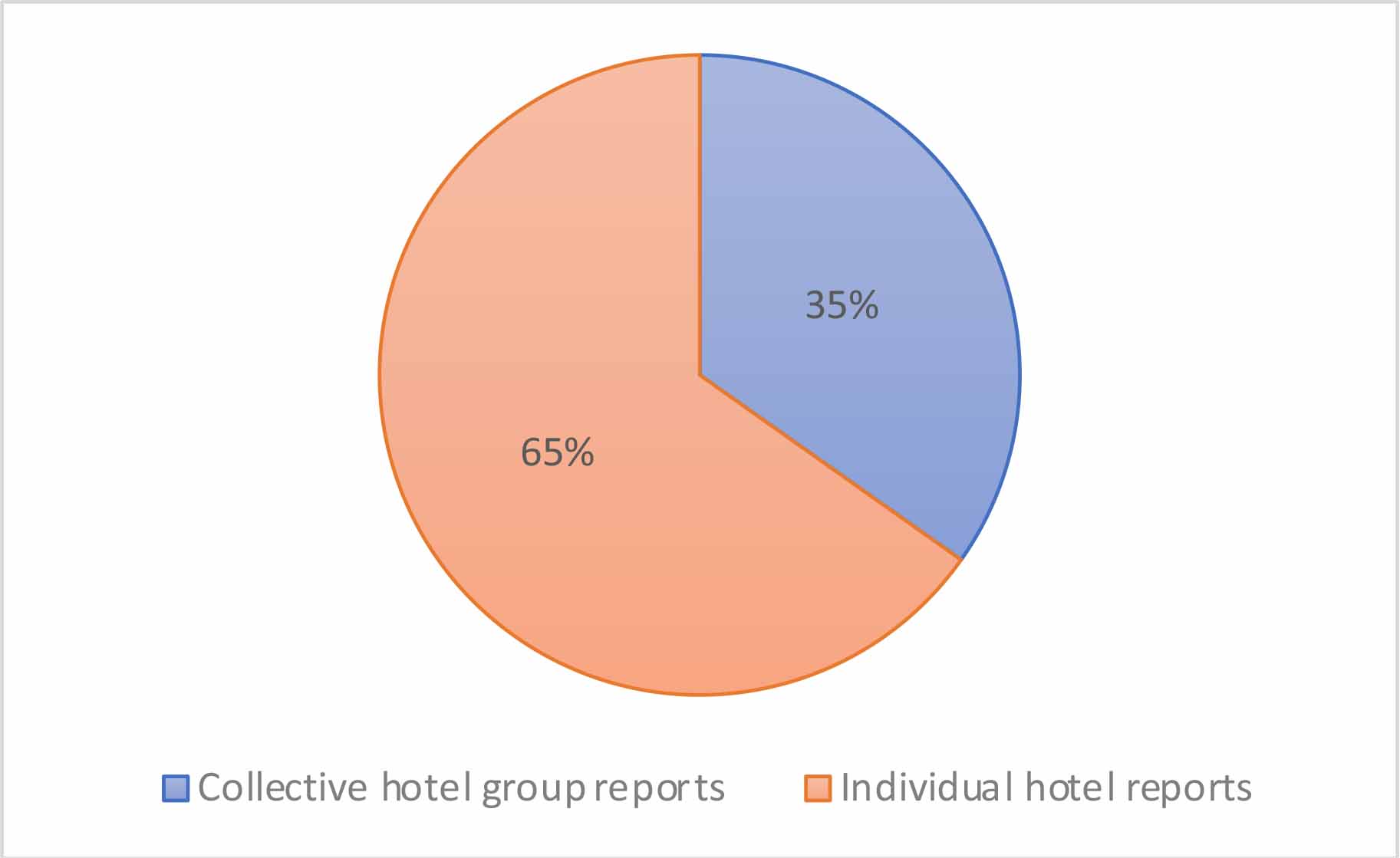
Figure 1.
Breakdown of reports into collective and individual
(Source: Authors’ own research)
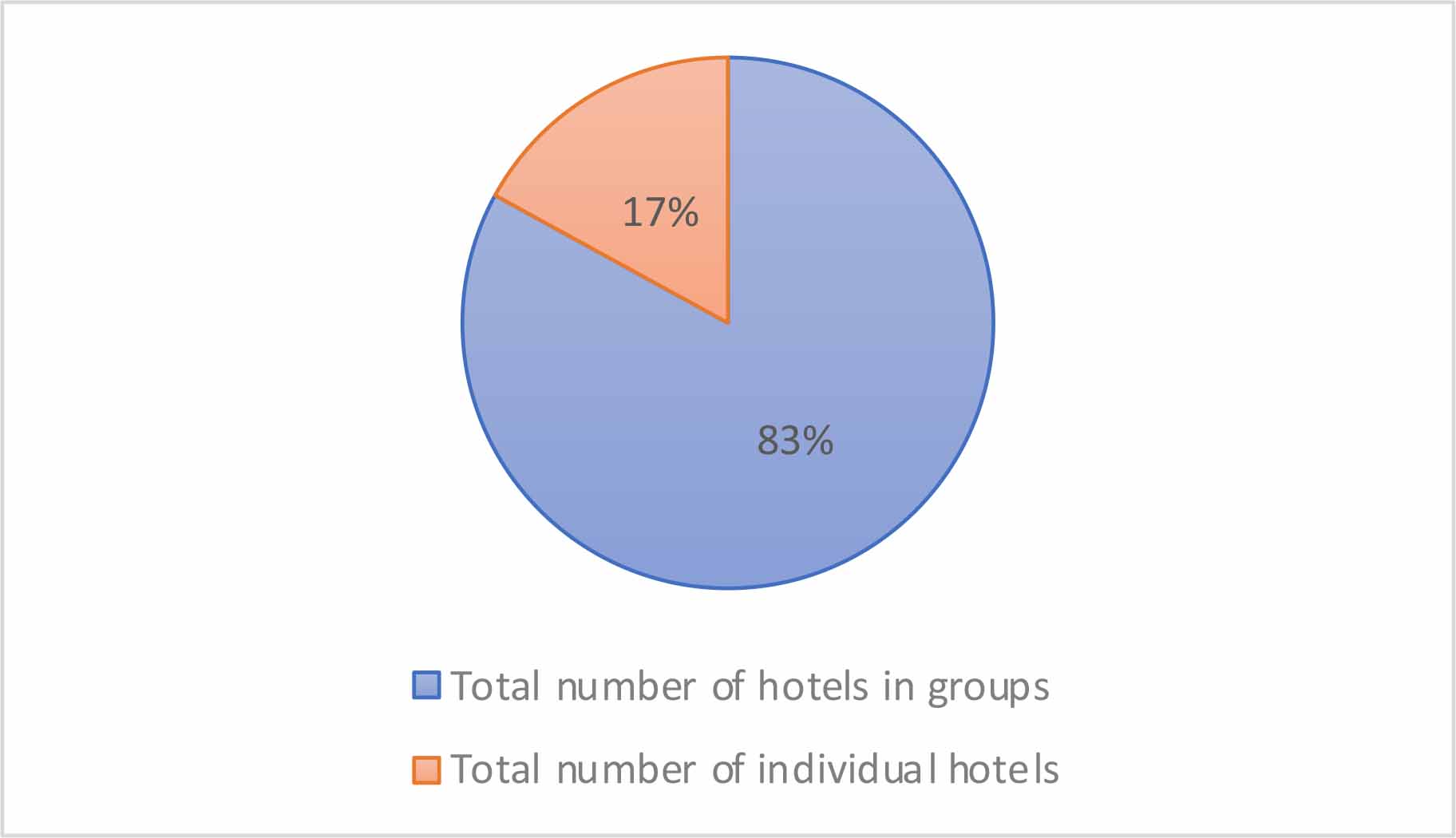
Figure 2.
Breakdown of hotels in collective reports and individual reports
(Source: Authors’ own research)
If the group had hotel holdings outside Greece, the information relating to these holdings was excluded since in each of these cases, the hotel groups presented information by country. Thus, we were able to keep reports pertaining to the geographic boundaries of Greece.
The content analysis of the reports was based on the following research questions:
What are the material topics for solid waste management for hotels in Greece?
What are the KPIs for waste management used in sustainability reporting in hotels in Greece?
Is there a gap in waste management sustainability reporting by hotels in Greece and the GRI standards and the new ESRS?
The structure of the manual content analysis was based on our research questions to enhance the reliability, consistency, or replicability of our methodology. Through this process, the material topics relating to solid waste management were first identified in each report and entered into our database in Microsoft Excel. In addition, KPIs relating to solid waste management were identified and manually entered into the same database. While a manual analysis can be more time-consuming than a machine learning approach, our methodology allowed for deep familiarity with the content of the reports and our framework aided to maintain rigorous results and reproducibility in future research. The next step was a gap analysis of the KPIs and metrics required for the GRI standards or ESRS. In conclusion, we identified the benefits of comprehensive and systematic reporting on solid waste by the hotel industry.
4. Results and Discussion
In this section, we analyze the information relating to solid waste management provided in the 49 available sustainability reports by hotels or hotel groups in Greece.
An interesting finding is that even though smaller reports did not include full reporting information, a large number of pages were not necessarily indicative of the quality of the reported information that lay within. Nevertheless, the small number of pages coupled with the lack of recognized reporting standards indicates problems in the reports’ overall quality. In the same vein, with a few notable exceptions, no specific guidelines or standards were followed in reporting. Only nine reports used an international standard to guide them in their reporting, which was the GRI standard.
This is a well-established standard used for sustainability reporting; however, the introduction of ESRS is currently edging out the methodology of materiality assessment used by GRI in favor of double materiality assessment (Luque-Vílchez, et al., 2023). However, since the reporting years of the sustainability disclosures were before CSRD affected the reporting hotels, the popularity of GRI among the reports using international standards was expected. In addition, out of the nine reports, only one used a mix of GRI and ESRS, meaning they were starting to prepare for CSRD going into effect before it does. The few reports that were prepared based on international reporting standards are very detailed. Interestingly, even hotels that did not follow an international reporting standard used some KPIs, which could help them prepare for CSRD-aligned reporting in the future.
4.1. Solid Waste Management Material Topics
All reports mentioned solid waste management as a key issue regarding the sustainability of their hotel(s). Therefore, a variety of waste-related topics have emerged as material and are presented in Table 1.
Table 1.
Material topics in hotel solid waste management in Greece
(Source: Authors’ own research)
| Solid waste management material topic | Percentage of reports that mention material topic (%) |
|---|---|
| Having waste management policies | 91.8 |
| Recycling (nonhazardous waste) | 81.6 |
| Recycling (hazardous waste) | 63.3 |
| Managing food waste | 51 |
| Waste prevention and minimization | 61.2 |
| Responsible/sustainable procurement practices (as a part of waste management) | 24.5 |
| Provide waste management training | 24.5 |
| Educating guests on waste management | 10.2 |
| Beach cleanups | 4.1 |
Almost all reports mentioned had a solid waste management policy, making solid waste management a material topic for the hotel industry as is found in SASB (2025) and indicated in literature (De Grosbois, 2012; Camilleri-Fenech, et al., 2020; Legrand and Matthew-Bolofinde, 2022). Thus, solid waste management has become a topic that requires KPIs and systematic reporting to make hotel practices more sustainable. Topics of the circular economy that also involve the hotel’s value chain are also material for hotels in Greece, managing food waste and for sustainable procurement of all inflows to help manage the quality and quantity of outflows. In addition, hotels also find that educating their staff, primarily, and their guests is also key is solid waste management, as it has also been indicated in literature (Kallbekken and Sælen, 2013). Food waste seems to be of particular interest in the hospitality industry in Greece as well as globally (Ilyasov and Tekin, 2017; Filimonau and Todorova, 2020; Karakas, 2021; Leverenz, et al., 2021; Srijuntrapun, Sukwong and Marshall, 2022).
Reports mention different schemes for managing food waste, from reduction schemes, sourcing locally, to composting on the premises or by licensed external contractors. Finally, only two reports mentioned going beyond the bounds of the hotel and further aiding their communities in organizing and participating in beach cleanup initiatives.
4.2. Solid Waste Management KPIs and Gap Analysis
Not all material topics identified in section 4.1 were translated into KPIs. The most popular performance indicator used by the reporting companies was the amount of waste that was diverted from disposal, especially due to recycling efforts (42.9%). If the hotels conducted their reporting following the GRI standards, they included quantitative information about their recycling streams.
This performance indicator was also popular for some hotels that did not report according to any standard. They kept and presented performance records about the material topic of recycling. However, even if a reporting company did not measure and report its waste streams, it was often mentioned in the reports as a priority to set up such a system.
The next most popular area where performance was tracked was waste generation (30.6% of the reports measured and reported the total amount of waste generated). A gap can be noted here, which indicates that the efforts of reporting skew toward the favorable practice of recycling rather than the complete picture of all waste created, which should include waste both directed to disposal (landfill) and diverted from disposal. Another interesting observation was that even though the waste streams, when mentioned, are separated and measured, only 4.1% report the methods by which each stream is treated. Of the reports, 24.5% include information on the hazardous waste that the hotels produce. In addition, we noticed that a common metric is that of “per guest per night,” for example, waste generated per guest per night, either in connection with the total amount of waste generated or instead of it. Even though food waste has been identified as a material topic, food waste is usually included in the total waste generated or in indirect ways such as the total amounts of waste composted, only 2% of the reports have a dedicated measurement for food waste. Finally, when reporting is not done with the help of international standards, the hotels might create their own KPIs such as “reduction of plastic water bottles in kg compared to a baseline year” and the “food waste generated (in kg per guest per night).”
The international standards of GRI and ESRS have their own KPIs. When it comes to GRI, 18.4% reports used them. They all identified waste as a material topic and were guided by GRI 3: Material Topics 2021. As ESRS had not gone into effect for any of the reporting companies for the reporting years under review, only one report was influenced by them. Table 2 presents the GRI and ESRS waste-related KPIs and the percentages of reports that used them.
Table 2.
KPIs for solid waste management in sustainability reports by hotels in Greece that are in line with the international GRI standards and ESRS
(Source: Authors’ own research)
| International standard | KPI | Percentage of reports that use this specific KPI (%) |
|---|---|---|
| GRI 306: Waste 2020 | 306-1 Waste generation and significant waste-related impacts | 16.3 |
| 306-2 Management of significant waste-related impacts | 18.4 | |
| 306-3 Waste generated | 30.6 | |
| 306-4 Waste diverted from disposal | 47 | |
| 306-5 Waste directed to disposal | 16.3 | |
| GRI 308: Supplier environmental assessment 2016 | 308-1 New suppliers that were screened using environmental criteria | 6.1 |
| ESRS E5 Resource use and circular economy Disclosure Requirement E5-5 - Resource outflows | The total amount of waste generated from your own operations | 30.6 |
| The total amount of waste diverted from disposal, and a breakdown by hazardous and non-hazardous waste and by treatment method | 41 | |
| The total amount of waste directed to disposal, and a breakdown by hazardous and non-hazardous waste and by waste treatment type | 4.1 | |
| The total amount of nonrecycled waste | 16.3 | |
| The percentage of non-recycled waste | 0 | |
| The total amount of hazardous waste generated | 24.5 | |
| The total amount of radioactive waste generated | 0 |
All hotels that followed the GRI standards fulfilled GRI 306-2 Management of significant waste-related impacts, GRI 306-3 Waste generated, and GRI 306-4 Waste diverted from disposal. Many non–GRI-compliant reports also fulfilled GRI 306-4 (47% overall) and GRI 306-3 (30.6%). Notably, all reports that fulfilled GRI 306-3 (30.6%) also fulfilled the ESRS E-5 requirement of “The total amount of waste generated from your own operations (in tons or kg).” We, therefore, noticed that even though waste management has been identified by all reporting companies as a key area of interest, only 30.6% are ready to fulfill a key metric that could aid them in creating an effective waste management strategy (Chinie, 2020), namely accounting for the total amount of waste they generate.
The reporting requirements of ESRS are stricter. So, even though many companies reported their recycling amounts, none but one reported them by including the treatment methods that accompany each stream to comply with the standard of “The total amount of waste directed to disposal, and a breakdown by hazardous and non-hazardous waste and by waste treatment type.” Following this standard would not only aid the companies in being compliant, but also it could aid them create strategies of dealing with other material topics such as waste reduction, effective recycling, and managing food waste in conjunction with measuring their total waste, since each stream needs to be accounted for separately, giving the companies extra initiative to effectively measure and manage their food waste, which is a material issue for them.
In addition, 245% of the companies are already prepared to comply with the hazardous waste reporting requirement of ESRS. However, we found none that reports on radioactive waste, since this has not been identified as a material issue for hotels. Nevertheless, most companies appear unready when it comes to reporting on their nonrecyclable waste, perhaps because as argued, sustainability reporting has skewed toward the positive practices or is used simply as a marketing tool (Abernathy, et al., 2017), and ESRS can aid in more effective disclosing, leading to more effective management of the negative ESG effects a company can have.
Furthermore, we found that very few hotels are looking into their supply chain (procurement practices) to help manage their inflows that can vastly influence their waste generation. Sustainable procurement has been identified as a material topic, and procurement and value chain-related indicators are also included in both GRI and ESRS. However, the reporting companies are not ready yet to report on these indicators. Literature highlights some innovative approaches to improve waste management at all stages of the supply chain. Innovative technological tools (platforms, applications, software) are increasingly being developed and used to improve waste management (collection, transport, processing). New digital applications, smart systems, and online platforms can optimize the way waste is managed, which in return can result in cost savings, reduced environmental impact, and an increase in customers (Synani, Abeliotis and Lasaridi, 2021).
Another effective CSR strategy that can aid hotels effectively manage their waste is awareness and staff engagement (Chawla, Lugosi and Hawkins, 2022). Staff engagement with waste management can play a positive role in waste reduction and accurately measuring the amounts of properly separated waste streams.
By following a CSR managing strategy and monitoring the indicators included in ESRS, hotels can benefit from a more holistic strategy that not only makes them compliant with laws that are derived from CSRD but also can help them take advantage of several benefits both for the hotels themselves and for the society at large. Firstly, they reduce their overall environmental footprint. Measuring, monitoring, and evaluating can lead to better environmental performance, and thus lower landfill waste and reduce pollution, and better ecosystem health can be achieved (Almasyhari, et al., 2025). Secondly, the hotels can have financial benefits as they adopt sustainable procurement, thereby not facing the environmental and financial risks associated with unsustainable practices in the value chain (Bukhari and Jain, 2022), as well as waste prevention strategies to reduce raw material consumption. Efficient purchasing of food creates economic efficiency and lowers the CO2 emissions by transferring lower volumes of waste.
Ultimately, none of the reporting companies are currently disclosing according to the CSRD requirements in the material topic of waste management. However, adopting the new requirements can aid them in more effectively monitoring their waste. In addition to waste monitoring, adopting CSR strategies can support the hotels in their effort to manage this material issue. CSR strategies can include staff and guest education, sustainable procurement practices, portion reductions and composting. These practices can help the hotels increase their competitive advantage by improving their legitimacy for their clients and other stakeholders, creating shared value through the synergies of sustainable procurement, and minimizing environmentally relevant financial risks through effective waste management (Carroll and Shabana, 2010).
5. Conclusions
Overall, Greek hotels are following international trends when it comes to solid waste management practices. The ones that already published sustainability reports seem to realize the importance of sustainability and are starting to invest more in developing sustainability practices and innovative initiatives. Solid waste management can be utilized by hotels as a tool to drive sustainability, educate employees and customers, and improve hotel’s image.
Our research has identified that the key issues relating to waste are in line with the concerns of the global hotel industry. The 49 sustainability reports that were published by hotel companies in Greece highlight that waste management, recycling generated waste, managing food waste, reducing waste, educating staff and customers on waste-related issues, and sustainable procurement are the material topics that affect this sector.
Even though only 18.4% of the reporting companies used a widely established international sustainability reporting standard, we found that almost half of the companies disclosed information on their recycling practices. However, most hotels are not yet prepared to comply with the standards required by the new CSRD.
Adopting the new ESRS can benefit companies, not only for the sake of compliance but also because effectively monitoring waste-related KPIs can aid them to better apply CSR strategies to handle the issue of waste management. This will benefit both the hotels and the environment. Adopting waste management initiatives can be more profitable for business, better for the environment, and better for the health and safety and the well-being of the local community.
One limitation of the study is restricting it to the context of Greece. A larger sample of reports from countries within the European Union (EU) where CSRD is applied could allow for a broader cross-country analysis. Another limitation is that our research is based on content analysis of secondary data, which is subject to selective disclose bias. Future research can address such limitations either with a Europe-wide sample base or by cross-country comparisons.
Greece is a country with a robust hotel industry, making this research relevant to the global hotel industry on adopting CSR principles for handling waste-related issues. In addition, this work adds to the continuously evolving discourse on how to integrate ESG in strategic management in a global environment where the demands for sustainability disclosures are rapidly evolving. This research can be used as a benchmark for other industries on the topic of waste management. Future research can focus on primary data research with interviews of hotel managers to further analyze the effects of incorporating CSR into the hotel industry’s decision making.