
INTRODUCTION
Watermelon (C. lanatus) is one of the most economically important crops grown worldwide due to its nutritional value, refreshing taste and high consumer demand (Kyriacou and Rouphael, 2018; Food and Agriculture Organization of the United Nations, 2024). The fruit is a source of sugars, vitamins, carotenoids, lycopene, citrulline and antioxidant compounds, which are beneficial to human health and nutrition (Tlili et al., 2011; Parkash et al., 2024; Hossain et al., 2026). However, the cultivation of watermelon in winter (off-season) is challenging because of low temperatures, less solar radiation and shorter photoperiod, affecting vegetative growth, reproductive development, fruit set and fruit quality (Yang et al., 2020; Hossain et al., 2025a).
The watermelon crop is thermophilic and grows best under optimum temperature conditions of 25–30°C for growth, flowering and fruit development (Korkmaz and Dufault, 2001; Sato et al., 2006). In winter, low temperatures have adverse effects on physiological and biochemical functions such as chlorophyll biosynthesis, photosynthesis, assimilate translocation and development of reproductive organs (Firon et al., 2006; Huang et al., 2022; Roychowdhury et al., 2025). Chilling stress can also cause a decrease in fruit set and yield due to decreased pollen viability, anther dehiscence, ovary development and decreased viability of the developing seeds (Abdelmageed and Gruda, 2009; Kawasaki, 2014; Hossain et al., 2025a).
High energy demand is necessary to keep the greenhouse temperature at an optimum level in winter in greenhouse production systems, which significantly raises production costs (Kozai, 2016; Boyacı et al., 2025). Thus, the development of efficient environmental regulation strategies suitable for optimising the management of the heating and lighting system in the local field is vitally important for the sustainable cultivation of watermelon in winter. Other environmental factors that affect watermelon growth and productivity are light intensity and photoperiod (Hogewoning et al., 2010; Fanwoua et al., 2019; Jeon et al., 2026). In the winter months, photosynthetic carbon assimilation is low and vegetative growth is reduced, with a decrease in carbohydrate production for reproductive growth (Dorais et al., 2000; Marcelis and Heuvelink, 2007).
Widespread use of supplemental lighting in greenhouse horticulture has been employed to alleviate the lack of natural light and enhance crop productivity (Kozai, 2016; Simkin et al., 2022). One type of artificial light source that has attracted significant attention is the light-emitting diode (LED), which is highly efficient, emits little heat, has a long lifespan and can be designed to emit specific wavelengths that are beneficial to plant growth (Hogewoning et al., 2010; Bantis et al., 2018). Red and blue wavelengths are critical as they influence photosynthesis, chlorophyll production, stomatal responses and photomorphogenesis (Ouzounis et al., 2015; Simkin et al., 2022). Previous studies showed that supplemental red and blue LED light had a positive effect on photosynthetic efficiency, growth and fruit quality of vegetables in a greenhouse, such as tomato, cucumber and sweet pepper (Marcelis et al., 2006; Fanwoua et al., 2019). Also, supplemental lighting can influence fruit setting by regulating endogenous hormonal activities and assimilate partitioning to induce photoperiod extension, which promotes flowering and sets fruit. Photoperiod extension by supplemental lighting is also known to regulate endogenous hormonal activities and assimilate partitioning, thereby triggering flowering and fruit setting (Luo et al., 2023).
Environmental manipulation has been demonstrated to affect sex expression, female flower development and fruit enlargement in cucurbit crops (Proietti et al., 2008; Kyriacou and Rouphael, 2018). However, little data exist on the interactive effects of optimised temperature management, supplemental lighting and photoperiod manipulation for winter watermelon under greenhouses. The quality of watermelon fruits, such as fresh colour, sugar content, texture and biochemical composition, is very sensitive to environmental conditions during fruit development (Colla et al., 2006; Kyriacou and Rouphael, 2018). The ability to synthesise lycopene, sugar metabolism, flesh pigmentation, marketable quality and nutritional quality are optimised with adequate light intensity and optimum temperature, respectively (Vicente et al., 2005; Gautier et al., 2008; Tlili et al., 2011). In contrast, insufficient winter conditions can lead to a lack of fruit growth, low sugar content and poor fruit exterior quality (Yang et al., 2020; Hossain et al., 2025a).
Thus, accurate control of the environment could be important to increase productivity and watermelon quality in production under winter conditions. In addition, in the winter season, the ovary size was found to be small, leading to small and misshapen fruits with poor quality. Hence, the present experiment was conducted to develop optimised environmental management strategies to get enough pollen as well as to enhance ovary growth, fruit size and fruit quality in winter watermelon (C. lanatus). This study's results could be helpful for formulating sustainable and energy-efficient off-season watermelon cultivation strategies to achieve year-round production.
MATERIALS AND METHODS
Plant materials and cultivation conditions
This study tested the small-fruit watermelon variety ‘Hitorijime 7’ (Hagiwara Farm Co., Ltd., Tawaramoto, Nara, Japan.). Winter experiments were conducted from 24 December 2025 to 18 March 2026 in a solar-powered plant factory at Saga University, Japan, located at 33°16′50.7″ N 130°18′09.9″ E. Watermelon seeds were sown in small black pots (60 mm diameter, 55 mm height). The pots were filled with a commercial potting mix (Proto Loam Co., Ltd., Minato-ku, Tokyo, Japan) composed of bark compost, volcanic ash soil, rice husk compost and purified soil. After sowing, the pots were moved to a seedling rack for cultivation. For seedling cultivation, plant growth LEDs were used, primarily emitting red (660 nm) and blue (450 nm) light.
Light intensity was set to approximately 1200 μmol · m−2 · s−1 at a height of 30 cm above the pots. Lighting hours were from 6:00 to19:00, with temperature conditions of 28–32°C during the light period and 20–22°C during the dark period. During the seedling stage, a 1000-fold diluted Hyponex solution was applied. After approximately 20 days of seedling growth, seedlings were transplanted into a 3-L plastic pot filled with a commercial potting mix (Proto Loam Co., Ltd.) composed of bark compost, volcanic ash soil, rice husk compost and purified soil. The average greenhouse temperature was below 15°C from 17:00 to 8:00. The indoor air temperature was recorded every 30 min for all experiments using a data logger (Ondotori RTR503B, T&D Corporation, Matsumoto, Nagano, Japan) installed at a height of approximately 1.5 m inside the greenhouse. Otsuka B nutrient solution was used and adjusted with HCl (hydrochloric acid) during preparation to achieve an EC of 1.7–1.8 dS · m−1 and a pH of 5.5–6.5, which was similar to Enshi shoho nutrient solution and explained in our previous studies (Hossain et al., 2025b).
Nutrient solution was supplied via a freshwater submersible pump (Mighty Pump PSP-100S, Flowval Co., Ltd., Nishi-ku, Osaka, Japan) installed in a 100 L tank and distributed to each pot through drip irrigation tubes. Pump operation was timer-controlled, with irrigation duration adjusted according to the watermelon growth stage. Pollination was performed in the morning on female flowers blooming between Nodes 10 and 15. Pollen was collected from watermelon plants cultivated separately in the laboratory. This was because another dehiscence does not occur in male flowers under low-temperature conditions, making pollen collection difficult (Lyu et al., 2019). As the experiment was conducted under controlled conditions in a greenhouse, the pollination was performed by hand. In the T0 and T3 conditions, the anther did not dehisce and pollen was not released for pollination. Therefore, pollen was collected from the laboratory, where plants were cultivated specifically for pollen collection. Pollination was performed at 9.00 a.m. because the stigma was found to be sticky at that time, indicating a high likelihood of pollen acceptance. The fruit set rate was calculated based on the number of flowers pollinated and the number of fruits set in each treatment. Fruits were harvested 40–50 days after pollination due to differences in the timing of fruit set among the treatments.
Experimental layout and design
The experiment was conducted as a completely randomised design (CRD) with five different environmental manipulation strategies, under different lighting and temperature conditions. Each environmental condition was used as a treatment, and each treatment consisted of 8 plants; the total number of plants was 40. Homogeneity was maintained in each treatment, and there was no replication. The five treatments in this experiment were T0: control, T1: heating (from 17:00 to 8:00 and kept minimum 25°C), T2: heating + LED (heating from 17:00 to 8:00 to keep minimum 25°C and supplementary red:blue light ratio 70:30 from 16:00 to 22:00 and 6:00 to 10:00 with light intensity 600 μmol · m−2 · s−1), T3: supplementary red:blue light ratio 70:30 from 16:00 to 22:00 and 6:00 to10:00 with light intensity 600 μmol · m−2 · s−1, and T4: continuous 13 hr bright sunshine through high powerful LED with optimised temperature (from 6:00 to 19:00 with light intensity 1500 μmol · m−2 · s−1). The summary of the treatments is presented in Table 1. The reason for using these five treatments was that T0 served as a control (winter natural condition) compared to other treatments. T1 was selected to represent winter conditions because night temperature in Japan can fall to 0°C or below, and watermelon physiology is adversely affected at temperatures below 15°C. Therefore, in this treatment, we attempted to provide a suitable temperature under winter conditions to evaluate the temperature effect. During the winter season, both the photoperiod and the temperature were low. Our previous study (Hossain et al., 2025a) demonstrated that supplementary LED was very effective for watermelon cultivation during the winter season. Based on these findings, in T2, we used LED and heating to evaluate whether maintaining a suitable temperature in combination with supplemental LED lighting could improve watermelon performance under the low night time temperature in the winter. T3 was selected based on the findings of our previous study (Hossain et al., 2025a), where LEDs performed best in winter conditions compared to the control. We tried to provide optimum environmental conditions during winter (off-season) for watermelon cultivation through T4 treatment.
Table 1.
The summary of the treatments used in this experiment.
| Treatments | Heating | LED lighting | Light intensity (μmol · m−2 · s−1) |
|---|---|---|---|
| T0 (control) | No heating | No LED supplementary | Natural light |
| T1 (heating) | Heating from 17:00 to 08:00, maintaining a minimum air temperature of 25°C | No LED supplementary | Natural light |
| T2 (heating + LED) | Heating from 17:00 to 08:00, maintaining a minimum air temperature of 25°C | Supplementary LED (red: blue = 70:30) between 16:00–22:00 and 06:00–10:00 | Natural + 600 |
| T3 (LED) | No heating | Supplementary LED (red: blue = 70:30) between 16:00–22:00 and 06:00–10:00 | Natural + 600 |
| T4 (continuous high-intensity LED with optimised temp.) | Optimised temperature, maintained throughout cultivation | High-power LED providing a 13-hr photoperiod (06:00–19:00) | Supplementary LED only |
Temperature monitoring and control in each treatment area
To grow watermelon in the off-season (winter) in Japan and in other countries in the world where the temperature is very low, heating is necessary for production. However, maintaining the temperature of the entire greenhouse warm from 17:00 to 8:00 is costly when the temperature is very low, sometimes dropping to 0°C or even below. As watermelon plant has a large canopy, the maintaining the temperature within the crop-growing area, instead of the entire greenhouse, is also difficult. That is why we grow watermelons in beds and cover the beds with thin plastic sheet from 17:00 to 8:00. For maintaining temperature, in T1 and T2 treatments, agricultural electronic digital thermometer sensors, model ND-910 (Tsukuba Electric Co., Ltd., Joso, Ibaraki, Japan), were placed centrally within the canopy region to ensure precise control of each treatment zone. The sensor was connected to the small circulating fan heater and set at 25°C. When the temperature fell below this range, the heater started automatically and maintained a minimum temperature of 25°C from 17:00 to 8:00 (Figure 1). In this way, the crop-growing zone could be kept warm at a relatively low energy cost. The temperature was recorded every 30 min for each treatment separately using a data logger (Ondotori RTR503B, T&D Corporation, Matsumoto, Nagano, Japan) installed in the canopy region at the same position in each treatment. The recorded data are presented in Figure 2.
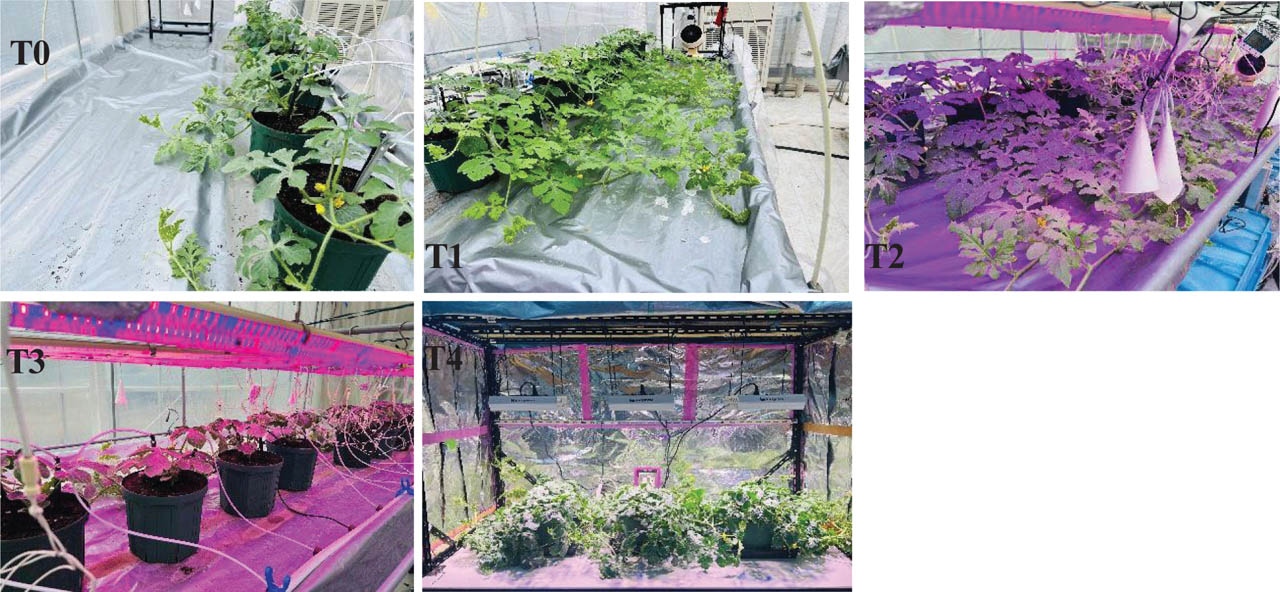
Figure 1.
Schematic diagram of the heating and lighting treatments. For temperature management, temperature sensors were placed centrally within the canopy region to ensure precise control of each treatment zone. The sensor was connected to the small circulating fan heater and set at 25°C. When the temperature dropped below this range, the heater started automatically and maintained a minimum temperature of 25°C, from 17:00 to 8:00. Two types of LEDs were used in this experiment: fluorescent light with red-to-blue ratio of (70:30), and high-power LED light supplied by the W-MAX 2000, with dimensions of 310 mm (L) × 210 mm (W) × 46 mm (H) (SMARUP brand, Shenzhen uplighting technology, Co., Ltd., Shenzhen, China). Here, T0 = control, T1 = heating, T2 = heating + LED, T3 = LED, T4 = continuous bright sunshine hours through a high-power LED with optimised temperature. LED, light-emitting diode.
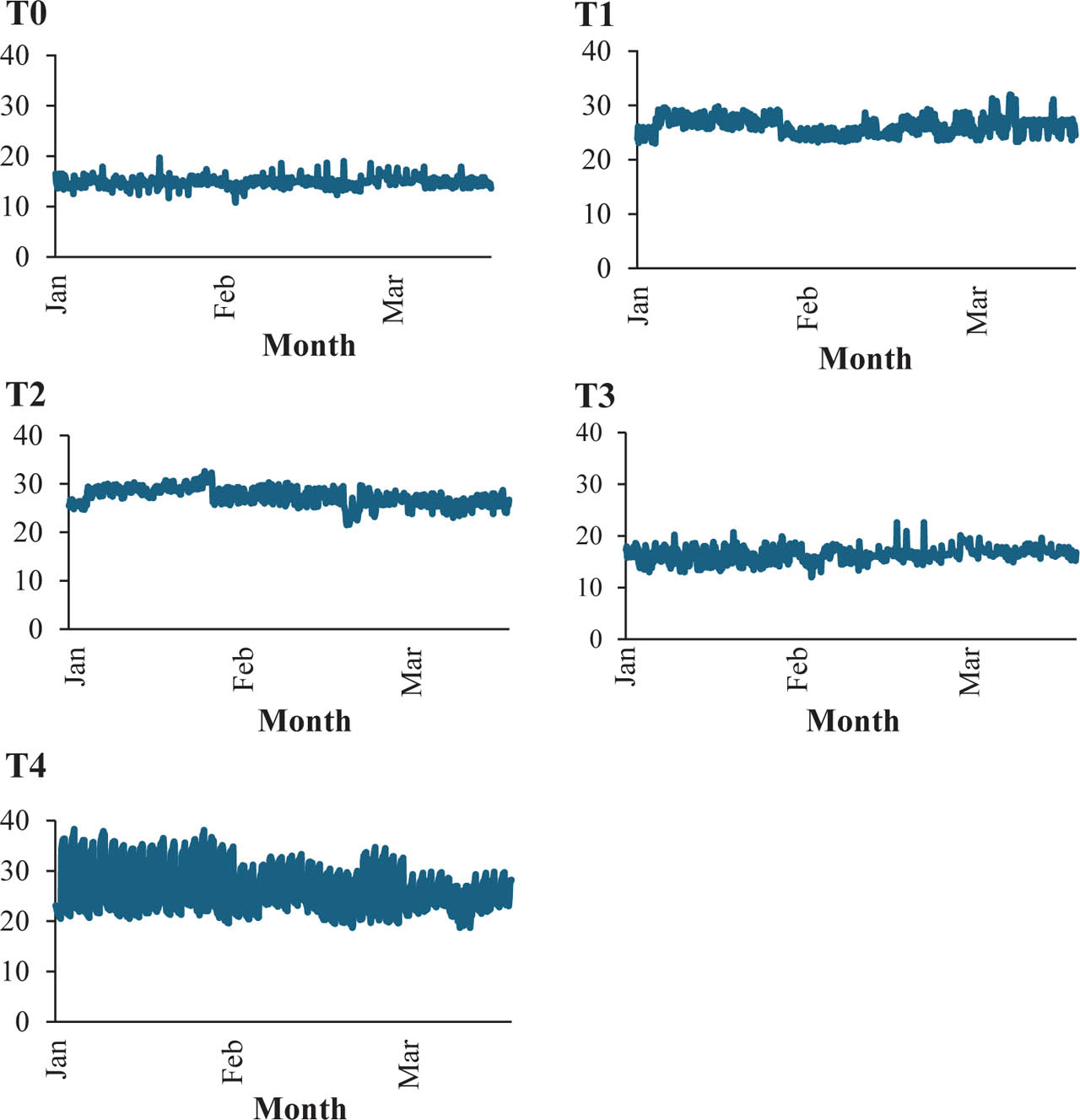
Figure 2.
Temperature manipulation in the canopy zone for each treatment. Temperature was recorded in each treatment separately with a wireless thermos recorder, RTR503B (T & D Corporation, Matsumoto, Japan), during the growing season.
Supplementary lighting and photoperiod manipulation strategies
Watermelon plants require bright sunshine hours and long photoperiods, which were confirmed by our previous experiment (Hossain et al., 2025a). In the winter season, the light intensity that comes from the sun is not enough for the proper growth and development of watermelon plants, and short day length leads to poor-quality watermelon (Hossain et al., 2025a). Considering this, we used two different types of light to provide additional lighting in this experiment: fluorescent light with red-to-blue ratio of 70:30 and a high-power LED light supplied by the W-MAX 2000 with dimensions of 310 mm (L) × 210 mm (W) × 46 mm (H) (SMARUP brand, Shenzhen uplighting technology, Co., Ltd., Shenzhen, China).
Two different lighting strategies were followed in this experiment: one is to provide supplementary lighting to compensate for the lack of natural lighting in the winter season and another is to increase the day length (photoperiod). The supplementary red:blue light ratio 70:30 from 16:00– to 22:00 and 6:00–10:00, with light intensity of 600 μmol · m−2 · s−1 and another lighting condition was continuous 13 hr of bright sunshine through a high-power LED from 6:00 to 19:00, with a light intensity 1500 μmol · m−2 · s−1. Supplementary lighting was provided daily, from transplanting to harvesting (Figure 1). Light intensity was measured from the canopy top using a Light Meter (C-LI190R, LI-COR Bio, Nebraska, NE, USA). The wavelength of the light source was determined by a USB2000 spectrometer (Ocean Optics, Dunedin, FL, USA) (Figure 3).
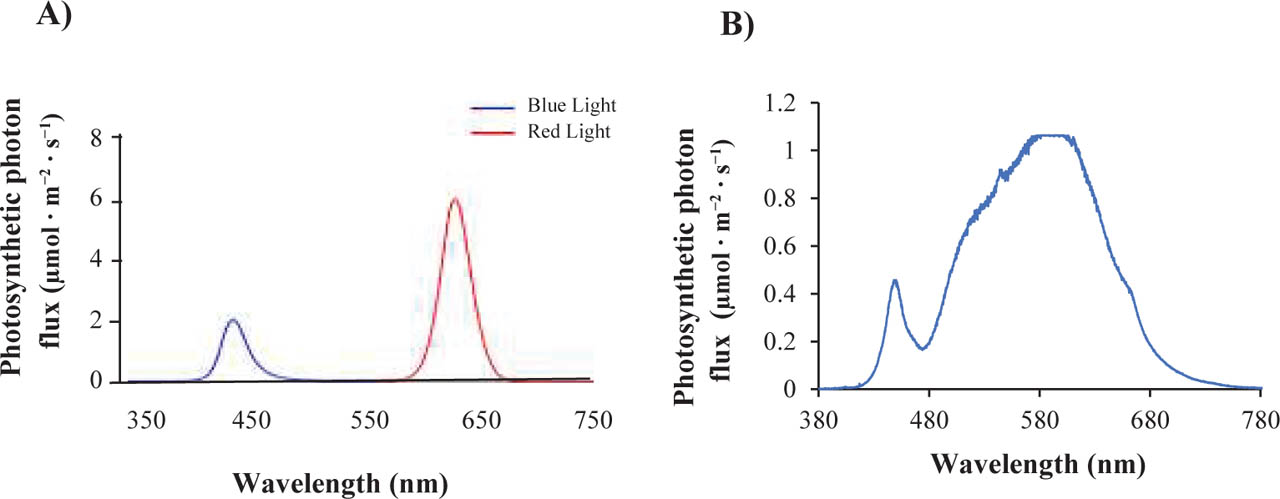
Figure 3.
The spectral photon flux distribution corresponding to each lighting treatment was analysed. (A) The applied red:blue light (70:30) PPF values were 600 μmol · m−2 · s−1 and (B) the applied high-power LED light PPF values were 1500 μmol · m−2 · s−1. Spectral scans of the LED sources were conducted at 1 m beneath the panels. LED, light-emitting diode; PPF, photosynthetic photon flux.
Methods of sampling and measurement – growth morphology and physiology
Leaf chlorophyll status was measured using the method of Lichtenthaler and Welburn (1983). About 250 mg of fresh tissue was collected and placed in 10 mL of 80% (v/v) acetone at 4°C for overnight incubation. For extraction, the samples were centrifuged using a high-speed refrigerated microcentrifuge (Tomy Co., Tokyo, Japan) at 15000 × g for 5 min. Then, the supernatant was collected and diluted with 80% acetone to make the total volume 25 mL. Absorbance was determined at 470, 645 and 663 nm with a 96-well benchmark microplate reader (Bio-Rad Laboratories, Richmond, CA, USA). Each measurement was repeated three times. The SPAD-502 plus chlorophyll meter (Konica Minolta, Inc., Tokyo, Japan) was used to assess leaf greenness on the 6th fully expanded leaf at 10:00–12:00 at 20 days after transplanting (DAT). The same leaves were measured six times per treatment group for the parameters Pn, Gs and E at 15 and 30 DAT using an infrared gas analyser (MIC-100 system, M20 19F1023, Masa International Corp., Kyoto, Japan). The CO2 concentration inside the chamber was kept at 370–380 ppm with a resolution of 0.1 ppm and a sampling frequency of 0.1 s. Phenotypic data on various growth parameters, including plant height, leaf length and width, were measured with a metric ruler and the number of nodes was counted at 20 DAT, when the differences were more prominent in each treatment. At harvest, the fresh weight of shoots was measured. Leaf length was measured with a ruler, and the obtained values were substituted into the following function to estimate leaf area: y = 11.247x − 52.117 (x = leaf length, y = leaf area). This function was derived from values obtained by scanning 20 true leaves of cut watermelons using a scanner (CanoScan LiDE 400, Canon Inc., Ota-ku, Tokyo, Japan) and leaf area analysis software (Leaf Area).
Methods of sampling and measurement – yield-related traits and quality
The number of female flowers (from first flowering to 20 days later) was counted, and ovary lengths at pollination time and fruit length at harvesting were measured using a Digi Matic Caliper (Mitutoyo Corporation, Kawasaki, Kanagawa, Japan). Yields per plant were measured individually, and then the average yield per plant and total yield in each treatment. To determine anther dehiscence and when the pollen comes out, the picture was taken using a binocular microscope (Nikon SMZ745, Mitutoyo, Japan) with a magnification level of 100×. First flowering time was observed with the eyes, and the fruit set rate was calculated as the number of flowers trying to set fruit by pollination and the success rate of fruit set.
Quality attributes of fruits were assessed at harvest. The flesh colour (L*, a*, b*) was measured with a CR-10 colour meter by Minolta. The concentration of soluble sugar and acidity was measured by PAL-BX/ACID F5 Brix-Acidity Meter (Atago, Co., Ltd., Tokyo, Japan). Furthermore, a pH/ORP meter (model PH72, Yokogawa Electric Corporation, Tokyo, Japan) was used to check the chemical characteristics of juices by measuring pH. Flesh thicknesses were considered the edible red portion, and the other portions were considered as fruit peel. The thicknesses were measured using a Digi Matic Caliper (Mitutoyo Corporation, Kawasaki, Kanagawa, Japan). Flesh softness was measured using the Quick Measure penetrometers (HortPlus-1).
Statistical analysis
Statistical analyses were conducted using JMP Pro software (SAS Institute, Cary, NC, USA; version 17.2.0). Analysis of variance (ANOVA) was employed to detect significant differences among treatments. Tukey's multiple range test was used for pairwise comparisons, while Tukey's honestly significant difference (HSD) test at a significance level of p ≤ 0.05 was applied to further evaluate treatment effects.
RESULTS
Environmental manipulation among different treatments influences the vegetative growth and physiological response of winter-grown watermelon
Environmental manipulation among the various treatments used in the experiment significantly influenced (p < 0.01) the vegetative growth and physiological responses of winter-grown watermelon. Considerable variations were observed in photosynthetic performance, chlorophyll content, plant morphology and biomass accumulation under different environmental conditions. Among the treatments, T4 exhibited the highest photosynthetic performance, indicating the highest physiological activities, followed by T1 and T2. In contrast, T0 and T3 recorded comparatively lower photosynthetic performance (Figure 4). The physiological and pigment-related responses of winter-grown watermelon varied significantly among the environmental manipulation treatments (Table 2). The chlorophyll index (SPAD) ranged from 82.832 to 108.132, with the highest value observed in T4, followed by T2, whereas T0 recorded the lowest SPAD value. Similarly, CO2 assimilation significantly increased under optimised environmental conditions, where T4 exhibited the maximum rate (472.6 μmol · m−2 · s−1), followed by T3 (444.6 μmol · m−2 · s−1).
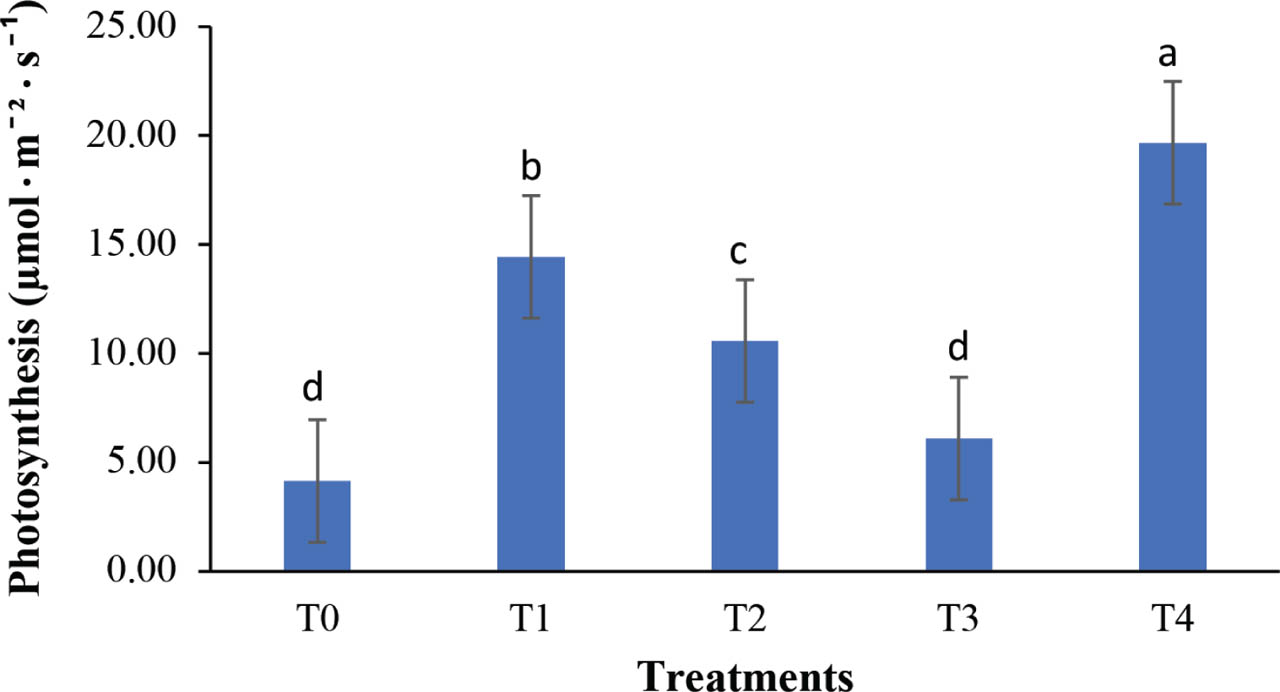
Figure 4.
The photosynthesis rate of plants was influenced by different treatments. Different letters indicate a significant difference (p < 0.05; Tukey's HSD test). Values are the mean ± SD, n = 8. Measurements were taken at 20 DAT. DAT, days after transplanting; HSD: honestly significant difference.
Table 2.
Effects of LED and temperature on contents of SPAD, CO2, chlorophyll a, b and carotenoids in watermelon plant leaves under different treatments.
| Treatments | Chlorophyll index (SPAD) | CO2 (μmol · m−2 · s−1) | Chl a (mg · g−1 FW) | Chl b (mg · g−1 FW) | Carotenoid (mg · g−1 FW) |
|---|---|---|---|---|---|
| T0 | 82.832 c | 425.0 c | 1.41 a | 0.42 b | 0.34 ab |
| T1 | 92.306 b | 429.9 c | 0.99 b | 0.27 c | 0.22 b |
| T2 | 103.507 b | 421.1 c | 1.49 a | 0.42 b | 0.40 a |
| T3 | 97.658 b | 444.6 b | 1.50 a | 0.45 ab | 0.34 ab |
| T4 | 108.132 a | 472.6 a | 1.69 a | 0.58 a | 0.40 a |
In contrast, T0, T1 and T2 showed comparatively lower and statistically similar CO2 concentrations. Chlorophyll a content was significantly enhanced in T4 (1.69 mg · g−1 FW), while T0, T2 and T3 showed statistically similar values. T1 had the lowest concentration of chlorophyll (Table 2). The content of chlorophyll b also showed significant differences, with the highest value in T4 (0.58 mg · g−1 FW) and the lowest in T1. Higher carotenoid concentration was observed in T2 and T4 (0.40 mg · g−1 FW), showing higher stability and photosynthetic efficiency under these treatments (Table 2). In general, T4 treatment resulted in higher photosynthetic activity and pigment in the watermelon plants, and optimised environmental manipulation positively affected the physiological performance in winter watermelon production. Different treatments also significantly affected the vegetative growth parameters of winter-grown watermelon (Table 3). Tallest plants were recorded in T4 (40–136 cm), followed by T2 (40–125 cm), while T0 and T3 gave the shortest plants (40–105 cm).
Table 3.
Vegetative growth of the plant was influenced by different lighting and temperature conditions among the treatments.
| Treatments | Plant height (cm) | Leaf area (cm2) | Leaf length (cm) | Leaf width (cm) | Node number | Fresh weight (kg · plant−1) |
|---|---|---|---|---|---|---|
| T0 | 40 d | 82.8 b | 12.0 b | 13.8 c | 6.0 d | 0.6 c |
| T1 | 68 c | 94.0 b | 13.0 b | 17.3 b | 10.5 c | 0.5 c |
| T2 | 91 b | 127.7 a | 16.0 a | 19.3 ab | 17.0 b | 0.9 a |
| T3 | 44 d | 88.4 b | 12.5 b | 14.4 c | 7.0 d | 0.8 b |
| T4 | 136 a | 122.1 a | 15.5 a | 19.9 a | 21.6 a | 0.6 c |
Treatments T2 and T4 (127.7 and 122.1 cm2, respectively) had significantly larger leaf area than all other treatments. In the same way, T2 and T4 had the highest leaf length, and leaves shorter than those were obtained in T0, T1 and T3 (Table 3). The maximum leaf width was noted in T4 (19.9 cm), while the comparatively lower value of leaf width was noted in T3 and T0. Optimised environmental conditions also significantly raised the number of nodes, with the highest number of nodes in T4 (21.6), followed by T2. Table 3 shows that the fresh weight accumulation was highest in T2, followed by T3, whereas T0, T1 and T4 had relatively low biomass production. In conclusion, overall, T2 and T4 resulted in better vegetative growth performance in winter watermelon.
Effect of different environmental conditions on the dehiscence of anther, female flower formation, ovary development, fruit-set and development of winter season watermelon production
Environmental conditions caused significant impacts on winter watermelon cultivation, especially on the process of anther dehiscence and pollen release. The shedding of pollen was low under low temperatures in T0 and T3, and pollination efficiency was also limited (Figure 5). In contrast, T1, T2 and T4 greatly improved anther opening and dissemination, leading to improved flower fertilisation and fruit set. In all treatments, optimised temperature, light intensity and photoperiod conditions allowed anther dehiscence as well as pollen release during flowering, with the best responses obtained in the case of the T4 treatment (Figure 5).
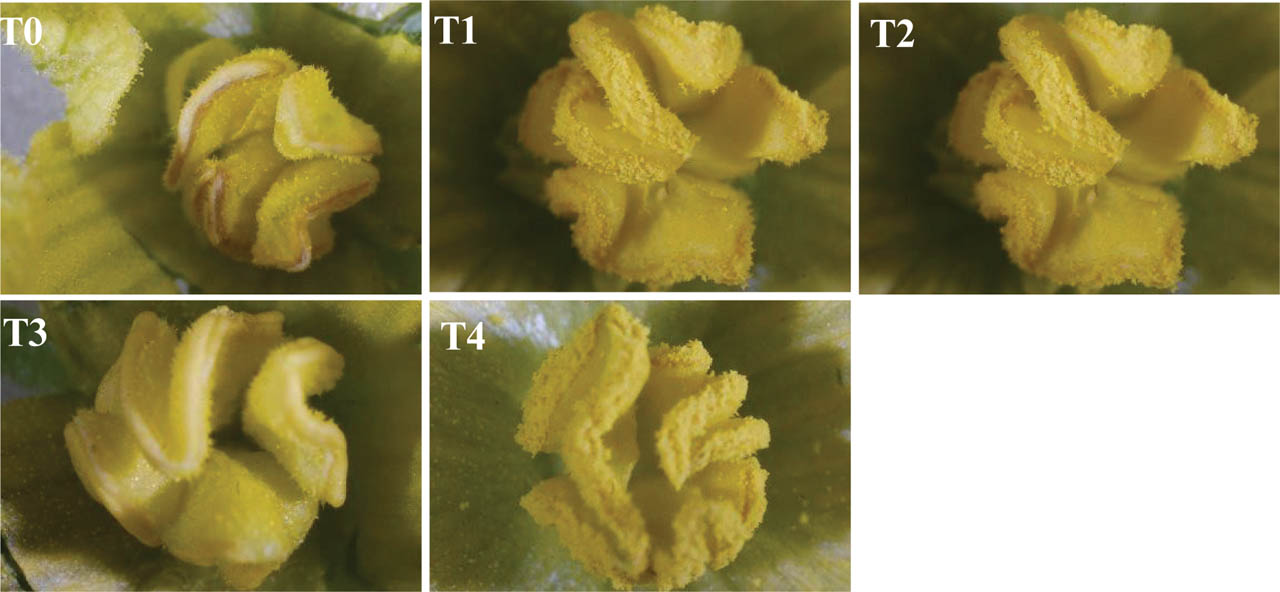
Figure 5.
Effect of different treatments on anther dehiscence and pollen that comes out. The pictures were taken using a binocular microscope with a magnification level of 100×.
As with better anther dehiscence and pollen release, environmental manipulation treatments significantly affected the number of female flowers. T0 had the lowest number of female flowers (5), followed by T1 (8) and T3 (9). T2 and T4, on the other hand, significantly enhanced the production of flowers in females (20 and 24 flowers, respectively) (Figure 6A). Under optimal environmental conditions, ovary growth was also significantly improved. T4 ovary length (11.69 mm) was the highest, followed by T2 (7.02 mm), which shows good reproductive development. The ovary lengths differed significantly between the treatments; T0 and T3 had the shortest, at 4.09 and 4.10 mm, respectively, and T1 had a moderate length (4.93 mm) (Figure 6B).
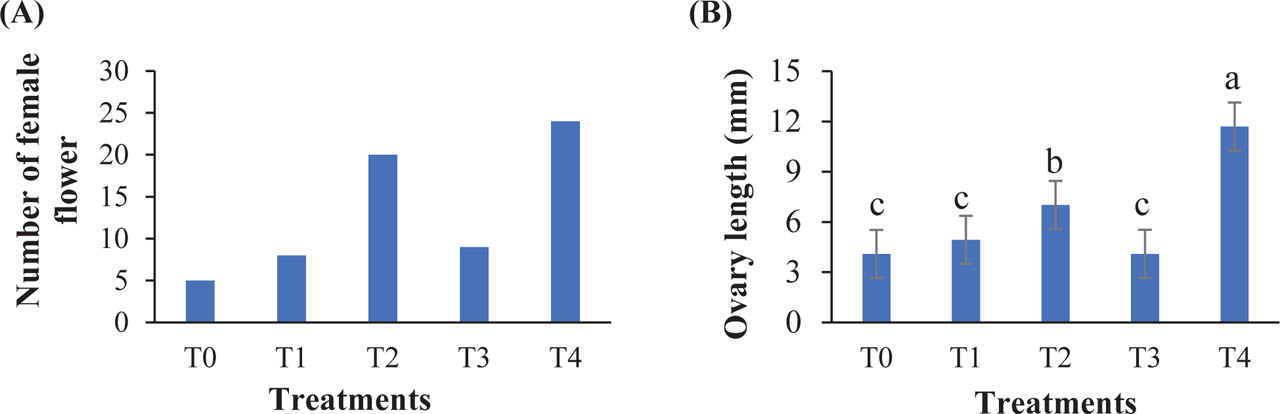
Figure 6.
(A) Number of female flowers and (B) Ovary length as influenced by different treatments. The number of female flowers was counted 20 DAT, and the ovary length was measured just before pollination. Different letters indicate a significant difference (p < 0.05; Tukey's HSD test). Values are the mean ± SD, n = 8. Measurements were taken at 20 DAT. DAT, days after transplanting; HSD, honestly significant difference.
The flowering initiation and fruit setting performance in winter watermelon production were influenced by environmental manipulation under various treatments (Figure 7A, 7B). The first flowering (7 DAT) was delayed in plants in T4 compared to other treatments, and T0 needed the longest (11 DAT). Early flowering was also advanced in T2 at 8 DAT and showed a moderate response in T1 and T3 (Figure 7A). The higher fruit setting rate of 95% and 98% at T2 and T4, respectively, correlated with the enhanced flowering performance. On the other hand, the fruit setting percentage is lowest at T0 (20%) and next at T3 (55%) (Figure 7B).
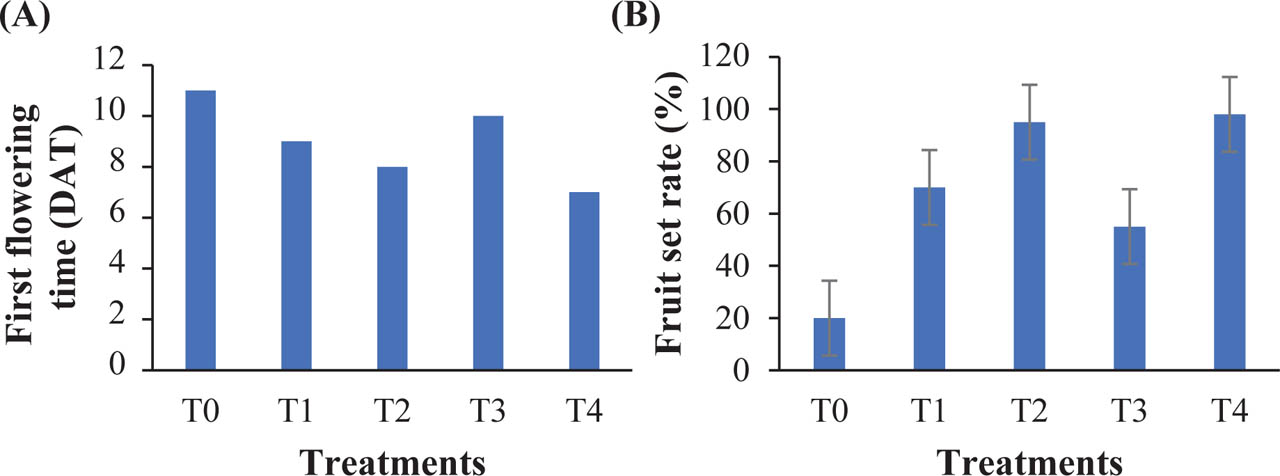
Figure 7.
(A) First flowering time and (B) fruit set rate under different treatments. Values are presented as mean ± SD (n = 8). Different letters indicate significant differences among treatments (p < 0.05; Tukey's HSD test). DAT, days after transplanting; HSD, honestly significant difference.
Fruit yield, physical and biochemical quality responses under different treatments
Environmental manipulation treatments, which were applied in this experiment, significantly affected fruit yield and the physical and biochemical quality of watermelon grown during the winter season. For fruit length, the fruits grew longer in better environmental conditions, with the highest fruit length obtained in T4 (135.04 mm) and T2 (129.49 mm), respectively. In contrast, fruits from T0 had the smallest length (90.73 mm), T1 had intermediate length (109.02 mm) and T3 had the longest length (118.22 mm) (Figure 8A). The improved enlargement of the fruit of T2 and T4 showed favourable environmental conditions for fruit enlargement and development.
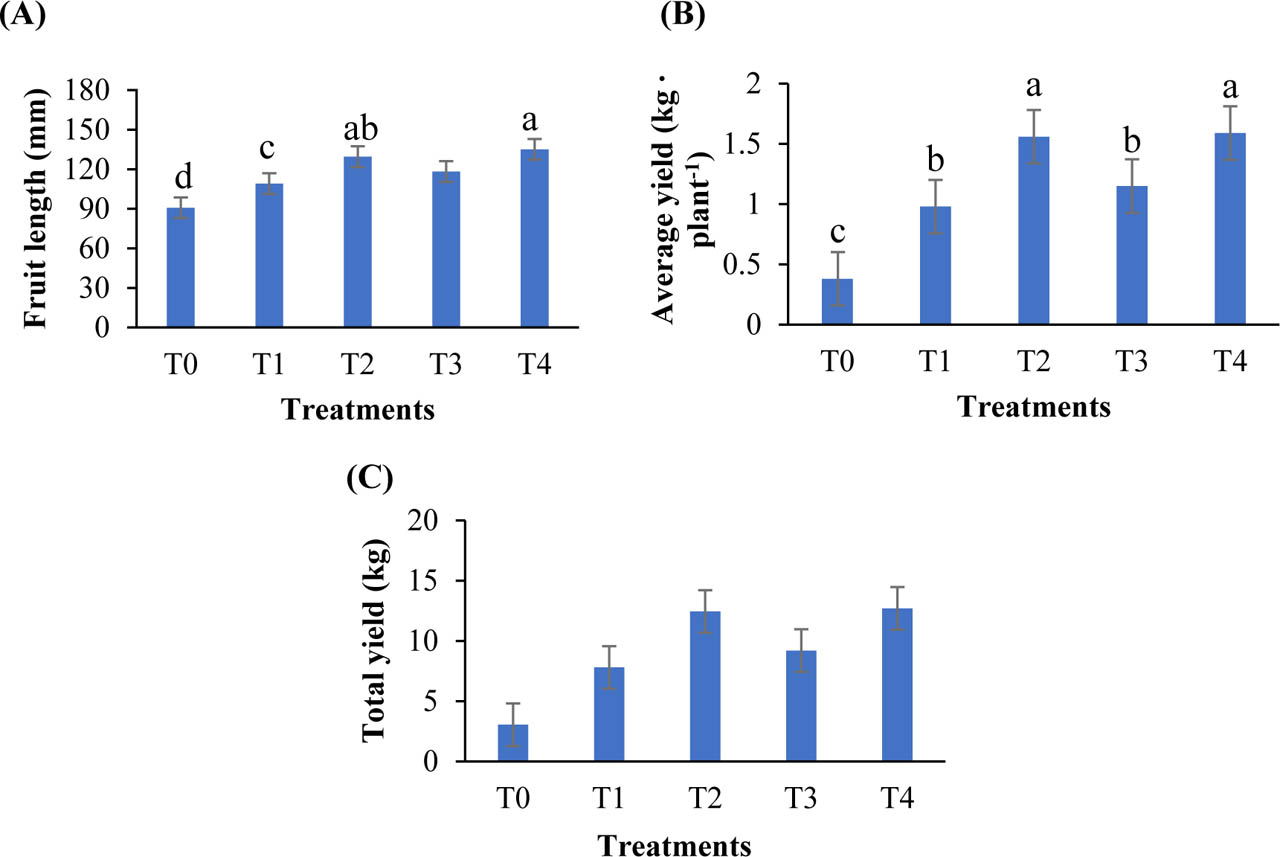
Figure 8.
Influence of treatments on (A) fruit length, (B) average yield per plant and (C) total yield. Values are presented as mean ± SD (n = 6). Different letters indicate significant differences among treatments (p < 0.05; Tukey's HSD test). HSD, honestly significant difference.
There was also a large treatment difference in yield per plant. T4 (1.59 kg · plant−1) and T2 (1.56 kg · plant−1) yielded the highest, with T0 yielding the lowest yield (0.38 kg · plant−1). Moderate yields (0.98 and 1.15 kg · plant−1) were achieved in T1 and T3, respectively (Figure 8B). The same pattern was observed in the case of total yield, which was highest in T4 (12.7 kg) and lowest in T2 (12.45 kg). From this result, it is concluded that the optimum environmental conditions (T2 and T4) significantly enhanced fruit growth and yield performance, especially T4 (3.05 kg) (Figure 8C). There were also significant differences among treatments in external fruit appearance (Figure 9). Fruits produced under T2 and T4 exhibited peel colour similar to the optimum growing season, uniform shape and larger fruit size compared with the other treatments. In contrast, T0 produced misshapen, dark green and less attractive fruits. Treatments T1 and T3 showed moderate improvements in external fruit quality (Figure 9). Fruit flesh thickness, peel thickness, juice pH and flesh colour parameters were significantly influenced by the different treatments (Table 4). The highest flesh thickness was recorded in T4 (108.13 mm), which was statistically similar to T2 (103.51 mm) and T3 (97.66 mm), whereas the lowest value was observed in T0 (82.83 mm).
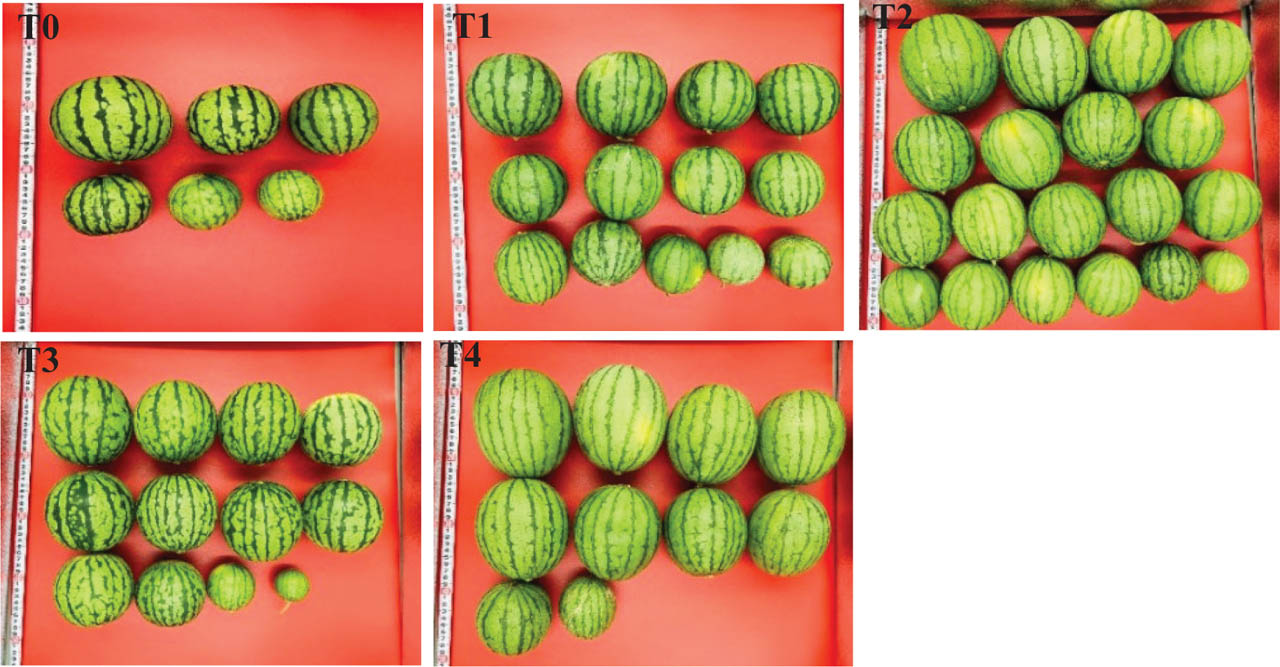
Figure 9.
External fruit appearance, including peel colour, fruit shape and size, as influenced by different treatments.
Table 4.
Different characteristics of fruit with flesh colour of hydroponically grown watermelon in a vertical farming system inside a greenhouse under five different treatments.
| L* | a* | b* | ||||
|---|---|---|---|---|---|---|
| T0 | 82.83 c | 11.07 a | 5.4 b | 39.05 ab | 14.41 b | 11.69 b |
| T1 | 92.31 bc | 3.94 b | 5.6 ab | 20.17 b | 20.78 ab | 14.21 ab |
| T2 | 103.51 ab | 4.12 b | 5.7 a | 29.19 ab | 25.58 a | 22.42 a |
| T3 | 97.66 ab | 13.04 a | 5.5 ab | 27.31 b | 20.19 ab | 12.76 b |
| T4 | 108.13 a | 3.24 b | 5.6 ab | 48.75 a | 15.62 b | 14.38 ab |
In contrast, peel thickness was significantly greater in T3 (13.04 mm) and T0 (11.07 mm), while thinner peels were recorded in T1, T2 and T4. Juice pH ranged from 5.4 to 5.7, with the highest pH observed in T2 and the lowest in T0 (Table 4 and Figure 10). The flesh colour characteristics were also different among the treatments. The highest lightness (L*) value was seen in T4 (48.75), which has a brighter flesh colour when compared to T1 and T3, with comparatively low L* values. The redness (a*) was significantly increased in T2 (25.58), T1 and T3, with the lowest a* found in T0. Likewise, the yellowness (b*) was highest in T2 (22.42), which has an advantage in flesh colour compared to T0 and T3 (Table 4 and Figure 10).
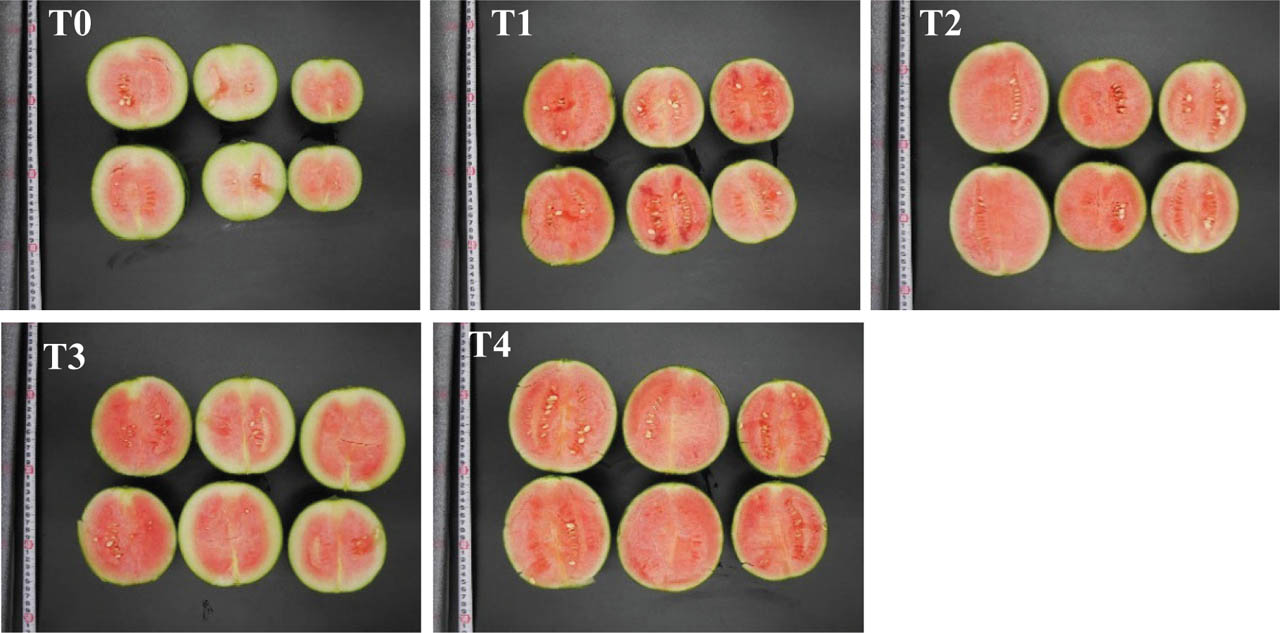
Figure 10.
Internal fruit characteristics, including flesh colour, seed colour, peel thickness and flesh thickness, were evaluated under different treatments.
Fruit sugar content and fruit hardness were significantly influenced by different treatments, while no statistical difference was observed in the acidity of the fruits (Figure 11). The highest soluble solids content (12.8°Brix) was observed in T4, which was followed by T1 (12.3°Brix) and T0 (control) (9.6°Brix). Treatments T2 and T3 had also significantly higher sugar concentrations when compared to the control, suggesting that the treatments applied had positive effects on the fruit quality and sweetness development (Figure 11A). The acidity values ranged from 0.84 to 1.16. The numbers of acidity for T3, T4 and T2 were 1.16, 1.04 and 1.01, respectively, but the differences were not statistically significant (Figure 11B).
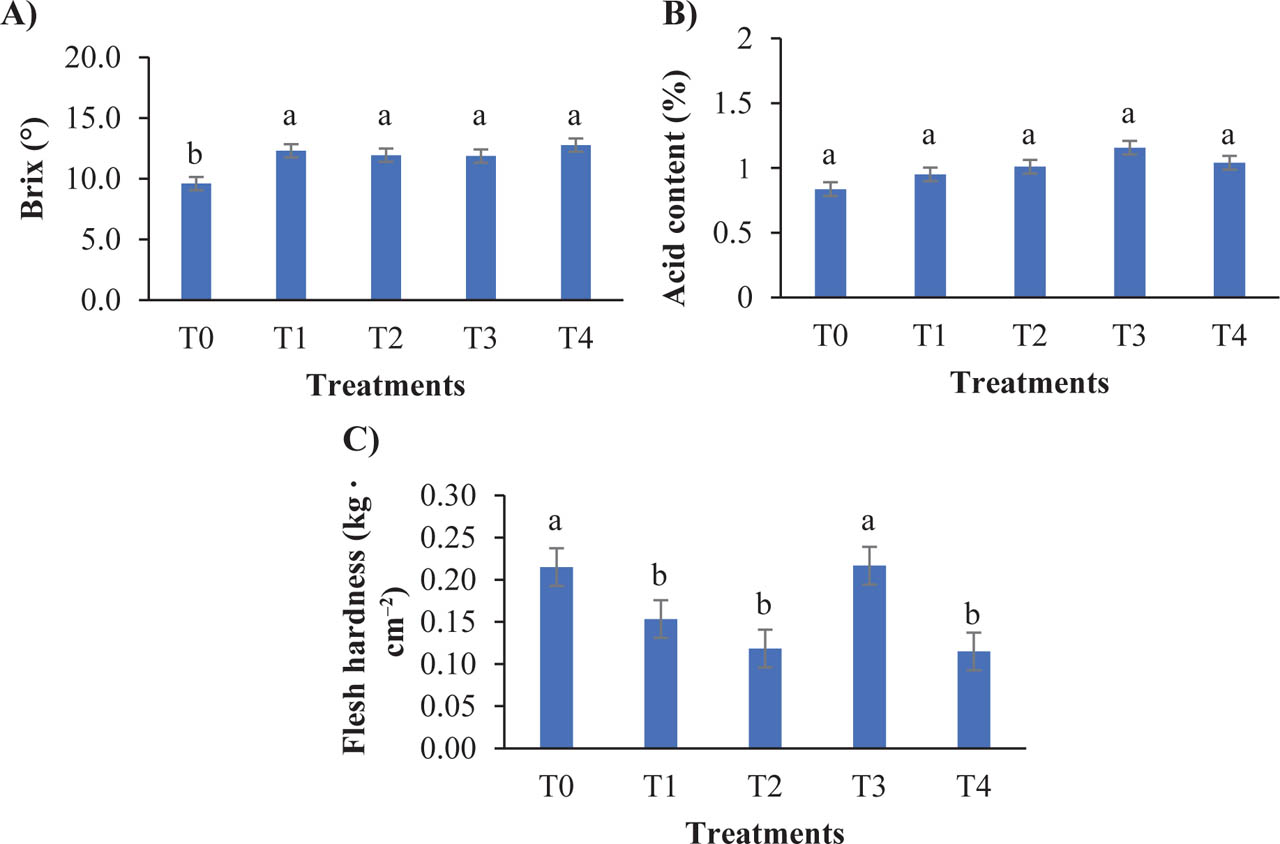
Figure 11.
Influence of treatments on (A) Brix (°), (B) acid content and (C) flesh hardness. Measurements were taken at harvesting time. Values are presented as mean ± SD (n = 6). Different letters indicate significant differences among treatments (p < 0.05; Tukey's HSD test). HSD, honestly significant difference.
Fruit hardness, however, was significantly different among treatments. The fruits of T0 and T3 plants had significantly higher hardness (0.22), indicating a harder flesh texture and less maturity. On the other hand, the hardness was lower in T1, T2 and T4, the lowest being observed in T2 and T4 (0.12) (Figure 11C). This decrease in hardness is in conjunction with an increase in sugar content, which could improve consumer acceptability and overall fruit eating quality. For this reason, the treatment T4 was the most appropriate one by showing a good balance of sweetness and soft flesh attributes among the treatments tested.
DISCUSSION
The vegetative growth, floral development and fruit set of winter-grown watermelon can be improved by manipulation of temperature, light intensity and photoperiod
The results of the present study showed that adjustments of temperature, light intensity and photoperiod resulted in significantly higher vegetative growth, physiological responses, floral development and fruit set of watermelon grown in winter conditions. The results indicated that T2 and especially T4 treatments had the highest photosynthetic activity, chlorophyll accumulation, vegetative growth, reproductive development and fruit setting efficiency (Figure 4 and Table 2 and Table 3) among the evaluated treatments. The superior performance in T4 treatments is not only due to single effects such as temperature and heat but also due to the synergistic effect of environmental manipulation. Thus, the results suggest that controlled environmental management is able to alleviate the constraints of greenhouse production of winter watermelon.
Low temperatures and decreased solar radiation during the winter cultivation period significantly impact watermelon growth and development by influencing both photosynthesis and the translocation of assimilates and reproductive development (Korkmaz and Dufault, 2001; Yang et al., 2020; Hossain et al., 2025a). Thus, it is concluded that better physiological responses under T4 would mean optimised conditions of the microclimate, which would point towards better growth and metabolic activities of the plant. The T2 and T4 treatments, for which the highest chlorophyll index (SPAD) and chlorophyll a, chlorophyll b and carotenoid levels were obtained (Table 2), suggest an increase in the ability to synthesise pigments and in photosynthetic efficiency. Previous studies reported that under controlled cultivation, supplementary lighting with suitable temperature enhanced chlorophyll content, photosynthetic efficiency and improved carbon balance in watermelon, cucumber, melon, tomato, sweet pepper and many other horticultural crops (Hogewoning et al., 2010; Fanwoua et al., 2019; Hossain et al., 2025a).
Hogewoning et al. (2010) also reported that supplemental lights had a significant effect on the accumulation of chlorophyll and the performance of photosynthesis in greenhouse-grown vegetables. Carotenoids play a protective role in the environment under stress conditions by preventing the oxidative damage of photosynthetic tissues, while chlorophyll pigments are directly related to light harvesting efficiency and carbon fixation (Simkin et al., 2022). These higher carotenoid levels in T2 and T4 could, thus, have provided better photoprotection and stress tolerance for winter cropping. Furthermore, higher CO2 assimilation rates under the T4 treatments (Table 2) suggest better carbon metabolism and utilisation of energy, which would also lead to better vegetative growth and biomass accumulation (Taiz et al., 2015; Kozai, 2016). The physiological responses of the T4 plant were best compared to other treatments, indicating that continuous strong LED lighting with suitable temperature enhanced the physiological processes of plants. This was confirmed by our previous studies, indicating that watermelon crops require bright sunshine hours for their proper physiological processes during winter cultivation (Hossain et al., 2025a). The vegetative growth parameters, such as plant height, leaf area, leaf length, number of nodes and fresh weight, were also significantly improved under T2 and T4 (Table 3).
These findings agree with the previous results, which indicated that the best cell division rate and optimal dry matter production, along with leaf expansion rate in sweet pepper, were observed under the optimum temperature and light intensity (Marcelis et al., 2006). Increased leaf area of T2 and T4 could have led to greater light interception and photosynthetic carbon gain, which in turn would have favoured production and the sink-source balance within the plant (Dorais et al., 2000). Similar findings are observed in greenhouse vegetables, tomatoes and watermelon, in which vegetative growth and plant vigour are enhanced by environmental regulation (Gruda, 2005; Fanwoua et al., 2019; Hossain et al., 2025a). Better vegetative growth in favourable environments could also have been a factor in reproductive development due to increased carbohydrate reserves available for flower initiation and fruit development (Breen et al., 2016). Environmental factors, especially temperature and photoperiod during flowering and pollination, have a significant effect on the reproductive performance of watermelon (Sato et al., 2006). This study revealed that pollen release and anther dehiscence were inhibited in T0 and T3, while T2 and T4 showed significant promotion in anther opening and pollen release (Figure 5). Low temperature stress has been reported to adversely affect the viability of watermelon pollen (Hossain et al., 2025a), anther dehiscence and fertilisation in tomato (Firon et al., 2006) and many other crop species (Huang et al., 2022). Thus, fruit set percentage (Figure 7B) was increased in treatment T4, which is explained by the increased pollen release and flower fertilisation. These enhancements in fruit production under ideal environmental parameters have been reported for greenhouse tomato and watermelon crops (Abdelmageed and Gruda, 2009; Hossain et al., 2025a).
The higher percentage of female flowers and larger ovary size under T2 and T4 (Figure 6A, 6B) further support the positive regulation of floral differentiation and reproductive development under favourable environmental conditions. Flower development and sex expression in cucumber (Cucumis sativus L.) are affected by environmental conditions that affect the endogenous hormonal balance, such as gibberellins and ethylene (Luo et al., 2023). T4 (Figure 7A) may be related to increased translocation of assimilates and physiological growth, too. Agronomic characters such as early flowering and high fruit set are crucial for protected watermelon to enhance productivity and to minimise the crop duration in the winter seasons (Proietti et al., 2008; Hossain et al., 2025a).
Environmental regulation of yield, fruit physical characteristics and biochemical quality of winter watermelon under controlled conditions
Fruit yield and quality are highly dependent on environmental conditions during fruit growth and development (Kyriacou and Rouphael, 2018; Jeon et al., 2026). The results obtained from the present study indicated that environmental regulation significantly improved fruit yield, physical attributes and biochemical quality of winter-grown watermelon under controlled greenhouse conditions. The treatments T2 and especially T4 showed significant improvement in fruit length, yield per plant and total yield compared with the control (Figure 8A–C). The results indicate that the optimal environmental conditions helped to produce assimilates and to channel them towards developing fruits, which is essential for improving fruit growth and sink strength, and is strongly influenced by the optimal temperature, light intensity and photosynthetic efficiency (Korkmaz and Dufault, 2001; Marcelis and Heuvelink, 2007; Noh et al., 2013).
In the same way, Kyriacou and Rouphael (2018) and Hossain et al. (2025a) also reported the same improvement in watermelon productivity under protected cultivation and optimum environmental management. The increased flesh thickness and external quality of the tubers in T2 and T4 (Figure 9 and Table 4) show increased cell expansion and accumulation of carbohydrates under favourable environmental conditions. Previous investigations have shown that the fruit enlargement, pigmentation and marketable quality of tomato and cucumber were enhanced in a controlled environment with radiant energy levels providing sufficient radiation and optimum temperature, as evidenced by the increased carbon assimilation and hormonal regulation (Dorais et al., 2000; Abdelmageed and Gruda, 2009). The higher a* values and lycopene content in T2 and T4 (Figure 10 and Table 4) further indicate better lycopene biosynthesis and pigment development, which is very light- and temperature-sensitive (Tlili et al., 2011; Kyriacou and Rouphael, 2018). Higher sugar content and decreased fruit hardness in T2 and T4 (Figure 11A–C) were indicative of better ripening and eating quality. The high correlation of sugar accumulation with increased photosynthetic rates and efficient assimilate partitioning during watermelon development (Colla et al., 2006) suggests that this trait is tightly linked to growing ability and partitioning of assimilates.
The higher hardness of T0, however, could represent delayed maturity and a lack of softening during suboptimal environmental conditions (Vicente et al., 2005). The pH and acidity of the juice did not change significantly between treatments, although there were numerical differences (Figure 11B and Table 4). This indicates that the manipulation of the environment had little effect on the accumulation of organic acids in the juice but rather on the sugar metabolism and fruit texture. The overall results indicated that under greenhouse cultivation, the appropriate regulation of environmental factors during winter can significantly increase watermelon yield and quality.
CONCLUSIONS
The present study demonstrated that temperature, light intensity and photoperiod treatments significantly enhanced vegetative growth, reproductive development, watermelon fruit yield and fruit quality in greenhouse-grown watermelon. The results from evaluated treatments showed that optimised temperature management, continuous application of high intensity LED light and extended photoperiod (T4) had consistently better physiological performance, chlorophyll accumulation, photosynthetic activity, floral development, fruit set (98%), fruit yield (1.59 kg · plant−1), soluble solids (12.8°Brix) and overall fruit quality than the control and other environmental treatments. During winter production, increased photosynthetic activity and pigment accumulation led to higher percentages of fruit setting, better ovary development, more female flowers and vigorous vegetative growth when growing under T2 and T4. Environmental regulation also significantly affected fruit enlargement and yield, sugar accumulation, fruit flesh colouration and eating quality. The fruits grown under T2 and T4 conditions had features similar to those of fruit grown in the optimum production season, such as appearance, sweetness and softness of fruit. On the other hand, low temperature and light intensity in T0 had negative effects on pollination, fruit development and fruit quality. In general, the results indicated that the manipulation of temperature, light and photoperiod combinedly applied in T2 and T4 treatments performed best compared to single factors, such as only light or only temperature manipulation in T1 and T3, and no manipulation in T0. The heating and supplementary lighting strategies during off-season cultivation of watermelon demonstrated in this study will be helpful strategies to compensate for low temperature and lack of sunlight during winter watermelon cultivation in the greenhouse. In addition, these strategies will be helpful to reduce the cost of production during winter cultivation.
ACKNOWLEDGEMENTS
The authors acknowledge that the contents of this paper are part of the doctoral thesis of Md. Mukhtar Hossain (MMH), with permission granted by co-authors. We also extend our sincere thanks to Ms Yamato for her valuable assistance in conducting this experiment.
Notes
[13] Contributed by AUTHOR CONTRIBUTIONS
F.G. planned and supervised the study; M.M.H. conducted the experiments, analysed and interpreted the data and prepared the manuscript; F.G. and M.M.H. wrote, reviewed and edited the manuscript. Both authors have read and approved the manuscript.