
INTRODUCTION
Hazelnut (Corylus spp.), a member of the Betulaceae family, has a long cultivation history in the Mediterranean region and Turkey’s Eastern Black Sea region (Özbek, 1978; Thompson et al., 1996). Turkey remains the global leader in production, followed by Italy, the USA and Azerbaijan. For sustainable hazelnut cultivation, it is essential to develop and propagate new varieties that can adapt to changing climatic conditions. Additionally, moving cultivation to areas better suited for these conditions and renewing orchards that have surpassed their economic yield is crucial. The selection and evaluation of local hazelnut genotypes and suitable rootstocks are fundamental steps in improving orchard productivity and sustainability (Karadeniz et al., 2019, 2020). The production of hazelnut seedlings plays a vital role in achieving these goals.
While traditional propagation methods have limitations (Beyhan and Marangoz, 2007), vegetative propagation by cuttings offers a low-cost alternative for rapid multiplication (Hartmann and Kester, 1983; Cristofori et al., 2010). Most studies on hazelnut cuttings have focused on the rooting stage, examining factors such as plant growth regulators, timing and cutting types, with rooting rates varying significantly from 23.7% to 95% (Ercişli and Read, 2001; Cristofori et al., 2010; Markovski et al., 2016; Özdemir and Dumanoğlu, 2018). This variation is often influenced by the specific cultivar, the timing of cutting collection and the hormone concentrations used, yet a standard rooting protocol remains elusive for many varieties. However, significant losses often occur during the transplanting of rooted cuttings, highlighting challenges in subsequent sapling development (Klavuz and Çetiner, 1992).
Plant Growth-Promoting Rhizobacteria (PGPR) and Arbuscular Mycorrhizal Fungi (AMF) are known to enhance plant growth through hormonal regulation, nutrient solubilisation and improved root surface area (Palta et al., 2010; Güneş et al., 2014). Previous research has shown that bacterial and mycorrhizal inoculations can significantly improve the nutrient content of various crops, including hazelnuts, tea and citrus (Ertürk et al., 2011; Çakmakçı et al., 2012; Mışraklı et al., 2019). Despite these findings, the comparative effectiveness of PGPR and AMF on different hazelnut cultivars and cutting types during the nursery stage remains insufficiently explored.
The primary objective of this study was to evaluate the effects of PGPR and AMF inoculations on the leaf nutrient status and chlorophyll content of rooted hardwood and softwood cuttings from three major Turkish hazelnut cultivars (‘Tombul’, ‘Çakıldak’ and ‘Okay 28’). We tested the following hypotheses: (i) AMF inoculation has a stronger positive effect on leaf nutrient content compared to PGPR inoculation and (ii) the response to bio-inoculation varies significantly depending on the cutting type (hardwood vs softwood) used for propagation and cultivar.
MATERIALS AND METHODS
Growing rooted cuttings
The plant materials used in this study included rooted cuttings from three hazelnut (Corylus avellana L.) varieties: ‘Tombul’, ‘Çakıldak’ and ‘Okay 28’. Hardwood and softwood cuttings were prepared from the suckers of these varieties. Hardwoods were treated with indole-3-butyric acid (IBA) at a concentration of 4000 ppm, while softwoods were treated at a concentration of 1500 ppm using the quick dipping method. Perlite was used as the rooting medium, and the cuttings were rooted under greenhouse conditions. The hardwood and softwood cuttings that were planted in March and June 2021 were removed from the perlite and planted in pots in August of the same year. The rooted cuttings were then planted in pots made of a mixture of perlite and peat, with a 1:1 ratio. The pots measured 12.5 cm × 12.5 cm × 20 cm. Table 1 presents the chemical composition of the peat used in the study. The nutrient elements found in the peat included nitrogen (N), calcium (Ca), magnesium (Mg), iron (Fe), copper (Cu) and boron (B), which were classified as very high. Potassium (K), manganese (Mn) and zinc (Zn) were considered high, while phosphorus (P) was classified as very low based on the peat analysis results (Table 1) and reference limit values (Duyar and Özenç, 2013; Table 2). The pH level of the peat fell within the desired range for hazelnut cultivation (Table 1), and it was classified as ‘salt-free’ regarding salinity (Richards, 1954; Ülgen and Yurtsever, 1995), as indicated in Table 3.
Table 1.
Nutrient content of peat.
| N | Ca | Mg | P | K | Fe | Mn | Zn | Cu | B | Salinity | pH |
|---|---|---|---|---|---|---|---|---|---|---|---|
| (%) | (ppm) | (dS · m−1) | |||||||||
| 0.93 | 5201 | 1004 | 3.79 | 885.7 | 618.6 | 29.28 | 7.73 | 24.05 | 12.80 | 1.08 | 6.17 |
Table 2.
Limit values of nutrients in hazelnut growing media (Duyar and Özenç, 2013).
| Nutrient element | Unit | Very low | Low | Adequate | High | Very high |
|---|---|---|---|---|---|---|
| N | (%) | <0.09 | 0.10–0.20 | 0.21–0.35 | 0.36–0.50 | >0.51 |
| P | (ppm) | <39.9 | 40.0–79.9 | 80.0–119.9 | 120.0–149.9 | >150.0 |
| K | <85 | 86.0–320.0 | 321.0–750.0 | 751.0–1750.0 | >1751.0 | |
| Ca | <500 | 501–1199 | 1200–3400 | 3401–4500 | >4501 | |
| Mg | <49 | 50–200 | 201–420 | 421–1000 | >1001 | |
| Fe | <45 | 46–75 | 76–110 | 11–250 | >251 | |
| Mn | <5.0 | 5.1–15.0 | 15.1–25.0 | 25.1–40.0 | >40.1 | |
| Zn | <1.00 | 1.01–2.50 | 2.51–6.00 | 6.01–10.00 | >10.10 | |
| Cu | <0.99 | 1.00–2.00 | 2.01–4.50 | 4.51–6.50 | >6.51 | |
| B | <0.35 | 0.36–1.25 | 1.26–5.00 | 5.01–8.00 | >8.01 |
Table 3.
Soil salinity limit values (Richards, 1954; Ülgen and Yurtsever, 1995).
| Salt class | EC (ds · m−1) | Total salt (%) |
|---|---|---|
| Free salt | 0–4 | 0.00–0.15 |
| Low salt | 4–8 | 0.15–0.35 |
| Medium salt | 8–15 | 0.35–0.65 |
| Salty | >15 | >0.65 |
Calcium nitrate tetrahydrate [Ca(NO3)2 · 4H2O], monopotassium phosphate [KH2PO4], a bacterial preparation and a mycorrhizal preparation were used to study their effects on the growth and development of rooted cuttings. The choice of bacterial and mycorrhizal preparations was based on their effects on the survival rate, growth and nutrient uptake of seedlings from specific fruit tree species in earlier studies. The bacterial preparation contained the strains Bacillus megaterium RC07, Pantoea agglomerans RC58 and Pseudomonas fluorescens RC77. It had a concentration of viable organisms of 1 × 10⁷ CFU · mL−1 and a pH level between six and seven. The mycorrhizal preparation included Glomus intraradices, Glomus aggregatum, Glomus mosseae, Glomus clarum, Glomus monosporus, Glomus deserticola, Glomus brasilianum, Glomus etunicatum and Gigaspora margarita, with a total viable organism count of 1 × 10⁴ CFU · g−1.
Experimental design and treatments
Basic fertilisation
For basic fertilisation (BF), a solution at a concentration of 100 ppm N was prepared using Ca(NO3)2 · 4H2O (Merck, Catalogue No: 1.02121.0550) and a solution at a concentration of 500 ppm P was prepared using KH2PO4 (Merck, Catalogue No: 1.04873.1000). These solutions were applied at a rate of 50 mL per pot (Figure 1A). BF was conducted 20 days after planting. It was repeated twice more at 10-day intervals. Plants that received BF were treated as the control group.
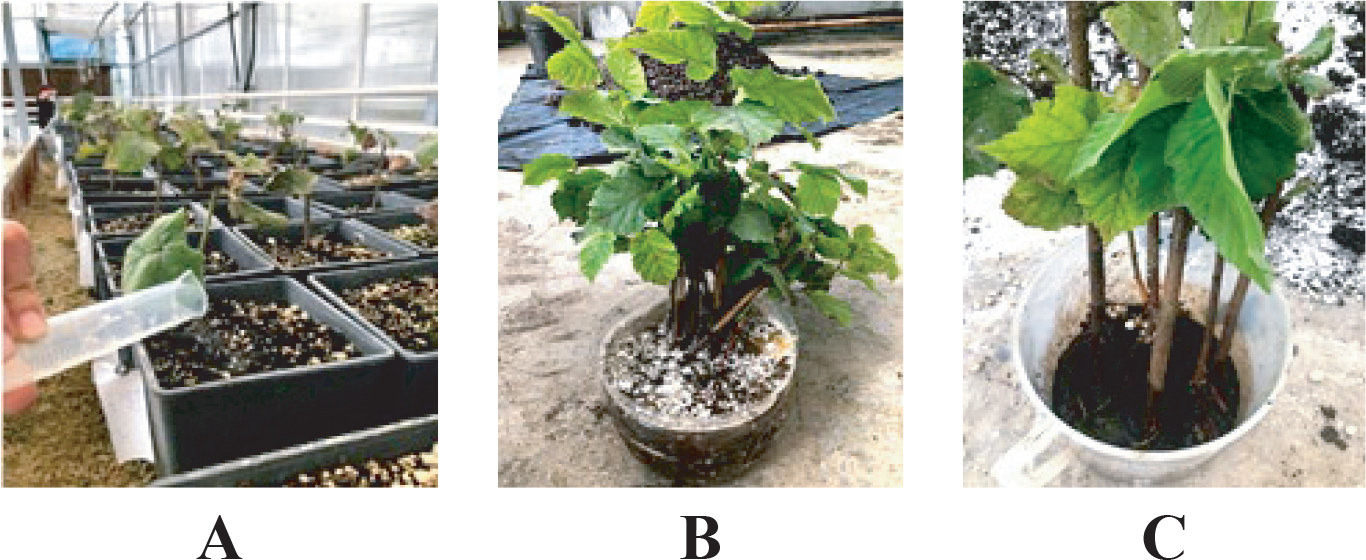
Figure 1.
Basic fertilization (A); Bacteria inoculation (B); Mycorrhiza inoculation (C).
The nitrogen (N) dose of 100 ppm applied in the BF was selected to observe the nutrient requirements of the seedlings during a 1-year growth cycle and to determine the effectiveness of biostimulants (PGPR and AMF) under low input conditions. However, as discussed in the results section, this dose was insufficient for the woody plant seedlings’ full annual cycle, and none of the treatments reached the sufficiency thresholds reported in the literature. This limitation is acknowledged as a constraint of the study, but it is important as it demonstrates the extent to which microorganisms can promote nutrient uptake even under limited nutrient conditions.
Basic fertilisation + bacteria
To prepare the liquid bacterial mixture for application to the roots of the cuttings, 100 times the volume of distilled water was added to the mixture and homogenised. The mixture was allowed to stand in the dark for 12 hr. The roots of the cuttings, which had been removed from perlite and were ready for planting, were immersed in this mixture for 2 hr (Figure 1B). They were planted in pots immediately after 2 hr. Twenty days after planting, the plants were given BF. The 100 ppm N and 500 ppm P solutions were applied at a rate of 50 mL per pot. This was repeated twice more at 10-day intervals. During the plants’ growth, the bacterial application was repeated once more at the beginning of June. For this purpose, each pot was watered with 100 mL of the bacterial solution prepared in the same manner.
Basic fertilisation + mycorrhiza
The mycorrhizal mixture in powder form was weighed out at 10 g per plant, mixed with pure water for 10 min and homogenised. The cuttings were then dipped into this solution for 1 min before being potted. (Figure 1C). And then, they were planted in pots immediately. Twenty days after planting, the plants were given BF. The 100 ppm N and 500 ppm P solutions were applied at a rate of 50 mL per pot. This was repeated twice more at 10-day intervals.
The plants were grown in a polycarbonate greenhouse with top ventilation and no heating. When the temperature inside the greenhouse exceeded 25°C, misting was used to cool the plants. All cultural practices were performed on the plants grown in these greenhouse conditions.
Nutrient element analysis
Twelve months after planting the rooted softwood and hardwood cuttings in pots (July 2022), the nutrient content and chlorophyll content of the leaves were measured. The amounts of macronutrients, nitrogen (N), phosphorus (P), potassium (K), calcium (Ca), magnesium (Mg) and micronutrients iron (Fe), copper (Cu), zinc (Zn), manganese (Mn) and boron (B) were analysed. Samples were collected from the third and fourth leaves, starting from the tips of the shoots, of healthy plants. These samples were brought to the laboratory and pre-washed with tap water. After removing moisture with a clean towel, the samples were dried in an oven at 65°C for 48 hr. Once dried, the samples were ground to pass through a 1 mm sieve. Total nitrogen (N) was determined using the Kjeldahl method, utilising the VELP Scientifica Kjeldahl unit UDK 142 (Bremner, 1996). For the analysis of other macronutrients (P, K, Ca, Mg and Na) and micronutrients (Fe, Mn, Zn, Cu and B), microwave-assisted acid digestion (HNO3-H2O2) was performed, followed by Inductively Coupled Plasma Optical Emission Spectrometry (ICP-OES) protocols (Mertens, 2005a, 2005b). Concentrations of P, K, Ca, Mg, Na, Fe, Mn, Zn, Cu and B were determined using a Perkin-Elmer Optima 2100 DV ICP/OES.
Chlorophyll measurement
The chlorophyll index was measured using a chlorophyll meter (FieldScout CM1000, Spectrum Technologies, Inc., Aurora, IL, USA). Measurements were taken from three separate leaves in each treatment group at the end of July, between 10:00 a.m. and 12:00 p.m., when daylight was most intense.
Statistical analysis
The experiment was arranged in a three-factor factorial randomised plot design with treatments (BF, BF + B, BF + M), cutting type (hardwood, softwood) and cultivar (‘Tombul’, ‘Çakıldak’ ‘Okay 28’). Each treatment combination consisted of three replicates with five plants per replicate. Mean values per replicate were used for statistical analysis. Data were analysed using three-way analysis of variance (ANOVA) in JMP 13.0 (SAS Institute Inc., Cary, NC, USA). The factors (treatment, cutting type and cultivar) were considered fixed effects. When significant effects were detected, mean comparisons were performed using Tukey’s HSD test at p ≤ 0.05. Before analysis, data were checked for normality and homogeneity of variances.
RESULTS
Macronutrients
The three-way interaction among treatment, cultivar and cutting type was not significant for the contents of nitrogen (N), phosphorus (P), potassium (K), calcium (Ca) and magnesium (Mg) (Figure 2).
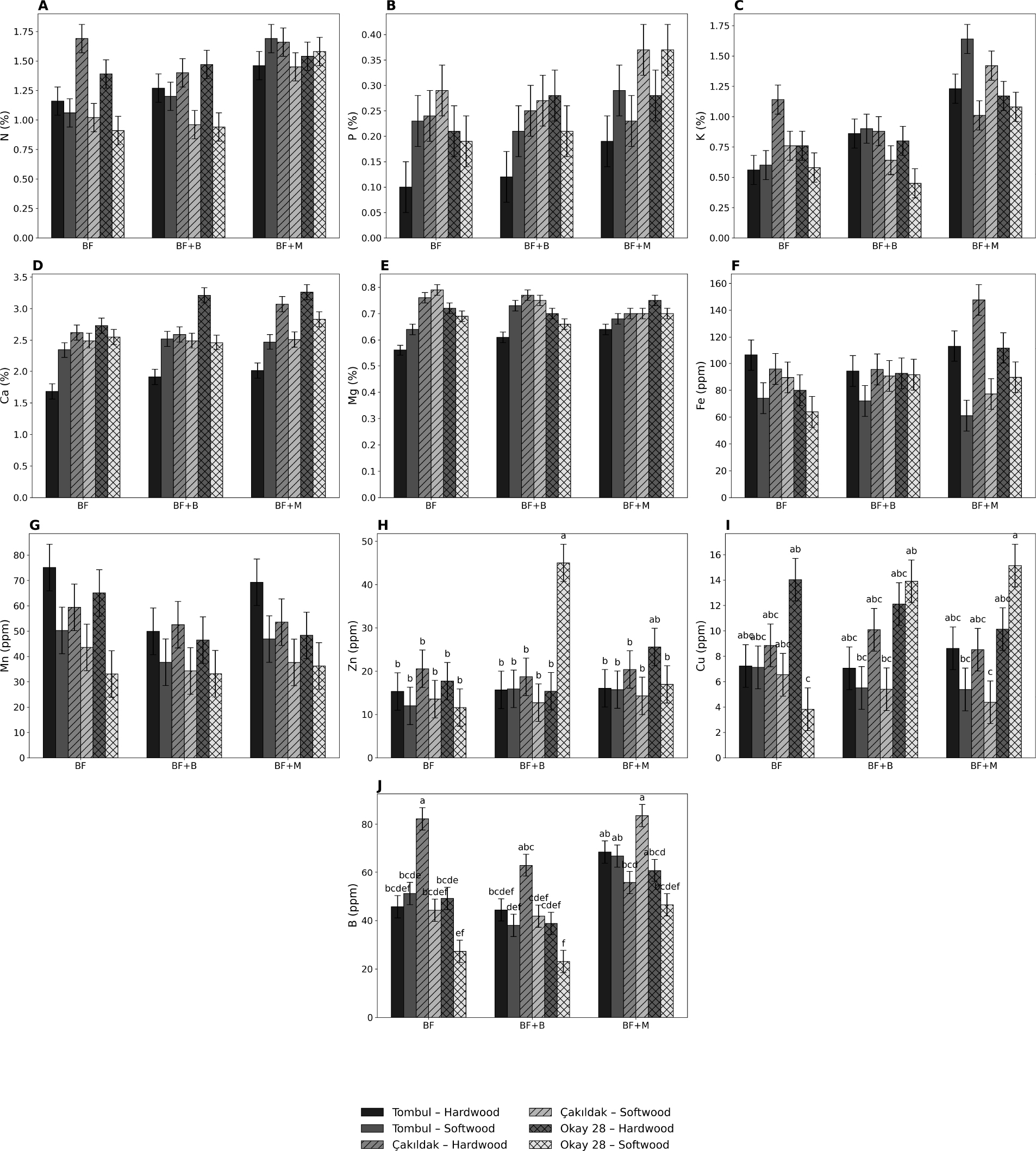
Figure 2.
Effect of treatment × cultivar × cutting type interaction on the macro elements and microelements content of leaves. (A–J) represent individual parameters (N, P, K, Ca, Mg, Fe, Mn, Zn, Cu, B). Data are presented as mean values ± SE. Bars sharing different lowercase letters indicate statistically significant differences according to Tukey’s HSD test (p ≤ 0.05). SE, standard error.
The interaction between treatment and cultivar was not significant for N, P and Ca; however, K and Mg showed significant interactions. The highest K content (1.44%) was observed in the ‘Tombul’ cultivar under the mycorrhizal treatment (BF + M). For Mg, the highest values were recorded in the ‘Çakıldak’ cultivar, with control (0.77%) and bacterial treatment (BF + B; 0.76%) showing comparable maximum responses (Table 5).
The interaction between treatment and cutting type was significant for N and K. Higher nitrogen values (1.57%, 1.55%, 1.41% and 1.39%) were found in softwood cuttings under the mycorrhizal treatment (BF + M), as well as in hardwood cuttings under the mycorrhizal (BF + M), control (BF) and bacterial (BF + B) treatments. For K, the highest value (1.38%) occurred in softwood cuttings under BF + M, while hardwood cuttings under the same treatment had a lower value (1.14%). No significant interaction was detected for P, Ca and Mg (Table 5).
Treatment means differed significantly for N, P, K and Ca, with the highest values occurring under the mycorrhizal treatment (BF + M). For Ca, the bacterial treatment (BF + B) showed an intermediate response that differed from the control, while Mg was not affected by the treatment. Mean values for N and K among cultivars did not differ significantly, with the highest values found in ‘Çakıldak’. In contrast, the contents of P, Ca and Mg varied significantly among the cultivars (p ≤ 0.05). ‘Çakıldak’ had the highest P (0.27%) and Mg (0.75%) values, while ‘Okay 28’ exhibited the highest Ca content (2.84%). Mean values for cutting types differed significantly for N and P, with the highest N (1.45%) found in hardwood cuttings and the highest P (0.27%) in softwood cuttings. No significant differences were observed for K, Ca and Mg (Table 5).
Micronutrients
The interaction between treatment, cultivar and cutting type was significant for zinc (Zn), copper (Cu) and boron (B), as indicated by different letter groupings. The highest Zn concentration (44.99 ppm) was recorded in the ‘Okay 28’ cultivar propagated through softwood cuttings under the bacterial treatment (BF + B). The maximum Cu level (15.14 ppm) was also found in ‘Okay 28’ with softwood cuttings, but under the mycorrhizal treatment (BF + M).
For B, the highest concentration (83.55 ppm) was observed in ‘Çakıldak’, propagated with softwood cuttings under BF + M and (82.17 ppm) propagated with hardwoods under BF. In contrast, the three-way interaction was not significant for iron (Fe) and manganese (Mn) (Figure 2).
The interaction between treatment and cultivar was not significant for Fe, Mn, Zn, Cu and B. Across all cultivar and treatment combinations, Fe values ranged from 71.91 ppm to 112.38 ppm and Mn values ranged from 39.82 ppm to 62.67 ppm. The contents of Zn, Cu and B varied among 13.66–30.18 ppm, 6.28–12.64 ppm and 30.93–69.62 ppm, respectively (Table 6).
A significant interaction was detected between treatment and cutting type for Zn and B. The highest Zn value (24.54 ppm) was recorded in softwood cuttings under the bacterial treatment (BF + B). In terms of B, maximum values were observed in both hardwood (61.68 ppm) and softwood (65.62 ppm) cuttings under the mycorrhizal treatment (BF + M). No significant interaction was noted for Fe, Mn and Cu (Table 6).
Regarding treatments, B showed significant differences, with the highest value (63.65 ppm) recorded under the mycorrhizal treatment (BF + M). Although Fe values increased numerically across treatments, they did not achieve statistical significance, and Mn, Zn and Cu were not affected by treatment. In summary, significant differences in B content were observed among treatments, with the highest concentration (63.65 ppm) obtained under the mycorrhizal treatment (BF + M). Mean values for Fe and Mn among cultivars did not differ significantly; however, the highest values were seen in ‘Çakıldak’ for Fe (99.35 ppm) and in ‘Tombul’ for Mn (54.84 ppm). Conversely, Zn, Cu and B concentrations differed significantly among cultivars (p = 0.05), with ‘Okay 28’ showing the highest Zn (22.03 ppm) and Cu (11.52 ppm) values, while ‘Çakildak’ exhibited the highest B content (61.74 ppm). Mean values based on cutting type significantly differed for Fe, Mn, Cu and B, with higher values consistently observed in hardwood cuttings. However, Zn did not differ significantly between cutting types (Table 6).
Chlorophyll
A significant three-way interaction (treatment × cutting type × cultivar) was observed for chlorophyll content (Figure 3). The highest chlorophyll index (328.33) was recorded in hardwood cuttings of the ‘Çakıldak’ cultivar under the BF + M treatment. followed by ‘Çakıldak’ under BF + B (258.00) and ‘Tombul’ under BF + M (246.66). Conversely, the lowest chlorophyll content in leaves was determined in Tombul’s hardwood and softwood cuttings with BF application, in ‘Çakıldak’ and ‘Okay 28’ varieties’ softwood cuttings, in all three varieties’ softwood cuttings with BF + B application, and BF, basic fertilisation; SE, standard error.in Tombul’s softwood cuttings with BF + M treatment. The lowest chlorophyll content ranged from 133.33 to 153.33 (Figure 3).
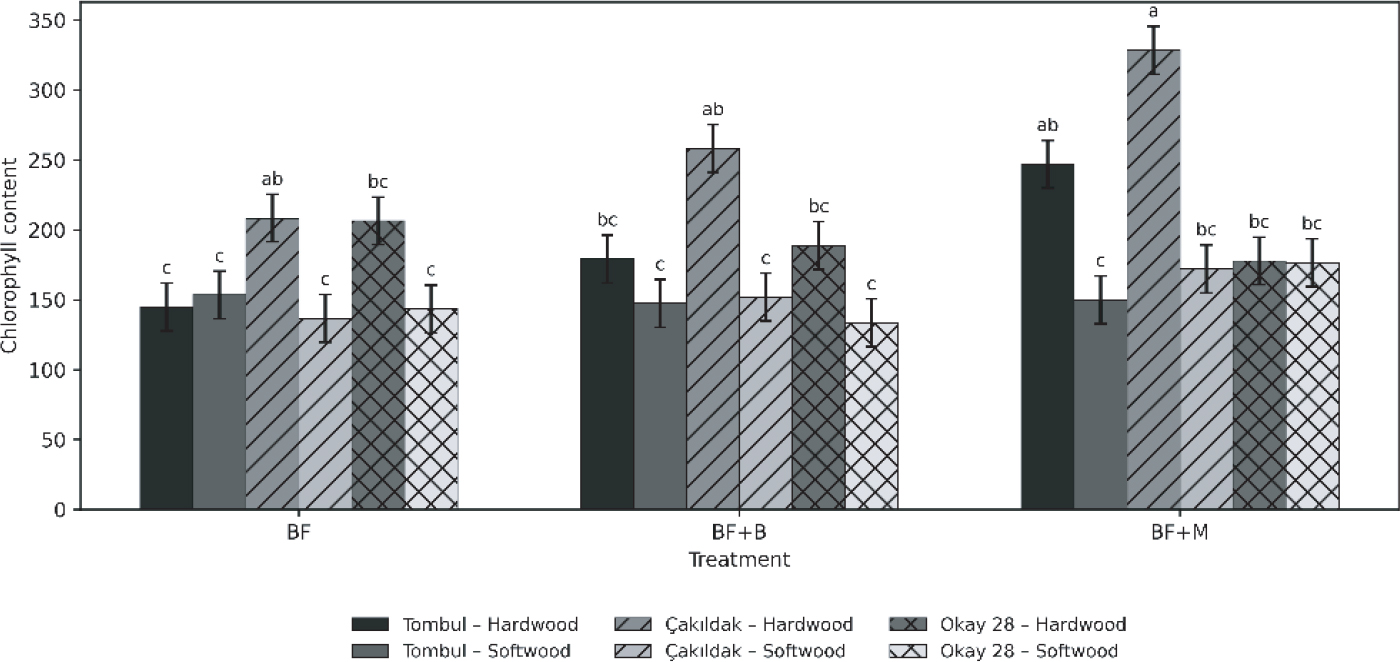
Figure 3.
Effect of treatment x cultivar x cutting type interaction on the chlorophyll content of leaves. Data are presented as mean values ± SE. Bars sharing different lowercase letters indicate statistically significant differences according to Tukey’s HSD test (p ≤ 0.05). SE, standard error.
Chlorophyll content was significantly affected by cultivar, cutting type and treatment (Table 7; Figure 4). Among cultivars. ‘Çakıldak’ exhibited significantly higher chlorophyll content compared with ‘Tombul’ and ‘Okay 28’, which did not differ from each other (Figure 4A). Cutting type also had a significant effect with hardwood cuttings showing higher chlorophyll content than softwood cuttings (Figure 4B). Regarding treatments, the BF + M application resulted in the highest chlorophyll content whereas BF and BF + B treatments showed lower and statistically similar values (Figure 4C).
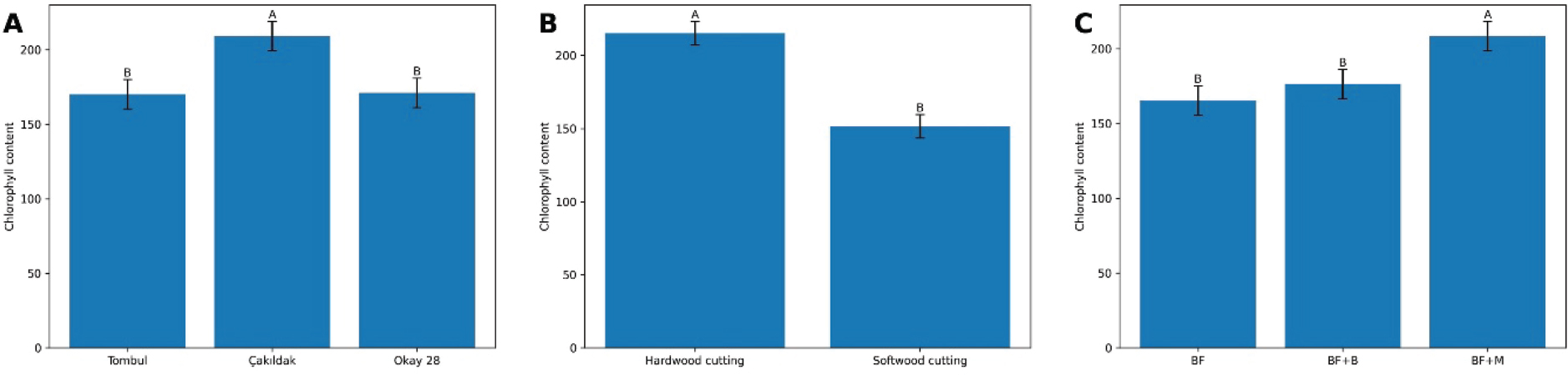
Figure 4.
Effects of cultivar (A), cutting type (B) and treatment (C) on chlorophyll content. Bars represent mean values ± SE. Different uppercase letters above the bars indicate statistically significant differences among groups according to Tukey’s HSD test (p ≤ 0.05). SE, standard error.
DISCUSSION
The increased N content observed in inoculated plants, particularly with AMF, aligns with previous research on hazelnut, grapevine and other woody species (Ertürk et al., 2011; Rostamikia et al., 2017; Korkutal et al., 2019). The primary mechanism here is likely the expansion of the root absorptive surface by AMF hyphae, which is more efficient than the hormonal stimulation provided by PGPR under nutrient-limited conditions. Consistent with these findings, mycorrhizal inoculation of roots generally increased N content more effectively than other applications. BF + M treatment in plants obtained from softwood cuttings and the (BF, BF + B, BF + M) treatments in plants obtained from hardwood cuttings have increased the N content by approximately 40%–50% compared to the others (Table 5). PGPRs significantly influence plant nutrition through both direct and indirect mechanisms due to the hormones they produce (Ertürk et al., 2010). Research has shown that seven different bacterial strains. belonging to the genera Bacillus, Paenibacillus and Comamonas, can produce indole-3-acetic acid (IAA) (Güneş et al., 2014). Additionally, B. megaterium M3 contains high levels of gibberellic acid, salicylic acid and indole acetic acid. These hormones, including auxins, gibberellins and cytokinins, enhance the formation of lateral and adventitious roots, promote root elongation and regulate root meristem differentiation. At the same time, AMFs can expand the root surface area through hyphal growth. This physical expansion of the root system by AMF appears to be a more dominant mechanism for nitrogen acquisition than the hormonal stimulation of PGPR under the nutrient-limited conditions of this study. Therefore, it can be concluded that the combined effects of PGPRs and AMFs may have contributed to increased nitrogen uptake in our study.
However, even in plants with the highest N content was not optimal for hazelnuts. For N content to be classified as ‘sufficient’ in hazelnut plants, it should fall within the 2.30%-2.60% range (Jones et al., 1991; Table 4). In this case, it can be assumed that the nitrogen fertilisation applied together with microorganisms is insufficient. This low nitrogen availability (100 ppm) represents a primary limitation of the study, as it likely restricted the full expression of the biostimulants’ potential, yet it provided a clear view of their efficiency under stress.
Table 4.
Limit values of plant nutrient elements in hazelnut leaves (Jones et al., 1991).
| Macroelements (%) | Little | Adequate | Much |
|---|---|---|---|
| Nitrogen | 2.00–2.29 | 2.30–2.60 | >2.60 |
| Phosphorus | 0.09–15.00 | 0.16–0.40 | >0.40 |
| Potassium | 0.40–0.69 | 0.70–2.40 | >2.40 |
| Calcium | 0.50–0.99 | 1.00–2.50 | >2.50 |
| Magnesium | 0.15–0.25 | 0.25–0.50 | >0.50 |
| Microelements (ppm) | |||
| Boron | 25–30 | 31–75 | >75.00 |
| Copper | 2.0–3.0 | 4.0–50.0 | >50.00 |
| Iron | 40–49 | 50–350 | >350.00 |
| Manganese | 20–24 | 25–500 | >500.00 |
| Zinc | 12–14 | 15–80 | >80.00 |
Phosphorus is an essential nutrient for fruit trees and was found to be significantly higher in mycorrhiza-inoculated hazelnut (C. avellana L.) seedlings compared to those that were not inoculated (Rostamikia et al., 2017). This effect has been widely documented in various crops, including citrus, banana and tomato (Burleigh et al., 2002; Ortaş, 2019; Akpınar and Ortaş, 2020). Given the very low P availability in our substrate (Table 1), the pronounced effectiveness of AMF suggests that the fungi acted as a critical bridge for P uptake, a role that PGPR could not replicate to the same extent through organic acid production alone. This supports the understanding that in the symbiosis between plants and mycorrhizal fungi, the host plant supplies carbon sources to the fungus, while the fungus enhances the plant’s ability to absorb water and nutrients from the soil (Palta et al., 2010). In our study, mycorrhizal-inoculated plants showed significantly higher P content, whereas bacterial-inoculated plants and plants given BF showed similar results (Table 5). The pronounced effectiveness of AMF in our study is likely amplified by the very low phosphorus availability in the substrate. In such P-deficient environments. AMF hyphae act as a critical bridge for P mobilisation, a role that PGPR could not replicate to the same extent through organic acid production alone. Although previous research reported that the ‘Tombul’ variety treated with Acinetobacter calceoceticus 47/6 exhibited higher P levels than the control and other bacterial treatment groups (Ertürk et al., 2011), our study found no significant effect from bacterial inoculation (Table 5). The adequate P content range for C. avellana leaves is between 0.16% and 0.40% according to Jones et al. (1991) (Table 4). The averages in our study (0.21%-0.29% according to treatment, 0.21%-0.27% according to cutting type, 0.19%-0.27% according to variety) are within the adequate range (Table 5).
Table 5.
Effect of treatment × cultivar and treatment × cutting type interactions the macro element content of leaves (%).
| Treatment | Cultivar | Cutting type | |||||
|---|---|---|---|---|---|---|---|
| Tombul | Çakıldak | Okay 28 | Hardwood cutting | Softwood cutting | Treatment mean | ||
| N | BF | 1.11 ± 0.09 ns | 1.35 ± 0.09 ns | 1.15 ± 0.09 ns | 1.41 ± 0.07 a | 0.10 ± 0.07 b | 1.20 ± 0.05 B |
| BF + B | 1.25 ± 0.09 ns | 1.18 ± 0.09 ns | 1.20 ± 0.09 ns | 1.39 ± 0.07 a | 1.03 ± 0.07 b | 1.21 ± 0.05 B | |
| BF + M | 1.58 ± 0.09 ns | 1.56 ± 0.09 ns | 1.56 ± 0.09 ns | 1.55 ± 0.07 a | 1.57 ± 0.07 a | 1.56 ± 0.05 A | |
| Mean | 1.31 ± 0.05 ns | 1.36 ± 0.05 ns | 1.3 ± 0.05 ns | 1.45 ± 0.04 A | 1.2 ± 0.04 B | ||
| P | BF | 0.16 ± 0.03 ns | 0.27 ± 0.03 ns | 0.2 ± 0.03 ns | 0.18 ± 0.03 ns | 0.23 ± 0.03 ns | 0.21 ± 0.02 B |
| BF + B | 0.16 ± 0.03 ns | 0.26 ± 0.03 ns | 0.24 ± 0.03 ns | 0.21 ± 0.03 ns | 0.23 ± 0.03 ns | 0.22 ± 0.02 B | |
| BF + M | 0.24 ± 0.03 | 0.30 ± 0.03 ns | 0.32 ± 0.03 ns | 0.23 ± 0.03 ns | 0.34 ± 0.03 ns | 0.29 ± 0.02 A | |
| Mean | 0.19 ± 0.02 B | 0.27 ± 0.02 A | 0.26 ± 0.02 A | 0.21 ± 0.02 B | 0.27 ± 0.02 A | ||
| K | BF | 0.58 ± 0.09 d | 0.95 ± 0.09 bcd | 0.67 ± 0.09 d | 0.82 ± 0.07 c | 0.65 ± 0.07 c | 0.73 ± 0.07 B |
| BF + B | 0.88 ± 0.09 bcd | 0.76 ± 0.09 cd | 0.63 ± 0.09 d | 0.85 ± 0.07 bc | 0.67 ± 0.07 c | 0.75 ± 00.07 B | |
| BF + M | 1.44 ± 0.09 a | 1.22 ± 0.09 ab | 1.13 ± 0.09 abc | 1.14 ± 0.07 ab | 1.38 ± 0.07 a | 1.26 ± 0.07 A | |
| Mean | 0.97 ± 0.05 ns | 0.98 ± 0.05 ns | 0.81.05 ns | 0.93 ± 0.04 ns | 0.90 ± 0.04 ns | ||
| Ca | BF | 2.01 ± 0.09 ns | 2.56 ± 0.09 ns | 2.64 ± 0.09 ns | 2.34 ± 0.07 ns | 2.46 ± 0.07 ns | 2.15 ± 0.05 B |
| BF + B | 2.22 ± 0.09 ns | 2.54 ± 0.09 ns | 2.84 ± 0.09 ns | 2.57 ± 0.07 ns | 2.49 ± 0.07 ns | 2.53 ± 0.05 AB | |
| BF + M | 2.24 ± 0.09 ns | 2.79 ± 0.09 ns | 3.05 ± 0.09 ns | 2.78 ± 0.07 ns | 2.61 ± 0.07 ns | 2.69 ± 0.05 A | |
| Mean | 2.16 ± 0.05 C | 2.63 ± 0.05 B | 2.84 ± 0.05 A | 2.56 ± 0.04 ns | 2.52 ± 0.04 ns | ||
| Mg | BF | 0.6 ± 0.02 c | 0.77 ± 0.02 a | 0.71 ± 0.02 ab | 0.68 ± 0.01 ns | 0.71 ± 0.01 ns | 0.69 ± 0.01 ns |
| BF + B | 0.67 ± 0.02 bc | 0.76 ± 0.02 a | 0.67 ± 0.02 bc | 0.69 ± 0.01 ns | 0.71 ± 0.01 ns | 0.70 ± 0.01 ns | |
| BF + M | 0.66 ± 0.02 bc | 0.7 ± 0.02 ab | 0.73 ± 0.02 ab | 0.70 ± 0.01 ns | 0.69 ± 0.01 ns | 0.69 ± 0.01 ns | |
| Mean | 0.64 ± 0.01 C | 0.75 ± 0.01 A | 0.70 ± 0.01 B | 0.69 ± 0.01 ns | 0.70 ± 0.01 ns | ||
1 The table includes treatment × cultivar and treatment × cutting type interactions, as well as treatment, cultivar and cutting type means. Values are given as mean ± SE, and different letters indicate significant differences at p ≤ 0.05. Differences among cultivars and cutting types within rows, and among treatments within columns, are indicated by uppercase letters, whereas interaction effects are indicated by lowercase letters. BF, basic fertilisation; SE, standard error.
Mycorrhizal inoculation has been shown to increase potassium in various plants, including growing hazelnut (C. avellana L.) seedlings (Rostamikia et al., 2017), banana plants (Jaizme-Vega et al., 1997) and the leaves and roots of peach (Prunus persica L. Batsch) seedlings (Wu et al., 2011). This effect was also observed in our study. Mycorrhiza-inoculated plants contained higher levels of K (Table 5). The optimal K concentration in the leaves of C. avellana typically ranges from 0.70% to 2.40% (Jones et al., 1991; Table 4). Consequently, plants treated with the ‘Tombul’ and ‘Okay 28’ varieties BF and the ‘Okay 28’ variety (BF + B) did not have sufficient K levels. Conversely, the other treatments ensured that K content reached optimal levels. (Table 5). It can be said that the symbiotic relationship between fungi and the host plant affects the K content by increasing the total volume of soil explored by the root–hyphae complex.
Several studies have indicated that the application of microorganisms can enhance the calcium content of plants. For instance, spraying Bacillus OSU 142 on the leaves of apricot trees (Prunus armeniaca L. cv. Hacıhaliloğlu) significantly increased leaf calcium content compared with the control (Eşitken et al., 2003). In the Fern strawberry variety, the use of bacteria such as Pseudomonas BA-8, Bacillus OSU-142 and Bacillus M-3 was reported to elevate the calcium content of the leaves, although no significant difference was noted compared to the control (Eşitken et al., 2010). Additionally, a study on hazelnut plants (Ertürk et al., 2011) found that the highest calcium content of 1.28% occurred in the groups treated with Rhizobium radiobacter 42/1 in the ‘Tombul’ variety. Similarly, research on tea plants demonstrated that bacterial isolates from the acidic tea rhizosphere of the Eastern Black Sea Region increased the calcium content of the leaves (Çakmakçı et al., 2012). In our study, the Ca content was determined to be 2.15% for the BF treatment, 2.53% for the BF + B treatment and 2.69% for the BF + M treatment. The BF + B treatment significantly increased calcium content compared to the BF (Table 5). PGPRs contain high concentrations of essential minerals for plant nutrition. For instance, B. megaterium M3 is noted for its significant calcium content (Güneş et al., 2014). The elevated levels of nutrients in PGPR not only enhance nutrient uptake through the production of organic acids and phytohormones but also positively influence the calcium content in hazelnut leaves. The BF + M treatment had even higher calcium levels than the (BF. BF + B). This aligns with findings from studies on banana plants (Jaizme-Vega et al., 1997) and peach seedlings (P. persica L. Batsch) (Wu et al., 2011), which also showed that mycorrhizal inoculations significantly enhanced Ca content (Table 5).
Magnesium is a crucial nutrient that affects both yield and quality in hazelnut. Previous studies have shown that in peach seedlings. G. mosseae, G. versiforme and Paraglomus occultum significantly increased the Mg content in leaves and roots (Wu et al., 2011). In hazelnuts, Mg content was found to be 2.13% higher under certain applications (R. radiobacter 42/1) compared to others (Ertürk et al., 2011). In peaches (P. armeniaca L. cv. Hacıhaliloğlu). Bacillus OSU 142 bacteria increased some macroelement levels in the first year of the study, but did not significantly enhance Mg levels (Eşitken et al., 2010). In our study, plants treated with BF in the ‘Çakıldak’ and ‘Okay 28’ varieties showed similar statistical results to inoculated plants. However, the ‘Tombul’ variety treated with BF had the lowest Mg content (0.60%). Mg content in the ‘Okay 28’ (0.70%) and ‘Çakıldak’ (0.75%) cultivars treated with BF was significantly higher than that of ‘Tombul’. Similarly, the Mg content of the BF + B and BF + M treatments of the ‘Tombul’ variety is lower than that of the BF + B and BF + M treatments of ‘Çakıldak’ and the BF + M treatment of ‘Okay 28’ (Table 5). Therefore, in this case, it can be said that the Mg content is affected by the cultivars rather than the treatments. Research has demonstrated that the direction and extent of plant growth responses are influenced by the specific combinations of plant and fungal species involved. For instance, Acaulospora morrowiae enhances the growth of Rudbeckia hirta while inhibiting the growth of Plantago lanceolata. In contrast, Gigaspora rosea produces the opposite effect (Klironomos, 2003). Additionally, on cultivar x treatment interaction, the Mg content of the leaves varied between 0.60% and 0.77% and was classified as high. (Jones et al., 1991; Table 4).
While it has been previously reported that the Fe concentration in the leaves and roots of peach seedlings inoculated with AMF increased significantly Wu et al. (2011) our findings indicate that the Fe content in plants derived from hardwood cuttings treated with BF + M is noticeably higher than that in the other application groups (Table 6). On the other hand, the highest Fe content of 168.5 ppm was determined in seedlings inoculated with R. radiobacter 42/1 in the ‘Tombul’ variety Ertürk et al. (2011). However, the BF + B application did not show a significant difference in Fe content. Furthermore, our study shows that plants obtained from hardwood cuttings have a higher Fe content than those obtained from softwood cuttings (Table 6). This may be because the hardwood cuttings were planted in perlite at the beginning of the growing season (March) and took 5 months to root, resulting in a stronger root structure (Figure 5). The softwood cuttings, on the other hand, were planted in perlite in June and took just 2 months to root. This stronger root structure in hardwood cuttings likely provided a more stable foundation for microbial colonisation and active nutrient transport. The optimal Fe content for hazelnut plants ranges from 50 ppm to 350 ppm, and all application groups demonstrated ‘adequate’ levels of Fe Jones et al. (1991); Table 4.
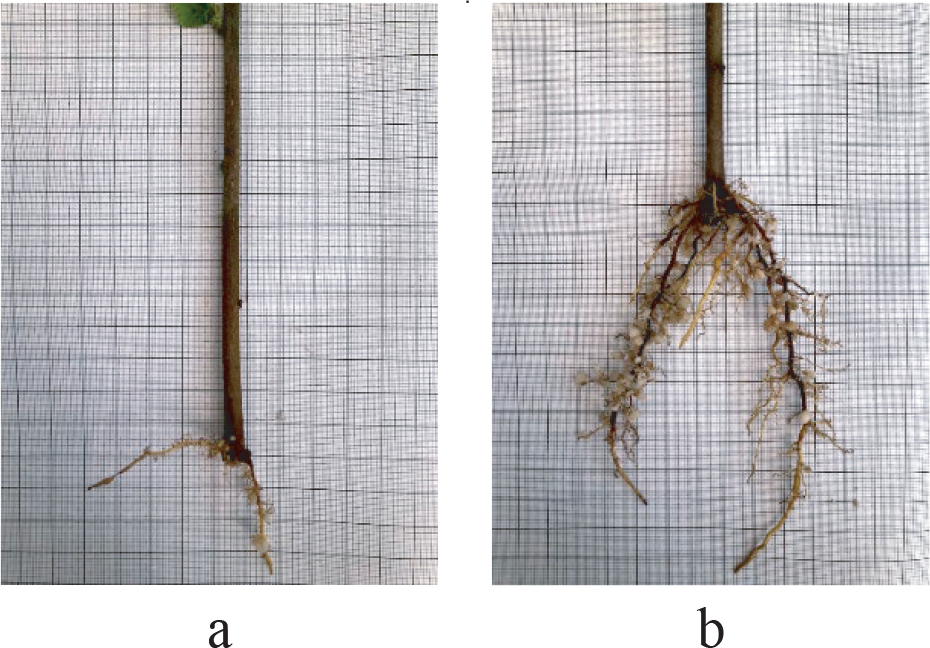
Figure 5.
Rooted hazelnut cuttings: (A) softwood cutting; (B) hardwood cutting.
Table 6.
Effect of treatment × cultivar and treatment × cutting type interactions on the microelement content of leaves (ppm).
| Treatment | Cultivar | Cutting type | Treatment mean | ||||
|---|---|---|---|---|---|---|---|
| Tonibul | Çakildak | Okay 28 | Hardwood cutting | Softwood cutting | |||
| Fe | BF | 90.18 ±8.10 ns | 92.66 ±8.10 ns | 71.91 ±8.10 ns | 94.02 ± 6.61 b | 75.82 ± 6.61 b | 84.92 ± 4.68 ns |
| BF + B | 83.10 ±8.10 ns | 93.01 ± 8.10 ns | 92.02 ±8.10 ns | 94.09 ±6.61 b | 84.67 ±6.61 b | 89.38 ± 4.68 ns | |
| BF + M | 87.05 ±8.10 ns | 112.38 ±8.10 ns | 100.68 ±8.10 ns | 124.14 ±6.61 a | 75.93 ±6.61 b | 100.04 ± 4.68 ns | |
| Mean | 86.78 ± 4.68 ns | 99.35 ±4.68 ns | 88.20 ± 4.68 ns | 104.08 ±3.82 A | 78.8 ± 3.82 B | ||
| Mn | BF | 62.67 ±6.50 ns | 51.47 ±6.50 ns | 49.06 ± 6.50 ns | 66.51 ±5.30 ns | 42.29 ±5.30 ns | 54.40 ± 3.75 ns |
| BF + B | 43.78 ±6.50 ns | 43.40 ± 6.50 ns | 39.82 ±6.50 ns | 49.62 ± 5.30 ns | 35.04 ±5.30 ns | 42.33 ± 3.75 ns | |
| BF + M | 58.06 ±6.50 ns | 45.58 ±6.50 ns | 42.26 ±6.50 ns | 57.03 ± 5.30 ns | 40.23 ± 5.30 ns | 48.63 ± 3.75 ns | |
| Mean | 54.84 ± 3.75 ns | 46.81 ± 3.75 ns | 43.71 ± 3.75 ns | 57.72 ± 3.06 A | 39.19 ± 3.06 B | ||
| Zn | BF | 13.66 ± 3.06 ns | 17.05 ± 3.06 ns | 14.65 ± 3.06 ns | 17.85 ± 2.50 ab | 12.38 ± 2.50 b | 15.11 ± 1.76 ns |
| BF + B | 15.79 ± 3.06 ns | 15.71 ± 3.06 ns | 30.18 ±3.06 ns | 16.58 ± 2.50 ab | 24.54 ±2.50 a | 20.55 ±1.76 ns | |
| BF + M | 15.89 ± 3.06 ns | 17.34 ± 3.06 ns | 21.27 ±3.06 ns | 20.67 ± 2.50 ab | 15.66 ± 2.50 ab | 18.17 ± 1.76 ns | |
| Mean | 15.11 ± 1.80 B | 16.70 ± 1.80 AB | 22.03 ± 1.80 A | 18.37 ± 1.44 ns | 17.53 ± 1.44 ns | ||
| Cu | BF | 7.17 ± 1.19 ns | 7.70 ± 1.19 ns | 8.92 ± 1.19 ns | 10.04 ± 0.97 ns | 5.82 ± 0.97 ns | 7.93 ± 0.68 ns |
| BF + B | 6.28 ± 1.19 ns | 7.74 ± 1.19 ns | 13.00 ± 1.19 ns | 9.75 ± 0.97 ns | 8.27 ± 0.97 ns | 9.01 ± 0.68 ns | |
| BF + M | 7.00 ± 1.19 ns | 6.44 ± 1.19 ns | 12.64 ± 1.19 ns | 9.09 ± 0.97 ns | 8.30 ±0.97 ns | 8.69 ± 0.68 ns | |
| Mean | 6.82 ± 0.70 B | 7.30 ± 0.70 B | 11.52 ±0.70 A | 9.62 ±0.56 A | 7.46 ± 0.56 B | ||
| B | BF | 48.43 ± 3.25 | 63.21 ±3.25 | 38.17 ±3.25 | 58.98 ± 2.66 ab | 40.90 ±2.66 cd | 49.94 ± 1.88 B |
| BF + B | 41.20 ±3.25 | 52.38 ±3.25 | 30.93 ±3.25 | 48.71 ±2.66 be | 34.29 ± 2.66 d | 41.5 ± 1.88 C | |
| BF + M | 67.67 ± 3.25 | 69.62 ± 3.25 | 53.67 ±3.25 | 61.68 ±2.66 a | 65.62 ±2.66 a | 63.65 ±1.88 A | |
| Mean | 52.43 ± 1.88 B | 61.74 ± 1.88 A | 40.93 ± 1.88 C | 56.46 ± 1.53 A | 46.94 ± 1.53 B | ||
1 The table includes treatment × cultivar and treatment × cutting type interactions as well as treatment cultivar and cutting type means. Values are given as mean ± SE, and different letters indicate significant differences at p ≤ 0.05. Differences among cultivars and cutting types within rows and among treatments within columns are indicated by uppercase letters whereas interaction effects are indicated by lowercase letters. BF, basic fertilisation; SE, standard error.
The manganese (Mn) content varied based on the type of cuttings used. It was found that hardwood cuttings contained significantly more Mn than softwood cuttings (Table 6). As with Fe content, the effect of the stronger root structure of hardwood cuttings can also be considered in Mn content. There was no observed effect of bacterial or mycorrhizal inoculations on Mn content.
In previous research, mycorrhizal inoculation significantly increased Zn content in the leaves of peach seedlings (Wu et al., 2011) and citrus seedlings (Ortaş, 2019) compared to non-inoculated seedlings. Additionally, bacteria-inoculated seedlings had the highest Zn content in the tea plants (Çakmakçı et al., 2012). In our study, the BF + B treatment resulted in significantly higher Zn levels in plants obtained from softwood cuttings of the ‘Okay 28’ hazelnut variety, while the BF + M treatment showed significantly higher levels in plants from hardwood cuttings of the same cultivar (Table 6). Cu and B contents showed significant interactions; the highest Cu content (15.14 ppm) was observed in softwood cuttings of ‘Okay 28’ treated with BF + M. The highest B contents, measuring 83.55 ppm and 82.17 ppm. were found in plants derived from softwood cuttings under the BF + M treatment and hardwood cuttings under the (BF) treatment, respectively, in the ‘Çakıldak’ cultivar. These results indicate that the inoculation with bacteria and mycorrhiza had a significant impact on Cu and B contents (Table 6).
Chlorophyll is a green pigment that plays a crucial role in photosynthesis, primarily found in the mesophyll cells of plant leaves. As a result, photosynthesis mainly occurs in the leaves. An optimal level of chlorophyll content in leaves enhances the efficiency of photosynthesis. Plants with higher chlorophyll content are more likely to survive during acclimatisation to external conditions (Christensen et al., 2008). In our study, the BF + M and BF + B treatments increased chlorophyll content (Figure 3). As observed for nutrient content, the main effects of cultivars, cutting types and treatments significantly affected leaf chlorophyll content (Table 7; Figure 4). Similarly, hazelnut seedlings inoculated with G. intraradices and Trichoderma harzianum showed higher chlorophyll content compared to those without mycorrhizal inoculation (Rostamikia et al., 2017). The increase in chlorophyll content with both AMF and PGPR treatments (Figure 4C) suggests an overall improvement in plant vigour and photosynthetic efficiency (Christensen et al., 2008). This is consistent with reports in lemon, grapevine and maize (Daler and Çetin, 2017; Mışraklı et al., 2019; Rojas-Sánchez et al., 2024), confirming that microbial inoculants enhance the physiological status of hazelnut seedlings, which is crucial for their survival during the acclimatisation phase.
Table 7.
Effect of treatment × cultivar and treatment × cutting type interactions on the chlorophyll content of leaves.
| Treatment | Cultivar | Cutting type | Treatment mean | |||
|---|---|---|---|---|---|---|
| Tombul | Çakıldak | Okay 28 | Hardwood cutting | Softwood cutting | ||
| BF | 149.00 ± 12.07 ns | 172.50 ± 12.07 ns | 174.83 ± 12.07 ns | 186.44 ± 9.86 ns | 144.44 ± 9.86 ns | 165.44 ± 6.97 B |
| BF + B | 163.17 ± 12.07 ns | 204.83 ± 12.07 ns | 161.00 ± 12.07 ns | 208.56 ± 9.86 ns | 144.11 ± 9.86 ns | 176.33 ± 6.97 B |
| BF + M | 198.17 ± 12.07 ns | 250.17 ± 12.07 ns | 177.00 ± 12.07 ns | 250.89 ± 9.86 ns | 166.00 ± 9.86 ns | 208.44 ± 6.97 A |
| Mean | 170.11 ± 6.97 B | 209.17 ± 6.97 A | 170.94 ± 6.97 B | 215.30 ± 5.69 A | 151.52 ± 5.69 B | |
1 The table includes treatment × cultivar and treatment × cutting type interactions as well as treatment cultivar and cutting type means. Values are given as mean ± SE, and different letters indicate significant differences at p ≤ 0.05. Differences among cultivars and cutting types within rows and among treatments within columns are indicated by uppercase letters. whereas interaction effects are indicated by lowercase letters. BF, basic fertilisation; SE, standard error.
Study limitations and practical implications
The primary limitation of this study was the low nitrogen fertilisation (100 ppm) and the inherently low phosphorus levels of the substrate. While this setup successfully highlighted the efficiency of AMF in nutrient mobilisation under stress, it may have constrained the full growth potential of the seedlings. For nursery practice, these results suggest that AMF inoculation is a highly effective strategy for producing high-quality hazelnut seedlings with reduced chemical inputs. However, to achieve optimal development, nursery managers should consider slightly higher nitrogen levels than those used in this experiment to complement the microbial benefits.
CONCLUSION
This study examined the effects of rhizobacteria and AMF on the growth of Turkish hazelnut cultivars. The results clearly show that AMF inoculation was more effective than PGPR in enhancing nutrient uptake, particularly for N, P, K and Ca. The analysis showed that the nitrogen, phosphorus, potassium, calcium, magnesium, iron, zinc and boron content in the leaves was significantly higher in the BF + M group compared to the BF group. Additionally, higher concentrations of calcium, magnesium and zinc were observed in the BF + B group. The chlorophyll content was significantly greater in plants inoculated with both fungi and bacteria, with the ‘Çakıldak’ variety showing the highest values. However, microbial inoculation alone did not compensate for the nitrogen deficiency, as N levels remained below optimal thresholds. Furthermore, the observed effects were significantly influenced by the cultivar and cutting type, with hardwood cuttings generally exhibiting better mineral accumulation. Based on these findings, it can be concluded that AMF should be prioritised in hazelnut nurseries to improve seedling quality, provided that nitrogen fertilisation is adequately optimised. Further research is recommended to tailor these microbial applications to specific genotypes and production systems.
ACKNOWLEDGEMENTS
The authors acknowledge the Hazelnut Research Institute (Giresun, Türkiye) for for providing the facilities where the research was conducted and the Ordu University, Faculty of Agriculture where the research was conducted as a doctoral thesis.
Project code: TAGEM/BBAD/A/20/A1/P4/4981. Project funded: Republic of Turkey, Ministry of Agriculture and Forestry, General Directorate of Agricultural Research and Policies.
Notes
[4] Contributed by AUTHORSHIP CONTRIBUTION STATEMENT
A. Ak. conceptualisation, formal analysis, funding acquisition, investigation, methodology, project administration, writing – original draft, writing – review – editing. A. Ay. conceptualisation, formal analysis, funding acquisition, investigation, methodology, project administration, review – editing.
[5] DECLARATION OF COMPETING INTEREST
The authors of this article declare that they have no financial, professional or personal conflicts of interest that could have inappropriately influenced this work.
[6] AVAILABILITY OF DATA AND MATERIALS
Correspondence and requests for materials should be addressed to A. Akar.