
INTRODUCTION
The Cannabis sativa (cannabis) inflorescence, sold commercially as ‘flowers’, is a high-value medicinal and recreational product, now legal in many parts of the world (Ransing et al., 2022). Its long history of use throughout the world (Bonini et al., 2018) has resulted in the development of hundreds of different ‘strains’ or ‘chemovars’ with unique physical characteristics, sensory properties, and physiological effects attributed to the complex profile of phytocannabinoids (herein referred to as ‘cannabinoids’), terpenes, and other phytochemicals within the trichomes and tissues of the cannabis flowers (Brunt et al., 2014; Andre et al., 2016).
The medicinal and recreational effects of cannabis are largely attributed to the presence of cannabinoids, which act on the endocannabinoid receptors CB1 and CB2 (Duggan, 2021) located throughout the human central nervous system (CNS) (Lu and Mackie, 2021). The action of cannabinoids on these nervous system receptors is what explains their associated effects, such as psychoactivity within the brain and modulation of pain and motor function through nerves (Rezende et al., 2023). Of the 130 cannabinoids that have been characterised in cannabis (Lange and Zager, 2022), △9-tetrahydrocannabinol (THC) is the most well-known, as it is associated with the psychoactive effects and euphoric ‘high’ sought after by recreational users (Casajuana Kögel et al., 2018; Cash et al., 2020). THC also has medicinal uses, of which the most supported are for the treatment of nausea and pain (Dos Santos et al., 2021); however, THC is also the primary phytochemical associated with the adverse effects of cannabis such as neurocognitive degeneration, reduced memory, addiction, anxiety, and depression (Sideli et al., 2021; Urits et al., 2021). The other main cannabinoid of interest is cannabidiol (CBD), which has a well-regarded safety profile (Larsen and Shahinas, 2020) and is particularly beneficial for the management of seizures associated with epilepsy (Singh et al., 2023). Furthermore, the safety of CBD has attracted interest from paediatric patients for the potential treatment of seizures for refractory epilepsy (Raucci et al., 2020) and symptom management in paediatric neurodevelopmental disorders (Kwan Cheung et al., 2021). Other conditions such as autism spectrum disorder (ASD) also indicate preliminary benefits from cannabis use for managing anxiety, sleep-related, and other behavioural symptoms in both paediatric and adult patients (Fusar-Poli et al., 2020; Erridge et al., 2022).
In addition to the cannabinoids, cannabis also contains a range of volatile terpenes which contribute to both the medicinal effects (Hanuš and Hod, 2020) and sensory effects (Mudge et al., 2019). Inhalation of volatiles from plant-derived essential oils is linked to a range of potential mood benefits for anxiety or depression (Cui et al., 2022). It has been purported that these volatiles impart synergistic effects during combined intake with cannabinoids (known as the ‘entourage effect’), and thereby impart increased benefits for the mediation of anxiety and depression (Ferber et al., 2020). Cannabis volatiles also impact user quality perception due to their effect on the sensory experience when inhaled (Gilbert and DiVerdi, 2018; Kwaśnica et al., 2020; Al Ubeed et al., 2022). There are various routes of administration of cannabis; however, inhalation (either by smoking or vaporisation) is the most popular method recreationally (Russell et al., 2018), and third most popular (>50õ% users) medicinally (Corroon et al., 2019; Vinette et al., 2022). Following inhalation, volatile compounds are detected within the human olfactory system via odorant receptors (OR), where the interaction of the volatile ligand with the receptor elicits a neuronal signal that has the potential to be perceived as an odour, also referred to as ‘smell’ or ‘aroma’ (Persuy et al., 2015). For natural products such as cannabis flowers, multiple volatiles are detected simultaneously; however, the brain interprets the associated neuronal signals all together as the unique and recognisable ‘cannabis odour’ (Shen et al., 2013). Subtle differences in the concentrations and relative proportions of the volatiles detected can ‘remind’ an individual of something similar, often described as ‘notes’, ‘hints’, or ‘descriptors’, which can have significant impacts on the overall sensory experience (Le Berre et al., 2010; Thomas-Danguin et al., 2014; Wise et al., 2023). For cannabis, many different odour descriptors (ODs) are used to describe the various market strains, including those that seem pleasant such as: ‘apple’, ‘berry’, and ‘vanilla’, and those that seem unpleasant such as: ‘cheese’, ‘petrol’, and ‘tobacco’ (Gilbert and DiVerdi, 2018; Mudge et al., 2019). However, a pleasant odour of cannabis has been shown to be highly impactful in achieving pleasant subjective effects (Plumb et al., 2022). Therefore, it is important to understand how cannabis volatiles contribute to cannabis odour perception in order to optimise the cannabis odour and resulting sensory experience.
Cannabis phytochemical expression (which includes cannabinoids and volatiles) is affected by genetics (Smith et al., 2022), and environmental and cultivation conditions (Zandkarimi et al., 2023; Fiorentino et al., 2024). An aspect of cultivation which is often modulated is the fertigation solution, wherein inclusion of biostimulants in this solution has been shown to benefit plant growth and may also alter phytochemical expression of cannabis (Malík et al., 2022). Biostimulants often contain non-nutrient compounds (such as plant- or microbial-derivatives), which may function as mimics of environmental cues to induce plant molecular mechanisms evolved to protect or adapt the plant to biotic or abiotic stressors (Ashapkin et al., 2020; Kaushal et al., 2023). Altered volatile expression may occur in response to environmental stimuli as part of a defence response, due to their evolutionary roles as deterrents from pests (Farré-Armengol et al., 2013). Similarly, while the role of cannabinoids in plants is not as well understood, it is hypothesised that they also relate to plant defence against herbivory (Stack et al., 2023). Accordingly, both volatiles and cannabinoids are likely to be modulated via factors (such as biostimulants) inducing plant defence systems. Noting that cannabis volatiles and cannabinoids underpin flower sensory and therapeutic properties, these aspects of cannabis flower quality are also likely affected by defence induction from biostimulants.
Multiple recent studies have explored the application of the biostimulants molasses, Aloe vera extract, and fish-hydrolysate (commonly sold commercially as ‘amino acids’) for their potential to modulate phytochemical profiles, induce defence mechanisms and impact the quality or functional value of yields, which are discussed below. Application of amino acids to cannabis has been associated with altered cannabinoid and terpene contents (Malík et al., 2022), which is likely explained by the observations of Wise et al. (2024a) that application of either fish hydrolysate or A. vera extract to cannabis resulted in molecular changes reflecting induction of general stress and defence systems, respectively. Application of a molasses biostimulant to cannabis was associated with altered antioxidant content of seeds, which occurred through the induction of endogenous plant defence systems (Wise et al., 2024d). Furthermore, the application of a complex of these biostimulants: molasses, A. vera extract, and fish-hydrolysate, enhanced the odour of strawberry fruit, and attributed to changes in the volatile profile (Wise et al., 2024b). Accordingly, this study aimed to characterise the impacts of a biostimulant complex (BC) comprised of molasses, A. vera extract, and fish-hydrolysate on cannabis phytochemical profiles, and their associated sensory and therapeutic qualities.
MATERIALS AND METHODS
Biostimulant solution
The BC utilised was an aqueous solution consisting of molasses (10% w/v), A. vera extract (2.5% v/v), and fishhydrolysate (5% v/v), generously provided by Nutrifield Pty Ltd. (Melbourne, VIC, Australia). The elemental nutrient composition of BC is presented in Table S1 in Supplementary Materials.
Plant materials and propagation (Experiments 1, 2, and 3)
All experiments (1, 2, and 3) utilised plants propagated from cuttings of low-THC C. sativa (cv. ‘Fairnsfield’) that were approximately 15 cm in length, according to Wise et al. (2020b). After 2 weeks, the cuttings were considered ‘mature’ and ready to be transferred into a solid substrate (Experiments 1 and 2) or utilised for cutting-treatment experiments (Experiment 3). All experimental research on plants, including the collection of plant material, complied with relevant institutional, national, and international guidelines and legislations. Approval for the propagation, growth, harvesting, and analysis of low-THC cannabis plants and their derivatives was provided by the Department of Jobs, Precincts and Regions, Agriculture Victoria (Authority Number 2021/8a). Identification of all plants and tissues was performed by the authors, utilising their horticultural experience and expertise.
Growth procedures (Experiments 1 and 2)
After 2 weeks, the mature cuttings were planted into 15 cm pots in Coco perlite substrate (Nutrifield Pty Ltd.) and provided with Coco A&B nutrients (Nutrifield Pty Ltd.) prepared to an electrical conductivity (EC) of 0.8 and a pH = 5.8. After 1 week, plants of consistent height (16 for Experiment 1, and 6 for Experiment 2) were transplanted into 27 L plastic pots (27 L Pro Pot, Nutrifield Pty Ltd.) with Coco perlite substrate, and grown indoors for 11 weeks under controlled environmental conditions according to the mothed described in Wise et al. (2024c). During weeks 4–11 inclusive, half of the plants (n = 8 in Experiment 1, n = 3 in Experiment 2) were randomly selected to receive 2 mL · L−1 of BC, mixed into the nutrient solution.
Harvesting and flower sample preparation
Experiment 1
The plants (n = 8) were cut at the base, measured for height, and stem width (Digital Vernier Calliper 150 mm, Kincrome, Scoresby, VIC, Australia), and then all flowers were removed by hand and weighed (perplant fresh weight yield, FW). Five flowers were selected randomly from each plant, weighed individually, and then dried in an oven (ED 53, Binder GmbH, Tuttlingen, Germany) for 72 hr at 55°C and re-weighed (dry weight [DW]) to calculate flower water content.
Experiment 2
Before felling of the plants, one random representative flower was removed from each plant (n = 3), and the sugar leaves were immediately removed with a scalpel and sampled separately in liquid nitrogen and then transported on dry ice to a −80°C freezer for storage before analyses.
The plants (n = 3) were then cut at the base and hung upside down within the grow room for 2 weeks to dry in the dark, at 18°C, and 50% relative humidity (RH). All inflorescences (flowers) were removed using an automated bucker (Trimpro Bucker, Trimpro Manufacturing Inc., Montreal, Canada), trimmed to remove excess leaves using an automated trimmer (BatchOne Go, Twister Trimmer, Keirton Inc., Surry, Canada), and placed into curing bags (TerpLoc, Grove Bags LLC, Bedford Heights, OH, USA) for 1 week in the dark at 25°C, to allow the partially dried flowers to mature as per industry standard practise. After 1 week in the curing bags, three cured flowers of consistent size, shape, and appearance were selected from each plant set of flowers (n = 9) for analysis consisting of consecutively: near-infrared (N-IR) analysis, sensory analysis, and headspace (HS) analysis. Each flower sample was weighed prior to analysis (cure weight [CW]), and then following analysis were dried in an oven (ED 53, Binder GMBH, Tuttlingen, Germany) for 72 hr at 55°C and re-weighed (DW). Cured flower water content was calculated as a percentage of the weight loss from drying.
Biostimulant treatment of cuttings (Experiment 3)
Eight mature cuttings of consistent size and development were randomly split into two groups (n = 4) and placed into separate aeroponic mist-propagation units (EzClone Aeroponic Classic Cutting System—16, EZCLONE Enterprises Inc., Sacramento, CA, USA). Both aeroponic units contained a nutrient solution of Coco A&B nutrients (Nutrifield Pty Ltd.) prepared to an EC of 0.8 and a pH = 5.8, and one of the units received 2 mL · L−1 of BC, mixed into this nutrient solution. After 7 days of treatment (either control or BC), the cuttings were removed from the aeroponic units, the roots were immediately patted dry with a paper towel, and then the roots and leaves were removed with a scalpel and sampled separately in liquid nitrogen using the same method as described in section Harvesting and flower sample preparation: Experiment 2.
N-IR analysis (Experiment 2)
FlowerTHC andCBD content werequantified using N-IR, which has been previously validated for cannabinoid quantification (Callado et al., 2018). Infrared spectra of the cured cannabis flowers (n = 9) were collected using a Spectrum 2N Near-IR spectrophotometer (PerkinElmer Inc., Waltham, MA, USA) equipped with a Near-IR reflectance accessory (NIRA) module (PerkinElmer Inc.) with Petri dish spinner. Spectra were collected with an 8 cm−1 resolution over the 4000–12000 cm−1 range (833-2500 nm) with 30 accumulations to produce an averaged spectrum. Spectra were standardised to the lowest absorbance across all samples and wavenumbers (7625 cm−1). For profile analyses, the N-IR spectra were aggregated into bins, which were the average absorbance for every 100 wavenumbers.
Flower cannabinoid contents were determined using quantitative N-IR models generated from cured commercial flower samples, which had CBD and THC content data, determined by high-performance liquid chromatography (HPLC), for 298 flower samples, and 134 flower samples, respectively, collected at Lightscale Labs (Lightscale Inc., Portland OR, USA), Napro Research (Napro Research LLC, Westlake Village, CA, USA) and ACS Labs (ACS Laboratories Pty Ltd, Melbourne, VIC, Australia). The range of CBD and THC contents within the dataset was 0.0%–20.4% and 0.1%–23.4%, respectively. The quantitative CBD and THC models were generated using the PCR+ algorithm in the Spectrum Quant software (PerkinElmer Inc.) with mean x-scaling, 10-fold crossvalidation with random selection, and 12 principal components for CBD and 9 principal components for THC. Application of these models to experimental sample N-IR spectra was performed within the same Spectrum Quant software to quantify the flower CBD and THC contents.
Sensory perception testing (Experiment 2)
A blinded test was conducted to explore if the biostimulant treatment was associated with changes in the odour perception of flowers. Ethics approval was obtained from the RMIT STEM College Human Ethics Advisory Network (CHEAN) with the approval number 24096, and all methods were performed in accordance with the relevant guidelines and regulations. Fourteen untrained RMIT University staff and students voluntarily participated in the trial after signing an informed consent form and confirming they did not meet the exclusion criteria (see section “Exclusion criteria” in Supplementary Materials). The trial was conducted over 2 days in the food sensory laboratory at RMIT University’s Food Research & Innovation Centre (Bundoora, VIC, Australia), wherein each participant had a private booth (obscured from other participants, the researchers, and the sample preparation area) with a tablet containing the questionnaires, which were facilitated through the RedJade platform (RedJade Sensory Solutions LLC, Martinez, CA, USA). Before receiving any samples, participants completed a short demographics questionnaire (see section “Demographics questionnaire” in Supplementary Materials), consisting of three questions about their age, ethnicity, and gender. At the completion of the trial, each participant received a voucher for the university cafeteria valued at US$20.
To allow testing with multiple participants simultaneously, the 9 flower samples per treatment (3 per plant) were split randomly into 3 sets of 6 flowers, consisting of 1 flower per plant per set, wherein each participant received one set of samples for analysis. After completing the demographics questionnaire, participants received one sample at a time in an open glass jar through a sliding panel connecting the testing booth with the preparation area. Samples were blinded with a number code and randomised in a block design through RedJade. For each sample, participants completed the entire odour questionnaire before receiving the next sample and were provided with drinking water to cleanse their pallets between samples. The odour questionnaire (see section “Odour questionnaire” in Supplementary Materials) asked participants to score odour strength, desirability, and quality, and indicate the presence and strength for a list of 28 ODs commonly associated with cannabis, adapted from Gilbert and DiVerdi (2018). The measures of overall strength, desirability, and quality and strength of each OD were measured on 5-point Likert scale.
Headspace analysis (Experiment 2)
The HS of the cured flower samples (n = 9) was analysed by gas chromatography mass spectrometry (GC-MS) according to the method described in Wise et al. (2024c).
Phytohormones, metabolite, and bioassay analyses (Experiments 2 and 3)
The sugar leaf samples (described in section Harvesting andflower sample preparation: [Experiment 2]) and the root and leaf samples (described in section Biostimulant treatment of cuttings [Experiment 3]) were analysed for phytohormones (liquid chromatography-mass spectrometry [LC-MS]) and metabolite profiling (polar and non-polar metabolites, by LC-MS), and assayed for protein content, hydrogen peroxide content, peroxidase activity, and chitinase activity using ultraviolet-visible (UV-Vis) spectrophotometry according to the methods described in Wise et al. (2024d). The phytohormones included in the profiling were: 12-oxo-phytodienoic acid (OPDA), abscisic acid (ABA), brassinolide, cinnamic acid (CA), gibberellin A3 (GA3), gibberellin A4 (GA4), indole-3-acetic acid (IAA), indole-3-butryric acid (IBA), indole-3-carboxylic acid (ICA), jasmonic acid (JA), jasmonic acid-isoleucine (JA-Ile), methyl-indole-3-acetic acid (Methyl-IAA), methyl-jasmonic acid (Methyl-JA), salicylic acid (SA), and zeatin.
Quantitative structure-activity relationship (QSAR) modelling of OR affinity, BBB, and T½
Human OR affinity (kcal · mol−1) and blood-brain-barrier (BBB) index were sourced for 83 essential oil compounds from Aponso et al. (2020), while human elimination half-life (T½) measures were sourced for 851 compounds from Lombardo et al. (2018). The physicochemical measures of the compounds utilised for OR and BBB modelling were LogP, MW, Nrot and volume, which were sourced from Molinspiration’s online property tool kit (http://www.molinspiration.com, accessed February 2024). While the physicochemical measures of the compounds utilised for T½ modelling were the Joelib descriptors number_ of_aliphatic_OH_groups, fraction_of_rotatable_bonds, number_of_heterocycles, molarRefractivity, number_ of_atoms, number_of_bonds, geometrical_radius, zagreb_group_index_1, and zagreb_group_index_2, the OpenBabel descriptors abonds, and LogP (logP_1), and the ChemmineR descriptors R2NH, ROH, RCOR, and RCCH, which were sourced from ChemMine Tools (https://chemminetools.ucr.edu/, accessed February 2024). Polynomial regression was performed in Minitab 19 statistical software package (Minitab Inc., State College, PA, USA), to predict OR, BBB, or T½ from terms comprised of single second, and third-order combinations of physicochemical measures. Minitab’s automated step-wise term inclusion method was utilised with alpha values (to enter and remove) set as: 0.5 for OR, 0.35 for BBB, and 0.15 for T½. Validation of model prediction accuracy was performed using the k-fold cross-validation technique, with k = 10. The BBB index predictions for new compounds were restricted to the positive domain.
Statistical modelling of reviewer proportions indicating a strain is helpful for anxiety or depression
In total, 108 cannabis volatile terpene profiles were sourced from Wise et al. (2023), which were utilised for modelling therapeutic use. The online database, Leafly (https://www.leafly.com/, accessed March 2024), was used to source the THC content (as %) for each strain, and the proportion of reviewers indicating that a strain helps with anxiety or depression, as listed under the ‘strain helps with’ section of each cannabis strain entry. Polynomial regression was performed in Minitab 19 on the subset of strains with review proportions for anxiety (n = 93) and depression (n = 59), to predict the respective therapeutic use from terpene and THC data. Creation of each model utilised the stepwise automated term selection tool, beginning with all combinations of terpene and THC variables up to and including third order. For anxiety prediction, the stepwise term selection utilised an alpha to enter and remove of 0.3, while for depression prediction the alpha to enter and remove was 0.15. For each therapeutic use model, the k-folds cross-validation technique was used, with k = 10.
The models were utilised to explore the impact of BC to the predicted therapeutic use. This involved transformation of the relative-quantitative HS data for the experimental flower samples into fold-change profiles relative to the average control peak size. The HS fold changes were then multiplied by the average volatile quantitative value across the training data (n = 108, as sourced above). Three volatiles were not detected within the experimental HS profiling and were therefore assumed to have a fold change = 1. These flower volatile profiles, along with the experimental quantitative THC values (N-IR analysis), were then averaged for each plant, and then predicted for anxiety and depression using the models (n = 3).
Data analysis
Between-treatment differences for the individual measures: stem thickness, plant height, yield (FW), CW, DW, flower water content, cured flower water content, headspace peak area, CBD, THC, phytohormone measures, N-IR wavenumbers, metabolite measures, protein content, hydrogen peroxide, peroxidase activity, chitinase activity, and reviewer proportions for being helpful for anxiety or depression were compared using independent samples t-test, while sensory data was compared using paired samples t-test, all conducted in SPSS Statistics 28 (IBM Corporation, Armonk, NY, USA). The reported t-test significance (p-value) assumed equal variance, unless Levene’s test for equality of indicated a significant difference in variance (p < 0.05, as measured in SPSS Statistics 28), in which case the reported p-value did not assume equal variance. For the sensory data, the proportion of participants indicating detection of ODs was compared by 2-proportions test in Minitab 19 statistical software package.
Profile analyses (principal component analysis [PCA] and sparse partial least squares discriminant analysis [sPLS-DA]) were performed using the web-tool Metaboanalyst 6.0 (Chong et al., 2019), wherein data sets were first normalised by the following transformations and scaling: for headspace profiles and sugar leaf metabolites – no transformation with auto-scaling, for N-IR spectra (as spectral bins with width = 100 wavenumbers), and root and leaf phytohormone profiles – no transformation and range scaling, for sensory profiles (strength, desirability, quality, and all intensity measures) – log transformation and range scaling, for root metabolite profiles – square root transformation and range scaling, for leaf metabolite profiles – cube root transformation and Pareto scaling, and for sugar leaf phytohormone profiles – cube root transformation and range scaling.
Ordinal logistic regression (LR) was performed in Minitab 19 to predict sensory measures (odour strength, quality, and desirability) from HS volatiles, using the logit function with a maximum number of iterations of 9999. Each LR was produced, beginning with all variables (volatiles) and then manually removing terms in order of decreasing p-value, until only significant (p < 0.05) terms remained in the model. Models were considered to capture a meaningful relationship between the predictor variables and the sensory measure when the test of all slopes equal to zero was significant (p < 0.05), and the goodness-offit test (deviance, for response format data) was not significant (p > 0.05).
RESULTS AND DISCUSSION
Volatile and sensory odour changes
Flower volatiles
Profile analysis (PCA) of cannabis flower volatile profiles indicated that they were not significantly different between treatments (Figure S1 in Supplementary Materials). When comparing the changes to individual peaks of the HS spectra, BC treatment was associated with significant (p < 0.05) or marginally significant (p < 0.1) changes to 24 peaks (out of 44 peaks total), which were all reduced as compared to the control. Of the identified peaks (Table S2 in Supplementary Materials), 10 volatiles were reduced with marginal significance (p < 0.1, Table 1), which were reduced between 0.64-fold and 0.86-fold. This reduction in volatiles from BC treatment is surprising in light of similar studies, such as Malík et al. (2022), which observed significant increases to the volatile terpenes limonene and β-myrcene from the growth of cannabis following supplementation with an amino acid biostimulant. These same volatiles were not significantly changed in this study (Table S2 in Supplementary Materials). However, the trends of decreased volatiles indicate an opposite directional effect has occurred on cannabis from the application of BC, which contained fish hydrolysate (an amino acidrich complex).
Table 1.
Flower volatile comparison from BC treatment.
| Peak ID | N | Fold-change a | p-value | OR affinity (kcal · mol−1) |
|---|---|---|---|---|
| Linalool | 9 | 0.74 | 0.011 | −5.1 d |
| 2-Norbornanol | 9 | 0.85 | 0.078 b | −5.0 c |
| Borneol | 9 | 0.86 | 0.092 b | −5.5 c |
| p-Cymen-8-ol | 9 | 0.70 | 0.005 | −5.2 c |
| Terpineol | 9 | 0.73 | 0.012 | −5.3 c |
| Ylangene | 9 | 0.69 | 0.067 b | −7.0 d |
| β-Caryophyllene | 9 | 0.70 | 0.059 b | −7.0 d |
| α-Bergamotene | 9 | 0.68 | 0.064 | −5.7 c |
| α-Humulene | 9 | 0.66 | 0.052 b | −6.6 c |
| β-Eudesmene | 9 | 0.64 | 0.064 | −6.3 b |
1c predicted using model 1 (Table S3 in Supplementary Materials),
1d sourced from Aponso et al. (2020) and included within the dataset for model 1 creation.
Human OR affinity model
Volatiles that bind with ORs within the olfactory system elicit neuronal signals which have the potential to result in perception of an associated odour (Bak et al., 2018). The strength of the interaction between the volatile and the OR (the affinity) is impactful to the likelihood of successful binding and then triggering of the associated neuronal signal (Persuy et al., 2015). Prediction of OR affinity (model 1: Table S3 in Supplementary Materials) was achieved with a 13-term model comprised of the physicochemical measures of LogP, MW, and Nrot with an R2 = 0.9158, and a 10-fold R2 = 0.8804 (Figure S2 in Supplementary Materials). The OR affinities of the volatiles impacted by BC (Table 1) were found to be between −7.0 kcal · mol−1 (ylangene and β-caryophyllene) and −5.0 kcal · mol−1 (2-norbornanol).
The use of the physicochemical measures MW, LogP, and Nrot to predict OR affinity is consistent with the previous study (Castro et al., 2021), which explored relationships between a range of physicochemical measures with OR affinity and found that MW, LogP, and vapour pressure had the strongest relationships. The OR affinity model is an advancement on this prior work, by combining these relationships into a predictive model with validation, thereby allowing for application to new volatiles. The model predicts binding affinity, which is a negative value wherein larger negative values indicate higher binding affinity (Henrich et al., 2010). An experimentally determined affinity value of −3.39 kcal · mol−1 was considered a very weak binding (Boyce et al., 2009), while some high-affinity interactions have been measured between −9.0 kcal · mol−1 and −12.7 kcal · mol−1 (Velazquez-Campoy and Freire, 2006). Accordingly, given the range of OR affinities predicted for the volatiles changed from the BC treatment was between −7.0 kcal · mol−1 and −5.0 kcal · mol−1, these represent moderatestrength affinities and so would likely bind with the ORs. Therefore, based on the OR affinity prediction of these changed volatiles, BC is altering volatiles that are potentially impactful to odour perception.
Flower sensory analysis – Strength, desirability, quality, and profile changes
Noting that the BC-altered flower volatiles were predicted to have moderate-strength OR affinity, sensory testing was performed to explore changes to perceived odour. The sensory assay participant demographics were of diverse ages and had an approximately even split in ethnicity and gender (Table S4 in Supplementary Materials). The ages of the participants ranged from 19 years to 63 years (mean 34.9 years), 43% were White or Caucasian ethnicity, 57% were Asian or Pacific Islander ethnicity, 50% were male, and 50% were female.
Profile analysis of the sensory data indicated that the profiles were not significantly different between treatments (Figure S3 in Supplementary Materials). Comparison of individual sensory measures indicated that the flower odour strength was significantly reduced (p = 0.007) from an average of 2.1 for control to 1.6 for BC treatment (Figure 1, Table S5 in Supplementary Materials), which represented an on-average 0.5 change on a 5-point Likert scale. No significant differences were identified between the treatments for their desirability (p = 0.547) or quality (p = 0.103), which had means for both treatment groups close to 0 (neither desirable nor undesirable and average quality, respectively).
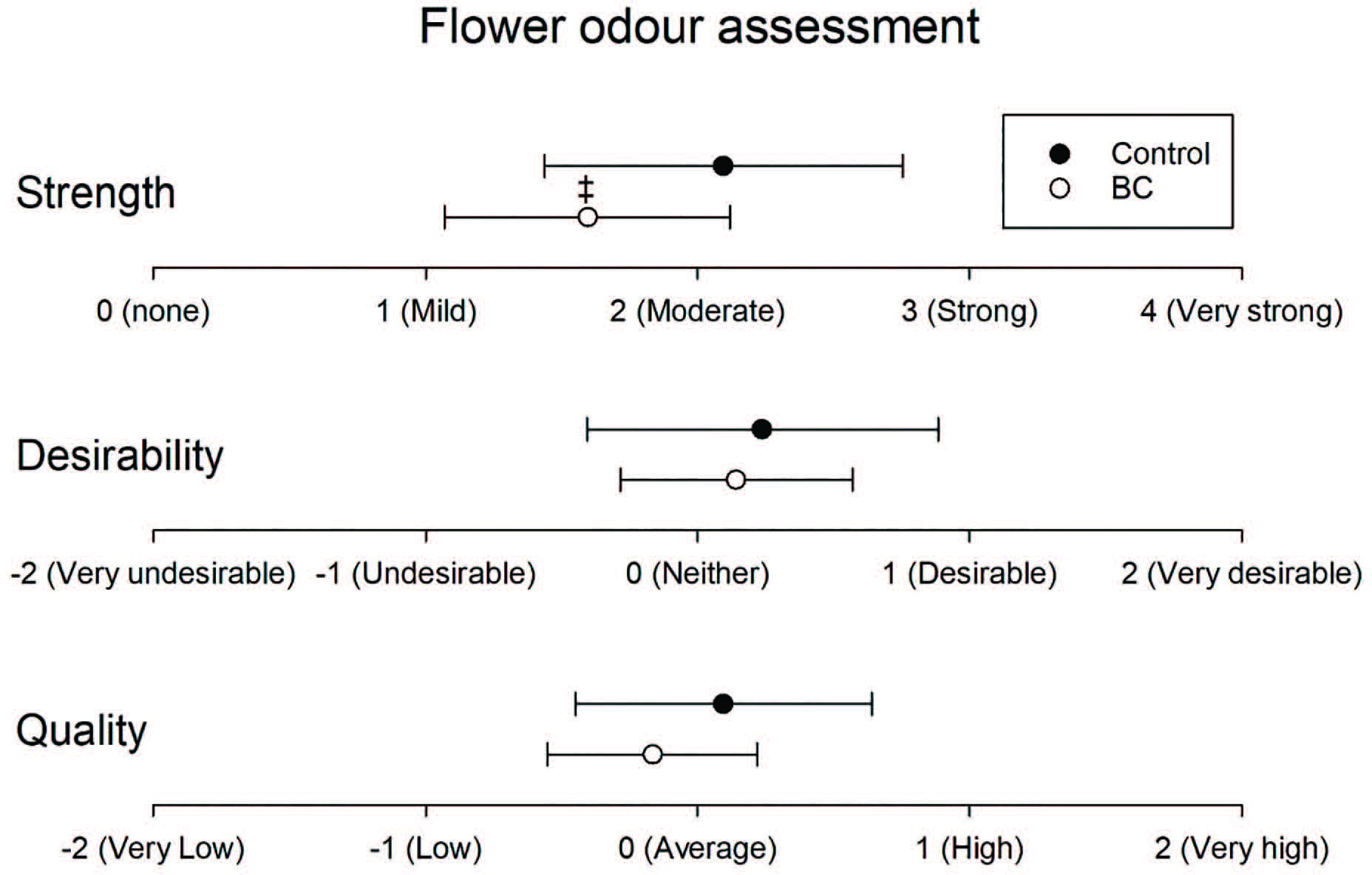
Figure 1.
Impact of BC to cannabis flower odour properties. Sensory assessment of cannabis flower odour strength, desirability, and quality by 14 untrained panellists (3 flowers per treatment), measured on a 5-point Likert scale. Data presented as average ± standard deviations, with marginal significance indicated as ‡ for p < 0.1, as determined by paired samples t-tests. BC, biostimulant complex.
Application of the same complex (BC) to other plants has been associated with mixed effects on odour, such as when applied to tomato there was no change to fruit odour measures (Wise and Selby-Pham, 2024a), when applied to strawberry under controlled conditions BC increased fruit odour (Wise et al., 2024b), and when BC was applied to strawberry under field conditions, it reduced odour intensity (Wise and Selby-Pham, 2024b) – which is similar to the reduction in odour strength observed in cannabis flowers in this study. These results indicate there are differences observed from biostimulant applications between species (tomato, strawberry, and cannabis), tissue types (fruit vs flowers), and growth conditions (indoor vs field). These varied biostimulant effects are consistent with Baghdadi et al. (2022), who observed differences in biostimulant effects from kelp when applied to tomatoes under lab, greenhouse, or field conditions. One of the hypothesised modes of action of these plant-derived biostimulants and their associated complexes is the indirect plant response to the stimulation of microbial species from the addition of carbohydrates to the substrate (Wise et al., 2024d). However, substrate microbial populations have been shown to be highly variable even following inoculation (Sheridan et al., 2017), and microbe stimulation by carbohydrate provision would be relatively nondiscriminant. Therefore, variation in either substrate or rhizosphere microbiome compositions may account for across-study differences in observed BC effects on plant odour.
The perceived strength of an odour is dependent on the odour intensity of the volatile compounds and their concentration (Rincón et al., 2019). Therefore, the reduction in odour strength of the flowers is likely driven by the reduction in volatile contents of flowers (Table 1). However, cannabis odour pleasantness (i.e. desirability), but not terpene contents, has been associated with pleasant subjective effects as an indicator of quality (Plumb et al., 2022). This is consistent with the results in this study, where despite the changes in volatiles, neither desirability nor quality odour assessments were significantly impacted by the BC treatment. Within the context of medicinal cannabis patients, the reduction in odour strength may be desirable for certain patient groups, such as ASD patients who use cannabis for managing anxiety and sleep-related symptoms (Erridge et al., 2022) but tend to prefer reduced-odour or unscented medicinal products (Hrdlicka et al., 2011; Schroder et al., 2021; Chitta, 2024), due to having enhanced sensory sensitivity. This is impactful for achieving acceptance by a broader patient base, as optimising medicinal product odour properties promotes patient acceptability, which thereby achieves greater compliance and associated product efficacy.
Modelling of cannabis flower odour properties
The association of volatile changes with the odour measures of strength, desirability, and quality were further explored by LR analysis. No significant volatile-based relationship was identified for odour desirability or quality (data not shown); however, a significant relationship was identified between odour strength and volatiles (model 2: Table S6 and Table S7 in Supplementary Materials). This model included 12 variables (volatiles), including α-humulene, p-cymen-8-ol, α-pinene, γ-terpinene, and ipsdienol which were positively correlated and α-terpinene, β-caryophyllene, β-eudesmene, 2-pinanol, camphene, dehydrosabinene, and fenchol which were negatively correlated. Noting that overall strength was reduced from the BC treatment (Figure 1), and that only significant reductions in volatiles were observed (Table 1), this would suggest that the positively correlating variables (volatiles) are likely driving the observed treatment-associated change in odour strength. Of the positively correlating variables, α-humulene and p-cymen-8-ol were the only volatiles that were reduced by the BC treatment (0.66-fold reduced, p = 0.052; and 0.70-fold reduced, p = 0.005, respectively), suggesting these reductions were key drivers of the BC treatment-associated reductions to perceived cannabis odour strength.
Impact of BC on cannabis flower ODs
Although cannabis has a distinct and strong odour, selective breeding has produced many different strains with diverse volatile profiles that produce subtly different odours (Gilbert and DiVerdi, 2018). The sub-odours that comprise the overall cannabis odour are known as ‘odour descriptors’ (Wise et al., 2023), which were compared between the treatment flowers by sensory odour assay. Out of the 30 ODs included in the questionnaire, 21 were detected at least once in the control flowers, 20 were detected at least once in the BC flowers, and 18 were detected at least once in both (Table S8 in Supplementary Materials). The most common descriptor detected was ‘herbal’, which was detected 50% of the time for control and 52% of the time for BC treatment; however, the difference in these proportions was not significantly different (p = 0.827). ‘Fruity’ was detected 14% of the time for control, which was significantly (p = 0.043) more than BC treatment, where it was detected 2% of the time. There was also a marginally significant (p = 0.081) difference in ‘minty’ detection, which was 36% for control and 19% for BC treatment.
When comparing the average strength of the detected odours (Figure 2, Table S9 in Supplementary Materials), all odours were between strength 0 (none) and 1 (weak), except ‘herbal’ which was slightly >1 for both conditions and not significantly different between treatments (p = 0.818). Two descriptors were identified as having significantly different strengths, which were both significantly reduced by the BC treatment (Figure 2). These were ‘minty’, which had an average strength of 0.690 for the control and 0.262 for the BC treatment (p = 0.036), and ‘fruity’, which had an average strength of 0.191 for the control and 0.024 for the BC treatment (p = 0.046). ODs within an odour profile can be attributed to a subset of volatiles (Sánchez et al., 2020), therefore, these results indicate a likely change in volatiles associated with minty and fruity odours. Of the volatiles which were altered from the BC treatment and their associated individual ODs (Table S10 in Supplementary Materials), borneol and terpineol are described as having partly minty odours, while p-cymen-8-ol is described as having a partly fruity odour. Accordingly, the reduction in these volatiles may explain the reductions in the minty and fruity strength of BC flowers within the sensory assay (Figure S4 in Supplementary Materials). These reductions to cannabis flower odour may be desirable changes for paediatric patients, who find minty odours and taste unpleasant (Hoffman et al., 2016) and for whom improving palatability is associated with improved adherence to dosing regimens and therefore therapeutic outcomes (Walsh et al., 2014).
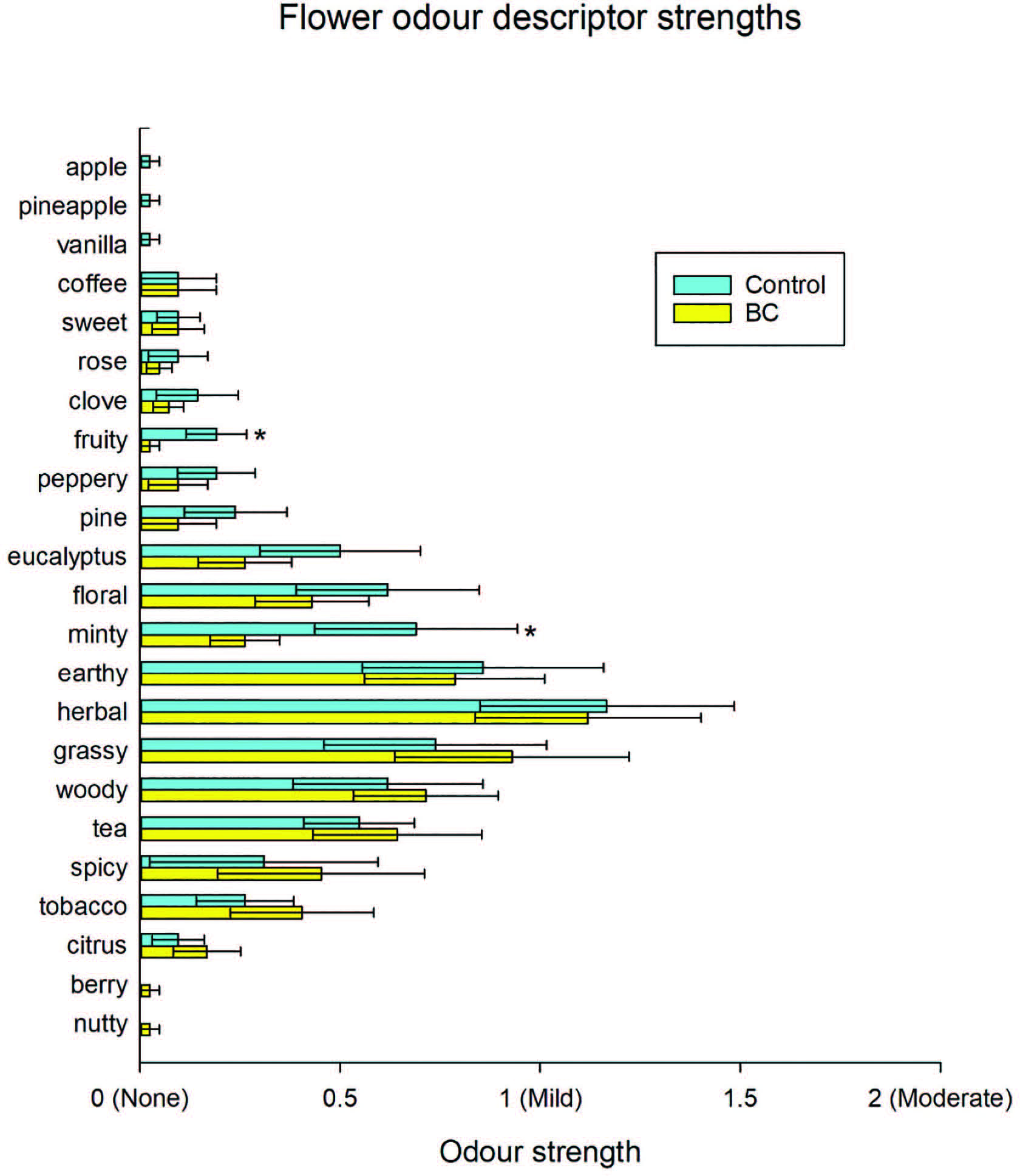
Figure 2.
Impact of BC to cannabis flower OD strengths. Sensory assessment of cannabis flower OD strengths by 14 untrained panellists (3 flowers per treatment), measured on a 5-point Likert scale. Data presented as average ± standard deviations, with statistical significance indicated as * for p < 0.05, as determined by paired samples t-tests. BC, biostimulant complex; OD, odour descriptor.
Therapeutic potential
Cannabinoid changes
Cannabinoids such as CBD and THC are the major sources of therapeutic potential within cannabis flowers (Andre et al., 2016), and THC specifically is the primary quality attribute of recreational cannabis due to its psychoactive properties (Cash et al., 2020). Therefore, both medicinal and recreational cannabis cultivators tend to optimise their practices to maximise THC content of flowers (Trancoso et al., 2022). Quantitative N-IR models for the prediction of flower cannabinoid content were produced for CBD, which achieved an R2 = 0.9619, and for THC, which achieved an R2 = 0.9851. Application of these models to experimental samples (Table S11 in Supplementary Materials) indicated that the CBD content was unchanged between treatments (p = 0.434); however, THC content was significantly (p = 0.016) increased by 3-fold from 0.32% in control plants to 0.99% in BC treatment plants. Medicinal and recreational varieties tend to have much higher THC content >15% (Pennypacker et al., 2022), as compared to the industrial variety utilised within this work. However, this trend of increased THC content (3-fold increase) from the BC treatment is promising for cultivators of varieties where increasing THC content is a primary objective.
Changes to volatile pharmacokinetics
Prediction of T½ (model 3: Table S12 in Supplementary Materials) was achieved with an 88-term model comprised of the physicochemical measures number_ of_aliphatic_OH_groups, fraction_of_rotatable_bonds, number_of_heterocycles, molarRefractivity, number_ of_atoms, number_of_bonds, geometrical_radius, zagreb_group_index_1, zagreb_group_index_2, abonds, logP_1, R2NH, ROH, RCOR, and RCCH, with an R2 = 0.7980, and a 10-fold R2 = 0.6067 (Figure S5 in Supplementary Materials). In the previous study, Wise et al. (2019) presents a model for T½ prediction based on 14 compounds and the physicochemical measures molecular weight, volume, and number of rotatable bonds. Accordingly, the expansion of this to incorporate a larger dataset of compounds along with validation is a substantial improvement in the predictive capabilities. Application of the T½ predictive model to the volatiles altered from the BC treatment (Table 2) predicts that these compounds have half-lives between 9.2 hr for p-Cymen-8-ol and 43.9 hr for α-humulene. For drug design, a T½ of between 12 hr and 48 hr is considered ideal for daily dosing (Smith et al., 2017), and except for 2-norbornanol (T½ = 9.4 hr) and p-Cymen-8-ol (T½ = 9.2 hr), all the volatiles that were changed from the BC treatment had predicted T½ within this daily dosing range (Table 2). Accordingly, the compounds impacted by the BC treatment are predicted to remain in circulation for a sufficient duration to be potentially pharmacologically active.
Table 2.
Pharmacokinetic properties of flower volatiles altered by growth with BC.
| Flower volatile | Fold-changea | p-value | T½b (hr) | BBB index |
|---|---|---|---|---|
| Linalool | 0.74 | 0.011 | 16.8 | 8.3c |
| 2-Norbornanol | 0.85 | 0.078 | 9.4 | 0.0d |
| Borneol | 0.86 | 0.092 | 15.1 | 3.0d |
| p-Cymen-8-ol | 0.70 | 0.005 | 9.2 | 4.1d |
| Terpineol | 0.73 | 0.012 | 15.5 | 5.0d |
| Ylangene | 0.69 | 0.067 | 38.4 | 11.1c |
| β-Caryophyllene | 0.70 | 0.059 | 42.0 | 13.3c |
| α-Bergamotene | 0.68 | 0.064 | 40.8 | 8.7d |
| α-Humulene | 0.66 | 0.052 | 43.9 | 14.2c |
| β-Eudesmene | 0.64 | 0.064 | 42.6 | 12.9d |
1b predicted using model 3 (Table S12 in Supplementary Materials),
1c sourced from Aponso et al. (2020),
1d predicted using model 4 (Table S13 in Supplementary Materials).
Following absorption into the circulatory system, neurologically active compounds must traverse the BBB to elicit effects within the brain (Nagpal et al., 2013). Although the majority of drugs do not cross the BBB, the potential for a drug to have neurological pharmacological potential can be screened based on its permeability index of the BBB (Pardridge, 2003; Nicolazzo et al., 2006). Prediction of BBB indices (model 4: Table S13 in Supplementary Materials) was achieved with an 18-term model comprised of the physicochemical measures of logP, MW, Nrot, and volume, with an R2 = 0.8716, and a 10-fold R2 = 0.7689 (Figure S6 in Supplementary Materials). Other studies have also explored the prediction of the BBB index by QSAR, such as Gupta et al. (2019), which identified a predictive model based on 270 CNS and 720 non-CNS oral drugs, and Ma et al. (2005), which developed a model from 35 organic compounds that was applied to a small training set of 8 compounds. Interestingly, both these previous models utilised different physiochemical properties to each other and the volatile BBB model presented herein (model 4). The BBB model presented in this study is an improvement on the previous studies, as it is specific to essential oil compounds (organic volatiles) and utilises a k-fold crossvalidation approach to improve the predictive reliability for application to new compounds.
Application of the BBB index model to the volatiles altered from the BC treatment (Table 2) indicated that these compounds had predicted BBB values between 0 for 2-norbornanol and 14.2 for α-humulene. According to the classification in Ma et al. (2005), compounds with a BBB index value >2 cross the BBB readily. Further, a comparison of CNS and non-CNS pharmaceutical drugs reported by Gupta et al. (2019) concluded that the CNS drugs have an average BBB index of 4.79 and the non-CNS drugs have an average BBB index of 3.29. Therefore, with the exception of 2-norbornanol (BBB index = 0), all the volatiles changed by the BC treatment are predicted to have the potential to cross the BBB, with seven compounds having very high BBB index scores (≥5), similar to those of many CNS-active drugs. Accordingly, the compounds impacted by the BC treatment are predicted to cross the BBB with the potential to impart neuropharmacological activity.
Of the volatiles which were significantly changed following the treatment, linalool, borneol, terpineole, β-caryophyllene, and α-humulene are the most studied for their medicinal potential, which share a range of demonstrated in vitro benefits relating to inflammation, cardiovascular health, cancer, neuroprotection and more (Machado et al., 2018; Pereira et al., 2018; An et al., 2021; de Lacerda Leite et al., 2021; Chen et al., 2023; Mei et al., 2023). The association with neuroprotection is consistent with the high BBB index scores predicted for these compounds, and borneol has been shown to function as an adjuvant for further increasing BBB permeability (Mei et al., 2023). Accordingly, the reductions in these compounds may represent a reduction in the neuroprotective or neuropharmacological benefits of the BC-grown flowers.
Sugar leaf metabolites
Cannabis sugar leaves are the small leaves surrounding the female flowers within the inflorescence (Spitzer-Rimon et al., 2019; Das et al., 2022). The protruding portion of the sugar leaf is partially removed during cannabis flower processing; however, due to their dense clustering within the inflorescence, a portion of the sugar leaf remains attached and so is utilised as a part of the ‘flower’. Sugar leaves are also one of the tissues throughout the inflorescence where glandular trichomes are present, which are the storage sites for many cannabis metabolites (Tanney et al., 2021). Accordingly, changes in sugar leaf metabolites represent changes to metabolites in the utilised portion of the inflorescence, as well as indicative changes that may have occurred within the adjacent flower tissue and trichomes. Sugar-leaf metabolite profiles were found to be significantly different between control and BC-grown plants, based on the non-overlapping regions of 95% confidence within the PCA (Figure 3). Comparison of individual metabolites in sugar leaves indicated that BC treatment was associated with significant reductions to 25 peaks, and a further 29 peaks were varied with marginal significance (all reduced between 0.45-fold and 0.91-fold). This corresponded with 11 identified metabolites (Table S14 in Supplementary Materials) that were significantly reduced (between 0.52-fold and 0.85-fold), and 14 identified metabolites that were reduced with marginal significance (between 0.47-fold and 0.85-fold). Of these reduced metabolites, several have been associated with beneficial bioactivities and therefore, reductions in their presence within the flowers are not considered beneficial for the therapeutic use of the associated flower. Most notable are the reductions to cannabisin B, orientin, and apigetrin, which are associated with both antioxidant (Chen et al., 2012; Ku et al., 2014; Ali et al., 2017) and neuroprotective potentials (Law et al., 2014; Lim et al., 2016; Di Palo et al., 2022). Furthermore, orientin specifically is associated with anxiolytic activities (Ku et al., 2014), and so reduction in this metabolite may affect the utility of these cannabis flowers for anxiety treatment. Therefore, based on the metabolite changes within the sugar leaves that make up a portion of the utilised flower, the growth of cannabis with BC produced flowers with reduced presence of several potentially beneficial therapeutic metabolites.
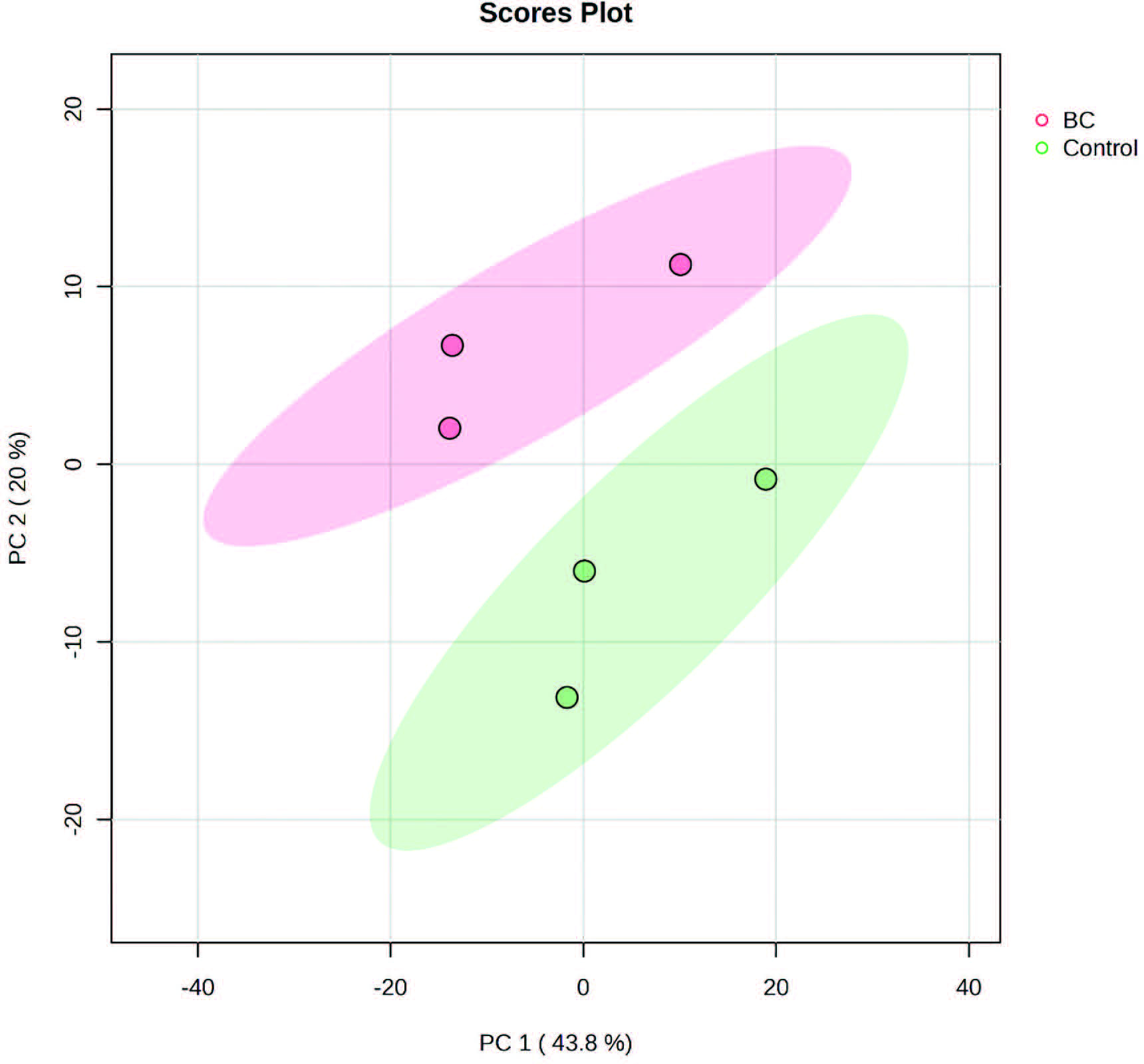
Figure 3.
Changes to cannabis sugar leaf metabolites from growth with a BC. PCA of sugar leaf metabolite profiles from three biological replicates, with colours indicating treatment 95% confidence regions. BC, biostimulant complex; PCA, principal component analysis.
Sugar leaves were also analysed by N-IR, wherein profile analysis (sPLS-DA) indicated that the IR spectra were not significantly different between treatments (Figure S7 in Supplementary Materials). A comparison of individual wavenumbers identified a region where the IR spectra were considerably reduced from the BC treatment (Figure 4). The broadest section of this region was between wavenumbers 6337–7628 cm−1 (1311–1578 nm), wherein spectra were reduced with marginal significance (p < 0.1), while a narrower portion of the spectra between 6734 cm−1 and 7623 cm−1 (1312–1485 nm) were significantly (p < 0.05) reduced between treatments. The region of the spectra between 1400 nm and 1450 nm corresponds with water due to the hydroxy groups (O-H), however, this region is also attributed to hydrocarbons (C-H) and alcohols (R-OH), resulting in the association of 1450 nm with cannabinoids (THC, CBD, and cannabigerol), and terpenes (β-myrcene, and D-limonene) (Birenboim et al., 2022; Tran et al., 2024). Noting that the water content of the analysed cured flowers was not significantly different between treatments (p = 0.865, Table S11 in Supplementary Materials), and cannabinoid content (CBD and THC) was either unchanged or increased (Table S11 in Supplementary Materials), it seems unlikely that these reductions in the spectra would be attributed to changes in moisture or cannabinoids. The specific terpenes attributed to the 1450 nm band are β-myrcene, and D-limonene (Birenboim et al., 2022), and whilst these weren’t significantly changed, they were both on average reduced (0.85-fold p = 0.117 and 0.96-fold p = 0.401, respectively), and so may have contributed to this change in the spectra. Furthermore, for the volatiles that were significantly changed from the BC treatment (Table 1), they all contain either the hydrocarbon (C-H) or alcohol (R-OH) group, and so would likely affect the spectra within this region. Accordingly, the N-IR spectral reduction across the region of 6337–7628 cm−1 (1311-1578 nm) may reflect the general reduction in terpenes and associated odour strength from the BC treatment.
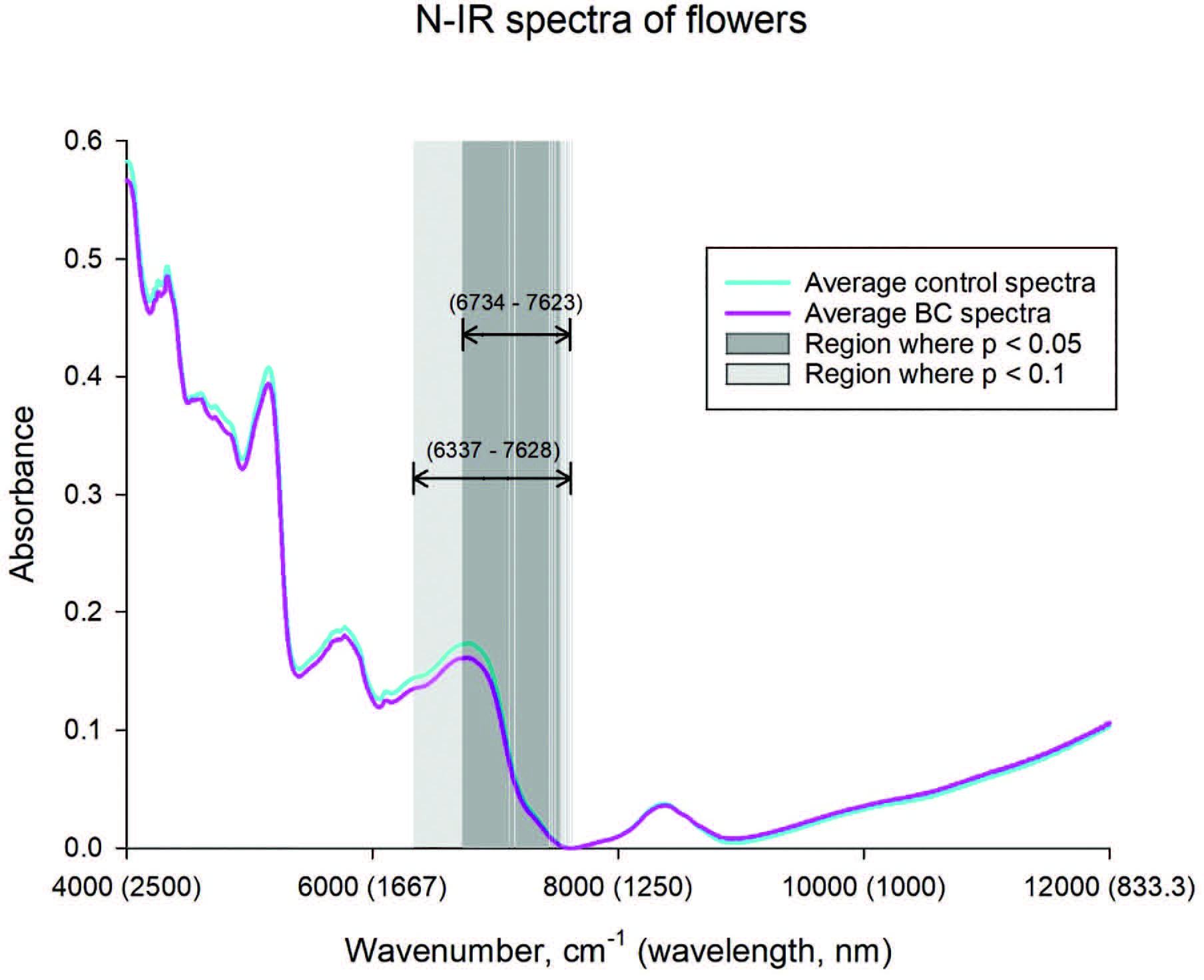
Figure 4.
Assessment of BC impact to cannabis flower N-IR spectra. Average control (blue) and BC (magenta) N-IR spectra of cured cannabis flowers analysed between 4000 cm−1 and 12000 cm−1 (n = 9). Shading indicates wavenumbers with statistical differences, with dark shading representing statistical significance p < 0.05 and light shading representing marginal significance of p < 0.1, as determined by an independent samples t-test. BC, biostimulant complex; N-IR, near-infrared.
Modelling the proportion of reviewers indicating that a strain helps with anxiety or depression
Noting that cannabis therapeutic potential is associated with various phytochemicals (as discussed above), it was hypothesised that statistical models could be generated from flower’s volatile and THC profiles to predict the proportion of reviewers that find it helpful for anxiety and depression treatment. Prediction of reviewer proportions for being helpful for anxiety (model 5: Table S15 in Supplementary Materials) was achieved with a 19-term model comprising the variables α-humulene, β-limonene, β-myrcene, β-ocimene, camphene, γ-terpinene, terpinolene, THC, and transnerolidol, with an R2 = 0.6831, and a 10-fold R2 = 0.5615 (Figure S8 in Supplementary Materials). Prediction of reviewer proportions for being helpful for depression (model 6: Table S16 in Supplementary Materials) was achieved with a 10-term model comprising of the variables eucalyptol, linalool, THC, trans-ocimene and trans-nerolidol, with an R2 = 0.6667, and a 10-fold R2 = 0.4201 (Figure S9 in Supplementary Materials).
The models demonstrate associations between terpenes and THC, with reviewer proportions indicating that a strain helps with mood-related disorders, anxiety and depression. THC is the primary psychoactive compound in cannabis, which imparts recreational enjoyment (Cash et al., 2020), but also imparts medicinal benefits (Szejko et al., 2024). THC was included in both models within various terms of both positive and negative coefficients, indicating a complex relationship between THC concentration and predicted reviewer proportions for being helpful with anxiety and depression. Clinical studies with cannabis and THC seem to reflect this complex relationship, with both positive and negative effects being reported for mood-related disorders (Mammen et al., 2018; Stanciu et al., 2021). Similarly, various volatiles and their crossterms are included within both models, indicating that a relationship is present between their relative contents and how helpful that strain is predicted to be for the indicated conditions. This is consistent with Gulluni et al. (2018), who found that low THC cannabis essential oil had brain activity relating to both anxiety and depression that was promising for the treatment of these conditions. Accordingly, the predictive models suggest that both cannabis volatiles and THC impact utility for the management of anxiety and depression.
Within the context of the predictive model for anxiety, both camphene and terpinolene were present only as individual terms with positive coefficients, indicating that increases in these terpenes correlate with increased reviewer proportions for being helpful for anxiety (Table S15 in Supplementary Materials). De Sousa et al. (2015) conducted a systematic review of the anxiolytic properties of various terpenes, while Nuutinen (2018) reviewed the medicinal effects of cannabis terpenes specifically, both of which do not include anxiolytic properties for camphene or terpinolene. Interestingly, Kamal et al. (2018) explored correlations between terpenes and anxiolytic efficacy, and whilst not statistically significant terpinolene was associated with reduced efficacy against anxiety, which is the opposite direction to the positive association observed in model 5. Accordingly, the positive association of these terpenes (camphene and terpinolene) with the predicted proportion of reviewers that find a strain helpful for anxiety is relatively novel and thus future work should explore these terpenes within the context of cannabis use for the treatment of anxiety.
For the model for depression, β-limonene and eucalyptol were present in terms with negative coefficients (Table S16 in Supplementary Materials), whilst β-ocimene had a positive association (coefficient). This negative association between β-limonene and eucalyptol is contrary to other studies wherein rodent models indicated reduced depression from limonene (Lorigooini et al., 2021), limonenedominant essential oil (Zhang et al., 2019) and eucalyptol-dominant essential oil (Kim et al., 2022). Similarly, as noted above, the positive correlation of the minimally studied β-ocimene with depression use may be a positive indicator for further research.
Predicted changes to the proportion of reviewers indicating that a strain helps with anxiety or depression for the BC flowers
Changes to the BC-grown flowers were further explored by application of the predictive models (5 and 6) to the changed volatile and THC profiles. The model prediction results (Table 3) indicated that BC treatment was associated with a reduction in the proportion of reviewers that are predicted to find the BC flowers helpful for anxiety (0.91-fold, p = 0.069), and an increase in the proportion finding BC flowers helpful for depression (1.10-fold, p = 0.031). THC is sometimes associated with negative anxiogenic effects (Tambaro and Bortolato, 2012; Niesink and van Laar, 2013; Lichenstein, 2022), and so the predicted reduction in being helpful for anxiety (less anxiolytic) along with the measured increase in THC contents (Table S11 in Supplementary Materials) may reflect this relationship between THC and anxiety. For cannabis use and depression, evidence suggests there is a bidirectional relationship between increased cannabis use and increased depression, however, the interaction of cannabinoids with the endocannabinoid receptor CB1 has prompted interest in the potential of cannabis as a therapeutic option for depression (Feingold and Weinstein, 2021; Langlois et al., 2021). The predicted increase in being helpful for depression for the BC-treatment flowers with increased THC, supports this potential relationship between cannabis use (having CB1 interaction) and depression treatment. Accordingly, growth with BC is associated with reduced utility of cannabis for the management of anxiety, but increased utility for the management of depression.
Table 3.
Predicted change to reviewer proportions for flowers grown with BC.
| Use | Predicted proportion that find it helpful (%) | Fold-changea | p-value | |
|---|---|---|---|---|
| Control | BC | |||
| Anxiety | 27 | 25 | 0.91 | 0.069 |
| Depression | 41 | 46 | 1.10 | 0.031 |
Biostimulant mode of action
Impacts to roots
Noting that the biostimulant is applied to plant roots within the fertigation solution, the molecular changes within the root tissues represent the immediate response to the physical interaction with the biostimulant. Principle component analysis indicated that the root molecular profiles were significantly different between treatments for both their metabolites (Figure 5A) and phytohormones (Figure 5B), indicating that BC treatment had a relatively large impact on the plant-root biochemistry. Comparison of individual metabolites within the roots identified 71 peaks that were significantly changed between treatments, and a further 27 peaks that differed with marginal significance (with fold-changes ranging between 0.16-fold and 12.67-fold). Of the identified metabolites (Table S17 in Supplementary Materials), 6 metabolites significantly increased, 2 metabolites increased with marginal significance, 25 metabolites significantly reduced, and 14 metabolites reduced with marginal significance. Among the metabolites that were significantly altered by the BC treatment were the phenylpropanoid-associated antioxidant compounds caffeic acid 3-glucoside, 1-caffeoyl-beta-D-glucose, rutin, and SA, which indicate a change in secondary phenolic compound metabolism likely associated with induction of a defence response (Fürstenberg-Hägg et al., 2013; Jiao et al., 2018). Comparison of individual root phytohormones identified that GA4 was reduced with marginal significance by 0.86-fold (p = 0.061, Figure 5C), while methyl-IAA and SA were both significantly increased, by 2.82-fold (p < 0.001, Figure 5D) and 3.51-fold (p < 0.001, Figure 5E), respectively, while all other phytohormones were unchanged (Table S18 in Supplementary Materials). For root bioassay measures, a marginally significant 1.19-fold increase in chitinase activity was detected (p = 0.054, Figure 5F), while protein content, hydrogen peroxide content, and peroxidase activity were all unchanged (Table S19 in Supplementary Materials). The increase in the stress-hormone SA, along with the increased chitinase activity, which is a defence-related enzyme (Wise et al., 2020a), indicates the likely induction of a stress response (Zhong et al., 2021; Castillo-Sánchez et al., 2024). Combined with this, the unchanged jasmonate hormones (JA, JA-Ile, and OPDA) indicate that this is an SA-derived stress response (Kachroo and Kachroo, 2012). The prevalence of SA over JA induction within a stress response is similar to that of a biotrophic pathogen and symbiotic microbial responses (Gutjahr and Paszkowski, 2009). Furthermore, as auxins and jasmonates are known to inhibit one another (Saniewski et al., 2002), the increase in the auxin methyl-IAA may represent a dampening of JA to prioritise the SA-response. These molecular changes suggest that BC application to cuttings has induced an SA-driven defence response within the roots.
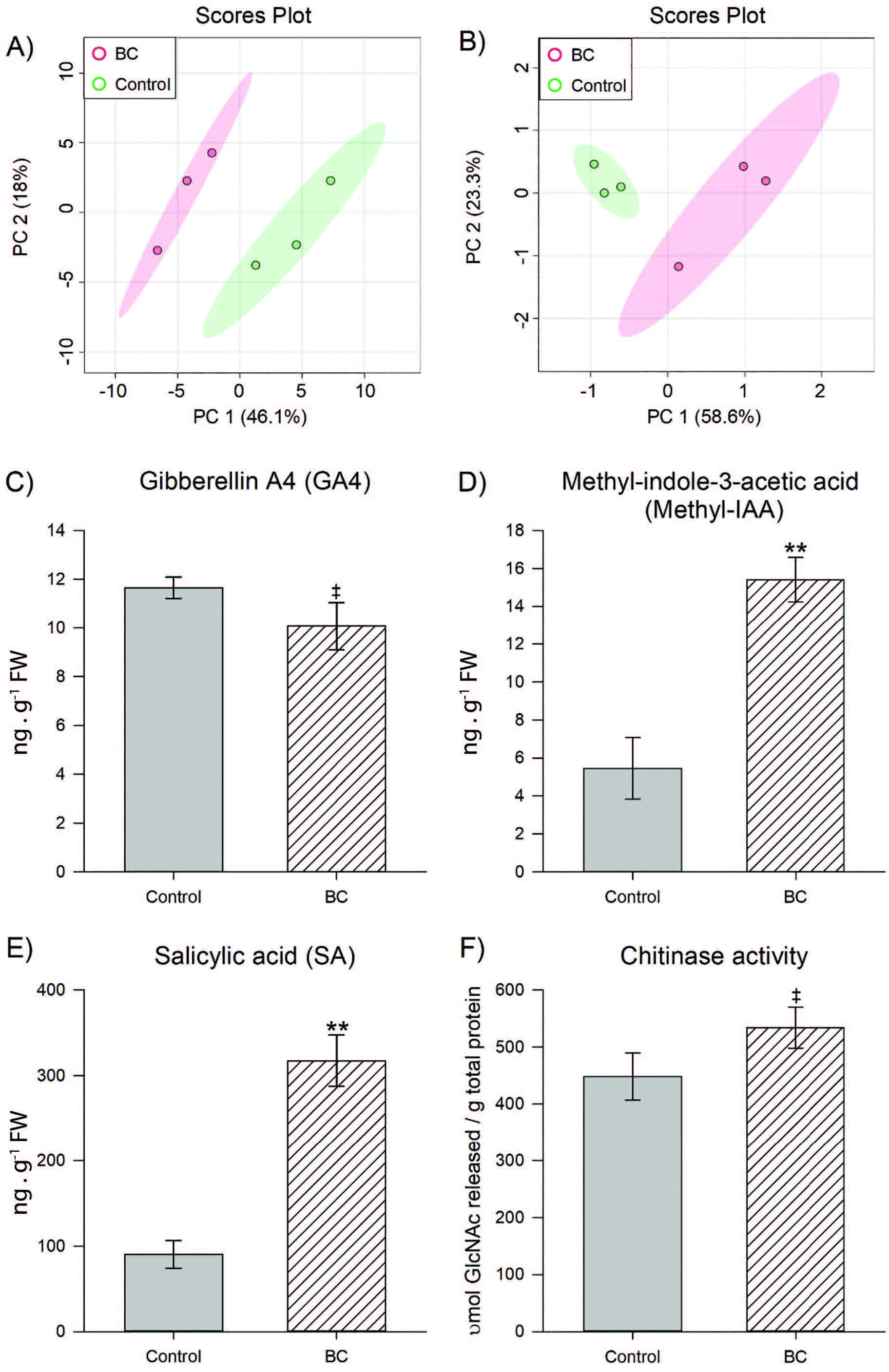
Figure 5.
Change to cannabis root biochemistry from growth with a BC. PCA of (A) root metabolite profiles and (B) root phytohormone profiles. Average root concentrations ± standard deviation of (C) GA4, (D) Methyl-IAA, and (E) SA, and (F) root chitinase activity, following 1 week of control or BC treatments. All data based on three biological replicates for control and BC, with significant differences indicated as ** for p < 0.01 and marginal significance indicated as ‡ for p < 0.1, as determined by an independent samples t-test. BC, biostimulant complex; GA4, gibberellin A4; IAA, indole-3-acetic acid; Methyl-IAA, methyl indole-3-acetic acid; PCA, principal component analysis; SA, salicylic acid.
Impacts on leaves
As compared to the roots, the leaf tissues are physically separate from the site of BC application, and so molecular changes within leaf tissues represent signal transduction from the root tissues following exposure. By contrast to the relatively substantial molecular changes that were observed in the roots, the leaves of the same cuttings exhibited fewer changes. No significant changes were identified in leaf metabolite profiles (Figure S10 in Supplementary Materials), however, comparison of individual leaf metabolites identified 37 peaks that were significantly different between treatment groups, and a further 53 peaks that were different with marginal significance (all increased between 2.15-fold and 7.25-fold). Of the metabolites that could be identified, there were 9 that were significantly increased from BC treatment, a further 21 that were increased with marginal significance, and no metabolites that were reduced with any significance (Table S20 in Supplementary Materials). As with the roots, leaf phenylpropanoid-related antioxidant compounds were significantly affected including 1-caffeoyl-beta-D-glucose, caffeic acid 3-glucoside, p-coumaric acid glucoside, genistein, p-coumaric acid glucoside, and N-feruloylglycine, as well as the flavonoids luteolin and luteolin 7-O-malonylglucoside, which indicate a change to phenolic metabolism which may be associated with the defence response (Falcone Ferreyra et al., 2012; Yadav et al., 2020). A comparison of individual phytohormones did not identify any significant differences between BC and control (Table S21 in Supplementary Materials). However, leaf phytohormone profiles were found to be significantly different (Figure S11 in Supplementary Materials), likely attributed to the on-average large differences of ABA (1.26-fold increased, p = 0.237), ICA (2.17-fold increased, p = 0.473), JA (1.52-fold increased, p = 0.177), JA-Ile (2.35-fold increased, p = 0.333), Methyl-JA (0.55-fold decreased, p = 0.244), and SA (1.19-fold increased, p = 0.447). Additionally, no significant differences were observed for any of the leaf measures of protein content, hydrogen peroxide content, peroxidase activity (not detected), or chitinase activity (Table S22 in Supplementary Materials). The lack of significant changes in individual phytohormones and bioactivities (including chitinase) of the leaves indicates that the defence response to the BC treatment was largely localised to the root tissues rather than systemic. However, as noted in Gamir et al. (2014), plant defence is hypothesised to occur in stages wherein the early stages relate to altered metabolism and priming for a stronger response involving phytohormones upon pathogen detection. Following priming and induction of a mild defence response, subsequent exposure results in a stronger response with associated improvements in stress tolerance and growth (Suwanchaikasem et al., 2023a, 2023b, 2024). Accordingly, the increase in leaf antioxidant metabolites – without changes to phytohormones – may reflect the priming of a defence response, such that BC-treated plants would be more resistant to subsequent exposure to a stressor.
Impacts on mature plants
As cannabis flower harvest occurs after several weeks of BC application, the plant’s physical and molecular state at the time of harvest represents the effects of sustained BC exposure and the underlying effects that resulted in the flowers that were produced. Growth of cannabis with BC did not significantly affect plant growth or yield (Table S23 in Supplementary Materials), as indicated by height (p = 0.510), stem thickness (p = 0.839), flower yield (p = 0.631), and flower water % (p = 0.947). Accordingly, BC treatment does not appear to be associated with changes to the primary metabolism, which is the driver of growth and yield (Coleman et al., 2010).
Sugar leafphytohormones were found to be unchanged from BC treatment, as indicated by no significant change to the profile comparison (Figure S12 in Supplementary Materials), and no significant change to any individual phytohormones (Table S24 in Supplementary Materials). This is consistent with results from BC application to cuttings, wherein phytohormone changes were not observed within the aerial portion of the plant. Sugar leaf bioassay results (Table S25 in Supplementary Materials) indicated that protein content was increased by 1.01-fold with marginal significance (p = 0.052), and peroxidase activity increased from 0 in control to 0.027 △Abs470 · min−1 · mg−1 total protein in BC plants (p = 0.016). As peroxidase enzymes are associated with defence (Bolwell and Wojtaszek, 1997; Almagro et al., 2009; Dieng et al., 2011), this increase in peroxidase activity further supports the hypothesis that BC application induced a defence response within the cannabis plants.
In addition to impacting therapeutic potential, the sugar leaf metabolite changes (Table S14 in Supplementary Materials), may also provide insight into molecular drivers of induced mechanisms. Wise et al. (2024d) explored sugar leaf metabolite expression following growth with a biostimulant molasses, which is a component of the BC applied herein. Within both studies, sugar leaf metabolites were observed to reduce from the biostimulant treatment, which included four metabolites – cannabisin B, SA, trans-p-Sinapoyl-Î2-D-glucopyranoside, and 1-Hydroxy-3,5,6-trimethoxy-10-methyl-9(10H)-acridinone (Wise et al., 2024d). The reductions to these metabolites from molasses application were part of a larger set of biochemical and metabolite changes, which indicated induction of a defence response. However, the shared reductions in the phenolic-like compound cannabisin B (Di Palo et al., 2022), the phenolic antioxidant trans-p-Sinapoyl-Î2-D-glucopyranoside (Materska and Perucka, 2005), and the defence-related phytohormone SA (Kachroo and Kachroo, 2012) indicate that molasses and BC (which contains molasses) may have shared modes of action relating to defence induction, attributed to the provision of molasses.
The BC treatment also significantly reduced the sugar leaf metabolite 2-C-methylerythritol 4-phosphate (aka methyl-D-erythritol phosphate, MEP), which is part of the MEP pathway and is involved in a range of processes including abiotic stress signalling (Banerjee and Sharkey, 2014). An output of the MEP pathway in plants is the 5-carbon isoprenoid isopentenyl pyrophosphate (IPP), which is the precursor to carotenoids (Saladié et al., 2014), terpenes (Frank and Groll, 2017), and in cannabis, cannabinoids (Desaulniers Brousseau et al., 2021). Of the 10 volatiles which were changed following the BC treatment (Table 1), 9 were terpenes (including mono- and sesqui-terpenes) and 1 was a non-terpene (p-Cymen-8-ol). The decrease in MEP and terpenes, along with the increase in THC (a cannabinoid) in the aerial tissues may therefore represent a stress-related diversion of resources within the MEP pathway towards increased THC production at the cost of terpene synthesis. Accordingly, based on the molecular changes within the different tissues, BC application appears to induce an initially localised defence response within the roots, with minimal translocation of this signal to the leaves, but achieves systemic defence induction after several weeks of application within a solid substrate, as evidenced by translocation of this defence signal to the aerial parts of mature cannabis plants.
CONCLUSIONS
This study demonstrated that supplementation of cannabis growth with BC results in an array of changes to tissue metabolite and phytohormone profiles, associated with induction of a defence response. The observed BC-associated decreases to 10 volatiles and 3-fold increase in THC within flowers resulted in decreased perceptions of odour strength, and the minty and fruity odours, and are predicted to increase impressions of benefits for the management of depression by 1.1-fold. Accordingly, BC may be a valuable tool for cultivators aiming to increase cannabis flower value associated with THC contents. Patient-focused benefits from BC use during cannabis cultivation may relate to improved management of depression, and enhanced accessibility for paediatric or ASD patients who require reduced sensory stimulation from their medicines.
Abbreviations
- ABA
abscisic acid
- ASD
autism spectrum disorder
- BBB
blood-brain-barrier
- BC
biostimulant complex
- CA
cinnamic acid
- CBD
cannabidiol
- CNS
central nervous system
- CW
cure weight
- DW
dry weight
- EC
electrical conductivity
- FW
fresh weight
- GA3
gibberellin A3
- GA4
gibberellin A4
- GC-MS
gas chromatography mass spectrometry
- HPLC
high-performance liquid chromatography
- HS
head space
- IAA
indole-3-acetic acid
- IBA
indole-3-butryric acid
- ICA
indole-3-carboxylic acid
- IPP
isopentenyl pyrophosphate
- JA
jasmonic acid
- JA-Ile
jasmonic acid-isoleucine
- LC-MS
liquid chromatography mass spectrometry
- LR
logistic regression
- MEP
methyl-D-erythritol phosphate
- Methyl-IAA
methyl-indole-3-acetic acid
- Methyl-JA
methyl-jasmonic acid
- N-IR
near-infrared
- OD
odour descriptor
- OPDA
12-oxo-phytodienoic acid
- OR
odorant receptor
- PCA
principal component analysis
- QSAR
quantitative structure-activity relationship
- RH
relative humidity
- SA
salicylic acid
- sPLS-DA
sparse partial least squares discriminant analysis
- T½
elimination half-life
- THC
△9-tetrahydrocannabinol
- UV-Vis
ultraviolet-visible
ACKNOWLEDGEMENTS
The authors would like to thank Stephen Grist (RMIT University) for their support with the HS analysis.
Notes
[13] Contributed by AUTHOR CONTRIBUTIONS
K.W. – writing – original draft, visualization, methodology, investigation, formal analysis, data curation, conceptualization. T.S. – writing – review & editing, supervision. H.G. – writing – review & editing, supervision. J.S.P. – writing – review & editing, supervision, methodology, formal analysis, conceptualization.
[14] Conflicts of interest CONFLICT OF INTEREST
The authors declare no conflict of interests.
SUPPLEMENTARY MATERIALS
SENSORY ASSAY SUPPORTING INFORMATION
Exclusion criteria
Exclusion criteria (on the day of the trial)
persons who have consumed food within the last lhr
persons who have consumed drink (other than water) within the last 30m¡n
anyone experiencing cold or flu like symptoms
anyone experiencing hayfever or sinus related allergies
General exclusion criteria
pregnant individuals
children (individuals under 18)
persons who are NOT a RMIT staff or student
anyone with a known impairment of odour/smell perception
low English reading proficiency where they cannot understand the consent form.
Demographics questionnaire

Odour questionnaire



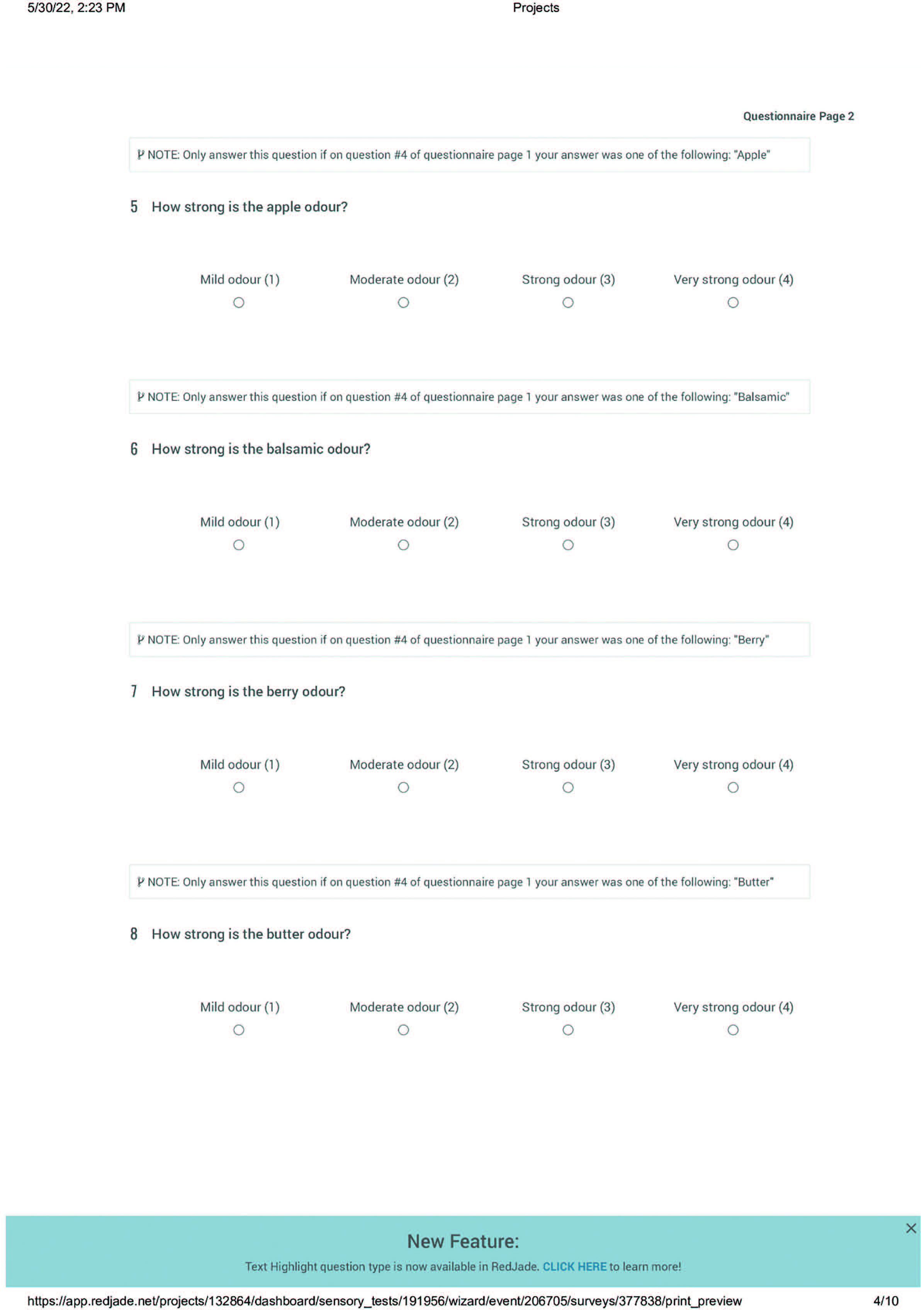
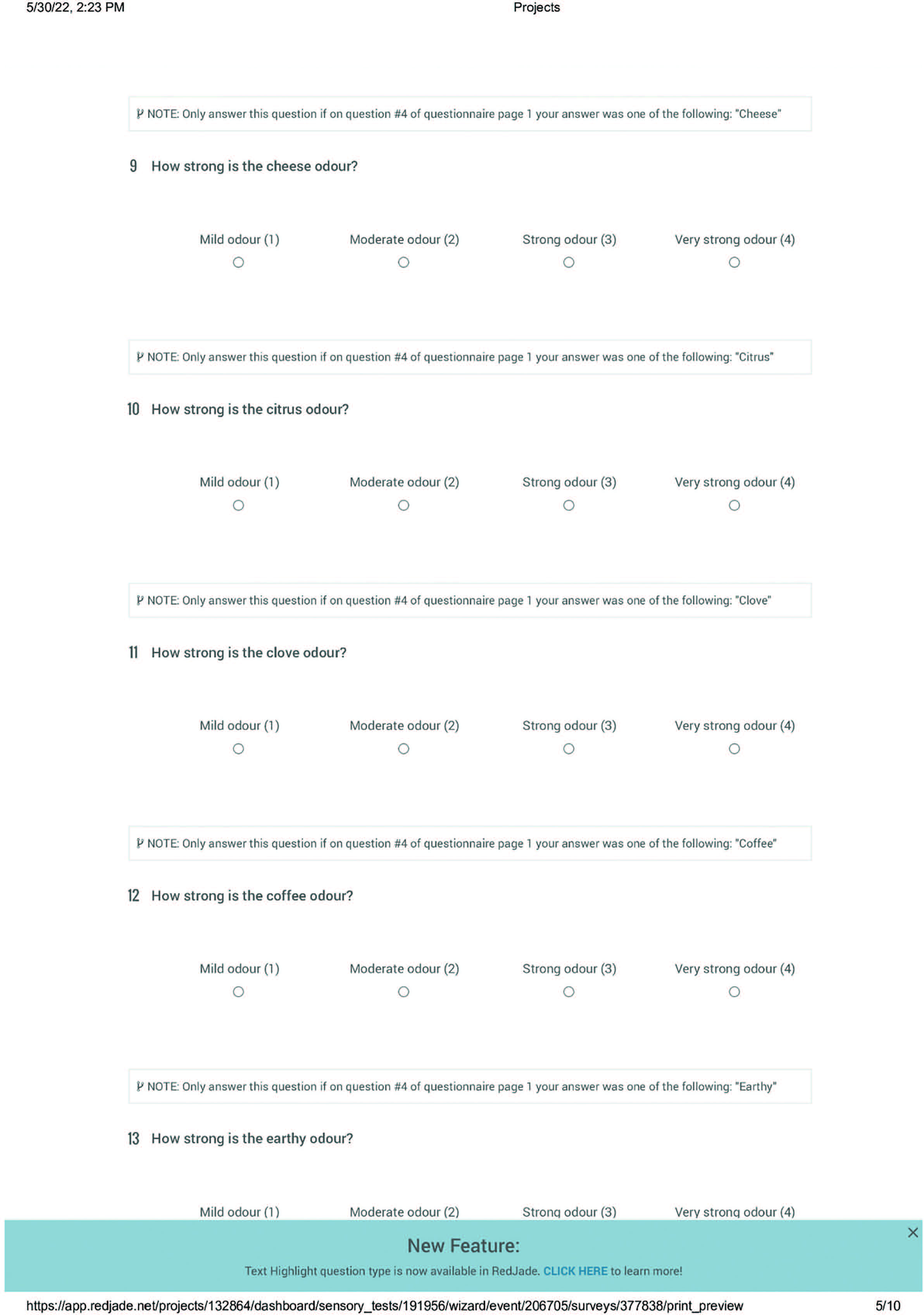
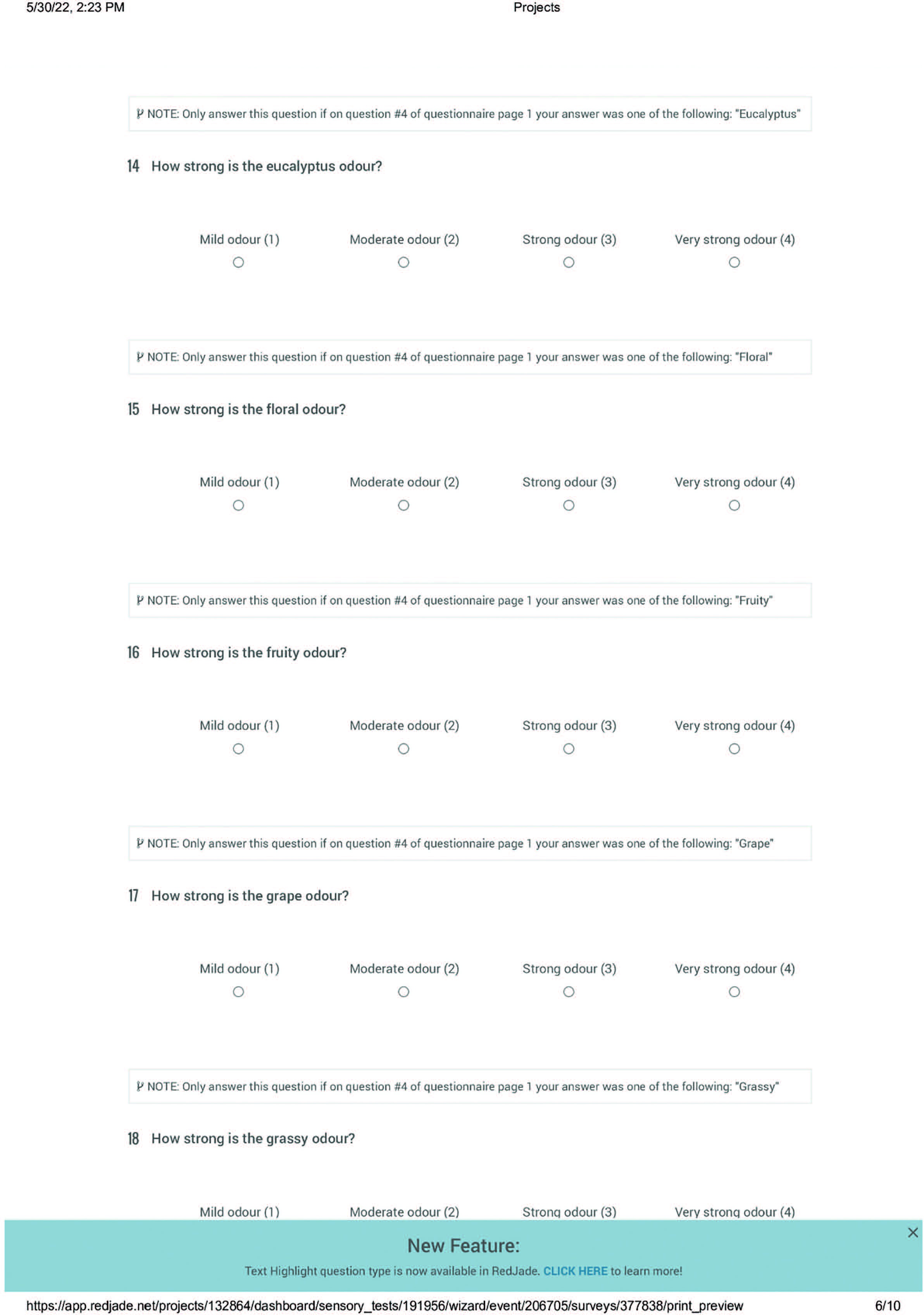
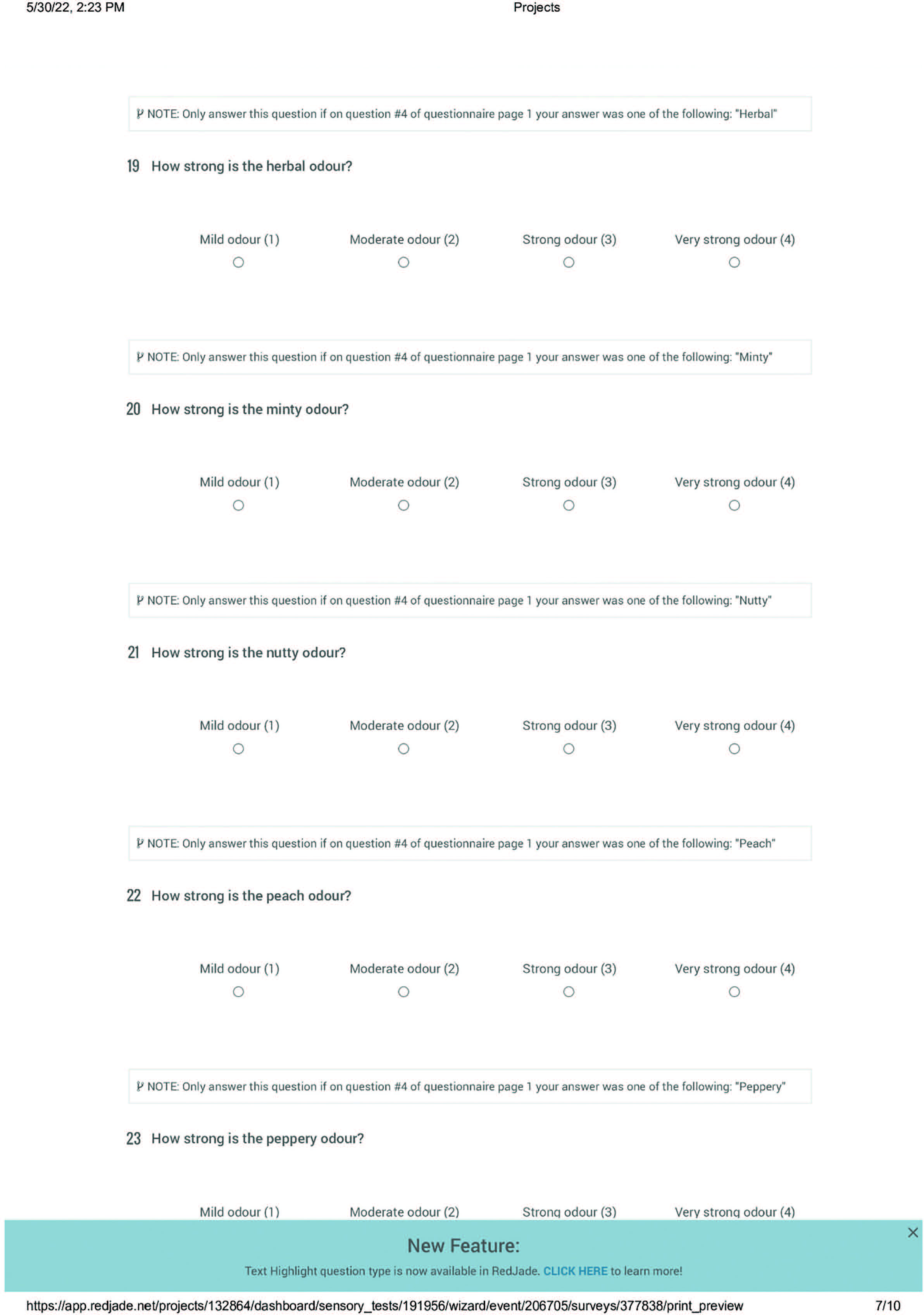
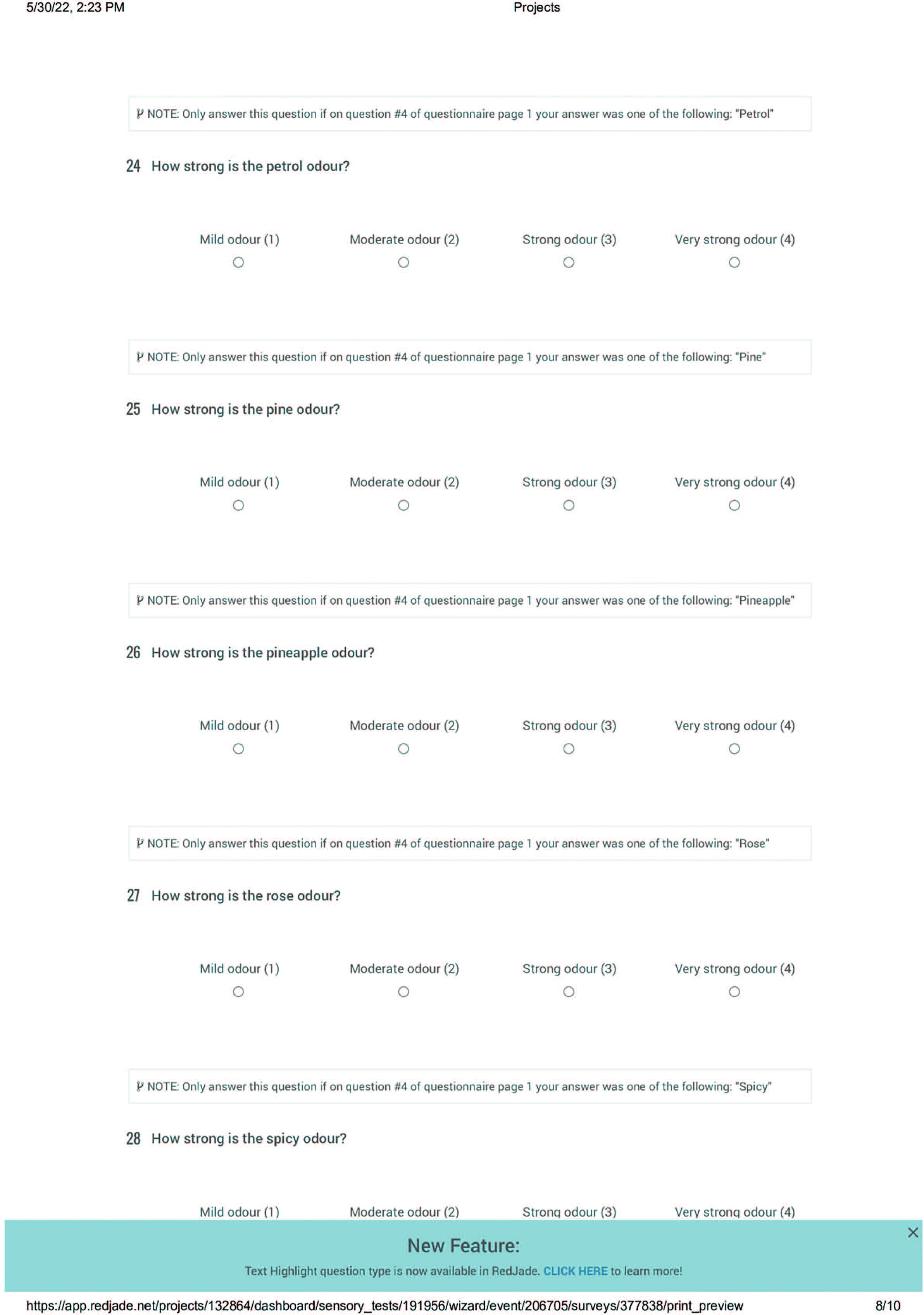
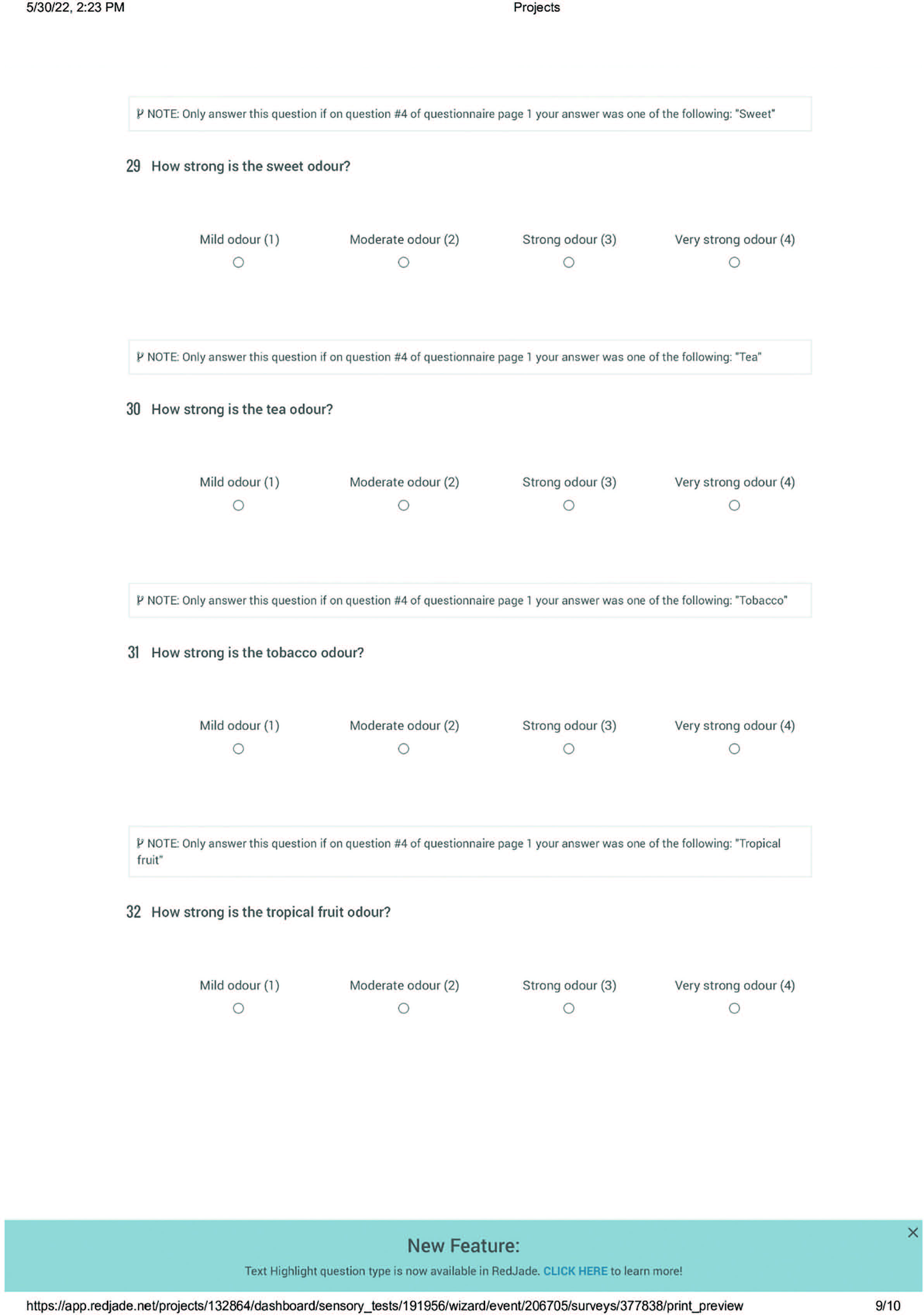
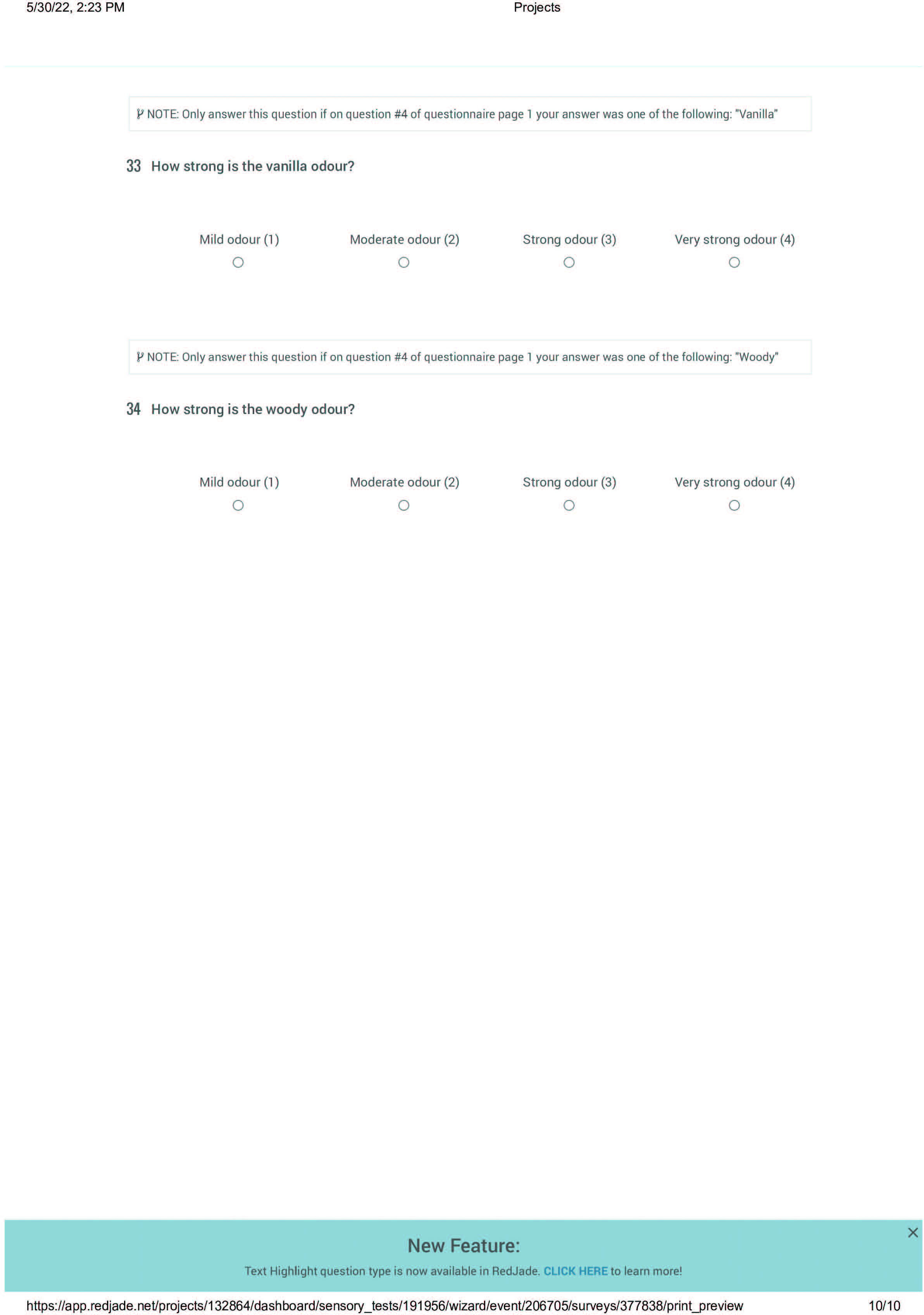
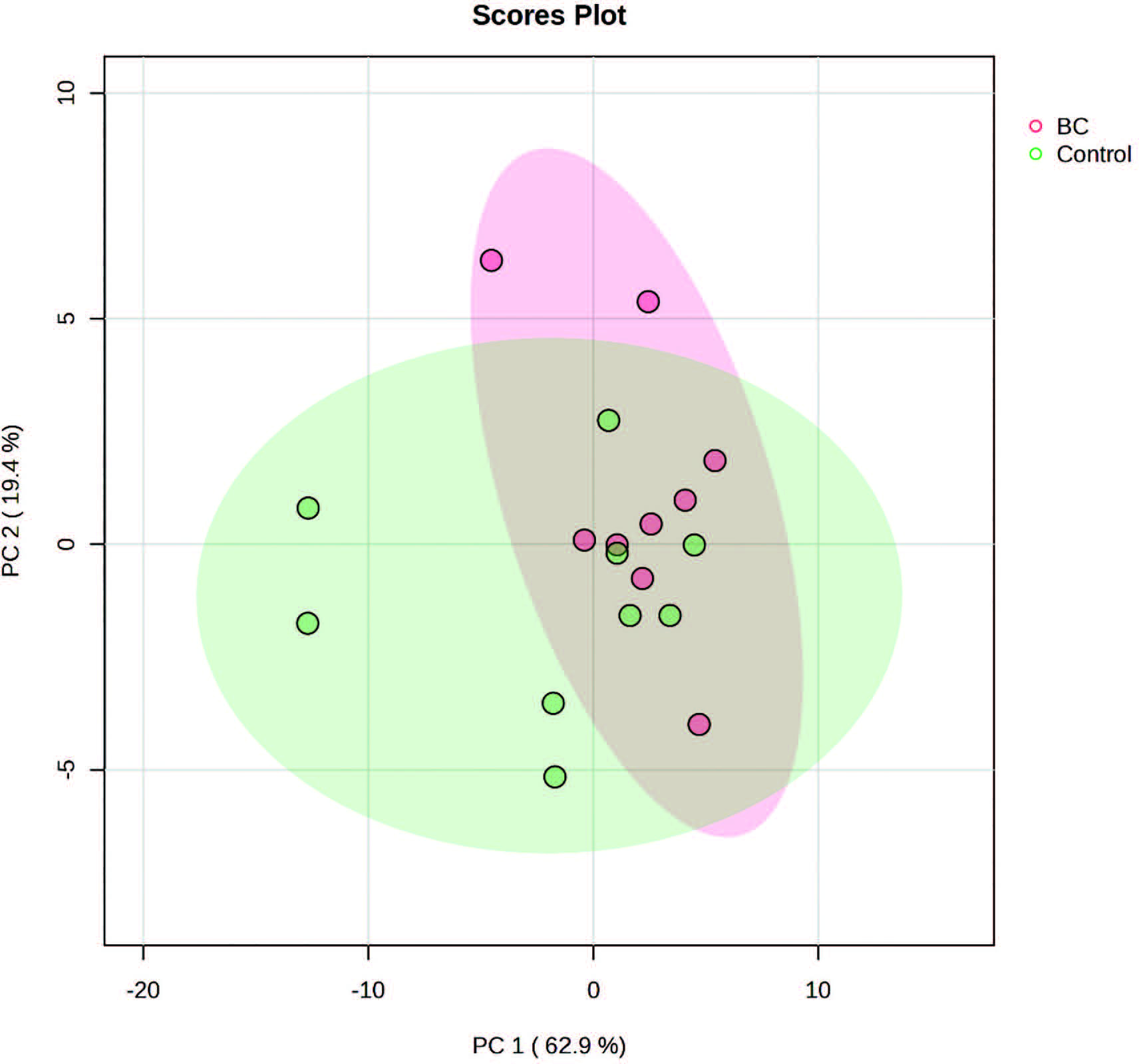
Figure S1.
HS profile PCA. HS, head space; PCA, principal component analysis.
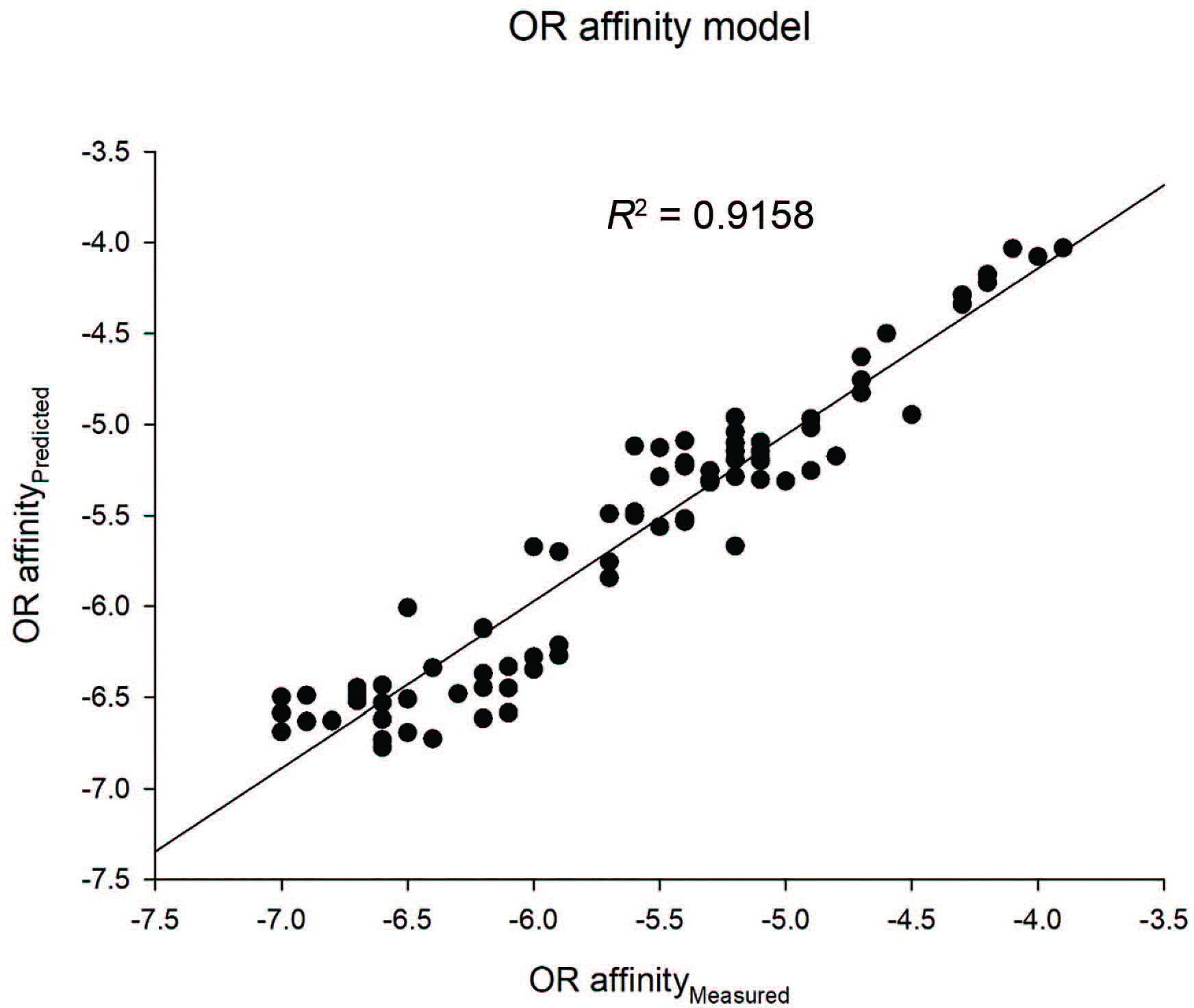
Figure S2.
Human OR affinity model (model 1). Polynomial regression analysis with 10-fold cross-validation to predict OR affinity from physicochemical measures (n = 83). OR, odorant receptor.
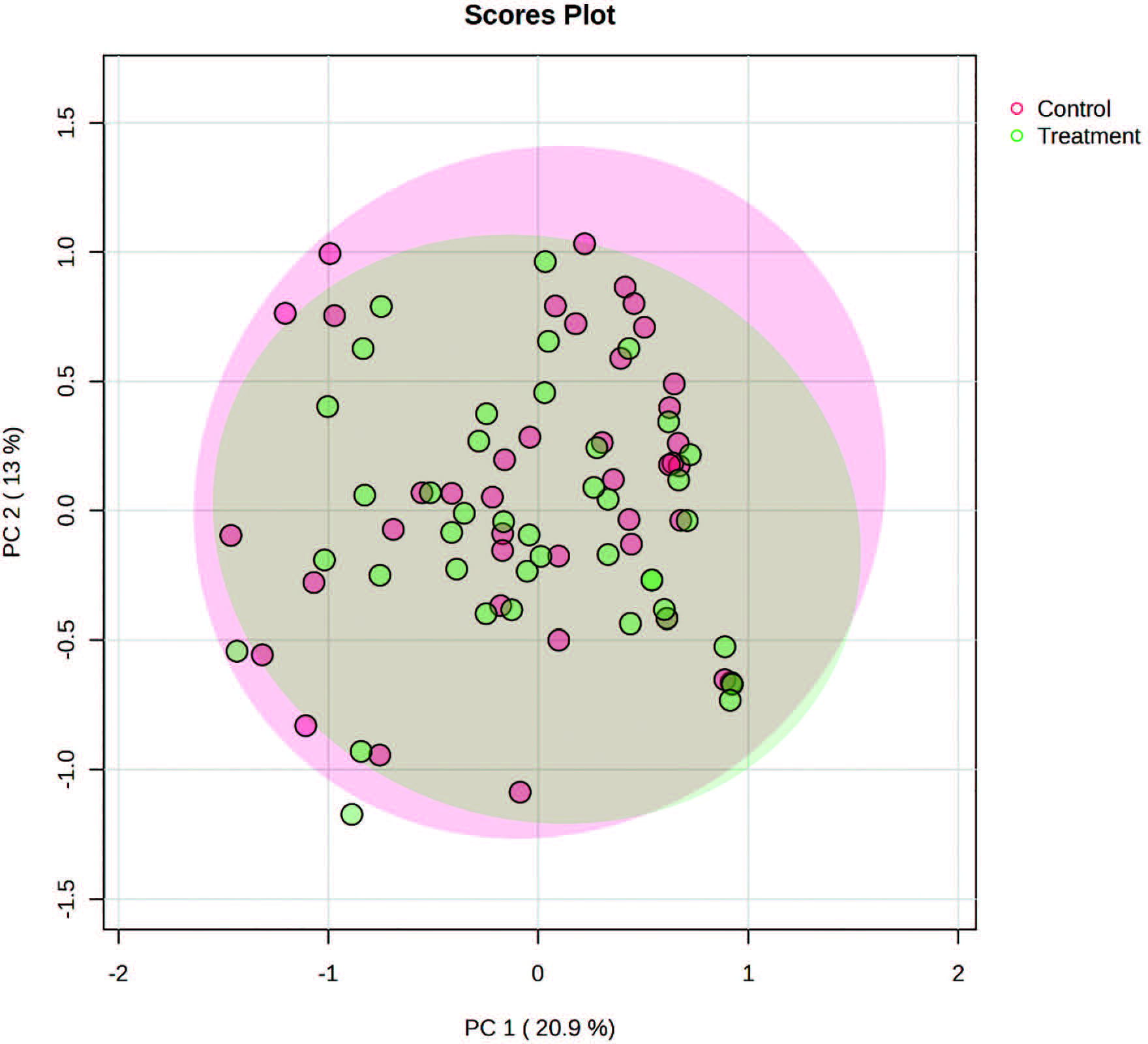
Figure S3.
PCA of sensory data (incudes strength, desirability, quality, and all OD strength measures). OD, odour descriptor; PCA, principal component analysis.
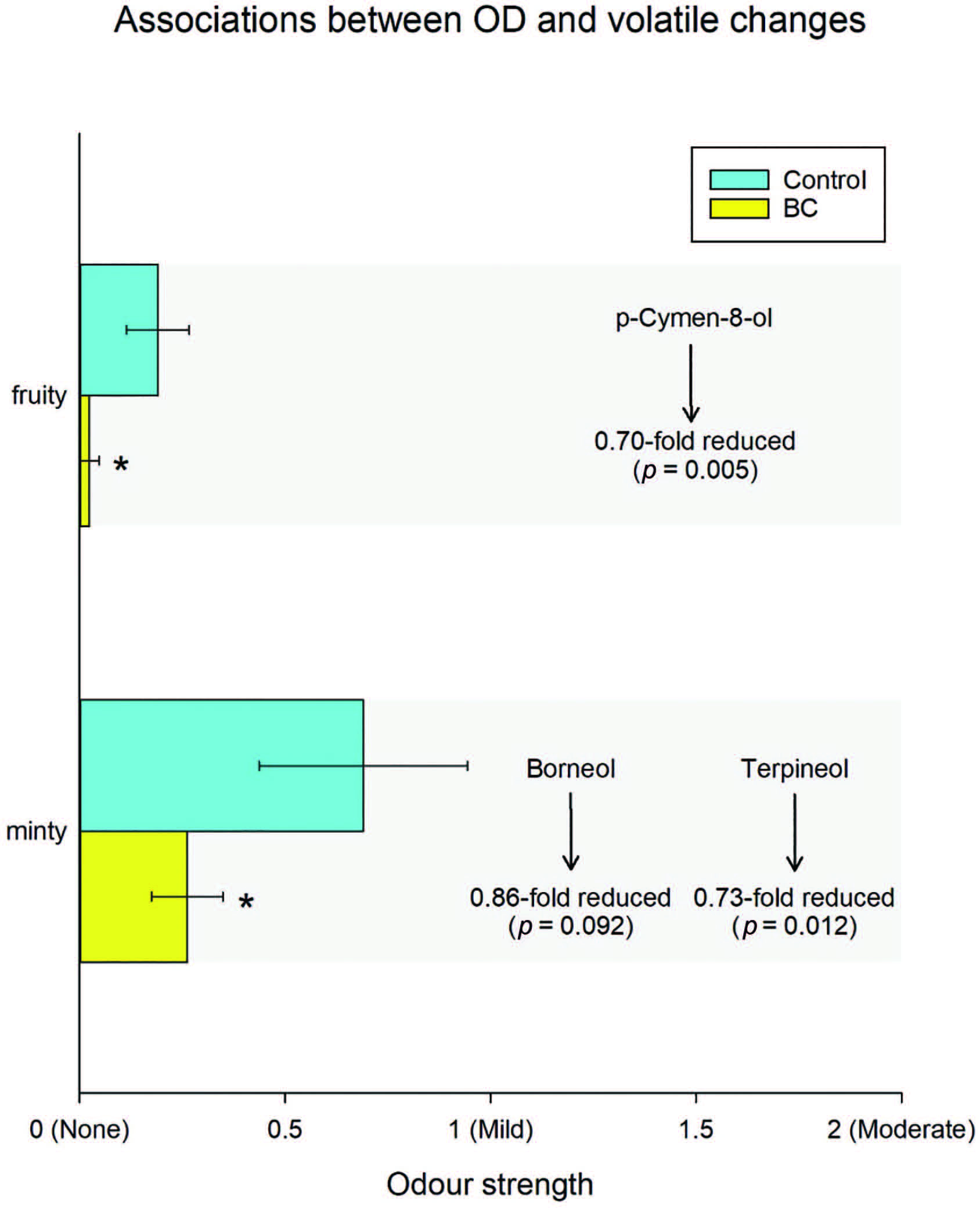
Figure S4.
Association between observed changed to volatile and OD strength within cannabis flowers. BC, biostimulant complex; OD, odour descriptor.
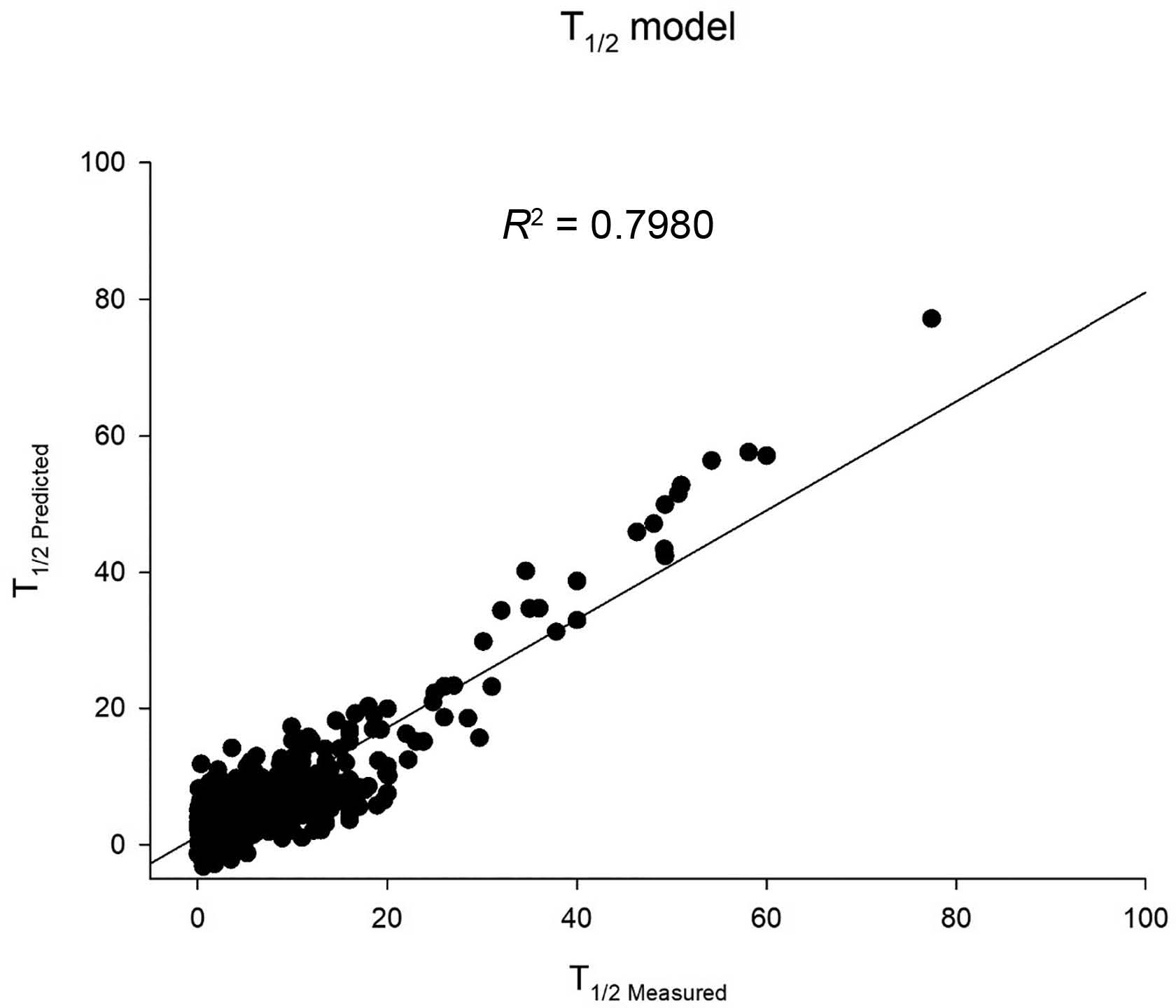
Figure S5.
Elimination half-life (T½) model (model 3). Polynomial regression analysis with 10-fold cross-validation to predict T½ from physicochemical measures (n = 851).
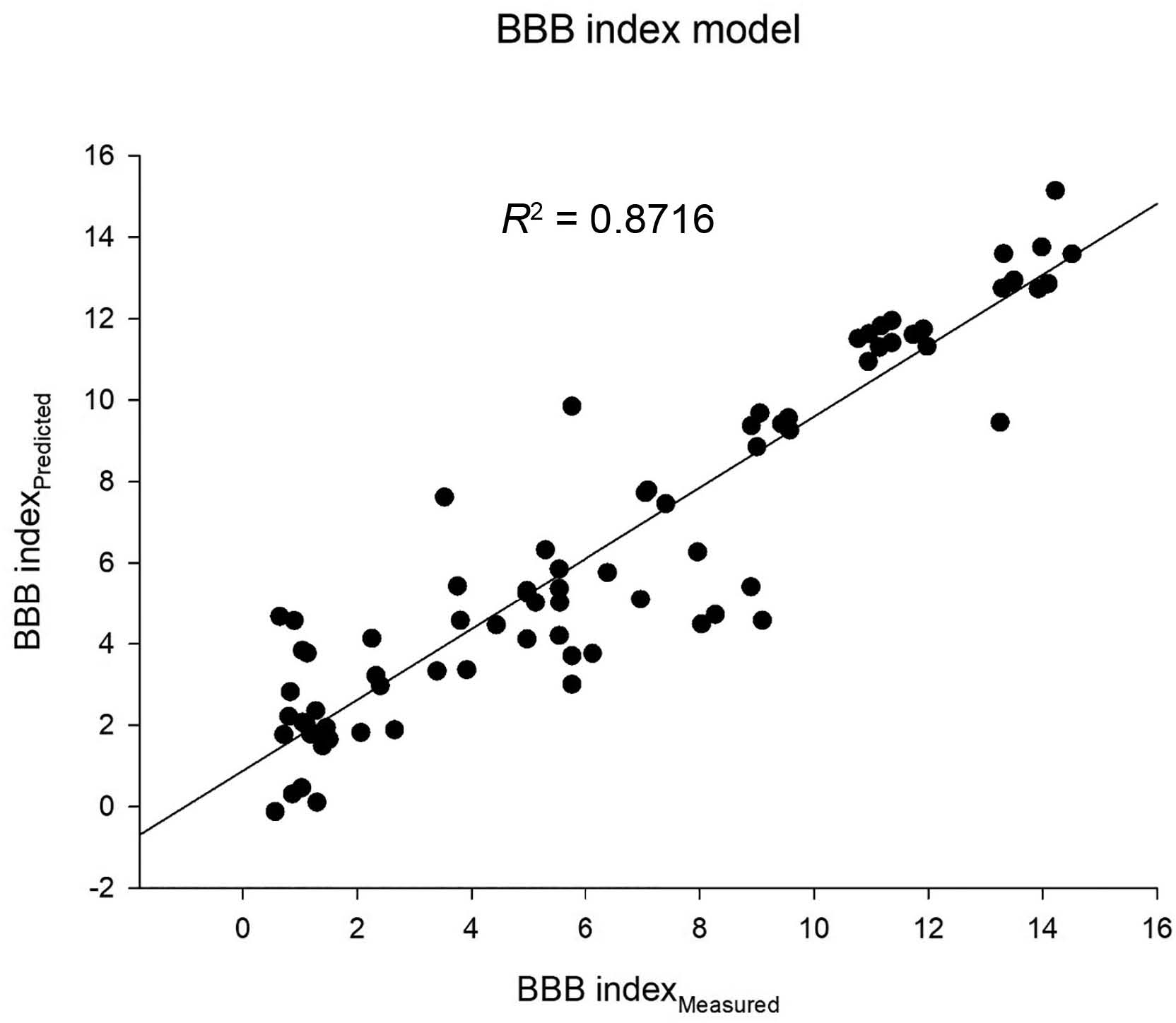
Figure S6.
BBB index model (model 4). Polynomial regression analysis with 10-fold cross-validation to predict BBB index from physicochemical measures (n = 83). BBB, blood brain barrier.
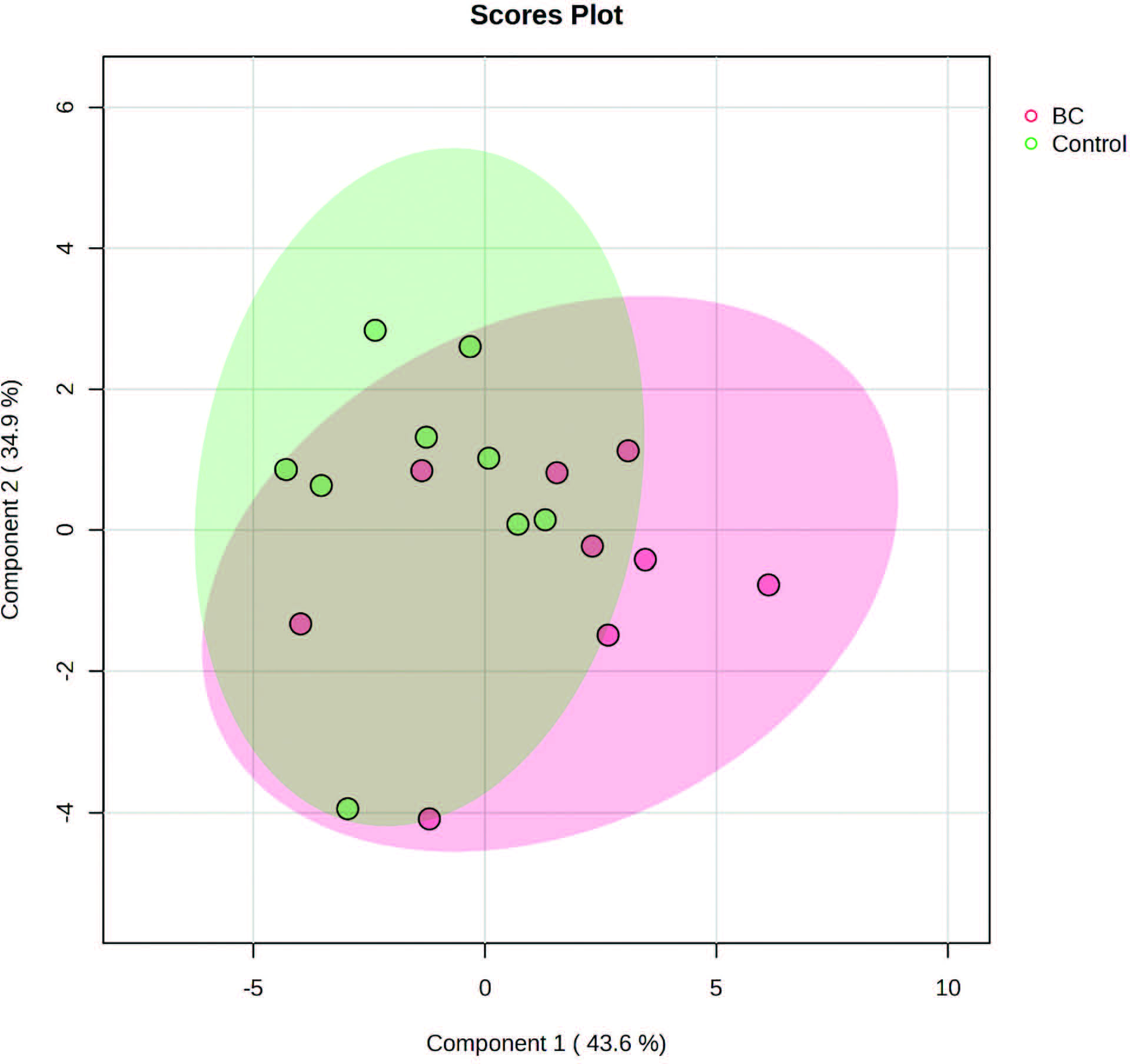
Figure S7.
sPLS-DA of N-IR spectral bins (bin width = 100 wavelengths). BC, biostimulant complex; N-IR, near infrared; sPLS-DA, sparse partial least squares discriminant analysis.
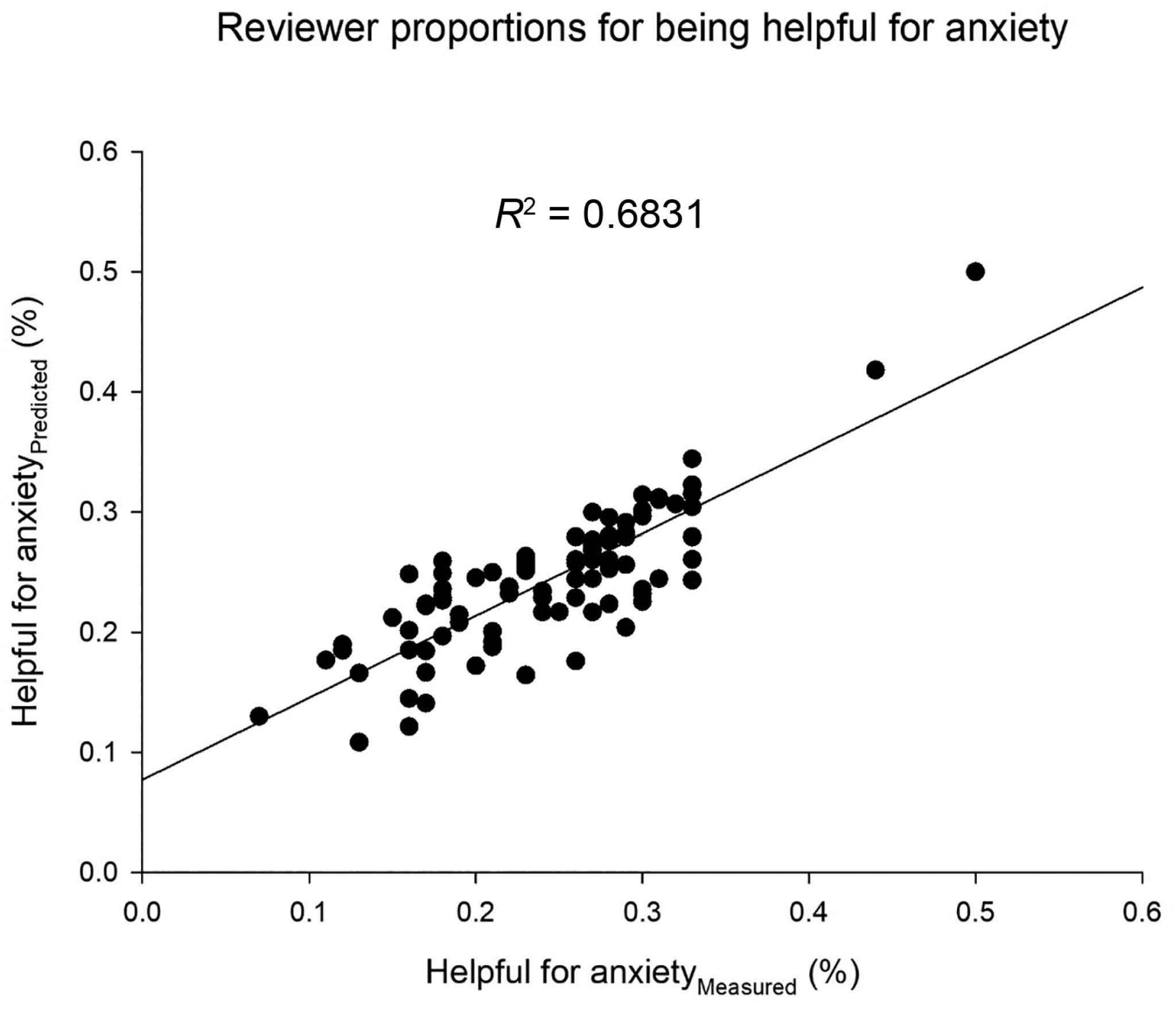
Figure S8.
Reviewer proportions for being helpful for anxiety (model 5). Polynomial regression analysis with 10-fold cross-validation to predict reviewer proportions for being helpful for anxiety use from terpene and THC measures (n = 93). THC, tetrahydrocannabinol.
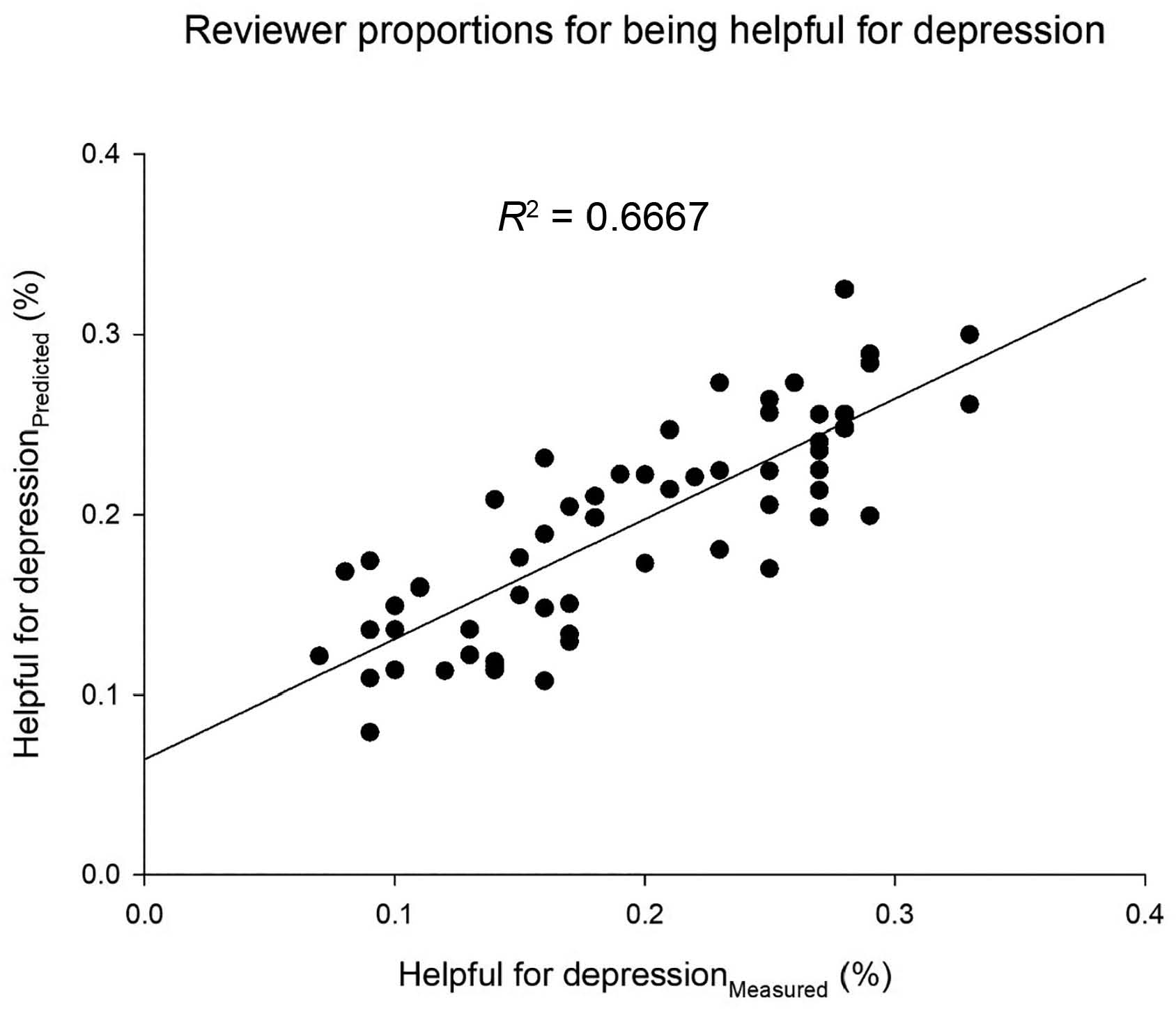
Figure S9.
Reviewer proportions for being helpful for depression (model 6). Polynomial regression analysis with 10-fold cross-validation to predict reviewer proportions for being helpful for depression use from terpene and THC measures (n = 59). THC, tetrahydrocannabinol.
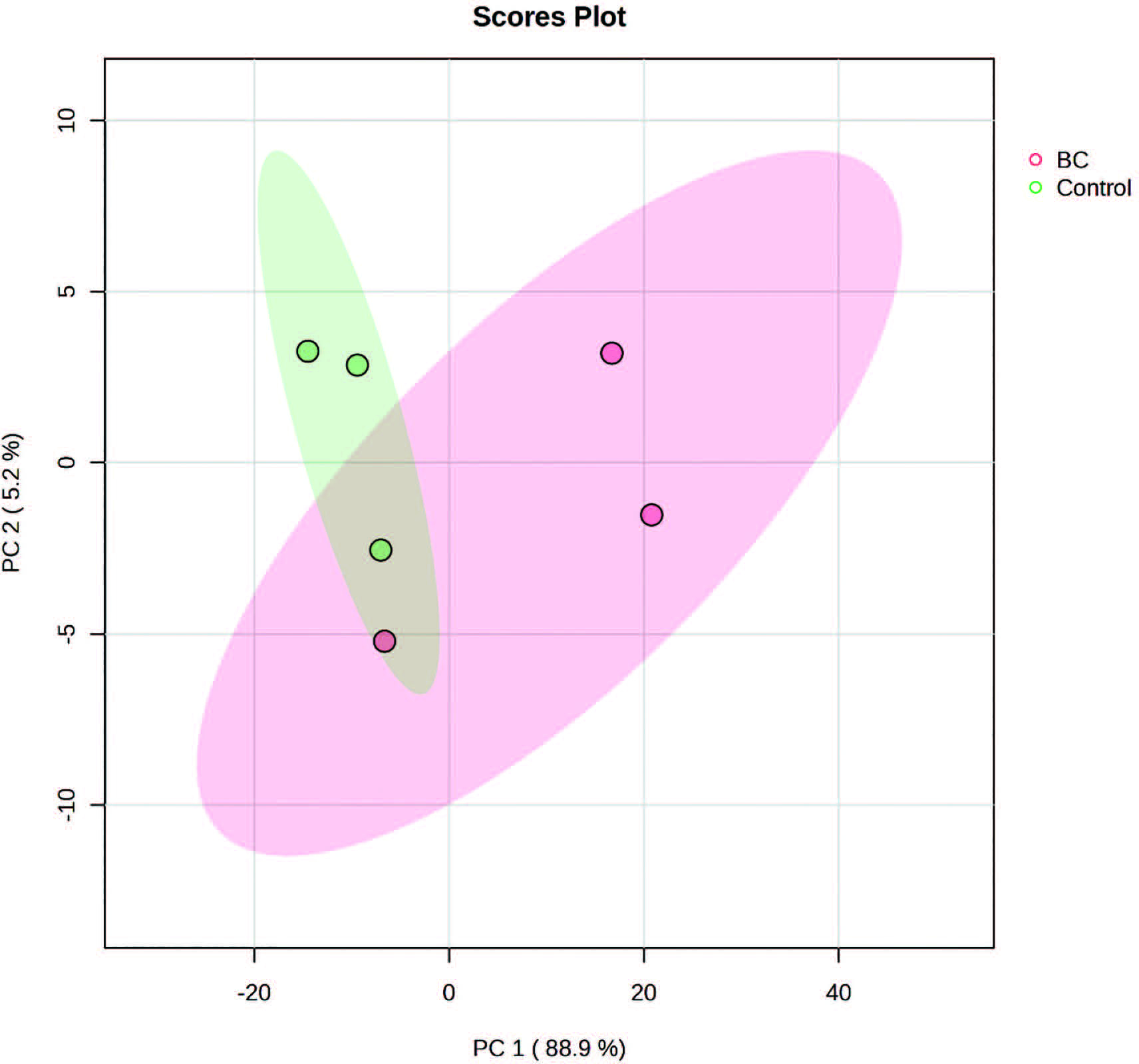
Figure S10.
PCA of leaf metabolite profiles. BC, biostimulant complex; PCA, principal component analysis.
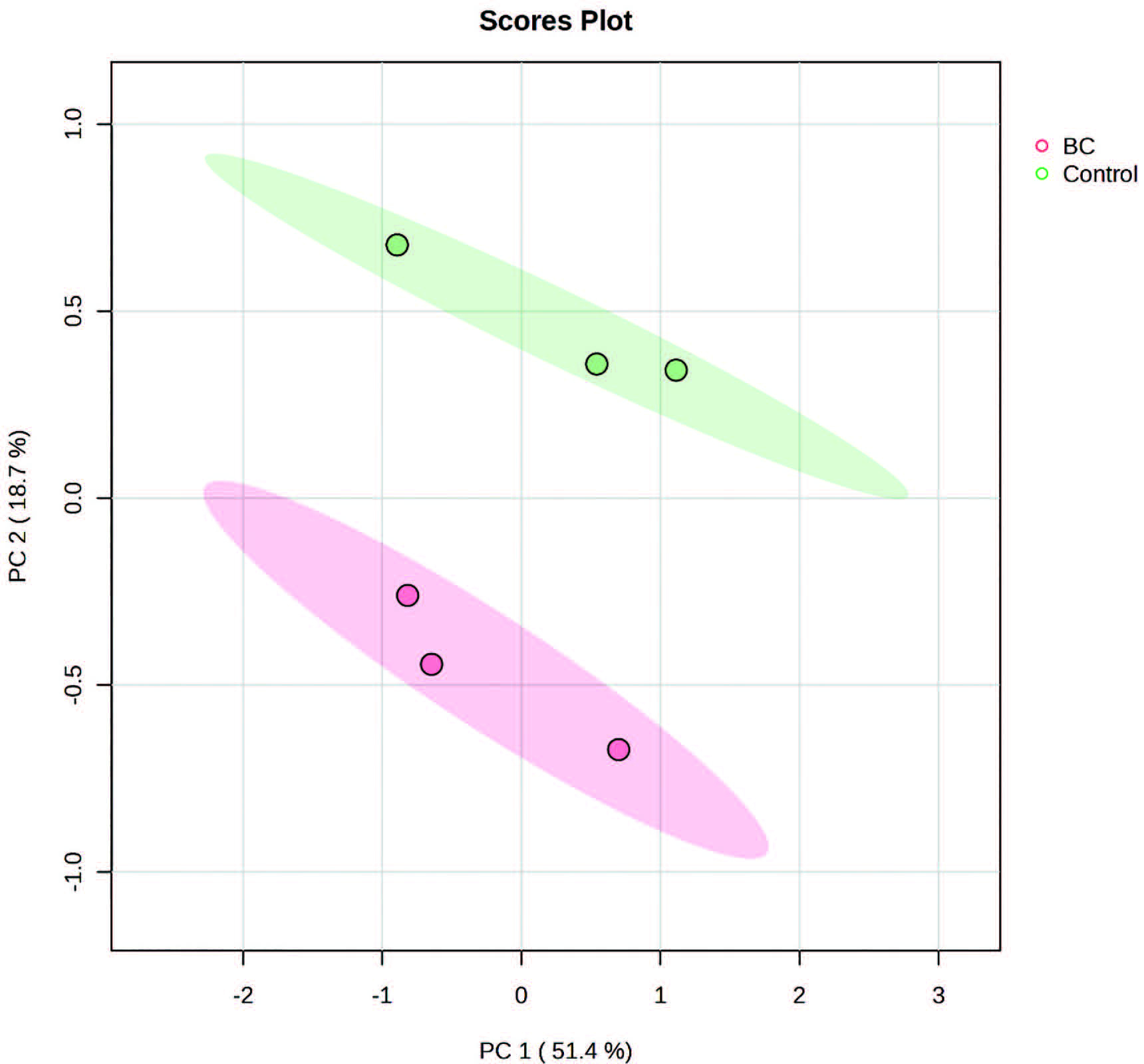
Figure S11.
PCA of leaf phytohormone profiles. BC, biostimulant complex; PCA, principal component analysis.
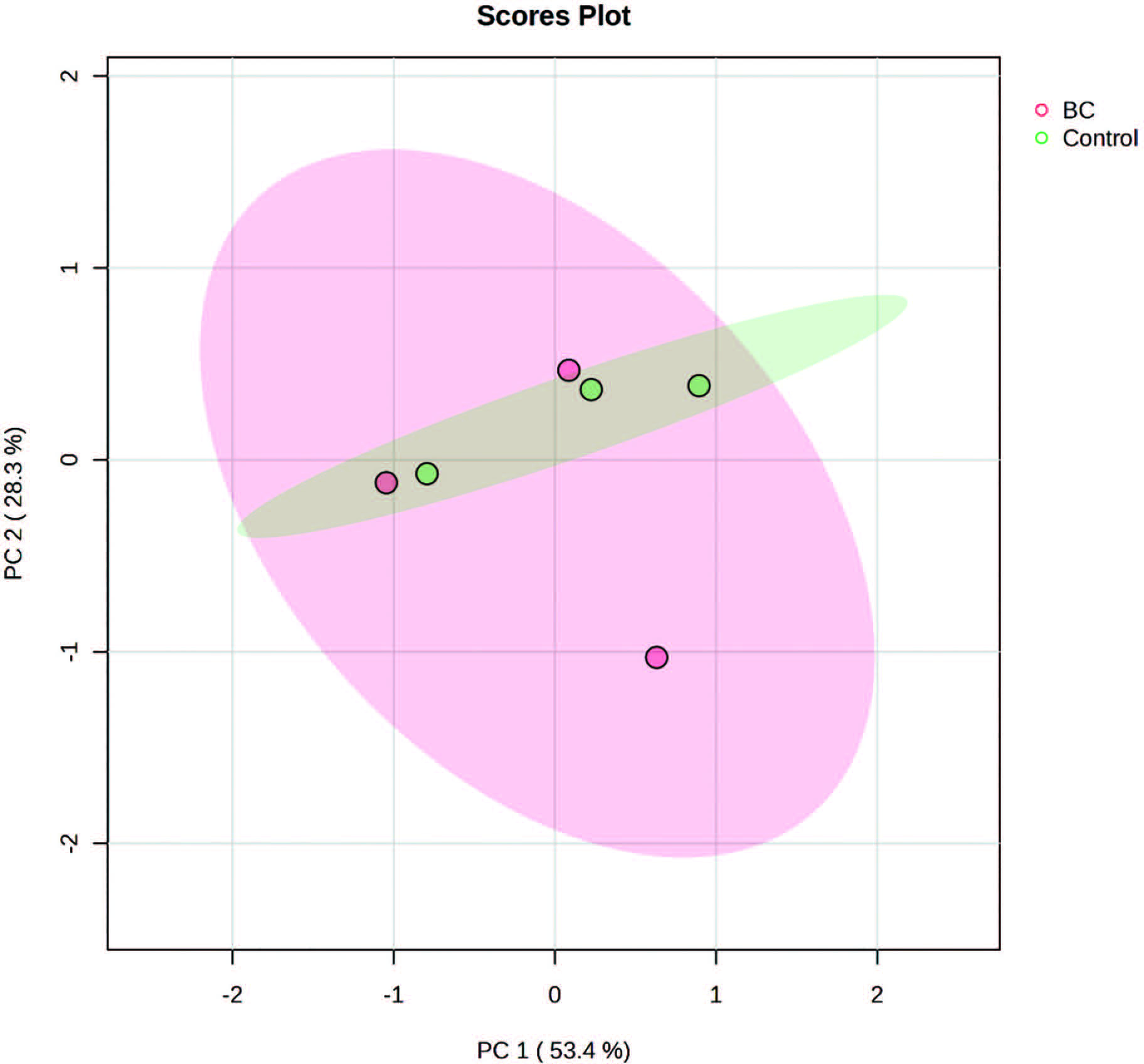
Figure S12.
PCA of sugar leaf phytohormone profiles. BC, biostimulant complex; PCA, principal component analysis.
Table S1.
Nutrient composition of BC.
| Nutrient | BC% w/v |
|---|---|
| Nitrogen (N) a | 0.260 |
| Phosphorous (P) b | 0.045 |
| Potassium (K) b | 1.023 |
| Calcium (Ca) b | 0.059 |
| Magnesium (Mg) b | 0.213 |
| Sulphur (S) a | 0.440 |
| Silicon dioxide (SiO2) b | 0.021 |
| Iron (Fe) b | <0.005 |
| Zinc (Zn) b | <0.005 |
| Manganese (Mn) b | <0.005 |
| Boron (B) b | <0.005 |
Table S2.
Changes in peak area for HS identified compounds.
| Peak ID | N | Fold-change a | p-value |
|---|---|---|---|
| 2-Norbornanol | 9 | 0.85 | 0.078 b |
| 2-Pinanol | 9 | 1.03 | 0.395 |
| Borneol | 9 | 0.86 | 0.092 b |
| Camphene | 9 | 1.12 | 0.276 |
| Dehydrosabinene | 9 | 1.16 | 0.112 |
| delta-3-Carene | 9 | 0.92 | 0.336 |
| Eucalyptol | 9 | 0.92 | 0.241 |
| Fenchol | 9 | 0.92 | 0.164 b |
| Ipsdienol | 9 | 0.80 | 0.191 |
| Limonene | 9 | 0.96 | 0.401 |
| Linalool | 9 | 0.74 | 0.011 |
| Ocimene | 9 | 1.00 | 0.490 |
| p-Cymen-8-ol | 9 | 0.70 | 0.005 |
| p-Cymene | 9 | 0.87 | 0.119 |
| Terpineol | 9 | 0.73 | 0.012 |
| Terpinolene | 9 | 0.90 | 0.213 |
| Ylangene | 9 | 0.69 | 0.067 b |
| α-Bergamotene | 9 | 0.68 | 0.064 |
| α-Humulene | 9 | 0.66 | 0.052 b |
| α-Pinene | 9 | 1.11 | 0.216 |
| α-Terpinene | 9 | 0.91 | 0.286 |
| β-Caryophyllene | 9 | 0.70 | 0.059 b |
| β-Eudesmene | 9 | 0.64 | 0.064 |
| β-Myrcene | 9 | 0.85 | 0.117 |
| β-Ocimene | 9 | 1.06 | 0.378 |
| β-Pinene | 9 | 1.08 | 0.313 |
| γ-Terpinene | 9 | 0.91 | 0.223 |
Table S3.
Coefficients for prediction of OR affinity (model 1).
| Term | Coefficient | p-value |
|---|---|---|
| Constant | 9.3757203453075600 | 0.022 |
| LogP | 0.8116613443435150 | 0.016 |
| MW | −0.2741951882012750 | 0.001 |
| Nrot | 1.4839802991579400 | 0.010 |
| LogP2 | −0.1400157920570250 | 0.003 |
| MW2 | 0.0015895798912707 | 0.002 |
| Nrot2 | −0.4184100716169980 | 0.059 |
| LogP × Nrot | −0.5997731948635700 | 0.008 |
| MW3 | −0.0000031481780252 | 0.002 |
| Nrot3 | 0.0824347258214221 | 0.021 |
| LogP2 × Nrot | 0.0765532679846256 | 0.004 |
| LogP × Nrot2 | 0.0603271285251953 | 0.217 |
| Nrot4 | −0.0028773663882733 | 0.078 |
| LogP × Nrot3 | −0.0098864118642961 | 0.081 |
Table S4.
Sensory analysis: participant demographics.
| Demographic | Frequency | Percentage (%) |
|---|---|---|
| Age (years) | ||
| 19–28 | 5 | 36 |
| 29–38 | 5 | 36 |
| 39–48 | 2 | 14 |
| >49 | 2 | 14 |
| Ethnicity | ||
| White or Caucasian | 6 | 43 |
| Asian or Pacific Islander | 8 | 57 |
| Gender | ||
| Male | 7 | 50 |
| Female | 7 | 50 |
Table S5.
Flower odour measures.
| Measure | N (participants) | Control | BC | Mean paired difference | p-value | ||
|---|---|---|---|---|---|---|---|
| Mean | SD | Mean | SD | ||||
| Desirability | 14 | 0.238 | 0.646 | 0.143 | 0.428 | −0.095 | 0.547 |
| Quality | 14 | 0.095 | 0.546 | −0.167 | 0.387 | −0.262 | 0.103 |
| Strength | 14 | 2.095 | 0.659 | 1.595 | 0.526 | −0.500 | 0.007 |
Table S6.
LR of odour strength from HS – model 2 summary.
| Measure | p-value |
|---|---|
| All slopes equal to zero | <0.001 |
| Goodness-of-fit (deviance) | 0.966 |
Table S7.
LR of odour strength from HS – model 2 variables.
| Variable | Coefficient | p-value |
|---|---|---|
| Constant (1) | −57.1997 | 0.001 |
| Constant (2) | −51.3960 | 0.003 |
| Constant (3) | −49.5906 | 0.003 |
| Constant (4) | −45.8615 | 0.007 |
| 2-Pinanol | −0.00011 | 0.005 |
| Camphene | −2.2E-06 | 0.041 |
| Dehydrosabinene | −1.8E-05 | 0.004 |
| Fenchol | −4.6E-05 | 0.011 |
| Ipsdienol | 7.92E-05 | 0.022 |
| p-Cymen-8-ol | 6.52E-05 | 0.004 |
| α-Humulene | 0.000114 | 0.003 |
| α-Pinene | 5.03E-07 | 0.002 |
| α-Terpinene | −4.7E-06 | 0.008 |
| β-Caryophyllene | −4.7E-05 | 0.001 |
| β-Eudesmene | −6.3E-05 | 0.047 |
| γ-Terpinene | 5.82E-06 | 0.044 |
Table S8.
OD detection.
| Measure | N (responses) | Control | BC | p-value | ||
|---|---|---|---|---|---|---|
| Yes (count) | Yes (%) | Yes (count) | Yes (%) | |||
| Apple | 42 | 1 | 2 | 0 | 0 | 1.000 |
| Balsamic | 42 | 0 | 0 | 0 | 0 | 1.000 |
| Berry | 42 | 0 | 0 | 1 | 2 | 1.000 |
| Butter | 42 | 0 | 0 | 0 | 0 | 1.000 |
| Cheese | 42 | 0 | 0 | 0 | 0 | 1.000 |
| Citrus | 42 | 3 | 7 | 4 | 10 | 1.000 |
| Clove | 42 | 3 | 7 | 3 | 7 | 1.000 |
| Coffee | 42 | 3 | 7 | 3 | 7 | 1.000 |
| Earthy | 42 | 16 | 38 | 16 | 38 | 1.000 |
| Eucalyptus | 42 | 12 | 29 | 7 | 17 | 0.188 |
| Floral | 42 | 14 | 33 | 9 | 21 | 0.217 |
| Fruity | 42 | 6 | 14 | 1 | 2 | 0.043 |
| Grape | 42 | 0 | 0 | 0 | 0 | 1.000 |
| Grassy | 42 | 14 | 33 | 16 | 38 | 0.648 |
| Herbal | 42 | 21 | 50 | 22 | 52 | 0.827 |
| Minty | 42 | 15 | 36 | 8 | 19 | 0.081 |
| Nutty | 42 | 0 | 0 | 1 | 2 | 1.000 |
| Peach | 42 | 0 | 0 | 0 | 0 | 1.000 |
| Peppery | 42 | 6 | 14 | 4 | 10 | 0.499 |
| Petrol | 42 | 0 | 0 | 0 | 0 | 1.000 |
| Pine | 42 | 6 | 14 | 2 | 5 | 0.132 |
| Pineapple | 42 | 1 | 2 | 0 | 0 | 1.000 |
| Rose | 42 | 3 | 7 | 2 | 5 | 1.000 |
| Spicy | 42 | 4 | 10 | 8 | 19 | 0.208 |
| Sweet | 42 | 3 | 7 | 2 | 5 | 1.000 |
| Tea | 42 | 13 | 31 | 13 | 31 | 1.000 |
| Tobacco | 42 | 6 | 14 | 10 | 24 | 0.263 |
| Tropical fruit | 42 | 0 | 0 | 0 | 0 | 1.000 |
| Vanilla | 42 | 1 | 2 | 0 | 0 | 1.000 |
| Woody | 42 | 13 | 31 | 16 | 38 | 0.490 |
Table S9.
OD strengths.
| Measure | N (participants) | Control | BC | Paired difference a | p-value | ||
|---|---|---|---|---|---|---|---|
| Mean | SD | Mean | SD | ||||
| Apple | 14 | 0.024 | 0.089 | 0.000 | 0.000 | −0.024 | 0.323 b |
| Balsamic | 14 | 0.000 | 0.000 | 0.000 | 0.000 | − | − |
| Berry | 14 | 0.000 | 0.000 | 0.024 | 0.089 | 0.024 | 0.323 b |
| Butter | 14 | 0.000 | 0.000 | 0.000 | 0.000 | − | − |
| Cheese | 14 | 0.000 | 0.000 | 0.000 | 0.000 | − | − |
| Citrus | 14 | 0.095 | 0.242 | 0.167 | 0.314 | 0.071 | 0.503 |
| Clove | 14 | 0.143 | 0.386 | 0.071 | 0.142 | −0.071 | 0.429 |
| Coffee | 14 | 0.095 | 0.356 | 0.095 | 0.356 | 0.000 | 1.000 |
| Earthy | 14 | 0.857 | 1.130 | 0.786 | 0.843 | −0.071 | 0.770 |
| Eucalyptus | 14 | 0.500 | 0.748 | 0.262 | 0.437 | −0.238 | 0.152 b |
| Floral | 14 | 0.619 | 0.856 | 0.429 | 0.530 | −0.190 | 0.348 |
| Fruity | 14 | 0.191 | 0.284 | 0.024 | 0.089 | −0.167 | 0.046 b |
| Grape | 14 | 0.000 | 0.000 | 0.000 | 0.000 | − | − |
| Grassy | 14 | 0.738 | 1.039 | 0.929 | 1.095 | 0.190 | 0.474 |
| Herbal | 14 | 1.167 | 1.189 | 1.119 | 1.059 | −0.048 | 0.864 |
| Minty | 14 | 0.691 | 0.947 | 0.262 | 0.325 | −0.429 | 0.029 b |
| Nutty | 14 | 0.000 | 0.000 | 0.024 | 0.089 | 0.024 | 0.323 b |
| Peach | 14 | 0.000 | 0.000 | 0.000 | 0.000 | − | − |
| Peppery | 14 | 0.191 | 0.363 | 0.095 | 0.275 | −0.095 | 0.327 |
| Petrol | 14 | 0.000 | 0.000 | 0.000 | 0.000 | − | − |
| Pine | 14 | 0.238 | 0.479 | 0.095 | 0.356 | −0.143 | 0.242 b |
| Pineapple | 14 | 0.024 | 0.089 | 0.000 | 0.000 | −0.024 | 0.323 b |
| Rose | 14 | 0.095 | 0.275 | 0.048 | 0.121 | −0.048 | 0.473 |
| Spicy | 14 | 0.310 | 1.066 | 0.452 | 0.966 | 0.143 | 0.537 |
| Sweet | 14 | 0.095 | 0.204 | 0.095 | 0.242 | 0.000 | 1.000 |
| Tea | 14 | 0.548 | 0.517 | 0.643 | 0.790 | 0.095 | 0.671 |
| Tobacco | 14 | 0.262 | 0.456 | 0.405 | 0.669 | 0.143 | 0.386 |
| Tropical fruit | 14 | 0.000 | 0.000 | 0.000 | 0.000 | − | − |
| Vanilla | 14 | 0.024 | 0.089 | 0.000 | 0.000 | −0.024 | 0.323 b |
| Woody | 14 | 0.619 | 0.885 | 0.714 | 0.678 | 0.095 | 0.682 |
Table S10.
ODs associated with altered HS volatiles.
| Compound | ODs a |
|---|---|
| 2-Norbornanol | Leafy, citrus, herbal, green |
| Borneol | Balsamic, camphor, earthy, musty, herbal, minty, mouldy, pepper, pine, woody |
| Linalool | Blueberry, bois de rose, citrus, floral, green, lavender, lemon, orange, rose, sweet, terpenic, waxy, woody |
| p-Cymen-8-ol | Camphor, cherry, citrus, cool, earthy, musty, floral, fruity, musty, mouldy, sweet, walnut |
| Terpineol | Anisic, citrus, cool, floral, lemon, lilac, limonene, minty, oily, pine, resin, terpenic, woody |
| Ylangene | Woody, honey, spices |
| α-Bergamotene | Woody, tea, warm |
| α-Humulene | Woody, spices |
| β-Caryophyllene | Woody, clove, dry, spices, sweet |
| β-Eudesmene | Herbal |
1a sourced from https://olfab.iiita.ac.in/olfactionbase/
Table S11.
CBD and THC contents.
| Measure | N | Control | BC | p-value | ||
|---|---|---|---|---|---|---|
| Mean | SD | Mean | SD | |||
| Flower CW (g) | 9 | 1.02 | 0.18 | 0.94 | 0.17 | 0.355 |
| Flower DW (g) | 9 | 0.88 | 0.15 | 0.81 | 0.15 | 0.359 |
| Cured flower water (%) | 9 | 13.90 | 0.53 | 13.96 | 0.83 | 0.865 |
| CBD (%) | 9 | 6.05 | 0.87 | 6.44 | 1.18 | 0.434 |
| THC (%) | 9 | 0.32 | 0.42 | 0.99 | 0.63 | 0.016 |
Table S12.
Coefficients for prediction of T½ (model 3).
| Term | Coefficient | p-value |
|---|---|---|
| Constant | −14.4006229265679497 | 0.281 |
| Number_of_aliphatic_OH_groups | 1.1590455637133770 | 0.175 |
| Fraction of rotatable bonds | −1.3092721739145663 | 0.600 |
| Number_of_heterocycles | −1.3096488245410460 | 0.038 |
| MolarRefractivity | −0.2057843152416829 | 0.001 |
| Number_of_atoms | 0.7292247559072755 | 0.188 |
| Number_of_bonds | −13.3089067550692555 | <0.001 |
| Geometrical radius | −43.7699892535148081 | 0.074 |
| Zagreb_group_index_1 | 3.1733985192039618 | <0.001 |
| Zagreb_group_index_2 | −0.5573206401475080 | <0.001 |
| abonds | 2.3470943597991503 | <0.001 |
| logP_1 | −8.4327332210325956 | 0.004 |
| R2NH | 0.4248298509055615 | 0.189 |
| ROH | −3.0859362430839505 | <0.001 |
| RCOR | −51.5963515226930625 | <0.001 |
| RCCH | −7.6481737638213767 | 0.146 |
| Number_of_heterocycles2 | −0.2198849622511800 | 0.252 |
| Geometrical radius2 | 144.6809633479945774 | <0.001 |
| Zagreb_group_index_12 | −0.0002790970137844 | <0.001 |
| logP_12 | 0.4533710831155871 | <0.001 |
| ROH2 | 0.1898899908268611 | 0.001 |
| RCOR2 | −11.4515975383076043 | <0.001 |
| Number of aliphatic OH groups × Fraction of | −9.1291453725480132 | 0.006 |
| rotatable_bonds | ||
| Number_of_aliphatic_OH_groups × Number_of_ | 1.6012391295871116 | <0.001 |
| heterocycles | ||
| Number_of_aliphatic_OH_groups × MolarRefractivity | −0.1252444892292043 | <0.001 |
| Number_of_aliphatic_OH_groups × Number_of_atoms | 0.7474311264807053 | < 0.001 |
| Number_of_aliphatic_OH_groups × Zagreb_group_ | −0.1230566705429028 | <0.001 |
| index_1 | ||
| Number_of_aliphatic_OH_groups × Zagreb_group_ | 0.0383547857193748 | 0.002 |
| index_2 | ||
| Number_of_aliphatic_OH_groups × abonds | 0.0620697739663554 | 0.081 |
| Number_of_aliphatic_OH_groups × RCOR | 1.3592198025075215 | 0.095 |
| Fraction_of_rotatable_bonds × abonds | −0.3569886783521736 | 0.188 |
| Fraction_of_rotatable_bonds × ROH | 10.8456620807097082 | 0.001 |
| Fraction_of_rotatable_bonds × RCOR | −11.3502805681771850 | 0.021 |
| Number_of_heterocycles × Number_of_atoms | −0.2323530073416142 | 0.029 |
| Number_of_heterocycles × Zagreb_group_index_1 | 0.1118053774742066 | <0.001 |
| Number_of_heterocycles × Zagreb_group_index_2 | −0.0598852303340916 | <0.001 |
| Number_of_heterocycles × R2NH | −0.1118543997938758 | 0.368 |
| Number_of_heterocycles × RCOR | 4.2346377985582464 | <0.001 |
| Number_of_heterocycles × RCCH | 15.0866738457708820 | 0.017 |
| MolarRefractivity × Zagreb_group_index_2 | 0.0006001834083347 | <0.001 |
| MolarRefractivity × logP_l | −0.0476370535331036 | 0.008 |
| Number of atoms × abonds | −0.0527014722648722 | 0.058 |
| Number_of_atoms × logP_1 | −0.3406604375175311 | < 0.001 |
| Number_of_atoms × RCOR | −0.8512257161355755 | 0.253 |
| Number of bonds × Geometrical radius | 12.3554842409376313 | < 0.001 |
| Number_of_bonds × abonds | 0.0375992769713121 | 0.234 |
| Number_of_bonds × logP_1 | 1.0928914576770774 | <0.001 |
| Number_of_bonds × RCOR | 2.2709827042367157 | 0.022 |
| Geometrical_radius × Zagreb_group_index_1 | −3.0687885400353694 | <0.001 |
| Geometrical_radius × Zagreb_group_index_2 | 0.5826849894258733 | <0.001 |
| Geometrical_radius × abonds | −2.0569426785700724 | <0.001 |
| Geometrical_radius × logP_1 | 9.2947190000174178 | 0.001 |
| Geometrical_radius × RCOR | 63.0601826659657618 | <0.001 |
| Zagreb_group_index_1 × logP_1 | −0.1309816278880524 | <0.001 |
| Zagreb_group_index_1 × RCOR | −0.2487231221576796 | 0.001 |
| Zagreb_group_index_2 × abonds | 0.0024055714971864 | 0.087 |
| Zagreb_group_index_2 × ROH | −0.0081751060510380 | <0.001 |
| abonds × logP_1 | −0.1538070350082036 | <0.001 |
| abonds × R2NH | −0.0306955363982863 | 0.053 |
| abonds × RCOR | 0.4936988943195205 | < 0.001 |
| abonds × RCCH | 0.8979972845110127 | 0.003 |
| logP_1 × ROH | 0.5768623154995151 | <0.001 |
| logP_1 × RCOR | 15.0975212136558934 | <0.001 |
| logP_1 × RCCH | 0.0846813351199347 | 0.941 |
| R2NH × RCOR | 0.0443611523935290 | 0.949 |
| ROH × RCOR | −0.9626923122968017 | 0.124 |
| ROH × RCCH | 3.5309731402574753 | 0.029 |
| RCOR × RCCH | −80.7917122680247957 | <0.001 |
| Number_of_heterocycles3 | 0.0575198050118327 | 0.004 |
| Geometrical radius3 | −82.2909815734712282 | <0.001 |
| RCOR3 | 3.3631450065824469 | <0.001 |
| Number_of_aliphatic_OH_groups × Fraction_of_ rotatable_bonds × abonds | −0.3063861434585855 | 0.026 |
| Number_of_aliphatic_OH_groups × Number_of_ heterocycles2 | 0.2214888423749514 | <0.001 |
| Number_of_aliphatic_OH_groups × Number_of_ heterocycles × Zagreb_group_index_2 | 0.0004197810162712 | 0.070 |
| Number_of_aliphatic_OH_groups × Number_of_ atoms × abonds | 0.0003475317581468 | 0.056 |
| Number_of_aliphatic_OH_groups × abonds × RCOR | −0.1476876886014743 | 0.012 |
| Number_of_heterocycles2 × RCCH | 8.4897847228558074 | 0.005 |
| Number_of_heterocycles × Number_of_atoms × RCOR | −0.8844730128826180 | <0.001 |
| Number_of_heterocycles × Zagreb_group_index_12 | −0.0000016028999970 | 0.005 |
| Number_of_heterocycles × Zagreb_group_ index_1 × RCOR | 0.1669210843082060 | < 0.001 |
| Number_of_heterocycles × R2NH × RCOR | −0.3807557871833461 | 0.049 |
| Number_of_bonds × abonds × logP_1 | 0.0004754092355291 | <0.001 |
| Geometrical_radius × Zagreb_group_index_1 × logP_1 | 0.0049254113703736 | 0.007 |
| Geometrical_radius × logP_1 × RCOR | −19.1616364971431494 | <0.001 |
| abonds × logP_12 | −0.0130411905685735 | <0.001 |
| logP_12 × ROH | −0.0186812881717686 | 0.007 |
| logP_12 × RCOR | 0.2034621762117447 | <0.001 |
| logP_1 × RCOR × RCCH | 25.0921469271286917 | <0.001 |
Table S13.
Coefficients for prediction of BBB index (model 4).
| Term | Coefficient | p-value |
|---|---|---|
| Constant | 69.9850536035912000 | 0.077 |
| LogP | 16.3556360234803000 | 0.001 |
| MW | −0.3131349429968060 | 0.738 |
| Nrot | −25.6219150613349000 | 0.119 |
| Vol | −1.5903781872639000 | <0.001 |
| MW2 | 0.0084485573872430 | 0.098 |
| Nrot2 | −1.2847296133815200 | 0.063 |
| Vol2 | 0.0051074771946313 | <0.001 |
| LogP × Nrot | −9.7577696510109300 | 0.002 |
| LogP × Vol | −0.0726649622079701 | 0.004 |
| MW × Nrot | −0.0474921788682433 | 0.900 |
| Nrot × Vol | 0.8098155078732790 | 0.002 |
| MW3 | −0.0000290308583602 | 0.003 |
| Nrot3 | 0.2621598197638000 | 0.094 |
| LogP × Nrot × Vol | 0.0441943553567649 | 0.007 |
| MW2 × Nrot | −0.0027881504869329 | 0.146 |
| Nrot × Vol2 | −0.0023883590260709 | 0.003 |
| Nrot4 | −0.0140373602293692 | 0.193 |
| MW3 × Nrot | 0.0000105403591019 | 0.006 |
Table S14.
Comparison of metabolites in sugar leaves that were changed with significance or marginal significance.
| Metabolite | Synonym | N | Fold-change a | p-value |
|---|---|---|---|---|
| (1S,2R)-1-(3,4-Dihydroxyphenyl)-6,7-dihydroxy-N,N’-bis[2-(4-hydroxyphenyl)ethyl]-1,2-dihydro-2,3-naphthalenedicarboxamide (1ξ)-1,5-Anhydro-1-[2-(3,4-dihydroxyphenyl)-5,7-dihydroxy-4-oxo-4H- | Cannabisin B | 3 | 0.520 | 0.006 |
| chromen-8-yl] -D-galactitol | Orientin | 3 | 0.848 | 0.091 |
| 1,5-Anhydro-1-[2-(3,4-dihydroxyphenyl)-5-hydroxy-7-methoxy-4-oxo-4H-chromen-8-yl]hexitol | 3 | 0.753 | 0.006 | |
| 1-deoxy-D-altro-heptulo se 7-pho sphate | 3 | 0.801 | 0.037 | |
| 1-Hydroxy-3,5,6-trimethoxy-10-methyl-9(10H)-acridinone | 3 | 0.639 | 0.003 | |
| 2,3,4,5-Tetrahydroxypentanal | 3 | 0.779 | 0.040 | |
| 2-C-methylerythritol 4-phosphate | 3 | 0.632 | 0.050 | |
| 3-[3-(beta-D-Glucopyranosyloxy)-2-methoxyphenyl]propanoic acid | 3 | 0.827 | 0.057 | |
| 4-(2-Carboxyethyl)-2-methoxyphenyl beta-D-glucopyranosiduronic acid | 3 | 0.728 | 0.073 | |
| 4-Hydroxy-5-(3’,4’,5’-trihydroxyphenyl)-valeric acid-O-methyl-O-glucuronide | 3 | 0.835 | 0.062 | |
| 4-Oxoproline | 3 | 0.469 | 0.061 | |
| 5,6-Dihydroxy-3-(hydroxymethyl)-2-oxo-3-cyclohexen-1-yl 2-hydroxy-6-methylbenzoate | 3 | 0.721 | 0.076 | |
| 8-Hydroxy-4-methoxy-7-methyl-7,8-dihydro-5H-furo[2,3-g]isochromen-5-one | 3 | 0.725 | 0.081 | |
| Apigetrin | 3 | 0.755 | 0.015 | |
| Azelaic acid | 3 | 0.518 | 0.017 | |
| Cynaroside | 3 | 0.771 | 0.016 | |
| D-α-Hydroxyglutaric acid | 3 | 0.788 | 0.082 | |
| Gluconic acid | 3 | 0.718 | 0.002 | |
| Hept-2-ulose | 3 | 0.775 | 0.041 | |
| Hinokitiol glucoside | 3 | 0.809 | 0.018 | |
| Luteolin 7-O-malonylglucoside | 3 | 0.828 | 0.089 | |
| N-(2,3,4-Trimethoxybenzoyl)g lycine | 3 | 0.738 | 0.053 | |
| Pantothenic acid | 3 | 0.746 | 0.076 | |
| Salicylic acid | 3 | 0.604 | 0.094 | |
| trans-p-Sinapoyl-Î2-D-glucopyranoside | 3 | 0.814 | 0.061 |
N-IR (E2)
Table S15.
Coefficients for prediction of being helpful for anxiety (model 5).
| Term | Coefficient | p-value |
|---|---|---|
| Constant | 0.3493779002367680 | <0.001 |
| α-Humulene | 0.8798417229601690 | 0.048 |
| β-Limonene | −0.1622691586687510 | <0.001 |
| β-Myrcene | −0.1076790958648940 | 0.030 |
| β-Ocimene | −0.2517684486903870 | 0.006 |
| Camphene | 0.7923380032907140 | 0.252 |
| γ-Terpinene | −34.1130191417850000 | <0.001 |
| Terpinolene | 0.1012123365266380 | 0.088 |
| trans-Nerolidol | −14.4253428834657000 | 0.035 |
| THC | −0.3715078664606990 | 0.095 |
| α-Humelene2 | −1.4018939392389500 | 0.043 |
| β-Myrcene2 | 0.1857526868455400 | <0.001 |
| γ-Terpinene2 | 375.4539239428840000 | 0.002 |
| trans-Nerolidol2 | 794.7242808869300000 | 0.027 |
| α-Humulene × β-Limonene | 0.7790401367405530 | 0.020 |
| α-Humulene × THC | −3.5237601156201400 | 0.074 |
| β-Myrcene × trans-Nerolidol | 63.3048932161677000 | 0.098 |
| β-Ocimene × THC | 0.8707362097038800 | 0.034 |
| γ-Terpinene × THC | 113.5074239826430000 | 0.014 |
| β-Myrcene × trans-Nerolidol2 | −2718.9714110588700000 | 0.163 |
Table S16.
Coefficients for prediction of being helpful for depression (model 6).
| Term | Coefficient | p-value |
|---|---|---|
| Constant | 0.3532528057435070 | <0.001 |
| THC | −0.4747423305432570 | 0.285 |
| β-Limonene | −0.1008144474280880 | 0.013 |
| Eucalyptol | −9.4195048772503600 | 0.023 |
| Linalool | 2.3861320207786800 | 0.127 |
| β-Ocimene | 0.0958394623976688 | 0.125 |
| trans-Nerolidol | 32.3303525233572000 | 0.001 |
| Linalool2 | −21.7804178628571000 | 0.001 |
| THC × Linalool | −15.3357472064389000 | 0.047 |
| THC × trans-Nerolidol | −134.9349802361570000 | 0.003 |
| THC × Linalool2 | 110.8828051662290000 | 0.001 |
Table S17.
Comparison of metabolites in roots that were changed with significance or marginal significance.
| Metabolite | N | Fold-change a | p-value |
|---|---|---|---|
| (2alpha, 3xi, 5alpha, 9alpha, 10beta, 13alpha)-2-Hydroxytaxa-4(20), | 3 | 0.475 | 0.015 |
| 11-diene-5,9,10,13-tetrayl tetraacetate | |||
| (2R)-1-{[(2-Aminoethoxy)(hydroxy)phosphoryl]oxy}-3-hydroxy-2-propanyl | 3 | 0.290 | 0.007 |
| (9Z,12Z,15Z)-9,12,15-octadecatrienoate | |||
| (2R)-2-Hydroxy-3-(phosphonooxy)propyl (11Z,14E)-11,14-icosadienoate | 3 | 0.323 | 0.083 |
| 1-(3-Acetyl-2,4,6-trihydroxyphenyl)-1,5-anhydrohexitol | 3 | 12.688 | 0.068 a |
| 1-(3-Cyanophenyl)-3-{[(2R,4S,5S)-5-{[4-(4-fluorophenyl)-1-piperazinyl]methyl}- | 3 | 0.283 | 0.006 |
| 1-azabicyclo[2.2.2]oct-2-yl]methyl}urea | |||
| 1,5-Anhydro-D-fructo se | 3 | 0.778 | 0.026 |
| 1-Caffeoyl-beta-D-glucose | 3 | 1.422 | 0.065 |
| 1-heptadecanoyl-sn-glycero-3-phosphate | 3 | 0.157 | <0.001 |
| 1-linoleoyl-sn-glycero-3-phosphoethanolamine | 3 | 0.269 | 0.028 a |
| 1-Oleoyl-2-hydroxy-sn-glycero-3-PE | 3 | 0.328 | 0.021 |
| 2,3,4,5-Tetrahydroxypentanal | 3 | 0.661 | 0.036 |
| 2-[4-(Hydroxymethyl)cyclohexyl]-2-propanyl hexopyranoside | 3 | 0.561 | 0.029 |
| 2-Phenylethyl D-glucopyranoside | 3 | 0.333 | 0.007 |
| 3-(Hydroxymethyl)-1-oxo-1H-isochromen-6-yl hexopyranosiduronic acid | 3 | 0.666 | 0.067 |
| 3,3’-Diisopropyl-6,6’-dimethyl-2,2’,5,5’-biphenyltetrol | 3 | 0.230 | 0.016 |
| 4-(2-Carboxyethyl)-2-methoxyphenyl beta-D-glucopyranosiduronic acid | 3 | 0.428 | 0.057 a |
| 4,7-Dihydroxy-2,2-dimethyl-3,4-dihydro-2H-chromen-5-yl hexopyranosiduronic acid | 3 | 1.927 | 0.015 |
| 4-Hydroxy-5-(3’,4’,5’-trihydroxyphenyl)-valeric acid-O-methyl-O-glucuronide | 3 | 0.617 | 0.034 |
| 4-Undecylbenzenesulfonic acid | 3 | 0.430 | 0.079 a |
| 5,5’-Diisopropyl-2,2’-dimethyl-3,3’,4,4’-biphenyltetrol | 3 | 0.199 | 0.029 |
| 5,6-Dihydroxy-2,6-bis(3-methyl-2-buten-1-yl)-4-(4-methylpentanoyl)-4-cyclohexene-1, | 3 | 0.324 | 0.045 |
| 3-dione | |||
| 5 – [(5-Hydroxytetrahydro-2-furanyl)methyl]-1,3-benzenediol | 3 | 0.538 | 0.055 |
| 6-Hydroxy-3,4a,5-trimethyl-2-oxo-2,4,4a,5,6,7,8,8a,9,9a-decahydronaphtho[2,3-b] | 3 | 4.263 | 0.004 |
| furan-4-yl (2Z)-2-methyl-2-butenoate | |||
| 6-Oxoestriol | 3 | 0.321 | 0.007 |
| 7-Hydroxy-2-oxo-2H-chromen-8-yl beta-D-glucopyranoside | 3 | 0.481 | 0.011 |
| 8-Azabicyclo[3.2.1]octane-1,2,4,7-tetrol | 3 | 0.636 | 0.081 |
| beta-D-Ethyl glucuronide | 3 | 0.799 | 0.035 |
| Caffeic acid 3-glucoside | 3 | 0.409 | 0.050 |
| Cannabidiolic acid | 3 | 0.309 | 0.040 |
| Cannabigerolic acid | 3 | 0.369 | 0.045 |
| D-(-)-Ribose | 3 | 0.731 | 0.049 |
| Hept-2-ulose | 3 | 0.661 | 0.037 |
| Hinokitiol glucoside | 3 | 0.648 | 0.020 |
| Hydrocortisone acetate | 3 | 0.455 | 0.055 |
| Jasmolin II | 3 | 0.203 | 0.050 |
| L-Glutathione oxidized | 3 | 0.694 | 0.055 |
| Marinobufagenin | 3 | 0.515 | 0.083 |
| Methyl (17beta)-3,6-dimethoxyestra-1,3,5(10),6,8-pentaene-17-carboxylate | 3 | 0.260 | 0.008 |
| Methyl 4,5,7,11-tetrahydroxy-2-methyl-2’,10-dioxospiro[9-oxatricyclo[6.3.1.0~1,5~] | 3 | 2.759 | 0.008 |
| dodecane-6,3’-oxetane]-7-carboxylate | |||
| N-(2,3,4-Trimethoxybenzoyl)g lycine | 3 | 0.796 | 0.087 |
| N-(Phenylacetyl)aspartic acid | 3 | 4.426 | 0.001 |
| N-Benzoylaspartic acid | 3 | 2.184 | 0.016 |
| Nor-9-carboxy-δ9-THC | 3 | 0.290 | 0.058 |
| Rutin | 3 | 0.386 | 0.047 |
| Salicylic acid | 3 | 4.900 | 0.010 |
| Sibrafiban | 3 | 0.571 | 0.001 |
| Sucrose | 3 | 0.648 | 0.063 |
Table S18.
Root phytohormone profiles.
| Phytohormone | N | Control (ng · g−1 FW) | BC (ng · g−1 FW) | p-value | ||
|---|---|---|---|---|---|---|
| Mean | SD | Mean | SD | |||
| 12-Oxo-phytodienoic acid (OPDA) | 3 | 1591.727 | 359.115 | 1606.366 | 321.241 | 0.961 |
| Abscisic acid (ABA) | 3 | 23.060 | 3.139 | 18.464 | 3.173 | 0.149 |
| Brassinolide | 3 | 0.000 | − | 0.000 | − | − |
| Cinnamic acid (CA) | 3 | 0.000 | 0.000 | 14.377 | 13.219 | 0.133 |
| Gibberellin A3 (GA3) | 3 | 0.000 | − | 0.000 | − | − |
| Gibberellin A4 (GA4) | 3 | 11.651 | 0.436 | 10.061 | 0.973 | 0.061 |
| Indole-3-acetic acid (IAA) | 3 | 33.050 | 5.401 | 37.717 | 4.542 | 0.316 |
| Indole-3-butyric acid (IBA) | 3 | 0.000 | − | 0.000 | − | − |
| Indole-3-carboxylic acid (ICA) | 3 | 0.000 | 0.000 | 3.094 | 2.705 | 0.186 a |
| Jasmonic acid (JA) | 3 | 0.855 | 0.499 | 1.438 | 0.690 | 0.301 |
| Jasmonic acid-isoleucine (JA-Ile) | 3 | 0.000 | − | 0.000 | − | − |
| Methyl-indole-3-acetic acid (Methyl-IAA) | 3 | 5.453 | 1.616 | 15.399 | 1.172 | < 0.001 |
| Methyl-jasmonic acid (Methyl-JA) | 3 | 0.000 | − | 0.000 | − | − |
| Salicylic acid (SA) | 3 | 90.327 | 16.307 | 317.285 | 29.904 | < 0.001 |
| Zeatin | 3 | 0.000 | − | 0.000 | − | − |
Table S19.
Root bioassay measures.
| Measure | N | Control (ng · g−1 FW) | BC (ng · g−1 FW) | p-value | ||
|---|---|---|---|---|---|---|
| Mean | SD | Mean | SD | |||
| Protein content (mg total protein · g−1 FW) | 3 | 1.454 | 0.140 | 1.302 | 0.085 | 0.184 |
| Hydrogen peroxide content (μmol H2O2 · g−1 FW) | 3 | 0.000 | 0.000 | 0.347 | 0.601 | 0.423 a |
| Peroxidase activity (△Abs470 · min−1 · mg−1 total protein) | 3 | 344.979 | 14.771 | 331.530 | 33.206 | 0.556 |
| Chitinase activity (μmol GlcNAc released · g−1 total protein) | 3 | 448.071 | 41.252 | 534.043 | 36.354 | 0.054 |
Table S20.
Comparison of metabolites in leaves that were changed with significance or marginal significance.
| Metabolite | N | Fold-change a | p-value |
|---|---|---|---|
| (1)-1,5-Anhydro-1-[2-(3,4-dihydroxyphenyl)-5,7-dihydroxy-4-oxo-4H-chromen-8-yl]- | 3 | 2.666 | 0.081 a |
| D-galactitol | |||
| (2E)-3-(4-Hydroxy-3,5-dimethoxyphenyl)acrylic (2S,3S,4S,5R)-3,4,5-trihydroxy- | 3 | 2.286 | 0.063 |
| 6-oxotetrahydro-2H-pyran-2-carboxylic anhydride (non-preferred name) | |||
| (Z)-Aconitic acid | 3 | 2.626 | 0.099 |
| 13(S)-HOTrE | 3 | 4.080 | 0.070 |
| 1-Caffeoyl-beta-D-glucose | 3 | 3.603 | 0.012 |
| 1-heptadecanoyl-sn-glycero-3-phosphate | 3 | 3.102 | 0.072 |
| 1-O-[(2E)-3-(3,4-Dihydroxyphenyl)-2-propenoyl]-beta-D-glucopyranuronic acid | 3 | 2.785 | 0.089 |
| 2-(2-Carboxyethyl)-4-methyl-5-pentyl-3-furoic acid | 3 | 2.154 | 0.027 |
| 2-(2-Carboxyethyl)-5-hydroxyphenyl hexopyranosiduronic acid | 3 | 3.400 | 0.014 |
| 2-(6,10-Dimethyl-8-oxospiro[4.5]dec-6-en-2-yl)-2-hydroxypropyl hexopyranoside | 3 | 3.752 | 0.057 |
| 3-(Hydroxymethyl)-1-oxo-1H-isochromen-6-yl hexopyranosiduronic acid | 3 | 2.473 | 0.044 |
| 3-Hydroxy-2-{[(2E)-3-(4-hydroxyphenyl)-2-propenoyl]oxy}propanoic acid | 3 | 2.977 | 0.037 |
| 4-(2-Carboxyethyl)-2-methoxyphenyl beta-D-glucopyranosiduronic acid | 3 | 3.842 | 0.077 |
| 4-Oxoproline | 3 | 3.186 | 0.098 |
| 5 – [(5-Hydroxytetrahydro-2-furanyl)methyl]-1,3-benzenediol | 3 | 3.206 | 0.070 |
| 5-[(E)-2-Carboxyvinyl]-2-hydroxyphenyl beta-D-glucopyranosiduronic acid | 3 | 2.836 | 0.084 a |
| 6-Methoxy-2-oxo-3,4-dihydro-2H-chromen-7-yl beta-D-glucopyranoside | 3 | 2.521 | 0.077 |
| butyrin | 3 | 3.968 | 0.031 |
| Caffeic acid 3-glucoside | 3 | 2.860 | 0.068 |
| Cannabigerolic acid | 3 | 2.502 | 0.065 |
| Corchorifatty acid F | 3 | 5.463 | 0.084 |
| D-(-)-Fructose | 3 | 2.505 | 0.026 |
| Dimethyl adipate | 3 | 2.459 | 0.076 |
| Genistein | 3 | 3.013 | 0.050 |
| L-Glutamic acid | 3 | 3.646 | 0.079 |
| Luteolin | 3 | 3.122 | 0.089 |
| Luteolin 7-O-malonylglucoside | 3 | 2.901 | 0.063 |
| Methyl 4,5,7,11-tetrahydroxy-2-methyl-2’,10-dioxospiro[9-oxatricyclo[6.3.1.0~1,5~] | 3 | 2.924 | 0.020 |
| dodecane-6,3’-oxetane]-7-carboxylate | |||
| N-feruloylglycine | 3 | 4.763 | 0.065 |
| p-Coumaric acid glucoside | 3 | 2.305 | 0.045 |
Table S21.
Leaf phytohormone profiles.
| Phytohormone | N | Control (ng · g−1 FW) | BC (ng · g−1 FW) | p-value | ||
|---|---|---|---|---|---|---|
| Mean | SD | Mean | SD | |||
| 12-Oxo-phytodienoic acid (OPDA) | 3 | 3419.789 | 704.776 | 3701.079 | 639.307 | 0.636 |
| Abscisic acid (ABA) | 3 | 411.945 | 111.064 | 521.110 | 78.443 | 0.237 |
| Brassinolide | 3 | 0.000 | − | 0.000 | − | − |
| Cinnamic acid (CA) | 3 | 0.000 | − | 0.000 | − | − |
| Gibberellin A3 (GA3) | 3 | 0.000 | − | 0.000 | − | − |
| Gibberellin A4 (GA4) | 3 | 0.000 | − | 0.000 | − | − |
| Indole-3-acetic acid (IAA) | 3 | 10.418 | 0.995 | 11.331 | 0.085 | 0.252 a |
| Indole-3-butyric acid (IBA) | 3 | 0.000 | − | 0.000 | − | − |
| Indole-3-carboxylic acid (ICA) | 3 | 1.630 | 2.823 | 3.533 | 3.070 | 0.473 |
| Jasmonic acid (JA) | 3 | 5.872 | 2.914 | 8.948 | 1.454 | 0.177 |
| Jasmonic acid-isoleucine (JA-Ile) | 3 | 6.709 | 6.086 | 15.753 | 12.871 | 0.333 |
| Methyl-indole-3-acetic acid (Methyl-IAA) | 3 | 0.000 | − | 0.000 | − | − |
| Methyl-jasmonic acid (Methyl-JA) | 3 | 16.757 | 7.856 | 9.279 | 5.344 | 0.244 |
| Salicylic acid (SA) | 3 | 103.891 | 17.961 | 124.315 | 38.016 | 0.447 |
| Zeatin | 3 | 9.823 | 1.625 | 10.464 | 1.838 | 0.674 |
Table S22.
Root bioassay measures.
| Measure | N | Control (ng g−1 FW) | BC (ng · g−1 FW) | p-value | ||
|---|---|---|---|---|---|---|
| Mean | SD | Mean | SD | |||
| Protein content (mg total protein · g−1 FW) | 3 | 13.111 | 2.632 | 12.517 | 1.678 | 0.758 |
| Hydrogen peroxide content (μmol H2O2 · g−1 FW) | 3 | 8.499 | 1.027 | 12.908 | 5.213 | 0.224 |
| Peroxidase activity (△Abs470 · min−1 · mg−1 total protein) | 3 | 0.000 | − | 0.000 | − | − |
| Chitinase activity (μmol GlcNAc released · g−1 total protein) | 3 | 179.229 | 50.118 | 199.886 | 25.906 | 0.560 |
Table S23.
Growth and yield measures.
| Measure | N | Control | BC | p-value | ||
|---|---|---|---|---|---|---|
| Mean | SD | Mean | SD | |||
| Height (mm) | 8 | 1164.88 | 19.86 | 1148.75 | 63.26 | 0.510 a |
| Stem thickness (mm) | 8 | 12.74 | 1.04 | 12.88 | 1.55 | 0.839 |
| Per-plant flower yield (FW, g) | 8 | 172.78 | 23.69 | 166.45 | 27.73 | 0.631 |
| FW flower water% | 40 | 72.58 | 2.60 | 72.54 | 2.98 | 0.947 |
Table S24.
Sugar leaf phytohormone profiles.
| Phytohormone | N | Control (ng · g 1 FW) | BC (ng · g−1 FW) | p-value | ||
|---|---|---|---|---|---|---|
| Mean | SD | Mean | SD | |||
| 12-Oxo-phytodienoic acid (OPDA) | 3 | 15526.809 | 9943.563 | 14466.007 | 9925.655 | 0.902 |
| Abscisic acid (ABA) | 3 | 1208.957 | 362.717 | 1240.918 | 580.237 | 0.939 |
| Brassinolide | 3 | 0.000 | − | 0.000 | − | − |
| Cinnamic acid (CA) | 3 | 0.000 | − | 0.000 | − | − |
| Gibberellin A3 (GA3) | 3 | 0.000 | − | 0.000 | − | − |
| Gibberellin A4 (GA4) | 3 | 0.000 | − | 0.000 | − | − |
| Indole-3-acetic acid (IAA) | 3 | 0.000 | − | 0.000 | − | − |
| Indole-3-butyric acid (IBA) | 3 | 0.000 | − | 0.000 | − | − |
| Indole-3-carboxylic acid (ICA) | 3 | 13.906 | 1.805 | 12.147 | 2.567 | 0.387 |
| Jasmonic acid (JA) | 3 | 35.496 | 12.276 | 33.736 | 18.240 | 0.896 |
| Jasmonic acid-isoleucine (JA-Ile) | 3 | 29.395 | 12.987 | 20.515 | 9.265 | 0.390 |
| Methyl-indole-3-acetic acid (Methyl-IAA) | 3 | 0.000 | − | 0.000 | − | − |
| Methyl-jasmonic acid (Methyl-JA) | 3 | 5.769 | 1.783 | 8.497 | 2.754 | 0.223 |
| Salicylic acid (SA) | 3 | 645.416 | 235.545 | 489.762 | 163.708 | 0.400 |
| Zeatin | 3 | 21.996 | 9.961 | 16.841 | 6.331 | 0.491 |
Table S25.
Root bioassay measures.
| Measure | N | Control (ng · g 1 FW) | BC (ng · g−1 FW) | p-value | ||
|---|---|---|---|---|---|---|
| Mean | SD | Mean | SD | |||
| Protein content (mg total protein · g−1 FW) | 3 | 6.689 | 0.136 | 6.739 | 0.705 | 0.052 |
| Hydrogen peroxide content (μmol H2O2 · g−1 FW) | 3 | 9.205 | 3.727 | 8.987 | 1.369 | 0.184 |
| Peroxidase activity (△Abs470 · min−1 · mg−1 total protein) | 3 | 0.000 | 0.000 | 0.027 | 0.047 | 0.016 a |
| Chitinase activity (μmol GlcNAc released · g−1 total protein) | 3 | 631.444 | 64.877 | 710.774 | 116.034 | 0.311 |