
INTRODUCTION
Sunlight is the primary source of energy for plants, driving photosynthesis and regulating developmental processes in numerous plants. Beyond the visible spectrum, sunlight also contains ultraviolet (UV) radiation, which is divided into three main regions based on its electromagnetic wavelength: Ultraviolet A (UV-A) (320–400 nm), UV-B (280–315 nm) and Ultraviolet C (UV-C) (<280 nm) (D’orazio et al., 2013; Vanhaelewyn et al., 2020). UV-A rays, which span the wavelength range of 320–400 nm, are the main component of solar radiation and have the longest wavelengths. UV-A rays are not filtered effectively by the ozone layer and account for approximately 90%–95% of the UV solar radiation reaching the Earth’s surface. However, UV-B rays spanning from 280 nm to 320 nm have shorter wavelengths and higher energy than UV-A. UV-B rays are the second most prevalent sunlight component, accounting for approximately 5%–10% of the total sunlight (D’orazio et al., 2013). Even though UV-B radiation constitutes <0.5% of the overall solar energy, its photons carry the greatest energy among the electromagnetic spectrum that reaches the Earth’s surface, yet it exerts significant influence on plant growth, development and metabolism. The last component in the UV spectrum is UV-C rays (<280 nm), which have the shortest wavelengths and the highest energy. Nevertheless, the Earth’s atmosphere, specifically the ozone layer, effectively absorbs nearly all UV-C radiation emitted by the Sun, preventing it from reaching the lower atmosphere (Herndon et al., 2018). The stratospheric ozone layer depletion over the past decades and the downward trend in recovery may increase the penetrated UV-B levels (Liang et al., 2017; Ball et al., 2018; Son, 2023; Xie et al., 2023). Hence, the increased concern regarding the potential consequences of elevated levels of UV-B has raised interest in UV-B studies. Studies revealed that sole or mix of UV-A and UV-B rays play a crucial role in growth, development and post-harvest physiology of plants (Jansen, 2002; Kakani et al., 2003; Topcu et al., 2015, 2018; Chen et al., 2019; Yadav et al., 2020; Jadidi et al., 2023).
The potential negative consequences of increased levels of UV-A and UV-B rays depend on factors such as the intensity and duration of irradiation exposure, the developmental stage of the plant and the specific plant species involved. The most common symptoms due to high levels of UV-B are chlorotic or necrotic patches on leaves associated with chlorophyll breakdowns, decreased photosynthesis, lower biomass, causing also reduced yield, increases in leaf wax layer and phenolics that are commonly associated with stress tolerance (Jansen, 2002; Kakani et al., 2003). Nonetheless, some studies showed that supplemental UV-B applications with lower doses could enhance plant tolerance to diseases, biotic and abiotic stresses, biofortify plant tissues and regulate gene expression for various stress responses (Yoon et al., 2016; Escobar-Bravo et al., 2017; Jacobo-Velázquez et al., 2022; Flores et al., 2023).
In lettuce, supplemental UV-B illuminations led to higher antioxidant properties, providing an intriguing strategy to obtain fortified crops with higher nutraceutical content (Flores et al., 2023). In a similar manner, supplemental UV-B illuminations have resulted in elevated levels of anthocyanin, phenols, flavonoids and certain nutrients without compromising the yield and with no adverse impact on plant growth (Qi et al., 2020; Lee et al., 2021). Nevertheless, the practical application of this treatment may be limited to cooler seasons or protected cultivation environments, primarily due to global warming and the increasing temperatures and radiation levels that plants are already exposed to (Souri and Hatamian, 2019; Ebrahimi et al., 2021). In contrast to UV-A and UV-B exposure, UV-C is mostly detrimental even at lower doses. In general, the consequences of UV-C exposure are coupled with cellular and DNA damage, photosynthesis inhibition, reduced growth and yield. Nevertheless, some pre- and post-harvest applications of UV-C illuminations had positive consequences on maintaining postharvest quality of crops, disease control and triggering stress responses (Janisiewicz et al., 2016; Dogan et al., 2018; Zhang et al., 2021). Moreover, in the context of a shock or signalling or even mild stress factor, UV wavelengths may influence the mineral uptake and translocations within the plant (Souri and Hatamian, 2019).
In this context, the primary objective of this study is to examine how different doses of supplemental UV-B radiation, when applied during the seedling stage, influence plant morphological development, physiological traits and nutritional quality in two distinct lettuce cultivars of 'Caipira' and 'Fortunas'. Specifically, the study assesses to evaluate the morphological and physiological responses of lettuce seedlings to varying levels of UB-B radiation, focussing on parameters such as plant height, leaf SPAD content, dry matter content and colour attributes. Second, we seek to assess the impact of UV-B exposure on final yield and marketable quality. Third, the study will investigate changes in the nutritional composition of lettuce resulting from UV-B treatment, with particular emphasis on macro- and micronutrient concentrations. By comparing cultivar-specific responses to UV-B treatment, the study aims to identify potential genotype-dependent variations in sensitivity and tolerance to UV-B-induced stress. Finally, the study will explore the potential of UV-B as a non-chemical growth regulation strategy, aiming to enhance compactness and nutritional quality in lettuce. Through these aims, the study seeks to deepen our understanding for improving agricultural practices and crop quality under changing environmental conditions.
MATERIALS AND METHODS
Plant materials and growth conditions
The experiment took place in the greenhouses of the Biotechnology Center at Akdeniz University (36°54′ N; 30°38′ E) in Antalya/Türkiye. The seedlings of green leaf lettuce cultivar (Lactuca sativa var. crispa 'Caipira') and iceberg cultivar (Lactuca sativa var. capitata 'Fortunas') were obtained from a commercial nursery in Antalya. The control plants and the seedlings exposed to supplemental UV-B were cultivated in pots with dimensions of 75 cm in length, 25 cm in width and 25 cm in depth. The growing medium consisted of a mixture of peat (Agrimix S25, Agrikal Company Antalya/Türkiye) and perlite (0.5–2.0 mm, Metaper company Istanbul/Türkiye) in a 3:1 ratio. A substrate-based soilless culture system was established using a fully automated fertigation unit (Dosatron D8RE5, DRT Company Antalya/Türkiye), which operates without electricity and delivers fertiliser solutions proportionally to water flow. Nutrient solutions were manually prepared and delivered through a 4-outlet drip system calibrated to 8 L · h−1 per pot, ensuring uniform nutrient and water supply throughout the experiment. During the growing period, Poly-Feed GG 15-30-15 + 2MgO + micro elements and Ca(NO3)2 (Toros Ag Company, Antalya, Türkiye) fertilisers were used in accordance with the manufacturer’s guidelines.
Supplemental UV-B application
Antalya/Türkiye, where the experimental location is, receives around 300 sunny days annually. Inside the greenhouse, the intensity of photosynthetically active radiation (PAR) was approximately 34% of the outdoor levels during noon once the UV-B application was employed. Ambient UV levels were measured at approximately 950 μW · cm−2 under natural sunlight outdoors, whereas inside the greenhouse, the UV intensity was significantly reduced to around 105 μW · cm−2. Seedlings with three or four true leaves were subjected to supplemental UV-B irradiation at levels of 4.8 kJ · m−2 · day−1 and 9.6 kJ · m−2 · day−1 for 12 days. These specific doses were chosen based on their ecological relevance and comparability to previous studies across various crop species. The 4.8 kJ · m−2 · day−1 level represents a moderate UV-B exposure, while 9.6 kJ · m−2 · day−1 corresponds to a higher yet non-lethal dose. Our selection was guided by prior research: Yuan et al. (1998) applied 2.54–5.31 kJ · m−2 · day−1 on wheat to stimulate 12%–25% stratospheric ozone depletion, Zhang et al. (2019) used 2.63 kJ · m−2 · day−1 and 6.17 kJ · m−2 · day−1 on soybean, and Topcu et al. (2015) tested 2.2, 8.8 and 16.4 kJ · m−2 · day−1 on broccoli. Studies applying more extreme levels, such as Liu et al. (2013) (13.0 kJ · m−2 · day−1 on soybean) and Senapati et al. (2024) (14.4 kJ · m−2 · day−1 on rice), indicated higher impacts. In contrast, our chosen levels were expected to induce physiological responses without causing severe photodamage, allowing us to assess both beneficial and adverse cultivar-specific reactions. The control seedlings were not subjected to any UV-B illumination. As a summary, we had three UV-B treatments: a control group with no supplemental UV-B (0 kJ · m−2 · day−1), a moderate UV-B treatment (4.8 kJ · m−2 · day−1) representing an ecologically relevant exposure level, and a high UV-B treatment (9.6 kJ · m−2 · day−1) intended to simulate a higher yet non-lethal stress level. UV-B applications were carried out with narrow band UV-B lamps (Philips UVB Tubes, TL 100W/01) that emit light at a wavelength of 311 nm. Digital UVP UVX radiometer (Fisher Scientific, UVX-31 UVP97001502) capable of reading at 302 nm wavelength was used to determine the doses. The adjustment of the specified doses was calculated and implemented using the formula: Watt × seconds = Joules. In the first application, dose adjustment was made in the dark conditions when the digital radiometer measured 0 value, the UV-B lamp was turned on and the sensor was kept 25 cm below the lamp, and measurements were taken from approximately 10 different points. Based on these calculations, the doses to be applied were calculated by operating for 34 min for 4.8 kJ · m−2 · day−1 and 68 min for 9.6 kJ · m−2 · day−1. Before utilisation, the UV-B sources were stabilised by being switched on at least 15 min in advance.
Environmental conditions
To quantify the levels of instantaneous daylight in both the indoor and outdoor environments of the research greenhouse, weekly measurements were conducted using a Lux meter (Light Meter Lx-1108) (LUTRON Electronic Enterprise Co., Ltd., Taipei, Taiwan), and the recorded values were documented. Furthermore, average temperature values within the greenhouse were assessed using an electronic data recorder, the Onset-HOBO (Onset Computer Corporation, Bourne, MA, USA) measuring device.
Determination of biometric parameters in the seedling stage
After 12 days of UV-B illumination exposure, the length and width of seedlings, stem diameter and the length of roots were measured using a traceable digital calliper. Additionally, the number of true leaves was counted. Further, the dry matter of both leaves and roots was quantified. Six plants were selected from control and UV-B exposed seedlings, and their fresh weights were determined separately from the root and aboveground parts. Next, samples were dried in the oven until they reached a constant weight of 65°C, and the dry weight values were determined in gram. The total dry matter amount (%) was calculated based on the weight loss of the samples. To quantify the SPAD contents of the seedlings, a Spad-502 Plus (Konica Minolta, Tokyo, Japan) chlorophyll meter was used. Six plants from each group were selected and three to five readings were made from each seedling. Colour measurements were included in this study as indicators of potential changes in leaf pigmentation and overall visual quality, which are important traits for marketability and consumer preference. To measure the colour parameters exemplified by Lightness (L*), Chroma (C*) and Hue (h°), a Minolta CR-200 (MINOLTA Camera Co, Ltd, Ramsey, NJ, USA) chroma meter was used. After the seedling stage, plants exposed to UV-B, along with the control group, were cultivated until reaching maturity. In addition to the initial assessments, a second set of measurements was carried out during both the growth period and harvest, covering plant height, stem diameter, marketable head weight, yield, dry matter and colour parameters.
Macronutrients and micronutrients analysis
To quantify essential macronutrients, such as calcium (Ca), magnesium (Mg), potassium (K), phosphorus (P) and micronutrients namely iron (Fe), zinc (Zn), manganese (Mn) and copper (Cu) of the seedlings and grown plants, an optical emission spectroscopy with inductively coupled plasma optical emission spectroscopy (ICP-OES) was used (Khan et al., 2022). To quantify nitrogen (N), the Kjeldahl method was used by following Othman et al. (2021).
Statistical analysis
In this research, the cultivars were evaluated according to the randomised blocks trial design, and the dosage applications and cultivars were evaluated according to the factorial order trial design in random blocks. Study subjects were arranged in 3 replications, with 15 plants in each replication, and LSD test was applied at 5% significance level to compare the averages using JMP® Pro software (version 17.2.0, SAS Institute Inc., Cary, NC, USA).
RESULTS
During the cultivation period from October to December 2014, the average temperature inside the greenhouse ranged between 10°C and 25°C, indicating an optimum temperature range (1A). Instantaneous light intensity varied over time, the lowest instantaneous light intensity was measured at 8200 lux in the ninth week, while the highest instantaneous light intensity, peaking at 57500 lux, occurred in the eighth week (Figure 1B).
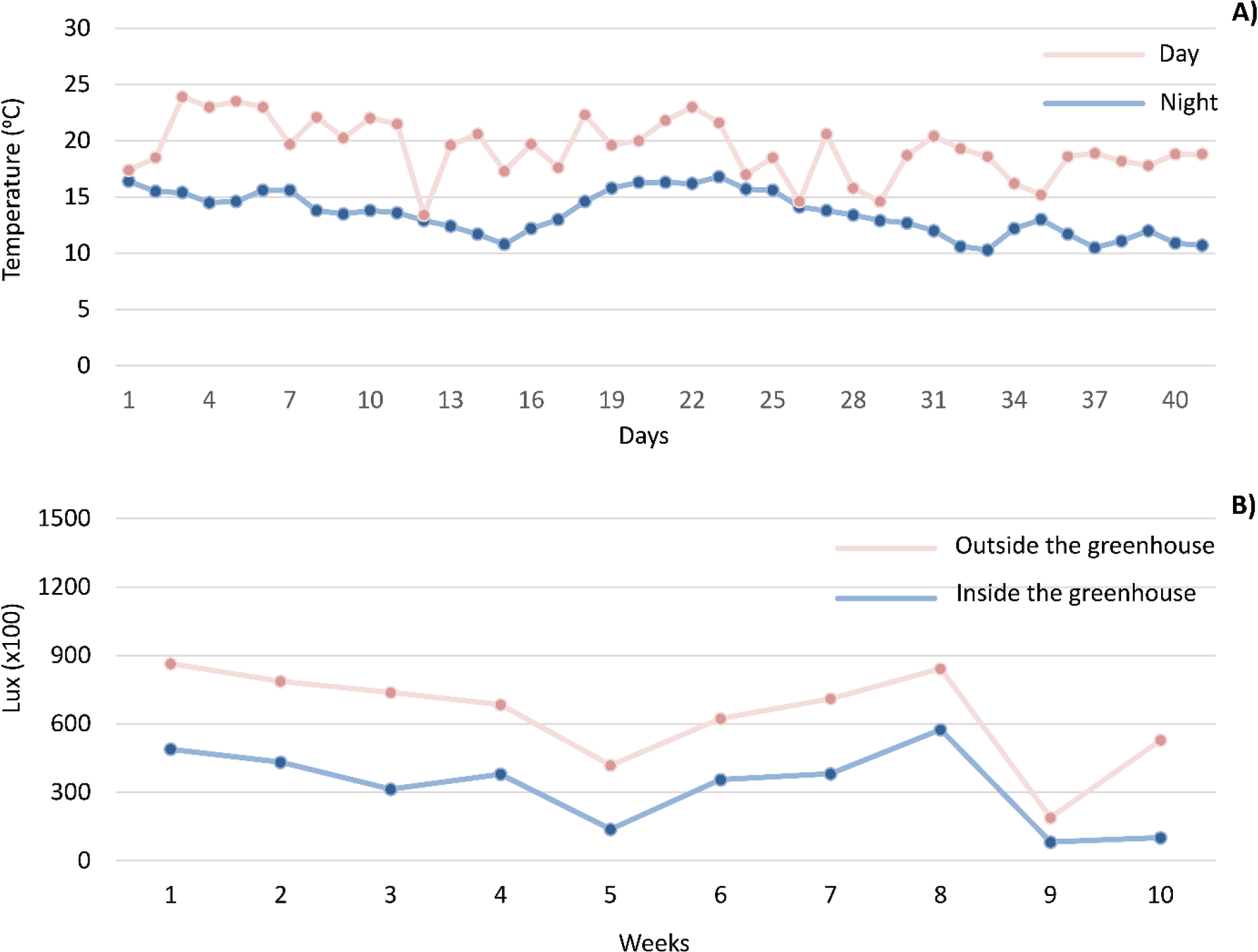
Figure 1.
Average daytime and nighttime environmental conditions in the greenhouse during the cultivation period. (A) Mean day and night temperatures (°C). (B) Instantaneous light intensity (lux) inside and outside the greenhouse.
The effect of supplemental UV-B applications on plant height development in lettuce seedlings was presented in Figures 2 and 3. Both levels of UV-B significantly affected the seedling height compared with control plants, with a cultivar dependent sensitivity. The 'Caipira' and 'Fortunas' cultivars responded differently to the supplemental UV-B. For 'Caipira', a dose of 4.8 kJ · m−2 · day−1 was sufficient to slow down seedling height development, whereas a higher dose of 9.6 kJ · m−2 · day−1 was required to have an effect on seedling height of 'Fortunas'.
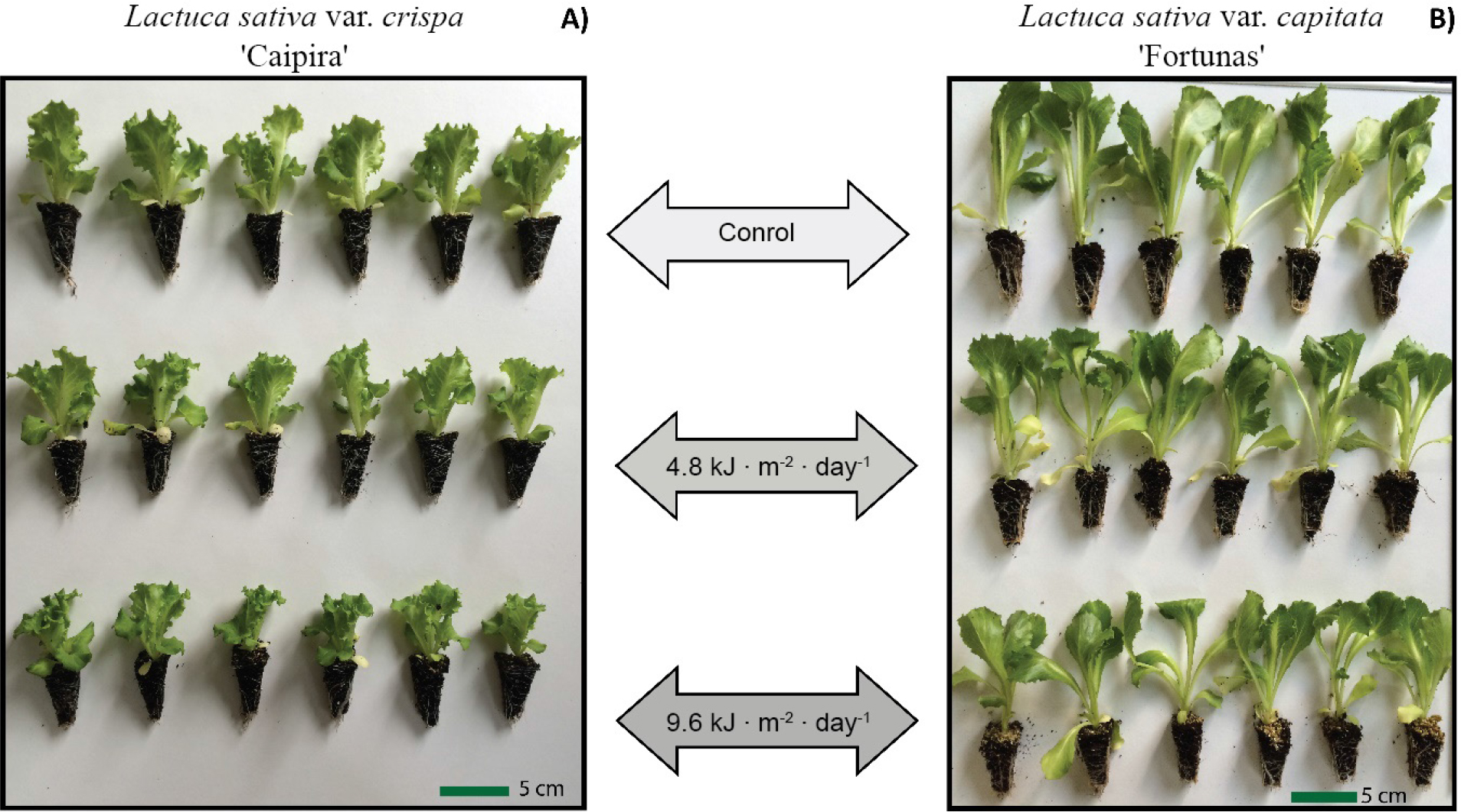
Figure 2.
Effects of supplemental UV-B exposure on lettuce seedlings after 12 days. (A) 'Caipira' and (B) 'Fortunas' cultivars. Top rows show control plants; middle and bottom rows show seedlings exposed to medium (4.8 kJ · m−2 · day−1) and high (9.6 kJ · m−2 · day−1) UV-B doses, respectively. UV-B, ultraviolet-B.
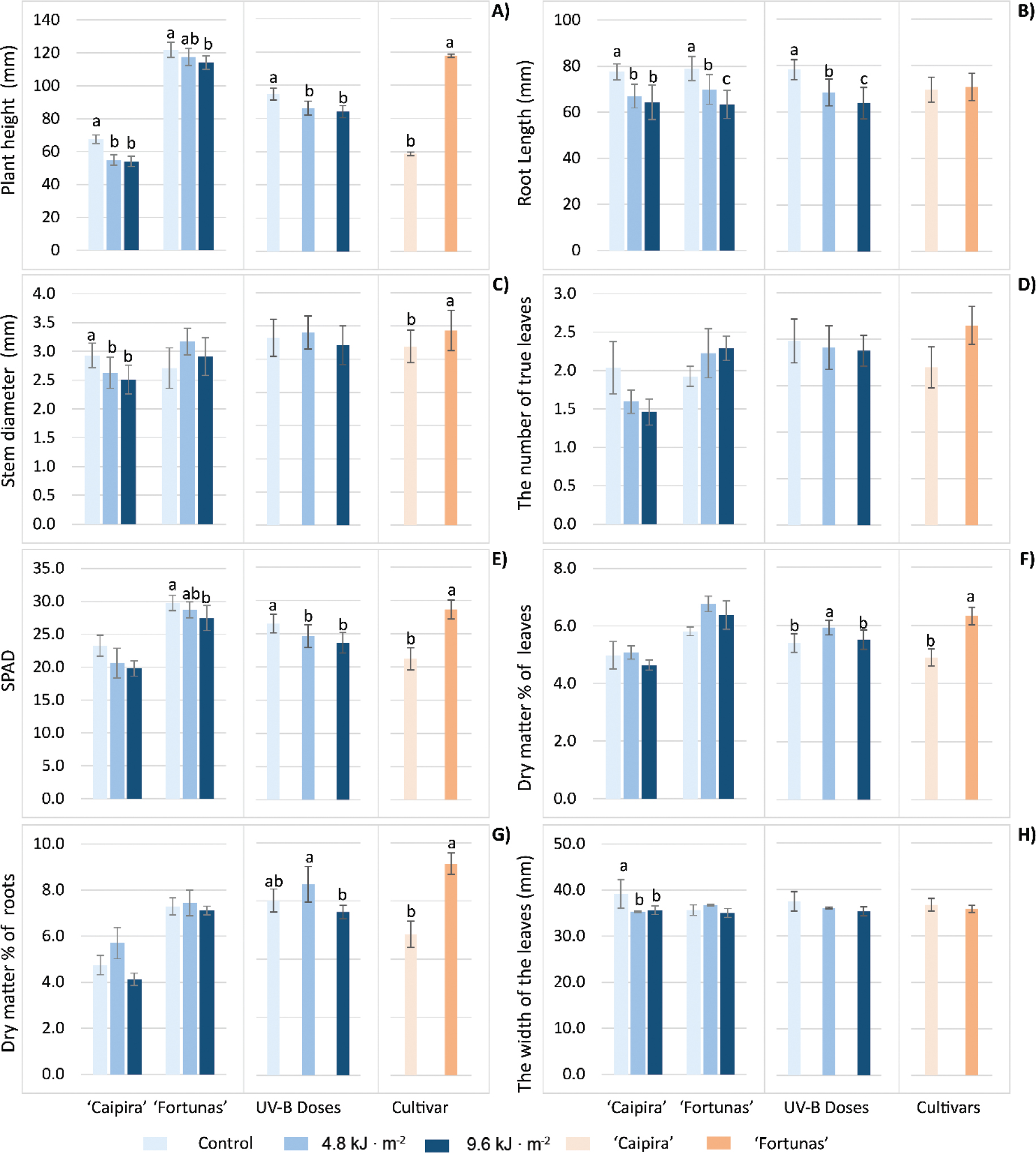
Figure 3.
Effects of supplemental UV-B on (A) plant height, (B) root length, (C) stem diameter, (D) true leaf count, (E) chlorophyll content (SPAD), (F) leaf dry matter, (G) root dry matter and (H) leaf width. The first three bars in each group represent 'Caipira', and the next three represent 'Fortunas'. Blue shades indicate increasing UV-B levels (lightest = control; darkest = 9.6 kJ · m−2 · day−1). Orange shades represent cultivar means (lightest = 'Caipira'; darkest = 'Fortunas'). Different lowercase letters denote statistically significant differences (LSD, p < 0.05). LSD, least significant difference; UV-B, ultraviolet-B.
Increasing UV-B applications had a negative effect on plant root length development (Figure 3B). The control group seedlings (not exposed to UV-B) had the highest average root length at 78.23 mm, while seedlings treated with supplemental UV-B had lower root lengths in comparison to the control group. Although stem diameter was not significantly influenced overall, cultivar-specific effects were observed. In 'Caipira', control seedlings developed thicker stems than those exposed to UV-B, while 'Fortunas' showed no significant difference among treatments (Figure 3C). With respect to the number of true leaves, neither the variation in UV-B ray application doses nor the differences between plant cultivars had a statistically significant impact (Figure 3D). Regarding the leaf SPAD value of the lettuce seedlings, the effect of UV-B illuminations in terms of application doses was found to be statistically significant (Figure 3E). While the reduction in SPAD value in 'Caipira' under UV-B was not statistically significant, 'Fortunas' exhibited a clear and significant decrease compared to its control. The average leaf SPAD amount of 'Fortunas' seedlings (28.64 SPAD) was higher than the average leaf SPAD of 'Caipira' seedlings (21.22 SPAD). Regarding the dry matters of leaves and roots, similar trends were observed (Figures 3F and 3G). Notably, the highest level of UV-B supplementation did not lead to significant alterations in root or leaf dry matter once compared with the control group. Nonetheless, supplemental UV-B significantly influenced dry matter accumulation, with 'Fortunas' exhibiting higher amounts than 'Caipira'. Next, we evaluated leaf width (Figure 3H), and observed a cultivar-specific response in 'Caipira', where UV-B supplementation resulted in significant decrease in leaf width.
Colour measurements showed that increased UV-B doses affected leaf pigmentation (Figure 4). The first colour parameter was L*, which is a measure of how light or dark a colour appears. The L* colour value was found to be lower in seedlings treated with 9.6 kJ · m−2 · day−1 irradiation compared with the control and seedlings subjected to 4.8 kJ · m−2 · day−1 UV-B, suggesting that higher UV-B exposure might have led to darker leaf pigmentation. Furthermore, the average L* colour value of 'Caipira' seedlings was higher than that of 'Fortunas' seedlings, suggesting differences between cultivars in their colour response to UV-B treatments. Similar trends were observed for C* parameter, which represents colour saturation, indicating the intensity or vividness of the colour. 'Caipira' seedlings consistently exhibited higher C* values (38.99) than 'Fortunas' seedlings (31.95), suggesting that 'Caipira' cultivar maintained more vibrant leaf colouration under different UV-B treatments (Figure 4B). With regard to h°, which indicates the type of colour perceived, seedlings exposed to the highest supplemental UV-B exhibited the greatest h° value compared with both the control and the lower UV-B treatment. The effect of different supplemental UV-B applications on cultivars was found to be statistically significant. The average h° value of 'Fortunas' seedlings (127.09) was higher than the average h° of 'Caipira' seedlings (123.74).
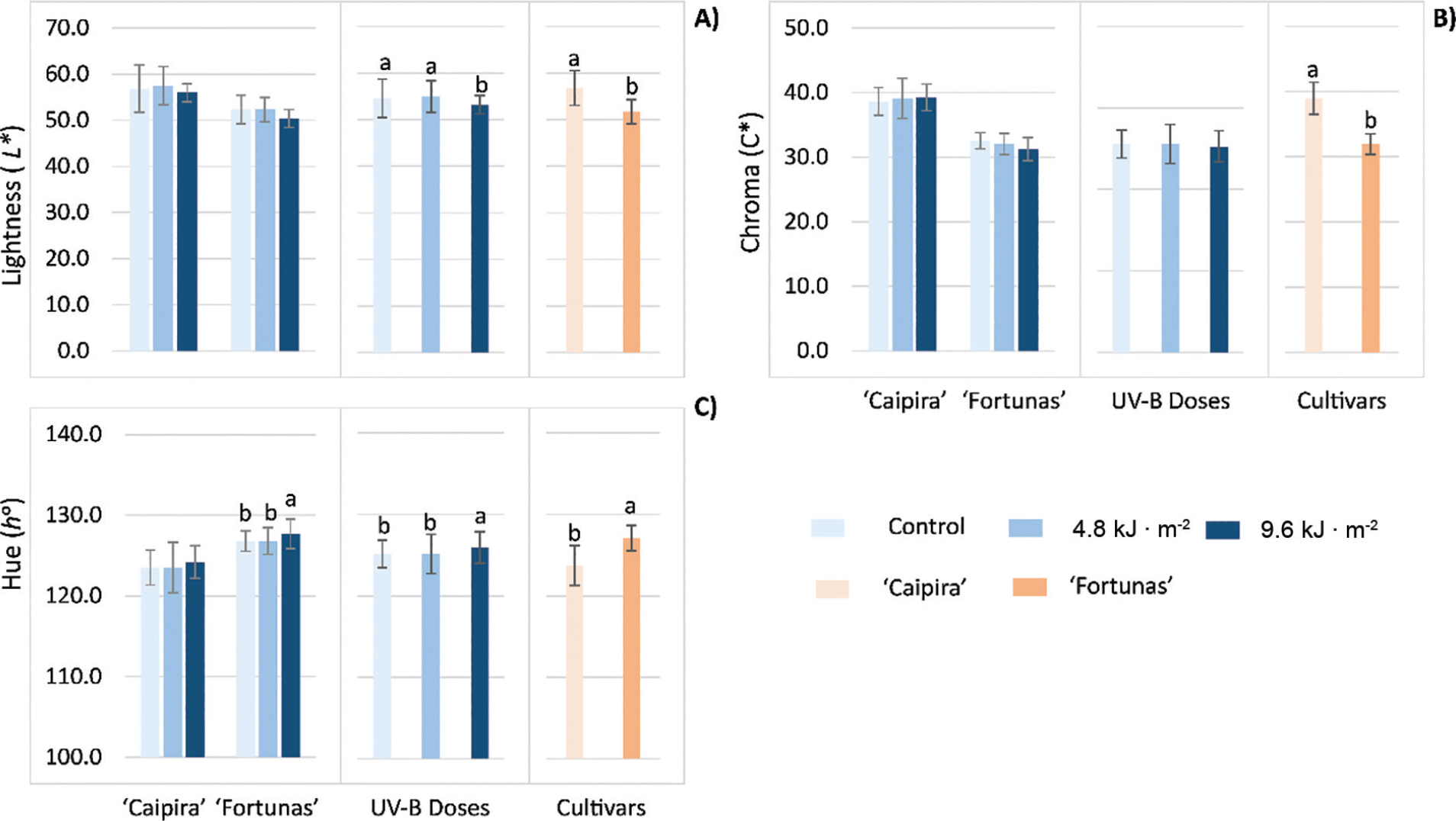
Figure 4.
The impact of the supplemental UV-B on the colour parameter of the seedlings. (A) lightness (L*), (B) chroma (C*) and (C) hue (h°). Statistical significance (LSD test: p < 0.05) is denoted by differing lowercase letters. LSD, least significant difference; UV-B, ultraviolet-B.
We evaluated the effects of supplemental UV-B radiation on macro and micronutrient composition of the lettuce seedlings (Table 1). Among macronutrients, nitrogen content remained statistically unaffected by both UV-B treatments and cultivars, ranging from 2.13% to 2.30%. These results indicate that nitrogen status remains stable regardless of exposure levels. In contrast, the content of phosphorus, potassium and calcium was significantly impacted by either supplemental UV-B radiation or cultivar. Notably, the phosphorus content showed a clear dose-dependent decline, dropping from 0.62% in control plants to 0.29% under the highest UV-B dose (9.6 kJ · m−2 ⋅ day−1). Interestingly, we noticed that 'Fortunas' seedlings did not see any changes in phosphorus content across the UV-B treatments, and phosphorus content was less than half of the levels observed in 'Caipira' cultivar. Potassium and calcium contents followed a similar pattern and showed a slight increase with the highest UV-B dose, reaching its peak at 9.6 kJ · m−2 · day−1. The trend was accompanied by distinct cultivar differences, with 'Caipira' consistently exhibiting higher potassium and calcium concentrations than 'Fortunas'. With respect to magnesium, no significant differences were observed within cultivars across doses. However, the average magnesium level in 'Fortunas' was higher than the 'Caipira' cultivar. Among micronutrients, only copper levels declined significantly under elevated UV-B exposure. Especially in 'Fortunas', copper concentration remained consistently low across treatments with less than half of 'Caipira'. The iron content exhibited a complex response. While elevated UV-B stimulated the iron accumulation in 'Caipira', the opposite effect was observed in 'Fortunas', revealing a contrasting regulatory mechanism. In contrast, manganese and zinc levels remained relatively stable across treatments, with no significant differences observed between seedlings exposed to 9.6 kJ · m−2 · day−1 UV-B rays and those under control conditions.
Table 1.
The influence of the supplemental UV-B applications on micro (ppm) and macro nutrients (%) of the lettuce seedlings.
| Cultivars | ||||
|---|---|---|---|---|
| UV-B applications | 'Caipira' | 'Fortunas' | Average (Dose) | |
| Nitrogen (N)(%) | Control | 2.23 | 2.13 | 2.18 |
| 4.8 (kJ · m−2 · day−1) | 2.30 | 2.13 | 2.21 | |
| 9.6 (kJ · m−2 · day−1) | 2.23 | 2.26 | 2.25 | |
| Average (Cultivars) | 2.25 | 2.17 | ||
| Phosphorus (P)(%) | Control | 1.02 a | 0.23 | 0.62 a* |
| 4.8 (kJ · m−2 · day−1) | 0.39 b | 0.23 | 0.31 b | |
| 9.6 (kJ · m−2 · day−1) | 0.35 c | 0.23 | 0.29 c | |
| Average (Cultivars) | 0.59 a | 0.23 b | ||
| Potassium (K) (%) | Control | 4.90 b | 2.67 a | 3.78 b |
| 4.8 (kJ · m−2 · day−1) | 4.93 b | 2.50 b | 3.71 c | |
| 9.6 (kJ · m−2 · day−1) | 5.19 a | 2.56 ab | 3.88 a | |
| Average (Cultivars) | 5.00 a | 2.58 b | ||
| Calcium (Ca) (%) | Control | 1.38 b | 1.12 a | 1.25 b |
| 4.8 (kJ · m−2 · day−1) | 1.35 b | 1.02 b | 1.19 c | |
| 9.6 (kJ · m−2 · day−1) | 1.67 a | 1.04 b | 1.36 a | |
| Average (Cultivars) | 1.47 a | 1.06 b | ||
| Magnesium (Mg) (%) | Control | 0.30 | 0.45 | 0.37 ab |
| 4.8 (kJ · m−2 · day−1) | 0.29 | 0.42 | 0.36 b | |
| 9.6 (kJ · m−2 · day−1) | 0.35 | 0.44 | 0.40 a | |
| Average (Cultivars) | 0.31 b | 0.44 a | ||
| Zinc (Zn) (ppm) | Control | 140.6 b | 144.3 | 142.5 ab |
| 4.8 kJ · m−2 · day−1) | 138.3 b | 138.0 | 138.1 b | |
| 9.6 (kJ · m−2 · day−1) | 150.6 a | 143.0 | 146.8 a | |
| Average (Cultivars) | 143.2 | 141.7 | ||
| Copper (Cu) (ppm) | Control | 16.66 a | 4.66 | 10.66 a |
| 4.8 (kJ · m−2 · day−1) | 5.33 b | 4.00 | 5.16 b | |
| 9.6 (kJ · m−2 · day−1) | 6.00 b | 4.33 | 4.66 b | |
| Average (Cultivars) | 9.33 a | 4.33 b | ||
| Iron (Fe) (ppm) | Control | 57.00 b | 59.00 a | 58.00 |
| 4.8 (kJ · m−2 · day−1) | 53.66 b | 57.66 a | 55.66 | |
| 9.6 (kJ · m−2 · day−1) | 67.66 a | 48.66 b | 58.16 | |
| Average (Cultivars) | 59.44 a | 55.11 b | ||
| Manganese (Mn) (ppm) | Control | 14.3 | 34.6 a | 24.5 a |
| 4.8 (kJ · m−2 · day−1) | 13.0 | 28.6 c | 20.8 b | |
| 9.6 (kJ · m−2 · day−1) | 17.6 | 31.3 b | 24.5 a | |
| Average (Cultivars) | 15.0 b | 31.5 a | ||
At harvest, approximately 60 days after transplanting, the seedlings reached the harvest stage and most traits measured previously were reassessed (Figure 5). Although supplemental UV-B radiation had influenced several traits at the seedling stage, many of the UV-B-induced effects observed during the seedling stage were no longer apparent by the time of harvest. Traits measured at the harvest stage, such as plant height, stem diameter, leaf SPAD and dry matter contents in both leaves and roots, were not affected by the earlier supplemental UV-B treatments. Nonetheless, cultivar differences persisted. We observed significant differences in terms of these traits. Specifically, the average plant height, stem diameter and dry matter contents in both leaves and roots of the 'Caipira' cultivar were found to surpass those of the Fortunas cultivar. Interestingly, 'Fortunas' exhibited higher leaf SPAD values compared to 'Caipira'. Yield-related traits were more sensitive to early UV-B exposure. The varying doses of supplemental UV-B radiation applied during the seedling stage had a clear negative impact on marketable head weight and yield in lettuce. Seedlings exposed to the highest supplemental UV-B doses resulted in smaller head weights, which consequently led to a lower yield compared to control plants. We found approximately 14.27% decrease between control and plants exposed to 9.6 kJ · m−2 · day−1 UV-B radiation during the seedling stage. However, the decrease was negligible once seedlings had been exposed to 4.8 kJ · m−2 · day−1 UV-B. With respect to the yield performance of cultivars, 'Fortunas' exhibited superior yield and head weight compared to 'Caipira', regardless of UV-B treatment.
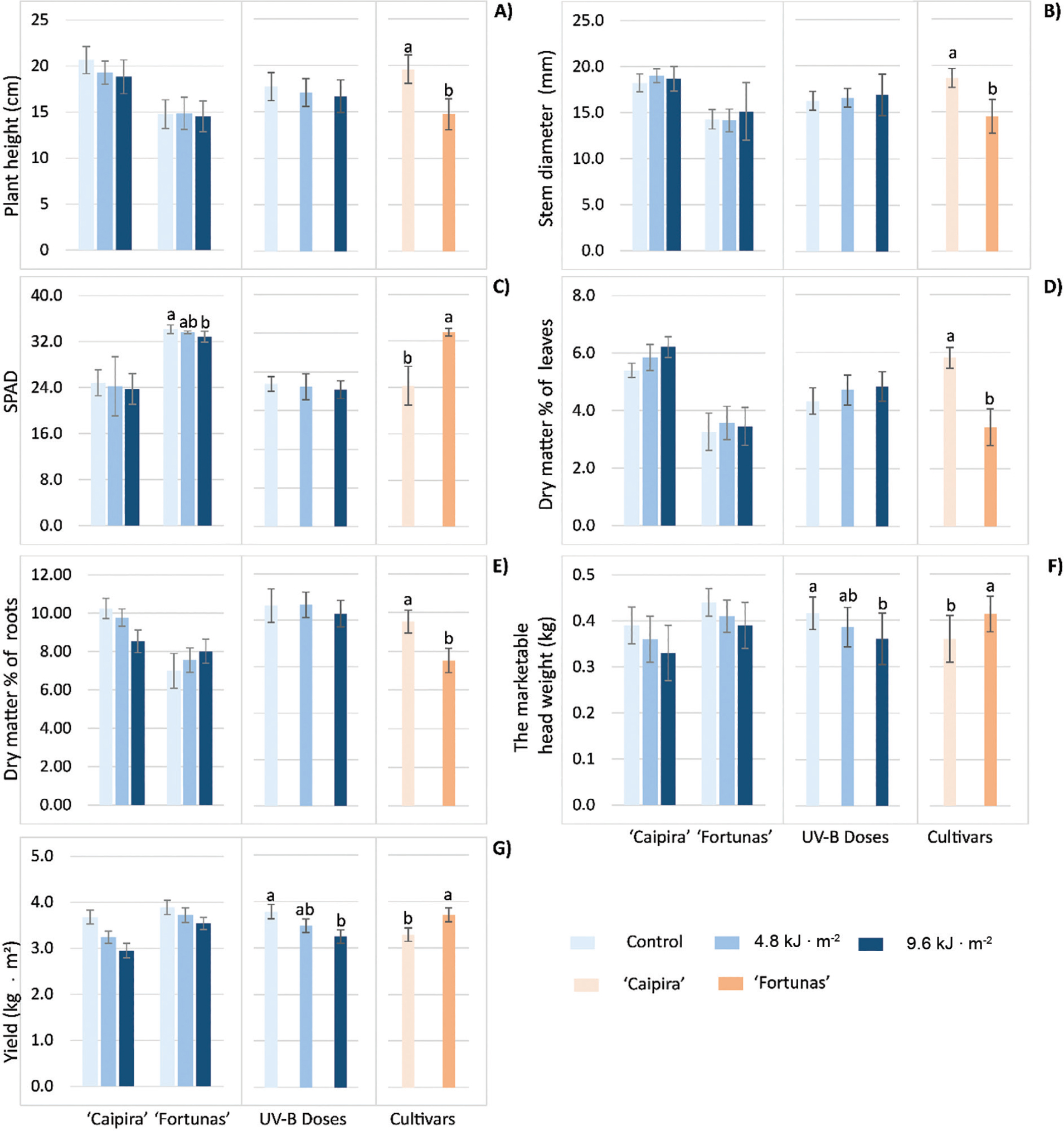
Figure 5.
The impact of the supplemental UV-B on growth related parameters of plants at harvest. (A) plant height, (B) stem diameter, (C) SPAD content, (D) dry matter of leaves, (E) dry matter of roots, (F) the marketable head weight and (G) yield. Statistical significance (LSD test: p < 0.05) is denoted by differing lowercase letters. LSD, least significant difference; UV-B, ultraviolet-B.
Colour parameters evaluated at harvest confirmed the persistence of early UV-B effects (Figure 6). Control plants maintained higher L* values compared to those exposed to UV-B, whereas the opposite trend was observed for h° contents. The lowest h° value was recorded in the control group plants with 120.07, followed by plants treated with 9.6 kJ · m−2 · day−1 UV-B irradiation with 121.10. The highest h° value, 122.43, was observed under 4.8 kJ · m−2 · day−1 UV-B application. Interestingly, although C* values did not differ significantly at the seedling stage, significant differences emerged at harvest. This was likely due to the response of the 'Fortunas' cultivar to the 4.8 kJ · m−2 · day−1 UV-B irradiation effect as no such effect was observed in 'Caipira' cultivar.
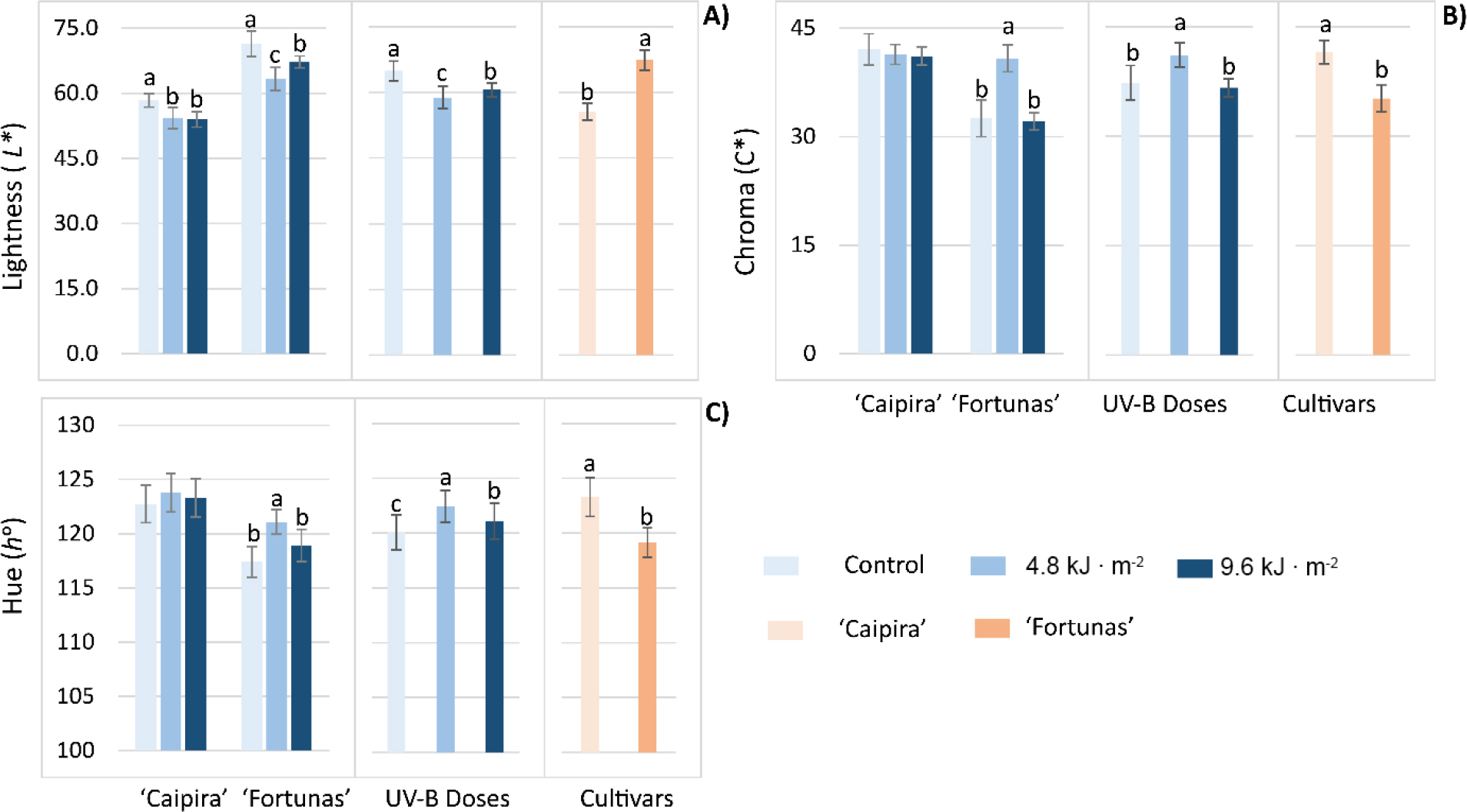
Figure 6.
The impact of the supplemental UV-B on the colour parameter of the plants at harvest. (A) Lightness (L*), (B) Chroma (C*) and (C) Hue (h°). Statistical significance (LSD test: p < 0.05) is denoted by differing lowercase letters. LSD, least significant difference; UV-B, ultraviolet-B.
Supplemental UV-B illumination applied at the seedling stage had a clear impact on the nutrient profiles of lettuce plants at harvest (Table 2). Both macro and micronutrients displayed dose and cultivar specific responses, some of which were consistent with trends observed at the seedling stage, while others showed divergence. Macronutrient analysis revealed that potassium, calcium and magnesium contents increased in UV-B treated plants, especially in the 'Caipira' cultivar. In contrast, nitrogen levels remained largely unaffected under supplemental UV-B treatments at both seedling and harvest stages, indicating limited impact on nitrogen assimilation. In contrast, 'Fortunas' consistently had higher nitrogen levels (3.56%) than 'Caipira' (2.86%). Although we observed a clear UV-B dose dependent decline in phosphorus content during the seedling stage, we did not see any significant difference between control and plants exposed to 9.6 kJ · m−2 · day−1 of UV-B at harvest. Among micronutrients, only manganese did not respond the increased UV-B levels. Nonetheless, zinc and copper contents were higher in control plants compared to those under high UV-B exposure, indicating reduced uptake under increased UV-B. Interestingly, while 'Caipira' plants demonstrated a reduction in copper uptake under UV-B at harvest, 'Fortunas' displayed an opposite trend from seedling stage, suggesting cultivar specific regulatory shifts over time. Regarding the iron content, the highest iron content, 121 ppm, was detected in seedlings treated with 9.6 kJ · m−2 · day−1 UV-B, the lowest iron content, 97.5 ppm, was found in the group treated with 4.8 kJ · m−2 · day−1 UV-B irradiation, followed by control plants. Except for manganese, distinct differences in nutrient uptake were evident between 'Caipira' and 'Fortunas' cultivars across most nutrients.
Table 2.
The impact of the additional UV-B applications on micro (ppm) and macro (%) nutrients of the lettuce plants at harvest.
| Cultivars | ||||
|---|---|---|---|---|
| UV-B applications | 'Caipira' | 'Fortunas' | Average (Dose) | |
| Nitrogen (N) (%) | Control | 2.75 | 4.03 | 3.39 |
| 4.8 (kJ · m−2 · day−1) | 2.93 | 3.20 | 3.06 | |
| 9.6 (kJ · m−2 · day−1) | 2.90 | 3.46 | 3.18 | |
| Average (Cultivars) | 2.86 b* | 3.56 a | ||
| Phosphorus (P) (%) | Control | 0.77 | 1.03 a | 0.90 a |
| 4.8 (kJ · m−2 · day−1) | 0.80 | 0.95 c | 0.87 b | |
| 9.6 (kJ · m−2 · day−1) | 0.77 | 1.01 b | 0.89 a | |
| Average (Cultivars) | 0.78 b | 0.99 a | ||
| Potassium (K) (%) | Control | 4.31 b | 3.75 c | 4.03 b |
| 4.8 (kJ · m−2 · day−1) | 4.49 b | 4.16 a | 4.30 a | |
| 9.6 (kJ · m−2 · day−1) | 4.72 a | 3.83 b | 4.27 a | |
| Average (Cultivars) | 4.49 a | 3.91 b | ||
| Calcium (Ca) (%) | Control | 2.13 c | 0.94 b | 1.53 c |
| 4.8 (kJ · m−2 · day−1) | 2.80 a | 1.11 a | 1.95 a | |
| 9.6 (kJ · m−2 · day−1) | 2.25 b | 0.95 b | 1.60 b | |
| Average (Cultivars) | 2.39 a | 1.00 b | ||
| Magnesium (Mg) (%) | Control | 0.55 c | 0.35 | 0.45 c |
| 4.8 (kJ · m−2 · day−1) | 0.81 a | 0.36 | 0.58 a | |
| 9.6 (kJ · m−2 · day−1) | 0.70 b | 0.35 | 0.52 b | |
| Average (Cultivars) | 0.69 a | 0.35 b | ||
| Zinc (Zn) (ppm) | Control | 112.0 b | 94.3 b | 103.1 b |
| 4.8 (kJ · m−2 · day−1) | 155.6 a | 91.3 c | 123.5 a | |
| 9.6 (kJ · m−2 · day−1) | 74.3 c | 97.6 a | 86.0 c | |
| Average (Cultivars) | 114.0 a | 94.4 b | ||
| Copper (Cu) (ppm) | Control | 14.00 a | 11.66 b | 12.83 a |
| 4.8 (kJ · m−2 · day−1) | 11.66 ab | 14.33 a | 13.00 a | |
| 9.6 (kJ · m−2 · day−1) | 8.66 b | 14.33 a | 11.50 b | |
| Average (Cultivars) | 11.44 b | 13.44 a | ||
| Iron (Fe) (ppm) | Control | 84.33 | 128.33 b | 106.3 b |
| 4.8 (kJ · m−2 · day−1) | 80.33 | 114.66 c | 97.5 c | |
| 9.6 (kJ · m−2 · day−1) | 84.66 | 157.33 a | 121.0 a | |
| Average (Cultivars) | 83.1 b | 133.4 a | ||
| Manganese (Mn) (ppm) | Control | 26.53 | 21.00 c | 23.76 |
| 4.8 (kJ · m−2 · day−1) | 23.66 | 24.00 a | 23.83 | |
| 9.6 (kJ · m−2 · day−1) | 92.66 | 22.66 b | 57.66 | |
| Average (Cultivars) | 47.62 | 22.55 | ||
DISCUSSION
In this study, we demonstrated that supplemental UV-B radiation during the early growth stages of lettuce can induce notable changes in lettuce growth, morphology, pigment content, nutrient composition, yield and other related physiological traits. It is well established that plants grown under elevated levels of UV-B might alter plant growth characteristics. These changes might be positive or negative depending on several factors such as intensity, duration, growth stage, species and cultivar (Topcu et al., 2015; Fina et al., 2017; Vandenbussche et al., 2018; Qi et al., 2020; Lee et al., 2021; Jadidi et al., 2023; Wu et al., 2023; Singh and Choudhary, 2025). We showed that UV-B exposure notably reduced plant height at the seedling stage, whereas this effect was less evident at harvest. This suggests that plants may partially acclimate to UV-B stress over time or that the observed changes during early plant development might be reversible, especially once the stress factor is absent. This trend aligns with previous reports suggesting that UV-B primarily inhibits stem elongation primarily during early developmental stages, possibly through alterations in hormonal signalling (especially gibberellin and indole-3-acetic acid), gene expression and cell expansion and division (Wargent et al., 2011; Fina et al., 2017; Roro et al., 2017; Senapati et al., 2024). It is intriguing that supplemental UV-B could be considered as an alternative way to commonly used plant growth retardants. These chemical agents regulate hormonal balance to inhibit excessive growth, promoting compact and sturdy plants, often without significantly compromising yield (Rademacher, 2015; Desta and Amare, 2021). Furthermore, we demonstrated that elevated levels of UV-B were associated with shortened root length. Similar findings were observed by Zhang et al. (2019) in soybean and by Mathur et al. (2024) in rice. The shortened root length and biomass were explained by disrupted auxin signalling and oxidative stress response in roots. In this study, although UV-B exposure significantly reduced root length at the seedling stage, these differences became less pronounced by harvest. This observed recovery could be attributed to the withdrawal of UV-B exposure, indicating that some UV-B-induced effects on root development may be reversible, depending on the duration and intensity of the treatment (Zhang et al., 2019). Although stem diameter and plant biomass were reduced under UV-B exposure, we could not see a clear pattern as different cultivars showed varied responses to increased UV-B. These findings suggest that the influence of UV-B radiation on stem diameter development is not only dose-dependent but also varies between different cultivars (Liu et al., 2013; Lee et al., 2021). In this study, we also clearly demonstrated that leaf SPAD, reflecting the chlorophyll content, declined progressively with increasing UV-B doses. This effect appeared consistent throughout the growth period, yet it was more severe in mature plants, suggesting cumulative damage to the chloroplast and impaired photosynthesis (Hu et al., 2013; Oyarburo et al., 2015; León-Chan et al., 2017; Ali et al., 2023). UV-B induced chlorophyll degradation has been widely reported across different species such as lettuce (Skowron et al., 2024), rice (Mathur et al., 2024; Senapati et al., 2024) and soybean (Hu et al., 2013), where prolonged or intense UV-B exposure might have impaired chlorophyll biosynthesis or accelerated degradation through oxidative stress or disrupted enzymatic activities. Nevertheless, contrasting responses have been observed in potato where UV-B exposure increased chlorophyll content in certain cultivars, possibly due to enhanced antioxidant activity and upregulation of chlorophyll biosynthesis genes (Wu et al., 2023). Zhang et al. (2019) and Lee et al. (2021) illustrated that supplemental UV-B radiation led to a reduction in the dry matter of the roots, whereas Liu et al. (2013) and Mariz-Ponte et al. (2019) showed the dry weight reduction in soybean stems and tomato fruits, respectively. In this study, the average dry matter of the roots decreased once plants were subjected to the highest levels of UV-B in the seedling stage, but this change was negligible later on stage. In contrast, moderate UV-B levels stimulated dry matter accumulation in leaves, but this trend diminished once plants were subjected to the highest levels of UV-B and reached maturity. Lee et al. (2021) reported that reductions in dry matter in lettuce under UV-B exposure were cultivar dependent, suggesting that dry matter accumulation is a complex trait influenced by genetic variation. These findings imply that UV-B may not have a uniform or direct effect on the dry matter accumulation. Furthermore, several other studies support these findings (Flores et al., 2023; Silveira Gomez et al., 2023). In this study, supplemental UV-B exposure led to a decrease in the L* value. Similarly, previous studies have shown that enhanced levels of UV-B exposure can decrease L* in lettuce, increase it in broccoli, or result in no significant change in tomato, highlighting species and cultivar-dependent responses. These variations are likely due to likely due to chlorophyll degradation or the accumulation of protective phenolic compounds (Topcu et al., 2015; Mariz-Ponte et al., 2019; Flores et al., 2023; Silveira Gomez et al., 2023). With respect to saturation expressed by C*, supplemental UV-B did not affect C* during the seedling stage, but there was a fluctuation noted at harvesting. A study conducted by Mariz-Ponte et al. (2019) on tomato similarly reported no significant changes in C*, although a significant increase in h° was noted. In this study, we had similar results where lettuce plants displayed higher h° with higher UV-B levels. Nevertheless, other studies suggest that h° content does not respond to elevated levels of UV-B (Topcu et al., 2015; Flores et al., 2023; Silveira Gomez et al., 2023). These findings underscore the complex and variable nature of plant colour responses to UV-B, which appear to be influenced by species, developmental stage and possibly genotype. Overall, while some colour attributes such as L* and h° may be moderately responsive to UV-B, others like C* may remain largely unaffected. Finally, we looked at the micro and macro nutrients of the lettuce subjected to increased UV-B. To date, the consequence of increased UV-B radiation on nutritional elements in crop plants has remained mostly unclear. This is mostly because, these nutrients responded to UV-B levels differently in early stages while there were minimal notable changes observed in later stages once exposed to UV-B (Yao et al., 2014). In this study, exposure to 9.6 kJ · m−2 · day−1 of UV-B at the seedling stage led to an increased potassium and calcium levels, no significant changes in nitrogen, magnesium, zinc, iron and manganese, and reduced phosphorus and copper levels. Interestingly, the phosphorus deficiency observed earlier was no longer evident at harvest. Additionally, magnesium and iron levels increased in UV-B treated plants, whereas zinc levels decreased compared to control. The contrasting nutrient profiles between the seedling stage and harvest likely reflect the plant’s dynamic acclimation and regulatory responses to UV-B stress over time. Similar trends were observed by Lee et al. (2021) who found that lettuce plants treated with supplemental UV-B exhibited higher levels of calcium, magnesium, potassium and zinc, whereas copper, phosphorus and iron remain unchanged. These findings largely align with our observations. The findings imply that regular monitoring of phosphorus and copper levels is advisable under UV-B stress, as phosphorus is an essential macro nutrient whose deficiency can significantly impact yield and related agronomic traits (Hoque et al., 2010; Hong et al., 2022). In this study, both marketable head weight and yield have been affected adversely by the highest UV-B application, but we could not see a significant difference once the moderate level of UV-B is applied. Similar results have been reported in various species, including wheat (Yuan et al., 1998), soybean (Liu et al., 2013), maize (Gao et al., 2004) and rice (Mathur et al., 2024). The reduction in yield may be associated with impaired mineral uptake and decreased chlorophyll content. Given that chlorophyll is essential for chloroplast development and efficient photosynthesis, its reduction likely contributed to diminished biomass accumulation and overall yield performance.
CONCLUSIONS
In conclusion, this study demonstrates that supplemental UV-B treatments during early growth stages can either promote or hinder the plant development, physiology and nutritional quality of lettuce at later stages. It is clear that these adverse or positive effects are dosage and cultivar-dependent within the same species. Although UV-B is often considered as potentially harmful, our finding suggests that it could be explored as an alternative to traditional plant growth retardants, particularly those utilised in nurseries. Applying moderate or lower UV-B doses (0–4.8 [kJ · m−2 · day−1]) may minimise the toxicity and adverse side effects, offering a promising approach to manage plant growth sustainably. Future studies should explore cultivar-specific signalling pathways and gene expression responses to UV-B, the genetic aspect of resistance against higher UV-B exposure, assess longer-term effects on yield and post-harvest quality and evaluate the scalability of UV-B application under commercial greenhouse and field production systems.
Notes
[5] Contributed by AUTHOR’S CONTRIBUTION
EP conceives the initial idea. AO conducted the research and gathered data with YT. EP and AO did the formal analysis and wrote the original draft while YT and AO created the figures. EP and YT revised and edited the final version of the manuscript. All authors have thoroughly reviewed and accepted the most recent version of the manuscript.
[6] Conflicts of interest CONFLICT OF INTEREST
No conflicts of interest have been declared.
Abbreviations
- C*
chroma;
- h°
hue angle;
- ICP-OES
optical emission spectroscopy with inductively coupled plasma;
- kJ
kilojoules;
- L*
lightness;
- LSD
least significant difference;
- nm
nanometres;
- PAR
photosynthetically active radiation;
- ppm
parts per million;
- UV-B
solar ultraviolet-B