
INTRODUCTION
Tulips are the most important geophytes in the world. The perennial bulbous plant known as tulip, belonging to the genus Tulipa in the family Liliaceae, is planted in gardens and pots for ground cover, cutting and bedding (Khaleghi et al., 2018; Pourkhaloee et al., 2018; Dekhkonov et al., 2022). Due to its flower colours and forms, it is referred to as ‘the Queen of Flowering Bulbs’. It was previously thought that the main gene centres for the tulipa genus were located in Central Asia, particularly in the Tianshan and Pamir Altai Mountains (Abedi et al., 2015; Xing et al., 2020). There are over 100 subspecies in the genus Tulipa, which is found naturally in Western China, the Middle East, North Africa and Southern Europe (Qu et al., 2017; Xing et al., 2017). Millions of tulip bulbs are sold annually and there are more than 5000 registered cultivars (Kiliç, 2018). Short flowering periods and quality bulb production have great importance in tulip cultivation. Exogenous application of plant growth regulators (PGRs) plays an important role in manipulating growth, flowering and bulb production behaviour in flowering plants. Gibberellins are involved in various developmental stages of plant growth and promote many desirable effects, including stem elongation, uniform and early flowering and increased number and size of flowers (Bose et al., 2013). Using gibberellins, also known as gibberellic acid (GA3), determines important physiological changes, such as cell division and expansion, stimulating and promoting flowering (Janowska et al., 2018; Andrzejak and Janowska, 2021). Gibberellic acid with auxin controls internode elongation, thus enhancing stem growth and bulb yield in tulips (Kumar et al., 2013). In addition to three different blueberry varieties, foliar GA3 spray greatly improves bloom return (Zang et al., 2016). In the absence of gibberellin, however, the internode length of the plant may not extend as much as in the presence of gibberellin and, therefore, plant development may not be at the desired level (Zhang et al., 2022). Root growth of pot-grown plants is a central element in overall plant performance. A strong root structure positively affects crop productivity by increasing water and plant nutrient intake and resistance to disease and pest factors (Bucksch et al., 2014). Furthermore, root structure could vary by the plant type and variety (Kul et al., 2020), making it difficult to examine the root structure. For this reason, the number of studies based on the phenotypic characteristics of the root is generally quite low; having said that, many advances have been achieved in root measurements in recent years. To illustrate, techniques such as plant image analysis software that can provide easy, fast, reproducible and more descriptive imaging of root growth have been developed (Judd et al., 2015). Additionally, this study has featured modelling techniques for the structure and activity of root features based on multivariate and machine learning (ML) techniques. However, further studies are required to determine the importance of root characteristics in affecting aboveground biomass (Moon et al., 2018; Awika et al., 2021; Tütüncü, 2024). Using ML in plant science is a growing area of interest. ML is particularly used to predict the effects of most agricultural practices, especially crop yield. ML algorithms, such as Support Vector Machines (SVM), Random Forest (RF) and Multilayer Perceptron (MLP), are employed to analyse large datasets in plant breeding programmes to improve efficiency and develop model-based breeding methods (Yoosefzadeh-Najafabadi et al., 2021). Weka, a ML workbench, provides a collection of state-of-the-art ML algorithms and data preprocessing tools that can be used in data mining applications (Smith and Frank, 2016).
The height of Tulipa saxatilis species ranges from 40.0 cm to 60.0 cm. Stem diameter is measured as 2–3 mm, underground stem length as 13.0–21.0 cm and aerial stem length as 20.0–32.0 cm (Eker et al., 2014). T. saxatilis can be rather used for landscaping purposes because of its short stem length. Because of its colour and ability to have multiple flowers on a single stem, it can also be used as a cut flower. To do so, however, the stem length needs to be increased. It is known that GA3 applications applied to different tulip species and cultivars increase some above-ground characteristics of plants, such as the plant height, flower height, flower stem length and number of flowers (Suh and Cho, 1997; Zengin and Kelen, 2016). That being said, no research has been done on how GA3 applications affect stem length in T. saxatilis. The potential for lengthening the stem length by GA3 application was examined in order to address the data shortage. There are also few studies on root architectural features and the effects of bulb nutrient changes on the development of tulip species and varieties.
This study examined the effect of GA3 application on root architectural features, as well as the development of the above-ground parts of the plant, and the effects of GA3 exogenous application on root architectural development were revealed. Besides, this study aims to explain the change in the bulb nutritional content. The study has also evaluated whether the stem length, bulb number and vase life of T. saxatilis, which has a relatively short stem length, increase with GA3 application. The effects of GA3 applications on root architectural features were evaluated using image analysis. In addition, the study has employed methods such as artificial neural network analysis and ML based on data mining to model and predict the impact of applications on the root architecture.
MATERIALS AND METHODS
This research has been carried out at the Black Sea Agricultural Research Institute, Samsun, Turkey.
Plant material
Tulip bulbs with a circumference of 12 cm and above (12/+) belonging to the T. saxatilis species, which is a natural species, were used in the research. T. saxatilis is distributed only in a very limited region in Turkey, known as Keraye Tulip in Keraye/Bozburun neighbourhood of Muğla province. It is represented by fewer than 200 individuals in the entire population, covering an area of less than 500 m2. In fact, the future of this unique tulip species is under threat. The species used in this study was collected from Bozburun, Keraye locality, rocky places in Muğla province, at an altitude of 70 m, 36°36.102′ N, 028°02.004′ E, and brought to the Black Sea Agricultural Research Institute, where it was naturally propagated. Prior to planting, the tulip bulbs were sprayed with fungicide (Captan 50 WP) and allowed to dry. Dried bulbs were planted in 2 L pots containing a peat and perlite (3:1) mixture, one in each pot. Plantings were done in September 2023. The pots were placed in a suitable area in the garden of the institute. During the experiment period (Eylül-Nisan), the average temperature was measured as 19 ± 3°C and humidity as 73 ± 5%.
Experimental design
GA3 applications
Gibberellic acid (GA3) was applied at 0, 100, 200 and 400 ppm. GA3 solutions were put into a 2 L hand-held pressure spraying pump and sprayed in such a way that all parts of the plants were completely wet. The application was made once the plants reached a height of 15 cm. Considering the dryness of the pot soil, 200 mL of irrigation was applied to each pot. No fertilisation was performed.
Measurements of plant growth and bulb characteristics
The experiment was set up with three replicates of each application and 20 plants in each replication. A total of 60 plants were measured for each application. Measurements were made in the second week of March when tulips were in full bloom. Measurements were performed considering the following factors: plant height (cm), flower stem length (cm), flower stem diameter (mm), perianth length (mm), number of flowers, leaf length (cm) and leaf width (cm), leaf number, vase life, mother bulb diameter (mm), bulblet diameter (mm), mother bulb weight (g), bulblet weight (g) and the number of bulblet.
Bulb nutritional content
The bulbs that reached their maturity were included in the study. The bulbs were dried at 65°C for 48 hr, after which 15 plants were selected randomly from each repetition of each application. Bulb samples taken from the plants were washed for chemical analysis and dried and ground at 65°C until they reached a constant weight. Total nitrogen (N) in the bulb samples was determined according to the modified Kjeldahl method (Kacar and Inal, 2008). For the analysis of phosphorus (P), potassium (K), calcium (Ca), magnesium (Mg), iron (Fe), manganese (Mn), zinc (Zn) and copper (Cu), the plant samples were wet burned (4:1, HNO3:HClO4) and read in the ICP-OES (Inductively Coupled Plasma Optical Emission Spectroscopy) (Soltanpour and Workman, 1981).
Measurements of root architecture
The WinRhizo root analysis program (Regent Instruments, Quebec City, QC, Canada) was used to examine the root architectures. At the end of April, 15 plants for each replicate were removed from the pots. Following the careful washing and cleaning of the roots of the extracted plants, the roots were placed on the scanner (Epson Expression 10000XL, Epson America Inc., Long Beach, CA, USA), and scanned images were computerised in three dimensions (Figure 1).
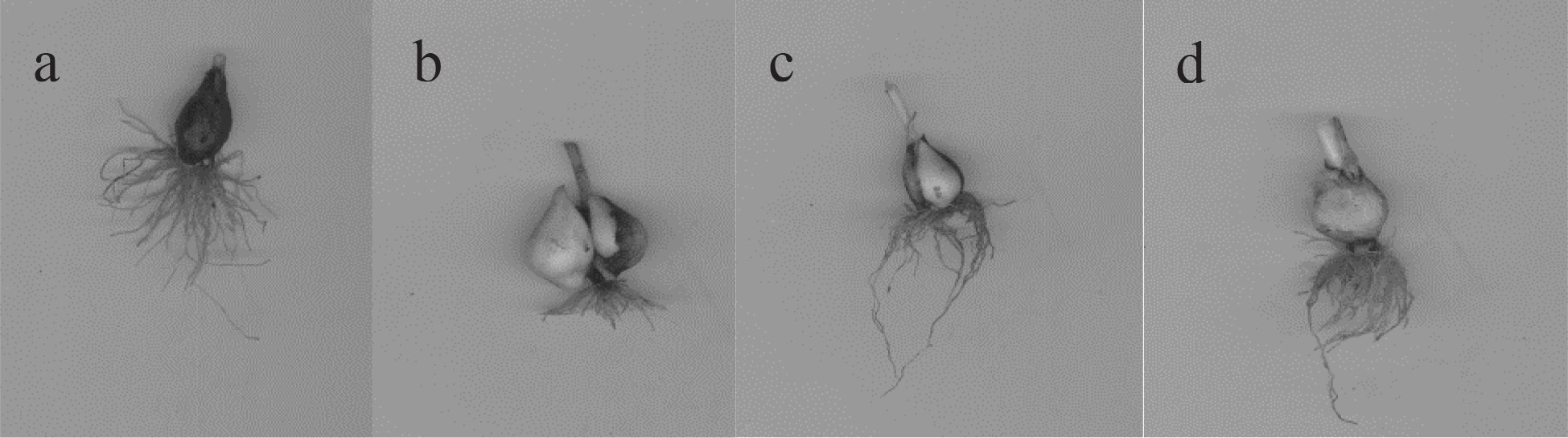
Figure 1.
Measurement of tulips’ roots with 3D scanning WhinRhizo program (a: control, b: 100 ppm, c: 200 ppm and d: 400 ppm).
WinRhizo software was employed to examine root structure and rooting levels and to determine the parameters such as total root length (cm), root surface area (cm2), root volume (cm3), average root diameter (mm), the number of tips, the number of forks and the number of crossings.
Modelling procedure
After GA3 application, the root characteristics of T. saxatilis were predicted and modelled by comparing the success rates of different data mining algorithms that were applied to the data set using the WEKA 3.9.6 application (Producer: University of Waikato; Version: 3.9.6; Release date: 2021; GNU General Public License) (Bouckaert et al., 2016) software. A model was created by choosing the algorithm with the highest success rate among these algorithms. The study employed six ML methods: MLP, Baggin, J48, PART, Logistic Regression (LR) and MultiClassClassifier (MCC). To fully evaluate the performance of the models, a10-fold cross-validation method was utilised to divide the dataset into training and testing subsets. The input variables consisted of one species and seven different root characteristics are measured (root length, root surface area, root volume, average root diameter, number of tips, number of forks and number of crossings). The target variables (output) included control, 100 ppm, 200 ppm and 400 ppm (Figure 2).
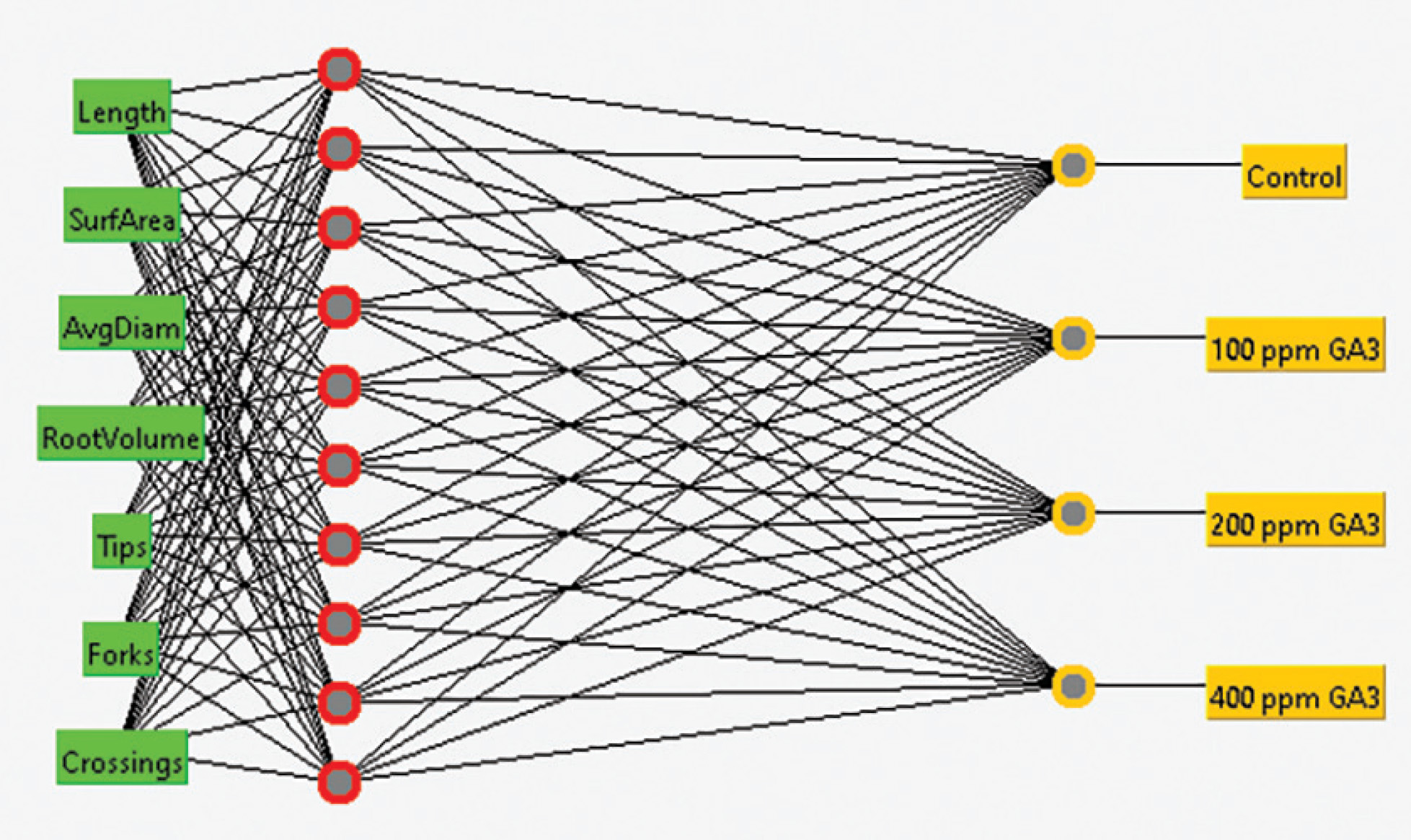
Figure 2.
The MLP structure with 7 inputs, 4 outputs, and 10 hidden neurons.
Data evaluation
The research was established according to a completely randomised design. Applications included three different GA3 treatments and a control group. 60 replications for each treatment were evaluated, each with a single bulb. Variance analysis was performed using IBM SPSS statistical software version 20.0, and the differences between treatments were compared using the Duncan multiple comparison test (within 5% error limits). Also, the relationships between treatments and plant characteristics were determined by Pearson’s correlations (within 5% and 1% error limits).
RESULTS
Effect of GA3 on plant growth properties
The optimal application was found to be the 400 ppm application, resulting in increases in plant height and flower stem length by 39% and 35.6%, respectively, compared to the control. The least increase in plant height and flower stem length was found to be 18.5% and 14.6%, respectively, in the 200 ppm application. The highest results in flower number and flower stem diameter were found in the control with 2 and 7.7 mm, respectively, whereas the lowest flower number and flower stem diameter were found in the 400 ppm application with 1.6 and 6.3 mm, respectively. Perianth length had the same effect as 100 ppm and 200 ppm, and was determined as 11.0 cm and 11.2 cm, respectively. The lowest perianth length was found to be 5.1 cm in control plants. While the highest result in the number of leaves was found in control plants as 3.5, there was no difference between control, 100 ppm and 200 ppm applications. The lowest number of leaves was determined to be 2.6 at 400 ppm. The highest results in terms of leaf length and leaf width were achieved in the 400 ppm application with 24.1 cm and 4.1 cm, respectively (Table 1, Figure 3).
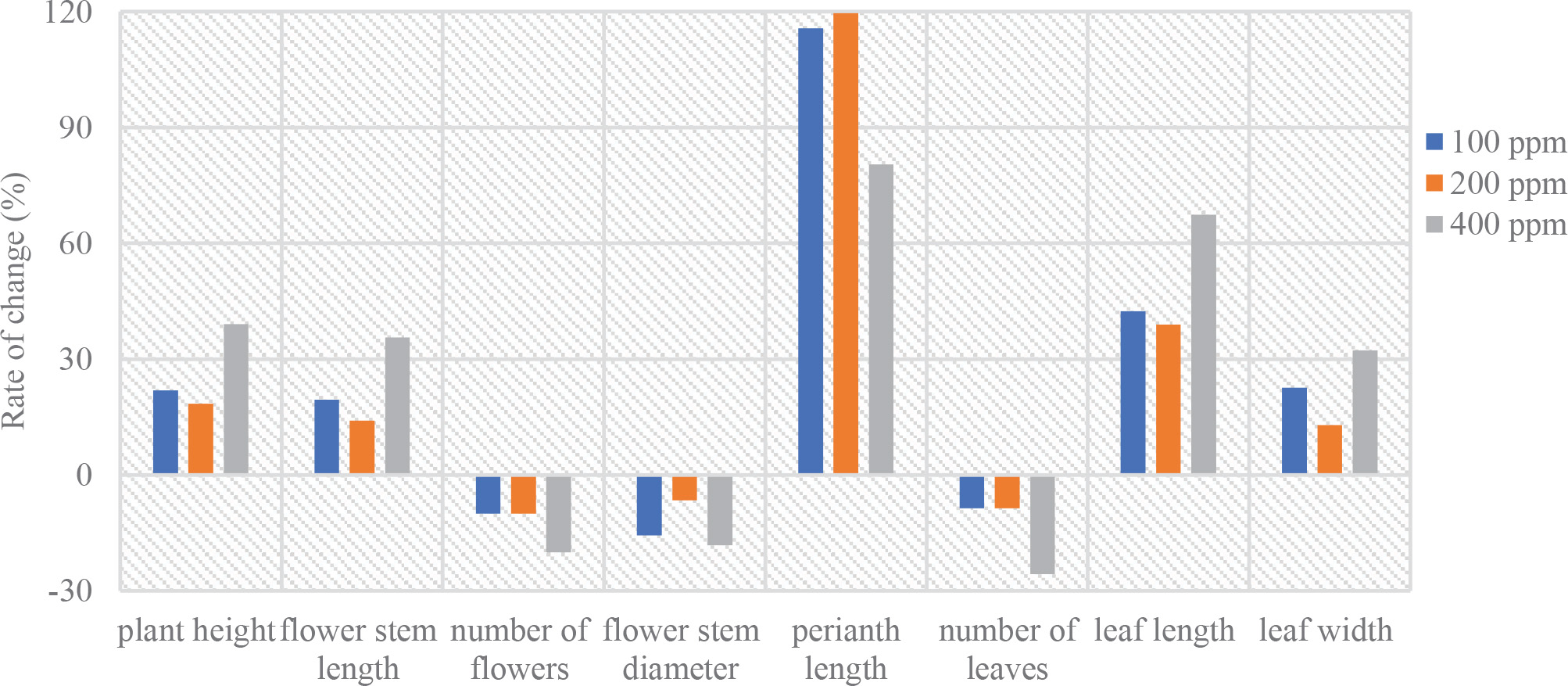
Figure 3.
Change rate of plant upper part characteristics compared to control values after GA3 applications. GA3: gibberellic acid.
Table 1.
Correlations between vegetative, root architectural properties and bulb nutritional content.
| Flower stem length (cm) | Number of flover | Flower stem diameter (mm) | Perianth length (cm) | Number of leaves | Leaflength (cm) | Leaf width (cm) | Mother bulb diameter (mm) | Number of bulblet | Bulblet diameter (mm) | Bulblet weight (g) | N (%) | P (%) | K (%) | Ca (%) | Mg (%) | Fe (mg · kg−1) | Cu (mg · kg−1) | Zn (mg · kg−1) | Mn (mg · kg−1) | Root length (cm) | Root surface area (cm2) | Root diameter (mm) | Root volume (cm3) | Number of tips | Number of forks | Number of crossings | |
|---|---|---|---|---|---|---|---|---|---|---|---|---|---|---|---|---|---|---|---|---|---|---|---|---|---|---|---|
| Plant height (cm) | 0.996** | –0.994** | –0.919 | 0.603 | –0.952* | 0.992** | 0.978* | 0.450 | 0.740 | –0.242 | 0.236 | 0.262 | –0.991** | –0.725 | 0.192 | 0.401 | 0.324 | –0.186 | 0.165 | –0.664 0.277 | –0.295 | –0.180 | 0.452 | 0.123 | –0.489 | 0.058 | –0.614 |
| Flower stem length (cm) | –0.998** | –0.931 | 0.543 | –0.955* | 0.979* | 0.982* | 0.372 | 0.678 | –0.210 | 0.234 | 0.305 | –0.975* | –0.684 | 0.267 | 0.356 | 0.408 | –0.160 | 0.198 | –0.729 0.283 | –0.277 | –0.215 | 0.383 | 0.039 | –0.493 | 0.033 | –0.671 | |
| Number of hovers | 0.908 | –0.512 | 0.971* | –0.973* | –0.969* | –0.351 | –0.667 | 0.264 | –0.292 | –0.355 | 0.972* | 0.715 | –0.238 | –0.402 | –0.412 | 0.216 | –0.144 | 0.734 -0.225 | 0.220 | 0.161 | –0.351 | –0.060 | 0.440 | –0.090 | 0.644 | ||
| Flower stem diameter | –0.617 | 0.784 | –0.917 | –0.981* | –0.372 | –0.612 | –0.158 | 0.127 | –0.034 | 0.895 | 0.400 | –0.504 | –0.008 | –0.442 | –0.211 | –0.540 | 0.712 -0.606 | 0.569 | 0.553 | –0.456 | 0.180 | 0.768 | 0.333 | 0.837 | |||
| Perianth length (cm) | –0.380 | 0.695 | 0.629 | 0.948 | 0.927 | 0.090 | –0.32 | –0.560 | –0.689 | –0.431 | –0.159 | 0.151 | –0.427 | 0.185 | 0.322 | 0.107 0.594 | –0.756 | –0.310 | 0.982* | 0.468 | –0.684 | –0.272 | –0.182 | ||||
| Number of leaves | –0.917 | –0.881 | –0.274 | –0.614 | 0.473 | –0.512 | –0.533 | 0.928 | 0.820 | –0.096 | –0.578 | –0.399 | 0.435 | 0.085 | 0.715 0.014 | –0.011 | –0.066 | –0.228 | –0.157 | 0.213 | –0.319 | 0.503 | |||||
| Leaf length (cm) | 0.974* | 0.553 | 0.811 | –0.214 | 0.171 | 0.155 | –0.998** | –0.726 | 0.139 | 0.394 | 0.220 | –0.149 | 0.188 | –0.578 0.331 | –0.374 | –0.199 | 0.558 | 0.192 | –0.537 | 0.021 | –0.573 | ||||||
| Leaf width (cm) | 0.425 | 0.693 | –0.034 | 0.045 | 0.140 | –0.962* | –0.569 | 0.357 | 0.202 | 0.386 | 0.022 | 0.368 | –0.697 0.459 | –0.451 | –0.382 | 0.471 | –0.029 | –0.650 | –0.149 | –0.742 | |||||||
| Mother bulb weight (g) | 0.927 | –0.117 | –0.182 | –0.546 | –0.562 | –0.513 | –0.463 | 0.339 | –0.666 | –0.024 | 0.045 | 0.351 0.354 | –0.573 | –0.029 | 0.978* | 0.715 | –0.431 | –0.042 | 0.135 | ||||||||
| Mother bulb diameter (mm) | –0.278 | 0.047 | –0.242 | –0.823 | –0.738 | –0.340 | 0.501 | –0.390 | –0.186 | 0.007 | 0.009 0.288 | –0.468 | –0.001 | 0.893 | 0.646 | –0.440 | 0.087 | –0.087 | |||||||||
| Number of bulblet | –0.943 | –0.653 | 0.266 | 0.814 | 0.701 | –0.971* | 0.186 | 0.995** | 0.917 | –0.014 0.829 | –0.718 | –0.910 | 0.083 | –0.680 | –0.694 | –0.979* | –0.478 | ||||||||||
| Bulblet diameter (mm) | 0.866 | –0.216 | –0.705 | –0.457 | 0.861 | 0.128 | –0.964* | –0.854 | –0.233 -0.866 | 0.840 | 0.839 | –0.362 | 0.398 | 0.730 | 0.951* | 0.294 | |||||||||||
| Bulblet weight (g) | –0.179 | –0.439 | 0.037 | 0.526 | 0.598 | –0.702 | –0.539 | –0.608 -0.688 | 0.793 | 0.514 | –0.654 | –0.109 | 0.564 | 0.685 | –0.108 | ||||||||||||
| N (%) | 0.763 | –0.090 | –0.444 | –0.196 | 0.201 | –0.134 | 0.559 -0.284 | 0.335 | 0.145 | –0.555 | –0.235 | 0.494 | –0.073 | 0.532 | |||||||||||||
| p (%) | 0.491 | –0.918 | 0.128 | 0.764 | 0.534 | 0.216 0.353 | –0.221 | –0.526 | –0.374 | –0.678 | –0.147 | –0.679 | –0.071 | ||||||||||||||
| K(%) | –0.720 | 0.823 | 0.673 | 0.806 | –0.707 0.603 | –0.380 | –0.821 | –0.289 | –0.937 | –0.591 | –0.703 | –0.891 | |||||||||||||||
| Ca (%) | –0.269 | –0.944 | –0.825 | 0.018 -0.675 | 0.530 | 0.821 | 0.150 | 0.776 | 0.516 | 0.904 | 0.412 | ||||||||||||||||
| Mg (%) | 0.138 | 0.344 | –0.921 0.100 | 0.136 | –0.370 | –0.588 | –0.806 | –0.165 | –0.174 | –0.786 | |||||||||||||||||
| Fe (mg · kg−1) | 0.933 | 0.002 0.874 | –0.781 | –0.925 | 0.177 | –0.623 | –0.748 | –0.992** | –0.484 | ||||||||||||||||||
| Cu(mg·kg−1) | –0.305 0.950 | –0.840 | –1.000** | 0.250 | –0.657 | –0.901 | –0.969* | –0.749 | |||||||||||||||||||
| Zn (mg · kg−1) | –0.157 | –0.021 | 0.332 | 0.295 | 0.570 | 0.299 | 0.078 | 0.854 | |||||||||||||||||||
| Mn (mg·kg−1) | –0.966* | –0.944 | 0.539 | –0.390 | –0.973* | –0.925 | –0.645 | ||||||||||||||||||||
| Root length (cm) | 0.828 | –0.730 | 0.143 | 0.948 | 0.836 | 0.479 | |||||||||||||||||||||
| Root surface area (cm2) | –0.233 | 0.672 | 0.899 | 0.963* | 0.767 | ||||||||||||||||||||||
| Root diameter (mm) | 0.560 | –0.599 | –0.246 | –0.011 | |||||||||||||||||||||||
| Root volume (cm3) | 0.322 | 0.610 | 0.689 | ||||||||||||||||||||||||
| Number of tips | 0.825 | 0.730 | |||||||||||||||||||||||||
| Number of forks | 0.567 | ||||||||||||||||||||||||||
| Number of crossings |
Effect of GA3 on bulb properties
200 ppm application was the best application, increasing mother bulb weight and mother bulb diameter by 117.1% and 21.4%, respectively, compared to the control. The lowest results in mother bulb weight and mother bulb diameter were detected in the control. While 100 ppm increased the number of bulblets by 42.9% compared to the control, the lowest results were found in 200 ppm and 400 ppm applications, with the number of bulblets being 28.6% lower than the control. While the 400 ppm application increased the bulblet diameter and bulblet weight by 11.3% and 20%, respectively, compared to the control, the results were found to be 30.5% and 50% lower, respectively, at the 100 ppm application (Table 1, Figure 4).
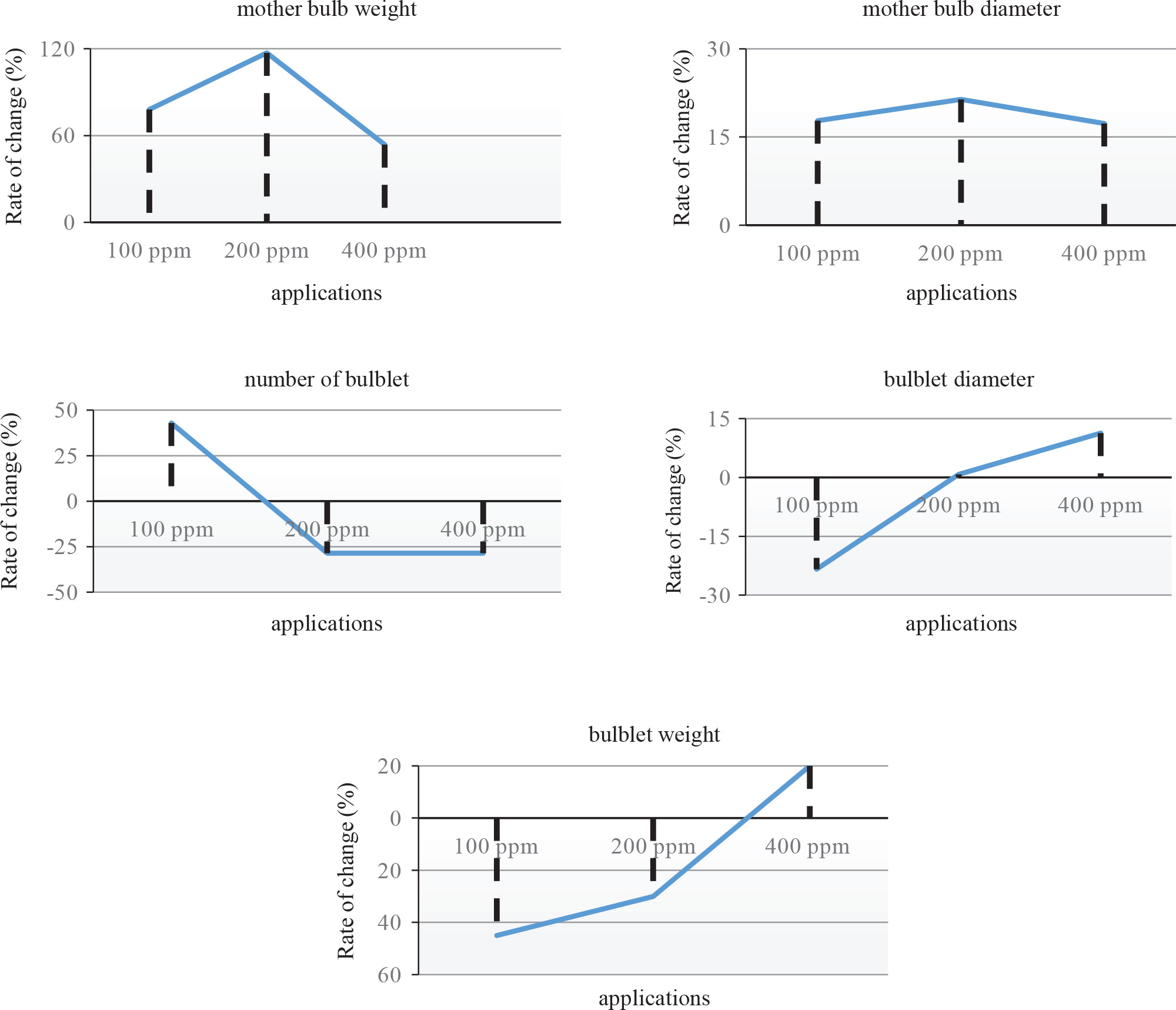
Figure 4.
Change rate of bulb properties compared to control values after GA3 applications. GA3: gibberellic acid.
Vase life
100 ppm was the application that increased the vase life the most by 42% compared to the control, and it was followed by 200 ppm with 36%. Although the 400 ppm provided a higher vase life than the control (27%), it was not as high a vase life as that of 100 ppm and 200 ppm yielded. Vase life increased as the dose increased but showed a decreasing trend after 200 ppm (Figure 5).
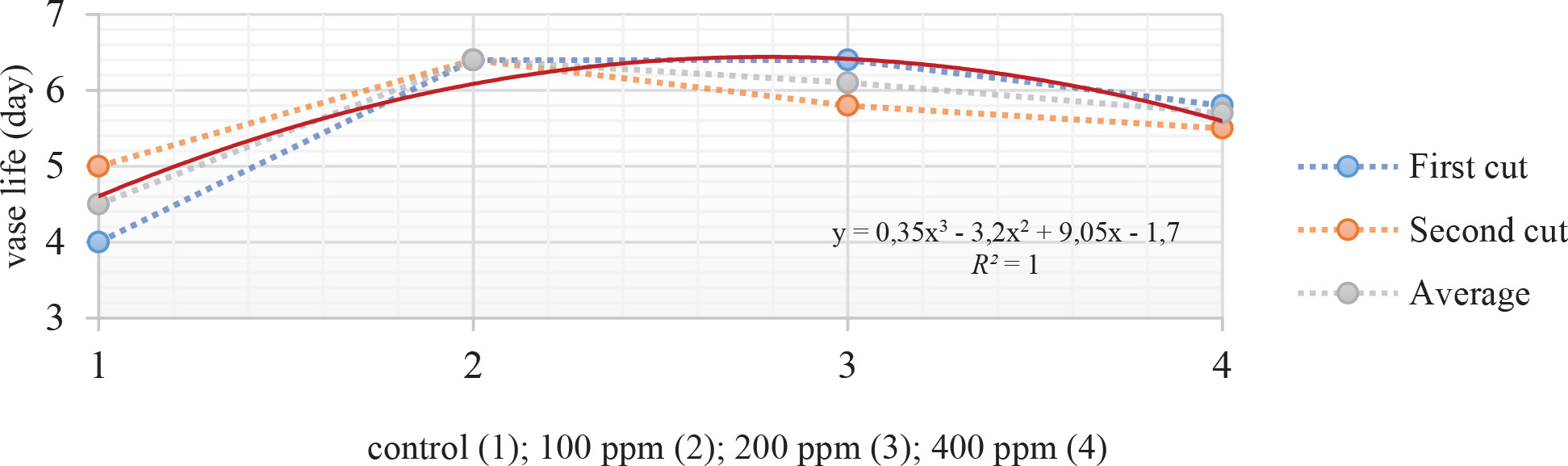
Figure 5.
Change rate of vase life compared to control values after GA3 applications. GA3: gibberellic acid.
Effect of GA3 on bulb nutritional content
The effects of all GA3 applications on bulb nutritional content were found to be statistically significant. According to the application results, the amount of N and P in each application was lower than the control. The N and P ratios were determined to be lower than the control by 19% and 7% at 100 ppm, 19% and 12% at 200 ppm and 31% and 14.2% at 400 ppm, respectively. K was found to be 11% lower at 200 ppm, while it was 6.7% higher at 100 ppm and 2% higher at 400 ppm than the control. A similar trend was observed in the amount of Ca, which was 18.1% lower at 100 ppm, while 28.3% higher at 200 ppm and 25.2% higher at 400 ppm compared to the control. The Mg content was only 2.7% higher at 400 ppm than the control, whereas it was determined to be 0.40% and 6.5% lower at 100 ppm and 200 ppm, respectively. Regarding the Fe content, it was found to be higher than the control by 31.4% only at 100 ppm; Fe content was found to be lower by 12% and 13.7% at 200 ppm and 400 ppm, respectively. 100 ppm and 400 ppm were found to have a higher amount of Cu than the control at 21.1% and 2.6%, respectively; however, it was determined to be 5.3% lower at 200 ppm. As for the Zn content, 200 ppm was the only application that was found to have 5.2% higher Zn than the control, while it was found to be lower by 2.6% and 9.6% at 100 ppm and 400 ppm, respectively. The application with the highest Mn content compared to the control was 100 ppm with 54.5%, followed by 200 ppm and 400 ppm with rates of 9.1% and 12.1%, respectively (Table 1, Figure 6).
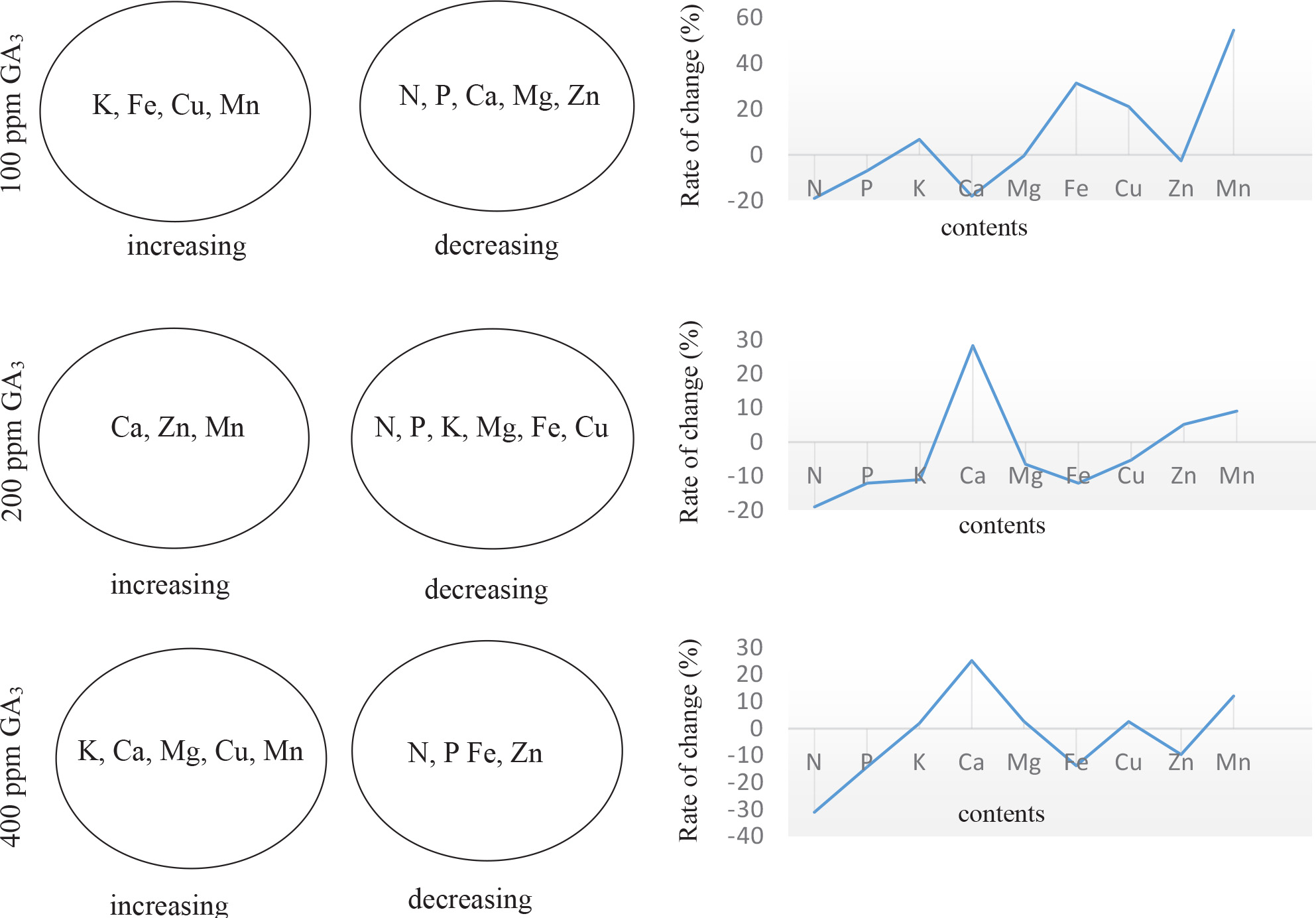
Figure 6.
Change rate of bulb nutrient content compared to control values after GA3 applications. GA3: gibberellic acid.
Effect on root architecture of GA3
The effects of all GA3 applications on root architectural features were found to be statistically significant. The 100 ppm was found to be the application that had the lowest root architectural features. Each application was found to have a shorter root length than the control. The results showed that the root length was 45.4%, 18.5% and 10.9% lower at 100 ppm, 200 ppm and 400 ppm, respectively. Regarding the root surface area, 200 ppm was the only application that was 6.5% higher than the control, while it was 27.4% and 3% lower at 100 ppm and 400 ppm, respectively. Root volume was found to be higher in all applications compared to the control, with their percentages being 28.6%, 28.6% and 14.3% higher at 100 ppm, 200 ppm and 400 ppm, respectively. Applications had no effect on the root diameter. The number of tips was found to be 45.2%, 12.2% and 19.8% lower in all applications compared to the control, respectively. The number of crossings was found to be 5.5% and 4.8% higher at 200 ppm and 400 ppm, respectively, whereas it was found to be 23% lower at 100 ppm. While the number of crossings was 5.1% higher than the control only at 200 ppm, it was determined to be 12.2% and 11.2% lower at 100 ppm and 400 ppm, respectively (Table 1, Figure 7).
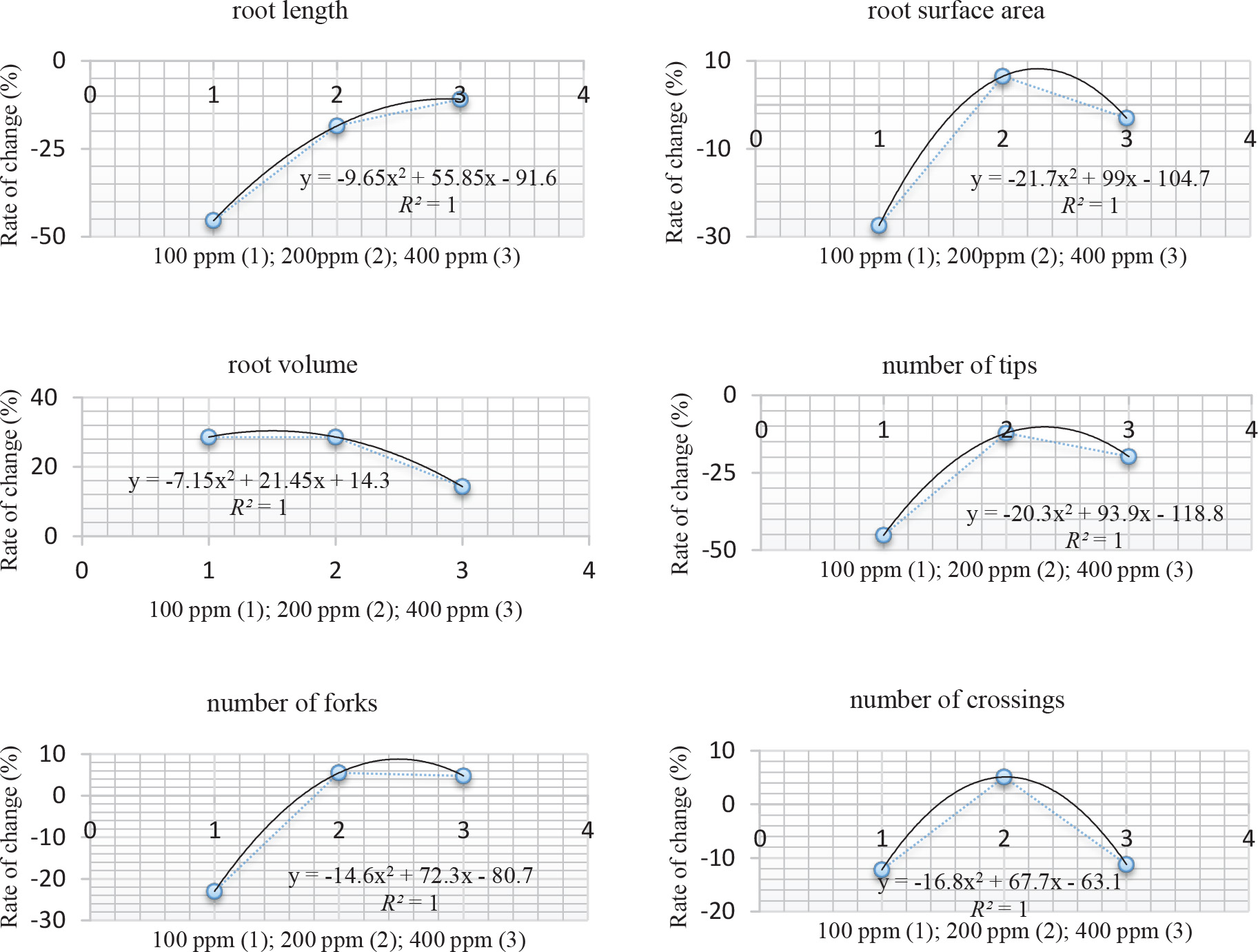
Figure 7.
The rate of change of root architectural features compared to the control values of the analysis results after GA3 applications. GA3: gibberellic acid.
ML modelling analysis
Four groups have been created from values that were classified using SimpleKMeans. The values, which were divided into 4 groups, showed that the most successful dose was 200 ppm GA3 (37% in cluster 0), followed by 100 ppm GA3 (35% in clusters 1 and 2), control (9% in cluster 3) and 400 ppm GA3 (20% in cluster 4). This grouping made it possible to use artificial intelligence to further verify the study’s conclusion, which was that the most effective dose, as determined by conventional methods, is typically 200 ppm GA3.
Furthermore, as a result of the select attributes, the root length was shown to be the most significant output when the BestFirst search method was combined with the CfsSubsetEval algorithm.
Artificial neural networks
Three different doses of GA3 as well as the control were employed within the scope of the study; following the definition of the input variables as total root length (cm), root surface area (cm2), root volume (cm3), average root diameter (mm), number of tips, number of forks and number of crossings, the output variable has been predicted with the help of input variables. The decision tree (DT) is shown in Figure 8.
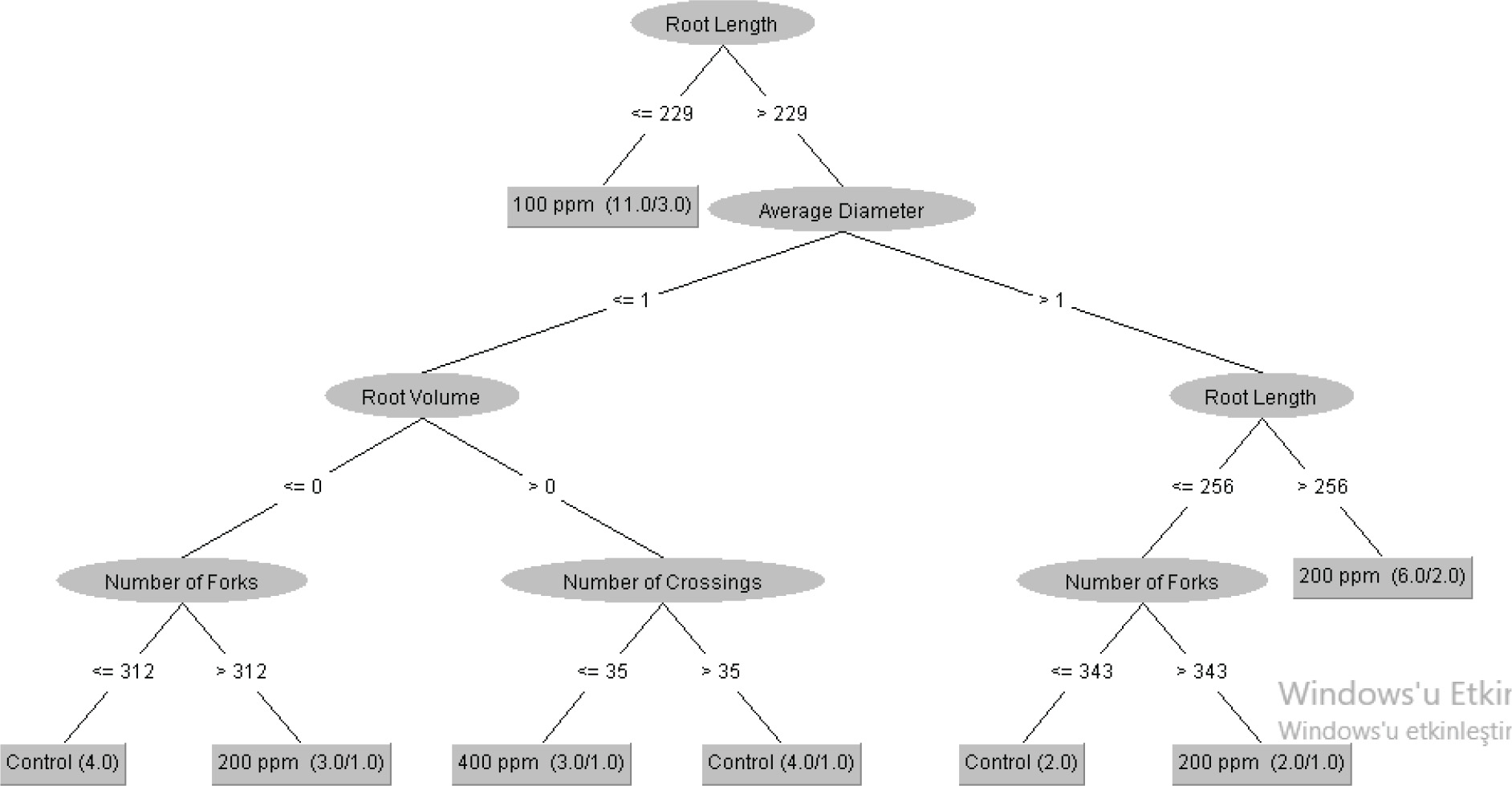
Figure 8.
DT obtained by J.48 Method. DT, decision tree.
As can be seen in Figure 8, the most significant effect within the parameters of the study is on root length, which is used to categorise GA3 applications according to their effect on root design. They have been divided into two classes according to the root length 229 value. It has been shown that if the root length is greater than 229, it is related to the root average diameter; contrarily, if it is less than 229, it is related to 100 ppm GA3. A correlation has been observed between root length and root average diameter if the diameter is greater than 1 (>1), and between root volume and root average diameter if it is ≤1.
Root length greater than 256 was related to 200 ppm GA3, while the root length ≤256 was related to the number of fork. The number of forks greater than 343 was associated with 200 ppm GA3, whereas the number of forks ≤343 was associated with the control.
Again, if the root volume is >0, it has been found to be associated with the number of crossings; however, if the root volume is ≤0, it has been associated with the number of forks. The number of forks >312 was associated with 200 ppm GA3, and the number of forks ≤312 was found to be associated with the number of forks. When the number of crossings was >35, it was associated with the control, while the number of crossings ≤35 was associated with 400 ppm GA3.
Choosing the most suitable model
Algorithms frequently mentioned in the literature were used to determine the most appropriate model, (MultilayerPerceptron, Baggin, J48, PART, LR and MCC). In this context, the most successful algorithm was determined based on the correct prediction rate. Once each model was created individually using the selected algorithms, the LR algorithm, which provided the highest accuracy of 94.3%, was chosen to be applied to the data set. Accuracy value, duration and average absolute error were taken into consideration when choosing this algorithm. Accordingly, the performance levels of the models created using the MultilayerPerceptron, Baggin, J48, PART, LR and MCC algorithms were compared and the resulting performance levels were noted in the following order: Logistic Regression > MultiClassClassifier > MultilayerPerceptron > J48 > PART > Baggin (Table 2).
Table 2.
Prediction performance of ML models representing the relationship between GA3 variables and the change of root architectural features of T. saxatilis.
| Classifiers | Accuracy (%) | Kappa | TP | FP | Precision | Recall | F-score |
|---|---|---|---|---|---|---|---|
| MultilayerPerceptron | 85.9 | 0.81 | 0.86 | 0.04 | 0.88 | 0.86 | 0.86 |
| Baggin | 74.2 | 0.65 | 0.74 | 0.08 | 0.75 | 0.74 | 0.74 |
| J48 | 85.7 | 0.80 | 0.86 | 0.05 | 0.87 | 0.86 | 0.86 |
| PART | 80.0 | 0.73 | 0.80 | 0.06 | 0.82 | 0.80 | 0.80 |
| LR | 94.3 | 0.92 | 0.94 | 0.01 | 0.94 | 0.94 | 0.94 |
| MCC | 88.6 | 0.85 | 0.87 | 0.04 | 0.90 | 0.89 | 0.88 |
DISCUSSION
Effect of GA3 on above-ground vegetative properties
Three different doses of GA3 have been proven statistically effective. The most effective application was found to be 400 ppm GA3 in terms of plant height, flower stem length, leaf length and leaf width. As for perianth length, the most effective applications were found to be 100 ppm and 200 ppm GA3; however, no significant difference was found between these two applications. The values of flower number, flower stem diameter and leaf number were higher in the control application than in the other applications. The research conducted by Zengin and Kelen (2016) found that the 300 ppm GA3 application provided the highest plant height, flower height, flower stem length and flower diameter of ‘Cafe noir’ and ‘Conqueror’ tulip cultivars. In a study conducted on the ‘Apeldoorn’ tulip variety, maximum plant height (37.32 cm) was recorded in the 400 ppm GA3 application, which was followed by 200 ppm GA3 (34.13 cm) (Kumar et al., 2013). In another study conducted on T. hybrida, the plant height of 75.41 cm was achieved with the 200 ppm GA3 application (Altaee and Alsawaf, 2020). GA3 application was also shown to significantly increase the height, flower stem length and stem diameter of ‘Ad-Rem’ tulip plants (Ramzan et al., 2014) and Pink Rain Lily (Zephyranthes rosea Lindl.). Maximum plant height and flower stem length with GA3 application achieved at 300 ppm (Rai et al., 2023). Kumar et al. (2013) reported that maximum flower stem length (31.96 cm) was achieved in the ‘Apeldoorn’ tulip variety with 400 ppm GA3 application. In addition, Khan et al. (2007) conducted a study on the ‘Cassini’ tulip, reporting that the increased flower stem length and diameter were probably attributed to the increased cell division and cell expansion, which leads not only to greater stem length but also to increased diameter. GA3 was also shown to increase the size and crown diameter of ‘Ad-Rem’ tulip flowers (Ramzan et al., 2014). Indeed, GA3 generally increases photosynthate accumulation by accelerating cell division and photosynthesis, resulting in increased flower size and diameter. Moreover, Ramzan et al. (2014) studied the tulip cultivar ‘Ad-Rem’ and reported that the bulbs, unlike plant height and leaf number, treated with 125 mg · L−1 GA3 exhibited a higher photosynthesis rate (1.5-fold) compared to the control.
The current study has found that the number of flowers was lower than in the control. This result differs from studies generally reporting that GA3 increases the number of flowers. In the literature, it has been observed that GA3 generally causes an increase in the number of flower buds or the number of flowers or panicles. Having studied ‘Apeldoorn’ and ‘Golden Apeldoorn’ tulip varieties, Suh and Cho (1997) reported that the varieties were kept at 5°C for 6, 9 and 12 weeks and GA3, GA4+7 and promalin were injected into the bulbs before planting; they further observed that promalin and gibberellins increased flowering in both varieties. Some research, on the other hand, have reported findings that contradict these studies. Indeed, Moe and Wickstrøm (1979) reported that injection of gibberellin and/or cytokinin into bulb scales or flower buds of tulips prevented ethylene-induced flower burst and supported the elongation of shoots, flower organs and roots. In this study, the highest number of flowers was obtained from the control. The number of flowers obtained at all doses was lower than in the control. As the dose increased, the number of flowers decreased and the lowest number of flowers was obtained at 400 ppm GA3. In the study conducted by Zengin and Kelen (2016) on 'Conqueror' and 'Café noir' varieties, the flowering rate was obtained from a dose of 300 ppm GA3; however, the flowering rate was found to decrease with the application of 700 ppm GA3. It is known that this situation is likely to be caused by the application of high doses such as 700 ppm. Also reported that some plants, in particular, may be negatively affected by high-dose applications (González-López and Casquero, 2014; Ergin and Kayan, 2021). According to the results of this study, the doses applied to T. saxatilis were probably higher than the optimum dose required to increase the number of flowers. Therefore, similar to the findings of the researchers, it can be suggested that in the application of doses higher than optimal GA3 doses, plant property values become lower than the values obtained at the optimum dose. As a matter of fact, it has been reported that the responses of plant species to chemical applications vary (Emiralioğlu, 2022). This situation can also be explained by the fact that non-bulbous plants react differently to GA3 treatments than do bulbous plants.
The current study has also found that the average number of leaves decreased with GA applications, whereas leaf length and width increased compared to the control. Moreover, the number of leaves per plant in the ‘Ad-Rem’ tulip variety was also higher in GA3-treated bulbs compared to the control. However, the 100 mg ·L−1 GA3 application resulted in 1.15 times more leaves than did the control (Ramzan et al., 2014). In addition, Altaee and Alsawaf (2020) reported that 200 ppm GA3 was the most effective application on the number of leaves of T. hybrida species. Contrary to the previously cited study, this study reported that the number of leaves was lower than in the control. This might have occurred because GA3 increased cell division and, in parallel, increased leaf length and width in T. saxatilis, a natural species, resulting in an increase in both the number of leaves and flowers.
Vase life
As for the vase life, the application that increased the vase life the most by 42% (6.4 days) was 100 ppm compared to the control, followed by 200 ppm with 36% (6.1 days). A higher vase life was detected at 400 ppm (27%) compared to the control (5.7 days), but a lower vase life was detected at 100 ppm and 200 ppm. It has been suggested that vase life increased as the dose increased and showed a decreasing trend after 200 ppm. However, GA3 has been found to increase the production of catalase and superoxide dismutase enzymes, preventing flowers from Reactive Oxygen Species (ROS)-induced damage and possibly increasing vase life (Kumar et al., 2015). It was also reported that GA3 application significantly increased the vase life of Gaillardia pulchella flowers (Ramzan et al., 2014). Maximum vase life in Tulipa gesneriana was achieved with 400 ppm GA3 (11.2 days), followed by 200 ppm GA3 (10.4 days) in comparison to the control (7.3 days) (Kumar et al., 2013). In addition, a vase life of 5.7 days was determined in the flowers of the T. cretica species (Lykas et al., 2023). The vase life findings obtained in this study are similar to those obtained in T. cretica species. It was found, however, to be lower than in a study conducted on T. gesneriana, which is likely due to differences in species.
Effect of GA3 on bulb properties
In this study, while an increase in main bulb weight and diameter was detected in GA3 applications compared to the control, the highest results were achieved in the 200 ppm GA3 application. Kumar et al. (2013) reported the highest main bulb weight (15.26 g) and main bulb diameter (11.60 cm) at 400 ppm in the 'Apeldoorn' tulip variety. While the most effective application on the number of bulblets was 100 ppm GA3, fewer bulblets were obtained in 200 ppm and 400 ppm GA3 applications compared to the control. The most effective application on bulblet diameter and weight was found to be 400 ppm. As a matter of fact, the study conducted by Ramzan et al. (2014) on the 'Ad-Rem' tulip variety suggested that GA3 application significantly increased the number of bulblets as well as bulb diameter and weight. In this study, the number of bulblets was observed to increase only with the 100 ppm GA3 application (2). Kumar et al. (2013) found the maximum number of bulblets per plant (3.03) in the 'Apeldoorn' tulip variety with a 400 ppm GA3 application. While the bulblet with a diameter of 13.8 and 2.4 weight yields the greatest results when 400 ppm GA3 is applied, this result is comparable to that of Kumar et al. (2013) which achieved 6.50 g with 400 ppm. In this study, GA3 was generally found to be effective on all bulb characteristics. As a matter of fact, it has been reported that this effect is probably caused by rapid cell division and cell expansion in response to GA3 application (Karuna et al., 2011). Due to the application of GA3 on tulip leaves, nutrient reserves increase at critical stages, ultimately leading to increased bulb traits and daughter bulbs per plant (Karuna et al., 2011). This study also achieved similar results to the findings of the previously cited research, while some results differed, suggesting that it might be due to the differences in species.
Effect of GA3 on bulb nutritional content
One of the basic elements the plant needs is nitrogen (Al-Taey, 2017; Al-Taey and Al-Musawi, 2019). In this study, the effect of all GA3 applications on bulb nutritional content was found to be statistically significant. According to the results obtained after the application, the amount of N and P was lower in all applications than in the control. This decrease can be explained by the fact that GA3 stimulates cell division, causing an increase in shoot and leaf yield, thus resulting in a decrease in the amount of N and P. As a matter of fact, the N accumulated in the bulb after sprouting is rapidly consumed for the growth of leaves and stems. Some of this N is then redistributed to the daughter bulbs as the new plants mature. Therefore, it can be concluded that the physiological role of N accumulation in bulbs is to provide a sufficient amount of N necessary for the rapid growth of leaves during winter. This study has found that the application with the lowest N, P, Fe and Zn content was 400 ppm GA3, whereas the application that increased flower height, flower stem length, leaf length and leaf width the most was 400 ppm GA3. This result shows that these four nutritional elements are used in the development of flower height, flower stem length, leaf length and leaf width, suggesting that these elements may play a key role. As a matter of fact, the N content decreased with the increase in flower height, flower stem length, leaf length and leaf width, whereas it increased with the increase in the number of flowers. Again, in this study, the N content in the control application was the highest compared to other applications. Concurrently, the number of flowers was found to be the highest in the control application. According to the study findings, a positive correlation was found between N content and the number of flowers. In fact, Niedziela et al. (2015) studied T. gesneriana’Paul Richter’ tulip varieties and found that nitrogen (N) contents of bulbs could affect flowering. Therefore, it can be suggested that there is a direct connection between the number of flowers and the N content. It was also revealed that GA3 applications did not increase flowering. Therefore, if an increase in the number of flowers is desired, GA application should be avoided in T. saxatilis. However, GA can be utilised to increase height.
In the study conducted by Kim and Ko (2004), the application of 50 ppm GA3 was found to increase the amount of potassium. In this study, the K content in the bulblet increased compared to the control, except for the application of 100 ppm GA3. Meanwhile, no significant relationship was found between K and P content and measured properties. Potassium plays a role in numerous metabolic processes, including osmotic control, enzyme activation, carbohydrate production and splitting, as well as anion/cation balance. In K-deficient plants, growth slows down, leaf edges become loose and chlorotic stripes appear, starting from the leaf tips and developing on the edges of older leaves (Ismayil et al., 2023). The results showed that the plant’s need for K content for tulip development was not as high as its N requirement, as was the case for P. Indeed, only small amounts of P are required for normal plant growth (De Hertogh and Le Nard, 1993). Interestingly, tulip bulbs show little or sometimes no response to potassium application (De Hertogh and Le Nard, 1993). Ehlert et al. (2000) obtained results indicating that the P requirements of tulips and lilies were low. This shows that both nutrients are needed in small amounts for tulip development.
In this study, it has been observed that Ca amounts increased when 200 ppm and 400 ppm GA3 were applied, and the highest increase was observed in 200 ppm GA3. A negative relationship was found between Ca content and bulb formation. As a matter of fact, the highest number of baby tulip bulbs was obtained with the application of 100 ppm GA3. Therefore, while the 100 ppm GA3 application increased the number of bulblets, it decreased the bulb Ca content. This result showed that Ca becomes a critical nutrient upon the increase in the number of bulblets with 100 ppm GA3. As a matter of fact, in the study of Inkham et al. (2023), shorter root length, smaller leaf area and lower photosynthesis rates were determined in Ca deficiency. Additionally, transpiration rates of Ca-deficient plants were lower than those in the control treatment, which led to stem tipping and flower abscission. Additionally, it has been reported to have a negative impact on bulb qualities.
In this study, the application of 400 ppm GA3 increased the Mg content the most, whereas a decrease was found in other applications compared to the control. No relationship between Mg content and the development of plant characteristics has been detected. Approximately 70–85% of plant Mg is used in enzymatic processes and 15–30% in chlorophyll synthesis (Kleczkowski and Igamberdiev, 2021; Ishfaq et al., 2022). Therefore, magnesium may have a beneficial effect on tulip yield (Niedziela et al., 2015).
Furthermore, although the applications had an effect on the Zn and Mn content in the study, there was no relationship between these two elements and the development of plant characteristics. Mn was found to be the only element that was higher than control in all three treatments. Zn, on the other hand, followed a fluctuating course. While Zn was found to be higher than the control in the 200 ppm GA3 application, it was found to be lower than the other applications. Monge et al. (1994) found that 1000 ppm GA3 application slightly increased the zinc element in peach leaves. These results suggest that Mn and Zn may not have an indirect effect on the development of plant traits. However, these results also revealed that Mn is a necessary element.
Previous studies have stated that the yield and quality of ornamental plants depend on a sufficient Fe supply (Bhute et al., 2017; Vijay et al., 2018). While the Fe content was higher than the control at 100 ppm GA3, it was found to be lower than the control at 200 ppm and 400 ppm GA3. A positive relationship was found between Fe content and the number of baby bulbs, whereas a negative relationship was found between baby bulb diameter and the number of forks. Therefore, while 100 ppm GA3 increased the number of bulblets, it was observed that the Fe content of bulbs was also high. This result revealed that the yield of bulblets will be higher in bulbs with high Fe content. On the contrary, the higher Fe content in 100 ppm GA3 reduced the number of forks and the diameter of baby bulbs. It was observed that the lowest root properties and highest Fe content were in the application of 100 ppm GA3, compared to the control. This finding indicates that root development is not required to be increased since the roots have sufficient Fe content. It has been determined that in applications where Fe content is lower compared to the control, root development tends to increase in order to reach more Fe. Indeed, Fe deficiency has been found to lead to tall plants with large root volumes. On the other hand, it has been reported that Fe-deficient plants have developed a strategy to obtain more Fe from the environment by increasing root volume, root surface area and root hairs (Izadi et al., 2020). These results are similar to the findings of the previously cited research. This revealed that the increase in Fe had a negative effect on root bifurcation and the diameter development of bulblets, but Fe, together with Ca, were the key elements that encouraged the increase in number of bulblets.
The tulip has been reported to accumulate copper effectively (De Hertogh and Le Nard, 1993). Copper is an essential metal for normal plant growth and development, although it is potentially toxic (Shabbir et al., 2020). In the study, the highest Cu content was determined at 100 ppm GA3 compared to the control. The study conducted by Çetinbaş et al. (2016) on ‘Monroe’ peach reported that the 300 ppm GA3 dose tended to increase the copper element, suggesting that the effect of other applications except for 100 ppm GA3 is stable compared to the control. It was also observed that there was a negative relationship between Cu content and the number of forks and root surface area. Increasing Cu to 100 ppm was found to reduce the development of these two root characteristics. Cu showed a similar effect to the effect of Fe on the number of forks. These results, in fact, suggest that sufficient amount of Cu in tulip bulbs tends to reduce root branching and surface area since the plant does not need extra Cu.
Impact on root architecture properties of GA3
According to the results of GA applications’ impact on root architecture obtained in this study, GA3 applications had an increasing effect on root architectural features such as root surface area, root volume, root diameter, number of forks and number of crossings, whereas its effect on root length and number of tips remained lower compared to the control. These results, therefore, indicate that reactions to the applications varied. In addition, a general decrease in root length and the number of tips was detected compared to the control. It has been observed that the application that increased root properties the most was generally 200 ppm GA3. The lowest results were generally obtained from the application of 100 ppm GA3. In fact, it is known that the morphology of a root system can be complex and vary greatly even within a species (Sari and Çelikel, 2021).
Gibberellins applied to intact root systems appear to yield highly variable effects. Gibberellins have been reported to either promote or inhibit root growth in different plant species (Li et al., 2015; Lee and Yoon, 2018; Qin et al., 2019). For example, a study has reported that GA3 application yields positive effects on root length in chickpeas (Rafique et al., 2021). Exogenous GA application significantly increased the growth of roots in Panax ginseng (Hong et al., 2021). However, in carrots and sweet potatoes, exogenous GA treatment inhibits root growth by affecting cell division (Wang et al., 2015; Singh et al., 2019). These results indicate that the physiological response to GA varies by plant species.
In tulip varieties, very low doses of GA3 stimulate root growth with auxin. However, it has been found that the absence of GA3 in the root zone caused a decrease in the root elongation rate. Again, it has been reported that reducing endogenous GA levels by treating plants with Paclobutrazol results in a reduced root growth rate (Ubeda-Tomás et al., 2009). This is an indication pointing out that minimum GA is required for cell growth in plant roots (Tanimoto, 1991). In contrast, Wang et al. (2015) and Han et al. (2020) reported that low gibberellin concentrations in root tissues resulted in root thickening. On the contrary, the current study has determined that root diameters were not different, except for 200 ppm, which increased the root diameter. In addition, the external application of a dose higher than the optimal dose was found to affect root development negatively. As a matter of fact, excessive GA-producing mutations and exogenous GA applications in poplar (Populus tremula) led to the suppression of lateral and adventitious root formation (Gou et al., 2011). In this study, root elongation in GA3 applications was lower than in the control, thus suggesting that the GA3 levels applied in this study may have contributed to the root elongation. Regarding this problem, in fact, it has been reported that gibberellins can regulate normal root growth in a much lower concentration range than shoot growth by cooperating with low levels of auxins (Tanimoto, 1991). In addition, the roots synthesise gibberellins that are transported to the shoots, and yet there is insufficient data available on how much of GA3 is absorbed by the roots and transported to the above-ground parts. Again, in this study, 200 ppm can generally be described as the most effective dose. This is mainly because root properties tend to decrease in a 400 ppm GA3 application. Rahman et al. (2006) reported that the number of roots in cloves was the highest at 250 ppm; this number decreased as GA3 increased and the differences in optimum concentration may be due to a variety of characteristics.
Evaluating this study based on these results, it has been concluded that the gibberellins produced by the plant did not limit root development. Plants are physiologically balanced under optimum conditions and produce as much as they need. For this reason, since externally administered gibberellins would increase the optimum dose in the plant, it has negatively affected root elongation in tulip varieties. However, apart from root length and number of tips, it has been observed that other applications increased with the GA3 application. Therefore, 200 ppm GA3, in general, can be considered the optimum dose in the study. Additionally, this study has revealed that less gibberellin should be applied to the stem for root elongation.
Performance of modelling of root system architecture
Analysing ML methods combined with root image processing techniques has enabled researchers to further understand root development, its interaction with different environments, and its classification (Xu et al., 2022; Tütüncü, 2024). Depending on the GA3 applications, the total root length was defined as an important classification node in the structure of trees. As a matter of fact, it was determined that the most negative effect of GA3 applications was on the root length. This is because the root length was lower in all applications than in the control. Accordingly, the results in number of tips were found to be lower compared to the control. Since the number of tips is a feature that depends on the root length, it is not considered a main element. The number of tips, in fact, is not included in the DT created by ML, which made the right prediction in this regard. Therefore, if an automatic ranking system is developed based on classifiers, root length can be employed as the main criterion in evaluating the impact of applications such as gibberellin. ML classification accuracy was ranked as LR 94.3%, MCC 88.6%, MultilayerPerceptron 85.9%, J48 85.7%, PART 80% and Baggin 74.2%. The LR algorithm, in particular, enables future value prediction for the dependent variable based on the entered dependent and independent variable data (Karaca and Karacan, 2016). In addition, in the study conducted by Suganya (2020) which yielded results similar to those obtained in this study, LR was determined to be the best algorithm with 100% accuracy for product yield prediction. It has also been reported that it is one of the best methods used in agricultural product estimation (Kumar et al., 2016). It is likely that the input variables are unable to explain the behaviour of the mentioned parameter (Duarte et al., 2022). As a matter of fact, it is possible for some algorithms to show low performance and not be able to explain some features. In this study, the Baggin 74.2% algorithm showed the lowest performance.
Çetin et al. (2021) employed artificial neural networks, DT, RF, SVM, multiple linear regression (MLR), naïve Bayes (NB) and MLP classifiers on Helianthus annuus L, reported the highest classification accuracy in for RF (80.16%), SVM (79.68%), followed by MLP (78.89%). It was reported that the range of accuracy of six olive oil classifications based on biochemical properties was between 81.63% and 85.71% (Gumus et al., 2018). The findings obtained by researchers tend to vary. The findings obtained in this study have also varied depending on the classifiers.
CONCLUSIONS
The (GA) treatments applied in the current study yielded different effects on different features. Accordingly, while GA3 applications were effective in increasing characteristics such as plant height and leaf length, they reduced the number of flowers. This shows that GA3 application directs the plant towards vegetative development. On the contrary, it has been determined that it did not increase the root length or number of tips but was effective in increasing other root properties. This suggests that the plant allocates more resources to increase the above-ground stem and leaf length rather than the root and it tends to absorb more nutrients from its environment by increasing other root characteristics. GA3 applications have also been found to have significant effects on bulb properties and bulb nutritional content. This study has attempted to further explain the change in the properties of bulbs affected by the change in nutritional content. However, it is evident that further studies should be carried out to explain the relationship between changes in bulb nutritional content and changes in plant characteristics. As these results point out, an increase in the plant height, bulb characteristics, bulb number and vase life was achieved in the T. saxatilis species, which has a relatively small stem length. In this regard, it is recommended to apply GA3 spray.
In addition, LR, one of the ML methods, has proven its potential in predicting the root architecture of boxwood trees. Additionally, these algorithms allowed us to evaluate different GA3 input variables. Furthermore, ML algorithms have identified 200 ppm GA3 as the most important application that yields the most important parameters in terms of the input variable and root length among the output variables. ML was able to accurately predict the detected effect calculated by the classical method. It can be suggested that the study will further contribute to the estimation process by determining the best model. Consequently, it can be concluded that ML models can effectively predict the effects of different application variables of GA3 on the root architecture.
ACKNOWLEDGEMENTS
I thank Dr. Elif Öztürk, who analysed plant nutritional elements in the study, for her contributions.
Notes
[4] Contributed by AUTHOR CONTRIBUTIONS
Ö.S. designed experiments, performed analytical measurements, performed statistical analysis and manuscript writing.
[5] Conflicts of interest CONFLICT OF INTEREST
The author declares no conflict of interest.
Abbreviations
- Ca
calcium
- Cu
copper
- DT
decision tree
- GA3
gibberallic acid
- Fe
iron
- FP
False Positive
- K
potassium
- LR
logistic regression
- ML
machine learning
- MCC
multiclassclassifier
- Mg
magnesium
- MLP
multilayer perceptron
- MLR
multiple linear regression
- Mn
manganese
- N
nitrogen
- NB
naïve bayes
- P
phosphorus
- ppm
parts per million
- RF
random forest
- SVM
support vector machine
- TP
True Positive
- Zn
zinc