
INTRODUCTION
The Sao Francisco Valley is the main mango-producing region in Brazil, accounting for 69% of national production and 90% of exports (Kist et al., 2022). According to FAO (2021), Brazil is the sixth largest mango-producing and exporter country in the world (Kist et al., 2022).
'Tommy Atkins', 'Palmer', 'Keitt', 'Haden', and 'Kent' are among the main commercial mango cultivars grown in the Sub-Middle São Francisco Valley (Carvalho et al., 2021). However, adequate mango production to meet the demands of the Brazilian and external market requires the use of several management techniques (Genú and Pinto, 2002; Cavalcante et al., 2018; Silva et al., 2021).
Grafting is an essential technique for the success of mango crop systems. Successful grafting depends on the complete union of plant tissues through the proliferation of parenchymal cells to form the callus, which enables the differentiation of cambial cells into vascular vessels (phloem and xylem) for the translocation and redistribution of water, nutrients, and photoassimilates throughout the plant (Melnyk et al., 2015; Loupit and Cookson, 2020).
The main advantages of grafting are the possibility of using rootstocks adapted to the growing region and scion cultivars according to market demands, the formation of homogeneous orchards, and the shortening of time for the first production, since the propagated seedlings are preferably chosen from scions that have already completed the juvenile phase (Mouco, 2010).
Moreover, the interaction between rootstock and scion and the seedling establishment in the growing environment are essential factors for the obtaining of more homogeneous orchards and, consequently, for good production, which requires the use of polyembryonic genetic materials (Santos et al., 2006). In this context, it is appropriate to analyse the available mango materials adapted to and available in the region for preparing the rootstocks, namely: 'Capucho', 'Coquinho', and 'Espada'.
Studies have reported effects of rootstocks on phytotechnical attributes, such as those related to growth and production, on the activity of antioxidant enzymes (Dayal et al., 2016), gas exchange, mainly with respect to photosynthetic activity (Silva et al., 2020), and accumulation of photoassimilates (Karna et al., 2018) for other mango cultivars, as well as in other species such as Vitis vinifera L. (Loupit et al., 2022) and Argania spinosa (Tzeela et al., 2022). However, studies on rootstocks for cultivars of economic interest for the Sao Francisco Valley region are incipient.
Thus, the objective of the present study was to evaluate growth, gas exchange, and carbohydrate accumulation in the 'Palmer', 'Tommy Atkins', 'Kent', and 'Keitt' mango scions grafted onto polyembryonic rootstocks ('Capucho', 'Coquinho', and 'Espada').
MATERIAL AND METHODS
The experiment was carried out in the fruit nursery of the Centro de Ciências Agrárias of the Federal University of Vale do São Francisco, located in the municipality of Petrolina, Pernambuco, Brazil (9°09′S, 40°22′W), which is at an altitude of 365.5 m above sea level and the climate of the region is classified as a hot semi-arid climate (Bsh), with average annual temperature and precipitation of 26.0°C and 481.7 mm, respectively, in the Sub-Middle São Francisco Valley (Alvares et al., 2013).
The experiment was conducted in a randomized block design, in a 3 × 4 factorial scheme, corresponding to three cultivars of polyembryonic rootstocks ('Espada', 'Capucho', and 'Coquinho'); and four monoembryonic canopy cultivars ('Palmer', 'Keitt', 'Kent', and 'Tommy Atkins'), with five replications and five plants per plot. Exceptionally, for the graft success evaluation 12 replications of five plants each were used.
The mature seeds of 'Espada' and 'Capucho' were obtained from nurseries in Petrolina, Pernambuco (PE), and seeds of 'Coquinho' were obtained from nurseries in Curaçá, BA, Brazil, for propagation of the rootstocks, by selecting the most developed seedling emerged. The plant materials used for propagation of each scion cultivars 'Tommy Atkins', 'Palmer', 'Kent', and 'Keitt' were obtained from healthy adult mother plants (without visual nutritional deficiencies, viruses, pests, or diseases symptoms) grown for the purpose to generate propagation material (they are not allowed to flower), as recommended by Genú and Pinto (2002). All cultivars were grafted on the same date, using the full cleft method, with 30 cm of height of the budding.
The seedlings were prepared following technical recommendations described by Genú and Pinto (2002). The seeds of the rootstocks were cleaned, shade-dried, and then sown in 1.2-L polyethylene bags filled with sand and kept in a protected environment until they reached the ideal point for grafting: when the plants had stem diameters between 8 mm and 12 mm at 12 cm of height and heights total of 30 cm from the stem base.
The nursery used in the experiment was covered with a 50% shade screen; irrigation was performed daily for 20 min, using inverted micro-sprinklers with a flow rate of 45 L · h−1. Climate data were monitored during the experiment, using an automatic meteorological station of the Federal University of the São Francisco Valley (UNIVASF), installed near the nursery, which showed air temperatures from 20.01°C to 36.4°C (mean of 27.7°C), relative air humidity from 20.5% to 91.7% (mean of 55.5%), and accumulated rainfall depth of 228.8 mm.
The cultural practices carried out for the seedlings included application of foliar fertilizers with macro and micronutrients using Niphokan® (Quimifol, Brazil) (8.0% N,8.0% K2O,1.0% Ca,1.0% Mg,0.50% B,0.20% Cu,050% Mn and 1.0% Zn) and weekly application of a 100 L solution containing 40 g of urea (45.0% N), 30 g of potassium sulphate (50.0% K2O), 30 g of mono ammonium phosphate (MAP) (61.4% P2O5 and 12.0% N), and 50 mL of MOL® (Aminoagro, Brazil) (10.0% organic carbon, 11.0% N, 1.0% K2O, 6.0% phosphorous acid and 33.0% fulvic acid) via irrigation water. Manual control of weeds and management of pests and diseases were carried out using pesticides approved for mango crops at the seedling stage, according to the control level needed (Agrofit, 2019).
The following variables were evaluated to determine the effects of the rootstock on each mango scion cultivar:
At 28 days after grafting (DAG):
Graft success: 60 plants were grafted per treatment, divided into 12 blocks with five plants, and the percentage of graft success (PGS) was obtained from the ratio between the number of grafts made and the number of successful grafts.
At 227 DAG:
Plant height (PH): measured with a measuring tape (mm) from the base to the stem to the last leaf base; the results were expressed as centimetres (cm).
Rootstock diameter: determined at 20 cm from the ground level, with the aid of a digital calliper; the results were expressed as millimetres (mm).
Leaf chlorophyll indexes (a, b, and total): an electronic chlorophyll metre (clorofiLOG—Falker, Porto Alegre, Brazil) was used to analyse two leaves per plant by readings at the base, middle, and apex of each leaf, between 9:00 a.m. and 11:00 a.m., as recommended by El-Hendawy et al. (2005).
Gas exchange: determined using mature leaves at the first or second vegetative flushes fully developed, and exposed to sunlight, in the period between 09:00 and 11:00 a.m., with the aid of an infrared gas analyser (LI-6400XT; LI-COR Biosciences, Lincoln, NE, USA) with a constant light of 1,500 μmol of photons m−2 · s−1. The following variables were determined: net photosynthesis (A) (μmol · m−2 · s−1), transpiration (E) (mmol H2O · m−2 · s−1), stomatal conductance (gs) (mol H2O · m−2 · s−1) and internal concentration of CO2 (Ci) (μmol · m−2 · s−1). With these data in hand, the instantaneous water use efficiency (WUEi) (A/E) ([μmol · m−2 · s−1] [mol H2O · m−2 · s−1]−1) and the instantaneous carboxylation efficiency (CEi) (A/Ci) ([μmol · m−2 · s−1] [μmol · mol−1]−1).
Starch and total soluble carbohydrate (TSC) contents in leaves (fresh matter): two mature and fully expanded leaves were collected from each plant at the last vegetative stage, considered the most representative samples for biochemical analysis. Then, the leaves were placed in plastic bags, submerged in ice, placed in a thermal box, and then sent to a Laboratory of Plant Physiology; subsequently, the samples were frozen in a vertical freezer until the moment of performing the analyses. Starch contents (mg · g−1) were determined following the methodologies described in Hodge and Hofreiter (1962), and TSC (mmol · g−1) were determined according to the phenol–sulphuric method proposed by Dubois et al. (1956).
The data were subjected to analysis of variance. The means of the variables referring to rootstocks and scion cultivars were compared by Tukey’s test at 5% probability. Statistical analyses were performed using the statistical software Sisvar 5.6 (UFLA, Brazil) (Ferreira, 2019). Pearson’s correlation was performed for the studied variables using the statistical software R 4.0.0 (The R Foundation, Austria) (R Core Team, 2022).
RESULTS AND DISCUSSION
The interaction between rootstock and scion was significant for PGS, PH, rootstock diameter, leaf chlorophyll indexes (p ≤ 0.01), starch contents, and TSC contents (p ≤ 0.05) (Table 1).
Table 1.
Summary of analysis of variance (‘F’ value) for PGS, PH, RSD, CLa, CLb and CLt, TSC, and St as a function of different rootstocks (R) and scion cultivars (C) of mango during the scion formation phase.
| SV | PGS | PH | RSD | CLa | CLb | CLt | TSC | St |
|---|---|---|---|---|---|---|---|---|
| Rootstocks (R) | 536.2** | 56.59** | 51.57** | 20.15** | 18.62** | 21.56** | 46.62** | 3.60* |
| Scion (S) | 1098** | 2.89* | 0.58ns | 4.38** | 11.43** | 7.78** | 3.09* | 2.97* |
| R × S | 109.9** | 5.10** | 2.05** | 3.86** | 3.92** | 3.89** | 1.84* | 2.95* |
| CV (%) | 3.91 | 10.71 | 12.53 | 8.45 | 22.51 | 11.66 | 17.74 | 20.51 |
The mango cultivars 'Keitt', 'Palmer', and 'Kent' showed higher PGS when grafted on 'Espada' rootstock: 100%, 76%, and 84%, respectively (Figure 1A). 'Tommy Atkins' showed higher percentages when grafted on 'Espada' (94%) and 'Capucho' rootstocks (96%). Regarding the grafting on 'Coquinho' rootstocks, similar results were found for 'Tommy Atkins' (88%) and 'Keitt' (92%).
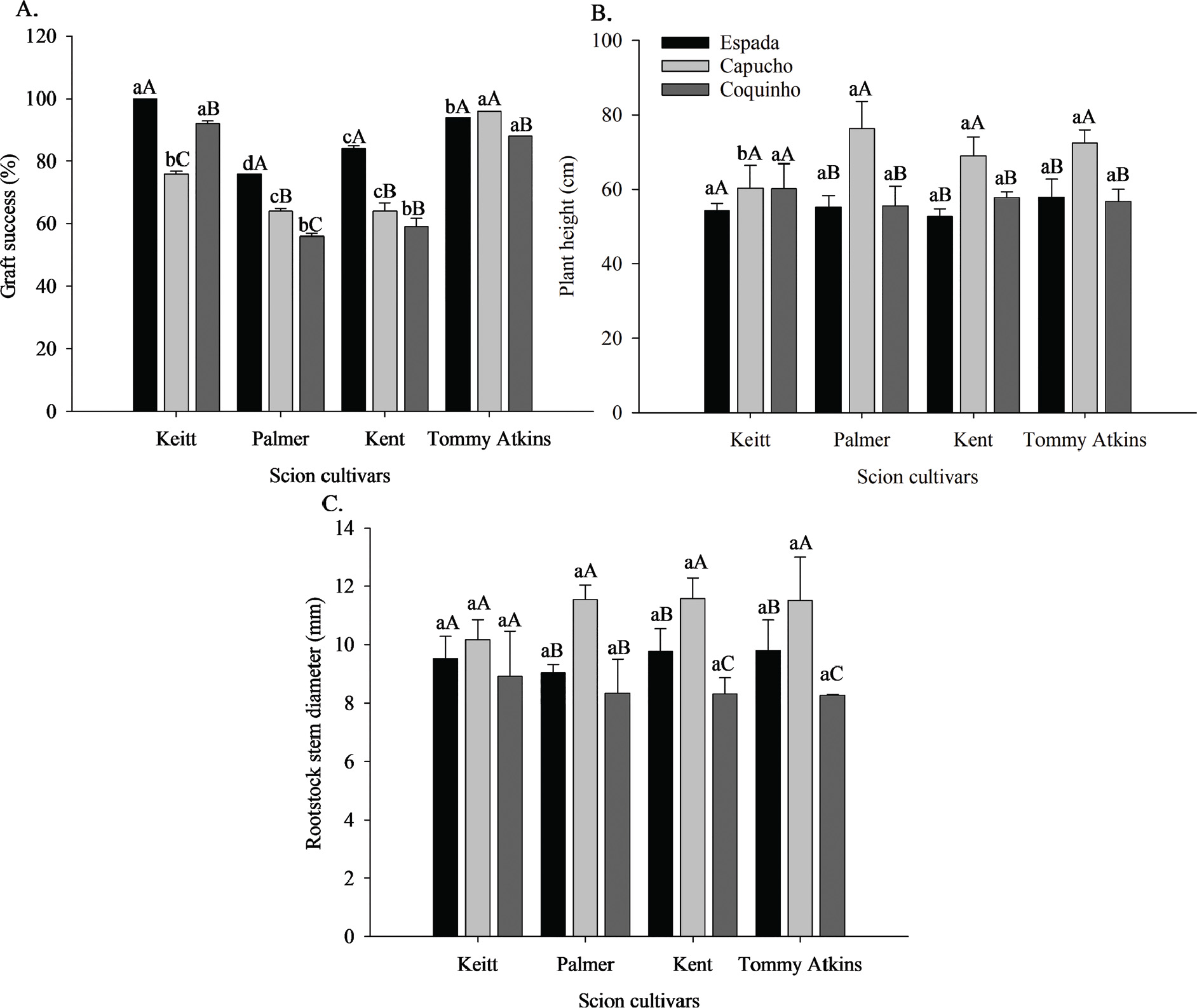
Figure 1.
PGS (A), PH (B), and RSD (C) of 'Keitt', 'Palmer', 'Kent', and 'Tommy Atkins' mango seedlings grafted onto 'Espada', 'Capucho', and 'Coquinho', at 227 DAG. Bars with the same letters do not differ by Tukey’s at 5% error probability. Bars with capital letters compare data between the rootstock within each scion and bars with lowercase letters compare data between the scion within each rootstock. DAG, days after grafting; PGS, percentage of graft success; PH, plant height; RSD, rootstock stem diameter.
Pereira et al. (2002) evaluated grafting methods for mango and also found 100% graft success for 'Tommy Atkins' grafted on 'Espada' rootstock by full cleft grafting (the same method used in the present work). Ferreira et al. (2016) found a graft success of 84% when using the cleft grafting method for the combination 'Coquinho' (rootstock) and 'Surpresa' (scion).
However, the grafting method is not the most important factor for plant tissue connection, but the compatibility of the vascular tissues, which allows a fluent connection between rootstock and scion (Loupit and Cookson, 2020). Thus, the lower PGS found for 'Palmer' grafted on 'Coquinho', for example, seems to indicate an insufficient tissue connection. Therefore, the rootstock used is an important factor for successful grafting, mainly regarding the compatibility of the propagating materials for a better juxtaposition of tissues (Taiz et al., 2017).
The scions and rootstocks had similar effects on PH and rootstock stem diameter (RSD) (Figure 1B and Figure 1C). The cultivars 'Palmer', 'Kent', and 'Tommy Atkins' showed higher growth when grafted on 'Capucho' rootstocks: pH of 76.35, 69.0, and 72.5 cm and RSD of 11.56, 11.59, and 11.53 mm, respectively. The better results found for 'Capucho' denotes that it is a more vigorous material when compared to the other rootstocks used and it presents better compatibility with 'Palmer', 'Kent', and 'Tommy Atkins'.
However, the growth of 'Keitt' scions was not affected by the rootstock used, but they showed lower performance when grafted on 'Capucho' rootstock when compared to the other scions, indicating a lower vigour for the mango cultivar 'Keitt' (Figure 1B). The union of tissues in grafting is a delicate process; even under compatibility, the cultivar used as rootstock can improve or inhibit the scion yield (Rebolledo-Martínez et al., 2019).
Effect of rootstock on scion growth was also found by Dayal et al. (2016) in New Delhi, India, which they attributed mainly to the high vigour of the rootstocks evaluated (K-5, Kurakkan, and Olour) under the subtropical climate conditions, typical of such region.
The rootstock effects on PH and RSD of mango seedlings are shown in Figure 2.
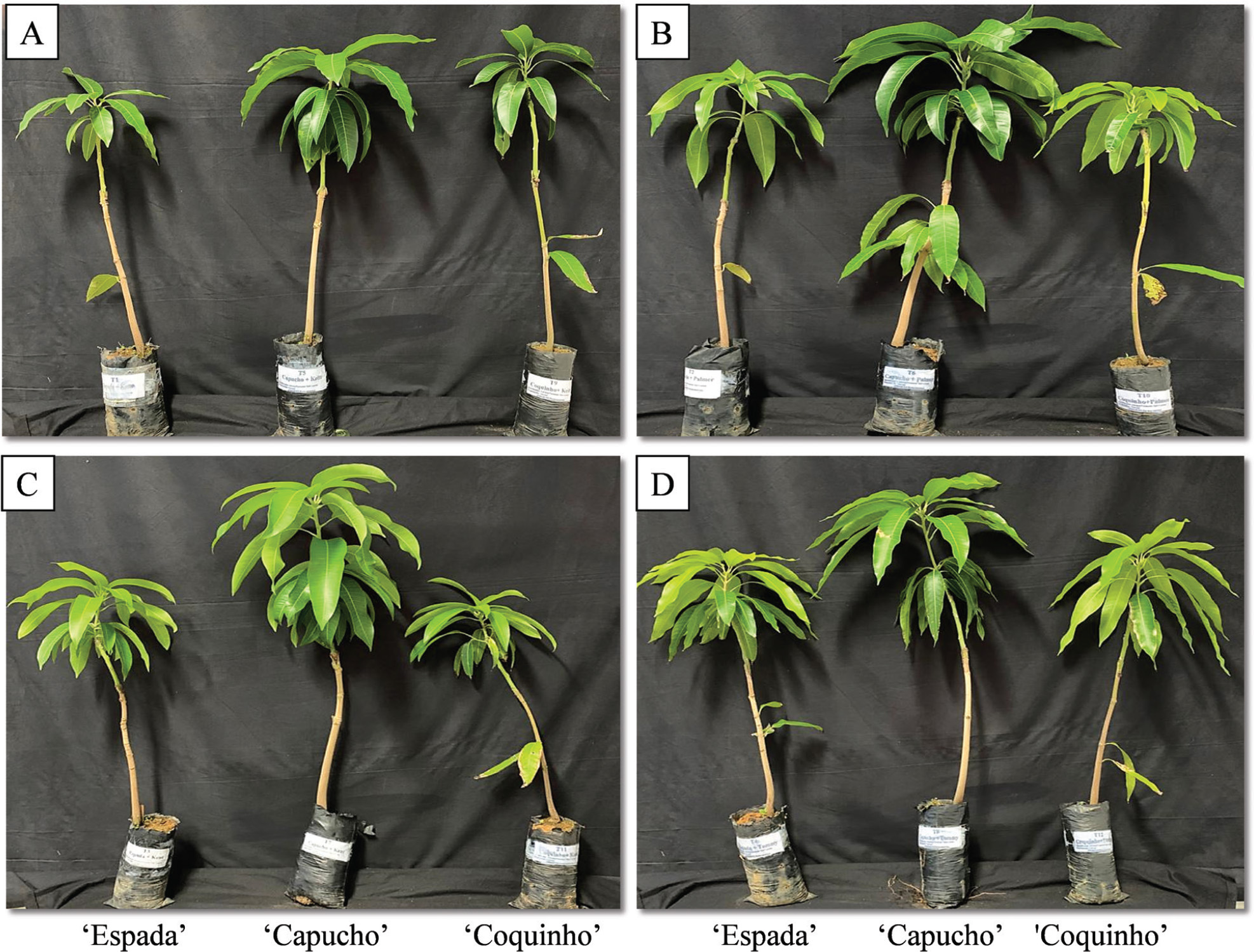
Figure 2.
Illustration of 'Keitt' (A), 'Palmer' (B), 'Kent' (C), and 'Tommy Atkins' (D) mango scions grafted onto 'Espada', 'Capucho', and 'Coquinho' rootstocks at 227 DAG. DAG, days after grafting.
Santos et al. (2006) observed that 'Tommy Atkins', 'Van Dyke', and 'Keitt' grafted on 'Espada' rootstock showed greater vigour and, consequently, better growth performance when compared to the rootstocks 'Rosinha', 'Carabao', and 'Manga d’água'.
Photosynthetic pigments were significantly affected by the scion–rootstock combination, as the highest chlorophyll a, b, and total indexes were found for the cultivars 'Keitt', 'Kent', and 'Tommy Atkins' grafted on 'Capucho' and 'Coquinho' rootstocks (Figure 3A–Figure 3C).
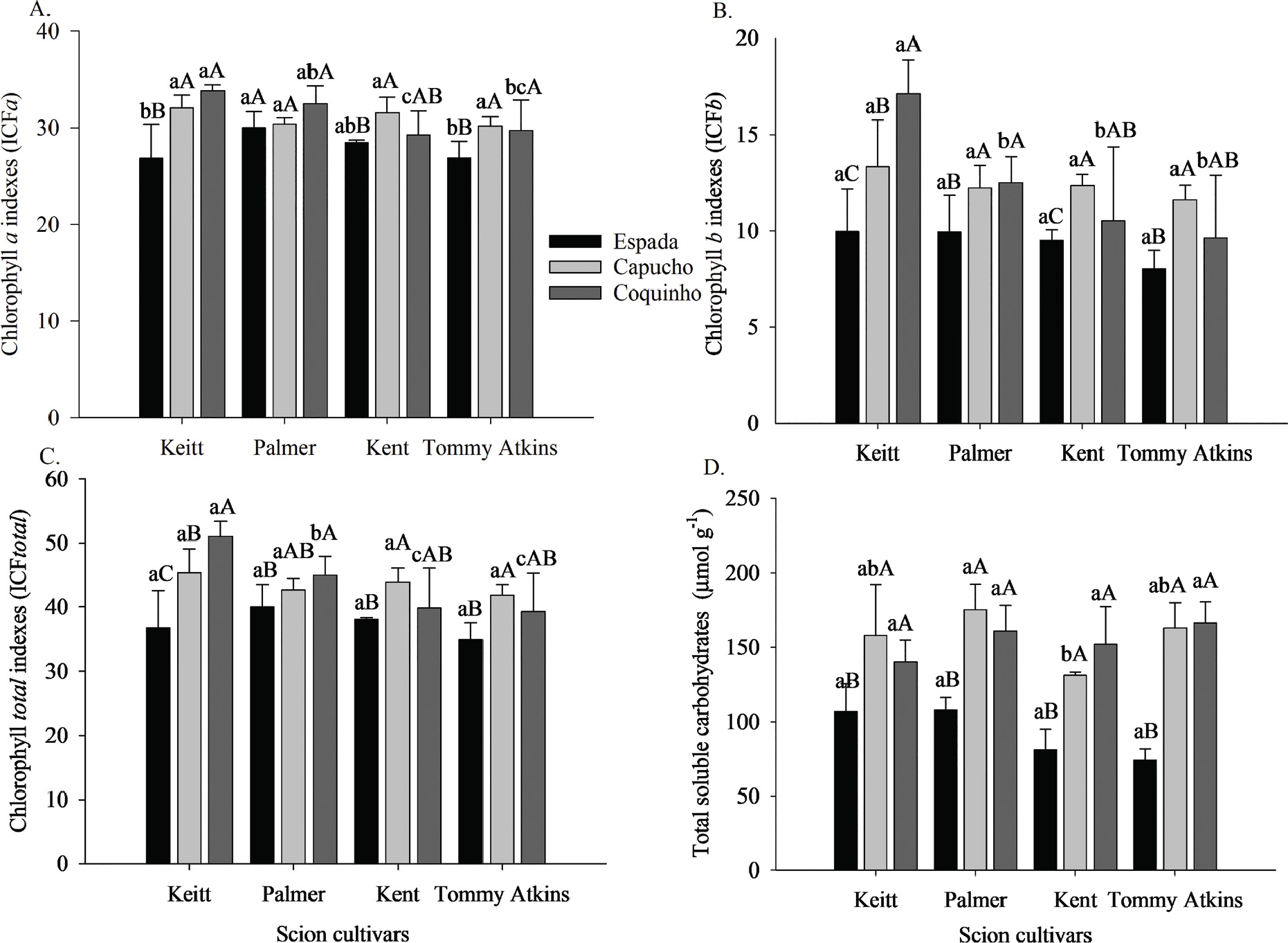
Figure 3.
Chlorophyll a(A), b(B), and total(C) indexes and TSC (D) in leaves of 'Keitt', 'Palmer', 'Kent', and 'Tommy Atkins' mango scions grafted onto 'Espada', 'Capucho', and 'Coquinho' rootstocks at 227 DAG. Bars with the same letters do not differ from each other by Tukey’s test at 5% error probability. Bars with capital letters compare data between the rootstock within each scion and bars with lowercase letters compare data between the scion within each rootstock. DAG, days after grafting; TSC, total soluble carbohydrates.
In general, 'Capucho' and 'Coquinho' rootstocks promoted higher chlorophyll indexes and TSC contents in the scion, mainly for the cultivar 'Keitt'. However, the scion cultivars grafted on 'Espada' rootstocks showed lower chlorophyll indexes and carbohydrate contents (Figure 3A–Figure 3D), which can characterize the loss of seedling vigour induced by the rootstock. Chlorophyll is the fundamental molecule for photosynthesis; thus, a decrease in the production of leaf carbohydrates is expected, leaving less energy available for the plant and, consequently, resulting in less vigour (Prasad et al., 2014). This dynamic was confirmed for the 'Espada' and 'Coquinho' rootstocks, except for the chlorophyll a index found in the 'Palmer' scion; regarding the other variables, 'Coquinho' induced more vigour to seedlings when compared to 'Espada' rootstocks.
According to Taiz et al. (2017), chlorophyll a is responsible for transferring the absorbed light energy to the reaction centre, where the conversion of light energy into biochemical energy occurs, which is a function not performed by chlorophyll b; thus, the increase in chlorophyll a index enhances the photosynthetic capacity of mango plants.
Variations in chlorophyll indexes found for the same scion–rootstock combination under similar edaphoclimatic conditions are exclusively connected to genotypic variations (Silva et al., 2020). Thus, when comparing the different scions on each rootstock, only the scions grafted on 'Coquinho' presented significant results for chlorophyll b and total, and 'Keitt' was the scion that showed the highest leaf chlorophyll indexes (Figure 3B and Figure 3C).
The TSC contents in the fresh leaf matter were significantly affected by the scion–rootstock combination (Figure 3D), presenting higher results for seedlings formed with 'Capucho' and 'Coquinho' rootstocks, which did not differ from each other, regardless of the scion used. 'Tommy Atkins' seedlings presented the highest variations in this variable: the grafting on 'Espada' resulted in TSC 54% and 55% lower than those found for 'Coquinho' and 'Capucho' rootstocks, respectively.
The results of soluble carbohydrates found in the present study show a good compatibility with those found in other studies with the same scion cultivars: Oliveira Júnior (2020) evaluated the cultivar 'Palmer' after 10 years of transplanting and found 40–150 μmol · g−1 for the control at 46 days after the last floral induction; Sanches et al. (2023) found 89 μmol · g−1 (2018) and 165 μmol · g−1 (2019) for the cultivar Kent (4 years old and 5 years old); Silva et al. (2021) evaluated 'Keitt' (3 years old) and found 105–240 μmol · g−1 for the control during the production cycle; and Cunha et al. (2022) found 134–212 μmol · g−1 for the control without seaweed extract, during floral induction, when evaluating 22-year-old 'Tommy Atkins' trees.
According to Baron et al. (2019), the translocation of carbohydrates, nutrients, and phytohormones is a reliable way to assess grafting compatibility; however, when it is partial or null, the result is dwarf trees or, more severely, the death of the plant in the field, configuring a process known as late incompatibility. However, the definition of compatibility should be used with caution, as many anatomical, physiological, and biochemical analyses are required to ensure and determine tissue compatibility (Loupit and Cookson, 2020).
The results showed that starch contents in leaf fresh matter are dependent on the scion–rootstock combination (Figure 4). The highest starch contents were found for the combinations of 'Tommy Atkins' and 'Kent' grafted on 'Espada' and 'Coquinho' rootstocks, and for 'Keitt' on 'Capucho'. However, the leaf starch contents in the 'Palmer' scion presented no significant differences, regardless of the rootstock used (Figure 4).
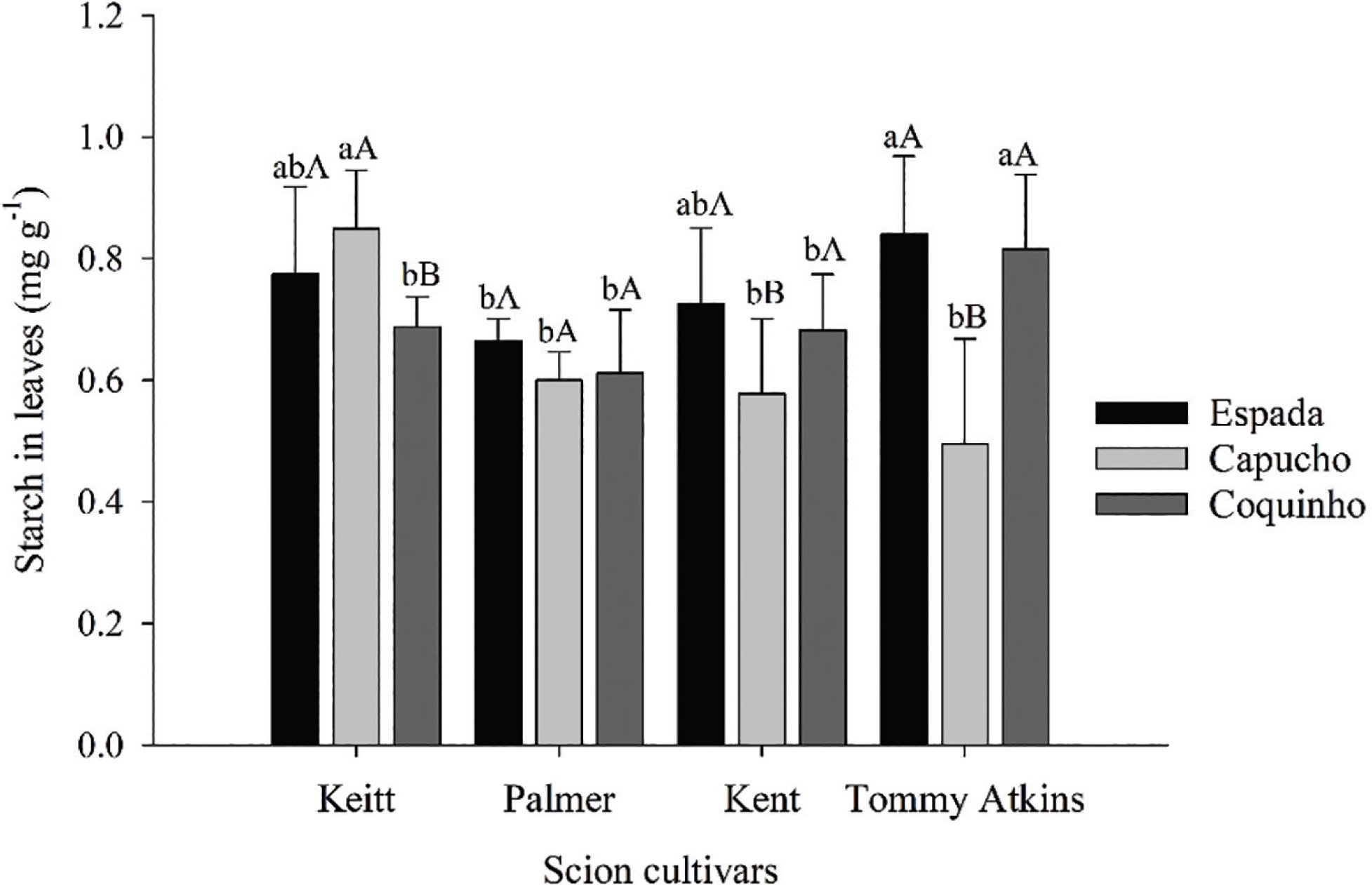
Figure 4.
Starch content in the fresh mass of leaves of 'Keitt', 'Palmer', 'Kent' and 'Tommy Atkins' mango scions grafted onto 'Espada', 'Capucho', and 'Coquinho' rootstocks at 227 DAG. Bars with the same letters do not differ from each other by Tukey’s test at 5% error probability. Bars with capital letters compare data between the rootstock within each scion and bars with lowercase letters compare data between the scion within each rootstock. DAG, days after grafting.
Starch is a reserve carbohydrate present in various plant organs; it is a source of fundamental biochemical energy for several vital metabolic processes, acting on the formation and maturation of tissues, and therefore, crucial for the seedling development. Normand et al. (2009) studied starch sites in 17 mango organs and found starch mainly in woody organs, such as branches and thick roots (sustaining organs), and lower contents in leaves. However, carbohydrates are produced in the leaves and are converted mainly into sucrose and transported to the main storage organs (Figueroa et al., 2021).
Consequently, the scion–rootstock combinations that resulted in higher starch contents denoted a negative effect on the energy balance in the plants. The excess starch in chloroplasts (i.e., leaves) can cause deformation or destruction of photosynthetic organs, such as disordering of thylakoid lamellae and breakage of the organelle coating, which may have irreversible consequences for the metabolic functions of plants (Shen et al., 2019). However, it does not seem to have been a problem at the maximum level reached by 'Tommy Atkins' by the other metabolic analyses studied and the apparent healthy appearance of the seedlings (Figure 2), especially because there was no correlation between net photosynthesis (A), TSC and starch (St) (Table 2).
Table 2.
Pearson correlation between PGS. PH, RSD, CLa. CLb, and CLt, net photosynthesis (A), stomatai conductance (gs), internal CO2 concentration (Ci), transpiration (E), water use efficiency (WUEi), instantaneous carboxylation efficiency (CEi), TSC, and St as a function of different rootstocks (R) and scion cultivars (S) of mango during the seedling formation phase.
| Var. | PGS | PH | RSD | CLa | CIb | CLt | A | gs | Ci | E | WUEi | CEi | TSC | St |
|---|---|---|---|---|---|---|---|---|---|---|---|---|---|---|
| PGS | 1 | |||||||||||||
| PH | –0.21 | 1 | ||||||||||||
| RSD | –0.01 | 0.82** | 1 | |||||||||||
| CLa | –0.41 | 0.28 | 0.00 | 1 | ||||||||||
| CIb | –0.17 | 0.33 | 0.10 | 0.88** | 1 | |||||||||
| CLt | –0.30 | 0.31 | 0.06 | 0.97** | 0.97** | 1 | ||||||||
| A | 0.06 | 0.75** | 0.50 | 0.14 | 0.11 | 0.13 | 1 | |||||||
| gs | 0.11 | 0.72** | 0.50 | 0.06 | 0.03 | 0.05 | 0.98** | 1 | ||||||
| Ci | 0.02 | 0.59* | 0.28 | 0.16 | 0.12 | 0.14 | 0.85** | 0.91** | 1 | |||||
| E | 0.00 | 0.63* | 0.28 | 0.04 | –0.01 | 0.01 | 0.92** | 0.94** | 0.89** | 1 | ||||
| WUEi | 0.15 | –0.26 | 0.21 | –0.12 | –0.01 | –0.06 | –0.62· | –0.64· | –0.77** | –0.85** | 1 | |||
| CEi | 0.04 | 0.68* | 0.52 | 0.16 | 0.10 | 0.13 | 0.92** | 0.83** | 0.58* | 0.76** | –0.41 | 1 | ||
| TSC | –0.42 | 0.53 | 0.07 | 0.60* | 0.50 | 0.57 | 0.47 | 0.38 | 0.40 | 0.47 | –0.47 | 0.42 | 1 | |
| St | 0.36 | –0.62* | –0.46 | –0.36 | –0.30 | –0.34 | –0.26 | –0.29 | –0.26 | –0.27 | 0.18 | –0.16 | –0.38 | 1 |
| –1 | 0 | 1 |
Hernández-Castro et al. (2020) evaluated leaf starch contents in dry matter of 10 2-year-old mango cultivars in Chilpancingo, Mexico, in a nursery covered with a 50% shade screen, and found results ranging from 0.12 mg · g−1 to 0.37 mg · g−1, which were lower than those found for the cultivars evaluated in the present study. However, none of the cultivars coincided between the experiments, and genetic characteristics are essential for this variable, mainly regarding the different levels of adaptation to climate conditions.
Furthermore, the regulation of pigment accumulation can be directly related to graft compatibility. Therefore, increased chlorophyll contents may have resulted in increased light absorptions, enabling increases in electron transport through the photochemical phase of photosynthesis and resulting in greater plant growth (Rodrigues et al., 2016). Therefore, the formation of chlorophylls at the vegetative stage is necessary to improve the carbohydrates that are used for tissue formation and, consequently, biomass accumulation. This result was confirmed by the positive and significant correlation between chlorophyll a and TSC (r = 0.60*), while leaf starch showed a negative correlation with PH (r = –0.62*), indicating that most of the trioses produced by photosynthesis were translocated to other organs and converted into biomass (Table 2).
Moreover, the similarity in gas exchange variables between treatments is justified by the strong relationship between them, as shown by Mudo et al. (2020) for 20-year-old 'Tommy Atkins' mango trees and Silva et al. (2022) for 'Keitt' mango trees at the first production cycle. This correlation was also found in the present study in the scion formation phase, denoting that these correlations are maintained even for plants of different cultivars and ages (Table 2).
Photosynthetic activity is one of the most important variables for evaluating plant vigour, in addition to compatibility and efficiency of the root systems (Dayal et al., 2016), which contributed to the higher results of graft success for 'Capucho' when used as rootstock for 'Palmer', 'Kent', and 'Tommy Atkins' (Figure 1A).
The interaction between rootstock and scion was significant for net photosynthesis, stomatal conductance, internal CO2 concentration, transpiration, and instantaneous carboxylation efficiency (Table 3). Only WUEi did not respond to treatments, with a mean of 0.063 μmol · m−2· s−1/(μmol H2O · mol−1)−1. These results show the effect of rootstocks on the scions studied; each combination had its own particularities and requirements.
Table 3.
Summary of analysis of variance (‘F’ value) for net photosynthesis (A), stomatal conductance (gs), internal CO2 concentration (Ci), transpiration rate (E), WUEi, and instantaneous carboxylation efficiency (CEi) as a function of different rootstocks (R) and scion cultivars (S) of mango during its scion phase.
| SV | A | gs | Ci | E | WUEi | CEi |
|---|---|---|---|---|---|---|
| Rootstocks (R) | 26.86** | 9.92** | 6.03** | 5.68** | 3.16ns | 15.47** |
| Scion (S) | 22.22** | 13.27* | 14.80** | 8.95** | 2.66ns | 8.10** |
| R × S | 4.95** | 2.44* | 2.91* | 2.19* | 1.06ns | 4.08** |
| CV (%) | 14.94 | 31.65 | 9.02 | 31.85 | 24.63 | 13.73 |
The net photosynthesis and stomatal conductance of the different cultivars evaluated as rootstocks and scions showed the superiority of the 'Capucho' rootstock, but without statistical difference between the 'Palmer' and 'Tommy Atkins' scions, whereas the lowest result was found for the 'Espada' rootstock (Figure 5A and Figure 5B).
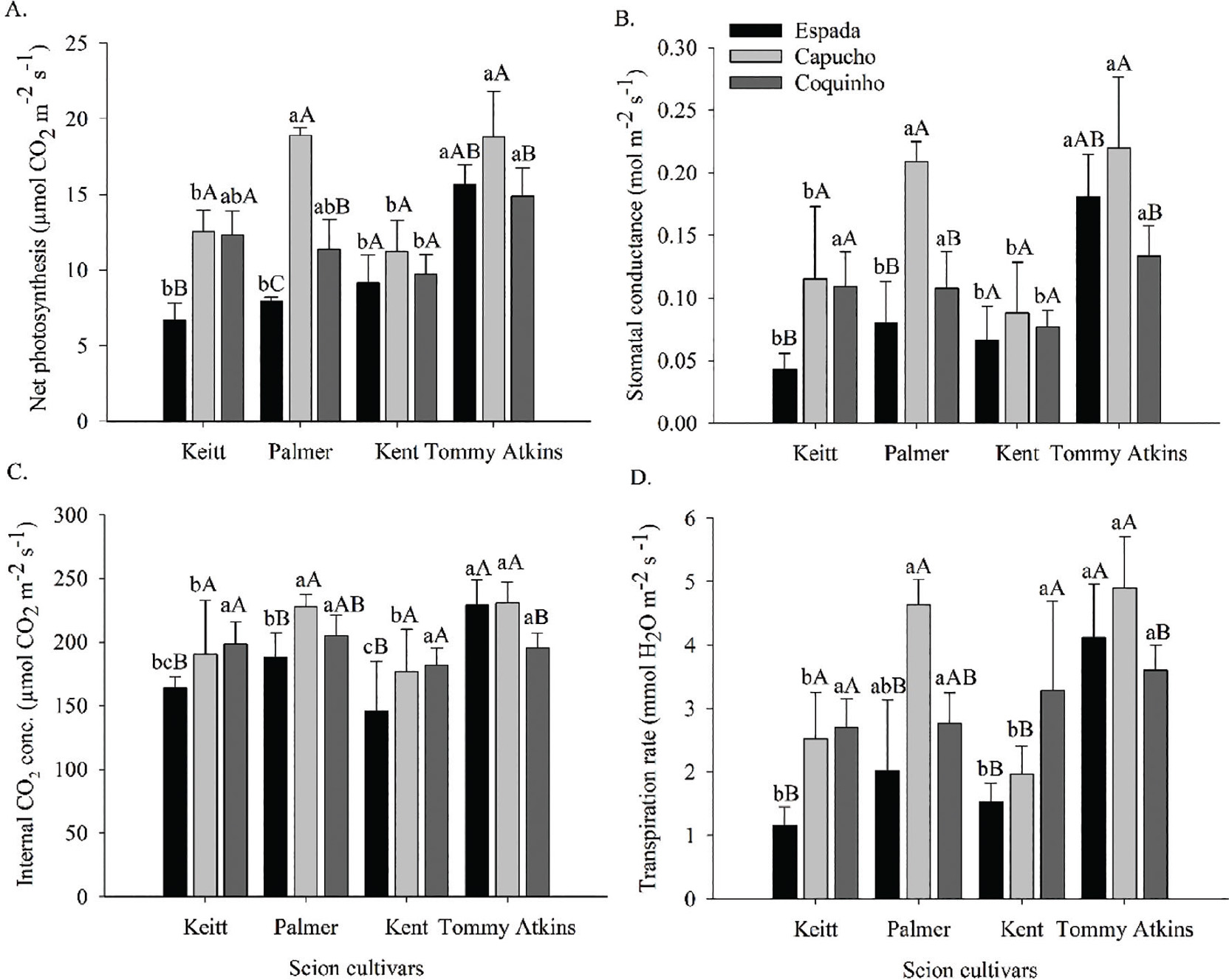
Figure 5.
Net photosynthesis (A), stomatal conductance (B), internal CO2 concentration (C), and transpiration rate (D) of 'Keitt', 'Palmer', 'Kent', and 'Tommy Atkins' mango scions grafted onto 'Espada'. 'Capucho' and 'Coquinho', at 227 DAG. Bars with the same letters do not differ from each other by Tukey’s test at 5% error probability. Bars with capital letters compare data between the rootstock within each scion and bars with lowercase letters compare data between the scion within each rootstock. DAG, days after grafting.
Silva et al. (2020) evaluated the photosynthetic performance of scion–rootstock combinations in mango propagation and reported that plants subjected to similar edaphoclimatic conditions showed different results, which were attributed to genotypic variations in grafting, that is, compatibility level, which affects the scion performance, which are results consistent with those found in the present study.
Photosynthesis is the metabolic process by which photons light are converted into biochemical energy by autotrophic beings through a series of reactions that use CO2 as substrate to produce carbohydrates, which are crucial substances for the maintenance of life (Gollan and Aro, 2020). A high photosynthetic rate is one of the most important factors in increasing plant size and biomass production (Farooq et al., 2009), therefore, increasing photosynthetic efficiency is desirable for different species, ages, and phenological stages (Hussain et al., 2021).
The opening of stomata is necessary for the entry of CO2 for the photosynthesis process in mango trees, which have C3 metabolism and do not store CO2 in bundle sheath cells and, thus, are dependent on the CO2 influx through the stomata (Santos et al., 2015). Therefore, the positive correlation of 0.98 between photosynthesis and stomatal conductance values is a consequence of this interdependence.
Studies on plant physiology often focus on techniques to increase chlorophyll production due to many benefits to plants, mainly for the photosynthetic process (Figueroa et al., 2021), however, usually through the simplistic interpretation that the higher the chlorophyll content, the greater the photosynthetic activity. The results found in the present study contrast with this interpretation because, although the scions grafted on 'Coquinho' rootstock presented the highest photosynthetic pigment contents (Figure 3B and Figure 3C), those scions grafted on 'Capucho' stood out in gas exchange, mainly regarding net photosynthesis (Figure 3A). It indicates that there are more relationships and factors that determine the photosynthetic potential of a species, other than chlorophyll levels. Furthermore, no correlation was found between these two variables (Table 2).
'Keitt', 'Palmer', and 'Kent' scions had higher internal CO2 concentrations when grafted on 'Capucho' and 'Coquinho' rootstocks, whereas 'Tommy Atkins' presented better results of internal CO2 concentrations when grafted on 'Espada' and 'Capucho' rootstocks, which did not differ from each other (Figure 5C).
According to Taiz et al. (2017), internal concentration of CO2 is important because the graft can be analysed as the product of the intercepted solar energy and fixed CO2 during a period. Thus, when the plant is exposed to an adequate quantity of light and is not under stress, higher CO2 concentrations promote greater rubisco carboxylase activity (incorporation of carbon into organic acids). Therefore, the rootstocks that resulted in seedlings with the highest internal CO2 concentrations provided more substrate for photosynthesis and, consequently, higher production of carbohydrates. This relationship is shown by the positive correlation between internal CO2 concentration and net photosynthesis (Table 2).
Brito et al. (2012) evaluated the physiological dynamics of combinations of citrus scions and rootstocks and found variations in internal CO2 concentrations; they attributed this result to intrinsic genetic characteristics of the species and addressed the importance of determining the best scion–rootstock combination for each climate condition.
The transpiration rate of 'Keitt' and 'Palmer' was higher when grafted on 'Capucho' and 'Coquinho' rootstocks, but did not differ from each other (scions), while the cultivar 'Kent' showed a higher transpiration rate when grafted on 'Coquinho' (Figure 5D). 'Espada' and 'Capucho' rootstocks resulted in higher leaf transpiration for 'Tommy Atkins' seedlings when compared to 'Coquinho' rootstock.
Almeida et al. (2015) evaluated gas exchange in 8-year-old 'Tommy Atkins' mango trees grown under three water regimes (0, 50, and 100%), in Pentecoste, CE, Brazil, (BSw’h’ semiarid climate with irregular rainfall) and found simultaneous increases in leaf transpiration, photosynthesis, and stomatal conductance; they attributed this result to the greater influx of CO2 in the leaf mesophyll caused by significant increases in gas exchange through stomatal conductance, which consequently enables increases in photosynthetic rates (Shimazaki et al., 2007). These correlations were also found in the present study, as shown by the strong positive correlation between these three photosynthetic variables (Table 2) and between treatments, which showed similar results for these variables (Figure 5A, Figure 5B, and Figure 5D).
Gas exchanges in plants are very dynamic variables, even within the same species. These variations have been shown in mango when comparing cultivars (Rymbai et al., 2014), phenological stages (Mudo et al., 2020), irrigation depths (Santos et al., 2013), and time of the day (Allen et al., 2000).
Considering approximate values of internal CO2 concentrations (Ci) and transpiration (E) found for control treatments in some studies conducted in the same region of the present study, Mudo et al. (2020) evaluated 20-year-old 'Tommy Atkins' mango trees and found 90 mmol CO2 · m−2 · s−1 (Ci) and 0.70 mmol H2O · m−2 · s−1 (E) at the floral induction and 149 mmol CO2 · m−2 · s−1 (Ci) and 2.5 mmol H2O · m−2· s−1 (E) at the full flowering stage; Silva et al. (2022) evaluated 'Keitt' mango trees at the first production cycle and found 120 mmol CO2· m−2 · s−1 (Ci) and 1.70 mmol H2O · m−2 · s−1 (E) after reduction in irrigation water depth, and 210 mmol CO2· m−2· s−1 (Ci) and 4.25 mmol H2O · m−2 · s−1 (E) at the floral induction stage; Carreiro et al. (2022) evaluated 'Tommy Atkins' mango trees in the first and second production cycles and found 202.87 mmol CO2· m−2· s−1 (Ci) and 3.02 mmol H2O · m−2 · s−1 (E) at the branch maturation stage in 2018 and 185.65 mmol CO2· m−2 · s−1 (Ci) and 3.53 mmol H2O · m−2 · s−1 (E) at the branch maturation stage in 2019.
A study on photosynthesis in mango seedlings carried out in São Carlos, SP, Brazil, with scions of the cultivar 'Tommy Atkins' grown under three levels of shading (0%, 65%, and 85%) showed results ranging from 6.37 mmol · m−2 · s−1 to 6.82 mmol · m−2 · s−1, although the rootstock used was not described (Araújo, 2006). However, all photosynthesis values found in the seedlings resulting from the three rootstocks evaluated in the present study were more than double those reported by Araújo (2006). In this sense, the environment and management conditions are expressive on the expression of the photosynthetic potential of mango trees.
The instantaneous carboxylation efficiency (CEi) (Figure 6) is a variable that allows the evaluation of non-stomatal factors that affect the photosynthetic system (Taiz et al., 2017). The 'Capucho' rootstock presented higher efficiency CEi, followed by 'Coquinho', for 'Keitt' and 'Tommy Atkins' seedlings, which did not differ from each other, whereas the cultivar 'Palmer' had the highest efficiency when grafted on 'Capucho'.
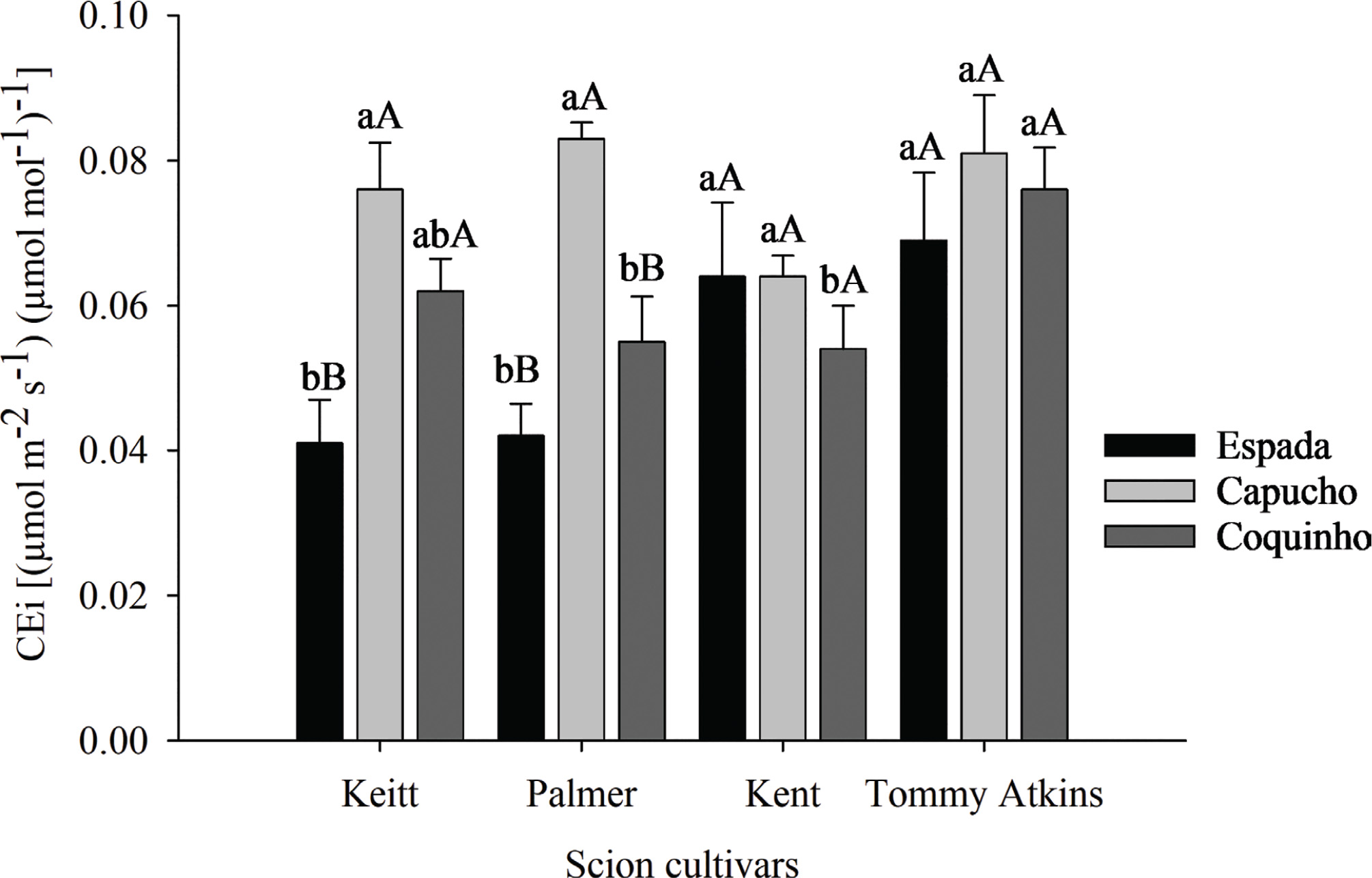
Figure 6.
Instantaneous carboxylation efficiency (CEi) of 'Keitt', 'Palmer', 'Kent', and 'Tommy Atkins' mango scions grafted onto 'Espada', 'Capucho', and 'Coquinho' rootstocks at 227 DAG. Bars with the same letters do not differ from each other by Tukey’s test at 5% error probability. Bars with capital letters compare data between the rootstock within each scion and bars with lowercase letters compare data between the scion within each rootstock. DAG, days after grafting.
The 'Espada' rootstock resulted in lower CEi for 'Keitt' and 'Palmer' when comparing rootstocks and scions. Increases in Ci are usually followed by increases in stomatal conductance; therefore, stomatal closure is the main limiting factor in the substrate (CO2) for the photosynthetic activity due to the direct relationship between stomatal opening and CO2 diffusion into the substomatal chamber (Santos et al., 2013).
PH is a good visual indicator of seedling quality due to its significant correlation with net photosynthesis (0.75) and other gas exchange variables, except for CEi (Table 2). This possibly indicates a faster development compared to smaller plants resulting from different combinations of rootstock and scion. This reinforces that this is a crucial factor for shoot development and thus a factor that can inhibit or stimulate the vegetative potential of mango trees.
CONCLUSIONS
'Espada', 'Capucho', and 'Coquinho' rootstocks affected the growth, leaf chlorophyll index, carbohydrate contents, and gas exchanges of mango seedlings from scions of the cultivars 'Keitt', 'Palmer', 'Kent', and 'Tommy Atkins'.
'Keitt', 'Palmer', and 'Kent' scions present better graft success when grafted on 'Espada' rootstock, whereas 'Tommy Atkins' scions present better graft success when grafted on 'Espada' and 'Capucho' rootstocks. 'Capucho' rootstocks presented a higher performance for most of the variables analysed, including the production of chlorophylls, photosynthetic activity, and accumulation of carbohydrates, especially for the 'Palmer' and 'Tommy Atkins' scion cultivars.
Further studies on grafting combinations are recommended, mainly regarding their effect on the growth and yield of mango plants under field conditions.
ACKNOWLEDGEMENTS
The authors thanks the Federal University of the São Francisco Valley, Agrarian Sciences campus (CCA/UNIVASF) for the partnership and support, CAPES (Coordination for the Improvement of Higher Education Personnel) for granting the scholarship for the first author and Brazilian Council for Scientific and Technological Development (CNPq) grant CNPQ 306159/2022-8.
Notes
[13] Contributed by AUTHOR CONTRIBUTIONS
Í.H.L.C. and V.B.P.N. – conceptualisation. A.S.S., F.A.L.G., L.S.S., M.T.L.S., A.C.R.S. – methodology. A.S.S. – data analysis. A.S.S. – writing – original draft preparation. Í.H.L.C. and V.B.P.N. – supervision.
[14] Conflicts of interest CONFLICT OF INTEREST
The authors declare no conflict of interest.