
Introduction
Botanical gardens of national importance recognized as research-based nature conservation institutions that play a crucial role in biodiversity conservation (Jackson et al. 2024; Ren and Blackmore 2023). Meanwhile, botanical gardens of local importance may also attain research institution status, provided they undergo the appropriate approval process. According to Article 31 of the Law of Ukraine ‘On the Nature Reserve Fund of Ukraine’ (Law of Ukraine No. 2456-XII ‘On the Nature Reserve Fund of Ukraine’), botanical gardens are established to conserve, study, acclimatise, reproduce and sustainably utilize both rare and representative species of local and global flora. Their activities focus on the development, expansion, and protection of botanical collections, as well as conducting scientific research, educational initiatives, and training programs.
As of 2024, Ukraine is home to 27 botanical gardens, 18 of which are of national importance (State Cadastre of Territories and Objects of the Nature Reserve Fund). However, the Russian aggression against Ukraine, which began in 2014 and escalated into a full-scale war in 2022, has caused severe damage to the environment (Myroniuk et al. 2024; Matsala et al. 2025) and the Nature Reserve Fund (Hryhorczuk et al. 2024). Several botanical gardens have been significantly affected.
The Nikitsky Botanical Garden (Autonomous Republic of Crimea), Donetsk Botanical Garden (203 ha), and the Botanical Garden at Tauride National University (Autonomous Republic of Crimea) have remained under occupation since 2014. The annexation of Crimea by Russia has isolated these botanical gardens from the Ukrainian scientific community, putting unique plant collections at risk and restricting international collaboration. Addressing these challenges requires a comprehensive approach (Leonard 2024), including assessing and documenting the damage, monitoring the condition of botanical gardens and their collections, and developing strategies for post-occupation recovery.
Botanic Gardens Conservation International (BGCI), a global organization uniting over 800 botanical gardens across 118 countries, plays a crucial role in supporting botanical institutions. In Europe, BGCI collaborates with leading botanical gardens, including the Royal Botanic Gardens, Kew (UK), the Berlin Botanical Garden (Germany), the Botanical Garden of Geneva (Switzerland), and the Botanic Garden of the Jagiellonian University in Kraków (Poland). In Ukraine, BGCI has actively supported botanical gardens, particularly during the ongoing war. In 2022, the organization provided financial assistance to the Botanical Garden of Chernivtsi National University, helping to maintain plant collections, support educational activities for internally displaced persons, and preserve unique plant species. Thanks to such initiatives, botanical gardens continue to fulfil their conservation role, contributing to biodiversity protection.
It is also worth mentioning the activities of the Council of Botanical Gardens and Arboretums of Ukraine, which coordinates cooperation between botanical gardens and arboreta within the country and supports their scientific, conservation, and educational work
In urban environments, where access to nature is often limited, botanical gardens serve as essential ‘green oases’, offering people a place to connect with nature, find psychological relief, and recover. Research has shown that the natural environment provided by botanical gardens has a positive impact on physical and emotional well-being, reducing stress, improving mood, and enchancing creativity (Chen et al. 2024; Wang et al. 2025).
One of the key activities in botanical gardens is the study of the condition of plantings and their natural regeneration (Rumiantsev et al. 2023; Fuchs et. al. 2024). Monitoring vegetation condition (Ullah et al. 2024) helps assess how well plants adapt to environmental changes and identify potential threats to their survival. Evaluating soil quality (Bondar et. al. 2023) provides insight into whether plants receive the necessary resources for growth, while analysing the impact of recreational pressure (Moroz 2024) helps balance visitor interests with nature conservation. These studies lead to practical recommendations for the management and maintenance of botanical gardens, ensuring the long-term sustainability of ecosystems. Such recommendations form the foundation for developing strategies to preserve natural resources for future generations (Kristancic et al. 2022).
The Kremenets Botanical Garden is a unique centre for the study and conservation of flora. Its significance is reflected in the numerous scientific pablications dedicated to its activities. The plant catalogue (Stelmashchuk et al. 2007) provides a structured list of 1 369 taxonomic units, representing 5 classes, 138 families, and 566 genera. The continued development of the garden’s collections is documented in the 2015 catalogue (Ivanytskyi et al. 2015), which additionally describes the origin of plant material, planting time and location, life forms, and ecological peculiarities of the plants. The study of medicinal plants within the garden’s collection is featured in the 2017 atlas (Lisnichuk et. al. 2017), which presents the characteristics of 76 species along with recommendations for collection, drying and storage. The 2021 edition (Onuk et. al. 2021) summarises 20 years of work by the Phytosozology Department, demonstrating the richness of the collections and the outcomes of scientific research. Additional historical and contemporary insights into the garden’s operations are provided in the Vademecum (Lisnichuk and Onuk 2018) and the Glossary of Terms (Chernyak et. al. 2016). Mishkevych (2016) conducted an analysis of rare dendroexotic species, exemining 41 species – 24 coniferous and 17 deciduous. This study describes in detail the systematic approach to preserving the botanical garden’s collection, in particular, the origin, planting time and location of each species. The introduction and acclimatisation of Magnoliaceae family representatives in the Volyn-Podillia region, including the Kremenets Botanical Garden, are covered by Gordiychuk et al. (2017). Tsytsiura and Panasenko (2019) explored the ornamental properties and morphological features of Thuja L. forms, as well as the history of the gymnosperm collection. A later study by Tsytsiura et al. (2021) analyses the plant introductions at the Kremenets Botanical Garden between 1970 and 2021. The current state of the garden’s dendroflora is assessed in the research of Lisnichuk et. al. (2023), investigating the taxonomic composition, providing systematic and phytogeographical analyses, as well as evaluating the biological and ecological peculiarities of woody plants cultivated and growing in the garden.
Botanical gardens, for instance, are essential in fostering environmental awareness (Kolkailah 2023). They serve not only as recreational spaces but also as vital educational environments (Hosseini et. al. 2024), where visitors can learn about the natural world and the significance of conservation (Ren and Antonelli 2023). Additionally, botanical gardens provide practical training for future professionals in forestry, ecology, landscape design, and other natural sciences. These institutions offer opportunities to apply theoretical knowledge through hands-on experience in ecosystem management, rare species conservation, and sustainable environmental practices (Hulbert et. al. 2019).
Overall, the Kremenets Botanical Garden, alongside the forest resources of the Ternopil region, plays a crucial role in biodiversity conservation (Amos 2024), scientific research, and the practical use of natural resources (Bondar et. al. 2024; Rahman and Hossain 2025), emphasising the importance of a systematic approach to nature conservation.
The results obtained represent a significant contribution to biodiversity conservation, the optimisation of introduction methods, and the development of sustainable collections of the botanical garden, which contribute to the maintenance of unique ecosystems and the advancement of modern environmental strategies.
A review of existing research and publications indicates that the forest stands of the Kremenets Botanical Garden remain insufficiently studied, highlighting relevance of this study.
The Kremenets Botanical Garden fulfils multiple essential functions, including biodiversity conservation, scientific research, environmental education, and recreational services. Its territorial organisation and functional zoning reflect a diverse approach to its operations, reinforcing its potential as a scientific and educational hub. The balanced use of its territory, combined with implementation of forestry measures, contributes to the sustainable development of this vital natural site.
The aim of the study is to conduct a structural and functional analysis of the forest stands within the Kremenets Botanical Garden to determine the specificities of natural regeneration.
Materials and methods
To analyse the typological structure of the stands, we used data from the Territorial Organisation Project of the Kremenets Botanical Garden (Explanatory note. Territorial Organisation Project of the Kremenets Botanical Garden (2019). To study the natural regeneration of European beech, we used the methodology developed by Prof. M. Gorshenin (Khrik and Kimeichuk 2021). The naturally regenerated seedlings were accounted in forest gaps on the northeastern slope. The surveys were performed under the stand canopy using the sample plot method. Sample plots measuring 2×2 m were established, where all self-seeding and advance regeneration of European beech were inventoried, along with an assessment of their age characteristics. The study evaluated the spatial distribution of self-seeding, as well as the age and height structure and survivability of the regenerating plants.
Nine temporary sample plots (TSPs) were established. The natural regeneration was categorised into four age groups: 1-year-old seedlings, 2–3-year-old plants, 4-7-year-old plants, and those older than 7 years. Microrelief features, such as micro-lower and micro-higher areas, were identified within each TSP, particularly on slopes with a northeast exposure and a steepness of up to 10°.
To evaluate the impact of forest litter on the number of young seedlings and advance regeneration, the sample plots were grouped based on litter thickness in 1 cm increments. Two categories were defined: plots with a litter thickness of 1–2 cm and those with a thickness of 2–3 cm. The degree of projected herbaceous vegetation cover was assessed based on the density of grass soil-covering and undergrowth. The European beech advance regeneration was classified by density into four categories: very dense (80–100%), dense (50–75%), medium dense (30–45%), and sparse (10–25%).
The typological structure of the forests was determined following the Ukrainian forest typology classification (Ostapenko and Tkach 2002). Plant species diversity was identified using ‘Herbaceous plants: Atlas-Key of Ukraine’ (Morozuk and Protopopova 2007).
The landscapes were classified using I.D. Rodichkin’s methodology, which distinguishes three types (Kucheriavyi 2005): (I) landscapes of closed spaces (closed landscapes), (II) landscapes of semi-open spaces (semi-open landscapes), (III) landscapes of open spaces (open landscapes).
The study used statistical analysis, mapping, field observations, comparative analysis, and classification methods to assess the condition, dynamics, and distribution patterns of the studied objects.
Research results and discussion
The Kremenets Botanical Garden is located in Kremenets, Ternopil region, covering an area of 200 hectares. It is a valuable object of Ukraine’s nature reserve fund (Fig. 1).
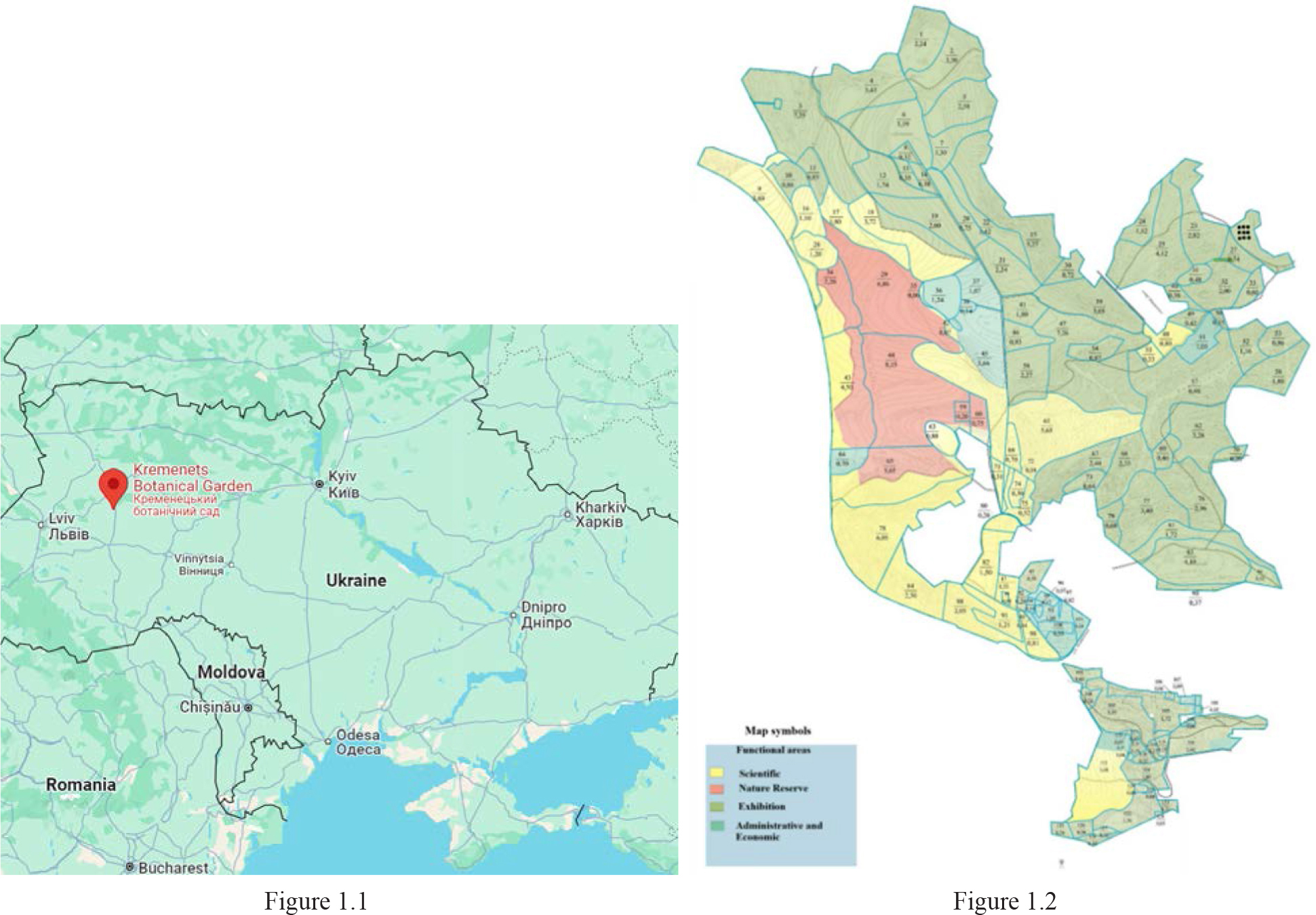
Figure 1.
Location (1.1) and zoning (1.2) of the Kremenets Botanical Garden with the arrangement of temporary experimental plots. Source.
Source 1.1: Compiled by the authors using Google maps online resource; Source 1.2: Data of the Kremenets Botanicatl Garden Territory Organisation Project 2019
The Botanical garden is divided into four main functional zones: exposition, scientific, protected and administrative. The exposition zone, the largest area within the botanical garden, comprises 59.2% of the total territory, highlighting its primary role in showcasing plant diversity and fulfilling educational and recreational functions. A much smaller area (25.1%) is allocated to the scientific zone, which serves as a hub for botanical research and development. The protected zone, dedicated to biodiversity conservation, accounts for 10.6% of the garden’s area and occupies a smaller part. The administrative zone, which ensures the garden’s maintenance and operations, covers the remaining 5.1%.
The garden comprises 63 categories of plots designated for various potential uses. The largest proportion (38.5% of the total area) is occupied by natural flora plots, emphasising the botanical garden’s environmental focus. A significant portion is also allocated to plots intended for monitoring and scientific research (13.4%), alongside other zones such as the protected zone (10.6%) and the Polissia phytocoenosis sub-zone (9.7%). Smaller proportions are dedicated to the arboretum, tree nursery, fruit crop introduction plots, recreational areas, special gardens, and the Centre for Breeding Rare and Endangered Plants, with their areas ranging between 1.0% and 3.7%. This plot distribution highlights the botanical garden’s multifunctionality, supporting biodiversity conservation, scientific research, education, and recreation (Tab. 1).
Table 1.
Area distribution by the plot categories (in potential use), %
| Number | Plot categories in potential use | Area,% |
|---|---|---|
| 1 | Arboretum | 3.7 |
| 2 | Tree nursery | 1.4 |
| 3 | Fruit crop introduction plot | 1.3 |
| 4 | Landscaping plots | 1.0 |
| 5 | Area of natural flora | 38.5 |
| 6 | Protected zone | 10.6 |
| 7 | Podillia phytocoenosis sub-zone | 1.9 |
| 8 | Polissia phytocoenosis sub-zone | 9.7 |
| 9 | Recreational plot. Summer houses for holidaymakers | 1.2 |
| 10 | Old park | 1.0 |
| 11 | Monitoring and research area | 13.4 |
| 12 | Territory of special gardens | 1.5 |
| 13 | Power line route | 1.0 |
| 14 | Centre for breeding rare and endangered plants | 1.8 |
| 15 | Other | 12.0 |
| Total | 100.0 | |
To enhance the condition of plantings in the Kremenets Botanical Garden, several forestry activities are planned, including conversion felling, selective sanitation and landscape felling, as well as planting maintenance. These measures aim to maintain ecological balance, preserve natural landscapes, and create favourable conditions for vegetation development.
Typological Structure of the Botanical Garden’s Forests
On the territory of the Kremenets Botanical Garden presented three forest types, which play a key role in shaping its ecosystem. The largest part is occupied by the fresh fertile hornbeam-oak forest, covering 68.0% of the total area. A smaller portion (17.8%) is occupied by the fresh relatively fertile hornbeam-oak-pine forest, while the forest type, which covers 13.7%, remains unidentified. The dry relatively fertile hornbeam-oak-pine forest accounts only 0.5 % of the total area of the garden, indicating its limited distribution.
The fresh fertile hornbeam-oak forest is the dominant forest type in all functional zones of the botanical garden. It is most prevalent in the protected zone (90.6%), aligning with its primary function of preserving natural ecosystems. A significant proportion of this forest type is also found in the exposition zone (77.1%), enhancing its recreational value. However, its presence is comparatively lower in the scientific (42.7%) and administrative (41.0%) zones.
The fresh relatively fertile hornbeam-oak-pine forest cover 33.9 % of the scientific zone, highlighting its significance for research activities. In the protected zone, it accounts 9.4%, while in the exposition zone, it makes up 14.0 %, indicating a relatively even distribution among the garden’s functional zones.
The dry relatively fertile hornbeam-oak-pine forest is found exclusively in the exposition zone, where it occupies 0.9% of the area, highlighting its rarity and localised distribution.
The distribution of forest types in the Kremenets Botanical Garden is uneven and different on the functional zones. The predominance of the fresh fertile hornbeam-oak forest in the protected zone ensures ecosystem stability and supports biodiversity conservation. Its significant presence in the exposition zone creates attractive conditions for recreation and educational activities, while the fresh relatively fertile hornbeam-oak-pine forest type in the scientific zone offers opportunities for researching forest ecosystem dynamics.
The detection of an unidentified forest type (13.8%) indicates the need for further research to classify the vegetation and assess its impact on the garden’s ecosystem. Special attention should be given to the conservation of rare forest types, such as dry relatively fertile hornbeamoak-pine forest, due to its limited distribution.
The analysis of forest type distribution in the Kremenets Botanical Garden confirms its significant potential as an environmental, scientific and recreational site. Developing effective forest conservation and management strategies is a key task for maintaining the ecological stability of this area.
Analysis of the Landscape Type Distribution in the Botanical Garden
The territory of the Kremenets Botanical Garden is divided into three main landscape categories (Fig. 2a): closed landscapes (type I), semi-open landscapes (type II), and open landscapes (type III). These types differ in crown closure, spatial organisation, and ecological characteristics, forming a unique garden structure.
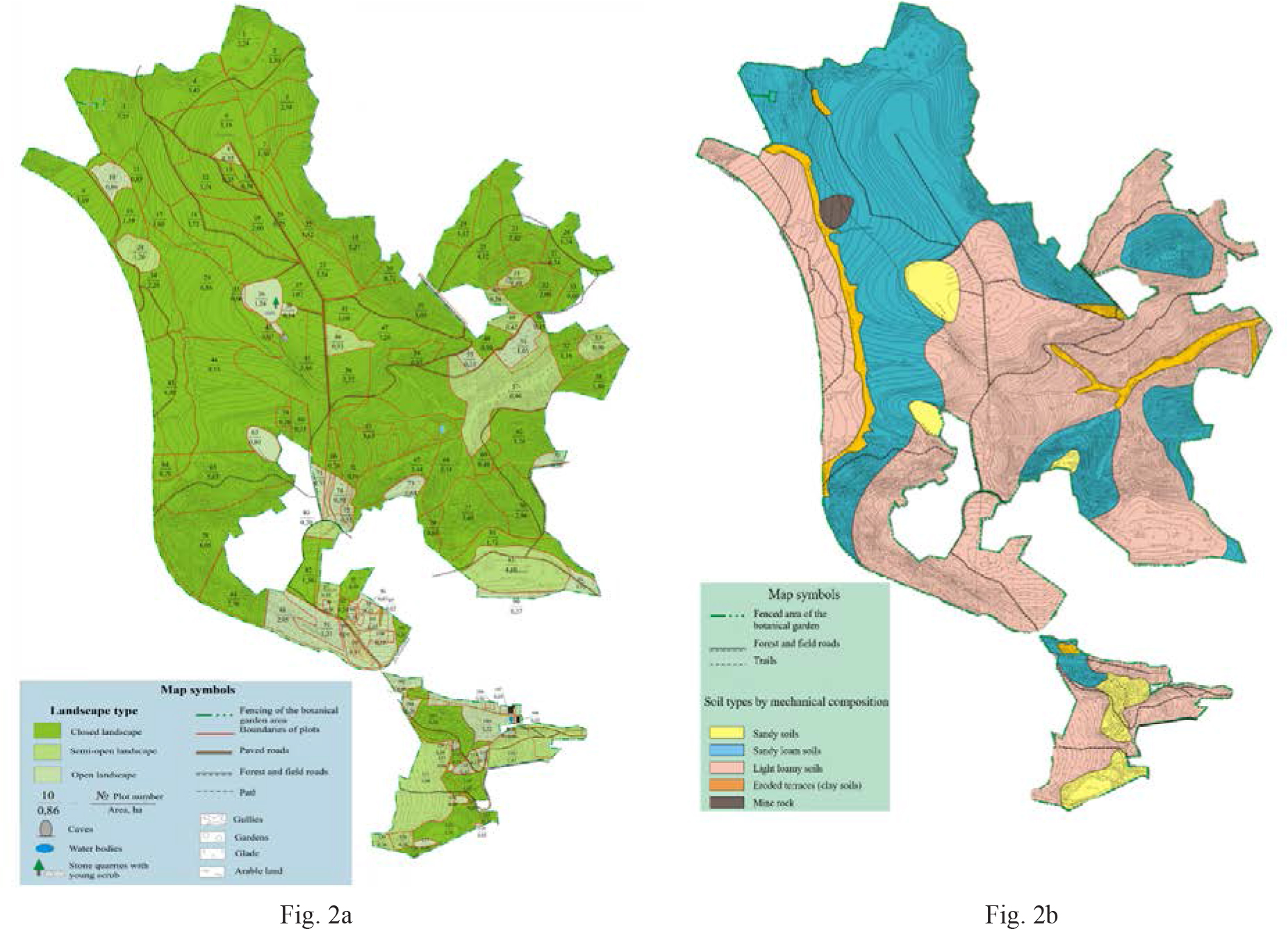
Figure 2.
Schematic map of the distribution of landscape types (a) and soils (b)
Source: Data of the Kremenets Botanicatl Garden Territory Organisation Project 2019
The closed landscape (type I) occupies the largest portion of the garden, covering 78.5% (156.9 hectares). It consists of forests with dense tree crown closure (60–100%) and an even tree distribution. Type Ia forms the dominant part, creating a typical forest ecosystem with predominant shade and limited sunlight penetration. The main tree stands are pine-hornbeam-birch, oak-hornbeam and larch-ash forests Type Ib is covers only 1.4 hectares. It features unevenly distributed trees, creating natural gaps that enhance the ornamental qualities of the landscape.
The semi-open landscape (type II) accounts for 11.4% of the total area (22.8 ha) and is represented by sparse stands with 30–50% crown closure. Type IIa makes up the majority of this category, allowing for wide and dense tree crowns due to sufficient light exposure. These areas are primarily found in the northeastern and eastern parts of the garden and include pine-birch, birch-hornbeam and oak-hornbeam-maple stands. Type IIb, covering only 0.2 hectares, is characterised by forest edges formed by low-crowned trees and shrubs.
The open landscape (type III) covers 10.1% of the area (20.3 hectares) and includes sparse forests, open gaps and non-forested areas. Type IIIa (6.0 hectares) consists of scattered single trees with well-developed crowns, contributing to the ornamental appeal of the landscape. Type IIIb (5.3 hectares) comprises forest regeneration areas with trees up to 1.5 meters high, enhancing the scenic beauty of forest edges and grass cover. Type IIIc (9.0 hectares) includes clearings, caves, and arable land. Although lacking woody vegetation, which, despite lacking woody vegetation, play a crucial role in maintaining the garden’s landscape diversity.
In general, the diversity of the landscapes of the Kremenets Botanical Garden is an important factor in maintaining ecosystem resilience and biodiversity. While the dominance of a single landscape type ensures stability, the presence of less common types enhances the adaptability of ecosystems to changing environmental conditions. Further research on undefined types and local features will contribute to more effective management and support the sustainable development of the garden as a scientific and conservation site.
Soil Distribution Analysis in the Botanical Garden
The soil cover of the Kremenets Botanical Garden exhibits significant diversity, which supports the formation of complex ecosystems and contributes to biodiversity conservation. The soil map (Fig. 2b) identifies five primary soil types, each differing in mechanical composition, spatial distribution and ecological properties.
Sandy loam soils cover the largest portion of the garden, spanning 95.0 hectares (47.5% of the total area). These soils are predominantly found in the northern and central parts of the territory. Characterised by high water permeability and efficient drainage, they provide optimal conditions for tree growth and contribute to the development of stable forest ecosystems. As a result, sandy loam soils are a key component of the garden’s natural environment, playing a vital role in ecosystem sustainability.
Light loamy soils cover approximately 70.0 hectares (35.0% of the total area) and are primarily found in the central and southern parts of the garden. These soils provide optimal conditions for landscape gardening and support the growth of tree stands. Their medium density and moderate water-holding capacity make them well-suited for a wider variety of plant species, which makes them key to preserving the garden’s landscape diversity.
Eroded ravine terraces (clay soils) occupy about 20.0 hectares (10.0% of the total area) and are found on steep slopes and are susceptible to erosion. These areas require protective soil management practices, such as the planting of perennial grasses and shrubs to stabilise the soil. While their steep terrain makes them challenging for direct use, they play a crucial role in shaping the natural landscape and supporting ecosystem processes
Sandy soils cover a relatively small area of 10.0 hectares (5.0%), mostly in the southeastern part of the garden. Their high water permeability limits their agricultural and forestry potential but makes them well-suited for steppe and rocky-steppe vegetation. Mine rock areas account for 5.0 hectares (2.5%) and remain unreclaimed. These areas require further restoration efforts to become integrated into the garden’s ecosystem.
The beech forests within the Botanical Garden are confined to the exhibition and research zones and are found primarily on light loamy soils. The dominant forest type is a fresh hornbeam-oak-pine forest community, which occupies areas with light loamy and sandy loam soils. The dry hornbeam-oak-pine mixed forest is represented by small patches, found mainly on sandy loam and sandy soils.
Thus, the soil cover of the Kremenets Botanical Garden exhibits high diversity, enabling a balanced integration of environmental, scientific and recreational functions. The dominance of sandy loam and light loamy soils creates favourable conditions for vegetation growth, while eroded and sandy soils require additional conservation measures to prevent degradation and ensure longterm sustainability. Reclamation of mine rock areas presents an opportunity to enhance the garden’s ecosystems and expand its functional potential.
Age Structure and Species Diversity of the Botanical Garden’s Stands
The Kremenets Botanical Garden exhibits a well-balanced age structure in its stands, which is essential for maintaining the stability of forest ecosystems. The stands are categorised into young, meddle-aged, maturing, mature and overmature categories. The largest proportion of the area is occupied by middle-aged stands (20–60 years old), which cover about 100.0 hectares, or 50.0% of the total area. These stands are characterised by active growth and high productivity, forming the basis of the garden’s ecosystems. Maturing stands (60–100 years old) cover 50.0 hectares (25.0% of the area), while mature forests (100–120 years old) cover 30.0 hectares (15.0%), contributing to ecosystem stability and providing an environment conducive to biodiversity conservation. Young forests (up to 20 years old) occupy 15.0 hectares, or 7.5% of the area, and are represented by forest plots undergoing active development, often in areas of natural regeneration. Overmature stands, aged over 120 years, cover 5.0 ha (2.5%) and possess significant ecological value. These forests provide favourable conditions for rare species and ensure the preservation of natural ecosystems.
The species diversity of the forest stands in the study area is represented by the dominant tree species, pedunculate oak (Quercus robur L.) and hornbeam (Carpinus betulus L.), which together cover 47.5 % of the total stand area. Other significant species include Scots pine (Pinus sylvestris L.) (20.0%), European ash (Fraxinus excelsior L.) (15.0%), silver birch (Betula pendula L.) (10.0%), Norway spruce (Picea abies L.) (5.0%), and European beech (2.5%). Beech stands are of particular ecological and landscape value, as they contribute to the formation of unique ecosystems that positively impact biodiversity and overall ecosystem stability.
The age range of the dominant tree species within the study area is 45–105 years. The majority of the native tree species consists of green stands aged 50–70 years. The introduced tree species are dominated by young stands up to 20 years old. Individual groups of trees of various ages are concentrated primarily in areas of natural flora within the exhibition zone, as well as in the protected section of the botanical garden.
Phytocoenotic Description of Beech Stand Structure
The stand in subcompartment 26 consists of a planted forest with a two-layer structure and a crown closure of 80 %. The first layer is formed by European beech (fig. 3), which makes up 40.0% of the stand, with a height of 20–25 m, and European ash, which also makes up 40.0%, with a height of 15–20 m. Hornbeam accounts for 18.0% of the first layer, reaching 15–20 m in height. Single specimens of pedunculate oak and European larch (Larix decidua Mill.) make up 2.0% of the stand, with height ranging within 15–20 m. The second layer of the stand consists of hornbeam (30.0%) and Norway maple (Acer platanoides L.), which accounts for 50.0%. The second layer includes small-leaved lime (Tilia cordata Mill.) and wych elm (Ulmus glabra Huds.), which together account for 20.0%. The average height of the trees in this layer is 10–15 m.
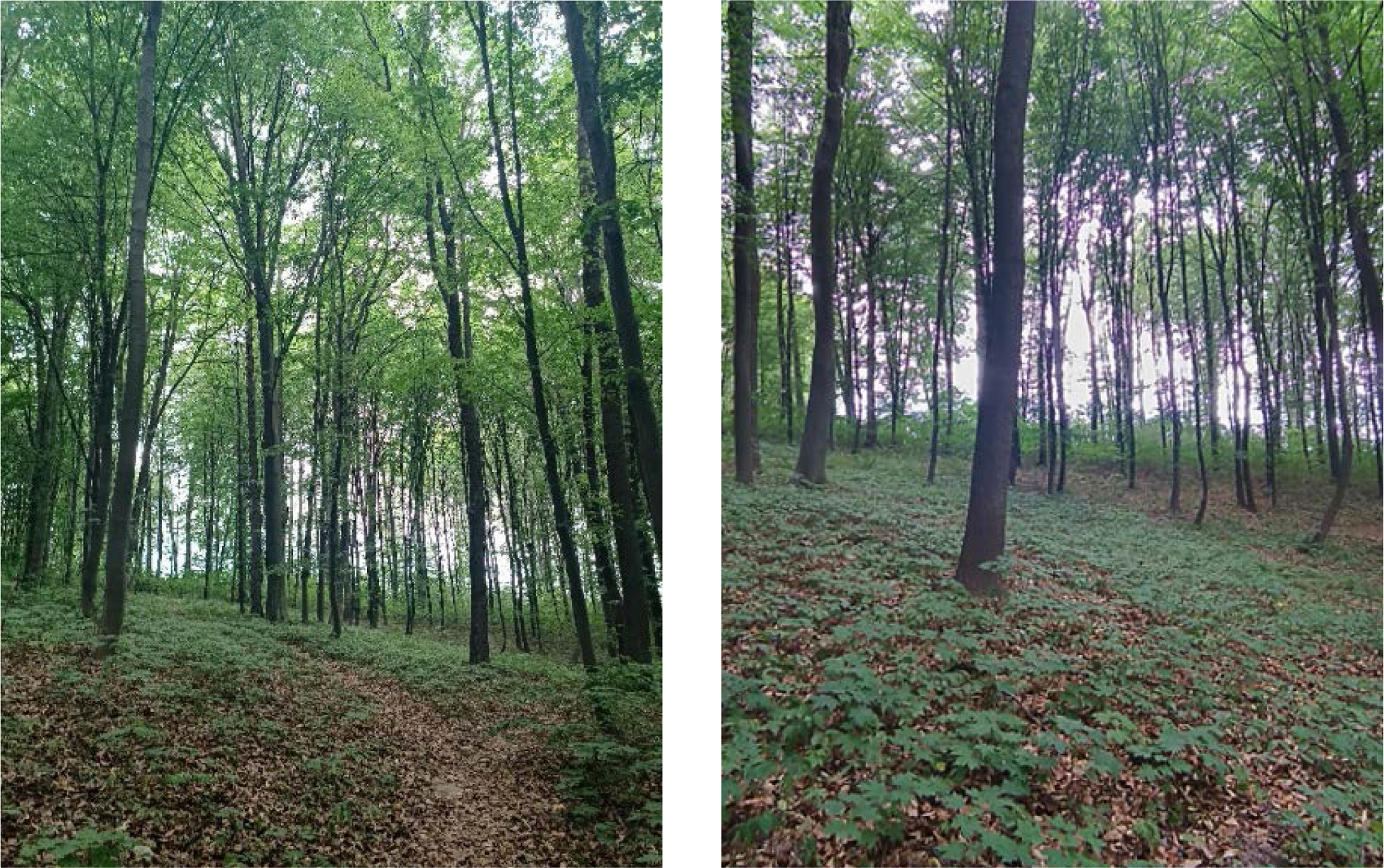
Figure 3.
Distribution of the European beech (Fagus sylvatica L.) in Section 26 of the Kremenets Botanical Garden as at 6 July 2026
Source: developed by the authors
The undergrowth in the subcompartment is primarily composed of hornbeam (30.0%) and Norway maple (60.0%). Less common species include Euonymus verrucosa L. (5.0%) and Euonymus europaea L. (4.0%), along with single specimens of small-leaved lime, making up to 1.0%. The undergrowth reaches a height of 2–5 m, ensuring sufficient density and contributing to the development of medium layering in the vegetation cover.
The grass cover in the subcompartment is diverse. The most widespread species include Stellaria holostea L. – 30.0%, Aegopodium podagraria L. – 20.0%, Geum urbanum L. – 13.0%, Asarum europaeum L. – 12.0%, Lathyrus vernus L. – 8.0%, and Pulmonaria obscura Dumort. – 6.0%. Less frequent species, each comprising 3.0–4.0% of the grass cover, include Carex pilosa Scop., Galium odoratum (L.) Scop., and Galeobdolon luteum Huds. Spring ephemerals such as Galanthus nivalis L., Corydalis cava Schweigg. et Korte. and Anemone nemorosa L. reach a 30.0–35.0% distribution in the early stages of the season.
The landscape type is classified as 1A – a closed landscape with high crown closure. The subcompartment belongs to the first class of aesthetic assessment, indicating its significant ornamental value and suitability for nature conservation and recreational purposes.
The species diversity of oak forests in subcompartment 26 reflects a highly diverse vegetation cover. Under the tree stand, the grass cover is continuous, though it does not form a separate layer. Light-loving species dominate well-lit areas, while shade-tolerant plants are prevalent in shaded zones. Xerophytic species are common on uplands, indicating significant ecological diversity and stability of the forest ecosystem.
All TSPs were located on a micro-relief with a small northeast exposure slope of up to 10° of, which influences the distribution and viability of advance regeneration.
The study revealed that forest litter thickness significantly affects the amount of self-seeding and advance regeneration. In the group with thinner litter, the number of regenerating seedlings was higher, suggesting a positive effect of thinner litter on seed germination (Wang et. al. 2022). Across all TSPs, the projected herbaceous vegetation cover was low, with a soil-cover density of up to 0.4, creating favourable conditions for natural regeneration.
Data analysis revealed the following self-seeding and advance regeneration numbers (per 12 m2): one-year-old self-seeding (height up to 0.25 m) – 202 plant, 2–3-year-old advance regeneration (height up to 0.5 m) – 118 plant, and 4–7-year-old advance regeneration (height up to 1.5 m) – 11 plant (Fig. 3). Although density gradually decreases with age, the viability of advance regeneration in all age groups remained normal, indicating favourable environmental conditions for natural regeneration.
Self-seeding mortality is significantly influenced by grass cover density, litter thickness, canopy closure, and unfavourable lighting conditions (Liu, 2025). In 2023, evenly distributed very dense and dense natural regeneration was recorded in four TSPs (1, 2, 4, 5). For the other TSPs (3, 6, 7, 8, 9), where natural regeneration density was insufficient, supplementary planting is recommended to ensure the uniform development of young stands and enhance forest productivity (Tab. 2, Fig. 4).
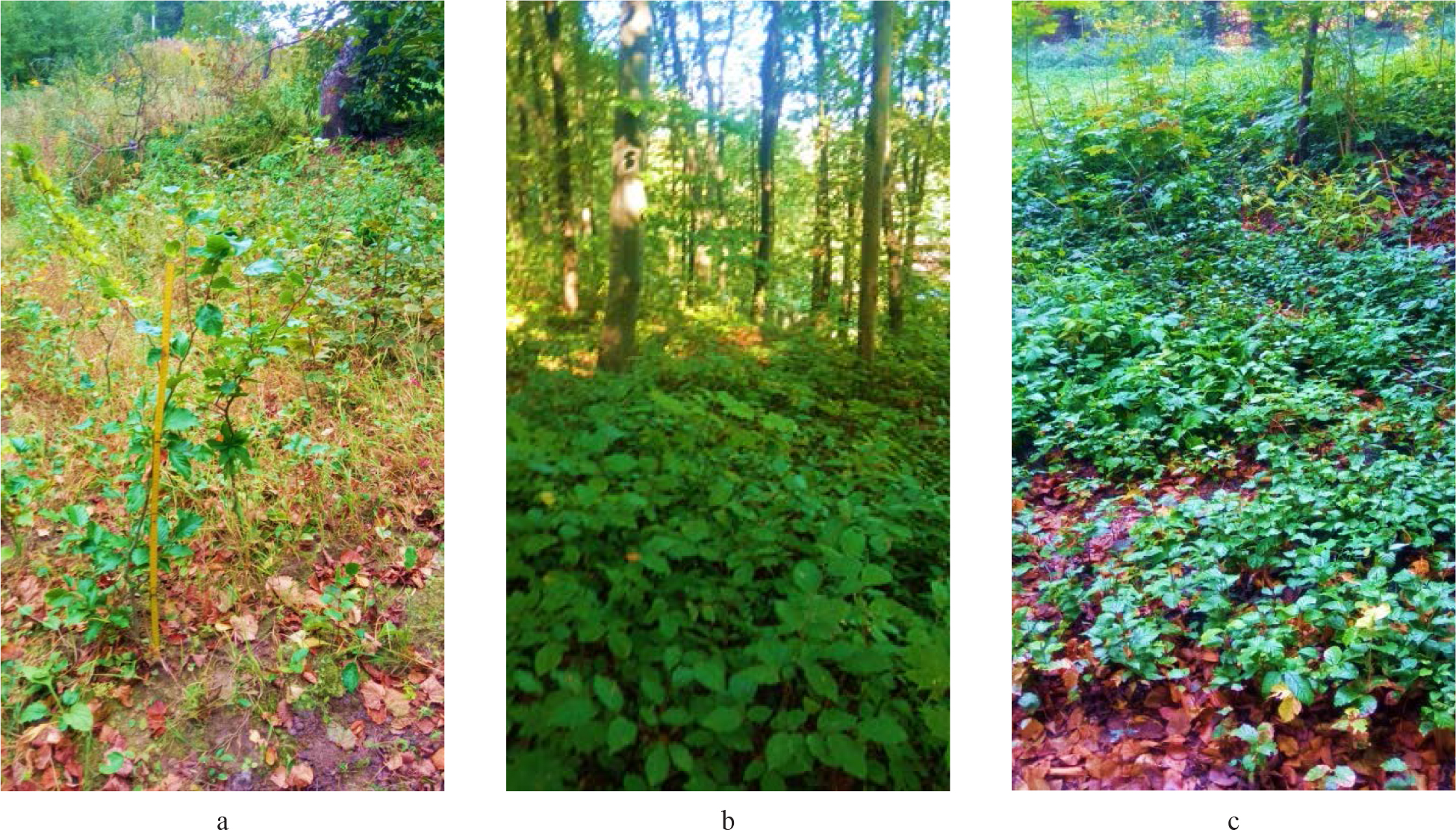
Figure 4.
Location of natural regeneration inventory plots (a – big advance regeneration with a height of up to 1.5 m; b – medium advance regeneration of up to 0.6 m height; c – small advance regeneration of up to 0.25 m height)
Source: developed by the authors
Table 2.
Characteristics of European beech natural regeneration on temporary sample plots
| Sample plot number | Age, years | Height of undergrowth, m | Viability category | Advance regeneration quantity, plant number | Density | Forest litter thickness, cm |
|---|---|---|---|---|---|---|
| 1 | 1 | Small up to 0.25 m | Normal viability | 460 | Very dense | 1–2 |
| 2 | 1 | 120 | Medium density | 1–2 | ||
| 3 | 1 | 26 | Sparse | 1–2 | ||
| 4 | 2–3 | Medium up to 0.5 m | Normal viability | 260 | Dense | 1–2 |
| 5 | 2–3 | 76 | Medium density | 1–2 | ||
| 6 | 2–3 | 19 | Sparse | 1–2 | ||
| 7 | 4–7 | Big up to 1.5 m | Normal viability | 19 | Sparse | 2–3 |
| 8 | 4–7 | 9 | Sparse | 2–3 | ||
| 9 | 4–7 | 5 | Sparse | 2–3 |
At TSPs 3, 6, 7, 8 and 9, additional European beech seedlings were planted. The planting material consisted of 3–7-year-old seedlings with a height of 100–160 cm and a root collar diameter of 5–8 cm were used. The crown projection of the seedlings ranged from 20 × 40 cm to 20 × 75 cm, providing optimal conditions for young tree growth. A total of 30 young trees were planted.
The total area occupied by planted European beech trees was 320 m2, corresponding to 8.0% of the studied TSPs’ area. The use of seedlings with a well-developed root system and optimal morphometric characteristics (height, diameter, and crown projection) promotes rapid rooting and adaptation to environmental conditions. The uniform planting pattern ensures efficient use of the regeneration area, providing adequate light availability for each seedling and minimising competition in the early stages of development.
The additional planting of European beech in forested areas holds significant ecological and silvicultural value. It contributes to increasing stand density in the sample plots with insufficient natural regeneration. The introduction of seedlings balances the structural parameters of the forest cover, thereby enhancing ecosystem stability and increasing productivity. Due to the appropriate planting pattern and the selection of high-quality planting material, a high survival rate of the additionally planted trees is expected.
Reforestation followed a 4 × 4 m planting pattern, in accordance with generally accepted recommendations for mixed stands aimed at developing resilient forest ecosystems.
To improve the effectiveness of reforestation efforts, regular maintenance of planted trees is essential, including weed control and management of grass cover density. Additionally, monitoring seedling growth and development during the first 5–7 years is recommended to evaluate the success of the measures and identify potential risks. This approach will contribute to the overall stability and sustainability of forest stands.
Diversity of Natural Environments (Ecosystems) in the Botanical Garden
Species conservation in the Kremenets Botanical Garden is implemented at three levels: species, coenotic, and ecosystem. Special attention is given to biodiversity conservation through habitat protection, considering the specific abiotic and biotic factors necessary for species throughout their entire life cycle. The Kremenets Mountains are distinguished by rich natural conditions and include nine rare habitats that are subject to protection in Europe. However, these habitats have not yet been granted conservation status in Ukraine.
Five rare habitats have been identified in the botanical garden, each playing a crucial role in maintaining local and regional biodiversity:
Eurosiberian rocky communities on Mount Volovytsia, home to numerous specialised flora and fauna species.
Eurosiberian calciphilic psammophytic communities in the Bilya Zuba ecosite, adapted to limestone sandy soils with unique ecological conditions.
Forests dominated by pedunculate oak, European ash and hornbeam on eutrophic and mesotrophic soils in the protected zone, supporting high biodiversity.
Caves in the Karier ecosite, providing essential habitats for various invertebrates and microorganisms.
Mainland outcrops of basic and ultrabasic rocks in the Karier ecosite, characterised by distinctive geological conditions and unique plant species.
Each of these habitats is ecologically unique and plays a vital role in the conservation of rare and endemic species. Rocky communities and calcareous habitats support xerophytic plant species, while eutrophic forests provide a favourable environment for the development of complex multi-layered ecosystems. The caves and rock formations in the Karier ecosite create specialised microclimatic conditions, enabling the existence of species not found elsewhere.
On the territory of the Kremenets Botanical Garden, 12 plant species listed in the Red Data Book of Ukraine and 17 regionally rare species of the Ternopil region have been recorded (Tab. 3). These species contribute significantly to the floristic diversity of the region and require enhanced monitoring for conservation. To ensure their protection, they are cultivated in collection plots alongside in situ conservation efforts.
Table 3.
List of Red Data Book and regionally rare plant species
| Red Data Book species | Regionally rare species |
|---|---|
| Allium ursinum L. | Actea spicata |
| Botrychium lunaria (L | Alyssum gmelinii Jord |
| Cephalanthera damasonium (Mill.) Druce. | Anthyllis schiwereckii (DC) Blocki., |
| Dactylorhiza fuchsii (Druce) Soo, | Arum besseranum Schott |
| Dactylorhiza maculata (L.) Soo | Asplenium ruta-muraria L |
| Dactylorhiza majalis (Reichenb.) P.F. Hunt et Sammerhayes, | Asplenium trichomanes L. |
| Dactylorhiza. incarnata (L.) Soo | Carex humilis Leys. |
| Epipactis artrorubens Hoffm ex Bernb., | Convallaria majalis L. |
| Epipactis purpurata Swith. | Daphne mezereum L. |
| Galanthus nivalas L. | Filipendula vulgaris Moench. |
| Lilium martagon L | Geranium phaeum L. |
| Neottia nidus-avis L. | Helichrysum arenarium (L.) Moench. |
| Melittis sarmatica Klok., | |
| Minuartia aucta Klok. | |
| Parietaria officinalis L. | |
| Teucrium montanum L. | |
| Thymus podolicus Klok |
The following regionally rare species are found in the forest coenoses and petro-psammophytic flora of the botanical garden: Actaea spicata, Alyssum gmelinii, Anthyllis shivereckii, Arum besseranum, Asplenium ruta-muraria, Asplenium trichomanes, Carex humilis, Convallaria majalis, Daphne mezereum, Filipendula vulgaris, Geranium phaeum, Helichrysum arenarium, Melittis sarmatica, Minuartia aucta, Parietaria officinalis, Teucrium montanum, Thymus podolicus. These species form unique ecological complexes that require active conservation measures.
Three rare vegetation formations have been identified within the garden:
Festuceta pallentis community in the Bilya Zub tract covering an area of up to 10 m2. This community is well adapted to arid conditions with a specific microclimate.
humilis community on Mount Volovytsia, occupying up to 5 m2. Characterised by typical flora of carbonate soils, this formation plays a crucial role in maintaining biodiversity.
Oak and hornbeam forests (Querceta roboris) dominated by common ivy (Hedera helix L.) in the protected zone. These forests form complex multi-layered ecosystems that include relict species.
The oak-hornbeam forests in the botanical garden form a tree layer composed of English oak and Hornbeam, with a partial admixture of European ash, Sweet cherry (Cerasus avium (L.) Moench), and maple species (Acer platanoides, A. campestre, and A. pseudoplatanus). The undergrowth includes Hornbeam, Euonymus verrucosa L., Euonymus europaea L., and Acer platanoides L., with an overall crown closure ranging from 5% to 30 %. The grass cover is primarily formed by Hedera helix L., Galeobdolon luteum Huds., and Asarum europaeum L.
The Red Data Book and regionally rare species of the Kremenets Botanical Garden play a key role in preserving the region’s floral and ecological diversity. Rare coenoses, such as Festuceta pallentis, Carex humilis, and oak-hornbeam forests communities, are critical for the conservation of unique natural complexes. Therefore, continuous monitoring of rare species and plant communities, expansion of conservation measures, and development of environmental education strategies engaging the local population n biodiversity protection efforts are necessary.
By integrating scientific research, education, and nature conservation, botanical gardens serve not only as essential centres for environmental protection but also as platforms for human-nature interaction. They demonstrate how sustainable environmental stewardship can be achieved while providing opportunities for research, learning, and inspiration, all of which are essential for the long-term sustainability of society.
Conclusions
The Kremenets Botanical Garden, covering a total area of 200 hectares, is divided into four functional zones, among which the largest proportion belongs to the exposition zone (59.2 %, or 118.4 hectares), highlighting its significance in recreational and educational activities. The scientific zone occupies 25.1% (50.2 hectares), the protected zone covers 10.6% (21.2 hectares), and the administrative zone comprises 5.1% (10.2 hectares). This distribution demonstrates a balanced combination of environmental, scientific and administrative functions. Preserving natural biodiversity remains a key priority.
The botanical garden is home to 12 species listed in the Red Data Book of Ukraine and 17 regionally rare plant species, all of which play a crucial role in maintaining ecological stability and require enhanced monitoring and conservation efforts.
The closed landscape type covers the largest portion of the territory, accounting for 78.5% (156.9 ha), ensuring the ecological stability of the ecosystems. The semiopen landscape occupies 11.4% (22.8 ha) and consists of sparse stands with optimal conditions for tree growth. The open landscape, covering 10.1% (20.3 ha), includes sparse forests, gaps and areas with no tree vegetation. This variety in landscape structure contributes to the preservation of different ecosystems and enhances the garden’s adaptability to environmental changes.
The dominant forest site type is the fresh fertile hornbeam-oak forest, which covers 68.0% of the garden’s area (136.0 ha) and ensures the stability and sustainability of forest ecosystems. The fresh, relatively fertile hornbeam-oak-pine forest site type covers 17.8% (35.6 ha), while the area of unidentified forest types is 13.7% (27.6 ha). The dry relatively fertile hornbeam-oakpine forest type covers only 0.5 % (1.0 ha), indicating its localised distribution. Further research is needed to identify unidentified forest types.
Sandy loam soils, covering the largest part of 47.5%, provide favourable conditions for tree species growth. Light loamy soils, which account for 35.0% of the territory, play a key role in forest growth. Clay soils, covering 10.0% of the area, require soil protection measures due to their susceptibility to erosion. Sandy soils and mine rock formations make up 7.5% of the territory and require reclamation efforts to maintain the ecological balance.
In the temporary sample plots established within the study area, European beech regeneration is vigorous, with normal plant viability. On average, there are 202 one-year-old self-seeding plants per 12 m2, 118 plants aged 2–3 years, and 11 plants aged 4–7 years. In sample plots where natural regeneration density is low, additional planting is recommended. The use of seedlings with optimal characteristics contributes to increasing stand density.
To enhance the protection of rare species and coenoses, it is advisable to strengthen monitoring efforts and expand conservation measures. Reclaiming areas with mine rock and stabilising eroded soils will help improve the garden’s ecological condition. Additionally, educational initiatives should be conducted to raise public awareness and encourage active participation in the conservation of natural resources. A balanced approach to land use will ensure the sustainable development of the botanical garden.
Acknowledgements
This article contains the results of the research topic ‘Scientific basis for the conservation and reproduction of rare forest communities in quasi-natural ecosystems of the Kremenets Botanical Garden’ (State Registration Number: 0124U003374). The authors are grateful to the editor-in-chief, the manuscript editor, and the anonymous reviewers for their help in improving previous versions of this article. 0124U003374