
Introduction
Private forests in Poland covered an area of 1783 thousand hectares in 2022 (Statistica… 2023). A large part of these forests (964,000 ha – over 54% of the area) is located on 555,563 farms (The Agricultural Census 2020). The average forest area of a farm is 1.73 ha. The remaining part of private forests (819 thousand hectares) is owned by people who are not farmers. Since there is no detailed information about the above-mentioned group of owners, knowledge about them is limited. In addition, it is worth noting that the officially reported area of private forests, estimated at approximately 900,000 ha, encompasses the area where forests have developed through natural succession with light-demanding species. The area of private forests increased after 1989 due to the afforestation of fallow land and abandoned low-value agricultural land. This is because in the years 2004–2020, funds from the European Union (EU)’s Common Agricultural Policy (CAP) were available to promote afforestation in Poland (Wysocka-Fijorek et al. 2020; Biczkowski et al. 2024). More than €1 billion has been available for these measures.
According to collected data, the area of forests and forest land owned by agricultural holdings decreased over the years (1,201,000 ha in 2002, 1,164,000 ha in 2010 and 964,000 ha in 2020). During the same period, the area of private forests in Poland grew (1,555,000, 1,686,000 and 1,786,000 ha, respectively). This shows that the share of private forests not owned by agricultural holdings increased from about 22.7 percentage points to approximately 46.0 percentage points (from roughly 354,000 ha in 2002 to 822,000 ha in 2020) (GUS Forestry 2003, 2011, 2021).
Results of the Polish National Forest Inventory show that the natural condition of private forests is very good in terms of fundamental indicators, they do not differ significantly from public forests, including those managed by the State Forests. We owe this state of affairs to the good supervision of local administrative authorities or the local forest district manager, as well as support in establishing new forest plantations and their maintenance in the later stages of tree stand development. The main disadvantages of private forests in Poland are their high fragmentation and the lack of organised forms of management (Wysocka-Fijorek 2013, 2014; Gołos et al. 2021). To properly select solutions for private forest owners, it is crucial to understand their opinions and views. This knowledge would help to distinguish homogeneous groups (types) of private forest owners who have a similar value system, goals and attitudes. Previous research has shown that these motivations may vary in European conditions (Kuuluvainen et al. 1996; Boon et al. 2004; Majumdar et al. 2008; Häyrinen 2019). This applies both to how forests are managed and the approach to nature conservation in forests. Understanding this area is crucial for shaping forest policy (Danley 2019). The interests of private forest owners must be the same as those of public ownership, such as the provision and protection of recreational opportunities, cultural heritage and biodiversity (Bergseng and Vatn 2009; Gadaud and Rambonilaza 2010; Sandström et al. 2011; Haugen 2016; Sténs et al. 2016). Their implementation is of great importance due to the high fragmentation of the area, the unsolved and complicated property rights (many co-owners), the lack of organised forms of management (associations), low profitability due to the low level of wood harvesting and the lack of an effective system for the sale of small quantities of wood (Gołos et al. 2011). The situation has improved since 2022 due to the establishment of digital wood trading portals, which support wood mobilisation from private forests (Karaszewski 2023). The diversity of objectives has also increased due to urbanisation, changing societal values and the reduced dependence of forest owners on income from the forest (Domínguez and Shannon 2011; Karppinen and Korhonen 2013).
Private forest owners in Poland, like those in many other EU countries, should be considered a diverse social group. A particular lack of knowledge in the field of private forests concerns the value system that accompanies the owners of private forests, especially as it is constantly evolving in Polish society with the economic and social changes of the last 30 years. How owners perceive the role and importance of forest ecosystems is changing, with a focus on non-market services. This is a result of an increase in the level of prosperity of Polish society and rising enrolment rates, especially in higher education. Due to the large number of private forest owners and their incredible diversity, one of the most effective ways to classify them is to learn about their value systems, opinions and views. This is achieved through social qualitative research, which provides indepth information and guidance based on a random and representative sample and whose results can be applied to the entire population of forest landowners.
The analysis aimed to examine differences within the group of private forest owners in terms of their approach to Natura 2000 areas. It was assumed that the level of knowledge about this form of protection (Natura 2000) would vary, but this would not have a significant impact on the way forest management is conducted in private forests.
Research methodology
Method of sampling
The study employed the Computer-Assisted Personal Interview (CAPI) method, utilising a standardised interview questionnaire that included content-related questions and a respondent’s questionnaire. The sample was a quota random sample and was selected from the address report of the Central Statistical Office (GUS). Stratification was based on the degree of occurrence of private forests in a given administrative region (16 voivodeships). In the sample, the proportion of respondents from a given voivodeship was proportional to the proportion of farms with private forests in that voivodeship among all farms of this type in Poland. The stratification was based on data collected by GUS as part of the 2010 General Agricultural Census. As a part of the stratified distribution, counties (smaller administrative authorities) were selected, which in the next phase formed the units for the address drawing. The draw was carried out taking into account probabilities proportional to the number of private forest owners. The number of randomly selected counties was determined based on the assumption that the same number of interviews would be conducted in each, corresponding to the size of the implementation bundle (five respondents). The districts were drawn by lot according to the scheme with response. In the implementation phase, the interviewer was obliged to begin the search for the interviewee at the starting point drawn in the assigned district. From this respondent, the interviewer started searching for respondents (owners of private forests) in the neighbourhood of a given district. If a person who met the predetermined criteria lived in the selected household and agreed to participate in the study, the interview was conducted. If the person who owned the private forest did not live at the farm or the interviewer did not receive permission to interview at that address, the search for the interviewee continued at the next farm.
Survey
The level of knowledge about Natura 2000 sites among the surveyed farmers/forest owners was determined from answers to two survey questions. The first question, ‘Do you know what Natura 2000 sites are?’, allowed us to determine the structure of the ‘yes’ and ‘no’ answers. The respondents who positively answered the first question were consecutively checked in the second question, in which they had to indicate the correct definition of Natura 2000 sites (out of three proposed definitions). The group of respondents who answered negatively to the first question were not checked.
The answers to the questions on Natura 2000 sites enabled the division of a sample of respondents into three groups. Analysis of the differences in answers to five selected survey questions was conducted for the three selected groups of respondents. In the figures in the Results section, the three groups are colour-coded and they have been named based on respondents’ level of knowledge:
– Green colour indicates the group of respondents who stated that they had knowledge of Natura 2000 sites and correctly pointed out the definition of Natura 2000. They were labelled as ‘experts’.
– Blue colour indicates the group of respondents who stated that they knew what Natura 2000 sites are, but did not confirm their declarative knowledge by pointing to the correct definition. This group was labelled ‘amateurs’.
– Red colour indicates a group of respondents who admitted in the first question that they did not know what Natura 2000 sites are. The structure of the questionnaire assumed that such a respondent would not answer the second question on the definition of Natura 2000. This group of respondents was labelled ‘laypeople’.
The answers to five questions from the survey have been used for the analysis:
Benefits of being a private forest owner’s association member.
Joint management of forests (in all organised forms of private forest owners in different types of communities) offers numerous benefits. However, this process requires actions that initiate the social capital of rural areas’ inhabitants. A crucial factor in identifying catalysts for this type of initiative is understanding the ranking of potential benefits. When determining the order of benefits that pay off for owners, respondents were asked to give values from ‘1’ to ‘8’. A value of ‘1’ represented the most important benefit, and a value of 8 represented the least important benefit.
Importance of the most critical functions of forests
Forests fulfil numerous functions regardless of ownership, including non-market benefits as positive externalities or public goods. The purpose of question 2 was to determine the importance of the proposed functions by awarding 100 points for eight functions (‘the other function’ was the ninth category). Respondents were awarded points for six non-market functions and two production functions (wood raw material and non-wood products). The question intentionally uses the term ‘functions’ rather than ‘ecosystem services’, as the concept of forest function is still more firmly anchored in the public consciousness of forest owners.
Training topics for forest owners
The attitude of forest owners depends, among other things, on their level of knowledge and environmental awareness. These, in turn, are characterised by the owners’ participation in training courses. The question aimed to create a hypothetical programme for a 1-day training course lasting 6 h (480 min). The respondents’ task was to suggest the time (in minutes) that should be spent discussing the 10 proposed topics. The question enabled the identification of other issues not listed in the question’s cafeteria.
Activities that could hypothetically be financed from the forest tax
Forest owners in Poland pay the forest tax, which is a significant source of income for the municipality. The purpose of the question was to determine which activities (six categories to choose from in the question cafeteria) and what amount of PLN 100 (approximately €25) the forest owner would spend on each of these activities. Three of the categories proposed in the questionnaire are related to social activities that are possible in private forests or that are aimed at their owners.
Tasks that could be financed from Rural Development Programme (RDP) funds
The source of funding for tasks carried out in private forests in Poland is RDP funds. The question aimed to determine the most critical task to be financed from RDP funds from the eight tasks listed in the cafeteria. One of the categories concerned is nature conservation. The respondent also had the option of defining any other task.
In addition, the analysis also included the socioeconomic variables of the respondents, which have been defined in the survey metrics and relate to the following:
1) gender, age and education;
2) the area of lands being utilised as agricultural land, forest and other types and
3) the number of forest plots.
Statistical analysis
In our study, we conducted a detailed statistical analysis of five questions to which we received responses from 1,003 private forest owners. Each question was related to a specific aspect of forest ownership and management, with different response formats, including ranking, point allocation, time allocation and categorical selection. All statistical analyses were conducted using R software (R Core Team 2023).
The survey covered five main questions:
1) respondents rated eight potential benefits associated with membership in forest landowner associations from highest to lowest importance (1 = most important, 8 = least important), generating ordinal data;
2) respondents assigned 100 points to eight predefined forest functions – six non-market and two productive – which resulted in tied compositional data;
3) 1-day training session to 10 suggested topics, which resulted in compositional data;
4) respondents were asked to allocate 100 PLN of a hypothetical forest tax revenue to six possible uses, which again resulted in compositional data and
5) respondents chose the most essential task to be funded by CAP from a list of eight options, which resulted in categorical (nominal) data.
For questions 1–4, either ordinal or composite data were collected. Normality was assessed using Q–Q diagrams and the Shapiro–Wilk test, both of which indicated a non-normal distribution. Therefore, non-parametric statistical methods were used for the analysis.
The data for questions 1–4 were analysed at two levels: at the between-response level, the differences in the distributions between the different response options were examined and at the within-response level, comparisons were made between groups of respondents (‘experts’, ‘amateurs’ and ‘laypeople’) within each question. In both cases, the Kruskal–Wallis rank sum test was used, a non-parametric alternative to one-way analysis of variance that does not require a normality assumption (Gibbons and Chakraborti 2011). When statistically significant differences were found, multiple pairwise comparisons were performed using the Dunn post hoc test (Dunn 1964), applying the Bonferroni correction to control for the family-wise Type I error rate (Shaffer 1995). These analyses were performed using the dunnTest() function from the FSA package (Ogle et al. 2022).
For question 5, which was nominal categorical data, a chi-square goodness-of-fit test was used to determine whether the observed distribution of responses was significantly different from a uniform distribution. If statistically significant results were found, pairwise post hoc comparisons of proportions were performed using the pairwise.prop.test() function in R, with Bonferroni adjustment for multiple comparisons.
All data visualisations were created using the gg-plot2 package (Wickham, 2016). To facilitate the interpretation of statistically homogeneous groups, compact letter displays (CLDs) were created using the multcompLetters() function from the multcompView package (Graves et al. 2019). A significance level of p < 0.05 was assumed for all analyses.
Research results
Forest owners’ knowledge of Natura 2000 sites
In the respondents’ answers to the question about their knowledge of Natura 2000 sites, only 62% of respondents (621 farmers) had answered that they knew what Natura 2000 sites were. Of these, only 397 respondents (64%) confirmed the knowledge stated in the question by pointing to the correct definition of the Natura 2000 network (Fig. 1A).
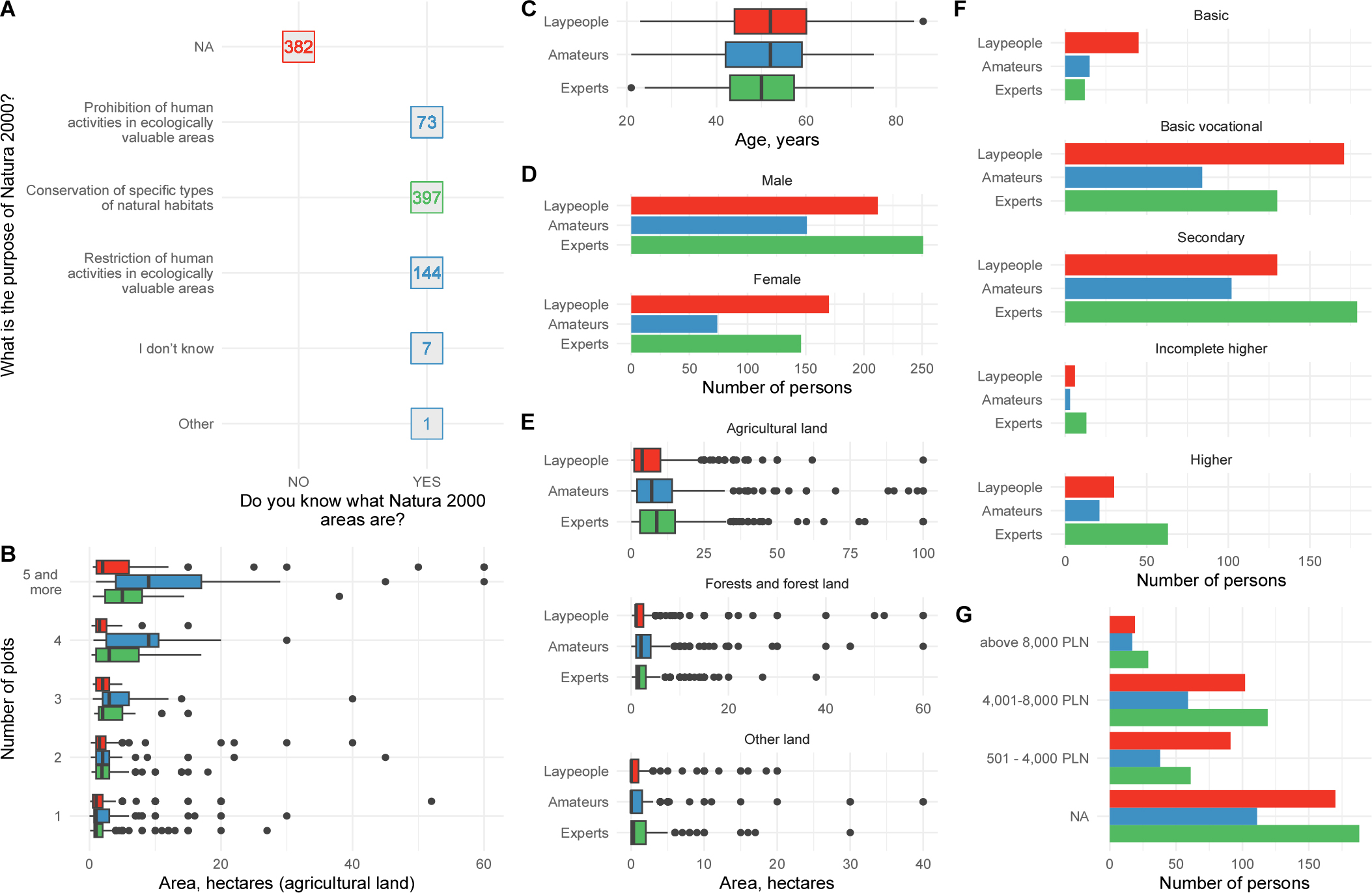
Figure 1.
Demographic characteristics of respondents and their comprehension of the definition of Natura 2000 sites. Panel A shows the distribution of respondents into groups (‘experts’, ‘amateurs’ and ‘laypeople’ denoted by green, blue and red colours, respectively) according to their answers to the two given questions. The number of respondents who chose the corresponding answer is indicated in the squares. Respondents who answered ‘NO’ on the horizontal axis (first question) were not asked on the vertical axis (second question) and were labelled NA. The other fields show the socioeconomic profiles of the respondents according to the groups. Panels B and E indicate the number and area of lands owned by the respondents, respectively. Panels C, D and F describe the age, gender and level of education of the respondents, respectively. Panel G indicates the average monthly income of all members of the respondents’ households (NA means that the person does not know or has not answered)
By the methodological assumptions, the structure of the responses made it possible to distinguish between a group of ‘experts’ (397 respondents), ‘amateurs’ (225 respondents) and ‘laypeople’ (382 people) (Fig. 1A). Among the respondents, the group of ‘amateurs’ dominated among forest owners with a larger number of plots (four and more) (Fig. 1B). The groups of respondents did not differ much in terms of age (Fig. 1C), or in area of agricultural land, forests and other fields (Fig. 1E). The ‘experts’ group had a higher level of education than the ‘laypeople’ group (Fig. 1F).
Evaluation of the benefits associated with the functioning of forest owners′ associations
Forest owners can take initiatives to establish associations of private forest owners. Such an organisation of owners can help its members achieve various benefits. Respondents were asked, ‘To what extent do you think each of the benefits associated with the operation of associations would be important to you?’ Each benefit had to be assigned a number from 1 to 8, with 1 being the most important benefit and 8 being the least important benefit.
The highest rated benefit was having an influence on the type and size of subsidies for forest management (3.2 points). In comparison, the lowest rated benefit was organisation of training for forest owners (4.9 points) (Fig. 2).
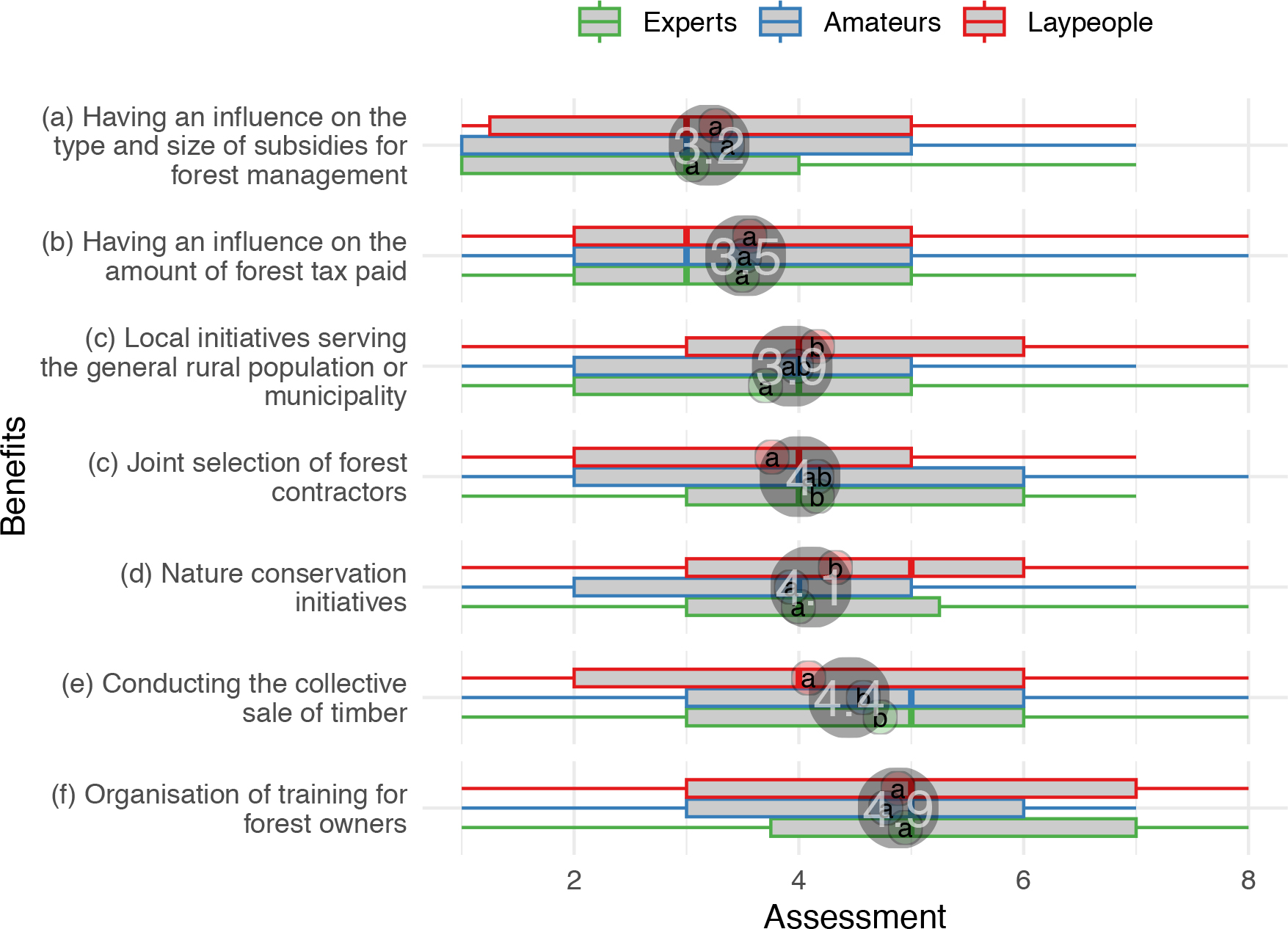
Figure 2.
The ranking of the proposed types of benefits was based on the three groups of respondents: ‘experts’, ‘amateurs’ and ‘laypeople’ (represented by green, blue and red colours, respectively). The transparent, filled circles with the numbers inside indicate the average rating of all respondents. The same letters in the benefits’ names mean no significant differences in the rating between them (p < 0.05). The answers of the different groups of respondents were compared for each type of benefit. The same letters in the circles within each benefit mean that there are no statistically significant differences between the answers of respondents from different groups (p < 0.05)
The mean scores for the two categories of benefits – joint selection of forest contractors (e.g., timber harvesting) and local initiatives serving the general rural population or municipality – did not differ from each other. All the other categories differ from these two and each other.
All three groups of respondents rated similarly two financial categories of benefits – having an influence on the type and size of subsidies for forest management and having an influence on the amount of forest tax paid – as well as one category associated with the organisation of training for forest owners. The differences in evaluation are related to four benefits: local initiatives serving the general rural population or municipality, joint selection of forest contractors, forest conservation initiatives, and conducting the collective sale of timber. Overall, differences were observed between the ‘laypeople’ group and the two other groups, ‘experts’ and ‘amateurs’.
Evaluation of the importance of selected forest functions
A forest ecosystem serves many different functions. Some of them have been listed for respondents who rated the importance of each function by distributing 100 points among them. The highest rated function was the forest as a source of timber (19 points), while two protective functions (water and soil) received the lowest rating (9 points each) (Fig. 3).
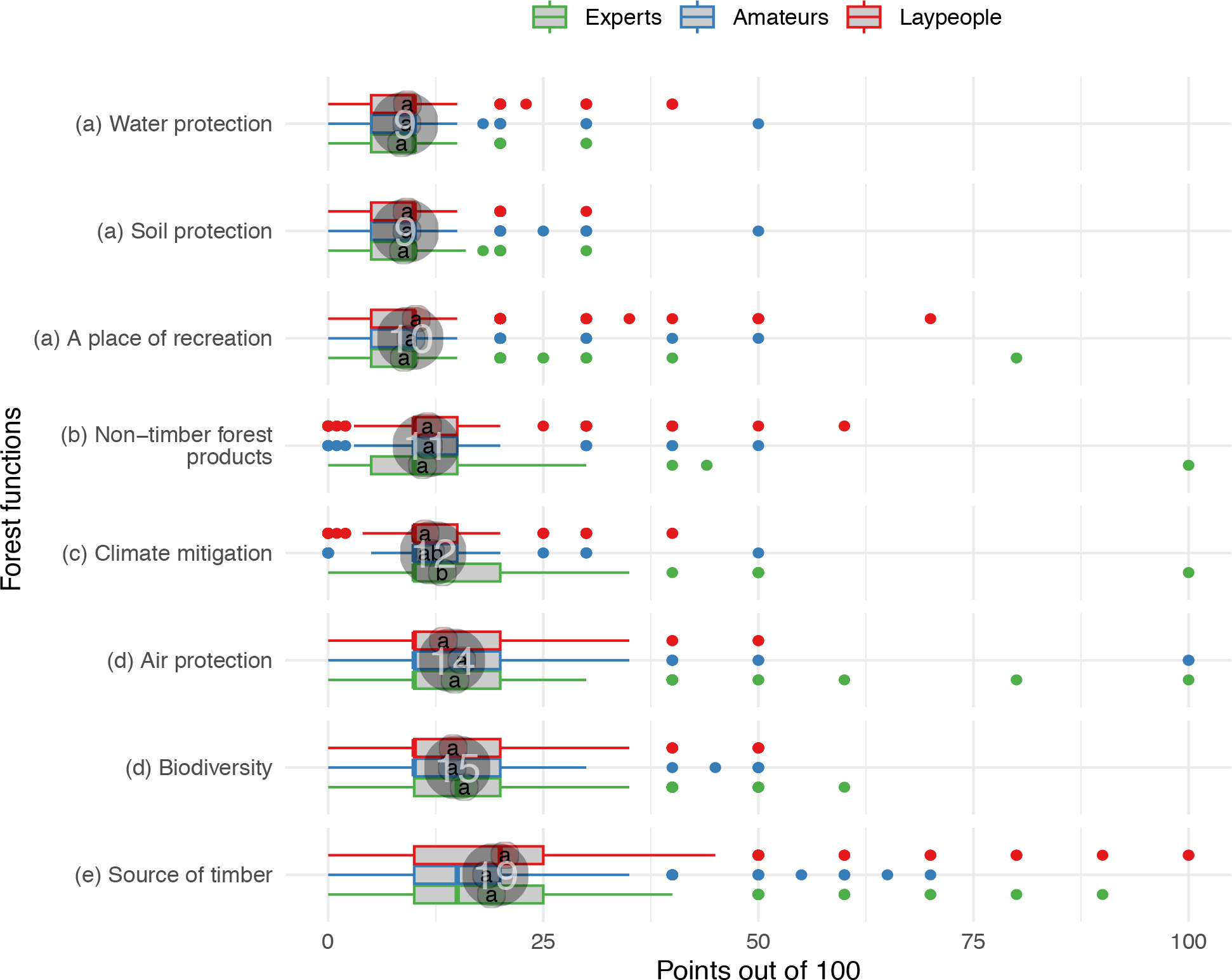
Figure 3.
This figure shows the distribution of 100 points on the forest functions by the respondents of the three groups: ‘experts’, ‘amateurs’ and ‘laypeople’ (represented by green, blue and red colours, respectively). The transparent, filled circles with the numbers inside indicate the average points. The same letters in front of the names of the forest functions suggest that there are no significant differences in the points awarded for the forest functions by all respondents (p < 0.05). The points awarded by the different groups of respondents were compared for each forest function. The same letters on the circles within each forest function indicate that there are no significant differences between the points awarded by respondents from different groups (p < 0.05)
There was no difference in the average score for the recreational function and water and soil protection (score of 9 to 10 points). Similarly, there were no differences between the biodiversity function forests (habitat for many plants and animals) and its role in air protection (average scores of 15 and 14 points, respectively). The average scores for climate mitigation function (12 points), non-timber forest production (11 points) and source of wood (19 points) differed significantly from the other functions and between each other.
The prioritisation of forest functions among the three groups (‘experts’, ‘amateurs’ and ‘laypeople’) did not differ statistically for functions such as forest as a place for recreation, water protection, soil protection, air protection, non-timber forest products (harvesting berries and mushrooms), biodiversity, and forest as a source of timber. The only difference observed was between the ‘experts’ group and the ‘lay-people’ group regarding the climate mitigation function of forests.
Training
Respondents were asked how much time they would allocate to the topics listed on Figure 4 if it were their task to prepare a training course for private forest owners. They were asked to determine the time allocated to each topic in minutes, so that a total of 480 min would be available. The most valued training topic for respondents (54 min on average) was issues related to financial assistance for forest owners, while topic related to where to look for verified forestry knowledge generated the least interest (40 min) (Fig. 4).
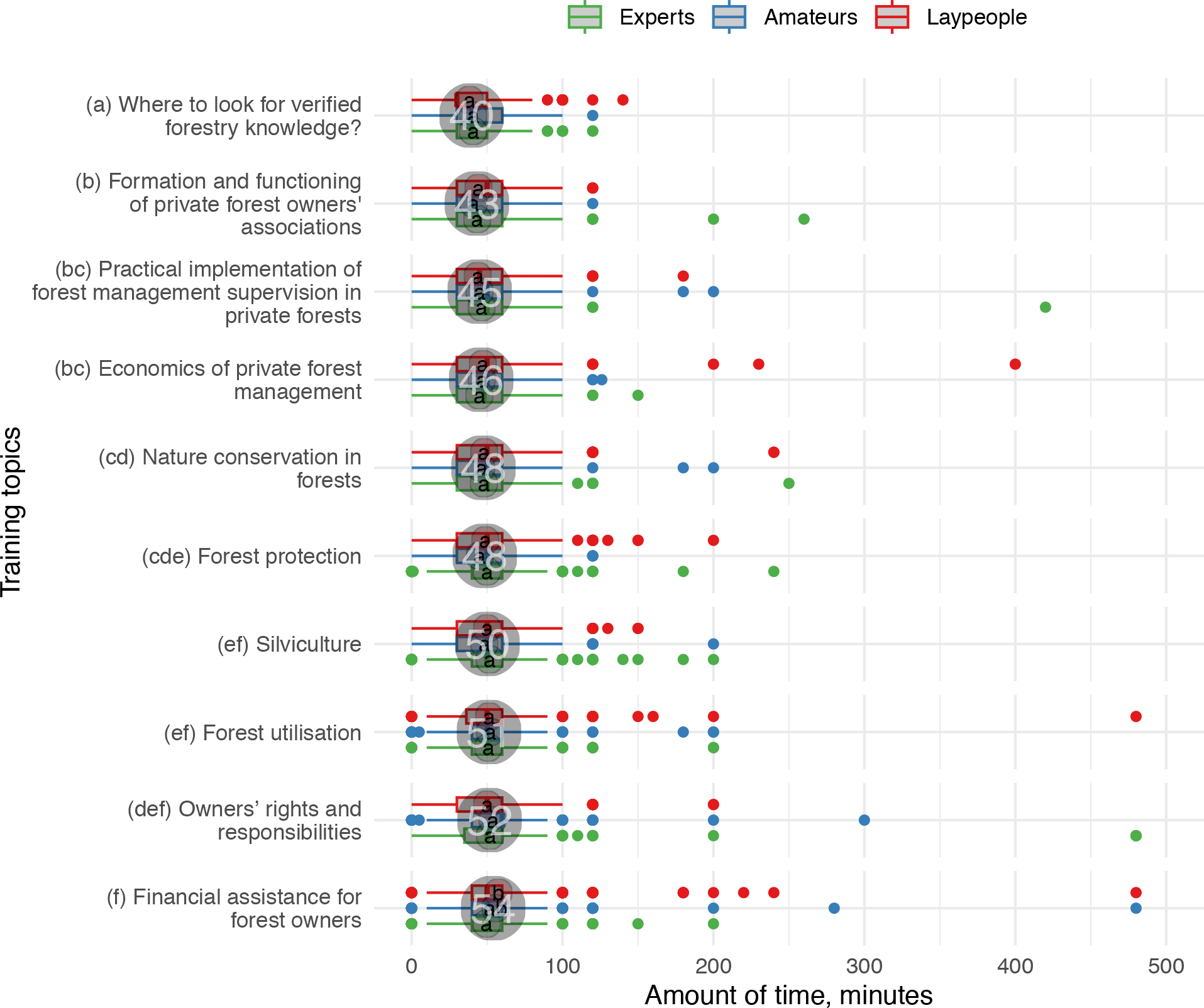
Figure 4.
The figure shows the distribution of time, depending on the training topics, among the respondents of the three groups: ‘experts’, ‘amateurs’ and ‘laypeople’ (represented by green, blue and red colours, respectively). The transparent, filled circles with the numbers inside indicate the average time spent. The same letters in the variant names mean that there are no significant differences between the training topics (p < 0.05). In addition, the answers of the different respondent groups were compared for each training topic. The same letters in the items within each topic mean that there are no significant differences between the respondent groups (p < 0.05)
The average amount of time allocated to many training topics were not differ statistically (Fig. 4); such topics denoted by common letter, e.g., formation and functioning of private forest owners’ associations, economics of private forest management and practical implementation of forest management supervision in private forests. Among the groups of respondents, differences were observed only for the training topic related to financial support for forest owners.
Tax
According to the law in force in Poland, forest owners pay forest tax for their forests, and the revenue from it goes to the municipality’s budget. Respondents were asked if they could influence on the possibility of financing forest-related activities and could allocate the contractual PLN 100 in taxes to the activities listed in Figure 5, how much PLN they would assign to each of the listed activities (Fig. 5). In a hypothetical scenario involving the allocation of PLN 100 forest tax to proposed activities, respondents identified private forest conservation as the most essential measure (22 PLN). In contrast, the least essential measure was financial support for activities related to preparing forest management plans (14 PLN).
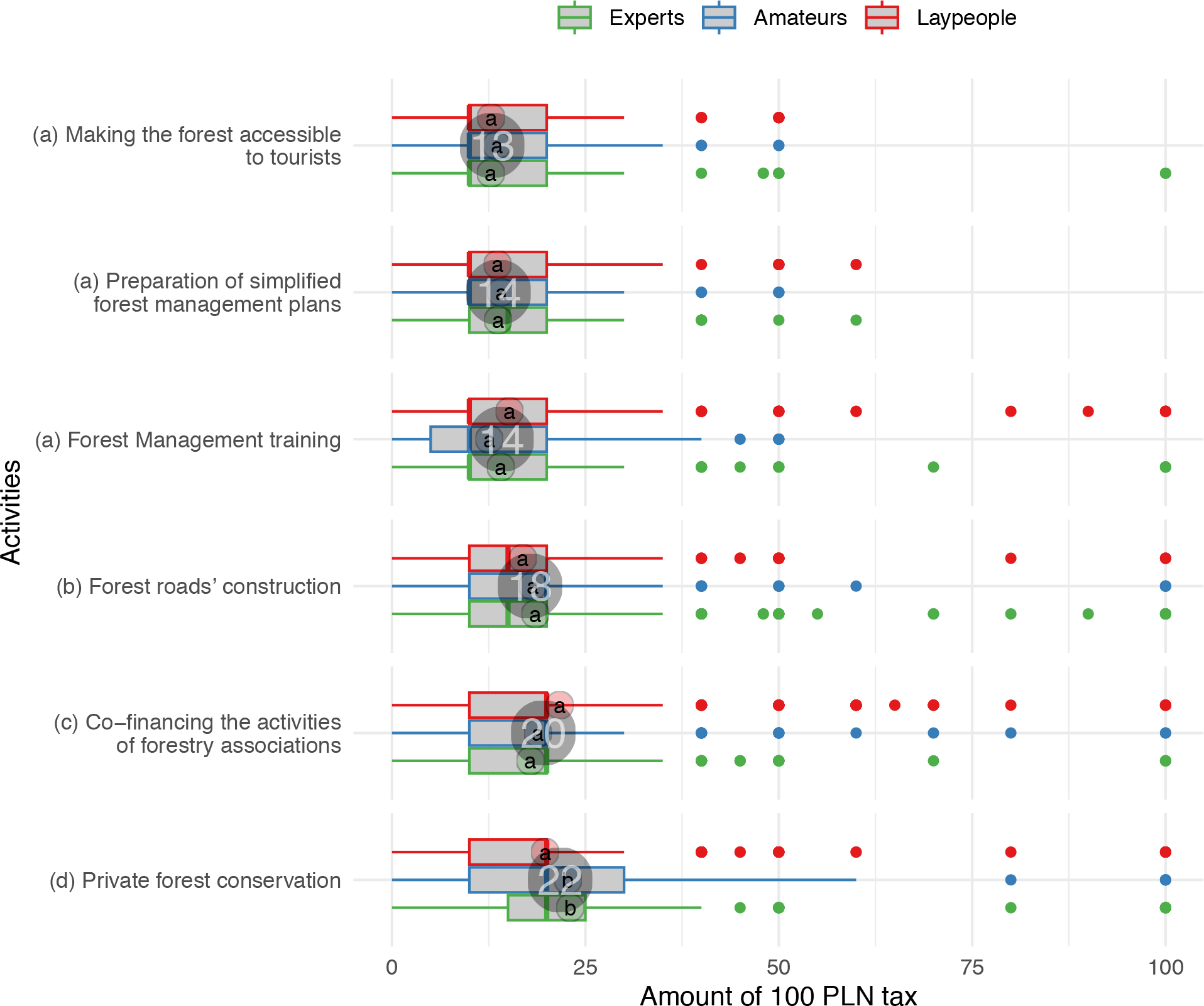
Figure 5.
Distribution of the tax amounts assigned to the purposes by the respondents in the three groups: ‘experts’, ‘amateurs’ and ‘laypeople’ (represented by green, blue and red colours, respectively). The transparent, filled circles with the numbers inside indicate the average amount of tax. The same letters in the names mean that there are no significant differences between the purposes (p < 0.05). In addition, the answers of the different respondent groups were compared for each purpose. The same letters in the points within each purpose mean that there are no significant differences between the respondent groups (p < 0.05)
Measures of the Rural Development Programme (RDP)
If you influenced the allocation of RDP funds to co-finance activities related to forest management in private forests, which of these should be funded first?
One in four forest owners expected support in controlling forest pests, and it is noteworthy that the greater the knowledge, the greater is the interest in such support. Other activities in which forest owners ware interested are the maintenance of the forest (one in five owners) and the protection of nature in the forest, which was of interest to almost 17% of owners (Fig. 6). For these activities, as for most others, no difference was found depending on the knowledge of the forest owners.
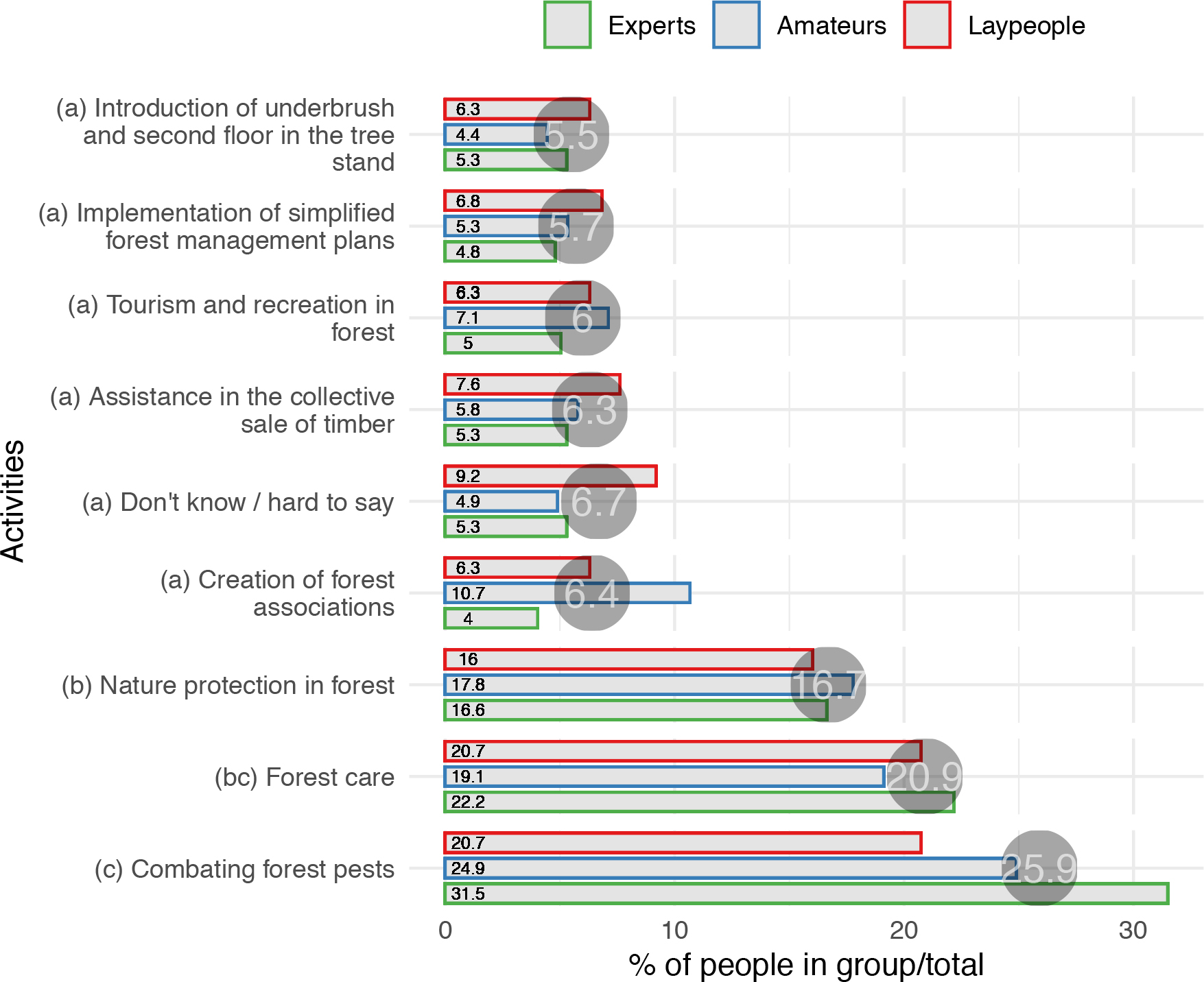
Figure 6.
The figure illustrates answers to the question, Which forestry activities in private forests should be financed first? The results of the respondents in the three groups are shown: ‘experts’, ‘amateurs’ and ‘laypeople’ (represented by green, blue and red colours, respectively). The transparent, filled circles with numbers inside indicate the percentage of respondents who think that a particular activity should be prioritised for funding. The same letters in the names mean that there are no significant differences between them (p < 0.05). The number on each bar indicates the percentage of respondents, broken down by group, who considered that activity to be the highest funding priority
Discussion
Understanding how and why private forest owners manage their forests is crucial for developing effective policies, particularly in the context of climate change and future societal demands (Josset et al. 2023). This is achieved through research that enables the development of forest owner typologies, providing an understanding of the diversity of owners’ attitudes, values, beliefs, goals and behaviours (Ficko et al. 2019). Studies of this kind are necessary because the owners of private non-industrial forests are highly diverse (Kumer and Štrumbelj 2017).
Despite the enormous efforts made for more than 20 years to continuously and comprehensively inform farmers about the objectives, territory and functioning of Natura 2000 sites, knowledge about them is still not widespread among farmers. Interestingly, a large number of farmers are unfortunately under the mistaken impression that their understanding is high. The result obtained corresponds to the average level of social awareness in the area as mentioned above, which can also be worrying. In Poland, 23% of the population believes that private forest owners (potential providers of ecosystem services) should bear the costs of providing (improving) these services. The majority were in favour of publicly funded programmes (at the central or local level) for forest owners as compensation for providing the service. A small percentage (8%) supported a userfunded programme with direct payments from users to service providers (Bartczak and Metelska-Szaniawska 2015). The level of knowledge about the perception of social values by private forest owners, including their willingness to manage such values, is still low (Bjärstig and Kvastegård 2016). The results of the survey indicate that owners perceive forest management primarily as a task related to protecting forests for future generations. Business objectives (‘a good business opportunity’, ‘a chance to earn extra money’ or ‘a source of subsidies’) are less important to them (Feliciano et al. 2017). This is confirmed by the results of a study of forest owners in Sweden, who are less dependent on the forest as an economic resource – natural and social values are more important to them (Bjärstig and Kvastegård 2016). However, the statement that such attitudes only apply to forest owners in Western Europe must also be questioned (Põllumäe et al. 2014; Feliciano et al. 2017). As the results presented show, ecosystem orientation is just as important in Poland as economic aspects and forest management.
Our study revealed that forest owners with a higher level of education also possess greater knowledge about Natura 2000 sites. The lack of knowledge reported by respondents with primary education can be worrying. This is an essential group of forest owners that should be reached with the information about nature conservation on forest land. Unfortunately, when analysing the responses to the question about the proposed education programme, the least popular topic was that of seeking knowledge about woodlands and woodland management. Forest owners were most interested in the economic aspects of woodland management. In their opinion, this was also reflected in their understanding of the forest’s main functions. However, they would not want the money paid for the forest tax back as financial support in the strict sense, but would prefer to use these funds for nature conservation.
In addition, forest owners may not be aware of the overall public good or ‘social values’ of forests, especially at the landscape level. They often try to prioritise the personal social values of their forests, such as tradition (Mayer 2019). Environmental aspects (biodiversity, protection of natural forests) are included in the EU directives as well as in the forest policies of the individual Member States (European Commission 2013). Such environmental values of forests can also be found among many forest owners. The results of the representative survey of the nationwide sample show that only a small proportion of the population (23%) supports the view that private forest owners, that is, providers of ecosystem services (biodiversity), should bear the costs of providing (improving) these services (Bartczak and Metelska-Szaniawska 2015). In a research on owners in Denmark, they varied considerably between WTAs for most ecosystem services, depending on the current governance. On average, owners expected 33 EUR/ha/year for granting full access to their forests (Vedel et al. 2015). According to Ní Dhubháin et al. (2007), the total social and environmental benefits of forestry in the UK are estimated at around £1 billion per year (capitalised, it is estimated at £29.2 billion). It can, therefore, be assumed that in lowland Britain, the ecological, aesthetic and recreational benefits of woodlands may outweigh the value of the timber, even though the owner derives no financial benefit from it (Urquhart and Courtney 2011).
In Poland, forest owners applying for forestry support funds under CAP expect the greatest support in connection with the control of forest pests. This is understandable, given the growing discussion about the adverse effects of climate change on forest health.
Conclusion
Forest owners have different levels of knowledge about Natura 2000 sites. The study distinguishes between three groups of forest owners: ‘experts’, ‘amateurs’ and ‘laypeople’.
Irrespective of the group into which the forest owners were categorised, only slight differences were found in the approach to types of services, forest functions, time allocation according to training topics or the tax amounts allocated.
The reference to the need to control forest pests as the most critical direction of support for owners shows that the problem is noticeable, and the greater the knowledge, the greater is the impact.
Forest owners can be treated as a homogeneous group regardless of their knowledge of Natura 2000 sites, and targeted education campaigns or financial support can be the same for all groups of owners.
Acknowledgement
The publication is part of the project titled ‘Activation of the social capital of private forest owners (farmers)’ financed from the state budget, granted by the Minister of Education and Science under the ‘Science for Society’ Programme II NdS-II/SN/0274/2024/01 concluded on 15.02.2024.
Notes
[1] Conflicts of interest Conflicts of interest
The authors declare that there are no potential conflicts of interest.