
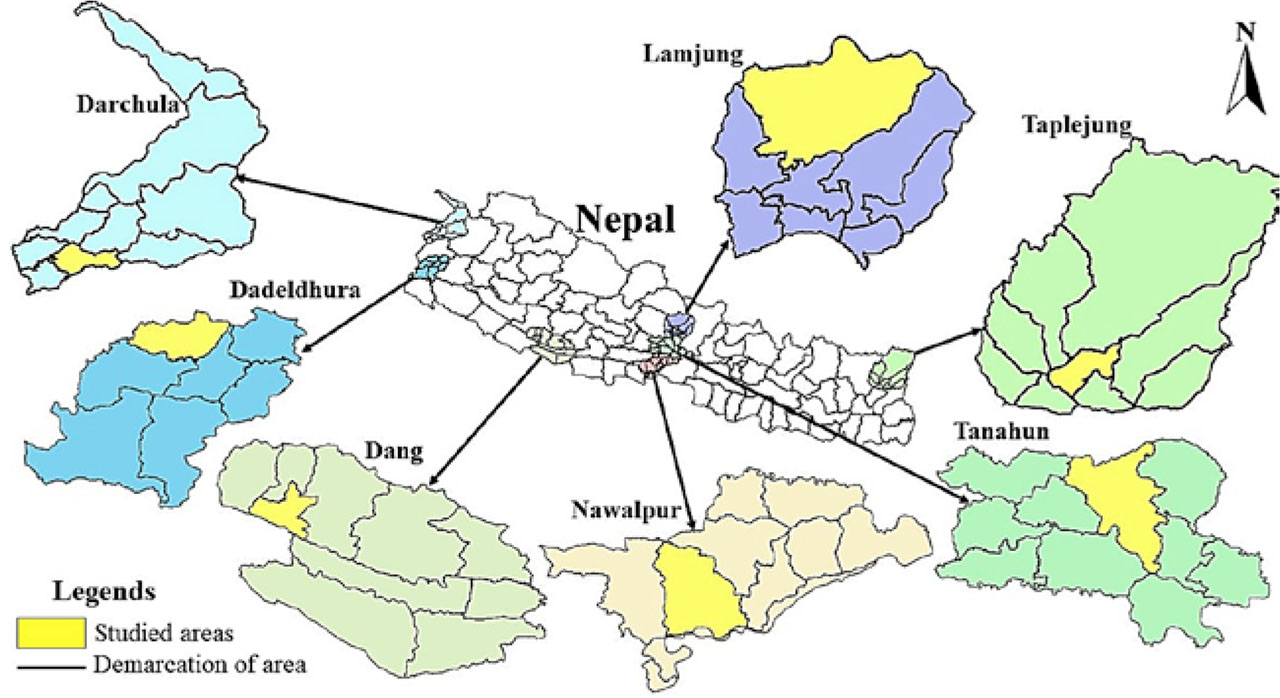
Figure 1.
Map showing sample collection sites
Table 1.
Details of sample collection sites in Nepal
| S. No. | Name of host plant | Diseased parts | Location | Elevation (m) | Forest | Municipality and district |
|---|---|---|---|---|---|---|
| 1 | Abies spectabilis | needles | 27.422°N 87.763°E | 3413 | Mayam Patal CF | Phungling Municipality, Taplejung |
| 2 | Acer laevigatum | leaves | 27.365°N 87.727°E | 2642 | Deurali-Bhitri CF | |
| 3 | Rhododendron arboretum | leaves | 27.427°N 87.766°E | 364 | Mayam Patal CF | |
| 4 | Alnus nepalensis | leaves | 28.293°N 84.369°E | 901 | Tatopani CF | Marsyangdi RM, Lamjung |
| 5 | Alnus nepalensis | trunk | 29.336°N 80.606°E | 1639 | Ugratara CF | Ajaymeru RM, Dadheldhura |
| 6 | Eucalyptus camaldulensis | leaves | 28.095°N 80.199°E | 561 | Eucalyptus PF | Dangisharan RM, Dang |
| 7 | Pinus roxburghii | needles | 29.698°N 80.544°E | 1416 | Shalya Shikhar CF | Shailyashikhar Municipality, Darchula |
| 8 | Shorea robusta | stem | 27.622°N 84.056°E | 197 | Sal SF | Madhyabindu Municipality, Nawalpur |
| 9 | Tectona grandis | leaves | 28.095°N 82.199°E | 561 | Teak PF | Dangisharan RM, Dang |
| 10 | Toona ciliata | leaves | 27.989°N 84.268°E | 487 | Gairigau CF | Vyas Municipality, Tanahun |
Table 2.
Host plants, disease name, pathogens, symptomatology and identifying characters
| S. No. | Host plant | Disease | Pathogen identified | Symptomatology | Identifying characters | |
|---|---|---|---|---|---|---|
| colony colour | vegetative and reproductive characters | |||||
| 1. | Abies spectabilis | needle cast | Neonectria neomacrospora | infected needles were light brown to dark brown; young needles were uninfected | white | hyphae: septate; microconidia: size 10.3–13.6 × 3.7 µm, multicellular, cylindrical or elongated, slightly curved and up to 93.11 µm |
| 2. | Acer laevigatum | leaf anthracnose | Aureobasidium apocryptum | light brown spots and large necrotic patches on leaves, some of the leaves were entirely covered by necrotic patches | greyish white | hyphae: septate; small acervuli erupted through the epidermis of leaf; conidia: size 6.5–10.5 × 3–4.5 µm, hyaline, non-septate borne on short, broad conidiophores |
| 3. | Alnus nepalensis | powdery mildew | Golovinomyces cichoracearum | white powdery spores on leaves, chlorosis and premature dropping | white | hyphae: hyaline and smooth (3.5–6.8 μm wide); conidia: hyaline, cylindrical or ellipsoidal, size 28.7–18.7 µm, developed at the apex of conidiophores |
| 4. | Alnus nepalensis | bleeding canker | Phytophthora alni subsp. alni | the infected trunk was oozing reddish brown fluid from cracks, dieback symptom was also reported | light brown, white at maturity | hyphae: aseptate; sporangiophores: slender, unbranched; zoosporangia: size 35–65 × 24–50 µm, ovoid or pear shape |
| 5. | Eucalyptus camaldulensis | leaf blight | Calonectria reteaudii | grey water-soaked spots, necrotic patches, some leaves were defoliated | light grey | hyphae: septate; conidia: size 65–85 × 5–6 µm, straight or cylindrical, round at both ends |
| 6. | Pinus roxburghii | pinus needle cast | Dothistroma septosporum | yellowish-tan spots on needles, reddish brown bands around the needle, premature death and drop of infected needles | white with abundant aerial hyphae | Conidiophores: numerous, hyaline; conidia: septate, hyaline, straight or slightly curved, size 16.4–23.6 × 3 µm |
| 7. | Rhododendron arboreum | leaf spot | Calonectria indusiata | dark brown spots on leaves, somewhere the spots covered whole leaves, premature defoliation | white with abundant aerial hyphae. | hyphae: septate; conidiophores: penicillate, two to six phialides; conidia: size 60–70 × 4–6 μm, straight or cylindrical, round at both ends, septate |
| 8. | Shorea robusta | stem canker | Nectria sp. | oval to elongated, brown to reddish lesions on the bark of trunk and branches, oozing sap with foul smell | cottony with white with aerial hyphae | Hyphae: septate; conidiophores: verticillate, one to three branched; conidia: ellipsoidal to cylindrical or slightly curved, hyaline, smooth, rounded at both ends |
| 9. | Tectona grandis | leaf rust | Olivea tectonae | small, angular, brown to grey necrotic areas on upper leaf surface, necrosis due to coalesced lesions, powdery yellowish rusts | not cultured | Uredospores: powdery, orange coloured, ovoid and echinulated, size 18–23 × 17.5–24.8 μm |
| 10. | Toona ciliata | tar spot | Rhytisma acerinum | small, superficial black tar-like spots | greyish brown | ascomata: 40–120 μm wide with asci and paraphyses; ascospores: ellipsoidal, blunt at both ends, size 40–70 × 9–10 μm |
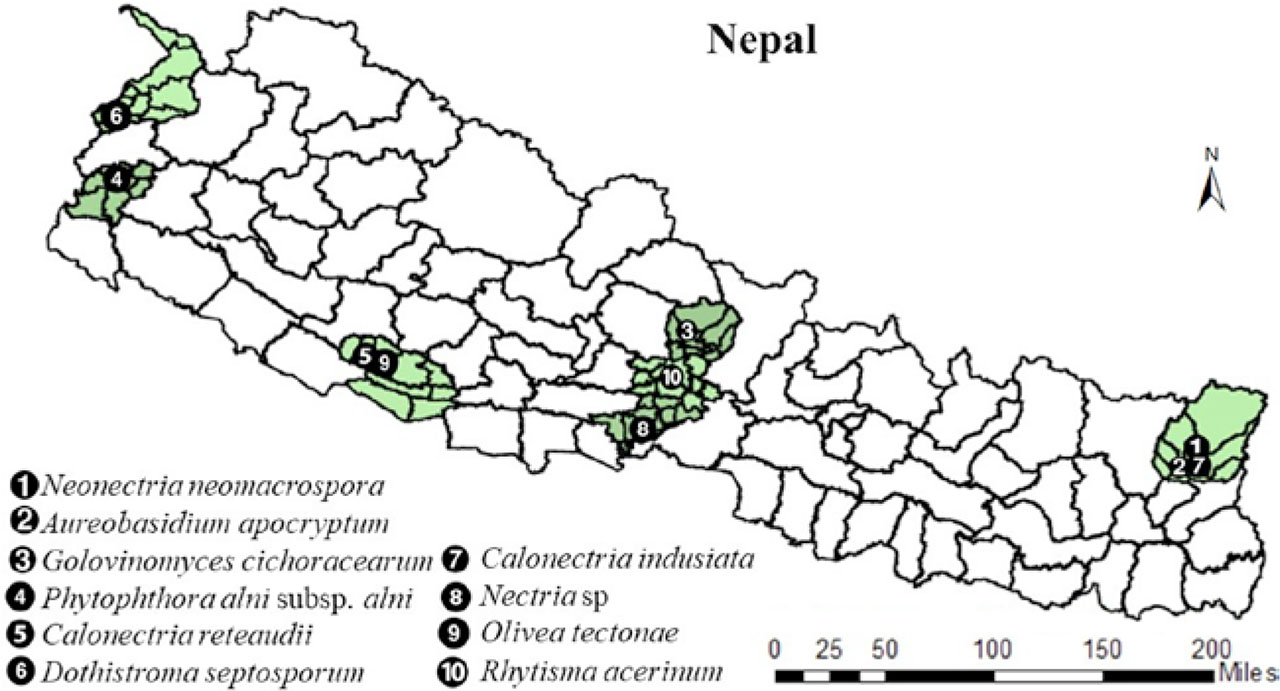
Figure 2.
Distribution of potential invasive fungal pathogens in Nepal
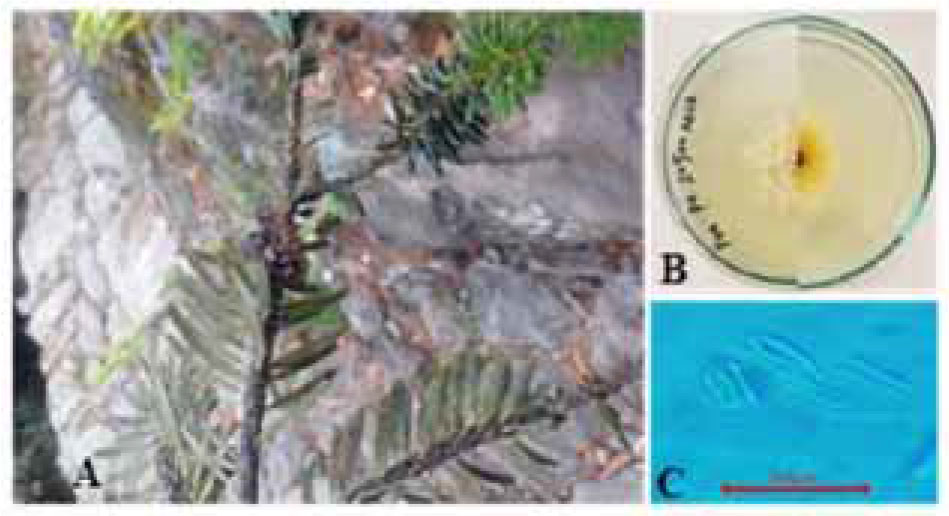
A: An infected twig Abies spectabilis with diseased needles showing characteristic symptom; B: Colony of Neonectria neomacrospora cultured from infected part and reverse view of culture plate; C: Conidia of Neonectria neomacrospora.
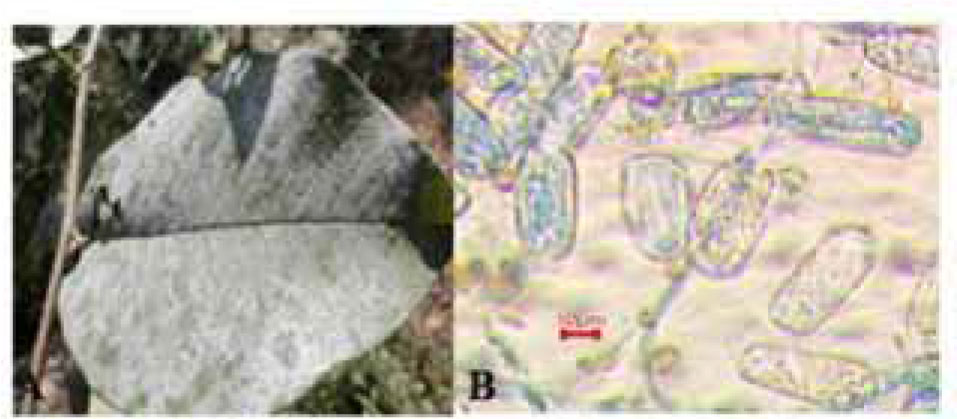
A: An infected leaf showing characteristic symptoms of powdery mildew on Alnus nepalensis; B: Conidia of Golovinomyces cichoracearum.
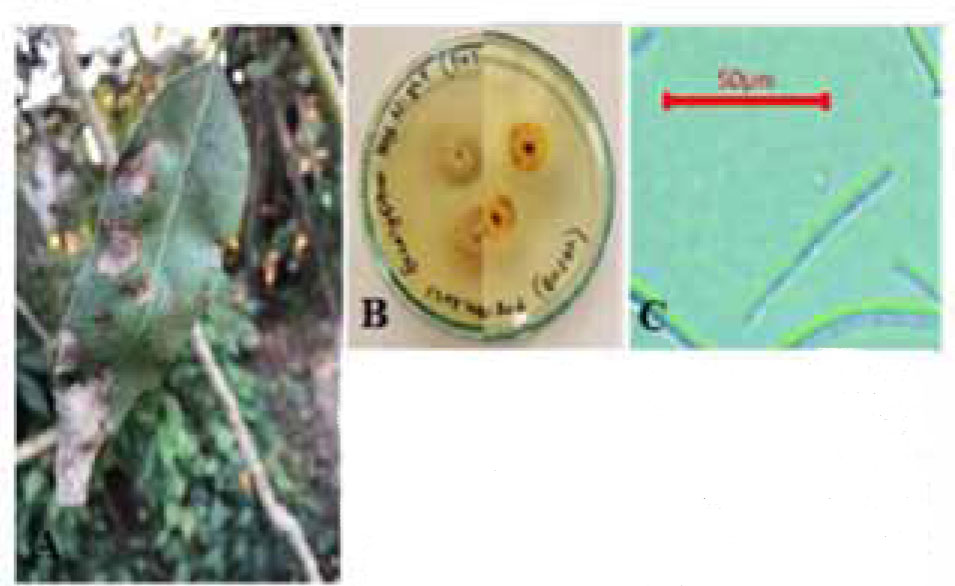
A: An infected leaf of Eucalyptus camaldulensis showing characteristic symptoms; B: Colony of Calonectria reteaudii cultured form infected part and reverse view of culture plate; C: Conidia of Calonectria reteaudii.
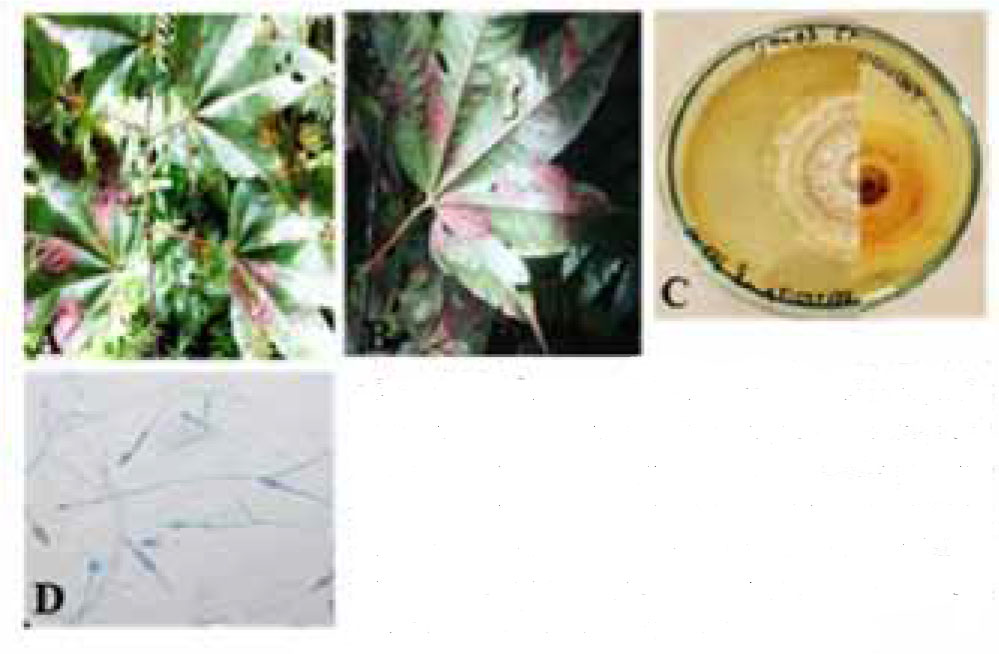
A and B: Upper and lower surface of infected leaves of Acer laevigatum showing characteristic symptom; C: Colony of Aureobasidium apocryptum cultured from infected part and reverse view of culture plate; D: Conidia with conidiophores of Aureobasidium apocryptum.
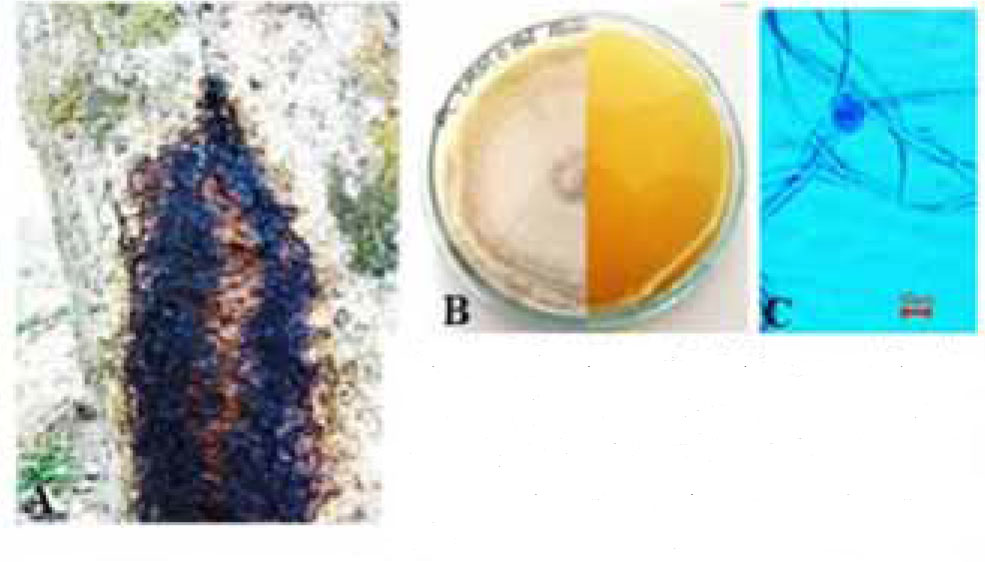
A: An infected trunk of Alnus nepalensis showing bleeding symptom; B: Colony of Phytophthora alni cultured from infected part and reverse view of culture plate; C: Zoosporangium.
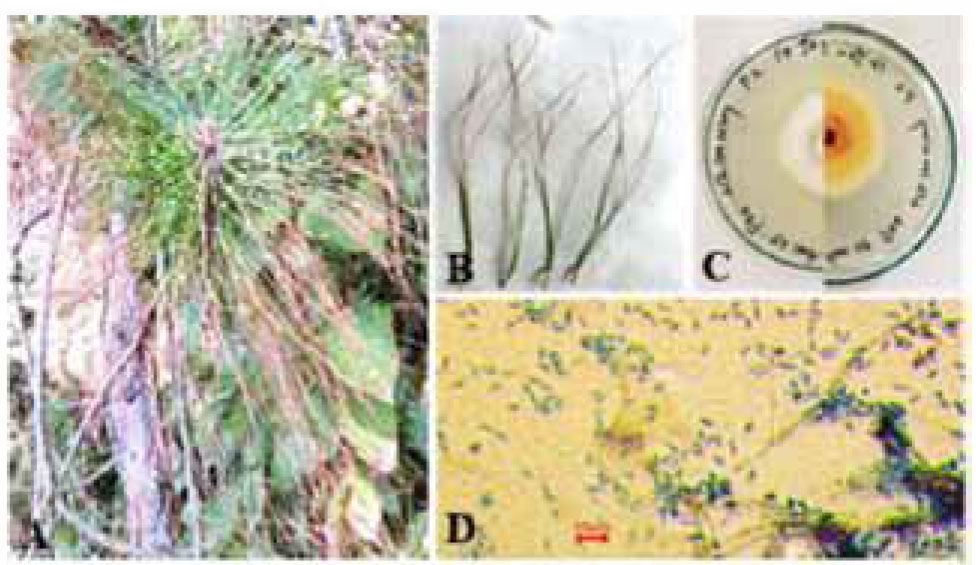
A and B: An infected shoot and needles of Pinus roxburghii; C: Colony of Dothistroma septosporum cultured from infected part and reverse view of culture plate; D: Conidia of Dothistroma septosporum.
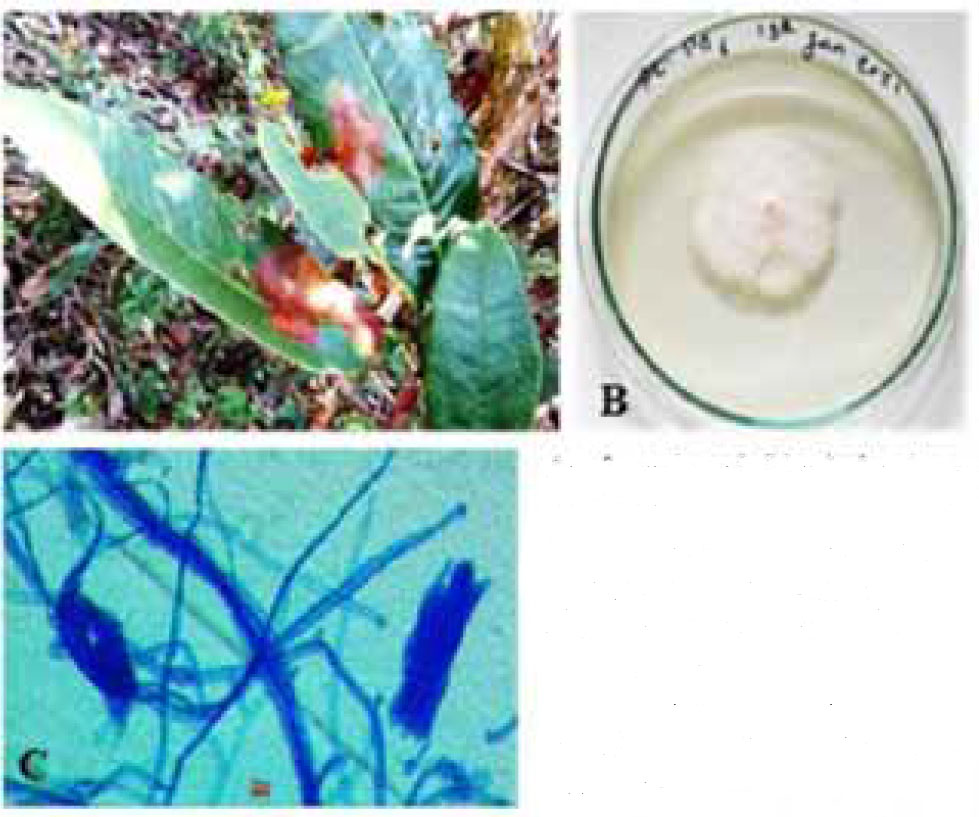
A: A twig of Rhododendron arboreum with infected leaves showing Characteristic symptom; B: Colony of Calonectria indusiata cultured from infected part in culture plate; C: Conidia and mycelium of Calonectria indusiata.
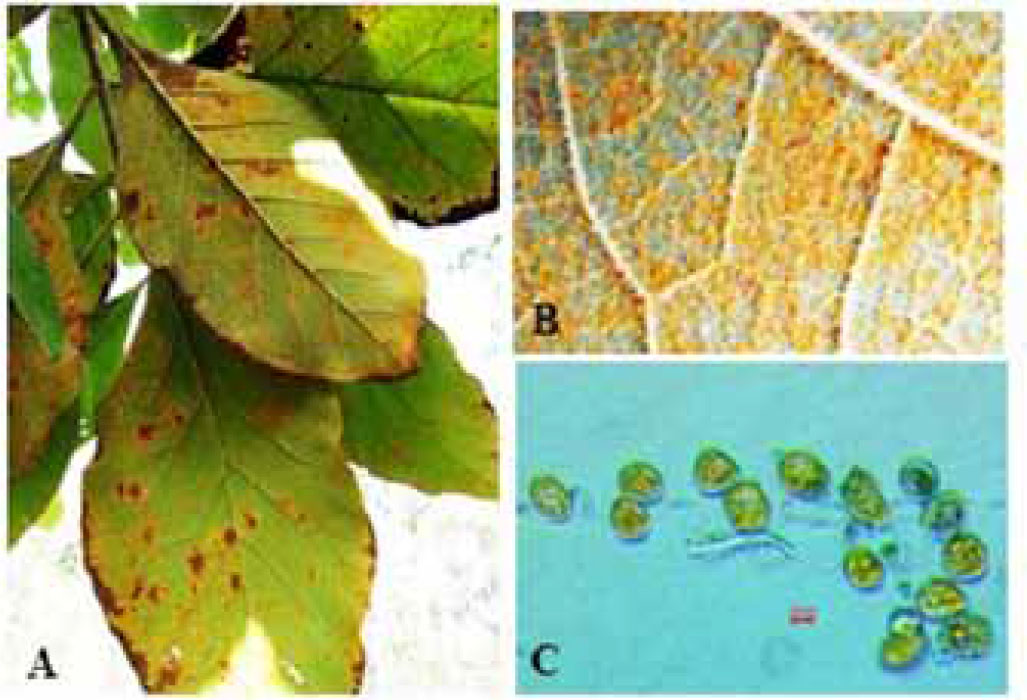
A: A twig with infected leaves Tectona grandis showing characteristic symptoms; B: Lower surface of leaf showing uredinia; C: Urediniospores of Olivea tectonae.
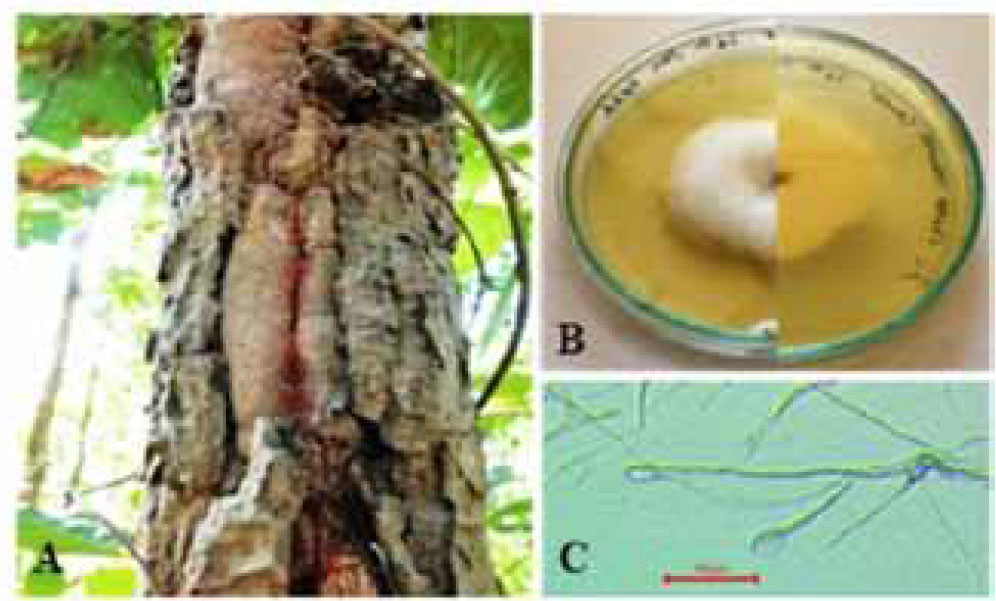
A: An infected stem of Shorea robusta showing characteristic symptom; B: Colony of Nectria sp cultured from infected part in culture plate; C: Conidia and conidiophore of Nectria sp.
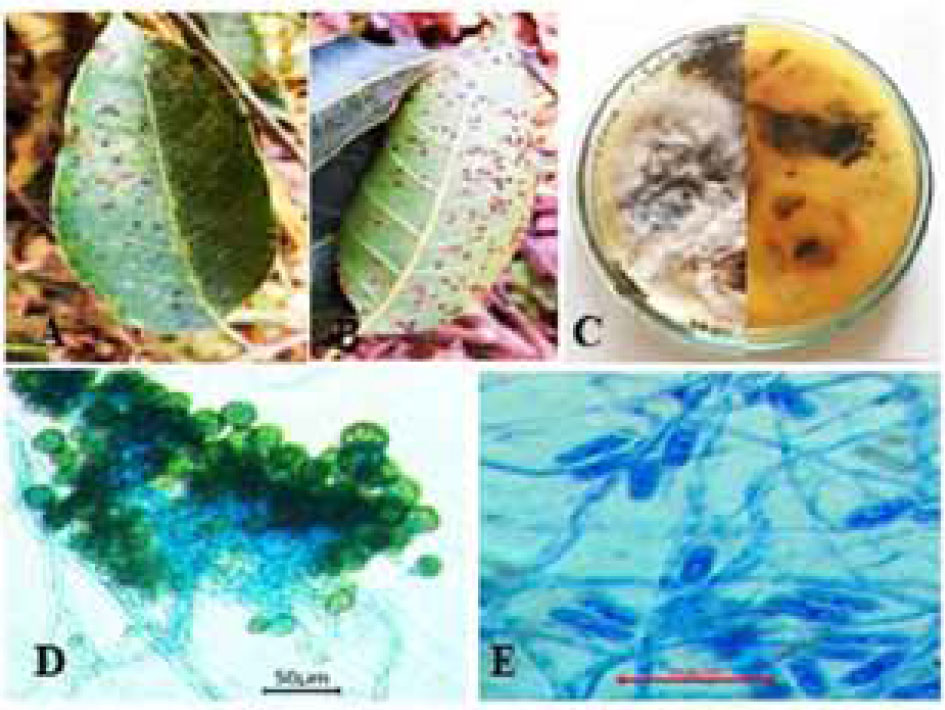
A and B: Upper and lower surface of infected leaves of Toona ciliata showing characteristic symptom; C: Colony of Rhytisma acerinum cultured from infected part and reverse view of culture plate; D: Ascomata; E: Conidia with conidiophores of Rhytisma acerinum.