
Introduction
The Bukit Barisan Selatan National Park (BBSNP), located on Sumatra Island, Indonesia, encompasses an area of approximately 356,800 ha (Purwanto 2016). The park represents the Bukit Barisan mountain range, encompassing various vegetation types, including mangrove forests, coastal forests, tropical rainforests, and montane forests (Lestari et al. 2021). BBSNP is recognized as one of the world’s most biodiverse conservation areas, harboring numerous endemic and endangered species. Notably, BBSNP is home to three iconic and critically endangered Sumatran mammals: the Sumatran elephant (Elephas maximus sumatranus), the Sumatran rhinoceros (Dicerorhinus sumatrensis), and the Sumatran tiger (Panthera tigris sumatrae) (Purwanto 2016). In addition, BBSNP serves as a habitat for several endangered native flora species, including Rafflesia arnoldii, tall carrion flower (Amorphophallus decus-silvae), the world’s largest flower Amorphophallus titanum, and the world’s largest orchid Grammatophyllum speciosum (Lestari et al. 2021). Furthermore, BBSNP maintains relatively intact tropical rainforest ecosystems, holds significant global conservation value, and forms part of a broader conservation landscape alongside Gunung Leuser National Park and Kerinci Seblat National Park. Recognizing these attributes, the United Nations Educational, Scientific and Cultural Organization (UNESCO) designated BBSNP as part of the Tropical Rainforest Heritage of Sumatra (TRHS) in 2004.
The management of BBSNP is currently confronted with multifaceted challenges, among which the proliferation of invasive alien species (IAS) is particularly critical. IAS are non-native organisms that spread rapidly upon introduction to a new environment, outcompete native species, alter habitat dynamics, and pose substantial threats to biodiversity (Duryat 2023). Their presence endangers the ecological integrity of BBSNP, potentially leading to irreversible ecosystem disruptions (Pouteau et al. 2015). Several IAS have been documented within the park, including Calliandra calothyrsus, Merremia peltata (Sayfulloh et al. 2020), and the African tulip tree (Spathodea campanulata) (Ariq et al. 2022).
Among the IAS in BBSNP, S. campanulata represents the greatest threat to the park’s ecological balance due to its rapid growth and exceptional adaptability, enabling it to dominate large areas quickly (Rojas-Sandoval et al. 2022). S. campanulata originates from East and Southern Africa (Nasri and Oka 2022). The species can thrive at elevations up to 2000 m above sea level and blooms all year round (Larrue et al. 2021). S. campanulata has the potential to pose a severe threat to the survival of various native species in conservation areas due to its rapid growth. Furthermore, its aggressive and destructive spread is coupled with its ability to regenerate vegetatively after falling (Labrada and Medina 2009). Controlling S. campanulata poses significant challenges, as eradication efforts can be costly and may result in adverse environmental impacts (Duryat 2025).
The invasion of S. campanulata in BBSNP has been reported in the Utilization Block of Pemerihan Resort. This invasion can be traced back to the aftermath of Indonesia’s Reformation in 1998, marked by political turmoil and weakened law enforcement, leading to widespread forest encroachment. Initially, forest encroachers planted S. campanulata as a land boundary marker and a source of livestock forage. However, between 2009 and 2011, the government implemented policies to evict encroachers from within the national park. Following their departure, S. campanulata proliferated unchecked, rapidly expanding and dominating the landscape. S. campanulata has invaded 4.3 ha (0.64%) of the 674 ha Utilization Zone within Pemerihan Resort in BBSNP (Ariq et al. 2022).
The invasion of S. campanulata has triggered significant ecological alterations across various tropical ecosystems, particularly within conservation areas. As an invasive alien tree species, S. campanulata has the potential to restructure vegetation composition by dominating the forest canopy, suppressing the regeneration of native tree species, and reducing overall biodiversity (Labrada and Medina 2009). Kepel (2021) reported that the invasion of S. campanulata poses a severe threat to Pterocymbium oceanicum, an emergent tree species endemic to Fiji, which has been classified as “Critically Endangered” on the International Union for Conservation of Nature (IUCN) Red List. Furthermore, the accumulation of S. campanulata leaf litter, which is rich in allelopathic compounds, has been shown to inhibit the germination of other plant species, thereby accelerating ecosystem homogenization (Marler 2020). However, despite its well-documented ecological impact, no studies have yet reported the consequences of S. campanulata invasion on native species within national parks in Indonesia.
Studies on AIS in conservation areas are crucial for preserving biodiversity, maintaining ecological balance, mitigating economic losses, and ensuring the long-term sustainability of human livelihoods (Goodier 2017). Understanding the ecological impacts of S. campanulata invasion is essential for developing effective management and restoration strategies to mitigate its detrimental effects and prevent further ecological degradation. This study aims to assess the structure and composition of vegetation, evaluate the sustainability of native species regeneration, and analyze species diversity and evenness in areas invaded by S. campanulata within BBSNP. The findings of this research are expected to provide a scientific foundation for conservation planning, invasive species control measures, and ecological restoration efforts in protected areas affected by S. campanulata invasion.
Material and methods
Study area
Pemerihan Resort, situated within BBSNP in Pesisir Barat Regency, Lampung Province, Indonesia, is located at coordinates 05°33′49.399″ S, 104°24′50.176″ E (Fig. 1). This resort constitutes a critical conservation area, harboring high biodiversity and representing key forest ecosystems in Sumatra. The resort’s elevation ranges from 20 to 500 m above sea level, with an average annual rainfall of 2500–3000 mm/year and an average temperature of approximately 31°C. Approximately 43.35% of the area is classified as flat terrain (0–8% slope), with soil types predominantly consisting of red–yellow podzolic and alluvial soils (Erly et al. 2019).
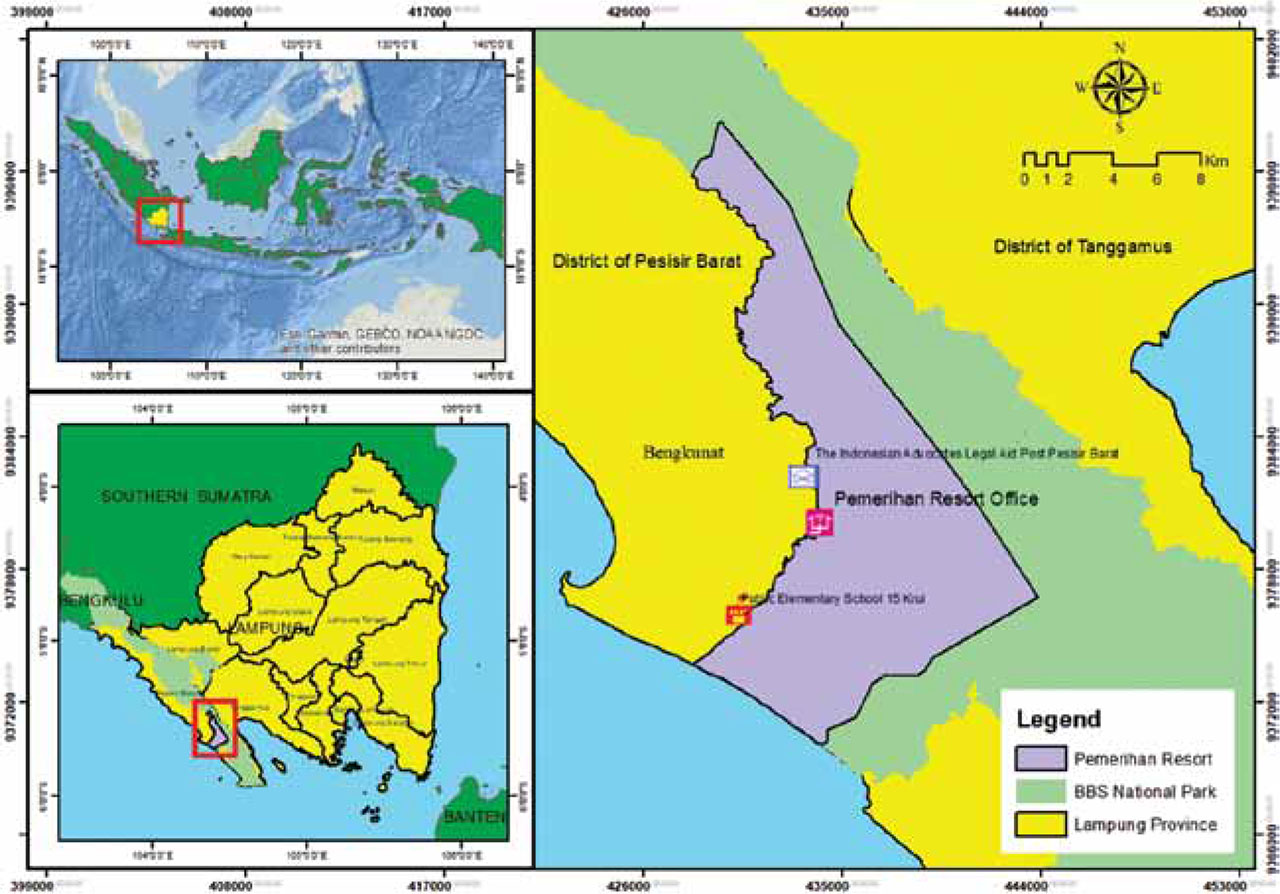
Figure 1.
Research location: Pemerihan Resort, Bukit Barisan Selatan National Park, Sumatra, Indonesia
Sampling
The population encompassed a 4.3 ha area that S. campanulata had invaded within the Utilization Block of Pemerihan Resort, BBSNP. Samples in this study were collected using the method of Systematic Sampling with Random Start (Noor et al. 2022). This method was selected based on a preliminary study, which indicated that the vegetation conditions in areas invaded by S. campanulata were relatively homogeneous regarding site status, vegetation structure, and invasion intensity.
Research implementation
Sample plot development
The sample plots used were stratified plots with plot sizes determined based on plant growth phases (Bishal 2024): tree (20 × 20 m2), pole (10 × 10 m2), sapling (5 × 5 m2), and seedling (2 × 2 m2) (Fig. 2).
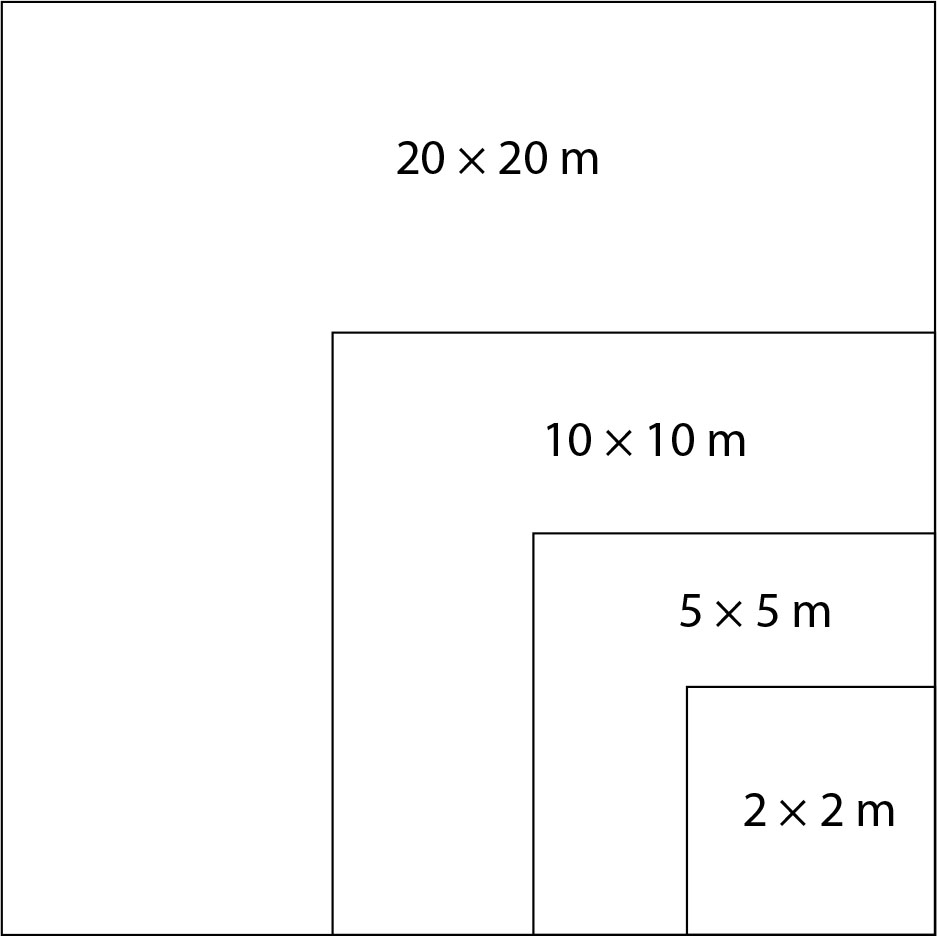
Figure 2.
Sample plot
Measurement of parameters
Parameters measured were plant species, number of individuals per species, and diameter at breast height (DBH) at the pole and tree phases.
Data analysis
Importance Value Index
The Importance Value Index (IVI) quantifies a species’ relative dominance, density, and frequency within a community, serving as an indicator of its ecological significance (Odum and Barrett 1971). The recorded data were analyzed to determine these parameters, and their relative values were summed to obtain IVI (Mishra 1968). IVI was calculated using the formula
where:- RF
relative frequency,
- CF
the constant factor, calculated as the relative density of the species,
- RD
relative dominance.
Shannon–Wiener Diversity Index (H’)
The Shannon–Wiener Index indicates species diversity within a community (Odum and Barrett 1971). The Diversity Index was calculated using the formula:
where:- H’
Shannon–Wiener Diversity Index,
- S
the total number of species in the community,
- Pi
the proportion of individuals belonging to the ith species,
- ln
the natural logarithm.
H’ value criteria:
H’ ≤1: lower species diversity
1 < H’ < 3: moderate species diversity
3. H’ ≥3: higher species diversity
Evenness Index (E)
The Evenness Index evaluates how evenly individuals are distributed among species within a community (Sina and Zulkarnaen, 2019). The Evenness Index is calculated using the formula:
where- E
the Evenness Index,
- H’
the Shannon–Wiener Diversity Index,
- S
the total number of species in the community,
- ln
the natural logarithm.
Results
Composition and structure of vegetation
In areas invaded by S. campanulata, the vegetation comprises only 49 species from 30 families (Tab. 1). The plant species that dominates the study area in all growth phases is S. campanulata. The species shows highly dominant occupancy in the tree phase with an IVI of 196.99%. It indicates an overly dominant species within the plant community in the Resort Pemerihan area, BBSNP. The dominance of a plant species can demonstrate the level of control over other plant species within a plant community (Ariq et al. 2022). High dominance can result in decreased biodiversity and vulnerability to pests and diseases and ultimately disrupt the balance and sustainability of the ecosystem (Sunyata et al. 2024).
Table 1.
IVI For Each plant species based on growth phase
| No. | Species Name | Growth Phases | |||
|---|---|---|---|---|---|
| seedling | sapling | pole | tree | ||
| 1 | 2 | 3 | 4 | 5 | 6 |
| 1 | Acacia kekapur | 1.94 | 0 | 0 | 0 |
| 2 | Alstonia scholaris | 0 | 0 | 13.80 | 25.88 |
| 3 | Anthocephalus cadamba | 0 | 0 | 0 | 8.84 |
| 4 | Archidendron jiringa | 0 | 0 | 0 | 7.66 |
| 5 | Bridelia tomentosa | 8.55 | 0 | 11.53 | 0 |
| 6 | Callicarpa tomentosa | 0 | 0 | 46.66 | 6.79 |
| 7 | Cananga odorata | 0 | 4.67 | 0 | 7.25 |
| 8 | Causonis trifolia | 1.94 | 0 | 0 | 0 |
| 9 | Centotheca lappacea | 13.41 | 0 | 0 | 0 |
| 10 | Clidemia hirta | 13.41 | 0 | 0 | 0 |
| 11 | Coffea canephora | 6.25 | 0 | 0 | 0 |
| 12 | Cratoxylum sumatranum | 0 | 4.67 | 0 | 0 |
| 13 | Croton argyratus | 1.94 | 0 | 0 | 0 |
| 14 | Dicranopteris curranii | 1.94 | 0 | 0 | 0 |
| 15 | Dillenia indica | 0 | 4.67 | 0 | 0 |
| 16 | Dimocarpus longan | 1.94 | 0 | 0 | 0 |
| 17 | Ficus septica | 1.94 | 0 | 0 | 0 |
| 18 | Glochidion arborescens | 0 | 4.67 | 8.69 | 9.85 |
| 19 | Glochidion obscurum | 0 | 9.34 | 14.28 | 7.50 |
| 20 | Glochidion zeylanicum | 0 | 0 | 13.40 | 9.33 |
| 21 | Hypobathrum frutescens | 0 | 0 | 8.88 | 0 |
| 22 | Hyptis capitata | 1.94 | 0 | 0 | 0 |
| 23 | Kyllinga nemoralis | 7.92 | 0 | 0 | 0 |
| 24 | Lantana camara | 1.94 | 0 | 0 | 0 |
| 25 | Leea indica | 17.45 | 45.08 | 0 | 0 |
| 26 | Litsea sp. | 2.21 | 4.67 | 0 | 0 |
| 27 | Lygodium circinnatum | 7.16 | 0 | 0 | 0 |
| 28 | Melastoma malabathricum | 3.82 | 0 | 0 | 0 |
| 29 | Mussaenda frondosa | 2.21 | 0 | 0 | 0 |
| 30 | Nauclea officinalis | 1.94 | 9.34 | 0 | 0 |
| 31 | Phyllanthus sp. | 1.94 | 0 | 0 | 0 |
| 32 | Piper sp. | 1.94 | 0 | 0 | 0 |
| 33 | Polyalthia lanceolate | 0 | 9.34 | 0 | 0 |
| 34 | Pseudovaria reticulata | 0 | 4.67 | 0 | 0 |
| 35 | Pteropermum javanicum | 2.21 | 0 | 0 | 0 |
| 36 | Saurauia bracteosa | 2.21 | 0 | 0 | 0 |
| 37 | Selaginella wildenowii | 46.56 | 0 | 0 | 0 |
| 38 | Shorea javanica | 0 | 4.67 | 40.00 | 0 |
| 39 | Shorea ovalis | 1.94 | 0 | 0 | 0 |
| 40 | Smilax leucophylla | 2.21 | 0 | 0 | 0 |
| 41 | Spathodea campanulata | 11.52 | 48.15 | 100.72 | 196.99 |
| 42 | Spatholobus ferrugineus | 6.30 | 4.67 | 0 | 0 |
| 43 | Spondias pinnata | 1.94 | 0 | 0 | 0 |
| 44 | Syzygium fastigiatum | 0 | 4.67 | 0 | 0 |
| 45 | Syzygium polyantthum | 8.77 | 27.42 | 13.69 | 0 |
| 46 | Terminalia bellirica | 1.94 | 0 | 0 | 0 |
| 47 | Tetracera indica | 1.94 | 0 | 0 | 0 |
| 48 | Vernonia arborea | 1.94 | 0 | 0 | 6.59 |
| 49 | Vitex pubescens | 6.89 | 9.34 | 20.51 | 76.40 |
Species regeneration
Species regeneration in areas invaded by S. campanulata is not occurring effectively. It is indicated by many species in the pole and tree phases, while they are absent in the seedling and sapling phases or vice versa. Some species whose regeneration is not progressing include Antocephalus cadamba, Archidendron jiringa, and Callicarpa tomentosa.
The results showed that the density curves of S. campanulata and Vitex pubescens species from the seedling to tree phase formed an inverted J-shaped pattern (Fig. 3). The density of S. campanulata in the tree phase reaches 1250 individuals/ha. It resulted in several species, such as A. cadamba, A. jiringa, and C. tomentosa, experiencing regeneration failure due to the pressure of S. campanulata invasion. However, although the presence of S. campanulata has detrimental effects on most native plant species, this phenomenon does not apply to V. pubescens. As a native species of the BBSNP area, V. pubescens demonstrates resilience to the invasion pressure exerted by S. campanulata.
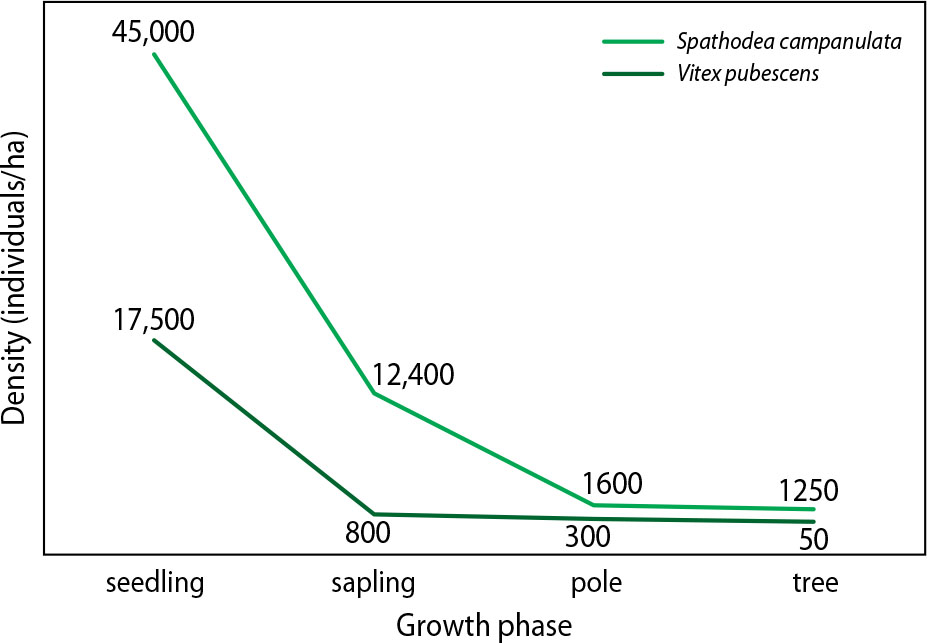
Figure 3.
Density curves of Spathodea campanulata and Vitex pubescens
Shannon–Wiener Diversity Index (H’)
The Diversity Index value in the area invaded by S. campanulata generally falls into the moderate category. However, from the H’ values, it can be observed that as the growth phase increases, species diversity tends to decrease (Tab. 2).
Evenness Index (E)
Surprisingly, the invasion of S. campanulata does not affect the species distribution pattern. This is indicated by the relatively high Evenness Index values across all growth phases under the invasion of S. campanulata ( Tab. 3).
Discussion
Composition and structure of vegetation
The area was invaded by S. campanulata and consisted of only 49 plant species from 30 families. This finding indicates a decline in vegetation diversity compared to non-invaded areas within BBSNP. Arifiani and Mahyuni (2012) reported that in Resort Way Canguk, BBSNP, forest vegetation comprises 183 species from 60 families. These findings indicate a significant decrease in biodiversity due to S. campanulata invasion. The loss of native species will trigger a chain reaction leading to the decline or even extinction of key species that depend on the flora. In national parks, the presence of a species is essential as a food source, shelter, or other ecosystem function. The loss of one species can disrupt the food chain, reduce biodiversity, and affect the overall balance of the ecosystem (Master et al. 2013).
The high dominance of S. campanulata, particularly in the tree phase with an IVI of 196.99%, indicates a significant disturbance in species diversity. As a region with native ecosystems, BBSNP generally supports a diverse range of species with a relatively even dominance distribution, reflecting a balanced tree community. Arifiani and Mahyuni (2012) reported that non-invaded areas exhibit a more even species distribution, with no single species displaying significant dominance. Furthermore, Ariyanti et al. (2018) found that no species exhibited absolute dominance in the Balai Kencana Resort area of BBSNP. The species with the highest IVI values included Quercus blumeana (47.71%), Dillenia excelsa (29.35%), Glochidion obscurum (69.85%), and Phrynium capitatum (35.46%). This pattern suggests that uninvaded plant species contribute more evenly to the ecosystem, promoting ecological balance, resilience, genetic diversity, environmental stability, and enhanced recovery potential (Araújo and Guisan 2006).
S. campanulata possesses high competitive ability, enabling it to dominate invaded habitats. Its rapid growth rate and aggressive root system facilitate its dominance in affected areas (Labrada and Medina 2009). In addition, this species produces allelopathic compounds that inhibit the regeneration of native species by reducing seed germination success and seedling establishment (Nghiem et al. 2015). The dominance of S. campanulata also indicates ecological disturbances, as invaded areas typically have undergone deforestation, habitat fragmentation, or other anthropogenic impacts. This invasion is further facilitated by the species’ superior adaptability to degraded environments compared to native flora (Goveanthan et al. 2025). Furthermore, S. campanulata employs an efficient reproductive strategy characterized by prolific seed production and rapid vegetative regeneration. Each fruit contains numerous lightweight seeds easily dispersed by wind, enabling the species to expand its colonization range rapidly (Larrue et al. 2021).
Species regeneration
The regeneration of native plant species in areas invaded by S. campanulata appears to be significantly disrupted. It is evidenced by numerous species in the pole and tree phases, while they are absent in the seedling and sapling stages, or vice versa. Such patterns indicate a disturbance in the natural regeneration process of native vegetation. This finding is aligned with the statement of Barney et al. (2006) that the presence of IAS within a vegetation community represents a significant threat to native ecosystems by outcompeting native species for space, suppressing biodiversity, and ultimately disrupting ecological balance. Similarly, Kacheche and Mzuza (2021) reported that invasive plant species have led to habitat loss, alterations in groundwater regimes, and declines in native species populations, all contributing to the ecological imbalance in Nyika National Park, Rumphi District, Malawi. Furthermore, Reaser et al. (2007) highlighted that IAS represent a primary driver of population declines and species extinctions within island ecosystems on a global scale. IAS also exert profound socioeconomic impacts, both directly—such as on human health—and indirectly by disrupting ecosystem goods and services.
In the area invaded by S. campanulata, most plant species experienced regeneration interferences, except for S. campanulata and V. pubescens. The regeneration of S. campanulata and V. pubescens is evidenced by the presence of these species in all phases of plant growth. According to Lahiri and Dash (2021), a species is considered to have good regeneration if found in the seedling, sapling, pole, and tree phases.
The density curves of S. campanulata and V. pubescens species from the seedling to tree phase formed an inverted J-shaped pattern (Fig. 3). It indicates that the regeneration of both species is progressing well. According to Singh et al. (2024), stands with good regeneration are characterized by density curves forming an inverted J-shaped pattern, with the lowest growth phase having the highest density value. This discovery suggests that the invasion of S. campanulata has a detrimental effect on the regeneration of native species in the area. In areas not invaded by IAS, such as Resort Balai Kencana in BBSNP, there are more plants capable of regenerating well, including Q. blumeana, D. excelsa, G. obscurum, and P. capitatum (Ariyanti et al. 2018).
As an invasive species, S. campanulata shows a very high regeneration capacity, allowing it to dominate a plant community in an area quickly. The species possesses highly massive generative reproductive organs with broad dispersal capabilities. S. campanulata can produce up to 500 seeds per fruit (Larrue et al. 2021). The seeds of S. campanulata are very light and winged, enabling them to spread up to a radius of 200 m with wind assistance (Labrada and Medina 2009). This aggressive dispersal ability is also supported by its relatively short reproductive cycle. S. campanulata begins reproducing at 3 years, and fertilization occurs within 3–6 months, allowing it to bear fruit up to twice a year (Larrue et al. 2021). Furthermore, the success of S. campanulata regeneration is supported by its ability to produce high litter levels, providing a microclimate within the forest canopy for its offspring (Martinez 2010). Moreover, S. campanulata exhibits remarkable vegetative regeneration capacity. Root pruning has been observed to induce a 100% emergence of root suckers at the distal section, specifically in the portion of the root severed from the parent tree (Bellefontaine and Malagnoux 2008).
The high density of S. campanulata may inhibit the regeneration of other species in invaded habitats. According to Sitepu (2020), excessive plant density can lead to regeneration failure by intensifying competition for essential resources such as water, nutrients, and light. In addition, S. campanulata is suspected of producing allelopathic compounds, a common trait among invasive species, to suppress the growth of competing plants. Allelopathic substances are secondary metabolites released by plants that influence the development of surrounding organisms, serving as a competitive strategy within the ecosystem (Marler 2020).
Surprisingly, despite the inhibited regeneration of most native species due to S. campanulata invasion, V. pubescens demonstrates resilience to invasion pressure. It is evident from its unaffected regeneration capacity in the presence of S. campanulata. This finding provides valuable insight into the potential adaptability of native species to IAS pressure. Several plant species have also been reported to exhibit resilience to S. campanulata invasion. Cruz (2022) reported that Manilkara bidentata, Coccoloba rugosa, Lidbidia monosperma, and Dacryodes excelsa can thrive in stands dominated by S. campanulata.
Shannon–Wiener Diversity Index (H’)
The Diversity Index value in the habitat invaded by S. campanulata generally falls into the moderate category. However, the decline in species diversity with increasing growth phases, as reflected in the decreasing H’ values, indicates that the ecosystem is experiencing ecological stress and reduced resilience. This trend suggests that S. campanulata may alter successional pathways, leading to a homogenized tree community dominated by a few species.
The presence of IAS can lead to decreased biodiversity in the invaded areas. Invasive species dominate an area by controlling the resources necessary for plant regeneration (Weidlich et al. 2020). The more limited the access of native species to these resources, the higher the likelihood of interfering with the regeneration process of a species (Sunyata et al. 2024). In this study, species present in the tree phase that were not found in the seedling phase or vice versa were found, indicating difficulties in reproduction or growth to maturity due to competition with invasive species that dominate these resources.
A decline in species diversity at the mature growth phase often implies disruptions in recruitment dynamics, where the regeneration of native species is suppressed due to intense competition for resources, allelopathic interactions, or changes in soil properties induced by invasive species (Richardson and Rejmánek 2011). The presence of S. campanulata may further exacerbate this situation by altering light availability, nutrient cycling, and microclimatic conditions, which are critical for establishing native flora (Larrue et al. 2016).
Tree species diversity is a vital indicator of forest ecosystem health, as it is highly sensitive to environmental changes and anthropogenic disturbances (Haq et al. 2023). A declining Diversity Index in later growth stages suggests that S. campanulata may be creating conditions that inhibit the recruitment and persistence of other species, thereby reducing overall ecosystem stability and resilience. Long-term monitoring and management interventions are necessary to prevent further biodiversity loss and to restore ecological balance in the affected areas.
Evenness Index (E)
The invasion of S. campanulata does not affect the species distribution pattern. High index values indicate a relatively uniform distribution of individuals among species (Farista and Virgota 2021). Meanwhile, according to Wang et al. (2018), a high Evenness Index indicates that the composition of the constituent vegetation in an area is well distributed. Interestingly, it is discovered that the species Diversity Index (H’) is relatively low in each growth phase, while the species Evenness Index is relatively high. It suggests that although the number of species in the community is limited, the distribution of individuals of the species present is fairly even. In other words, there is little variation in the number of individuals among the species, and most species contribute almost equally to the composition of the community.
Conclusion
This study reveals that the invasion of S. campanulata significantly impacts the structure and composition of vegetation in BBSNP, particularly in Pemerihan Resort. The dominance of S. campanulata in the tree phase, with an IVI of 196.99%, indicates substantial ecological disruption affecting the regeneration of native species. Most native species experience regeneration failure, except for V. pubescens, which demonstrates resilience to invasion pressure. The Shannon–Wiener Diversity Index shows a declining trend as plant growth phases progress, suggesting a reduction in species diversity due to the invasion. However, the Evenness Index (E) remains high, indicating a relatively uniform distribution of individuals among surviving species. These findings highlight the urgency of ecological management and eradication efforts to control S. campanulata and preserve the sustainability of BBSNP’s ecosystem.
This study has several limitations. Environmental factors such as soil quality, nutrient availability, and microclimatic alterations resulting from the invasion were not comprehensively analyzed. In addition, the long-term impacts of S. campanulata invasion on the regeneration dynamics of native species remain unexplored over extended temporal scales. Future research should undertake a more in-depth analysis of soil properties and allelopathic interactions to elucidate the competitive mechanisms employed by S. campanulata against native species. Long-term studies are also essential to monitor structural shifts within plant communities over time and assess the efficacy of S. campanulata control strategies in ecosystem restoration efforts.
Notes
Acknowledgments
The authors sincerely thank the Higher Education for Technology and Innovation Project at the University of Lampung for its financial support. Appreciation is also extended to Bukit Barisan Selatan National Park for its excellent collaboration as a research partner. This study was successfully conducted with the valuable assistance of students from the Forestry Department, Faculty of Agriculture, University of Lampung—Hafiz Anshoridani, M. Andrian Wijaya, Kevin Kornelius Kambey, Yoppie Jordan Saragih, and Agilang Ananda Putra—who contributed to data collection.