
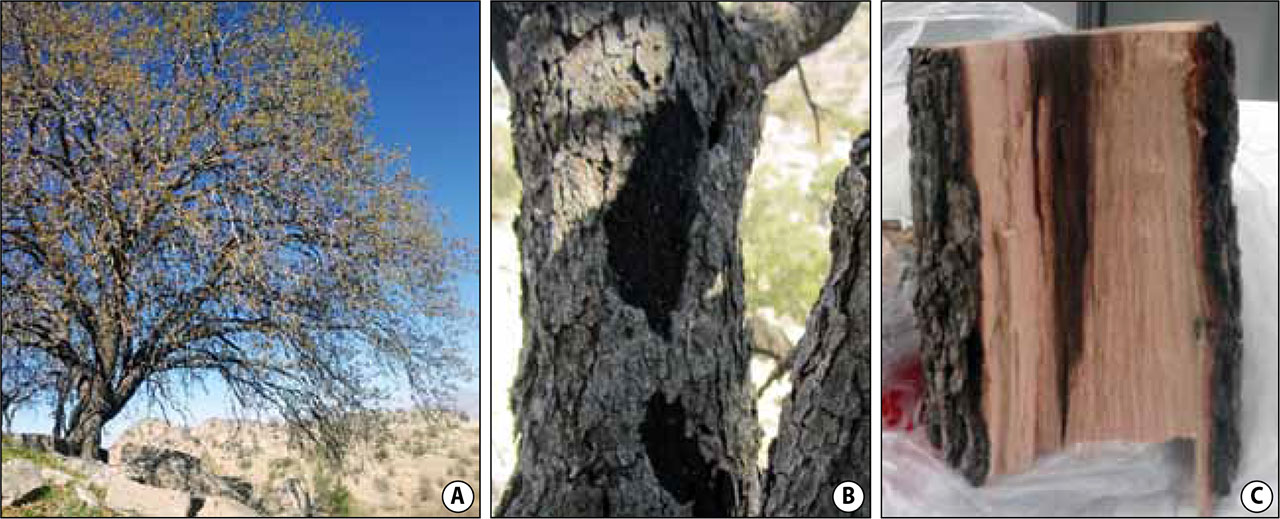
Figure 1.
Symptoms associated with bacterial wilt of Quercus brantii in Zagros forests A Wilting of an affected tree, B bleeding symptoms from cracks with dark exudates and C discoloration of the vascular tissue of a wilted tree.
Table 1.
Biochemical and phenotypic characterization test of bacterial genera isolated from bark panel of infected Quercus brantii trees in Zagros forests (Q1–Q8) and other species of E. cloacae complex; A – E. nimipressuralis (Hoffmann et al. 2005), B – E. nimipressuralis (Kulbanska et al. 2021, 2022), C – E. cloacae (Hoffmann et al. 2005), D – E. cloacae (Garcia-Gonzalez et al. 2018), E – E. hormaechei subsp. hormaechei (Hoffmann et al. 2005), F – E. asburiae (Hoffmann et al. 2005)
| Characteristics | Bacterial isolates | E. cloacae complex | ||||||||||||
|---|---|---|---|---|---|---|---|---|---|---|---|---|---|---|
| Q1 | Q2 | Q3 | Q4 | Q5 | Q6 | Q7 | Q8 | A | B | C | D | E | F | |
| Gram test | − | − | − | + | − | + | − | − | − | − | − | − | − | − |
| Oxidase production | − | + | − | − | − | + | + | − | − | − | − | − | − | − |
| Aesculin hydrolysis | + | − | + | − | + | − | + | − | + | + | + | + | − | + |
| Gelatin hydrolysis | − | − | − | − | − | − | − | − | − | − | − | − | − | |
| HR on tobacco | + | − | + | − | + | − | − | − | ||||||
| Lecithinase | + | − | + | − | + | − | − | + | ||||||
| Fluorescent pigment on KB medium | − | − | − | − | − | − | − | − | ||||||
| Green metallic pigment on EMB medium | + | − | + | − | + | − | − | − | ||||||
| Yellow pigment on YDC | − | − | − | − | − | − | − | − | − | − | − | − | − | − |
| Catalase production | + | + | + | − | + | + | − | + | + | + | + | + | + | + |
| Anaerobe growth | + | − | + | − | + | − | − | − | + | + | + | + | + | + |
| Utilization of manitol | + | − | + | − | + | − | − | − | + | + | + | + | ||
| Utilization of lactose | + | − | + | − | + | + | − | − | + | |||||
| Utilization of sorbitol | − | − | − | − | + | − | − | − | − | − | + | + | − | + |
| Utilization of glucose | + | − | + | − | + | − | − | − | + | + | + | + | ||
| Utilization of sucrose | − | − | − | − | + | − | − | − | − | − | + | + | + | + |
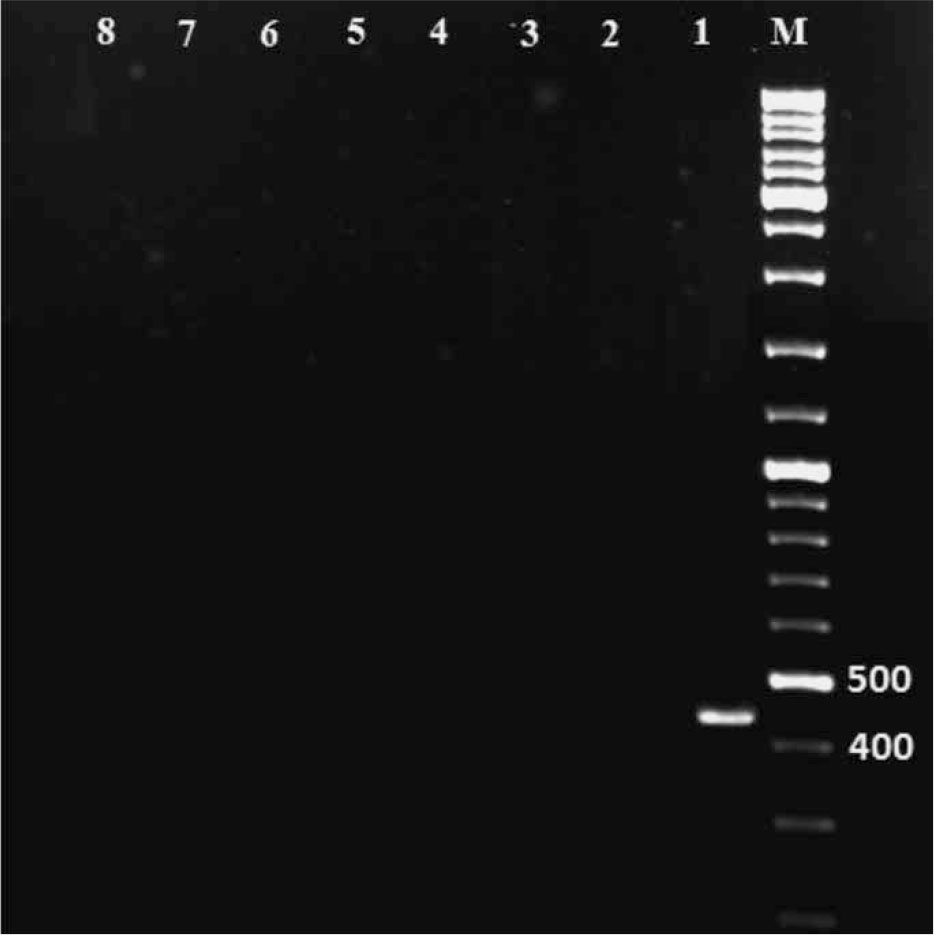
Figure 2.
Agarose gel electrophoresis of the 16S rDNA PCR fragment amplified by PCR using 16F27 and 16R1525 as reverse and forward universal primers, respectively (HAUBEN et al. 1998), from the genomic DNA of all isolated bacteria. M: DNA ladder; Lane 1–8: Different bacterial isolates from infected Quercus brantii tree (Q1–Q8)
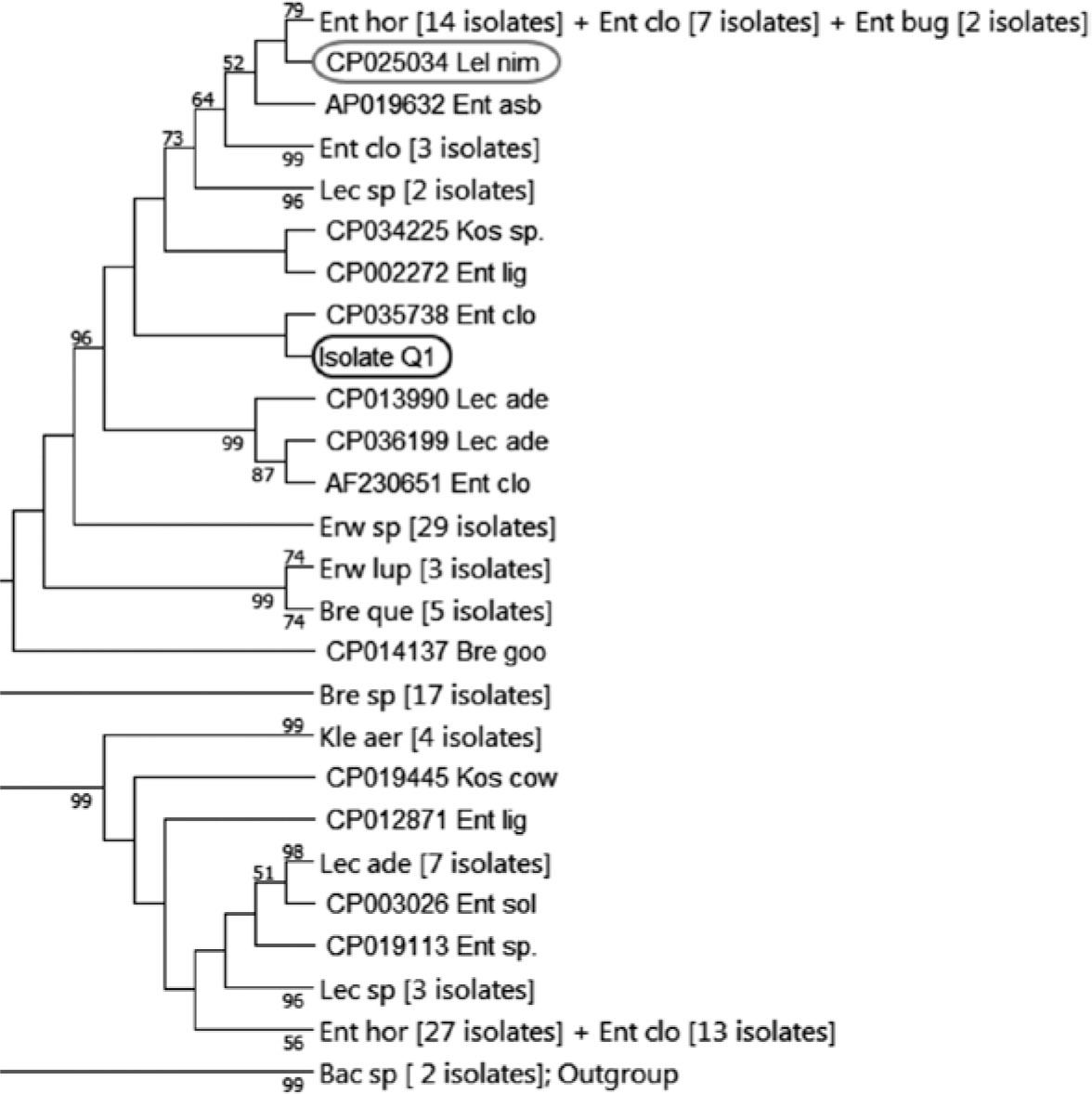
Figure 3.
Maximum parsimony tree showing the 16S rRNA gene phylogenetic relationships of isolate Q1 and reference bacteria. Bootstrap values based on 1000 resamplings are shown at branch nodes. Bacillus spp. (Bac sp.) was used as an outgroup. Numbers in the brackets indicate the ratio of annotated species to the total species in each clade. Evolutionary analyses were conducted in MEGA Ver. 10
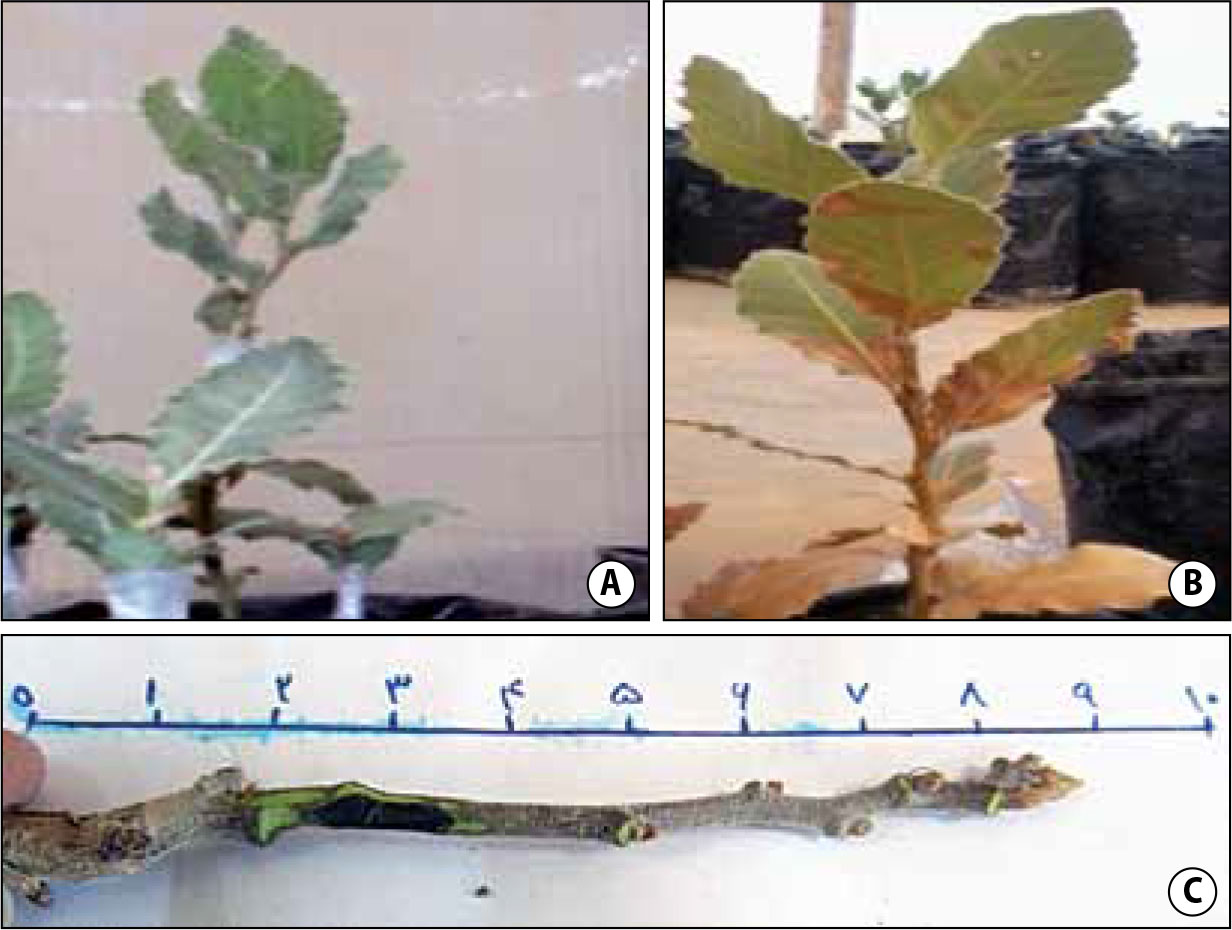
Figure 4.
Pathogenicity tests on 1-year-old oak seedling after 40 days. A – inoculated with distilled water. Symptoms of inoculated seedlings with bacterial suspension of isolate Q1 (108 CFU/ml): B – willting of leaf and C – necrotic lesions on stem