
Introduction
In recent years, the dieback or decline of forests and the death of trees are a global concern (Finch et al. 2021). The acute oak decline has come to the fore in many countries such as Britain, Spain, and Iran (Denman et al. 2014). This phenomenon is caused by a complex interaction of environmental stresses (drought, high temperature, low rainfall, air pollution, decreasing soil fertility, etc.) and biotic factors (pests and pathogens) (Manion and Lachance 1992). Other research showed that Biscogniauxia Mediterranea and Obolarina persica as fungal pathogens and B. roseae as bacterial pathogen are agents of oak decline in Zagros forests of Iran (Mirabolfathy 2013; Mirabolfathy et al. 2013; Moradi-Amirabad et al. 2019). Several species of Enterobacter also are known as the main opportunistic bacterial pathogens and may cause disease when changes in host physiology occur related to high temperature (Garcia-Gonzalez et al. 2018). These pathogens remain latent and persist endophytically within plant tissue until stress arises (Brady et al. 2009). On the other hand, bark cracking and the existence of a brown-colored fluid oozes or bleeds from cracks seen on Brant’s oak (Quercus brantii Lindl.) seems to be external symptoms of bacterial phloem canker as it was observed on different oak species in Spain and California (Biosca et al. 2003; Bakhshi Ganje et al. 2020). Wetwood (caused by bacterial pathogens) is one of the most severe and widespread diseases causing epidemics all over the world. These pathogens can cause severe damage in many forest trees such as Ulmus sp., Picea sp., Acacia sp., Populus sp., Magnolia grandiflora, Abies sp., Larix sp., Quercus sp., Juglans sp., and Salix sp. (Ward 1972; Ward and Pong 1980). Among others, the main symptoms observed in these plants are wilted leaves that turned dark brown and defoliated plants at the late stage of the infection. Lelliottia nimipressuralis a member of the Enterobacteriaceae family is reported as a causal agent of wetwood disease (Carter 1945). Based on phenotypic and genotypic characteristics, Erwinia nimipressuralis is transferred to the Enterobacter nimipressuralis (Brenner et al. 1986). After that, Brady et al. (2013) based on Multilocus Sequence Analysis (MLSA) suggested that Lelliottia nimipressuralis is a new species. This pathogen can lead to a rapid deterioration of affected trees and is almost exclusively associated with necrotic leaves and the dark fluid weeps down the trunk from cracks (about 5–10 cm long) in the bark. Also, water most probably plays a role in disseminating the bacterium (Brady et al. 2017). This pathogen has been reported as wetwood pathogen on elm trees in Iran (Khodaygan et al. 2012) and other countries (Murdoch and Canpana 1983; Iavaniy and Puzrina 2018). Also, other tree species like oak, fir, and birch have been reported as hosts of this pathogen in Ukraine forests (Goychuk et al. 2019, 2020; Kulbanska et al. 2021, 2022).
Zagros forests in the west of Iran are located in a semi-arid region, and the area of these forests is 5 million hectares. These forests have a dry season during the growth period in spring and summer. Therefore, the effects of global climate change are intensive in this region. From 2005, wilted oak trees were observed in these forests which was associated with decreasing in rainfall amount (Zolfaghari et al. 2021). Temperature and drought stress were related to this syndrome, and an increase of 1°C in the maximum temperature during the growing season could have deleterious long-term effects on oak forests (Leninger 1996). Quercus brantii is the main species of Zagros forests and is most affected by this disease. The symptoms included foliage reduction and early leaf senescence, trunk cankers (some exuding sap), and infected trees usually died within 3–5 years. Disease incidence was recorded in the range of 10–70% in Zagros forests, and the forests with higher drought periods and anthropogenic influence are most affected (Mirabolfathy et al. 2013; Moradi-Amirabad et al. 2019). So, the objective of this research was to identify the presence of the pathogenic bacteria of Entrobacter genus in Brant’s oak (Quercus brantii) in Zagros forests, Iran. The occurrence of this bacterial pathogenic (the causal agent of wetwood disease) has not previously been recorded for infection of oak trees in Iran. Hence, identification and diagnosis of the pathogen are very essential and significant in stopping wetwood.
Material and Methods
Sample collection
Wilted trees of Quercus brantii (as dominate tree) with suspected disease symptoms were observed in the protected area of Khaeiz, Kohgilouyeh, and BoyerAhmad province (28° 42′ 18″ N and 51° 30′ 38″ E). A sampling region with an area of over 30,000 ha was selected based on field observation that disease incidence was very high and more than 40% of trees were infected by pathogen.
The sampling was done on symptomatic single trees with dbh ca. 40 cm and highest disease symptoms. Samples were taken from the bark panel of a tree trunk close to bleeding symptoms from cracks with dark exudates (Fig. 1). The collected samples were kept in the refrigerator until the time of isolation. Then, samples of exudative cankers from an infected tree for bacterial pathogens were analyzed.
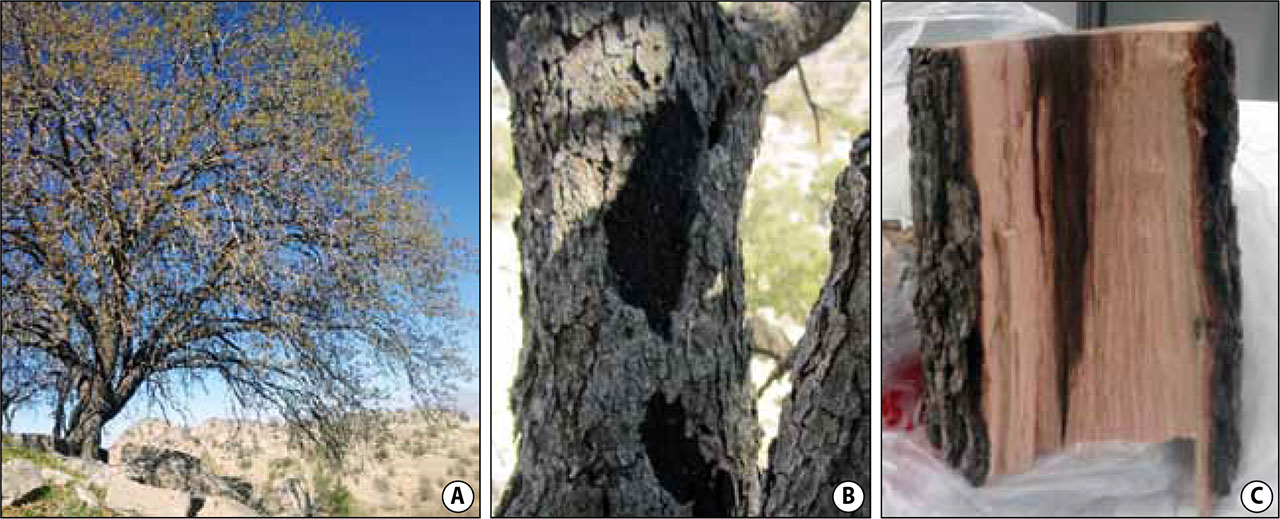
Figure 1.
Symptoms associated with bacterial wilt of Quercus brantii in Zagros forests A Wilting of an affected tree, B bleeding symptoms from cracks with dark exudates and C discoloration of the vascular tissue of a wilted tree.
Isolation of causal pathogen
For the isolation of bacterial pathogens, small sections of wood from the trunk in the border of the necrotic and healthy bark panel of infected trees were first cut into 1 cm pieces and then washed with tap water. After that, the pieces were treated with a 0.5% sodium hypochlorite solution (NaOCl) for 3 min and washed thoroughly 3 times with sterilized distilled water. Then, the pieces were put into a sterilized mortar for homogenization. The homogenized tissues were held for 20 min and then streaked into plates containing Nutrient Agar (NA) medium (Merck, Germany). These plates were incubated at 27±1°C for 48 h (Garcia-Gonzalez et al. 2018). Colonies were purified on a new NA medium after 48 h for further characterization.
Identification of causal pathogen: biochemical and molecular characterization
The isolates were compared to the morphological and biochemical characteristics: Gram-stain reactions were characterized by mixing a concentrated droplet of cells with 3% potassium hydroxide (KOH) (Suslow and Schrot 1982), and aerobic/anaerobic growth assay was carried out based on the method described by Hugh and Leifson (1953), and oxidase reaction was determined by the conventional method of Kovacs (1956). Investigation of other physiological and biochemical characteristics such as catalase, aesculin hydrolysis, gelatin hydrolysis, hypersensitive reaction (HR) on tobacco leaves, lecithinase, fluorescent pigment on KB medium, yellow pigment on YDC, green metallic pigment on EMB medium, utilization of mannitol, utilization of sorbitol, utilization of glucose, carbon utilization test from sucrose, lactose, sorbitol, glucose, and mannitol were identified according to Schaad et al. (2001).
For identification of the isolates by PCR, DNA was extracted from a small amount of a pure culture plate colony of bacterial strains (Najafi and Taghavi 2011). DNA samples as templates were tested by PCR using 16S-rDNA primer pairs (Hauben et al. 1998) [forward primer: 16F27 (5′-AGA GTT TGA TCC TGG CTC AG-3′) reverse primer: 16R1525 (5′ATTCTGCAGTCTAGAAGGAGGTGWTCCAGCC3′)] in a total volume of 25 µl.
The reaction mixture of PCR contained 2.5 µl PCR buffer, 2.0 µl MgCl2 (25 mM), 2.5 µl dNTPs (2 mM), 0.5 µl of each primer, 15.7 µl RNAse- and DNAse-free water, 0.2 µl BSA (20 mg ml−1), 0.1 µl Taq polymerase (1 U ll-1) (all MBI Fermentas, St. Leon Rot), and 1 µl of the DNA extract. The PCR program was as an initial denaturation at 95°C for 5 min, followed by 25 cycles of denaturation at 94°C for 1 min, annealing at 55°C for 1 min, extension at 72°C for 2 min, and a final extension at 72°C for 10 min (Hauben et al. 1997). The amplified products were analyzed through electrophoresis using agarose gel (1%) and visualized under UV light. The amplified 16S-rDNA product (450 bp) was sliced off from the agarose with a sterile razor blade. The DNA was purified from the agarose by QIAquick Gel Extraction Kit (Qiagen, Valencia, CA), and the sequence was determined by Topaz Gene Company (Iran).
The raw sequences were retrieved from chromatograms, aligned using GeneDoc version 2.7, and trimmed and edited carefully before performing a blast search. The obtained sequence was compared with the NCBI nucleotide collection database using the Megablast algorithm. The first 100 hits were summarized based on the putative organism and gene identification related to the query. The collected data together with two homologs genes of Bacillus sp. (accession numbers: X13011 and X54520) as root were subjected to multiple alignments (clustalW, gap-opening penalty 15, and gap-extension penalty 6.6) in MEGA version 10, and the phylogenetic tree was constructed using the same software by the maximum parsimony method and 1000 bootstrap replications.
Pathogenicity test
A pathogenicity test was conducted on one-year-old oak seedlings grown in plastic pots. All the eight isolates were tested, but only three isolates elicited a hypersensitivity response (Q1, Q3, and Q5 isolates). Moreover, only the first isolate was amplified by PCR. Therefore, the first isolate was selected for pathogenicity assays, and the bacterial suspension (108 CFU/ml) of it was prepared from the 48-h-old culture on NA. Five seedlings were inoculated in two ways simultaneously: 1) leaves were punctured with needles and suspensions of isolates were sprayed on leaves. 2) By making a shallow wound in the shoot with a sterile scalpel at a 5 cm height from the collar and then 1 ml of the bacterial suspensions 108 CFU/ml slowly injected into the xylem by a syringe. Finally, the wound was wrapped with a parafilm (Loreti et al. 2005). Some seedlings were inoculated in the same manner with distilled water as negative control seedlings. Inoculated seedlings were kept in plastic to ensure high humidity for 72 h and full development of this disease, and then, they were placed under the greenhouse condition. Disease incidence and symptoms such as leaf necrosis were assessed daily for 40 days. Also, bacteria were re-isolated (Koch’s postulates) from symptomatic seedlings on NA medium and identified with the Biolog system (Holmes et al. 1994).
Results
Eight bacterial samples were isolated by symptomatic samples on NA and identified by morphological and biochemical characteristics. Among eight isolates obtained, only three isolates (Q1, Q3, and Q5 isolates) induced typical hypersensitivity reactions on tobacco. Also, these three isolates were gram-negative, facultatively anaerobic, oxidase-negative, and catalase positive. Colonies were cream on nutrient agar, circular, convex, and smooth with entire margins, and they utilized glucose and lactose. Also, these isolates produce green metallic pigment on EMB medium, but these isolates did not produce any fluorescent pigments on King’s B medium and YDC medium. Two of these isolates (Q1 and Q3) showed completely the same biochemical characteristics, and another isolate (Q5) was different in sorbitol and sucrose tests (Tab. 1).
Table 1.
Biochemical and phenotypic characterization test of bacterial genera isolated from bark panel of infected Quercus brantii trees in Zagros forests (Q1–Q8) and other species of E. cloacae complex; A – E. nimipressuralis (Hoffmann et al. 2005), B – E. nimipressuralis (Kulbanska et al. 2021, 2022), C – E. cloacae (Hoffmann et al. 2005), D – E. cloacae (Garcia-Gonzalez et al. 2018), E – E. hormaechei subsp. hormaechei (Hoffmann et al. 2005), F – E. asburiae (Hoffmann et al. 2005)
| Characteristics | Bacterial isolates | E. cloacae complex | ||||||||||||
|---|---|---|---|---|---|---|---|---|---|---|---|---|---|---|
| Q1 | Q2 | Q3 | Q4 | Q5 | Q6 | Q7 | Q8 | A | B | C | D | E | F | |
| Gram test | − | − | − | + | − | + | − | − | − | − | − | − | − | − |
| Oxidase production | − | + | − | − | − | + | + | − | − | − | − | − | − | − |
| Aesculin hydrolysis | + | − | + | − | + | − | + | − | + | + | + | + | − | + |
| Gelatin hydrolysis | − | − | − | − | − | − | − | − | − | − | − | − | − | |
| HR on tobacco | + | − | + | − | + | − | − | − | ||||||
| Lecithinase | + | − | + | − | + | − | − | + | ||||||
| Fluorescent pigment on KB medium | − | − | − | − | − | − | − | − | ||||||
| Green metallic pigment on EMB medium | + | − | + | − | + | − | − | − | ||||||
| Yellow pigment on YDC | − | − | − | − | − | − | − | − | − | − | − | − | − | − |
| Catalase production | + | + | + | − | + | + | − | + | + | + | + | + | + | + |
| Anaerobe growth | + | − | + | − | + | − | − | − | + | + | + | + | + | + |
| Utilization of manitol | + | − | + | − | + | − | − | − | + | + | + | + | ||
| Utilization of lactose | + | − | + | − | + | + | − | − | + | |||||
| Utilization of sorbitol | − | − | − | − | + | − | − | − | − | − | + | + | − | + |
| Utilization of glucose | + | − | + | − | + | − | − | − | + | + | + | + | ||
| Utilization of sucrose | − | − | − | − | + | − | − | − | − | − | + | + | + | + |
Among these three isolates, only isolate Q1 was amplified by PCR of 16S rDNA on gel electrophoresis (Fig. 2). Phylogenetic analysis of the sequenced fragment (approx. 450 bp) revealed that our isolate (as isolate Q1 in the phylogeny tree) was grouped in a cluster accompanied by seven species of Entrobacteriacea (including Lelliottia or Enterobacter nimipressuralis, Leclercia adecarboxylata, Enterobacter bugandensis, E. hormaechei, E. lignolyticus, E. cloacae, E. asburiae) with 93–95% sequence similarity, respectively (Fig. 3).
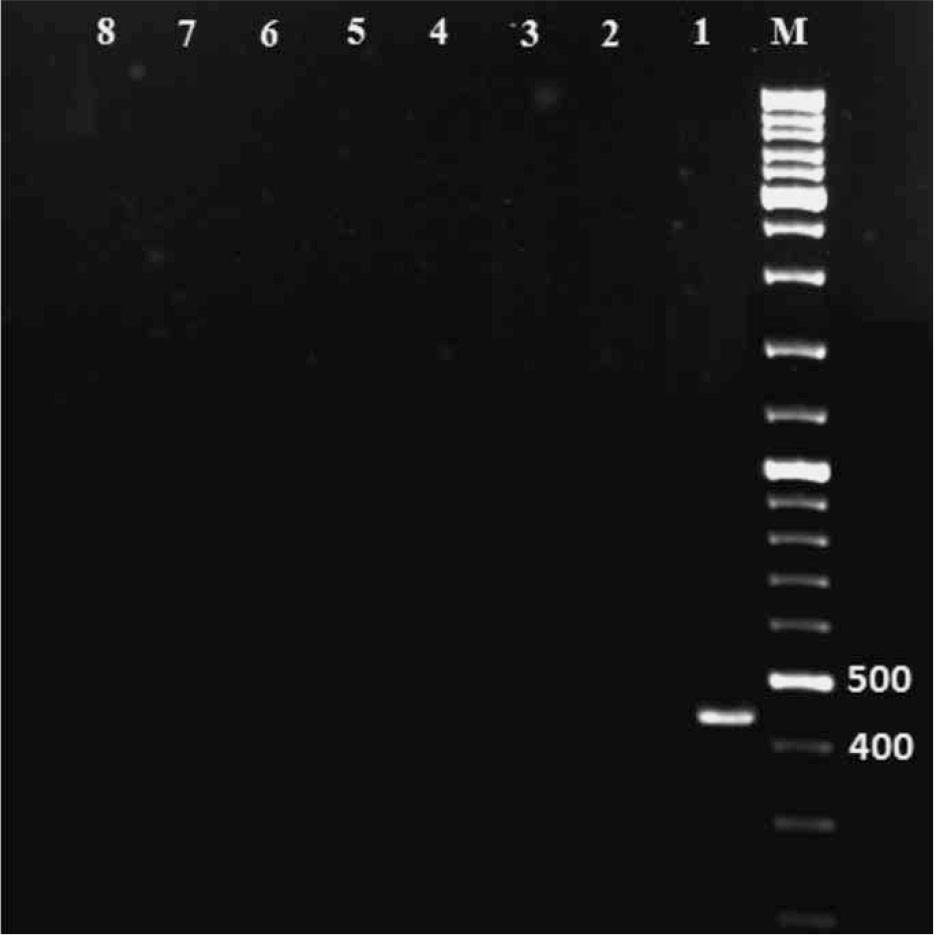
Figure 2.
Agarose gel electrophoresis of the 16S rDNA PCR fragment amplified by PCR using 16F27 and 16R1525 as reverse and forward universal primers, respectively (HAUBEN et al. 1998), from the genomic DNA of all isolated bacteria. M: DNA ladder; Lane 1–8: Different bacterial isolates from infected Quercus brantii tree (Q1–Q8)
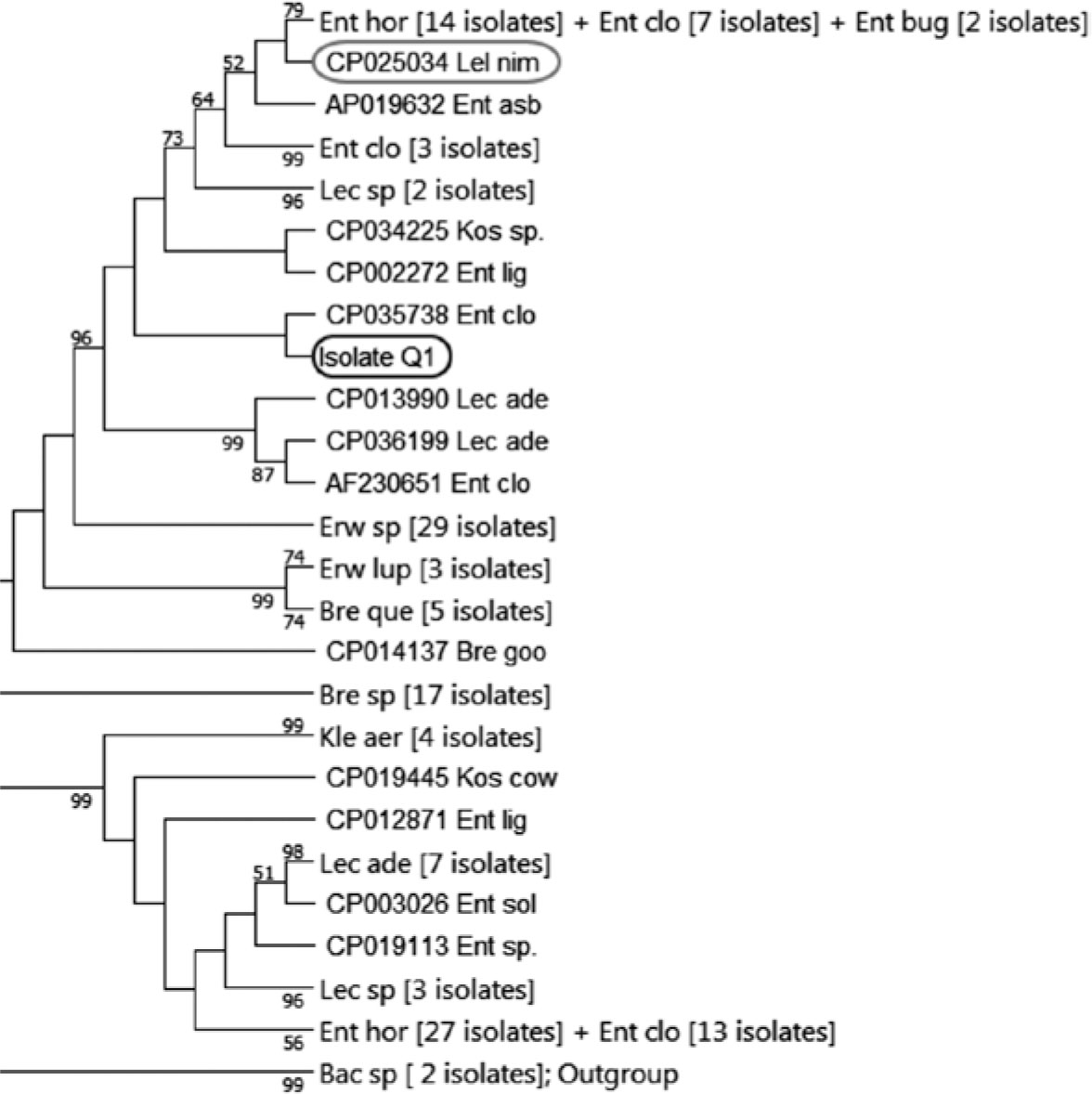
Figure 3.
Maximum parsimony tree showing the 16S rRNA gene phylogenetic relationships of isolate Q1 and reference bacteria. Bootstrap values based on 1000 resamplings are shown at branch nodes. Bacillus spp. (Bac sp.) was used as an outgroup. Numbers in the brackets indicate the ratio of annotated species to the total species in each clade. Evolutionary analyses were conducted in MEGA Ver. 10
Results of pathogenicity tests showed that isolate Q1 was able to grow and cause cankers in oak seedlings. Two weeks after inoculation, all the inoculated seedlings with isolate Q1 displayed typical disease symptoms of bacterial wilt. So that, leaves turned green to yellow, and also black lesions on the stems of the Q. brantii seedlings appeared after 40 days. However, seedlings inoculated with sterile water (as a negative control) showed no symptoms (Fig. 4). Also, reisolation from the lesion of five infected seedlings showed the same biochemical characteristics as above, and it confirmed that the bacterial pathogen was similar. Moreover, no pathogenic bacteria were re-isolated from the controls.
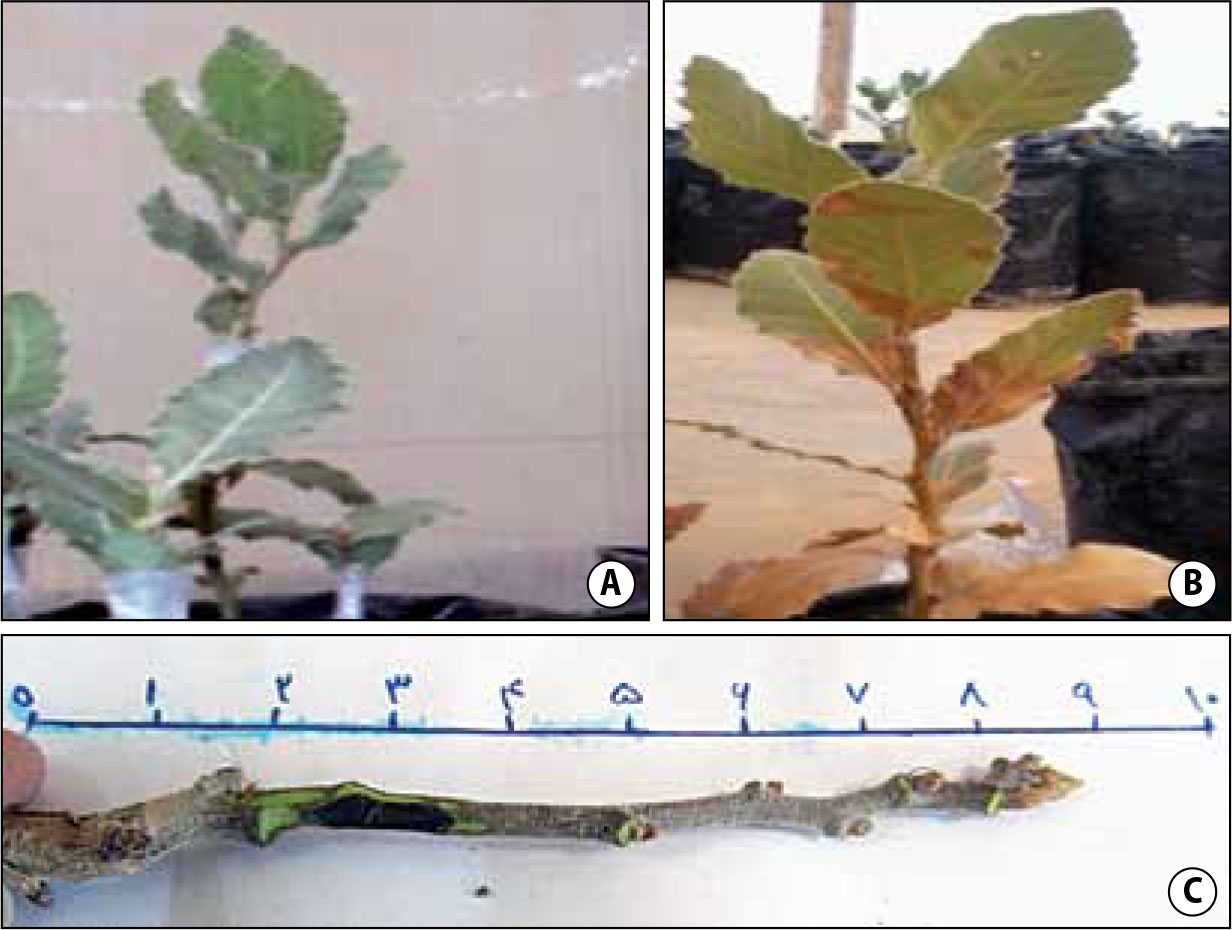
Figure 4.
Pathogenicity tests on 1-year-old oak seedling after 40 days. A – inoculated with distilled water. Symptoms of inoculated seedlings with bacterial suspension of isolate Q1 (108 CFU/ml): B – willting of leaf and C – necrotic lesions on stem
Discussion
Results of hypersensitive reactions on tobacco leaves showed that only isolates Q1, Q3, and Q5 were pathogenic among eight isolates. Morphological and biochemical tests such as gram-negative, facultatively anaerobic, oxidase negative, and catalase positive suggest that these isolates (Q1, Q3, and Q5) belong to the genus Entrobacter spp. (Grimont and Grimont 2006).
Also, the maximum parsimony tree of 16S rRNA gene phylogenetic illustrated that the isolate Q1 was clustered with Lelliottia nimipressuralis, Enterobacter hormaechei, E. cloacae, E. bugandensis, and E. asburiae. This result was consistent with other studies (Mezzatesta et al. 2012; Paauwe et al. 2008). They reported that these species included of E. cloacae, E. asburiae, E. hormaechei, E. kobei, E. ludwigii, and L. nimipressuralis have split out of the nomenspecies E. cloacae, and it called Entrobacter cloacae complex. The other studies also showed that the genetic relatedness among these species is high (Liu et al. 2016; Ogbo and Okonkwo 2012). Although phylogenetic analysis revealed that isolate Q1 is most closely related to Enterobacter cloacae (95% sequence similarity), biochemical tests have not confirmed the 16S rDNA genes sequencing analysis. The results are consistent with other studies that found that 16S rRNA gene sequence analysis alone is not sufficient for illustrating at the species level (Stackebrandt and Goebel 1994), especially for closely related members of Entrobacter genus (Tang et al. 1998). Other studies showed that E. cloacae and L. nimipressuralis had a DNA relatedness of up to 67% and E. cloacae can be separated by biochemical tests from it by being sucrose and sorbitol negative (Híobmabche and Manilla 1957; Steigerwalt et al. 1976; Brenner et al. 1986; Liu et al. 2016). Moreover, many studies confirmed that E. cloacae and L. nimipressuralis are very similar to each other, and also these two species are sometimes used as synonyms (Hoffmann and Roggenkamp 2003). Although biochemical characteristics of E. cloacae complex in different studies are variable, most studies reported that L. nimipressuralis by being sucrose and sorbitol negative can differ from other species of E. cloacae complex (O’hara et al. 1989; Hoffmann et al. 2005; Mezzatesta et al. 2012). Moreover, Mezzatesta et al. (2012) reported that only L. nimipressuralis and E. asburiae are aesculin negative. Therefore, biochemical and physiological characteristics in combination with DNA sequence analysis indicated that the pathogenic isolate (isolate Q1) identified as Lelliottia nimipressuralis and this is the first report of the occurrence of wetwood disease on Q. brantii trees in Iran. Although other closely related species of Entrobacteriaceae family such as Brenneria sp. (B. roseae) were reported as a causal agent of oak decline in Zagros forests of Iran (Moradi-Amirabad et al. 2019), this study showed that the isolate Q1 and Brenneria sp. are in a different clade base on phylogenetic analysis. Also, the causative agent of bacterial dropsy or watery lesion by L. nimipressuralis as wetwood disease has been reported in oak trees in Ukraine forests (Goychuk et al. 2019; Kulbanska et al. 2022). Moreover, it was a potential pathogen in other trees such as Ulmus sp. (Carter 1945; Khdaygan et al. 2012; Murdoch and Campana 1983; Iavniy and Puzrina 2018), Betula pendula (Goychuk et al. 2020), and Abies alba (Kulbanska et al. 2022).
Also, infected seedlings with this pathogen exhibit a fast discoloration in leaves and spread of black lesions on the stems after 40 days. Goychuk et al. (2023) also showed that this pathogen can cause necrosis on the leaves of oak, beech, and poplar. These symptoms that appeared in inoculated seedlings were similar to affected oak trees in forests. Other studies revealed that this pathogen is responsible for phloem necrosis and vessel plugging, which affects the plumbing system of trunks and branches, and is externally manifested by dark fluid weeps in the stem and bark (exuding sap) and early leaf senescence (Goychuk et al. 2019; Zhao et al. 2022).
Conclusions
This study for the first time demonstrated that L. nimipressuralis is associated with wilting of oak trees and seedlings, and finally oak decline in Zagros forests. This is an opportunist pathogen, and climate change and increasing drought conditions can contribute to the spread of this bacterial disease in Zagros forests. Other studies also showed that the most susceptible Betula pendula trees to L. nimipressuralis grow on poorer soils and water stress conditions during the growing season (Goychuk et al. 2020). Therefore, identification of this pathogen can help to contribute to this disease and the dieback of Persian oak trees in these forests. Application of antagonistic bacterial strains such as Bacillus subtilis for increasing of induced systemic resistance (ISR) is an ideal biocontrol strategy (Bilous et al. 2023). Another attempts could be identification of more resistant mother trees to this pathogen in Zagros forests. Furthermore, biochemical characteristics support that the isolate Q5 belongs to Enterobacter cloacae but should be analyzed by the 16S rRNA gene sequence and other genes like gyrB and infB for confirmation.