
Introduction
Studying the state of plants in urban landscaping is an important component of monitoring urban ecosystems. Determining the stability and prospects of using new types of plants for the improvement of urban areas, as well as improving the quality of life of citizens, requires a scientific basis. For this, it is important to understand the sensitivity of plants to stressful conditions, taking into account the influence of a complex of environmental factors on their general condition, growth, and development.
Ligustrum vulgare L. and its cultivars are one of the promising plants for urban landscaping. This semi-evergreen shrub belongs to the family Oleaceae Hoffmanns. & Link and has an attractive appearance and broad environmental tolerance (Zayachuk 2014). The expediency of using Ligustrum vulgare L. in landscaping is based on a complex of its beneficial morpho-physiological features.
Ligustrum vulgare L. is a semi-evergreen shrub or small tree that has a spreading crown and reaches 3 to 6 m in height. The oval leaves are elongated, dark green in color, and often glossy with a wax coating. Flowering typically begins from the end of May to the beginning of June. Cream-white flowers are collected in a pyramidal panicle and have a strong aroma. Stone fruits, green in color, acquire a dark purple color at the time of ripening. The plant tends to remain evergreen in warmer climates (Zayachuk 2014).
Ligustrum vulgare L. has a simple and at the same time beautiful appearance, which makes it attractive for urban landscapes (Turgunboevna 2022), domestic areas, gardens, parks, squares, alleys and streets (Kuznetsov et al. 2020), highways, and industrial zones (Yukhimenko et al. 2017). This bush is grown individually or as part of hedges (Dzyba 2020), creating harmonious, esthetically attractive landscape compositions (Shamray et al. 2021; Dudin and Levus 2022). Currently, the rather popular Ligustrum vulgare L. is an alternative to Buxus sempervirens L. in landscaped bridges (Lukash et al. 2023).
The use of Ligustrum vulgare L. in landscaping contributes to the preservation and increase of biodiversity in urban ecosystems (Stratu et al. 2016). White flowers gathered in dense pyramidal panicles attract insects (bees and butterflies), which play an important role in pollination of plants and maintenance of ecological balance (Zayachuk 2014). In turn, its fruits [rounded or ovoid drupes (Zayachuk 2014), which ripen in August–September] are a fodder base for birds (Enescu et al. 2015).
Ligustrum vulgare L. is a relatively undemanding plant to grow. It can grow in both sunny and shaded places and on fairly dry (Toscano et al. 2018) and poor soils. This allows it to be used in landscape conditions that are quite difficult for other plants (Kuznetsov et al. 2020).
Ligustrum vulgare L. exhibits high resistance to toxic substances, elevated temperatures (Beikircher et al. 2009), and other stress factors inherent in the urban environment (Strashok 2022). This shrub is able to successfully grow and develop in conditions of high concentrations of harmful gases (Hasanovic et al. 2022; Zhang et al. 2016) and high vehicle traffic (Shamray et al. 2021).
Phenolic compounds play an exclusive role in ensuring the viability of the plant organism. The phenolic complex of Ligustrum vulgare L. is quite unique. The presence of secoiridoid glucosides, (200R)- and (200S)-10-hydroxy-200-methoxyoleuropein (1 and 2), and secoiridoid aglycones, ligustrogemiacetals A (3) and B (4) was confirmed in the leaves and stems of this species (Tanahashi et al. 2009). Secoiridoids (oleuropein, ligustaloside A, ligustaloside B, and ligstroside), four kaempferol glycosides (kaempferol 3-O-glucoside 7-O-rhamnoside, kaempferol 3,7-O-dirhamnoside, kaempferol 3-O-rhamnoside, and kaempferol 3-O-glucoside), and two quercetin glycosides (quercetin 3-O-glucoside 7-O-rhamnoside and quercetin 3,7-O-dirhamnoside) (Romani et al. 2000). The presence of oleacein, oleuropein, and echinacoside has been established (Czerwińska et al. 2015).
Abiotic factors of the environment, such as lighting, temperature, and humidity individually and in combination, affect the biochemical composition and contents of compounds of secondary synthesis in the plant organism (Novosad 2014). An increase in light intensity promotes the accumulation of flavonoids and other photoactive molecules in the assimilation organs (Agati et al. 2009; Agati et al. 2020). Phenolic acids in plant cells play the role of nonspecific regulators in physiological processes (Huang et al. 2019; Likhanov et al. 2019). Gallic and ellagic acids, their derivatives, and other polyphenols, which have significant antioxidant activity, contribute to the protection of cells from damage in stressful conditions (Romani et al. 2000). Flavonoids, which are one of the most common classes of phenolic compounds, play a variety of physiological functions (Voytsehivska et al. 2015). They are involved in the regulation of cell division and differentiation and in the processes of formation of plant tissues and organs (Agati et al. 2012). Some flavonoids (quercetin, kaempferol) can affect auxin transport (Tanahashi et al. 2009) and regulate the growth and development of the root system (Agati et al. 2012). These flavonols reduce the negative effects of stress, particularly under conditions of soil salinity and excessive ultraviolet radiation (Falcone Ferreyra et al. 2021; Czerwińska et al. 2015).
The qualitative and quantitative composition of secondary metabolites characterizes the general state of the plant. Individual phenolic compounds and the quantitative ratio of individual classes of these substances are potential markers of stress. However, the importance of these substances for the plant organism and their physiological functions and synthesis depending on the conditions of local growth remain poorly researched.
In this regard, the purpose of this work is to perform phytochemical profiling of Ligustrum vulgare L. and to study the peculiarities of the morphogenesis of annual shoots depending on the conditions of plant growth.
Material and Methods
Research conditions
The research was done in the city of Kyiv in 2021–2023. The climate of the city is moderately continental, with temperate winters and warm summers. Average monthly temperatures in January are −3.5°C and in July +20.5°C.
The studied plants are located on the streets of Kyiv, in public squares, as well as in park areas (Fig. 1). The exact location of plant growth is shown in Table 1.
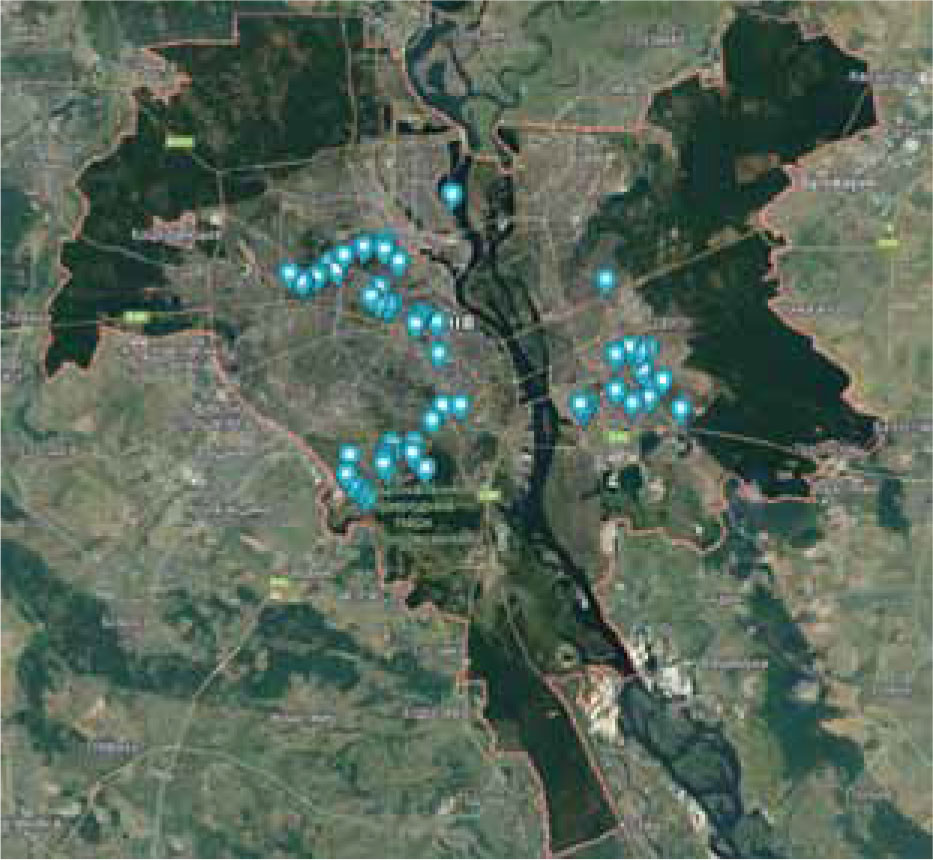
Figure 1.
Map of location of studied Ligustrum vulgare L. in green areas of Kyiv
Table 1.
Location coordinates and origin of the initial planting material of Ligustrum vulgare L. in the city of Kyiv, Ukraine
| No. | Coordinates | The origin of the original planting material | Code | Location |
|---|---|---|---|---|
| 1 | 2 | 3 | 4 | 5 |
| 1 |
| Municipal enterprise for the maintenance of green spaces of the Holosiivskyi district of Kyiv | L.v.1 | Akademika Zabolotnoho Street, Kyiv, Ukraine |
| 2 |
| Municipal enterprise for the maintenance of green spaces of the Holosiivskyi district of Kyiv | L.v.2 | Heavenly Hundred Square, Akademika Zabolotnoho Street, Kyiv, Ukraine |
| 3 |
| Municipal enterprise for the maintenance of green spaces of the Holosiivskyi district of Kyiv | L.v.3 | Akademika Hlushkova Avenue, Kyiv, Ukraine |
| 4 |
| Municipal enterprise for the maintenance of green spaces of the Holosiivskyi district of Kyiv | L.v.4 | Teremkivska Street, Kyiv, Ukraine |
| 5 |
| Municipal enterprise for the maintenance of green spaces of the Holosiivskyi district of Kyiv | L.v.5 | Tadeia Rylskoho Boulevard, Kyiv, Ukraine |
| 6 |
| Nursery Department of Forest Reproduction and Forest Reclamation, National University of Life and Environmental Sciences of Ukraine | L.v.6 | Henerala Rodymtseva Street, Kyiv, Ukraine |
| 7 |
| Municipal enterprise for the maintenance of green spaces of the Holosiivskyi district of Kyiv | L.v.7 | Vasylkivska Street, Kyiv, Ukraine |
| 8 |
| Municipal enterprise for the maintenance of green spaces of the Holosiivskyi district of Kyiv | L.v.8 | Akademika Hlushkova Avenue, Kyiv, Ukraine |
| 9 |
| Municipal enterprise for the maintenance of green spaces of the Holosiivskyi district of Kyiv | L.v.9 | Expo Center of Ukraine, M01, Kyiv, Ukraine |
| 10 |
| Municipal enterprise for the maintenance of green spaces of the Holosiivskyi district of Kyiv | L.v.10 | Holosiivskyi Prospekt, Kyiv, Ukraine |
| 11 |
| Municipal enterprise for the maintenance of green spaces of the Holosiivskyi district of Kyiv | L.v.11 | Expo Center of Ukraine, M01, Kyiv, Ukraine |
| 12 |
| Municipal enterprise for the maintenance of green spaces of the Holosiivskyi district of Kyiv | L.v.12 | Expo Center of Ukraine, M01, Kyiv, Ukraine |
| 13 |
| National University of Life and Environmental Sciences of Ukraine | L.v.13 | Heroiv Oborony Street, Kyiv, Ukraine |
| 14 |
| Municipal enterprise for the maintenance of green spaces of the Shevchenkivskyi district of Kyiv | L.v.14 | Kyrponosa Street, Kyiv, Ukraine |
In the city of Kyiv, Ligustrum vulgare L. is mainly used to create hedges. There are examples of its combination with other types of plants in the form of three-dimensional flat figures or in photocompositions with flower beds, as well as single free-growing specimens. These plantations are located at different distances from roads (main roads, transport interchanges, and avenues). Plantation of Ligustrum vulgare L. on Akademika Hlushkova Avenue, Kyiv, Ukraine (Fig. 2C); Akademika Zabolotnoho Street, Nebesnaya Hundred Square, Tadeia Rylskoho Boulevard, Vasylkivska Street, Kyiv, Ukraine, grows at a distance of 5–10 m from roads (Tab. 2).
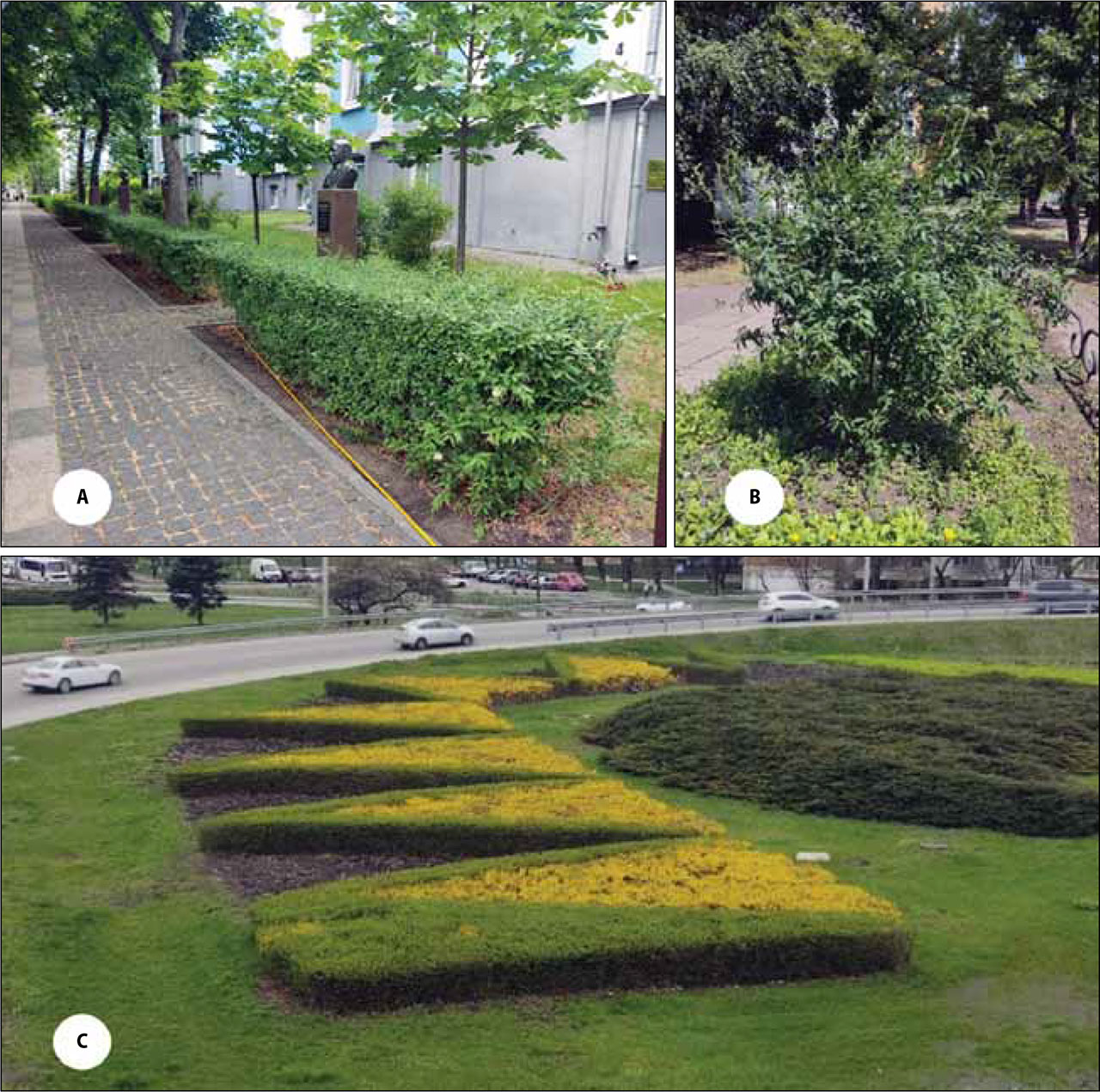
Figure 2.
Examples of the use of Ligustrum vulgare L. in the green areas of Kyiv: A – living fence with Ligustrum vulgare L. on the territory of National University of Life and Environmental Sciences of Ukraine; B – Ligustrum vulgare L. free-growing plant, Teremkivska Street, Kyiv, Ukraine; C – composition on Akademika Hlushkova Avenue, Kyiv, Ukraine with a combination of Ligustrum vulgare L. and Forsythia europaea Degen & Bald
Table 2.
Characteristics of growing conditions
| No. | Code | Age of plants, years | Plant condition | Lighting at the place of growth | Distance from highways, m |
|---|---|---|---|---|---|
| 1 | L.v.1 | 3 | untrimmed | full sun | 5–10 |
| 2 | L.v.2 | 8 | trimmed | full sun | 1–2 |
| 3 | L.v.3 | 6 | trimmed | full sun | 5–10 |
| 4 | L.v.4 | 4 | untrimmed | shade | 45 |
| 5 | L.v.5 | 4 | untrimmed | full sun | 2–3 |
| 6 | L.v.6 | 15 | untrimmed | shade | 500 |
| 7 | L.v.7 | 8 | trimmed | full sun | 25 |
| 8 | L.v.8 | 12 | trimmed | full sun | 1–2 |
| 9 | L.v.9 | 8 | trimmed | partial shade | 150 |
| 10 | L.v.10 | 9 | trimmed | partial shade | 1–40 |
| 11 | L.v.11 | 7 | trimmed | partial shade | 450 |
| 12 | L.v.12 | 13 | trimmed | partial shade | 400 |
| 13 | L.v.13 | 5 | trimmed | partial shade | 25–30 |
| 14 | L.v.14 | 7 | trimmed | full sun | 1 |
These places are characterized by significant vehicle traffic. Plantation of Ligustrum vulgare L. at Expo Center of Ukraine, M01, Kyiv, Ukraine, and Henerala Rodymtseva Street, Kyiv, Ukraine (Fig. 2A), are not directly affected by vehicle emissions because they are located far from roads (<500 m) (Tab. 2).
Soils in the vast majority of locations where Ligustrum vulgare L. grow are sandy. The amount of sunlight in the areas where the studied plants grow also differ. Conventionally, they can be divided into three classes: full sun (duration of exposure to direct solar radiation is 10–12 hours per day), partial shade (3–9 hours per day), and shade (0–2 hours per day) (Tab. 2). Plantation of Ligustrum vulgare L. on full sun areas: Akademika Zabolotnoho Street, Nebesnaya Hundred Square, Akademika Hlushkova Avenue, Kyiv, Ukraine; partial shade: Expo Center of Ukraine, Teremkivska Street, Kyiv, Ukraine (Fig. 2B); and shade: Henerala Rodymtseva Street, Kyiv, Ukraine.
Plantations of Ligustrum vulgare L. also differ in appearance. Most of them are shaped in the form of hedges or massifs. Such plants are formed by pruning 2–3 times during the growing season, but there are also free-growing plants that do not undergo cutting at all.
Morphometric studies
The analysis of the morphometric parameters of the shoots was carried out to evaluate the determination of the features of the growth processes of plants depending on the conditions of their cultivation. Sampling was carried out in 14 localities (Tab. 1). A total of 26 plants were used in the experiment. The length and diameter of internodes of one-year shoots of Ligustrum vulgare L. (n = 156) were measured.
To describe the dynamics of internode length changes in one-year-old shoots during the growing season, we used the Gaussian model, which accurately described the morphogenesis features of plants with clearly defined peaks and declines in the growth activity (1).
To identify the relationship between the overall plant condition assessments and the coefficients (a, b) in the Gaussian model, we employed multiple Spearman rank correlation analysis.
Secondary metabolite profiling method
Separation of substances was carried out by the method of high-performance thin-layer chromatography (HPTLC) on Silicagel G 60 plates (Merck) in the solvent system: ethyl acetate – formic acid – acetic acid – water (v/v/v/v – 100 : 11 : 11 : 25). The obtained chromatograms were treated with a 0.5% NP reagent in ethyl acetate followed by treatment with 1.0% PEG and heating at 90ºС for 1 min. Flavonoids and other polyphenols were detected in the chromatogram in ultraviolet light (λmax = 365 nm). Rf indicators (retention index) of individual compounds were determined photodensitometrically using the Sorbfil TLC Videodensitometer computer program.
Autofluorescence of shoot tissues was studied on an inverted microscope with a multichannel fluorescence imaging system (EVOS FL System, ThermoFisher Scientific, USA).
Method of statistical data processing
Measurement results are presented as mean ± standard error (x±SE). The significance of the difference (p<0.05) between the obtained data was determined by the method of variance analysis (one-way ANOVA) using Tukey’s a posteriori test in the XLSTAT program (Addinsoft Inc., USA, 2010). Thus, we compared the total length of shoots between pruned and unpruned plants (the total number of shoots in the samples was n=140). Principal component analysis (PCA) and cluster analysis were performed in the XLSTAT program. The Sigma Plot 12.0 program (Systat Software, Inc., 2011) was used for regression analysis.
Results
Ligustrum vulgare L. bushes are usually cut when the shoot forms on average 5–7 internodes. The formation of lateral shoots occurs due to the stimulation of lateral buds during decapitation of the shoot, which in turn form 5–6 internodes within 1 month after cutting (Fig. 3). The length of the internodes of such shoots is usually 1.2–1.3 times greater than a normal shoot. The degree of lignification (maturation) of stem tissues slows down. The leaves on the lateral shoots in the lower internodes have an elliptical, ovoid shape and only at 3 nodes do they acquire the elongated-elliptical shape typical of Ligustrum vulgare L. Two shoots can form at the node at the same time, which creates a falsely dichotomous branching, or there may be only one shoot. In the first case, the growth of lateral shoots was almost uniform, and the first leaves in the node are small, almost round in shape and leathery.
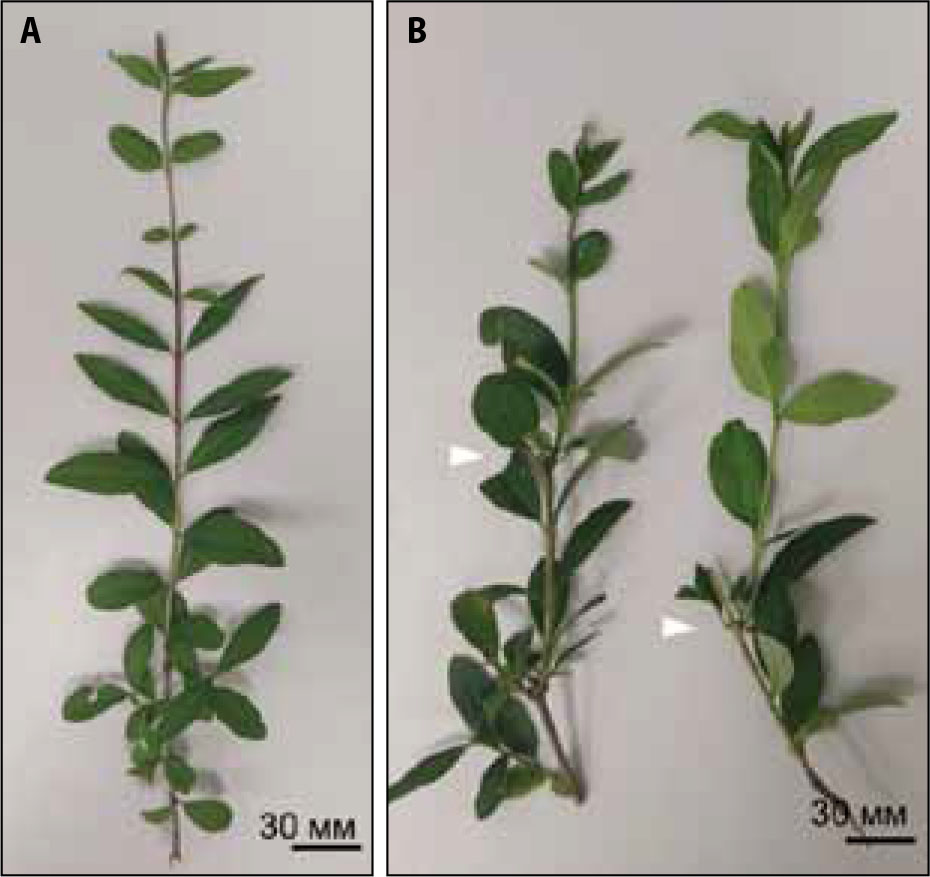
Figure 3.
Formation of shoots of Ligustrum vulgare L. in normal condition (A) and after cutting (B). Note: The arrow indicates the cut stem; scale bar – 30 mm
The following leaves are elliptical, the internodes are elongated, slightly woody, and slightly pubescent, and the number of lenticels is reduced. In the case of drying of one shoot, which can occur as a result of cutting or natural injury, the growth of the side shoot slowed down somewhat, and the internodes had the typical length of Ligustrum vulgare L. (Fig. 4).
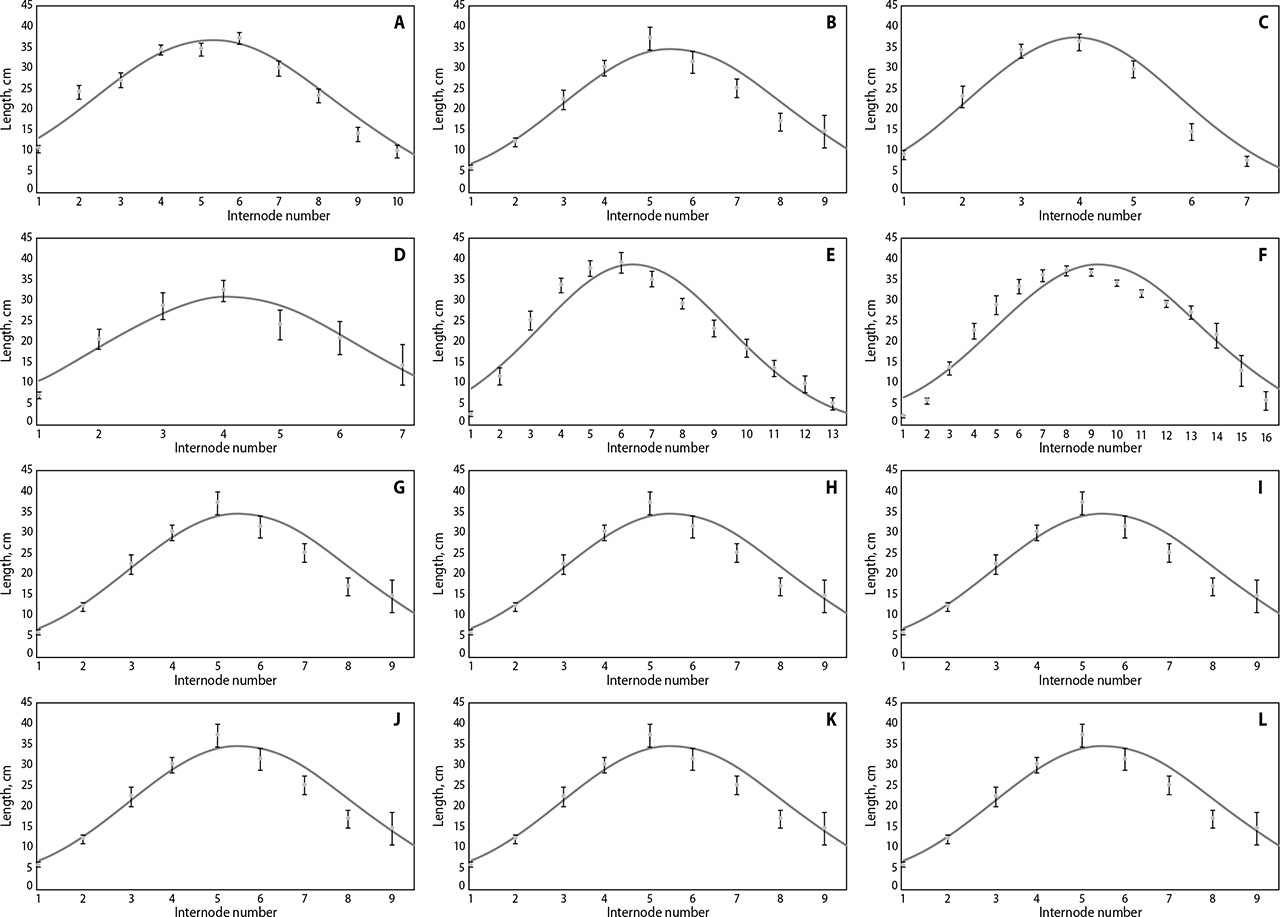
Figure 4.
Dependencies of the length of internodes on the order of their location on a single growth cycle of the shoots under different growing conditions of Ligustrum vulgare L.
The average length of shoots formed during the season differs between pruned and unpruned Ligustrum vulgare L. plants. The length of shoots in unpruned plants is 1.6 times greater than that of pruned plants.
The structure of the tissues of the stems of the privet, which were cut, is significantly different from uncut plants (Fig. 5). First of all, this is due to the slowing down of the formation of periderm and xylem. Normally, in shoots of the current year, periderm formation occurs in the zones 1–5 of internodes (Fig. 5 A–J). As a result of the decapitation of the main shoot, the lateral buds begin to grow much later. Because of this, the periderm does not have time to fully form. Epidermis with simple trichomes on such shoots is found even on the first internodes (Fig. 5 K–S).
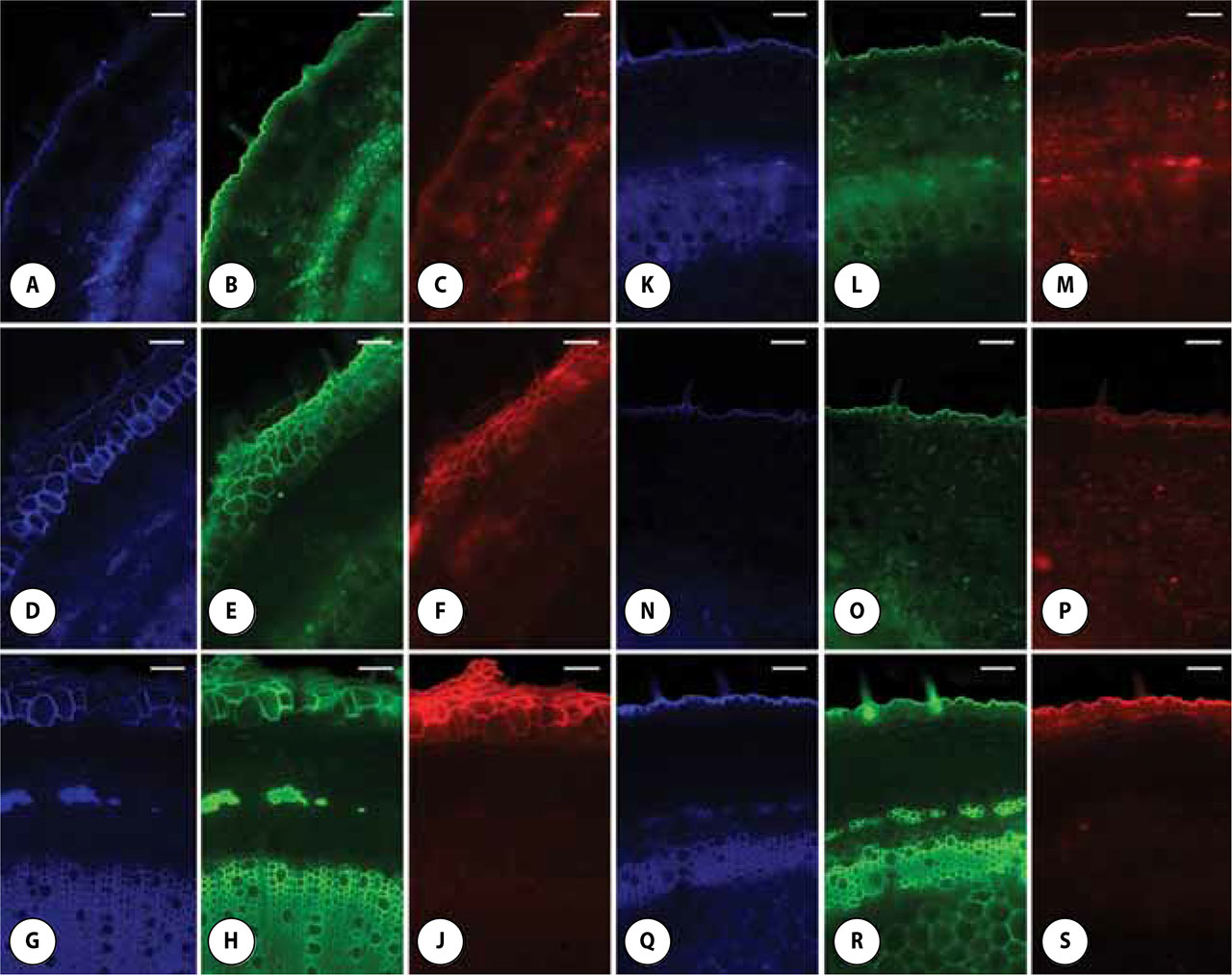
Figure 5.
Autofluorescence of tissues of stems of Ligustrum vulgare L., which were not exposed (A–J) and were subjected to shearing (K–S): A–C – 9 internodes, D–F – 5 internodes; K–M – 5 internodes, N–P – 2 internodes; G–J and Q–S – 5 internodes after treating tissues with a NP reagent; ruler – 50 µm
Phellem cells become woody and are permeated with compounds of secondary synthesis. Accumulation of phenolic compounds and presumably proteins is found in the narrow zone of the secondary cortex of young metamers (Fig. 5 A–C K–M), where bast fibers are formed during the maturation of mechanical tissues. These fibers are laid in small bundles without forming a continuous mechanical ring. The autofluorescence of their cell walls in the blue, green, and red spectra is insignificant, but after treating the tissues with the NP reagent, it is enhanced and stands out against the background of the cortex parenchyma (Fig. 5 G–J, Q–S). This may indicate that the cell walls of the fibers contain products of phenolic synthesis (oxycinnamic acids and flavonoids), which are specifically detected in this way. In lateral shoots formed after cutting, the distribution of assimilates in the cells of the parenchyma of the secondary cortex is more evenly distributed and does not reveal a zone of concentration (Fig. 5 K–M). Xylogenesis, lignification of vessels, and formation of secondary cell walls in wood fibers also slow down. The width of the xylem ring in such stems is 2.5–3.0 times smaller than that in the corresponding internodes of uncut plants. The rapid growth of shoots with delayed lignification is compensated at the end of the growing season, and therefore, the last cutting of Ligustrum vulgare L. should take into account its growth and development characteristics.
Biochemical profiling of phenolic compounds in one-year stems of Ligustrum vulgare L. made it possible to identify 20 individual compounds that according to the retention coefficients and specificities of autofluorescence in the UV (λ = 365 nm) belong to phenolcarboxylic acids, their conjugates, and flavonoids (Fig. 6). In general, 2 main groups of plants are distinguished according to phytochemical profiles.
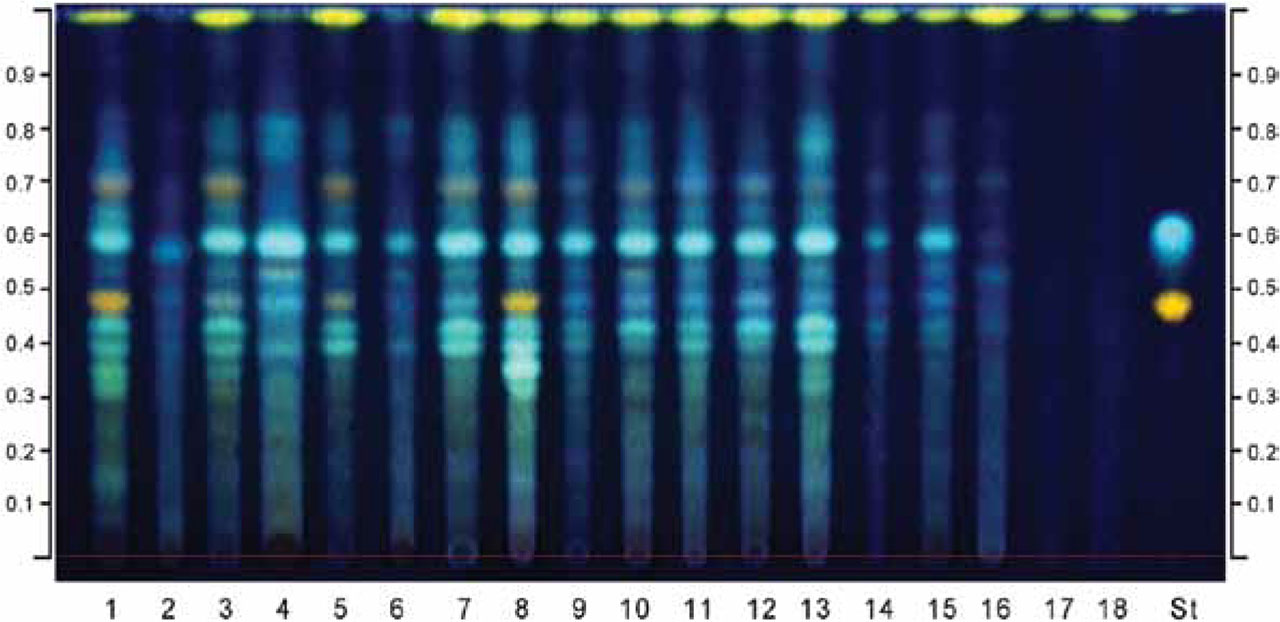
Figure 6.
Chromatogram of bark and periderm extracts of annual shoots of Ligustrum vulgare L.: 1 – Akademika Zabolotnoho Street; 2 – Heavenly Hundred Square, Akademika Zabolotnoho Street; 3 – Akademika Hlushkova Avenue; 4 – Teremkivska Street; 5 – Tadeia Rylskoho Boulevard; 6 – Henerala Rodymtseva Street; 7 – Vasylkivska Street; 8 – Akademika Hlushkova Avenue; 9 – Expo Center of Ukraine, M01; 10 – Holosiivskyi Prospekt; 11 – Expo Center of Ukraine, M01; 12 – Expo Center of Ukraine, M01; 13 – Heroiv Oborony Street; 14 – Kyrponosa Street; 15 – Expo Center of Ukraine, M01; 16 – Expo Center of Ukraine, M01; 17 – Expo Center of Ukraine, M01; 18 – Expo Center of Ukraine, M01; St – rutin (Rf ~ 0.48), chlorogenic acid (Rf ~ 0.62)
Rutin (quercetin-3-O-rutinoside) (Rf ~ 0.48) was detected only in samples from 4 localities (Akademika Zabolotnoho Street; Akademika Hlushkova Avenue; Tadeia Rylskoho Boulevard). Chlorogenic acid (conjugate of caffeic acid and quinic acid with Rf ~ 0.62) was detected in all samples.
The growth dynamics of shoots of Ligustrum vulgare L. is also related to the content in the cells of the parenchyma of a low polar flavonoid (Rf ~ 0.98) (Fig. 6). Its concentration in the bark parenchyma correlates with other phenolic compounds Rf ~ 0.41; 0.66; 0.73; 0.77. Elevated concentrations of this flavanol have been found in plants with uniformly rapid growth (without significant accelerations) between internodes, allowing the plant to achieve maximum growth in a short period of time. The importance of this metabolite and its close relationship with general phenolic synthesis indicates its integration into physiological processes related to the regulation of shoot growth and development. It is worth noting that the indicator of the coefficient b in the Gaussian model (Appendix), which characterizes the dynamics of stem growth, in the case of multiple correlation revealed a reliable connection with the substances Rf ~ 0.41; 0.98, and the “x0” coefficient is associated with four substances (Rf ~ 0.51, 0.56, 0.73, 0.98). The coefficient a (upper asymptote) is positively correlated with the substance Rf ~ 0.61, which may indicate that this phenolic compound probably participates in the regulation of growth by stretching. As a result of this, the length of the internodes increases.
Based on the results of the cluster analysis, which took into account morphometric parameters of shoots and phenolic synthesis products, the plants were divided into three main groups (Fig. 7A). The first cluster (I) comprised plants that had never been pruned. The second cluster (II) grouped pruned plants from one location (VDNG) and accordingly had similar growth conditions, close origins, and age. The third cluster (III) was more heterogeneous in composition. As the similarity level increased, it split into two subclusters. Subcluster IIIa combined pruned plants growing near highways. In subcluster IIIb, pruned plants further away from the roadway were grouped.
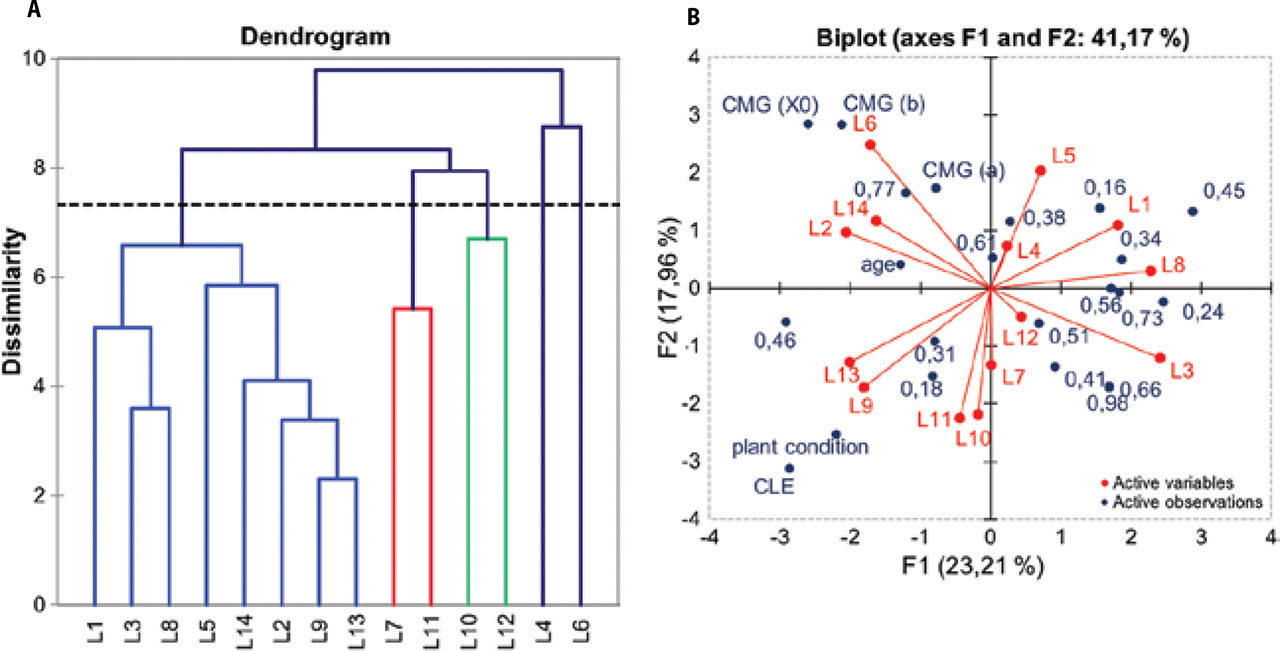
Figure 7.
Cluster (A) and PCA (B) analysis taking into account urban conditions, the morphometry of shoots, and the qualitative composition of phenolic compounds in the tissues of shoots of Ligustrum vulgare L. Note: L1...14 – distribution of experimental plants by place of growth in the city of Kyiv, where: 1 – Akademika Zabolotnoho Street; 2 – Heavenly Hundred Square, Akademika Zabolotnoho Street; 3 – Akademika Hlushkova Avenue; 4 – Teremkivska Street; 5 – Tadeia Rylskoho Boulevard; 6 – Henerala Rodymtseva Street; 7 – Vasylkivska Street; 8 – Akademika Hlushkova Avenue; 9 – Expo Center of Ukraine, M01; 10 – Holosiivskyi Prospekt; 11 – Expo Center of Ukraine, M01; 12 – Expo Center of Ukraine, M01; 13 – Heroiv Oborony Street; 14 – Kyrponosa Street; 15 – Expo Center of Ukraine, M01; 16 – Expo Center of Ukraine, M01; 17 – Expo Center of Ukraine, M01; 18 – Expo Center of Ukraine, M01. Age – the age of the plant at the time of the study; Plant condition are clipped and unclipped plants; GMC – Gauss model coefficient; CLE is the coefficient of the linear equation (the ratio of the length to the thickness of the internodes).
Biplot principal component analysis (PCA) showed that the total variance of F1 and F2 components is 41.17% (Fig. 7B).
Principal component analysis methods emphasized the importance of the coefficients of the Gaussian model, which describe the dynamics of internode growth.
Discussion
The morphometric analysis of metamers of Ligustrum vulgare L. shoots showed that the parameters of the linear dimensions of internodes according to the sequence of their formation are quite accurately described by the Gaussian model (1). It takes into account the morphometric indicators of each internode (Appendix A). This model plays a key role in understanding the processes of growth and development of shoots and their adaptation to external conditions. Thus, the Gaussian model coefficients (KM (x0) and KM (b)), which describe the dependence of the length of internodes on their spatial position on the stem, made the largest contribution to the total variance of the investigated traits (Fig. 8).
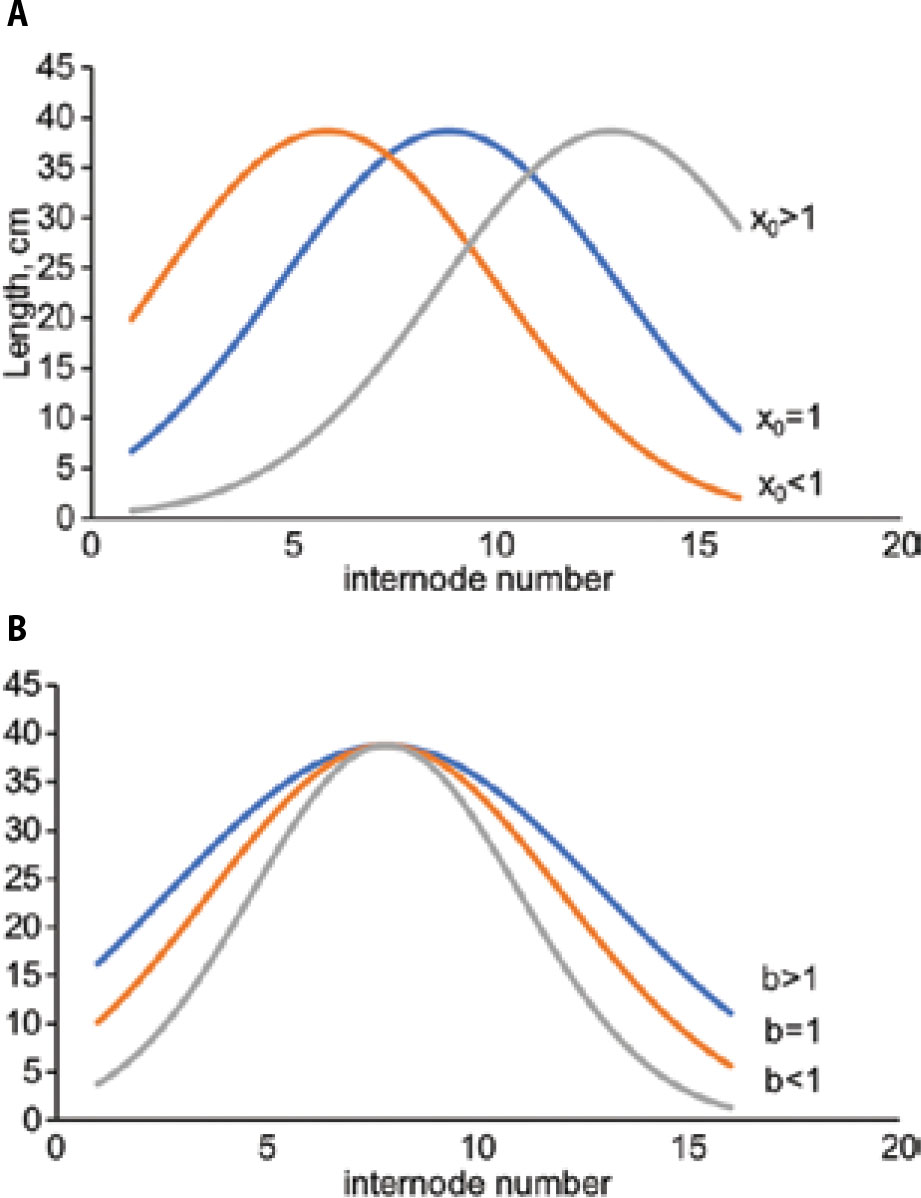
Figure 8.
Curve dependence in the Gaussian model on the values of the coefficients x0 and b
The increase in the concentration of chlorogenic acid in the bark and periderm of one-year shoots correlates negatively (r = −0.635) with the coefficient “x0” in the Gaussian model. A reliable relationship (r = −0.549) was established between the “b” coefficient of this model and the condition of the plants. By state, we understand the general appearance of the plant, in particular after an initial pruning. The negative correlation coefficient indicates that cutting plants leads to an increase in the size of the first internodes, which is caused by the awakening and accelerated growth of side shoots after decapitation of the main one. The indicator of the total length of the shoot is the result of the growth and formation of each internode during the entire growing season. There is a close correlation between the coefficient “a” and the total length of the shoot since the growth function of individual internodes determines the growth of the shoot as a whole. A reliable correlation was also determined between the coefficient “x0”, which determines the maximum growth rate of the shoot according to the number of the internode. During the formation of 7–8 internodes, they can stop growing in length and begin to become woody. Thus, as a result of ripening, they are fully adapted to the winter period during the growing season. At the same time, it is interesting that the apical bud of undamaged shoots sometimes initiates secondary growth. The reason for this phenomenon may be related to the systemic physiological restructuring of the plant, which is exposed to stress during cutting.
It has been established that against the background of the accumulation of individual phenolic substances, internodes quickly reach the maximum length. Because of this, it can be assumed that the increase in the content of chlorogenic acid is a compensatory mechanism in the process of adaptation of plants after injury. In turn, chlorogenic acid is known as a highly effective antioxidant. It effectively protects cell membranes from the negative effects of reactive oxygen species and free radicals, the concentration of which increases due to organ injury (Mei et al. 2020).
According to the result of multiple correlation analysis (according to Spearman), a close relationship between the degree of light regime and the vehicle traffic loads was established, which is explained by the fact that plants growing near highways are usually not shaded. According to G. Agati et al. (2009), quercetin and luteolin derivatives significantly accumulate in epidermal and mesophyll cells in response to intense sunlight. At the same time, monohydroxyflavone glycosides (luteolin 4-O-glucoside and two 7-O-glycosides of apigenin) did not respond to changes in solar radiation (Agati et al. 2009). In our studies, the autofluorescence intensity of tissues after their treatment with the NP reagent also increased in plants in open areas. This confirms the fact that flavonoids play a key role in the adaptation of plants to lighting conditions.
Summary and Conclusions
The results of the research showed that the phytochemical profiles of phenolic compounds of Ligustrum vulgare L. depend on the growing conditions and the location of the plants. An increase in the content and qualitative composition of flavonoids is a reaction of plants to increased insolation and accordingly. There are close connections between the presence of certain individual compounds of secondary synthesis and shoot morphogenesis, which may indicate their role as nonspecific regulators of growth processes.
The research results confirmed the high adaptability of Ligustrum vulgare L. plants to the urban environment. The complex nature of the relationships between plant growing conditions, secondary metabolism, and shoot growth in Ligustrum vulgare L. is shown.
Further, increasing the understanding of these interactions will contribute to the improvement in the methods of growing and caring for plants, as well as the use of Ligustrum vulgare L. in the landscaping of modern cities.
Acknowledgement
We express our gratitude to Professor M.V. Patyka (National University of Life and Environmental Sciences of Ukraine) for technical assistance in conducting histological studies using the multichannel fluorescence imaging system, EVOS FL System, Thermo Fisher Scientific.
Appendices
Appendix
| Coefficient | Standards Error | t | P | |
|---|---|---|---|---|
| 1 | 2 | 3 | 4 | 5 |
| Akademika Zabolotnoho Street, Kyiv, Ukraine | ||||
| a | 35.351 | 1.1930 | 29.6317 | <0.0001 |
| b | 2.9083 | 0.1364 | 21.3233 | <0.0001 |
| x0 | 5.1541 | 0.1152 | 44.7230 | <0.0001 |
| Heavenly Hundred Square. Akademika Zabolotnoho Street. Kyiv. Ukraine | ||||
| a | 34.6465 | 1.5078 | 22.9778 | <0.0001 |
| b | 2.4045 | 0.1365 | 17.6144 | <0.0001 |
| x0 | 5.2986 | 0.1215 | 43.6186 | <0.0001 |
| Akademika Hlushkova Avenue. Kyiv. Ukraine | ||||
| a | 37.2528 | 0.9459 | 39.3817 | <0.0001 |
| b | 1.7260 | 0.0545 | 31.6535 | <0.0001 |
| x0 | 3.7563 | 0.0506 | 74.2725 | <0.0001 |
| Teremkivska Street. Kyiv. Ukraine | ||||
| a | 30.7231 | 2.1592 | 14.2289 | 0.0001 |
| b | 2.1289 | 0.2146 | 9.9227 | 0.0006 |
| x0 | 4.0875 | 0.1754 | 23.3006 | <0.0001 |
| Tadeia Rylskoho Boulevard. Kyiv. Ukraine | ||||
| a | 40.6227 | 1.9715 | 20.6055 | <0.0001 |
| b | 3.0506 | 0.1833 | 16.6463 | <0.0001 |
| x0 | 6.1805 | 0.1715 | 36.033 | <0.0001 |
| Henerala Rodymtseva Street. Kyiv. Ukraine | ||||
| a | 38.7128 | 1.4312 | 27.0493 | <0.0001 |
| b | 4.1766 | 0.1984 | 21.0506 | <0.0001 |
| x0 | 8.8261 | 0.1788 | 49.3689 | <0.0001 |
| Vasylkivska Street. Kyiv. Ukraine | ||||
| a | 43.7234 | 1.9391 | 22.5478 | <0.0001 |
| b | 1.9210 | 0.1052 | 18.267 | <0.0001 |
| x0 | 4.1619 | 0.0984 | 42.3137 | <0.0001 |
| Akademika Hlushkova Avenue. Kyiv. Ukraine | ||||
| a | 40.2798 | 0.9382 | 42.9345 | <0.0001 |
| b | 1.9957 | 0.0579 | 34.4500 | <0.0001 |
| x0 | 4.5229 | 0.0536 | 84.4422 | <0.0001 |
| Expo Center of Ukraine. M01. Kyiv. Ukraine | ||||
| a | 39.9353 | 1.7313 | 23.0661 | <0.0001 |
| b | 2.1887 | 0.1265 | 17.3060 | <0.0001 |
| x0 | 4.8919 | 0.1109 | 44.1112 | <0.0001 |
| Holosiivskyi Prospekt. Kyiv. Ukraine | ||||
| a | 28.7947 | 1.4152 | 20.3467 | <0.0001 |
| b | 2.0946 | 0.1332 | 15.7255 | <0.0001 |
| x0 | 4.8765 | 0.1196 | 40.7621 | <0.0001 |
| Expo Center of Ukraine. M01. Kyiv. Ukraine | ||||
| a | 29.302 | 2.7286 | 10.7388 | 0.0001 |
| b | 2.5388 | 0.3559 | 7.1337 | 0.0008 |
| x0 | 4.1886 | 0.2826 | 14.8195 | <0.0001 |
| Expo Center of Ukraine. M01. Kyiv. Ukraine | ||||
| a | 47.1108 | 1.6717 | 28.1816 | <0.0001 |
| b | 1.8116 | 0.0774 | 23.4082 | <0.0001 |
| x0 | 4.7655 | 0.0741 | 64.3411 | <0.0001 |
| Heroiv Oborony Street. Kyiv. Ukraine | ||||
| a | 29.8237 | 0.7349 | 40.5808 | <0.0001 |
| b | 2.2400 | 0.0913 | 24.5212 | <0.0001 |
| x0 | 4.9506 | 0.0758 | 65.3288 | <0.0001 |
| Kyrponosa Street. Kyiv. Ukraine | ||||
| a | 52.3945 | 1.8764 | 27.9227 | <0.0001 |
| b | 2.9757 | 0.1550 | 19.1982 | <0.0001 |
| x0 | 6.3023 | 0.1297 | 48.6104 | <0.0001 |