
1. Introduction
Cancer is still one of the main causes of illness and death around the world, affecting not just the body, but also the mind and spirit of those diagnosed. The impact of cancer goes far beyond physical symptoms, often touching the emotional and spiritual lives of patients in deep ways. In recent years, there has been growing recognition of the role that religious faith and spirituality can play in helping patients cope and maintain a better quality of life. This study sets out to examine how religiosity and spirituality relate to the well-being of people living with cancer. By reviewing the existing research, it looks at how spiritual support can empower patients, strengthening their emotional and psychological resilience. It also explores how incorporating spiritual care into a broader, more holistic treatment approach could help improve quality of life and support patients as they face the challenges brought on by the disease.
2. Bibliographic Review
Religious belief and spirituality have emerged as important aspects of cancer care, playing a crucial role in improving patients' quality of life. When confronted with a serious health crisis, many individuals turn to spiritual practices to help navigate psychological and existential struggles (Paterson et al., 2021). Spiritual well-being is now widely recognized as a key contributor to emotional resilience and treatment commitment. In contrast, the absence of spiritual well-being has been linked to heightened psychological distress and diminished quality of life (Paterson et al., 2021). Spiritual well-being generally reflects a sense of inner peace, purpose, and connection, elements that are often shaken following a cancer diagnosis and during treatment. Such disruptions can fuel existential anxiety and fears about the future. Studies show that when spiritual well-being is lacking, patients often report greater psychological distress, lower life satisfaction, and a higher risk of depression (Kamijo & Miyamura, 2020). In addition, those with reduced spiritual health tend to respond less favorably to treatments and report more severe physical symptoms, including pain and fatigue. Zhang et al. (2017) highlight that interventions like life review can help ease emotional stress and foster a sense of tranquility. A range of spiritual care interventions has been documented across the literature, encompassing practices such as guided prayer, mindfulness-based spiritual counseling, expressive writing focused on spiritual themes, access to chaplaincy services, and engagement in meditative or contemplative exercises. These approaches were typically implemented by healthcare providers with specialized training in spiritual care or integrated into comprehensive palliative care strategies. For instance, Connolly and Timmins (2021) found that journaling spiritual experiences contributed to emotional stability among cancer patients, while Almaraz et al. (2022) highlighted the efficacy of structured pastoral counseling and personalized spiritual care plans in addressing patients' spiritual and emotional needs. A holistic approach to cancer care, therefore, incorporates religious and spiritual resources to bolster both mental and physical health (Nasution et al., 2020). Brown and De Jong (2020) further point out that practices such as prayer and meditation can lessen psychological distress and support patients' acceptance of their illness. Similarly, Almaraz et al. (2022) stress the value of referring patients to healthcare chaplains, as spiritual counseling has been shown to reduce stress and enhance psychological resilience. Connolly and Timmins (2021) add that journaling about religious experiences can lower depression levels and support emotional balance. Rochmawati and Minanton (2021) conclude that integrating spiritual practices into cancer treatment leads to a better quality of life, encouraging a more holistic, patient-centered approach to care.
3. Material and Method
This study was carried out using a systematic literature review to explore the influence of religiosity and spirituality on the quality of life of cancer patients. The search process was structured using the PICOST (Patient, Intervention, Comparison, Outcomes, Study design and Timeframe) framework, which helped in clearly defining the research question (Tufail et al., 2019. Scientific articles were retrieved from major databases, including PubMed, Google Scholar, and Scopus, with a focus on studies published between 2020 and 2024. A predefined search strategy was employed, combining keywords such as “spirituality and cancer,” “religiosity and quality of life,” and “spiritual care in palliative medicine.” Strict inclusion and exclusion criteria were applied to ensure the quality and relevance of the selected studies. Only those articles published in peer-reviewed journals, focused on adult cancer patients at any stage of the disease, and based on quantitative, qualitative, or mixed-method research were considered. Studies had to be written in English, and those that did not specifically examine the relationship between spirituality, religiosity, and quality of life were excluded. The selection process followed the Preferred Reporting Items for Systematic Reviews and Meta-Analyses 2020 guidelines, ensuring transparent and standardized reporting (Page et al., 2021). The initial search retrieved 6,085 studies from PubMed and 8,200 from Google Scholar. After filtering out articles unrelated to the research question, 441 studies remained. Applying the inclusion and exclusion criteria further narrowed the selection to 132 articles for full-text review. Finally, 13 studies met all the criteria and were included in the final analysis. The detailed selection process is depicted in the flowchart provided in Appendix 1.
4. Results
This systematic review confirmed a strong link between spirituality, religiosity, and the quality of life in cancer patients. The studies included in the review employed validated psychometric tools to measure spiritual well-being and religiousness, such as the Functional Assessment of Chronic Illness Therapy – Spiritual Well-being Scale (FACIT-Sp12), the European Organization for Research and Treatment of Cancer Spiritual Well-being questionnaire (EORTC QLQSWB32), the FICA (Faith, Importance, Community, Action in Care) Spiritual History Tool, and the Herth Hope Index, among others. These instruments allowed for standardized, reliable assessment of both spiritual experience and religious involvement, contributing to the methodological consistency across studies. In total, the review examined 3,535 individuals diagnosed with cancer, of whom 1,303 (36.85%) were men and 2,232 (63.15%) were women, based on studies published between 2020 and 2024. Participants primarily identified as Protestant (38.8%), Catholic (29.4%), or Muslim (15.3%), while smaller proportions included atheists, Jews, and Buddhists. The studies were conducted across various countries, with the highest representation from the United States (38.46%), followed by Turkey (15.38%), and South Korea, China, Switzerland, Poland, Brazil, and India (each accounting for 7.69%). A variety of cancer types were included, with particular emphasis on breast, lung, gastrointestinal, and hematologic cancers. Through these studies, spirituality consistently showed a positive impact on patients' quality of life. Ferrell et al. (2020), in a study involving 211 participants, found that patients expressed spiritual needs that significantly influenced their ability to cope with the disease. Most of these participants (38.8%) identified as Protestant, and the findings emphasized the importance of integrating spiritual care into oncology and palliative services. Delgado-Guay et al. (2021) studied 130 cancer patients, 62% of whom were Catholic, and observed that both spirituality and religiosity were strongly associated with a better quality of life, reinforcing the necessity for enhanced spiritual support. Similarly, Park et al. (2021) reported that among 99 participants, self-assessed spirituality was closely linked to inner peace, with Protestants comprising 35.1% of the sample. Cannon, Dokucu, and Loberiza (2022) analyzed 350 cancer survivors, 51.17% of whom were Protestant, concluding that spirituality benefited both their physical and psychological well-being. Majda et al. (2022) focused on 45 Catholic patients and found that spirituality positively influenced their physical, emotional, and social functioning. Tsoho and Soylar (2024) examined 91 Muslim breast cancer patients and noted low levels of spiritual well-being, highlighting the need for targeted psycho-spiritual interventions. Chen et al. (2021), working with 705 gynecological cancer patients – only 9.5% of whom were religious – demonstrated that spiritual well-being was linked to lower anxiety and depression, even among nonreligious patients. Lebowa et al. (2023) explored the role of spirituality in 40 Catholic patients with multiple myeloma, reinforcing its importance in improving quality of life. Yilmaz and Cengiz (2020) studied 58 Muslim patients and confirmed the positive influence of spirituality on cancer survivors' overall well-being. Brandão et al. (2021) found that among 108 women undergoing radiotherapy for breast cancer, greater spirituality and religiosity correlated with improved quality of life. In contrast, Nazam and Husain (2024) analyzed 137 Muslim patients and found that a lack of spiritual support heightened psychological distress, suggesting the urgent need for integrating spiritual care into treatment plans. Narayanan et al. (2020) studied 89 patients, with Protestants making up the largest group (47%), and found that religious devotion reduced psychological distress and improved patients' adaptation to cancer. Finally, Damen et al. (2021), with 144 cancer patients, observed that unresolved spiritual or religious conflict could negatively impact the well-being of those receiving palliative care, underscoring the need for individualized spiritual support. Overall, the review strongly supports the idea that spirituality and religiosity serve as important resources in cancer care, enhancing patients' physical and psychological health. These findings highlight the importance of a holistic, patient-centered approach in oncology. A detailed summary of the systematic review results is presented in Table 1 (Appendix 2).
5. Discussion
This systematic review explores the relationship between religiosity, spirituality, and the quality of life in individuals diagnosed with cancer. The research involved the analysis of scientific articles sourced from two major electronic databases. Out of an initial pool of 132 studies, 13 were selected for detailed examination – nine from PubMed and four from Google Scholar. The studies were published between 2020 and 2024 and originated from a range of countries, including the United States, Turkey, South Korea, Switzerland, China, Poland, Brazil, and India. In total, 3,535 cancer patients were evaluated, with 36.85% being men and 63.15% being women. The findings consistently showed that both spirituality and religiosity positively influence patients' physical and psychological health, helping to reduce symptoms of anxiety and depression. Integrating spiritual care into oncological and palliative treatments appears to significantly enhance the quality of life for cancer patients.
The studies reviewed confirm that spirituality and religiosity play a vital role in overall patient well-being. According to Maggino (2023) and Clark et al. (2023), disease progression often leads to a decline in physical and mental functioning, accompanied by increased pain, fatigue, feelings of isolation, and a loss of autonomy. Paterson et al. (2021) suggest that spirituality supports patients' mental adjustment by lowering stress levels and improving disease management. Similarly, Connolly and Timmins (2021) noted that religiosity fosters a sense of hope and emotional relief, while Kamijo and Miyamura (2020) found that patients with higher levels of religiosity reported better quality of life and greater resilience during treatment. It is equally essential to recognize that, for individuals without religious affiliation, spirituality often manifests through personal meaning-making, a sense of connection to others or the natural world, and engagement in existential contemplation. This more expansive understanding positions spiritual well-being as a construct that can exist independently of formal religious frameworks. Notably, research by Chen et al. (2021) demonstrated that among gynecological cancer patients with limited religious identification, elevated levels of spiritual well-being were significantly correlated with lower levels of anxiety and depression. These findings highlight the importance of clearly distinguishing spirituality from religiosity when developing psychosocial and supportive care interventions. Comparable results are observed in Greek research. Bebeni (2022) found that spirituality contributes significantly to reducing anxiety and depression among cancer patients, while Klinis (2023) and Trachili (2024) identified a strong link between spiritual well-being and the ability to manage the psychological burden of the disease. In addition, Palamaridis, Anagnostopoulos, and Fragkiadaki (2020) concluded that religious faith and practices offer substantial emotional support, helping patients confront the challenges of cancer with greater strength and optimism.
Furthermore, the reviewed literature suggests that the impact of spirituality on quality of life may vary according to cultural and regional contexts. For instance, Lim and Yi (2009) found that religiosity and spirituality influenced quality of life differently in Korean American versus native Korean breast and gynecological cancer survivors, with social support acting as a mediator only among Korean Americans. Similarly, Daniels, Glover, and Kyei (2025) reported that cancer patients undergoing radiotherapy in Accra, Ghana, drew significantly on Christian and Muslim faith traditions, which shaped their perception of well-being and spiritual strength. Systematic reviews also emphasize that spiritual and religious practices are deeply shaped by sociocultural contexts, influencing how individuals experience illness, suffering, and healing (Nagy et al., 2024).
Overall, the evidence suggests that spirituality and religiosity serve as critical supportive factors in cancer care, enhancing both psychological resilience and physical well-being.
6. Conclusions
This study confirms the important role that religiosity and spirituality play in enhancing the quality of life for cancer patients. The findings suggest that providing spiritual support can help reduce anxiety, depression, and psychological distress, while at the same time strengthening psychological resilience and encouraging better adherence to treatment. In addition, incorporating spiritual practices and tailoring spiritual care to meet patients' cultural and individual needs offer a more holistic approach to managing the disease. As a result, spiritual support should become an essential part of oncological care, contributing to the overall health and well-being of patients. Future research should aim to design specialized interventions that address patients' specific needs and can be seamlessly integrated into cancer care. There remains a critical need for empirical research that examines the effectiveness of culturally adapted spiritual interventions, particularly in addressing the specific beliefs, rituals, and values of diverse religious and ethnic groups. Such investigations have the potential to enhance the delivery and impact of spiritual care, especially within multicultural contexts and resource-limited settings, where spiritual support is frequently underutilized or inadequately integrated into healthcare practices.
Appendices
Appendix 1.
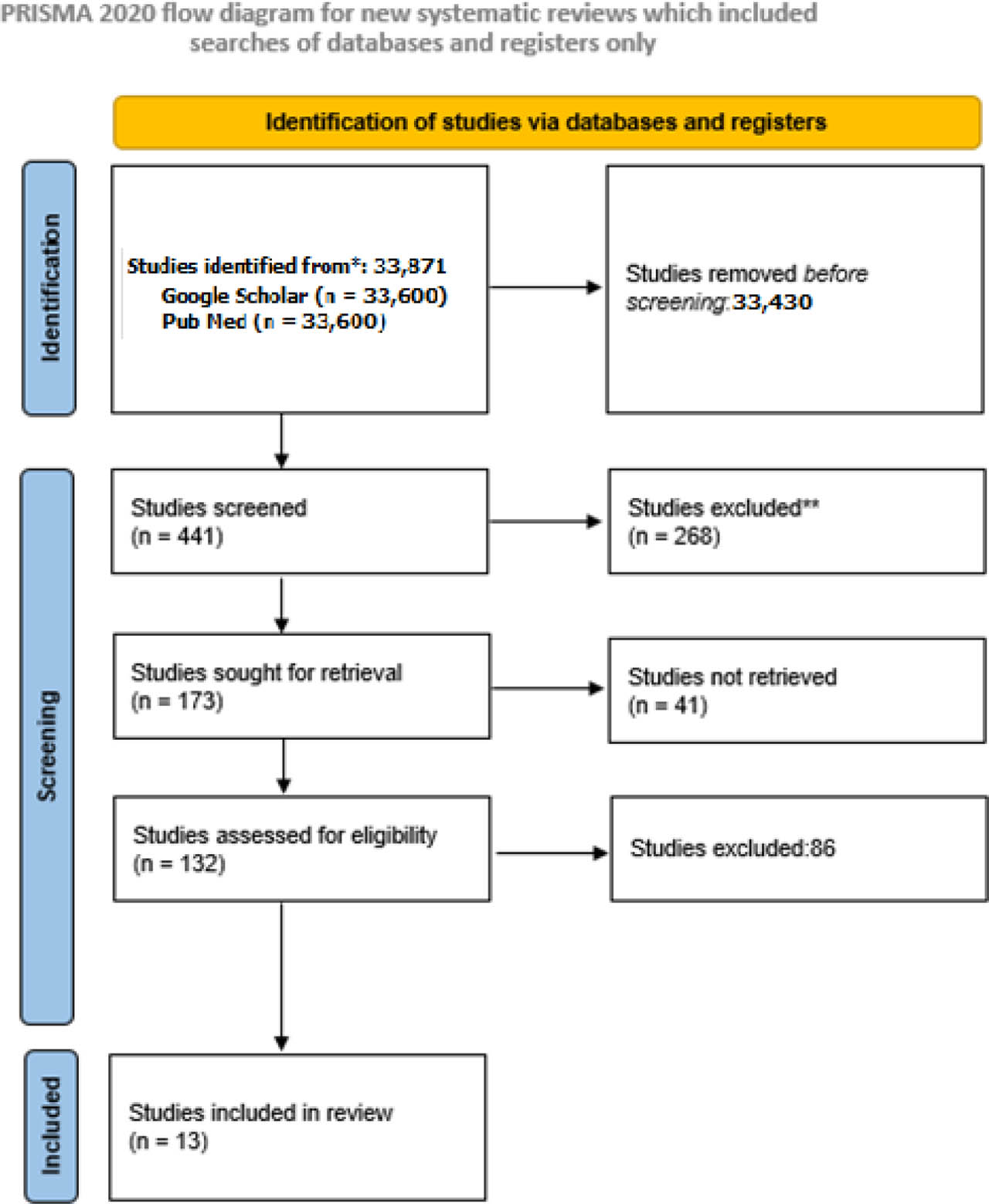
Chart 1:
PRISMA 2020 flow diagram for new systematic reviews which included searches of databases and registers only
Source: Page MJ, et al. BMJ 2021; 372:n71. doi: 10.1136/bmj.n71.
This work is licensed under CC BY 4.0. To view a copy of this license, visit https://creativecommons.org/licenses/by/4.0/
Appendix 2.
Table 1:
Findings of Systematic Review Studies.
| M | F | ||||
|---|---|---|---|---|---|
| Ferrell et al. (2020) | 211 | 268 | Miscellaneous cancers | FACIT-Sp12, Psychological Distress Scale, FACT-G QOL | Cancer patients have spiritual needs. Spiritual care should be provided to patients as a component of oncology and palliative care |
| Delgado-Guay et al. (2021) | 130 | 195 | Gastrointestinal (23%), breast (13%), gynecological (12%), other (26%) | FICA, ESAS-FS, PSWQ-A, CES-D, COPE & RCOPE, FACIT - Sp - Ex | Spirituality/religiosity is correlated with higher quality of life. These cancer patients need increased spiritual/religious support |
| Park et al. (2021) | 99 | 105 | Lung (21.6%), stomach (11.3%), colorectal (18.6%), other (43.7%) | FACIT-Sp12, EORTC QLQ-C15-PAL | Self-reported spirituality and religiosity showed better convergence with the feeling of inner struggle |
| Cannon, Dokucu & Loberiza (2022) | 350 | 201 | Leukemia, lymphoma, multiple myeloma (51.36%), breast, colorectal, prostate (36.47%), other (12.15%) | SF 12 Health Survey | Spirituality is important for improving both pQOL and mQOL of cancer survivors, while religiosity may have some impact on pQOL |
| Majda et al. (2022) | 45 | 56 | Urogenital (54%), digestive (46%) | DSES, EORTC QLQ-C30, EORTC QLQ-FA12 | Spirituality and religiosity positively influenced quality of life in areas such as physical, emotional, and social functioning |
| Tsoho & Soylar (2024) | 0 | 91 | Breast | EORTC QLQ-C30, FACIT-Sp12 | The level of quality of life and spiritual well-being of breast cancer patients was found to be poor. It is necessary to meet the needs of breast cancer patients with more psychospiritual interventions |
| Chen et al. (2021) | 0 | 705 | Gynecological | EORTC QLQ-SWB32, EORTC QLQ-C30, Hospital Anxiety & Depression Scale | Spiritual well-being is associated with lower anxiety and depression and better quality of life. Healthcare providers should provide spiritual care with psychological counseling |
| Lebowa et al. (2023) | 40 | 43 | Multiple | QLQ-C30, Centrality of Religiosity Scale by S. Huber, Emotions-toward-God Scale by S. Huber, Bartczuk.24, R-cope, The Religious Comfort and Strain Scale by J. Exline, Changing of Beliefs and Goals in the Illness Scale by D. Krok | High importance of spirituality and religiosity for patients' health-related quality of life |
| Yilmaz & Cengiz (2020) | 58 | 61 | Myeloma | FACIT-Sp12, v. 4, FACT-G, v. 4 | Spirituality and religiosity contributed positively to the quality of life of cancer survivors |
| Brandão et al. (2021) | 108 | Gastrointestinal (69.3%), breast (30.7%) | EORTC-QLQ-C30 WHOQOL-SRPB | Positive association of spirituality/religiosity with quality of life in women with breast cancer | |
| Nazam & Husain (2024) | 137 | 163 | Breast | Herth Hope Index, Meaning in Life Scale, Religious Spiritual Struggle Scale, and WHO-QOL-BRIEF | Addressing religious and spiritual concerns is critical to improving the overall quality of life of cancer patients |
| Narayanan et al. (2020) | 89 | 49 | Gallbladder, (20.7%), breast, (11.7%), other (67.6%) | Ironson–Woods Spirituality/Religiousness (SR), MDASI, BSI | Religious engagement is common among cancer patients and is rarely associated with psychological distress |
| Damen et al. (2021) | 144 | 187 | Kidney (100%) | ESAS, PDI, QUAL-E, RSS-14 | Spiritual/religious conflict may compromise the well-being of cancer patients receiving palliative care |
[i] List of Research Tools with Detailed Terminology: FACIT-Sp12 – Functional Assessment of Chronic Illness Therapy–Spiritual Well-Being (12-item scale), Psychological Distress Scale – Κλίμακα Ψυχολογικής Δυσφορίας, FACT-G QOL – Functional Assessment of Cancer Therapy – General (Quality of Life), FICA – Faith, Importance, Community, Address (Spiritual History Tool), ESAS-FS – Edmonton Symptom Assessment System – Financial Stress, PSWQ-A – Penn State Worry Questionnaire – Abbreviated, CES-D – Center for Epidemiologic Studies Depression Scale, COPE – Coping Orientation to Problems Experienced, RCOPE – Religious Coping Scale, FACIT - Sp - Ex – Functional Assessment of Chronic Illness Therapy – Spirituality Expanded, EORTC QLQC15-PAL – European Organisation for Research and Treatment of Cancer, Quality of Life Questionnaire Core 15 Palliative, SF 12 Health Survey – Short Form 12 Health Survey, DSES – Daily Spiritual Experience Scale, EORTC QLQ-C30 – European Organisation for Research and Treatment of Cancer Quality of Life Questionnaire Core 30, EORTC QLQ-FA12 – European Organisation for Research and Treatment of Cancer Quality of Life Questionnaire – Fatigue Module 12, EORTC QLQ-SWB32 – European Organisation for Research and Treatment of Cancer Quality of Life Questionnaire – Spiritual Wellbeing 32, Hospital Anxiety & Depression Scale (HADS), Centrality of Religiosity Scale (by S. Huber), Emotions-toward-God Scale (by S. Huber, Bartczuk), The Religious Comfort and Strain Scale (by J. Exline), Changing of Beliefs and Goals in the Illness Scale (by D. Krok), WHOQOL-SRPB – World Health Organization Quality of Life Instrument – Spirituality, Religiousness and Personal Beliefs, Herth Hope Index, Meaning in Life Scale, Religious Spiritual Struggle Scale, WHO-QOL-BRIEF – World Health Organization Quality of Life – Brief, Ironson–Woods Spirituality/Religiousness (SR) by Ironson–Woods, MDASI – M.D. Anderson Symptom Inventory, BSI – Brief Symptom Inventory, ESAS – Edmonton Symptom Assessment Scale, PDI – Pain Disability Index, QUAL-E – Quality of Life at the End of Life, RSS-14 – Religious and Spiritual Struggles Scale (14-item version).