
1. Introduction
Thymoma and thymic carcinoma are thymic epithelial tumors (TETs), which constitute approximately 15% of mediastinal neoplasms and 47% of anterior mediastinal tumors and are frequently associated with autoimmune disorders such as myasthenia gravis (30% of cases)[1, 2]. These uncommon, slow-growing malignancies typically present as asymptomatic lobulated mediastinal masses or manifest with paraneoplastic syndromes due to their unique immunogenic microenvironment[3,4,5].
Current scientific evidence highlights a range of autoimmune and paraneoplastic syndromes associated with thymoma, including myasthenia gravis, systemic lupus erythematosus, pure red cell aplasia, pernicious anemia, autoimmune thyroid diseases, and syndrome of inappropriate antidiuretic hormone secretion[6]. These associations often complicate the diagnosis and management of thymoma, necessitating a multidisciplinary approach. A thorough understanding of these associations is crucial for early detection, accurate diagnosis, and improved patient outcomes.
Histologically, thymomas are classified by the World Health Organization into types A, AB, and B (with B further subdivided into B1, B2, and B3 based on epithelial cell atypia). Management strategies are tailored according to the tumor’s invasiveness and clinical stage. Accurate histopathologic assessment is essential for predicting patient prognosis and guiding treatment decisions[7,8,9].
Surgery is the cornerstone of the management of thymomas, which is initially useful for precise histopathologic diagnosis and staging, and, in most cases, ensures the first step of the therapeutics simultaneously. After tumor staging, complete resection is the most constant and significant prognostic factor for progression-free and overall survival[10]. Radiation therapy is commonly used for invasive or bulky thymomas, especially with vascular involvement, but high recurrence rates (50%–70%) indicate that combined treatment approaches may be more effective[11].
The role of chemotherapy in thymoma remains controversial due to the rarity of the disease and the limited published experience. However, some case reports and small prospective trials have demonstrated that thymomas are chemotherapy sensitive, and systemic chemotherapy can produce durable remissions in patients with advanced or metastatic disease[12].
Due to limited treatment options for TETs, immune checkpoint inhibitors (ICIs) targeting PD-1/PD-L1 are an attractive option, given their high PD-L1 expression and abundant CD8+ lymphocytes, despite the low tumor mutational burden (TMB)[13]. ICIs against PD-1/PD-L1 and cytotoxic T lymphocyte-associated protein 4 (CTLA-4) are widely used in various cancers, including thymic cancers, based on frequent PD-L1 expression[14,15,16]. However, while immunotherapy shows efficacy in thymoma, its toxicity is significant[17] as ICIs can trigger immune-related adverse events (IRAEs) affecting multiple organs (e.g., lung, liver, colon, thyroid, pituitary, and skin), with rare but severe cases involving the heart and nervous system[14]. Notably, ICI-related myocarditis is rare (0.04%–1.14%) but has a significantly higher mortality rate (25%–50%) compared to other IRAEs. Combination ICIs further double the incidence and mortality of myocarditis, though it remains uncommon[18,19,20].
While the association between ICIs and myocarditis is established, thymoma patients may face heightened risk due to pre-existing autoimmune dysregulation. We present a case of fatal myocarditis occurring after just one pembrolizumab dose in a 31-year-old thymoma patient with high PD-L1 expression. This case report highlights the fatal potential of ICI-induced myocarditis in thymoma, emphasizing the need for vigilant monitoring even after a single dose.
2. Case Presentation
2.1. Patient History and Clinical Findings
A 31-year-old male with negative past medical history presented with a 6-month history of progressive dyspnea and neck swelling. Computed tomography (CT) scan of the neck and chest with contrast revealed a 5 × 3 cm anterior mediastinal lymphadenopathy, followed by positron emission tomography (PET)-CT showing an 8 cm conglomerated lymphadenopathy (SUV 7.8). The patient had no prior history of autoimmune or cardiac disease. Moreover, there was no significant family history of cardiac events, autoimmune diseases, or other malignancies in first-degree relatives.
2.2. Diagnostic Assessment and Management
Initial true-cut biopsy confirmed type B1 thymoma, prompting surgical resection, which included thymic and diaphragmatic mass excision. Histopathology demonstrated a 12 × 6 × 9 cm tumor (70% type B2, 30% type B1) with fat invasion and close margins, staged as pT3 (modified Masaoka stage 3 due to diaphragmatic invasion) (Figures 1–3). The multidisciplinary team (MDT) recommended adjuvant radiotherapy due to close surgical margins and also advised chemotherapy. The patient received radiotherapy, but refused chemotherapy and was kept under regular follow-up. Three months post-radiotherapy, the patient underwent a contrast-enhanced CT scan of the chest, which showed findings consistent with infectious and radiation-induced pneumonitis. No steroids were recommended, and the patient responded well to antibiotics. On the next follow-up 6 months post-radiation contrast-enhanced chest CT was done, the patient was asymptomatic with no complaints or weight loss. However, the scan revealed multiple thickening foci in both hemithoraces, with the largest measuring 24 × 10 mm in the right hemithorax.
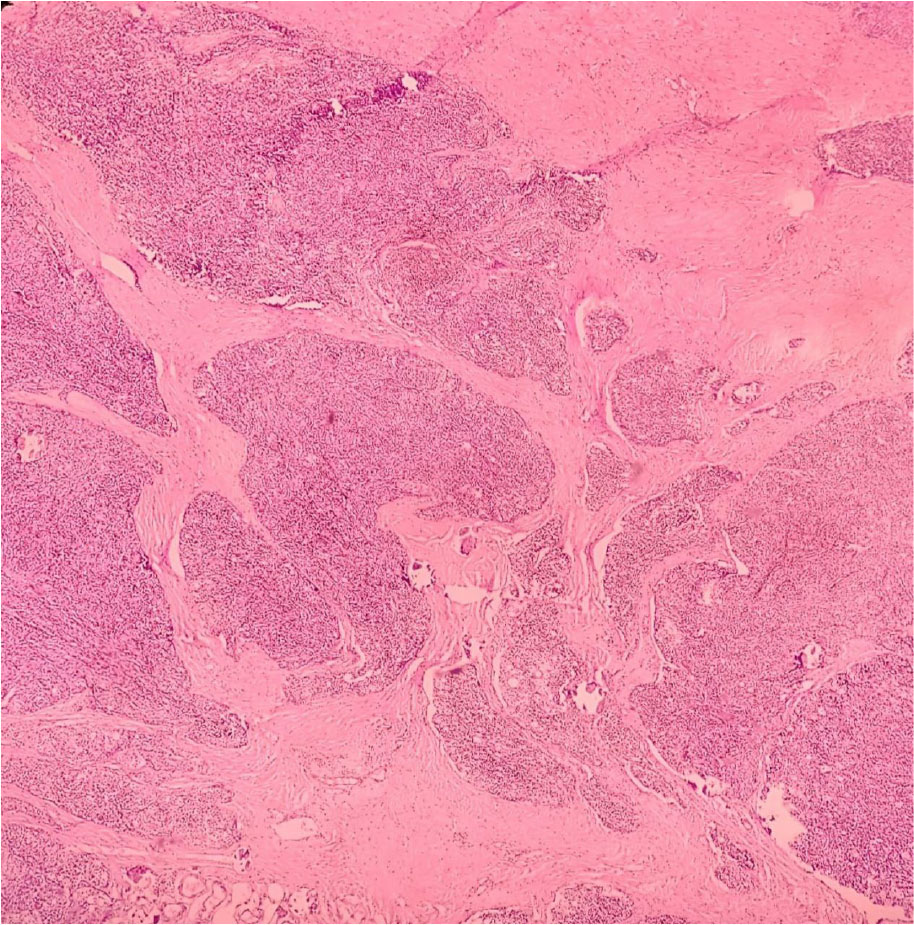
Figure 1:
Histological section of thymoma demonstrating lobular architecture with cellular lobules intersected by sharply demarcated fibrocollagenous bands (H&E stain, 40× magnification).
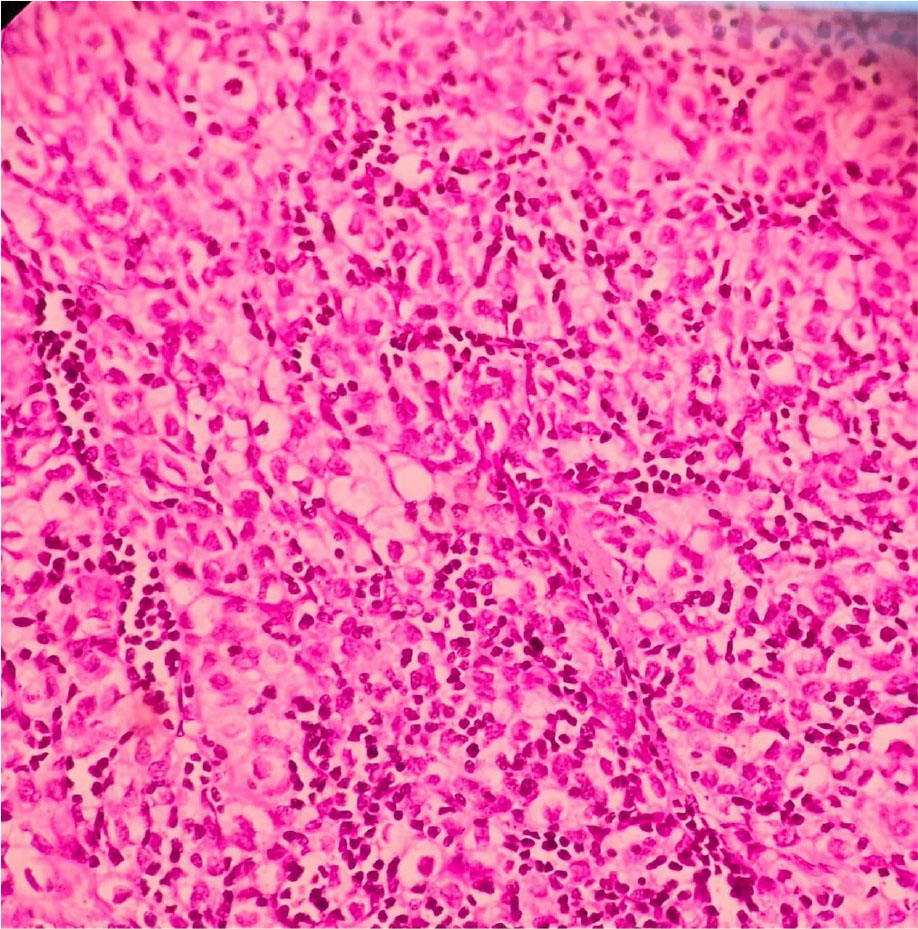
Figure 2:
Histological section of thymoma showing characteristic histomorphology with neoplastic polygonal epithelial cells and abundant thymocytes (H&E stain, 40× magnification).
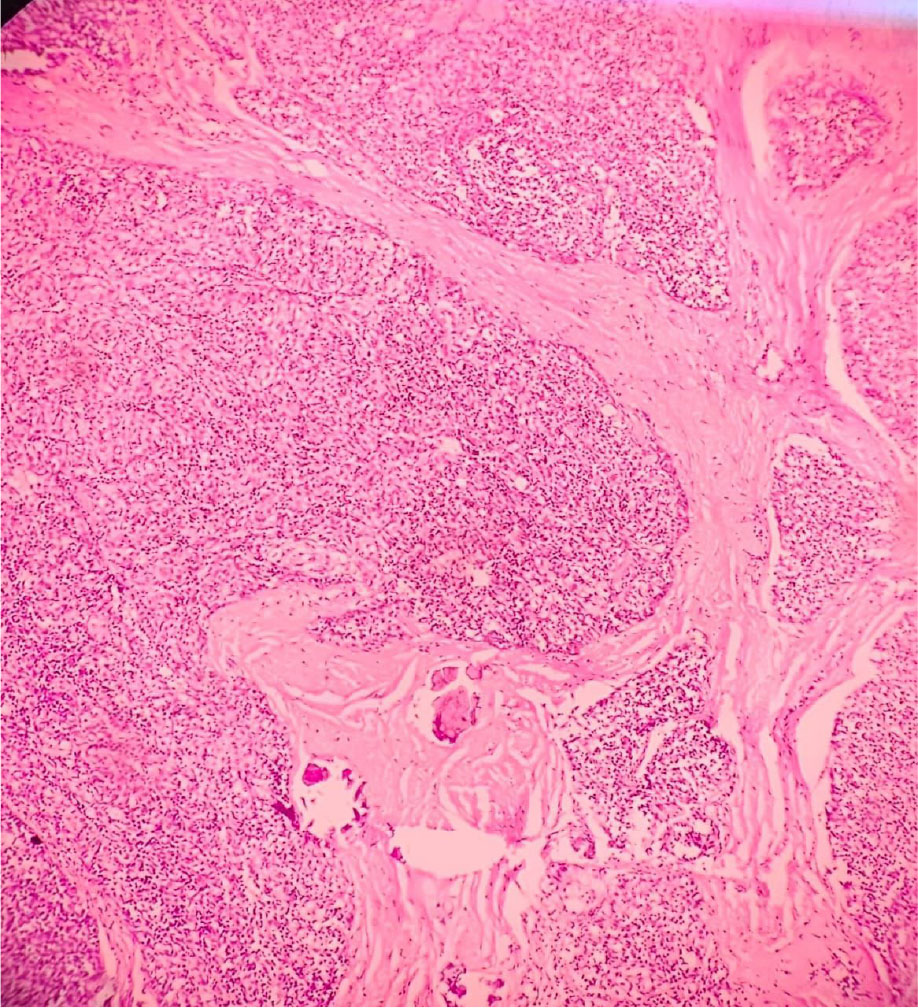
Figure 3:
Histological section of thymoma demonstrating lobular architecture with cellular lobules separated by fibrous bands (H&E stain, 10× magnification).
A PET-CT correlation was advised. PET-CT demonstrated mild FDG uptake in the soft tissue lesions of both hemithoraces, involving the costal and diaphragmatic pleura. The largest lesion (2.5 × 1 cm, SUVmax 4.9) at the inferior splenic level (costal pleura) was newly detected, but assessed as likely benign. However, given the mild metabolic activity in the pleural soft tissue masses, these findings raised suspicion for metastatic disease, prompting a recommendation for histopathologic evaluation. Otherwise, the PET-CT was unremarkable, with no abnormal FDG uptake elsewhere. Low-grade FDG uptake in left cervical lymph nodes was noted, possibly inflammatory, consistent with prior imaging. The mediastinal mass had been surgically resected.
MDT review identified this as a relapsed thymoma and advised the patient to do tissue biopsy, but the patient and his relatives refused. Hence, the decision was to start CAP chemotherapy (cyclophosphamide 500 mg/m2, Adriamycin 50 mg/m2, cisplatin 50 mg/m2) for three cycles, followed by re-evaluation with a repeat PET-CT scan. The patient began treatment and tolerated all three cycles uneventfully. The follow-up PET-CT showed mild regression in the size and decrease in the metabolic activity of the known metastases, prompting continuation of three additional CAP cycles. A follow-up PET-CT (post-six cycles) demonstrated stable disease.
PD-L1 testing revealed 60% expression, leading to a discussion of pembrolizumab immunotherapy (200 mg every 21 days) versus close monitoring. Although maintenance pembrolizumab is not standard of care per international guidelines, MDT recommended it in this case based on the patient’s high PD-L1 expression, the aggressive nature of his disease as indicated by a short progression-free interval following the initial therapy, and in accordance with local institutional protocols for high-risk cases. The potential benefits and risks, including the serious risk of IRAEs, were thoroughly discussed with the patient. The patient opted for pembrolizumab and received the first cycle. One week later, he presented to the emergency department with chest pain and dyspnea. Initial evaluation included a complete blood count and renal function tests, which were within normal limits, though liver function tests showed elevated ALT (466.9 U/L; normal 0–41 U/L) and AST (605.86 U/L; normal 0–38 U/L) levels. Additional cardiac workup included serum troponin measurement (8.55 mg/mL; normal up to 1.5 mg/mL), an electrocardiogram (ECG) showing diffuse ST–T segment elevations (Figure 4), and an echocardiogram that demonstrated normal left ventricular ejection fraction. A chest X-ray was also normal. The patient was admitted to the cardiac care unit and diagnosed with immunotherapy-induced myocarditis.
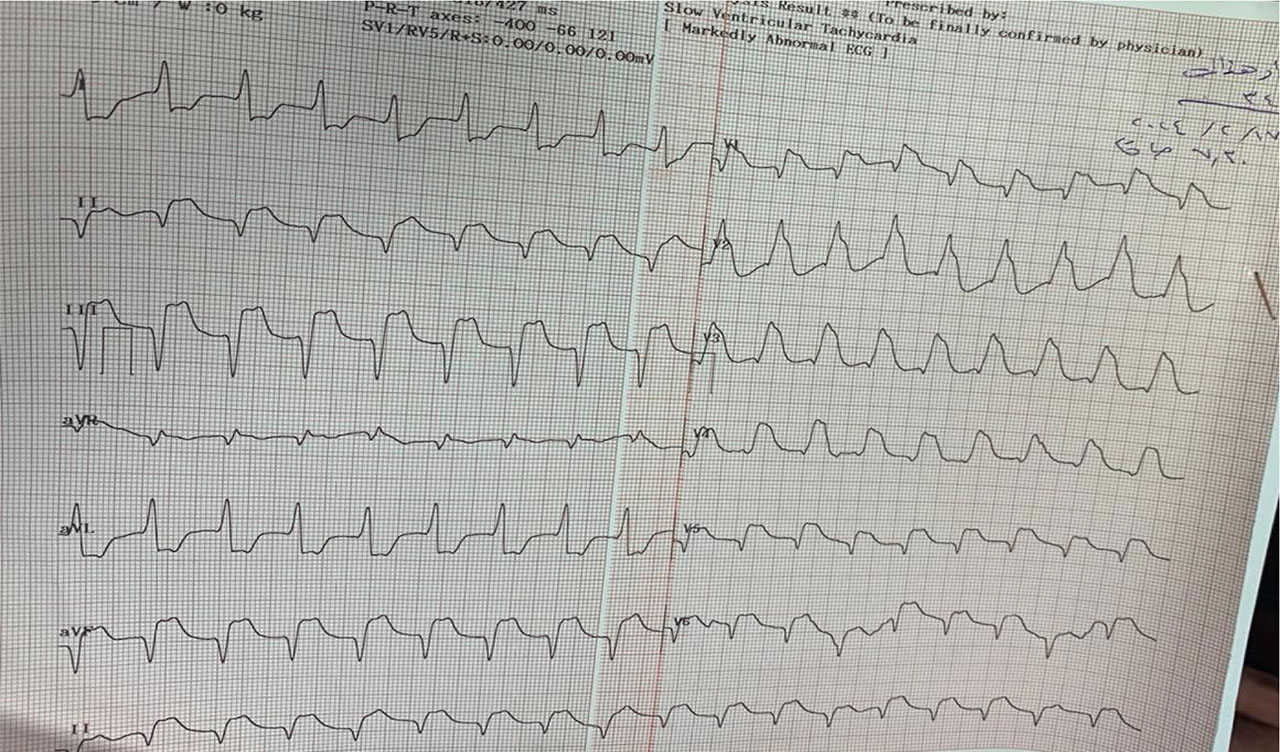
Figure 4:
ECG of the patient showing diffuse ST-T elevation.
2.3. Outcome and Follow-up
The patient rapidly deteriorated into a hemodynamically unstable condition with hypotension and tachycardia, showing no response to treatment (high-dose steroid and anticoagulant agents). Despite intensive care unit admission, he developed ventricular fibrillation and, although resuscitation with DC shock and CPR was attempted, he passed away within 24 h of admission.
3. Discussion
In recent years, immunotherapeutic options such as ICIs (anti-PD-1, anti-PD-L1, anti-CTLA-4) have revolutionized cancer treatment across malignancies[21]. While multiple biomarkers predict ICI efficacy, only PDL1 expression and TMB are clinically validated, with high PD-L1 expression remaining the most reliable predictor of response to PD-1/PD-L1 inhibitors[22]. TETs exhibit one of the lowest TMBs among adult cancers, yet paradoxically demonstrate high PD-L1 expression and abundant CD8+ tumor-infiltrating lymphocytes, creating a strong rationale for ICIs, despite their unique risks[23].
IRAEs occur in 15%–62% of ICI-treated patients, with TET patients facing disproportionately higher risks compared to those with lung cancer or other malignancies[24]. Myasthenia gravis (3%–14%) and myositis (8%) dominate the IRAE profile in thymoma, while myocarditis – ranging from asymptomatic troponin elevation to fulminant presentations – represents one of the most lethal complications[25]. Other IRAEs occur at rates similar to non-TET cancers[26], but TET patients are uniquely predisposed to the potentially fatal “triad” of myocardial damage, myasthenia, and myositis[24,25,26]. This aligns strikingly with Jang et al. (2022), who reported a 48-year-old woman with metastatic thymoma who developed fulminant myositis with cardiotoxicity after just one pembrolizumab cycle. Unlike our patient, she survived after plasma exchange therapy[27]. This highlights both the rapid onset of IRAEs in TET patients and the potential efficacy of early, aggressive intervention.
No standardized IRAE treatment protocol exists; corticosteroids remain the first-line treatment, with immunosuppressants (e.g., intravenous immunoglobulin, rituximab) reserved for refractory cases[28]. Fulminant myocarditis often requires second-line therapies (e.g., infliximab, mycophenolate mofetil), yet mortality remains unacceptably high (up to 60%) in TET patients[28, 29]. The study by Feng et al. (2024) provides critical context through their analysis of 113 TET patients, revealing that while thymic carcinoma patients had better outcomes (no deaths among two myocarditis cases), thymoma patients faced four of seven deaths despite maximal therapy[28]. Our patient’s rapid clinical deterioration and fatal outcome mirror these sobering statistics, emphasizing the particular vulnerability of thymoma patients.
Prior thoracic radiotherapy appears to significantly elevate myocarditis risk, as demonstrated in our patient who had received prior radiation. This observation aligns with a study hypothesis that ICI-treated patients with a history of radiotherapy for thymoma may develop myocarditis more frequently than those without such treatment history[30]. This observation is further supported by Huang et al. (2023), who reported three cases of pembrolizumab-induced fulminant myocarditis in thymoma patients, all with prior radiotherapy exposure. One of their cases, a 43-year-old male with type B2 thymoma, developed myocarditis 8 days post-ICI (similar to our patient’s timeline) and showed identical histopathologic findings. However, unlike our patient who passed away rapidly, their case survived with aggressive immunosuppression, suggesting that early recognition and intervention may alter outcomes[31].
Diagnostically, myocarditis requires careful exclusion of other cardiac diseases (e.g., ischemic heart disease, acute coronary syndrome). Elevated BNP and troponin serve as key indicators, with troponin elevation severity correlating strongly with adverse outcomes[32]. Demet Seker et al. (2023) reported a 31-year-old thymoma patient who developed the complete triad (myasthenia gravis exacerbation, myositis, and myocarditis) after pembrolizumab, with laboratory findings similar to those in our case[33]. While their patient survived after 115 days of hospitalization including plasmapheresis, our patient’s fulminant course underscores how rapidly these cases can deteriorate despite maximal therapy.
The particularly lethal nature of ICI-associated myocarditis in TETs may stem from pre-existing autoimmunity[34]. Nicolas et al. (2018) documented occult cardiac troponin antibodies in a myeloma patient who died after a single pembrolizumab dose, suggesting undiagnosed autoimmunity significantly amplifies risk[35]. Similarly, Giovannini et al. (2023) performed detailed autopsy studies on a melanoma patient who developed the fatal triad after one pembrolizumab cycle, revealing CD8+ T-cell infiltration in myocardium and skeletal muscle[36], findings that likely parallel the pathological processes in our thymoma patient.
Our case represents a particularly tragic example of ICI toxicity in TETs: a thymoma survivor with prior radiotherapy who developed fatal fulminant myocarditis within days of his first pembrolizumab dose, despite ICU care. This outcome aligns with the worst-case scenarios reported in the literature (Feng et al. 2024; Huang et al. 2023) and emphasizes several critical points: TET patients require exceptionally vigilant monitoring during ICI therapy; prior radiotherapy may dramatically increase myocarditis risk; and the “triad” of myasthenia, myositis, and myocarditis warrants immediate, aggressive intervention[28, 31].
4. Conclusion
This case highlights the lethal potential of ICI-induced myocarditis in thymoma patients, demonstrating how rapidly fatal complications can develop even after a single pembrolizumab dose. The patient’s rapid deterioration and refractory ventricular arrhythmia mirror the worst-case scenarios reported in literature, emphasizing thymoma’s unique immunogenic microenvironment as a critical risk amplifier. While ICIs remain a valuable therapeutic option for PD-L1–positive thymomas, this case underscores the need for extreme caution, particularly in patients with prior radiotherapy. The fatal outcome despite prompt recognition and intensive care reinforces the importance of developing better predictive biomarkers and pre-treatment screening protocols for high-risk patients.
5. Clinical Implications and Recommendations
This fatal case carries several important implications for clinical practice. We recommend mandatory pre-treatment cardiac evaluation (including troponin, BNP, ECG, and echocardiography) with consideration of autoantibody panels for all thymoma patients before ICI initiation. High-risk patients, particularly those with prior thoracic radiotherapy, should undergo inpatient monitoring for at least 72 h post-first ICI dose with daily troponin measurements. Treatment centers must ensure immediate availability of high-dose methylprednisolone and IVIG, given the rapid progression of ICI myocarditis. A mandatory cardiology consultation should precede ICI initiation for thymoma cases, with established rapid-response protocols for suspected myocarditis. Clinicians should provide thorough counseling about myocarditis risk during informed consent discussions, emphasizing early warning symptoms like chest pain, palpitations, or unexplained fatigue. These measures may help mitigate the devastating outcomes observed in our patient, while preserving access to potentially life-prolonging immunotherapy for appropriate candidates. Future research should focus on developing predictive biomarkers and optimizing immunosuppression protocols for this high-risk population.