
1. Introduction
Lung carcinoma is a global leader of incidence and mortality among various cancers, as per GLOBOCAN 2022. It is responsible for about 2.5 million new cancer cases, which constitutes 12.4% of all cancers and is also the leading cause of cancer deaths with approximately 1.8 million deaths, which contribute to 18.7% of deaths due to all malignancies worldwide[1]. In India, lung cancer is the fourth leading cause of new oncological cases accounting for 81,748 (5.8%) new cancer cases in 2022, while it amounts to 8.7% of mortality[1]. Despite new innovations and research worldwide, the overwhelming cancer burden caused by lung carcinoma prompted us to explore detailed descriptive demographics, clinicopathological spectrum, and outcome analysis. In a developing country like India, with huge population load, the condition is even more dismal due to scarce availability, accessibility, and high cost of treatment. Updated cancer statistics will help us define the problem statement, plan for more healthcare facilities, equipment, and rationalize screening and management strategies.
Advanced and metastatic diseases at presentation leading to poor survival emphasize the need to gain knowledge regarding preventive and early detection strategies. One of the major challenges leading to delay in diagnosis of lung cancer is confusing clinical picture with pulmonary tuberculosis, which is so rampant in the Indian subcontinent. Data on demographics and risk factors is limited from this geographic location. Type of smoking pattern and smoking index (SI) quantification help us know the prevalence of risk factors among the present set of patients, which would help plan strategies for early detection of lung cancer in the general population.
As per the study by Indian Council of Medical Research based on population-based cancer registries (PBCRs) and hospital-based cancer registries after pooled analysis for the composite period 2012–2016 across India, lung cancer showed a significant increase in 11 PBCRs among females. They also reported that around 44% of male and 47.6% of female patients of lung cancer were diagnosed with distant metastasis[2]. Another Indian statistics study showed that adenocarcinoma constituted the highest proportion of cancers in all the age groups (up to 54 years in males and up to 74 years in females)[3].
Thus, shifting of paradigm over the past few years from squamous cell carcinoma (SCC) to adenocarcinoma and wide geographic variation across India have led us to report the present trend of histopathologic pattern and clinical profile of lung cancer patients, along with associated risk factors and survival analysis over a 6-year period in the regional cancer care center, which is catering to almost 3000 cancer patients annually.
2. Material and methods
This is a retrospective observational study of patients registered at Pandit B D Sharma Post Graduate Institute of Medical Sciences, Rohtak from January 1, 2015 to December 31, 2020 with histopathologically confirmed carcinoma lung (except a few superior vena cava [SVC] syndrome cases in whom due to very poor performance status, radiological and clinical evidence of the disease was considered for offering oncological treatment as these are cases of oncological emergency).
Demographic characteristics including age and gender distribution, occupation, geographic variation, that is, rural or urban region, and a detailed smoking history (reformed or current smoker, bidi, cigarette, or hookah smoking, SI) were noted. The clinical profile including histopathologic classification and the clinical extent, that is, stage of the disease, was recorded.
Patients were categorized based on morphology using the World Health Organization classification of lung tumors as 1) non-small cell lung carcinoma (NSCLC) that included SCC, adenocarcinoma, large cell carcinoma, non-small cell lung carcinoma-not otherwise specified (NSCLC-NOS), etc. and 2) small cell lung carcinoma (SCLC). Molecular testing was performed in patients depending upon the affordability of test and availability of adequate tissue sample for analysis. Disease extent was assessed using chest X-ray, ultrasonography of the abdomen, computed tomography (CT) scan of the chest and upper abdomen, and/or whole-body positron emission tomogram computerized tomogram, wherever needed and affordable. The staging was done according to the latest edition of American Joint Committee on Cancer tumor, node, and metastasis staging system as per the timeframe.
SI was calculated for each patient and defined as the number of bidis and/or cigarettes smoked per day multiplied by years of smoking. Patients were categorized as never smokers (SI = 0), light/moderate smokers (SI = 1–300), and heavy smokers (SI ≥301). Association of smoking status with disease stage and histological type of lung cancer was analyzed.
Patients were treated with a multidisciplinary approach based on disease status and patients’ performance status. Details of treatment, that is, surgical resection, chemotherapy, radiotherapy, or targeted therapy, were noted. Surgery was the mainstay of the treatment in patients with early-stage disease, followed by adjuvant treatment as per histopathology. Concurrent chemoradiation and targeted therapy was offered to the patients wherever indicated. Radical radiation was given with 60 Gy in 30 fractions over 6 weeks. Palliative radiotherapy schedules included 30 Gy in 10 fractions over 2 weeks, 20 Gy in five fractions over 5 days, and 8 Gy in a single session.
Follow-up assessments were performed initially at monthly intervals for 3 months, followed by three-monthly intervals for the next 3 months and thereafter every 6 months for the next 2 years.
2.1. Statistical Analysis
Data was entered in a Microsoft Excel sheet. Overall survival (OS) was calculated from the date of registration or histopathologic conformation to the date of last follow-up or date of death. OS was compared between NSCLC and SCLC by the Kaplan–Meier method, and risk factors were compared by using the log-rank test for univariable analysis.
3. Results
A total of 578 patients were registered with a diagnosis of lung cancer in the regional cancer center during the study period. But 202 patients were lost to follow-up due to moribund state or their decision to take treatment elsewhere. Therefore, a total of 376 patients were included in the present study.
Median age of included patients was 60 years (range 24–90 years). Males constituted 83.78%, that is, 315 of total patients, while females numbered only 61, with the male to female ratio being 5.16:1 (Table 1). Breathlessness was the most common presenting symptom in 142 out of 376 patients (37.8%), followed by chest pain (29%) and cough (17%). A total of 86.9% (i.e., 327) of the patients were smokers including four ex-smokers and the remaining 13.03% were nonsmokers. Mean SI for smokers was 717.09 (range 20–2000) (Table 1). About 98.1% of the patients had an Eastern Cooperative Oncology Group Performance Status (ECOG PS) score of ≥2, and only 1.9 % had an ECOG PS score ≤1.
Table 1:
Demographic indices of carcinoma lung patients and their correlation with survival.
| Demographic Indices | No. of patients | Percentage (%) | Mean OS (months) | Median OS (months) | p-Value |
|---|---|---|---|---|---|
| Gender | |||||
| Females | 61 | 16.22 | 5.3 | 3 (1–6) | 0.661 |
| Males | 315 | 83.78 | 4.8 | 3 (1–7) | |
| Age (years) | |||||
| ≤60 | 202 | 53.72 | 5.5 (0.4–84) | 3 | 0.588 |
| >60 | 174 | 46.28 | 4.1 (0.3–22) | 2 | |
| Residential status | |||||
| Rural | 299 | 79.52 | 5.1 | 3 (1–7) | 0.158 |
| Urban | 77 | 20.48 | 4 | 3 (0.55–5) | |
| Smoking status | |||||
| Nonsmokers | 48 | 13.03 | 4.62 | 3.3 (1–9.25) | 0.318 |
| Smokers | 320 | 85.90 | 6.37 | 2 (1–7.5) | |
| Ex-smokers | 8 | 1.06 | 5 | 3 (1–6.75) | |
| ECOG PS | |||||
| 0, 1 | 5 | 1.3 | 6.5 | 7 | <0.001 |
| 2 | 144 | 38.3 | 6.9 | 4.5 | |
| 3 | 181 | 48.1 | 3.9 | 2 | |
| 4 | 46 | 12.2 | 1.5 | 0.8 | |
| Stage-wise analysis | |||||
| Non-small cell carcinoma | |||||
| Stage II | 6 | 1.60 | 11.5 | 9 | 0.01 |
| Stage III | 131 | 34.84 | 6.3 | 4 | |
| Stage IV | 180 | 47.87 | 3.8 | 3 | |
| Small cell carcinoma | |||||
| Stage III | 25 | 6.65 | 4.8 | 3 | |
| Stage IV | 31 | 8.24 | 4.57 | 2 | |
| SVC syndrome | |||||
| Any stage | 3 | 0.80 | 0.8 | 1 | |
| Type of malignancy | |||||
| Small cell carcinoma | 56 | 14.89 | 4.5 | 2 | 0.413 |
| Non-small cell carcinoma | 317 | 84.31 | 5 | 3 | |
| Squamous cell carcinoma | 156 | 41.49 | 4.3 | 3 | |
| Adenocarcinoma | 117 | 31.12 | 7.1 | 5 | |
| Adenosquamous carcinoma | 1 | 0.27 | 44.0 | 44 | |
| Large cell carcinoma | 7 | 1.86 | 7.3 | 7 | |
| Unspecified | 31 | 8.24 | 2.6 | 1 | |
| Others | 5 | 1.33 | 8.1 | 6 | |
| SVC syndrome | 3 | 0.80 | 0.4 | 0.4 | |
As per the histological distribution of lung cancer, it was observed that the most frequent histology was SCC (41.49 %), followed by adenocarcinoma (31.12%), and 8.24% patients were diagnosed with the NSCLC-NOS type. Overall, NSCLC was diagnosed in 317 (84.31%) patients, SCLC in 56 (14.89%) patients, and SVC syndrome in three (0.8%) patients.
Smoking in association with histopathology was also assessed and showed adenocarcinoma as the prominent histopathology in nonsmokers (Table 2).
Table 2:
Gender, survival, and histopathologic variation among smokers versus nonsmokers.
| No of patients | Males/females | Mean survival | Mean smoking index | SmC | AC | SCC | Adenosquamous | LCC | Unspecified | Others | SVC syndrome | |
|---|---|---|---|---|---|---|---|---|---|---|---|---|
| Smokers | 320 | 303/17 | 4.62 | 724.57 | 49 | 86 | 143 | 1 | 6 | 28 | 4 | 3 |
| Nonsmokers | 48 | 5/43 | 6.37 | - | 6 | 30 | 9 | 0 | 0 | 2 | 1 | 0 |
| Ex-smokers | 8 | 7/1 | 5 | 558.8 | 1 | 1 | 4 | 0 | 1 | 1 | 0 | 0 |
Yearly analysis as depicted in Figure 1 reflects that SCC was the prominent histopathology from 2015 to 2019, but adenocarcinoma had surpassed other histopathologic variants in 2020.
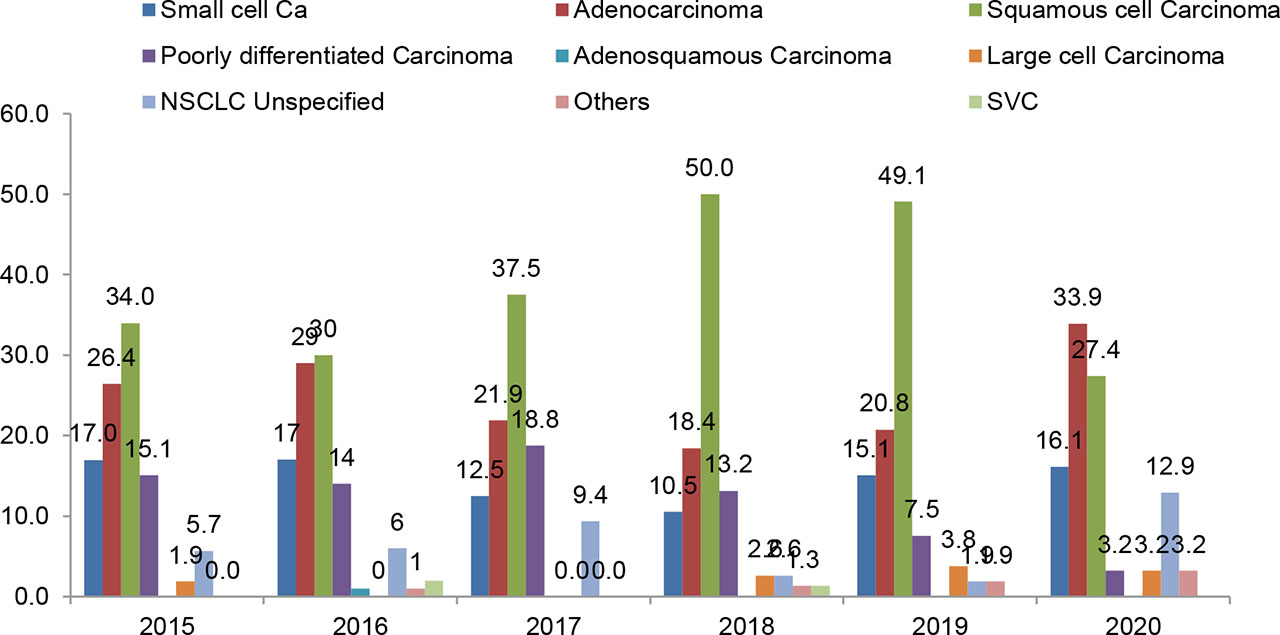
Figure 1:
Percentage-wise distribution of types of carcinoma lung cases from 2015 to 2020 at Regional Cancer Center, Rohtak (Haryana), India.
Regarding stage-wise distribution, it was observed that 98.4% patients were either stage III or IV, excluding three patients with SVC syndrome. Among SCLC cases, 25 were of stage III and 31 were of stage IV; among 317 cases of NSCLC, only six patients were of stage II at presentation, 131 were of stage III, and the remaining 180 were of stage IV (Figure 2).
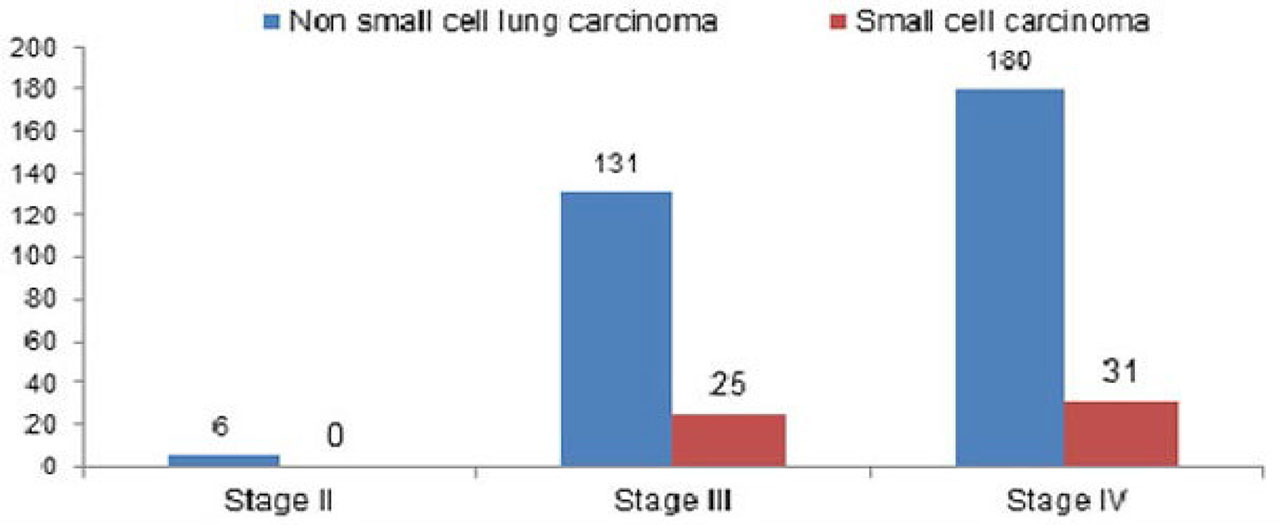
Figure 2:
Stage-wise distribution of patients of carcinoma lung at Regional Cancer Center from 2015 to 2020.
Among all patients, the most common treatment modality was chemotherapy (87.5%), followed by radiotherapy (51.8%), targeted therapy (18.6%), and surgery (1.9%). The most common chemotherapy regimens were carboplatin–paclitaxel (56%), cisplatin–etoposide (18.4%), carboplatin–gemcitabine (10%), and carboplatin–pemetrexed (9.0%).
Radical surgery was done in four patients of stage II and three patients of stage III NSCLC, followed by platinum-based adjuvant chemotherapy. Ten patients (2.7%) with stage III NSCLC were treated with concurrent chemo-radiation with radical intent. Also, 159 cases of NSCLC were treated with platinum-based doublet regimen chemotherapy administered at three-weekly intervals along with palliative radiotherapy, and 68 patients received targeted therapy with gefitinib or erlotinib. Fifty-five patients who initially received intravenous chemotherapy were later shifted to metronomic chemotherapy with tablet cyclophosphamide. Best supportive care alone was given in 54 patients of NSCLC, while palliative radiation was the sole modality of treatment in 19 patients.
SCLC patients were treated with etoposide-based chemotherapy and/or radiotherapy. Radiotherapy was given with palliative intent in 43 patients for symptom alleviation and supportive care in 13 patients.
The mean and median OS was 4.6 and 3 months, respectively (range 0.3–84 months) for all patients. Survival analysis revealed median survival of 3 months in NSCLC patients and 2 months in SCLC patients (p-value 0.723) (Figure 3). Analysis of stage-wise variation in NSCLC revealed that the median survival in stage II was 9 months, in stage III was 4 months, and in stage IV was 3 months, while in small cell carcinoma the median survival was 3 and 2 months in stage III and IV, respectively (p-value 0.01).
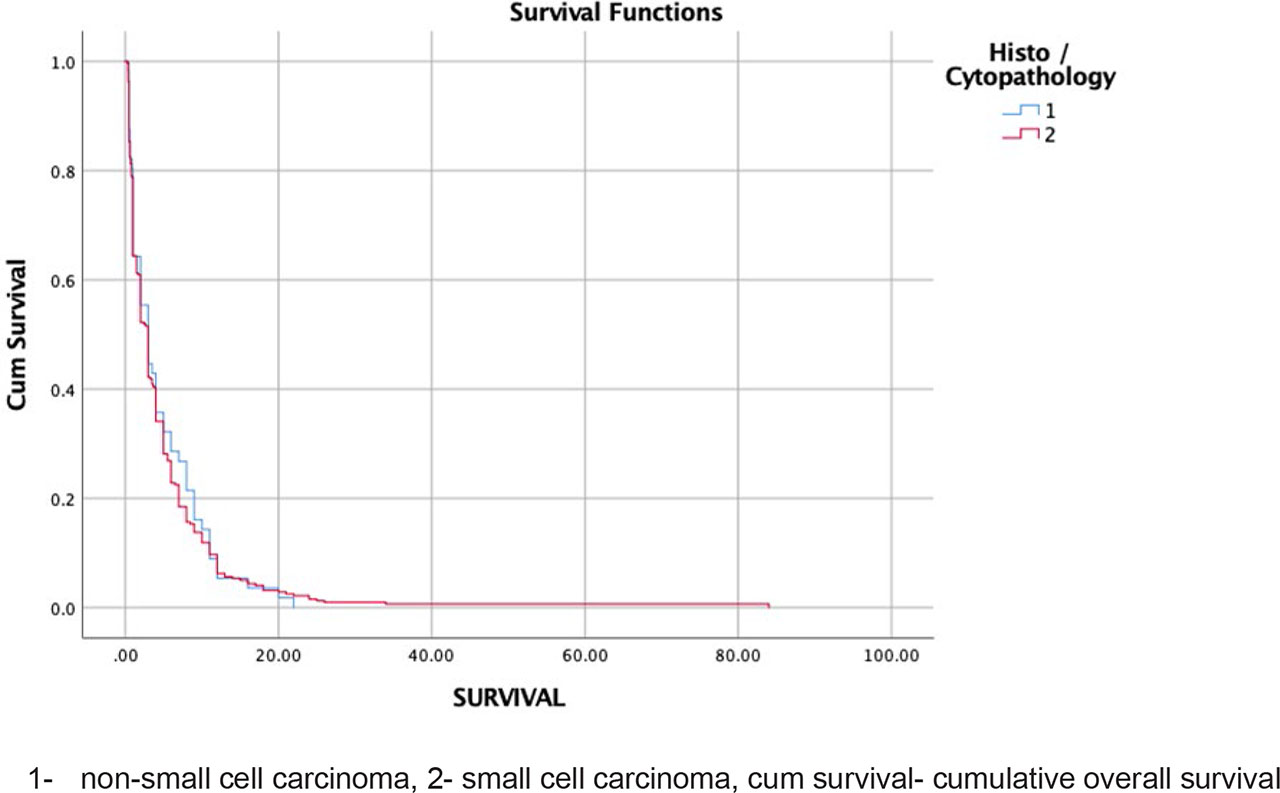
Figure 3:
Kaplan–Meier survival curve depicting comparison of overall survival of carcinoma lung patients at Regional Cancer Center from 2015 to 2020.
4. Discussion
Lung cancer is the leading cause of mortality among carcinoma cases in India and hence needs special attention[4]. The present study comprehensively analyzes the association of demographics and risk factors with the outcome in majority of patients with poor performance status.
Mean age of the patients in the present study was 59.5 years, which is similar to studies done earlier in India[5,6,7,8]. Male population dominated with 83.8%, which is similar to other Indian studies[7, 8]. Mohan et al showed 82.9% male predominance in their study, where they evaluated patients from North India over a period of 10 years.
In the present study, 85.9% were smokers, which is comparable to other Indian studies[5, 7, 8]. Mean SI for smokers in the study was 717.09 (range 20–2000), which is similar to other studies from India[8, 9].
Dikshit et al, in their million death study, opined that data for the National Cancer Registry program were primarily obtained from the urban cancer registries and were not representative of the rural areas where most Indians habituate[10]. But 79.5% of patients of this study belonged to rural background, thus adding to the scarce Indian literature, especially from rural background, where Hukka smoking is quite prevalent but remains unquantified.
Year-based analysis of histopathology in the study showed dominance of SCC from the year 2015 to 2019 and of adenocarcinoma in 2020, with 33.9% incidence (Figure 1). Most of the Indian data obtained before 2015 demonstrated SCC as the dominant pathology. Kaur et al study from Chandigarh showed equal incidence of both adenocarcinoma and SCC[7]. The changes in smoking practices and the current use of filtered cigarettes, which promote deeper inhalation, as well as an increase in air pollution probably lead to changes in the histopathologic distribution of lung carcinoma. After an expert pathological review of 434 lung cancer cases, Malik et al found that adenocarcinoma was the most common histology (37.3%). This study emphasizes the critical role of expert pathology review of lung cancer cases in the present era of personalized treatment[11]. Another recent study from same institute revealed 34% adenocarcinoma and 28.6% SCC among 1862 lung cancer cases. In this study, adenocarcinoma was rising since 2018, showing an incidence of 33.9% in 2020[8]. As per the pathological guidelines, NSCLC-NOS entity should be used as little as possible; but in the present study, 8.24% of cancer patients showed this entity. Similar result, that is, 11.7% NSCLC-NOS, was reported in another study from Eastern India[5].
The mean and median OS in this study was 4.6 and 3 months, respectively (range 0.3–84 months) for all patients. Survival analysis revealed statistically insignificant difference in medial survival between NSCLC, SCLC, and SVC syndrome cases (Table 1). As the number of patients was small for analysis, we calculated both mean and median OS. Among various demographic and patient variables, only performance status and stage were statistically significant. Around 60% of patients had PS 3 and above in the study due to poor patient compliance and long investigative workup. Mohan et al showed 50.85% of patients with PS 0 and 1 and 32.45% with PS 2, but in this study, only 1.3% had PS 0 and 1 and 38.3% had PS 2[8]. Analysis of lung cancer patients by Murali et al showed 53.1% patients with PS 1 and 36.7% with PS 2[9]. In our study, OS was 6.5 months in PS 0 and 1 patients, 6.9 months in PS 2 patients, 3.9 months in PS 3 patients, and 1.5 months in PS 4 patients. Garg et al showed around 3 times better median survival in stage IV NSCLC patients at a tertiary care facility in North India[12]. This is probably due to higher proportion of PS 0 or 1 in their study (55.7%) and could also be because only NSCLC cases were included. Various other studies from different regions of India[8] showed median OS between 7 and 11.9 months, which is slightly better that the present study, and this difference in survival is mainly due to more patients reporting with poor PS and advanced stage in the present study (Table 3).
Table 3:
Lung cancer demographics and survival outcome reported among various studies in India.
| Region/state (year of publication) | Number of patients | Male: female | Mean/median age | Smokers’ percentage | Histology (most common) | Median OS (months) | |
|---|---|---|---|---|---|---|---|
| Mohan et al (8) | Delhi (2019) | 1862 | 4.86:1 | 58 | 76.2 | Adenocarcinoma (34%) | 8.8 |
| Krishnamurthy et al (16) | Tamil Nadu (2012) | 258 | 3.5:1 | 56 | 60.5 | Adenocarcinoma (42.6%) | Not analyzed |
| Kaur et al (7) | Chandigarh (2017) | 1301 | 4.6:1 | 58.6 | 76.9 | Squamous cell carcinoma and adenocarcinoma (34.6%) | Not analyzed |
| Sheikh et al (17) | Kashmir (2010) | 783 | 6.98:1 | 57.8 | 68.1 | Squamous cell carcinoma (71.3%) | Not analyzed |
| Mandal et al (6) | Manipur (2013) | 466 | 1.09:1 | 58.5 | 73 | Squamous cell carcinoma (49.1%) | Not analyzed |
| Rajappa et al (18) | Hyderabad (2008) | 194 | 4:1 | 58 10.69 | 65 | Not analyzed (studied only NSCLC) | 7 (2–72) |
| Gupta et al (19) | Jammu and Kashmir (2015) | 170 | 6.5:1 | 55.94 | 79.4 | Squamous cell carcinoma (45.3%) and adenocarcinoma (35.3%) | Not analyzed |
| Murali et al (9) | Tamil Nadu | 678 | 3.19 | 58 | 53.4 | Adenocarcinoma (51.1%) | 7.6 (NSCLC) and 7.2 (SCLC) |
| Dey et al (5) | Eastern India (2012) | 607 | 4.14:1 | 56.55 | 73.2 | Squamous cell carcinoma (35.1%) | Not analyzed |
| Garg et al (12) | North India (2021) | 537 | 3.59:1 | 60 | 66.5 | Adenocarcinoma (51.2%) Only NSCLC analyzed | 11.7 (95% CI: 5.5–29.9 months) |
| Vasudevan et al (20) | North India (2022) | 724 | 3:1 | 60 | 59.1 | Adenocarcinoma (56.6%) | 11.9 months |
| Darling et al (21) | Delhi (2020) | 136 | 2.48:1 | 60 | 65.4 | Adenocarcinoma (44.9%) | Not analyzed |
| Ramani et al (22) | Bangalore (2020) | 1246 | 2.95:1 | 61 | Not reported | Adenocarcinoma (70.4%) | Not analyzed |
| Bhatti et al (23) | North India (2020) | 199 | 2.8:1 | 60.9 ± 11 years | Not reported | Squamous cell carcinoma (37.7%), followed by adenocarcinoma (26.1%) | Not analyzed |
| Chordia et al (24) | Jalgaon, Maharashtra (2019) | 86 | 6.16:1 | 56 (Median) | 63.95 | Adenocarcinoma (56.97%) followed by squamous cell carcinoma (25.58%) | Not analyzed |
| Thakkar et al (25) | Gujarat (2019) | 50 | 9:1 | 59.92 | 92 | Adenocarcinoma 36% followed by squamous cell carcinoma (32%) | Not analyzed |
| Present study | Haryana | 376 | 5.2:1 | 59.52 | 85.9 | Squamous cell carcinoma (41.5%) | 4.6 months |
Prognostic factors can also be utilized to customize the treatment for lung cancer patients; a study from our institute reported neutrophil–lymphocyte ratio (NLR) can be a torchbearer to the oncologists in deciding the course of management, as it showed significant difference in median OS in patients with NLR <3.1 and ≥3.1, 6 months versus 3 months, respectively (p-value = 0.001)[13].
We did a comparative analysis of lung cancer demographics and survival outcome among various Indian studies as shown in Table 3.
These types of ground-level studies present the real picture of the management strategies that are truly utilized by the people. It helps us to take action against the loopholes preventing the percolation of novel treatment modalities at the base level. Reason for poor compliance and reporting at advanced stage is less awareness of newer treatment modalities for cancer patients and poor affordability. Thus, these hurdles need to be notified by the government and health authorities to have policies in this regard. Our findings substantiate the need to strengthen and increase smoking cessation and lung cancer screening and awareness to seek early medical aid.
The main limitation of the present study is the low number of carcinoma lung patients visiting our institute. This leads to results which are not true representation of the actual carcinoma lung load in this region of India. Another limiting factor of the study was inclusion of few SVC syndrome cases without histopathologic confirmation of the type of malignancy, which led to bias. The reasons for poor compliance, treatment default, and presentation at advanced stage need to be reported in detail, so that further action can be taken in this regard.
Unfortunately, advanced-stage presentation is common in India in contrast to most Western countries as suggested by literature, where 30%–50% of cases are diagnosed at a relatively early stage[14,15].
5. Conclusion
Smoking was still the most prevalent risk factor and SCC was the most frequent histopathology, although a rising trend toward ADC was also noted. This study highlights the challenges faced in treating lung cancer with advanced stage and poor general condition at presentation. Although median survival in advanced-stage lung cancer is still dismal, strategies such as personalized medicine, pathological advancements, and use of multiple lines of chemotherapy and targeted therapy may significantly improve the survival in patients. This emphasizes the need for effective screening facilities as well as more health center access to rural areas.
Abbreviations and acronyms
Regional Cancer Center (RCC), overall survival (OS), non-small cell lung cancer (NSCLC), small cell lung cancer (SCLC), superior vena cava (SVC) syndrome, population-based cancer registries (PBCRs), hospital-based cancer registries (HBCRs), non-small cell lung carcinoma-not otherwise specified (NSCLCNOS), squamous cell carcinoma (SCC), whole-body positron emission tomogram computerized tomogram (WBPET-CT), American Joint Committee on Cancer (AJCC), tumor, node, and metastasis (TNM), smoking index (SI), Eastern Cooperative Oncology Group Performance Status (ECOG PS) score.
Acknowledgment
The authors would like to acknowledge the support received from the secretarial staff, Ms. Suman and record keeping staff Mr. Madan and Mr. Rajpal.