
1. Introduction
Anaplastic large cell lymphoma (ALCL) is a rare and aggressive type of non-Hodgkin lymphoma that primarily affects T cells. It is characterised by the presence of large abnormal lymphocytes with distinctive morphological features, including horse shoe-shaped or kidney-shaped nuclei and abundant cytoplasm[1]. ALCL can be further classified into two important subtypes – anaplastic lymphoma kinase (ALK) positive and ALK negative – based on the presence or absence of ALK fusion. ALK is a tyrosine kinase type of protein, and it consists of extracellular binding region for ligand, transmembrane region and a cytoplasmic domain[1]. Phosphorylation and downstream signalling are the main mechanisms by which cytoplasmic domain becomes activated. ALCL manifests in various parts of the body, including lymph nodes, skin and extranodal sites[2]. Central nervous system (CNS) involvement is very rare in this case. Although rare, neuromeningeal relapse, neurological deficits, etc. can occur in ALCL with minimal diagnostic findings[3,4]. Stein et al. described ALCL for the first time in the year 1985[5]. CD 30 is expressed in ALCL, and nucleophosmin-1 ALK fusion protein, which is formed due to t(2,5)(p23;q35) translocation, is a characteristic genetic feature of ALK-positive ALCL disease[6]. ALK positive subtype typically occurs in younger patients and has a more favourable prognosis, while the ALK-negative subtype is more common in older adults and tends to have a poorer outcome. Fever, weight loss and enlarged lymph nodes are the general features of ALCL. Treatment approaches of ALCL often involve chemotherapy regimens (methotrexate and non-methotrexate dependent), targeted therapies and, sometimes, stem cell transplantation[7,8].
This study will assess the prognostic impact of ALK on anaplastic lymphoma of CNS. This study will secondarily evaluate the prognostic impact of age at diagnosis, meningeal involvement and immune cells.
2. Material and method
The study question of this review paper was designed using the PICO (participants, interventions, comparisons and outcomes) strategy. The purpose of this study was to clarify the impact of ALK status with the prognosis for primary ALCL of CNS. We conducted a systematic review in March 2025 using the PRISMA (Preferred Reporting Items for Systematic Reviews and Meta-Analyses) guidelines.
2.1. Sources of data and inclusion criteria
We searched PubMed, Google Scholar and Cochrane Library for the studies related to our study that were published after 1 January 2000. Synonyms used for the search process were: ‘Anaplastic Large Cell Lymphoma’, ‘ALCL’, ‘ALK’, ‘Mutation’, ‘CNS’ and ‘Prognosis’. The search was confined to human studies without language limitations. We did a manual search of the references of the relevant case reports to find out the applicability of the information to our study. We considered the study if it met the following criteria: (i) published after 1 January 2000; (ii) studies considering patients diagnosed with ALCL; (iii) studies pointing to CNS involvement; (iv) studies mentioning ALK status and (v) studies providing survival information of the patients.
2.2. Exclusion criteria
Studies that did not have any particular treatment protocol and did not give information on prognosis were excluded.
2.3. Data analysis
Authors considered 30 case reports for this study after detailed discussion (Figure 1). The review team independently gathered data from journals after deciding the inclusion criteria for research. Data were double-checked before they were put into statistical analysis to count out any discrepancies. Data excluded from papers included: name of the first author, time of publication, number of subjects, age group, clinical features, histological findings, immunohistochemistry, ALK status, therapeutic strategy and complete remission. Gathered data was extracted and stored in Excel 2021.
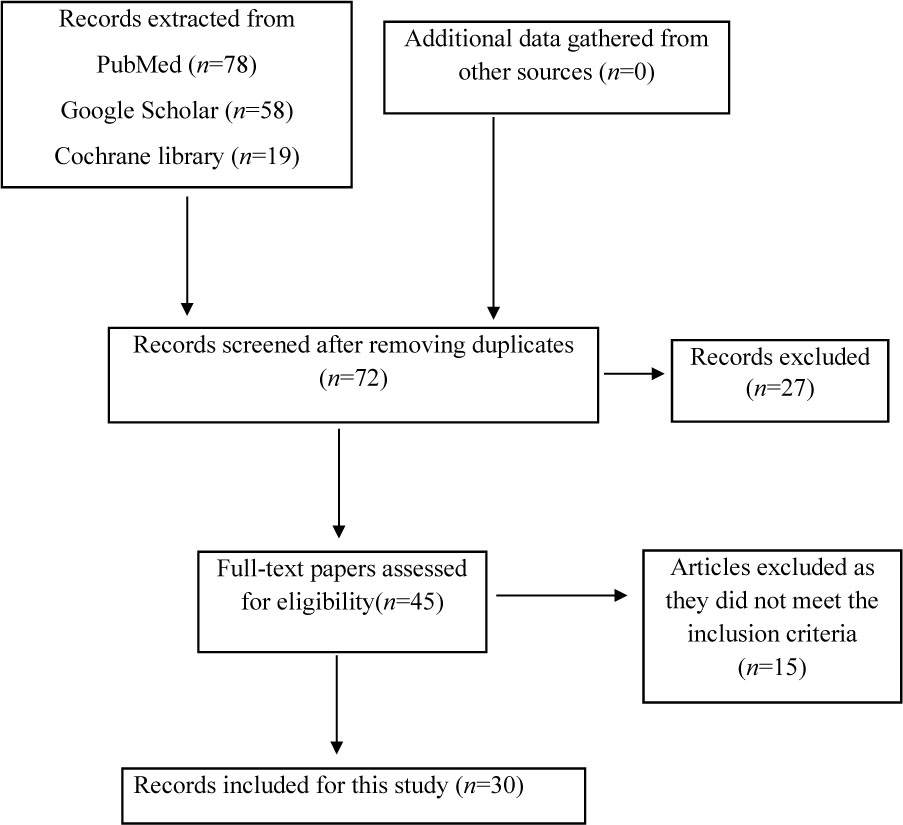
Figure 1:
Flow chart of the study selection process.
2.4. Statistical analysis
To detect the impact of ALK mutation on prognosis, we performed Kaplan–Meier analysis on the data independently collected from past case reports following the inclusion criteria using Statistical Package for the Social Sciences 2023. In addition to ALK status, we considered other factors like age, sex and therapy protocol to determine their effect on prognosis. For Kaplan–Meier, log-rank test was performed to detect the significance of impact of prognostic factors on primary CNS ALCL. To indicate statistical significance, a 5% level of probability was used.
3. Results
We included 30 cases of ALCL in the current study, which consisted of 19 cases of primary ALCL of CNS and 11 cases of secondary ALCL involving CNS, with information on histology, immunohistochemistry, ALK status and treatment (Table 1).
Table 1:
List of reported cases of ALCL of central nervous system included in this study; ALCL- anaplastic large cell lymphoma; sex (M- male, F- female); lesion (M- multifocal, S- single); ALK- anaplastic lymphoma kinase, LCA- leucocyte common antigen; EMA- epithelial membrane antigen; NED- no evidence of disease
| Case no | Authors | Age | Sex | Location | Lesion | Meningeal involvement | Marker | ALK status | Immunohistochemistry | Chemotherapy | Radiation | Methotrexate | Survival |
|---|---|---|---|---|---|---|---|---|---|---|---|---|---|
| 1 | Dong et al | 34 | M | Spinal cord | M | P | null | + | CD30, Vimentin, LCA, TIA1, CD56 | y | y | y | NED at 12 month |
| 2 | Wang et al | 59 | M | Frontal lobe | S | A | T cell | + | CD30, CD43, EMA | y | n | n | NED at 6 month |
| 3 | Kim et al | 30 | M | Pariental and occipital dura | S | P | T cell | + | CD30, EMA | y | y | y | NED at 16 month |
| 4 | Kodama et al | 79 | M | Parieto-occipital region | S | A | null | - | CD3, CD30, CD45RO | n | n | n | Died at 4 month |
| 5 | Sugino et al | 75 | M | Bilateral hemisphere | M | A | T cell | - | CD30, CD45 | y | y | n | died at 8 month |
| 6 | Zhang et al | 27 | M | Parieto-occipital region | S | P | T cell | + | CD30 | y | y | y | NED at 88 month |
| 7 | Zhang et al | 65 | M | Basal ganglia | S | A | T cell | - | CD3 | y | n | y | dead at 26 month |
| 8 | Mark et al | 38 | M | Parieto-occipital region | S | A | T cell | + | CD30, CD45 | y | y | y | NED at 15 month |
| 9 | Vivekanandan et al | 20 | M | Sylvian fissure | S | P | T cell | + | CD3, CD30 | y | y | y | NED at 96 months |
| 10 | Karikari et al | 4 | M | Frontal and parietal lobe, pineal | M | P | T cell | + | CD30, CD7 | y | y | n | NED at 1 month |
| 11 | Ponzoni et al | 29 | M | Frontotemporal | M | P | T cell | + | CD30, CD3, CD45RO | y | y | y | NED at 19 month |
| 12 | George et al | 17 | M | Parietal dura | S | P | T cell | + | CD3, CD43, CD45RO | n | y | n | NED at 58 month |
| 13 | George et al | 18 | F | Temporal lobe | M | P | T cell | + | CD45RO | y | y | n | NED at 62 months |
| 14 | George et al | 22 | F | Cerebellum | M | A | T cell | - | CD3, CD8 | n | n | n | Dead at 11 days |
| 15 | Merlin et al | 13 | M | Frontal dura | S | P | T cell | + | CD30, Ki67 | y | y | y | Dead at 27 months |
| 16 | Ozkaynak et al | 9 | M | Bilateral frontal | M | P | T cell | + | LCA, CD3, CD8 | y | y | y | NED at 26 months |
| 17 | Shah et al | 2 | M | Dura mater | S | P | T cell | + | CD30, CD43 | y | n | y | NED at 108 month |
| 18 | Park et al | 31 | M | Leptomeningeal | S | P | T cell | + | CD30, CD5, EMA, CD45RO | y | n | y | NED at 18 month |
| 19 | Dunbar et al | 10 | M | Fontal lobe, basal ganglia | S | P | T cell | + | CD3, LCA, CD30 | y | y | y | NED at 36 month |
| 20 | kuntegowdenahalli et al | 18 | M | Parietal and occipital lobe | S | P | T cell | + | LCA, CD30, CD4 | y | y | y | NED at 1 month |
| 21 | Kaku et al | 21 | M | Frontoparietal dura | S | P | T cell | + | LCA, CD45, CD30, Ki67 | y | y | y | NED at 24 month |
| 22 | Feng et al | 8 | M | Occipital lobe | S | A | null | + | CD3, CD30, EMA | n | n | n | Dead at 2 month |
| 23 | Liu et al | 12 | M | Occipital lobe, falx | M | P | null | + | CD30, CD3, CD5, CD56 | n | n | n | Dead at 1 month |
| 24 | El farissi et al | 16 | F | Spinal cord | M | A | T cell | + | CD30, CD5, Ki67 | y | n | n | NED at 1 month |
| 25 | Verran et al | 20 | M | Parieto leptomeningeal | S | P | null | + | CD30, CD7 | y | n | y | NED at 24 months |
| 26 | Brady et al | 68 | M | Occipital lobe | S | A | T cell | - | CD30, CD2, INI1, P53, Ki67 | y | n | y | NED at 8 month |
| 27 | Lee et al | 12 | M | Parietal dura | M | P | null | + | CD30 | y | n | y | NED at 16 month |
| 28 | Omae et al | 26 | F | Neurohypophysis and pineal gland | M | A | null | + | CD3, CD30 | y | n | y | NED at 24 months |
| 29 | Strosberg et al | 29 | F | Frontal lobe, basal ganglia | M | A | null | + | CD30, CD5, CD20 | y | n | y | Died at 39 month |
| 30 | Lannon et al | 63 | M | Intracranial | M | P | T cell | - | CD30, MUM1, CD99, CD2 | y | n | y | NED at 18 month |
The median age was 29 years with the range being 2–79 years, and the female to male ratio was 0.2. With regard to magnetic resonance imaging (MRI)/computed tomography (CT) findings, unifocal and multifocal lesion was found in 63% (19 cases) and 37% (11 cases) of all cases, respectively. Meningeal involvement was diagnosed in 63% (19 cases) and was absent in the remaining 37% (11 cases). T cell as the cell marker was included in 73% (22 cases), whereas 27% (8 cases) did not have any particular cell marker. With respect to treatment methods, methotrexate-based chemotherapy was used in 67% (20 cases) and non-methotrexate-based chemo was administered in five cases. Radiation therapy was used in 50% (15 cases). In our study, 2-yr survival of patients having ALCL of CNS was found to be 57% (Figure 2).
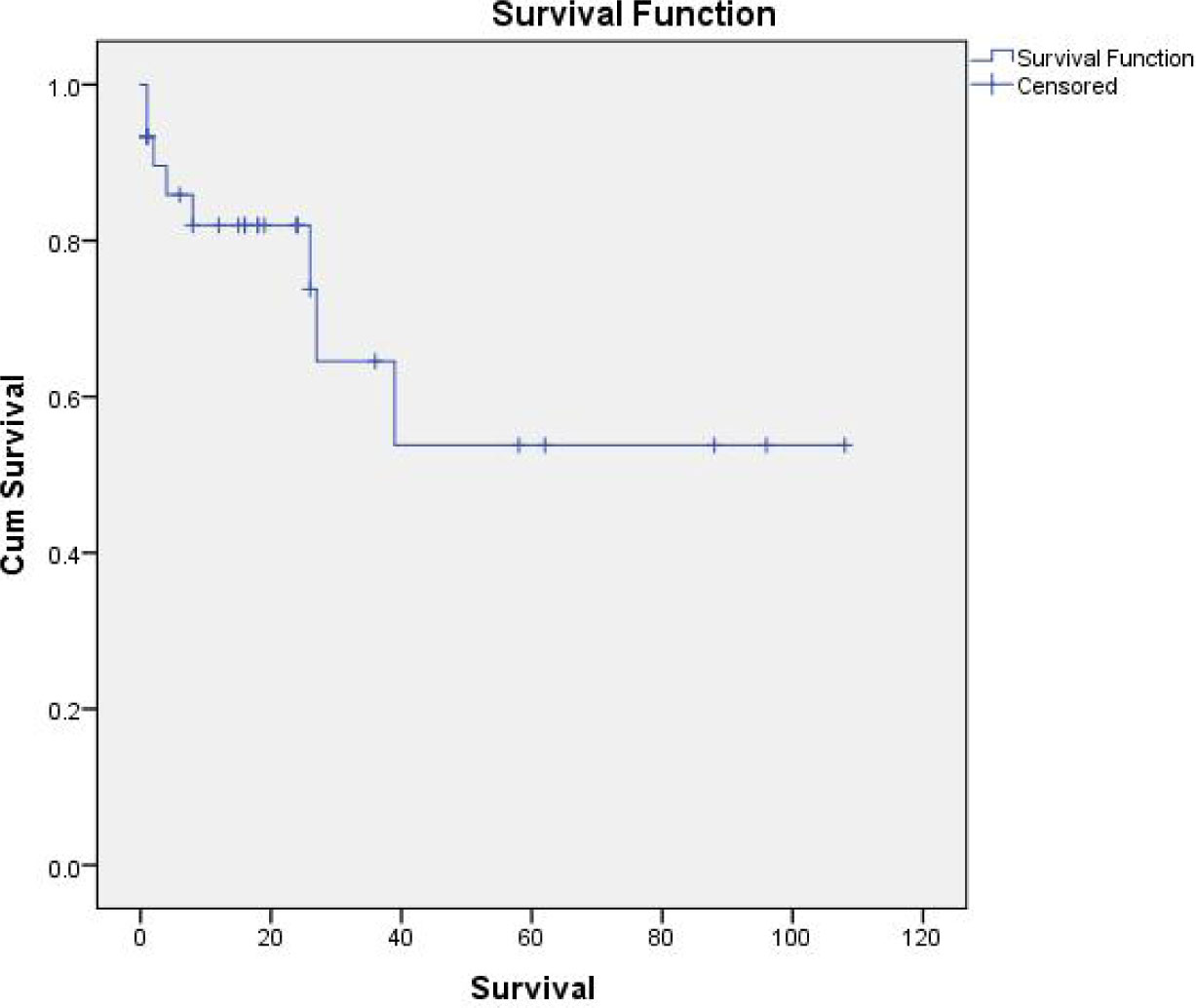
Figure 2:
Kaplan–Meier curve for overall survival (in months) following anaplastic large cell lymphoma of the central nervous system
Of the 30 cases of ALCL of CNS, ALK was found to be positive in 80% (24 cases) and negative in 20% (six cases). The median age of ALK-positive patients was 19 years, whereas the same for ALK-negative patients was 66 years. Among 24 cases of ALK-positive ALCL, 17 patients received methotrexate-based chemotherapy and others received radiation and non-methotrexate-based chemotherapy in combination with surgical intervention. The ALK-positive patients had relatively good prognosis with 2-year survival of 86%, whereas no ALK-negative patient survived more than 8 months (Figure 3).
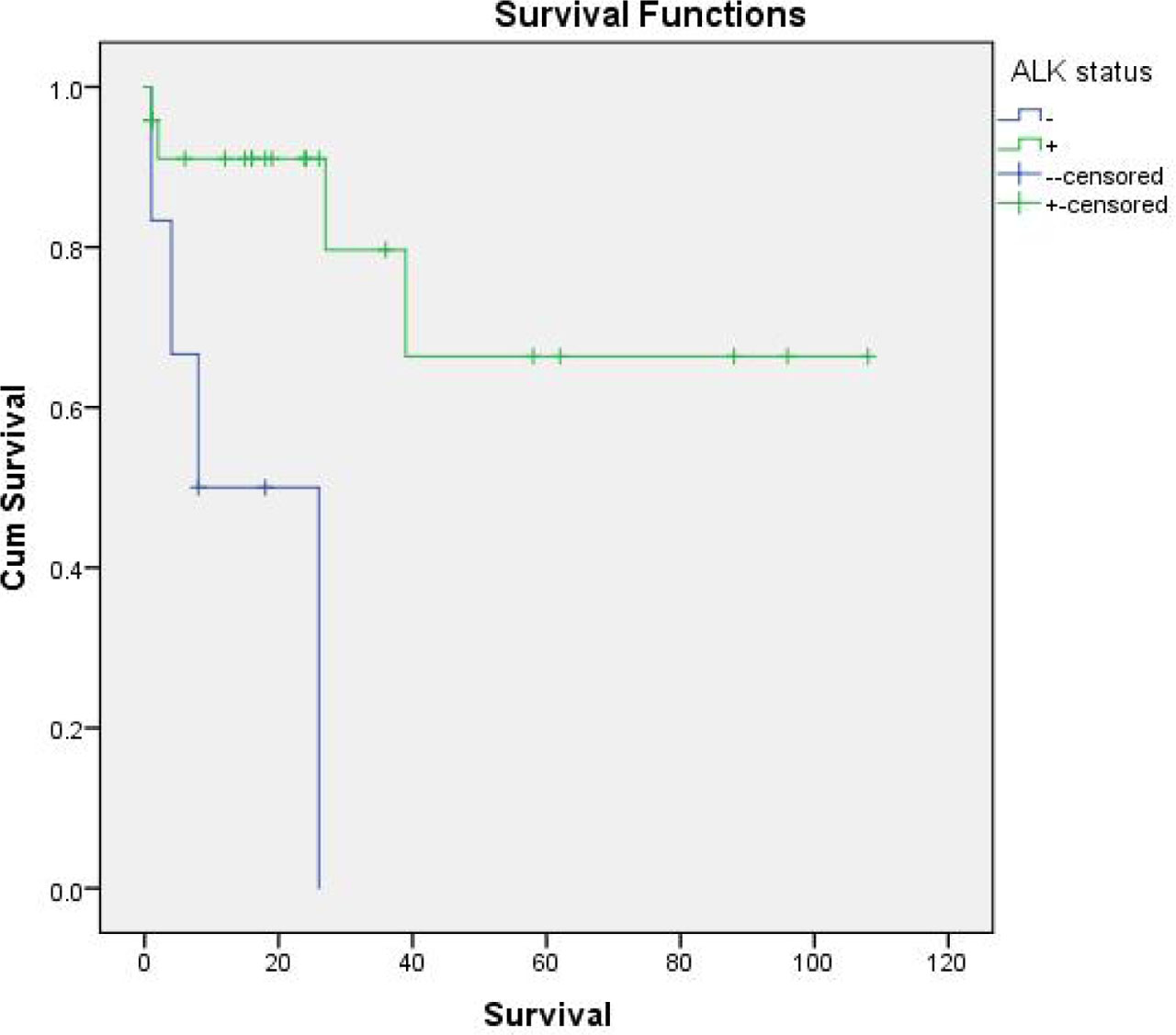
Figure 3:
Kaplan–Meier analysis to assess overall survival (in months) based on ALK status (86%: 2-yr survival in ALK+) (p=0.002).
In addition to ALK status, other prognostic factors like age at diagnosis, meningeal involvement and cell markers were observed for their impact on prognosis. Patients less than 18 years of age were observed to have better prognosis than the patients aged above 18 years, and the difference was not statistically significant (p=0.638) (Figure 4). Cases with meningeal involvement (p=0.002) (Figure 5) and cases with T cell as biomarker (p=0.041) (Figure 6) had good prognosis.
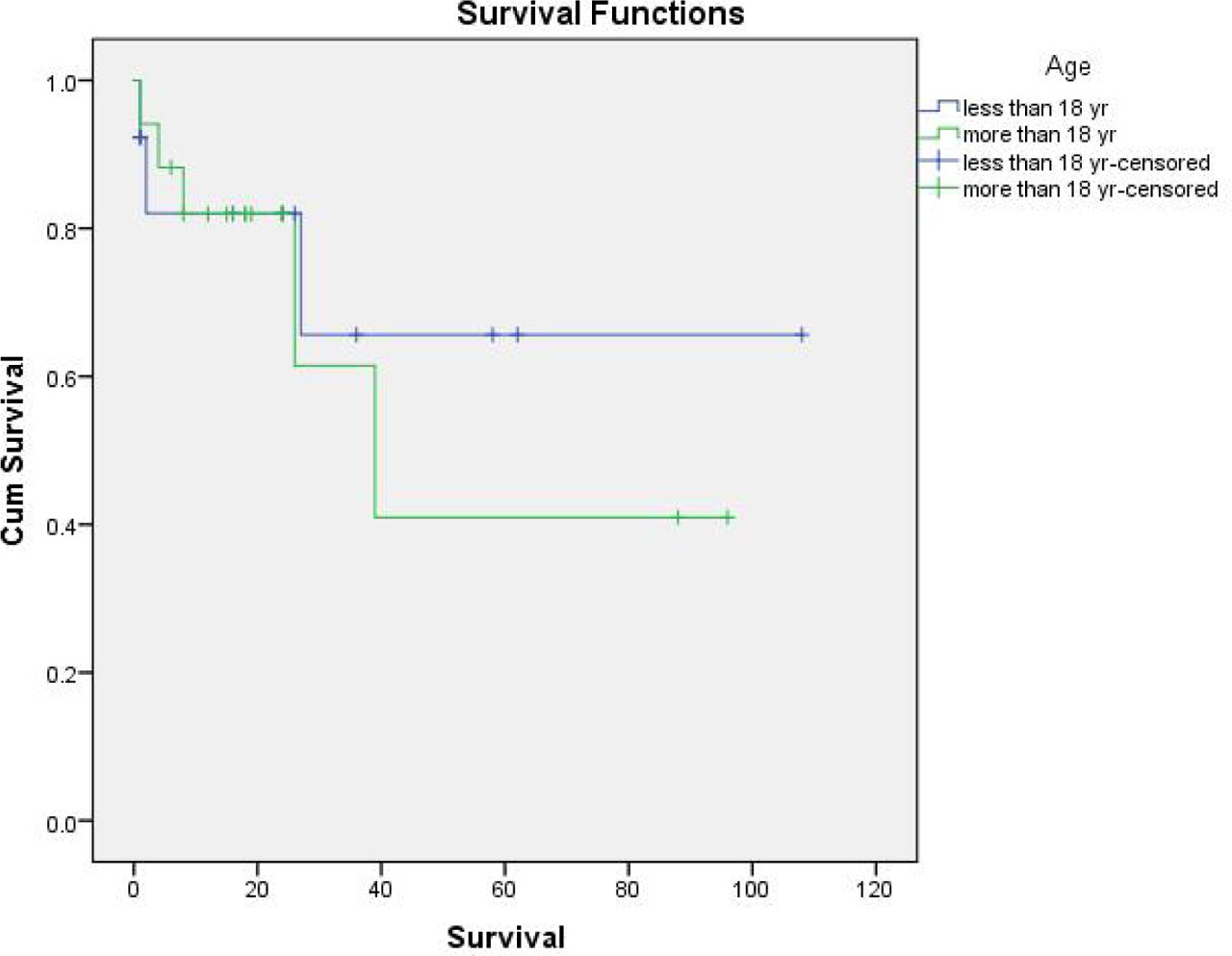
Figure 4:
Kaplan–Meier analysis to assess overall survival (in months) based on age (76%: 2-yr survival in patients aged less than 18 yr and 63%: 2-yr survival in patients aged more than 18 yr) (p=0.638).
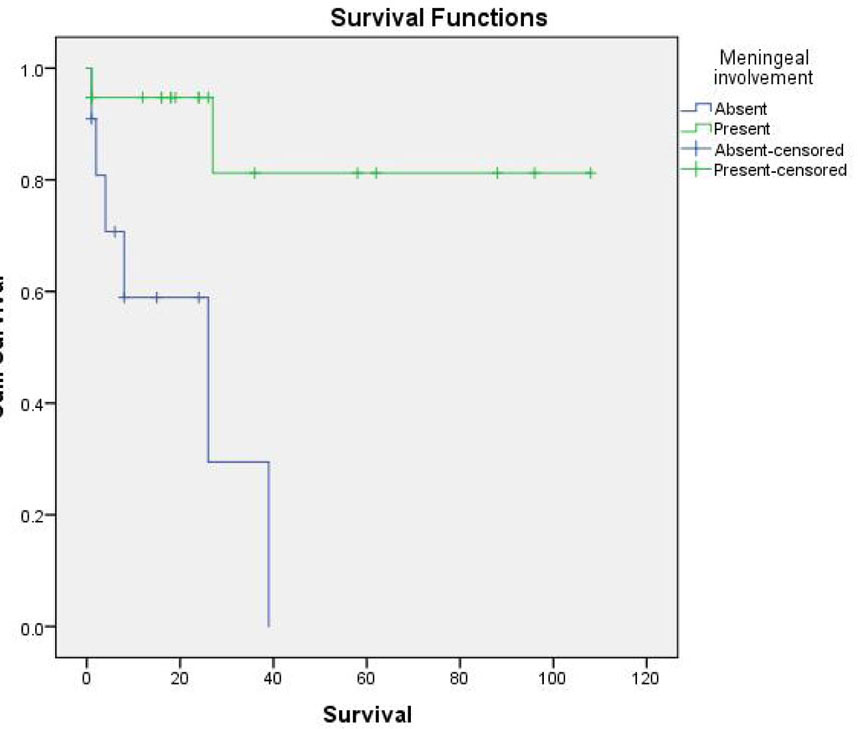
Figure 5:
Kaplan–Meier analysis to assess overall survival (in months) based on involvement of meninges (83%: 2-yr survival in patients in whom meninges are involved and 34%: in patients without any meningeal involvement) (p=0.002).
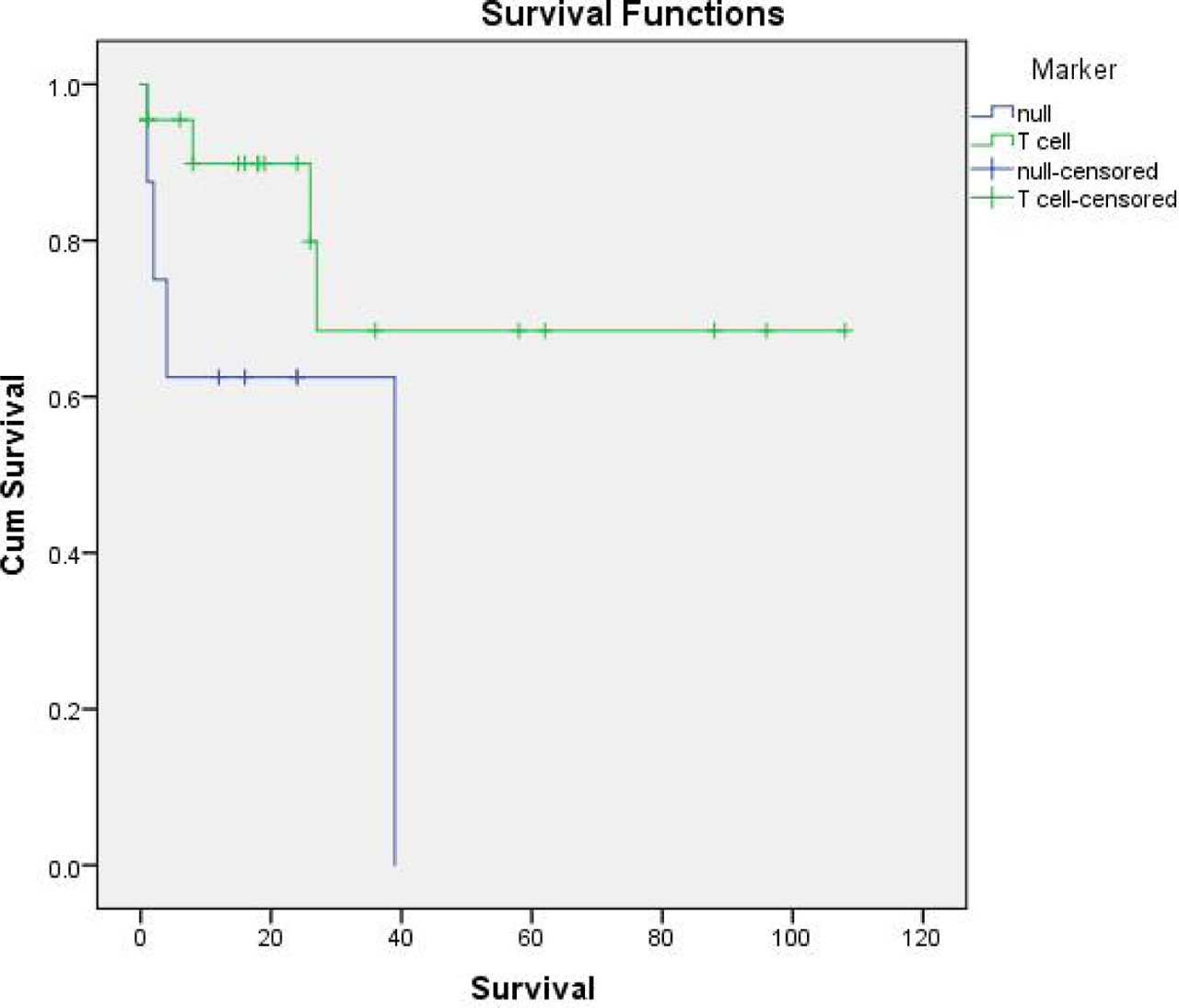
Figure 6:
Kaplan–Meier analysis to assess overall survival (in months) based on immune cell marker (84%: 2-yr survival in cases with T cell as biomarker) (p=0.041)
4. Discussion
We found that patients with ALK-positive ALCL involving CNS among the younger population had good prognosis in comparison to ALK-negative patients. The same finding was demonstrated in the study done by Nomura et al.[36] and another study conducted by Hirano et al.[37].
It is very difficult to diagnose ALCL involving CNS including primary ALCL of CNS at early stages as symptoms are general, like headache, ataxia, seizures and cognitive dysfunction, which are also reported by most of the case reports included in this study. With regard to radiological study with MRI/CT, it was found that ALCL mostly involved the cerebral cortex, basal ganglia, pineal gland and spinal cord, which is similar to the findings of our study[38]. In our study, 63% of patients had meningeal involvement, which suggests that ALCL might have originated in dura; the lesions in dura are often initially diagnosed as meningitis or sarcoidosis. The only definitive diagnosis of ALCL involving CNS is tissue biopsy, which should be done before any surgical treatment as it provides definite histological evidence of that disease[39]. However, patients with meningeal involvement had better prognosis; the only explanation for this could be early positive finding on cerebrospinal fluid through lumbar puncture. Among 30 cases included in this study, antibacterial, antiviral and antitubercular treatment was started in 22 cases as the initial treatment, due to which symptoms subsided at first, but it had no significant effect on disease.
In general, ALK-positive ALCL has better prognosis than ALK negative and it goes same for ALCL involving CNS (86%: 2-yr survival rate for ALK positive ALCL) as found in this study, though ALCL of CNS is much aggressive than ALCL involving other systems[40]. In addition, we found that all patients having ALK - positive ALCL except two were aged less than 40 years, whereas all patients having ALK - negative ALCL except one female patient were aged more than 40 years. Even in systemic ALCL, ALK-positive ALCL tends to develop within the first three decades of life and ALK-negative ALCL develops in patients aged 40–65 years[41].
One of the most crucial induction chemotherapy treatments for ALCL involving CNS is high-dose methotrexate, which is administered at levels greater than 3.5 g/m2[42]. Patients who received methotrexate-based chemotherapy had better 2-year survival rate (63%) in comparison to those who received treatment without methotrexate. Most of the patients received CHOP (Cyclophosphamide, Doxorubicin, Vincristine, Prednisolone) therapy, which is standard treatment for systemic ALK-positive and ALK-negative ALCL.
CD30 antigen and ALK tyrosine kinase are two possible targets for innovative treatment in ALK-positive ALCL. There is no proof that Brentuximab vedotin can cross the blood–brain barrier; however, it is used to treat relapsed or refractory systemic ALCL[43].
5. Conclusion
ALCL of CNS is rare; in total, approx. 60 cases of CNS involvement have been documented, including primary ALCL of CNS. In this study, we have conducted a systemic review summing histology, immunohistochemistry, prognostic factors and treatment methods of the disease based on previous records. ALCL involving CNS had better prognosis with meningeal involvement, T cell as a marker and positive ALK status.