
MUSCULOCUTANEOUS AND RADIAL NERVE NEUROMODULATION IN A PATIENT WITH LUNG CANCER AND METASTATIC BONE LESIONS
Tsagouli S.2, Kontouli Z.1, Papafili A.2, Mandellos D.3, Marioli A.2, Syrigos K.4
1Interventional Pain Clinic, Athens Medical Center
2Oncology Clinic, Athens Medical Center
3Neurology Clinic, «Ygeia» Hospital
43rd Department of Pathology, National University Kapodistrian of Athens, “Sotiria” General Hospital for Thoracic Diseases (G.H.T.D.)
Introduction:
Pain caused by metastatic osteolytic lesions can be intense and difficult to manage. In most cases, treatment includes opioids and other analgesics with many unpleasant side effects.
Aim:
The purpose of this case report is to highlight that peripheral nerve neuromodulation can be applied regionally with excellent results, and therefore represents an additional option in the management of bone and neuropathic pain.
Methods:
A 68-year-old hairdresser, was diagnosed in 2019 with stage IIIa non-small cell lung cancer. The patient received preoperative chemotherapy (Cisplatin/Gemcitabine) and underwent a right upper lobectomy. He completed adjuvant chemotherapy and remained disease-free for 10 months.
Subsequent staging revealed disease relapse in the lung, muscles and bones and he was commenced on 2nd line chemotherapy (Carboplatin/Alimta) in combination with immunotherapy (Pembrolizumab).
Treatment was discontinued after 8 cycles following a diagnosis of complex mononeuritis which had significant impact in his quality of life and ability to work.
He experienced left humeral pain (intensity VAS 6-8/10) that did not improve despite the use of Tramadol 400mg/d, Fentanyl patch 37μ/h, Paracetamol 4gr/d, Pregabalin 600mg/d, and was resistant to prolonged maximum corticosteroid therapy (p.o and iv) in combination with Rituximab. Furthermore, pain related to a left humeral fracture did not respond to palliative radiotherapy.
At this point, the decision was made to attempt neuromodulation of the musculocutaneous and radial nerve.
This was applied under local anesthesia and aseptia on either side of the fracture, with pulsed radiofrequency at 40ºC for 10 minutes.
Results:
An initial pain reduction of 3 VAS units (3-5/10) was observed. After 14 days he had improved arm movement, minimal residual pain and opioid weening began. Importantly, the procedure had no effect on sensory innervation and the patient was able to return to work.
Conclusions:
Peripheral nerve neuromodulation is an effective and safe invasive analgesic procedure that treating physicians must be aware of, in order to ensure a timely referral to an interventional pain physician when standard therapies have failed.
EFFICACY OF ATEZOLIZUMAB-BEVACIZUMAB (A-B) COMBINATION IN CIRRHOTIC AND NON-CIRRHOTIC PATIENTS WITH ADVANCED HEPATOCELLULAR CARCINOMA (HCC) ACCORDING TO BASELINE NEUTROPHIL-TO-LYMPHOCYTE RATIO (NLR)
Pantzios S., Syriha A., Stathopoulou I., Sidiropoulos O., Rellou S., Ptohis N., Barla G., Elefsiniotis I.
Academic Department of Internal Medicine – Hepatogastroenterology Unit, General and Oncology Hospital of Kifissia “Oi Agioi Anargyroi”, Athens, Greece
Introduction:
Liver cirrhosis affects survival rates in patients with HCC. Furthermore, high NLR values have been associated with poor treatment response and worse survival rates.
Aim:
The aim of this study was to evaluate the efficacy of A-B in histologically confirmed advanced HCC according to presence of cirrhosis and baseline NLR.
Methods:
Fifty-seven patients with advanced HCC who received 1st line A-B (mean age 66.3y, 45 males, 24 viral etiology, 29 ALBI-1, 20 MVI, 41 BCLC-C/16 BCLC-B) were categorized as NLR-H (NLR > 3) and NLR-L (NLR ≤ 3). Patients were separated into 4 groups according to histologically confirmed status of cirrhosis and baseline NLR [A: non-cirrhotic (NC)/NLR-L (N=13), B: NC/NLR-H (N=14), C: cirrhotic(C)/NLR-L (N=11), D: C/NLR-H (N=19)].
Results:
The 4 groups were comparable for all baseline characteristics except for etiology (p<0.001), ALBI (p=0.014), MVI (p<0.001), BCLC stage (p=0.014) and prior non-systemic treatment/pNST (p=0.009). Median OS was 30 months (m), 10m, 12m, 5m and median PFS 14m, 4m, 8m, 2m for groups A, B, C and D, respectively (p<0.001). In cox-regression analysis, we observed statistically significant difference for worse OS and PFS in group D compared to group A (p=0.005, HR=0.1), group C (p=0.032, HR=0.333) and group B (p=0.05, HR=0.321), adjusted for all other confounding parameters. When cirrhotic patients were evaluated according to baseline NLR, patients were comparable for all parameters except for Child-Pugh score. Group C patients had better OS (12m vs 5m, p=0.002) and PFS (8m vs 2m, p=0.028) compared to group D and high baseline NLR was an independent predictor for worse OS (p=0.015, HR=3.48), but not PFS. Evaluating non-cirrhotic groups, group A patients were comparable with group B for all baseline characteristics except for pNST. Group A patients had better OS (30m vs 10m, p=0.006) and PFS (15m vs 4m, p=0.01) compared to group B. In cox-regression, pNST was independently associated with better OS/PFS in these patients. NC patients with pNST followed by A-B treatment exhibited the best OS (30m) and PFS (24m).
Conclusions:
Cirrhotic patients with advanced HCC and high baseline NLR under A-B therapy had the worst OS and PFS whereas the best survival was observed in NC patients with low baseline NRL. In NC patients, only pNST was independently associated with OS and PFS.
PREDICTIVE AND PROGNOSTIC VALUE OF THE IMMUNOHISTOCHEMICAL MARKERS RB1, TP53, ANTI-TYROSINE HYDROXYLASE AND MicroRNAs IN LARGE CELL NEUROENDOCRINE CARCINOMAS (LC-NEC)
Evangelou G.1, Vamvakaris I.2, Anagnostakis M.1, Trontzas I.1, Paraskeva Ch.3, Koliaraki V.3, Syrigos N.K.1
13rd University Department & Laboratory, “Sotiria” General Hospital for Thoracic Diseases (G.H.T.D.)
2Department of Pathology, “Sotiria” G.H.T.D.
3Institute for Fundamental Biomedical Research (IFBR), Biomedical Sciences Research Center “Alexander Fleming”
Introduction:
Large cell neuroendocrine carcinoma (LCNEC) of the lung is an extremely rare and complex neoplasm, with an annual incidence of approximately 0.3 cases per 100,000 individuals. Owing to its rarity, data collection is challenging, thereby limiting the availability of information on prognosis and treatment response.
Aim:
The primary aim of this study is to assess the predictive and prognostic significance of the immunohistochemical markers RB1, TP53, and anti-tyrosine hydroxylase, in addition to the microRNAs miR375 and miR21, in patients with metastatic LCNEC who received first-line therapy.
Methods:
Seventeen patients with metastatic LCNEC treated at the 3rd University Department of Internal Medicine, Sotiria Hospital, received either carboplatin (AUC 5) plus etoposide (100 mg/m2) or a combination of carboplatin (AUC 5) plus etoposide (100 mg/m2) and atezolizumab (1200 mg). Immunohistochemical analyses for TP53, RB1, anti-tyrosine hydroxylase, and Ki67%, as well as plasma analyses of miR21 and miR375, were conducted at the initiation of therapy and at the completion of follow-up or disease progression (whichever occurred first).
Results:
Spearman correlation analysis showed no significant associations of RB1, TP53, or anti-tyrosine hydroxylase with progression-free survival (PFS) or overall survival (OS). A moderate correlation was observed between treatment response and changes in miR375 levels, but not miR21. Although miR375 levels were higher in LCNEC patients compared with healthy volunteers, the difference did not reach statistical significance.
Conclusions:
Our analysis suggests that the markers TP53, RB1, and anti-tyrosine hydroxylase do not have predictive or prognostic value in metastatic LCNEC. By contrast, miR375 levels demonstrated a moderate correlation with treatment response to chemotherapy, with or without immunotherapy.
ASSOCIATION OF B-CELL INFILTRATION WITH SURVIVAL AFTER PD-1 INHIBITION IN HEAD AND NECK SQUAMOUS CELL CARCINOMA
Gavrielatou N.1,4, Fortis E.3, Spathis A.2, Anastasiou M.1, Economopoulou P.1, Foukas G.R.P.1, Lelegiannis I.M.1, Rusakiewicz S.3, Vathiotis I.4, Aung T.N.4, Tissot S.3, Kastrinou A.1, Kotsantis I.1, Vagia E.M.1, Panayiotides I.2, Rimm D.L.4, Coukos G.3, Homicsko K.3, Foukas P.2, Psyrri A.1
Departments of
1Internal Medicine (Section of Medical Oncology)
2Pathology Attikon University Hospital, National Kapodistrian University of Athens, Haidari, Athens, Greece
3Ludwig Institute for Cancer Research, University Hospital of Lausanne (CHUV), Lausanne, Switzerland
4Yale University School of Medicine, Department of Pathology, USA
Introduction
The inhibition of programmed cell death 1 pathway (PD-1) is the standard of care in recurrent/metastatic (R/M) head and neck squamous cell carcinoma (HNSCC). Protein expression of the PD-L1 ligand is the only approved biomarker for patient selection. However, respose rate is limited, even among cases with high expression.
Aim:
The primary aim of this study is to investigate potential associations of immune-cell related biomarkers in the tumor microenvironment with treatment outcomes of PD-1 inhibition in patients with R/M HNSCC.
Methods:
NCT03652142 is a prospective study in patients with platinum refractory R/M HNSCC who received treatment with nivolumab, aiming to evaluate biomarkers of response to immunotherapy. Tumor biopsies and blood samples were collected from 60 patients prior to treatment, after treatment and at disease progression. Infiltrating immune cells were quantified by immunofluorescence in tumor and stroma using a five-marker panel (CD3, CD8, CD20, Foxp3, Cytokeratin). Tertiary lymphoid structures (TLS), PD-L1 expression and peripheral blood immune-cell composition were also evaluated. The results were validated using gene set enrichment analysis on mRNA in situ data obtained from the same samples, for B-cell and TLS-related genes.
Results:
Increased stromal B-cell infiltration pre-treatment was associated with longer progression free survival (PFS) (p=0.011). This result was validated in the mRNA analysis, as stromal enrichment with B-cell-related genes showed association with response to nivolumab. PD-L1 positivity in combination with high B-cell stromal infiltration demonstrated a subset of patients with significantly improved PFS and overall survival (p=0.013 and p=0.0028, respectively)
Conclusions:
Increased stromal B-cell infiltration is associated with prolonged benefit from PD-1 inhibition-based immunotherapy in patients with R/M HNSCC and enhances the predictive value of PD-L1 expression.
ELECTRONIC REGISTRY OF THE NUTRITIONAL STATUS AND CARE OF PATIENTS WITH CANCER-DIETARY ASSESSMENT RECORDING OF ONCOLOGY PATIENTS (DROP)
Gioulbasanis I.1, Tsigkas A.2, Vidra N.4, Logothetis M.3, Yannakoulia M.2, Dimitrakopoulos G.3, Tsoukalas N.5, Kontogianni M.2
1Department of Chemotherapy, Thessalia General Clinic, Larissa, Greece
2Department of Nutrition & Dietetics, School of Health Sciences and Education, Harokopio University, Athens, Greece
3Department of Informatics and Telematics, School of Digital Technology, Harokopio University of Athens, Greece
4Yakult Europe BV, 1332 Almere, the Netherlands
5Department of Oncology, Veterans Hospital (417 NIMTS), Athens, Greece
Introduction:
The nutritional status and care process of patients with cancer in Greece are not well-documented, and their impact on patients’ outcomes is unclear.
Aim:
The implementation of an electronic data registry of the nutritional care of patients with cancer in which α) the nutritional risk and nutritional status of patients b) the nutritional care provided, and c) monitoring of patients’ outcomes will be recorded.
Methods:
The Departments of Nutrition & Dietetics and Informatics & Telematics of Harokopio University designed and developed an electronic platform to record parameters, such as sociodemographic, clinical and anthropometric data, body composition, physical activity, performance status, nutritional risk screening, nutritional care provided, and anticancer treatments.
Results:
The developed ‘DROP’ web platform can be found at: https://drop-registry.gr/. The platform enables its simultaneous use by all collaborating centers, while each researcher can access the electronic database using a unique password. Data will be entered in DROP after patients’ written informed consent, while patients’ identifiable data will be accessible only by their physicians. The electronic database allows recording of data at baseline/diagnosis and 3-month follow up, as well as monitoring of survival and cancer recurrence. The project’s principal investigator can receive a file in “.excel” format that includes anonymous data from patients registered on the platform by the collaborating centers, to allow further data analysis.
Conclusions:
The developed DROP registry and its future use by collaborating centers will enable the assessment of the nutritional status of individuals with cancer, as well as the potential impact of nutritional status and provided care on cancer trajectory and survival. This information could assist in the design of initiatives at both local and national levels concerning the nutritional care of individuals with cancer, with the aim of improving their outcomes.
THROMBOPROPHYLAXIS WITH INTERMEDIATE OR PROPHYLACTIC DOSES OF LMWHs IN AMBULATORY CANCER PATIENTS: COMBINED RESULTS FROM GMaT & ACT4CAT STUDIES
Tsoukalas N., Christopoulou A., Timotheadou E., Koumarianou A., Ardavanis A., Athanasiadis I., Bokas A., Peroukidis S., Koumakis G.+, Papatsimpas G., Samelis G., Psyrri A., Kapodistrias N., Nikolakopoulos A., Andreadis Ch., Papakostas P., Aravantinos G., Ziras N., Sougleri M., Kalofonos Ch., Kentepozidis N., Barbounis V., Samantas E., Makrantonakis P., Mala A., Pentheroudakis G., Demiri S., Tripodaki E.-S., Papandreou Ch., Mavroudis D., Anastopoulou G., Arvanitou E., Gkikas K., Papadopoulou P., Nikolaidi A., Kampoli A., Katsouli E., Dimitriadou A., Golfinopoulos S., Assi A., Mouzakiti A.+, Tzimou M., Perdikari K.-Ch., Giannakou M., Litos I., Sofatzis I., Michas A., Binas I., Kostaridis E., Thalassinou P., Loulias N., Ardavanis-Loukeris G., Goumas G., Ioannou S., Karianakis G., Volakakis N., Pouliakis A., Athanasiadis A., Papakotoulas P., Boukovinas I.
On behalf of the Hellenic Society of Medical Oncology HeSMO, http://www.hesmo.gr, Athens, Greece
Background:
Thromboembolic events occur in up to 20% of cancer patients during their course of disease. Cancer associated thrombosis (CAT) is a “signum malum” for cancer itself contributing to morbidity and mortality. Optimal measures to prevent CAT are crucial.
Method:
A post hoc analysis of GMaT & ACT4CAT prospective observational phase IV studies conducted in Greece by Hellenic Society for Medical Oncology (HeSMO), aiming to evaluate efficacy & safety of primary CAT prophylaxis with prophylactic (ProD) or intermediate (InterD; 50%–75% of full treatment dose) doses of Low Molecular Weight Heparins (LMWHs) in ambulatory active cancer patients. Both studies conducted according to Helsinki declaration.
Results:
1157 patients from 26 oncology centers were recruited. Age: 64.9±12.3 years, BMI: 26.1±45.1 Kg/m2, 59.9% males. Metastasis in 74.5%, Highly Thrombogenic Agents (HTAs) received 82.3%. Anticoagulation agents were (%): 91.2 tinzaparin, 4.6 fondaparinux, 2.3 bemiparin, 1.2 enoxaparin, 0.8 rivaroxaban or apixaban, for 5.1±3.3 months duration. 62% of patients received InterD (1st, 2nd, 3rd, adjuvant & neoadjuvant: 62.4%, 67.3%, 69.8%, 44.1% &71.4% respectively, p=0.004). InterD preferred in men, in those with metastasis, HTAs treatment and receiving erythropoietin agents (ESA) while ProD in those with history of bleeding, heart or vascular, lung or metabolic disease, immobility, surgery, or radiotherapy. Detailed info in table. 32 patients (2.8%) had thrombotic events (20 in ProD, 11 in InterD, 1 dose unspecified) with higher risk in ProD (OR: 3.1, 95%CI:1.5–6.5, p=0.0021). 26 minor bleeding events reported (2.3%, no dose related difference, p=0.2424).
Conclusion
Current practice of oncologists is to administer prophylaxis using in most cases LMWHs and frequently in InterD. Selection of anticoagulation dose was based on demographics, cancer characteristics, treatment type and patient medical history. InterD was found to be more efficacious and without safety concerns.
| TABLE | InterD (N=701) (N/%) | ProD (N=430) (N/%) | p | OR (95%CI) |
|---|---|---|---|---|
| Males | 416/63.7 | 214/55.4 | 0.008 | 1.4 (1.1–1.8) |
| Metastasis | 535/79.0 | 259/67.3 | <.0001 | 1.8 (1.4–2.4) |
| HTAs | 597/85.4 | 338/79.2 | 0.007 | 1.5 (1.1–2.1) |
| ESA | 133/19.0 | 61/14.2 | 0.038 | 1.4 (1.0–2.0) |
| Radiotherapy | 126/18.18 | 106/24.9 | 0.007 | 0.7 (0.5–0.9) |
| History of Bleeding | 2/0.3 | 6/1.4 | 0.031 | 0.2 (0.0–1.0) |
| Heart or vascular disease | 139/28 | 80/35.4 | 0.044 | 0.7 (0.5–0.9) |
| Immobility | 43/6.1 | 46/10.7 | 0.006 | 0.6 (0.4–0.8) |
| Lung disease | 20/4.0 | 17/7.5 | 0.048 | 0.5 (0.3–0.9) |
| Metabolic disease | 96/19.3 | 60/26.6 | 0.028 | 0.7 (0.5–0.9) |
| Surgery | 269/38.4 | 250/58.3 | <.0001 | 0.5 (0.4–0.6) |
| Bleedings | 11/1.6 | 11/2.6 | 0.242 | 0.6 (0.3–1.4) |
| Thrombotic events | 11/1.6 | 20/4.7 | 0.002 | 0.3 (0.2–0.7) |
RESULTS FROM REGISTRY OF PATIENTS WITH ADVANCED OR METASTATIC INTRAHEPATIC CHOLANGIOCARCINOMA (CC)
Manolakou S.1, Boukovinas I.2, Karamouzis M.3, Papamichail D.4, Loizidis S.4, Valoukas D.5, Papaxoinis G.6, Iliaki G.7, Papadopoulos T.8, Beletsi A.9, Alexandropoulos I.9, Kosmidis E.10, Souglakos I.11
1Laboratory of Translational Oncology, Medical Department, University of Crete, IASIS, General Clinic, Chania,
2Oncology Department, Bioclinic, Thessaloniki,
3Evgenidio Foundation, Athens,
4Bank of Cyprus Oncology, Nicosia, Cyprus,
5Medical Oncology Department, General Hospital of Thessaloniki Papageorgiou, Thessaloniki,
6Medical Oncology Department, General Anticancer Oncological Hospital “Saint Savvas”, Athens,
7Gastro-Intestinal Cancer Study Group (GIC-SG),
8Diagnostic Laboratory Karyo,
9Servier Hellas,
10Medical Department, Aristotle University of Thessaloniki,
11Laboratory of Translational Oncology, Medical Department, University of Crete, Medical Oncology Department, University Hospital of Heraklion, Crete
Introduction:
Intrahepatic cholangiocarcinomas (iCCs) represent an increasing type of CCs (20%). In a 50% of iCCs there are genetic alterations amenable to be targeted. In 2020, the ESMO Scale for Clinical Actionability (ESCAT/ESMO) recommends molecular testing with next-generation-sequencing (NGS) in every iCC patient. Thus, the Gastro-Intestinal Cancer Study Group (GIC-SG) created a database including NGS analysis to facilitate reimbursement of genetic testing in iCC patients enrolled.
Aim:
Primary aim is the description of demographic and clinical and opathologic characteristics of iCC Greek patients along with the recording of the therapeutic strategies and trends. Secondarily, we aimed to create a registry that will reveal the risk factors and the frequency of genetic alterations.
Methods:
After receiving a written informed consent, we have prospectively registered demographic, clinical and pathological data for patients with iCCs and a code for NGS analysis was requested.
Results:
During the period 1/3/2023 to 9/2/2024, 80 patients were included with 64 to have completed the NGS analysis. A 81.5% of patients were >= 60 years, 65.4% of them were men, one third of them had high body mass index (BMI>=25), 8.8% had cirrhosis and 15% had diabetes mellitus. A 40.7% of patients presented extrahepatic spread on inclusion. Five patients had HBV, two had HCV and two had diagnosed with nonalcoholic fatty liver disease (NAFL). The majority of patients with metastatic disease were commenced to first line therapy with cisplatin-gemcitabine-durvalumab (70%), achieving a disease control rate (DCR) of 23.8%. The molecular testing depicted a genetic alteration in 45.3% of patients. In half of them a sigle mutation was detected, in 20% two mutations and in another 20% genes rearegements. The most common mutation was detected in the genes IDH1/2 (30%). Other existing molecular changes were mutations in NRAS (16%), KRAS (9.4%), PIKECA (9.4%), BRCA1 (3.1%), ERBB2, as well as genes’ fusion as FGFR2/3 (6%) and c-MET (1.7%). Moreover, we detected combinations of genetic alterations as IDH2/PIK3CA, IDH1/ BRCA1, IDH1/ FANCA, IDH1/ MET, KRAS/ CKN2B, PIK3CA/ BRCA1.
Conclusions:
This iCC registry remains active and the retrieved data may offer in a better understanding of this cancer subtype and facilitate a more targeted and effective therapeutic management.
SNF-CLIMEDIN: A PROSPECTIVE RANDOMIZED TRIAL OF DIGITAL INTERVENTION IN PATIENTS WITH ADVANCED NSCLC. A HECOG STUDY
Sarris E.1, Linardou H.1, Kosmidis T.2, Papadopoulou K.3, Korfiatis N.4, Gouedard C.5, Vozikis A.6, Lampaki S.7, Psyrri A.8, Fountzila E.9, Christopoulou A.10, Samantas E.11, Vagionas A.12, Mountzios G.13, Goumas G.14, Tsoukalas N.15, Athanasiadis I.16, Bafaloukos D.17, Panopoulos C.18, Koufaki M.I.6,19, Fountzilas G.20, Kosmidis P.21
1Fourth Oncology Department and comprehensive clinical trials center, Metropolitan Hospital, Piraeus, Greece
2Care Across Ltd, London, UK
3Molecular Oncology Laboratory, Hellenic Foundation for Cancer Research, Thessaloniki, Greece
4Faculty of Social Sciences, University of East Anglia, Norwich, UK
5Biopath Innovations, Athens, Greece
6Laboratory of Health Economics and Management (LabHEM) Economics Department, University of Piraeus, Greece
7Pulmonary Department, Lung Cancer Oncology Unit, Aristotle University of Thessaloniki, G. Papanicolaou Hospital, Greece
8Section of Medical Oncology, Department of Internal Medicine, Attikon University Hospital, Faculty of Medicine, National and Kapodistrian University of Athens, School of Medicine, Greece
9St Lukes clinic, Thessaloniki, Greece
10Oncology Unit, General Hospital of Patras St Andrews, Greece
11Second Oncology Department, Metropolitan Hospital, Piraeus, Greece
12Oncology Department, General Hospital of Kavala, Greece
13Fourth Department of Medical Oncology and clinical trial unit, Henry Dunant Hospital, Athens, Greece
14Department of Medical Oncology, Agioi Anargyroi Cancer Hospital, Athens, Greece
15401 General Military Hospital of Athens, Oncology Department, Athens, Greece
16Department of Medical Oncology Mitera Hospital, Athens, Greece
17First Oncology Department, Metropolitan Hospital, Piraeus, Greece
18Department of Medical Oncology, Euroclinic Hospital, Athens, Greece
19Laboratory of Pharmacogenomics and Individualized Therapy of Health Sciences, Patras, Greece
20Department of Medical Oncology, German Oncology Center, Limassol, Cyprus
21Second Department of Medical Oncology, Hygeia Hospital, Athens, Greece
Introduction/Aim:
The purpose of this study is to investigate the effectiveness of online digital intervention to NSCLC patients in terms of quality of life (QoL) and cost.
Methods:
This prospective randomized trial recruited 200 advanced NSCLC patients, who received standard treatment. Through the Care Across online platform, patients periodically reported any of 22 preplanned adverse events (AEs). Patients were randomized 1:1 in the intervention (A) and control (B) arm; patients in arm A received digitally, additionally, evidence-based guidance for the reported AEs. The study was designed to assess QoL improvement.
Results:
For all patients: median progression-free survival (PFS) was 7 months (95%CI: 5–8), 1-year PFS rate was 18% (38%–55%), median overall survival (OS) was 12 months (11–14) and 1-year OS rate was 47% (38%–55%). No difference was found between the two arms in any of the above, nor in OS in relation to clinical and molecular characteristics.
The most common AEs that patients reported were fatigue, cough, anorexia, nausea. More patients submitted AE reports online than their clinicians (89% vs 68%, p<0.01). Patients in arm Αreported marginally higher improvement compared to B (77.2% vs 75.7%); 15 of 22 AEs were associated with higher (14) or same (1) improvement in arm A vs B (not statistically significant); of the most common: fatigue (61.3% vs 48.6%), anorexia (86.5% vs 70.2%; p<0.05) and nausea (93.0% vs 87.2%). Baseline EQ5D scores were similar in both arms; comparing post-treatment results shows higher improvement in all 5 dimensions in arm A vs B, especially in Anxiety/Depression (final values: 1.9 vs 2.2).
The mean AE-related costs in arm A vs B were: hospitalization: 455.4 (95%CI: 91.9–941.5) vs 779.5 (346.6–1328.5) Euros (p<0.001); diagnostics: 20.3 (0.5–50.8) vs 73.3 (1.3–186.1) Euros (p<0.001).
Conclusions:
Digital oncology is cost-effective, improves certain AEs and tends to improve QoL of NSCLC patients. Online platforms can complement the Oncology team.
STEREOTACTIC RADIOTHERAPY FOR PROSTATE CANCER WITH OR WITHOUT THE USE OF AN URINARY CATHETER: THE BANK OF CYPRUS ONCOLOGY CENTRE EXPERIENCE
Symeou F., Tryphonos K., Panayiotou E., Georgiou M., Ntaskagiannis D., Peraticou E., Ioannou L., Vasileiou V., Kantaris M., Vomvas D.
Bank of Cyprus Oncology Centre
Introduction:
In recent years stereotactic radiotherapy has become one of the therapeutic options for patients with localised prostate cancer in particular low and intermediate risk patient based on international consensus guidelines.
Aim:
To assess if the insertion of a urinary catheter in patients undergoing stereotactic radiotherapy to the prostate aid in the decrease in the intrafraction movement and aids in the better tolerance and cooperation of patients with regards to the execution of the treatment.
Methods:
A total of 35 patients deemed candidates for stereotactic radiotherapy to the prostate were selected. All patients underwent mandatory insertion of fiducial markers. From the above-mentioned group, 7 were excluded from the study due to inability to conform to instructions based on the treatment protocol and one was excluded due to the presence of a metal hip prosthesis. Fifteen patients proceeded with stereotactic treatment without a catheter and 12 patients proceeded with treatment with a catheter which was inserted during the simulation process and remained intact during the course of treatment. Retrospective analysis of the intrafraction movement and of the number cone beam CT which were required during the treatment was done.
Results:
The group of patients in which a catheter was placed seemed to have a lower intrafraction movement and required less Cone beam CT (30% less) during the course of treatment.
Conclusions:
The insertion of a catheter during stereotactic prostate radiotherapy in local prostate cancer seems to improve control of bladder filling resulting in the improvement with regards to patient tolerance and cooperation during treatment, decreases the amount of cone beam CT scans done during the treatment course and decreases intrafraction movement. In addition to improving patient conformity to the treatment it decreases treatment time on the LINAC.
ORGANIZATION AND FUNCTION OF THE VENOUS ACCESS TEAM AT “G. PAPANIKOLAOU” GENERAL HOSPITAL OF THESSALONIKI
Ioannidis O., Anestiadou E., Gemousakakis G., Charitidis P., Loutzidou L., Siozos K., Kamplioni D., Symeonidis S., Bitsianis S., Mantzoros I., Aggelopoulos S.
Fourth Surgical Department, Aristotle University of Thessaloniki, “G. Papanikolaou” General Hospital
Introduction:
The placement and use of central venous access devices (CVADs) are integral to daily clinical practice. Specifically, CVADs intended for chemotherapy infusion—such as Port-A-Cath, PICC, and Hickman catheters, as well as traditional central venous catheters—are critical in oncology care across all stages of the treatment continuum. These devices support chemotherapy delivery during initial disease stages, either as primary or adjunctive treatment, and at more advanced stages, for managing progressive disease and providing palliative care. Numerous studies also indicate a reduction in complication rates with the involvement of a specialized Vascular Access Team.
Aim:
To present the goals and operation of the newly established Venous Access Team at “G. Papanikolaou” General Hospital.
Methods:
The Venous Access Team at our hospital represents the first organized nationwide facility for CVAD placement by a dedicated Vascular Access Specialist Team.
Results:
The primary function of the Venous Access Team at “G. Papanikolaou” General Hospital is to ensure venous access for both inpatients and patients from across Northern Greece. It serves all patients requiring vascular access for benign or malignant underlying conditions. Patients visit the Laboratory’s Outpatient Clinic, where they receive detailed information about the appropriate catheter and potential adverse effects before providing written consent. CVAD placement is then performed by specialized medical and nursing staff under aseptic conditions and with ultrasound guidance. Finally, patients receive full instructions for at-home catheter care. Notably, the Vascular Access Team has approximately 1,000 Port-A-Cath and 3,000 PICC placements to its credit.
Conclusions:
The Venous Access Team at “G. Papanikolaou” General Hospital aims to promptly meet patient needs, particularly those with cancer. Through specialized medical and nursing care provided before, during, and after CVAD placement, the Venous Access Team has achieved to reduce patient waiting times and to minimize complications.
A CASE REPORT OF RADIOTHERAPY IN A PATIENT WITH GALLBLADDER CANCER
Mosa E.1, Nikolaou M.2, Andreou M.3, Sidiropoulou A.1, Zambatis Ch.1
1Radiation Oncology Department, General Anticancer Oncological Hospital of Athens “Agios Savvas”
2A’ Department of Medical Oncology, General Anticancer Oncological Hospital of Athens “Agios Savvas”
3Medical Physicist Department, General Anticaner Oncologiacal Hospital of Athens “Agios Savvas”
Introduction:
Gallbladder carcinoma is a rare entity with a poor prognosis, and a 5-year survival rate of 5–19%. Meta-analysis shows that the administration of radiotherapy in patients with positive surgical margins and pathological lymph nodes contributes to more effective postoperative treatment.
Aim:
To safely and effectively administer radiotherapy in a patient with gallbladder cancer (Ca).
Methods:
A 62-year-old patient, after undergoing cholecystectomy, was diagnosed with gallbladder carcinoma as an incidental finding. Histology revealed «Adenocarcinoma of the gallbladder, Grade II, cholangiocellular type, with PNI (+), metastasis in the cystic duct lymph node, and extension into the adipose tissue, pT2aN1Mx». The patient received adjuvant chemotherapy and was referred for radiotherapy treatment. A simulation planning CT scan was performed in a supine position, with arms raised to keep them out of the treatment field. The Monaco TPS5.51 planning system was used. A postoperative PET-CT did not show any residual disease. According to the surgical clips, the region of the initial tumor bed and the pathological lymph nodes were delineated. The hepatic hilum, the lymph nodes of the celiac trunk, the pancreaticoduodenal, and the lymph nodes of the common bile duct were also delineated as the clinical tumor volume (CTV). The planning tumor volume (PTV) was defined by extending the CTV by 1.5 cm. Organs at risk (OARs) included the liver, bowelbag, spinal cord, and kidneys. QUANTEC 2010 criteria were used for OAR protection. The patient received volumetric modulated arc therapy (VMAT) with two arcs. A total target dose of 45Gy/1.8Gy was delivered to the regional lymph nodes and hepatic hilum. A total target dose of 54Gy was delivered to the gallbladder bed and the area of pathological lymph nodes. VMAT treatment confirmation was done using SunCheck software, taking images with an EPID detector and log files from the linear accelerator, with 95%/3%/2mm/10% criteria, before and during treatment.
Results:
Mild gastrointestinal toxicity of Grade I-II was observed. Nine months after radiotherapy, a PET-CT showed that the patient remained disease-free.
Conclusions:
Radiotherapy treatment is rare in gallbladder cancer. Modern techniques offer effective and safe postoperative treatment.
A CASE REPORT OF RADIATION THERAPY IN A PATIENT WITH MALIGNANT TRANSFORMATION OF ABDOMINAL WALL ENDOMETRIOSIS
Mosa E.1, Andreou M.2, Sidiropoulou A.1, Tsirlis Th.3, Korkolis D3, Anagnostopoulos A4, Papatheodorou D.4, Grivas A.5, Zambatis Ch.1
1Radiation Oncology Departmen, General Anticancer Oncological Hospital of Athens “Agios Savvas”
2Medical Physicist Department, General Anticaner Oncologiacal Hospital of Athens “Agios Savvas”
3Department of Surgery, General Anticancer Oncological Hospital of Athens “Agios Savvas”
4Gynecologic Oncology Department, General Anticancer Oncological Hospital of Athens “Agios Savvas”
5B Department of Medical Oncology, General Anticancer Oncological Hospital of Athens “Agios Savvas”
Introduction:
Malignant transformation of endometriosis is an extremely rare entity (0.3%–1%). A 49-year-old patient was referred for salvage radiotherapy, after a relapse in the right iliac and inguinal lymph nodes.
Aim:
To safely and effectively administer radiotherapy for malignant transformation of endometriosis.
Methods:
The patient had malignant endometriosis in the site of a cesarean section scar. The tumor was surgically removed, and the histology confirmed «Clear cell carcinoma, Grade III, in the context of endometriosis, with infiltration of the muscle and LVSI (+)». Adjuvant chemotherapy was administered. A PET-CT showed recurrence in the right external iliac and right inguinal lymph nodes. FNA confirmed the disease. Blind endometrial biopsies were negative for malignancy in the uterus. Surgical excision of the recurrence was not feasible. Following the decision of the Multidisciplinary Team (MDT), the patient was referred for radiotherapy. A simulation planning CT scan was performed in a supine position. The Monaco TPS5.51 planning system was used. Fusion was performed with preoperative MRI of the upper-lower abdomen, which revealed the initial disease, and PET-CT which confirmed the recurrence. The pathological lymph nodes (GTV) were delineated under PET-CT guidance. The surgical tumor bed of the primary tumor, the iliac and inguinal lymph nodes, and the uterus were delineated under MRI guidance and defined as a clinical tumor volume (CTV). The planning tumor volume (PTV) was defined by extending the CTV by 1cm. Organs at risk (OARs) included the bladder, rectum, bowelbag and femoral heads. QUANTEC 2010 criteria were applied for OAR protection. Volumetric modulated arc therapy (VMAT) was performed with three arcs. The total dose of the target volume that consisted of the inguinal lymph nodes was 45Gy/1.8Gy. The total dose prescribed for the iliac lymph nodes and uterus was 50.4Gy. The pathological lymph nodes, according to PET, received 59.4Gy. The VMAT treatment was confirmed with SunCheck software, taking images with an EPID detector and log files from the linear accelerator, with criteria of 95%/3%/2mm/10%, before and during treatment.
Results:
The patient experienced gastrointestinal toxicity of Grade I-II. Three months later, a PET-CT showed no disease.
Conclusions:
Radiotherapy for malignant endometriosis can be performed safely and effectively with modern radiotherapy techniques.
INTERNATIONAL VALIDATION OF THE EORTC QLQ-ANL27, AN ANAL CANCER-SPECIFIC HEALTH-RELATED QUALITY OF LIFE QUESTIONNAIRE
Sodergren S.C.1, Johnson C.D.1, Gilbert A.2, Kardamakis D.3, Georgiou M.4, Ntaskagiannis D.4, Samouti P.4, Vomvas D.4, Vassiliou V.4
on behalf of the EORTC Quality of Life Group
1University of Southampton, Southampton
2Leeds Institute of Medical Research at St James’s, University of Leeds
3Department of Radiation Oncology, University of Patras Medical School Greece
4Department of Radiation Oncology, Bank of Cyprus Oncology Center
Introduction:
The European Organisation for Research and Treatment of Cancer (EORTC) health-related quality of life (HRQoL) questionnaire for anal cancer (QLQ-ANL27) was developed to supplement the core EORTC HRQoL measure to capture the specific concerns of people with anal cancer treated with chemoradiotherapy (CRT). The QLQ-ANL27 incorporates five multi-item scales to assess bowel symptoms (non-stoma), bowel symptoms (stoma), pain/discomfort, stoma care and vaginal symptoms, as well as nine single items assessing urinary frequency, swelling in legs/ankles, need to be close to toilet, clean yourself more often, planning activities, sex life, sexual interest, painful intercourse and erectile problems. The robust and rigorous development process was informed by the EORTC module development guidelines, with input from existing literature, health care professionals, and, most importantly, patients. This final phase of development tests the psychometric properties of the QLQ-ANL27 and is necessary to present the QLQ-ANL27 as a valid measure.
Methods:
People with anal cancer were recruited from 15 countries to complete the QLQ-C30 and QLQ-ANL27 and provide feedback on the QLQ-ANL27. Item responses, scale structure and sensitivity of the QLQ-ANL27 were evaluated.
Results:
Data from 382 people were included in the analyses. The QLQ-ANL27 was acceptable, comprehensive, and easy to complete. Psychometric analyses supported the EORTC QLQ-ANL27 items and reliability (Cronbach’s alpha ranging from 0.71 to 0.93 and test-retest coefficients above 0.7) and validity of the scales (particularly non stoma bowel symptoms and pain/discomfort). Most scales distinguished people according to treatment phase and performance status. Bowel (non-stoma), pain/discomfort and vaginal symptoms were sensitive to deteriorations over time.
Conclusions:
The QLQ-ANL27 has good psychometric properties and is available in 16 languages, for people treated with CRT for anal cancer. It is used in clinical trials and has a potential role in clinical practice.
PROTECTING THE PHYSICIAN IN GREECE: LIABILITY OF ONCOLOGISTS DERIVING FROM CANCER PATIENTS IN CRITICAL CONDITION
Simotas A.1, Pispirigkou M.2
1Department of Medicine, School of Health Sciences, University of Patras, Greece.
2Division of Oncology, Department of Pathology, University Hospital of Patras, Greece.
Introduction:
There have been many studies and conventions about the deontology and ethics in oncology but never have any physicians dealt with the liability of the oncologist at the clinical practice. This is where fear of the penalties may rise when attorneys of patients and surrogates come to ask for compensation against any false treatment or wrong call which led to the final stage of critical care.
Aim:
The aim of this study is to investigate the crucial risks of the oncology profession and protect the Greek oncologist by identifying the proper precaution measures against the liability of any treatment judgement upon the cancer patients in critical condition.
Methods:
This is a cross-sectional qualitative study between scientific findings of research on medical ethics and oncology files of deontology and liability of oncologists in medical practice. The research tool has been a closed type of questionnaire with medical case studies and answers of type (right/wrong, yes/no) amongst oncologists in Greece.
Results:
Education and information are both very important ways of protecting oncologists against any legal acts by surrogates or relatives of patients in critical condition. Unfortunately, there is no mandate of precaution measures for physicians except for self-insurance via private companies that cover the affirmative possibility of a danger. Oncologists may be well protected by organizational meetings and by investigating case studies where the patient is the plaintiff, and the physician becomes the defendant.
Conclusions:
Since there is not any compulsory subject of legal rights and obligations of physicians in Greece, an action must be taken to protect the oncologists against legal acts of surrogates. In critical conditions a doctor may find it very difficult to decide between right and wrong and time is not a good alley either.
THE CLINICAL DILEMMA OF ADMINISTERING ANTINEOPLASTIC THERAPY IN THE ICU
Kostaridis E.1, Gkikas K.1, Arvanitou E.1, Michas A.1, Stamatogianni E.1, Ballasis K.1, Christofyllakis C.1, Papadopoulos D.3, Pappas D.2, Tsoukalas N.1
1Oncology Department, 401 General Military Hospital of Athens
2Pathology Department, 401 General Military Hospital of Athens
32nd Orthopedic Department, 401 General Military Hospital of Athens
Introduction:
Advances in antineoplastic therapies have increased life expectancy leading to a higher amount of admissions of cancer patients to the Intensive Care Unit (ICU). During ICU hospitalization, the dilemma of administering chemotherapy often arises, weighing the benefits of chemosensitivity in certain histological types against the risks of adverse effects.
Case Presentation:
A 55-year-old patient presented to the Emergency Department with severe pain in the left hip. Imaging studies revealed a pathological fracture from a bone lesion of unknown origin, leading to the decision of surgical management along with a biopsy of the lesion. Histological examination confirmed the presence of small cell lung carcinoma [TTF-1(+), Synaptophysin(++), Chromogranin-A(+), CD56(+), Ki67 >90%]. During the postoperative course, the patient developed respiratory failure and required invasive mechanical ventilation for respiratory support. While in the ICU, considering the histological type’s chemosensitivity, chemotherapy (Carboplatin/Etoposide) was administered despite his critical clinical condition. The patient was successfully extubated within a short period and, after several weeks of hospitalization in the Oncology Department, he was discharged. He completed four cycles of chemotherapy in combination with durvalumab and then he received maintenance immunotherapy for approximately one year, achieving near-complete response. After one year, disease progression was detected on follow up, and the patient started second-line treatment.
Conclusions:
The administration of chemotherapy in the ICU is becoming increasingly common due to improvement in the survival rates of cancer patients. Tumors with high chemosensitivity, such as small cell lung carcinoma and hematologic malignancies, show significant results in both short-term and long-term mortality rates. Personalized treatment based on tumor type and histology is essential, along with better collaboration between oncologists and intensivists in the future.
REAL-WORLD DATA ON THE CLINICAL USE OF SIRT (SELECTIVE INTERNAL RADIATION THERAPY) IN CANCER PATIENTS
Kostaridis E.1, Bakalis S.2, Michas A.1, Gkikas K.1, Arvanitou E.1, Stamatogianni E.1, Ballasis K.1, Christofyllakis C.1, Koutsikos I.2, Tsoukalas N.1
1Oncology Department, 401 General Military Hospital of Athens
2Department of Nuclear Medicine, 401 General Military Hospital of Athens
Introduction:
SIRT is a type of radioembolization in which the radioisotope yttrium-90 (Y-90) is selectively administered to primary or secondary liver tumors. It has been proven effective in both unresectable hepatocellular carcinoma and liver metastases from colorectal cancer. Our hospital is one of the few centers in Greece where this method is performed.
Aim:
To highlight the role of SIRT in clinical practice by recording its outcomes based on patient characteristics and adverse effects.
Methods:
A retrospective study was conducted to review cases of patients who received SIRT. This method is performed in two sessions: the first is a planning session, and the second is the administration session of Y-90.
Results:
A total of 51 patients were evaluated in the planning session, of whom 33 were deemed suitable for SIRT therapy. These patients had a mean age of 69 years, with the majority (73%) being male. Most cases involved the treatment of liver metastases from colorectal cancer (considered oligometastatic) and hepatocellular carcinoma, with rates of 52% and 18%, respectively. Among them, 67% achieved complete response so far in regular follow-up, while 15% required a second Y-90 administration due to partial response. Regarding adverse effects, one patient required a one-day hospitalization due to abdominal pain, and two patients developed radiation-induced hepatitis. The adverse effects were managed conservatively, with gradual clinical improvement.
Conclusions:
Radioembolization represents an alternative approach for managing liver tumors, demonstrating good response rates and a low incidence of adverse effects in this study (findings consistent with international literature). Ultimately, the importance of a multidisciplinary approach should be emphasized, including the contribution of various specialties to clinical practice.
CLINICAL AND PATHOLOGICAL CHARACTERISTICS OF PULMONARY NEUROENDOCRINE TUMORS: AN IN-DEPTH STUDY FROM THE NEUROENDOCRINE TUMORS CLINIC OF THE 3rd UNIVERSITY DEPARTMENT, NATIONAL AND KAPODISTRIAN UNIVERSITY OF ATHENS, “SOTIRIA” HOSPITAL
Evangelou G.1, Sofianidi A.1, Kelidi P.1, Papadopoulou A.2, Konstantinidou A.2, Syrigos N.1, Triparna S.3, Syrigos K.1
13rd Department of Internal Medicine & Laboratory, Medical School, National and Kapodistrian University of Athens, “Sotiria” General Hospital for Thoracic Diseases
2Department of Pathology, “Sotiria” General Hospital for Thoracic Diseases
3Department of Oncological Sciences, Lung Cancer PDX Platform, Icahn School of Medicine at Mount Sinai, New York
Introduction:
Pulmonary neuroendocrine tumors (Lung Neuroendocrine Tumors, LNETs), often referred to as pulmonary carcinoids (typical and atypical), along with large cell neuroendocrine carcinoma (LCNEC), represent rare entities with distinct clinical and pathological features. These tumors exhibit varying pathological characteristics, prognoses, and biological behaviors.
Aim:
In this study, we present the first comprehensive analysis of the clinical and pathological characteristics of LNETs and LCNECs in patients managed at the Neuroendocrine Tumors Clinic of the 3rd University Department, National and Kapodistrian University of Athens, “Sotiria” Hospital.
Methods:
Data were collected from medical records of patients diagnosed with LNETs or LCNEC between May 2017 and July 2023, focusing on clinical presentation, tumor location, disease stage, and pathological findings.
Results:
The study cohort comprised 80 patients, with a mean age at diagnosis of 59 years for NETs and 66.5 years for LCNEC. Notably, there was a significant difference in sex distribution and smoking status between the NET and LCNEC groups. No correlation was observed between smoking status and NET occurrence, whereas most LCNEC patients were active smokers. The primary symptoms leading to diagnosis differed between groups: the majority of NET patients were asymptomatic, whereas LCNEC patients commonly presented with dyspnea and persistent cough. Patients with NETs were more often diagnosed at an early stage, whereas most LCNEC patients presented with metastatic (stage IV) disease. Ki67 expression levels were distinctly different, at 7% in NETs and 70% in LCNECs.
Conclusions:
Our study provides valuable insights into the clinical and pathological landscape of LNETs and LCNECs. Ongoing investigations, including molecular characterization in larger patient cohorts, are underway to validate these observations and further explore treatment efficacy and patient outcomes.
| Characteristic | LCNEC | |
|---|---|---|
| Age | 59 (27 – 86) | 66.5 (39–84) |
| Male (%) | 39 | 79 |
| Type of Biopsy (%) | ||
| • Bronchoscopic | 14.6 | 21 |
| • CT-guided | 0 | 10.5 |
| • Surgical | 85.3 | 68.4 |
| Smoking Status (%) | ||
| • Never | 34.2 | 2.6 |
| • Current | 34.2 | 76.3 |
| • Former | 31.7 | 21 |
| Symptoms Leading to Diagnosis (%) | ||
| • Asymptomatic | 63.4 | 36.8 |
| • Hemoptysis | 12.2 | 10.5 |
| • Cough | 12.2 | 31.5 |
| • Dyspnea | 9.8 | 31.5 |
| • Recurrent respiratory infections | 2.4 | 7.9 |
| Location (%) | ||
| • Left upper lobe | 9.7 | 21.0 |
| • Left lower lobe | 21.9 | 13.1 |
| • Right upper lobe | 21.9 | 36.8 |
| • Right middle lobe | 24.3 | 2.6 |
| • Right lower lobe | 12.2 | 15.8 |
| • Lingula | 2.4 | 2.6 |
| Stage (8th TNM Edition) (%) | ||
| • IA | 41.4 | 7.9 |
| • IB | 7.3 | 5.2 |
| • IIA | 12.2 | 7.9 |
| • IIB | 9.7 | 7.9 |
| • IIIA | 14.6 | 7.9 |
| • IIIB | 4.8 | 5.2 |
| • IIIC | 0 | 5.2 |
| • IVA | 4.8 | 23.6 |
| • IVB | 4.8 | 28.9 |
| • Ki67% | 7 (1–30) | 70 (40–90) |
THE ROLE OF RADIATION THERAPY IN MALIGNANT TUMORS OF THE THYMUS GLAND
Seretis A.1, Tolia M.2, Papalla K.1, Antoniadis X.2, Varveris A.2, Sidiropoulou A.1, Verigos E.1, Vassilakou E.1, Koukourakis G.1
1Department of Radiation Oncology, General Anticancer, Oncology Hospital of Athens “Agios Savvas”, Athens, Greece
2Department of Radiotherapy and Oncology, University General Hospital of Heraklion “PAGNI”, Heraklion, Greece
Introduction:
Epithelial tumors of the thymus are the most common tumors of the anterior mediastinum in adults. Surgery is the main treatment, especially for early-stage disease. Multiagent therapy, including chemotherapy and radiation therapy, is used in the treatment of locally advanced disease, while systemic therapy alone is indicated in cases of metastatic disease.
Aim:
The purpose of this retrospective study is to investigate the effectiveness and safety of radiation therapy in terms of the clinical outcome of patients with epithelial tumors of the thymus gland.
Methods:
28 patients who were diagnosed with epithelial tumors of the thymus gland from June 2013 to September 2023 and received radiation therapy either after surgery (PORT: Post Operative Radiation Therapy), or after or simultaneously with chemotherapy were studied retrospectively. The incidents come from two hospitals, G.A.O.N.A. “Agios Savvas” and the University General Hospital of Heraklion Crete “PAGNI”.
Results:
All survivors (n=10) were diagnosed with thymoma and underwent surgical resection followed by PORT. Of those who died (n=18), 61% received chemotherapy followed by or concurrent with radiation therapy, while the remaining 39% underwent surgical thymectomy followed by radiation therapy. Regarding the basic radiation therapy regimens applied to the patients of the study, patients who received PORT either with 25 fractions × 1.8Gy = 45Gy or with 27 fractions × 2Gy = 54Gy had better survival, in contrast to the patients who due to stage and inoperable received 30 fractions × 2 Gy = 60Gy and had the worst survival. Also, an important finding is that PORT was not associated with high-grade acute toxicity.
Conclusions:
PORT provides a significant survival benefit in patients with thymic epithelial tumors and residual surgical resection.
CASE REPORT OF AN INTERESTING CASE WITH ARTERIOVENOUS DYSPLASIA AND TREATMENT WITH STEREOTACTIC RADIOSURGERY
Verigos E.1, Orfanakos K.2, Maragoudakis E.3, Verigos K.2,3
1Department of Radiation Oncology G.A.O.H.A. “Agios Savvas”
2Department of Radiation Oncology and Stereotactic Radiosurgery, 401 General Military Hospital
3Department of Radiation Oncology IASO General Clinic
Introduction:
Arteriovenous dysplasia is a benign congenital anomaly of the cerebral vasculature, with blood vessels that divert blood from the arterial to the venous system, bypassing the capillary network. It has a 2.2% risk of bleeding in individuals with no risk factors, with rates increasing as high as 34% in patients with multiple risk factors. Treatment options are embolization, neurosurgical excision, and stereotactic radiosurgery.
Aim:
To present a case of a male patient with arteriovenous dyspnea and his treatment with stereotactic radiosurgery.
Methods:
A 44-year-old patient presented on 11/2020 with residual, partially embolized arteriovenous dysplasia of the right part of the brain with symptoms of instability and headache. The patient, after the manufacture of an immobilizing head-neck thermoplastic mask, underwent a planning CT scan using contrast and an MRI with a cerebral angiography protocol. The tomographic images of the CT and MRI were fused and the planning of the treatment area and the critical structures followed. The treatment was performed in one fraction with a total dose of 2200cGy with protection of critical structures of the region. The patient tolerated the treatment with no side effects. Prophylactic anti-edematous treatment was administered with corticosteroids and re-evaluation after 6 months was recommended.
Results:
Follow-up with MRI, showed complete resolution of the arteriovenous dysplasia and absence of related symptoms.
Conclusions:
According to the recent literature, stereotactic radiosurgery shows excellent therapeutic results in patients with arteriovenous dysplasia, achieving success rates in 90% of cases, even in surgically inaccessible locations. Similar results were found in this case.
IMMUNOHISTOCHEMICAL EXPRESSION OF DUSP3 IN NEVUSASSOCIATED MELANOMAS
Chousakos E.1, Katsoulas N.1, Vlachogiannis N.2, Theochari I.1, Kavantzas N.1, Stratigos A.3, Lazaris C.A.1
11st Department of Pathology, Medical School, National and Kapodistrian University of Athens
21st Department of Propaedeutic Internal Medicine and Joint Rheumatology Program, Medical School, National and Kapodistrian University of Athens
31st Department of Dermatology Venereology, “Andreas Syggros” Hospital, Medical School, National and Kapodistrian University of Athens
Introduction:
Dual Specificity Phosphatase 3 (DUSP3) seems to participate in various cancers, with both tumor suppressing and promoting properties reported in melanoma.
Aim:
This study's objective is to investigate DUSP3.s immunohistochemical expression among nevusassociated melanomas (NAMs) and thus its potential involvement in melanocytic oncogenesis from the standpoint of its post-translational levels.
Methods:
42 biopsied NAMs from 42 individuals were collected for immunohistochemical staining. The nevus and melanoma compounds were evaluated separately per tumor. Positivity was based on the numerical and categorical Immunoreactive Score after evaluation of staining’s intensity and proportion.
Results:
A general decrease of DUSP3’s positivity was observed in MNAMs compared to NNAMs [mean (SD) numerical IRS scores: NNAMs: 4.0(2.9); M-NAMs: 1.9(1.1), p<0.001]. Remarkably, no strongly positive MNAMs were observed while 21.4% of them developed from a negative nevus. Furthermore, paired analysis of the 84 matched NAM cases underscored a downgrade in DUSP3 positivity of MNAM vs NNAM per tumor (Wilcoxon signed-rank test: p<0.001). Univariate analysis revealed significant association when comparing NNAMs with MNAMs. Specifically, probability of NNAM diagnosis against MNAM was increased approximately 3 times (OR NNAM vs MNAM: 3.225, 95% CI: 1.7455.961. p<0.001) per 1 unit increase of the categorical IRS score.
Conclusions:
Our findings highlight that poor DUSP3’s positivity and even more DUSP3’s negativity therefore loss of DUSP3’s expression are more likely associated with melanocytic malignancy. This is the first study rigorously examining DUSP3’s immunohistochemical expression in NAMs, contributing to the improved understanding of their oncogenesis and diagnostics.
COVID19 PANDEMIC AND ITS SIGNIFICANCE FOR DIAGNOSIS OF PATIENTS WITH SOLID TUMORS IN GREECE
Dimitrakopoulos F.I.1,2, Kottorou A.1, Rousia E.2, Bania A.2, Pyrousis I.2, Mageiropoulou A.2, Kyriakopoulos G.2, Pitsillos R.2, Gavriil V.2, Strati M.2, Chardalia G.2, Karakoida V.2, Kyriakoulopoulou P.2, Mouroutsos F.2, Ioakim M.2, Katsigianni A.2, Tsarouha E.2, Knouni M.2, Mesiri E.2, Flourentzou S.2, Makatsoris T.2, Kalofonos H.2, Koutras A 2
1Molecular Oncology Laboratory, Department of Medicine, University of Patras, Greece
2Division of Oncology, University Hospital of Patras, Greece
Introduction:
COVID–19 pandemic has influenced globally the way of diagnosis as well as the management of cancer patients.
Aim:
The aim of this study was to assess the impact of COVID-19 pandemic in diagnosis of Greek patients with solid tumors.
Methods:
In this study, clinicopathological data from 7899 patients with solid tumors were retrospectively collected. All the patients had been medically managed at the University Hospital of Patras (Greece) before, during or after the COVID-19 measures. For patient grouping, we used the following time points: 28/2/2020 (initiation of the measures) and 30/4/2022 (lifting of all pandemic measures in Greece).
Results:
In this ongoing study, 7899 patients with solid tumors who have been medically managed at the University Hospital of Patras (Greece) have been included until now. All patients were serially and retrospectively collected. Most patients had tumors classified as adenocarcinomas following by squamous cell carcinomas. In this cohort of patients, lung, breast and prostate cancers were the most frequent subtypes (19.2%, 13.9% & 4.4%, respectively). Disease stage (early vs metastatic) was significantly associated with the time of diagnosis (before pandemic vs during the pandemic, p<0.001), with patients with metastatic disease being increased by 11.9% during the pandemic period. This association remained significant when three periods were used (before pandemic vs during pandemic vs post pandemic, p<0.001). Interestingly, post lifting of pandemic measures percentage of patients with metastatic disease tends to be reduced and becoming similar to that before COVID-19 pandemic.
Conclusions:
This ongoing study confirms the impact of COVID-19 measures in the diagnosis of patients with solid tumors in Greece.
REAL-WORLD CLINICOPATHOLOGICAL FEATURES, TREATMENT PATTERNS AND OUTCOMES IN PATIENTS WITH KRAS G12C-MUTATED NON-SMALL CELL LUNG CANCER (NSCLC)
Economopoulou P. Kirkasiadou M., Moutafi M., Kotsantis I., Spathis A., Foukas P., Pantazopoulos A., Kyriazoglou A., Anastasiou M., Boulouta A., Gavrielatou G., Zazas A., Psyrri A.
Oncology Unit, 2nd Department of Internal Medicine, National and Kapodistrian University of Athens, Attikon University Hospital
Introduction:
KRAS G12C mutation has been associated with unfavorable prognosis and has recently recognized as a discrete druggable target for patients with advanced non-small cell lung cancer (NSCLC) in 2nd line therapy and beyond.
Aim:
The aim of this retrospective observational study was to provide real-world clinicopathological characteristics, treatment patterns, and survival outcomes data in patients with KRAS mutated NSCLC.
Methods:
Patients’ medical records were used to collect clinicopathological characteristics and assess treatment approaches and outcomes in patients NSCLC with a KRASG12C mutation treated between January 2020 and January 2024. The statistical analysis was performed using the gtsummary package in RStudio 2023.09.1.
Results:
Among 32 patients with G12C mutation, median age at diagnosis was 67 and the majority (25 patients, 78%) were men. Twenty-three patients (72%) had ECOG performance status 0 at diagnosis. Twenty-two patients (69%) were diagnosed at TNM stage IV. The majority (30 patients, 94%) had adenocarcinoma histology. Eighteen patients (72%) were active smokers. Seventeen out of 22 patients (77%) with stage IV disease had one or two metastatic sites at diagnosis. All 22 patients with stage IV disease received first line immunotherapy or chemo-immunotherapy based on PD-L1 status. TPS PD-L1 expression was < 1% in 11 patients (38%) and >50% in 10 patients (34%). Eight patients progressed to immunotherapy/chemoimmunotherapy 1st line. Median overall survival (OS) from the time of diagnosis to last follow-up or death was ten months. Patients with male sex, adenocarcinoma histology and positive (>1%) PD-L1 expression had better disease-free survival (DFS) and OS. In univariate analysis, no predictors for response to immunotherapy were found; however, responders to immunotherapy had improved DFS and OS.
Conclusions:
Real-world outcomes in patients with KRAS G12C-mutated NSCLC were unfavorable. Targeted and more efficacious treatment options in these patients are warranted.
RADIOTHERAPY TREATMENT PLANNING FOR PATIENTS WITH NON-SMALL CELL LUNG CANCER USING PET/CT SIMULATION
Mulita A.1, Bekou E.2, Valsamaki N. P.3, Zisimopoulos A.4, Koukourakis I. M.5
1Medical Physicist, Department of Medical Physics, University General Hospital of Alexandroupolis, PhD candidate of Democritus University of Thrace.
2PhD Candidate, Laboratory of Medical Physics, Democritus University of Thrace.
3Assistant Professor in Nuclear Medicine, Democritus University of Thrace, Nuclear Medicine Department, University General Hospital of Alexandroupolis
4Professor in Nuclear Medicine, Democritus University, of Thrace, Head of Nuclear Medicine Department, University General Hospital of Alexandroupolis
5Professor of Radiation Oncology, Democritus University of Thrace, Head of Department of Radiotherapy / Oncology, University General Hospital of Alexandroupolis.
Introduction:
In this study, the collaboration of Clinical Radiotherapy Oncology with the Department of Nuclear Medicine at the University General Hospital of Alexandroupolis led to the development of a standardized procedure for the radiation treatment of non-small cell lung cancer (NSCLC). This procedure involves the direct simulation of the patients on the PET-CT system and subsequent radiotherapy planning on the fused PET/CT images obtained.
Aim:
This prospective study aims to highlight the value of PET/CT imaging in radiotherapy treatment planning, with the goal of optimally treating patients with lung cancer.
Methods:
Seventeen patients with NSCLC with a performance status of 0 to 1 who were set for external beam radiotherapy (EBRT) underwent 18F-FDG PET/CT imaging at the treatment position. Accurate diametric calibrations, additional immobilization-irradiation equipment, and a suitable patient imaging protocol were applied. Staff training on the role of 18F-FDG PET/CT imaging in radiotherapy applications was a crucial step of the procedure.
Results:
Based on our protocol, PET/CT imaging benefits over CT imaging on patient simulation before EBRT were identified. Firstly, a distinct delineation of the primary tumor was achieved, thus avoiding underdose effects or irradiation of healthy tissues. In addition, metastatic lymph nodes or distant metastases undetectable in standard CT images were identified. The contribution of PET/CT was also significant in distinguishing cancerous from benign lung nodules and in discriminating atelectasis areas from tumoral tissue. Such findings were critical for escalating dose radiation to specific hypermetabolic tumor areas and targeting abnormal lymph nodes using the simultaneous integrated boost (SIB) technique. In some cases, the patient’s treatment planning was modified to encompass oligometastatic disease that was treated with radical intent in parallel with irradiation of the primary site.
Conclusions:
PET/CT imaging is essential for accurately delineating the plan treatment volumes and defining radiation dose parameters, allowing the individualization and optimization of EBRT in NSCLC patients.
TOXICITY OF RADIOTHERAPY IN LOCALLY ADVANCED NON-SMALL CELL LUNG CANCER IN THE ERA OF IMMUNOTHERAPY
Verigos E.1, Tavernaraki K.3, Ardavanis G.2, Miliadou A.1, Ardavanis A.2, Cholis N.2, Seretis A.1, Koukourakis G.1
1Department of Radiation Oncology G.A.O.H.A. “Agios Savvas”
21st Department of Medical Oncology G.A.O.H.A. “Agios Savvas”
3Department of Medical Imaging and Interventional Radiology, “Sotiria” General and Chest Diseases Hospital
Introduction:
NSCLC accounts for 85% of lung cancer, with 35% of patients are diagnosed with stage III. In these patients with unresectable disease, the treatment of choice is combination of chemotherapy and radiotherapy followed by maintenance immunotherapy for 1 year with Durvalumab.
Aim:
To record the toxicity of radiation therapy as well as its prolongation in time with immunotherapy in a sample of patients with NSCLC.
Method:
From April 2020 to September 2023, 27 patients with unresectable stage III NSCLC underwent chemoradiation and then maintenance immunotherapy with Durvalumab. Toxicity assessment was done based on CTCAE v.5.0 retrospectively by questionnaire.
Results:
During radiotherapy 21 patients (55%) manifested mild pulmonary toxicity (grade 1). Two patients (7%) developed grade 1 cardiac toxicity, while one of the cases (3%) required hospitalization cause of heart failure (grade 3). Esophageal toxicity was developed in 15 patients (55%), with six patients (22%) experiencing grade 1 and nine patients (33%) grade 2. Chest wall-related toxicity was reported in 6 patients (22%) with three of those (11%) grade 2. A mild form of skin toxicity (grade 1) appeared in 44% while grade 2 was recorded in 11%. During immunotherapy 9 patients (33%) reported new symptoms (grade 1 and grade 2) which could be associated with radiotherapy toxicity. Six of the patients reported chest pain, without fractures during the immunotherapy period, requiring analgesia (grade 2), which was not present at the time of irradiation, and six mild hemoptysis that resolved without the need for any treatment (grade 1). No other serious late toxicity was recorded.
Conclusions:
Our patients tolerated well radiation therapy, with toxicity rates consistent with the literature, while the addition of immunotherapy did not appear to affect toxicity, particularly lung-related toxicity.
REAL-WORLD TREATMENT PATTERNS AND OUTCOMES FOR HR+/HER2− METASTATIC BREAST CANCER: INSIGHTS FROM A GREEK REGISTRY STUDY BY THE HELLENIC SOCIETY OF MEDICAL ONCOLOGY
Boutis A., Agelaki S., Ardavanis A., Mavroudis D., Timotheadou E., Athanasiadis I., Kotteas E., Bobolaki I., Floros T., Karageorgopoulou S., Aravantinos G., Tsoukalas N., Samelis G., Tzovaras A., Dimitriadou A., Matsiakou F., Nikolaou M., Katsika L., Mala A., Chatzifoti N., Boukovinas I., Saridaki Z.
On behalf of the Hellenic Society of Medical Oncology (HeSMO, http://www.hesmo.gr/en), Athens, Greece
Introduction:
The therapeutic landscape for hormone receptor-positive, HER2-negative metastatic breast cancer (HR+/HER2− MBC) has evolved with the introduction of CDK 4/6 inhibitors in routine clinical practice. With this registry we sought to collect real-world data on the current therapeutic approaches regarding HR+/HER2− MBC patients in Greece.
Aim:
The primary objective of this study was to record treatment patterns and clinical characteristics.
Methods:
In this multicenter study (from 2019 to 2023) retrospective and prospective data from HR+/HER2− MBC patients were collected.
Results:
From the 232 HR+/HER2− MBC Caucasian patients enrolled 65.09% were postmenopausal and 35.78% were de novo metastatic. Histologic type was invasive ductal in 77.59%, lobular in 14.22%, and other in 8.19%. In the 1st line setting, 7.33% of patients received chemotherapy, 28.02% received chemotherapy followed by maintenance hormonotherapy, and 64.65% received hormonotherapy alone. Overall, in 60.00% of those who received hormonotherapy, a combination with a CDK4/6 inhibitor was administered (22.79% palbociclib-AI; 19.07% palbociclib-fulvestrant; 13.02% ribociclib-AI; 5.12% ribociclib-fulvestrant), 36.74% received hormonotherapy alone, and 3.26% received hormone therapy with an mTOR inhibitor. More patients undergoing chemotherapy were found to have liver metastasis (45.12% vs 19.07%) and bone marrow infiltration (3.66% vs 2.33%). Among those with second-line data, 80.52% received hormonotherapy as a standalone treatment, which was either monotherapy in 35.48% or combined with targeted agents in 64.52%.
Conclusions:
Hormonotherapy emerged as the main therapeutic approach for HR+/HER2− MBC in Greece, aligning with international trends. CDK4/6 inhibitors played a prominent role in both first and second-line settings. The study is a collection of real-world data about therapeutic strategy in patients with metastatic ER+/HER2− breast cancer between Greek oncologists, suggesting positive patient outcomes in the Greek population. These findings contribute valuable insights to opportunities for incorporation of novel therapies and/or clinical trials in Greece.
PREVALENCE OF GERMLINE MUTATIONS IN PATIENTS WITH EARLY BREAST CANCER AND THEIR CORRELATION WITH DISEASE-FREE SURVIVAL: REAL-WORLD CLINICAL PRACTICE DATA IN GREECE
Vrana E., Douganiotis G., Ainali A., Kontovinis L., Papazisis K.
Oncomedicare Oncology Group
Introduction:
The majority of breast cancer (BC) cases are sporadic, yet 5–10% of BC is caused by germline mutations. Genetic testing is mainly performed through multigene panels, which identify variants characterized as benign, pathogenic (PVs) or of uncertain significance (VUSs). In Greece, genetic testing is reimbursed in patients ≤ 45 years old or with strong family history of breast/ovarian/pancreatic/prostate cancer or personal history of ovarian cancer.
Aim:
Our study aimed to assess the distribution and prevalence of germline mutations in patients with early BC in Greece, the differences in characteristics between tested and not-tested individuals and the impact of PVs on the disease-free survival (DFS).
Methods:
This observational, retrospective, cohort study included patients diagnosed with early BC, who were treated by Oncomedicare Oncology Group since 2007.
Results:
Out of 2205 participating patients, 705 (32%) underwent genetic testing of which 499 (70.8%) were entitled to state reimbursement. Mean age at diagnosis of the tested patients was 45.7 years versus 56.4 of those not-tested (p<0.001). A total of 148 patients (21% of tested individuals, 6.7% of total cohort) harbored PVs and 258 (36.6%) harbored VUSs. The 47.8% of the identified mutations was located in BRCA1/2 genes, followed by mutations in CHEK2 (12.8%) and ATM (8.1%). Median DFS was 9.95 years for PV-carriers, 12.62 for VUS-carriers and 13.39 for not-tested individuals, without a statistically significant difference among the 3 patient groups.
Conclusions:
In this real-world study, almost 1/3 of patients with early BC was genetically tested, of which roughly 70% had at least one indication for state reimbursement. PVs were detected in 7% of the participants with more frequent findings in BRCA1/2 genes. PV-carriers presented a non-statistically significant tendency for a worse DFS.
THE MANAGEMENT OF SOLITARY FIBROUS TUMORS OF CHEST IN A CENTER
Tsompanellis A.1, Kouvela M.2, Vachlas K.2, Tavernaraki K.2, Gkiozos I.2, Tsagkouli S.2, Charpidou A.2, Syrigos K.2,
1General Hospital of Athens “Evagelismos”, Athens, Greece
2General Hospital for Thoracic Diseases “Sotiria”, Athens, Greece
Introduction:
SFTs comprise a histologic spectrum of rare tumors which originate from mesenchymal cells. Most of them are slow-growing and asymptomatic. Males and females are affected at equal frequencies. They are most common seen in the fifth to seventh decade. CT is considered the gold standard examination. An SFT is comprised of randomly arranged cells with spindle shape within a collagenous stroma. The biomarkers CD34, Bcl-2 and STAT6 are specific for SFT. The standard of care is the complete surgical resection. The prognosis is good and the survival rate is more than 85% after five years.
Aim:
The aim of this review is to analyze the management of solitary fibrous tumors of chest based on the experience of our hospital.
Methods:
A number of ten patients with SFT had been treated in the Department of Thoracic Surgery of the General Hospital of Athens «Sotiria» from January 2019 to June 2023. The statistical analysis is based on gender, age, days of hospitalization, location of the tumor, size, histopathologic examination and immunochemistry evaluation. Demicco score was calculated for each patient.
Results:
The mean age of patients in the sample is 65,4 years. Half of them are men. The mean reported length of hospital stay is 7,8 days. In five patients the tumor was localized in the right hemithorax and in the rest of the patients was in the left hemithorax. Four out of ten patients were treated with open surgery and six of them with video-assisted thoracoscopy. The mean size of the tumor was 6,57 cm. Based on Demicco score, six patients have low metastatic risk, three patients have intermediate metastatic risk and one patient has high metastatic risk.
Conclusions:
SFT are well defined rare neoplasms. They are asymptomatic in early stages. CT is the gold standard examination. Complete surgical resection is the treatment of choice. The majority of SFT do not recur locally or distantly. Most of them are benign with high overall survival rate.
UPDATE OF STUDY OF RESULTS AND SIDE EFFECTS OF INTRALUMINAL LUNG BRACHYTHERAPY IN COMBINATION WITH CHEMOTHERAPY AND/OR IMMUNOTHERAPY
Seretis A.1, Sidiropoulou A.1, Verigos E.1, Vasilakou E.1, Zettos A.2, Bisirtzoglou D.2, Papalla K.1
1Department of Radiation Oncology, General Anticancer, Oncology Hospital of Athens “Agios Savvas”, Athens, Greece
2Pulmonology Clinic, General Anticancer, Oncology Hospital of Athens “Agios Savvas”, Athens, Greece
Introduction:
Lung cancer, despite the progress of therapeutic interventions, remains even today a disease with a difficult and comparatively poor progression. About 80–85% of cases are Non-Small Cell Lung Cancer (NSCLC). Squamous cell carcinoma and adenocarcinoma account for the majority of NSCLC. Surgery offers the best options for treatment. 75% of patients present with locally advanced unresectable disease. For these patients chemotherapy and/or external beam radiation therapy is the treatment of choice, with poor survival and high rates of local recurrence. This report is an updated version during the last two years in our department.
Aim:
The purpose of this specific study is to investigate the immediate relief of obstructive symptoms in patients with NSCLC who received intrabronchial brachytherapy in combination with chemotherapy and/or immunotherapy, as well as its minimal application.
Methods:
Endobronchial brachytherapy is now an established method for the relief of symptoms in advanced NSCLC, with intrabronchial recurrence after radiotherapy. It is used for intraluminal masses, alone or in combination with external beam radiation therapy and chemotherapy. Today it is applied in combination with external radiotherapy in selected primary tumors of the bronchi and trachea. Brachytherapy is a method that is gaining ground as a recovery and/or adjunctive treatment, both in primary and metastatic intraluminal tumors. High dose rate radiation is used with a relatively easy application process. The treatment is done in 2 applications, one per week x 7 Gy.
Results:
The clinical results and side effects, immediate and remote, were studied in different cases, locally extensive or metastatic with complete occlusion and primary with complete occlusion and bleeding, with clinical improvement from the first 24 hours, with no evidence of grade III/IV toxicity.
Conclusions:
Lung brachytherapy is an integral part in the palliative treatment of lung cancer with dyspnea due to airway obstruction, with immediate clinical results.
IMAGING METHODS WITH WHICH WE CAN ASSIST IN ORGANIZING RADIOTHERAPY PROGRAMME AND ANOIDING NEUROTOXICITY IN PATIENTS WITH LUNG CANCER DIAGNOSIS
Dionelli E., Tolia M., Avgerinou I., Liapikou A., Tselonis N., Kouvela M., Syrigos N.
“Sotiria” General Hospital for Thoracic Diseases (G.H.T.D.)
Introduction:
Lung cancer is a leading cause of death from malignancy. The majority of patients require radiotherapy, which inhibits the proliferation of malignant cells. However, it also affects the surrounding healthy tissues causing complications.
Aim:
To report imaging methods that contribute to the optimal planning of the radiotherapy plan and allow the elimination of treatment toxicity.
Material and Methods:
Systematic search of Pubmed, Science Direct, Medline and Embase over the last ten years to identify articles and randomized studies published in English.
Results:
Performed 18F-FDG-PET/CT imaging, gold standard test for accuracy of the field to irradiate. In addition to the macroscopic volume, subclinical disease, lesion motion due to respiration by continuous waveform recording with both 4DMRI and 4DPET/CT techniques, possible systemic defects and organs at risk should be assessed. MRI or MRI/PET is performed, as well as magnetic resonance spectroscopy providing variable doses to different parts of the tumour. In addition, due to 18F-FDG accumulation in inflammatory cells as well, tracers of tumor hypoxia (18F-FMISO, 18F-FAZA) and dissemination (18F-FLT) were studied. Finally, MRI 7Tesla was investigated in defining the target tumor by imaging micro angioversion.
Conclusions:
Many lung cancer patients require radiotherapy, which causes complications. To minimize these, the treatment plan is determined by imaging methods of specific protocols. Finally, multiple techniques have been developed to target the lesion while protecting healthy tissues, and new ones are being studied.
DEMOGRAPHICS AND CLINICAL CHARACTERISTICS OF PATIENTS WITH MALIGNANT PLEURAL MESOTHELIOMA: A SINGLE CENTRE EXPERIENCE
Economopoulou P.1, Boulouta A.1, Spathis A.2, Kotsantis I.1, Foukas P.2,, Kyriazoglou A.1, Kirkasiadou M.1, Moutafi M.1, Pantazopoulos A.1, Anastasiou M.1, Gavrielatou N.1, Kavourakis G.1, Zazas A.1, Panayiotides I.2, Psyrri A.1
1Oncology Unit, 2nd Department of Internal Medicine, National and Kapodistrian University of Athens, Attikon University Hospital
22nd Department of Pathology, National and Kapodistrian University of Athens, Athens University Hospital
Introduction:
Malignant pleural mesothelioma (MPM) is characterized by dismal prognosis and 5-year survival of only 10%. Based on the Checkmate 743 clinical trial, double checkpoint inhibition with nivolumab/ipilimumab is a standard first line option in Europe since 2021; however, this regimen is more efficacious in patients with non-epitheliod histology.
Aim:
The aim of this study was to retrospectively collect and report clinical characteristics and survival data of patients with MPM in our reference centre. In addition, we sought to see whether immunotherapy has been adopted as 1st line therapy following European Medicines Agency (EMA) approval in 2021.
Methods:
Demographics, clinicopathological features, disease characteristics and survival data were retrieved from medical records of patients with MPM who were diagnosed and treated in Attikon University Hospital (Oncology Unit) from 2011 until 2024. Statistical analysis was performed using SPSS 25. Frequency and percentages were used to characterize patient demographics and disease characteristics. Categorical data were compared using Fisher’s Exact test and differences in mean of variables were examined using nonparametric tests (Mann-Whitney, Wilcoxon).
Results:
Twenty-seven patients were included in the study. Median age at diagnosis was 70,7 years, 25 (92.6%) were men, 26 (96.3%) had ECOG Performance Status (PS) 0 or 1 and 81.8% were current or former smokers. In addition, 22 patients (81.5%) had epitheliod histology, 3 patients (11.1%) had sarcomatoid and one patient (3.7%) had biphasic histology. Eight patients (29%) had metastases (either distant or in the other lung) at diagnosis. Eight patients were diagnosed before 2021 and received 1st line chemotherapy (platinum/pemetrexed). Among 19 remaining patients, only 8 (42%) received nivolumab/ipilimumab as 1st line therapy. 3/19 patients had non-epitheliod histology. Response at first line treatment was evaluated in 25 patients. Among 6 patients who received immunotherapy, only one patient had progressive disease as best response. Best response to treatment did not differ between patients that received chemotherapy as compared to those who received immunotherapy (p=0.6). Good ECOG PS was associated with improved response at 1st line treatment (p=0.04). Fifty percent of patients that received nivolumab/ipilimumab experience immune-related adverse events.
Conclusions:
Following introduction of double checkpoint inhibition at first line of patients with MPM, fewer than half of patients that were treated in our centre received immunotherapy, possibly reflecting the improved results of immunotherapy mainly in non-epitheliod histology, as suggested by Checkmate 743.
CLINICAL SIGNIFICANCE OF GENE EXPRESSION OF CD40, BAFFR, LTBR AND RANK RECEPTORS IN COLORECTAL CANCER
Kottorou A.1, Dimitrakopoulos F.I.1,2, Antonacopoulou A.1, Makatsoris T.2, Tzelepi V.3, Kalofonos H.2, Koutras A.2
1Molecular Oncology Laboratory, Department of Medicine, University of Patras, Greece
2Division of Oncology, University Hospital of Patras, Greece
3Department of Pathology, Medical School, University of Patras, Greece.
Introduction:
NF-κB (Nuclear Factor¬kappaB) transcription factor plays important role in colorectal cancer (CRC) exerting its action mainly through the deterioration of both, classical and alternative signaling pathways. The alternative pathway of NF-κB can be activated by members of TNF superfamily, such as lymphotoxin β receptor (LTβR), tumor necrosis factor receptor superfamily member 5 (CD40), B-cell activation factor receptor (BAFFR) and receptor activator of NF-κB (RANK). In previous study of our group, it has been suggested that protein expression of these molecules is deregulated in CRC.
Aim:
In the current study, we investigated the clinical significance of gene expression of the aforementioned receptors in patients with CRC.
Methods:
In this study CD40, BAFFR, LTβR, RANK, NF-κB2 and RELB mRNA expression was quantified by using real-time qRT-PCT and specific primers and probes in 97 cancerous and 61 paired non-neoplastic tumor-adjacent formalin-fixed paraffin-embedded (FFPE) tissue specimens. The mRNA levels of the receptors were analyzed in association with clinicopathological parameters and clinical outcome of the patients.
Results:
In this study LTβR and RANK mRNA levels were higher in cancer compared to adjacent non-neoplastic tissues (p=0.019 and p=0.037, respectively). Moreover, RELB mRNA levels in neoplastic and non-neoplastic tissues were positively and strongly correlated with all receptors’ mRNA levels (p<0.001 for all molecules), while NF-κB2 mRNA levels in malignant tissues were positively correlated with BAFFR and LTβR levels and with all receptors’ mRNA levels in non-neoplastic tissues (p<0.001 for all molecules). Notably, patients with high mRNA levels of all studied receptors had significantly longer time to disease progression (p=0.026 for CD40, p=0.023 for BAFFR, p=0.027 for LTβR and p=0.038 for RANK).
Conclusions:
The present study confirms the important role of the alternative pathway of NF-κB in CRC highlighting the clinical significance of the studied molecules.
RIBOCICLIB-INDUCED CARDIOVASCULAR TOXICITY
Fiste O,1, Trika C.2, Manios E.2, DimitrakakisC.3, Gavriatopoulou M.2, Zagouri F.2
1Oncology Unit, Third Department of Internal Medicine and Laboratory, National and Kapodistrian University of Athens, Sotiria General Hospital, Athens, Greece
2Department of Clinical Therapeutics, National and Kapodistrian University of Athens, School of Medicine, Alexandra General Hospital, Athens, Greece
3First Department of Obstetrics and Gynecology, Alexandra University Hospital, National and Kapodistrian University of Athens, Athens, Greece
Introduction:
Hormone receptor (HR)-positive, human epidermal growth factor receptor 2 (HER2)-negative breast cancer (BC) represents the most prevalent invasive carcinoma among females. Cyclin-dependent kinase 4/6 inhibitors (CDK4/6i) combined with classic endocrine therapy (ET) is the gold standard therapeutic approach in HR+/HER2− metastatic BC (mBC). Currently, among the three approved CDK4/6i (palbociclib, ribociclib, abemaciclib), ribociclib has been correlated with survival benefit irrespective of patients’ menopausal status and could potentially prolong the QTc interval.
Aim:
The present single-center, prospective, observational study was designed to evaluate both the prevalence and spectrum of cardiovascular toxicities (CVT) of ribociclib, in real-world setting.
Methods:
We prospectively recruited HR+/HER2− mBC patients, who initiated ribociclib plus ET at the Department of Clinical Therapeutics, Alexandra Hospital, Athens, Greece between September 01, 2020, and March 31, 2023. Prior radiotherapy (RT) and/or chemotherapy were permitted, while prior anti-HER2 therapy, baseline QTc ≥450 msec, and uncontrolled CV diseases were among the exclusion criteria.
Results:
Among the 62 enrolled patients, 5 (8.06%; median age: 67 years, range: 57–79) developed CVT. All received ribociclib as first-line therapy, with letrozole being the ET backbone in 4 cases. 80%, 60% and 20% had CV comorbidities, anthracycline, and left-sided breast RT exposure, respectively. Regarding CVT spectrum, these included asymptomatic QTc prolongation, transient ischemic attack, deep vein thrombosis, pericardial effusion, and syncope (median time-to-onset: 7.7 months, range: 1.8–21.2), with treatment discontinuation being considered necessary for the latter two. No deaths occurred during the study period.
Conclusions:
The aforementioned results emphasize the need of pharmacovigilance studies to optimally explore the safety profile of this novel endocrine targeted agent.
CANCER-ASSOCIATED MYOSITIS AS A PARANEOPLASTIC MANIFESTATION OF HEAD AND NECK SQUAMOUS CELL CARCINOMA: A CASE REPORT
Kalfoutzou A.1, Toilos C.2, Bagiokou E.1, Kolintzikis V.1, Bartzi D.1, Labraki M.A.1, Manoli D.2, Rapti Kl.1, Ramfidis V.1
1Oncology Department, 251 Air Force General Hospital, Athens
2Neurology Department, 251 Air Force General Hospital, Athens
Introduction:
Cancer-associated myositis has been linked to carcinomas of the lung, ovary, cervix, pancreas, stomach, and bladder (2). The clinical presentation combined with the presence of anti-TIF1γ antibodies in the serum supports its diagnosis.
Aim:
Our aim is to describe a case of head and neck squamous cell carcinoma that presented with paraneoplastic myositis as the first manifestation of disease recurrence.
Case presentation:
A 66-year-old male with a past medical history of head and neck squamous cell carcinoma underwent extensive lymph node dissection and adjuvant concurrent chemoradiotherapy with cisplatin. Ten months later, the patient presented with a one-month history of inability to lift his head (dropped head syndrome). Clinical examination revealed photosensitivity in the neck region and reduced muscle strength in the neck extensors (3/5). Positive titers of serum ANA (1:640) and elevated anti-TIF1γ antibody levels (91 U/mL) raised suspicion of myositis. Immunological testing for myasthenia was negative. Neurophysiological testing (ENG/EMG) showed asymmetric sensorimotor mixed polyneuropathy and primary muscle fiber loss in the cervical paraspinal muscles, along with chronic neurogenic changes in the neck muscles bilaterally. Lumbar puncture (LP) did not detect cells or specific oligoclonal bands in the cerebrospinal fluid (CSF). The findings supported a diagnosis of cancer-associated myositis. The patient was started on methylprednisolone 24 mg daily with slow tapering over 20 days. Due to suspicion of a paraneoplastic syndrome within the context of disease recurrence, an FDG PET-CT was performed, revealing hypermetabolic activity in the right sternocleidomastoid muscle, subpleural nodules, and the O1 vertebra (SUVmax:14.1) (Figure 1). Biopsies of the sternocleidomastoid muscle and the lung nodule confirmed recurrence of the primary squamous cell carcinoma (Figure 2). The patient was treated with carboplatin, 5-Fluorouracil (5FU), and pembrolizumab, with a temporary clinical benefit, but unfortunately succumbed three months later due to a respiratory infection.
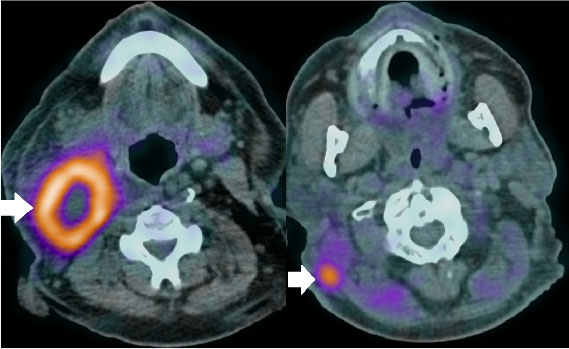
Figure 1.
PET-CT showing a hypermetabolic submandibular lymph node block (primary tumor - left) and a suspicious, hypermetabolic. area on the right sternocleidomastoid (recurrence of squamous cell carcinoma - right).
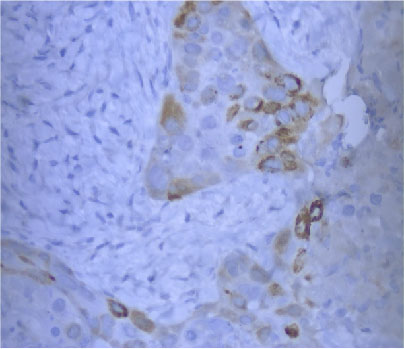
Figure 2.
Histopathological examination of the postauricular lesion, revealing scattered p16+ cells, indicative of recurrent squamous cell carcinoma, HPV related.
Conclusions:
Transcriptional intermediary factor 1γ(TIF1γ) is an E3 ubiquitin ligase with a potential tumor-suppressor role through the regulation of downstream genes (p21, p53, c-myc, snail, Cyclin D1) (1). High levels of anti-TIF1γ are associated with a ninefold increased risk of cancer-associated myositis in adults, while 67% of patients with positive anti-TIF1γ develop malignancy during their lifetime (2). The presence of these antibodies in the serum of individuals with a history of malignancy strongly suggests myositis as a paraneoplastic manifestation.
References
Yu C, Ding Z, Liang H, Zhang B, Chen X. The Roles of TIF1γ in Cancer. Front Oncol. 2019 Oct 2;9:979. doi: 10.3389/fonc.2019.00979. PMID: 31632911; PMCID: PMC6783507.
C YuZ DingH LiangB ZhangX ChenThe Roles of TIF1γ in CancerFront Oncol2019Oct2997910.3389/fonc.2019.0097931632911PMC6783507
Opinc AH, Makowska JS. Update on Malignancy in Myositis-Well-Established Association with Unmet Needs. Biomolecules. 2022 Jan 11;12(1):111. doi: 10.3390/biom12010111. PMID: 35053259; PMCID: PMC8773676.
AH OpincJS MakowskaUpdate on Malignancy in Myositis-Well-Established Association with Unmet NeedsBiomolecules2022Jan1112111110.3390/biom1201011135053259PMC8773676
HER2-LOW EARLY BREAST CANCER: RETROSPECTIVE CLINICAL DATA FROM 20 YEARS OF EXPERIENCE
Kalfoutzou A., Bagiokou E., Kolintzikis V., Rapti Kl., Ramfidis V.
Oncology Department, 251 Air Force General Hospital, Athens
Introduction:
HER2-low breast cancer, characterized by 1+ on immunohistochemistry or 2+ on immunohistochemistry with negative in situ hybridism (ISH), has garnered attention, particularly after the positive results of trastuzumab deruxtecan in metastatic disease. However, there is controversy over whether it truly constitutes a distinct clinicopathological entity with unique prognosis.
Aim:
Our aim is to present the 20-year experience of our Department regarding the outcomes of patients with HER2-low early breast cancer (stages I-III).
Materials and Methods:
A retrospective data collection was conducted from 120 cases of HER2 low early breast cancer from 2001 to 2021. The mean age of the patients was 60.2 years, with an average follow-up time of 85.8 months (range 25–243 months). In total, 59 patients had HER2 1+ and 61 had HER2 2+ with negative FISH or CISH. Among these, 101 tumors were hormone receptor-positive (ER or PR+), 7 were ER low (<1%), and 12 were triple-negative. Retrospectively, it was found that 8 patients were metastatic from the beginning. Histologically, the tumors were distributed as 94 ductal, 15 lobular, and 11 special subtypes. Among the patients, 73 were stage I, 30 were stage II, and 9 were stage III. All patients underwent adjuvant therapy (chemotherapy, hormone therapy, and radiotherapy) based on their stage and clinicopathological characteristics, with a trend towards adjuvant chemotherapy in stage I. Overall, 92 patients in total received either neoadjuvant or adjuvant chemotherapy.
Results:
After a mean follow-up of 85.8 months, 10 patients developed a distant recurrence. Rebiopsy was performed in 7 of these cases, with all recurrences observed in initially hormone receptor-positive tumors, maintaining their hormone receptor status. Two patients initially HER2-low converted to HER2 0 at recurrence, one patient converted from HER2-low to HER2 positive (2+ and FISH+), while the remaining patients’ histological subtype remained unchanged.
Conclusions:
The above data indicate that HER2 low expression in early-stage breast cancer does not constitute a prognostic indicator like HER2 positivity (3+ on immunohistochemistry or 2+ on immunohistochemistry with positive ISH). The observed recurrences were consistent with the initial stage and grade. Our study indicates that HER2 low expression did not significantly affect the biological behavior of early breast cancer in our sample, while the prognosis was mainly influenced by the stage and the hormone receptor expression.
PEMBROLIZUMAB COMBINED WITH BEVACIZUMAB AND ORAL METRONOMIC CYCLOPHOSPHAMIDE IN RECURRENT PLATINUM-RESISTANT OVARIAN CANCER: A SINGLE-CENTER EXPERIENCE
Apostolou A., Ioannou S., Exarchos K., Simatou A., Moirogiorgou E., Gouveris P., Tourkantonis I., Grivas A., Papaxoinis G., Tryfonopoulos D.
2nd Department of Medical Oncology, “Agios Savvas” Anticancer Hospital, Athens, Greece
Introduction:
Platinum-based chemotherapy remains the therapeutic backbone in ovarian cancer. There is an unmet need for better treatment options in platinum-resistant disease. The implementation of immune checkpoint inhibitors represents a significant therapeutic option in the treatment landscape of solid tumors.
Aim:
We aimed to study the efficacy of pembrolizumab in combination with bevacizumab and metronomic cyclophosphamide in patients with platinum-resistant recurrent epithelial ovarian cancer.
Methods:
This was a retrospective study of all patients who received pembrolizumab in combination with bevacizumab and metronomic cyclophosphamide for recurrent platinum-resistant ovarian cancer in the 2nd Department of Medical Oncology at Agios Savvas Anticancer Hospital from September 2021 to March 2024. Treatment was approved per individual patient by local authorities based on a previously published phase 2 study by Zsiros et al. (2021).
Results:
This study included 14 patients diagnosed with high-grade serous ovarian carcinoma. Median age was 67 years (range 50–79). Ninety-three % of patients (13/14) had PS ECOG 0, while 57% (8/14) of them presented with FIGO stage IVB. Patients received a median of four (range 2–4) prior lines of systemic therapy, with 64% receiving four lines (9/14). Median platinum-free interval (PFI) after first-line platinum-based chemotherapy was 13.2 months (range 4.1–69) and 86% (12/14) of the patients received PARP inhibitor maintenance treatment. Patients received a median of nine cycles of pembrolizumab in combination with bevacizumab and metronomic cyclophosphamide (range 1–42). Overall response rate was 21.4% (3/14) and disease control rate was 42.8% with three patients developing partial response and three patients achieving stable disease as best response. After median follow-up of 8.8 months (range 1.8–30.4), eight patients developed disease progression and four patients were deceased. Median progression-free survival was 6.7 months (95% CI, 0–15.0), while median overall survival was not reached. Median PFI was significantly higher among the patients who responded compared to those who did not [55.7 (range 21.3–69) vs 11.1 months (range 4.1–18.2), Mann-Whitney test, p=0.010]. Treatment was well tolerated with no immune-related toxicity.
Conclusions:
The combination of pembrolizumab with bevacizumab and metronomic cyclophosphamide represents an effective therapeutic option in patients with recurrent platinum-resistant ovarian cancer and can establish a future treatment alternative.
CASE REPORT: A TRANSGENDER WOMAN WITH 2 PRIMARY TUMORS
Bagiokou E., Labraki M.A., Kalfoutzou A., Kolintzikis V., Bartzi D., Rapti Kl., Ramfidis V.
Oncology Department, 251 Air Force General Hospital, Athens
Introduction:
The oncological care of transgender individuals presents a unique challenge due to their specific clinical and psychosocial needs.
Aim:
To present a case of a transgender woman undergoing gender-affirming hormone therapy who developed two primary neoplasms (anal squamous cell carcinoma and triple-negative breast cancer).
Materials and Methods:
A 60-year-old transgender woman with a history of HIV infection on antiretroviral therapy and HPV-related anal squamous cell carcinoma under surveillance presented with a self-palpated 2 cm mass at the 9 o’clock to 12 o’clock position of the left breast. Her medical history revealed she was on hormone therapy and had not undergone gender-affirming surgery. For the anal carcinoma, she had received two lines of chemotherapy (Mitomycin – 5-Fluorouracil and Carboplatin – Paclitaxel) and local radiotherapy. Breast MRI did not reveal any pathological axillary lymph nodes. A core needle biopsy indicated invasive ductal carcinoma of the breast, ER−/PR−/HER2− (triple-negative), grade II, Ki-67 85%, stage IB. The patient discontinued gender-affirming hormone therapy and was started on neoadjuvant therapy with Carboplatin-Paclitaxel-Pembrolizumab. To date, she has received 4 cycles of therapy with the aim of performing a lumpectomy and achieving complete pathological remission.
Results:
Thus far, the patient has completed 4 cycles of immunotherapy without any observed impact on the efficacy of the antiretroviral agents. The patient discontinued hormone therapy, but the decision to avoid mastectomy will depend on her response to treatment and further disease progression.
Conclusions:
The case of this transgender woman diagnosed with two primary neoplasms, anal squamous cell carcinoma and triple-negative breast cancer, highlights the complex and personalised oncological needs of the transgender population. Successful management of cancer cases in this population requires a comprehensive approach that takes into account hormone therapies and the presence of comorbidities, such as HIV infection. In our case, the patient followed the recommended neoadjuvant therapy with the aim of avoiding mastectomy, which could significantly impact her quality of life. Furthermore, immunotherapy has not shown to affect the course of HIV infection or the response to antiretroviral therapy, paving the way for further research and understanding of the therapeutic management of cancer in this specific population, where the therapeutic goal is the same as in the general population.
DEVELOPING AN EORTC HEALTH-RELATED QUALITY OF LIFE (HRQOL) MEASURE FOR PATIENTS WITH METASTATIC OR RECURRENT/PERSISTENT ANAL CANCER
Edwards R. 1, Sodergren S. 1, Guren M.G. 2, Kardamakis D. 3, Georgiou M. 4, Ntaskagiannis D. 4, Samouti P. 4, Vomvas D. 4, Vassiliou V. 4
on behalf of the EORTC Quality of Life Group
1University of Southampton, Southampton, UK
2Oslo University Hospital, Oslo, Norway
3University of Patras Medical School, Greece
4Bank of Cyprus Oncology Center, Nicosia, Cyprus
Introduction:
There has been a growing emphasis on the importance of patient-reported outcome measures as a tool to aid our understanding of health-related quality of life (HRQoL) for patients with anal cancer. In response, the EORTC’s QLQ-ANL27 questionnaire was developed and validated. As yet, no such instrument exists for patients with metastatic or recurrent / persistent disease. This study poses the question ‘What are the HRQoL issues for this group of patients that differ from the overall population of patients with anal cancer?’ Its aim is to ascertain whether there is a need for a new HRQoL module or whether the EORTC QLQ-ANL27 can be supplemented with additional questions for this patient group.
Methods:
A two-phase international, multi-site design has been adopted. In the first phase an issue list developed from a systematic review of literature will be used to elicit patients’ perspectives about the impact of their cancer on HRQoL, generating further issues. Healthcare professionals (HCPs) will contribute a further perspective. Additional patients and HCPs will rate the resulting list of issues for relevance and importance. A final HRQoL item list will be developed in phase two, which will inform further module development.
Results:
Recruitment for the study is anticipated to take place between October 2023 and July 2024. Analysis will be completed by September 2024.
Conclusion:
This study will improve our understanding of patient reported HRQoL issues related to living with metastatic or recurrent/persistent anal cancer. The output will be an item list for inclusion in a new or updated EORTC PROM questionnaire.
RECORDING ADVERSE EFFECTS OF IMMUNOTHERAPY IN PATIENTS WITH EARLY-STAGE TRIPLE-NEGATIVE BREAST CANCER
Kontana E., Andreadou A., Lalla E., Boutis A., Douganiotis G., Fotarelli A.
3rd Medical Oncology Department, “Theagenio” Anticancer Hospital
Introduction:
The introduction of pembrolizumab in the perioperative treatment of patients with early-stage triple-negative breast cancer (TNBC) has significantly improved prognosis by achieving a notable rate of pathological complete response (pathCR). However, immune-related adverse events (irAEs) can affect a wide range of organs. The frequency of irAEs varies depending on the agents used, duration of exposure, and the patient’s inherent risk factors.
Aim:
The objective of this review is to document the prevalence and severity of irAEs in patients with early-stage TNBC.
Methods:
Patients with early-stage TNBC were referred for treatment at our clinic. Anthropometric characteristics, medical history, histological findings, and treatment-related parameters were recorded.
Results:
This study included 36 women with a mean age of 56 years (range 25–85) diagnosed with early-stage TNBC. The majority (N=31) had invasive ductal carcinoma of the breast. 56% of the patients (N=20) developed at least one irAE, with endocrine disorders, particularly thyroid dysfunctions, occurring in 42% of participants (N=15) [73% (N=11) as new events, 27% (N=4) as exacerbations]. A high rate of rare and severe irAEs was observed, including fibromyalgia, transaminitis, autoimmune pancreatitis, immune thrombocytopenia, exacerbation of rheumatoid arthritis, polyneuropathy, and pneumonitis. 80% of patients who experienced irAEs sustained permanent damage (N=16). irAEs led to treatment delays in 28%, immunotherapy delays in 53%, and permanent discontinuation of pembrolizumab in 22%. 28% of patients (N=10) required unplanned hospitalization. The disease in 3 patients was deemed inoperable, and 1 patient died before completing treatment. PathCR was achieved in 41% of cases.
Conclusions:
Extensive studies are required to develop personalized immunotherapy protocols to achieve not only significant clinical benefit but also to avoid severe toxicity.
A CASE OF METASTATIC OLFACTORY NEUROBLASTOMA (ESTHESIONEUROBLASTOMA)
Bartzi D., Kalfoutzou A., Bagiokou E., Kolintzikis V., Labraki M.A., Rapti Kl., Ramfidis V.
Oncology Department, 251 Air Force General Hospital, Athens
Introduction:
Olfactory neuroblastoma (esthesioneuroblastoma) is a neuroendocrine tumor originating from the olfactory epithelium (1). It is an extremely rare tumor, with an incidence of 0.4 per million cases worldwide, and is associated with a poor prognosis, especially in the metastatic setting (2).
Aim:
Our aim is to describe a rare case of metastatic olfactory neuroblastoma and its clinical course.
Materials and Methods:
A 36-year-old male presented for evaluation of a self-detected right submandibular cervical lymph node. The patient underwent a rhinolaryngoscopy and Magnetic Resonance Imaging (MRI) scans of the brain and visceral cranium (Figures 1–2), cervical lymph node biopsy, staging with FDG PET-CT, and Next Generation Sequencing (NGS) analysis on the tissue.
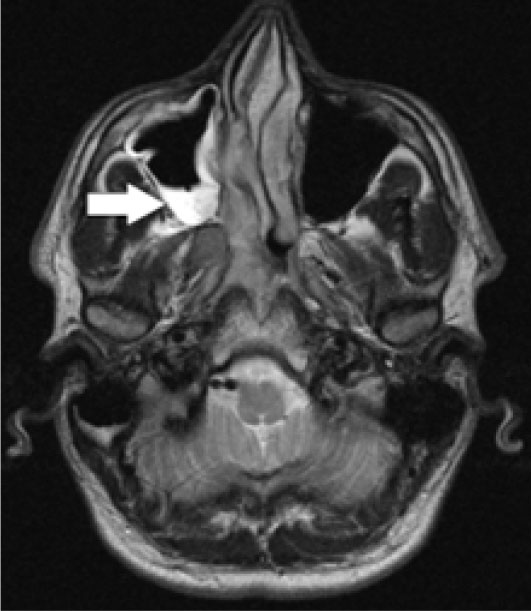
Figure 1.
Brain MRI scan demonstrating a space-occupying lesion in the right nasal cavity with heterogenous contrast enhancement.
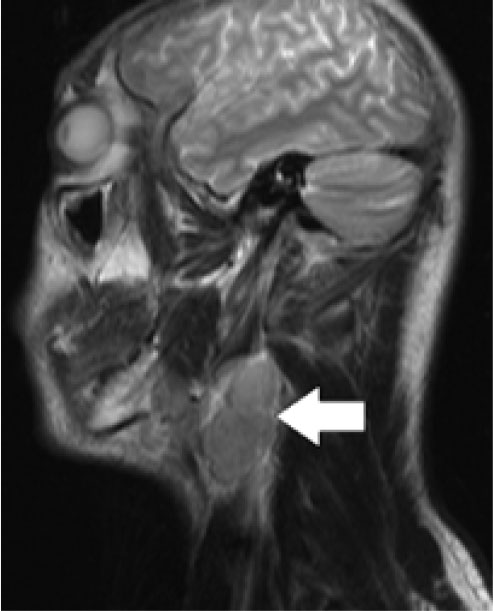
Figure 2.
Brain MRI scan (sagittal) demonstrating a large lymph node block in the right submandibular region.
Results:
Rhinolaryngoscopy and MRI scan of the brain and visceral cranium revealed a 45mm lesion in the right nasal concha extending into the sphenoid sinus, in contact with the orbital cavity, along with a large lymph node block in the right submandibular area. Histopathological examination revealed small round cell tumor characteristics, confirming the diagnosis of olfactory neuroblastoma (Hyams grade III, Ki-67 85%) (Figures 4–5). Further staging with Fluorodeoxyglucose Positron Emission Tomography (FDG PET) revealed multiple bone-lytic metastases (Kadish stage D) (Figure 3), while the Octreotide scan was negative for Somatostatin (SSTR) receptor uptake. NGS analysis did not identify targetable mutations (Rb1 splicing, TP53 exon 6 mutation, TMB 3.84 muts/Mb, LOH 34.8%). First-line treatment with Cisplatin-Etoposide-Durvalumab was initiated, but restaging revealed progressive disease after 4 cycles of therapy. The patient was then placed on second-line therapy with Docetaxel-Irinotecan, based on retrospective literature data as there are no clear guidelines for second-line treatment. Upon further disease recurrence, the patient received 1 cycle of treatment with temozolomide, and simultaneously experienced clinical deterioration with epistaxis and neurological symptoms, leading to palliative radiotherapy. Sadly, the patient passed away 5 months after diagnosis.
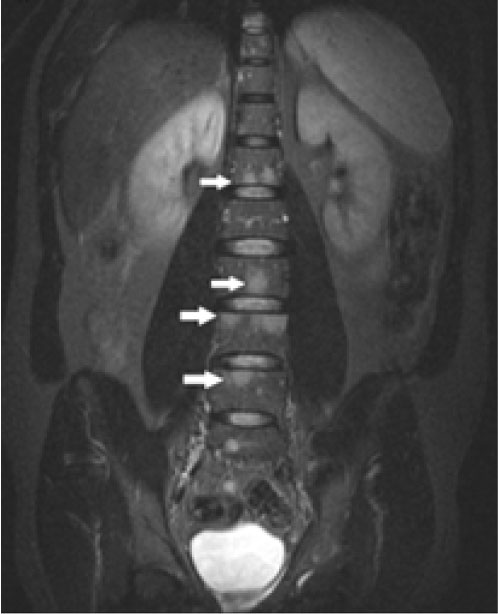
Figure 3.
Spinal MRI scan (coronal) showing multiple bone-lytic lesions indicative of metastases along the spine.
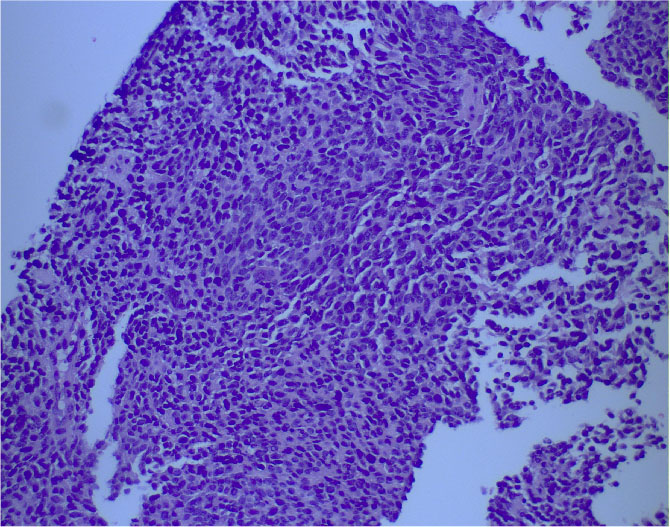
Figure 4.
Histopathological examination reveals characteristics of a small round blue cells tumor (hematoxylin–eosin stain, x20 magnification).
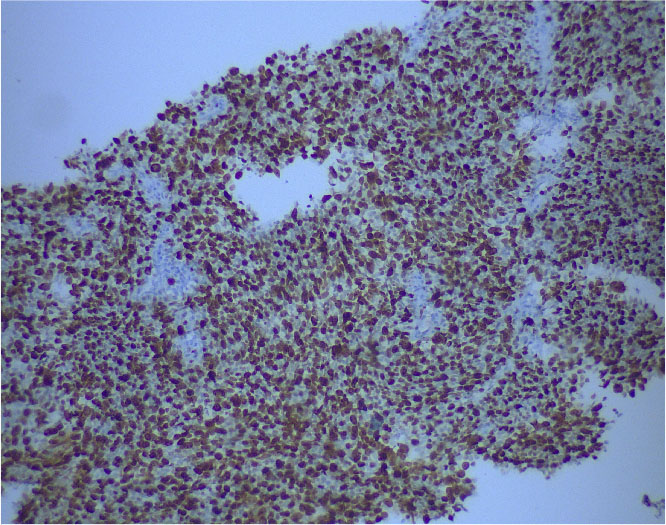
Figure 5.
Tumor cells display a high ki67 proliferation index (ki67 85%, x10 magnification).
Conclusions:
This case of olfactory neuroblastoma highlights the significant challenges in diagnosing and managing this rare type of neuroendocrine tumor and emphasizes the necessity for International Databases and expert centers for rare neoplasms.
References
Hiroshi Harada, Takeharu Ono, Takanori Hirose, Hirohito Umeno, Jun Akiba, Akira Kurose, Olfactory neuroblastoma: A peculiar case showing unusual squamous metaplasia in a late lymph node metastasis, Human Pathology Reports, Volume 27, 2022, 300584, ISSN 2772-736X, https://doi.org/10.1016/j.hpr.2021.300584.
Hiroshi HaradaTakeharu OnoTakanori HiroseHirohito UmenoJun AkibaAkira KuroseOlfactory neuroblastoma: A peculiar case showing unusual squamous metaplasia in a late lymph node metastasisHuman Pathology Reports272022300584ISSN 2772-736X, https://doi.org/10.1016/j.hpr.2021.300584.
A RARE CASE OF DIFFUSE HEMISPHERIC GLIOMA WITH EXTRACRANIAL METASTASES AND RESPONSE TO IMMUNOTHERAPY
Baxevanos P.1, Pliakou E., Floros T.1
15th Oncology Department, Metropolitan General, Athens, Greece
Introduction:
Diffuse hemispheric glioma H3 G34-mutant has been recently recognized as a distinct type of brain tumor with high grade histological features, affecting mainly teenagers and young adults. It is a very rare entity that carries poor prognosis. Extracranial metastases from brain tumors are extremely rarely reported, with only 1 case of diffuse hemispheric glioma being described. The response of these tumors to immunotherapy remains unclear.
Aim:
The description of the clinical course regarding a young adult patient with diffuse hemispheric glioma (positive for the H3 G34R mutation) and extracranial metastases who received immunotherapy based on the presence of high tumor mutational burden (TMB high).
Case Presentation:
A 19-year-old male patient presented with left hemiparesis and was diagnosed with space-occupying brain lesion (5 cm) in the right frontal lobe, for which a partial resection was performed. Histologic examination revealed a primary glial neoplasm of the brain with high-grade histological features, and immunohistochemical findings of Histone H3.3 mutant and IDH wild type, which classified it as Diffuse Hemispheric Glioma H3 G34-mutant (according to the latest WHO CNS 2021 classification). Afterwards, he underwent brain irradiation (total dose 60 Gy) concurrently with chemotherapy (temozolomide) and was then placed on adjuvant temozolomide (Stupp protocol). During the 4th cycle of chemotherapy, progressive disease occurred with the appearance of extracranial metastases at the following sites: cervical and mediastinal lymph nodes, large pulmonary mass in the left lung and symptomatic bone metastasis in the A2 vertebrae with soft tissue mass extending into the epidural space (PET/CT and MRI findings). Biopsies from the lung mass and mediastinal lymph nodes confirmed the progression, as they demonstrated similar morphological features to the underlying glioma disease. Spinal fusion was the next therapeutic intervention to stabilize the spine and relieve the pain. Molecular tumor profiling revealed high mutational load (11.52 Muts/MB) and the patient was started on immunotherapy with pembrolizumab (following the paradigm of KEYNOTE-158 trial, cohort M). After receiving 9 treatment cycles, radiologic complete response has been achieved in both intracranial and extracranial sites of disease, and the patient remains fully ambulatory.
Conclusions:
The current WHO classification of brain tumors is based on thorough immunohistochemical and molecular testing. The occurrence of extracranial metastases is an extremely rare complication of this disease. Molecular profiling can lead to the administration of novel treatments, guided by the specific predictive biomarker, irrespective of the primary origin.
SECRETORY BREAST CARCINOMA, A RARE NEOPLASM WITH DISTINCT CHARACTERISTICS: CASE PRESENTATION AND LITERATURE REVIEW
Torounidou N., Yerolatsite M., Amylidi A.L., Zarkavelis G., Kambletsas E., Kostadima F.L., Mauri D.
Oncology Department, University Hospital of Ioannina
Introduction:
Secretory breast carcinoma is a rare neoplasm with a usually favorable prognosis, characterized by a slow growth pattern, and is often diagnosed at an early stage. It occurs with the same frequency in adults and minors. Predominantly, it is a triple-negative tumor and often expresses the ETV6-NTRK gene. It is considered a chemo-resistant neoplasm; thus it is treated surgically and with radiotherapy.
Aim:
To present the management of a patient diagnosed with localized secretory breast carcinoma in our department and to conduct a literature review of published similar cases to determine the optimal treatment and prognosis for these patients.
Methods:
Data for the case were collected from the medical record. This was followed by a database search, collection of relevant articles, recording and analysis of their data.
Results:
A 78-year-old woman was diagnosed post-lumpectomy with secretory breast carcinoma pT1cN0(sn)-stage I- (ER-, PR-, HER2-, NTRK fusion-, and grade 3). Due to the high grade, she received adjuvant chemotherapy with 6 cycles of cyclophosphamide, methotrexate, and fluorouracil, and radiotherapy. The literature review revealed 404 cases of adult patients with early-stage secretory breast carcinoma. Eleven of these were men. The patients’ ages ranged from 19 to 84 years. It mainly presented as a painless palpable mass (77%), often many years before diagnosis. In 39 patients (9.65%), the ETV6-NTRK rearrangement was detected. The majority were triple-negative (60%). Additionally, adjuvant chemotherapy was administered in 114 cases (28.2%). Finally, 13.5% of patients experienced disease recurrence up to 20 years later, primarily with early-stage disease (71.5%).
Conclusions:
Secretory breast carcinoma is a rare triple-negative subtype with a 91% 10-year survival rate, characterized by ETV6-NTRK fusion and responsiveness to targeted therapy. When high-grade malignancy is detected, where prognosis is worse, adjuvant chemotherapy is added to the treatment. The study of the tumor’s molecular profile offers the potential for personalized therapy in metastatic disease, though it has not been researched in early-stage disease.
MANAGEMENT OF TESTICULAR CANCER: 20-YEAR EXPERIENCE OF THE ONCOLOGY DEPARTMENT OF A MILITARY HOSPITAL
Kalfoutzou A., Bagiokou E., Kolintzikis V., Rapti Kl., Ramfidis V.
Oncology Department, 251 Air Force General Hospital, Athens
Introduction:
Testicular cancer most commonly affects young adults, aged between 15 and 35 years. It is considered one of the most treatable forms of cancer, with high rates of complete remission and survival.
Aims and Scope:
This presentation covers the twenty-year experience of our Department in managing testicular cancer, highlighting the frequent occurence in young men who present to our Military Hospital, either as conscripts or active military personnel.
Materials and Methods:
In this study, we analyzed the clinical and pathological characteristics of 90 cases of testicular cancer, with a mean age of 33 years. Of these, 46 had left-sided and 44 had right-sided testicular involvement. Specifically, 47 patients were diagnosed with seminoma and 40 with non-seminomatous tumors (embryonal carcinoma, choriocarcinoma, yolk sac tumor, teratoma, mixed tumor). Additionally, there were 2 cases of stromal cord tumor and 1 case of scrotal leiomyosarcoma. Regarding the stages of the disease, 83 patients were in Stage I, 6 in Stage II, and 1 patient in Stage IV, presenting with pulmonary metastases. Overall, 83 patients underwent chemotherapy (43 with seminoma and 40 with non-seminomatous germ cell tumor), following appropriate chemotherapy protocols, which included 3–4 cycles of EP/BEP and 1–2 cycles of Carboplatin.
Results:
The follow-up period for patients ranged from 8 to 250 months, with an average of 95.8 months. 87 of the patients showed no signs of recurrence during the follow-up period. There were 3 cases of recurrence, with biopsy confirming embryonal carcinoma in 2 cases and mixed germ cell tumor in 1 case. These 3 patients underwent another course of chemotherapy, with no further recurrence recorded in any of them. Ultimately, all 90 patients remained alive and disease free until the last recorded visit.
Conclusions:
This study demonstrates that the majority of our patients with testicular cancer received at least one cycle of chemotherapy, regardless of stage and histological type. Additionally, it was observed that the overall prognosis and survival rates of our Department’s patients align with the existing literature.
THE RARE INCIDENCE OF A BRAIN METASTASES ORIGINATING FROM PROSTATE ADENOCARCINOMA: A CASE REPORT
Ntaskagiannis D.1, Michailides K.2, Georgiou M.1, Galazi M.1, Vasileiou V.1, Vomvas D.1
1Bank of Cyprus Oncology Centre
2Nicosia General Hospital Histopathology Laboratory
Introduction:
The incidence of brain metastasis originating from prostate adenocarcinoma is a rare event.
Aim:
We would like to report a rare case of a single brain metastasis which was histologically confirmed to be derived from prostate adenocarcinoma, in an 84-year-old male patient with PS 0.
Methods:
The patient was originally diagnosed with prostate cancer at 70 years of age and was in remission for 14 years since his treatment. He was managed at the time with radical radiotherapy and 3 years of androgen deprivation therapy with LHRH agonists with resultant long term biochemical and clinical remission.
Recently he presented with neurological symptoms which led to further investigation with conventional imaging demonstrating a single 3 cm brain lesion in the left temporal region. He underwent restaging CT chest abdomen and pelvis as well as technetium bone scintigraphy which were negative for other metastases. His PSA at the time of diagnosis was 0.62ng/ml. The patient underwent left craniotomy and enucleation of the brain lesion.
Results:
Histological evaluation confirmed that this was a metastatic lesion originating from adenocarcinoma. Immunohistochemistry evaluation was positive for NKX#.1 and PSA and negative from neuroendocrine markers (Synaptophysin, Chromogranin, INSM1). The estimated proliferation index was 70 %. Based on the above findings we concluded that this profile was in keeping with metastasis originating from Prostate ductal adenocarcinoma.
We discussed the case at our multidisciplinary meeting and referred the patient for PSMA PET to further exclude metastatic disease and to aid us in further management decisions. Upon negative PSMA PET results the patient was approved for post operative stereotactic radiotherapy to the surgical cavity with the option of adding androgen deprivation therapy in combination with an androgen receptor targeting agent.
Conclusion:
The incidence of brain metastases derived form from prostate cancer primary is a rare entity. It is usually observed in patients who have received multiple lines of therapy as part as the natural evolution of the malignancy. In the case of CNS secondaries from prostate adenocarcinoma histological confirmation is highly indicated prior to discussion and management.
CASE REPORT OF AN INTERESTING CASE WITH LOCAL THYMIC CARCINOMA OF THE NASOPHARYNX IN A YOUNG MALE
Verigos E.1, Magou E.2, Ardavanis G.2, Miliadou A.1, Ardavanis A.2, Cholis N.2, Perdikari K.2, Sidiropoulou A.1, Seretis A.1, Zampatis C.1, Koukourakis G.1
1Department of Radiation Oncology G.A.O.H.A. “Agios Savvas”
21st Department of Medical Oncology G.A.O.H.A. “Agios Savvas”
Introduction:
Thymic tumors are very rare malignancies and thymic carcinoma accounts for 5% of them. Extrathoracic metastases occur in 1.5–15.5% of cases. Ectopic thymic carcinomas are extremely rare with a poor prognosis.
Aim:
To report a rare case of a male patient with ectopic thymic carcinoma of the acromion with pulmonary metastases at diagnosis.
Methods:
A 57-year-old patient presented on 8/2020 with symptoms of headache, right abductor nerve palsy and myasthenia symptoms. On MRI, a large invasive lesion of 4.9×4.5×4.1 cm was found in the nasopharynx region with infiltration of the sphenoid sinus, acromion, nasal cavities, in contact with the internal carotids and extension to the hard palate and cerebral aqueduct. He underwent biopsy of the work-up and histology revealed a low-differentiated malignant neoplasm from ectopic thymus remnants, Ki67:35–40%. Staging revealed secondary lesions in the lung while no thymus gland was reviled. The patient underwent chemotherapy from 11/2020 to 01/2021 and local treatment with radiation therapy due to severe symptoms in the area of the primary lesion with continuation of chemotherapy after the end of radiation therapy. Subsequently, due to progression of the disease in the liver, he received 2nd line chemotherapy. He presented with a new exacerbation and was treated with tyrosine kinase inhibitors for approximately 2 years where the patient died.
Results:
Despite various treatment regimens the patient died confirming the literature findings of the poor prognosis of these patients.
Conclusions:
Ectopic thymic carcinomas are rare with possible localization in the head and neck region. The appearance of multiple metastases at diagnosis is the norm and the prognosis is poor. The average survival of these patients does not exceed two years, as in our case.
CASE REPORT OF OLIGOMETASTIC DISEASE FROM NON-SMALL CELL LUNG CANCER AND IT’S RADIOTHERAPY TREATMENT
Verigos E.1, Foteineas A.2, Maragoudakis E.3, Verigos K.2,3
1Department of Radiation Oncology G.A.O.H.A. “Agios Savvas”
2Department of Radiation Oncology and Stereotactic Radiosurgery, 401 General Military Hospital
3Department of Radiation Oncology IASO General Clinic
Introduction:
Brain metastases in patients with lung cancer, according to recent literature, occur in 25% of patients at diagnosis. Distant metastases occur in 45% of patients with initially localized disease. Oliometastatic disease is defined as ≤ 5 metastases in ≤ 3 organs.
Aim:
To present a case of a male patient with NSCLC, TTF1(+), P63(+) with brain metastases at diagnosis, as well as his radiotherapy treatment after disease progression.
Patient and Method:
A 51-year-old patient presented on 12/2019 with a newly diagnosed TTF1(+), P63(+) TTF1(+), P63(+) NSCLC with cerebral localizations. The patient underwent external whole brain radiation therapy with 10 fractions of 300 cGy daily giving a total of 3000 cGy. At the end of the treatments, he underwent systemic treatment from 1/2020 to 12/2020, with good tolerance, but with an increase in the size of the primary tumor on chest CT. Then he underwent external beam radiotherapy receiving 46 cGy to the primary tumor area with a dose increase to 60 cGy to the gross tumor location. Three years later on 1/2023, the patient arrived in excellent condition due to disease progression on CT imaging in lymph node groups in the areas of the left groin, the left axillary cavity and a paravertebral mass at the height of T 12. The patient underwent stereotactic radiosurgery with 5 sessions of 600 cGy to the paravertebral mass and groin alternating with 5 sessions of 600 cGy to the axillary region.
Results:
At the end of the treatment, the patient is regularly monitored without disease progression until today.
Conclusions:
Patients with metastatic disease from NSCLC at diagnosis with disease progression in limited areas appear to benefit from treatments with a radical approach such as stereotactic radiosurgery according to the recent literature. The same situation was found in this particular case.
PRIMARY HIGH - GRADE SARCOMAS OF THE BONE: AN INSTITUTIONAL RETROSPECTIVE SERIES
Mentesidou V.*, La Torre S., Apollonio G., Bertuzzi F., Capoccia T., Bertulli R., Provenzano S.
Cancer Medicine Department, Fondazione IRCCS Istituto Nazionale dei Tumori, Milan, Italy.
*With support from the Hellenic Society for Medical Oncology (HeSMO)
Introduction:
High-grade sarcomas of the bone, excluding Ewing and osteosarcoma, encompass diverse histological subtypes, including chondrogenic tumors and rarer entities such as undifferentiated pleomorphic sarcoma (UPS) and leiomyosarcoma (LMS). While R0 surgery remains the cornerstone for localized disease, the role of chemotherapy (CT) remains uncertain, with institutional practices varying between osteosarcoma and soft-tissue sarcoma treatment protocols.
Aim:
This study aims to analyze the demographic, pathological, and clinical characteristics of patients within an institutional series, contributing valuable insights to enhance our comprehension of this heterogeneous group of diseases.
Methods:
We retrospectively collected and analyzed data from all consecutive patients treated for high-grade bone sarcomas at Fondazione IRCCS Istituto Nazionale dei Tumori in Milan, Italy, since 2013. Survival analysis was conducted using the Kaplan-Meier method.
Results:
Among the 21 identified patients (15 males, 6 females, median age 48), 17 presented with localized disease and 4 with metastatic disease. The femur emerged as the predominant primary site (48%). Histological subtypes included UPS (10), conventional chondrosarcoma (4), LMS (3), dedifferentiated chondrosarcoma (3), and malignant giant cell tumor of the bone (1). Eighteen patients underwent a multimodal approach, while 3 surgery alone. CT response was assessable in 9 patients: ORR was 33% with 1 CR, 2 PR, 3 SD, and 3 PD, under anthracycline/ifosfamide (8) and MAP (1) regimens. Notably, only 3/10 patients in the neoadjuvant and 1/6 in the advanced setting responded to anthracycline-based regimens, whereas a leiomyosarcoma patient responded to gemcitabine. Patients with localized disease exhibited a 5-year overall survival of 70%, while the median overall survival in advanced cases was 13 months.
Conclusions:
This retrospective analysis does not conclusively establish the significant role of perioperative chemotherapy in the management of these tumors. Although in a small series, survival outcomes were comparable to those observed in series treated with osteosarcoma protocols, prompting consideration of potential overtreatment. Prospective subtype-driven evidence is needed to elucidate whether osteosarcoma protocols may be excessive for certain patients within this heterogeneous cohort.
CASE REPORT WITH MULTIPLE BRAIN METASTASIS (MILIARY BRAIN METASTASIS) FROM GASTRO-ESOPHAGEAL ADENOCARCINOMA
Verigos E.1, Patriki E.1, Cholis N.2, Miliadou A.1, Ardavanis A.2, Ardavanis G.2, Perdikari K.2, Sidiropoulou A.1, Seretis A.1, Zampatis H.1, Koukourakis G.1
1Department of Radiation Oncology G.A.O.H.A. “Agios Savvas”
21st Department of Medical Oncology G.A.O.H.A. “Agios Savvas”
Introduction:
Brain metastases in patients with stomach cancer, according to the recent literature, range below 1% and mainly in males over 60 years of age with accompanying bone and lung metastases.
Aim:
To report a case of a male patient with gastroesophageal junction adenocarcinoma, CK7(+), CK19(+) with scattered cerebral metastasis in the cerebral ganglia, cerebellum, and stem, and his management.
Method:
A 54-year-old patient presented on 8/2023 with a newly diagnosed gastroesophageal junction adenocarcinoma, CK7(+), CK19(+), due to right hemiparesis and generalized weakness. CT scan reviled multiple scattered lesions in the cerebral hemispheres, cerebellum and stem with accompanying perifocal edema. Anti-edematous treatment was given with improvement of symptoms and further testing with MRI and brain spectroscopy was performed. The MRI finding confirmed the presence of multiple miliary metastatic disease as well as secondary lesions at the soft tissues of the skull. For confirmation, due to the rarity of brain metastases, a biopsy was discussed, but the patient’s clinical condition didn’t allow it to be conducted. The patient was treated with external Whole Brain Radiation Therapy with 5 fractions of 400 cGy per day giving a total of 2000 cGy as well as systemic chemotherapy.
Results:
At the end of the treatments the patient came out with a significant improvement in his muscle strength and mobility. Four days later he was admitted to the emergency department due to weakness, diarrhea, anorexia and disorientation. Electrolyte disturbances with hyponatremia and cerebral edema were found at the laboratory testing and despite supportive treatment the patient died.
Conclusions:
The occurrence of brain metastases from gastric cancer is rare and these patients have a poor prognosis. According to the literature, when they appear they are multiple and are accompanied by metastases in other organs. The same situation was found in this particular case.
THE METASTATIC DISEASE OF BONES AS THE FIRST CLINICAL PRESENTATION HEPATOCELLULAR CANCER
Georgopoulos I., Koutroumpi M., Andrikopoulos E., Braimakis A., Chatzopoulos A., Heras P.
Department of Internal Medicine of General Hospital of Nafplio
Introduction:
The metastases of bones in patients with Hepatocellular Cancer (HCC) and the presence of compression effects of Central Nervous System (CNS) that demand immediate intervention, it is not noticed frequently.
Aim:
The aim of our paper is the presentation cases of patients with HCC, that the first clinical appearance that demands immediate surgical intervention, was the secondary lesions in the bones.
Methods:
2 men that were undergone in urgent neurosurgical operation of rehabilitation of injury in bones of skull and spinal cord, for removal of compression effects the years 2015–2020. The diagnosis of HCC was be done by the histopathological examination of removed bones section and the functional scanning of liver in the both cases.
Results:
Case 1: Patient-74 years old- entered to treatment the hemorrhage after the operation of removal of palpable mass 3 cm in left temporal-parietal bone, that is noticed before 1 month. After the cross-examination was demonstrated anti-HCV (+) without cirrhosis and lesion that was referred to HCC in right lobe of liver. He was treated with sorafenib and was undergone in 3 cycles of chemo embolisms with total responsiveness of primary and secondary lesions and appeared time range without disease for 28 months. Case 2: Patient-61 years old- with history of alcohol abused, was undergone in urgent petalectomy in lumbar spine because of compression effects. The scanning demonstrated cirrhosis and secondary lesions in spinal cord and pelvis.
Conclusions:
The bone metastases of HCC, although these are rare, could be caused the first clinical appearance of disease. It demands high grade suspicion in patients with risk factors, although the bone lesions demand urgent surgical removal.
UNUSUAL DIAGNOSIS OF HEPATOBLASTOMA IN ADULT PATIENT
Kostaridis E.1, Michas A.1, Gkikas K.1, Arvanitou E.1, Stamatogianni E.1, Ballasis K.1, Christofyllakis C.1, Pappas D.2, Stefanaki K.3, Tsoukalas N.1
1Oncology Clinic, 401 General Military Hospital of Athens
2Pathology Department, 401 General Military Hospital of Athens
3Pathology Department, «Agia Sofia» Children’s Hospital
Introduction:
Hepatoblastoma, although an extremely rare tumor, is the most common primary liver tumor in childhood, with 90% of cases occurring in children under the age of 5. According to international literature, a total of 75 cases of adult patients with hepatoblastoma have been reported to date. In clinical practice it’s necessary to be differentiated from hepatocellular carcinoma before the initiation of therapeutic intervention.
Case Presentation:
A 47-year-old male patient, presenting with abdominal discomfort and weight loss, underwent imaging test, which revealed a hepatic lesion with secondary sites in the lungs and bones. Laboratory testing showed a high AFP level (>20,000 ng/ml). Histological examination of the liver biopsy revealed the presence of hepatoblastoma (epithelial embryonic type according to WHO classification). Based on international literature, the patient was classified as extremely high risk due to the presence of metastases. It was decided to start first-line treatment (cisplatin/doxorubicin). The patient has received the first cycle of treatment and he is showing clinical and biochemical response. Additionally, a supplementary review of the biopsy was conducted by a Pediatric Oncology center, where gastric adenocarcinoma producing AFP was also included in the differential diagnosis.
Conclusions:
Rare tumors pose a challenge to daily clinical practice due to the difficulty in finding published data and the lack of specific guidelines. The diagnosis of hepatoblastoma in an adult patient represents such a rare case that collaboration across all specialties to achieve the best possible therapeutic outcomes is required.
FEVER NEUTROPENIA: A RARE BUT POTENTIALLY FATAL IMMUNE ADVERSE REACTION
Yerolatsite M., Torounidou N., Amylidi A.L., Zarkavelis G., Papadaki A., Petrakis D., Mauri D.
Oncology Department, University Hospital of Ioannina
Introduction:
The introduction of immune checkpoint inhibitors (ICIs) represents an innovative therapy that has improved patient survival. However, it may induce immune-related adverse events (AEs) necessitating treatment cessation and the administration of immunosuppressive drugs. Melanoma is an aggressive malignancy, with the use of ICIs and BRAF/MEK inhibitors radically altering patient survival.
Aim:
To present a case of a patient in our clinic with metastatic melanoma who developed neutropenia due to immunotherapy. Additionally, a literature review was conducted for published similar cases.
Methods:
Data were collected from the patient’s medical records, followed by a literature review using database searches. The algorithm utilized was as follows: [(Neutropenia) OR (febrile neutropenia) OR (immune-related side effects) OR (hematological toxicities)] AND [(immunotherapy) OR (ICIs) OR (immune checkpoint inhibitors)]. Cases were included only if neutropenia was due to immunotherapy, confirmed by bone marrow biopsy.
Results:
A 68-year-old patient with metastatic melanoma received Nivolumab/Ipilimumab as first-line therapy. Three weeks after treatment initiation, the patient was hospitalized with fever neutropenia (Neu=50/μl). Initially, a comprehensive fever investigation was conducted, broad-spectrum antibiotics and granulocyte colony-stimulating factor were administered. Subsequently, a bone marrow biopsy revealed marrow suppression due to immunotherapy. Methylprednisolone was empirically initiated upon biopsy, and six days later, the patient became afebrile with normal neutrophil counts. Therapy was permanently discontinued, and BRAF/MEK inhibitors were administered. The literature review identified 11 cases of neutropenia from ICIs. Growth factors and corticosteroids were used therapeutically. Twenty-seven point percent of patients also received intravenous immunoglobulin, while 3/11 patients died due to neutropenia complications.
Conclusions:
The use of ICIs has altered the survival of oncology patients, but poses the risk of potentially fatal AEs. Hematologic AEs are rare, especially neutropenia. Therefore, an in-depth understanding of the pathophysiology of AEs and timely management are imperative.
PRECANCEROUS LESION IN ECTOPIC PANCREATIC TISSUE WITHIN MECKEL’S DIVERTICULUM
Kostaridis E.1, Arvanitou E.1, Gkikas K.1, Michas A.1, Stamatogianni E.1, Ballasis K.1, Christofyllakis C.1, Pappas D.2, Oikonomakis I.3, Tsoukalas N.1
1Oncology Department, 401 General Military Hospital of Athens
2Pathology Department, 401 General Military Hospital of Athens
31st Surgical Department, 401 General Military Hospital of Athens
Introduction:
Ectopic pancreatic tissue is a rare benign condition that does not necessarily require surgical removal. However, as in normal pancreatic tissue, ectopic pancreatic tissue has the potential for malignant transformation. We present a case of a precancerous lesion arising from ectopic pancreatic tissue.
Case Presentation:
A 48-year-old male patient presented to the Emergency Department with acute abdominal pain. Imaging studies revealed inflammation of the Meckel’s diverticulum, leading to its surgical removal. Histopathological examination of the surgical specimen revealed the presence of ectopic pancreatic tissue, in which intraductal papillary mucinous neoplasm (IPMN), gastric-type, with low-grade epithelial neoplasia was found. The surgical margins were negative. The patient underwent a thorough clinical evaluation, which did not reveal any additional findings. Consequently, after oncological assessment, it was determined that no further therapeutic interventions were required, as this was a precancerous, non-invasive lesion. The patient continues his regular follow-up.
Conclusions:
The presence of neoplastic tissue in a Meckel’s diverticulum is rare and usually involves neuroendocrine or mesenchymal tumors. Adenocarcinomas are less common and a subset of these arise from ectopic pancreatic tissue. IPMN is a precancerous lesion that is managed exclusively by surgical resection.
EMERGENCY POSTOPERATIVE COMPLICATIONS REQUIRING ICU ADMISSION AFTER HYSTERECTOMY FOR GYNECOLOGICAL CANCER AND THE ROLE OF THE NURSE
Papastergiou K.1, Karantsiri M.2, Lavdaniti M.3
1RN, MSc, Intensive Care Unit “Theageneio Hospital”, Thessaloniki
2RN, School Nurse, Thessaloniki
3Professor, Chair of the Nursing Department, DIPAE, Member of the ESNE Board
Introduction:
Gynecological cancer, with cervical cancer being the most common, is the second most common type of cancer in women. Total hysterectomy is a time-consuming surgery, which requires admission to the ICU for further monitoring. ICU nurses make a decisive contribution to the prevention of postoperative complications.
Aim:
The purpose of this study was to investigate the incidence of urgent postoperative complications that require admission to the ICU for follow-up and the role of the ICU nurse in the management of these incidents.
Methods:
A systematic literature review was conducted. Articles were searched in the electronic databases: Pubmed, Google Scholar and DOAJ with keywords: “hysterectomy”, “urgent postoperative complications”, “gynecological cancer”, “Intensive Care Unit”, “role of the nurse”. The selection criteria were the Greek and English languages, while the search was carried out during the years 2020–2024, in all possible combinations. 490 articles were found and of these 15 articles were included.
Results:
About 48.9% of cases with gynecological cancer had to be admitted to the ICU due to old age for further care to avoid any cardiac complication such as myocardial infarction, decreased sympathetic tone due to anesthesia, or acute respiratory failure. In addition, the most common cause in about 20.4% was respiratory failure, hemodynamic instability, or cardiac complications, such as myocardial infarction or atrial fibrillation. The ICU nurse has a fundamental role in the early recognition of postoperative complications as well as in their prevention. Close monitoring of electrolyte balance, assessment of patient pain as well as close and regular assessment of respiratory and cardiac function.
Conclusions:
Respiratory failure, cardiac complications, and electrolyte imbalance were important causes of ICU admission in oncology patients undergoing total hysterectomy. The role of the ICU nurse is crucial in preventing these complications.
PEMBROLIZUMAB/LENVATINIB COMBINATION AS SALVAGE METASTATIC MELANOMA TREATMENT. A SINGLE CENTER EXPERIENCE
Gazouli I., Molfeta A., Tarampikou A., Bousmpoukea A., Chatzichristou E., Saridaki Z., Samonis G., Bafaloukos D.
1st Medical Oncology Department, Metropolitan Hospital, N.Faliron, Athens
Introduction:
Pembrolizumab/Lenvatinib (P/L) combination is an established safe and effective therapeutic regimen. In LEAP004 trial, P/L induced an objective response rate of 21%, among pretreated metastatic melanoma (MM) patients, regardless of previous administration of immune checkpoint inhibitors.
Aim:
Retrospective review of MM patients, treated with P/L, after immunotherapy failure, in the 1st Medical Oncology Department of Metropolitan Hospital between 2021–2024.
Methods:
A retrospective review of MM patient cases, under P/L combination, was conducted, while studying objective response, progression free survival (PFS) and overall survival (OS).
Results:
16 metastatic melanoma patient cases, treated with P/L were identified. Median age was 61.5 years (32–81). Half of the patients were males. 19% of patients had uveal melanoma and 81% cutaneous melanoma. Metastatic lesions were located in the subcutaneous tissue and lymph nodes for 31% of patients (M1a), in the lung parenchyma for another 31% (M1b), while 25% of patients had developed extrapulmonary visceral metastases (M1c). Brain metastases were present in 12.5% of the study population. Fourteen patients were included in the final analysis. P/L was given as 2nd, 3rd and beyond 3rd treatment line in 21%, 43% and 36% of patients, respectively. All patients received treatment upon approval by the National Organization for Medicines and after providing informed consent. An objective response was noted in 14% of patients (2/14), while another 36% presented with stable disease, succeeding an overall disease control rate of 50%. Median duration of disease control was 4 months (112+). 21% of patients continue to receive treatment. 1 patient was lost to follow-up. In the rest of cases, treatment with P/L was interrupted due to disease progression. To date, 7 deaths have occurred. Median PFS and OS were 3.5 months (1–12+), and 5 months (2–18+), respectively. The most frequent toxicity was grade 1 thyroiditis. One patient developed grade 3 immune-related colitis and grade 2 immune related hepatitis was noted in another patient.
Conclusions:
Pembrolizumab/Lenvatinib combination is a tolerable salvage treatment strategy for pretreated metastatic melanoma patients, upon immunotherapy failure, which should be further evaluated in prospective, randomized clinical trials.
TESTICULAR TERATOMA IN AN ADULT PATIENT WITH A METASTATIC MASS IN THE RETROPERITONEUM. A CASE REPORT
Yfanti C.1, Gouta C.1, Gianna K.1, Ypsilantis P.1, Mpallas K.2
1Pathology Department, Ippokratio General Hospital of Thessaloniki
25th Department of Surgery, Ippokratio General Hospital of Thessaloniki
Introduction:
Testicular teratomas in adult males constitute 2,7–7% of germ cell tumors having aggressive behavior and giving rise to distant metastases and are presented either as isolated entities or, more commonly, as part of a mixed germ cell tumor of the testis.
Aim:
This study aims to present the case of a 37-year-old oncologic patient with elevated levels of β-human chorionic gonadotropin and the presence of a mass in the testicle and retroperitoneum. Biopsy and histological identification were not possible due to the friability and vascularity of the mass. With patient’s consent, he received a regimen of four cycles of chemotherapy and, at a later time, underwent orchiectomy and resection of the retroperitoneal mass.
Methods:
Surgical specimen of right orchiectomy and surgical specimen of retroperitoneal mass excision were received, in which two rounded, multilocular cystic tumors with seromucinous content were described, measuring 7.5×7×5 cm and 5 cm respectively.
Results:
Histological examination revealed a germ cell tumor, diagnosed as teratoma giving rise to metastasis in the retroperitoneum. Mature tissues originating from any of the three primary cell layers were identified, such as squamous epithelium with keratin pearls originating from ectoderm, cysts lined by respiratory and gastrointestinal epithelium and glands originating from endoderm and the presence of bundles of muscle fibers, adipose tissue and cartilage originating from mesoderm.
Conclusions:
In this case, mature tissues consisting of cells without cytological atypia or dysplasia were identified. The possibility of a mixed germ cell tumor of the testis consisting of teratoma and other types of germ cell tumors, responsive to chemotherapy, could not be excluded. The combination of surgical excision and chemotherapy as a therapeutic approach seems to have satisfactory results to patient.
HER-2 LOW AT BREAST CANCER AND OTHER SOLID TUMORS: PROSPECTS AND CHALLENGES
Folinas K.1, Alevizopoulos N.1, Tegos T.1, Apostolopoulou V.2, Koustas V.1, Gotsis E.1
1Oncology Department, General Hospital of Athens “Evaggelismos”, Athens, Greece
2Microbiological Department, N.I.M.T.S. Hospital, Athens, Greece
Introduction:
Breast cancer is the first neoplasia, as far as incidence is concerned, and the fifth as far as mortality is concerned, in women. In the last few years, the therapeutic algorithm of early and metastatic breast cancer, mostly in the ER(+) PR(+) HER (−) and the triple negative subset of patients. New mutation are being targeted that correspond to new molecules being approved or old molecules receiving new indications. In that context, Her2 low histology (meaning Her2 +1 or Her 2 +2 with a negative FISH HER2 test is being targeted.
Aim:
This kind of target results to another molecule available at the metastatic setting. Its place is yet to be defined in the “fluid” environment of second line (and beyond) at the metastatic setting of ER(+) PR(+) HER (−) breast cancer.
Methods:
A side of that target that is underestimated and underhighlighted is the way with which the essence of «HER2 low” should be explained to each patient and the position of the oncologist on that matter. Lastly, there are ongoing or finished trials that check the use of certain molecules on other HER2 tumors and, at the future, could be integrated in oncologic guidelines.
Results:
Destiny-Breast 04 trial has shown that the use of trastuzumab deruxtecan on patients with HER2 low breast cancer (irrelevant of ER, PR expression) improved the overall survival and progression free survival versus physician’s choice. In that context, that indication was integrated into oncologic guidelines. In that direction, new similar trials are being underway concerning other tumors such as gastric/EGJ, salivary glands, lung, endometrium, bladder and gallbladder.
Conclusions:
The emergence of the “HER2 low” entity is an integral part of the pathology report concerning breast cancer because of the use of trastuzumab deruxtecan as part of the available molecules to be used in the metastatic setting (second line and beyond) of ER(+) PR(+) HER (−) and the triple negative breast cancer. The future will show how widely will this biomarker be used and on another tumors and, in extension, its indications.
MIXED GERM CELL TUMOR OF THE TESTIS WITH SIMULTANEOUS PRESENCE OF FOUR SUBTYPES OF GERM CELL TUMORS
Yfanti C.1, Fotas S.2, Paschalidou E.1, Katsiki E.1
1Pathology Department, Ippokratio General Hospital of Thessaloniki
2Urology Department, Ippokratio General Hospital of Thessaloniki
Introduction:
Mixed germ cell tumors of the testis are entities of particular clinical and histological interest that require histological identification of their individual subtypes in order to give effective treatment to the oncologic patient.
Aim:
This study aims to highlight the simultaneous histological existence of four distinct types of malignant testicular tumors of germ cell origin in a young 27-year-old patient with an asymptomatic palpable mass in the left testicle as a unique incidental clinical finding.
Methods:
A surgical specimen of orchiectomy was received, weighing 32 gr and measuring 5.2 × 3.5 × 2.5 cm. Upon sectioning, a circumscribed, solid, whitish-tan mass with hemorrhagic foci measuring 2×2 cm was found.
Results:
Histological examination revealed a mixed germ cell tumor (GCT) of the testis composed of 90% embryonal carcinoma, positive for the immunohistochemical stains CD30, AE1/AE3, OCT3/4, SALL4. The remaining 10% of the tumor consists of elements of yolk sac carcinoma, positive for glypican 3, choriocarcinoma, positive for inhibin, and immature teratoma. In the remaining testicular parenchyma, the seminiferous tubules show morphological features of intratubular germ cell neoplasia, unclassified (IGCNU) with positive immunohistochemical expression for CD117. The tumor is confined to the testicular parenchyma without invading the epididymis, spermatic cord, or tunics and is staged as pT1 according to TNM staging.
Conclusions:
The presence of an aggressive testicular neoplasm of germ cell origin with features of embryonal carcinoma, yolk sac tumor, choriocarcinoma and immature teratoma, even at an early stage, makes it imperative to perform further molecular analysis in order to personalize the therapeutic approach for the oncologic patient and improve their prognosis.
POSTMENOPAUSAL PATIENT WITH HORMONE RECEPTOR POSITIVE HER-2 NEGATIVE EARLY BREAST CANCER AND ONCOTYPE RECURRENCE SCORE 0
Rapti V., Zouki D., Goniotaki E., Alexopoulos A.
HYGEIA Hospital, Athens, Greece
Introduction:
Genomic tests in hormone receptor positive, HER-2 negative early breast cancer significantly improved genomic-based, individualized risk assessment for early-stage invasive breast cancer to predict the likely benefit of chemotherapy. Oncotype Dx which assesses the expression of 21 genes, provides a Recurrence Score (RS), with a range of values from 0 to 100, with higher numbers associated with a worse prognosis and greater benefit from adjuvant chemotherapy. Based on the results of the RxPONDER study, Oncotype DX is a valuable tool in the selection of adjuvant chemotherapy in postmenopausal women with 1–3 positive axillary lymph nodes and should be evaluated together with the pathological characteristics of the tumor for the final therapeutic choice.
Aim:
Choosing whether or not to administer adjuvant chemotherapy in a postmenopausal woman diagnosed with early hormone receptor positive, HER-2 negative, stage IIA breast cancer, considering the Oncotype Dx result.
Methods:
This is a postmenopausal patient who underwent right breast lumpectomy and axillary clearance in December 2021. Histological examination revealed invasive lobular breast carcinoma with a maximum diameter of 1.1 cm, grade 2, with metastases in 2 of 16 axillary lymph nodes, with positive hormone receptors (ER: 100%, PR: 100%), HER-2:0 (negative) and very high proliferation index (Ki67: 70–80%), p T1 p N1, stage IIA (AJCC, 8th edition). Genomic assessment with Oncotype Dx test was decided.
Results:
The Oncotype Dx result showed RS: 0. The patient did not receive adjuvant chemotherapy, while adjuvant hormone therapy with letrozole and radiotherapy was decided. In a recent check-up, she is clinically healthy and disease-free to date.
Conclusions:
Breast cancer is a highly heterogeneous entity characterized by large histological and molecular differences. The selection of the optimal therapeutic strategy is challenging in daily practice and must always take into account both the information from the histological report and the molecular signature of the tumors.
THE THERAPEUTIC ALGORITHM OF EARLY BREAST CANCER: THE PRESENT, THE FUTURE AND THE PROSPECTS
Folinas K.1, Patila E.1, Stathopoulos C.1, Apostolopoulou V.2, Fragouli E.1
1Oncology Department, General Hospital of Athens “Evaggelismos”, Athens, Greece
2Microbiological Department, “N.I.M.T.S.” Hospital, Athens, Greece
Introduction:
Breast cancer is the first neoplasia, as far as incidence is concerned, and the fifith, as far as mortality is concerned. The subset of ER (+) PR (+) HER (−) early breast cancer, after the patients choice to undergo partial or whole mastectomy and the stage of the tumor, the patient will receive neoadjuvant therapy before surgery or adjuvant therapy following surgery.
Aim:
The patient shall receive breast radiation to the ipsilateral breast (partial mastectomy) or at the axilla following whole mastectomy according to the risk of tumor to the axilla. Considering the tumor characteristics (Oncotype), the patient may receive adjuvant chemotherapy and, after that, she shall receive adjuvant endocrine therapy.
Methods:
To the time being, according to the risk of recurrence, based on the infiltrated lymph nodes, the grade of differentiation, ki-67%, it is possible for the patient to receive endocrine therapy with abemaciclib (MonarchE trial). Also, in the presence of a germline BRCA mutation the patient can receive olaparib (OlympiaD trial. It must be noted that there are emerging questions regarding the use of ribociclib (NatalEE trial) upon the impeding approval, with an expanded population being covered, in contrast to abemaciclib. Furthermore, another question searches for an answer, that is whether abemaciclib could be given after the completion of adjuvant olaparib at the setting of a germline BRCA mutation.
Results:
At this paper, all trials concerning adjuvant therapy of early ER (+) PR (+) HER (−) breast cancer are being reviewed as are the questions that arise in that particular therapeutic field.
Conclusions:
This review’s purpose is to start a conversation about the near future of the therapeutic algorithm of early ER (+) PR (+) HER (−) breast cancer.
THE POSITION OF ESR1 MUTATION AT THE “FLUID” ENVIRONMENT OF ER(+) PR(+) HER(−) METASTATIC BREAST CANCER
Folinas K.1, Alevizopoulos N.1, Tegos T.1, Apostolopoulou V.2, Koustas V.1, Oreopoulos V.1, Kitsou M.1,
1Oncology Department, General Hospital of Athens “Evaggelismos”, Athens, Greece
2Microbiological Department, “N.I.M.T.S.” Hospital, Athens, Greece
Introduction:
During the last year, the landscape of the therapeutic algorithm of the metastatic breast cancer (MBC) has changed, mostly at the ER(+) PR(+) HER (−) subset of patients. New mutation are being targeted and by extension, new molecules are being added to this therapeutic dynamic.
Aim:
These mutations in this subgroup make it very interesting in terms of therapeutic developments and challenges. One of the molecules of interest is ESR1 and the mutations that can be detected and lead to the administration of elacestrant (based on the clinical study EMERALD).
Methods:
The presence of ESR1 mutation suggests resistance against endocrine therapy or to CDK 4/6 inhibition.ESR1 mutation is detected in the metastatic setting, after aromatase inhibitors, in the 20–40% of the cases whereas when the patient is endocrine therapy-naïve the percentage falls to 1%.At early ER(+) PR(+) HER (−) breast cancer, the percentage, after the completion of adjuvant therapy, is 4–5% and less than 7% after neoadjuvant therapy.
Results:
At this paper, an effort is under the way in order to clarify the place of the therapy with Elacestrant, based on ESR1 mutation, in the “fluid” and vague environment of therapy of metastatic ER(+) PR(+) HER (−) breast cancer after the recurrence following 1st line therapy.
Conclusions:
ESR1 mutation is supposed to be checked in a certain time and setting that is supposed to be checked and the information that either result gives us and its place along the therapeutix algorithm needs to be clarified.
METASTATIC MELANOMA OF DUODENUM
Georgopoulos I., Koutroumpi M., Andrikopoulos E., Chatzopoulos A., Heras P.
Department of Internal Medicine of General Hospital of Nafplio
Introduction:
The malignant neoplasms of Duodenum are very rare and their diagnosis are done in advanced stage because of non specific symptoms.
Clinical Presentation:
Man-52 years old-was entered in our Department because of the development of jaundice before 4 days. The disease has been begun before 4 months with mild epigastric pain and significant weight loss (approximately 5 kg). From the endoscopy was noticed a large ulcerative in the first and second section of duodenum, which it is not obstructed the lumen. The location of Ampulla of Vater was impossible. The histopathological biopsy demonstrated metastatic melanoma of duodenum. In Computer Tomography scan of chest and abdomen was noticed mass in duodenum, in area of Ampulla of Vater, which causes dilation of common bile duct and pancreatic duct with dilation of intrahepatic bile ducts. Secondary metastases in liver and lungs were not noticed. The patient referred that he had developed epidermal melanoma on left hand before 12 years with characteristics of epithelioid type and ileojejunal enterectomy length 21 cm before 3 years because of inversion of small intestine from metastatic melanoma. The patient was not undergone in another medication.
Conclusions:
It is concerned for rare case of metastatic melanoma of duodenum after surgical removal epidermic melanoma before 12 years and enterectomy before 3 years. It is demonstrating that the metastases of epidermic melanoma could be appeared after many years in peptic system and it could be suggested the primary prevention in these patients.