
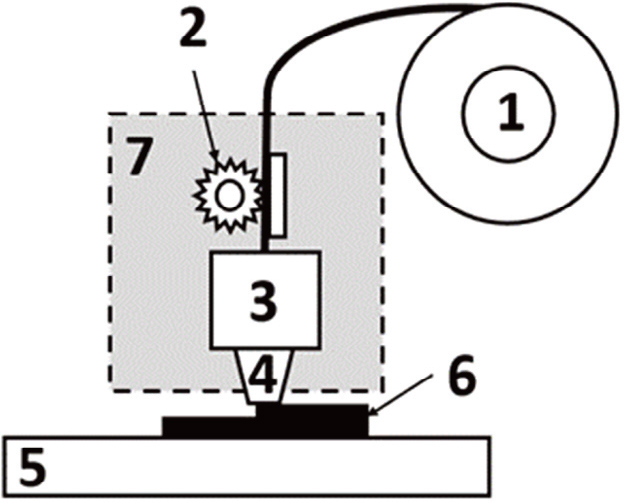
Figure 1.
Scheme of 3D printing in the FDM method: 1 – filament spool, 2 – filament dispensing gear, 3 – heating block, 4 – nozzle (hot end), 5 – print bed, 6 – printed element, 7 – extruder (gray).
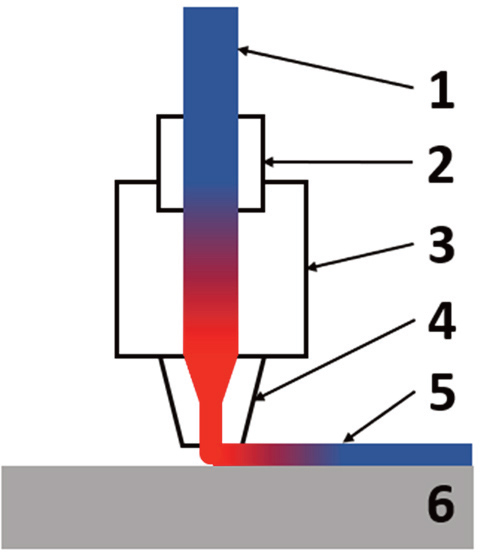
Figure 2.
Scheme of the filament path through the extruder: 1 – filament, 2 – tube introducing the solid filament, 3 – heating block, 4 – nozzle (hot end), 5 – applied layer of molten filament, and 6 – print.
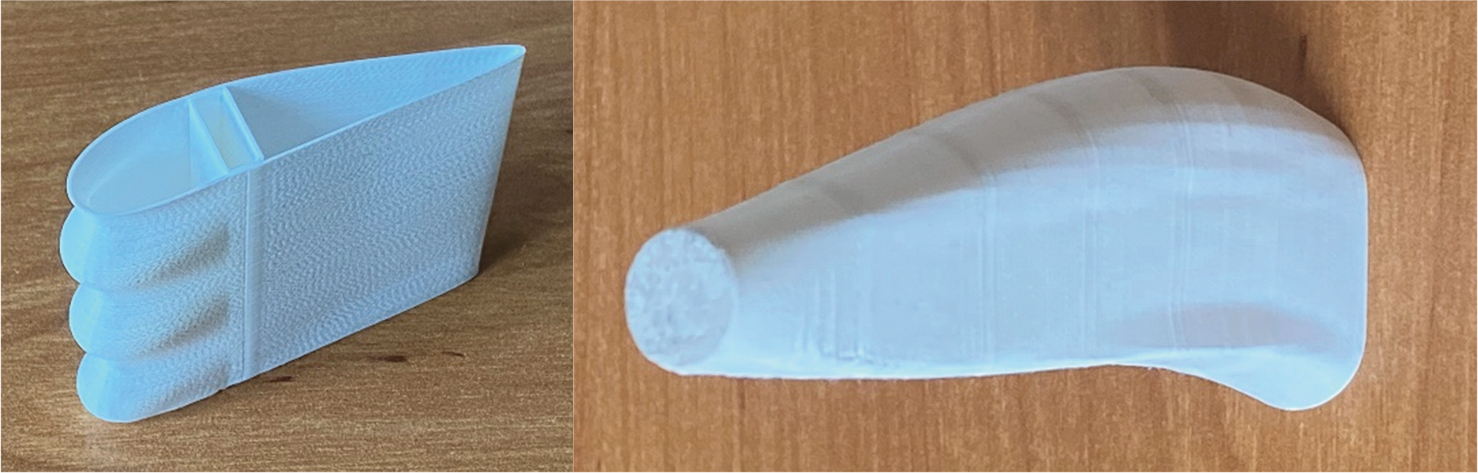
Figure 3.
Elements with complex geometry, easily made using FDM printing. FDM, fused deposition modeling.

Figure 4.
Cross-sections of typical elements used in the construction of flying models.
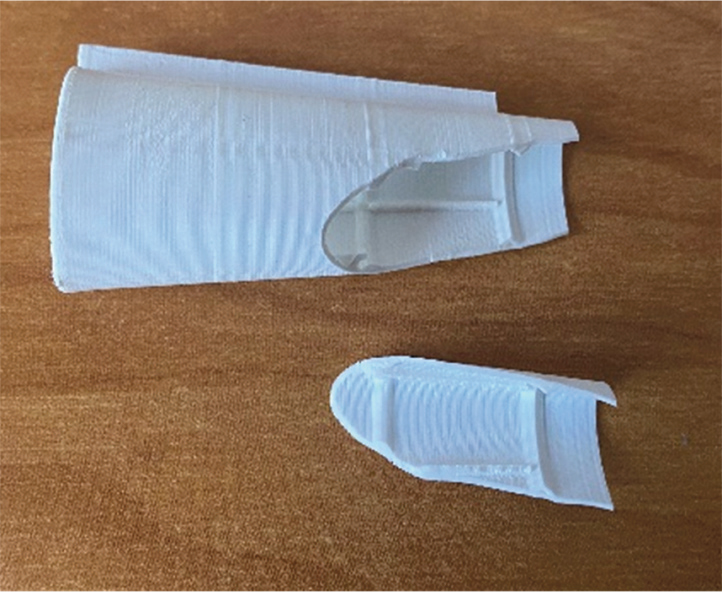
Figure 5.
Section of a typical semi-monocoque structure of a fuselage. FDM, fused deposition modeling.
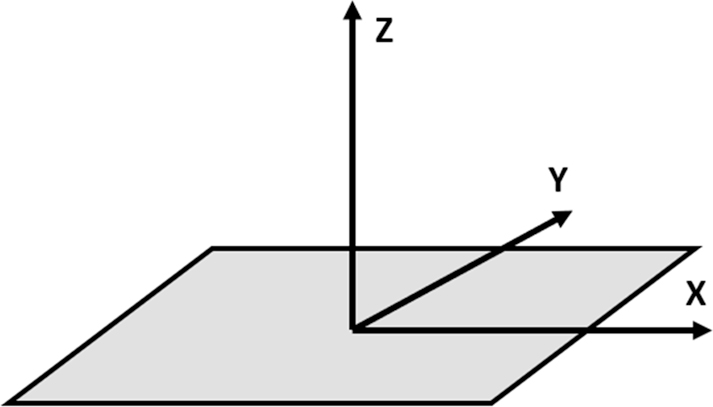
Figure 6.
Printing directions in the FDM method. FDM, fused deposition modeling.
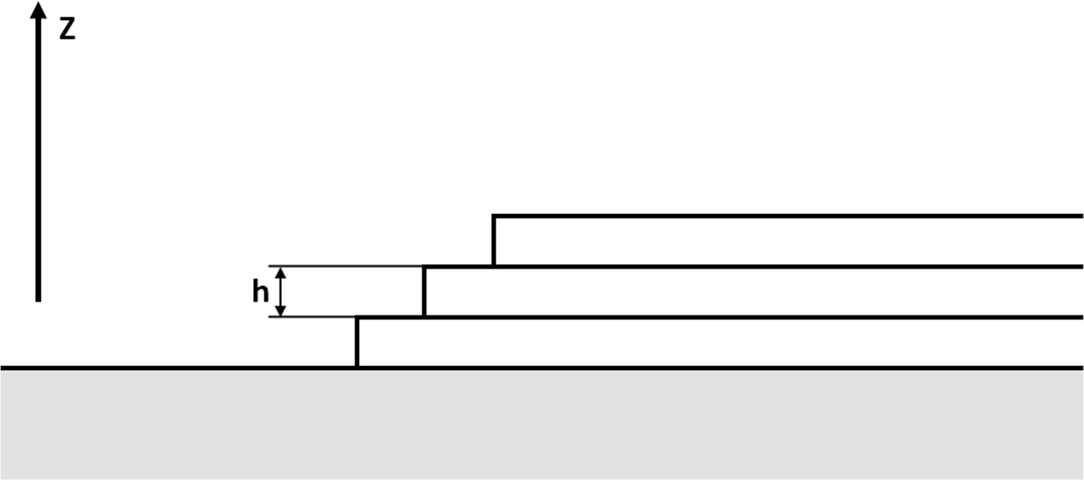
Figure 7.
Print layering in the Z direction.
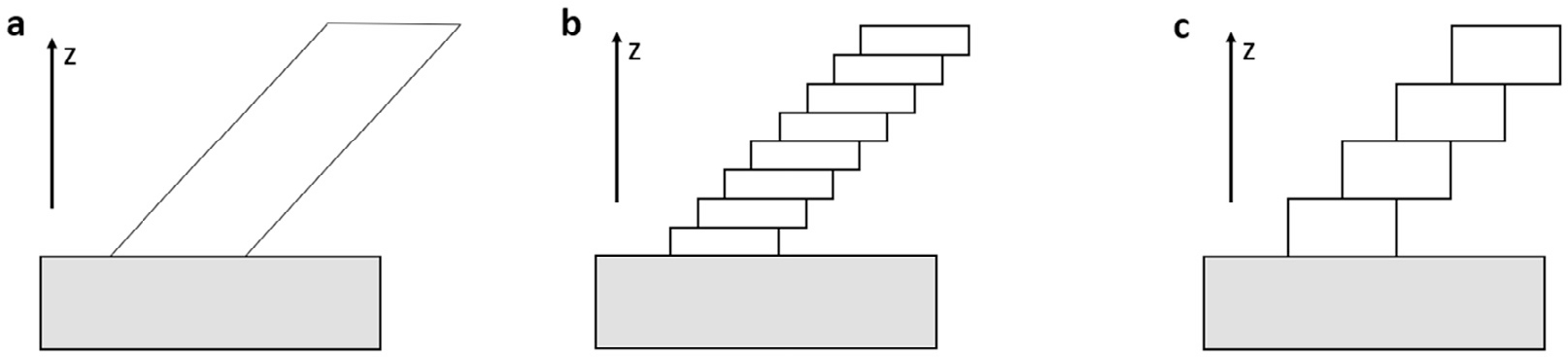
Figure 8.
Impact of layer thickness on print quality: (A) base geometry, (B) print with a layer height of ¼ of the nozzle diameter, (C) print with a layer height of ½ of the nozzle diameter.
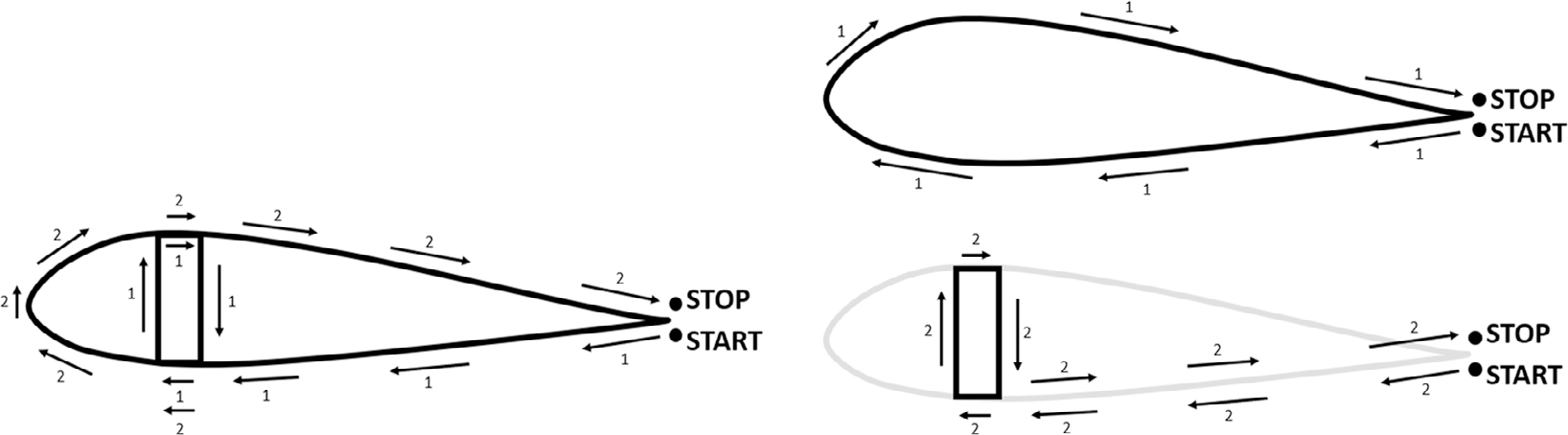
Figure 9.
Using unicursal figures to create a path for printing head: on the left – one step printing, on the right – two steps printing: outer contour and inner structure.
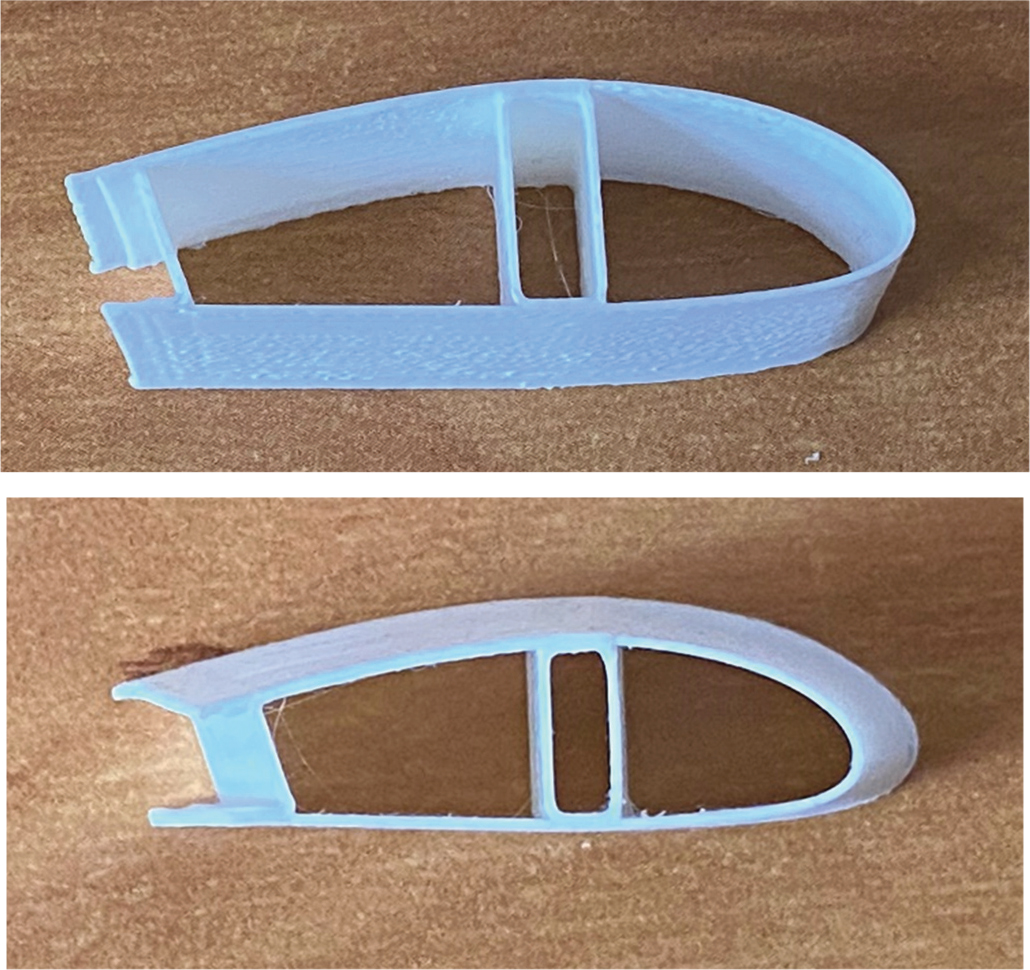
Figure 10.
Cross-section of the wing with box and rear spars.
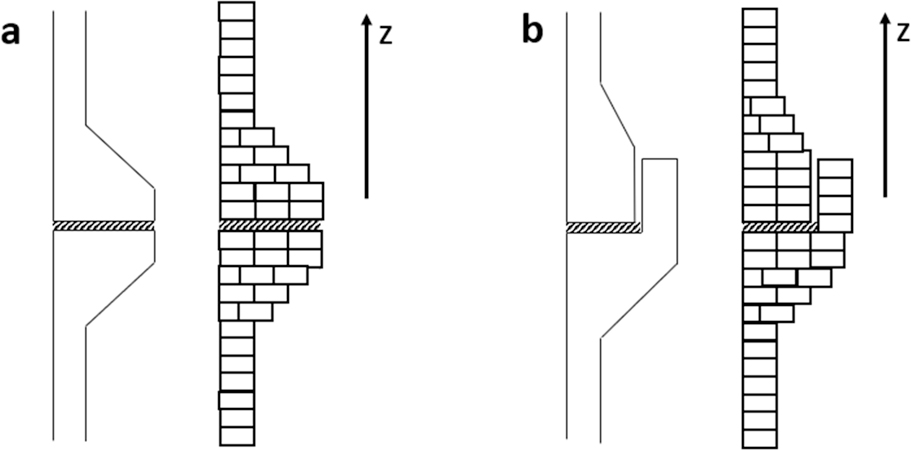
Figure 11.
Methods for connecting printed segments with the arrangement of layers marked, (A) without part positioning element, (B) with a positioning collar. Printed wing parts with the positioning collar are shown in Figure 12.
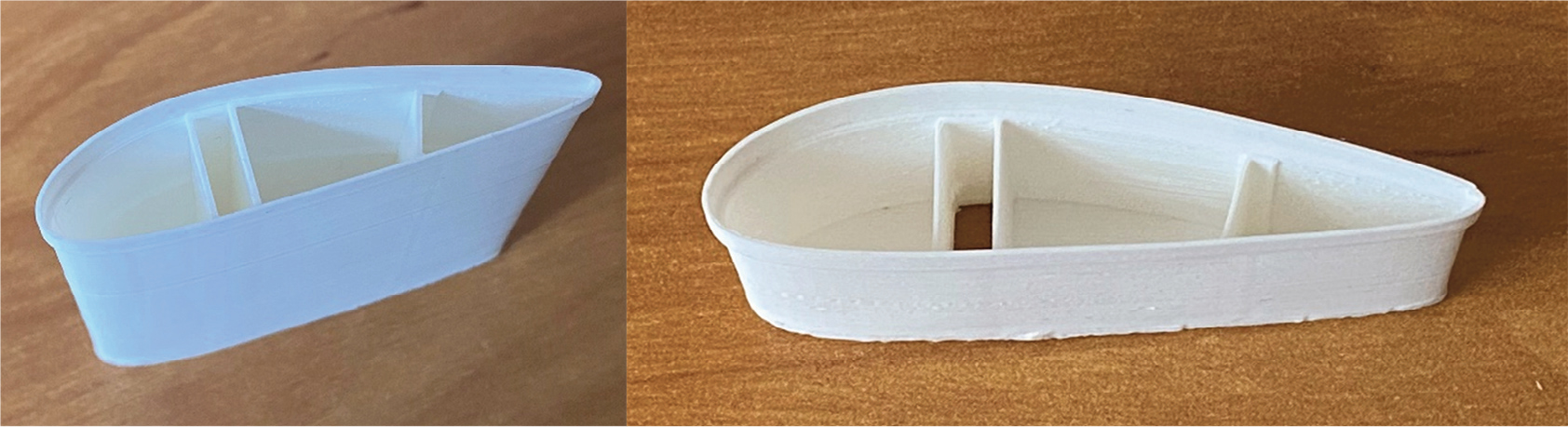
Figure 12.
Printed segment of a wing with positioning collar that is used for final assembly.
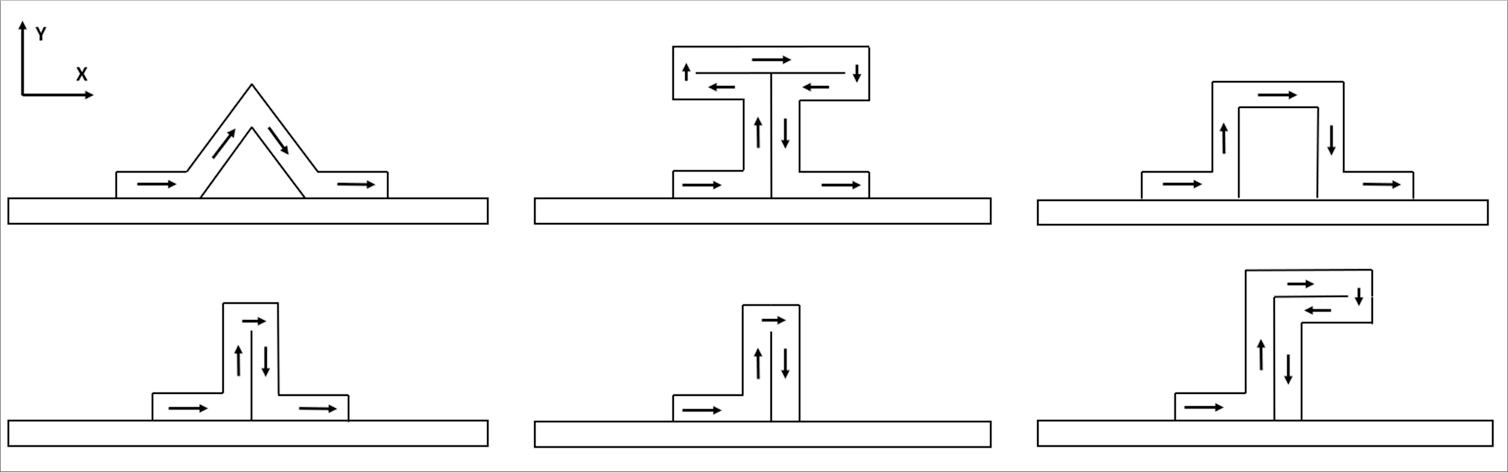
Figure 13.
Typical elements used to strengthen the semi-monocoque structure. The arrows indicate the printing direction. The elements are fused into the outer shell with an overlap.

Figure 14.
Elements strengthening the fuselage structure.
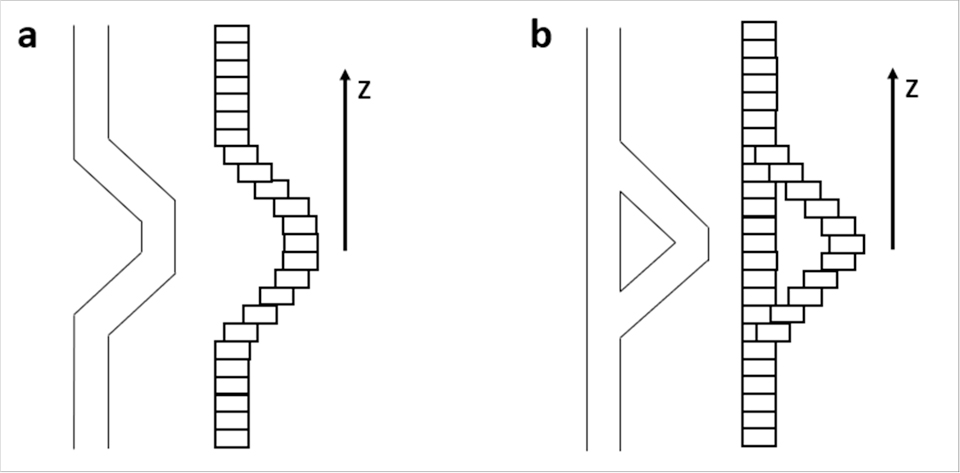
Figure 15.
Methods of stiffening the shell, indicating the arrangement of layers, (A) embossment, (B) rib.

Figure 16.
Embossing on the leading edge.
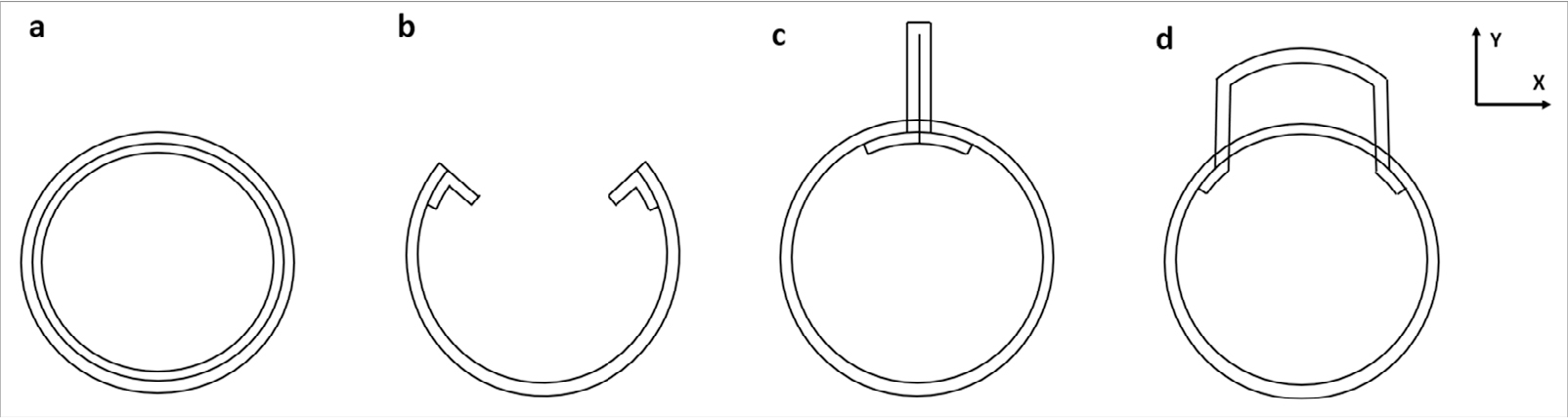
Figure 17.
Elements made by interpenetrating the printing path, (a) – reinforcement ring frame, (b) – edge reinforcement, (c) – external plate or stabilizer, (d) – external tray or tank.
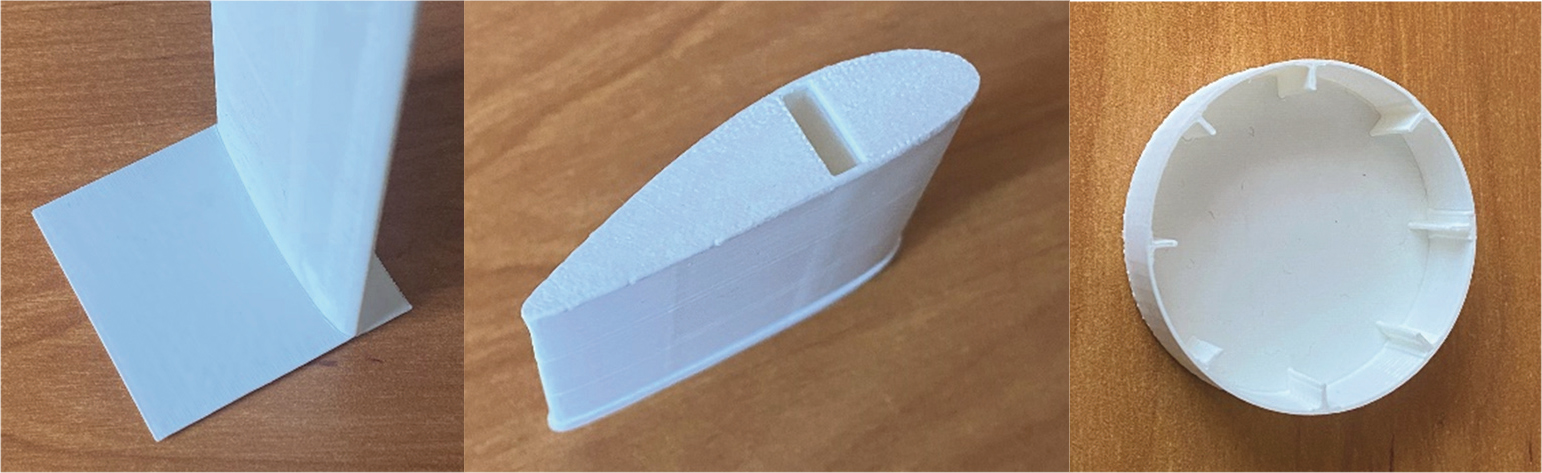
Figure 18.
Features created using head bed: wing end plate (left), wing root rib (middle), fuselage bulkhead (right).
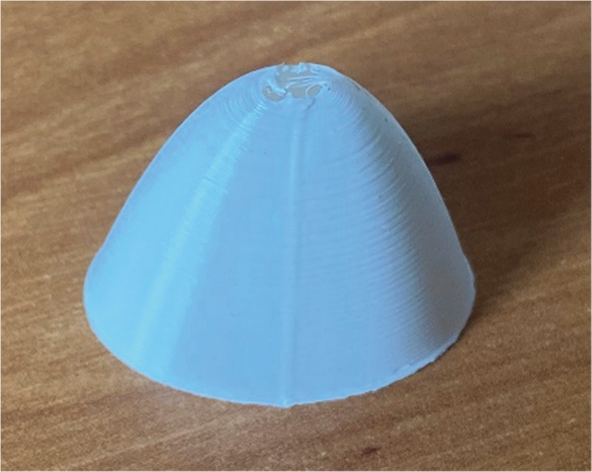
Figure 19.
Print defects: limitations for prints without supports and a seam resulting from a temporary stop of the printing head on its path.
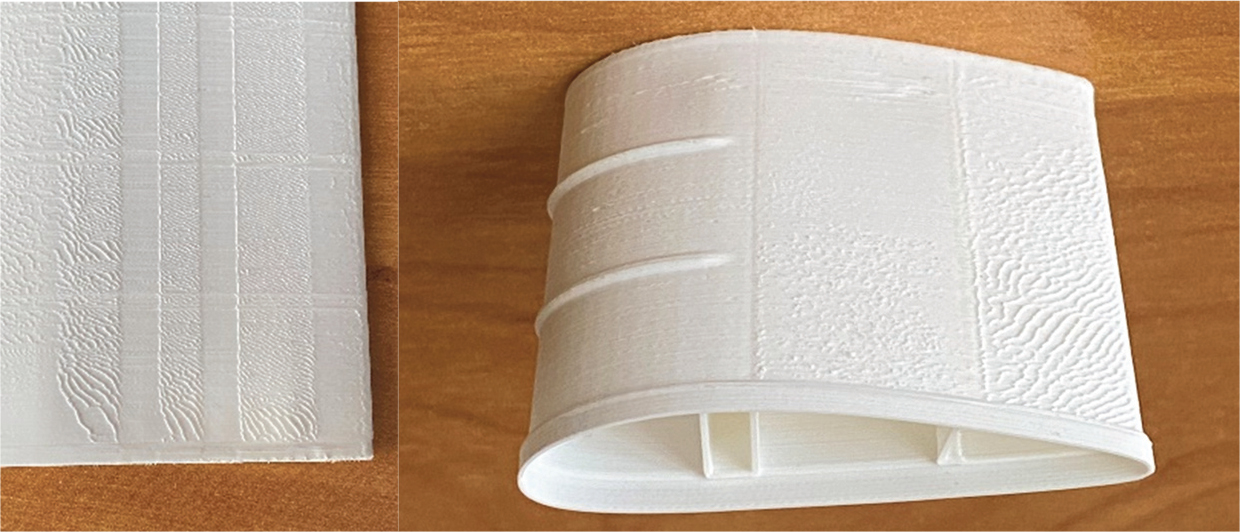
Figure 20.
Waves caused by the non-extrusion movement of the printing nozzle.
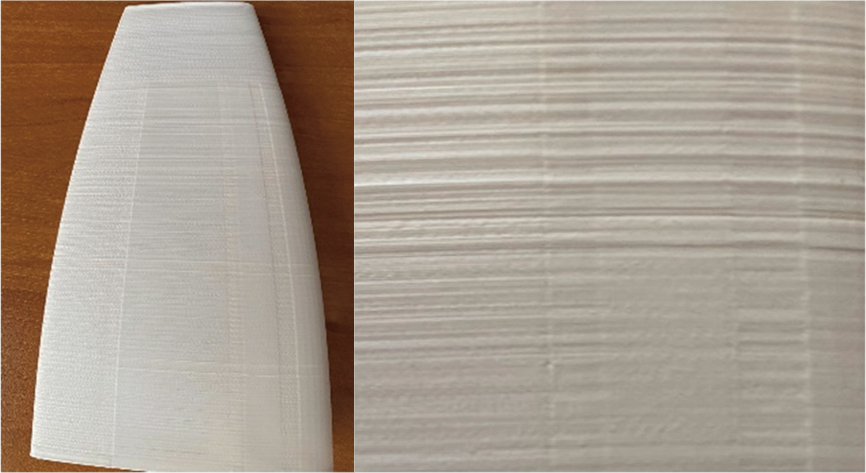
Figure 21.
Collapse of the shell caused by the presence of elements reinforcing the semi-monocoque structure.
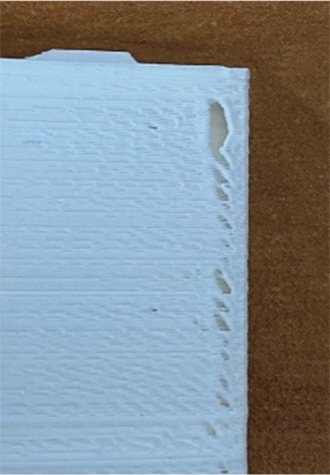
Figure 22.
Melting of the outer surface caused by overheating (e.g., due to too long or frequent stay of the printing nozzle head in the same area).
Table 1.
Typical construction materials including 3D printing polymers. Strength vs. density (https://monroeengineering.com/info-general-guide-tensile-strength.php).
| Material | Yield strength/density [kPa m3 kg−1] |
|---|---|
| Copper 99.9% Cu | 8 |
| Cast Iron 4.5% C, ASTM A-48 | 18 |
| Brass | 23 |
| PLA | 29 |
| Steel structural ASTM A36 | 32 |
| ABS | 42 |
| PET | 49 |
| Tungsten | 49 |
| Steel stainless AISI 302 cold-rolled | 63 |
| Chromium-vanadium steel AISI 6150 | 79 |
| Aluminum alloy 6061-T6 | 100 |
| Aluminum alloy 2014-T6 | 148 |
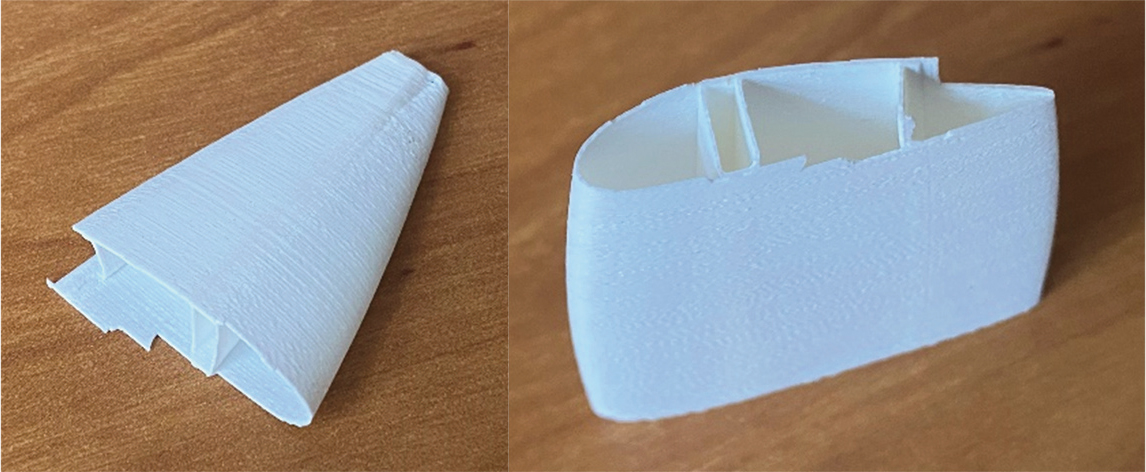
Figure 23.
Wing damage: crack at the boundary of layers.