
1. Introduction
The hospitality sector in Morocco is undergoing a dynamic transformation, driven by the need to improve guest satisfaction and adapt to an increasingly digital environment. The adoption of digital technologies has become crucial for the industry, enabling hotels to implement innovative strategies that foster customer engagement, service personalization, and value co-creation. This trend mirrors global developments in hospitality management, where leveraging technology not only boosts customer satisfaction, but also strengthens sustainability and strategic agility (Cheng et al., 2023).
Digital co-creation refers to processes through which customers actively collaborate via digital platforms to design, personalize, or enhance services, generating value both for them and for the hotel (Dang & Nguyen, 2023). Recent studies emphasize the pivotal role of digital tools such as customer feedback systems, mobile applications, and co-creation platforms. These technologies provide interactive frameworks that enable customers to actively participate in shaping the services they consume, thereby enhancing value creation and service delivery (Yeo et al., 2024). For Moroccan hotels, this shift is particularly significant as they strive to integrate digital innovations that meet the expectations of tech-savvy tourists, while simultaneously addressing challenges related to digital literacy and data privacy. Applying a digital perspective is essential because modern hotel customers increasingly demand personalized, interactive, and technology-mediated experiences; traditional service delivery alone cannot meet these expectations (Ribeiro et al., 2023; Grissemann & Stokburger Sauer, 2012).
This research contributes to the growing body of literature on the digital transformation of the hotel industry by examining how co-creation strategies are being integrated into Moroccan hotels. The study builds on co-creation theory and digital hospitality frameworks by investigating how these strategies enhance service personalization, customer engagement, and loyalty (Chathoth et al., 2016). Using a qualitative approach based on focus groups with 27 hotel guests, the study identifies key themes, including service personalization, digital feedback mechanisms, and collaborative innovation through mobile platforms. These findings underscore the strategic importance of digital tools in enhancing the customer journey and fostering loyalty.
Despite the opportunities presented by digital transformation, the study reveals persistent challenges, particularly regarding digital literacy gaps and data privacy concerns. In line with findings from recent studies (Cavlak & Cop, 2021; Mgoduka et al., 2024), this research highlights the need for practical, user-friendly, and privacy conscious digital interfaces to overcome these barriers. Addressing these issues will enable Moroccan hotels to fully leverage the potential of digital transformation—not only to meet evolving customer expectations, but also to ensure long-term competitiveness and sustainability.
This article is structured as follows: The literature review explores existing research on digital transformation and co-creation in the hotel industry, covering both global and regional perspectives and identifying research gaps. The methodology section outlines the qualitative approach, with 27 hotel clients and thematic analysis conducted using NVivo 14. The results section presents key findings across identified sub-themes. The discussion contextualizes these findings within broader literature, focusing on both opportunities and challenges such as digital literacy deficits and privacy concerns. Finally, the conclusion summarizes the main findings and their implications for hotel managers, policymakers, and researchers, while offering practical recommendations, addressing study limitations, and highlighting the study’s contributions to the academic literature and its relevance for the hotel industry.
2. Literature review
2.1. Digital transformation and co-creation in the hotel sector
Digital transformation in the hospitality industry cannot be understood solely as a technological upgrade; it is also grounded in evolving perspectives on value creation. Digital co-creation, rooted in the Service-Dominant Logic (SDL) perspective, was developed by Stephen Vargo and Robert Lusch (2004) and conceptualises value as co-created through interactions between firms and customers, rather than being delivered unilaterally. Within this framework, customers are considered active participants in the value creation process, contributing knowledge, skills, and experiential insights that shape service outcomes.
Digital co-creation extends SDL by integrating interactive technologies such as mobile applications, online platforms, and social media. This allows customers to actively participate in service design, provide feedback, personalize services, and contribute to innovation. This participatory logic is closely linked to customer engagement, which has been conceptualised as a multidimensional construct encompassing cognitive, emotional, and behavioural investment in brand interactions (Brodie et al., 2011). Engagement goes beyond transactional exchanges, including participation, advocacy, and collaborative interaction (Hollebeek et al., 2014), thereby sustaining ongoing value creation beyond the initial service encounter.
Co-innovation — a complementary concept — describes how firms and customers jointly contribute to the development or improvement of services through these interactive platforms, thereby reinforcing the co-creation process (Barile et al., 2020). While co-creation refers to the interactive generation of value, co-innovation emphasizes the collaborative development of new or enhanced service offerings that emerge from these interactions (Barile et al., 2020). Together, these mechanisms shape the holistic customer hospitality experience, which is formed across multiple touchpoints before, during, and after the service encounter. The digitally-mediated aspects of this experience, often referred to as the ‘digital experience’, influence customer satisfaction, perceived value, and loyalty. In this sense, digital experience can be understood as the technologically-enabled dimension of the broader customer experience, embedded within the customer journey (Dang & Nguyen, 2023).
Though these perspectives explain how value is cocreated in digitally enabled hospitality settings, they do not fully explain why digital technologies are adopted and effectively used by employees and customers. Understanding digital transformation therefore also requires engagement with established technology-adoption theories. The Technology Acceptance Model (TAM) suggests that perceived usefulness and ease of use determine individuals’ willingness to adopt digital tools (Davis, 1989; Wicaksono & Maharani, 2020). Similarly, the Unified Theory of Acceptance and Use of Technology (UTAUT) highlights the importance of social influence and facilitating conditions, such as organisational support and availability of infrastructure (Venkatesh et al., 2003). When combined with Service-Dominant Logic and customer engagement frameworks, these models provide a comprehensive lens for analysing both the adoption of digital technologies and their role in enabling co-creation and innovation within Moroccan hotels.
Digital transformation is recognised as a strategic imperative for the hospitality industry, offering opportunities to enhance operational efficiency, customer experience, and competitiveness. However, its implementation in developing countries such as Morocco faces numerous structural and contextual challenges.
According to Boiko et al. (2022), major obstacles include high investment costs, insufficient digital infrastructure, and organisational resistance to change. Employee upskilling is often neglected, further slowing adoption of digital technologies. In the Moroccan context, these barriers are exacerbated by limited digital literacy among both hotel staff and certain segments of the customer base, which hinders effective technology use (Weidig et al., 2024).
Comparative analyses with other emerging markets reveal significant gaps. Thailand, for instance, has successfully deployed national digital tourism strategies, combining fiscal incentives and public-private partnerships to support SMEs in hospitality. These initiatives have been instrumental in boosting the contributions of the digital economy, which are projected to grow from 6% in 2023 to 11% by 2027 (International Trade Administration, 2023). Such proactive policy frameworks offer valuable models for Morocco, where this type of state-driven coordination is lacking.
In this regard, Devasia and Sanoop Kumar (2022) advocate for an integrated national strategy that aligns the efforts of various institutions and provides targeted funding to support digital innovation in tourism. Fareh and Idrissi (2025) further stress the importance of university-industry collaborations, which can play a pivotal role in developing tailored digital solutions and training programs that are adapted to Morocco’s tourism ecosystem.
Despite these obstacles, opportunities remain for context-specific digital innovation. Research by Peng et al. (2024) demonstrates that when digital tools are designed with local usability in mind, using features such as mobile-first interfaces, multilingual support, and culturally relevant content, adoption rates improve significantly, leading to enhanced service quality. In resource-constrained environments, co-creation mechanisms like user-generated content, in-app feedback, and collaborative trip planning emerge as cost-effective alternatives to large-scale infrastructure investments.
Moreover, digital transformation is increasingly seen as aligned with sustainability goals. Akel and Noyan (2024) show that integrating green technologies with smart management systems — such as occupancy sensors, energy consumption dashboards, and waste-tracking software — can reduce both operational costs and environmental impact. Hotels that leverage digital channels to communicate these efforts transparently tend to attract environmentally conscious guests, particularly from Western markets (Rasel, 2024). While digital transformation in Moroccan hospitality faces formidable barriers, targeted strategies that combine usability-focused design, multi-stakeholder collaboration, and sustainability integration can unlock significant value for both businesses and customers.
Building on these theoretical insights, this study will demonstrate how digital strategies in Moroccan hotels faces a combination of technological, organizational, and socio-cultural challenges in their deployment, and that these must be addressed to fully leverage co-creation and co-innovation mechanisms.
2.2. Challenges and opportunities in deploying digital strategies
The deployment of digital strategies in Morocco’s hotel sector remains hindered by a convergence of technological, organizational, and socio-cultural factors. High initial investment costs and limited access to advanced digital infrastructure are well-documented challenges (Boiko et al., 2022). Resistance to change within management and operational teams further complicates digital adoption, particularly in family-owned and SME hotels.
Digital literacy represents a critical bottleneck in this process. Weidig et al. (2024) highlight how both employees and certain customer segments struggle with using digital tools effectively, which creates a barrier to fully leveraging digital services. This gap underscores the need for targeted training programs and intuitive digital interfaces.
Data protection emerges as another critical concern. As Han et al. (2026) notes, hotels must navigate the complex balance between leveraging customer data for personalization and complying with increasingly stringent privacy regulations. Failure to address these concerns not only limits the scope of digital innovation, but also erodes customer trust.
Comparisons with countries like Thailand and Indonesia reveal best practices that Morocco could emulate. Government-led initiatives, ranging from tax incentives for digital investments to public-private innovation hubs, have been effective in fostering digital ecosystems in these regions (International Trade Administration, 2023). For Morocco, adopting similar frameworks could catalyse digital adoption across the tourism sector.
Elhazziti et al. (2023) emphasize that inter-ministerial coordination and financial incentives are critical to overcoming Morocco’s barriers to digitalization. Simultaneously, Blochinger et al. (2024) advocate for collaborations between universities and the hotel industry to address workforce skill gaps and co-develop tailored digital solutions.
Despite these challenges, digital co-creation offers significant prospects. Peng et al. (2024) demonstrate that solutions designed with local user needs and cultural context in mind are more readily adopted and lead to improved customer experiences. In this vein, co-creation strategies — such as incorporating customer feedback into service design, fostering user-generated content, and facilitating interactive planning — allow hotels to innovate without extensive infrastructure upgrades.
Furthermore, integrating digital transformation with sustainability efforts is increasingly recognized as a strategic advantage. Zou et al. (2023) provide evidence that smart systems for energy and waste management not only reduce costs, but also appeal to eco-conscious consumers. Transparent communication of these initiatives through digital channels can enhance brand reputation and attract new customer segments. While Moroccan hotels face persistent barriers to digital transformation, targeted policies, collaborative innovation, and contextually adapted digital strategies present viable pathways for overcoming these challenges and achieving competitive differentiation.
Gaps remain in the literature, especially for emerging markets like Morocco. Few studies integrate Service-Dominant Logic, customer engagement, and technology adoption models (TAM, UTAUT) to examine digital co-creation. Most research has been quantitative and has overlooked managerial perspectives. To address this, the present study uses a qualitative approach to explore how Moroccan hotels operationalize co-creation; manage adoption challenges; and align technological, organisational, and socio-cultural factors in digital strategy deployment.
3. Methodology
3.1. Research context
Morocco is increasingly positioning itself as a leading international tourist destination, driven by ambitious public policies aimed at enhancing the country’s attractiveness. Guided by a clear roadmap, the national tourism strategy aims to welcome 26 million visitors by 2030, with an interim target of 17.5 million by 2026. This momentum has been reflected in record-breaking figures for 2024, with 17.4 million tourist arrivals, representing a 20% increase compared to 2023. These figures reaffirm Morocco’s growing appeal.
Economically, this growth generated 112 billion MAD in foreign exchange earnings, marking a 7% year-on-year increase — a remarkable 43% rise compared to 2019. Additionally, the number of overnight stays in classified tourist accommodation establishments (EHTC) reached 28.7 million in 2024, as shown in Figure 1, representing a 12% increase compared to the previous year. These figures highlight not only a robust post-pandemic recovery, but also the sector’s ability to meet the rising expectations of an increasingly demanding international clientele.
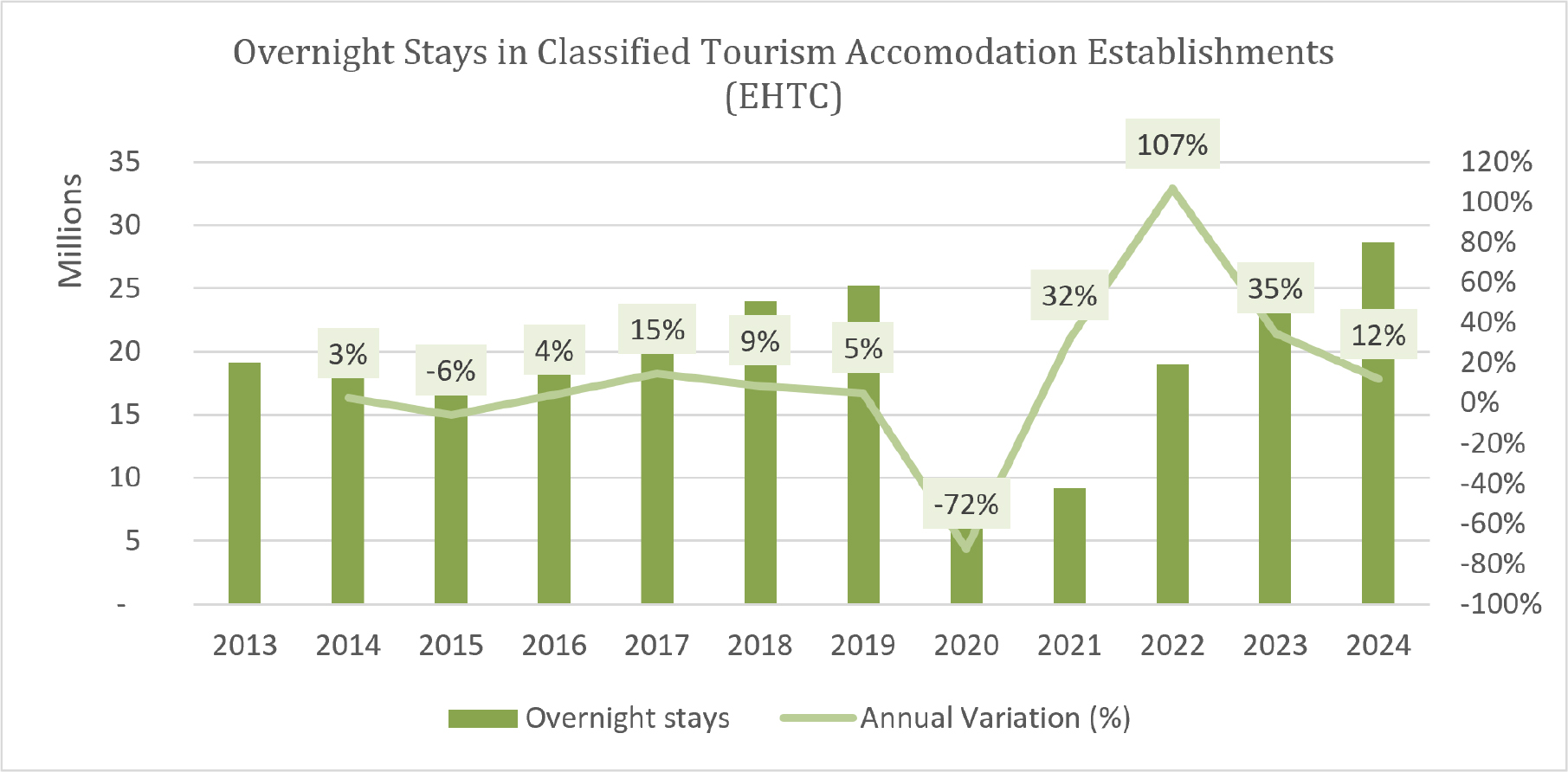
Figure 1:
Evolution of overnight stays in EHTC (2013-2024)
Source: Moroccan Ministry of Tourism, Handicrafts, and Social and Solidarity Economy, 2024
The trend in the number of overnight stays has clearly been both upward and resilient. After a sharp decline of 72% in 2020 due to the global health crisis, the sector has steadily recovered, marked by particularly significant increases of 107% in 2022 and 35% in 2023. The 12% growth observed in 2024 represents a consolidation of this momentum, supported by infrastructural improvements and more diversified tourism offerings.
These developments underscore a strong national commitment to modernising Morocco’s hospitality sector and enhancing its global competitiveness. However, in an era where customers are increasingly connected and seek more active involvement, infrastructure upgrades alone are no longer sufficient to ensure customer loyalty. In this context, digital co-creation emerges as a strategic imperative. By engaging customers in the design of their experiences through digital platforms, Moroccan hotels can enrich the customer journey, stimulate innovation, and deliver personalized services. Integrating such collaborative practices aligns with the sector’s ongoing digital transformation, as it addresses both evolving customer expectations and the competitiveness objectives of Moroccan hospitality establishments.
3.2. Data collection
The data collection process was carried out over a fivemonth period, from May to September 2024. This research relied exclusively on 27 semi-structured interviews with hotel customers, resulting in a qualitative corpus of approximately 85,000 words. Interviews were conducted in French and English, with occasional clarifications provided in Arabic to accommodate the linguistic preferences of certain participants.
The choice of semi-structured interviews was motivated by the need to explore individual perceptions in depth while retaining the flexibility to adapt questions based on participants’ responses. This method was particularly well-suited to capturing nuanced insights about the perceived role of digital co-innovation in enhancing service quality and customer experience.
The sample size was determined based on the principle of data saturation. Saturation was assessed progressively during the data collection process, as interviews were analysed concurrently with their transcription. After the 23rd interview, no substantial new themes or insights emerged. Four additional interviews were conducted to confirm thematic redundancy and ensure analytical depth. This approach aligns with qualitative research standards emphasizing depth over numerical representativeness (Edwards-Jones, 2014).
The sample was designed to capture a broad range of experiences. Participants were drawn from hotels in four major Moroccan cities: Fez, Casablanca, Marrakech, and Rabat, including luxury hotels, mid-range threestar hotels, and independently operated riads. Luxury hotels were those that offered advanced digital services such as mobile check-in and integrated booking system. Meanwhile, three-star hotels provided basic digital features, and riads showed varying levels of digital adoption — some used online booking and apps, while others relied mainly on in-person transactions. Participants also differed in age, gender, and stay frequency, ensuring diverse perspectives that strengthened the depth, credibility, and applicability of the findings across hotel contexts.
The interview guide was designed to investigate key dimensions of digital co-creation in the Moroccan hotel sector, specifically:
– Service and product personalization
– Active client engagement in service delivery
– The role of digital innovations in enhancing the customer journey
– Existing challenges, including digital literacy gaps and data privacy concerns
In the interest of transparency, examples of questions asked for each theme are presented in Table 1.
Table 1:
Example interview questions for each thematic axis
| Theme | Example Questions |
|---|---|
| Service and product personalization | ‘Can you describe a time when a hotel offered you a service tailored to your preferences?’ ‘How did personalized recommendations or promotions influence your satisfaction?’ |
| Active client engagement in service delivery | ‘Did you use any hotel app or platform to provide feedback during your stay?’ ‘How did you feel when your suggestions were implemented?’ |
| Role of digital innovations in enhancing the customer journey | ‘Which digital tools did you use during your stay?’ ‘How did these tools impact your overall experience?’ |
| Existing challenges, including digital literacy gaps | ‘Did you encounter any difficulties using digital tools during your stay?’ ‘What support or guidance would have helped you use these tools more easily?’ |
| Data privacy and security concerns | ‘How comfortable were you with sharing personal information through hotel apps?’ ‘What measures would increase your trust in the hotel’s digital systems?’ |
These example questions guided the interviews, allowing participants to share in detail their experiences with service personalization, digital engagement, and innovative tools, as well as challenges they faced and their data privacy concerns. Combined with the diverse participant sample shown in Table 2, this approach strengthened the credibility and depth of the findings.
Table 2:
Interviewee characterization
| Characteristic | Category | Number | Percentage |
|---|---|---|---|
| Gender | Male | 14 | 52% |
| Female | 13 | 48% | |
| Age | 18-30 years | 8 | 30% |
| 31-40 years | 8 | 30% | |
| 41-50 years | 6 | 22% | |
| 51 years and above | 5 | 18% | |
| Hotel Stay Frequency | Frequent (more than 5 stays/year) | 11 | 41% |
| Regular (3-4 stays/year) | 5 | 19% | |
| Occasional (1-2 stays/year) | 11 | 41% | |
| Hotel Sector | Luxury Hotels | 8 | 30% |
| 3-Star Hotels | 8 | 30% | |
| Riads | 11 | 40% |
3.3. Data analysis
A thematic approach was selected for the data analysis because it could systematically examine recurring ideas and experiences expressed by participants while organizing qualitative data into coherent categories that accurately reflect participants’ perspectives (Byrne, 2022). An inductive coding process was employed, allowing central themes and meaningful patterns to naturally emerge from the data, in line with qualitative research standards that emphasize insights grounded in participants’ narratives. The analytical process followed a rigorous workflow, beginning with the transcription of interviews, followed by in-depth reading and familiarisation with the content; categorisation of responses based on key topics; and the development of overarching themes that encapsulate the participants’ views. To ensure methodological rigor and manage the substantial volume of qualitative data, NVivo 14 software was utilized to facilitate coding and organization, as well as enhance the transparency and efficiency of the analysis (Edwards-Jones, 2014). This systematic approach enabled the identification of dominant patterns and underlying connections, providing valuable insights into how customers perceive digital co-innovation practices within Moroccan hotels.
4. Results
The results in Table 2 are based on 27 semi-structured interviews with hotel clients that were analysed using a thematic content approach. Interview transcripts were read carefully, and relevant excerpts were coded inductively to identify recurring ideas and experiences. Codes were grouped into sub-categories, then into broader categories, and finally synthesized into main themes reflecting customers’ experiences with digital innovation. Table 3 presents the thematic structure by linking sub-categories, categories, and main themes, highlighting key dimensions such as service personalization, customer engagement through digital tools, and data privacy concerns.
Table 3:
Results of thematic content analysis
| Sub-category | Category | Main Theme |
|---|---|---|
| Personalization of services | Service personalization, adaptability of offerings | Enhancing the customer experience through personalization |
| Adoption of digital platforms for customer feedback | Use of technologies to collect reviews, responsiveness to feedback | Customer engagement through digital tools |
| Collaborative alternatives via mobile applications | Mobile applications, digital interaction with the hotel | Co-creation of services via mobile tools |
| Customer satisfaction and active involve- | Impact of digital tools on satisfaction and | Satisfaction and engagement through digital |
| ment | loyalty | tools |
| Challenges related to digital literacy | Lack of digital skills, barriers to using digital tools | Training needs and adaptation to digital tools |
| Data confidentiality | Concerns about the security of personal data | Issues related to confidentiality and security |
The thematic analysis presented in Table 3 reveals six key dimensions of how hotel clients perceive digital co-creation and service innovation. Each of these main themes reflects specific patterns of expectations, experiences, and challenges that emerged from the interviews. The following sections provide a detailed analysis of these dimensions, offering deeper insights into their implications for the Moroccan hotel sector.
Axis 1: Enhancing the customer experience through personalization
Participants consistently emphasized the value of personalized services in enhancing their hotel experience. Digital tools that allowed for tailored offers, such as room preferences, customized recommendations, or exclusive promotions, were perceived as essential in meeting individual needs. Beyond simple convenience, personalization was associated with a sense of recognition and individual consideration, reinforcing emotional engagement and perceived service quality. As one interviewee noted:
‘When I arrive at a hotel and they already know I prefer a quiet room on a higher floor, it makes me feel special. It shows they really care about my preferences’. (Int7)
The ability of digital platforms to adapt offers in real-time was particularly appreciated, especially by frequent travellers, who seek efficiency and comfort. In this sense, digital personalization appears to facilitate a smoother and more autonomous customer journey, reducing effort while increasing perceived value:
‘I travel a lot for business, so receiving personalized suggestions based on my previous stays saves me time and improves my overall experience’. (Int14)
Participants also recognised the positive impact of targeted promotions or activity suggestions linked to their interests. Such initiatives were interpreted as signs of attentiveness and contextual understanding, rather than mere marketing tactics:
‘Last time, I received a notification suggesting a spa treatment right after a long journey. It was exactly what I needed. These small attentions really make a difference’. (Int19)
However, respondents cautioned that personalization efforts must remain contextually appropriate. When perceived as excessive or poorly targeted, personalization may generate discomfort and reduce trust:
‘Personalized offers are great, but when it becomes too pushy or irrelevant, it feels like spam’. (Int3)
This reflects the need for Moroccan hotels to ensure that digital personalization strategies enhance emotional connection and perceived relevance while avoiding excessive or intrusive practices. Maintaining a careful balance between responsiveness and customer comfort appears essential for sustaining effective digital co-creation.
Axis 2: Customer engagement through digital tools
Customer engagement through digital tools emerged as a multidimensional process involving feedback, interaction, and active participation. Participants frequently referred to digital feedback mechanisms as an important channel of communication. When customers received surveys or follow-up messages — and, more importantly, when they obtained timely replies to their responses — it was interpreted as a sign that the hotel valued customer input. As one participant explained:
‘After my stay, I received a feedback form via WhatsApp. I filled it out and the hotel responded with a thank-you message. It felt very personal’. (Int5)
Beyond feedback, real-time digital interaction played a central role in shaping engagement. Mobile applications enabled guests to request services instantly, which reduced reliance on traditional communication channels and enhanced perceived efficiency. For example, one interviewee described how requesting additional amenities through the app was both simple and effective:
Such immediacy contributed to a perception of responsiveness and operational agility.‘Using the hotel app, I could request extra towels without calling reception. They delivered it within 10 minutes. Very efficient!’ (Int11)
Engagement also extended to social media and in-app suggestion features, where customers could publicly express concerns or propose ideas. The prompt resolution of issues through these channels strengthened perceptions of transparency and accessibility. One participant noted:
‘During my stay, I could suggest activities through the app’s suggestion box. They actually added one of my ideas later on. It made me feel involved’. (Int8)
More importantly, several participants emphasized that digital tools allowed them to move beyond passive consumption toward active involvement in their experience. Features such as suggestion boxes or room-selection options created opportunities for co-creation, giving guests greater control over their stay.
Overall, these findings suggest that digital engagement tools function as interactive infrastructures that facilitate participation, responsiveness, and shared influence over the service experience. Rather than simply improving communication, they reshape the relational dynamic between guests and hotels by enabling more immediate and collaborative forms of interaction.
Axis 3: Satisfaction and engagement through digital tools
Digital innovations were found to significantly enhance both customer satisfaction and active involvement in the hotel experience. Participants highlighted the positive impact of features such as instant booking modifications, digital concierge services, and gamified loyalty programs, which contributed to a smoother and more interactive customer journey.
Several interviewees emphasized the convenience and immediacy offered by these tools. For instance:
‘I was able to modify my reservation through the hotel app without calling anyone. It saved me time and made the process stress-free’. (Int13)
This seamless experience was particularly appreciated by younger guests, who were accustomed to mobile-first interactions, and who valued intuitive and autonomous service solutions. Another participant explained:
‘I like when I can chat with a digital concierge for simple requests, like restaurant recommendations. It feels modern and efficient’. (Int2)
Beyond convenience, the interactive features of digital platforms also enhanced engagement. One participant shared:
‘I joined a points challenge on the hotel’s app, where you earn rewards for completing activities. It made my stay more fun and engaging’. (Int21)
Responsiveness to customer feedback via digital tools was repeatedly mentioned as a key factor influencing satisfaction and loyalty. A guest noted:
‘I once gave feedback about the breakfast menu through the app. The next day, the manager personally thanked me and offered alternatives. That made me want to come back’. (Int9)
Overall, these findings highlight how digital tools are not only operational conveniences, but also active drivers of satisfaction, engagement, and loyalty. They provide functional benefits, enhance experiential enjoyment, and strengthen relational bonds between hotels and their guests, demonstrating the strategic value of digital innovation in service delivery.
Axis 4: Challenges related to digital literacy
The study revealed that digital literacy challenges are a significant barrier to fully engaging in digital co-creation, particularly for older clients or those less familiar with technology. Some participants reported difficulties navigating hotel apps, understanding digital procedures, or using online tools confidently. These challenges illustrate how varying levels of digital competence can influence the effectiveness of digital engagement strategies.
Figure 2 summarizes the types of challenges observed among participants. While the percentages highlight trends in our sample (n = 27), they are illustrative rather than generalizable, reflecting the qualitative nature of this study. Among the respondents, 66.7% expressed a preference for human assistance, 55.6% faced difficulties navigating apps, 44.4% reported unfamiliarity with digital procedures, 40.7% cited lack of trust in digital platforms, and 37% feared making mistakes when using digital tools.
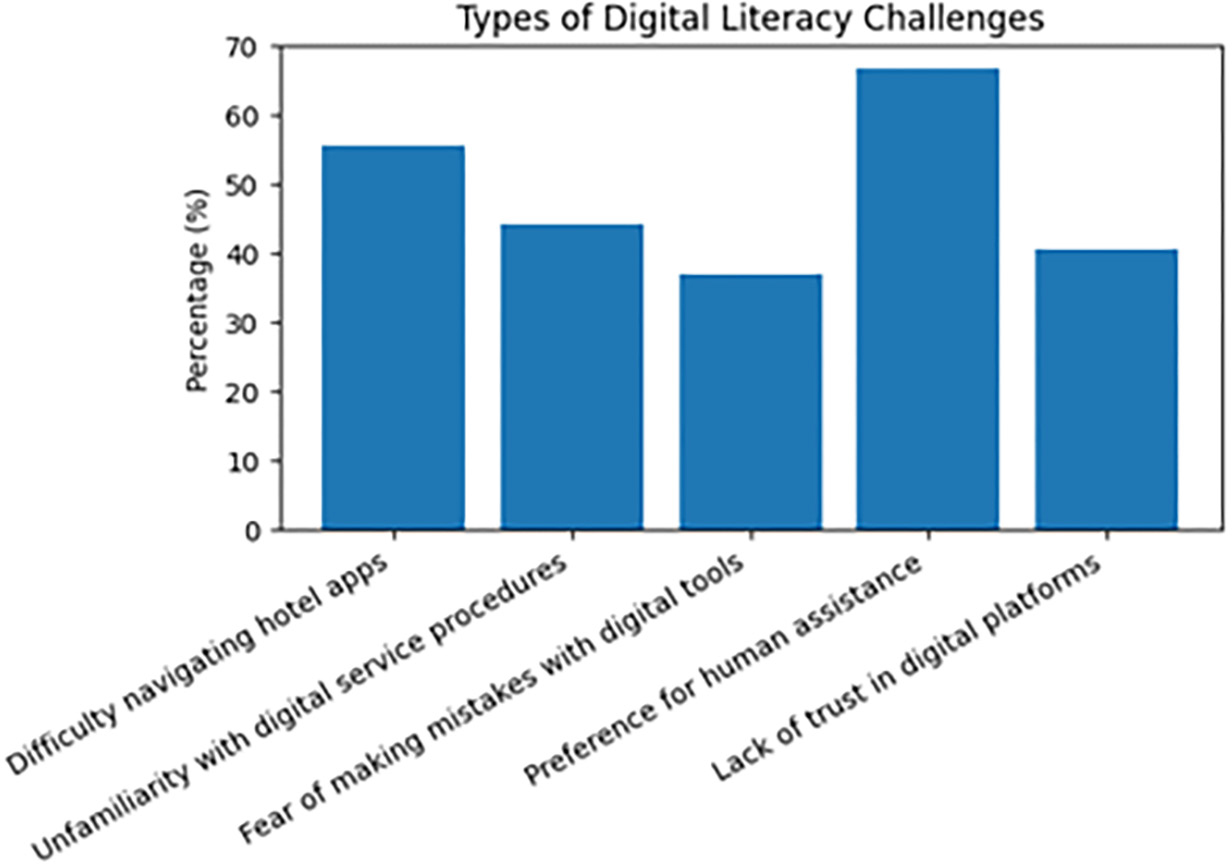
Figure 2:
Digital literacy challenges faced by hotel customers (%)
Participants suggested practical solutions, including designing more user-friendly interfaces, providing simple tutorials, and offering in-person guidance. Addressing these challenges is crucial for enhancing customer engagement and enabling more effective co-creation. These findings indicate that improving digital literacy is not merely a technical issue, but a strategic factor that affects service quality, satisfaction, and overall customer experience in Moroccan hotels.
Axis 5: Data confidentiality and security concerns
Concerns regarding data confidentiality and security emerged as a significant barrier to digital co-creation. Participants expressed apprehension about how their personal information is collected, stored, and potentially shared, particularly when hotels relied on third-party applications. These concerns directly influence trust in digital platforms and, consequently, customers’ willingness to engage with digital services.
Several interviewees reported hesitation in providing personal details due to a lack of trust in digital platforms. One participant stated:
‘I’m always worried about where my personal data goes. If I’m using a hotel’s app, how do I know they won’t share my information with other companies?’ (Int12)
This perceived lack of control over personal information reduced participants’ intention to use certain digital features, such as mobile check-ins or app-based service requests. As another respondent explained:
‘I prefer to avoid apps that ask for too much information. Sometimes it feels like they want more data than necessary, which makes me uncomfortable’. (Int 22)
Participants emphasized the need for clearer communication regarding data protection policies. Transparency was viewed as a key mechanism for building trust and reducing uncertainty:
‘Hotels should clearly explain how they protect our data. A simple message or policy link in the app would already help build trust’. (Int6)
In addition to transparency, respondents highlighted the importance of visible and reliable security measures, such as two-factor authentication and certified privacy badges, for reassuring users.
‘I would feel safer if the app had more visible security features, like verification steps or clear privacy labels’. (Int18)
These findings suggest that trust in data governance is a central condition for successful digital co-creation. Without clear guarantees of confidentiality and security, customers may resist adopting even innovative digital services. Therefore, data protection should be considered not only a technical requirement, but also a strategic element influencing customer trust, engagement, and long-term loyalty.
5. Discussion
The findings of this study reveal several critical dimensions of customer perceptions regarding digital co-creation and service innovation in the hotel sector. These insights not only align with prior research, but also extend theoretical perspectives on value creation and technology adoption in emerging markets like Morocco.
Firstly, service personalization emerged as a fundamental driver of enhanced customer experiences. Digital tools, such as mobile applications and CRM systems, are perceived as essential for tailoring offers and creating individualised guest experiences. This finding supports the premises of Service-Dominant Logic (Vargo & Lusch, 2004), which conceptualises value as being co-created through interactive processes between firms and customers. In the Moroccan context, personalization appears to operationalize this co-creation logic by enabling hotels to integrate customer preferences into service delivery. However, unlike in digitally mature markets, personalization in Moroccan hotels remains embedded in relational service traditions, suggesting that digital tools complement, rather than replace, interpersonal interaction (Bezuhla et al., 2024). This contextual nuance extends SDL by illustrating how co-creation mechanisms adapt in environments characterised by evolving digital maturity.
In addition, active customer engagement through digital platforms has been confirmed as a key factor influencing both customer satisfaction and brand reputation. Studies such as Lazrak et al. (2024) emphasize that incorporating customer feedback into service improvement processes is crucial for maintaining a positive online reputation and ensuring customer retention, particularly in the Moroccan hotel sector. The present findings further suggest that effective engagement depends on managerial responsiveness and the visibility of feedback integration, indicating that organisational commitment is central to transforming engagement into reputational gains.
The role of mobile applications in facilitating service co-creation has also been strongly validated. Research by Kamboj and Gupta (2020) demonstrates that mobile apps significantly enhance customer participation, thus allowing guests to co-create their experiences and increasing overall satisfaction. Similarly, Devasia and Sanoop Kumar (2022) found that technological innovation — including AI and digital interaction tools — enables hotels to co-create unique value with guests, thereby improving customer trust and competitive advantage. Interpreted through the lens of the Technology Acceptance Model, these findings suggest that perceived usefulness and ease of use facilitate participation. However, the Moroccan context also highlights the importance of facilitating conditions and social reassurance — elements that are emphasized in the Unified Theory of Acceptance and Use of Technology (Venkatesh et al., 2003) as critical enablers of sustained digital engagement.
Furthermore, customer participation in co-creation activities has been shown to accelerate service innovation performance. Marasco et al. (2018) highlight that co-creation enhances the speed and quality of new service development, ultimately leading to superior market outcomes. Recent work by Sadighha et al. (2024) reinforces this conclusion. However, the present study demonstrates that in Moroccan hotels, innovation performance is contingent not only on technological capability, but also on the leadership’s openness and internal readiness to integrate customer contributions into their operational practices. This finding underscores the role of organisational culture in shaping co-creation outcomes within resource-constrained environments.
The present study also revealed persistent barriers to digital co-creation, particularly regarding digital literacy and data privacy concerns. Sarmah and Rahman (2018) found that factors such as customer abilities, role clarity, and willingness to engage are critical determinants of successful participation in service innovation, especially in developing markets, where technological adoption remains uneven. Data privacy concerns continue to present a significant deterrent to digital engagement. Yallop et al. (2021) illustrated that perceived risks, along with lack of transparency in data handling practices, negatively influence trust and service perceptions. In the Moroccan hospitality context, trust therefore emerges not only as an outcome of co-creation but as a precondition for co-creation’s effectiveness, particularly in environments where institutional confidence and digital literacy are still developing.
Considering these challenges, this study recommends simplifying digital interfaces, providing clear data security assurances, and supporting customers with guidance. These strategies are aligned with inclusive, trust-building approaches in the literature, as they enhance facilitating conditions, reduce perceived risk, and improve both adoption and co-creation outcomes.
Ultimately, this study enriches the literature by showing how digital co-creation operates within the structural and socio-cultural context of Moroccan hotels. By integrating Service-Dominant Logic with technology adoption models, it offers a context-sensitive understanding of digital transformation and value co-creation in emerging hospitality markets.
6. Conclusions
This study examined the impact of digital co-creation on the customer experience in the Moroccan hotel sector, emphasizing the importance of service personalization, the use of digital platforms for customer feedback, and collaborative features offered through mobile applications. The study’s findings highlight the ways in which digital tools play a pivotal role in enhancing customer satisfaction and engagement. However, significant challenges persist, most notably limited digital literacy among users and concerns related to data privacy.
This study therefore contributes theoretically by offering contextualized insights into the ways digital co-creation enhances personalization, customer engagement, and service innovation within Moroccan hotels. From a practical standpoint, it provides empirically grounded recommendations for hotel managers, particularly regarding the development of user-friendly digital interfaces, the reinforcement of data privacy measures, and the support of customers in adopting digital tools. These measures ultimately contribute to higher levels of satisfaction and stronger customer loyalty.
Based on these findings, the study recommends that, in order to improve customer experience and foster customer loyalty, Moroccan hotels should adopt practical and user-friendly digital interfaces that also ensure robust data privacy protections.
Despite these contributions, several limitations should be acknowledged. The relatively small sample size and the focus on specific types of hotels constrain the generalisability of the results to the broader Moroccan hotel sector. In addition, while the study explored the integration of digital co-creation into the customer experience, it did not extensively address the socio-cultural factors that may shape customers’ willingness and ability to adopt such technologies.
In light of these limitations, future research should therefore build upon this study’s empirical scope by examining the impact of digital co-creation across different types of hotels (e.g., luxury, chain, and boutique establishments) and including other developing countries for comparative analysis. Exploring the socio-cultural determinants that shape technology adoption in hospitality could also offer deeper insights into customer behaviour and expectations. Finally, a more in-depth investigation into staff training methods and strategies aimed at enhancing digital literacy, along with the implementation of robust data security measures, could support hotels in optimising their digital transformation while maintaining customer trust.
Notes
[2] Conflicts of interest Conflicts of Interest
The authors of the article ‘Digital Co-Creation and the Transformation of Customer Experience in Moroccan Hospitality’ declare no conflict of interest.