
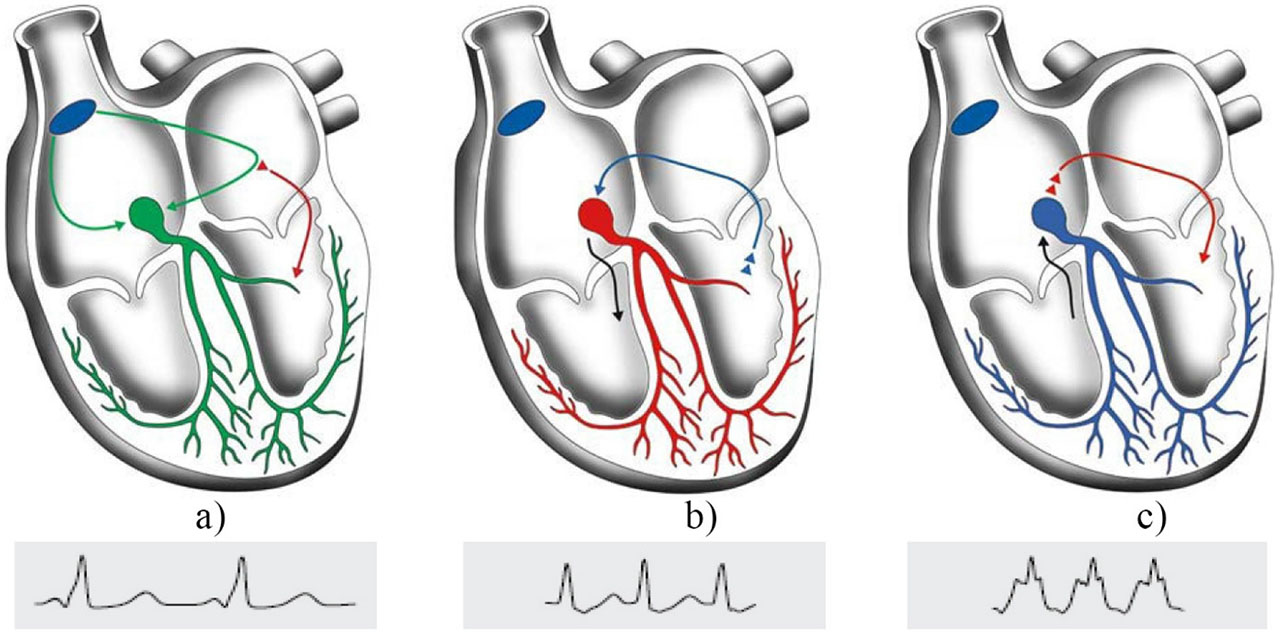
Figure 1.
a) Sinus rhythm with preexcitation - Anterograde conduction occurs through the AV node (green) and the AP (red). Due to the faster conduction through the AP, part of the ventricular myocardium depolarizes earlier than the rest, which manifests as a delta wave on the surface ECG. b) Orthodromic AVRT - During tachycardia, anterograde conduction occurs exclusively through the AV node (red), as the AP has a longer refractory period. However, the impulse returns from the ventricles to the atria via the AP (blue). c) Antidromic AVRT - In this case, the AV node reaches its refractory period earlier than the AP, so anterograde conduction occurs exclusively via the AP (red), while retrograde conduction occurs through the AV node (black).
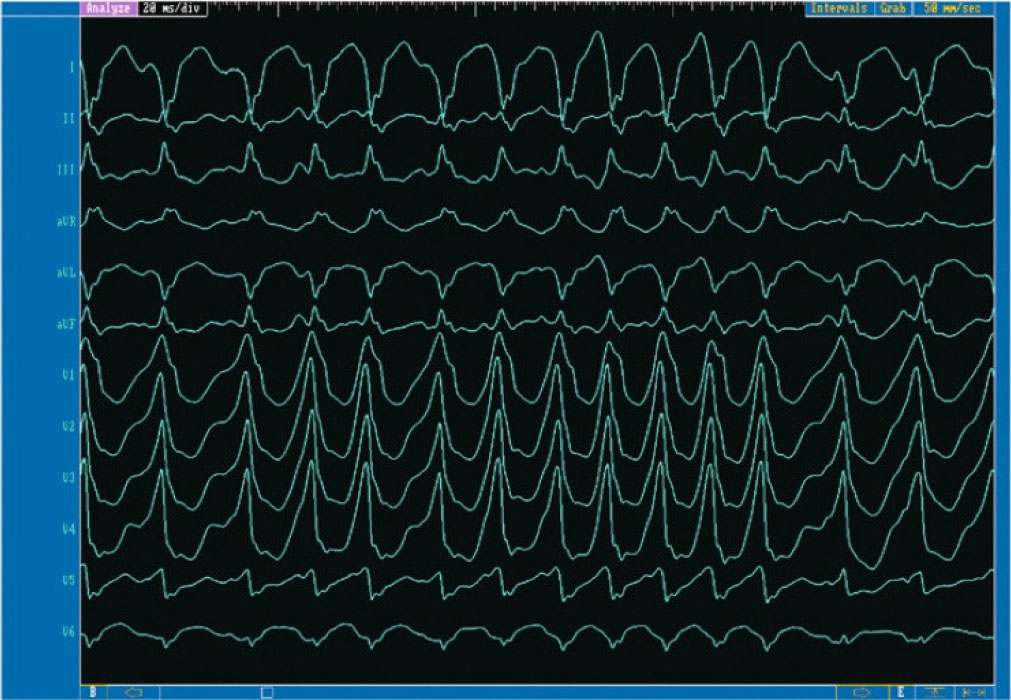
Figure 2.
12-lead surface ECG recording showing atrial fibrillation and antidromic AVRT (minimum RR interval 225 ms).
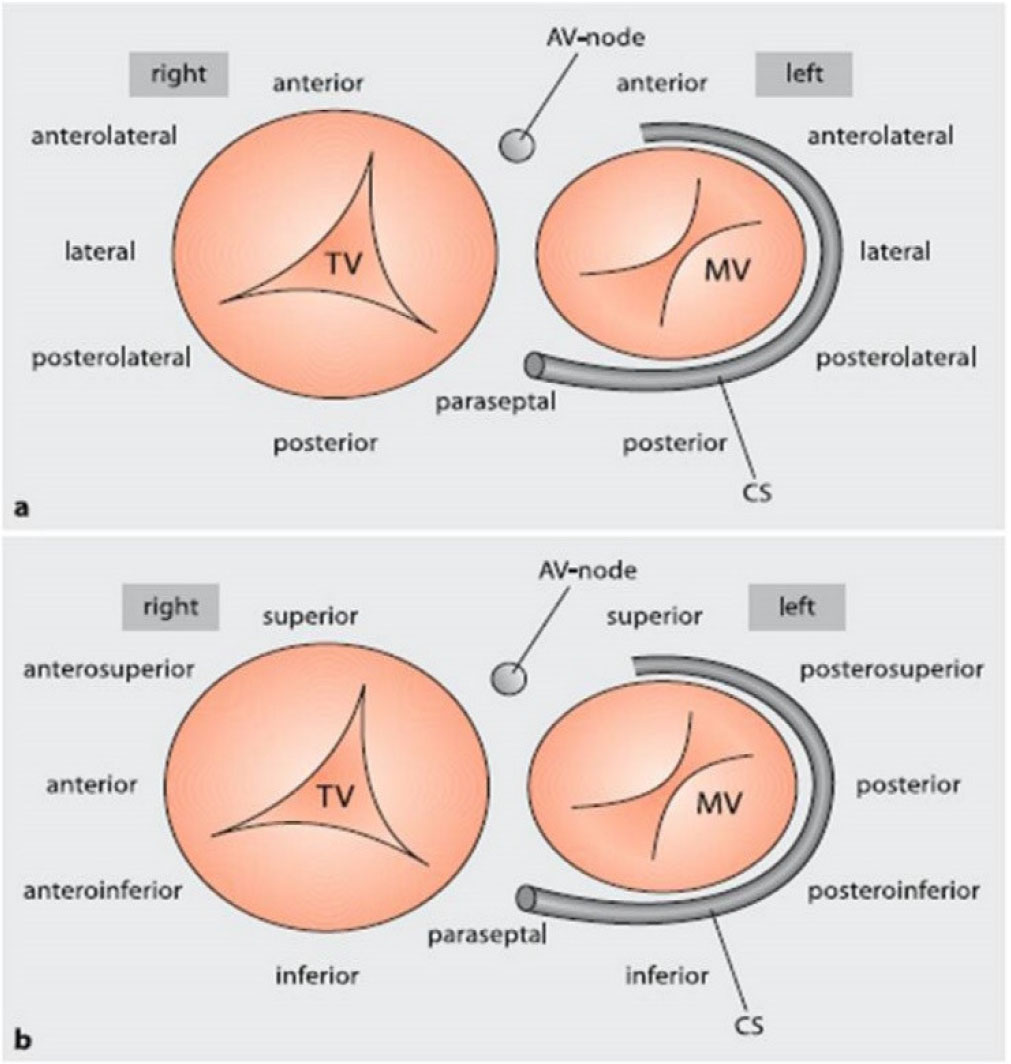
Figure 3.
Old (a) and new (b) nomenclature for the localization of APs around the AV junction.
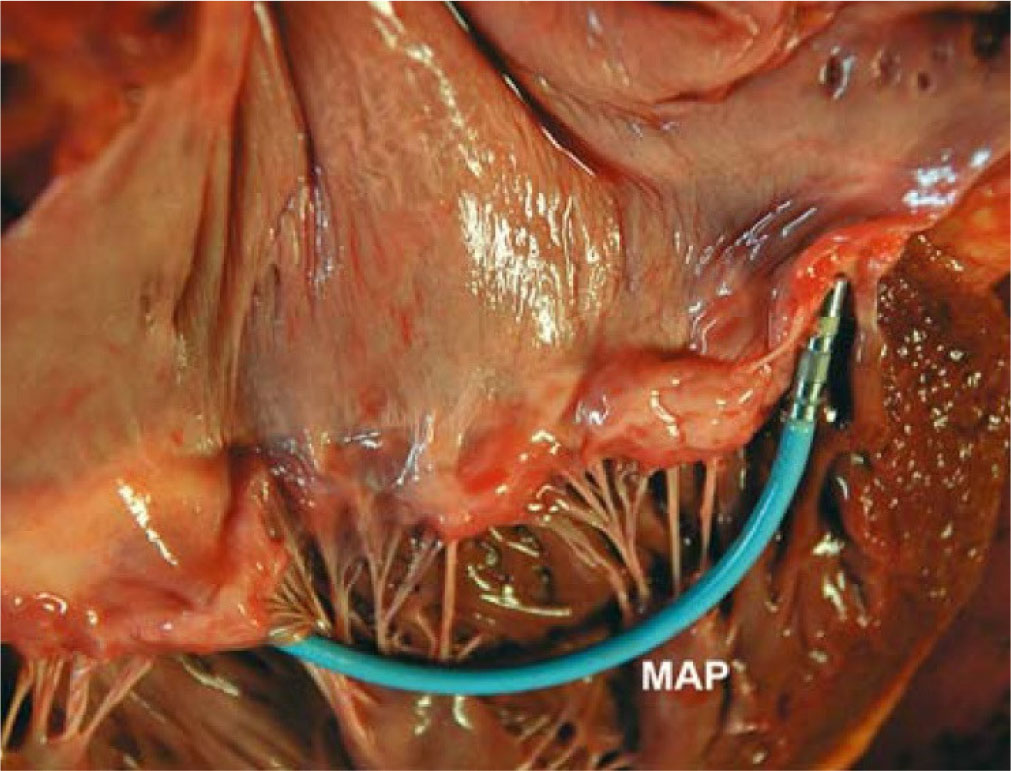
Figure 4.
Positioning of the ablation catheter (MAP) through the AV junction at the lateral position of the mitral annulus.
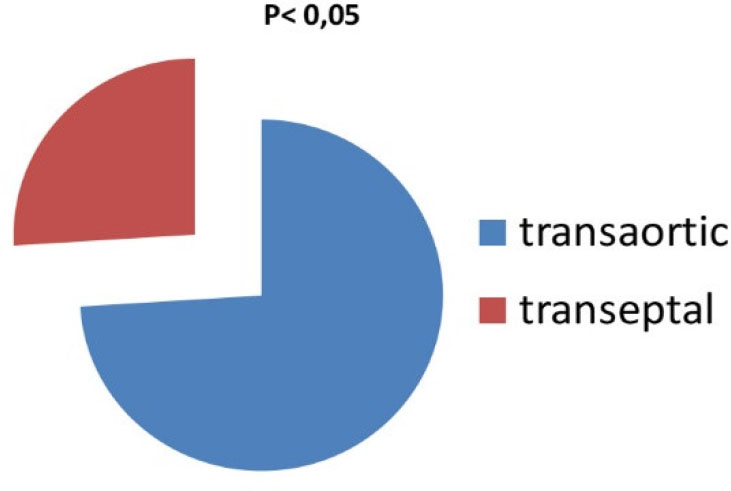
Figure 5.
Access routes to the AP along the mitral annulus for radiofrequency ablation (RFA).
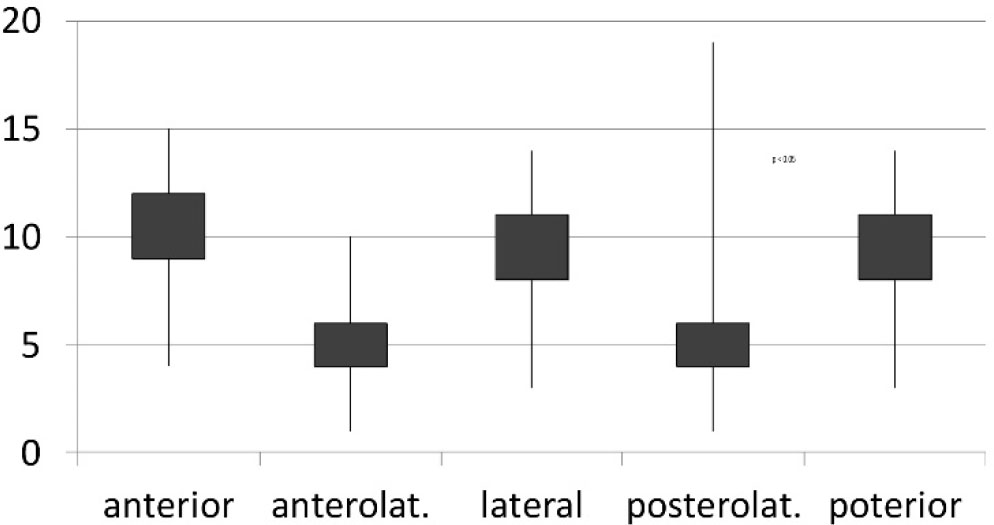
Figure 6.
Procedure duration (in minutes) for different localizations of left-sided APs; p< 0,05.
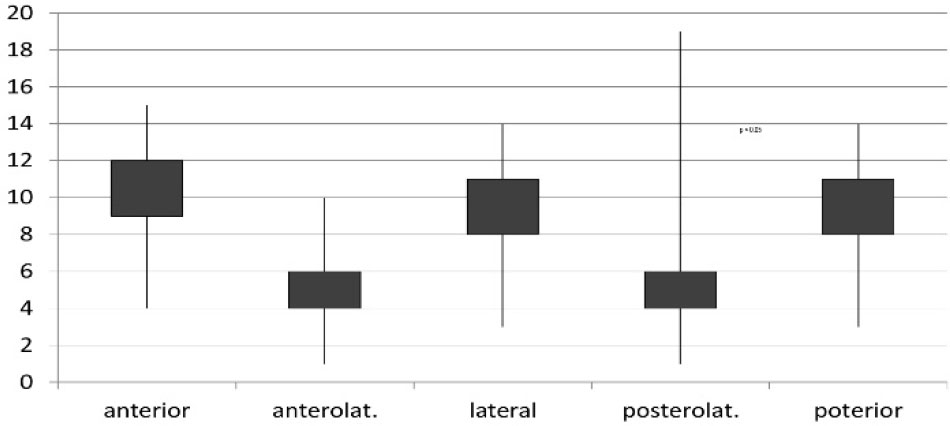
Figure 7.
The difference in fluoroscopy exposure duration during ablation, among the five groups, was not significant (p = 0.078).
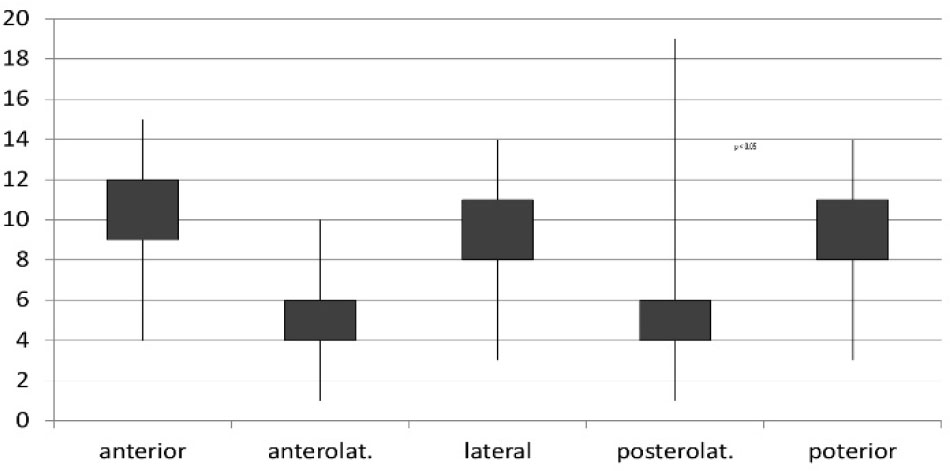
Figure 8.
Number of applied RF pulses depending on AP localization; (p < 0.05).
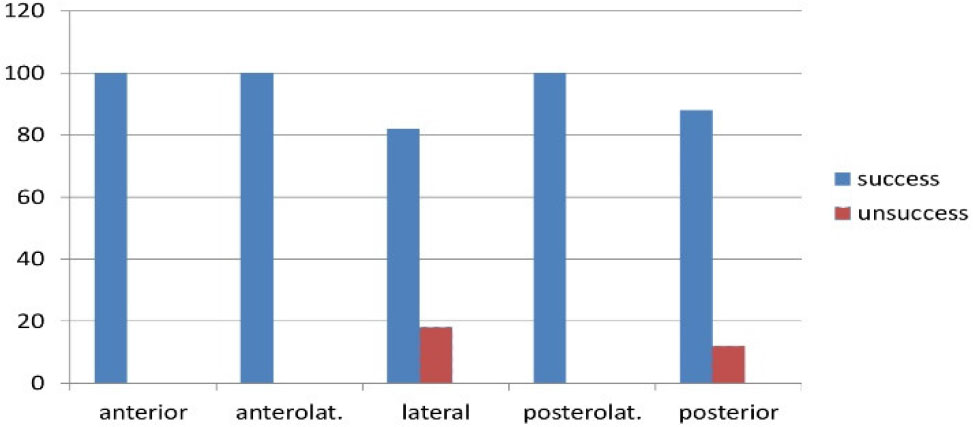
Figure 9.
Primary success rate of the procedure by group, depending on AP localization along the mitral annulus; p=0,672
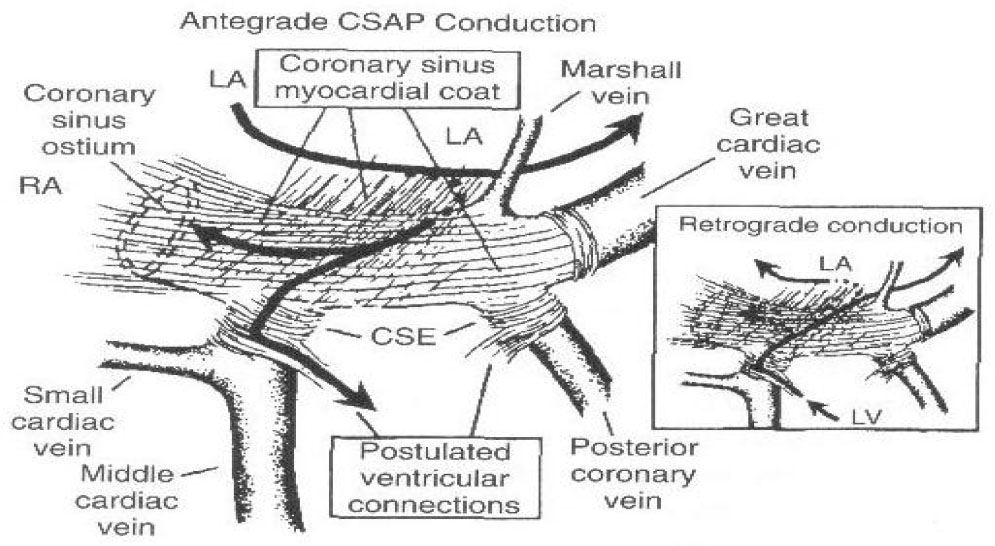
Figure 10.
Schematic representation of possible anatomical connections between the musculature of the left atrium (LA) and right atrium (RA) via the coronary sinus (CS) and the myocardium of the left ventricle (LV).