
INTRODUCTION
The atria are electrically isolated from the ventricular myocardium by the tricuspid and mitral annuli. The only connection between these two electrical units is the specialized conduction system, consisting of the atrioventricular (AV) node and the His-Purkinje system1.
In cases of incomplete embryonic separation, an additional connection, referred to as an accessory pathway (AP), persists between the atria and ventricles in a form of muscular bundle2. This congenital anomaly results in atrial electrical impulse activating part or the entire ventricular myocardium earlier than expected if activation were to occur exclusively via the AV node3.
Preexcitation is diagnosed based on a standard 12-lead electrocardiogram (ECG) that reveals: a delta wave—a characteristic initial portion of the QRS complex, PQ interval <120 ms, and QRS duration >120 ms. The prevalence of manifest preexcitation in the general population is 0.3%5.
Electrophysiological Characteristics of Accessory Pathways (APs)
The mechanism of atrioventricular reentry tachycardia (AVRT) in Wolff-Parkinson-White (WPW) syndrome, involves both the AV node and the APs, which connect the atria and ventricles forming a circular impulse movement-macroreentry (Figure 1). AVRT can be classified as:
Orthodromic - characterized with anterograde conduction through the AV node and retrograde conduction via the AP, referred to as a concealed AP since it is not detectable in sinus rhythm (20–30% of cases).
Antidromic - characterized with anterograde conduction through the AP and retrograde conduction via the AV node, which is associated with manifest preexcitation.
Bidirectional - characterized with conduction occurring in both directions.
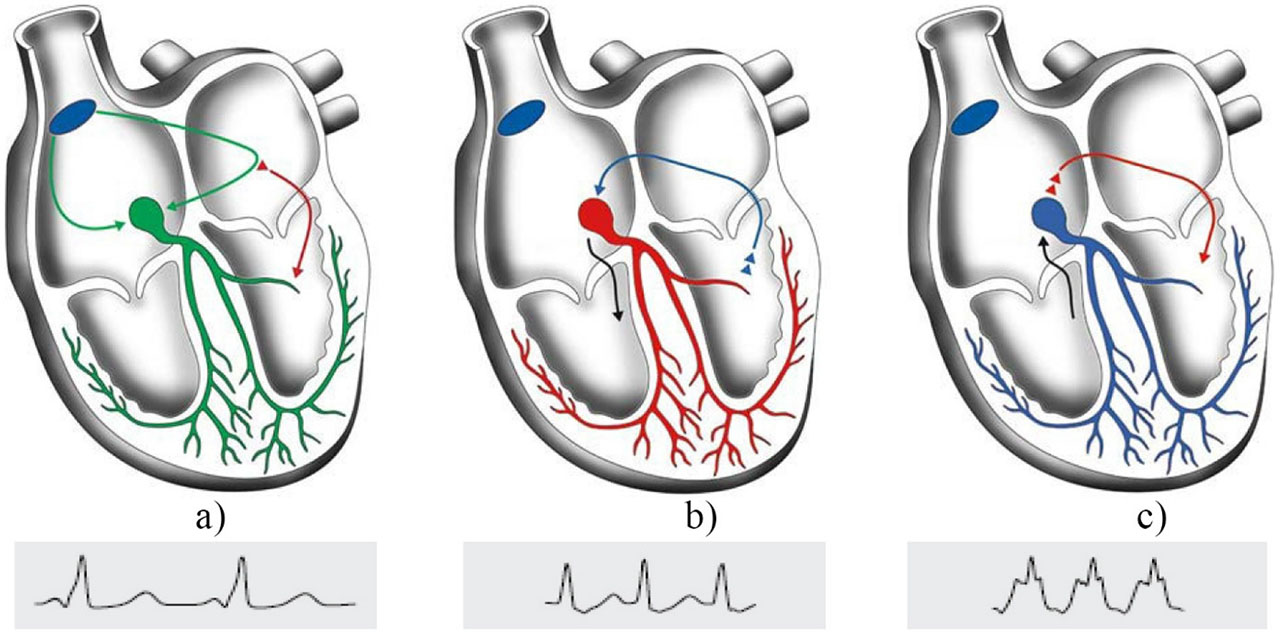
Figure 1.
a) Sinus rhythm with preexcitation - Anterograde conduction occurs through the AV node (green) and the AP (red). Due to the faster conduction through the AP, part of the ventricular myocardium depolarizes earlier than the rest, which manifests as a delta wave on the surface ECG. b) Orthodromic AVRT - During tachycardia, anterograde conduction occurs exclusively through the AV node (red), as the AP has a longer refractory period. However, the impulse returns from the ventricles to the atria via the AP (blue). c) Antidromic AVRT - In this case, the AV node reaches its refractory period earlier than the AP, so anterograde conduction occurs exclusively via the AP (red), while retrograde conduction occurs through the AV node (black).
Orthodromic tachycardias are most prevalent (90–95%). They present with regular, narrow QRS complexes, at a heart rate of 120–250 bpm and a retrogradely conducted P wave, that appears after the QRS complex with a prolonged RP interval (long RP tachycardia)8.
Anterograde AVRT represents a minority of cases (5–10%). However, affected patients face an elevated risk of sudden cardiac death (0.1–0.6% annually), which rises to 40% in patients who develop concurrent atrial fibrillation (AF) or rapid atrial flutter (Figure 2).
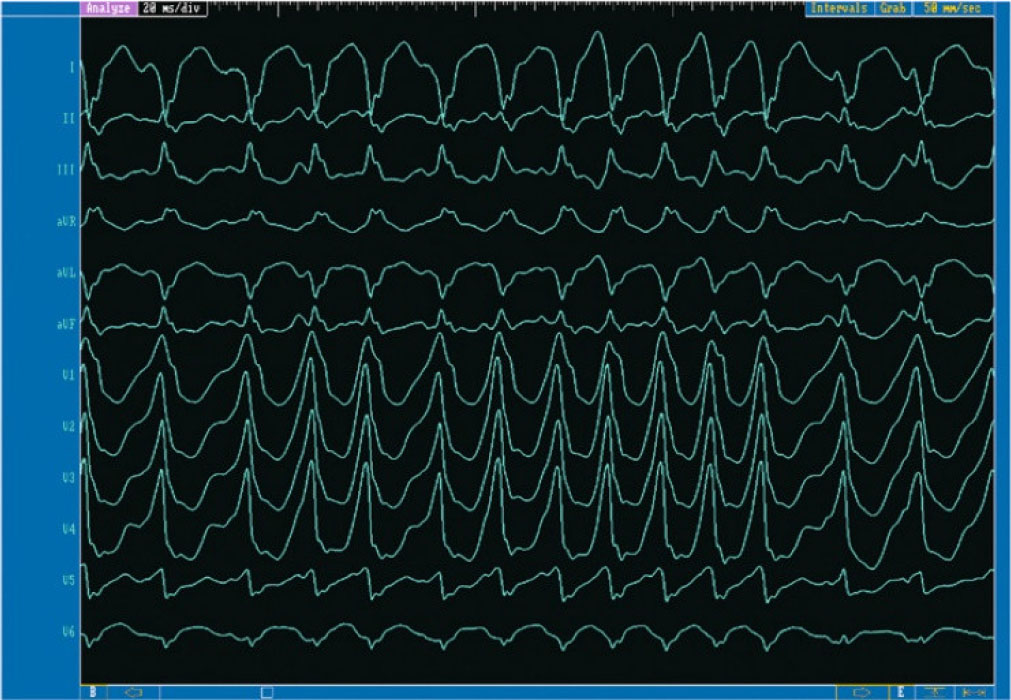
Figure 2.
12-lead surface ECG recording showing atrial fibrillation and antidromic AVRT (minimum RR interval 225 ms).
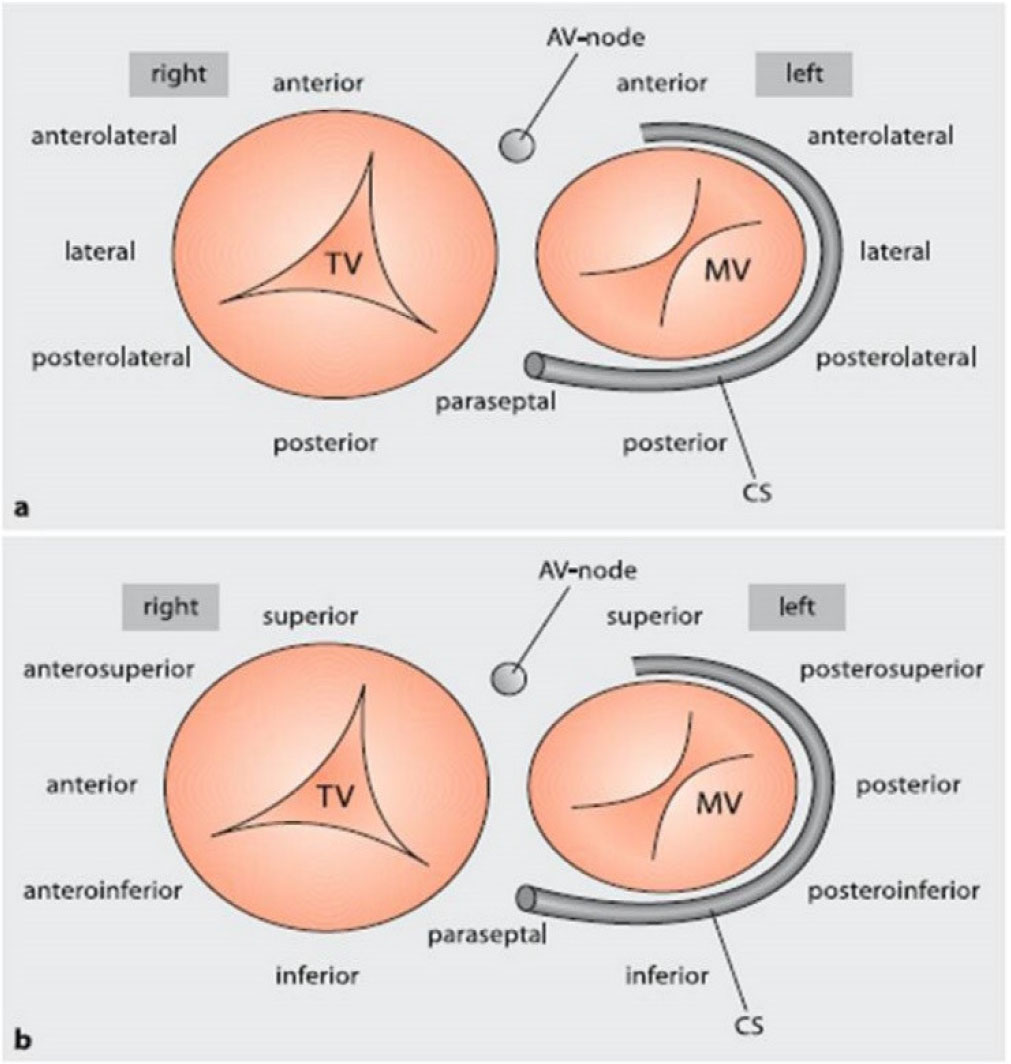
Figure 3.
Old (a) and new (b) nomenclature for the localization of APs around the AV junction.
The atrial insertion of an AP on the MA is typically discrete and closely aligned with the annulus. In contrast, ventricular connections are often more extensive, exhibiting branching patterns with multiple connection points that may be located farther from the annulus. This can result in activation of different ventricular regions, thereby affecting the ECG morphology and delta wave polarity. Although several algorithms have been proposed (e.g., Avila A, 1995; Milstein S, 1987; Arruda et al.12,13), these tools provide general guidance rather than a precise anatomical localization tool of the AP.
Direct mapping of the MA is performed by systematically advancing the mapping catheter along the annular circumference to identify sites with optimal signals (Figure 4). This procedure can be carried out using either of the following approaches:
- Transaortic (retrograde) approach - via femoral artery puncture
- Transseptal (anterograde) approach - via femoral vein puncture, under fluoroscopic and intracardiac echocardiography (ICE) guidance.
Both techniques are considered complementary, and it is recommended that the operator should be proficient in both approaches to optimize procedural success. Previous studies have demonstrated no significant differences between the two in terms of procedure duration, fluoroscopy time, complication rates, or success rates, which range from 90% to 100%, with a recurrence rate of 5%15,16.
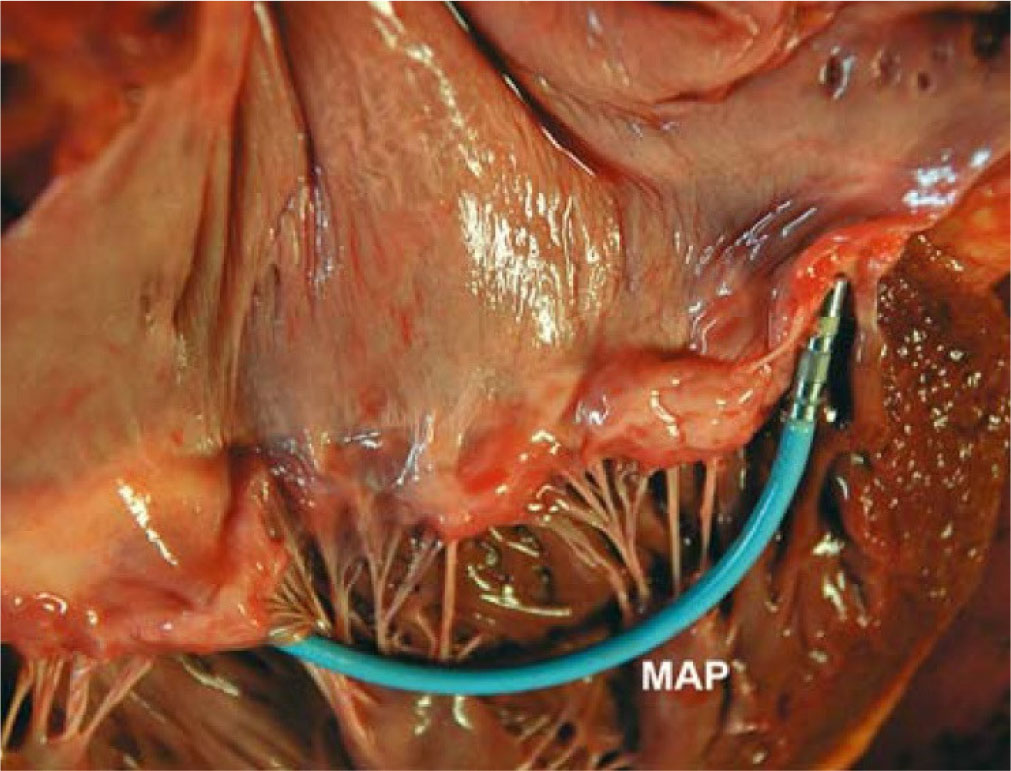
Figure 4.
Positioning of the ablation catheter (MAP) through the AV junction at the lateral position of the mitral annulus.
Study Objective
The objective of this study was to evaluate and compare the clinical outcomes of RFA in the treatment of manifest WPW syndrome in patients with left-sided APs (anterior, anterolateral, lateral, posterolateral, and posterior). The study aimed to assess and compare the mean procedure duration, fluoroscopy exposure time, the number of applied RF pulses, and the incidence of intervention complications. Additionally, it sought to determine the primary procedural success rate and the three-month recurrence rate, stratified by the anatomical location of the APs along the MA.
Methodology
This study enrolled 58 consecutive patients diagnosed with WPW syndrome who underwent RFA at the Institute for Cardiovascular Diseases Dedinje in Belgrade between February 1st, 2018, and June 30th, 2019. Indications for RFA were determined in accordance with American College of Cardiology/American Heart Association (ACC/AHA) guidelines.
All patients exhibited manifest preexcitation on surface ECG, and experienced frequent episodes of paroxysmal supraventricular tachycardia (PSVT) that were resistant to pharmacological prophylaxsis with at least one antiarrhythmic drug. In all cases the AP was localized along the MA, consistent with left-sided AP.
All antiarrhythmic medications were discontinued 10 days prior to the procedure.
Written informed consent was obtained from all patients after being thoroughly informed regarding the nature of the procedure, its expected efficacy, and potential risks and complications.
The ablation procedures were conducted in a dedicated electrophysiology laboratory, utilizing either a retrograde transaortic or an anterograde transseptal approach, depending on anatomical and procedural considerations. Procedural success was defined as the complete elimination of the AP, confirmed by the absence of preexcitation on post-ablation ECG.
Follow-up evaluations were conducted three months following the ablation procedure. Primary ablation success, or clinical cure, was defined as the absence of tachycarrythmia recurrence and no evidence of preexcitation on a both 12-lead ECG and 24-hour Holter monitoring. In cases of recurrence, patients underwent a repeated ablation procedure.
Patients were stratified into five groups based on the anatomical localization of the AP: anterior, anterolateral, lateral, posterolateral, and posterior localization.
Statistical analysis was performed to compare the following variables across these five groups: type of AP access (retrograde vs. anterograde), presence of AF, total procedure duration, fluoroscopy exposure time, number of applied RF pulses, primary procedural success, complication rates, recurrence rates, and final procedural success.
Differences in continuous variables (procedure duration, fluoroscopy exposure, number of applied RF pulses) across all five AP localization groups were analyzed using analysis of variance (ANOVA). Differences between specific features were assessed using the Student's t-test.
For categorical variables (type of AP access, presence of AF, acute procedural success, recurrence, need for reablation, final success, and complication rates), statistical significance was determined using the Chi-square (χ2) test.
RESULTS
Between February 2018. and June 2019., a total of 58 patients with manifest WPW syndrome and left-sided APs localized along the MA were treated at the Institute for Cardiovascular Diseases Dedinje. Of these, 26 patients were female. The mean age of the study population was 35.2 ± 11.4 years, with ages ranging from 16 to 80 years. There was no significant difference in age distribution between sexes (mean age for women: 35.9 ± 12.4 years; men: 35.8 ± 12.2 years; p = 0.784).
All patients demonstrated manifest preexcitation on surface ECG, accompanied by PSVT that was refractory to pharmacological therapy. During the electrophysiological study (EPS), left sided APs localized along the MA were confirmed, with anterograde or bidirectional conduction of impulses.
The distribution of patients according to AP localization was as follows: anterior (n=2), anterolateral (n=6), lateral (n=28), posterolateral (n=5), and posterior (n=18).
There were no significant differences among these groups with respect to mean age (anterior: 35.7 ± 13.2 years; anterolateral: 36.1 ± 12.9; lateral: 36.4 ± 13.1; posterolateral: 35.4 ± 12.7; posterior: 35.9 ± 13.1; p = 0.973) or sex distribution (p = 0.237).
AF was documented before the procedure in 9 patients (15.5%).
The transaortic (retrograde) approach was utilized significantly more frequently (43 patients, 74.1%) than the transseptal (anterograde) approach (15 patients, 25.9%; p < 0.05) (Figure 5).
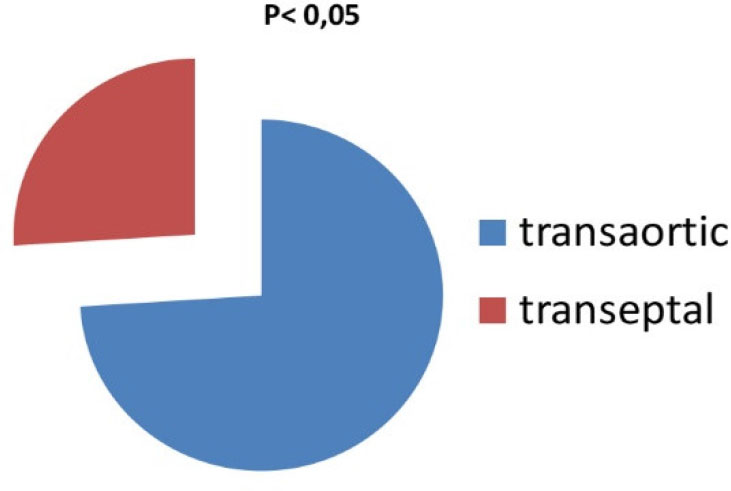
Figure 5.
Access routes to the AP along the mitral annulus for radiofrequency ablation (RFA).
The mean procedure duration varied by AP localization as follows: anterior - 60.0 ± 26.0 min, anterolateral - 45.2 ± 28.4 min, lateral - 73.9 ± 27.9 min, posterolateral - 59.1 ± 25.5 min, and posterior - 83.1 ± 29.6 min (p < 0.05; Figure 6). The procedure duration involving posterior APs was significantly longer compared to those involving posterolateral, anterolateral, and anterior APs (p < 0.05). In addition, lateral APs were associated with a significantly longer procedure time compared to anterolateral APs (p < 0.01).
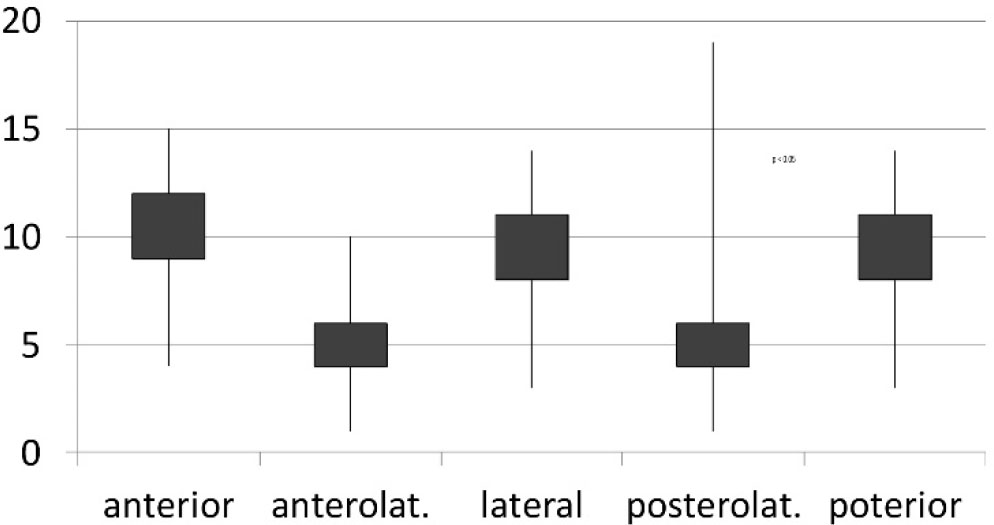
Figure 6.
Procedure duration (in minutes) for different localizations of left-sided APs; p< 0,05.
Fluoroscopy exposure times by AP localization, with the following averages: anterior - 12.1 ± 9.3 min, anterolateral - 8.5 ± 7.4 min, lateral - 20.2 ± 10.9 min, posterolateral - 14.6 ± 8.7 min, and posterior - 16.0 ± 9.8 min for APs (p = 0.078;
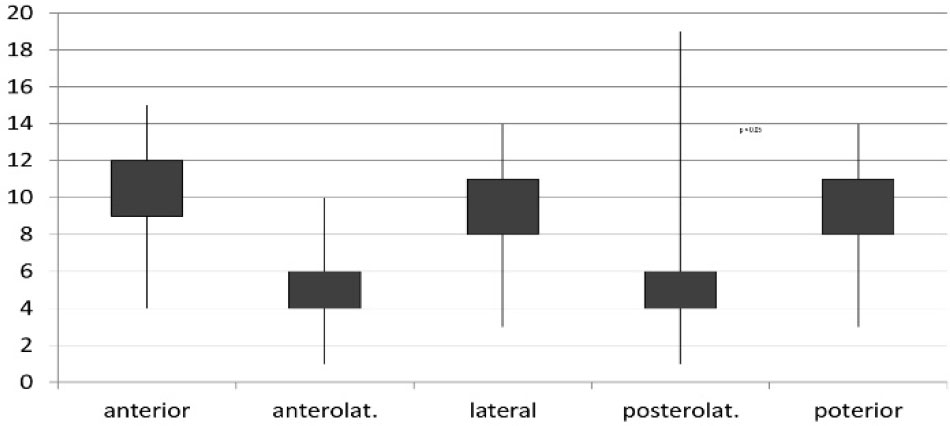
Figure 7.
The difference in fluoroscopy exposure duration during ablation, among the five groups, was not significant (p = 0.078).
Ablation required an average of 9.0 ± 4.5 pulses for anterior, 4.3 ± 4.7 for anterolateral, 8.1 ± 5.8 for lateral, 4.0 ± 2.9 for posterolateral, and 8.1 ± 4.2 for posterior APs (p < 0.05; Figure 8).
Significantly fewer RF pulses were delivered for anterolateral and posterolateral APs ablation than for other left-sided localizations (p < 0.05).
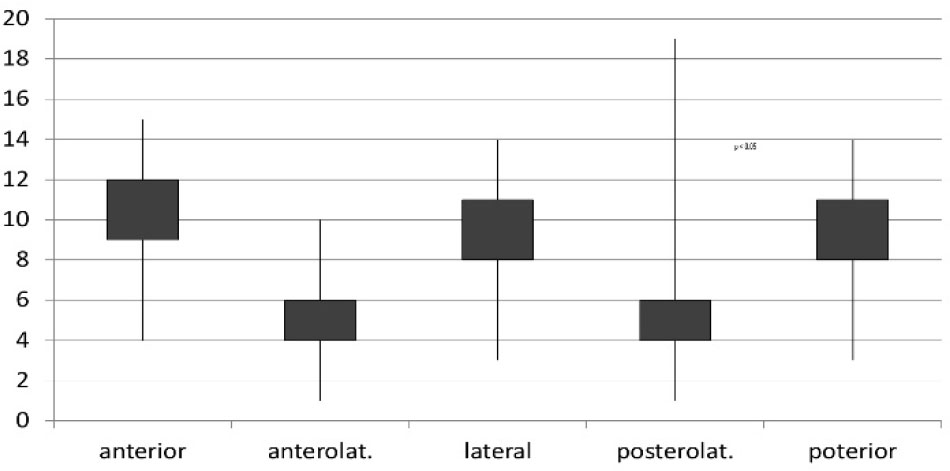
Figure 8.
Number of applied RF pulses depending on AP localization; (p < 0.05).
The primary success rate of the procedure was achieved in 51 patients (87.9%). The first ablation was successful in all patients with posterolateral, anterolateral, and anterior APs (100%), compared to 88.9% for posterior and 82.1% for lateral APs. However, intergroup differences were not significant (p = 0.348; Figure 9).
Recurrence after three-month follow-up occurred in 4 patients (6.8%) of initially successful ablations. A higher recurrence rate was noted in lateral (10.7%) and posterior APs (5.5%) versus other localizations along the MA, although this difference did not reach statistical significance (p = 0.672).
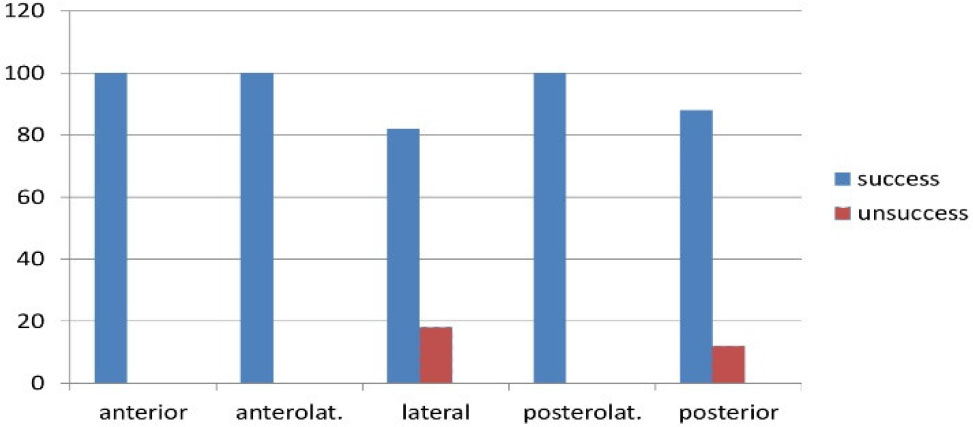
Figure 9.
Primary success rate of the procedure by group, depending on AP localization along the mitral annulus; p=0,672
Reablation, a repeat ablation procedure, was required in 12 patients (20.7%), including 8 patients with initial procedural failure and 4 patients with WPW syndrome recurrence. The transseptal approach was employed in reablation procedures.
Stratified by anatomical location, reablation rate was 15% (7 patients) with lateral APs 17.7% for posterior APs (5 patients), demonstrating a statistically significant difference between these groups (p < 0.05).
A complete elimination of the APs, indicating final treatment success, was achieved in 55 patients (94.8%). Ablation was unsuccessful in three patients, all of whom were with lateral AP localization, resulting in a success rate of 89.3% within this subgroup. However, this difference in ablation success across various AP localizations was not statistically significant (p = 0.421).
Single complication was observed in a patient with lateral AP localization, who underwent a successful ablation via the transseptal approach. The complication was manifested as a small pericardial effusion, which resolved spontaneously.
DISCUSSION
This study involved 58 consecutive patients with WPW syndrome who underwent RFA at the Institute for Cardiovascular Diseases Dedinje. All patients exibited manifest preexcitation on surface ECG, experienced PSVT unresponsive to medical therapy, and had an AP pathway localized to the left of the AV node.
The most common AP localization along the MA was on the free wall of the left ventricle (LV) and atrium (28 lateral APs identified). This was followed by 18 posteroseptal APs in the posterior region, while only 2 APs were found in the anteroseptal region. These findings are fully consistent with previously published studies.33,34
One female patient was diagnosed with two APs: a posterior AP exhibiting anterograde conduction and a lateral AP with bidirectional conduction. The presence of multiple APs is clinically significant due to their association with an increased risk of sudden cardiac death, particularly when the effective refractory period (ERP) of the AP is short (less than 270 ms), indicating high conductivity35. When such high conductivity APs are present alongside AF, there is a risk of bypassing the normal AV conduction, potentially leading to the degeneration of AF into ventricular fibrillation. The annual risk of sudden cardiac death in patients with WPW syndrome is estimated to range from 0.1% to 0.6%35.
There was no significant age difference between male (35.8 ± 12.2 years) and female patients (35.9 ± 12.4 years). In addition, no differences in age or sex were observed among the five study groups.
Although the transaortic (TA) and transseptal (TS) approaches are generally considered complementary - with previous studies24,25 reporting no significant differences in procedure duration, fluoroscopy exposure time, number of RF energy applications, or complication rates (Montenero: 100% TA and TS; Katritis: 87% TA, 90% TS; Lesh: 85% TA and TS)21,24 - in our study, the TA approach was used significantly more often accounting for 74.1% of procedures.
The TS approach was avoided due to the risk of potential complications, such as atrial wall perforation with consequent tamponade or aortic bulb perforation (major complications rates reported at 1.3%)20,21. It was used only in cases in which catheter positioning via the TA approach was not feasible or in reablation procedures following a primary ablation failure with the TA approach.
One complication (1.7%) occurred during a TS puncture for ablation of lateral AP, presenting as a minor effusion along the posterior wall of the LV. It resolved spontaneously within 7 days, as confirmed by echocardiographic follow-up. Minor effusions without consequent tamponade or the need for invasive intervention have been reported in 0.7% of cases in the literature19.
Minor vascular complications, such as hematomas, were observed in 2.4% of cases. The incidence of complications during ablation of left-sided APs is reported to range range from 0 to 8%, with most common reported rate of around 4%23. The majority of these are vascular in nature including hematomas, aneurysms, and AV fistulas. Thromboembolic events, such as catheter tip thrombosis, occur in approximately 2% of cases, despite the use of anticoagulation therapy22. Other complications like tamponade, cardiac perforation, and transient ischemic attacks are reported in 1.5% of cases.
Additional complications include thermal injury to the circumflex artery and, in rare cases, the left main (LM) artery21, as well as vein strictures and mural thrombi formation during ablation within the coronary sinus (CS)22.
Due to the exceptional expertise and experience of the operators at the Institute for Cardiovascular Diseases Dedinje, none of the aforementioned complications were observed during this study.
A comparison of procedure duration and fluoroscopy exposure time showed a significant difference among the groups (p < 0.05). Lateral and posterior APs required longer times for localization, catheter stabilization, and ablation, as well as greater number of RF energy pulses compared to other AP localizations.
The extended procedure duration for ablations targeting AP on the free wall is also documented in the literature22,24. This is attributed to complex anatomy of mitral valve (MV), including the presence of mitral chordae and papillary muscles.
Unlike the TA approach, the TS approach offers improved catheter maneuverability, particularly along the lateral atrial wall. However, it is associated with reduced catheter stability, which can lead to transient AP disruption. In our study, the TS approach was employed in 80% of lateral AP ablations, which is in line with recommendations from the literature23.
The posteroseptal region presents a greater level of complexity, as it includes the CS29, which is surrounded by muscle fibers from both atria. This anatomical arrangement allows muscular bundles to pass through and establish electrical connections between the atria and ventricles. These connections often involve the vein30 and ligament of Marshall (Figure 10), as well as the circumflex artery, frequently requiring epicardial mapping.
Although rare, epicardial connections (more commonly found on the right side) pose a challenge since they account for 10% of unsuccessful ablations. On the other hand, proximal CS cisterns and diverticula contribute to failure in about 8% of cases30,31.
In our study, one patient exhibited atrial insertion of a left posteroseptal AP within a CS diverticulum.
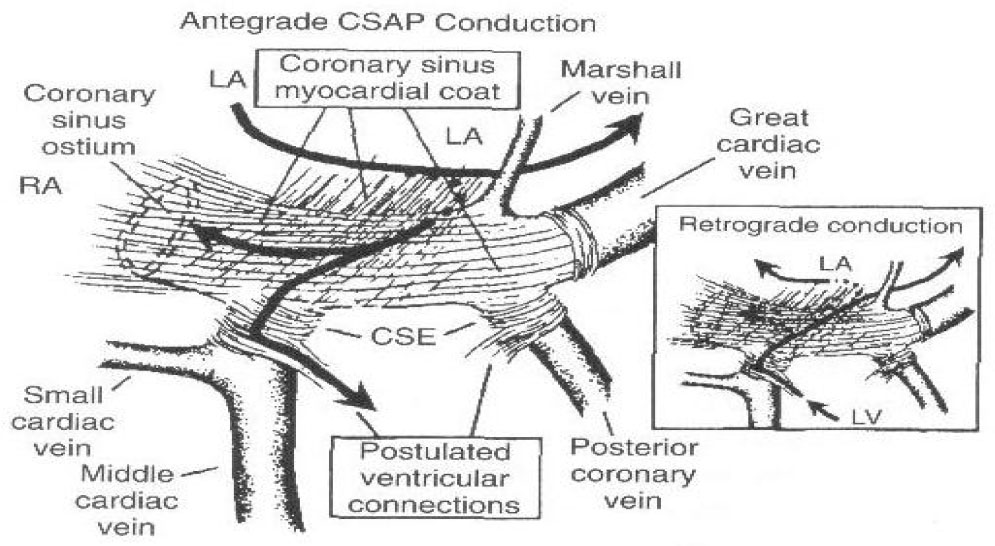
Figure 10.
Schematic representation of possible anatomical connections between the musculature of the left atrium (LA) and right atrium (RA) via the coronary sinus (CS) and the myocardium of the left ventricle (LV).
Challenging access to the ventricular insertion is the primary factor contributing to prolonged procedure durations and a higher number of RF energy pulses in cases where the APs are localized on the free wall of the LV. Comparable procedure durations have been documented in previous studies23. Notably, even longer durations have been reported when using the transseptal approach, with Fisher and Swartz reporting an average duration of 2.8 ± 0.9 hours and Manolis et al. 5.4 ± 1.9 hours32,33.
Consistent with these findings, the lowest primary success rate of RFA was observed in lateral (82.1%) and posterior APs (88.9%), in contrast to 100% success rate in all other AP localizations. Similar variations in acute RFA success rates based on AP localizations have also been previously reported in the literature34,35,36.
At the three-month follow-up, the overall recurrence rate among patients with initially successful ablation was 6.8%. When analyzed by AP localization, the highest recurrence rate was observed in the group with laterally positioned APs (10.7%), followed by posterior APs (5.5%).
Primary RFA success and recurrence rates are influenced by multiple factors. Reported recurrence rates for left-sided APs vary across studies. For instance, Vora et al. reported a reccurence rate of 16% with the TA approach, while Manolis et al. observed 11% with the same approach. In contrast, Katritis reported rates of 4% with the TA and 5% with the TS approach, Yip et al. reported 4% with the TS approach, and De Ponti documented a significantly lower rate of 1.2% using the TS approach25,32,33.
The most commonly reported causes of ablation failure include inaccessibility of the optimal ablation site in 25% of cases, catheter instability in 23%, the presence of epicardial APs in 8%, mapping inaccuracies in 11%, and AF recurrence in 3%. Furthermore, both the operator’s experience and the technical capabilities of the medical represent critical determinants of procedural success.
According to published data, the highest RFA successs rate are observed in left lateral APs, with reported rates reaching 90%34,35. In our study, the success rate for this group was 89.3%, while for posterior APs the success rate equaled to 94.5%. Although the highest final success rate (100%) in the treatment of WPW syndrome was observed in patients with anterior, anterolateral, and posterolateral APs, the difference in RFA success among various AP localizations along the MA were not statistically significant.
Limitations of the study
The study demonstrated high overall procedural success and a low complication rate, supporting the effectiveness and safety of catheter ablation in examined population. However, some limitations should be considered when interpreting the findings of this study. The study was conducted at a single tertiary care center (single-center study), which may limit the generalizability of the results to other institutions with differing patient populations, procedural protocols, and operator expertise. Although the study included 58 consecutive patients with manifest preexcitation and left-sided APs, providing a well-defined and clinically relevant sample, patients were divided across five anatomical subgroups of APs. Since some groups included relatively few patients, the statistical power to detect subtle differences, particularly in procedural success or recurrence rates, may be limited.
CONCLUSIONS
There were no significant differences in patient age or sex distribution across the various AP localizations along the MA. However, both the procedure duration and the number of RF pulses were significantly higher for ablations targeting lateral and posterior APs compared to other AP localizations. Although the fluoroscopy exposure time tended to be longer in these groups, the difference was not statistically significant.
While some variation in primary ablation success and recurrence rates was observed among patients with WPW syndrome and different AP localizations along the MA, these differences did not reach statistical significance.
Overall, RFA remains a safe and effective treatment modality for the elimination of left-sided APs, demonstrating a high success rate and low incidence of complications.