
INTRODUCTION
According to the data reported by GLOBOCAN in the year 2020, IBC constitutes the predominant malignancy diagnosed globally, with an incidence rate of approximately 48 cases per 100,000 individuals. Additionally, it represents the foremost cause of mortality attributed to cancer, with a death rate of approximately 14 per 100,000 population (1). Cancer itself represents an etiologically, histopathologically and genetically heterogeneous disease with a hereditary predisposition (2). The malignant transformation observed in IBC is the result of an accumulation of successive mutations within critical genomic regions. These regions are typically integral to the regulation of cellular processes such as growth and division, DNA repair mechanisms, and apoptosis. This accumulation disrupts the normal cellular regulatory mechanisms, leading to the uncontrolled proliferation characteristic of malignant cells (3). Despite advances in the discovery of molecular diversity and efforts in the treatment of IBC, the incidence and mortality rates are still very high. Emerging biomarkers are currently under investigation for their potential application in diagnostic evaluations, as well as in the prognostication and monitoring of disease recurrence (4, 5).
Cellular senescence is characterized by an irreversible cessation of cell division, which is accompanied by the copious secretion of cytokines and various bioactive substances, a phenomenon commonly known as the senescence-associated secretory phenotype (SASP) (6). Senescent cells can have, depending on the context, beneficial or detrimental roles in various physiological and pathological processes. Although numerous studies suggest a protective role of senescence in terms of the onset and progression of cancer, recent studies have established that senescence, especially SASP, has a significant impact on the onset and progression of cancer (7). Research has elucidated that senescent tumor stroma fibroblasts can facilitate the proliferation of pre-neoplastic or neoplastic cells, as evidenced in studies (8, 9). The conditioned medium from senescent fibroblasts exhibits a similar capacity to promote tumor cell growth, akin to that observed in co-culture with senescent fibroblasts (10, 11) indicating that SASP may promote tumor cell proliferation, at least in vitro, via paracrine factors. A fundamental method for detecting cellular senescence is the application of histochemical techniques to identify senescence-associated β-galactosidase (SA-β-GAL) (12), a technique that highlights this enzyme's activity stemming from acid lysosomal β-galactosidase, which, in senescent cells, is detected at nearly neutral pH due to its overexpression. The study of β-galactosidase activity predominantly resides within the field of oncopathology (13), where this enzyme is observable in both benign and precancerous conditions, as well as malignant tumors (14). As literature data accumulated, it became apparent that the role of SA-β-GAL in oncogenesis is multifaceted and complex. Numerous studies have shown active SA-β-GAL in primary tumor cells, with its activity recorded in 100% of primary ovarian cancer cases prior to chemotherapy (15). In malignant colon tumors, the level of SA-β-GAL was twice as high as in normal tissue (16). SA-β-GAL is also active in precancerous colon adenomas (17). Given its presence in both tumor cells and precancerous lesions, SA-β-GAL emerges as a potentially valuable prognostic marker. Therefore, the aim of our work is to investigate the potential prognostic value of SA-β-GAL in NIL and IBC.
Therefore, the aim of our study is to investigate the potential prognostic value of SA-β-GAL in NIL and IBC. In this paper, we investigated the expression of lysosomal beta-galactosidase using the GLB1 antibody, which shows the activity of SA-β-GAL. Namely, research by Lee et al. and Kurz et al., published in prestigious journals, demonstrates that lysosomal β-galactosidase is the source of SA-β-GAL activity, indicating that an increased protein level of lysosomal β-galactosidase accompanies the appearance of SA-β-GAL activity in senescent cells (18, 19). Kurz et al. have shown that the SA-β-GAL activity detected in senescent cells can be attributed to an increase in the level of a classical lysosomal enzyme (19). The GLB1 gene was found to be the source of senescence-associated β-galactosidase activity (18), and expression correlated with SA-β-GAL activity both in vitro and in vivo (20).
MATERIALS AND METHODS
Study Design
This investigation adhered to the ethical standards delineated in the Declaration of Helsinki, receiving clearance from the Ethics Committee under the reference number 01/17/2290. The research cohort comprised 147 individuals diagnosed with breast cancer, all of whom received their diagnosis and underwent treatment at the University Clinical Center in Kragujevac, Serbia.
For the purpose of conducting a comprehensive pathological examination, specimens collected through surgical procedures such as tumorectomy, quadrantectomy, and mastectomy, which included the dissection of regional lymph nodes, were stained using Hematoxylin and Eosin (H&E). To preclude the potential induction of senescence in tumor cells by prior therapeutic interventions, specimens from patients who received neoadjuvant treatments, such as chemotherapy or radiotherapy, were systematically excluded from the analysis. The examination included a detailed observation for the presence of non-invasive lesions, encompassing in situ lobular and ductal carcinoma, lobular and ductal atypical hyperplasia, alongside normal ductal and acinar epithelium within the IBC samples and adjacent tissues. The IBC cases were systematically categorized into three primary histological classifications: ductal, lobular, and a collective category for other histological variants. Concurrently, a comprehensive evaluation of critical macroscopic, pathological, and prognostic indicators was undertaken. This evaluation encompassed tumor dimensions, lymph node involvement, histological classification and grade, as well as the examination of intra and peritumoral mononuclear infiltration, necrosis, and indicators of vascular, lymphatic, and perineural invasion (21).
Furthermore, the classification of IBC into four molecular categories—Luminal A, Luminal B, HER2 positive, and Triple-Negative Breast Cancer (TNBC)—was conducted, alongside the determination of the disease stage (22).
Immunohistochemical (IHC) procedure
The immunohistochemical analysis was meticulously executed following a standardized protocol. Initially, tissue specimens were preserved in a 10% solution of Neutral Buffered Formalin, stabilized at a pH of 7.0, and subsequently embedded in paraffin. For each participant, a representative tissue section from the paraffin block was selected for IHC processing. Sections, with a thickness of 4 μm, were affixed to adhesive slides (SuperFrost® Plus, VWR, Leuven, Belgium), followed by deparaffinization in xylene and gradual rehydration through a series of alcohol solutions of diminishing concentrations. Prior to antibody incubation, epitope retrieval was conducted, succeeded by the inhibition of endogenous peroxidase activity using a 3% hydrogen peroxide solution for a duration of 5 minutes. The tissue specimens were then exposed to a mixture of primary monoclonal and polyclonal antibodies, maintained at room temperature for the suggested timeframes. The antibodies employed included, but were not limited to, mAb GLB1 (OTI1C9, 1:150, MA5-26152, INVITROGEN, USA), mAb ER (1D5, RTU, IR657, DAKO, Denmark), mAb PR (PgR636, RTU, IR068, DAKO, Denmark), pAb HER2 (1:1200, AO485, DAKO, Denmark), and Ki67 (1:200, MIB-1, IR626, DAKO, Denmark). Following the primary antibody application, sections underwent incubation with a biotinylated secondary antibody, available commercially, at room temperature for the specified period (En Vision FLEX HRP, RTU, K8000). The IHC reactions were developed using 3,3′-diaminobenzidine tetrahydrochloride (DAB), with final contrasting performed using Mayer’s hematoxylin (Hematoxylin M, HEMM-OT-1L, Biognost, Croatia), and the slides were sealed with Canada balsam. Negative controls excluded the primary antibody incubation, whereas known IBC expressions served as positive benchmarks. The slide examination was carried out under 100x, 200x, and 400x magnifications using a light microscope (AxioScop 40, Carl Zeiss, Germany), with key sections captured via a digital camera (AxioCam ICc1, Carl Zeiss, Germany).
Evaluation of IHC Staining
The evaluation of IHC staining was meticulously performed by two independent pathologists, who were not privy to the clinical follow-up data during their analysis..
The analysis of estrogen receptor (ER) and progesterone receptor (PR) expression utilized the Allred scoring system, which aggregates the proportion of tumor cells exhibiting positive nuclear staining and the intensity of the IHC staining (23). This scoring system yields a range from 0 to 8 for each sample evaluated.
For the assessment of the human epidermal growth factor receptor 2 (HER2) expression, the process adhered to established guidelines (24). The classification of all Inflammatory Breast Cancer (IBC) samples into HER2 negative (0 and 1+) and HER2 positive (3+) categories was based on the continuity and intensity of the membrane staining. Samples with equivocal HER2 expression (2+) underwent further testing using the silver in situ hybridization (SISH) technique, following which, they were definitively categorized as either HER2 positive or negative IBCs..
The expression of Ki67, a marker of cellular proliferation, was quantified as the percentage of positively staining tumor cells out of a total of 100 cells counted in the area of highest tumor proliferation. Based on a predetermined threshold value for Ki67 expression established by our laboratory, IBC samples were stratified into three categories reflecting proliferative activity: low (Ki67 <15%), medium (Ki67: 15–30%), and high (Ki67 >30%) (25, 26).
Expression of GLB1 was quantified by assessing the percentage of cytoplasmic expression in epithelial cells of invasive breast carcinoma and normal-adjacent tissue. By analyzing the expression, we defined the cut-off for GLB1. Based on the obtained results, we divided all invasive tumors into GLB1 positive (>27.5%) and GLB1 negative (≤27.5%). At the same time, GLB1 expression was read in stromal fibroblasts and classified into positive (≥1%) and negative (no staining).
Statistical data processing
For the statistical analysis of the collected data, the SPSS software (version 22.0, SRSS Inc., Chicago, IL) was employed. The methodology encompassed a variety of statistical techniques, including descriptive statistics for summarizing the data, the Mann-Whitney test and Kruskal-Wallis test for non-parametric comparisons between groups, and the χ2 test for categorical data analysis. Additionally, the Pearson or Spearman correlation coefficient was utilized to measure the strength and direction of associations between variables. The Receiver Operating Characteristic (ROC) curve analysis was conducted to evaluate the diagnostic performance of the tests, which involved determining the cut-off value, sensitivity, and specificity of the tests under consideration. The determination of these parameters enabled the assessment of the test's practical reliability in statistical analysis. The significance level was set with all reported p-values being two-sided, and a p-value of less than 0.05 was considered indicative of statistical significance.
RESULTS
General Characteristics
The study's experimental cohort comprised 147 females diagnosed with IBC, with an average age of 58 years. The age range within this group varied from a minimum of 29 years to a maximum of 84 years. There was no statistically significant correlation between age and expression of GLB1 in the examined groups, except in the in situ group (ρ=0.227, p=0.047) where a positive statistically significant correlation was shown, indicating that the expression of GLB1 increases with age. A notable observation within this cohort was the concurrent presence of in situ carcinoma (ISC) alongside IBC in 79 of the patients. Furthermore, atypical hyperplasia (AH) was identified in 82 patients, while 109 cases displayed areas of glandular parenchyma devoid of any signs of epithelial proliferation or atypia, referred to as normal epithelium (NE) of ducts and acini. The mean size of the cancerous tumors within this group was recorded at 22.5 mm. Detailed clinicopathological characteristics pertaining to the IBC cases are systematically presented in Table 1 for further examination and analysis.
Table 1.
Clinicopathological characteristics of breast cancer
| Variables | N | % | |
|---|---|---|---|
| Side | left | 66 | 44.9 |
| right | 81 | 55.1 | |
| Histological type | lobular | 18 | 12.4 |
| ductal | 123 | 84.8 | |
| other | 4 | 2.8 | |
| Histological grade | HG1 | 17 | 11.9 |
| HG2 | 73 | 51 | |
| HG3 | 53 | 37.1 | |
| Nuclear grade | NG1 | 17 | 15.2 |
| NG2 | 64 | 57.1 | |
| NG3 | 31 | 27.7 | |
| Mitotic index | grade 1 | 19 | 42.2 |
| grade 2 | 20 | 44.4 | |
| grade 3 | 6 | 13.3 | |
| Tumor necrosis | absent | 26 | 21.7 |
| present | 94 | 78.3 | |
| Desmoplasia | low | 17 | 16.3 |
| medium | 55 | 52.9 | |
| high | 32 | 30.8 | |
| Periductal elastosis | low | 19 | 20.0 |
| medium | 20 | 44.4 | |
| high | 16 | 35.6 | |
| Perineural invasion | absent | 101 | 68.7 |
| present | 46 | 31.3 | |
| Lymphatic invasion | absent | 72 | 48.9 |
| present | 75 | 51.1 | |
| Vascular invasion | absent | 113 | 76.9 |
| present | 34 | 23.1 | |
| HER2 | negative | 115 | 79.3 |
| positive | 30 | 20.7 | |
| Ki67 | low | 30 | 20..9 |
| medium | 42 | 29.4 | |
| high | 71 | 49.7 | |
| Molecular subtypes | Lum A | 30 | 20.4 |
| Lum B | 76 | 51.7 | |
| HER2 + | 19 | 12.9 | |
| TNBC | 22 | 15 | |
| T status | T1 | 48 | 35.8 |
| T2 | 64 | 47.8 | |
| T3 | 9 | 6.7 | |
| T4 | 13 | 9.7 | |
| N status | N0 | 50 | 37.3 |
| N1 | 48 | 35.8 | |
| N2 | 19 | 14.2 | |
| N3 | 17 | 12.7 | |
Expression of GLB1 in relation to cytological changes in epithelium
The expression of GLB1 exhibits a significant incremental pattern, starting from NE, progressing through AH and ISC, and peaking in IBC. Quantitatively, the average GLB1 expression levels were noted to be 15% in NE, 24% in AH, 29% in ISC, and 39% in IBC, indicating a significant upward trend (Kruskal-Wallis test, p<0.001). Notably, the comparison between the ISC and AH groups did not reveal a statistically significant difference in GLB1 expression levels (Mann-Whitney U test, p=0.211). However, statistically significant differences were observed between all other groups, underscoring distinct expression profiles across different stages and forms of breast tissue alterations (as illustrated in Figure 1A). The immunohistochemical expression of GLB1 across various histo- and cytomorphological changes is detailed in Figures 1B through 1E, providing a visual representation of these findings.
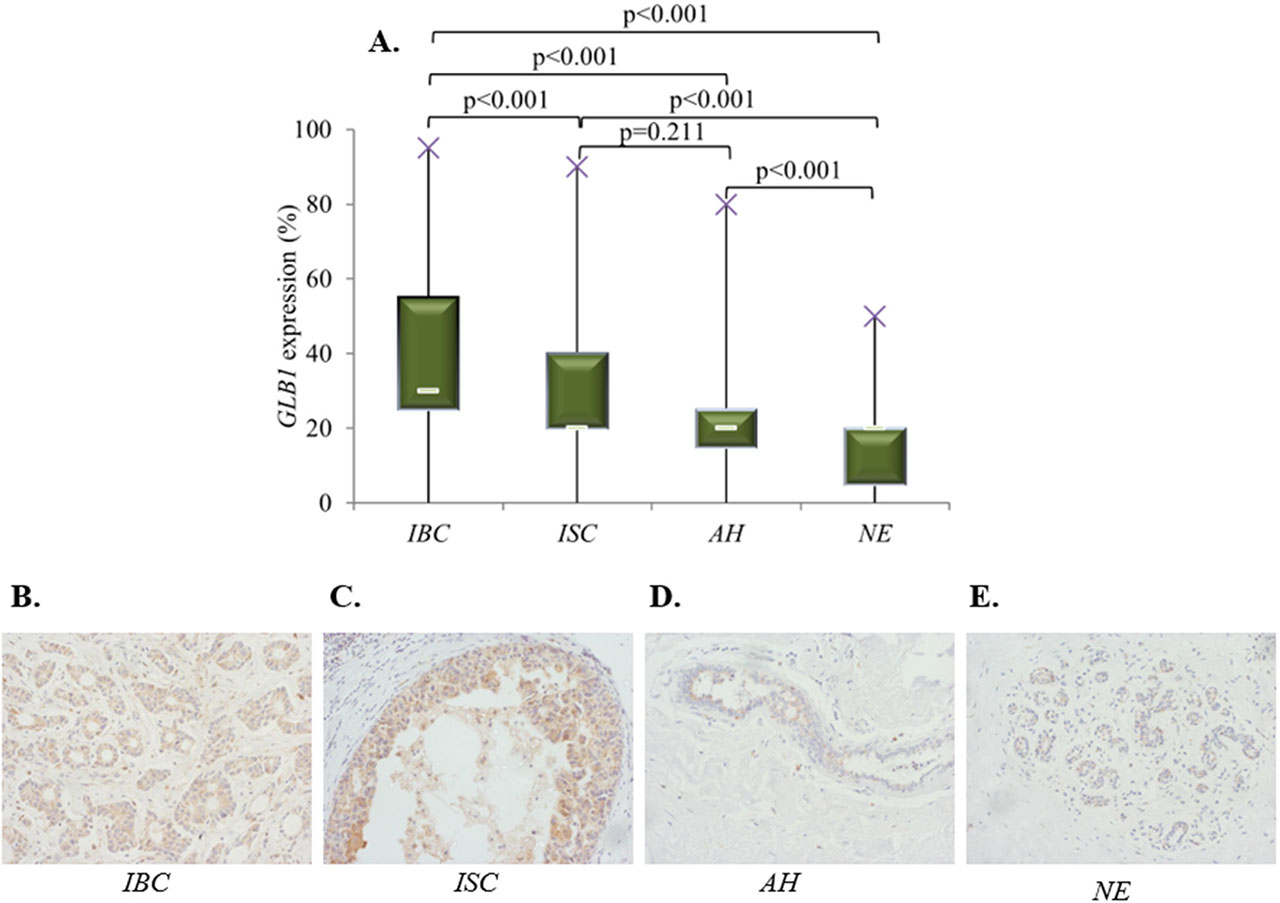
Figure 1.
Expression of GLB1 in association with cytological alterations within the epithelium.
Panel A highlights a statistically significant disparity in GLB1 expression among all evaluated groups, with the exception of the comparison between in situ carcinoma (ISC) and atypical hyperplasia (AH), where no significant difference was detected (Mann-Whitney U, p=0.211). The data is presented in terms of the median expression levels. The subsequent panels provide microscopic visualizations of GLB1 expression across different histological and cytological variations, captured through immunohistochemical analysis at an original magnification of 200x: Panel B showcases GLB1 expression in IBC; Panel C illustrates its expression in ISC; Panel D in AH; and Panel E in normal epithelium (NE), thereby offering a comprehensive visual assessment of GLB1 expression relative to the progression of epithelial cytological changes.
In exploring the relationship between GLB1 expression among the four groups specified, in connection with cytological changes in the epithelium, a pattern was discerned where an elevation in GLB1 expression within any given group was paralleled by an increase in expression levels across the remaining groups. Specifically, a rise in GLB1 expression within IBC cells was correlated with heightened expression in NIL cells. Additionally, an escalation in GLB1 expression in ISCs was observed alongside increases in AH and NE, suggesting a cascading effect of GLB1 expression enhancement across the spectrum of epithelial cell changes, as determined by Spearman's rank correlation coefficient (ρ). This trend underscores a broader systemic response or a potential interconnected regulatory mechanism influencing GLB1 expression across varying stages of epithelial transformation (as depicted in Figure 2).
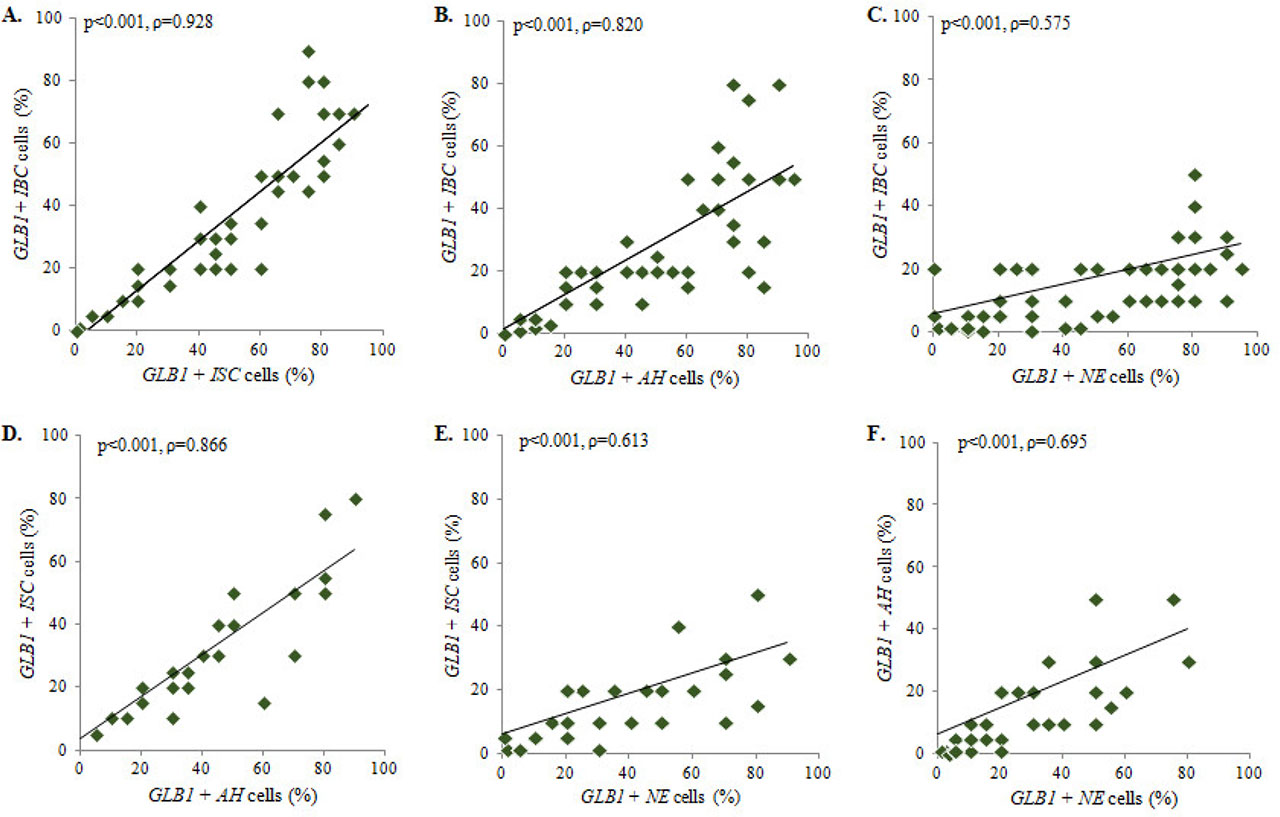
Figure 2.
Correlation of GLB1 expression between groups in relation to cytological changes in epithelium.
A robust positive correlation was consistently observed across all groups, as evidenced by the statistical outcomes: Panel A illustrates the correlation between Invasive Breast Cancer (IBC) and in situ carcinoma (ISC) with a Spearman's rho (ρ) of 0.928 (p<0.001); Panel B depicts the correlation between IBC and atypical hyperplasia (AH) with a ρ of 0.820 (p<0.001); Panel C showcases the correlation between IBC and normal epithelium (NE) with a ρ of 0.575 (p<0.001); Panel D represents the correlation between ISC and AH with a ρ of 0.866 (p<0.001); Panel E between ISC and NE with a ρ of 0.613 (p<0.001); and Panel F highlights the correlation between AH and NE with a ρ of 0.695 (p<0.001).
GLB1 expression in tumor cells in relation to the molecular subtype of IBC
The analysis revealed a statistically significant variance in GLB1 expression across the different molecular subtypes of IBC, confirmed by the Kruskal-Wallis test (p<0.001). The HER2+ subtype of IBC exhibited the most elevated GLB1 expression levels, in contrast, the TNBC subtype demonstrated the lowest expression levels of GLB1. Comparatively, the Luminal A (Lum A) and Luminal B (Lum B) subtypes of IBC did not show a statistically significant difference in GLB1 expression (Mann-Whitney U, p=0.128). However, a discernible and significant disparity in GLB1 expression was noted among all other subgroup comparisons, as detailed in Figure 3.
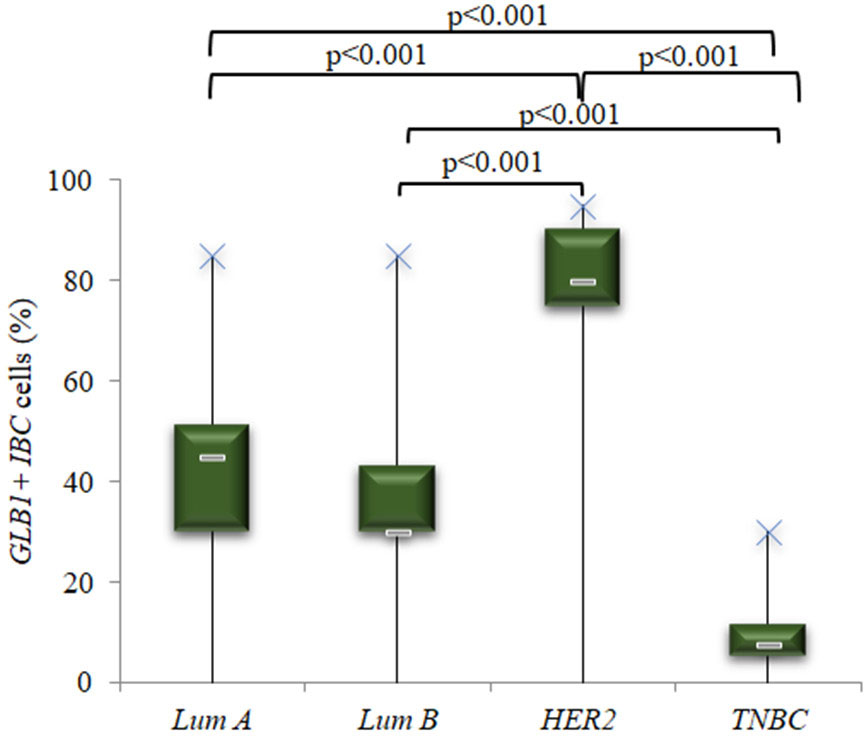
Figure 3.
GLB1 expression in different molecular subtypes of IBC.
A statistically significant difference was shown between all investigated groups except between Lum A and Lum B subtypes of IBC (Mann-Whitney U, p=0.128). The result is presented as the median.
HER2-overexpressing IBCs had significantly higher GLB1 expression values compared to GLB1-negative IBCs. In terms of expression relative to Ki67 expression, there was no significant difference between those with low, moderate, or high expression, a notable increase in the proportion of Ki67-positive cells was observed in samples exhibiting GLB1 expression (Figure 4). Other clinicopathological features of IBC were not associated with GLB1 expression.
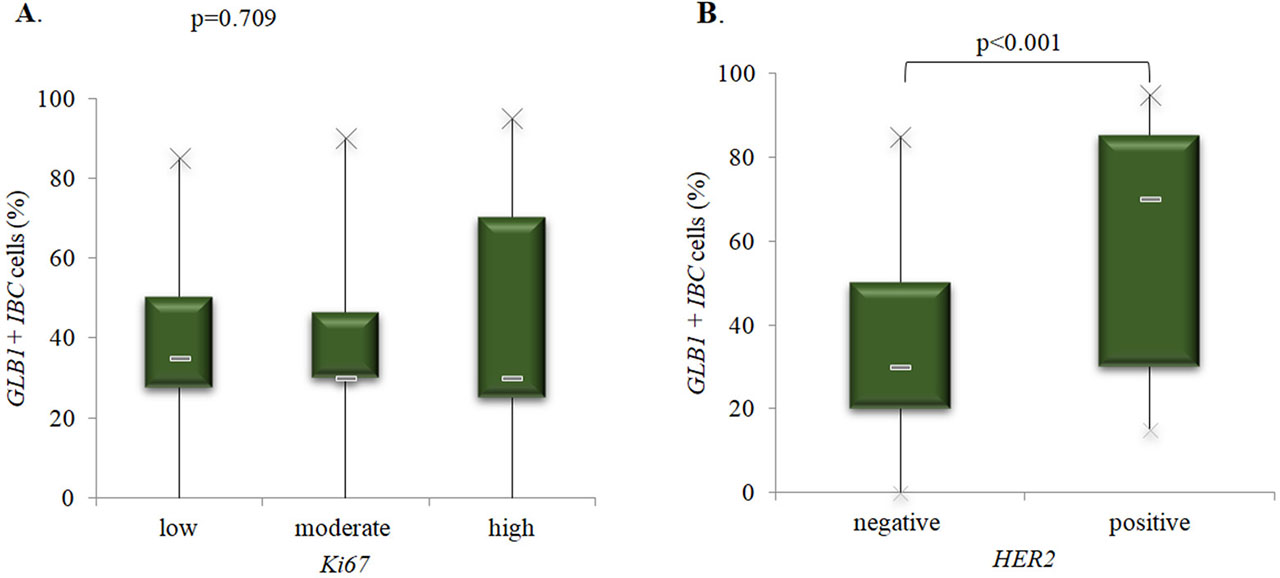
Figure 4.
Impact of Ki67 and HER2 Expression on GLB1 Levels in Tumor Cells
Panel A demonstrates that GLB1 expression in tumor cells is not influenced by the level of Ki67 expression, with the findings conveyed through median values (Kruskal-Wallis, p=0.709), indicating no statistically significant association between GLB1 expression and the proliferation marker Ki67. Conversely, Panel B illustrates a substantial difference in GLB1 expression that is contingent upon HER2 expression. This notable variance is also represented through median values, showcasing a statistically significant distinction in GLB1 expression levels in relation to HER2 status (Mann Whitney U, p<0.001).
It was found that there is no significant correlation between estrogen and progesterone receptor expression and GLB1 expression in IBC (Spearman ρ) (Figure 5).
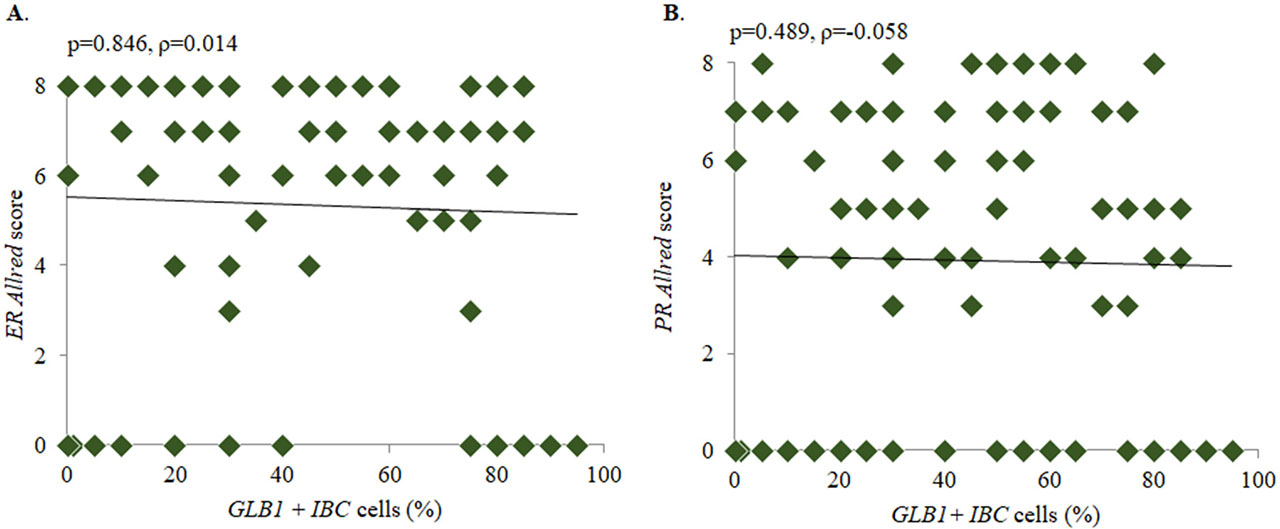
Figure 5.
GLB1 expression dependent on ER and PR expression.
The expression of ER and PR was analyzed through the Allred score. There is no statistically significant expression of GLB1 relative to the expression of A. ER (p=0.846, ρ=0.014) and B. PR (p=0.489, ρ=−0.058).
GLB1 expression as a marker of breast cancer progression
The obtained ROC curve shown in Figure 6 indicates that increased expression of GLB1 can be a reliable marker of IBC progression (AUC =0.740; p<0.001). The results of the analysis indicate that the threshold value of 27.5% of GLB1 positive tumor cells enables the separation of patients with IBC from patients with NIL (sensitivity 74.1%, specificity 80.0%).
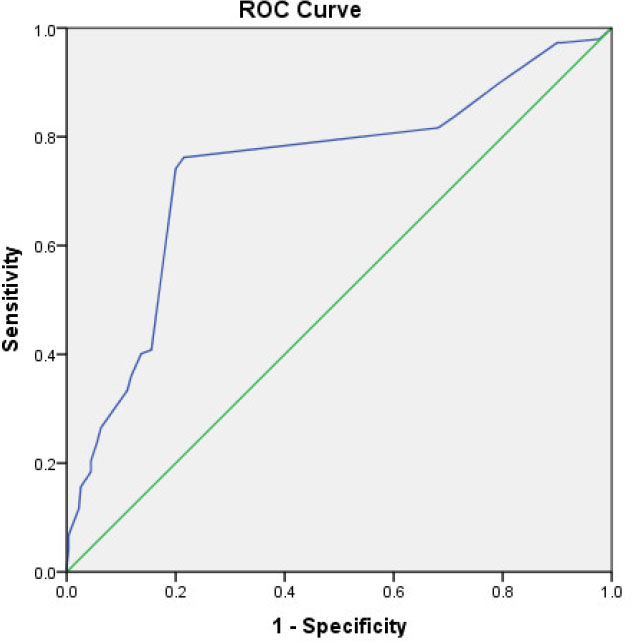
Figure 6.
Receiver Operating Characteristic (ROC) curve analysis of GLB1 expression levels in Non-Invasive Lesions and Inflammatory Breast Cancer.
The Area Under the Curve (AUC) was calculated to be 0.740, indicating a good level of diagnostic accuracy. The sensitivity of the test—its ability to correctly identify those with IBC—was 74.1%, while the specificity—its ability to correctly identify those without IBC (or with NIL)—stood at 80.0%. The threshold value for GLB1 was determined to be 27.5%.
After the analysis and the threshold value obtained, all IBCs were classified into a group with negative (≤27.5%) and positive (>27.5%) GLB1 expression (Figure 7A). Figure 7B-C shows the immunohistochemical expression of GLB1 in relation to the threshold value.
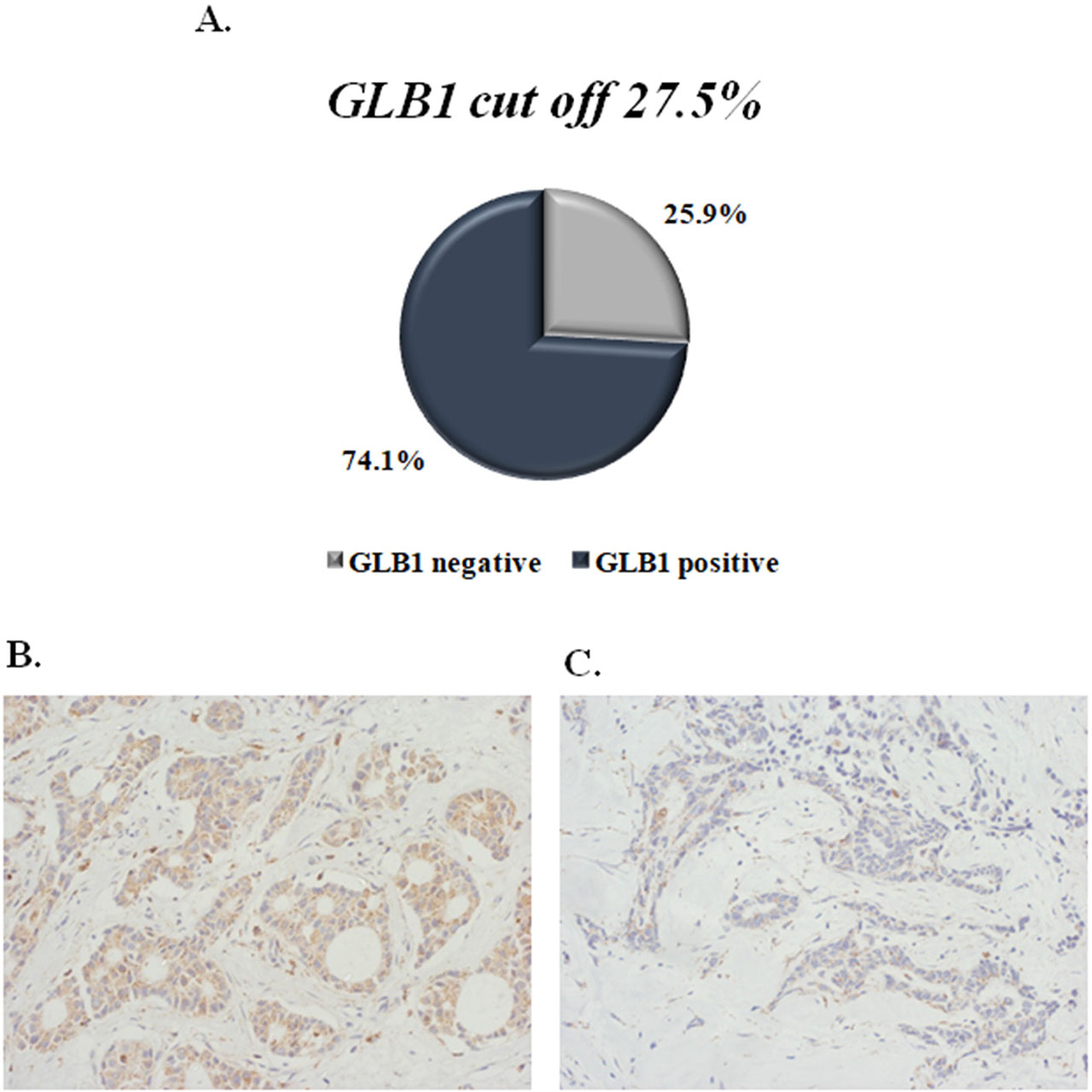
Figure 7.
A. Frequency of GLB1+ and GLB1− IBC in relation to GLB1 expression threshold. Microscopic image of GLB1 expression relative to threshold: B. GLB1+ and C. GLB1− (immunohistochemical analysis, original magnification 200x).
The association of GLB1 expression with the following clinical-pathological characteristics was shown: histological grade, nuclear grade, molecular subtype of IBC, HER2 status (Table 2). A total of 94.7% of IBCs that were negative for GLB1 expression were also HER2 negative, while 26.2% of GLB1 positives were HER2 positive. The association of HER2 expression was also shown when molecular subtypes of IBC were observed, i.e. in GLB1 negative there was no HER2+ subtype of IBC, while in GLB1 positive the percentage was 17.4%. On the contrary, the highest percentage, i.e. 55.1% of GLB1 negative belongs to the TNBC molecular subtype, while only one IBC, i.e. 0.9%, belongs to this molecular subtype of GLB1 positive.
Table 2.
Association between GLB1 expression in IBC and examined clinicopathological characteristics
| Variables | GLB1 cut off 27,5% | Chi-Square | p | ||
|---|---|---|---|---|---|
| Mononuclear infiltrate | absent | 2 (6,5%) | 2 (3,2%) | 3,892 | 0,273 |
| low | 10 (32,3%) | 33 (53,2%) | |||
| medium | 14 (45,2%) | 21 (33,9%) | |||
| high | 5 (16,1%) | 6 (9,7%) | |||
| Stromal fibroblasts | negative | 4 (22,2%) | 13 (17,3%) | 0,020 | 0,887 |
| positive | 14 (77,8%) | 62 (82,7%) | |||
| Histological type | lobular | 4 (10,8%) | 14 (13,0%) | 0,120 | 0,942 |
| ductal | 32 (86,5%) | 91 (84,3%) | |||
| other | 1 (2,7%) | 3 (2,8%) | |||
| Histological grade | HG1 | 2 (5,3%) | 15 (14,3%) | 10,016 | 0,007 |
| HG2 | 14 (36,8%) | 59 (56,2%) | |||
| HG3 | 22 (57,9%) | 31 (29,5%) | |||
| Nuclear grade | NG1 | 2 (6,7%) | 15 (18,3%) | 8,080 | 0,018 |
| NG2 | 14 (46,7%) | 50 (61,0%) | |||
| NG3 | 14 (46,7%) | 17 (20,7) | |||
| Tumor necrosis | absent | 5 (16,7%) | 21 (23,3%) | 0,262 | 0,609 |
| present | 25 (83,3%) | 69 (76,7) | |||
| Perineural invasion | absent | 27 (71,1%) | 74 (67,9%) | 0,025 | 0,874 |
| present | 11 (28,9%) | 35 (32,1%) | |||
| Lymphatic invasion | absent | 14 (36,8%) | 58 (53,2%) | 2,402 | 0,121 |
| present | 24 (63,2%) | 51 (46,8%) | |||
| Vascular invasion | absent | 31 (81,6%) | 82 (75,2%) | 0,639 | 0,424 |
| present | 7 (18,4%) | 27 (24,8%) | |||
| Molecular subtypes | Lum A | 5 (13,2%) | 25 (22,9%) | 67,563 | 0,000 |
| Lum B | 12 (31,6%) | 64 (58,7%) | |||
| HER2 + | 0 (0,0%) | 19 (17,4%) | |||
| TNBC | 21 (55,3%) | 1 (0,9%) | |||
| HER2 | negative | 36 (94,7%) | 79 (73,%) | 6,249 | 0,012 |
| positive | 2 (5,3%) | 28 (26,2%) | |||
| Ki67 | low | 7 (20,0%) | 23 (21,3%) | 0,433 | 0,805 |
| medium | 9 (25,7%) | 33 (30,6%) | |||
| high | 19 (54,3%) | 52 (48,1%) | |||
| T status | T1 | 10 (28,6%) | 38 (38,4%) | 2,457 | 0,507 |
| T2 | 18 (51,4%) | 46 (46,5%) | |||
| T3 | 4 (11,4%) | 5 (5,1%) | |||
| T4 | 3 (8,6%) | 10 (10,1%) | |||
| N status | N0 | 9 (25,0%) | 41 (41,8%) | 4,862 | 0,182 |
| N1 | 13 (36,1%) | 35 (35,7%) | |||
| N2 | 8 (22,2%) | 11 (11,2%) | |||
| N3 | 6 (16,7%) | 11 (11,2%) | |||
In relation to the histological grade, IBCs that are GLB1 negative are mostly of histological grade 3 57.9% (22), while the highest percentage of GLB1 positive belongs to grade 2, i.e. 56.2% (59). Also, in relation to the nuclear grade, in GLB1-negative cases, the percentage of IBCs that are grade 2 and grade 3 is equal, i.e. 46.7% (14), while in GLB1− positive cases, 61.0% (50) belong to grade 2.
DISCUSSION
To evaluate the presence of senescent cells across different breast tissue conditions, β-galactosidase expression was quantified utilizing the GLB1 antibody. Confirmation of senescence in the same tissue samples had been previously established in our earlier studies (27, 28). These investigations revealed elevated expression levels of two critical markers of senescence, specifically p16 and p21 - molecules integral to cell cycle regulation (29). Consequently, these findings substantiate the reliability of β-galactosidase, detected via GLB1, as an effective marker for identifying senescent cells. The analysis indicated that β galactosidase levels were highest in IBC, decreasing progressively through ISC, AH, to the lowest levels observed in NE. This gradient of β galactosidase expression highlights the variable distribution of senescent cells, reflecting the cellular aging process across a spectrum of breast tissue changes, from benign to malignant pathologies. The investigation of β galactosidase activity extended to conditions such as fibroadenoma, proliferative fibrocystic mastopathy, and infiltrative breast cancer, emphasizing its relevance in the context of breast tissue alterations and its potential as a biomarker for cellular senescence (16). Research findings indicate that β galactosidase activity varies significantly across different tissue types and pathological states. In fibroadenoma cells, β galactosidase activity remains within normal ranges, reflecting the benign nature of these tumors. In contrast, there is an increase in β galactosidase activity in proliferating duct cells within fibrocystic mastopathy, indicating elevated cellular senescence in association with proliferative alterations. The highest level of β galactosidase activity is observed in cells of infiltrative breast carcinoma, emphasizing the pronounced senescence in malignant tissues (16). Moreover, β galactosidase is found in 60% of hepatocellular carcinoma tissues, compared to its detection in only 20% of normal liver cases. Additionally, in individuals with fibrosis due to chronic viral hepatitis C, β galactosidase activity is observed in 50% of cases. These findings highlight the differential expression of β galactosidase across various liver conditions, emphasizing its significance as a potential marker for cellular senescence in both oncogenic and non-oncogenic contexts (30). Alexandraki et al examined β galactosidase in normal tissue, adenomas and pituitary carcinomas and came to the conclusion that the high expression of this marker was in adenomas and carcinomas, compared to normal pituitary tissue (31). The findings reveal a pronounced correlation between β galactosidase activity and the malignant potential of cells, indicating that higher levels of this marker are closely associated with increased malignancy.
Interestingly, an examination of GLB1 expression across different molecular subtypes of IBC, we observed the highest percentage of GLB1 positive tumor cells in HER2 positive IBC, then in Luminal A, then in Luminal B, while the lowest expression was in TNBC. These observations align with findings reported by Cotarello et al. (32), who also identified a differential expression pattern of β-galactosidase among these subtypes. In a subsequent study by these authors, a significantly elevated expression of β-galactosidase was observed in Luminal A IBC samples when compared to Luminal B. However, no expression of this marker was detected in the primary tumors of the HER2-positive and TNBC subtypes, though it was present in metastases corresponding to these subtypes (33). The detection of tumor cells expressing GLB1 suggests that their presence is attributable either to mechanisms intrinsic to the tumor cells themselves or to the tumor microenvironment. It is recognized thatdifferent subtypes of IBC are determined by different subsets of epigenetic and genetic abnormalities (34, 35). Considering the role of senescence in inhibiting oncogene-induced transformation, it is feasible to hypothesize that variances in the senescence capability among different IBC subtypes may be attributed to inherent differences in driver mutations and other genetic defects.
Furthermore, it's possible that these IBC subtypes differ in their capacity to recruit immune cells responsible for eliminating senescent cells. The induction of senescence in response to oncogenic stress largely depends on the integrity of the p53–p21 and p16-pRb tumor suppressor pathways. Any defects in these pathways could undermine the cell's ability to undergo senescence, potentially facilitating cancer progression (36, 37).
Mutations in the p53 gene, prevalent in approximately 37% of all IBC cases, exhibit distinct patterns across IBC subtypes. Notably, TNBCs demonstrate mutations in the p53 gene in approximately 80% of cases (38). In Triple-Negative Breast Cancers, the predominance of p53 gene mutations includes nonsense and frameshift mutations that disrupt the genetic sequence. These mutations lead to the complete loss of tumor suppressor function of p53 or the emergence of oncogenic characteristics. Thus, the loss of tumor suppressor function due to mutations in the p53 gene in TNBC could explain the limited presence of GLB1-expressing senescent cancer cells observed in our study. Within luminal A and B breast carcinomas, mutations in the p53 gene are chiefly characterized by missense mutations, which do not invariably result in the total loss of p53 tumor suppressor functionality. Moreover, these mutations are significantly less frequent compared to those observed in TNBC, with around 12% of luminal A and 29% of luminal B tumors exhibiting p53 gene mutations. (35). Consequently, it is noteworthy that, within our research, luminal A tumors exhibited higher GLB1 expression compared to luminal B tumors. This observation suggests that the lesser frequency and nature of p53 gene mutations in luminal A breast tumors might be contributing factors to the increased prevalence of senescent cells within this IBC subtype. Additionally, a significant portion of HER2-positive breast tumor samples in our study demonstrated GLB1 expression. It has been observed that senescent cells, through their SASP and influenced by continuous HER2 signaling, may impede the elimination of senescent cells and foster prometastatic conditions (39). Therefore, the high expression of GLB1 in cancer cells in our HER2-positive IBC cells may suggest that oncogenic HER2-induced senescence results in a secretory phenotype that reduces the elimination of senescent cells by inhibiting immune cell activation. This leads to their accumulation within the tumor. It is also possible that this secretory phenotype could increase the ability of non-senescent cells to proliferate and metastasize.
Senescent cells are characterized by a permanent cessation of the cell cycle, implying that cells expressing GLB1, indicative of senescence, should not proliferate. To investigate whether GLB1-expressing cells exhibit growth arrest, we assessed their expression of Ki67, a marker of cell proliferation. Although the analysis did not yield statistically significant differences between the parameters, a higher percentage of Ki67-positive cells was noted in those exhibiting GLB1 expression. This observation is consistent with findings reported by others (32), suggesting an indirect correlation where high GLB1 expression in IBC cells may be associated with a poorer prognosis of the disease.
Our findings reveal that the application of specific antibodies targeting β-galactosidase (GLB1) indicated its expression in tumor stromal fibroblasts. This suggests that β-galactosidase expression in vivo could represent an indicator of senescence initiation within the tumor stroma. Evidence from multiple studies supports the notion that senescent fibroblasts can facilitate tumorigenesis, highlighting the complex role of cellular senescence in the tumor microenvironment (40, 41). It is the tumorigenic activity of senescent stromal fibroblasts that is attributed to SASP (42). While the specific impact of the SASP varies depending on the context, its paracrine influence in advanced cancer generally serves to either directly augment the proliferative and metastatic capacity of neoplastic cells or indirectly facilitate their dissemination by fostering a conducive environment. This leads to local tissue remodeling, highlighting the dual role of SASP in modifying the tumor microenvironment and influencing cancer progression (43). SASP is believed to constitute approximately 50% of the tumor-promoting actions of senescent fibroblasts, leaving the origins of the remaining 50% of this activity as yet unidentified (44, 45). Notably, various stimuli traditionally employed to induce fibroblast senescence, including oxidative stress and brief exposure to hydrogen peroxide, have been recently recognized to also trigger autophagy and the differentiation into myofibroblasts. (46,47,48).
The remaining 50% of the tumor-promoting effects attributed to senescent fibroblasts could potentially be linked to their autophagic or catabolic states, compromised mitochondrial function, and a transition towards aerobic glycolysis. This metabolic shift leads to the generation of mitochondrial by-products including L-lactate, ketones, glutamine, and free fatty acids. Such by-products might serve as metabolic substrates for adjacent tumor cells, supporting their anabolic growth and contributing to the complex interplay within the tumor microenvironment (49). It can be deduced that specific subtypes of senescent fibroblasts possess the capacity to foster tumor proliferation without necessarily exhibiting a SASP (50).
CONCLUSIONS
Our observations indicate that the accumulation of GLB1 in tumors is nonlinear, which can be used to assess the progression of precancerous and cancerous lesions. We have also shown that senescent tumor cells exist in advanced IBC and that the proportion of these cells varies significantly depending on the IBC subtype. High percentages of GLB1 positive tumor cells exist in HER2+ breast cancer samples, while in TNBC there are no or very few GLB1 positive tumor cells, which primarily depends on the additional genetic and epigenetic characteristics of each subtype of IBC. We further demonstrated high expression of this marker in fibroblasts of the tumor stroma, which may indicate that the microenvironment itself affects the progression of IBC. Therefore, further evaluation of GLB1 expression is justified, which will give a significant encouragement to the development of IBC diagnostics and understanding of its morphogenesis, as well as help in determining the individual approach to a patient treatment.
ACKNOWLEDGMENTS
The authors would like to express their gratitude to the Ministry of Science, Technological Development and Innovation of Republic of Serbia, contract number 451-03-65/2024-03/200111.
Notes
[1] Contributed by AUTHOR CONTRIBUTIONS
Conceptualization, M.I.; methodology D.J. and S.M; validation, M.V and D.A.; formal analysis, J.S and M.S..; investigation, D.J.; data curation, M.I.; writing-original draft preparation, D.J.; writing-review and editing, M.I and D.J.; visualization D.J., S.M.; supervision, D.K., M.D.S. and M.I. All authors have read and agreed to the published version of the manuscript.
[3] INSTITUTIONAL REVIEW BOARD STATEMENT
The study was conducted in accordance with the Declaration of Helsinki, and approved by the Ethics Committee of Clinical Center Kragujevac, Serbia, number: 01/17/2290, date: June 14 2017.