
1. INTRODUCTION
Non-sugar sweeteners are a very important type of food additive (1), as their excellent flavor-enhancing properties have been widely applied in various fields, such as baked goods (2), sugar-free functional beverages (3), and certain medications (4). In the innovation of tobacco technology, sweeteners have also been widely used due to their high cost-effectiveness in providing sweetness, and sweet cigarette tipping paper was developed many years ago to enhance the sensory quality of tobacco products and meet consumer's sensory demands. In the cigarette industry, the direct oral contact with sweeteners during smoking creates an intensified sweetness perception, offering consumers a unique organoleptic experience (5). Therefore, the perception of sweetness has become a key element for improving the characteristics of smoke and artificial sweeteners have been increasingly widely used in the tobacco industry due to their characteristics such as high sweetness and low cost (6). Commonly, the tipping paper often acts as the optimal sweetener delivery vehicle due to its direct oral contact during smoking. This application method offers two distinct technological advantages: Firstly, precision delivery through inner-surface deposition (via printing, spraying, or impregnation processes) enables localized release upon lip contact, minimizing thermal degradation losses that occur when sweeteners are incorporated into tobacco blends. Secondly, its high potency means that only about 10% of the quantity used in traditional tobacco blends is needed to deliver an equivalent level of sweetness (7). Currently, the sweet cigarette tipping paper was commonly prepared by mixing sweetener additives with printing coatings, followed by precision coating transfer to impart desired flavor profiles to the tipping substrate in most tobacco industry companies (6). However, market feedback universally identifies a key technical challenge in sweetened cigarettes: the loss of sweetness intensity over time during product storage. This phenomenon represents the most significant barrier to achieving consistent quality of sweetened tipping papers.
Sweeteners exhibit remarkable diversity and are conventionally classified into artificial and natural categories based on their origin (8, 9). At present, the artificial sweeteners permitted for use in China are structurally categorized into three groups: sulfonamides (including cyclamate, acesulfame, sodium saccharin), dipeptides (aspartame, neotame, alitame), and sucrose derivatives (primarily sucralose) (10, 11). The natural sweetener category encompasses stevia, neohesperidin, glycyrrhizin, sweetener protein, and alcohol sugar (9, 12). Notably, these compounds demonstrate substantial variations in sweetening potency, with relative sweetness values ranging from 200 times (acesulfame) to 8,000 times (neotame) that of sucrose, representing a 40-fold potency differential (13). Consequently, the required application concentrations in cigarette tipping papers vary dramatically across sweetener types (14).
Acesulfame, sodium saccharin, sucralose, neotame, and aspartame are the most widely used five representative synthetic sweeteners in tobacco industries (15, 16). Studies indicate that different sweeteners have significant differences in their properties (17). Acesulfame demonstrates exceptional thermal and pH stability and good sweetness (200 times that of sucrose), making it particularly suitable for tipping paper applications (18, 19). As the oldest synthetic sweetener, sodium saccharin remains popular due to its cost-effectiveness, reliable stability and high sweetness (450 times that of sucrose) (20, 21). Sucralose is a widely used high-intensity sweetener, known for its high sweetness potency (600 times sweeter than sucrose), zero caloric content, and favorable taste profile (22). However, sucralose exhibits poor thermal stability and improper storage conditions may lead to significant loss of sucralose content. It is prone to pyrolysis at elevated temperatures and undergoes slow decomposition even at ambient temperatures (23). Aspartame was once widely used due to its pure sweetness (200 times sweeter than sucrose) and metabolic safety (24). However, it faces two major technical bottlenecks in the industrial application: stability and toxicology. Under high-temperature and high-humidity conditions, it is prone to hydrolysis to produce dicarbonyl compounds, resulting in the loss of sweetness and the generation of off-flavors (25). In 2023, aspartame was classified as a Group 2B possible carcinogen by the WHO, which raised its regulatory risks (26). As a derivative of aspartame, neotame possesses many superior characteristics over the former, such as sweetness (8,000 times that of sucrose), thermal stability, and no phenylalanine in its structure, which make it suitable for a wider range of people (27, 28). Moreover, neotame exhibits multiple characteristics in the application of packaging paper: Firstly, the sweet taste of neotame is released slowly and persistently, which can effectively prolong the duration of the sweet sensation. Secondly, it has a positive interaction with the aroma components such as acetophenone and furfural in the smoke, enhancing the “milky sweet flavor”. Thirdly, the metabolic pathway is clear and the main metabolic products are deesterified neotame and methanol, which makes its health risks controllable (29,30,31).
The application of sweeteners through direct coating on cigarette tipping paper makes their content susceptible to degradation during storage, which may consequently alter the sensory quality of cigarettes. However, current research in the tobacco packaging industry remains limited regarding both the optimal dosage and degradation kinetics of sweeteners in tipping paper applications, with no established standards for the maximum allowable storage period (shelf life). To address this knowledge gap, the present study conducts a comprehensive examination of decay patterns among major sweetener categories (including sulfonamides, dipeptides, and sucrose derivatives), while evaluating critical influencing factors such as temporal effects, thermal conditions, and formulation approach (mono-/hybrid-). These investigations aim to establish scientific guidelines for sweetener utilization in tipping paper manufacturing and to determine appropriate product shelf life.
2. MATERIALS AND METHODS
2.1. Reagents and materials
Analytical sweetener standards of acesulfame, sodium saccharin, sucralose, and aspartame were purchased from Dr. Ehrenstorfer GmbH, Augsburg, Germany. Neotame was purchased from Toronto Research Chemicals (TRC) Co. Ltd, Vaughan, Canada. Acetonitrile and methanol were acquired from Sigma-Aldrich (Steinheim, Germany). Ultrapure water was produced using Milli-Q water purifcation system from Millipore (Darmstadt, Germany).
2.2. Sample preparation
The tipping paper samples used in this experiment were provided by Wuhu Cigarette Company, China Tobacco Anhui Industrial Co., Ltd. (Wuhu, China). The samples included seven tipping paper samples (labeled as S1, S2, S3, S4, S5, F1, and F2), where S1–S5 were mono-component samples while F1 and F2 were hybrid-component samples. For the preparation of tipping paper samples, stock solutions were prepared at varying concentrations according to sweetener categories: sulfonamide-type sweeteners (acesulfame and sodium saccharin) at 2% (w/v), sucrose derivative (sucralose) at 1% (w/v), and dipeptide-type sweeteners (neotame and aspartame) at 0.1% (w/v). The detailed information is presented in Table 1.
Table 1.
The detail information of cigarette tipping paper samples' stock solutions.
| Sample | Label | Detailed information |
|---|---|---|
| Mono-component samples | S1 | Acesulfame 2% |
| S2 | Sucralose 1% | |
| S3 | Neotame 0.1% | |
| S4 | Aspartame 0.1% | |
| S5 | Sodium saccharin 2% | |
| Hybrid-component samples | F1 | Sucralose 1% + Neotame 0.1% |
| F2 | Acesulfame 2% + Sodium saccharin 2% + Aspartame 0.1% |
2.3. Extraction procedures of sweeteners in tipping paper samples
Approximately 0.5 g of tipping paper was weighed and transferred into a 50-mL centrifuge tube. The sample was diluted to 30 mL with a 20% methanol aqueous solution, followed by ultrasonic extraction for 10 min. The mixture was subjected to centrifugation at 10,000 rpm for 10 min. The supernatant was carefully decanted and recentrifuged under identical conditions (10,000 rpm, 10 min). Prior to analysis, the clarified solution was passed through a 0.22 μm membrane filter to obtain the final test sample.
2.4. Determination of sweeteners in tipping paper samples by HPLC-MS/MS
Sweetener analysis was conducted using Agilent 1290 Infinity II HPLC system (Agilent Technology, Böblingen, Germany) coupled with a triple quadrupole mass spectrometer. The analytical methodology followed our previously established protocol (11), with complete method details available in the Supplementary Information. Chromatographic separation was achieved using an Agilent Eclipse Plus C18 column (4.6 mm × 100 mm, 3.5 μm) maintained at 30 °C. Mass spectrometric detection parameters, including precursor/product ion, declustering potentials (DP) and collision energies (CE), were individually optimized for each analyte (Table S1). Quantification was performed using freshly prepared calibration standard solution analyzed concurrently with samples. All samples were processed in duplicate, and the average value was recorded.
2.5. Calculation of transfer rate and decay rates of sweeteners
The transfer rate of sweeteners from stock solution to tipping paper was calculated by formula [a].
The decay rate of sweeteners on the cigarette tipping paper was calculated by formula (b).
Where Cs (μg/g) indicates the concentration of sweeteners in stock solution, C0 (μg/g) and Ct (μg/g) indicate the content of sweeteners on the tipping paper at initial time (0 day or 0 hour) and t time (d/h), respectively.
2.6. Evaluation of storage conditions on sweetener stability
The tipping paper sample was exposed to the air at ambient temperature (25 ± 2 °C) and the contents of sweeteners in the tipping paper were monitored from production day (Day 0) to Day 180 using HPLC-MS/MS analysis. Sampling frequency was adjusted based on degradation kinetics: measurements were taken every 10 days during the initial 70-day period when degradation rates were highest, then extended to 20-day intervals for the remaining 130 days as the compounds reached stabilization phases with significantly reduced decay rates.
For accelerated stability testing, the tipping paper sample was exposed to the air at 60 °C and 90 °C with analyses conducted from time zero to 30 h. At both elevated temperatures, the quantitative measurements were performed at 3-hour intervals to record the degradation kinetics. All thermal exposure experiments followed identical protocols to ensure comparability of results.
3. RESULTS AND DISCUSSION
3.1. Analysis of the transfer rate of sweetener on tipping paper
Sweeteners are transferred from the stock solution to the tipping paper via a coating process. Due to the differences in sweetness potency, economic cost, and the tobacco industry's sustainability requirements, the stock solution concentrations were optimized for each sweetener while ensuring compatibility with actual production conditions. Seven pretreated tipping paper samples (pretreated according to Section 2.3) were analyzed using HPLC-MS/MS, with representative chromatogram presented in Figure 1. Figure 2 illustrates the transfer rates of five mono-sweetener to the tipping paper. The observed variations originated from differences in stock solution concentrations, molecular polarity, solubility, and surface interactions with the paper substrate, among which the initial stock solution concentration was the most important factor. Notably, when the initial concentration was 2%, sulfonamide sweeteners exhibited relatively high transfer rates: sodium saccharin reached 19.75%, while acesulfame achieved 8.8%. The transfer rate of sucralose was comparable to that of acesulfame at a 1% initial concentration (both about 8%). In contrast, dipeptide sweeteners (neotame and aspartame) at a lower initial concentration (0.1%) showed similar transfer rates of approximately 1.5%.
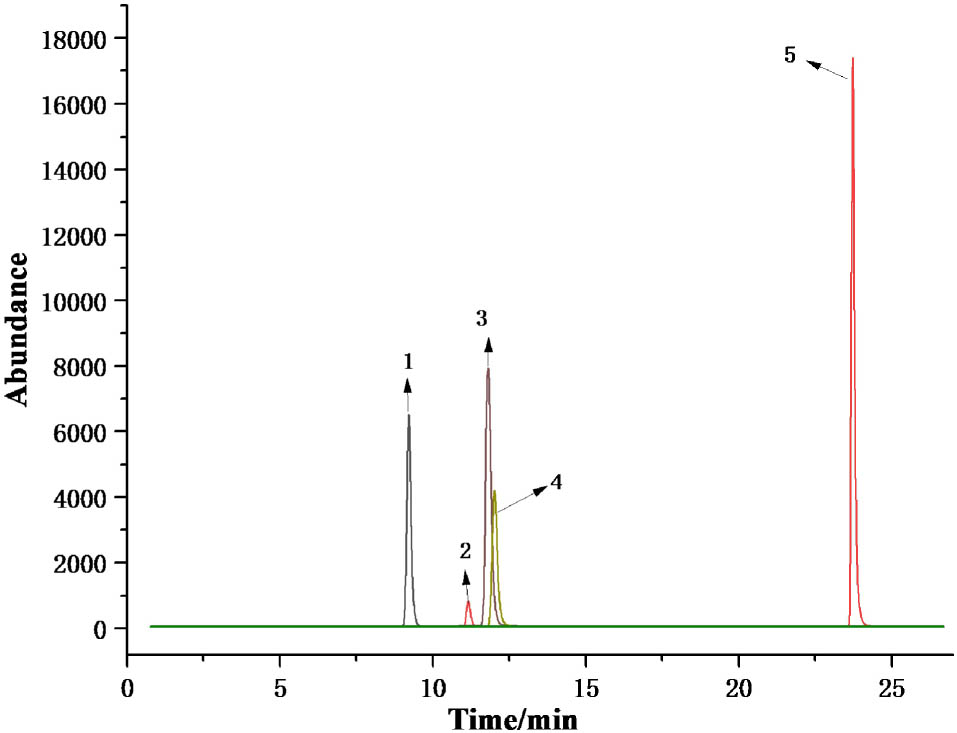
Figure 1.
The HPLC-MS/MS chromatogram of five sweeteners.
1 – Acesulfame, 2 – Saccharin sodium, 3 – Sucralose, 4 – Aspartame, 5 – Neotame.
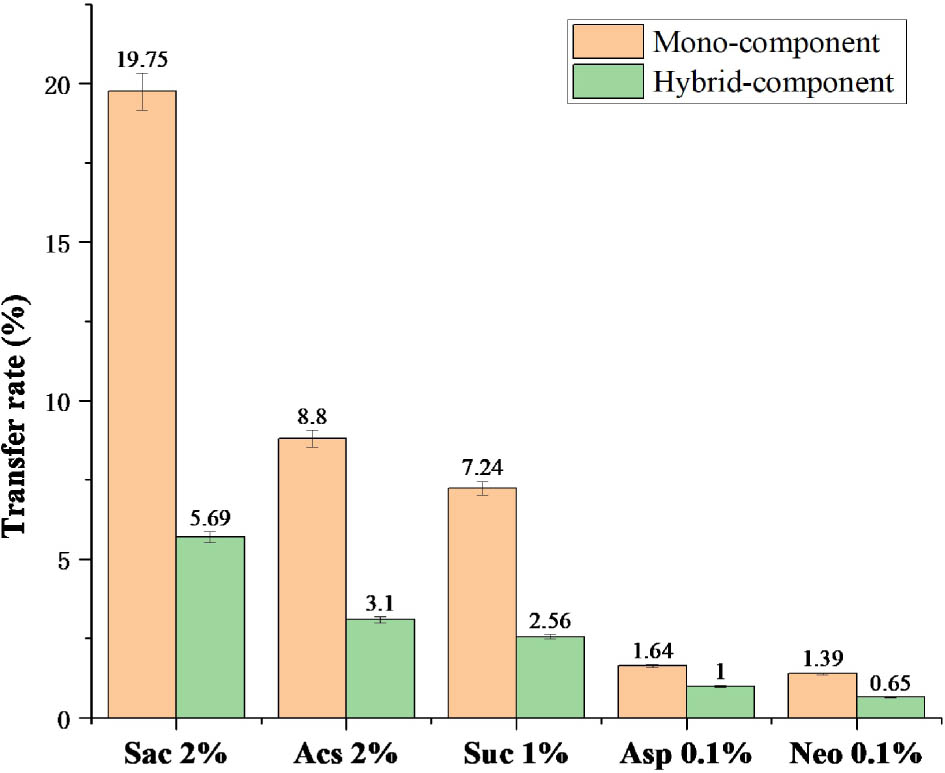
Figure 2.
The transfer rate of sweeteners in tipping paper from mono-component and hybrid-component stock solutions.
Figure 2 also presents the comparison in transfer rates between mono-component and hybrid-component sweetener systems. When coated from hybrid-components stock solution, all sweeteners exhibited reduced transfer rates compared to mono-component applications, likely due to competitive adsorption on the limited paper surface area. For example, the transfer rates of acesulfame decreased from 8.80% (mono-component, S1) to 3.10% (hybrid-component, F2). Similar trends were observed for other sweeteners. This competitive effect implied that higher initial concentrations may be required in sweetener stock solutions to compensate for reduced transfer efficiency. Among the hybrid-component samples, sodium saccharin still retained the highest transfer rate (5.62%), outperforming the other components. This confirmed that the affinity between sodium saccharin and the surface of paper was stronger than that of the other sweeteners.
The physicochemical properties of the five sweeteners are summarized in Table 2. Sodium saccharin, containing a hydrophobic benzene ring, exhibits substantially lower aqueous solubility than acesulfame. Consequently, at equivalent high concentrations (2%), sodium saccharin demonstrated stronger affinity for the paper surface, resulting in superior transfer efficiency compared to acesulfame. Owing to their exceptionally high sweetness potency, dipeptide sweeteners (such as neotame) were applied at very low concentrations (0.1%). Combined with their lower solubility relative to sulfonamide sweeteners, this resulted in minimal transfer.
Table 2.
The physicochemical properties of five sweeteners.
| Sweetener | Structural formula | Molecular weight (g/mol) | pKa | Water solubility (mg/L) | Sweetness valuea |
|---|---|---|---|---|---|
| Acesulfame (Acs) C4H4KNO4S |

| 201242 | 20 | 9.1 × 10⁵ | 200 |
| Sucralose (Suc) C12H19C13O8 |

| 397634 | 125 | 2.82 × 10⁵ | 600 |
| Neotame (Neo) C20H30N2O5 |

| 373463 | 4.1, 7.7 | 1.26 × 10⁴ | 8000 |
| Aspartame (Asp) C14H18N2O5 |

| 294303 | 2.9, 7.3 | 5.65 × 10⁴ | 200 |
| Sodium saccharin (Sac) C7H4NNaO3S |

| 205170 | 13 | 3.3 × 10⁵ | 450 |
a Sweetness value: The relative value indicating the intensity of sweetness based on the sweetness of sucrose (12).
3.2. Analysis of the decay characteristics of sweeteners in tipping paper
3.2.1. Effect of time on the decay of sweeteners
The decay speed of sweetener in tipping paper is an important parameter to evaluate the property of paper product and affects its application in practice. At lower or room temperature, this decay is mainly due to physical diffusion, while at higher temperature, the decay should be the combined effect of physical diffusion and chemical degradation. This section evaluates the decay of sweeteners in tipping paper with mono-component coating at room temperature, with results summarized in Figure 3. The results indicated that the content of sweeteners in the cigarette tipping paper was rapidly attenuated in the first 30 days, reaching a plateau around 30–60 days, and then the decay became relatively slow. During the first 30 days, the highest decay rate occurred with sodium saccharin reaching 19.71%, followed by sucralose at 19.28%, then neotame at 12.47%, aspartame at 12.16%, and acesulfame at 11.26%. This may result from the difference in the initial content of each sweetener in tipping paper. For the highest transfer rate from stock solution, sodium saccharin-coated tipping paper possessed the highest content (3949.19 μg/g) and needed a longer time (about 50 days) to reach its decay plateau, with content reduced to 3012.02 μg/g. With a moderate initial content (723.69 μg/g), sucralose showed continuous decay throughout the observation period. The decay was particularly severe in the first 30 days, reaching a rate of 19.28%. Thereafter, the decay rate slowed down from day 30 to day 70, and became extremely low after 70 days. The remaining three sweeteners all experienced a significant decline in the first 30 days and then reached each respective stable level with relatively similar decay rates.
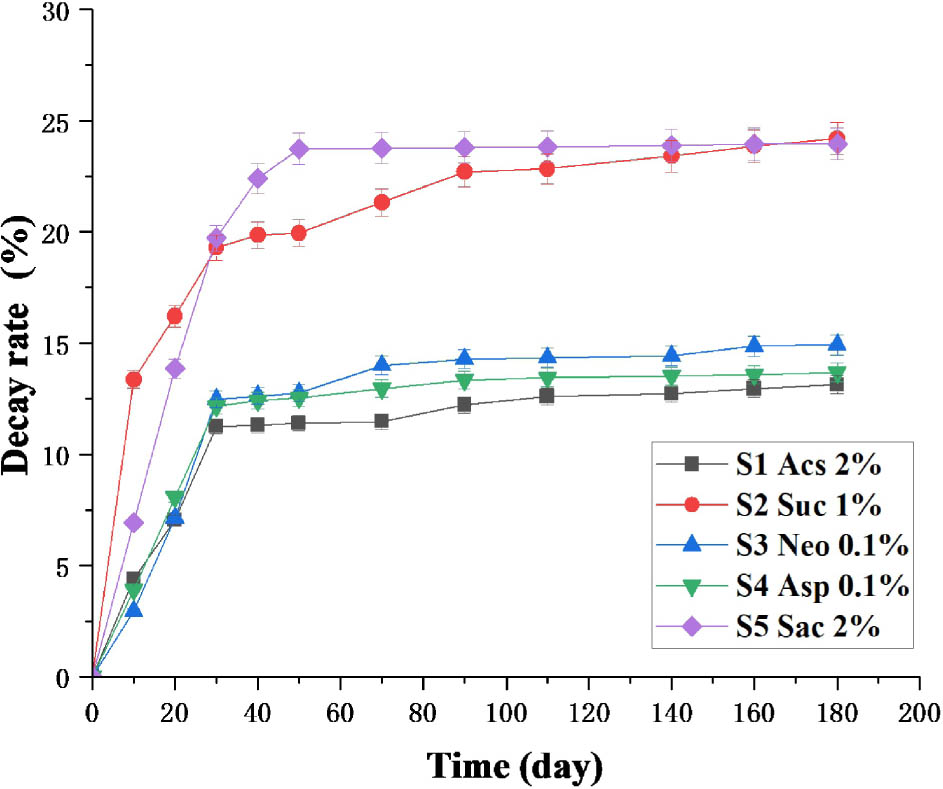
Figure 3.
The decay rate of mono-sweetener on the cigarette tipping paper.
Notably, sodium saccharin exhibited a substantially higher decay rate (19.71% in 30 days) than its structural analogue, acesulfame (11.26% in 30 days). This disparity may originate from the hydrophobic benzene ring in sodium saccharin's structure, which enhances its hydrophobicity relative to acesulfame. Consequently, sodium saccharin achieved higher transfer efficiency to the paper substrate, resulting in higher concentration during surface coating. Excess molecules formed non-uniform multilayers due to limited binding sites on the substrate. These surface-adsorbed molecules within multilayer structures increased susceptibility to environmental stress during storage, thereby explaining the enhanced decay. Figure 3 further indicates that sucralose exhibited the second-highest decay rate, reaching 19.28% within the first 30 days. Structurally, sucralose contains three chlorine-substituted hydroxyl groups in its disaccharide framework, composed of a hexosepyranose ring linked to a fructose-furanose ring via an ether bond (32). Compared to linear dipeptides and cyclic sulfonamides, this configuration has a lower affinity for the paper substrate. While sodium saccharin reached its plateau phase at day 50, sucralose maintained slow decay through-out the observation period. Both neotame and aspartame are dipeptide compounds. There is an additional alkyl side chain in the molecule of neotame compared to aspartame, so the water solubility of neotame (12.6 g/L) is lower than that of aspartame (56.5 g/L). But due to their identical very low stock solution concentration (0.1%), both neotame and aspartame achieved similar transfer rates (about 1.5%) in the tipping paper and exhibited comparable decay rates during the initial 30 days, with 12.47% neotame and 12.16% aspartame.
3.2.2. Effect of sweetener composition on the decay of sweeteners
To study the effect of different sweetener compositions on the decay rate of various sweeteners on tipping paper, two sets of stock solutions were prepared for coating on the paper samples. The hybrid-sweeteners of the two sets of recipe stock solutions were as follows:
F1 (sucralose 1% + neotame 0.1%) and
F2 (acesulfame 2% + aspartame 0.1% + sodium saccharin 2%),
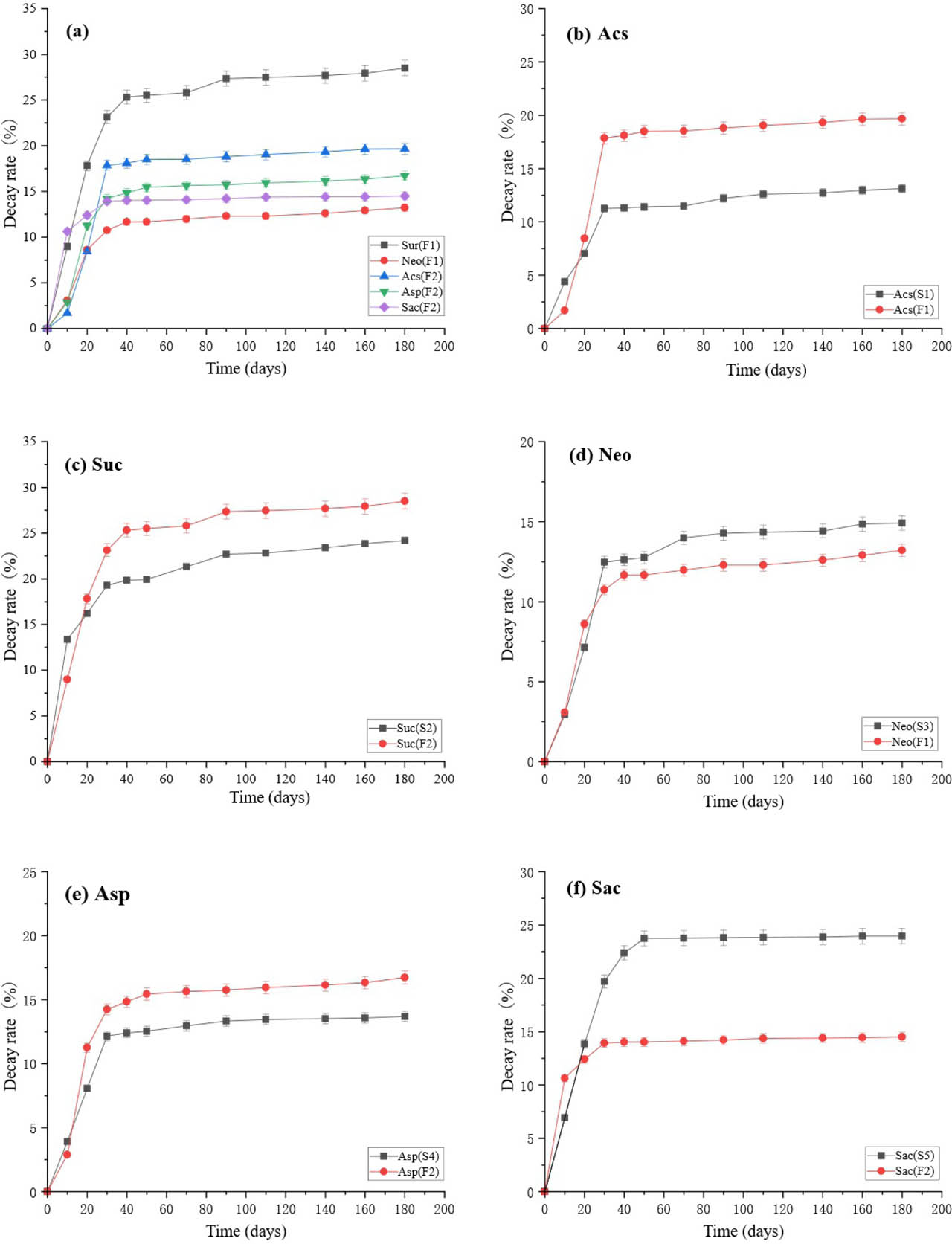
Figure 4.
The decay rates of hybrid-sweeteners on the cigarette tipping paper. Acs = Acesulfame, Suc = Sucralose, Neo = Neotame, Asp = Aspartame, Sac = Sodium saccharine.
In recipe F1, due to competitive adsorption between sucralose and neotame molecules, the transfer rate and initial content of each sweetener decreased compared with the mono-component system but the initial content of sucralose (255.78 μg/g) was 39.3 times that of neotame (6.51 μg/g). According to the diffusion kinetics theory (33), the greater the concentration gradient, the faster the diffusion. Therefore, sucralose was more conducive to decay than neotame in F2 system and the decay rate of sucralose would be higher than that in the mono-component system during the decay process, while the decay rate of neotame would present the opposite trend (Figure 4(c) and 4(d)).
For recipe F2, firstly, the transfer rate and initial content of three sweeteners decreased compared with the mono-component system due to competitive adsorption. Secondly, there were significant differences in the initial content of three sweeteners in tipping paper, among which sodium saccharin was the one with the highest content. Even so, the initial content of sodium saccharin in hybrid-system was less than one third of that in mono-system. Therefore, the decay rate of sodium saccharin would be lower than that in the mono-system during the decay process (Figure 4(f)). Due to the balance in the decay trend and affinity difference among three sweeteners, the decay rate of other two sweeteners (acesulfame and aspartame) would be higher than their counterpart in the mono-system (Figure 4(b) and (e)).
3.2.3. Effect of temperature on the decay of sweeteners
Tahmouzi et al. (34) have indicated that most sweeteners such as acesulfame, sucralose, neotame, aspartame, and sodium saccharin are relatively stable at room temperature. However, at a high temperature of 90 °C, sucralose is apt to lose chlorine atoms, posing a certain threat to food safety (35, 36). Aspartame is another unstable sweetener under extreme conditions such as lighting or high temperature (37, 38). The decay of sweeteners in tipping paper at high temperature results from the combined effect of two aspects: physical diffusion and chemical degradation. Two temperatures (60 °C and 90 °C) were selected in the test because 60 °C was the highest temperature experienced in the line of tipping paper production and 90 °C was the critical temperature indicated in the literature at which sucralose and aspartame were prone to decomposition (23).
Figure 5 shows the decay rate of five sweeteners stored at 60 °C and 90 °C for 30 h respectively. It was obvious that the increase in temperature caused the decay rates of all sweeteners to show varying degrees of increase. Firstly, an increase in temperature intensifies the physical diffusion of all sweeteners. As for chemical degradation, five sweeteners exhibit different effects. As shown in Figure 5(a), at 60 °C, sucralose presented the highest decay rate (33.91%) within 30 h, followed by aspartame (22.32%). Moreover, the decay rate of both did not reach a plateau. It is speculated that they would continue to further decrease over time. Several investigations (35, 36) have indicated that sucralose underwent dechlorination decomposition to generate 5-hydroxy methylfurfural and chlorinated furano-3-one at 90 °C and the transformation process between these molecules is shown in Figure 6(a). Another sweetener whose stability significantly deteriorated with an increase in temperature was aspartame. Celiñski et al. (39) presented that the ester bond in the structure of aspartame was apt to hydrolyze under specific conditions (such as 128 °C or acidic pH conditions) to form aspartyl phenylalanine and methanol, the former could be further hydrolyzed to generate aspartic acid and phenylalanine. Van Vliet et al. (38) put forward that another pathway for transformation of aspartyl phenylalanine involved cyclization reaction with the elimination of methanol under neutral, alkaline or heated conditions (as shown in Figure 6(b)). Therefore, both sucralose and aspartame are unstable at high temperature. In this experiment, the decay rate of sucralose was higher than that of aspartame, which might be related to the higher initial concentration of sucralose in paper products.
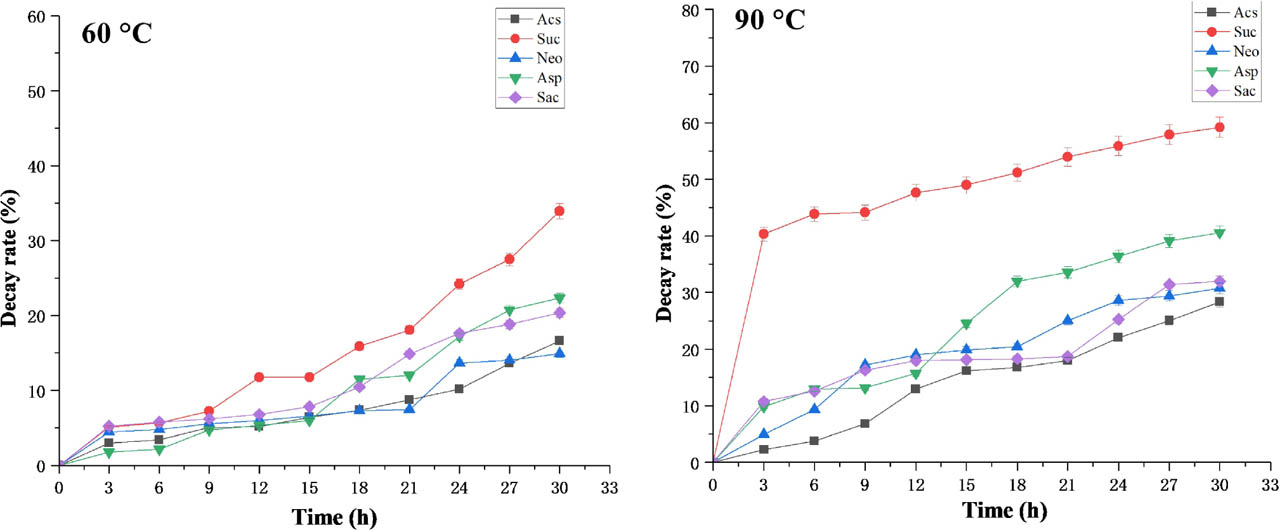
Figure 5.
The decay rate of mono-component sweeteners on the cigarette tipping paper under 60 °C and 90 °C.
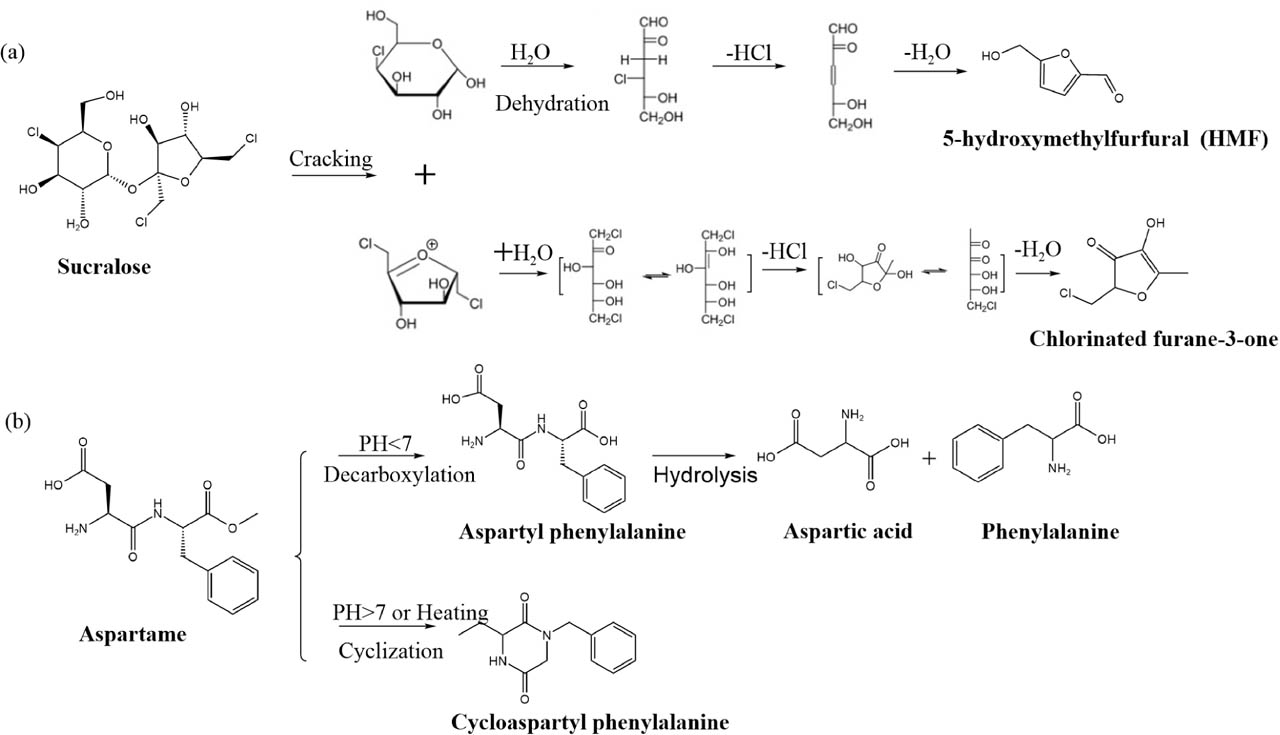
Figure 6.
The transformation process of sucralose (a) and aspartame (b).
As shown in Figure 5(b), all sweeteners demonstrated higher decay rate with the further elevated temperature (at 90 °C), among which sucralose maintained its first position with the maximum decay rate of 60% in 30 h. Obviously, the high temperature promoted the reaction of dechlorination and decomposition, further reducing its stability. Similar to sucralose, the higher temperature also led to a decrease in the stability of aspartame with the decay rate of 40.58%. As for other sweeteners, the decay rates of acesulfame, neotame, and sodium saccharin were less than 30% at 90 °C within 30 h. All of them almost reached a stable decay rate within the first 12 h, and then the trend has slowed down and reached the peak again at about 25 h. It is speculated that the first plateau period was caused from the diffusion of the densely stacked sweetener molecules on the outermost layer. After losing the protection of the outer layer, the internal sweetener molecules absorbed a certain amount of heat during the first plateau period and started the subsequent accelerated decay. For acesulfame, neotame, and sodium saccharin have better heat resistance, they offer more advantages when added to baked foods compared to sucralose and aspartame.
3.3. Analysis of sweetener decay kinetics
In order to further explore the decay characteristics of sweeteners on tipping paper, different kinetic models were employed to fit the experimental data for mono-sweeteners and determine the speed controlling step (40). According to Askarizadeh et al. (41), four primary models are widely used among the numerous drug release decay models: the zero-order, first-order, Higuchi, and Korsmeyer-Peppas models. These models are also applicable to the molecular release system at solid interfaces. Given that tipping paper products provide a porous structure for sweetener molecules and interact with them, this study employed these four established decay kinetics models to characterize the release kinetics of sweeteners from tipping paper. The four model equations are as follows:
As shown in the decay curve in Figure 3, the release decay of each mono-sweetener coated on tipping paper at room temperature over 180 days can be segmented into three stages: 0–30 d, 30–70 d, and 70–180 d. Each stage was individually fitted using the above four models and the model with the highest R2 value was selected as the optimal one and its parameters are listed in Table 3. The fitting lines with five sweeteners in three stages are shown in Figure 7.
Table 3.
The optimal decay kinetics model in three stages of five sweeteners coated on the cigarette tipping paper.
| Sweetener | Days | k | R2 | n | The optimal kinetics model |
|---|---|---|---|---|---|
| Acesulfame (S1) | 0–30 | 7.53 | 0.9997 | 0.96 | Korsmeyer-Peppas |
| 30–70 | 2.53 | 0.9666 | 0.39 | Korsmeyer-Peppas | |
| 70–180 | 4446.25 | 0.9356 | 0.0062 | Korsmeyer-Peppas | |
| Sucralose (S2) | 0–30 | 44.04 | 0.9988 | 0.34 | Korsmeyer-Peppas |
| 30–70 | 93.69 | 0.9095 | 0.11 | Korsmeyer-Peppas | |
| 70–180 | 93.62 | 0.9482 | 0.12 | Korsmeyer-Peppas | |
| Neotame (S3) | 0–30 | 0.058 | 0.9839 | 1 | Zero-order |
| 30–70 | 0.0053 | 0.8961 | 1 | Zero-order | |
| 70–180 | 0.0011 | 0.9241 | 1 | Zero-order | |
| Aspartame (S4) | 0–30 | 0.067 | 0.9998 | 1 | Zero-order |
| 30–70 | 0.0032 | 1.0000 | 0.9958 | Korsmeyer-Peppas | |
| 70–180 | 1.71 | 0.9077 | 0.05 | Korsmeyer-Peppas | |
| Sodium saccharin (S5) | 0–30 | 33.18 | 0.9995 | 0.93 | Korsmeyer-Peppas |
| 30–70 | 68296.14 | 0.8062 | 0.0027 | Korsmeyer-Peppas | |
| 70–180 | 6.89 | 1.0000 | 1 | Zero-order |
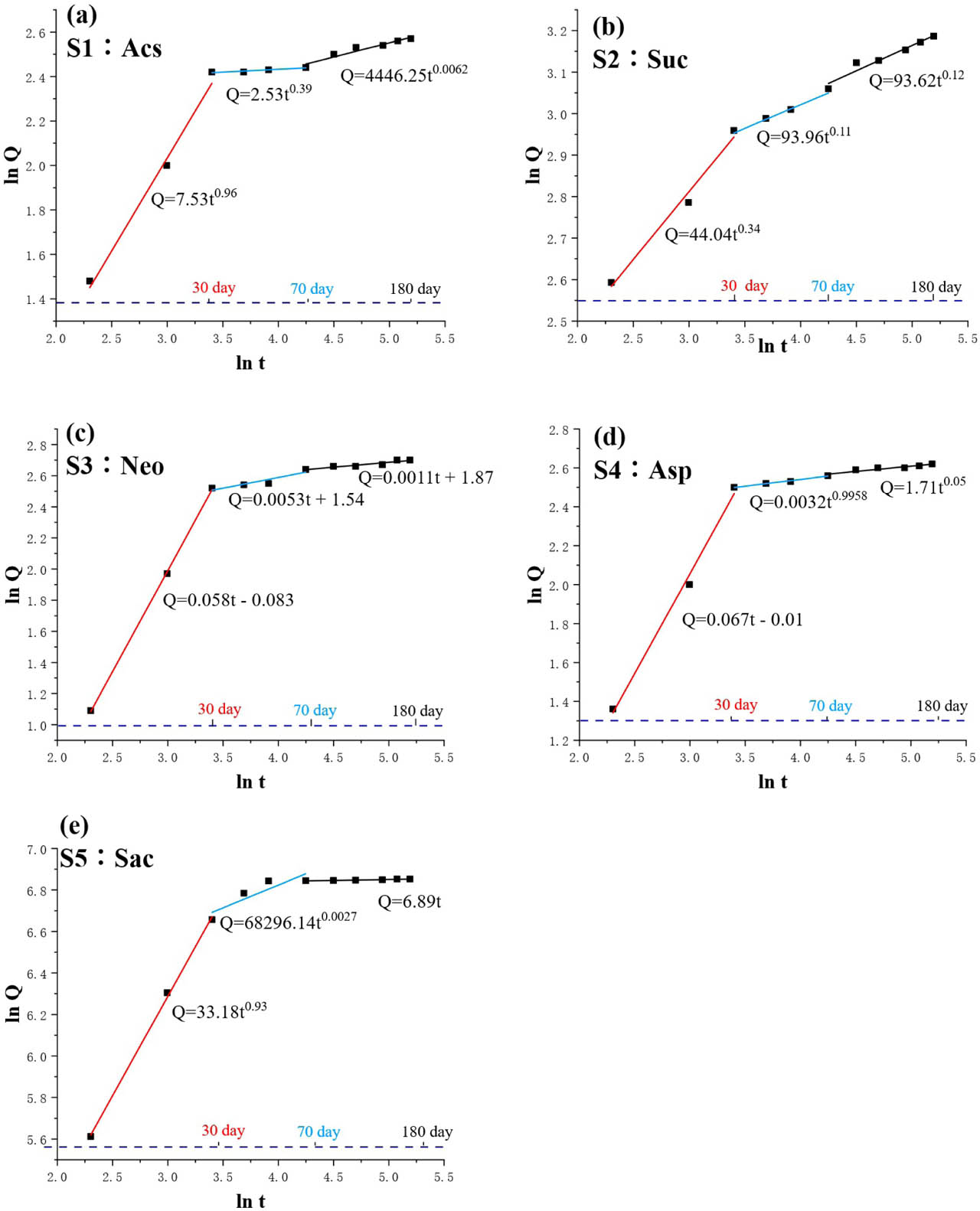
Figure 7.
The optimal decay kinetics model of sweeteners in three stages. (a) Acesulfame, (b) Sucralose, (c) Neotame, (d) Aspartame, (e) Sodium saccharin.
Across all three stages, the decay processes of acesulfame, sucralose, aspartame, and sodium saccharin were most consistent with the Korsmeyer-Peppas kinetics model. In contrast, the degradation behavior of neotame follows the zero-order model in all three stages. The Korsmeyer-Peppas model is widely used to characterize substance release mechanisms, with the parameter “n” as a key descriptor (28). For n ≤ 0.5, the model describes dominated release – typical of substance release from inert frameworks where molecular diffusion prevails. For 0.5 < n < 1, release is co-driven by molecular diffusion and molecule-polymer framework interactions.
As shown in Figure 7(a), acesulfame best fitted the Korsmeyer-Peppas model across all three stages: n = 0.96 for 0–30 d, and n ≤ 0.5 for time beyond 30 d. This is attributed to electrostatic adsorption between K+ in acesulfame molecules and carboxyl groups on the tipping paper surface. In the initial 30 d, high transfer rate led to high ion levels and a thick diffusion layer, which meant that the surface adsorption force between the paper substrate and acesulfame in the outermost electric double layer tended to weaken and was prone to a higher decay rate. As acesulfame (and thus K+) concentration decreased afterward, electrostatic effects weakened, making the decay behavior more consistent with Fick diffusion.
As shown in Figure 7(b), for sucralose in samples S2, the Korsmeyer-Peppas model provided the optimal fit across all three time periods, with the fitting parameter “n” lower than 0.5 in each stage. This is attributed to the hydroxyl groups of sucralose structure, which readily form hydrogen bonds with cellulose on the paper surface. Such uniform binding between the molecule and the tipping paper renders the decay process more consistent with the Fick diffusion model.
As shown in Figure 7(c), for neotame in sample S3, the zero-order model best fitted its decay within all three stages. Neotame, a dipeptide compound containing tert-butyl groups, exhibits the strongest hydrophobicity among the five sweeteners. Due to steric hindrance, its interaction with the paper surface is relatively weak (42). Thus, significant decay conformed well to the zero-order model at all three stages – characterized by a constant elimination rate per unit time, independent of residual sweetener content on the tipping paper (i.e., constant decay). Concurrently, the decreasing “k” value indicated a slowing decay rate.
Like neotame, aspartame is a dipeptide sweetener with amino (−NH2) and carboxyl (−COOH) groups. Its amino groups were apt to form hydrogen bonds with cellulose hydroxyls, while protonated carboxyl groups interact with paper's negative charges, resulting in higher paper transfer rate than neotame. As shown in Figure 7(d), the Korsmeyer-Peppas model provided the best fit for aspartame's decay behavior over time. During the initial 70 d, the release exponent (n) remained close to 1, indicating near-zero-order kinetics: 0–30 d: n = 1 (perfect zero-order kinetics); 30–70 d: n = 0.9958 (approaching zero-order). This suggests that aspartame's initial decay behavior was dominated by surface diffusion, likely due to molecular accumulation on the paper surface. Beyond 70 d, the decay behavior shifted and aligned more closely with the Korsmeyer-Peppas model where n = 0.05. This shift implies that after the initial rapid transfer phase, aspartame's migration became diffusion-limited, consistent with typical matrix-controlled release mechanisms.
As shown in Figure 7(e), sodium saccharin (in sample S5) also followed the Korsmeyer-Peppas model during the initial 70-day period. As an ionic compound, it formed ionic bond force between its sulfonyl groups and charged groups on paper surfaces – behavior mirroring acesulfame. After 70 days, decay transitioned to zero-order kinetics with a rate constant k = 6.8 units/d.
Overall, the Korsmeyer-Peppas model best described the overall decay kinetics of all five sweeteners on cigarette tipping paper products. For specific sweeteners during certain stage, the zero-order model (a special case of Korsmeyer-Peppas when n = 1) provided a more precise fit. This indicates that Fick diffusion dominates the decay process, though inter-facial interactions between sweetener molecules and groups on cigarette tipping paper surface also contribute obviously during certain time periods.
3.4. Analysis of shelf life of cigarette sweet tipping paper
Tipping paper serves as a critical auxiliary material in modern cigarette production, fulfilling dual roles: structural support for tobacco shreds and sensory modulation through aroma/taste component adsorption. Its shelf-life stability, particularly under ambient storage conditions, directly determines cigarette quality, sensory profile, and market acceptance. For sweetener-function tipping paper, quantifying sweetener decay represents the primary shelf-life evaluation metric. According to the previous data of this article, the decay curve of sweeteners on the tipping paper at room temperature showed a consistent changing trend. The decay time points of five sweeteners were sorted out, and the time points with the difference value of decay rate less than 3% were defined as the suitable shelf life of the product. Table 4 shows the time points of mono- and hybrid-sweeteners of the five sweeteners. Obviously, within the first 30 days after production, the decay of the sweetener was relatively high whether in a mono-component or hybrid-component system. This was because the initial concentration of the sweetener was relatively high, and the accumulation of molecules on the surface of the paper product was unstable, so its content decreased relatively rapidly. After this relatively rapid decay, the sweetener entered a relatively stable period, during which the decay rate significantly slowed down, and the sweetness potency of the tipping paper entered a relatively stable state (about 60 d). In the following months and even for half a year, the content of the sweetener remained basically unchanged, confirming the stability of the tipping paper during its shelf life. Actually, the rapid decline period of sweeteners in the tipping paper during the first 30 days provides a relatively relaxed processing time window for cigarette production. In the subsequent stage, when the decay enters a stable period (about 60–180 d), the stability of the cigarette tipping paper further improves. This means that there is a stage of up to half a year for the storage of cigarette tipping paper and cigarette production, which can ensure the stability of quality and reduce sensory quality problems caused by the unstable decay of the sweetener, ensuring the reliability of long-term quality.
Table 4.
The decay time point of sweeteners and the proposed shelf life of cigarette tipping paper.
| 30 days | 45 days | 60 days | 180 days | |||
|---|---|---|---|---|---|---|
| S1 | Acesulfame | 11.26 | 11.40 | 11.47 | 13.12 | 30~180 |
| S2 | Sucralose | 19.28 | 19.94 | 21.32 | 24.20 | 60~180 |
| S3 | Neotame | 12.47 | 12.76 | 13.99 | 14.92 | 45~180 |
| S4 | Aspartame | 12.16 | 12.53 | 12.96 | 13.69 | 30~180 |
| S5 | Sodium saccharin | 19.71 | 23.73 | 23.77 | 23.96 | 45~180 |
| F2 | Acesulfame | 17.86 | 18.49 | 18.80 | 19.66 | 30~180 |
| F1 | Sucralose | 23.13 | 25.50 | 25.80 | 28.50 | 45~180 |
| F1 | Neotame | 10.75 | 11.67 | 11.98 | 13.21 | 30~180 |
| F2 | Aspartame | 14.24 | 15.44 | 15.64 | 16.73 | 30~180 |
| F2 | Sodium saccharin | 13.92 | 14.03 | 14.10 | 14.50 | 30~180 |
4. CONCLUSION
In summary, this work investigated the decay characteristics of different types of sweeteners (sulfonamides, dipeptides, and sucrose derivatives) in cigarette tipping paper, focusing on the influence of factors such as time, temperature, and sweetener composition (mono- or hybrid-). Key findings revealed that at room temperature, the content of sweeteners in a mono-component system on the cigarette tipping paper was rapidly attenuated in the first 30 days, reaching a plateau around 30–60 days, and then the decay became relatively slow. Sulfonamide sweeteners such as sodium saccharin had the highest transfer rate (19.75%) from the stock solution and therefore presented the highest decay rate (19.71%) within the first 30 days. Sucralose ranked second with the decay rate of (19.28%). Dipeptide compounds such as neotame and aspartame showed a relatively low decay rate. The increase intemperature caused the varying degrees of increase in the decay of all sweeteners. Among five sweeteners, sucralose and aspartame showed the highest and second highest decay under both 60 °C and 90 °C in the first 30 h. The Korsmeyer-Peppas model best described the overall decay kinetics of all five sweeteners in cigarette tipping paper products and Fick diffusion dominated the decay process. Based on the comprehensive kinetic data, practical guidelines for shelf-life are proposed: a range of 60–180 days was recommended for products containing these sweeteners to ensure the stability of product quality.
Notes
SUPPLEMENTARY INFORMATION
This publication contains supplementary material available at https://reference-global.com/article/10.2478/cttr-2026-0007
ACKNOWLEDGMENTS
This research was supported by the Scientific Foundation of China Tobacco Anhui Industrial Corporation under grant No. 2023340000340011 and Anhui Jiaotianxiang Biological Technology Corporation under grant JTX/KJ-XM-2024-6-12.