
INTRODUCTION
Nicotine and nornicotine account for much of the alkaloid content in commercially available tobacco products, approximately 5 to 15 mg/g, in most commercially viable Nicotiana tabacum cultivars with nicotine accounting for approximately 95–98% and nornicotine accounting for approximately 2–5% of the alkaloids (1). Relatively minor amounts of two additional alkaloids, anatabine and anabasine, are known to be present in Nicotiana tabacum L. as well, and having the much lower concentrations their impacts are much less significant when compared with the levels and impacts of nicotine and nornicotine. Both nicotine and nornicotine alkaloids are optically active. Improved quantitative and qualitative assessments of the distribution of the optical isomers of nicotine and nornicotine have currently garnered intense interest, in part, because the pharmacological activities of the two nicotine enantiomers and the two nornicotine enantiomers are not equal and because of the need to characterize nicotine sources as natural or synthetic (1,2,3,4,5,6). Therefore, knowledge of the enantiomer distribution is necessary to assist in establishing links between alkaloid enantiomer distributions and their pharmacological impacts as well as their sources ( 7,8,9,10,11,12,13,14,15,16,17,18,19,20,21,22,23,24,25,26,27).
Furthermore, the United States Food and Drug Administration (FDA) and the World Health Organization (WHO) have stated that all commercial tobacco products should have lower tobacco nicotine values than those currently in the United States market, with a maximum nicotine target level of approximately 0.5 mg/g tobacco (16,17,18). This mandate has begun to precipitate activities within the tobacco industry to develop methodologies and agronomic activities to reduce the tobacco nicotine content of current commercial tobaccos or to begin employing Nicotiana tabacum L. cultivars containing notably lower amounts of nicotine and its secondary alkaloids to reach the 0.5 mg/g target. As it currently stands, disclosed data surrounding the R/S ratio of nicotine and nornicotine for these lower nicotine tobaccos does not sufficiently document well described ratios for the two alkaloids across different tobacco cultivars, across other Nicotiana species, and importantly, across the commercially viable Nicotiana tabacum L. cultivars under development for low alkaloid content. Hence, robust and relatively rapid analytical methodologies for the qualitative and quantitative analysis of nicotine and nornicotine enantiomers are essential for providing reliable data from regulatory, agronomic and pharmacological perspectives. A number of such methods have been developed (1,2,3,4,5, 12,13,14, 18, 20,21,22, 27, 35, 37), but only one of these reports has yet published nicotine enantiomeric data on a commercially available low alkaloid-tobacco (27). The nicotine enantiomer distribution for the low alkaloid tobacco sample was found to be consistent with that observed in tobacco samples having much higher levels of alkaloids. Based in part on the observations obtained (27) for nicotine, it is reasonably acceptable to anticipate that the lower concentrations of the nicotine and nornicotine enantiomers in the lower alkaloid-tobaccos may present qualitative and quantitative analytical challenges. This may apply more to nornicotine, since its concentration in commercially viable tobaccos is significantly lower than nicotine, and will most likely still be notably lower in the lower alkaloid-tobaccos. Within the past 10 years, meaningful progress has been made in molecular and genomics research, revealing many metabolic and regulatory genes involved in nicotine and nornicotine biosynthesis in Nicotiana tabacum L. These advances have enabled the development of tobacco cultivars with low or ultra-low nicotine and nornicotine levels through various methodologies, such as mutational breeding, genetic engineering, and genome editing. To document any impacts on the enantiomeric distribution of the alkaloids, particularly nicotine and nornicotine, in these new low alkaloid tobaccos requires optimized methods for the qualitative and quantitative analysis of the enantiomeric distributions of these two alkaloids.
Reports on the optical purity of the major and minor alkaloids in tobacco leaf and its products often indicate a rather large range in the enantiomeric distribution of nornicotine while the enantiomeric distribution of nicotine remains very constant with the (S)-(−) isomer accounting for consistently equal to or greater than 95% of the total nicotine enantiomer concentration (1,2,3,4,5). For example, the enantiomeric compositions of nornicotine, anatabine, and anabasine were measured using gas chromatography/mass spectrometry (GC/MS) (with a chiral stationary phase) in three types of commercial tobacco leaf (Burley, Turkish, and Virginia), three types of smokeless tobacco (loose-leaf, dry snuff, and moist snuff), and four types of cigarettes. Regardless of the tobacco type or product, anabasine always had the highest relative percentage of the minor (R)-(+) enantiomeric component (between 40 and 46% vs. 54–60% of the (S)-(−)-enantiomer). Of the four common tobacco alkaloids, nicotine seems to have the highest enantiomeric excess (ee) while anabasine has the lowest (in the tobacco leaf and tobacco products analyzed). Nornicotine and anatabine have intermediate ee values (20). The source of nornicotine in tobacco leaf most often results from the demethylation product of nicotine and nornicotine and has been identified as a major precursor of tobaccospecific nitrosamine N-nitrosonornicotine (NNN) in tobacco (Nicotiana tabacum L.) (21). In addition, there appears to be an inconsistent enantiomer fraction (EF) of nornicotine reported in the literature (21), indicating possibly multiple biochemical pathways for the production of nornicotine. Possible mechanisms to account for the variable EFnnic ( enantiomeric fraction of nornicotine) in tobacco have been developed. A survey of tobacco with different demethylating capabilities confirmed that there was variable EFnnic. Experiments of induction and inhibition of the major nicotine biochemical pathways in tobacco demonstrated that certain enzymes selectively demethylated (S)-(−)-nicotine and resulted in different EFnnic in tobacco leaves. Results from plants with silenced biochemical pathways suggested that other demethylases selectively used (R)-(+)-nicotine and resulted in high EFnnic. The results concluded that enantioselective demethylation likely plays an important role in contributing to a large and variable EFnnic observed in tobacco (21).
Advances in qualitative and quantitative analysis of nornicotine enantiomers have resulted in protocols having attractive method parameters. One such report describes an accurate and rapid method for the enantioseparation of (R)-(+)-nornicotine and (S)-(−)-nornicotine enantiomers in tobacco by ultra-performance convergence chromatography with tandem mass spectrometry. Chromatographic conditions were investigated to achieve the optimal resolution of two enantiomers. Results indicated that (R)-(+)- nornicotine and (S)-(−)-nornicotine could be separated within 5 min when ammonium hydroxide was added into the cosolvent, and the best resolution (R) was obtained (22). Employing a chiral supercritical fluid chromatographic (SFC) approach, the nicotine as well as nornicotine enantiomer distributions in selected e-cigarette fluids has been described (12). This SFC method provided for a second alternative approach for nicotine and nornicotine qualitative and quantitative enantiomer distribution analyses having characteristics very similar to acceptable analytical protocols (28). The results also focused in part on the issues associated with the documentation of natural or synthetic sources of nicotine.
A recent report describes how relatively minute changes in chiral normal phase HPLC mobile phase additive and mobile phase modifier structures and concentrations can significantly influence the retention times, resolution, and detection limits for nicotine enantiomers (27). Employing, in part, the learnings from the previous research (12, 27) and published findings (1,2,3,4,5, 13,14,15, 18, 20,21,22, 35,36,37,38), the results described herein will document in detail how:
1) column selection
2) mobile phase flow rates, and
3) structures and concentrations of mobile phase additives and modifiers
Attention to the principles set forth for quick, easy, cheap, effective, rugged, and safe protocols (6, 28) will be described. Where appropriate, comparisons with the previous research results on the separation of nicotine and nornicotine enantiomers will be made. A combination of previously published research results coupled with literature citations, the conditions for the simultaneous HPLC chiral separation of both nornicotine and nicotine enantiomers in a single injection will also be described. As with any analytical approach using a lone designated method of detection, there will be both pros and cons for their use and application. These pros and cons for UV/VIS detection in the separation of the enantiomers of nicotine and nornicotine are recognized and examples of the detection pros and cons are delineated herein.
EXPERIMENTAL
Materials
American Chemical Society (ACS) grade isopropyl amine (IPAm), diethylamine (DEA), triethylamine (TEA), nornicotine, nicotine, and pure nicotine and nornicotine enantiomers were obtained from Sigma-Aldrich (St. Louis, MO, USA) and used as received. Hexane, ethanol (EtOH), and isopropanol (IPA) were HPLC grade and were obtained from Fisher Scientific (Pittsburgh, PA, USA). The tobacco standards were obtained from the Center for Tobacco Reference Products ( CTRP) at the University of Kentucky and used as received. The low alkaloid-tobacco was obtained by purchasing a low alkaloid-cigarette product from a local market.
Chiral stationary phases
Packed columns with CHIRALCEL OD-3 (coated cellulose (3,5-dimethylphenylcarbamate)), CHIRALPAK IA-3 (immobilized amylose (3,5-dimethylphenylcarbamate)), IB N-3 (immobilized (3,5-dimethylphenylcarbamate)), IC-3 (immobilized cellulose (3,5-dichlorophenylcarbamate)), IG-3 (immobilized amylose (3-chloro-5-methylphenylcarbamate)), and AY-3 (coated amylose (2-methyl-5-chlorophenylcarbamate)) (250 × 4.6mm, dp = 3 μm) were obtained from Chiral Technologies, Inc. (West Chester, PA, USA). All columns were conditioned as recommended by the manufacturer before use and tested with different modifiers and additives.
HPLC/UV analysis
An Agilent 1200 Series HPLC equipped with a quaternary pump, variable wavelength detector (VWD-UV), auto liquid sampler (ALS), and oven heater set to ambient was employed with all columns and modifiers. All analyses were performed at 254 nm. Nornicotine and nicotine standards, at approximately 10 ng/μL, consisting of both the (R)- and (S)- enantiomers dissolved in dichloromethane (DCM) or hexane were used to optimize the chromatography conditions. Injection volume was set to 10 μL for all analyses. All separations were obtained under isocratic conditions with hexane as the main component of the mobile phase.
Nornicotine extraction procedure from tobacco
A VLN© (very low nicotine) brand cigarette was purchased from a local grocery store. The extraction protocol employed herein was validated by CORESTA (Cooperation Centre for Scientific Research Relative to Tobacco, Method No. 62 (39) participants for the quantitative extraction of nicotine from tobacco matrices. The tobacco from two cigarettes or approximately 2 g of the tobacco standards was emptied into a standard coffee grinder and ground for 10–15 s, then used without further modification. First, 0.5 g of the ground tobacco sample was mixed with 10 mL of water, followed by the addition of 5 mL of 8N NaOH. The mixture was shaken for 1 h using a ThermoFisher Scientific shaker (Pittsburgh, PA, USA). The supernatant was then isolated by centrifugation at 4000 rpm for 4 min. Next, 10 mL of hexane was added to the extract supernatant and shaken for 1 h. The hexane layer was separated, and the extraction was repeated with an additional 10 mL of hexane. The combined hexane solutions were dried over a small amount of anhydrous sodium sulfate. Finally, the hexane extract was analyzed using an optimized HPLC method to determine the distribution of nornicotine enantiomers. Nornicotine extractions of the standard tobacco samples from the University of Kentucky were prepared using the same extraction method.
RESULTS AND DISCUSSION
Building on approaches established in several earlier publications on HPLC and SFC nicotine and nornicotine enantiomer separations (1,2,3,4,5, 13,14,15, 18, 20,21,22, 35,36,37,38), a systematic variation in column type, mobile phase flow rate, and the structure and concentration of modifiers and additives, were undertaken to:
1) develop a method for the chiral HPLC separation of nornicotine enantiomers and
2) possibly couple these results with previously results ultimately leading to a method for the simultaneous determination of nicotine and nornicotine enantiomers in a single HPLC injection.
The variations in methodology parameters included methodical changes to column type, flow rate, modifier type, additive type, and their respective concentrations. The modifiers tested included ethanol (EtOH) and isopropanol (IPA) while the additives included diethylamine (DEA), triethylamine (TEA), and isopropylamine (IPAm).
Columns
Initially, six different chiral columns (listed in Chiral stationary phases) were screened using a 90/10% hexane/(EtOH + 0.5% DEA) mobile phase to determine which of the column(s) provided the shortest retention time and acceptable peak shapes with the highest resolution. These preliminary results indicated that the IB N-3 and IG-3 offered the best resolution with nornicotine enantiomers with retention times under 15 min (Figure 1). The nornicotine enantiomer retention times and peak shapes obtained with IB N-3 were shorter and sharper, respectively, than those observed with IG-3, while still possessing an R value greater than 2. Systematic variations in flow rate, modifier (EtOH) concentration, and additive (DEA, TEA, and IPA) concentration revealed that the enantiomer retention times with IB N-3 were consistently shorter than those attained with IG-3 (Table 1). Both columns, however, yielded R values greater than 2. The overall method philosophy of making the analysis time as quick as possible, all subsequent optimizations were therefore performed using IB N-3.
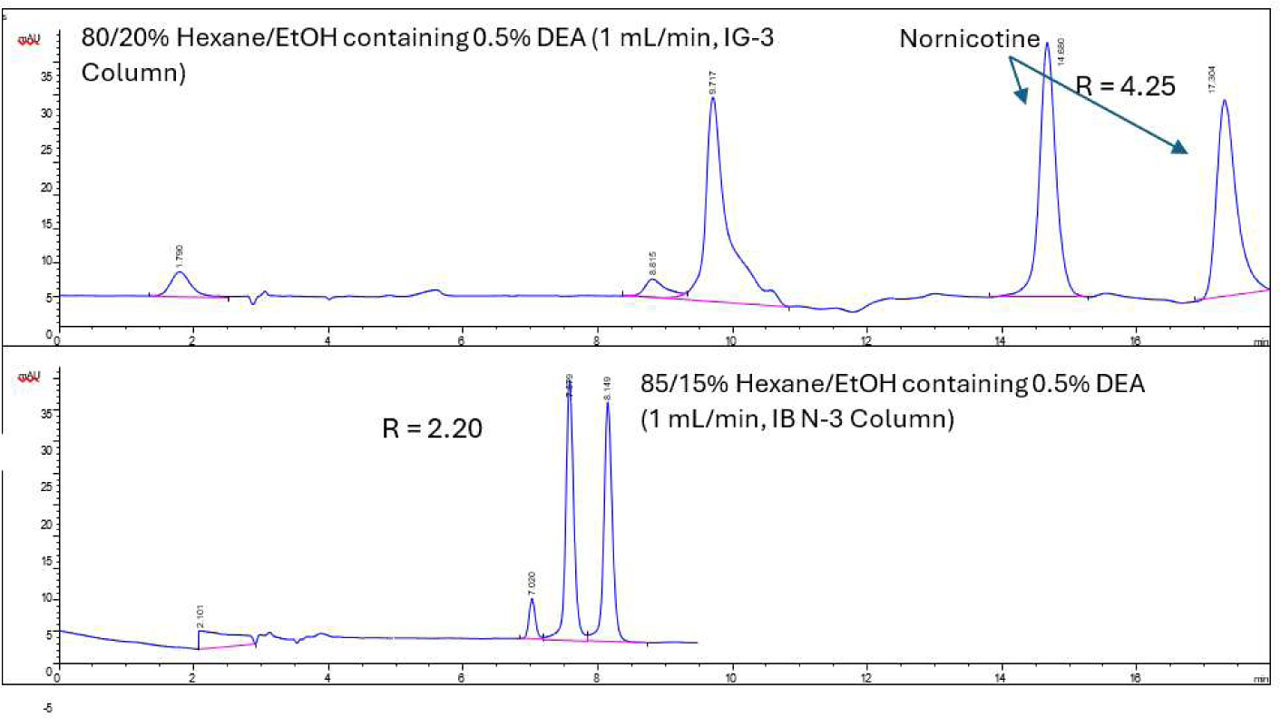
Figure 1.
Chiral HPLC/UV/VIS separation of nornicotine enantiomers using IG-3 and IB N-3 columns.
Table 1.
Variation in nornicotine enantiomers retention times (min) and resolution (R), as functions of EtOH modifier, modifier percentage, mobile phase flow rate, additive, additive structure, additive percent, and column type.
| IB N-3 column/mobile phase composition/flow rate | R | %RSD | RT*min | %RSD | RT*min | %RSD |
|---|---|---|---|---|---|---|
| 10% EtOH + 0.2% DEA, 0.8 mL/min | 2.8 | 2.8 | 14.4 | 2.4 | 13.2 | 2.4 |
| 10% EtOH + 0.5% DEA, 0.8 mL/min | 2.8 | 1.8 | 13.23 | 1.9 | 12.12 | 2.1 |
| 10% EtOH + 0.2% DEA, 1 mL/min | 2.9 | 4.6 | 13.3 | 0.6 | 12.1 | 0.6 |
| 10% EtOH + 0.5% DEA, 1 mL/min | 3 | 0.5 | 12.3 | 0.04 | 11.2 | 0.02 |
| 15% EtOH + 0.2% DEA, 0.8 mL/min | 2.3 | 1 | 10.9 | 0.8 | 10.1 | 0.9 |
| 15% EtOH + 0.5% DEA, 0.8 mL/min | 2.3 | 3.1 | 10.3 | 1.4 | 9.6 | 1.3 |
| 15% EtOH + 0.2% DEA, 1 mL/min | 2.1 | 0.9 | 8.6 | 1 | 8 | 0.9 |
| 15% EtOH + 0.5% DEA, 1 mL/min | 2.2 | 1.2 | 8.2 | 1.5 | 7.6 | 1.6 |
| IG-3 column/mobile phase composition/flow rate | R | %RSD | RT*min | %RSD | RT*min | %RSD |
|---|---|---|---|---|---|---|
| 15% EtOH + 0.2% DEA, 0.8 mL/min | 5.4 | 1.1 | 29.7 | 2.0 | 24.92 | 2.1 |
| 15% EtOH + 0.5% DEA, 0.8 mL/min | 5.1 | 5.8 | 28.6 | 0.2 | 23.96 | 0.1 |
| 15% EtOH + 0.2% DEA, 1 mL/min | 5.09 | 0.3 | 24.5 | 1.9 | 20.65 | 2.1 |
| 15% EtOH + 0.5% DEA, 1 mL/min | 4.52 | 2.9 | 22.4 | 0.3 | 18.85 | 0.2 |
| 20% EtOH + 0.2% DEA, 0.8 mL/min | 4.89 | 0.1 | 23.7 | 0.7 | 20.17 | 0.7 |
| 20% EtOH + 0.5% DEA, 0.8 mL/min | 4.6 | 0.4 | 21.74 | 0.1 | 18.44 | 0.1 |
| 20% EtOH + 0.2% DEA, 1 mL/min | 4.62 | 0.6 | 18.53 | 2.1 | 15.78 | 2.1 |
| 20% EtOH + 0.5% DEA, 1 mL/min | 4.25 | 6.9 | 17.25 | 0.3 | 14.65 | 0.3 |
Column flow rates
Varying the mobile phase flow rate between 1.0 and 0.8 mL/min resulted in changes to both the retention times and R values of the nornicotine enantiomers (Table 1), with the (R)- nornicotine enantiomer eluting from the column first. Several observations on the influences of changes in flow rate on enantiomer retention times and R values (relative internally to each set of conditions) can be made from the data in Table 1:
For IB N-3
At 0.2% DEA and a 90/10 mobile phase composition, enantiomer retention times decreased, ~1 min, at the higher flow rate with no notable change in R
At 0.5% DEA and 90/10 mobile phase composition, enantiomer retention times decreased, ~1 min, at the higher flow rate with a ~0.1 decrease in R
At 0.2% DEA and 85/15 mobile phase composition, enantiomer retention times decreased, ~2.3 min at the higher flow rate with a ~0.1 decrease in R
At 0.5% DEA and 85/15 mobile phase composition, enantiomer retention times decreased, ~2 min, at the higher flow rate with a ~0.1 decrease in R
For IG-3
At 0.2% DEA and 85/15 mobile phase composition, enantiomer retention times decreased, ~5 min, at the higher flow rate with an ~0.3 decrease in R
At 0.5% DEA and 85/15 mobile phase composition, enantiomer retention times decreased, ~6 min, at the higher flow rate with an ~0.5 decrease in R
At 0.2% DEA and 80/20 mobile phase composition, enantiomer retention times decreased, ~5 min, at the higher flow rate with an ~0.2 decrease in R
At 0.5% DEA and 80/20 mobile phase composition, enantiomer retention times decreased, ~5 min, at the higher flow rate with an ~0.4 decrease in R
Additive percentage
Varying the additive percentage in the mobile phase resulted in observable changes to both the retention times and R values of the nornicotine enantiomers (Table 1).
For IB N-3
At 1 mL/min and 90/10 mobile phase composition, enantiomer retention times decreased, ~1 min, at the higher additive percent with no notable change in R
At 0.8 mL/min and 90/10 mobile phase composition, enantiomer retention times decreased, ~1 min, at the higher additive percent with no notable change in R
At 1 mL/min and 85/15 mobile phase composition, enantiomer retention times decreased, ~0.3 min, at the higher additive percent with no notable change in R
At 0.8 mL/min and 85/15 mobile phase composition, enantiomer retention times decreased, ~0.5 min, at the higher additive percent with no notable change in R
For IG-3
At 1 mL/min and 85/15 mobile phase composition, enantiomer retention times decreased, ~2 min, at the higher additive percent with a decrease, ~0.5 in R
At 0.8 mL/min and 85/15 mobile phase composition, enantiomer retention times decreased, ~1 min, at the higher additive percent with a decrease, ~0.4 in R
At 1 mL/min and 80/20 mobile phase composition, enantiomer retention times decreased, ~1.3 min, at the higher additive percent with a decrease, ~0.4 in R
At 0.8 mL/min and 80/20 mobile phase composition, enantiomer retention times decreased, ~2 min, at the higher additive percentage with a decrease, ~0.3 in R
Modifier percentage
Varying the modifier percentage in the mobile phase resulted in observable changes to both the retention times and R values of the nornicotine enantiomers (Table 1).
For IBN-3
At 0.2% DEA and 1 mL/min mobile phase flow rate, enantiomer retention times decreased, ~5 min, at the higher modifier percentage with a decrease, ~0.7 in R
At 0.2% DEA and 0.8 mL/min mobile phase flow rate, enantiomer retention times decreased, ~3 min, at the higher modifier percentage with a decrease, ~0.5 in R
At 0.5% DEA and 1 mL/min mobile phase flow rate, enantiomer retention times decreased, ~4 min, at the higher modifier percentage with a decrease, ~0.7 in R
At 0.5% DEA and 0.8 mL/min mobile phase flow rate, enantiomer retention times decreased, ~3 min, at the higher modifier percentage with a decrease, ~0.6 in R
For IG-3
At 0.2% DEA and 1 mL/min mobile phase flow rate, enantiomer retention times decreased, ~6 min, at the higher modifier percentage with a decrease, ~0.4 in R
At 0.2% DEA and 0.8 mL/min mobile phase flow rate, enantiomer retention times decreased, ~6 min, at the higher modifier percentage with a decrease, ~0.5 in R
At 0.5% DEA and 1 mL/min mobile phase flow rate, enantiomer retention times decreased, ~5 min, at the higher modifier percentage with a decrease, ~0.3 in R
At 0.5% DEA and 0.8 mL/min mobile phase flow rate, enantiomer retention times decreased, ~7 min, at the higher modifier percentage with a decrease, ~0.4 in R
When similar percent changes in modifier were made using isopropanol, nornicotine enantiomer retention times of less than 20 min could not be attained with either column even with percentages of isopropanol approaching 25%. Thus, in keeping with the philosophy of building methods with quick analysis times, isopropanol was no longer investigated as a mobile phase modifier.
Additive structure
The impact on nornicotine enantiomer resolution and retention times of a group of amine additives including TEA, DEA, and IPAm revealed that using TEA produced undesirable peak tailing (Figure 3). The nornicotine enantiomer retention times for the DEA containing mobile phase were shorter than those observed when IPAm and TEA were employed as mobile phase modifiers, with other conditions remaining constant. The R values for the different additives were 2.14, 1.99, and 1.11 for DEA, IPAm, and TEA, respectively, with all other conditions held constant.
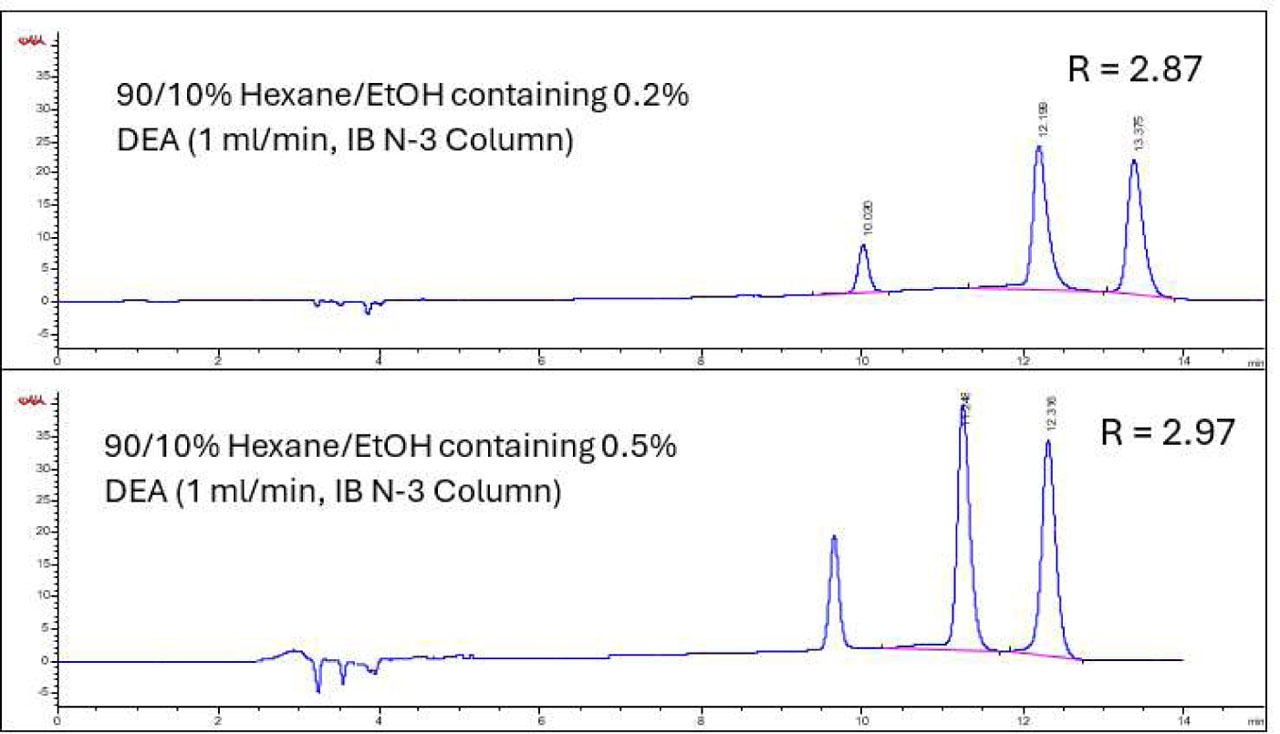
Figure 2.
Chiral HPLC/UV/VIS separation of nornicotine enantiomers as a function of changes in additive percentage using IB N-3 column.
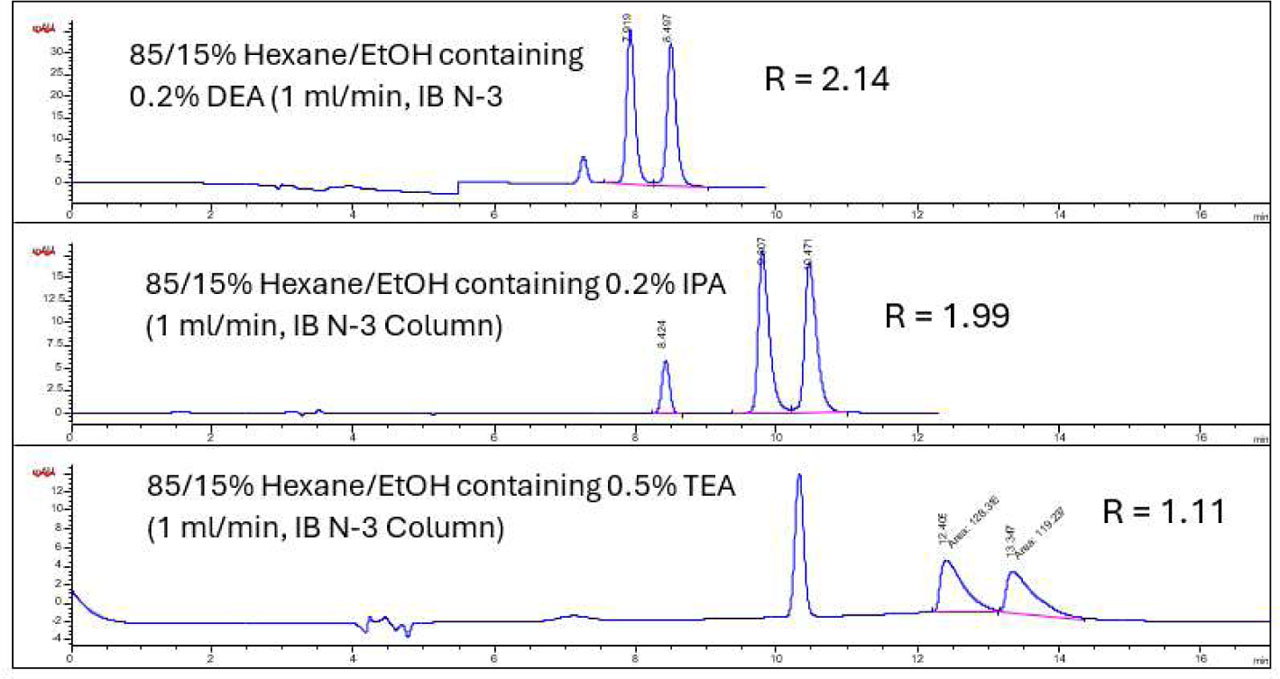
Figure 3.
Chiral HPLC/UV/VIS separation of nornicotine enantiomers using selected additives using IB N-3 column.
Detection limit
Authentic gravimetric standards of nornicotine enantiomers were prepared at selected unit ng/μL levels and optimized chromatographic conditions were employed for their separations with UV detection at 254 nm. The results indicate that a nornicotine enantiomers detection limit of approximately 1 ng on column, with a signal to noise ratio of greater than 2/1, for the enantiomers, Figure 4.
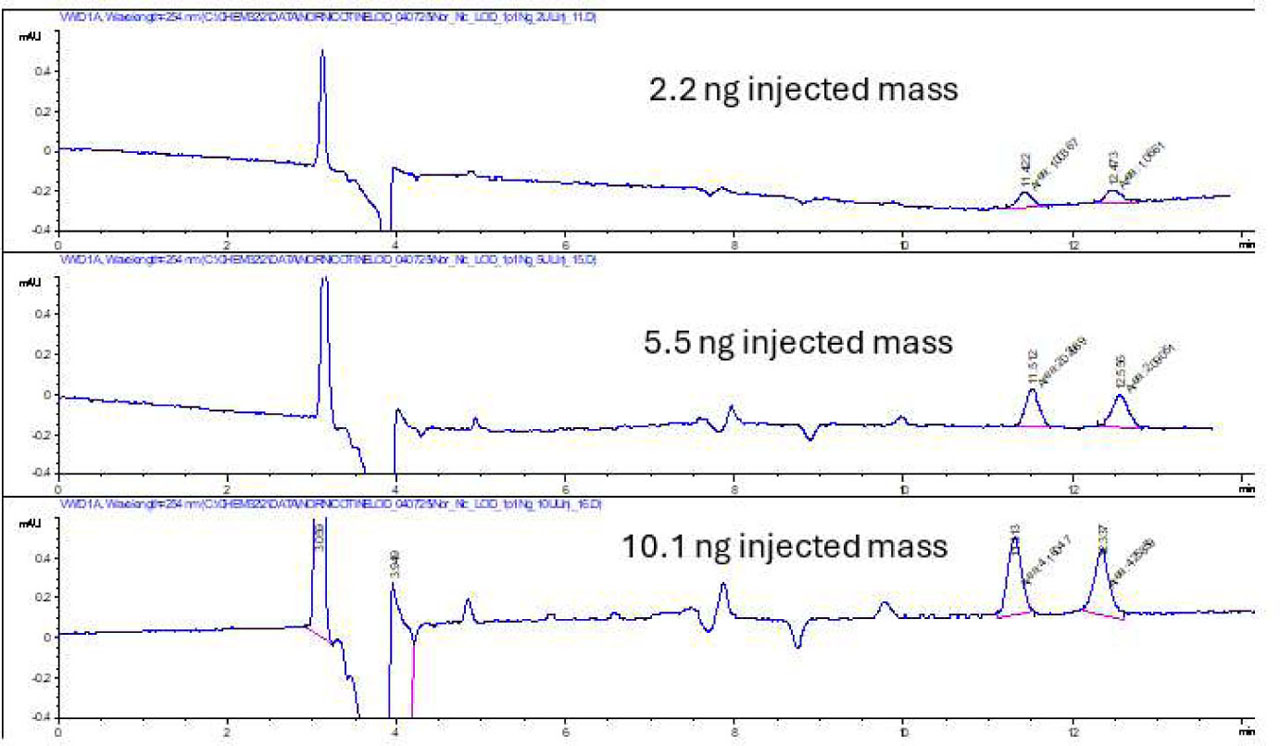
Figure 4.
Chiral HPLC/UV/VIS separation of nornicotine enantiomers at their detection limit.
Impact of optimized nornicotine enantiomer separation conditions on simultaneous nornicotine and nicotine enantiomer separations
In an investigation into the possible simultaneous separation of nicotine and nornicotine enantiomers in a single injection, the optimized conditions for nicotine enantiomer separation were found to be not conducive to the separation of nornicotine enantiomers (18, 21). The nornicotine enantiomer retention times were >40 min, which was accompanied by a broad peak shape, even though an R value of 3.87 was noted (Figure 5). Under the conditions, that is, optimized nicotine enantiomer separation, this one particular set of chiral HPLC method parameters, did not possess the capability to optimally and efficiently separate both sets of enantiomers in one injection. However, through a systematic adjustment of the mobile phase modifier percentage, the simultaneous separation of both nornicotine and nicotine enantiomers was attained with:
1) R values greater than 2, and
2) retention times less than 10 min in one injection, or alternatively, R values greater than 2 and retention times less than 13 min (Figure 5).
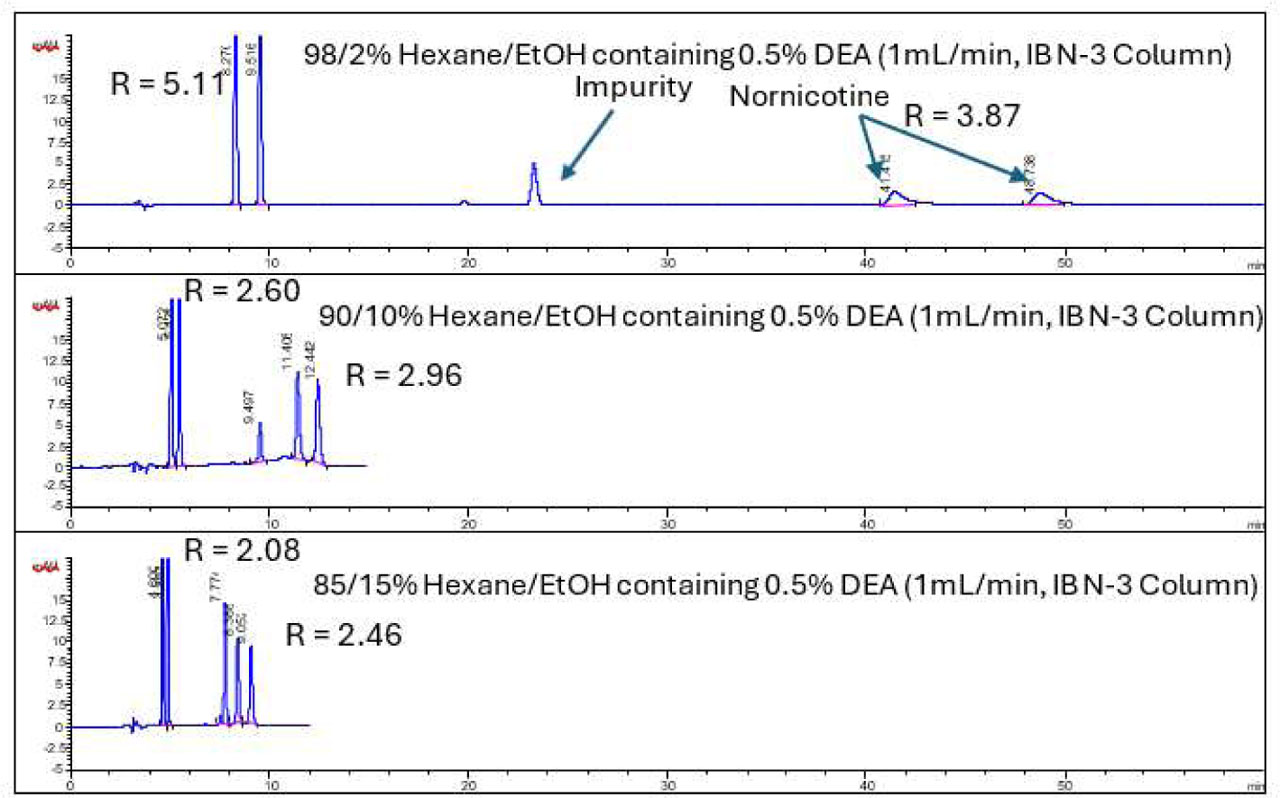
Figure 5.
Chiral HPLC/UV/VIS simultaneous separation of nornicotine and nicotine enantiomers as a function of mobile phase composition (IB N-3 column).
This discovery most likely represents one of the first disclosures of a single chiral HPLC method for the simultaneous separation of both nornicotine and nicotine enantiomers that possesses these characteristics.
Systematic variations in normal phase HPLC mobile phase flow rates (between 1.0 and 0.8 mL/min), mobile phase modifier percentage, and mobile phase additive percentage, produced consistent trends in shifts of enantiomer retention times and R values. The R value and retention time %RSD values for the endpoints were less than 3%. The nornicotine enantiomers were well resolved with R values ranging between ~2 and ~5 (Figures 1–5) with the R value results from CHIRALPAK IG-3 consistently greater than those from CHIRALPAK IB N-3, regardless of mobile phase conditions. The nornicotine enantiomer pair retention times were significantly longer, ~29/~25 and ~17/~15 min for CHIRALPAK IG-3 compared to ~14/~8 and ~13/~8 min for CHIRALPAK IB N-3.
For both columns:
Increases in mobile phase flow rate always resulted in notable reductions in enantiomer retention times, sometimes as great as 5 min, with accompanying meaningful somewhat unattractive yet having no significant impact on overall separation performance (0.1 to 0.5) shifts in R values
Increases in additive percentages always resulted in observable reductions in enantiomer retention times, from 0.2 to 2 min, with accompanying notable shifts somewhat unattractive yet having no significant impact on overall separation performance (0.3 to 0.5) in R values
Increases in modifier percentages always resulted in significant reduction in enantiomer retention times, from 1 to 7 min, with accompanying notable shifts somewhat unattractive yet having no significant impact on overall separation performance (0.3 to 0.6) in R values
Thus, from the “quick” analysis time perspective, the following conditions would provide for the fastest nornicotine enantiomer analysis time and more than adequate nornicotine enantiomer resolution: column, IB N-3; mobile phase flow rate, 1 mL/min, mobile phase composition, 15% EtOH modifier and 0.5% DEA additive. Depending on the complexity of the tobacco extract matrix, an alternative mobile phase composition of 10% EtOH and 0.5% DEA could be employed to improve enantiomer resolution and eliminate co-eluting extract components.
These finding clearly illustrate the extremely critical impact of column selection, arguably minor changes in modifier percentages, additive percentages, and mobile phase flow rates, on the nornicotine enantiomer R values and retention times. Judicious selection of the values for modifier and additive type and percentage can thus lead to meaningful positive shifts in both retention time reduction and enantiomer R values (>2), improving the performance of the analytical method and addressing several of the issues delineated in the QuEChERS protocol requirements. Among the accepted analytical protocol requirements, a method must possess effective and rugged characteristics. These criteria can be met when the method analytical data supports analyte specificity/accuracy and precision. From the data contained herein, the presence of baseline enantiomer resolution coupled with detection at 254 nm provides strong supporting evidence for specific analyte detection. The overwhelming majority of the % RSD values for both analyte retention times and analyte enantiomer R values, at less than 3%, support the rugged character of the approach. A critical and important aspect of successful chromatographic separations is the nature of the peak shape of the analytes of interest. The influence of additive percentage on the shape of the nornicotine enantiomer peaks is evident (Figure 2), with the greater amount of additive (0.5% DEA) providing for a greater R value.
Some significant observations on peak shape as well as other chromatographic characteristics can be garnered from Figure 3. The nornicotine enantiomer peak shape when using TEA as the additive compared with DEA and IPA was significantly distorted with unacceptable peak tailing. The underlying cause of this behavior is likely not related to the basicity of the amine additives themselves, as the pKa values are 10.75, 10.98, and 10.63 for TEA, DEA, and IPA, respectively. It has been well established that different additives can affect the performance of polysaccharide-based chiral stationary phases (CSPs) by masking silanol interactions with the silica gel support material (29), the ability of the additive to outcompete the analyte for space in the CSP binding groove (30, 31), or the ability of the additive to mask certain hydrogen bonding interactions within the CSP binding groove (32). While the specific cause was not investigated in this study, it is possible that one or a combination of these possibilities accounts for the additive effects observed as related to peak shape, selectivity, and R values.
In a very desirable/perfect scenario, a method using a single chiral HPLC method possesses the characteristics and the capability of providing information on the enantiomer distributions of both nicotine and nornicotine (arguably the vast majority of Nicotiana tabacum L. alkaloids) would be advantageous. The investigations described herein clearly indicate that the technologies to accomplish this feat have now been established (Figure 5). The unanticipated magnitude of the shifts in nicotine and nornicotine enantiomer retention times to much shorter times accompanied by more than acceptable R values was demonstrated. Reduction in nornicotine retention times by a factor of 4 and by a factor of 2 for nicotine are clearly demonstrated (Table 3). Equally important was the retention of very acceptable R values for both sets of nicotine and enantiomers, 2.60 and 3.09 for nicotine and nornicotine enantiomers, respectively (Figure 5).
Overall, this result highlights the importance of making small incremental adjustments to additive and modifier concentrations when assessing their effects on enantiomeric resolution (R values) and retention times, particularly when optimizing sample analysis times. Obviously, there is little to no reason for creating mobile phase compositions that result in enantiomeric R values greater than one. However, it is critically important to fully understand how the mobile phase compositions influence R values and retention times, one of the main foci of this manuscript, and how subtle changes in mobile phase compositions can actually result in unacceptable enantiomer elution characteristics.
An additional important criterion for an acceptable method is the ability of the approach to detect the analyte(s) of interest at concentrations closely linked to levels of the analyte(s) appearing in samples of interest. Figure 4 presents the chiral HPLC chromatogram of nornicotine enantiomers at a nornicotine concentration of 1 ng on column for each enantiomer with a signal to noise ratio of greater than 2:1, these conditions affording an acceptable detection limit for nornicotine concentrations in a variety of tobacco cultivars.
Application
The U.S. Food and Drug Administration (FDA) published an Advanced Notice of Proposed Rulemaking (ANPRM) in March of 2018 titled “Tobacco Product Standard of Nicotine Level of Certain Tobacco Products”. The ANPRM addressed reducing nicotine levels in tobacco fillers used for cigarette manufacture by 95 to 98%. (16). A standard cigarette filler contains 5 mg to 15 mg of nicotine per gram of tobacco. In a similar vein, the World Health Organization recommends a 35-fold reduction, which corresponds to 0.4 mg/g of nicotine (17). Application of this nornicotine enantiomer analysis protocol to the analysis of the tobacco contained within a commercially available low alkaloid tobacco cigarette as well as tobacco standards revealed that the method was appropriate for the qualitative and quantitative analysis of the nicotine enantiomeric distribution within samples of this type (Figures 6 and 7). The distribution of nornicotine enantiomers disclosed herein was well within the ranges found for the extracts of selected tobacco standard cultivars and smokeless tobacco (18). The protocol was able to detect the presence of both nornicotine enantiomers with generally acceptable signal to noise ratios (>2/1) and consistent enantiomer retention times, clearly indicating that this protocol for nornicotine enantiomer distribution would be applicable to most all Nicotiana tabacum L. samples.
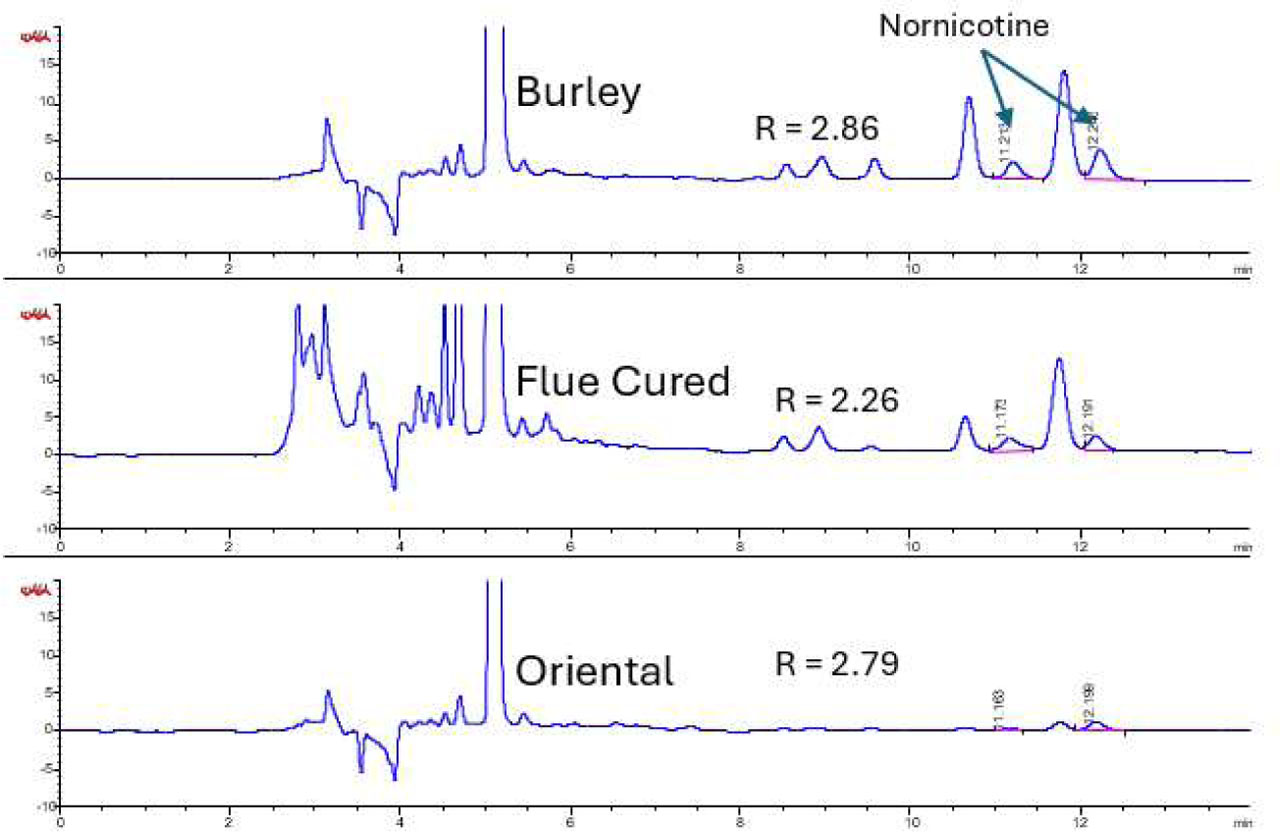
Figure 6.
Chiral HPLC/UV/VIS separation of nornicotine enantiomers extracted from flue cured, Burley and Oriental standard tobaccos and a low nicotine commercially available tobacco (90/10 Hexane/EtOH, 0.5% DEA, 1 mL/min, IB N-3 column).
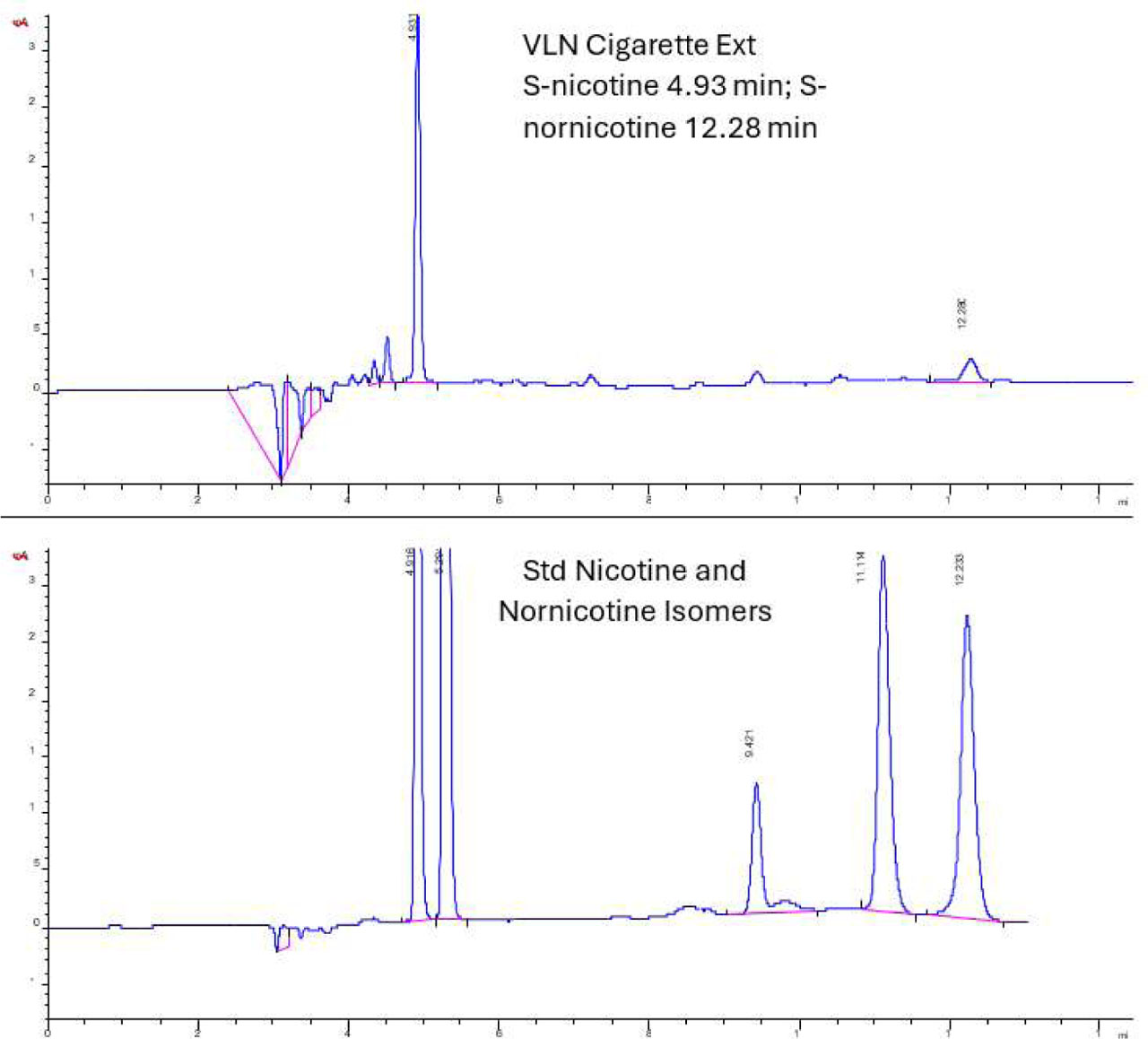
Figure 7.
Chiral HPLC/UV/VIS separation of nornicotine enantiomers extracted from commercial VLN cigarette tobacco. Conditions (90/10 Hexane/EtOH, 0.5% DEA, 1 mL/min, IB N-3 column).
A somewhat subtle but arguably very important observation was detected in the nornicotine enantiomer R values for the tobacco standards extracts (Figure 6). Of note was the marked difference in the R value for the flue-cured tobacco extract, 2.26 versus the R values for the Burley and Oriental tobacco extracts at ~2.8. A possible reason for this marked difference could reside with the complexity of the sample matrix, that is, the nature and concentration of the other tobacco components and optical isomers known to be present in tobacco extracts (33, 34). Hence, minor but necessary adjustments to mobile phase composition maybe required to maintain acceptable enantiomer resolution values and resolution of tobacco matrix components from the enantiomers themselves. To illustrate this concern, an important observation was made when a set of two different mobile phase compositions was employed to determine the nornicotine enantiomer distribution in the tobacco extracts. Resolution of the nornicotine enantiomers themselves as well as the other extract components was possible with the following mobile phase composition (90/10 hexane/EtOH, 0.5% DEA, 1 mL/min, CHIRALPAK IB N-3). However, when the mobile phase was changed slightly to 85/15 hexane/EtOH. 0.5% DEA, 1 mL/min, CHIRALPAK IB N-3, in an attempt to shorten retention times, an unacceptable co-elution of other tobacco extract components with the nornicotine enantiomers occurred. Thus, it is of note that optimized mobile phase conditions for the separation of nornicotine and quite possibly nicotine enantiomers as well, including results from separations of enantiomer standards, may have to undergo some subtle modification(s) to ensure complete resolution of the enantiomers present in a tobacco extract having multiple additional components. The addition of known amounts of each pure enantiomer to the tobacco extract could be employed to confirm the shifts in retention times of the enantiomers due to the tobacco extract complexity.
In a marked contrast to the nornicotine enantiomer distribution characteristics of the Burley, flue-cured, and Oriental tobacco extracts, the chiral HPLC analysis of the extract of the tobacco from the VLN product was dominated by the presence of the (S)-nornicotine enantiomer with the (R)-nornicotine enantiomer not being detected (Figure 7). In a similar fashion, the (S)-nicotine enantiomer was the only nicotine enantiomer detected in the VLN extract, as well (Table 2). The impacts of flow rate, additive percentages, and modifier percentages on the nornicotine enantiomer retention times and resolution were very similar to those observed in the chiral HPLC separation of nicotine enantiomers (27).
Table 2.
Nornicotine enantiomer resolution values and enantiomer distributions for selected tobacco extracts. Separation conditions: 90/10% hexane/ethanol with 0.5% DEA – IB N-3 column flow 1 mL/min., ambient temp.
| Nornicotine enantiomer values | Burley | Flue-cured | Oriental | VLN Tobacco |
|---|---|---|---|---|
| Average nornicotine enantiomer resolution, R | 2.86 | 2.26 | 2.97 | * |
| Average nornicotine R/S enantiomer ratio | 0.51 | 0.96 | 0.23 | * |
Table 3.
Influences on nornicotine and nicotine enantiomer retention times and resolution values (R) with systematic changes in mobile phase composition.
| Mobile phase | 85/15% Hex/EtOH with 0.5% DEA (v/v) | |
| Nicotine | Nornicotine | |
| Retention time (min) | 4.90 | 9.05 |
| Retention time (min) | 4.60 | 8.39 |
| R | 2.1 | 2.5 |
| Mobile phase | 90/10% Hex/EtOH with 0.5% DEA (v/v) | |
| Nicotine | Nornicotine | |
| Retention time (min) | 5.31 | 12.05 |
| Retention time (min) | 4.92 | 10.95 |
| R | 2.6 | 3.1 |
| Mobile phase | 98/2% Hex/EtOH with 0.5% DEA (v/v) | |
| Nicotine | Nornicotine | |
| Retention time (min) | 9.52 | 48.74 |
| Retention time (min) | 8.27 | 41.42 |
| R | 5.1 | 3.9 |
Several recent publications have addressed directly or indirectly the simultaneous chromatographic separation of tobacco alkaloids (35,36,37,38). Most often adequate separation of both enantiomers was obtained (R greater than 1) but with retention times greater than 20 min and employing at times two chiral columns in series. In one case (38), however, through a virtual combination of the retention times contained within two displayed separate chromatograms of alkaloid standards, it was possible to artificially construct a chromatogram wherein the retention times of nicotine enantiomers (~0.7 and 0.9 min) and nornicotine enantiomers (~3.9 and 4.5 min) would possibly have been produced in a single injection. Thus, the current disclosure contained herein when compared with known published results, provides:
1) an understanding of the subtle influences of mobile phase, additive, and modifier structures as well as their concentrations on the resolution and retention times of nicotine and nornicotine enantiomers and
2) for a new relatively fast, easy, inexpensive, accurate, and precise method for the simultaneous determination of nicotine and nornicotine enantiomer distributions in tobacco extracts.
CONCLUSIONS
The main focus of these data has been to present conclusive documentation of the influences of subtle changes in chiral column type, mobile phase modifiers and additives on the chiral HPLC chromatography with variable wavelength UV detection for the determination of the enantiomer distributions of nornicotine and nicotine and how knowledge of these subtle systematic changes in these parameters critically influence the creation of an effective overall enantiomeric separation.
Presumably the improvements in peak shapes could be attributed to one of several possibilities discussed previously. Optimizing the levels of mobile phase modifiers, additives, and mobile phase flow rates to produce a method having successfully addressed acceptable method criteria was achieved with the use of an inexpensive mobile phase solvent, alcohol modifiers and amine additives at relatively low concentrations and reasonable mobile phase flow rates.
The method is both accurate and precise with baseline enantiomer separations in less than 15 min, and detection limits in the range of 2–3 ng on column coupled with %RSD values consistently less than 3% for both nornicotine and nicotine enantiomer retention times and R values. When compared with the results obtained previously employing a SFC-based nicotine enantiomer separation and a chiral normal phase HPLC nicotine separation, this current method was found to effectively address a significant portion of acceptable analytical protocols and criteria, as well. Of note is a comparison between the HPLC and SFC enantiomeric retention times and enantiomeric resolution for nicotine and nornicotine with comparable values obtained by gas chromatography (GC) (19) and more recent SFC and HPLC results (35,36,37,38). While some of the HPLC and SFC protocols referenced and discussed herein have enantiomer retention times equal to or less than 10 min, and R values much higher than 1, the GC values have retention times greater than 150 min with much less desirable R values. Successful application of this chiral HPLC protocol using the optimum conditions obtained in this study (CHIRALPAK IB N-3, flow rate = 1 mL/min, 90/10% hexane + ethanol (0.5% diethylamine, DEA (v/v)), has been demonstrated through the analysis of the nornicotine and nicotine enantiomer distributions within the tobacco filler contained in a commercially available low alkaloid cigarette as well as in tobacco standards. This current separation and quantitation technology for the chiral HPLC simultaneous determination of nicotine and nornicotine enantiomer distributions in tobacco-based materials that embraces acceptable quantitative and qualitative analytical philosophies. The results also clearly illustrate the advantages of systematic investigations of the influences of subtle changes in additive and modifier structures and concentrations on tobacco alkaloid enantiomeric HPLC separations. Also revealed were the similarities with regards to shifts in resolution and retention times precipitated by changes in column, mobile phase, additives, and modifiers for both nornicotine and nicotine.