
1. INTRODUCTION
Two major issues are associated with the recreational (non-therapeutic), long-term use of nicotine: (i) its dependence forming capacity and (ii) potential toxicity (1). The late professor M.A.H. Russell framed this issue in the following statement: “Since people smoke mainly for nicotine and fail to quit because they are addicted, and since they die mainly from the “tar”, carbon monoxide and other harmful gases taken in alongside nicotine, and since they chew and snuff tobacco for nicotine but die largely from the nitrosamines and other carcinogens in tobacco, it seems logical to offer either a cleaner product or, better still, an acceptable source of purer, less contaminated nicotine.” (2). Russell also provided a brief summary of the health effects of nicotine at that time “… nicotine has no part in tobacco-related cancers and chronic obstructive lung disease, two of the major causes of tobacco-related premature deaths. There is some evidence that it contributes to the overall cardiovascular risks of smoking. These risks appear to be most evident when nicotine is rapidly absorbed through the lungs. However, it must be said that the evidence is discounted by two experts more competent than I am to assess it. They state: “That nicotine has a role in the cause of cardiovascular disease has its adherents, but the evidence is not compelling” (Froggatt & Wald).” (2).
Clive Bates, a long-standing smoking and tobacco industry adversary, recently stated with respect to promoting NGPs (in particular ECs): “… that a harm reduction strategy is possible by encouraging smokers who want to continue using nicotine to switch from high-risk to low-risk nicotine use.” (3).
There are three major implications of nicotine when broadly used as recreational drug in NGPs:
(i) The toxic effects of nicotine and its role in human health when used long-term
(ii) Nicotine’s addictive properties, potentially leading to a nicotine dependence of consumers
(iii) Nicotine’s role in public health, e.g., by facilitating young people to initiate usage of NGPs and (at worst) switch to more harmful products such as cigarettes (‘gateway effect’).
Almost all scientists would agree to the statement that most of the harm is caused by smoking, not nicotine (4). Nevertheless, many questions remain open.
A systematic review of the addiction and appeal issue of ECs (but certainly would also apply to other NGPs) revealed that higher nicotine concentrations and the availability of a variety of flavors in the products might facilitate complete substitution for CCs (5). The authors further conclude that future regulations should take into account their impact on smokers of CC, for whom the new products may be cessation tools or reduced-harm alternatives.
The National Academies of Sciences, Engineering, Medicine (NASEM) indicated that the “abuse liability of tobacco products increases with greater delivery, faster rate of absorption, and higher blood nicotine concentrations” and that smoking was “the most reinforcing and dependence-producing form of nicotine administration”, however, NASEM also concluded that other sensory stimuli such as taste and smell are of relevance for dependence on cigarette smoking (6). Furthermore, the UK Committee on Toxicity of Chemicals in Food, Consumer Products and the Environment (COT) stated that, despite of similar pharmacokinetics, the extent of dependence may differ between CCs and ECs (7), all the more between CC and other NGPs.
In the first Surgeon General’s Report on Smoking and Health, nicotine was held unaccountable as major cause for smoking-related diseases (8).
The UK Royal College of Physicians (RCP) concluded in a comprehensive review that short-term nicotine use did not result in significant harm (9). Furthermore, the RCP stated that provision of the nicotine that smokers are addicted to without the harmful components of tobacco smoke can prevent most of the harm from smoking (9). Finally, the FDA, known to base its conclusions on scientific evidence, had stated: “We have reviewed the published literature on this longer-term use of NRT products and have not identified any safety risks associated with such use” (10).
There are a number of research fields in the area of nicotine’s health risks implicated with the use of NGPs, which are not dealt with in detail in this review:
○ The important issue of addiction is not in the center of this review. The reader is referred to other recent reviews on this issue (1, 5).
Another important aspect in the context of nicotine consumer products is nicotine’s poisoning and lethal doses (accidental or suicidal). Also, this problem is not dealt with in more detail in this review. Until recently, the human lethal dose for nicotine was assumed to be in the range of 30–60 mg. A recent verification suggested that the fatal dose is probably much higher (500–1000 mg) (11). These issues are considered in detail in other recent reviews (1, 7).
○ Acute adverse effects of nicotine products as reported in clinical studies or long-term field studies with NRT products (see for example (12)) are also not considered in this review. In a meta-analysis comprising more than 177,000 individuals, significantly increased risks for a number of adverse effects in NRT users were reported, including heart palpitations, chest pains, nausea, vomiting, gastrointestinal complaints, insomnia, skin irritations (nicotine patches), mouth and throat soreness (oral NRTs), mouth ulcers (oral NRTs), hiccoughs and coughing (oral NRTs) (13). Findings of a randomized clinical trial (RCT) on nicotine patch users over 52 weeks support the safety of long-term use of this NRT product (14). This review will not further discuss acute adverse effects of nicotine but focus on disorders, physiological changes and disorders upon chronic use of nicotine products.
○ Also, effects of using ECs and HTPs on bystanders (passive or secondhand exposure) were not considered in this review. It should, however, be mentioned that neither ECs nor HTPs generate any sidestream smoke (the main contributor to environmental tobacco smoke, ETS). Rather, secondhand exposure by ECs or HTPs can only originate form the exhaled aerosols. Appropriate studies were reviewed in recent monographs (1, 7).
○ Exposure of NGP users to nicotine and toxicants has been investigated rather elaborately on two levels: (i) release of nicotine and toxicants under common use patterns by chemical analysis and (ii) uptake of these chemicals by measuring suitable biomarkers of exposure (BOEs) in body fluids or users. The area of BOEs in users of NGPs is not systematically covered in this review. The reader is referred to recent reviews and articles dealing with this topic in detail (1, 15, 16). The data available suggest that, on average, nicotine uptake is somewhat higher in smokers compared to users of the other NGPs (15, 16). Long-term use of the various products leads to comparable nicotine uptake between smokers and NGP users (1).
There are presently unavoidable limitations in the evaluation of nicotine’s role in health effects when using NGPs:
○ NGPs, in particular electronic cigarettes (ECs), heated tobacco products (HTPs) and nicotine pouches (NPs) are on the market for clearly less than 20 years. Therefore, long-term effects with endpoints of diseases or even mortalities are as yet out of range. Despite of that, some scientists are already convinced that for example EC use constitute a severe health risk (17). For the evaluation of certain chronic nicotine effects, studies with Swedish snus and nicotine replacement therapy products (NRTs: nicotine gums, patches, inhalators) are included in this review.
○ As a result of the relative short market availability of the NGPs, the number of consumers, in particular mid-term to long-term consumers, is low and NGP users in general may be younger than smokers of CCs (18). Furthermore, NGP use patterns are not yet well settled. Therefore, it is not unlikely that during the switching phase from CCs to NGPs, there will be some dual use, which might be difficult to assess correctly. As a consequence, dual use (CC combined with NGP use) in human studies dealt with in this review, needs to be considered when evaluating the results. A practical classification for dual users of CC and EC has been proposed by Borland et al. (19).
○ Development, modification and improvements of NGPs is an ongoing process with the manufacturers. Presently, at least the fourth generation of ECs is available on the market (20). Release of nicotine and toxicants from NGPs vary with design features and can certainly influence the biological effects on the user. In other words, the point in time (year), when a study with NGPs is conducted could be relevant in terms of product-related nicotine uptake and its effects in the body.
○ The role of nicotine could be best elucidated, if NGPs with and without nicotine would be compared. This, in principle, should be possible in vapers using e-liquids containing or not containing nicotine. There are, however, too few users available who use nicotine-free ECs, thus preventing a comparison with nicotine-containing ECs (1). This approach (with/without nicotine), therefore, is limited to controlled, experimental studies.
○ Biomarkers of potential harm (BOPHs), also termed biomarkers of biological effects (BOBEs) or biomarkers of risk, would represent a suitable alternative for classical epidemiological endpoints (diseases, mortality) to assess long-term health risks much earlier than to await 3 to 4 decades of NGP use (21). However, there are as yet limitations in the validations of BOBEs in terms of their prediction power for diseases and mortality. Most studies using BOBEs are, therefore, limited to acute or mid-term investigations (1, 22).
○ When evaluating the detrimental effects of nicotine taken up with NGP (or NRT) use, the route of uptake has to be considered. Therefore, inhalation (EC, HTP, nicotine inhaler), buccal absorption (snus, NP, nicotine gum) and dermal uptake (nicotine patch) are distinguished in this review.
Specific, study-related limitations will be discussed in the relevant sections of this review.
In the endeavor to examine the role of nicotine in health risks implicated with the use of NGPs, our focus are clearly results from human studies. However, given the limitations listed above, in vivo (animal) and in vitro studies represent a valuable supplement to human studies. Those studies are considered, if the effects of nicotine (either alone or in the mixture that NGPs release) were investigated. The problem of extrapolation of animal and in vitro studies to human users has to be taken into account (1).
The main purpose of this review is to elucidate the long-term toxicity of nicotine in human users of nicotine products, rather than its dependence-forming properties and the resulting consequences for public health. Addiction to nicotine will become less a problem, as long as accompanying chemicals absorbed with nicotine from a product are less toxic (23). The review is structured according to the most important smoking-related diseases and detrimental effects. Due to the fact that the role of nicotine is always of foremost interest, a chapter on beneficial effects of nicotine in various diseases and disorders is added, so that literature was briefly summarized and evaluated for the following topics:
○ Cardiovascular diseases (CVD)
○ Cancer (various organs)
○ Respiratory diseases (RD)
○ Oral health
○ Oxidative stress and inflammation (various cells and organs)
○ Metabolic syndrome
○ Reproduction
○ Other disorders and diseases
○ Beneficial effects of nicotine
2. METHODS
2.1. Literature sources
Relevant articles were retrieved from various databases, including:
○ PubMed
○ Google Scholar
○ ABF in-house literature database containing about 180,000 articles on the topic smoking and health
Recent reviews and monographs dealing with the topic of interest were evaluated, including:
○ US Surgeon General Report of 2014 “The Health Consequences of Smoking—50 Years of Progress: A Report of the Surgeon General” (24)
○ US Surgeon General Report of 2010 “How Tobacco Smoke Causes Disease: The Biology and Behavioral Basis for Smoking-Attributable Disease” (25)
○ National Academies of Sciences, Engineering and Medicine (NASEM): “Public Health Consequences of E-Cigarettes.” (6)
○ Committee on Toxicity of Chemicals in Food, Consumer Products and the Environment (COT): “Statement on the Potential Toxicological Risks from Electronic Nicotine (and Non-Nicotine) Delivery Systems (E(N)NDS – E-Cigarettes)” (7)
○ McNeill et al. (A report commissioned by the Office for Health Improvement and Disparities): “Nicotine Vaping in England: An Evidence Update including Health Risks and Perceptions, September 2022” (1)
Reference lists of recent suitable articles from the above sources were screened for further relevant articles on the topic of interest.
In total, about 500 articles were retrieved for more detailed screening by applying the inclusion criteria described in the following section.
2.2. Inclusion criteria
Human studies considered for evaluation must have investigated users of the NGPs electronic cigarettes (ECs), heated tobacco products (HTPs), nicotine pouches (NPs), nicotine replacement therapy (NRT) products (skin patches, chewing gum, lozenges, inhaler), smokeless tobacco (SLT) products (snus, oral snuff). Furthermore, at least one biological endpoint (disease, disorder, tissue or cell damage, physiological changes, biomarkers of effect or potential harm) must have been studied. Observed changes related to product use must be compared to at least one of the comparator conditions: non-users (NU), smokers of combustible cigarettes (CC), baseline (BL) prior to NGP use. Animal (in vivo) and in vitro studies were only considered for evaluation in this review, if the study design allows to allocate the contribution of nicotine to an observed effect with relevance to understand human effects.
2.3. Evaluation of the role of nicotine
Three aspects were considered in order to evaluate the role of nicotine in effects observed in human users of nicotine products: (i) sufficient scientific evidence that nicotine directly participates in a physiological (or pathophysiological) mechanism (e.g., by acting via a nicotine-specific receptor), (ii) evidence cited by the authors of a study showing that nicotine is likely (or unlikely) to be involved, (iii) judgement by the authors of this review considering (i), (ii) and the presented study data, using a simple coding system (see explanation in the following section).
2.4. Brief summaries of human studies
The human studies considered in this review are briefly summarized in Tables 1–8. All tables are of the same structure and provide the following information:
Tables 1–8 are divided in seven subsections of various diseases, disorders and biological markers. The results of which are summarized below. The vast majority of the studies on CVD, but also for the other diseases discussed in this review, have been performed with ECs. However, with respect to the participation of nicotine in pathogenesis, most of the findings are assumed to be valid also for the other nicotine-containing NGPs.
3. CARDIOVASCULAR DISEASES (CVD)
Cardiovascular diseases (CVD) are one of the leading causes of (premature) death worldwide. Tobacco use, in particular cigarette smoking, is a well-established risk factor for CVD (24). CVD comprise a variety of detrimental outcomes, such as myocardial infarction (MI), stroke, atherosclerosis, hypertension, arterial stiffness and others. CVD is a multi-factorial disease with several comorbidities. Risk factors in addition to smoking are metabolic disorders, diet, physical inactivity, etc. Therefore, it is extremely difficult to disentangle the contribution of one factor such as NGP use or the role of one chemical such as nicotine. In recent years, there has been growing concern about the impact of NGPs (ECs, HTPs, nicotine pouches, snus) and other nicotine-containing products, such as nicotine replacement therapy (NRT) products on cardiovascular health.
Studies have identified several potential mechanisms by which NGPs could contribute to the development of CVD, including altered hemodynamics, endothelial dysfunction, vascular reactivity, and enhanced thrombogenesis (26). Nicotine but also other aerosol components of ECs and HTPs, such as acrolein and other aldehydes, have also been linked to adverse cardiovascular effects (27).
Nicotine, in particular, has been implicated in the development of CVD. However, the cardiovascular effects of nicotine depend on the dose delivered and its distribution kinetics, which necessitates further investigation with new generation nicotine-containing products (NGPs).
| Column 1 | Author, year, country (Reference) | (self-explaining) | |
| Column 2 | Study type | The following types are differentiated: cross-over, cross-sectional, RCT (randomized controlled trials), longitudinal, case-control, prospective | |
| Column 3 | User groups/Duration of product use | If available number (N) in each group, duration and daily consumption of product use, mean age of group is provided. If not indicated other, groups contain both sexes. Important study design features are also provided. | |
| Column 4 | Endpoints and findings | Major endpoints are given in bold. Abbreviations, see corresponding section at the beginning of the review. | |
| Column 5 | Comments (bias, compliance, etc.) | The authors’ main conclusion is provided (labeled as such, AO). Comments on issues with product compliance (in particular exclusive use of an NGP over a longer time period), generally originate from the review authors (ARO). | |
| Column 6 | Conclusions of nicotine’s role | Statement from the study authors (indicated as such, AO) or review authors are provided (ARO). In red, a simplified code for nicotine (N)’s role in generating the reported effects is stated: | |
| ? | N’s role cannot be deduced from the study data | ||
| 0 | N is not involved in producing the effect | ||
| 0.5 | N is partly responsible, other product features probably also play a role | ||
| 1.0 | N causes the observed effect (other product features play no or only minor roles) | ||
| Combinations of codes are possible. | |||
| Column 7 | Limitations (L) / Gaps (G) / Proposals (P) | These evaluations in general originate from the review authors (AOR). Proposals are provided, if the endpoints of the study look promising and an improved study is assumed to provide valuable data. | |
Despite these concerns, some studies suggest that nicotine-containing products, such as nicotine gum, may be safe for use in individuals with pre-existing cardiovascular disease (28). In this chapter and particularly in Table 1, studies are presented that may further elucidate the role of nicotine in the development of CVD. Before human, animal and in vitro studies on this topic are discussed, some general facts on the pathomechanisms for development of CVD are presented.
3.1. Patho-mechanism for the development of CVD with special reference to smoking
Cardiovascular diseases (CVD) are responsible for a significant proportion of (premature) deaths worldwide. Atherosclerosis is a key factor in the development of CVD, and it primarily develops in vascular regions with disturbed blood flow (25). Oxidative stress, endothelial cell activation, and inhibited release of endothelial nitric oxide (NO) are key molecular events that contribute to atherosclerosis (29). Cigarette smoking plays a significant role in all stages of plaque formation in atherosclerosis. Smoking causes oxidative stress, upregulation of inflammatory cytokines, endothelial dysfunction, and reduces the bioavailability of NO (30). This leads to the formation of vulnerable plaques, platelet activation, stimulation of the coagulation cascade, and impaired anti-coagulative fibrinolysis. Nicotine is involved in almost all steps of this process except fibrinolysis. Smoking causes vascular dysfunction by reducing NO bioavailability, which is one of the first steps initiated by smoking in the pathogenesis to CVD. Smoking also leads to the formation of foam cells (macrophages, which are loaded up with oxLDL), which is another step in early atherogenesis (31, 32).
Smoking also has a number of cardiovascular effects, including acute ischemic events and more chronic atherogenesis-related effects, such as systemic hemodynamic effects, coronary blood flow, myocardial remodeling, arrhythmogenesis, thrombogenesis, endothelial dysfunction, inflammation, angiogenesis, dyslipidemia, hypertension, and insulin resistance (25, 33,34,35,36). Acute smoking increases plasma norepinephrine and epinephrine, as well as heart rate, blood pressure (BP), blood glycerol, and the blood lactate/pyruvate ratio. These effects can be regarded as inherent nicotine effects, mediated by nicotine-specific receptors (nAChRs) (37). The dose-response between cigarettes per day and the risk of CVD is reported to be nonlinear (25).
A key role in pathogenesis of atherosclerosis is assigned to the vascular extracellular matrix (ECM) (38). Of importance are matrix metalloproteases (MMPs), which upon activation mediate degradation of ECM of the atherosclerotic plaque, inflammation and proliferation of smooth muscle cells, all of which exacerbate atherosclerosis and MI (38).
Smoke constituents involved in CVD include nicotine, CO, and particulate matter. Smoking is a major risk factor for CVD and is found to be responsible for 15–20% of all CVD cases. Smoking cessation can reverse most of the steps in the development of CVD, opening the chance that switching from smoking to a harm-reduced product could be beneficial.
3.2. Human studies on CVD and NGP use
Table 1 contains short summaries and evaluations of human studies on NGP use and CVD endpoints (see page 42).
3.2.1. Myocardial infarction (MI)
Nicotine stimulates the sympathetic nervous system through the release of epinephrine and norepinephrine, resulting in an increase in heart rate, reduction in heart rate variability (HRV), endothelial dysfunction with reduced myocardial blood flow and increased myocardial demand for oxygen and nutrients associated with increased risks of myocardial ischemia, MI and sudden death (6). Other mechanisms for detrimental effects of nicotine on the cardiovascular system are myocardial remodeling caused by persistent sympathetic stimulation, arrhythmogenesis (mediated through catecholamine release) and thrombogenic effects. The latter have been shown in animal studies, but human studies with NRT and smokeless tobacco did not show increased platelet activation (6).
Table 1 lists 7 publications on MI and use of nicotine products other than CC. Use of SLT, snuff or snus was investigated in 5 studies (39,40,41,42,43), use of ECs in 2 studies (44, 45). Study types comprise case-control (2×), prospective (2×), cross-sectional (2×). One publication was a meta-analysis, which includes the evaluation of up to 9 epidemiological studies (42). Users of oral tobacco were found to have a significantly increased risk for MI compared to non-users (NU), if the study was conducted in the USA (42). But inconsistent results were reported in Swedish studies (39,40,41, 43). Cigarette smokers (CC), when included in the evaluations, always showed a significantly increased risk for MI compared to NU. Vaping (EC) was also reported to increase the risk for MI compared to NU (44, 45).
These finding are similar to a recent systematic review with meta-analysis of 4 cross-sectional studies on MI risk in vapers (46). EC users compared to non-EC or non-CC users had significantly increased relative risks for MI of 1.30. EC only users compared to CC only users were found to have a significantly reduced risk of 0.61, whereas in most of the studies described in Table 1, the extent of risk for EC users was very close to that of cigarette smokers (CC).
From none of the studies, the role of nicotine in the emergence of MI can be directly deduced. However, in some of the publications, evidence was cited that nicotine might play a role in the development of MI, most probably through its sympathomimetic effects on the cardiovascular system. Together with the consideration in Section 3.1, nicotine’s role in the emergence of MI can be summarized as ‘possibly participating’ (in the code defined in the table above: 0–0.5). An overall summary of the probability of the involvement of nicotine in the development of MI and all diseases/disorders treated in the following is presented in Section 12.2.
As indicated in Table 1 (Columns 5 and 7), a general issue and limitation of all studies presented is that self-reported long-term use of NGPs might be biased or simply wrong. It is likely that part of the self-reported past or current exclusive users of NGPs were actually past or current dual-and/or poly-users (NGP + CC). The reported increase in relative risks for exclusive NGP users have to be interpreted with caution (47). Objective and improved information on past and present product use would be required in order to prevent possible bias.
3.2.2. Stroke
In Table 1, 5 publications are listed on the risk of stroke for users of NGPs (48,49,50,51,52). The study types comprise one prospective (48), 3 cross-sectional (49, 50, 52) and one meta-analysis (51), which included 6 cross-sectional studies. In one study, the risk of Swedish snuff (48) was investigated, all other studies dealt with ECs. In the snuff study, no increased risk for stroke in users compared to NU was found (48). In the meta-analysis of Boffetta et al. (42), SLT users in the USA were found to have a significantly increased stroke risk compared to NU, whereas in Swedish studies there was no significant increase observed (see Table 1, subsection Myocardial infarction (MI)).
For EC use, inconclusive results were reported. Risk for stroke was significantly elevated in those vapers, who reported everyday use of EC and those, who were former CC smokers. Unexpectedly, some studies found even higher risk for stroke in EC or dual users than in CC smokers (49, 52).
Involvement of nicotine in stroke development cannot be deduced from any of these studies. An involvement of nicotine in the pathogenesis of stroke, particularly ischemic stroke, is discussed by some authors. Overall, we would evaluate the participation of nicotine for stroke development ‘partly participating’ (0–0.5).
The cross-sectional studies on stroke have some principal weaknesses, which are similar to those discussed for the MI studies. These comprise potential misreports on NGP use, particularly the issue as described before, on the self-reported exclusive NGP use which were actual dual users. Furthermore, cross-sectional studies in principle cannot prove causality due to the issue of temporality. Smokers feeling very early symptoms of a disease might be more likely to switch to a presumably safer product, thus increasing the assessable risk in the user group of this product.
3.2.3. Atherosclerosis
Increase in atherosclerotic plaques, apart from increase in systolic and diastolic blood pressure, as well as impaired endothelial nitric oxide synthase signaling are among the most important changes leading to CVD in users of tobacco and nicotine products, including NGPs (53).
Development of atherosclerosis and effects on the cardiovascular system of ECs, the most frequently investigated NGPs have been reviewed by Damay et al. (54, 55). These authors provided evidence that EC aerosol components such as nicotine, PG, particulate matter, heavy metals, and flavors can be involved in mechanisms leading to atherosclerosis. It is assumed that the effects of nicotine are mediated via free fatty acids (FFA) release, sympathetic activation as well as inflammation and angiogenesis. The overall adverse vascular events include elevated oxidative stress, endothelial dysfunction, inflammation, arterial stiffness, as well as the development of atherosclerotic lesion. In Table 1, 8 studies (2 prospective (56,Table 57), 4 cross-sectional (58,59,60,61), 2 cross-over (62, 63)) are allocated to the category ‘atherosclerosis’. The NGPs investigated were SLT products from Sweden (56, 58,59,60) and USA (57), as well as ECs (61,62,63). The biological endpoints were rather heterogeneous and comprise general CVD, vascular plaque formation, platelet aggregation, fibrinogen, Apoprotein A (Apo A) and Apoprotein B (Apo B), Triglyceride (TG), CD40 ligand (CD40L) is a membrane protein (also named CD154), P-selectin and EV.
Two of the SLT studies (56, 57) showed evidence that development of atherosclerosis might be associated with product use, three did not (58,59,60). It is worth mentioning that the two studies showing an increased risk for SLT users were prospective studies with mortality or morbidity for ‘general CVD’ as epidemiological endpoint. Vascular plaque formation and intima thickness were not found to be significantly different in SLT users compared to NU (59, 60). In contrast to that, vapers (EC) were reported to have intima thicknesses significantly higher than NU, but significantly lower than smokers (CC) (61).
Involvement of nicotine in the pathogenesis of atherosclerosis was observed in a cross-over study comparing ECs with and without nicotine in acute release of epithelial cell-and platelet-derived extracellular vesicles (EVs) (63). No or only weak evidence for a participation of nicotine in atherogenesis is deducible form the other studies. The overall score tends to 0 (Table 1), suggesting probably no involvement of nicotine.
3.2.4. Arterial stiffness
Arterial stiffness indicates endothelial dysfunction and can be regarded as an early event in CVD, particularly atherosclerosis (25, 64). This disorder is most frequently characterized by three indicators: Flow-mediated vasodilation (FMD), pulse-wave velocity (PWV) and augmentation index (AI). FMD can be measured as an acute response in systemic as well as coronary arteries to an exposure and is mediated by the endothelium through the release of dilator substances such as nitric oxide (NO). A decrease in FMD indicates an epithelial dysfunction. Pulse wave Doppler (PWD, technique to measure the blood flow velocity) is determined by measuring the carotid and femoral pulse pressures and the time delay between the two waves. An increase in PWD indicates arterial stiffness. AI is another marker for arterial stiffness and can be also derived by analysis of the pulse-wave curve.
Table 1 shows 16 studies on NGP use and arterial stiffness (65,66,67,68,69,70,71,72,73,74,75,76,77,78,79,80,81). Also shown are the results of a meta-analysis comprising 8 studies (82). Four studies investigated the association of arterial stiffness with SLT use (65,66,67, 80), the others with EC use. Interestingly, in 5 publications (68,69,70,71, 73) e-liquids with and without nicotine were evaluated so that a possible involvement of nicotine can be directly deduced. Although the results in terms of changes in FMD, PWV and AI are somewhat heterogeneous, some general finding can be inferred. Acute use of nicotine-containing products (CC, EC, SLT), mostly shown in crossover type of studies, was found to decrease FMD and increase PWV and AI. Usually, the levels of these variables after NGP use are between those of smokers (CC) and NU. Long-term effects of snus (80) and EC use (74) may be deduced from two studies. No significant difference in baseline FMD levels was reported between smokers (CC for > 1 year), vapers (EC for > 1 year) and NU (74). Long-term use of snus ($ 15 years) was found to increase PWV and AI significantly compared to NU (80).
According to the National Academies of Sciences, Engineering and Medicine (NASEM), oxidants and pro-inflammatory agents in tobacco smoke are most relevant for impaired FMD, whereas the role of nicotine is unclear (6).
Results from a cross-over study including smoking (CC) and using a nasal nicotine spray revealed reduction of FMD under both conditions (83). The FMD-decreasing effect of CC was greater, although the nicotine exposure was similar under both conditions. The authors conclude that nicotine is responsible for this endothelial dysfunction, however, the mechanisms of the nicotine effects remain unclear.
EC use increases arterial stiffness in young smokers through the release of norepinephrine by nicotine (84). The extent of the effect in terms of BP and PWV was lower than that of smoking (CC).
Another study found that, in contrast to CC use, vaping caused no changes in arterial stiffness (85). The authors speculate that lower bioavailability of nicotine from EC or an additional effect of other substances present in CC but absent in EC aerosol might be responsible for this observation.
Taken together, the role of nicotine in the generation of arterial stiffness is controversial. While some studies found clear evidence for a participation (score: 1), other did not (score: 0). For the acute decrease in FMC, most likely nicotine is responsible. What is lacking are investigations of possible long-term effects of NGP use.
These observations were also described in a recent systemic review with meta-analysis on the effect of vaping (EC) and cardiovascular health, comprising 27 studies (86).
3.2.5. Hypertention (HT)
Hypertension is defined as chronically elevated BP, e.g., systolic blood pressure (SBP) > 160 mm Hg and diastolic blood pressure (DBP) > 100 mm Hg. In Table 1, four relatively large studies are listed, two with SLT users (87, 88) conducted in Sweden, two with vapers (EC) (89, 90) conducted in the USA and South Korea, respectively. In all studies, the risk for hypertension was significantly elevated in NGP users compared to NU. The authors of these studies cited evidence that nicotine might be causally related to the development of hypertension.
In a review on SLT use and hypertension (91), 12 studies were evaluated which relatively consistent show, according to the authors, a clinical relevant increase in heart rate (HR), SBP and DBP. The authors conclude that SLT use should be considered a potential cause of sodium retention and poor BP control because of its nicotine, sodium and licorice content.
However, as indicated in Table 1, due to misreport or vague recollection of product use, particularly of the product use history as well as some inherent limitations of cross-sectional studies (3 of the 4 studies were cross-sectional studies) the results have to be interpreted with caution.
In our judgement, nicotine, is probably involved in the development of hypertension (0.5–1).
3.2.6. Heart rate (HR) and blood pressure (BP)
In Table 1, this subclass of cardiovascular changes upon use of NRTs contains 19 entries on this topic (92,93,94,95,96,97,98,99), including mostly cross-over type of studies (N = 11), but also one meta-analysis (100) comprising 14 studies and one review (105). Most frequently, EC use was investigated in comparison to either NU or smokers (CC). In a few studies the effect of SLT, HTP and NRT products (nicotine gum and inhaler) are reported. Despite the large heterogeneity of the scientific approaches, the overall results show a relatively homogenous picture: use of nicotine-containing NGPs acutely increase HR, SBP and DBP.
In one study (95), vaping (ECs with and without nicotine) was found to nicotine-dependently decrease the heart rate variability (HRV), indicating a risk for CVD.
Of interest are also two longitudinal studies over time periods of 6 (99) and 12 weeks (109). In the 6-week study, smokers (CC) who partially replaced CCs by ECs did not show any change in SBP and DBP after 6 weeks (99). In the 12-week study, which followed a similar approach, significant decreases in HR, SBP and DBP were observed (109). Almost all studies evaluated in Table 1 provide medium to strong evidence (0.5–1) that nicotine is causally related to acute increases in HR and BP. The same conclusions can be derived from the studies briefly described below.
In a double-blind cross-over study with 15 male non-smokers, subjects received a placebo and a 2 mg-nicotine tablet (110). Despite an only modest increase in plasma nicotine levels (3.6 ng/mL), significant increases under nicotine conditions over placebo in HR, SBP and carotidfemoral PWV was observed. The authors conclude that also small nicotine doses may acutely deteriorate the elastic properties of the aorta.
A living, systematic review on cardio-dynamic effects such as HR and BP came to the conclusion that EC substitution incurs no additional cardiovascular risks, rather some possible benefits (2 studies showed a reduction of SBP in HT patients after 1 year of EC use) may be obtained, but the evidence is of low to very low certainty (111).
In a recent review on the health effect of vaping (112), a section on effects of nicotine versus nicotine-free ECs was included. The authors’ conclusion was that ECs containing nicotine have greater effects than nicotine-free ECs, e.g., in terms of increase HR, BP, arterial stiffness and flow resistance. However, other in vitro, ex vivo, and animal studies showed different effects regardless of whether nicotine was present or not. The authors further stated that future studies should continue to investigate the effects of nicotine in EC aerosol, as it has been shown to have effects outside of the other ingredients in ECs (112).
Overall, the evaluated literature provided strong evidence for a causal role of nicotine in the acute increase in HR and BP. The chronic effects of nicotine on HR and BP are less well investigated and require further research.
3.2.7. Other biological markers for CVD
In Table 1, subclass “Other BOBEs for CVD risk”, 13 studies have been entered (76, 113,114,115,116,117,118,119,120,121,122,123,124). A large number of various BOBEs were investigated, of those the following were selected for a brief summary and evaluation in this section: HDL, LDL, TG, WBC, s-ICAM-1, fibrinogen, 8-epi-PGF2α, 11-dh-TXB2.
It should be noted here that the evaluations and summaries of the table entries are not comprehensive in terms of biological endpoints investigated in the studies presented in the tables. Rather, the summaries and evaluations represent selections, which we think convey a typical picture of the available literature. (There are a number of general BOPH for oxidative stress (oxLDL, HDL, 8-isoprostane, s-NOX-2-derived peptide), inflammation (CRP), endothelial function (FMD, PWV) and platelet function (E-selectin, P-selectin) which are also relevant for the generation of CVD. Studies on these BOPH, if not included in Table 1, will be also presented in Table 5.)
The NGPs investigated with the selected BOBEs include SLT (113,114,115), NRT (nicotine patch) (116), ECs (76, 117, 119, 121, 122, 124) and HTPs (118); (120, 123). For the selected CVD-related biomarkers, it can be stated that use of the NGPs improves or at least does not worsen the possibly implicated risks for developing CVD in comparison to levels observed in smokers (CC). There were 5 studies including a longitudinal approach, one study on nicotine patch users over 77 days (116), one study with vapers (EC), covering 24 months (119) and three studies with HTP users covering 90–180 days (118, 120, 123). All longitudinal studies showed improvement in CVD-BOBEs at the final follow-up visits when the NGPs were used compared to the baseline level, when CCs were used. It is interesting to note that the authors of the nicotine patch study (116) conclude that nicotine might inhibit the normalization (increase) of the HDL levels, because HDL increased only after the subjects had also quit using the NRT product.
For almost all of the evaluated studies in section 3.2, both the study authors and the authors of this review were of the opinion that nicotine plays no role in the pathogenesis or its involvement cannot be judged from the study data (0/?).
3.3. Animal studies providing evidence for the role of nicotine in CVD
In the following, results of animal studies were briefly summarized, which try to work out the effect of either pure nicotine or nicotine as a constituent of NGPs (most frequently ECs with and without nicotine) on the development of CVD.
A mouse model (ApoE−/− mice) was reported to show nicotine and cotinine plasma levels after intermittent exposure to EC aerosol very similar to human vapers, thus representing a suitable tool for in vivo animal studies for investigating vaping effects on CNS, CVD, metabolism and carcinogenesis (125). In this study, EC-exposed mice (2.4% nicotine, 12 weeks) showed reduced body weight and food intake as well as increased locomotion compared to saline controls.
Rats were treated with nicotine (0.6 mg/kg, i.p.) for 28 h (126). Compared to a saline control, chronic nicotine administration impaired aortic reactivity, probably via redox imbalance (increased MDA, decreased SOD and GSH) and vascular remodeling mechanism.
In a long-term (60 weeks) study with mice exposed to EC aerosol derived from e-liquid with 0, 6 and 24 mg/mL nicotine, impaired endothelium-dependent and endothelium-independent vasodilation were observed with nicotine-containing exposure occurring earlier and more severe than without nicotine. The effects were similar to those found with smoke (CC) exposure (127). The authors concluded that long-term vaping can induce CVD similar to smoking. The same mouse model and exposure regime was applied in another study to further elucidate the mechanism how EC aerosol induced vascular epithelial dysfunction (VED) (128). According to the authors’ interpretation, EC aerosol activates NADPH oxidase and uncouples eNOS, causing superoxide generation and vascular oxidant stress that triggers VED and hypertension with predisposition to other CVD. The observed effects were nicotine dose-dependent, with the zero nicotine dose still having detrimental effects to the air exposure control group.
A main issue when comparing exposure effects, particularly those related to CVD, observed in animal studies with those measured in human vapers or users of other NGPs is that the treatment of animals is usually associated with stress responses which are also risk factors for CVD (1).
In a 12-week study with ApoE knock-out mice exposed to EC aerosol with 0 and 2.4% nicotine and saline (control), the nicotine group but not the nicotine-free and saline groups showed detrimental changes such as decreased left ventricular fractional shortening and ejection fraction, increase in serum FFA and cardiac MDA as well as atherosclerotic lesions (129, 130). The authors concluded that these results indicate profound adverse effects of e-cigarettes with nicotine on the heart in obese mice and raise questions about the safety of the nicotine e-cigarettes use (129, 130).
A 6-month study with ApoE knock-out mice exposed to CC smoke, PG/VG aerosol with (ECN) and without nicotine (EC0) revealed that ejection fraction, fractional shortening, cardiac output, and isovolumic contraction time remained unchanged following EC0 exposure, while ECN caused an increase in isovolumic relaxation time similar to CC smoke exposure (131). ECN also increased PWV and arterial stiffness, but to a significantly lower extent than CC smoke did. The authors conclude that EC aerosol exposure induce substantially lower biological responses associated with CVD compared to CC smoke. The contribution of nicotine in the EC aerosol to the observed effects appear to be medium to small.
Espinoza et al. (132) reviewed mostly animal study-based effects of EC aerosol exposure and came to the conclusion that mechanisms such as oxidative stress, inflammation, lipid accumulation, and sympathetic dominance relevant for the generation of CVD may be aggravated by vaping and that nicotine plays a detrimental role in this process.
Mice treated with nicotine for 14 days were found to have profound aggravation of the immune response after ischemia/reperfusion injury (133). According to the authors, these observations are not only relevant for stroke occurrence but also for nicotine-related inflammatory responses in other organs.
In an attempt to identify which smoke or aerosol component might be responsible for the acute impairment of the endothelial function (measure as a decrease in FMD in rats), nicotine (as high and low levels in CC smoke), particles (as inert carbon particles), acrolein and acetaldehyde were measured (134). All agents tested showed similar reductions of FMD compared to air. The effect was prevented by bilateral vagotomy. The authors conclude that acute endothelial dysfunction by disparate inhaled products is caused by vagus nerve-signaling initiated by airway irritation.
Wu et al. (135) showed in a mouse model that nicotine exerts its pro-atherosclerotic property via a pyroptosis mechanism mediated by ROS-stimulated inflammation processes.
In a mouse model (ApoE−/−), exposure to EC aerosol (2 h/d, 5 d/week, 16 weeks; e-liquid with 2.4% nicotine) was found to increase level of damaged mitochondrial DNA in circulating blood and induce the expression of TLR9, which in turn elevates the release of pro-inflammatory cytokines (IL-6, TNF-α) in monocytes/macrophages and consequently lead to atherosclerosis (136). In addition, the authors report enhanced TLR9-expression in human femoral artery atherosclerotic plaques from EC users and a significant increase of oxidative mitochondria DNA lesions (8-OHdG) in the plasma of EC-exposed mice. Unfortunately, the authors did not include a nicotine-free EC group or discuss the potential role of nicotine in the observed effects. Rats were exposed to EC aerosol with and without nicotine, CC smoke and fresh air (137). E-cig exposure did not increase myocardial infarct size or worsen the no-reflow phenomenon, but EC aerosol with nicotine (not so without nicotine, CC smoke or fresh air) induced deleterious changes in LV structure leading to cardiovascular dysfunction and increased systemic arterial resistance after coronary artery occlusion followed by reperfusion.
In summary, animal studies have limitations when intended to extrapolate to human nicotine product users since animal treatment (particularly by inhalation) can be associated with stress responses, which are also risk factors for CVD. In mice and rats, chronic nicotine administration impaired aortic reactivity, probably via redox imbalance, and vascular remodeling mechanisms. Long-term vaping in mice exposed to EC aerosol derived from e-liquid with nicotine showed impaired endothelium-dependent and endothelium-independent vasodilation (similar to smoking) and increased the risk of CVD. Nicotine played a detrimental role in the process of oxidative stress, inflammation, lipid accumulation, and sympathetic dominance. However, the contribution of nicotine in EC aerosol to the observed effects appears to be medium to small. In mice treated with nicotine, there was profound aggravation of the immune response after ischemia/reperfusion injury, a process important for stroke.
Overall, animal studies suggest that nicotine is involved in a number of patho-physiological processes related to the development of CVD.
3.4. In vitro studies providing evidence for the role of nicotine in CVD
In the following, some findings of in vitro studies on nicotine’s role in CVD-related processes are briefly described.
Nicotine was reported to stimulate DNA synthesis and proliferation of vascular endothelial cells in vitro (138), even at concentrations significantly lower than smokers’ nicotine plasma levels (< 10−8 M). The author suggests that the results may be important in tumor angiogenesis, atherogenesis and vasculargenesis.
In vitro studies with aortic smooth muscle cells exposed to EC aerosol condensate showed no influence of nicotine on cytotoxicity, LDH, ROS and IL-8 release. In contrast, high EC power and cinnamon flavor increased pro-inflammatory effects (139).
In in vitro and in vivo (mice) models, it was shown that acute and chronic exposure to nicotine can lead to edema formation in the brain, most probably mediated by nAChRs (140). The authors conclude that these findings support the paradigm that nicotine products not only increase the incidence of stroke but also have the potential to worsen stroke outcome by increased edema formation.
Kaisar et al. (141) reported dose- and time-dependent effects of nicotine on the blood-brain barrier (BBB) endothelium of mice consisting of loss of BBB integrity and vascular inflammation and promotion of the onset of stroke. In conclusion, in vitro studies suggest that nicotine can stimulate proliferation of vascular endothelial cells, thus potentially contributing to atherogenesis. However, in vitro studies with aortic smooth muscle cells showed no influence of nicotine on cytotoxicity and ROS formation. Nicotine exposure has been linked to edema formation in the brain and can also have effects on the BBB, thus promoting the onset of stroke.
3.5. Chapter summary
A series of reviews and monographs dealing with the CVD risks of nicotine products (with particular focus on ECs) are available. A brief summary is provided below.
Benowitz and Gourlay (142) evaluated the safety of NRT products in terms of cardiovascular effects of nicotine and came to the conclusion that the risk of NRT for smokers, even for those with CVD are small and substantially outweighed by the potential benefits of smoking cessation. The EU-based Scientific Committee on Health, Environmental and Emerging Risks (SCHEER) (143) reviewed the most recent scientific and technical information on ECs and concluded for CVD: “The overall weight of evidence for risks of long-term systemic effects on the cardiovascular system is moderate.” However, SCHEER evaluated the evidence that nicotine is involved in the development to CVD as “strong”.
In a recent review, Buchanan et al. (144) evaluated pre-clinical and clinical studies on EC aerosol exposure and cardiovascular risk. The authors came to the conclusion that the impact of chronic EC exposure is essentially unstudied. The available, mostly acute studies suggest that exposure to EC could be a potential cardiovascular health concern. Further, mostly long-term studies were needed before considering ECs safe alternatives to CC. The role of nicotine was related to its activation of the sympathetic nervous system causing increased HR, BP, and myocardial contractility.
The NASEM report of 2018 (6) came to the following conclusions with respect of the association between EC use and CVD:
○ No evidence for an association between vaping and clinical cardiovascular outcomes (CVD, stroke, peripheral artery disease);
○ Substantial evidence that vaping acutely increases HR;
○ Moderate evidence that vaping acutely increases DBP;
○ Limited evidence that vaping acutely (short-term) increases SBP, changes biomarker of oxidative stress; biomarkers, increases endothelial dysfunction, arterial stiffness and autonomic control;
○ Insufficient evidence that vaping is associated with long-term changes in HR, BP and cardiac geometry and function.
According to the National Academies of Sciences, Engineering, and Medicine (NASEM) (6), while nicotine can induce a more atherogenic lipid profile, cessation studies using nicotine replacement therapy (NRT) found improvements in high-density lipoprotein (HDL)/low-density lipoprotein (LDL) ratios and reduced dyslipidemia. NASEM also suggests that nicotine-induced vasoconstriction may play a role in the progression of chronic hypertension to malignant hypertension. Nicotine also appears to be responsible for increased insulin resistance in smokers, as it releases several hormones that are insulin antagonists and activates certain receptors in adipose tissue. NASEM notes that exposure to nicotine from e-cigarettes likely elevates the risk of cardiovascular disease in people with preexisting cardiovascular diseases, but the risk in people without cardiovascular disease is uncertain.
The Committee on Toxicity of Chemicals in Food (COT) stated that no long-term studies with inhaled nicotine or vaping products are as yet available (7). Studies on CVD and NRT use as an aid to quitting cigarette smoking, were, according to COT, “mostly of inadequate quality to draw clear conclusions but have not shown evidence of serious cardiovascular events”. The committee further stated that the risk related to nicotine when switching from CC to EC use would not be expected to increase, however, there are currently no data on adverse effects in NU who switch to NGPs containing nicotine.
An umbrella review of Peruzzi et al. (145) on vaping and CVD evaluating 7 systematic reviews suggests that EC use, and likely also HTP use, despite clearly causing an increase in overall cardiovascular risk, may represent a temporary lesser evil than CC. The authors mention that the role of nicotine was mostly not clearly disentangled. As key adverse cardiovascular effects of ECs and HTPs and probably also other nicotine-containing products, the authors named acute myocardial infarction, hypertension, oxidative stress, endothelial dysfunction, arterial stiffness, and thrombosis. According to the authors an involvement of nicotine appears likely. Similar effects were also discussed in another recent review (146).
A recent review investigated the impact of ECs on CV health with a special focus on causal pathways and public health implications (147). The authors stated that additives in the e-liquid such as nicotine and flavors are mostly responsible for the effects, which include prolonged sympathoexcitatory CV autonomic effects such as increased HR and BP as well as decreased oxygen saturation. Vaping is therefore a risk factor for developing atherosclerosis, hypertension, arrhythmia, MI and heart failure. According to the authors, studies on the long-term effects of EC use are urgently needed (147).
With respect to the urgent requirement of long-term studies our review comes to the same conclusions as the previously cited review (147). However, in our opinion it is not justified to state that vapers are at increased risk of developing various CVDs as Critselis and Panagiotakos (147) did. Our literature evaluation with special focus on the role of nicotine in the development of CVD, basically came to the same conclusions. The use of NGPs such as ECs, HTPs, nicotine pouches, snus, and NRT products has gained increasing popularity over the years. The potential risks associated with the use of these products in relation to CVD have been a topic of concern. This chapter aimed to explore the involvement of nicotine in the pathogenesis of CVD and the role of nicotine in contributing to CVD.
Quite a number of human, animal, and in vitro studies have been conducted to investigate the effects of nicotine on the cardiovascular system. Nicotine has been found to participate in acute effects such as an increase in HR and BP as well as a decrease in NO production. Also decrease in FMD of arteries was frequently reported upon use of nicotine-containing products. Moreover, nicotine may also be involved in more chronic processes such as atherogenic plaque formation, disturbance of lipid metabolism, oxidative stress, inflammation, and thrombogenesis. Although the evidence for a nicotine involvement in these processes is much weaker.
Smoking CC is reported to be responsible for 15–20% of the total population CVD. Epidemiology shows that there is no linear dose-response relationship between smoking (CC) and CVD. Smoking-related effects on the cardiovascular system are mostly reversible, this means that switching from CC to NGPs could be beneficial.
Human studies on HR and BP revealed acute increases in NGP users, but lower than in smokers (CC). Causal participation of nicotine through its sympathomimetic properties is plausible.
Use of SLT products (including snus), NRT products, and ECs showed partly inconsistent results and partly significant increased risks for MI, stroke, atherosclerotic changes, and hypertension. The role of nicotine in the development of these CVD is unclear. In cross-sectional studies, there are issues with causality, temporality as well as misclassification in product use (false self-reports and vague recollection of product use, particularly in exclusive NGP user groups).
Arterial stiffness is an important predictor of CVD. Acute studies showed an increase in PWV and AI compared to sham use, the effect, however, was found to be lower than smoking (CC). An involvement of nicotine appears to be possible. The effect of chronic NGP use was as yet hardly investigated and results so far are inconclusive. Long-term studies are required to determine the involvement of nicotine, if any, in the development of arterial stiffness.
BOBEs have been used to assess the potential risks associated with the use of NGPs. Some improvements (indicating lower CVD risk) have been observed in medium-term (90–360 days) and long-term (24 months) studies in subjects who switched from CCs to NGPs (ECs or HTPs). No clear evidence for the participation of nicotine is reported or can be deduced from the data. More long-term studies are required to determine the involvement of nicotine in BOBEs.
Animal and in vitro studies provide some direct evidence that nicotine (either as a pure compound or released from NGPs) is involved in a number of pathogenic pathways leading to CVD. However, limitations in terms of transferability to humans and the adequate nicotine doses have to be considered.
In conclusion, the use of NGPs has been associated with both acute and chronic effects on the cardiovascular system. While nicotine has been implicated in acute effects, its role in chronic processes leading to CVD is still unclear. Long-term studies are required to better understand the effects of NGPs on the cardiovascular system and the involvement of nicotine in these effects. Epidemiological and field studies may potentially be biased by misclassification of products user groups (particularly NGP only users). An objective assessment of long-term product use would be of major importance.
4. CANCER (various organs)
Induction of cancer by tobacco smoking has been scientifically elucidated since the 1950s. Tobacco smoke contains more than 70 known carcinogens as well as a large number of cocarcinogens, tumor promotors, epigenetically active chemicals as well as toxicants, which all can contribute to and promote the process of chemical carcinogenesis (148,149,150). The IARC (149) has determined a causal relationship between cigarette smoking (CC) and various cancers, including cancer of the lung, bladder, kidneys, oral and nasal cavity, larynx, pharynx, esophagus, pancreas, stomach, cervix and myeloid leukemia.
With respect to the purpose of this review, it has to be emphasized that the development of cancer requires several decades, which is much longer than the NGPs are in use. Furthermore, it is extremely difficult to take into account possible residual effects of prior smoking. Therefore, it is clear that presently no proper studies are available for evaluating the cancer risk of NGP use, let alone the contribution of nicotine.
In this context, we like to mention that the IARC answered to the question “Does nicotine cause cancer?” with the statement “No. Nicotine is a common chemical compound found in tobacco plants, and its effect is to make tobacco addictive rather than to cause cancer directly.” (https://cancer-code-europe.iarc.fr/index.php/en/ecac-12-ways?catid=0&id=199, assessed Oct 12, 2023).
4.1. Patho-mechanisms with special reference to smoking
Tobacco smoking can be involved in carcinogenesis by various mechanisms (25). CC smoking is associated with the uptake of more than 70 carcinogens, which, either as un-metabolized parent compound or after metabolic activation, can form DNA adducts. DNA adducts, as a rule, are repaired, but upon persistence, they can form the origin of mutations. If mutations occur in genes which are critical for tumorgenesis such as oncogenes or tumor-suppressor genes, a loss of normal cell growth can be the consequence, which finally may end up in cancer. Apart from tumor initiators, tobacco smoke also contains cocarcinogens (e.g., catechol, alkyl catechols) and tumor promotors, which primarily do not interact with DNA but stimulate cell proliferation and thus tumor growth. An important difference between genotoxic tumor initiators and cocarcinogens and tumor promotors is that effects of the latter two are reversible. Furthermore, it is scientifically accepted that no threshold dose exists for carcinogen, below which no cancer risk can be assumed (151). The fact that smoking cessation decreases the cancer risk, indicates that cocarcinogens and promotors play an important role in smoking-related carcinogenesis (25). Furthermore, epigenetic effects, which impact gene-regulation by either increasing or decreasing DNA methylation can significantly influence tumorigenesis.
Also epigenetic effects are supposed to be mainly reversible. Other possible mechanisms how smoking can have an impact on cancer development include induction of phase 1 enzymes (e.g., cytochrome P450 enzymes) responsible for the formation of the ultimate carcinogens, inhibition of phase 2 enzymes (responsible for conjugation and detoxifications of carcinogens), inhibition of repair enzymes, impairment of the immune system and stimulation of tumor-angiogenesis.
A simplified scheme of the described mechanistic pathways to smoking-related cancers (in general chemical carcinogenesis) is shown in Figure 1 (modified from (25)).
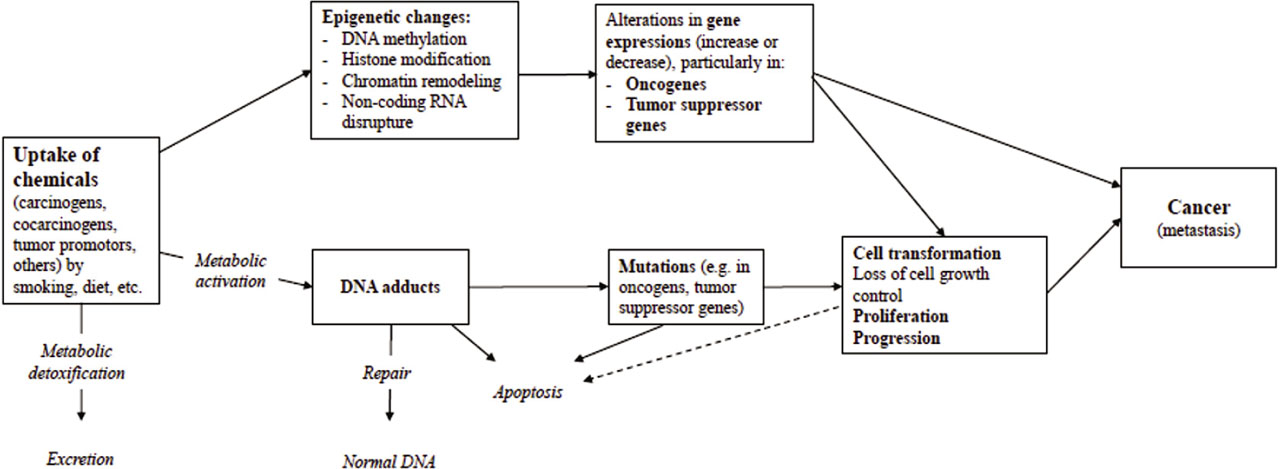
Figure 1.
Simplified scheme for mechanisms leading to smoking-related cancers (modified from (25)).
4.2. Human studies
In quite a large number of studies, the exposure to carcinogens has been investigated in users of NGPs, usually compared to smokers (CC) and NU (e.g., (152,153,154,155,156,157,158)), for review see (16). The aspect of exposure to toxicants, including carcinogens, is not discussed in this review. Overall reduction in the product use-related exposure to carcinogens is 95% in NGP users compared to smokers (CC). An exception are tobacco-specific nitrosamines (TSNAs) in SLT (excluding Swedish snus) which might release similar or even higher amounts of TSNAs compared to CC. This is mentioned several times throughout this review.
Braznell et al. (159) tried to estimate the lung cancer risk in HTP users on the basis of 16 biomarkers (7 BOEs and 9 BOBEs) which are known to correlate with lung cancer risk in smokers. From their results, the authors concluded that the appropriateness of this approach is limited.
Cameron et al. (160) summarized the latest evidence about the deleterious effects of vaping on oral health and the risks of oral cancer and came to the conclusion that e-cigarette use is not risk-free.
Table 2 contains 10 studies, 4 of them investigated cancer as an endpoint (56, 161,162,163), whereas the other studies investigated epigenetic effects (mainly DNA methylation) in blood (164, 165) or saliva (166) or in epithelial cells from the oral cavity (167) and the lung (168) (see page 62). One cancer study (169) was not a study with a classical epidemiological approach (prospective or case-control), but was a longitudinal observational study with a limited number of participants (in total 912 subjects: smokers, vapers, dual users).
All cancers as endpoints were evaluated in studies with SLT (56, 161, 162), NRT (nicotine gum) (163) and ECs (169). None of these studies showed significant associations between NGP use and cancer risk. Only in three studies (56, 161, 169), the overall cancer risk of smoking (CC) was investigated, one showed a significant increase (56).
No significant relationship between SLT use and pancreatic cancer was found, although a significant trend with increasing consumption of SLT was observed (162). Cigarette smoking (CC) was not investigated in this study.
No significant association between NRT use and cancer of the lung and the gastrointestinal (GI) tract was reported (163). CC use was found to significantly increase the risk of lung cancer, but not of GI cancer.
DNA methylation and implicated gene regulations were investigated in the 5 studies of Table 2. In all of them, EC use compared to smoking (CC) was in the focus of the study. One study also included SLT users (165). The provided data show clear evidence that EC use (and probably also use of other NGPs) are distinct from CC users and NU with some overlap. An increase in genotoxicity levels associated with vaping habits was also deduced from a recent study of peripheral blood samples from vapers (EC), smokers (CC) and NU (170). Vapers showed changes at the epigenetic level specifically associated with the loss of methylation of the LINE-1, which were reflected in its representative RNA expression detected in vapers.
In terms of biological effects, changes, perturbations, physiological malfunctions, disorders or even cancer formation, there are too many gaps for any reasonable predictions.
With respect to an involvement of nicotine, the evaluated studies show either no evidence for a participation of nicotine in tumorigenesis and/or a role of nicotine cannot be deduced from the provided data (0/?). There might be some weak evidence that TSNAs from SLT are involved in the development of pancreatic cancer (162). The carcinogenic potential of smokeless tobacco (SLT) has been reviewed by Hecht et al. (171). The TSNAs NNN and NNK were considered to be the most potent carcinogens in SLT.
There are a number of epidemiological studies on cancer and use of oral tobacco with controversial results, depending on the point in time of study and the geographical region (e.g., USA, Scandinavia, India) where the study was conducted (172, 173). Older SLT products could have high TSNA levels resulting in significantly higher NNK and NNN exposure of the users than exhibited by smokers (CC). Therefore, these SLT products cannot be regarded as NGPs suitable for tobacco harm reduction, at least not for cancer endpoints. With respect to the focus of this review (role of nicotine in the development of diseases), cancer studies with older SLT products will not be included in the evaluation. As a result, we decided to only consider SLTs with very low levels of TSNAs as NGPs.
The potential carcinogenicity of chronic NGP use and the avertable role of nicotine was evaluated in a number of recent monographs and reviews.
The NASEM (6) concluded that nicotine probably does not increase the risk of cancer. This statement is mainly based on the Lung Health Study (163), which followed users of NRT products for 7.5 years, found no evidence for an increased cancer risk. The NASEM further stated that nicotine might be a tumor promotor, but it would be unlikely to increase the human cancer risk (6). This evaluation is also shared by COT (7).
The EU-based Scientific Committee on Health, Environmental and Emerging Risks (SCHEER) (143) reviewed the most recent scientific and technical information on ECs and concluded for cancer in the respiratory tract: “The overall weight of evidence for risks of carcinogenicity of the respiratory tract due to long-term, cumulative exposure to nitrosamines and due to exposure to acetaldehyde and formaldehyde is weak to moderate. The weight of evidence for risks of adverse effects, specifically carcinogenicity, due to metals in aerosols is weak”.
Travis et al. (174) performed an umbrella review on cardiopulmonary and carcinogenic risks of EC use. The authors state that there are some acute cardiopulmonary risks for vapers, although lower than in smokers. It is expected that in the long-term switcher from CC to EC will probably benefit, however, studies to show this are as yet lacking.
In a model calculation, the following order of life-time cancer risks was reported (175): combustible cigarettes (CC) o heat-not-burn (HTP) o e-cigarettes (EC) $ nicotine inhaler (NRT), with EC use representing < 1% of the cancer risk associated with CC use.
In a recent review by Maan et al. (176), molecular insights of EC use on oral carcinogenesis was investigated. The authors provided a summary of the effects of EC usage on cancer therapy resistance, cancer stem cells (CSCs), immune evasion, and microbiome dysbiosis, all of which may lead to increased tumor malignancy and poorer patient prognosis. It was concluded that ECs may not be as safe as they are perceived to be, however further research is needed to definitively determine their oncogenic potential. EC use was also shown to lead to transcriptomic changes in both blood and sputum, which was only partly overlapping with corresponding changes in smokers (CC) (177). Observed transcriptomic alterations were stronger in CC than in EC users. The biological impact of these changes, however, are as yet unknown.
Taken together, the presented evidence suggests that chronic use of NGPs has as yet not shown to increase the cancer risk. Although theoretical possible, there is also no evidence that long-term use of nicotine is involved in human carcinogenesis. However, for obvious reasons no long-term cancer studies with NGPs are currently available.
4.3. Animal and in vitro studies providing evidence for the involvement of nicotine in cancer development
As mentioned above, nicotine can exert quite a number of effects in the mammalian organism, impacting the brain, cardiovascular system, lung and many others. Nicotine may be involved in the modulation of many physiological processes such as the activity of certain ligand-gated ion channels known as nicotinic acetylcholine receptors (nAChRs) modulating cell proliferation, apoptosis, immune response, oxidative stress, tumor proliferation, metastasis, promotion of lung cancer, cell proliferation, angiogenesis, migration and invasion (178). Several of these are directly or indirectly associated with cancer development.
In the following, evidence is presented from animal and in vitro studies, which investigated the role of either pure nicotine or NGP exposure with and without nicotine in tumorigenesis.
Maier et al. (179) reported no effect of nicotine in a mutant K-Ras1-driven mouse model for lung cancer as well as in mice treated with NNK and additionally with oral nicotine. The authors conclude that nicotine, applied in doses similar to those in NRT use, does not enhance lung tumorigenesis.
In similar experiments, Murphy et al. (180) found no enhancing effect of nicotine administered 2 weeks prior to and 44 weeks after NNK treatment of mice on multiplicity of lung tumors. Nicotine alone over 46 weeks did not increase the lung tumor multiplicity. The authors concluded that these results question the interpretation of in vitro studies suggesting that nicotine stimulates cancer cell growth.
In a study with mice exposed to EC aerosol, Lee et al. (181) found O6-medG and γ-OH-PdG elevated in lung, heart and bladder. DNA repair activity and proteins were reduced in the lung. Nicotine and NNK were reported to have similar effects in human lung and bladder cells in vitro. The authors suggest that EC use may contribute to lung and bladder cancer as well as heart disease through the nitrosation of nicotine (181). The same working group (182) exposed mice (FVB/N strain, highly susceptible to tumor induction) to EC aerosol, PG/VG aerosol (without nicotine) and fresh air for 54 weeks. The EC group developed lung adenocarcinomas (9 of 40 mice) and bladder urothelial hyperplasia (23/40), whereas these lesions were extremely rare in the PG/VG and fresh air group. According to the authors, these results together with previous findings (181) suggest that EC aerosol is a lung and potential bladder carcinogen for mice, whether it is also a risk factor for human vapers needs to be investigated.
Exposure of male ApoE−/− mice to air, EC aerosol derived from e-liquids with 6 and 36 mg nicotine/mL showed nicotine dose-dependent increases in epigenomic DNA methylation in WBC as well as an increase in plasma mitochondrial DNA and 8-OHdG levels (183). The authors concluded that the epigenomic-wide CpG site methylation pattern overlaps with previously published methylation sites in vapers/smokers and that the methylation pattern correlates well with enhanced systematic inflammation reported in animal models and human vapers.
Nicotine has also been suspected to be a precursor for carcinogenic metabolites such as NNK and NNN. Hecht et al. (184) showed with human liver microsomes containing CYP 2A6 that nicotine is 2’-hydroxylated yielding the ring-opened aminoketone, which, upon nitrosation, could form the lung carcinogen NNK. The final step, which according to the authors would have important toxicological consequences, however, has not been observed until now in humans.
Tang et al. (185) stated that EC aerosol is carcinogenic in mice. As possible mechanism these authors propose that nicotine can be nitrosated to NNK and NNN, which, upon further metabolism, form ultimate carcinogens and both groups of agents can form DNA adducts. Additionally, formaldehyde is a potential inhibitor of DNA repair, thus further accelerating the carcinogenic process. The authors provide some evidence from the literature which should support their hypothesis.
Already in 2011, Shields (186) emphasized that, despite of the fact that animal studies provide no cause for concern (179, 180), long-term cancer studies with NRT users are urgently needed to show that nicotine does not promote the carcinogenesis. More than 10 years later, the situation has not much changed with respect to human cancer studies. In terms of evidence derived from animal and in vitro studies, it can be noted that the investigations of Lee et al. (181) and Tang et al. (182) give cause for concern that nicotine in EC aerosol might be involved in lung and bladder carcinogenesis. Whether these findings are transferable to human vapers (or in general NGP users) remains questionable.
Based on various human, animal and in vitro studies, NASEM came to the following role of nicotine in the process of cancer induction (6): “When the evidence is viewed in total, while there is a biological rationale for how nicotine could potentially act as a carcinogen in humans, there is no human evidence to support the hypothesis that nicotine is a human carcinogen. While it is biologically plausible that nicotine can act as a tumor promoter, the existing body of evidence indicates this is unlikely to translate into increased risk of human cancer”.
4.4. Chapter summary
Cigarette smoking is an established risk factor for cancer of various organs, including lung, bladder, kidneys and pancreas. Tobacco smoke contains more than 70 carcinogens which are involved in the turmorigenesis by acting as initiators, cocarcinogens and promotors. Epigenetic effects mediated by the DNA methylation grade leading to up- and downregulation of genes possibly involved in tumorigenesis gained increasing interest and was also shown to be significantly altered by smoke exposure.
A participation of nicotine has long been assumed and could occur on a number of different mechanisms, including metabolism to carcinogens (NNK, NNN), epigenetic effects, angiogenesis, cell growth stimulation.
For obvious reasons, only a few human cancer studies with NGPs (including SLTs, NRT products and ECs) are available. There is no evidence that these products significantly increase the cancer risk, suggesting that nicotine is not a driving factor in carcinogenesis. The results of long-term animal studies with cancer endpoints are as yet inconclusive.
Human and animal studies reveal that exposure to EC aerosols (other NGPs have not yet been investigated) significantly change the epigenetic DNA methylation profile in cells of target organs (lung, oral cavity) or blood cells. Overlap with smokers or NU is reported to be low, suggesting that the methylation profiles are rather specific for the exposure. Consequences in terms of disorders, diseases or even cancer are currently unknown.
Overall, while the studies presented suggest that NGPs may be a less harmful alternative to smoking in terms of cancer risk, more research is needed to understand the long-term effects of nicotine and other components of these products on cancer development.
5. RESPIRATORY DISEASES (RD)
5.1. Patho-mechanism for the development of RD with special reference to smoking
As major mechanisms for effects in the respiratory tract, which are common in users of inhalable nicotine products (CCs, ECs, HTPs), Davis et al. named dysregulated inflammation and decreased pathogen resistance in their recent review. In addition, dysregulated lipid processing might be unique to vaping (187). The authors relate the latter effect mainly to the humectants PG and VG in the EC aerosol. The impacted processes in the lung after aerosol exposure accordingly would comprise:
(i) dysregulated mucin expression followed by impaired ciliary clearance
(ii) build-up of apoptotic and necrotic epithelial and immune cells, engraved by impaired efferocytosis
(iii) increased release of inflammatory mediators (cytokines, proteases, ROS)
(iv) impaired pathogen phagocytosis by macrophages and neutrophils
(v) reduced chemotaxis by neutrophils, (vi) disruption of the epithelial barrier (187). As a result of these processes, the respiratory tract of chronically exposed subjects is much more vulnerable to pathogen load and infections.
Smoking-related (nonmalignant) respiratory diseases include chronic bronchitis, COPD, emphysema and the worsening of asthma. According to the US Surgeon General Report of 2010 (25), definitions of these RD are as follows:
| Chronic obstructive pulmonary disease (COPD) | A preventable and treatable disease characterized by airflow limitation that is not fully reversible. The limitation is usually progressive and is associated with an abnormal inflammatory response of the lungs to noxious particles or gases, primarily caused by cigarette smoking. Although COPD affects the lungs, it also produces significant systemic consequences. |
| Emphysema | Permanent enlargement of the airspaces distal to the terminal bronchioles, accompanied by destruction of their walls and without obvious fibrosis. In patients with COPD, either condition may be present. However, the relative contribution of each to the disease process is often difficult to discern. |
| Asthma | A chronic inflammatory disease of the airways in which many cell types play a role — in particular, mast cells, eosinophils, and T lymphocytes. In susceptible persons, the inflammation causes recurrent episodes of wheezing, breathlessness, chest tightness, and cough, particularly at night and/or in the early morning. These symptoms are usually associated with widespread and variable airflow obstruction that is at least partly reversible either spontaneously or with treatment. The inflammation also causes an associated increase in airway responsiveness to a variety of stimuli. |
Tobacco smoke toxicants such as acrolein and formaldehyde are regarded to be responsible for initiating oxidative stress (e.g., by the formation of ROS), inflammatory processes and a proteinase/anti-proteinase imbalance. These processes are key players in the development of respiratory diseases in smokers (188, 189).
Intact lung defense systems, including nasal hair, convoluted passages of nasal sinuses, coughing, sneezing, swallowing, mucociliary cells, normal flora, inflammatory cells, alveolar macrophages represent the first barrier against the inhalable toxicants (25). Impairment of these defenses for example by smoking are the first step for the development of various respiratory diseases (RDs).
A decline in lung function is also a typical consequence of long-term smoking. Spirometrically determined parameters such as forced expired volume in 1 second (FEV1), forced vital capacity (FVC) and forced expired flow at 25–75% (Figure 2) can be measured non-invasively and, therefore, are frequently applied in clinical and epidemiological studies.
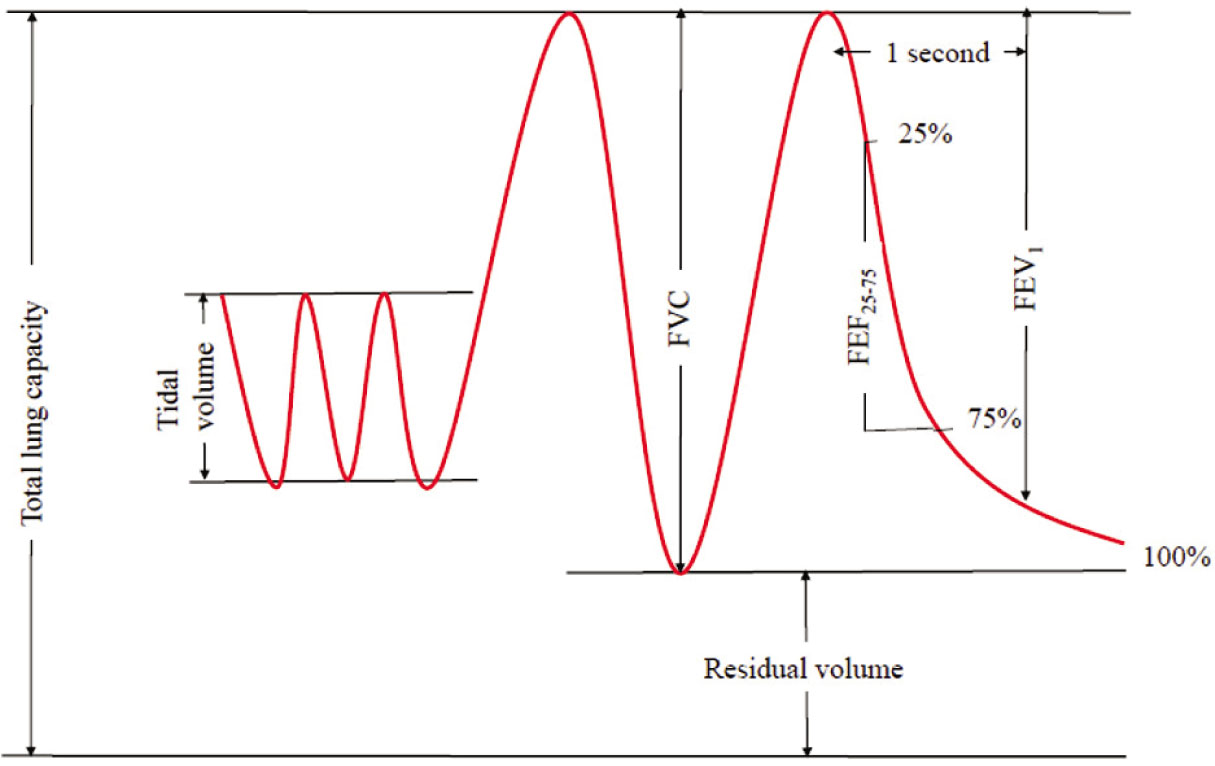
Figure 2.
Schematic spirogram for measuring the lung function parameters FVC, FEV1 and FEF25–75 (according to (190), modified).
5.2. Human studies on RD and NGP use
As in smoking, the aerosol of inhalable NGPs (ECs, HTPs) may affect various areas of the lungs by interaction with the epithelial cells of the trachea, bronchial tubes and branchings as well as the alveoli (191, 192).
In principle, vaping and use of other inhalable NGPs can induce respiratory diseases by similar mechanisms as for smokers (CC). Inflammatory processes, which can be monitored by a series of biomarkers are suggested to be in the focus (193, 194).
It is almost self-evident that oral NGPs such as snus or nicotine pouches (NPs) as well as nicotine gums (NGs) have no direct detrimental effects on the respirtory tract. The same applies for nicotine taken up with these products. NASEM stated three pathways, how nicotine could be involved in respiratory diseases in vapers:
(i) decreases viral and bacterial clearance
(ii) impaired cough
(iii) nicotinic acetylcholine receptor activity in the airways and cystic fibrosis transmembrane conductance regulator dysfunction (6).
From two short-term studies, the NASEM (6) and the COT (7) concluded that using ECs with nicotine but not without nicotine could impair the mucociliary clearance process in the lung.
Overall, the NASEM report stated only limited to moderate evidence for lung damaging effects of vaping (6).
The majority of vapers are former smokers and thus could bear pre-existing lung damages which could be aggravated by vaping and, therefore, would lead to a confounded evaluation of the risks associated with EC (1) or HTP use. Mir et al. summarized the EC effects on the respiratory tract as follows (53): “Increased susceptibility to respiratory infections, case of e-cigarette related organizing pneumonia, pro-inflammatory effects via oxidative stress, increased risk of developing COPD, diffuse alveolar damage, mucociliary dysfunction, fluctuations in surfactant composition lead to gas exchange abnormalities, lung damage and cell death, reduced functional residual capacity.”
Table 3 contains 40 entries with short descriptions of investigations on respiratory tract effects of NGP use (101, 119, 195,196,197,198,199,200,201,202,203,204,205,206,207,208,209,210,211,212,213,214,215,216,217,218,219,220,221,222,223,224,225,226,227,228,229,230,231,232) (see page 65). In all studies EC use was compared to either smoking (CC) or NU (or both). In only one study, an HTP was investigated (215). Studies are mostly of cross-sectional type (21 studies). However, also 5 longitudinal studies with observational periods between 1 and 5 years were included (196,197,198,199, 223). It is noteworthy that there are 5 studies (201, 208, 209, 222, 226), all of the cross-over type, in which the effects of ECs with and without nicotine were compared. These studies would provide direct evidence on the role of nicotine in the observed effects. Finally, Table 3 also contains two meta-analyses comprising 13 (231) and 11 cross-sectional studies (232).
Both meta-analyses investigated the association between vaping and asthma and found a significantly increased risk (odds ratio (OR) = 1.2–1.3), which is only slightly lower than that observed for CC or dual (CC/EC) users (231, 232). These finding were in accordance with two EC studies in Table 3 (200, 212) and one HTP study (215) but opposed to another EC study (216). All asthma studies have a number of limitations, which are mentioned in Table 3.
Lung function parameters such as FEV1 and FVC were most frequently determined in the studies listed in Table 3. Reported results are heterogeneous, comprising impaired, unchanged and increased values of spirometric variables. Consistent results in terms of lung function and COPD (measured as CAT score) were reported by POLOSA and coworkers (198, 199, 223): in a longitudinal study lasting for up to 5 years, smokers (CC) who switched to EC showed no change or slightly improved lung function values and CAT scores compared to subjects who continued to use CCs. The evaluation of 3 cross-sectional studies revealed no increased risk for COPD and other respiratory diseases such as chronic bronchitis, emphysema and wheezing in vapers (216), whereas Perez et al. 2019 (213) reported an increased risk of COPD in EC users.
Polosa et al. (233) found that smokers with COPD who switched to HTPs over a period of 3 years showed consistent improvements in respiratory symptoms, exercise tolerance, quality of life, and rate of disease exacerbations compared to smokers with COPD who continued to use CCs.
FeNO, an acute BOBE of respiratory inflammation as well as CVD showed heterogeneous changes (unchanged, decreased and increased levels) upon vaping in several studies (see Table 3). In a long-term study over one year, with those subjects who quit smoking and used ECs for staying abstinent, an increase compared to baseline levels was reported (196). An increased risk in vapers for chronic bronchitis was found in a longitudinal study over 1 year (197). Various BOBEs were measured in either BAL, EBC or sputum (Table 3). The obtained results do not allow to draw clear conclusions, whether vaping is associated with detrimental effects in the respiratory tract.
The presence or absence of nicotine in e-liquids of ECs was found to have no acute effect on lung functions (FEV1 etc.), FeNO (208, 209, 222), while acute increase in airway resistance (208), EMP, changes in the transcriptome in small airway epithel (SAE) and upregulation of inflammasome genes were reported to be nicotine-dependent (201, 226).
Overall, findings on respiratory effects of ECs described in Table 3 are partly contradictory and as yet inconclusive. The same is true for the possible involvement of nicotine on these effects. More research in this field, particularly on the effects of long-term NGP use is required in order to draw solid conclusions.
Other recent monographs and reviews in this area of research are in accordance with these conclusions:
The EU-based Scientific Committee on Health, Environmental and Emerging Risks (SCHEER) (143) reviewed the most recent scientific and technical information on ECs and concluded for respiratory diseases: “The overall weight of evidence is moderate for risks of local irritative damage to the respiratory tract of users of electronic cigarette due to the cumulative exposure to polyols, aldehydes and nicotine. However, the overall reported incidence is low.”
Wills et al. (234) conducted an integrative review on EC use and respiratory disorders covering epidemiological and animal studies. Meta-analysis of 15 epidemiological studies revealed significantly increased risks for asthma and COPD in vapers compared to NU. According to the authors, these observations were consistent with evidence from animal and in vitro studies which show an impact of EC aerosol on cytotoxicity, oxidative stress, inflammation, gene changes in the immune system of lung cells and tissues. The authors cite evidence that these effects were both dependent and independent of nicotine in the aerosol.
Results from the National Health and Nutrition Examination Survey (NHANES) showed higher prevalence of asthma and COPD in EC and dual users (EC + CC) than in smokers (CC only) and NU (235). Vapers with asthma were significantly younger than any of the other groups with this disease, suggesting that other factors may play a role as well. A possible reason for this observation could be that young subjects with asthma symptoms start with ECs, assuming that these are less detrimental for them.
In a recent state-of-the-art review on respiratory effects of vaping (236), it was found that human, animal and in vitro studies show measurable adverse biologic effects, which are similar to or different from those of CC. The authors assume that nicotine exposure will likely have pharmacologic effects in any organ where nAChR are expressed, thus having impact on inflammation in the airways, susceptibility to infection and the risk of developing COPD or lung cancer. The authors suggest that sufficient information on chronic effects of EC use will not be available before the middle of this century.
Based on more or less the same available evidence as the previously cited reviews, Bravo-Gutiérrez et al. (237) in their systematic review came to the (strong) conclusion that “ECs and HTPs use is involved in damage related to the development of pulmonary diseases. The evidence available so far is significant enough for physicians, researchers, and public health policymakers to address these devices as an emerging public health problem that needs regulation” (237). The authors cite extended evidence, particularly from animal and in vitro studies showing that damaging effects of EC and HTP aerosols were found to be both dependent and independent on the presence of nicotine.
In a recent state-of-the-art review, Jonas (191) concluded that relatively little is known about the potential effects of chronic vaping on the respiratory system, and a growing body of literature supports the notion that vaping is not without risk. Furthermore, the author emphasized that in particular long-term effects on the lungs are unknown. The same applies for the other inhalable NGP, HTP.
The literature on health impact of using ECs or HTPs in COPD patients was evaluated in a review (238). The authors conclude that, while ECs and HTPs may offer some benefits in reducing harm from CC, their long-term effects on COPD are still unclear.
5.3. Evidence for nicotine’s role from (in vivo) animal studies
Chronic exposure of mice to EC aerosol revealed that in the presence of nicotine, increased airway hyper-reactivity, distal airspace enlargement, mucin production, cytokine and protease expression was observed. These changes were not found when nicotine was absent (239). Experiments with normal human bronchial epithelial cells showed impaired ciliary beat frequency, airway surface liquid volume, as well as increased IL-6 and IL-8 secretion with nicotine, but not without nicotine (239).
In a study with mice exposed to PG and VG aerosol, with and without nicotine, detrimental effects in terms of lung inflammation and function were observed, independent of the presence of nicotine (240).
In a review on EC use and lung diseases, Rowell and Tarran (241) cite evidence from mostly murine studies that nicotine might be involved in various lung diseases by proliferating and inflammatory effects on various lung cells. Acute exposure (3 d, 2 h/d) of mice to EC aerosol with nicotine was reported to increase sex-specifically the inflammatory response in the lungs (242). No effect was observed with nicotine-free aerosols.
The same working group (243) reported that sub-chronic EC exposure of mice (2 h/d, 5 d/week, over 30 d) with or without nicotine affected lung inflammation and repair responses/extracellular matrix remodeling, which were mediated by the nicotinic receptor nAChRα7 in a sex-dependent manner. The authors speculate that, as an agonist, nicotine might have pro- and anti-inflammatory roles, which might explain these results (243). In this case, it has to be assumed that other EC aerosol constituents (e.g., aldehydes) can have similar detrimental effects in the lung, however acting via a different mechanism than nicotine.
Glynos et al. (244) concluded from the results of their 4-week mice inhalation study that all major constituents of EC aerosol (PG, VG, N and flavors, tested separately or in combination) can negatively impact lung function and inflammation. Nicotine was found to exert an exaggerating, ameliorating or indifferent role in terms of lung damage. In another study, mice were exposed to EC aerosol (with/without nicotine; 2 × 30 min/d, 21 d) (245). The exposure regime induced airway inflammation, impairment of the lung function and increase in ACE-2 expression, to a greater degree in males exposed to EC aerosol with nicotine. Increase in IL-6 was independent of sex and nicotine. The authors conclude that vaping may facilitate the infection with SARS-CoV-2.
In a mice inhalation study with various aerosols, including ECs with and without different flavor and nicotine (2 × 30 min/d, 6 d/week, 0–18 d), it was found that ECs with nicotine suppressed airway inflammation, but did not alter airway hyper-responsiveness and remodeling (246).
An inhalation study with rats exposed for 28 d to nicotine-free aerosol generated at 1.5 and 0.25 Ω enhanced xanthine oxidase and P450 enzymes to a higher degree at the low resistance condition (247). A nicotine-containing EC aerosol was not tested.
In a mice study, it was also observed that nicotine-free EC aerosol exposure (2 h/d, 6 d/week, 8 weeks) increased airway resistance and affected how the lungs react to tobacco cigarette smoke exposure in dual users (248). A nicotine-containing EC aerosol was not tested.
Exposure of mice to PG aerosols with and without nicotine (2 h/d, 3 d) were reported to alter the circadian molecular clock genes in the lung in only the nicotine-exposed animals, which, according to the authors, may have consequences for the lung cellular and biological functions (249). Mice exposed to PG/VG aerosol with and without nicotine over 4 months did not develop pulmonary inflammation or emphysema in contrast to smoke- (CC) exposed mice (250). EC-exposed animals were found to exert disruption of pulmonary lipid homeostasis and immune impairment independent of nicotine in the aerosol.
Sun et al. (251) investigated biomarkers of oxidative stress (8-OHdG), inflammation (CRP) and tissue injury on lungs of mice exposed (2 h/d, 5 d/week, 8 weeks) to PG/VG aerosols (0, 12, 24 mg/mL nicotine), smoke (CC, 0.7 mg nicotine/cig) and air. CC exposure led to the highest biomarker levels in plasma and lung, except for CRP in plasma for which EC aerosol without nicotine was highest. Increasing nicotine levels in EC appear to suppress 8-OHdG in lung and plasma as well as CRP in plasma. The authors conclude that EC exposure can lead to lung damage.
Female mice were exposed (2 h/d, 6 weeks) to PG/VG aerosol with and without vanilla flavor (252). EC vehicle exposure was found to disrupt immune homeostasis, irrespective of the presence of vanilla flavor. No EC aerosol with nicotine was tested.
In an inhalation study with ApoE-deficient mice (3 h/d, 5 d/week, 6 months), Lavrynenko et al. (253) observed that HTP and EC aerosols in contrast to smoke (CC) did not induce significant changes in the ceramide profiles (a lipid class dysregulated in CVD and respiratory disorders) and associated enzymes. All aerosols contained nicotine, therefore, the role of nicotine cannot be deduced from this study. Exposure to various EC aerosols (PG/VG, PG/VG/N, PG/VG/N/F (flavor)) showed a slight impact on lung inflammation and epithelial irritation compared to sham exposure (254). However, no differences were observed for EC aerosols with and without nicotine, suggesting that nicotine is not responsible for the observed effects.
Chung et al. (255) found in in vitro (human lung epithelial cells) and in vivo (sheep) experiments that EC aerosols with nicotine (0, 10, 20 mg) impaired dose-dependently the mucociliary clearance. The main nicotine effect could be suppressed by a TRPA1 (transient receptor potential ankyrin 1) inhibitor. The authors concluded that nicotine exerted its effect via the TRPA1 and not via nicotinic acetylcholine receptors.
Ma et al. (256) investigated the cell toxicity of EC aerosols with and without nicotine as well as the NF-κB-mediated oxidative stress in a mouse model. It was found that the cytotoxicity in various cell systems was independent of nicotine and mostly caused by aldehydes in the aerosol. In vivo mouse exposure with the EC aerosols showed elevated expression of NF-κB and heme oxygenase-1, irrespective of the presence of nicotine. The authors suggest that oxidative stress, pro-inflammatory, NF-κB pathway activation, and cell death are involved in EC exposure induced acute lung inflammation.
Mice were exposed to EC aerosols with nicotine and various flavors as well as to a PG/VG aerosol (257). Exposure dose-dependent increases in total cells, macrophages and neutrophils in BAL were observed with all aerosol, irrespective of the nicotine content. Oxidative stress markers in blood (8-OHdG, MDA) were also found to be increased, dose-dependently and independent of nicotine. This was also true for some inflammatory response on the mRNA level.
Mice exposed to smoke (CC) or EC aerosol derived from e-liquid with 6 and 12 mg nicotine over 10 weeks showed the highest detrimental effects in terms of impaired lung function, elevated inflammation markers and severe inflammation proteome network perturbations after CC exposure (258). Effects (if any) of EC aerosol exposure were much smaller and independent of the nicotine level. The authors suggest that in this animal model, EC aerosol is less harmful to the respiratory system than cigarette smoke at the same dose of nicotine.
Maishan et al. (259) exposed mice to an EC aerosol with and without nicotine for 1 h/d over 9 d. From the results it was concluded that acute exposure to aerosolized nicotine can impair clearance of viral infection and exacerbate lung injury.
Based on the studies reviewed, the role of nicotine in the various effects of electronic cigarettes and HTPs on the lung can be summarized as follows:
○ Nicotine appears to be involved in airway hyper-reactivity, mucin production, cytokine and protease expression, and impairment of ciliary beat frequency and airway surface liquid volume;
○ Nicotine may be implicated in proliferating and inflammatory effects on various lung cells, and can affect lung inflammation and repair responses;
○ Nicotine may exacerbate or ameliorate lung damage, the evidence is inconclusive as observed in human studies;
○ Nicotine-free electronic cigarette aerosols can also induce airway inflammation and affect lung function, suggesting that other constituents in the aerosol may also play a role.
5.4. Evidence for nicotine’s role from in vitro studies
In vitro investigations with aerosols from ECs and HTPs suggest that nicotine might be at least partly responsible for the observed cytotoxicity (260,261,262,263).
EC aerosols with and without nicotine stimulated the expression of MUC5AC in human bronchial and nasal epithelial cells (205, 264), suggesting that aerosol constituents other than nicotine are involved in the impairment of the mucociliary transport system of users, which could lead to the various respiratory diseases, including COPD.
Studies with human alveolar macrophages revealed that EC aerosol is cytotoxic, proinflammatory and inhibits phagocytosis (265). These effects were found to be partly dependent on nicotine.
A study with EC aerosol derived from VG (no nicotine, no flavors) including human volunteers, animals (sheep) and in vitro experiments with primary human bronchial epithelial cells (HBECs) found that VG aerosols can potentially cause harm in the airway by inducing inflammation and ion channel dysfunction with consequent mucus hyper-concentration (266). The authors cite evidence from other studies (mostly mice and in vitro) showing that the EC aerosol in the absence of nicotine can induce airway inflammation and high mucus load. In similar experiments with PG aerosols, it was also found that mucus hyper-concentrations were induced in sheep (in vivo) and in HBECs (in vitro) (267). Furthermore, metabolism of PG to methylglyoxal (MGO) was reported for airway epithelial cells (267).
Nicotine was found to significantly contribute to the disruption of the lung epithelial barrier function both when present in condensate of CCs and ECs (268). The authors suggest that another constituent in EC aerosol causing this effect was acrolein.
In vitro experiments, PG/VG aerosols (+/− nicotine and +/− WS-23 (a synthetic menthol-like cooling agent)) and airway endothelial cells (AECs) revealed suppressing effects on IL-6 and s-ICAM-1 mRNA as well as enhancing effects on MUC5AC mRNA of the nicotine- and WS-23-containing aerosols compared to the sole PG/VG aerosols (269). The authors conclude that WS-23 and nicotine aerosols modulate the AEC responses and induce goblet cell hyperplasia, which could impact the airway physiology and susceptibility to respiratory diseases.
Mori et al. (270) compared mitochondrial DNA copy number (mtCN) in lung biospecimen from smokers (CC), vapers (EC) and never-smokers (NU) and found significant ly higher mtCN in CC compared to NU, with EC in between. Further evaluations comprised associations of mtCN with immune response markers in BAL and gene methylations. From their results, the authors conclude that smoking may elicit a lung toxic effect through mtCN, while the impact of EC is less clear and the observed associations suggest exposure may not be harmless.
Adverse pulmonary and systemic effects of a nicotine aerosol were shown in a rat (in vivo) model and in cell culture experiments with normal human bronchial epithelial cells (271). From their results, the authors deduced an action scheme of inhaled nicotine, according to which the alkaloid acts via nAChR to cause release HMGB, caspases, E-cadherin and many other cellular mediators. As a result, nicotine stimulates inflammation, cell death and increased lung epithelial permeability.
Cinnamaldehyde, an EC flavor agent, was found to dose-dependently decrease the ciliary beat frequency in human bronchial epithelial cells via inhibition of mitochondrial energy supply (272). Addition of nicotine had no effect. The authors conclude that inhalation of cinnamaldehyde with EC vapor may increase the risk of respiratory infections. Diacetyl and 2,3-pentanedione, two EC flavor compounds, were shown by transcriptomic studies with normal human bronchial epithelial cells (NHBEC) to impair the cilia function and likely contribute to the adverse effects of ECs in the lung (273). The role of nicotine in this system was not investigated.
The EC aerosol matrix compounds PG/VG have been shown in in vitro experiments with HBEC to decrease the glucose uptake and metabolism (274). The results suggest that PG/VG could reduce the cell volume and membrane fluidity, with further consequences on epithelial barrier function.
Human nasal epithelial cells derived from smokers and non-smokers were exposed to PG/VG without and with nicotine (as salt or free base) (275). Changes in MUC5AC and pro-inflammatory cytokines were used as biological endpoints. Observed effects were dependent on the type of nicotine as well as on the source of the cells (smokers or non-smokers). The authors conclude that it is important to understand that the biological effects of ECs use are likely dependent on prior cigarette smoke exposure.
The in vitro evidence reviewed above can be shortly summarized as follows:
○ In vitro studies suggest that nicotine is at least partly responsible for the cytotoxicity and pro-inflammatory effects of electronic cigarette aerosols on lung cells, including alveolar macrophages and airway endothelial cells;
○ Exposure to electronic cigarette aerosols containing nicotine can disrupt the lung epithelial barrier function and induce goblet cell hyperplasia, potentially impacting airway physiology and susceptibility to respiratory diseases;
○ While aerosol constituents other than nicotine appear to be involved in the impairment of the mucociliary transport system of users, nicotine is implicated in the stimulation of MUC5AC expression in human bronchial and nasal epithelial cells, which could contribute to respiratory diseases;
○ The impact of electronic cigarettes on mitochondrial DNA copy number in lung biospecimen is less clear than the impact of cigarette smoking, but exposure to electronic cigarette aerosols may also lead to significant changes;
○ The adverse effects of certain electronic cigarette flavor compounds, such as cinnamon aldehyde, diacetyl, and 2,3-pentanedione, on lung cells are likely independent of nicotine, but the role of nicotine in the impairment of cilia function by aerosol constituents is not yet clear.
5.5. Chapter summary
Cigarette smoking (CC) is an established risk factor for non-malignant lung diseases such as chronic bronchitis, COPD, emphysema and asthma. Impairment of various lung defense systems including mucociliary clearance and innate immunity as well as activation of inflammatory processes are first steps in the smoking-related pathogenesis. Smoking is significantly associated with a decline in spirometrically determined lung function as well as FeNO.
Numerous studies with vapers (EC) (and to a much lower extent also with HTP users) have investigated acute effects of product use on the respiratory system with as yet inclusive results. A limited number of long-term studies (observation periods of > 1 year) with vapers suggest that detrimental effects on the respiratory system, if any, are much smaller than in smokers (CC). No involvement of nicotine in the pathogenesis can be deduced from human studies. A few studies reported a possible role of nicotine in the gene regulation of lung cells. Consequences of these observations in terms of risk for lung diseases are as yet unknown. In vivo animal and in vitro studies found that nicotine may play a role in some pathways of respiratory tract pathogenesis, for example mucociliary clearance, cell proliferating and inflammatory effects. Almost all those effects have been also observed for the aerosols without nicotine.
In conclusion, presently there is no sufficient evidence that nicotine in NGPs has any detrimental effects leading to an increase in non-malignant lung diseases for the users. Well-designed long-term studies are urgently required to fill this gap of knowledge.
6. ORAL HEALTH
The oral cavity is the primary target organ for all tobacco and nicotine product habits, particularly oral products such as SLTs (snus, oral snuff), nicotine pouches and nicotine gum, but also inhalable products such as CCs, ECs, HTPs and nicotine inhalers. This chapter discusses the available evidence in terms of pathogenesis for various non-malignant oral health issues upon using conventional tobacco products such as CCs and SLTs as well as human, animal and in vitro studies with NGPs.
6.1. Patho-mechanisms with special reference to smoking
The US Surgeon General Report on the health consequences of SLT use concluded that an early effect is leukoplakia formation with the possibility of transformation to dysplastic lesions and finally (after decades of use) to oral cancer (276). Suspected, but still not confirmed at that time, were detrimental effects of SLT use on gingivitis, periodontitis, damage of the salivary glands and negative effects on teeth. It should be mentioned, however, that the Surgeon General’s conclusions are based on findings from various countries including those where more harmful oral tobacco products were sold than for example in Scandinavia and the USA.
In general, the lack of dental hygiene is a potential confounder in oral health effects (277).
Delayed healing after oral surgery or tooth extraction is another negative health effect of tobacco use. Less a health effect but rather a social problem could be bad breath (278) and dental staining (279) which is frequently observed in chronic smokers.
Major oral diseases associated with tobacco use and smoking are periodontal diseases and oral cancer (280). Involved mechanisms for periodontal diseases are the promotion by the invasion of pathogenic bacteria, inhibiting auto-immune defense, aggravating the inflammatory reaction, and aggravating the marginal bone loss (MBL). According to the authors, the link between periodontal disease and oral cancer is limited and needs further research. Evidence is provided that nicotine has a damaging effect on periodontal cells and alveolar bone (alveolar process).
Indicators of periodontitis risk such as increased plaque index (PI), probing depth (PD), clinical attachment loss (CAL) and decreased bleeding on probing (BOP) are more frequently observed in smokers than NU (281).
The oral microbiome of smokers (CC) is significantly different from that of non-smokers, creating an “at-risk-for-harm” oral environment (282, 283). CC use was demonstrated to create greater abundance of Parvimonas, Fusobacterium, Campylobacter, Bacteroides, and Treponema and lower levels of Veillonella, Neisseria, and Streptococcus (284).
6.2. Human studies
Medical investigations of the oral cavity and gum use a number of diagnostic measures to evaluate oral health, here are short definitions of the most important ones:
○ PI (plaque index): A measure of the amount of plaque on teeth and gums;
○ PD (probing depth): The depth of the pocket between the tooth and gum, which can indicate gum disease;
○ BOP (bleeding on probing): Bleeding that occurs when a dental instrument is used to measure PD, also indicating gum disease;
○ MBL (marginal bone loss): The amount of bone that has been lost around a tooth, often due to gum disease.
○ CAL (clinical attachment loss): The distance between the gum line and where the tooth is attached to the bone, which is another indicator of gum disease;
○ Xerostomia: The medical term for dry mouth, which can be caused by impairment of the salivary glands.
A systematic review on the effects of EC use in the oral cavity comprising 8 studies was published in 2019 (285). The major lesions and markers of interest were plaque index (PI), clinical attachment loss (CAL), probing depth (PD), marginal bone loss (MBL), bleeding on probing (BOP) and pro-inflammatory cytokine levels. All parameters (except for BOP which decreased with exposure), were significantly elevated in EC users compared to NU, but lower than observed in smokers (CC). Additionally, 9 different types of lesions of the oral mucosa were detected, with nicotinic stomatitis, hairy tongue and angular cheilitis being more prevalent in vapers. The authors cite evidence that the decrease in BOP is a nicotine effect (vasoconstriction).
NASEM (6) reviewed 4 human and 5 in vitro studies on vaping and oral health. The authors found limited evidence suggesting that switching to ECs would improve periodontal disease in smokers and concluded that there was limited evidence suggesting that nicotine or other constituents of EC aerosol could adversely affect cell viability and cause cell damage in oral tissue in NU.
In a recent systematic review by Yang et al. (286), seven categories of oral damages were identified to be of interest: mouth effects, throat effects, periodontal effects, dental effects, cytotoxic/genotoxic/oncologic effects, oral microbiome effects, and traumatic/accidental injury. The evaluation of 99 studies revealed that the symptoms associated with vaping were minor and temporary. In switchers (CC to EC), a mitigation of oral symptoms was usually reported. The authors further conclude that well-designed, long-term studies on oral health are needed. Very similar conclusions were also drawn in another review (287).
In a large population-based cross-sectional questionnaire study in the USA with > 450,000 adults, daily EC use was associated with poor oral health (adjusted OR (CI) = 1.78 (1.39–2.30), daily EC users versus NU) (288).
From a systematic review of the literature on the impact of vaping on periodontitis (289), the authors conclude that the available results point to increased destruction of the periodontium leading to the development of the periodontitis. The authors cite evidence that nicotine might play a role in reduction of BOP by vasoconstriction in the gingival tissue. For a systematic review on vaping and periodontal indices (290), 5 studies with 512 subjects were identified. Smokers (CC) had the worst values for PD and PI, non-users (NU) the best. The BOP parameter was equally reduced in CC and EC compared to NU. The latter finding is consistent with a reduced microcirculation in gingival tissues caused by nicotine.
Reeve et al. (291) investigated mRNA and miRNA in the buccal mucosa of vapers (EC) and non-users (NU). From their findings (evaluation of 5 cross-sectional studies, all conducted in Saudi Arabia), the authors conclude that an average history of 2 years of EC use results in no detectable histologic or transcriptome abnormalities in the buccal mucosa. Robbins and Ali (292) commented on this review by stating that large-scale, multi-centered, randomized controlled trials would be preferable, however, probably unethical (because of a CC group). A better control for confounding factors in cross-sectional studies, according to the commenters is essential.
A systemic review comprising 14 studies evaluated xerostomia in vapers (EC) and smokers (CC) (293). The prevalence was 33 and 24% in users of ECs and CCs, respectively. The difference, however, was not significant. Park et al. (294) compared several sets of the oral microbiome in EC users and NU by analyzing saliva and gingival fluid samples. A large degree of disparity was observed. According to the authors, the results suggest that the observed changes may increase inflammatory processes and lead to periodontal disease.
In a review of the literature about the effects of vaping on oral health, it was found the at EC use might be implicated with less marked detrimental effects on the buccal mucosa and gingival tissues than smoking (CC) (295). In terms of nicotine’s role in oral health, the authors conclude that the alkaloid may be involved in migration inhibition, cyto-skeleton alterations, and extracellular matrix remodeling in human gingival fibroblasts and increase the amount of pro-inflammatory cytokines secreted in cultured gingival keratinocytes and fibroblasts. Furthermore, e-liquids, irrespective of the presence of nicotine, may induce oxidative stress buccal mucosa cells.
Mir et al. (53) summarized the EC effects in the oral cavity as follows: “Increased pro-inflammatory markers in gingival epithelial cells, increased pro-senescence response in periodontal cells, heightened capacity for Staphylococcus aureus colonization of oral epithelial cells and biofilm formation, higher carriage of oral Candida albicans.”
In Table 4 (see page 76), 23 studies, 18 of the cross-sectional and 5 of the longitudinal type are briefly described and evaluated (281, 296,297,298,299,300,301,302,303,304,305,306,307,308,309,310,311,312,313,314,315,316,317). All longitudinal studies (281, 301, 305, 314, 315), that investigated the effects of ECs, comprised observation periods between 6 months and > 1 year and reported somewhat impaired oral health in vapers compared to NU. The effects were significantly lower than those found in smokers (CC). In one longitudinal study (315), acrolein-derived DNA adducts were reported to be elevated in buccal cells of EC users compared to NU, but lower than in smokers (CC).
Of special interest is also the finding that PCR-determined DNA lesions in special genes (e.g., HPRT) in vapers (EC) were similar to smokers (CC) but significantly elevated compared to NU (317).
In one study of Table 4, pro-inflammatory cytokines in saliva of snus (including nicotine pouches) users were investigated (316). Levels were reported to be higher in snus and nicotine pouch users than in smokers (CC) and vapers (EC), which in turn were higher than in NU.
8-OHdG adducts (a marker for oxidative stress) were not found to be different between buccal cells of NU, EC and CC users (308). In contrast, myeloperoxidase (MPO), another oxidative stress biomarker, was reported to be higher in EC, CC and dual users compared to NU (309).
In almost all studies of Table 4, inflammation markers were found to be highest in smokers (CC) and lowest in NU, with EC and snus users in between. The same is true for the oral/tooth health indicators PI, PD, BOP, MBL and CAL. BOP was consistently reported to decrease nicotine-dependently in several studies, which is interpreted as a nicotine-related vasoconstriction in the gingival tissue (281, 296, 299, 300, 303,304,305, 311). For other biological effects listed in Table 4, either no involvement of nicotine can be stated (0) or a participation of nicotine is not deducible from the reported data (?).
The oral microbiome was found to differ significantly between users of CCs, ECs and NU, with only some overlap (312, 314). Consequences in terms of oral health risk can, as yet, not be inferred.
The same might be true for the reported dysregulation of genes in the oral cavity (306, 317), although the authors interpret the changes as indication for a higher oral health risk.
Taken together, there is (although as yet) limited evidence from human studies showing that use of NGPs can deteriorate oral health markers such as PI, PD, BOP, MBL, CAL and inflammation markers compared to NU. The reported effects are in general, however, significantly lower than in smokers (CC). The oral microbiome as well as the gene regulation in buccal cells was found to be different between smokers (CC), vapers (EC) and NU. The impact or changes in the oral microbiome for oral health is as yet unknown. Of interest is the vaping-dependent increase in acrolein-derived DNA adducts in buccal cells, which certainly requires further investigations. For most of the reported effects there is no, or only questionable evidence, for an involvement of nicotine. An exception is the oral health marker BOP, which is consistently found to be decreased in users of nicotine-containing products, most probably due to the vasoconstriction effect of nicotine in gingival tissue.
6.3. Animal studies and in vitro studies providing evidence for an involvement of nicotine
No in vivo animal studies for the purpose of interest could be identified.
An in vitro model for oral mucosa tissue found that pro-inflammatory responses (release of MMPs and LDH) was higher for nicotine-rich compared to nicotine-free EC aerosols, both, however were lower than for CC smoke (318).
6.4. Chapter summary
The oral cavity is the primary target for all tobacco and nicotine product habits. The use of conventional tobacco products can lead to non-malignant disorders such as leukoplakia, gingivitis, periodontitis, salivary gland and teeth damage, delayed healing, bad breath, and dental staining.
Most human studies in this field investigated EC use and reported impairments in the clinical oral health indicators PI, BOP, CAL, PD, MBL, as well as in pro-inflammatory cytokine levels. Effects are usually slightly higher than in NU, but significantly lower than in smokers (CC). The oral microbiome and gene regulation in buccal cells is found to significantly differ between EC and CC users and NU. Whether this has implications for oral health risk is not yet known. DNA lesions in buccal mucosa cells, as found to be elevated in smokers (CC), were not increased in vapers (EC). In a very recent study, EC use was reported to increase acrolein-derived DNA adducts in buccal cells.
A participation of nicotine in the development of the reported oral health disorders was not unequivocally observed with the exception of BOP. The decrease in BOP was found to be dependent on the presence of nicotine, most probably through its vasoconstriction effect in the gum. Whether this has detrimental effects upon chronic use of NGP is not known.
7. OXIDATIVE STRESS AND INFLAMMATION (various cells and organs)
Oxidative stress and inflammation are crucial processes in the pathogenesis for many diseases. Smoking is causally related to both processes. There are a series of BOBEs for oxidative stress and inflammation which are applied in many human studies as early indicator for detrimental effects of smoking in various organs, tissues and cell systems (1, 22, 25).
Therefore, results for these biomarkers in users of NGPs are presented in the context of almost all diseases and disorders. In this chapter, oxidative stress and inflammatory processes are described in a more general context.
7.1. Patho-mechanisms with special reference to smoking
Smoking is associated with an increase in oxidative stress, which is thought to be a major mechanism underlying the pathogenesis of smoking-related diseases (25, 319).
Oxidative stress occurs when there is an imbalance between the production of reactive oxygen species (ROS), which are formed by subsequent addition of electrons to molecular oxygen (O2), yielding: superoxide radical anions (O2•−), hydrogen peroxide (H2O2), hydroxyl radicals (OH•) and water (H2O). The highly reactive superoxide radical anion and the hydroxyl radical can initiate lipid peroxidation to form lipid peroxides (ROO•). The body has the ability to detoxify these molecules by various processes, including:
○ Antioxidant enzymes (superoxide dismutase (SOD), catalase, glutathione peroxidase)
○ Endogenous antioxidants (glutathione, thiols, ureate)
○ Exogenous antioxidants (ascorbate, tocopherols, ubiquinol, flavonoids, carotinoids)
Smoking disturbs the oxidant/antioxidant balance so that ROS can cause damage to cellular components, including DNA, proteins, and lipids.
Cigarette smoke contains a complex mixture of more than 7,000 chemicals, including free radicals and other ROS. These ROS can directly damage cellular components, including DNA, proteins, and lipids, leading to oxidative stress. In addition, cigarette smoke can also activate immune cells, such as neutrophils and macrophages, which produce additional ROS and other inflammatory molecules. This creates a cycle of oxidative stress and inflammation that can contribute to the pathogenesis of smoking-related diseases.
One of the key mechanisms by which smoking causes oxidative stress is through the activation of the nicotin-amide adenine dinucleotide phosphate (NADPH) oxidase system. NADPH oxidase is an enzyme complex that produces ROS as part of the normal immune response. However, cigarette smoke can activate this system in a way that leads to excessive production of ROS, contributing to oxidative stress. In addition, cigarette smoke can also impair the function of SOD and other antioxidant enzymes, further exacerbating oxidative stress.
Finally, smoking can also lead to oxidative stress through the depletion of antioxidants. Cigarette smoke contains a number of chemicals that can deplete antioxidants, including ascorbate and glutathione (GSH). As a physiological response (compensation), GSH in various cells and tissues of smokers is elevated compared to that of non-smokers.
In summary, smoking is associated with an increase in oxidative stress, which is thought to be a major mechanism underlying the pathogenesis of smoking-related diseases. Smoking can cause oxidative stress through a number of mechanisms, including the activation of the NADPH oxidase system.
Nicotine has not been reported to be a cause or otherwise involved in the smoking-related oxidative stress, for which a number of chemicals in tobacco including aldehydes, radicals, quinones and many others were found to be responsible (320). It is also probable that nicotine is not causally involved in inflammatory processes (321).
Another important process how smoking is causally involved in the development of various diseases is the stimulation of inflammatory processes (25, 193). Inflammation is a complex process involving the immune system, which aims to protect the body from harmful stimuli, including pathogens, damaged cells, and irritants. When the immune system detects such stimuli, it triggers a cascade of molecular and cellular events, including the release of cytokines, chemokines, and reactive oxygen species (ROS), the recruitment of immune cells such as neutrophils and macrophages, as well as the activation of inflammatory signaling pathways. Smoking can trigger inflammation through several mechanisms.
Firstly, cigarette smoke contains numerous harmful chemicals, including “tar”, carbon monoxide, and nicotine, which can directly damage cells and tissues and trigger an immune response. For example, “tar” can induce DNA damage and oxidative stress, which can activate the nuclear factor kappa B (NF-κB) pathway, a key regulator of inflammation. Additionally, cigarette smoke can increase the production of ROS, which can cause oxidative damage and trigger inflammation by activating redox-sensitive signaling pathways.
Secondly, smoking can alter the composition of the microbiome in the respiratory tract or oral cavity, leading to dysbiosis and inflammation. The respiratory tract is normally colonized by a diverse community of microbes, which can play a role in immune regulation and protection against pathogens. However, smoking can disrupt this balance by reducing the diversity of the microbiome and promoting the growth of pathogenic bacteria, thus initiating inflammatory processes.
Thirdly, smoking can activate immune cells and promote the release of pro-inflammatory mediators. For example, smoking can stimulate neutrophil activation and recruitment, leading to the release of cytokines such as interleukin-8 (IL-8) and tumor necrosis factor alpha (TNF-α). Additionally, smoking can activate macrophages and dendritic cells, which can present antigens to T cells and trigger an adaptive immune response.
Fourthly, smoking can alter epigenetic modifications, which can lead to persistent changes in gene expression and inflammation. Epigenetic modifications, such as DNA methylation and histone acetylation, can regulate gene expression by altering the accessibility of chromatin to transcription factors. Smoking has been shown to alter DNA methylation patterns in immune cells, leading to changes in the expression of genes involved in inflammation and immunity.
Overall, smoking can trigger inflammation through multiple mechanisms, including direct damage to cells and tissues, dysbiosis of the microbiome, activation of immune cells, and alterations in epigenetic modifications. These inflammatory processes can contribute to the development and progression of smoking-related diseases, such as cardiovascular disease, chronic obstructive pulmonary disease, and cancer.
7.2. Human studies
Emma et al. (319) summarized the knowledge derived from human, animal and in vitro studies on the impact of CC, EC and HTP use on oxidative stress. The overall conclusion of the authors is that, although NGPs release significantly lower amounts of toxicants compared to CCs, the new products can also induce oxidative stress in various organ systems, consequently, harm is reduced but not eliminated. With respect to the dependence of oxidative stress on the presence of nicotine, the authors presented evidence for both, dependence and independence of nicotine. Not unexpectedly, nicotine-dependence of effects was observed more frequently in cardiovascular system.
A cross-sectional study by Carnevale and others (322) compared changes in oxidative stress markers after ad libitum vaping or smoking for a week. The study found increased levels of soluble NOX-2-derived peptide and 8-iso-prostaglandin F2α and significantly decreased nitric oxide and vitamin E levels. Furthermore, there was a statistically significant reduction in flow-mediated dilation function after participants vaped or smoked for a week. The authors concluded that both smoking and vaping induced the oxidative stress, but the use of vaping products appeared to produce a less pronounced effect on levels of soluble NOX-2-derived peptide, 8-iso-prostaglandin F2α and nitric oxide than cigarette smoking. Both human studies explored a relatively short exposure to vaping effects, and Carnevale and others (322) noted that future research should clarify the chronic vascular effects of vaping product use. In Table 5 (see page 82), 11 studies investigating the effect of NGP use (9 with EC, 1 with NRT product and 1 with nicotine pouch users) on oxidative stress and inflammation biomarkers are briefly described (323,324,325,326,327,328,329,330,331,332,333). Study types were cross-sectional (9 ×) and cross-over (2 ×). The most frequently applied oxidative stress marker was 8-epi-PGF2α, whereas CRP and s-ICAM were most often used as inflammation marker.
Overall, the studies listed in Table 5 suggest that use of NGPs (mostly EC use was investigated) leads to no change or to an increase in the markers for oxidative stress or inflammation compared to NU. Increases, however, were mostly found to be significantly lower than in smokers. Principal weaknesses in terms of current and former use of CCs in cross-sectional studies have to be considered (see comments in Table 5). Another general issue is that the duration of use of NGPs is too short for evaluating the long-term effects of NGP use.
The role of nicotine in oxidative stress or inflammation in general was not deducible from the study data. A study with long-term nicotine pouch or snus users showed no significant increase in oxidative stress or inflammation markers, suggesting that nicotine might play no role (0) in these processes (333).
7.3. Animal studies providing evidence for the involvement of nicotine
NASEM stated that comparisons between cell studies were difficult due to different cell cultures used, varying exposure methods (for example, cells were exposed to vaping e-liquids, aerosol extract or aerosol generated directly by vaping products), and different lengths of exposure (6). Based mainly on findings from cell and animal studies, NASEM concluded that “there is substantial evidence that components of e-cigarette aerosols can promote formation of reactive oxygen species/oxidative stress. Although this supports the biological plausibility of tissue injury and disease from long-term exposure to e-cigarette aerosols, generation of reactive oxygen species and oxidative stress induction are generally lower from e-cigarettes than from combustible tobacco cigarette smoke”.
Rats exposed to nicotine-free EC aerosols showed increased oxidative stress (ROS, lipid peroxidation, protein carbonylation) in the testis (334). The authors suggested that human vapers may also develop gonads dysfunction. Kuntic et al. (75) reported that in mice, EC vapor without nicotine had more detrimental effects on endothelial function, markers of oxidative stress, inflammation, and lipid peroxidation than vapor containing nicotine. The authors conclude that EC aerosol exposure increases vascular, cerebral, and pulmonary oxidative stress via a NOX-2-dependent mechanism and that the EC vapor constituent acrolein might act as a key mediator of the observed adverse vascular consequences.
7.4. In vitro studies providing evidence for the involvement of nicotine
In vitro experiments with mouse epithelial lung cells showed that the presence of nicotine in the EC aerosol had no influence or even reduced the extent of oxidative stress implicated with the exposure (335).
In vitro stem cell studies with EC aerosol revealed that mitochondria were nicotine-dependently stressed (including oxidative stress) combined with autophagy dysfunction to clear damaged mitochondria leading to faulty stem cell populations, resulting in cellular aging (336).
The cytotoxic, oxidative stress and inflammatory effects (release of IL-8) of the e-liquid flavors diacetyl, cinnamon aldehyde, acetoin, pentanedione, o-vanillin, maltol and coumarin were tested in the absence of nicotine in vitro in two human monocyte cell types (337). Dose-dependent increases were found for some of the chemicals. Mixture of the flavors showed larger effects. The authors conclude that flavorings used in e-liquids can trigger an inflammatory response mediated by ROS production leading to potential pulmonary toxicity and tissue damage in vapers.
In an ex vivo (healthy human NU)/in vitro study, it was shown that EC aerosols cause pro-inflammatory responses in neutrophils, which are independent of the nicotine content (0, 16, 24 mg/mL) (338).
Su et al. (339) investigated the impact of smoke (CC) and EC aerosols with increasing nicotine content (0.0313, 0.125, 0.5, 2, 8, or 32 μg/mL in e-liquid) on HUVEC. Smoke (CC) was found to have the highest impact on cell viability, apoptosis, adhesion molecules (ICAM, VCAM), inflammation cytokines (IL-6, IL-8, IL-1ß, TNF-α) and ROS. Effects of EC aerosols were much smaller (or absent) and showed no dependence on the nicotine dose. The authors concluded that ECs are not harmless at all, but could represent a good alternative to CCs.
Giebe et al. (340) exposed human monocytes with aqueous extracts of CC, EC, HTP and pure nicotine (as a control). As a general conclusion the authors stated that anti-oxidative and pro-inflammatory processes were activated by all products. NGPs (EC, HTP) overall showed lower responses relative to controls (nicotine) than CC extracts.
7.5. Chapter summary
Smoking cigarettes is causally associated with oxidative stress and inflammation. Both processes are first steps in the pathogenesis of many smoking-related diseases.
Human studies on users of electronic cigarettes (ECs, other NGPs have been investigated distinctly less frequently) showed mixed results. Some studies suggest that ECs and other new nicotine products may also contribute to oxidative stress and inflammation. The extent of both effects, if any, was found to be significantly smaller than in smokers (CC). The role of nicotine in these processes is unclear. In general, cross-sectional studies may suffer from bias and confounding factors, which have to be considered when the results are interpreted.
Animal studies showed that exposure to releases of ECs and other new nicotine products can lead to oxidative stress and inflammation. Nicotine seems to play a role in this process, as animal studies have shown that nicotine alone or EC aerosols with nicotine compared to those without can cause oxidative stress and inflammation.
In vitro (cell) studies have also shown that exposure to ECs and other new nicotine products can cause oxidative stress and inflammation in various cell types. Nicotine has been shown to play a role in this process, but the exact mechanisms are still not fully understood. Extrapolation of the results of in vitro and animal studies to human users is limited due to distinct differences in applied models and exposure conditions (dose, time).
Overall, there is evidence to suggest that using ECs and other NGPs can contribute to oxidative stress and inflammation but to a much smaller extent than smoking (CC). There is insufficient evidence that nicotine may play a role in this process, but further research is needed to fully understand the mechanisms involved. In particular, long-term human studies are required to find out whether NGP use is associated with oxidative stress and inflammation in various organ systems.
8. METABOLIC SYNDROME
Metabolic syndrome is a cluster of conditions that occur together, increasing the risk of developing heart disease, stroke, and diabetes. The syndrome is characterized by a combination of high blood pressure, high blood sugar, excess body fat, and abnormal cholesterol or triglyceride levels.
8.1. Patho-mechanisms with special reference to smoking
Cigarette smoking is a known risk factor for metabolic syndrome. Smoking increases insulin resistance, a condition in which the body becomes less responsive to the hormone insulin, which regulates blood sugar levels. Insulin resistance can lead to high blood sugar levels and eventually to type 2 diabetes (25).
Smoking also increases the risk of developing abdominal obesity, one of the key components of metabolic syndrome. The toxins in cigarette smoke promote the accumulation of fat in the abdomen, which increases the risk of developing insulin resistance, high blood pressure, and abnormal cholesterol or triglyceride levels.
There are several biomarkers that can be used to early detect metabolic syndrome, including:
○ Fasting glucose: A blood test that measures the amount of glucose in blood after an overnight fast. Elevated levels of fasting glucose can indicate insulin resistance and prediabetes, both of which are risk factors for metabolic syndrome;
○ Hemoglobin AC1 (HbA1c): HbA1c is a long-term biomarker for elevated glucose levels in blood;
○ Triglycerides (TG): High levels of TG are often seen in people with metabolic syndrome;
○ HDL cholesterol: A blood test that measures the amount of high-density lipoprotein (HDL) cholesterol, often referred to as “good” cholesterol. Low levels of HDL cholesterol are also a risk factor for metabolic syndrome;
○ Waist circumference: Abdominal obesity, or excess body fat around the waist, is a key component of metabolic syndrome;
○ Insulin resistance: A blood test that measures the amount of insulin in blood. Elevated insulin in blood is a risk factor for metabolic syndrome and indicates lower insulin sensitivity;
○ C-Peptide in blood: C-peptide is released from pro-insulin upon formation of insulin the pancreas. It is used as marker for physiological insulin generation.
Overall, a combination of these biomarkers can be used to early detect metabolic syndrome.
Tweed et al. (341) reviewed the effects of smoking (CC) and the involvement of nicotine on the endocrine system. The authors provide suggestions for mechanisms how acute and chronic nicotine exposure might be involved in insulin resistance, weight gain and other hormone-controlled processes.
8.2. Human studies
In an acute intravenous nicotine infusion study, Axelsson et al. (342) found that in patients with type 2 diabetes, but not in healthy subjects, the treatment induced a reduction in insulin sensitivity. The authors conclude that diabetic subjects are particularly susceptible to the detrimental effects of nicotine.
Hod et al. (343) reviewed the literature on EC use and weight gain in human, animal and in vitro studies. According to the authors, results from human studies (most of them were cross-sectional) were inconclusive, partly due to severe limitations in the study design. A high prevalence of EC use in overweight and obese subjects was noted. The role of nicotine was not clear. In contrast, most animal studies found reduced weight gain upon EC exposure with nicotine partly found to play a significant role. Results of in vitro studies with adipocytes were inconclusive in terms of explaining the influence of EC aerosol or nicotine on weight gain. The authors emphasize the need for further research including human studies with nicotine-free ECs. Evaluation of data from 5121 adults from the NHANES study, including TGs, HDL, fasting blood glucose and elevated blood pressure led the authors conclude that EC use or dual use is associated with MetS.
Table 6 (see page 85) summarizes 7 studies on the association between nicotine product use and the risk for metabolic syndrome (determined by various biomarkers or self-reported pre-diabetes), including 5 cross-sectional (113, 121, 334,335,336), one cross-over (347) and one pooled study consisting of 5 cohort studies (348). The nicotine products investigated included NRTs (gum (345), patch (347)), SLT products (113, 348), ECs (344, 346) and dual use of EC + CC (121).
All but one study (346) showed at least some evidence that product use might be associated with insulin resistance (Table 6). The risk for metabolic syndrome, however, was lower than observed for smokers (CC).
Three studies (345, 347, 348) provide evidence that nicotine might be involved in the development of metabolic syndrome, while one study (346) suggests that an involvement of nicotine is unlikely.
8.3. Animal studies providing evidence for the involvement of nicotine
There have been animal studies that suggest nicotine may have an impact on metabolic syndrome, although the exact mechanisms are not yet fully understood.
In a recent study, Duncan et al. (349) reported that nicotine elevates blood glucose levels through a Tcf7l2-dependent stimulatory action on the medial habenula in rats and mice. The authors suggest that Tcf7l2 regulates the stimulatory actions of nicotine on a habenula-pancreas axis that links the addictive properties of nicotine to its diabetes-promoting actions.
Long-term oral nicotine exposure of obese rats was found to reduce insulin resistance through reduced hepatic glucose release and thus contributes to lowering the blood glucose level (350).
In another rat study, 6 weeks of nicotine exposure resulted in reduced weight gain, blood insulin and TG (351). No effect was observed on blood glucose. Further experiments with antagonists suggest that the nicotine-related enhanced insulin sensitivity is mediated via the α-nAChR.
Mice exposed for 12 weeks to EC aerosol, smoke from CCs or fresh air were not reported to differ in terms of insulin resistance and glucose tolerance (346).
8.4. In vitro studies providing evidence for the involvement of nicotine
Experiments with white adipose tissues of smokers and non-smokers showed that nicotine increases lipolysis, which results in body weight reduction (a typical effect of CC use), but this increase also elevates the levels of circulating FFA and thus causes insulin resistance in insulin-sensitive tissues (352). These mechanisms would explain the controversial effects of nicotine in smokers: reduction in weight gain and increase in insulin resistance. Nicotine was shown to induce insulin resistance in cardiomyocytes of mice via downregulation of Nrf2 (353).
8.5. Chapter summary
Smoking cigarettes is a well-established risk factor for metabolic syndrome, which is a cluster of conditions including high blood pressure, high blood sugar, excess body fat, and abnormal cholesterol and/or triglyceride levels. Studies have shown that smoking cigarettes is associated with an increased risk of metabolic syndrome and its individual components, even after accounting for other risk factors such as age, sex, and body mass index (BMI). The mechanisms underlying this association are not fully understood, but it is thought that smoking may contribute to metabolic dysfunction through inflammation, oxidative stress, and impaired insulin sensitivity.
There is limited research on the association between NGP use and metabolic syndrome, and the available studies have produced mixed results. Some studies have suggested that NGP use may be associated with metabolic dysfunction, such as increased insulin resistance and impaired glucose tolerance, while others have found no significant association. The role of nicotine in these effects is unclear, as some studies have suggested that nicotine alone may have metabolic effects similar to those of smoking, while others suggested that the effects of ECs on metabolism may be due to other factors such as flavorings or other additives.
Animal studies have provided evidence that chronic exposure to nicotine has no or even beneficial effects in terms of insulin resistance and glucose tolerance. These observations would be in disagreement with most of the human studies.
On the other hand, evidence from in vitro studies suggest that nicotine is involved in the development of metabolic syndrome and provide some plausible mechanisms.
Overall, the available evidence suggests that smoking cigarettes and using NGPs can contribute to the development of metabolic syndrome. While there is still limited research on the specific effects of ECs and other NGPs on metabolism, some studies suggested that these products may have similar effects to smoking, although to a significantly lower extent. The effects may be due, in part, to nicotine. Further research, in particular long-term studies with human NGP users is needed to prove or disprove an association between NGP use and metabolic syndrome.
9. REPRODUCTION
Smoking cigarettes can negatively affect both male and female fertility. Also the offspring of smoking parents have been found to suffer from deficits as neonates but also later in their life (24)
9.1. Patho-mechanisms with special reference to smoking
The US Surgeon General Reports of 2010 (25) and of 2014 (24) gave overviews of the detrimental effects of smoking during pregnancy and the possible effects on the offspring. Accordingly, in males, smoking can lead to a decrease in sperm count, motility, and morphology. In females, it can affect ovulation and reduce the chances of conception. Smoking during pregnancy can increase the risk of miscarriage, premature birth, and low birthweight. It can also increase the risk of stillbirth and sudden infant death syndrome (SIDS). Smoking can accelerate the loss of fertility in women, leading to earlier menopause. It can also decrease the effectiveness of assisted reproductive technologies, such as in vitro fertilization (IVF). Quitting smoking can improve fertility and reproductive outcomes.
9.2. Human studies with NGPs
The Report of the US Surgeon General of 2016 on EC use among youth and young adults (354) concludes that nicotine can cross the placenta and has known effects on fetal and postnatal development. Nicotine exposure during pregnancy can result in multiple adverse consequences, including SIDS, altered corpus callosum, deficits in auditory processing, and obesity.
The EU-based Scientific Committee on Health, Environmental and Emerging Risks (SCHEER) (143) reviewed the most recent scientific and technical information on ECs and concluded for CNS and reproductive disorders: “The overall weight of evidence for risks of other long-term adverse health effects, such as pulmonary disease, CNS and reprotoxic effects based on the hazard identification and human evidence, is weak, and further consistent data are needed”.
There were only few human studies on the use of NGPs during pregnancy and its impact on mother and baby. Previous reviews came to the conclusion that, in particular, vaping during pregnancy does not reduce the birthweight and that there is insufficient evidence for detrimental effects on fetal development (6, 7, 355). Also, no particular involvement of nicotine was identified. Based on animal studies, the COT (7) concluded with respect to effects on the developing lungs, there “is good biological plausibility for an effect of nicotine on development”. However, COT cautioned to simply transfer the effects of nicotine in animal studies to humans, given the unclear relationship of dosing to human exposures (7).
In a review on vaping during pregnancy, Calder et al. (356) found that prevalence was about 1–7%. Most of the women used ECs in order to reduce or quit CC smoking.
Another review on possible detrimental effects of vaping on reproduction came to the conclusion that human studies are scarce and that the effects observed in animal models suggest that caution should be taken when vaping and that more research is required to identify its potential adverse effects on fertility (357).
McNeill et al. expressed concern about nicotine use and fetal development and cognitive deficits in adolescents (358). The authors concluded that the limited literature suggests that vaping in pregnancy has little or no effect on birthweight.
In Table 7 (see page 87), five studies with users of NGPs are summarized (359,360,361,362,363). All studies were of the cross-sectional type and included ECs as NGP, in one study snuff use was investigated (360), in two studies (359, 361) also dual users (CC + EC) were evaluated.
Results for EC users were inconsistent: No impact of vaping during pregnancy on birthweight was found in one study (361), whereas decreased birthweight was reported in daily EC users in another (363). Reduced birthweights in offspring were, however, observed for women who were dual or CC users during pregnancy (361). Surprisingly, smallness for gestational age (SGA) in offspring was observed when mothers vaped during pregnancy, but not for CC and dual users (359). Fertility was not found to be diminished by either vaping (EC) or smoking (CC) (362). Total sperm count was found to be significantly decreased in daily users of CC or EC, not so in snuff users (360). The authors concede that dual use (CC + EC) could not be excluded in their study population.
In a large study with 24,904 reproductive-aged women, a significantly elevated risk for disability in reproduction was reported for vapers (similar to smokers and dual users) compared to NU (364).
None of the study results in Table 7 shows evidence for a contribution of nicotine on detrimental effects of human reproduction.
Taken together, inconsistent results were found for electronic cigarette (EC) users during pregnancy, with some studies reporting no impact on birthweight and others reporting decreased birthweight or smallness for gestational age in offspring. None of the study results show evidence for a contribution of nicotine on detrimental effects of human reproduction.
9.3. Animal studies providing evidence for the role of nicotine in reproduction
Gravid rats were exposed to an aerosol derived from ECs with 0 and 18 mg/mL nicotine in the liquid as well as to fresh air (365). Weight at birth was not different between the groups. However, cerebrovascular dysfunction was observed in the offspring of EC-exposed rats, which was independent of nicotine content. The authors state that their data show some evidence for an effect of nicotine in the very early phase of life (1 month old offspring).
Gravid mice were exposed to EC aerosol with and without nicotine (366). Since the exposure was detrimental to maternal and offspring lung health, irrespective of the presence of nicotine, the authors concluded that the effects are likely due to by-products of vaporization rather than nicotine.
Wang et al. (367) reported that adult mice exposed prenatally to EC aerosols +/− nicotine could be predisposed to developing pulmonary disease later in life. Some changes in the lungs of the offspring, such as MMP-9 downregulation, were primarily found after exposure with nicotine-containing aerosol. The authors conclude that vaping during pregnancy is unsafe and increases the propensity for later-life interstitial lung diseases.
Offspring of mice exposed to EC aerosol with and without nicotine during gravity showed, regardless of nicotine presence, lung dysfunction and structural impairments that persists to adulthood (368).
Rehan et al. (369) reported asthma phenotype in terms of lung function impairments in the 1. (F1) and 2. generation (F2) of offspring from rats exposed to nicotine (1 mg/kg, s.c.) during gravity. The authors conclude that germline epigenetic marks imposed by exposure to nicotine during pregnancy can become permanently programmed and transferred through the germline to subsequent generations. Taken together, animal studies have shown that exposure to e-cigarette aerosol during gravity can lead to detrimental effects on offspring's health, including cerebrovascular dysfunction and lung structural impairments. The detrimental effects observed in offspring were not solely due to the presence of nicotine, as exposure to e-cigarette aerosol without nicotine also led to adverse health effects. The studies further suggest that exposure to nicotine during gravity can lead to permanent germline epigenetic marks, which can be transferred through generations and increase the propensity for later-life interstitial lung diseases in offspring.
9.4. Chapter summary
Smoking cigarettes (CC) is an established risk factor for impairing female and male fertility. Smoking during pregnancy also increases the risk for low birthweight and has detrimental effects on the offspring.
Studies on new NGPs, particularly ECs, are limited, but previous reviews suggest that vaping during pregnancy does not reduce birthweight, nor is there sufficient evidence for detrimental effects on fetal development. Animal studies suggest that nicotine can have an effect on lung development, but it is unclear if this can be translated to humans. Gravid rats exposed to an aerosol derived from electronic cigarettes with nicotine showed a decreased number of offspring and a delay in fetal development.
Overall, inconsistent results were found for electronic cigarette (EC) users during pregnancy, with some studies reporting no impact on birthweight and others reporting decreased birthweight or smallness for gestational age (SGA) in offspring. None of the study results show convincing evidence for a contribution of nicotine on detrimental effects of human reproduction. Some animal studies suggest that nicotine exposure can affect reproduction. Further research is certainly needed, in particular human long-term studies, to clarify the somewhat controversial results between human and animal studies with respect to the role of nicotine.
10. OTHER DISORDERS AND DISEASES
In the following subchapters some other roles of cigarette smoking, NGP use and the potential participation of nicotine are briefly discussed. The disorders comprise (Table 8, see page 88):
○ Ocular disorders
○ Bone disorders
○ Impaired physical performance
○ Mental disorders
10.1. Ocular disorders
Cigarette smoking can have several detrimental effects on the eyes (370), including:
○ Increased risk of age-related macular degeneration (AMD). Smoking was found to increase the risk of developing AMD by up to four times;
○ Increased risk of cataracts: Cataracts are a clouding of the eye’s lens that can cause vision loss. Smoking increases the risk of cataracts and can also cause them to develop at an earlier age;
○ Increased risk of dry eye syndrome, which can lead to eye irritation, redness, and blurred vision;
○ Increased risk of diabetic retinopathy: Smoking can worsen diabetic retinopathy, a condition that affects people with diabetes and can lead to vision loss.
The exact mechanisms by which smoking causes these detrimental effects are not fully understood. However, it is thought that smoking may cause oxidative stress and inflammation in the eyes, leading to damage to the ocular cells and tissues.
Nicotine is known to constrict blood vessels, which can decrease blood flow to the eyes and other parts of the body. This can contribute to the development of AMD and other eye diseases. Additionally, nicotine has been shown to have a detrimental effect on the tear film, which can contribute to the development of dry eye syndrome.
In Table 8, four studies on EC use and detrimental ocular effects are briefly described (371,372,373,374). The rather small studies investigated both acute (371, 374) and chronic effects (1 to > 3 years of EC use) (372, 373). No acute effects on tear film quality (371) or on choroid thickness (CT) and centralfoveal thickness (CFT) (374) were reported. Long-term use (a few years) was found to be associated with detrimental effects on tear film quality (372) and foveal vision (373). In the latter study, nicotine-related vasoconstriction in the retina was suggested. From all other studies no involvement of nicotine can be deduced. The chronic studies were cross-sectional studies and may suffer from misclassification of product use.
10.2. Bone disorders
Cigarette smoking can have several detrimental effects on the bones (375), including:
○ Increased risk of osteoporosis, which causes bones to become weak and brittle, making them more susceptible to fractures. Smoking can contribute to osteoporosis by reducing bone density and interfering with the body’s ability to absorb calcium.
○ Smoking can slow down the process of bone healing, e.g., after a fracture or surgery. This is because smoking can reduce blood flow to the bones, which is necessary for proper healing.
○ Smoking can increase the risk of bone infections, such as osteomyelitis, which can lead to bone loss and other complications.
The exact mechanisms by which smoking causes these detrimental effects are not fully understood. However, it is thought that smoking may cause oxidative stress and inflammation in the bones, leading to damage to the cells and tissues that make up the bones.
Nicotine may have detrimental effects on bone health, for example by interfering with the body's ability to absorb calcium, which is essential for healthy bones. Additionally, nicotine has been shown to reduce bone density and bone mineral content, which can contribute to the development of osteoporosis (376).
Nicholson and coworkers (377, 378) evaluated the literature for possible detrimental effects of vaping on bone health. The authors stated that long-term studies in humans are lacking. However, the fact that nicotine receptors are expressed in human osteoblasts and osteoclasts suggests, according to the authors, that use of nicotine products could have an impact on bone health, particular on bone healing following orthopedic surgery and injury. Evidence is discussed showing that nicotine and other constituents of EC aerosols, such as carbonyl compounds and metal can significantly impair osteoblast function, suggesting the EC use may be detrimental to bone health. In vitro experiments of the Nicholson group (379) with EC condensate demonstrated nicotine-dependent reduction of viability and impaired function of human osteoblasts.
Kallala et al. (376) reviewed the nicotine-related effects of smoking in humans, animals and in vitro systems. Nicotine is found to have effects on osteoneogenesis, osseointegration and steady-state skeletal bone. High nicotine doses mostly exhibit negative effects, whereas low doses have stimulating effects. The authors also mention emerging evidence of nicotine’s potential future therapeutic role in bone augmentation and reconstructive surgeries.
Reumann et al. (380) exposed Apo-E−/− mice to EC aerosol with and without nicotine. In contrast to CC smoke and similar to sham exposure, EC aerosol exposure did not change bone structure and integrity, irrespective of the nicotine content.
In Table 8, two cross-sectional studies were briefly reviewed, one suggested that vaping (EC) could increase the risk of bone fragility (381), the other (382) implies that EC use is a risk factor for arthritis. An involvement of nicotine in inflammatory processes such as arthritis cannot be excluded. The weaknesses of cross-sectional studies have to be considered when these results are interpreted.
10.3. Impaired physical performance
Cigarette smoking can have impairing effects on physical performance (383, 384), including:
○ Decreased lung function: Smoking can damage the lungs and reduce lung capacity, making it more difficult to breathe during exercise. This can result in reduced endurance and performance.
○ Smoking can damage blood vessels and increase the risk of heart disease, which can affect cardiovascular function and reduce physical performance.
○ Smoking can reduce oxygen levels in the blood, making it more difficult for the body to produce energy.
○ Smoking can reduce muscle strength and endurance, making it more difficult to perform physical tasks.
Smoking-related oxidative stress and inflammation in the body lead to damage of lung cells and tissues as well as blood vessels and muscles.
Nicotine can have a stimulant (sympathomimetic) effect on the body, which can increase heart rate and blood pressure. However, nicotine can also constrict blood vessels, thus reducing blood flow to the muscles and impairing physical performance. Additionally, nicotine can interfere with the body’s ability to transport and use oxygen, which can contribute to reduced endurance. Overall, it has to be assumed that the negative effects of smoking on physical performance outweigh any potential benefits from nicotine’s stimulant effects.
Physical performance in EC-exposed female mice (measured by the grip strength, swimming time and glycogen content in liver and muscles) decreased with increasing nicotine content in the e-liquid (385). The authors do not provide a plausible explanation for this observation.
Impairment of skeleton muscle force and regeneration was compared in male mice exposed to air, PG/VG +/− nicotine aerosols (386). Impairment was found after exposure to sole PG/VG aerosol, however, effects were stronger with the nicotine-containing aerosol. The nicotine aerosol also decreased the adrenal and increased the blood epinephrine and norepinephrine levels. Furthermore, the glycogen stores in the muscles and the liver were elevated after exposure to nicotine aerosol.
In Table 8, a short description of a study is listed, which investigated the physical performance of long-term smokers (CC, 28 years use duration) and SLT users (25 years of use) in comparison to NU (387). While for smokers a significantly lower VO2max and workload was found, no decrease was seen in SLT users. The results suggest that nicotine might not be responsible for an impairment of physical performance.
10.4. Mental disorders
Cigarette smoking was reported to have a range of detrimental effects on brain and the mood, including depression, anxiety disorders, schizophrenia, and substance use disorders (388, 389).
Studies have shown that cigarette smoking can increase the risk of developing depression and anxiety disorders, and can worsen the symptoms of these disorders in people who are already affected. Observations are controversial, while smoking was found to worsen the symptoms of schizophrenia and impair cognition and memory, other studies reported improving effects of smoking on these traits (see also next chapter).
Several hypotheses have been proposed with respect to the mechanism how smoking may affect the brain (390). One possibility is that the nicotine in cigarettes can affect the release of various neurotransmitters in the brain, including dopamine and serotonin, which are involved in mood regulation. Nicotine can also activate the hypothalamic-pituitary-adrenal (HPA) axis, leading to increased levels of stress hormones, which can exacerbate anxiety and other mental health problems.
Additionally, smoking is associated with chronic inflammation, which may play a role in the development of mental disorders. Studies have shown that people with mental illnesses often have higher levels of inflammation biomarkers in their bodies, and smoking may contribute to this by increasing levels of pro-inflammatory cytokines.
Overall, while nicotine may play a role in both detrimental and beneficial effects of cigarette smoking on mental health, the exact mechanisms are likely complex and multifaceted.
The Committee on Toxicity of Chemicals in Food (COT) (7) also reviewed nicotine effects in adolescents and young adults but found no data on the direct effects of nicotine in humans to examine. COT commented that while brain development in humans continues to around 25 years of age, there was the potential for nicotine to have adverse neurodevelopment effects as well as negative mental health effects.
In a state-of-the-art review, Ruszkiewicz et al. (391) stated that vaping can cause the following effects in the human brain: calcium dyshomeostasis, epigenetic changes, impaired autophagy, impaired neurotransmission, mitochondrial dysfunction, neuroinflammation, and oxidative stress. As possibly involved agents in the EC aerosol, nanoparticles, free radicals, heavy metals, flavor chemicals, PG/VG and nicotine were named. The authors cite evidence that nicotine can be rapidly delivered to and accumulate in the brain by use of ECs and other products, similar to CC use. Interestingly, quite a number of animal studies were cited, which show adverse brain effects of EC aerosols also in the absence of nicotine. On the other hand, developmental neurotoxicity of nicotine is, according to the authors, well established, as well as all effects related to cholinergic stimulation related to dependence formation and withdrawal effects. In this review also a section on neuroprotective effects of nicotine is included comprising its (mostly beneficial) role in Parkinson’s disease, Alzheimer’s disease, schizophrenia and depression. Furthermore, it is mentioned that nicotine has positive cognitive effects. The authors, however, add for consideration that these beneficial effects of nicotine may be nullified by other harmful and neurotoxic compounds in the EC aerosol (391).
A vast amount of literature shows that smoking-derived nicotine exacerbates ischemic brain damage and induction of stroke (392). Siegel et al. (392) listed 4 pathways, how nicotine may exert adverse effects on the brain:
(i) inhibition of aromatase enzyme activation thus abolishing the de novo synthesis of 17β-estradiol (E2);
(ii) an alteration in metabolism of histamine and γ-aminobutyric acid (GABA), which leads to hypoperfusion that subsequently can reduce glucose uptake resulting in impairment of the energy production as well as the functionality of the blood–brain barrier (BBB), and inducing edema;
(iii) induction of inflammatory processes;
(iv) as a consequence of systemic inflammation: vascular injury, endothelial dysfunction, and thrombus formation. The authors suggest that vaping (EC), similar to smoking (CC) may have the same detrimental effects in the brain, however, long-term studies to approve this, are as yet lacking.
In a literature review, Raval provides evidence that nicotine inhibits estrogen signaling. According to the authors this may make women’s brains more susceptible to ischemic damage (393).
Ren et al. (394) reviews the effects of nicotine exerted via the nAChRs in the brain across the life-span. Evidence from in vivo (animal) and human studies, according to the authors reveal that nicotine exposure during the perinatal period disrupts general growth, cardiovascular and lung function, the endocrine system, motor function, reward, and attention.
Nicotine exposure during adolescence may enhance susceptibility to addiction, impulsivity, and mood disorders, while during adulthood nicotine may not have the apparent adverse consequences on the brain. The authors finally point to potential neuroprotective effects (in e.g., Alzheimer’s and Parkinson’s diseases, see also chapter on beneficial effects of this review) of nicotine in senescence, which might comprise an interesting field of research to explore further.
In a recent review, Leslie (395) emphasized that nicotine can have particularly detrimental effect on adolescent brains. Most of the evidence comes from animal studies, however, human studies on adolescent brain showed that there is an increased number and activity of nAChRs in brain regions that are important for reward and an increase in nicotine-induced dopamine release in limbic regions. Some effects, such as nicotine reward, are greater in adolescents than adults, whereas other behavioral effects, such as aversion, are greater in adults. The author emphasized the need for further longitudinal studies in teen and young adult EC users.
The Report of the US Surgeon General of 2016 on EC use among youth and young adults (354) concludes that nicotine exposure during adolescence can cause addiction and can harm the developing adolescent brain.
In in vitro and in vivo/ex vivo experiments with mouse brain cells, it was found that nicotine and EC aerosol can induce glucose deprivation which could lead to enhanced ischemic brain injury and stroke risk (396).
In Table 8, two relatively large cross-sectional studies on the use NGPs and mental disorders/mood are listed (397, 398). In both studies, an association between EC use and depression as well as suicidality was observed. An involvement of nicotine cannot directly be deduced from the results, but is supposed by the authors (397, 398).
In the same section of Table 8, a meta-analysis comprising 31 placebo-controlled clinical trials with nicotine patches and their acute impact on cognitive functions, attention and memory is reviewed (399). A significant improvement in cognitive function and attention was observed upon nicotine patch use.
11. BENEFICIAL EFFECTS OF NICOTINE
Apart from the role nicotine might play in diseases and disorders discussed in the previous chapters, nicotine has been found to have some beneficial effects, meaning that traits are improved (e.g., cognitive function), disease symptoms are suppressed (e.g., tics in Tourette syndrome), or the risk for development of a disease may be reduced (e.g., Parkinson’s disease) (400, 401). Not all researchers, however, would agree that nicotine has any beneficial effects (402). Nicotine, of course, is not primarily used for therapy and prevention of these diseases. However, if adult users of nicotine products want to benefit from these positive properties, they most likely would not increase their risk for many diseases discussed in previous sections when using NGPs in contrast to cigarette smoking.
In the following, the evidence for beneficial nicotine effects is summarized. If available, studies with NGPs are included in the evaluations for the following traits and disorders:
○ Cognitive function
○ Schizophrenia and other mental diseases
○ Ulcerative colitis
○ Parkinson’s disease
○ Alzheimer’s disease
○ Tourette’s syndrome
○ Weight gain
11.1. Effects on cognitive function
There is some evidence to suggest that nicotine may have some cognitive benefits. Research suggests that nicotine can improve attention, working memory, and other cognitive functions, particularly in people who are abstinent from smoking or have a genetic predisposition to cognitive deficits. The former observation would suggest that nicotine acts primarily by eliminating withdrawal effects of abstinence, which has impaired cognitive capabilities. Nicotine appears to work by increasing the release of neurotransmitters such as dopamine and norepinephrine, which are involved in attention and memory processes.
In a nicotine replacement study (abstinent smokers used nicotine lozenges), it was shown by EEC measurement that the treatment directly affected brain neuronal activity modulating the cognitive network (403).
Comparing the cognitive performance in subjects smoking nicotine-containing and de-nicotinized (placebo) cigarettes suggests that response expectancies can be experimentally manipulated and can influence perceived rewarding effects of smoking, but do not affect the actual cognitive performance when smoking nicotine cigarettes (404).
Newhouse et al. (405) stressed the fact that the effect of nicotine on cognitive performance depends on the starting level. Normal individuals are unlikely to show cognitive benefits after nicotinic stimulation except under extreme task conditions, individuals with mental diseases such as Parkinson’s or Alzheimer’s disease or schizophrenia may benefit from nicotine.
A meta-analysis comprising 31 studies revealed that transdermal nicotine had statistically significant positive effects on attention, and non-significant effects on memory, in healthy non-smoking adults (399).
11.2. Schizophrenia and other mental diseases
Nicotine can improve some of the cognitive deficits associated with schizophrenia, such as attention, working memory, and sensory processing. The same mechanisms as described in the previous section are involved.
In addition, some studies have found that smoking may have a protective effect against the development of schizophrenia, and that people with schizophrenia who smoke may have better cognitive function and fewer negative symptoms than those who do not smoke. Smoking rate in schizophrenic patients is significantly higher than in the general population, suggesting that schizophrenics may use nicotine products for self-medication (406, 407).
It was suggested that also other patients with psychiatric disorders may benefit from the pharmacological effects of nicotine on cognitive functions (408). Therefore, various groups of patients with psychiatric diseases may particularly benefit from harm-reduced NGPs.
In a review of 2017 (409), 9 relevant studies were identified which investigated the replacement of CC with EC in patients with mental illnesses. It was found that some studies suggest that combustible tobacco product use is decreased among these patients after initiating EC use, other studies imply that rates of dual use are higher than in the general population. The authors conclude that more research is required on the potential benefit or harm for subjects with mental illness when they switch from CC to EC.
Another review on EC use in mentally ill adolescents and young adults (12–26 years old) identified 40 (mostly) studies and found a significant relationship between vaping and mental illness compared with NU. The mental illness included depression, anxiety, suicidality, eating disorders, post-traumatic stress disorder, externalizing disorders (attention-deficit/hyperactivity disorder and conduct disorder), and transdiagnostic concepts (impulsivity and perceived stress). Notably, the authors name the association between the illnesses and EC use ‘comorbidities’. However, they concede significant methodological limitations, e.g., directionality in cross-sectional studies.
11.3. Ulcerative colitis
There is some evidence to suggest that smoking and nicotine may have beneficial effects for people with ulcerative colitis (UC), a type of inflammatory bowel disease. Research suggests that smoking may decrease the risk of developing UC, and that people with UC who smoke may have less severe symptoms and a lower risk of requiring surgery than non-smokers with UC (410, 411).
Possible mechanisms responsible for this remain purely speculative but may involve mucosal eicosanoids and intestinal mucus. It is also not clear whether nicotine by binding to the nACHR is the major component in smoke responsible for the beneficial effects in UC (412, 413).
As to the role for nicotine, some studies have found that nicotine replacement therapy (NRT, usually nicotine patches) may improve symptoms in people with UC who do not smoke. A review comprising 22 studies came to the conclusion that transdermal nicotine in combination with conventional therapy was more beneficial than individual treatment with either (414).
In a case control study, no association between vaping (EC) and the treatment outcome of UC was observed compared to NU (415). However, the study was rather small (47 UC cases using ECs).
Taken together, there is supportive evidence that smoking (CC) could be beneficial for UC, but there is as yet inconclusive evidence that nicotine and NGPs can have such a beneficial effect.
11.4. Parkinson’s disease
There is epidemiological evidence to suggest that smoking (CC) may have beneficial effects on the development and severity of Parkinson’s disease (PD) (416). The author states that the frequently discussed ‘pre-Parkinson’s personality’ appears unlikely as an explanation for the association. Research suggests that nicotine can improve some of the motor and cognitive symptoms associated with PD, such as tremors, rigidity, and attention. Nicotine appears to work by increasing the release of dopamine and other neurotransmitters that are involved in motor and cognitive processes. A recent investigation with neurons of Drosophila brain indicates that both the serotonergic and dopaminergic systems contribute to different aspects of PD symptomatology and that nicotine has beneficial effects on specific symptoms (417).
Quik et al. (418) suggest that beneficial nicotine effects may work by several mechanisms:
(i) protective action against nigrostriatal damage;
(ii) a symptomatic effect in PD;
(iii) attenuation of L-dopa-induced dyskinesias, a debilitating side effect of L-dopa therapy. Stimulation of the release of dopamine, thus compensating the deficit of this neurotransmitter in PD appears to be the most probable mechanism.
It was suggested that nicotine gum could be a promising tool against various brain disorders, including PD and Alzheimer’s disease (AD).
11.5. Alzheimer’s disease
Various research suggests that nicotine may have beneficial effects for people with Alzheimer’s disease (AD) by improving memory performance and cognitive deficits (419, 420). Nicotine appears to work by increasing the release of dopamine that is involved in cognitive processes. In addition, some studies have found that smoking may have a protective effect against the development of AD, and that people with AD who smoke may have slower cognitive decline than non-smokers with AD.
Possible mechanisms for the beneficial effects of nicotine in AD but also in PD and in cognitive function in healthy individuals have recently been reviewed (421). The mechanisms involved are not yet clear. Stimulation of the nicotinic receptors in the brain is hypothesized. However, anti-inflammatory, anti-oxidant effects as well as neuro-protective effects by enhancing the survival of certain types of neurons are also discussed.
11.6. Tourette’s syndrome
Tourette’s syndrome (TS) is a neuropsychiatric disorder characterized by motor and vocal tics, obsessions, compulsions and visual-motor deficits (422). It has been shown that administration of nicotine (patches or gums) can potentiate the efficacy of treatment with neuroleptics (422, 423). The effect was observed to persist for days, weeks or even months without further nicotine administration.
It has been proposed that TS is caused by excessive striatal dopamine release and/or dopamine receptor hypersensitivity. Nicotine is known to pre-synaptically rapid release of several neurotransmitters, such as acetylcholine, γ-aminobutyric acid, norepinephrine, dopamine, and serotonin, followed by a prolonged desensitization of the receptors. The latter effect might be responsible for the persistent effect of nicotine in TS (422).
11.7. Weight gain
It is well established that smoking cessation is associated with a significant weight gain (424,425,426,427).
The mechanism of this phenomenon is not exactly known, various possibilities are discussed:
(i) increased food intake;
(ii) alteration in physical activity,
(iii) reduced basal metabolic rate (347).
The role of nicotine is discussed controversially. In a long-term smoking cessation study, nicotine gum users gained significantly less weight than NU (428). A similar effect was observed, when nasal nicotine spray was applied as smoking cessation aid (429). In a smoking cessation study over 12 months in Japan, it was found that when Varenicline was used as a quitting aid, weight gain was lower than when using nicotine patches (0.94 versus 2.78 kg) (430). In a 12-month smoking cessation study with postmenopausal women, weight gain in a nicotine and a placebo patch group was similar after 1 year, despite the fact that after 12 weeks (duration of patch use) the nicotine group consumed significantly more calories (431).
Another nicotine patch study compared standard treatment duration (8 weeks) versus extended treatment (24 weeks) (432). After 24 weeks, the extended-treatment group gained significantly less weight than the standard-treatment group. In a systematic review on the association between body weight and EC use, 13 studies were evaluated, comprising human, animal (in vivo) and in vitro studies (343). The authors found a high prevalence of EC use among an obese population. From that, however, the authors concede that no causal inference can be concluded, as the majority of the human studies were cross-sectional. The reviewed animal studies consistently suggest that EC use may cause weight decrease. However, these observations were not supported by the reviewed in vitro data. The authors conclude that the effect of vaping on body weight changes, require further investigations (343).
Nicotine can act as an appetite suppressant, reducing feelings of hunger and increasing basic metabolism. Nicotine appears to work by stimulating the release of adrenaline and other neurotransmitters that increase energy expenditure and reduce food intake (433).
12. DISCUSSION
The purpose of this review was to elucidate the role of nicotine in potential health risks associated with the long-term (chronic use) of NGPs. Evidence was presented from human, animal and in vitro studies. From the outset, it was obvious that availability of NGPs on the market is presently still too short and products are still too variable for consistent and reliable long-term studies on health effect of users. For this reason, the product assortment of NGPs (usually limited to ECs, HTPs and NPs) was extended to SLT products (particularly snus) and NRT products (patches, gums, inhalers), which are available for quite some time and for which long-term studies lasting longer than 10 years, in a minor degree exist.
The presented data will be discussed with the following aspects in focus:
○ Chronic human studies with NGPs (strengths and limitations)
○ Diseases and disorders in which nicotine might play a role
○ Gaps in knowledge and possible research to fill them
12.1. Chronic human studies with NGPs (strengths and limitations)
Long-term epidemiological studies, which investigate chronic effects of NGP use for 10 or more years are by now virtually available only for products such as SLT (e.g., snus) or NRT products by which the class of NGPs was extended. Endpoints include myocardial infarction (MI) (39,40,41,42), heart failure (43), stroke (42, 48), cardiovascular diseases (CVD) (56), hypertension (HT) (87, 88), various cancers (56, 161,162,163), type 2 diabetes (348).
In a series of human studies the long-term use of ECs were investigated. The duration of use is frequently not well defined, but can be assumed to be less than 10 years, due to the market availability of these products since about 2006. Endpoints of these studies include stroke (52), hypertension (89, 90), asthma (212, 231, 232), COPD and various respiratory impairments (119, 198, 199, 213, 216, 223), oral health risks (301), metabolic syndrome and diabetes (344, 346), arthritis and bone impairments (381, 382), low birthweight delivery (363), mental health symptoms and depression (397, 398).
Brief study descriptions, results, role of nicotine and limitations of these long-term studies are presented in Tables 1–4 and 6–8.
Results of the long-term studies cited above are very inconsistent. Chronic use of NGPs ranged from lowering the risk to levels comparable to NU risk to increasing the risk close to or even higher than that of cigarette smoking (CC).
All studies have a number of weaknesses and limitations noted in the summary tables. Apart from the fact that all chronic EC studies presently available, cover by far a too short time period of EC use (significantly lower than 10 years) in order to draw any firm conclusions with respect to causing chronic detrimental effects or diseases, there are at least two major issues, which could erroneously increase the risk of NGP use determined in long-term studies, particularly cross-sectional studies:
○ Misclassification of NGP use: It is highly likely that subjects defined as NGP only users are actually, at least for some time periods, dual users of NGPs with most frequently combustible cigarettes (CC). Questionnaires and short-term biomarkers of exposure to CC (e.g., COHb/COex, but also cotinine) are in general not suitable to eliminate this confounder (16, 434). Almost all studies have shown that dual use is implicated with health risks similar or close to that of CC only use (see Tables 1–8 in this review). A suitable measure to avoid or at least reduce the confounder of misclassification would be to apply specific long-term biomarkers of exposure to CC, such as 2-cyanoethyl-valine hemoglobin adducts (CEVal), which can indicate CC use of the last 3–4 months (123, 333, 435).
○ An issue with cross-sectional studies is that this type of study cannot, in principle, prove causality, because of temporality (234): it is not known whether the observed disorder or disease is a result of using the NGP or whether the subject switches to an NGP because of early symptoms of a disorder or disease. Temporality is obviously inversed in mental disorders such as schizophrenia where patients are supposed to use nicotine products as a kind of self-medication (406). It may, however, also play a role in diseases/disorders with readily identifiable early symptoms such as respiratory diseases, hypertension and CVD, which would induce users of a harmful product (e.g., CC) to switch to a presumably less harmful product (e.g., EC).
The possible involvement or non-involvement of nicotine in the pathogenesis of the investigated diseases or disorders would also have to be evaluated by considering the general study limitations described above.
On the other hand, the evaluation ‘0’ (meaning that nicotine is not involved, e.g., in (39, 40, 161, 163, 199)) could also be wrong for reasons discussed in the following.
First, the duration of EC use could be too short for a profound statement in the implicated risk. Second, other weaknesses might be too small group sizes and very heterogeneous product designs preventing clear study outcomes. Third, nicotine delivery of the first generation of ECs was rather low compared to CCs and the newer generations of ECs (97, 105, 209), so that the alkaloid could not unfold an effect. Forth, the same could be true with the low nicotine deliveries of NRT products investigated in long-term (163).
12.2. Diseases and disorders in which nicotine might play a role
The involvement of nicotine in the pathogenesis of various diseases, disorders or any physiological changes upon chronic and acute use of NGPs has been evaluated in the presented human studies (Tables 1–8) as described in the methodological sections 2.3 and 2.4. The results of this evaluation were further condensed to an even simpler system, comprising 3 classes for describing the probability of an involvement of nicotine in detrimental effects in NGP users:
○ Nicotine is unlikely to be involved in the pathogenesis. Class I comprises the codes 0 and 0/? used in Tables 1–8).
○ An involvement of nicotine cannot be deduced from the study data. However, a participation of nicotine cannot be completely ruled out. Class II is equivalent to the code ? (only) in Tables 1–8.
○ There is some evidence from the study data, the article authors’ as well as the review authors’s interpretation that nicotine is at least partly involved in the pathogenesis of the observed effects. Class III includes the codes 0–0.5, 0.5, 0.5–1.0 and 1.0 used in Tables 1–8).
Table 9 summarizes the results of Tables 1–8 according to this classification system (see page 90).
From the number of evaluable observations in human studies, it is obvious that for most of the single diseases of disorders the number of studies is too low for any strong conclusions. For all disorders, Class II (involvement of nicotine cannot be deduced, but can also not be ruled out) is found to have the highest frequency (50%). In disorders with at least 10 observations, Class I (involvement of nicotine rather unlikely), cancer shows the highest frequency (40%).
CVD-related endpoints were most frequently investigated in our review (75 observations), followed by RD-related (43 observations) and oral health-related endpoints (23 observations). Although we are well aware of the fact that the relative distributions cannot be representative for any disease or product investigated, the described classification for the role of nicotine may provide some valid indications in which diseases or detrimental effects the participation of nicotine is possible or unlikely.
In all CVD-related effects in NGP users presented in Table 1, 49% were assigned to Class III (evidence for participation of nicotine). Some disorders in the CVD category showed exceptionally high percentages for Class III, namely risk for hypertension (100%), acute increase in heart rate and blood pressure (72%) and arterial stiffness (47%) (Table 9). An involvement of nicotine in CVD-related disorders was also reported in long-term animal studies (most frequently using mice as a model) (127,128,129,130,131). As possible mechanisms for the involvement of nicotine in CVD development in mice the stimulation of oxidative stress, inflammatory processes in the vascular endothelium, lipid accumulation and sympathetic dominance were discussed (132). In vitro studies showed that nicotine can stimulate vascular endothelial cell proliferation and inflammation and thus contribute to atherosclerosis (138, 141).
The role of nicotine in respiratory disease- (RD) related endpoints was evaluated in 43 human studies with NGPs (Table 3). A participation of nicotine could not be deduced from the presented study data (but also not excluded) in 65% or the observations (Class II), while the percentages for an unlikely (Class I) and a possible involvement of nicotine (Class II) in the pathogenesis was 16 and 19%, respectively (Table 9). In other words, for this category of disorders, the uncertainty of the role of nicotine is higher compared to CVD-related disorders. In considering the literature on human studies with NGPs and the effects on the respiratory tract (see Section 5.2), the overall conclusion with respect to the role of nicotine was that there is inconsistent evidence for a participation of nicotine in the development of RD. A controversial picture of the participation of nicotine in RD-related effects of EC and HTP aerosols must be also deduced from animal and in vitro studies reviewed in Sections 5.3 and 5.4, respectively. In quite a number of both types of studies, detrimental effects on respiratory tract and lung epithelial cells were also observed in the absence of nicotine.
Damaging effects on the oral cavity and buccal cells were investigated in 23 human studies (Table 4). In the majority of observations (57%) a participation of nicotine cannot be deduced from the data, but also not completely ruled out (Class II). A participation of nicotine in the observed effect of NGP use was unlikely in 9% of the studies (Class I), whereas a contribution of nicotine to detrimental effect appears possible in 35% of the observations (Class III). A similar conclusion in terms of the participation of nicotine in oral health risks can be drawn from various reviews considered in Section 6.2. A consistent finding is that nicotine is causally associated with a decrease in BOP, due to its vasoconstriction effect in gingival tissue. No animal studies on the role of nicotine in oral mucosa damage are available. An in vitro model showed that nicotine may induce inflammatory processes in oral mucosa tissue (318).
Not unexpectedly (chemical carcinogenesis typically requires decades in humans), there are only a limited number of human cancer studies available which allow an evaluation of the role of nicotine in the development of this class of disease (10 studies are summarized in Table 2). The Class I/II/III distribution for the probability of a participation of nicotine in cancer induction was found to be 40/50/10% (Table 9), with a high degree of uncertainty, given the low number of studies and the extent of bias and confounding factors in human long-term studies, as discussed earlier in this review. The role of nicotine in carcinogenesis is discussed controversially since at least the first US Surgeon General Report on Smoking and Health (8). In none of the recent evaluations of the cancer risk in NGP users (particularly vapers) presented in Section 4.2, nicotine is genuinely considered as a product constituent responsible for increasing the cancer risk (6), although the possibility that nicotine can be a precursor for the human carcinogens NNN and also (much less likely) NNK has to be kept in mind (184, 185). In long-term animal studies, nicotine was not found to increase the lung cancer rate in mice (179, 180). On the other hand, EC aerosol without nicotine was reported to increase the lung and bladder tumor rate in mice (30, 181, 182). To sum up the potential role of nicotine in cancer risk of NGP users, it appears safe to state that there is presently no evidence that nicotine might increase the cancer risk compared to NU. The data available rather give cause to assume that cancer risk in NGP users is reduced compared to smokers of CC.
There is at least some evidence that nicotine might be involved in the development of a metabolic syndrome in NGP users (7 studies, Tables 6 and 9). Evidence from animal studies (Section 8.3) and in vitro studies (Section 8.4) show contradictory effects of nicotine with respect to insulin resistance, glucose tolerance and weight gain. Clarification or the association between chronic NGP use and metabolic syndrome is certainly an interesting field of research for the future.
Five human studies on use of NGPs and reproduction were evaluated for a possible role of nicotine (Table 7). None of the studies shows evidence for a participation of nicotine in generation of detrimental effects to the offspring. A rat study (reviewed in Section 9.3) suggests that nicotine may have detrimental effects in lung and CNS development in the offspring (367). However, no nicotine-dependency of these endpoints were reported in other studies (365, 366, 368).
Too few observations for a meaningful evaluation of the role of nicotine in other disorders such as detrimental effects on the eyes, bones, brain or physical performance are available (Table 9). In terms of mental disorders, the considerations provided in Section 10.4 suggest that nicotine may have both detrimental effects as well as beneficial effects on the brain. For the developing brain (up to 25 years of age in humans), the Committee on Toxi-City of Chemicals in Food (COT) (7) suggested that there is the potential for nicotine to have adverse neuro-development effects negatively influencing mental health.
12.3. Gaps in knowledge and possible research to fill them
In Tables 1–8, which review potential risks for diseases and disorders of NGP users, gaps (“G”), limitations (“L”), potential bias and confounding factors are briefly mentioned. Also, for promising approaches, possible research proposals (“P”) are mentioned, which we think would broaden our knowledge in the field of NGPs and health risks. Further valuable information on nicotine effects could be gained from medium- to long-term studies with NRT products such as nicotine nasal spray, gum or patches.
12.3.1. General limitations and suggestions for improvements
Almost all studies reviewed in Tables 1–8 have similar limitations, weaknesses and gaps, which are compiled together with suggestions for avoidance and study improvements in Table 10 (see page 90).
In order to improve and extent knowledge on possible detrimental effects of NGPs and the role of nicotine in any pathogenic processes, it is obvious that future research has to avoid the limitations and weaknesses listed in Table 10. Some of these (e.g., numbers 1, 4, 5, 6, 11) are inherent to the present market situation of NGPs and can be improved in probably only a decade from now.
It appears that the number of human studies on the association between NGP use and diseases/disorders summarized in Tables 1–8 correctly reflects the importance of the research areas by now and also for the future. These include (without preempting a rank order for the importance):
○ CVD
○ Cancer
○ Respiratory diseases
○ Oral health
○ Metabolic syndrome
Classical epidemiological studies (preferably of prospective type) with suitable morbidity and mortality endpoints would represent the gold standard. For reasons given above, it would require another one to two decades from now before suitable epidemiological studies can get off the ground.
Till then, application of suitable BOBEs embedded in well-designed studies would represent an acceptable alternative. Suggestions for suitable study designs are provided in Table 10. There are a multitude of BOBEs listed in Tables 1–8, many of them have been successfully applied in short-, mid-term and (rarely) long-term studies. However, their prediction power for a disease has most frequently not been evaluated sufficiently. Future research will (hopefully) resolve some of these deficiencies. In the last column of Tables 1–8, promising study designs and endpoints are indicated with “of interest” under the caption “P” (= Proposal for research project). In general, effects of long-term (> 1 year) use of NGPs (preferable of one class or NGP only) would be of highest relevance.
Apart from these more general considerations for future research in the field of NGP use and health risks, in the following we provide two examples for specific studies, which, in our view, could be of relevance for evaluating the potential health risks for NGP users.
12.3.2. Differentiation of dual and NGP only use
It was pointed out at various passages in this review that it is of eminent importance for NGP risk evaluation to differentiate between NGP only use and dual (or even multi) product use. In present time, for NGP users, dual use (most frequently in combination with CC) is the rule rather than the exception. Many studies in Tables 1–8 have shown that health risks associated with dual use are commonly closer to CC use than to NGP only use, depending on the substitution of CC with NGPs. Insufficient separation of NGP only and dual user groups (misclassification), therefore, is a severe source of confounding and bias, particularly in cross-sectional studies. A recent review (16) showed that there are many possibilities to differentiate CC users from NGP users by suitable biomarkers of exposure. Differentiation of dual from NGP only and CC only use becomes more complex. This is also evident from the biomarker results of a controlled clinical study with users of CCs, ECs, HTPs, snus, NRT products and NU (15, 155,156,157,158). We suggest to assess levels of suitable biomarkers in exclusive and dual- (or poly-)users of nicotine/tobacco products in long-term studies for the differentiation of these groups. In particular, CEVal (2-cyanoethylvaline) as a specific marker for chronic smoking (CC) should be also included (123, 333, 435). This long-term biomarker of exposure to acrylonitrile reflects the use of CC in the last 3–4 months.
12.3.3. Endogenous formation of carcinogens from nicotine
The human carcinogens NNN and (much less likely) NNK may be formed under special chemical conditions from nicotine (184, 185). NNN can also be formed by nitrosation of the nornicotine, which is a minor nicotine metabolite and, therefore, present in all NGP users. There is evidence that endogenous NNN formation in EC users is possible in saliva, catalytically accelerated by thiocyanate (157) and in urine under acidic conditions (436, 437). To further clarify the possibility of endogenous formation of NNN and NNK from nicotine in NGP users, we suggest to perform controlled clinical studies, in which this issue is investigated.
13. CONCLUSIONS
From the evaluated literature the following conclusions can be drawn:
○ The market availability of potentially harm-reduced NGPs (ECs, HTPs, NPs) is too short (< 10 years) to allow epidemiological studies with morbidities and mortalities as endpoints. Therefore, the assortment of NGPs was extended by snus and NRT products as well as study endpoints were broadened to BOBEs indicating acute, mid- and long-term physiological changes in order to predict a disease risk later in life;
○ Use of NGPs was reported to have detrimental effects thus increasing the risk for a broad range of diseases, including CVD, cancer (various organs), respiratory/lung diseases, buccal mucosa and gingival tissue changes, metabolic syndrome and many other disorders, particularly in switchers from CC. Previous use of CCs over a long time period may certainly have an impact on the health risks in switchers. It is, therefore, of high importance that the history of previous smoking is accurately assessed when studying the risks of NGP use. Furthermore, a number of limitations in study design and user group misclassifications could have erroneously increased the risk.
○ The evaluation of the role of nicotine suffers from the same shortcoming. However, the involvement of nicotine was judged to be not unlikely in a number of primarily acute changes upon NGP use such as cardiovascular effects (heart rate, blood pressure, arterial stiffness), metabolic syndrome and mental disorders. Results of animal and in vitro studies appear to partly support a participation of nicotine in the pathogenesis of these disorders, however, extrapolation of these findings to human NGP users may entail severe flaws.
○ In the majority of human studies, the study design does not allow to deduce the role of nicotine in the observed biological endpoints, leaving open the question, whether nicotine is at least partly responsible for the observed effects or not involved at all.
○ Nicotine appears to have controversial effects to the brain. While the alkaloid is suggested to have adverse effect to the developing brain, it is reported to improve cognitive performance. Nicotine is also suggested to have beneficial effects in terms of alleviation of symptoms, delaying or preventing the outbreak of a number of diseases. Beneficial effects of nicotine, however are not in the focus of this review and, therefore, only briefly discussed.
○ Suggestions for improvements in study design in order to avoid or minimize falsified risk estimates for NGP users are provided. Also, two examples for research proposals are briefly presented.
Table 1.
CVD and CVD-related biomarkers of potential harm (BOPH).
| Author, year, country (Ref) | Study type | User groups / duration of product use | Endpoints and findings | Comments (bias, compliance, etc.) | Conclusions regarding nicotine's (N) role | Limitations (L) / Gaps (G) / Proposals (P) |
|---|---|---|---|---|---|---|
| Myocardial infarction (MI) | ||||||
| Huhtasaari et al. 1992, Sweden (39) | Case-control |
|
|
|
|
|
| 0 / ? | ||||||
| Huhtasaari et al. 1999, Sweden (40) | Case-control |
|
|
| The authors conclude that N is probably not an important contributor to ischemic heart disease in smokers. |
|
| 0 | ||||||
| Hergens et al. 2007, Sweden (41) | Prospective | 118,395 healthy, never-smoking men (construction workers), 19 years (mean) of follow-up |
|
|
|
|
| 0.5 / ? | ||||||
| Boffetta and Straif 2009, Sweden, USA (42) | Case-control and Prospective (meta-analysis) |
|
|
|
|
|
| 0.5 / ? | ||||||
| Arefalk et al. 2011, Sweden (43) | Prospective (2 studies) |
|
|
|
|
|
| 0.5 / ? | ||||||
| Alzahrani et al. 2018, USA (44) | Cross-sectional (NHIS = National Health Interview Survey) |
|
|
|
|
|
| ? | ||||||
| Vindhyal et al. 2020, USA (45) | Cross-sectional |
|
|
| ARO: N's role cannot be deduced. |
|
| ? | ||||||
| Stroke | ||||||
| Hergens et al. 2008, Sweden (48) | Prospective |
|
|
|
|
|
| 0.5 / ? | ||||||
| Parekh et al. 2020, USA (49) | Cross-sectional |
|
|
|
|
|
| 0 / ? | ||||||
| Bricknell et al. 2021, USA (50) | Cross-sectional |
|
|
|
|
|
| ? | ||||||
| Zhao et al. 2022, various countries (51) | 6 Cross-sectional studies (meta-analysis) |
|
|
| N's role in stroke cannot be deduced from these data. |
|
| ? | ||||||
| Patel et al. 2022, USA (52) | Cross-sectional |
|
|
| The authors cited evidence that N might be involved in HT, CHD and MI (other EC components involved: acrolein, particles). |
|
| 0.5 | ||||||
| Atherosclerosis, CVD, CHD and related markers | ||||||
| Wennmalm et al. 1991, Sweden (58) | Cross-sectional |
|
|
|
|
|
| ? | ||||||
| Bolinder et al. 1994, Sweden (56) | Prospective |
|
|
|
|
|
| 0–0.5 | ||||||
| Bolinder et al. 1997, Sweden (59) | Cross-sectional |
|
|
| The authors state that, while N might play a role in CVD, result show that N is not involved in the atherosclerotic process. |
|
| 0 | ||||||
| Wallenfeldt et al. 2001, Sweden (60) | Cross-sectional |
|
|
| The authors conclude that the data clearly indicate that N may not be the most important etiological factor in the atherosclerotic process. |
|
| 0 | ||||||
| Yatsuya et al. 2010, USA (57) | Prospective (1987/89, FU: median 16.7 y later) |
|
|
|
|
|
| ? | ||||||
| Nocella et al. 2018, Italy (62) | Cross-over |
|
|
|
|
|
| ? | ||||||
| Mobarrez et al. 2020, Sweden (63) | Cross-over |
|
|
|
|
|
| 1 | ||||||
| Sahota et al. 2021, USA (61) | Cross-sectional |
|
|
|
|
|
| ? | ||||||
| Arterial stiffness | ||||||
| Granberry et al. 2003, USA (65) | Cross-sectional |
|
|
|
|
|
| 1 / ? | ||||||
| Rohani et al. 2004, Sweden (66) | Cross-over |
|
|
|
|
|
| 1 | ||||||
| Skaug et al. 2016, Norway (67) | Cross-sectional |
|
|
|
|
|
| ? | ||||||
| Franzen et al. 2018, Germany (68) | Cross-over |
|
|
|
|
|
| 1 | ||||||
| Ikonomidis et al. 2018, Greece (69) | Cross-over |
|
|
|
|
|
| 0.5 | ||||||
| Charmant et al. 2018, Belgium (70) | Cross-over |
|
|
|
|
|
| 1 | ||||||
| George et al. 2019, UK (71) | RCT |
|
|
|
|
|
| 0 | ||||||
| Ikonomidis et al. 2020, Greece (72) | Cross-over | 40 S were switched to EC (12 mg N/mL) for 4 months, ad lib vaping (N = 20) or continued to smoke (N = 20) CC (own brand) |
|
|
|
|
| ? | ||||||
| Cossio et al. 2020, USA (73) | Cross-over |
|
|
|
|
|
| ? | ||||||
| Haptonstall et al. 2020, USA (74) | Cross-over |
|
|
| ARO: Nicotine is not involved in the acute decrease (impairment) of FMD. |
|
| 0 | ||||||
| Nicotine caused acute increases of HR, SBP and DBP. | ||||||
| 1 | ||||||
| Chronic use of nicotine (with CC or EC) does not lead to permanent changes in FMD, HR, SBP and DBP (at least in the population investigated). | ||||||
| 0 | ||||||
| Kuntic et al. 2020, Germany (75) | Cross-over | 20 Smokers vaped 1 EC (18 mg N/mL) with 40 puffs at 30 s intervals over 20 min, measurements for BMs were performed pre and post vaping |
|
|
|
|
| ? (human) / 0 (mice) | ||||||
| Fettermann et al. 2020, USA (76) | Cross-sectional |
|
|
| ARO: N can possibly play a role in the observed effect (but not to be deduced from the data). |
|
| 0.5 / ? | ||||||
| Podzolkov et al. 2020, Russia (77) | Cross-sectional |
|
|
|
|
|
| ? / 0 | ||||||
| Chatterjee et al. 2021, USA (78) and Caporale et al. 2019, USA (79) | Cross-over |
|
|
|
|
|
| ? | ||||||
| Antoniewicz et al. 2022, Sweden (80) | Cross-sectional |
|
|
| The authors cite (convincing) evidence that N is responsible for the observed effects. |
|
| 1 | ||||||
| Meng et al. 2022, various countries (82) | Meta-analysis (8 studies) |
|
|
|
|
|
| 1 | ||||||
| Mohammadi et al. 2022, USA (81) | Cross-sectional |
|
|
|
|
|
| ? | ||||||
| Hypertension (HT) | ||||||
| Bolinder et al. 1992, Sweden (87) | Cross-sectional |
|
|
|
|
|
| 1 / ? | ||||||
| Hergens et al. 2008, Sweden (88) | Prospective | 120,930 healthy, never-smoking men (construction workers), enrolled 1971–1978 (BL), follow-up (health-checks) 1978–1993; follow-up cohort: 42,005 (normotensive at BL) |
|
| The authors cite evidence that N can cause high blood pressure. ARO: Mechanistic involvement of N in causing increase in BP is possible. |
|
| 0.5 / ? | ||||||
| Miller et al. 2021, USA (89) | Cross-sectional |
|
|
|
|
|
| 0.5 / 1 | ||||||
| Kim et al. 2022, South Korea (90) | Cross-sectional |
|
|
|
|
|
| 0.5–1.0 | ||||||
| Heart rate (HR) and blood pressure (BP) | ||||||
| Benowitz et al. 1988, USA (92) | Cross-over |
| Comparable increases in HR, SBP, DBP under all 4 conditions (somewhat lower in NG). |
|
|
|
| 1 | ||||||
| Van Duser and Raven 1992, USA (93) | Cross-over |
|
|
| The authors ascribe the observed (acute) effects to N. |
|
| 1 | ||||||
| Bolinder et al. 1998, Sweden (94) | Cross-sectional |
|
|
|
|
|
| 0.5 / 1.0 | ||||||
| Moheimani et al. 2017, USA (95) | Cross-over |
|
|
|
|
|
| 1 | ||||||
| Boas et al. 2017, USA (96) | Cross-sectional |
|
|
|
|
|
| 0.5 / 1 | ||||||
| Ruther et al. 2018, Germany (97) | Cross-over |
|
|
|
|
|
| 1 | ||||||
| Spindle et al. 2018, USA (98) | Cross-over |
|
|
|
|
|
| 0.5 / 1 | ||||||
| Hickling et al. 2019, UK (99) | Longitudinal (6 weeks) | 50 Smokers (with schizophrenia and other mental disoders), 30 y, were provided with free ECs (4.5% N) for 6 weeks |
|
|
|
|
| ? | ||||||
| Skotsimara et al. 2019, various countries (100) | Cross-sectional | Meta-analysis of 14 studies, in total 441 participants: Healthy smokers and switchers to ECs |
|
|
|
|
| 0.5–1 | ||||||
| Pulvers et al. 2020, US (101) | RCT |
|
|
|
|
|
| ? | ||||||
| Biondi-Zoccai et al. 2019, Italy (102) | Cross-over | 20 Smokers (CC) were assigned to CC, EC and HTP, with 1 week wash-out periods. One unit of each product was used (1 CC, 9 puffs of EC, 1 stick of HTP). |
|
|
|
|
| ? | ||||||
| Maloney et al. 2019, USA (103) | Cross-over |
|
|
|
|
|
| 1 | ||||||
| Benowitz et al. 2020, USA (104) | Cross-over |
|
|
|
|
|
| ? | ||||||
| Garcia et al. 2020, USA (105) | Various (systematic review) |
|
|
|
|
|
| 1 | ||||||
| Hiler et al. 2020, USA (106) | Cross-over |
|
|
|
|
|
| 1 | ||||||
| Ip et al. 2020, USA (107) | Cross-over and cross-sectional |
|
|
|
|
|
| 1 | ||||||
| ||||||
| 0.5 | ||||||
| Gonzalez et al. 2021, USA (108) | Cross-over |
|
|
|
|
|
| 1 | ||||||
| Caponnetto et al. 2021, Italy (109) | Longitudinal (12 weeks) | 40 Smokers (schizophrenics), 48.3 y, 28 cig/d, were provided with ECs for free for 12 weeks |
|
|
|
|
| ? | ||||||
| Other BOBEs related to CVD (oxidative stress, inflammation, lipids) | ||||||
| Eliasson et al. 1991, Sweden (113) | Cross-sectional |
|
|
|
|
|
| ? | ||||||
| Siegel et al. 1992, USA (114) | Cross-sectional |
|
|
|
|
|
| 0 / ? | ||||||
| Eliasson et al. 1995, Sweden (115) | Cross-sectional |
|
|
|
|
|
| 0 / ? | ||||||
| Moffatt et al. 2000, USA (116) | Cross-over (longitudinal) | Smokers (CC, 10 m/17 f, 35 y/38 y), 29 cig/d, stopped CC at day 0, NRT (N-patch) until day 35, no CC and NRT until day 77 Non-smokers (NU, 7 m/9 f, 42 y/40 y) |
|
|
|
|
| Moheimani et al. 2017, USA (117) | Cross-sectional |
|
|
|
|
|
| 0.5 / ? | ||||||
| Ludicke et al. 2018, Japan (118) | Cross-over (longitudinal, 90 d) |
|
|
|
|
|
| ? | ||||||
| Walele et al. 2018, UK (119) | Cross-over (longitudinal, up to 24 months) |
|
|
|
|
|
| ? | ||||||
| Haziza et al. 2020, USA (120) | Cross-over (longitudinal, 90 d) |
|
|
|
|
|
| ? | ||||||
| Fettermann et al. 2020, USA (76) | Cross-sectional |
|
|
|
|
|
| 0.5 / ? | ||||||
| Kim et al. 2020, South Korea (121) | Cross-sectional |
|
|
|
|
|
| ? | ||||||
| Majid et al. 2021, USA (122) | Cross-sectional |
|
|
|
|
|
| 0–0.5 | ||||||
| Gale et al. 2021, UK (123) | Cross-over (longitudinal, 180 d) |
|
|
|
|
|
| ? | ||||||
| Amraothar et al. 2022, USA (124) | Cross-sectional |
|
|
|
|
|
| ? | ||||||
Table 2.
Cancer and cancer-related BOPH/BOBEs.
| Author, year, country (Ref) | Study type | User groups / duration of product use | Endpoints and findings | Comments (bias, compliance, etc.) | Conclusions regarding nicotine's (N)role | Limitations (L) / Gaps (G) / Proposals (P) |
|---|---|---|---|---|---|---|
| Bolinder et al. 1994, Sweden (56) | Prospective |
|
|
|
|
|
| 0 / ? | ||||||
| Accortt et al. 2002, USA (161) | Prospective |
|
|
|
|
|
| 0 / ? | ||||||
| Alguacil et al. 2004, USA (162) | Case-control |
|
|
|
|
|
| 0–0.5 | ||||||
| Murray et al. 2009, USA (163) | Prospective |
|
|
|
|
|
| 0 / ? | ||||||
| Corbett et al. 2019, USA (168) | Cross-sectional |
|
|
|
|
|
| ? | ||||||
| Flacco et al. 2020, USA (169) | Observational study (longitudinal) |
|
|
|
|
|
| ? | ||||||
| Caliri et al. 2020, USA (164) | Cross-sectional |
|
|
|
|
|
| ? | ||||||
| Richmond et al. 2021, UK (166) | Cross-sectional |
|
|
|
|
|
| ? | ||||||
| Hamad et al. 2021, USA (167) | Longitudinal (3 visits over 3 weeks) | 3 Vapers (EC, 6 mg N/mL), had not smoked for 2 months: 20 EC puffs/visit, 3 visits; blood and buccal cell samples taken before and after EC use |
|
|
|
|
| ? | ||||||
| Andersen et al. 2021, USA (165) | Cross-sectional |
|
|
|
|
|
| 0 |
Table 3.
Respiratory/Lung diseases (RLD) and RLD-related biomarkers of potential harm (BOPH).
| Author, year, country (Ref) | Study type | User groups / duration of product use | Endpoints and findings | Comments (bias, compliance, etc.) | Conclusions regarding nicotine's (N) role | Limitations (L) / Gaps (G) / Proposals (P) | |
|---|---|---|---|---|---|---|---|
| Martin et al. 2016, USA (195) | Cross-sectional |
|
|
|
|
| |
| ? | |||||||
| Campagna et al. 2016, Italy (196) | Cross-over (longitudinal, up to 1 y) |
|
|
|
|
| |
| ? | |||||||
| McConnell et al. 2017, USA (197) | Cohort study (FU after 12 months) |
|
|
|
|
| |
| ? | |||||||
| Polosa et al. 2017, Italy (198) | Longitudinal (42 months) |
|
|
|
|
| |
| ? | |||||||
| Polosa et al. 2018, Italy (199) | Longitudinal (36 months) |
|
|
|
|
| |
| ?/0 | |||||||
| |||||||
| ? | |||||||
| Lappas et al. 2018, Greece (200) | Cross-over (acute) |
|
|
|
|
| |
| ? | |||||||
| Staudt et al. 2018, USA (201) | Cross-over |
|
|
|
|
| |
| 1 | |||||||
| Meo et al. 2018, Saudi Arabia (202) | Cross-sectional |
|
|
|
|
| |
| ? | |||||||
| Coppeta et al. 2018, Italy (203) | Cross-over |
|
|
|
|
| |
| ? | |||||||
| Reidel et al. 2018, USA (204) | Cross-sectional |
|
|
|
|
| |
| ? | |||||||
| Ghosh et al. 2018, USA (205) | Cross-sectional |
|
|
|
|
| |
| 0.5 / ? | |||||||
| Walele et al. 2018, UK (119) | Cross-over |
|
|
|
|
| |
| ? | |||||||
| Ghosh et al. 2019, USA (206) | Cross-sectional |
|
|
|
|
| |
| 0.5 / ? | |||||||
| Kerr et al. 2019, UK (207) | Cross-over |
|
|
|
|
| |
| 0.5 | |||||||
| |||||||
| 0 | |||||||
| |||||||
| ? | |||||||
| Antoniewicz et al. 2019, Sweden (208) | Cross-over |
|
|
|
|
| |
| 0.5 – 1 | |||||||
| Chaumont et al. 2019, Belgium (209) | Cross-over |
|
|
|
|
| |
| 0 | |||||||
| Tsai et al. 2019, USA (210) | Cross-sectional |
|
|
|
|
| |
| 0 / ? | |||||||
| Veldheer et al. 2019, USA (211) | RCT |
|
|
|
|
| |
| ? | |||||||
| Osei et al. 2019, USA (212) | Cross-sectional (BRFSS) |
|
|
|
|
| |
| ? | |||||||
| Perez et al. 2019, USA (213) | Cross-sectional (PATH) |
|
|
|
|
| |
| ? | |||||||
| Brozek et al. 2019, Poland (214) | Cross-sectional (chronic (BL) and acute) |
|
|
|
|
| |
| ? | |||||||
| Lee et al. 2019, South Korea (215) | Cross-sectional |
|
|
|
|
| |
| ? | |||||||
| Goniewicz et al. 2020, various countries (216) | Cross-sectional (5 studies), prospective (1 study) |
|
|
|
|
| |
| ? | |||||||
| Song et al. 2020, USA (217) | RCT |
|
|
|
|
| |
| ? | |||||||
| Song et al. 2020, USA (218) | Cross-sectional |
|
|
|
|
| |
| 0 / ? | |||||||
| Ashford et al. 2020, USA (219) | Cross-sectional |
|
|
|
|
| |
| ? | |||||||
| Kaur et al. 2020, USA (220) | Cross-sectional |
|
|
|
|
| |
| ? | |||||||
| Singh et al. 2020, USA (221) | Cross-sectional |
|
|
|
|
| |
| ? | |||||||
| Chaumont et al. 2020, Belgium (222) | Cross-over |
|
|
|
|
| |
| 0 | |||||||
| |||||||
| 1 | |||||||
| Polosa et al. 2020, Italy (223) | Longitudinal (60 months) |
|
|
|
|
| |
| 0/? | |||||||
| |||||||
| Jackson et al. 2020, USA (224) | Cross-sectional |
|
|
|
|
| |
| ? | |||||||
| Kotoulas et al. 2020, Greece (225) | Cross-over |
|
|
|
|
| |
| 0.5 / ? | |||||||
| Lee et al. 2020, USA (226) | Cross-over |
|
|
|
|
| |
| 0.5 / ? | |||||||
| Shields et al. 2020, USA (227) | Cross-sectional |
|
|
|
|
| |
| ? | |||||||
| Pulvers et al. 2020, USA (101) | RCT |
|
|
|
|
| |
| ? | |||||||
| Kizhakke et al. 2021, USA (228) | Cross-sectional (acute and chronic (BL)) |
|
|
|
|
| |
| ?/1 | |||||||
| McClelland et al. 2021, USA (229) | Cross-sectional (acute resp. changes) |
|
|
|
|
| |
| ? | |||||||
| Ruther et al. 2021, Germany (230) | Cross-over study (BL and 3 months investigations) |
|
|
|
|
| |
| ? | |||||||
| Chand et al. 2021, various countries (231) | 13 Cross-sectional studies (meta-analysis) |
|
|
|
|
| |
| ? | |||||||
| Xian et al. 2021, various countries (232) | 11 Cross-sectional studies (meta-analysis) |
|
|
|
|
| |
| ? | |||||||
Table 4.
Oral mucosa/cell changes and related biomarkers of potential harm (BOPH).
| Author, year, country (Ref) | Study type | User groups / duration of product use | Endpoints and findings | Comments (bias, compliance, etc.) | Conclusions regarding nicotine's (N) role | Limitations (L) / Gaps (G) / Proposals (P) |
|---|---|---|---|---|---|---|
| Javed et al. 2017, Saudi Arabia (296) | Cross-sectional |
|
|
|
|
|
| ? / 0.5 | ||||||
| Bardellini et al. 2018, Italy (297) | Cross-sectional |
|
|
|
|
|
| ? | ||||||
| Mokeem et al. 2018, Saudi Arabia (298) | Cross-sectional |
|
|
|
|
|
| ? | ||||||
| Alqahtani et al. 2018, Saudi Arabia (299) | Cross-sectional |
|
|
|
|
|
| 0.5 / ? | ||||||
| Al-Aali et al. 2018, Saudi Arabia (300) | Cross-sectional |
|
|
|
|
|
| 0.5 / ? | ||||||
| Atuegwu et al. 2019, USA (301) | Longitudinal |
|
|
|
|
|
| ? | ||||||
| BinShabaib et al., 2019, Saudi Arabia (302) | Cross-sectional |
|
|
|
|
|
| ? | ||||||
| Alqahtani et al. 2019, Saudi Arabia (303) | Cross-sectional |
|
|
|
|
|
| ? / 1.0 | ||||||
| ArRejaiie et al. 2019, Saudi Arabia (304) | Cross-sectional |
|
|
|
|
|
| 0.5 / ? | ||||||
| AlHarthi et al. 2019, Saudi Arabia (305) | Longitudinal |
|
|
|
|
|
| 0.5 / ? | ||||||
| Tommasi et al. 2019, USA (306) | Cross-sectional |
|
|
|
|
|
| ? | ||||||
| Al-Hamoudi et al. 2020, Saudi Arabia (307) | Cross-sectional |
|
|
|
|
|
| ? | ||||||
| Karaaslan et al. 2020, Turkey (308) | Cross-sectional |
|
|
|
|
|
| ? | ||||||
| Ye et al. 2020, USA (309) | Cross-sectional |
|
|
|
|
|
| ? | ||||||
| Vohra et al. 2020, Saudi Arabia (310) | Cross-sectional |
|
|
|
|
|
| ? | ||||||
| Ibraheem et al. 2020, Saudi Arabia (311) | Cross-sectional |
|
|
|
|
|
| ? / 0.5 | ||||||
| Pushalkar et al. 2020, USA (312) | Cross-sectional |
|
|
|
|
|
| ? | ||||||
| Faridoun et al. 2021, USA (313) | Cross-sectional |
|
|
|
|
|
| ? | ||||||
| Akram et al. 2021, Saudi Arabia (281) | Longitudinal |
|
|
|
|
|
| ? / 0.5 | ||||||
| Thomas et al. 2022, USA (314) | Longitudinal |
|
|
|
|
|
| ? | ||||||
| Cheng et al. 2022, USA (315) | Longitudinal (6 months) |
|
|
|
|
|
| 0 | ||||||
| Miluna et al. 2022, Latvia (316) | Cross-sectional |
|
|
|
|
|
| ? | ||||||
| Tommasi et al. 2023, USA (317) | Cross-sectional |
|
|
|
|
|
| 0 / ? |
Table 5.
Inflammation and oxidative stress.
| Author, year, country (Ref) | Study type | User groups / duration of product use | Endpoints and findings | Comments (bias, compliance, etc.) | Conclusions regarding nicotine's (N) role | Limitations (L) / Gaps (G) / Proposals (P) |
|---|---|---|---|---|---|---|
| Chatterjee et al. 2019, USA (323) | Cross-over |
|
|
|
|
|
| ? | ||||||
| Singh et al. 2019, USA (324) | Cross-sectional |
|
|
|
|
|
| Moon et al. 2020, South Korea (325) | Cross-sectional |
|
|
|
|
|
| ? | ||||||
| Oliveri et al. 2020, USA | Cross-sectional |
|
|
|
|
|
| ? | ||||||
| Sakamaki-Ching et al. 2020, USA (327) | Cross-sectional |
|
|
|
|
|
| ? | ||||||
| Perez et al. 2021, USA (328) | Cross-sectional |
|
|
|
|
|
| ? | ||||||
| Stokes et al. 2021, USA (329) | Cross-sectional |
|
|
|
|
|
| ? | ||||||
| Tommasi et al. 2021, USA (330) | Cross-sectional |
|
|
|
|
|
| ? | ||||||
| Kim et al. 2022, USA (331) | Cross-over |
|
|
|
|
|
| 0 / ? | ||||||
| Lizhnyak et al. 2022, USA (332) | Cross-sectional |
|
|
|
|
|
| ? | ||||||
| Azzopardi et al. 2022, Denmark/Sweden (333) | Cross-sectional |
|
|
|
|
|
| 0 / ? |
Table 6.
Metabolic syndrome.
| Author, year, country (Ref) | Study type | User groups / duration of product use | Endpoints and findings | Comments (bias, compliance, etc.) | Conclusions regarding nicotine's (N) role | Limitations (L) / Gaps (G) / Proposals (P) |
|---|---|---|---|---|---|---|
| Eliasson et al. 1991, Sweden (113) | Cross-sectional |
|
|
|
|
|
| ? | ||||||
| Eliasson et al. 1996, Sweden (345) | Cross-sectional |
|
|
|
|
|
| 0.5–1 | ||||||
| Orimoloye et al. 2019, USA (346) | Cross-sectional (NHANES: 2013–2016) |
|
|
|
|
|
| 0 / ? | ||||||
| Kim et al. 2020, South Korea (121) | Cross-sectional |
|
|
|
|
|
| ? | ||||||
| Assali et al. 1999, Israel (347) | Cross-over |
|
|
|
|
|
| 0 / ? | ||||||
| ||||||
| 1 | ||||||
| Carlsson et al. 2017, Sweden (348) | Prospective (5 pooled cohort studies) |
|
|
|
|
|
| 0.5–1.0 | ||||||
| Atuegwu et al. 2019, USA (344) | Cross-sectional |
|
|
|
|
|
| ? |
Table 7.
Reproduction.
| Author, year, country (Ref) | Study type | User groups / duration of product use | Endpoints and findings | Comments (bias, compliance, etc.) | Conclusions regarding nicotine's (N) role | Limitations (L) / Gaps (G) / Proposals (P) |
|---|---|---|---|---|---|---|
| Cardenas et al. 2019, USA (359) | Cross-sectional |
|
|
|
|
|
| ? | ||||||
| Holmboe et al. 2020, Denmark (360) | Cross-sectional |
|
|
|
|
|
| ? | ||||||
| McDonnell et al. 2020, Ireland (361) | Cross-sectional |
|
|
|
|
|
| 0 | ||||||
| Harlow et al. 2021, USA (362) | Cross-sectional |
|
|
|
|
|
| ? | ||||||
| Regan et al. 2021, USA (363) | Cross-sectional |
|
|
|
|
|
| ? |
Table 8.
Other disorders and diseases (eyes, bones, physical performance, brain/mood).
| Author, year, country (Ref) | Study type | User groups / duration of product use | Endpoints and findings | Comments (bias, compliance, etc.) | Conclusions regarding nicotine's (N) role | Limitations (L) / Gaps (G) / Proposals (P) |
|---|---|---|---|---|---|---|
| Ocular disorders | ||||||
| Munsamy et al. 2019, South Africa (371) | Single (acute) vaping | 64 Subjects, 21 y (CC/EC history not reported, EC-naive); measurements pre and post vaping: 0.05 mL e-liquid (10 puffs), 8 mg N/mL | Corneal epithelial thickness and tear film quality not sign. diff. post vs pre |
|
|
|
| ? | ||||||
| Md Isa et al. 2019, Malaysia (372) | Cross-sectional |
|
|
|
|
|
| ? | ||||||
| Kalayci et al. 2020, Turkey (373) | Cross-sectional |
|
|
|
|
|
| 0.5 / ? | ||||||
| Makri et al. 2020, Greece (374) | Cross-over |
| No sign. changes in CT (choroid thickness) and CFT (central-foveal thickness) under all 4 conditions. |
|
|
|
| 0 (acute effects) / ? | ||||||
| Bone disorders | ||||||
| Agoons et al. 2021, USA (381) | Cross-sectional |
|
|
|
|
|
| ? | ||||||
| Tian et al. 2022, USA (382) | Cross-sectional |
|
|
|
|
|
| 0.5 / ? | ||||||
| Impaired physical performance | ||||||
| Bolinder et al. 1997, Sweden (387) | Cross-sectional |
|
|
|
|
|
| 0 | ||||||
| Mental disorders | ||||||
| Lee et al. 2019, South Korea (397) | Cross-sectional |
|
|
|
|
|
| 0.5–1 | ||||||
| Pham et al. 2020, Canada (398) | Cross-sectional |
|
|
|
|
|
| 0.5 / ? | ||||||
| Majdi et al. 2021, various countries (399) | Clinical trial |
|
|
|
|
|
| 1 | ||||||
Table 9.
Probability for an involvement of nicotine in various diseases, disorders, detrimental changes in NGP users (evaluations extracted from Tables 1–8).
| Diseases / disorder / detrimental changes | Number of evaluations | Class I (%) | Class II (%) | Class III (%) |
|---|---|---|---|---|
| Myocardial infarction (MI) | 7 | 28.5 | 28.5 | 43 |
| Stroke | 5 | 20 | 40 | 40 |
| Atherosclerosis (related diseases) | 8 | 25 | 50 | 25 |
| Arterial stiffness | 19 | 21 | 32 | 47 |
| Hypertension (HT) | 4 | 0 | 0 | 100 |
| Heart rate (HR) / blood pressure (BP) | 18 | 0 | 28 | 72 |
| CVD related BOBEs | 14 | 21 | 50 | 29 |
| Sum of CVD | 75 | 16 | 35 | 49 |
| Cancer (various organs or all) | 10 | 40 | 50 | 10 |
| Respiratory disorders (RD) | 43 | 16 | 65 | 19 |
| Oral health disorders | 23 | 9 | 57 | 35 |
| Inflammation / oxidative stress | 11 | 18 | 82 | 0 |
| Metabolic syndrome | 7 | 14 | 43 | 43 |
| Reproduction | 5 | 20 | 80 | 0 |
| Eye disorders | 4 | 20 | 50 | 20 |
| Bone disorders | 2 | 0 | 50 | 50 |
| Physical performance | 1 | 100 | 0 | 0 |
| Mental disorders | 2 | 0 | 0 | 100 |
| All observed disorders | 183 | 17 | 50 | 33 |
Table 10.
Frequent limitations, weaknesses and gaps in human studies investigating the association between NGP use and detrimental health effects as well as suggestions for avoidance and improvements.
| Limitations / weaknesses / gaps | Avoidance / improvements |
|---|---|
| 1. Duration of NGP use in most studies was too short for the development of diseases or disorders | Inherent weakness, due to the relative short market availability of modern NPGs (ECs, HTPs, NPs). Improvement can only come with time |
| 2. Group sizes in most studies was too small | Larger studies have to be performed in the future |
| 3. Many studies included only one sex (mostly males) | Males and females should be included |
| 4. In many studies, the NGP users were relatively young (hence also the controls) | Inherent weakness (see 1.) |
| 5. The majority of studies investigated ECs (HTPs and NPs are clearly under-represented) | All NGPs should be evaluated for the health risks. With respect to NPs (and partly also to HPTs), presently this is an inherent weakness (see 1.) |
| 6. Concealed dual use (mostly CC + NGP) was a general problem in epidemiological and field studies. Erroneously increased risks for NGP could be the consequence | Exclusive NGP use (‘NGP only’) is preferable for a reliable product risk evaluation. To achieve this goal will be quite difficult for the years to come. The application of suitable (ideally product-specific) biomarkers which indicate concurrent CC use over weeks to months could help to circumvent this problem |
| 7. The long-term use history of tobacco/nicotine products in study subjects was usually not adequately assessed | More efficient questionnaires have to be developed for this purpose. Where applicable, interviewers have to be well-trained. Combining questionnaires/interviews with suitable biomarkers would be also of advantage |
| 8. The majority of studies did not include dose-response relationships (DRR) | An existing DRR is very strong evidence for a (causal) effect. Therefore, future NGP study designs should allow to investigate DRRs |
| 9. In most studies, only one control group was included | Ordinarily, NGP studies can (and should) have a positive and a negative control group: positive controls are usually smokers (or in longitudinal studies: smokers who continue to smoke); negative controls are usually (‘life-time’) non-users (NU) (or in longitudinal studies: smokers who quit smoking) |
| 10. Almost all (long-term) human studies do not include a nicotine-free product group (only a few short-term experimental studies do) | For elucidating the role of nicotine in disease/disorder development upon NGP use, comparison to a nicotine-free NGP would be ideal. However, it appears rather unlikely that this goal can be achieved in field studies |
| 11. In many studies NGP users are former smokers, there was rarely a group of initial NGP users | For a proper evaluation of the health risk of NGP use, initial NGP user would be most suitable. However, this again is an inherent weakness. Improvement (i.e. inclusion of groups of initial NGP users) would be possible in some years from now. On the other hand, the main focus of NGP evaluation is presently to approve their suitability for tobacco harm reduction. For this purpose, no initial NGP users are required. |
| 12. Cross-sectional and case-control studies (most frequently used in epidemiology) have immanent limitation: in principle no causality can be deduced, temporality (what is first, product use or disorder?) | In principle, prospective studies can avoid these weaknesses. However, cross sectional studies are faster and much cheaper and will, therefore, always take up an important role. More important is the careful interpretation of results from cross-sectional studies, clearly pointing to weaknesses and limitations |
14.
ABBREVIATIONS
- 11-dh-TXB2:
11-Dehydrothromboxane B2
- 5-hmC:
5-Hydroxymethylcytosine
- 5-mC:
5-Methylcytosine
- 8-Epi-PGF2α:
8-Epi-Prostaglandin F2α (marker of oxidative stress, also termed ‘8-isoprostane’)
- 8-OHdG:
8-Hydroxy-2′-deoxyguanosine (marker for DNA lesions)
- ADH:
Aldehyde dehydrognase
- AE:
Adverse effect
- AGE:
Advanced glycation endproduct
- AHRR:
Aryl hydrocarbon receptor repressor
- AI:
Augmentation index (measure for arterial stiffness)
- ANOVA:
Analysis of variance
- AO:
Authors’ opinion
- ARO:
Authors’ of this review opinion
- ASC:
Apoptosis-associated speck-like protein
- AIX75:
Aortic augmentation index standardized to a heart rate of 75 beats per minute
- BAL:
Bronchoalveolar lavage
- BBB:
Blood-brain barrier
- BG:
Blood glucose
- BL:
Baseline (at the start of a longitudinal study)
- BM:
Biomarker
- BOBE:
Biomarker of biological effect
- BOE:
Biomarker of exposure
- BOP:
Bleeding on probing (marker for microcirculation in the gum)
- BOPH:
Biomarker of potential harm
- BP:
Blood pressure
- bpm:
beats per minute (heart rate)
- BRFSS:
Behavior and Risk Factor Surveillance System (population study in the USA)
- BW:
Body weight
- C-Peptide:
Connecting peptide (part of the pro-insulin molecule, released upon insulin formation in the pancreas)
- CAB:
Cardiac authonomic balance (shift to sympathetic predominance = CVD risk)
- CAC:
Circulating angiogenic cell (marker for vascular injuries)
- CAL:
Clinical attachment loss (an oral change)
- CAT score:
Score derived from a COPD assessment tool
- CC:
Conventional cigarettes or users of those
- CC16:
Club cell protein 16 (pneumoprotein)
- CD40L:
CD40 ligand is a mebrane protein (also named CD154)
- CEMA:
2-Cyanoethyl-mercapturic acid
- CEVal:
N-(2-cyanoethyl)valine (Hb adduct of acrylonitrile, specific for CC use)
- CFT:
Centralfoveal thickness (effect in the eye)
- CHD:
Coronary heart disease (all ischemic heart disease)
- CI:
Confidence interval (usually 95 %)
- CNS:
Central nervous system
- COex:
Carbon monoxide in exhaled breath (biomarker for exposure to carbon monoxide)
- COHb:
Carboxyhemoglobin (biomarker for the exposure to carbon monoxide)
- COPD:
Chronic obstructive pulmonary disease
- Cot:
Cotinine
- CotP:
Cotinine in plasma
- CotS:
Cotinine in serum
- CotU:
Cotinine in urine
- CPD
cigarettes per day
- CRP:
C-Reactive protein
- CT:
Choroid thickness (effect in the eye)
- CTX:
C-terminal crosslinked telopeptide of type I collagen (bone and collagen degradation product)
- CV:
Cardiovascular
- CVD:
Cardiovascular disease
- CWC:
Construction workers cohort (in Sweden)
- CYP:
Cytochrome P450
- DBP:
Diastolic blood pressure
- DL:
Dyslipidemia
- EBC:
Exhaled breath condensate
- EC:
Electronic cigarettes of users of those
- EC0:
Electronic cigarette without nicotine
- ECN:
Electronic cigarette with nicotine
- ELF:
(Nasal) epithelial lining fluid
- EMP:
Epithelial microparticle
- eNOS:
Endothelial nitrogen oxide synthetase
- EP:
Epithelial particle
- EV:
Extracellular vesicle
- EVALI:
Electronic cigarettes and vaping associated lung injury
- FAZ:
Foveal avascular zone (impairs foveal (focused) viewing)
- FBG:
Fasting blood glucose
- FDG:
18F-Fluorodexyglucose
- FEF25–75:
Forced expiratory flow at 25–75% of FVC
- FEV1:
Expired volume in 1 second
- FeNO:
Fractional of exhaled nitric oxide
- FET:
Forced expiratory time
- FEV1:
Forced expiratory volume in 1 second
- FFA:
Free fatty acids
- FMC:
Flow-mediated constriction
- FMD:
Flow-mediated dilation
- FMUS:
Full-mouth ultrasonic scaling
- FU:
Follow-up (in prospective studies)
- FVC:
Forced vital capacity
- γ-OH-PdG:
γ-Hydroxy-1,N2-propano-deoxyguanosine
- G:
Gap(s) in the reviewed study
- GCF:
Gingival crevicular fluid
- GSH:
Glutathione
- GSH-Px:
Glutathione peroxidase
- GST:
Glutathione S-transferase
- GI:
Gingival index
- Hb:
Hemoglobin
- HbA1c:
Hemoglobin A1c (marker for chronic elevated blood glucose)
- HBEC:
Human bronchial epithelial cell
- HDL:
High density lipoprotein (CVD risk factor when decreased)
- HI:
Hyperinsulinemia
- HMGB1:
High mobility group box 1 (proteins)
- HOI:
HDL antioxidant index
- HR:
Heart rate
- HRV:
Heart rate variability (measure for chronic autonomic CV system activity)
- hs-CRP:
High sensitivity C-reactive protein
- HT:
Hypertension (usually: SBP>160 or DBP>90 mm Hg)
- HTP:
Heated tobacco product
- HUVEC:
Human umbilical vein epithelial cells
- INFγ:
Interferone γ
- IL:
Interleukin
- IMT:
Intima-media thickness
- IPF:
Idiopathic pulmonary fibrosis
- L:
Limitation(s) in the reviewed study
- LDH:
Lactate dehydrogenase
- LDL:
Low density lipoprotein (CVD risk factor when increased)
- LINE-1:
Long interspersed nucleotide elements 1
- lncRNAs:
Long non-coding RNAs (play a role in gene regulation, transcription post-transcriptional modification, chromatin remodeling)
- LTA EPI:
Light transmission aggregometry epinephrine-stimulated
- LV:
Left ventricle/ventricular
- MAP:
Mean arterial pressure
- MBL:
Marginal bone loss
- MDA:
Malondialdehyde (biomarker for oxidative stress)
- M/I:
Insulin sensitivity
- MI:
Myocardial infarction
- MMP:
Matrix metalloprotease (involved in tissue degradation and processing of signal molecules, in humans: 23 MMPs are known)
- MP
Microparticle
- MPG:
N-Methylpurine DNA glycosylase (base excision repair enzyme)
- MPO
Myeloperoxidase
- MSNA:
Muscle sympathetic nerve activity
- MUC4:
Gene coding for the large glycoprotein mucin-4
- MUC5AC:
Gene coding for the large glycoprotein mucin-5
- N:
Nicotine
- nAChR:
Nicotinic acetylcholine receptor
- NADPH:
Nicotinamide adenine dinucleotide phosphate
- NASEM:
National Academies of Sciences, Engineering, Medicine
- NEC:
Nasal epithelial cells
- nEC:
never EC users
- Nequ:
Nicotine equivalents (nicotine + major metabolites in urine)
- NF-κB:
Transcription factor (occurring in almost all cells)
- NG:
Nicotine gum
- NGP:
New generation (tobacco/nicotine) product
- NHANES:
National Health and Nutrition Examination Survey (population study in the USA)
- NNAL:
4-(Methylnitrosamino)-1-(3-pyridyl)-1-butanol
- NNK:
4-(Methylnitrosamino)-1-(3-pyridyl)-1-butanone
- NNN:
N’-Nitrosonornicotine
- NO:
Nitric oxide
- NO production:
Nitrite + nitrate in serum
- NOX-2 :
NADPH oxidase 2
- s-NOX2-dp:
Soluble NOX2-derived peptide
- NP:
Nicotine pouch
- Nrf2:
Nuclear factor erythroid 2-related factor 2 (a protein which regulates enzymes involved in oxidative response, inflammation, immunity, and energy metabolism)
- NRT:
Nicotine replacement therapy or users of corresponding products
- NS:
Non-smoker
- NU:
Non-users of tobacco/nicotine products
- 06-medG:
O6-Methyldeoxyguanosine
- OPG:
Osteoprotegerin (regulates osteoblast recruitment)
- OR:
Odds ratio
- oxLDL:
Oxidized LDL (marker for oxidative stress)
- P:
Proposal(s) for an improved investigation or study
- PAH:
Polycyclic aromatic hydrocarbons
- PAI-1:
Plasminogen activator inhibitor type 1
- PATH:
Population Assessment of Tobacco and Health (population study in the USA)
- PD:
Probing depth (an oral change)
- PECAM-1:
Platelet endothelial cell adhesion molecule 1
- PEF:
Peak expiratory flow
- PFA:
Platelet function analyzer
- PG:
1,2-Propylene glycol
- PGE2:
Prostaglandin E2
- PGI-M:
2,3-dinor-6-ketoprostaglandin F1α (prostacyclin metabolite)
- PI:
Plaque index
- PIBL:
Peri-implant bone loss
- PISF:
Peri-implant sulcular fluid
- PMP:
Platelet microparticle
- PO2:
Partial oxygen pressure in blood
- POLP:
Polymerase P (involved in DNA synthesis and repair)
- PTT:
Pulse transit time
- PWA:
Pulse wave amplitude (measure for arterial stiffness)
- PWD:
Pulse wave doppler
- PWV:
Pulse wave velocity (measure for arterial stiffness)
- Qc:
Cardiac output
- RAGE:
Receptor for advanced glycation end products
- RANKL:
Receptor activator of NF-κB ligand (regulates osteoblast recruitment)
- RCT:
Randomized clinical trial
- RD:
Respiratory diseases
- RHI:
Reactive hyperaimia index
- ROS:
Reactive oxygen species
- RR:
Relative risk
- S:
Smoker (usually CC)
- SA:
Smoking abstinent
- SBP:
Systolic blood pressure
- SAE:
Small airway epithelium
- sCD40L:
Soluble DC40 ligand
- (s-)ICAM-1:
(soluble) Intercellular adhesion molecule 1
- SGA:
Smallness for gestational age (variable for pregnancy outcome)
- SLT:
Smokeless tobacco or users of those products
- SOD:
Superoxide dismutase (anti-oxidative stress enzyme)
- SPO2
Oxygen saturation
- SRP:
Scaling and root planing (a non-surgical periodontal therapy)
- SP-D
Surfactant protein-D (pneumoprotrein)
- (s-)P-Selectin:
(soluble) P-Selectin
- SV:
Stroke volume (heart)
- (s-)VCAM-1:
(soluble) Vascular cell adhesion molecule 1
- TCO2:
Transcutaneous oxygen tension
- TG:
Triglycerides
- TGF-ß1:
Tumor growth factor ß1
- TLR9:
Toll-like receptor 9 (triggers signaling cascades that lead to a pro-inflammatory cytokine response)
- TNF-α:
Tumor necrosis factor α
- TP53:
Tumor suppressor 53
- t-PA:
Tissue Plasminogen activator
- TRPA1:
Transient receptor potential ankyrin 1
- TSNA:
Tobacco-specific nitrosamine
- Tx-M:
2,3-dinor-Thromboxane A2
- U:
Urinary
- ULSAM:
Uppsala Longitudinal Study of Adult Men
- VC:
Vital capacity
- VG:
Vegetarian glycerol
- VLDL:
Very low density lipoprotein
- VO2max:
Maxium oxygen uptake
- V/Q:
Ventilation and perfusion (mismatch indicates early changes in lung function, not detected by spirometry)
- WBC:
White blood cells
- WP:
Water-pipe (smokers)
Notes
[1] FUNDING / CONFLICTS OF INTEREST
This study was funded with a grant (Grant No: W3-002) from the Foundation for a Smoke-Free World (FSFW), a US nonprofit 501(c)(3) private foundation. FSFW had no role in the planning and execution of this study, data analysis, or publication of results.
All authors declare that they have no conflicts of interest.