

Figure 1
Admin account creation.
Source: Authors’ contribution.
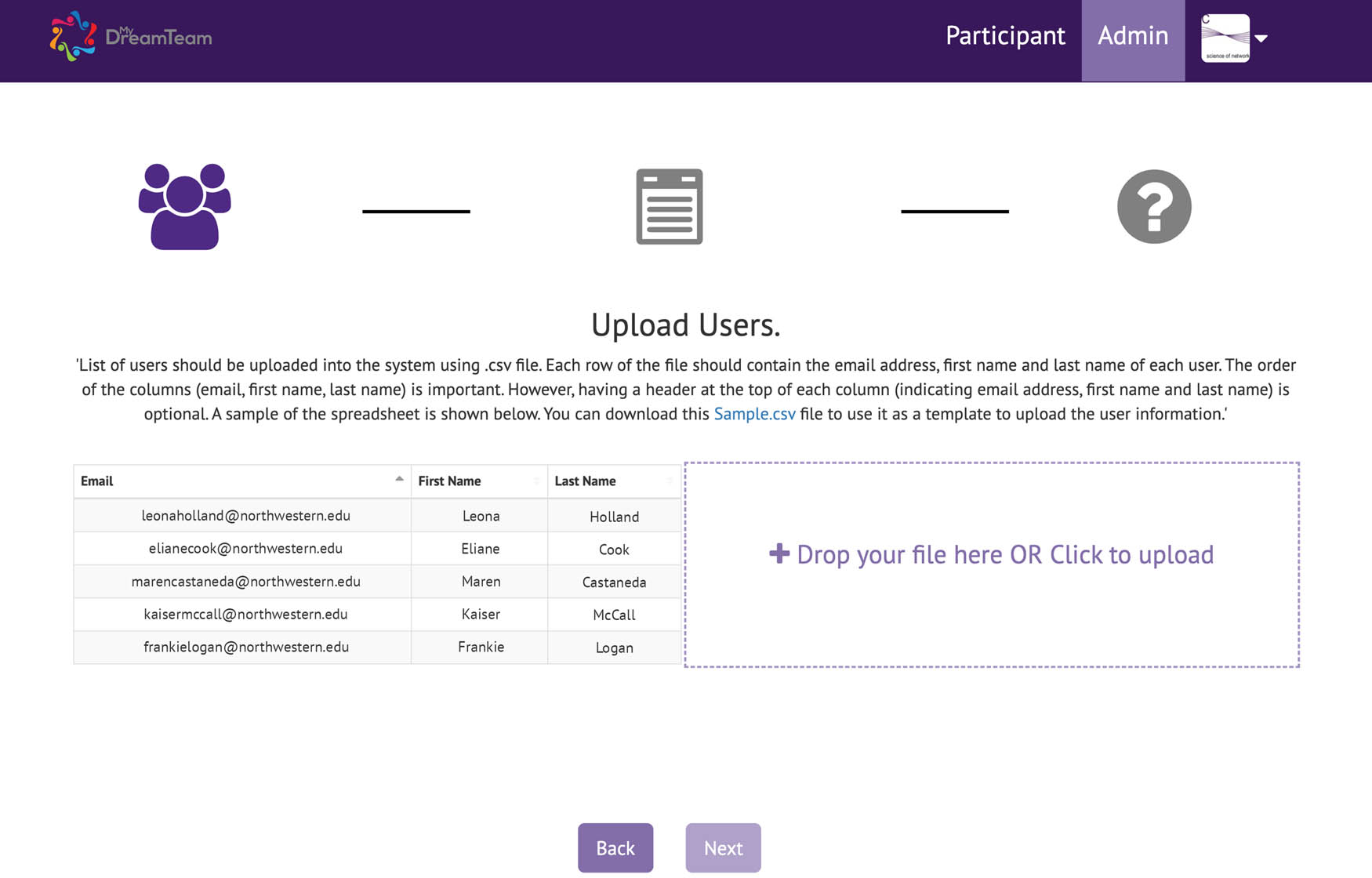
Figure 2
Adding participants to an MDT session.
Source: Authors’ contribution.
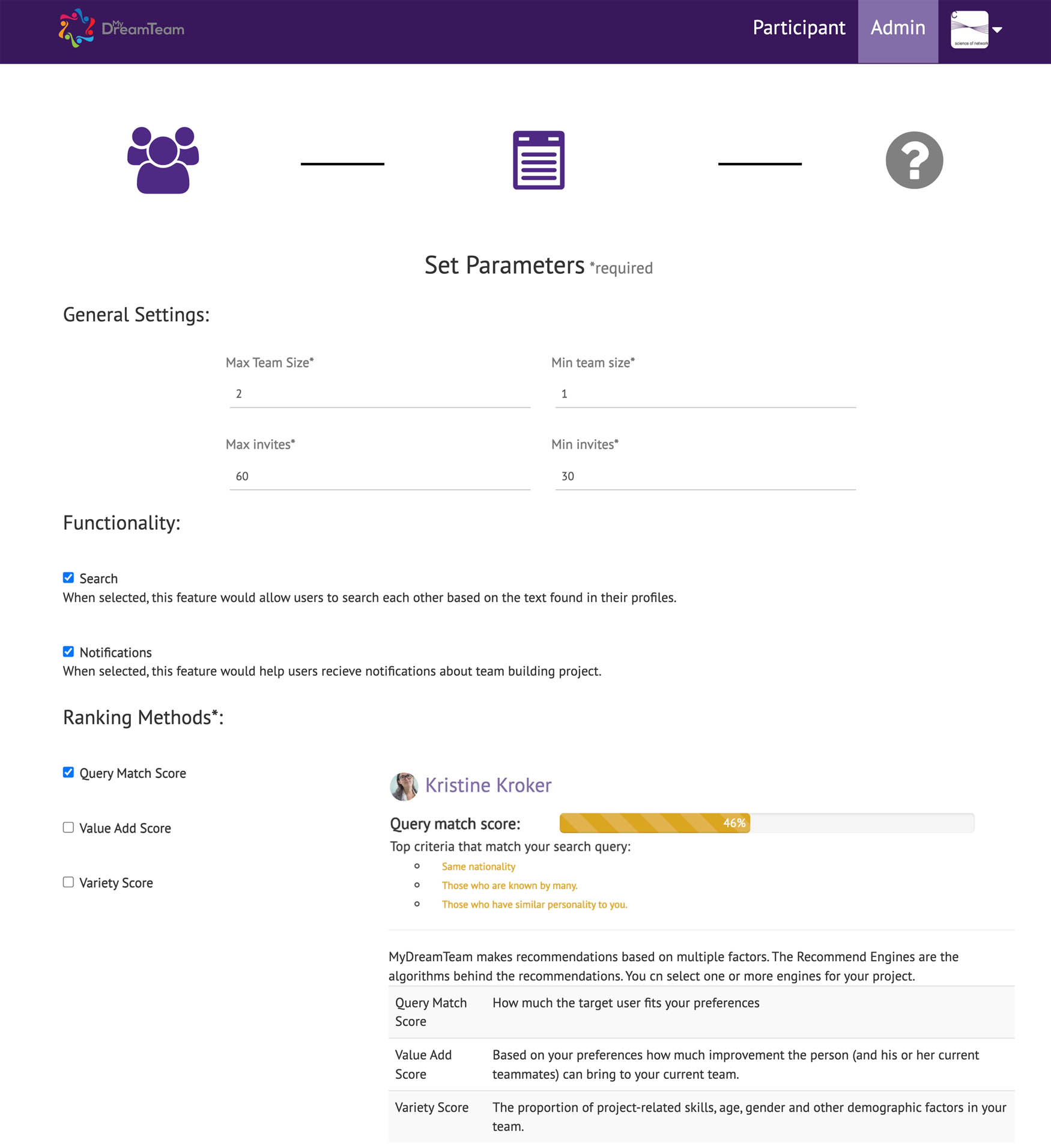
Figure 3
Setting an MDT session. Instructors can enable participants to search for other teammates, activate notifications, and enable the ranking methods when recommending potential teammates.
Source: Authors’ contribution.
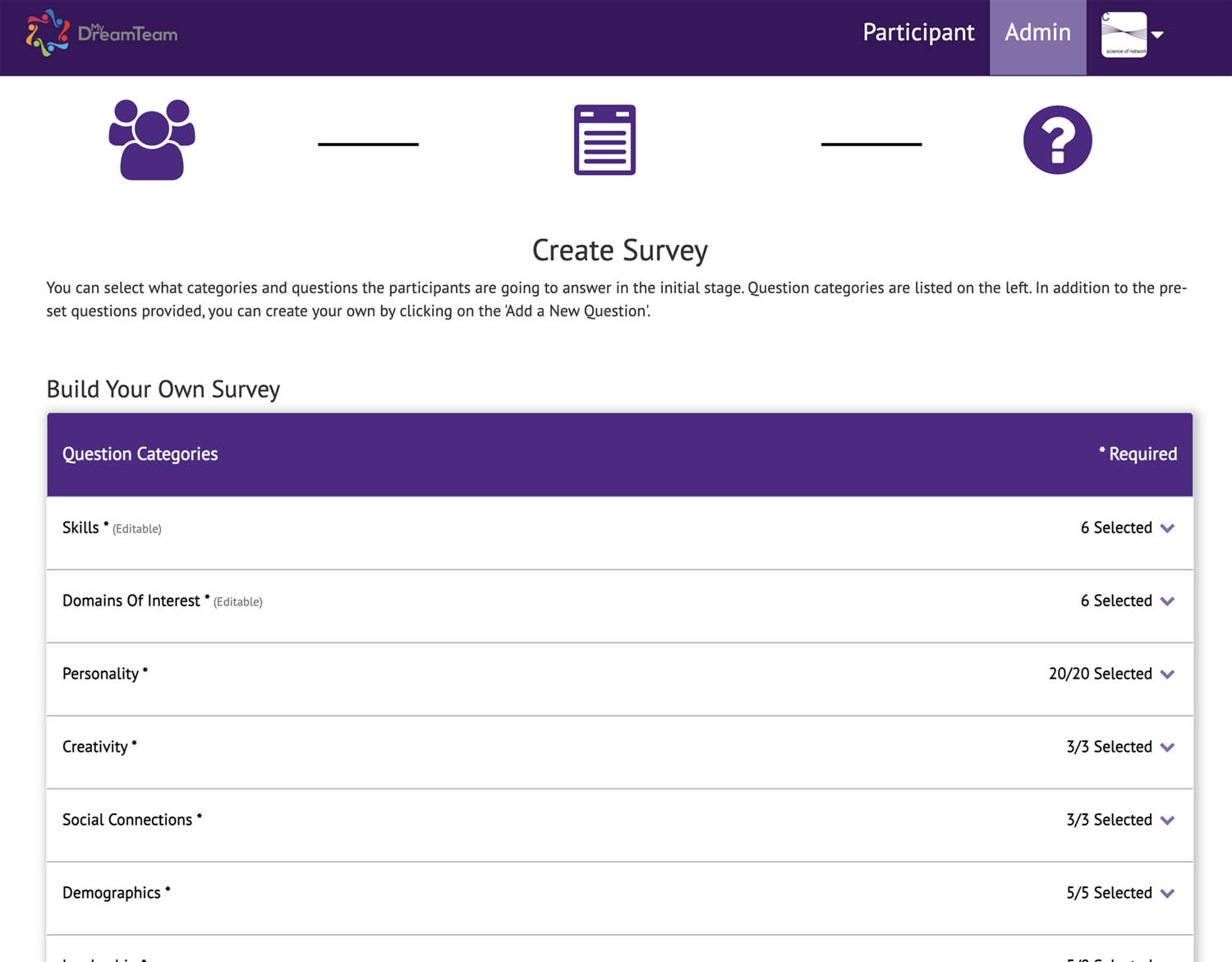
Figure 4
The instructor can customize the survey that participants will receive.
Source: Authors’ contribution.
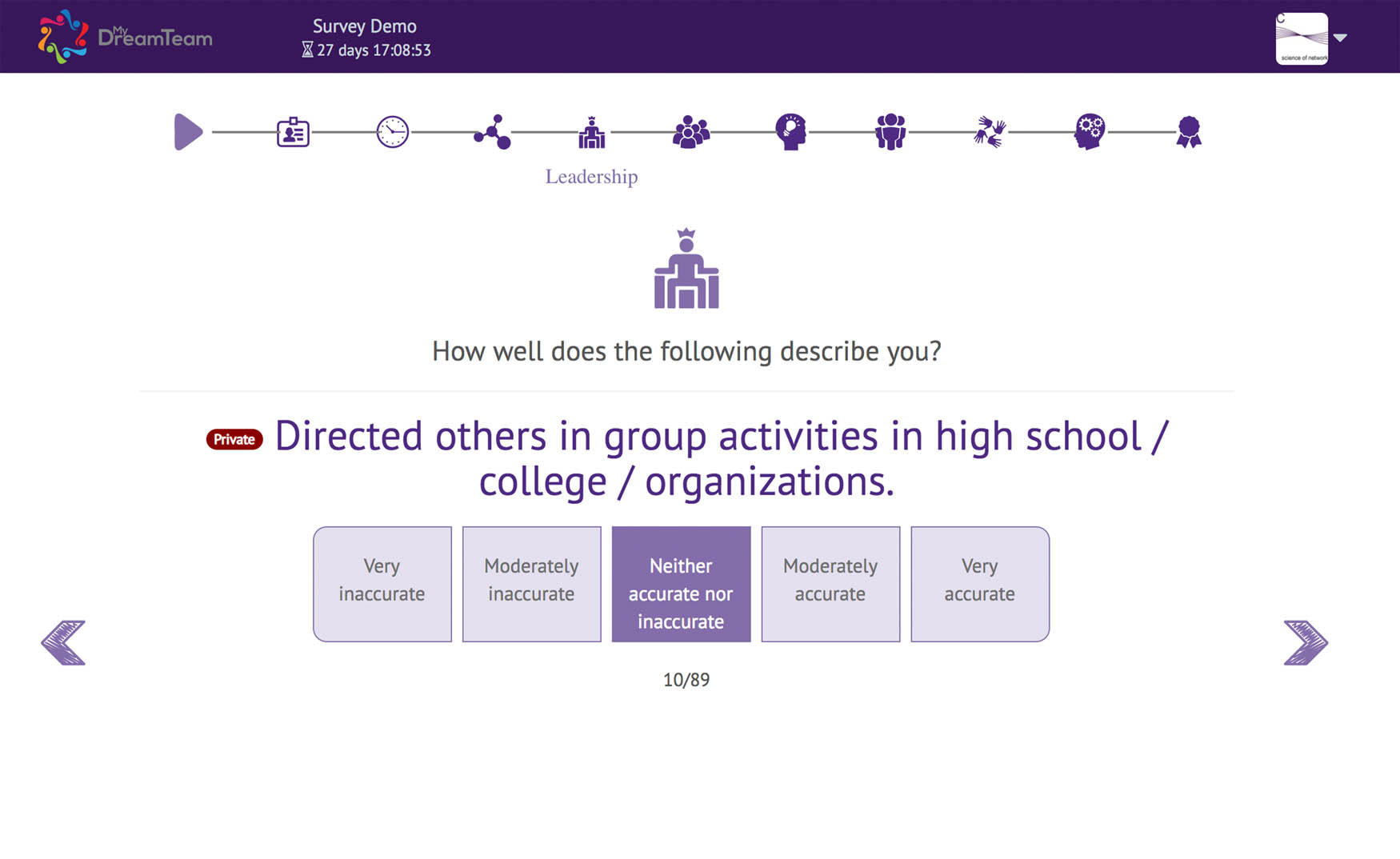
Figure 5
Profile survey. Participants create a public profile and provide information to the recommendation system, which remains private and is not visible to other participants.
Source: Authors’ contribution.
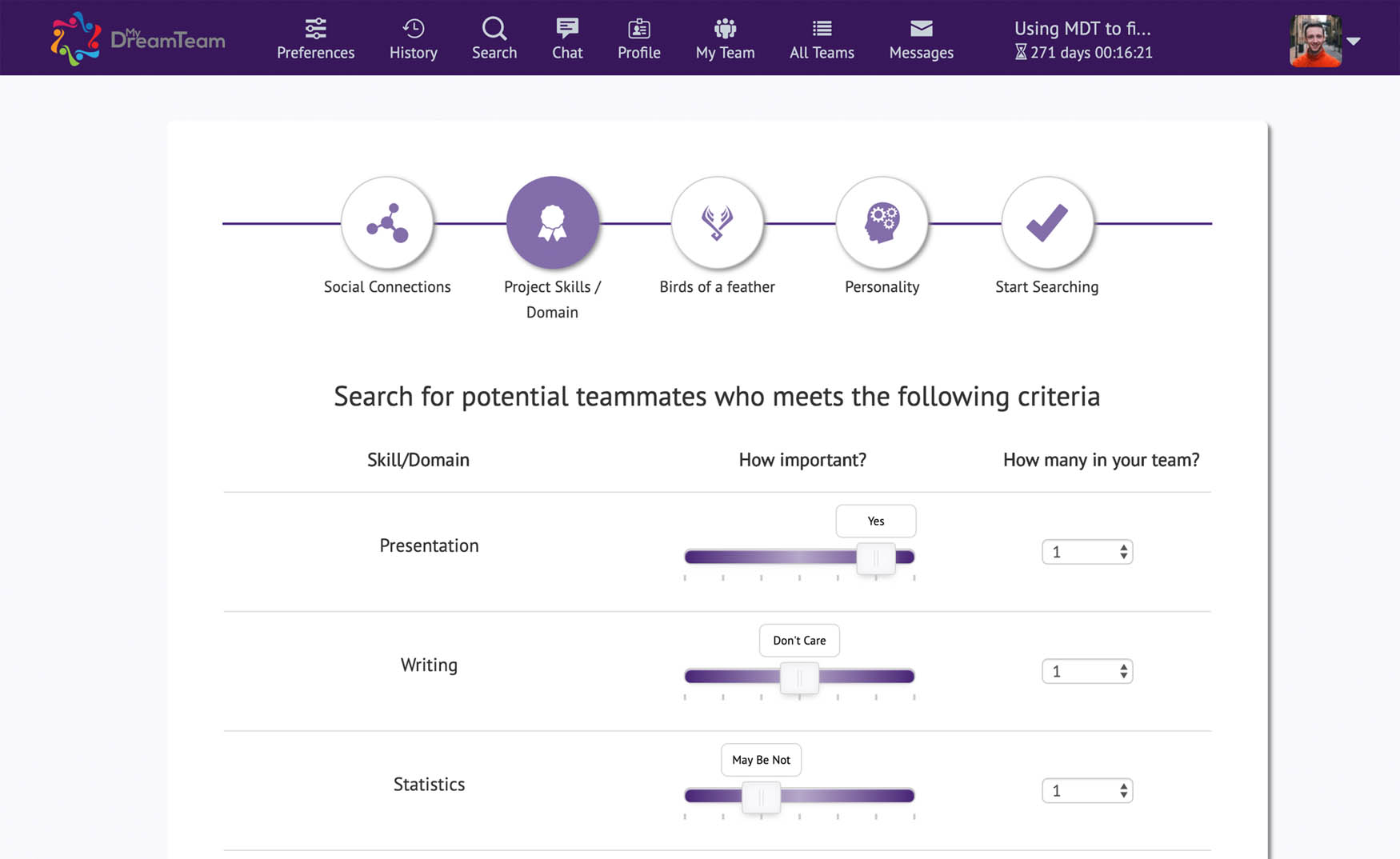
Figure 6
Creating the search query. Users search for teammates based on social connections, project skills, similarity features, and individual traits.
Source: Authors’ contribution.
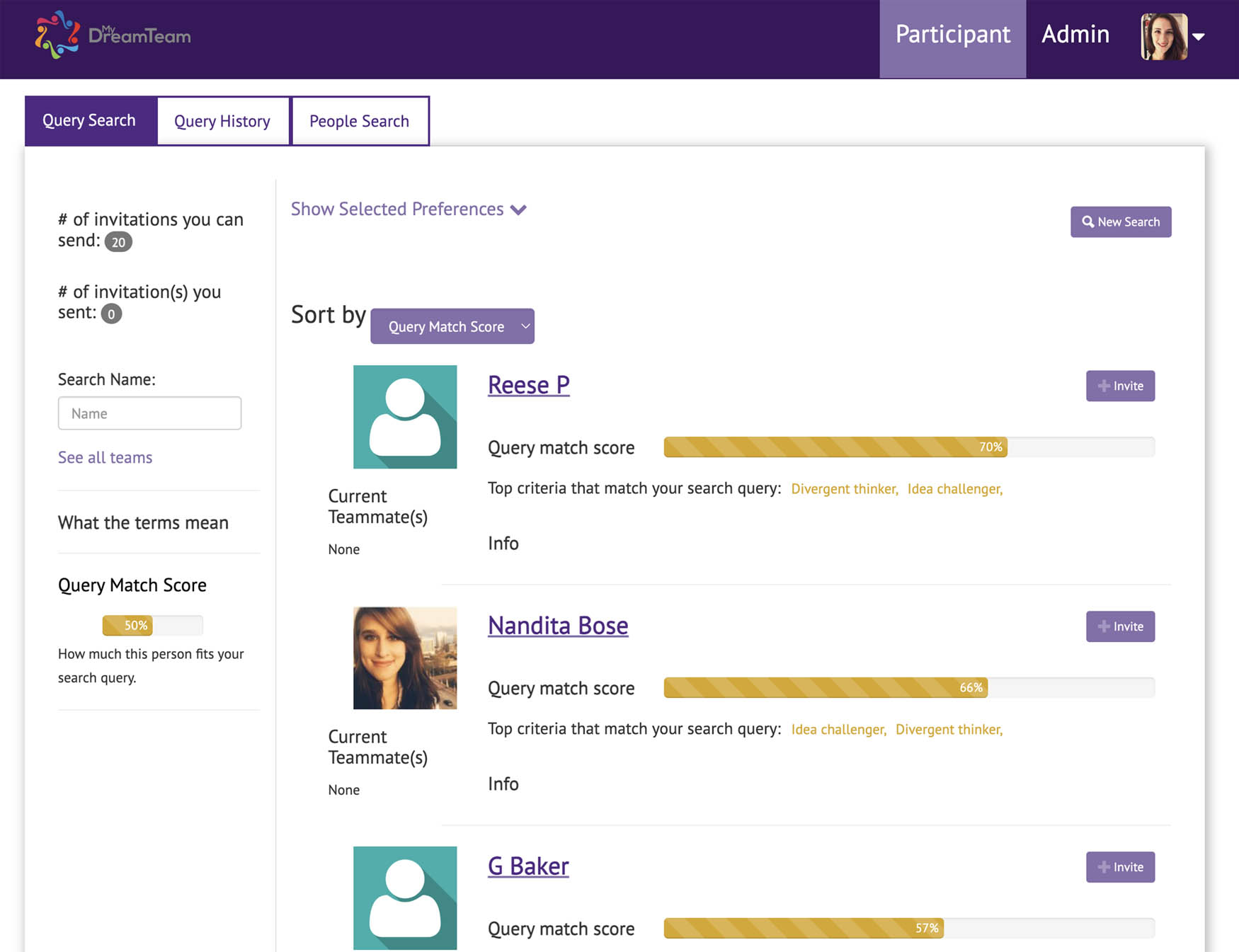
Figure 7
Exploring the recommendations generated by MDT.
Source: Authors’ contribution.
Table 1
Mapping MDT features to social network concepts.
| MDT feature | Social network analysis (SNA) concepts | What participants observe |
|---|---|---|
| Search query (skills, personality, ties) | Stated preferences: human capital vs social capital | Participants discover what they value in their teammates |
| Invitation network (who invites whom) | In-degree centrality; preferential attachment | Some participants receive many invitations; others receive few, independent of competence |
| Tie-type reporting (know/worked with/socialize) | Tie strength | Strong ties dominate actual invitation choices despite weak-tie availability |
| The gap between search and invitation | Stated vs revealed preferences; homophily | Participants search for competence but invite friends |
| Variety score display | Social categorization; homophily | Making differences salient can paradoxically reduce variety in teammate selection |
| Recommendation rank position | Algorithmic mediation of social processes | Higher-ranked candidates are significantly more likely to receive invitations |
| Aggregate team composition | Emergent segregation; core-periphery structure | Expertise and social capital are concentrated in a few teams; peripheral participants struggle |
Source: Authors’ contribution.