
1. Introduction
“Have you ever been on a dream team?” When we pose this question at the start of our sessions, many hands go up. Then, when we ask the follow-up – “Have you also been on a nightmare team?” – many more go up. This universal experience, with participants knowing both the joy of working with a high-performing team and the frustration of a dysfunctional one, immediately underscores the relevance of understanding what makes teams work. But what distinguishes a dream team from a nightmare team? Why do some groups thrive while others struggle, even when composed of talented members?
Social network analysis offers powerful conceptual tools for understanding these dynamics. Granovetter’s (1973) influential theory of “The strength of weak ties” proposed that loosely connected acquaintances provide access to nonredundant information by linking separate social circles, though subsequent work has clarified that these advantages stem more from structural bridging than weakness per se (Kim & Fernandez, 2023; Neal, 2024). Burt’s (1992, 2005) work on structural holes similarly demonstrated that bridging disconnected groups yields diverse information and opportunities. Yet research on team formation consistently shows that people’s choices about whom to work with are heavily influenced by prior relationships, homophily, and network position rather than structural considerations (Hinds et al., 2000).
Building on these insights, we introduce My Dream Team (MDT), an interactive web-based platform that transforms abstract network concepts into experiential learning. Developed by the Science of Networks in Communities Research Group at Northwestern University, MDT enables participants to form teams through a structured process that makes the network dynamics underlying team assembly visible. Participants create profiles, report their existing social networks, search for potential teammates using preference-based queries, and send and receive invitations. The system tracks these interactions, allowing both participants and instructors to observe patterns that would otherwise remain invisible.
This paper presents MDT as a pedagogical tool for classroom and workshop settings. We first outline the activity’s learning goals and setup, then walk through the main procedure, including profile creation, teammate search, and invitation dynamics. We then discuss debrief strategies, ethical safeguards, teaching materials, and key lessons that have emerged from more than 20 sessions with over 1,000 participants across multiple universities.
2. Goals
2.1. Motivating network science for team formation
A lecture with MDT begins by establishing why network science matters for understanding team formation. Drawing on Katzenbach’s (2012) work, we distinguish between a team, a small group accountable for a specific, compelling performance purpose, and a network, a larger, informal group with diverse expertise that provides flexibility and access to distributed knowledge. Effective collaboration often depends on both structures. While teams provide focus and accountability, networks extend access to information, expertise, and resources. Cummings and Pletcher (2011) formalized this insight with the concept of “project networks,” in which team members bring non-core contributions from their personal networks. MDT helps participants consider how potential team members’ networks can provide a strategic advantage, enabling them to gain access to new opportunities and resources.
2.2. Illustrating core network concepts
The MDT activity illustrates several network concepts through direct experience. A central idea in network research is that access to information and collaboration opportunities depends on how relationships are embedded within the broader network structure. Research has shown that tie strength (e.g., frequency or closeness of interaction) and structural bridging (e.g., linking distinct parts of the network) are analytically distinct dimensions, and that access to nonredundant information depends on the configuration of both (Granovetter, 1973; Kim & Fernandez, 2023; Neal, 2024). In MDT, participants report prior relationships, including acquaintances, collaborators, and social partners. The recommendation algorithm and participants’ choices make visible how relational strength and structural embedding jointly influence teammate selection. Participants embedded in dense clusters find their options constrained to familiar circles, whereas those whose networks span multiple clusters receive invitations from more diverse parts of the network.
The second concept is human capital vs social capital. Human capital refers to the knowledge, skills, abilities, and experiences of individuals (Becker, 1994), whereas social capital refers to the social relationships individuals have with others (Lin, 2017). Research has consistently shown that individuals prefer working with those who share demographic characteristics, attitudes, and backgrounds, and that positive prior interactions create expectations of similar future behavior (Hinds et al., 2000). While individuals might initially seek out competent teammates, they might end up teaming up with familiar individuals, reinforcing the effects of their social capital (Gómez-Zará et al., 2019). The MDT activity makes these tendencies visible, helping participants observe their inclination toward similar others and familiar faces, even when they espouse the benefits of variety and novel connections.
Network positions also shape access to opportunities. Highly connected individuals are more visible and more likely to be selected as teammates. Brokers – those who bridge disconnected groups – have access to diverse information and can facilitate collaboration between disparate parties (Burt, 2005). Talented individuals can go unnoticed by potential collaborators if they lack sufficient connections and remain on the periphery of the social network. MDT demonstrates how specific positions in participants’ social networks affect invitation patterns, leading some participants to receive many invitations and others to receive very few.
2.3. A flexible platform for different contexts
The MDT activity is appropriate for academic (from high school to graduate level), professional development workshops on collaboration, and interdisciplinary programs. It has been successfully used with undergraduate, graduate, and faculty participants. The activity adds particular value when used to form teams for actual projects. For example, students can form teams at the start of a semester, or faculty can form interdisciplinary groups that require complementary skills.
2.4. Incorporating relevant literature
Instructors may assign readings before or after the activity, depending on pedagogical goals. Assigning readings beforehand allows participants to recognize concepts as they encounter them; readings afterward let participants develop intuitions from their experience and then expand on them. Core readings include “The strength of weak ties” (Granovetter, 1973), “Look beyond the team: It’s about the network” (Katzenbach, 2012), and “Why project networks beat project teams” (Cummings & Pletcher, 2011). In advanced courses, instructors may also assign recent reassessments that distinguish tie strength from structural bridging (Kim & Fernandez, 2023; Neal, 2024). When possible, we ask students to engage with these readings before the session.
3. Setup
3.1. Technical requirements
Instructors create a free account at https://v2mdt.soc.northwestern.edu/accounts/signup/ and receive an email with further instructions (Figure 1). Once ready, the instructor creates a “session” by specifying a name. The instructor then adds participants’ email addresses by uploading a CSV roster file (Figure 2). The system will request information about the maximum team size and ranking methods for recommending teammates (Figure 3). Lastly, the instructor can customize the questions for the students’ profile-creation survey, including demographics, skills, and domains of interest (Figure 4).
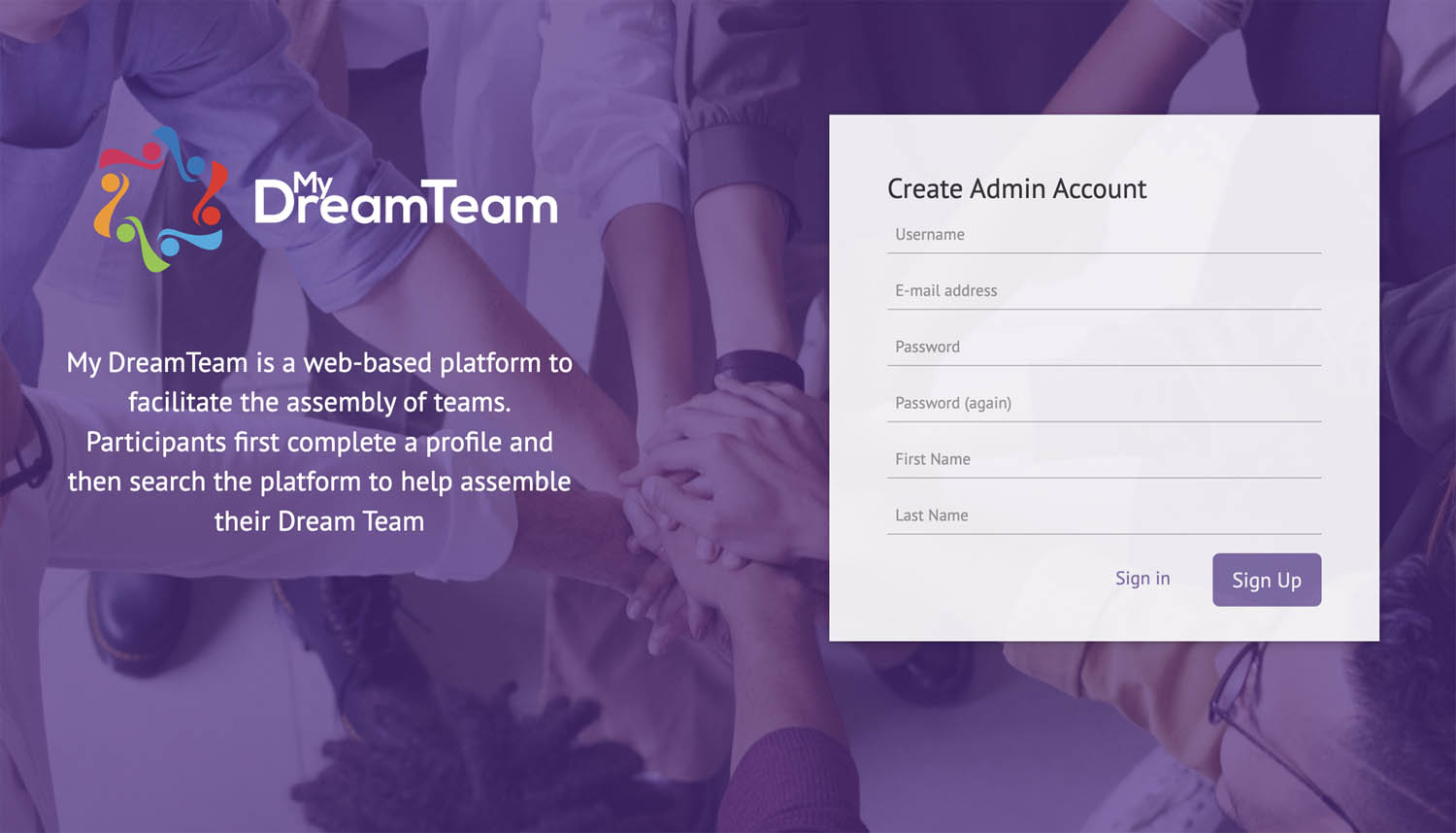
Figure 1
Admin account creation.
Source: Authors’ contribution.
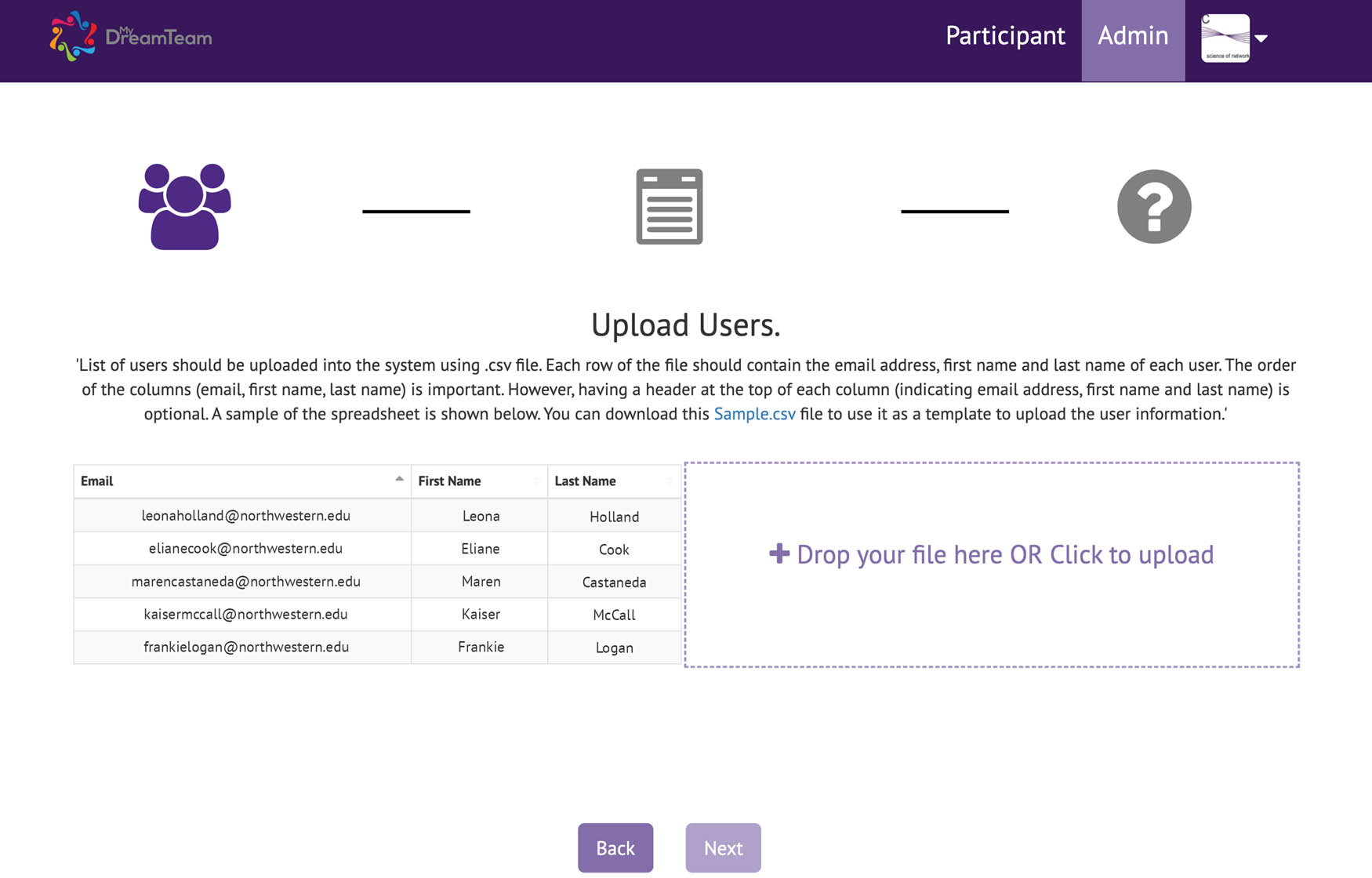
Figure 2
Adding participants to an MDT session.
Source: Authors’ contribution.
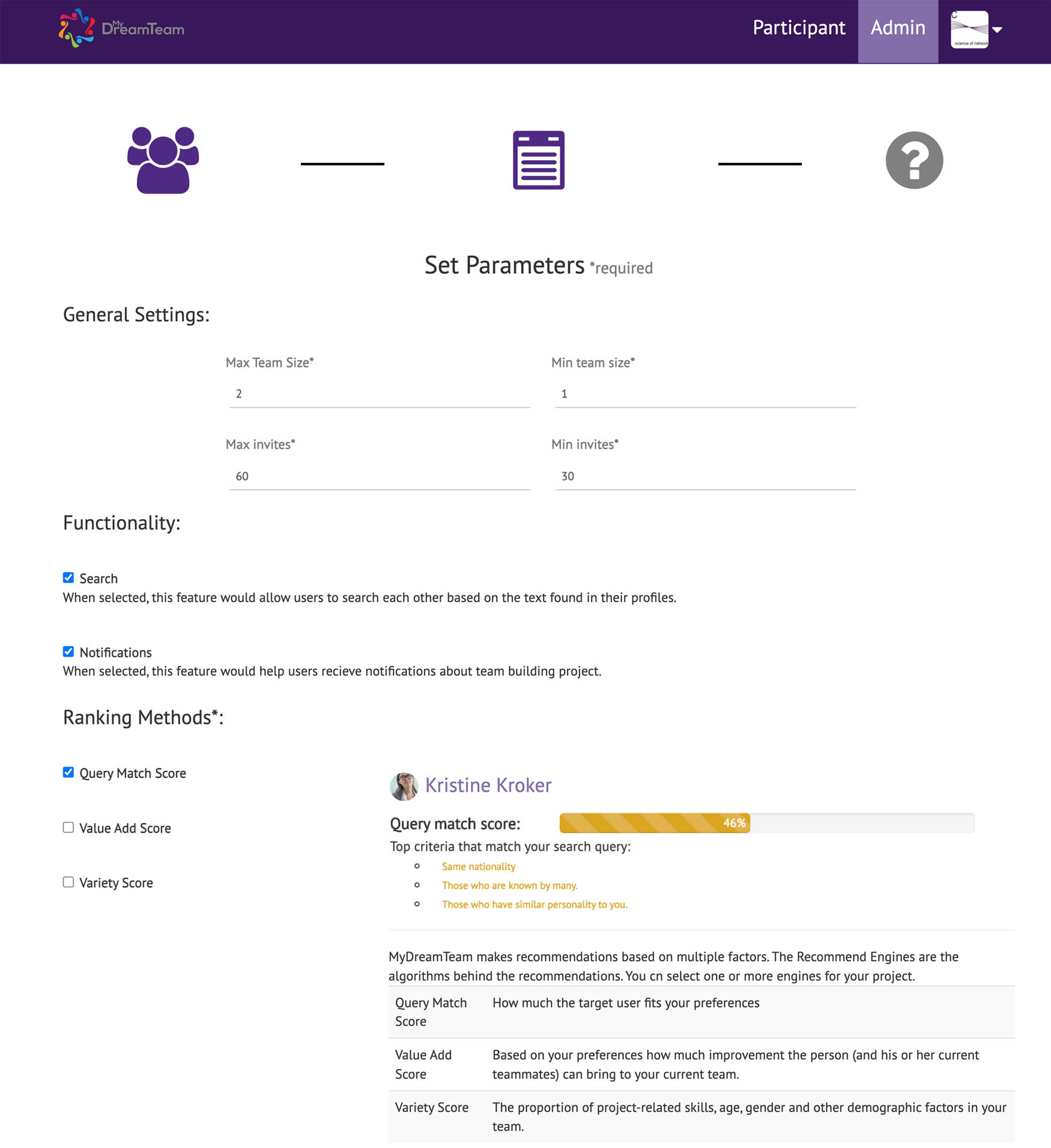
Figure 3
Setting an MDT session. Instructors can enable participants to search for other teammates, activate notifications, and enable the ranking methods when recommending potential teammates.
Source: Authors’ contribution.
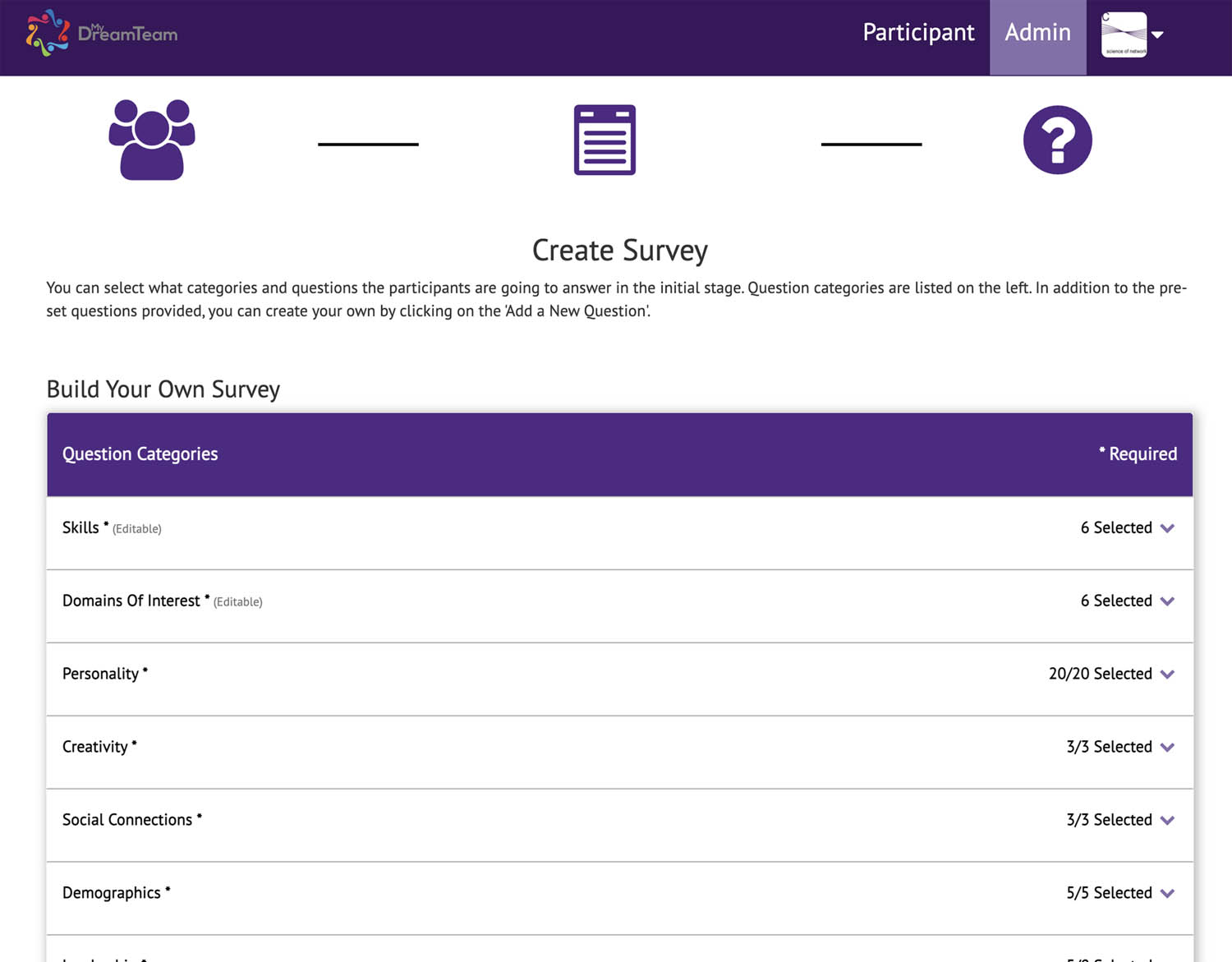
Figure 4
The instructor can customize the survey that participants will receive.
Source: Authors’ contribution.
Participants will receive an automated email invitation containing login credentials and a link to the MDT platform. They can access MDT through a web browser on any internet-connected device, such as a laptop, tablet, or smartphone.
3.2. Pre-activity preparation
A brief pre-activity lecture introducing key network terms (e.g., nodes, ties, strong ties, weak ties, brokers) helps participants interpret their experience.
The first task for participants is completing a public user profile. They identify themselves by their real names and complete their profiles by answering open-ended questions about their backgrounds, skills, interests, and motivations for taking the course. This information is available for other participants to view. Next, participants complete a survey assessing human and social capital, including questions about demographic information, creativity, leadership experience, psychological collectivism, social skills, personality, project skills, and relationships with others in the network. Completing this survey takes between 10 and 15 minutes. This information is used to generate search results. Instructors should set a deadline for participants to complete this survey. Once completed, participants can search for and invite others to their team.
3.3. Defining the team task
The activity works best when participants form teams for a defined task, whether for a project or a single lecture. Example tasks include: “Form a team to complete the upcoming course project,” “Form a team to develop a business plan for a startup,” or “Form a team to survive on a deserted island.”
3.4. Session arrangement
Both the initial survey and team formation exercise can be completed remotely or during a live session. For remote completion, the instructor establishes deadlines for each activity (e.g., 5 days for profiles, another 5 days for team formation). Instructors can also run both activities during a lecture, giving participants 10 min to complete the initial survey before providing instructions for forming teams. A hybrid approach – completing the survey before class and running team formation during the session – saves time. If some students have not completed the survey on time, the remaining participants can still form teams and send invitations while the pending students create their profiles.
3.5. Materials
All materials, videos, and tutorials are provided through the MDT platform. Supplementary materials instructors may wish to prepare include slides that introduce network concepts, discussion questions for the debrief, and a handout summarizing key findings from MDT research. The platform automatically generates data exports for post-activity analysis.
3.6. Procedure
At the start of a session, the instructor opens with the provocative questions: “Have you ever been on a dream team? Have you also been on a nightmare team?” After a brief discussion, the instructor motivates the challenges of team formation (e.g., composition, homophily) and introduces the framework that distinguishes teams from networks. The instructor explains that participants will form teams using the MDT platform and then discuss the patterns that emerged.
3.6.1. Phase 1: Profile creation and network identification
Participants log into MDT. If they have not yet created their profiles, they should have 10–15 min to complete the survey. They add information about themselves, report on their social relationships, and answer questions about their skills, creativity, interests, leadership experience, and personality traits (Figure 5). The instructor supervises and answers questions as needed.
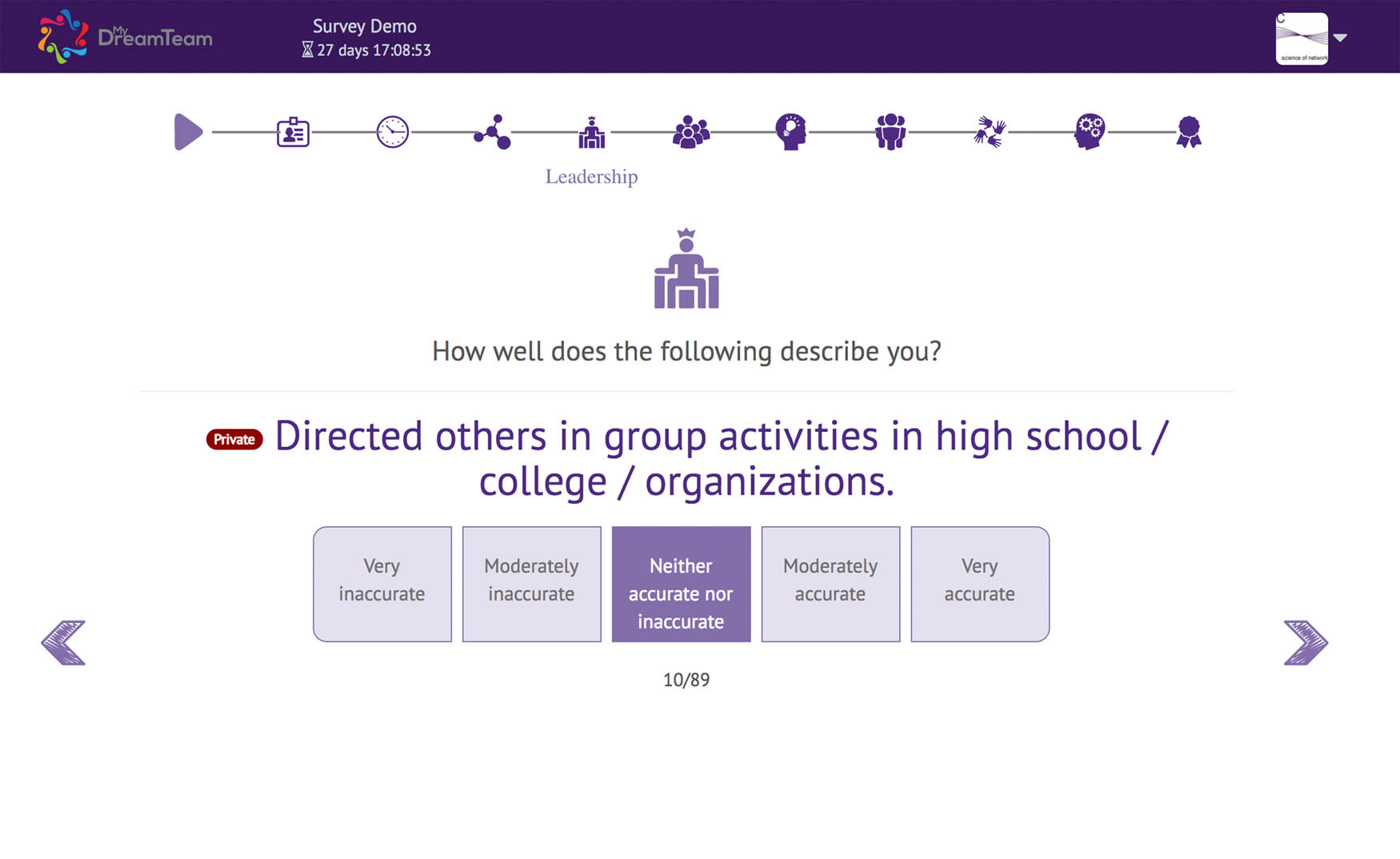
Figure 5
Profile survey. Participants create a public profile and provide information to the recommendation system, which remains private and is not visible to other participants.
Source: Authors’ contribution.
3.6.2. Phase 2: Teammate search
After completing profiles, participants search for teammates by creating a search query specifying their preferences. For each attribute collected in the profile (skills, experience, personality traits), participants indicate importance on a 7-point scale ranging from “Not important at all” (−3) to “Don’t care” (0) to “Yes, for sure” (+3). MDT generates a rank-ordered list of recommendations based on how well each potential teammate matches the query (Figure 6). For each recommendation, the system displays the person’s name, a “fit score” indicating match quality, a link to their public profile, their current team status, and an “Invite” button (Figure 7).
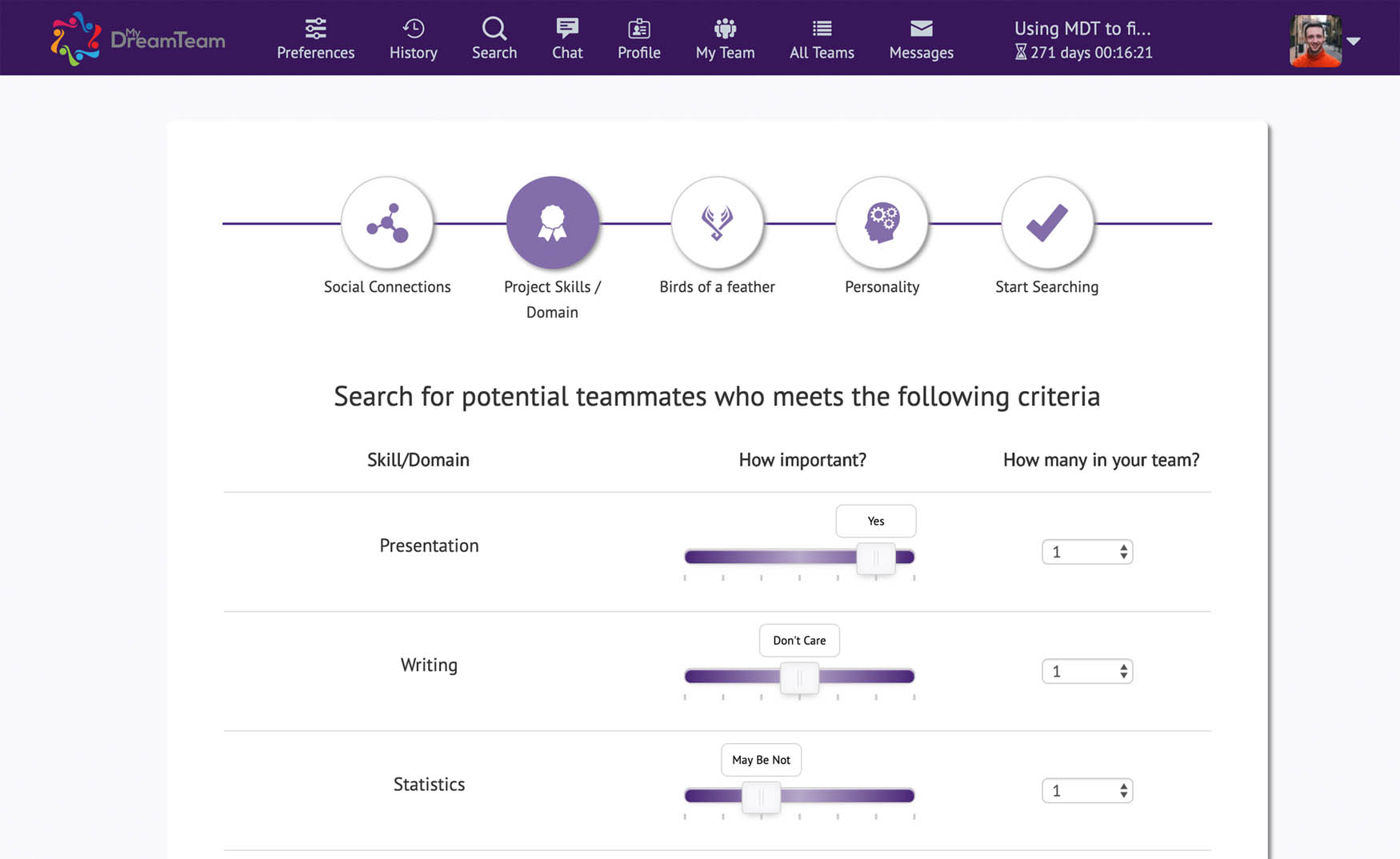
Figure 6
Creating the search query. Users search for teammates based on social connections, project skills, similarity features, and individual traits.
Source: Authors’ contribution.
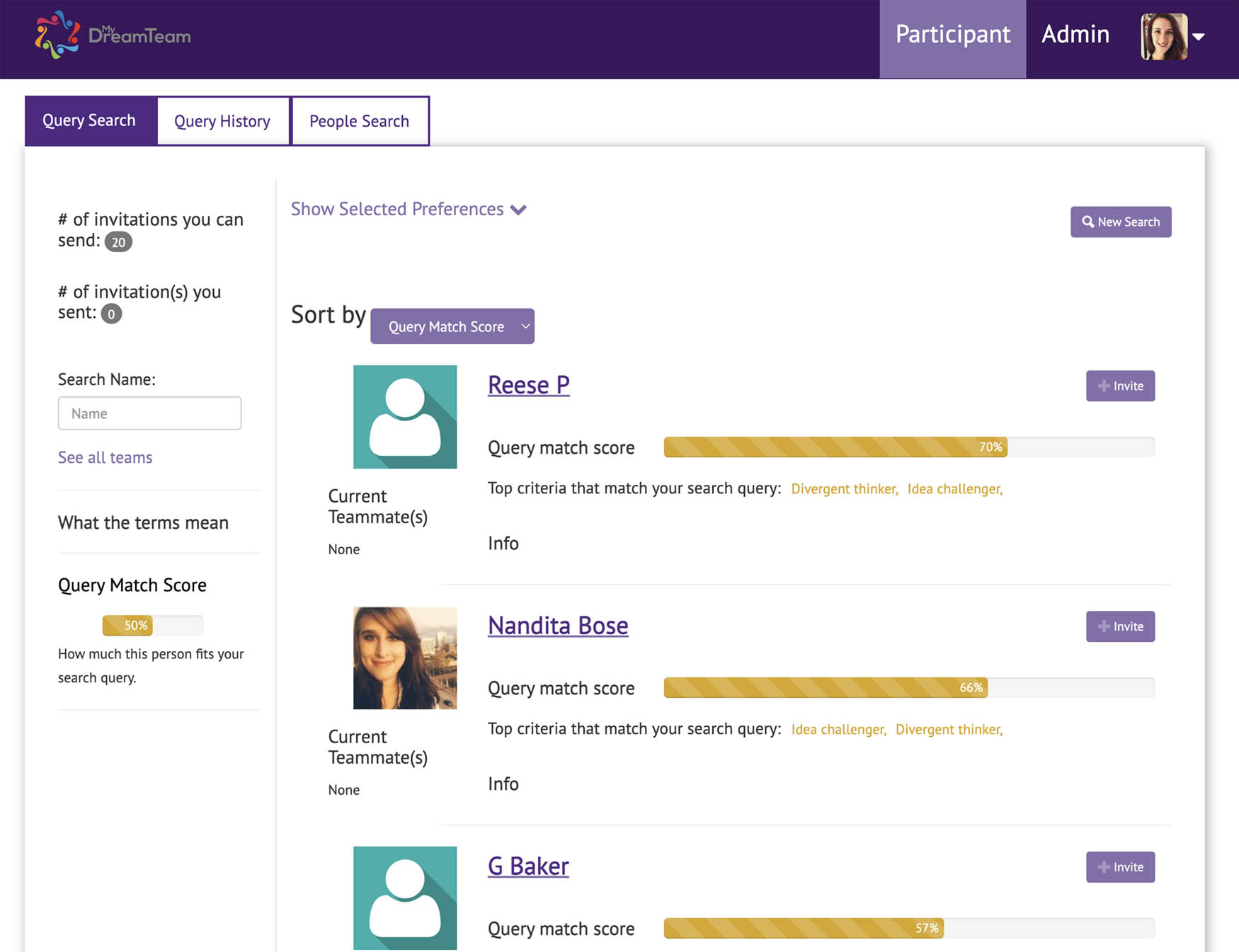
Figure 7
Exploring the recommendations generated by MDT.
Source: Authors’ contribution.
MDT offers three ranking methods that instructors can enable independently (Gómez-Zará et al., 2020; Gómez-Zará, Paras, et al., 2019). The “Query Match Score” computes a weighted sum: for each attribute k that the searcher specified, the system multiplies the candidate’s score on that attribute by the searcher’s stated importance weight, then sums across attributes to produce an overall fit score. The “Value-Add Score” evaluates how much a candidate would improve the team’s aggregate profile relative to what it already has. The “Variety Score” calculates how adding a candidate would change the team’s composition variety, using Blau indices for categorical attributes (e.g., gender, nationality) and coefficients of variation for numerical attributes (e.g., age, project skills), and averaging the results into a single percentage. Each method operationalizes a different network-theoretic concern: query-match quality reflects stated human-capital preferences, value-add captures complementarity, and variety quantifies the skills and perspectives that a new member would bring. Instructors can choose which methods to enable depending on which concepts they want to foreground.
While browsing recommendations and profiles, participants send invitations. When a participant sends an invitation, the recipient receives a notification and can accept (to form a team or merge existing teams), decline, or ignore it. Teams grow by accepting additional invitations until they reach their maximum size. Participants can also leave or switch teams.
The instructor may project teams assembling in real time, helping those without a team or those teams seeking new members. If participants remain without a team, the instructor can facilitate connections by monitoring the teams that have formed. The instructor could set a 10-min timer and help students assemble teams.
3.6.3. Phase 3: Debrief and discussion
After teams assemble (or time expires), the instructor leads a structured discussion that connects participants’ experiences to network theory. Key discussion threads include:
Human vs Social Capital: “When you filled out the search query, what did you prioritize? When you sent invitations, did your behavior match your stated preferences?”
Weak vs Strong Ties: “Did you invite people you already knew, or did you reach out to strangers? Why do you think people gravitate toward familiar others? What are the benefits? What are the costs?”
Network Position: “Did you invite people embedded in your immediate network, or did you reach across other social groups? Who received the most invitations? What do you think explains these patterns?” The discussion can address how network position affects opportunity, independent of individual competence.
Algorithmic Recommendations: “To what extent did you revise the provided recommendations? Did you trust the algorithm? What is the role of these algorithms in mediating social relationships?”
Implications for Team Composition: “If everyone invites their friends, what happens to team composition? Who gets left out? How might these dynamics perpetuate existing patterns of segregation?”
3.7. Variant scenarios
3.7.1. Multiple tasks
If the session allows multiple team-formation rounds, instructors can ask participants to form teams for different hypothetical tasks, helping them reflect on how their preferences and choices change across task settings. Drawing on McGrath’s circumplex model (1984), the instructor might consider: a planning task (e.g., “Form a team to develop a strategic plan for a community initiative”), a performance task (“Form a team to build a software application”), or a competitive task (“Form a team to win a business competition”). After each round, participants form new teams for the next task. The instructor can clone a project in the MDT dashboard to keep the same roster and profile data. The debrief then compares how preferences and selection criteria changed across task types. Our research found that prior relationships remain influential across all task types, but the importance of specific skills varies. Technical skills matter more for performance tasks, while networking and persuasion skills matter more for competitive tasks (Kaven et al., 2021).
3.7.2. Variety information displayed
This variant demonstrates how information design affects team formation decisions. In one round, the instructor runs the normal MDT configuration where participants see only fit scores and profiles. In a subsequent round, MDT displays how each potential teammate would affect team composition variety, calculating variety scores based on age, gender, nationality, and skill profiles. Participants compare their invitation patterns across rounds. Our research found, paradoxically, that displaying variety information led participants to select less varied backgrounds and profiles (Gómez-Zará et al., 2020). When differences between members were made salient, participants appeared to use the information to select similar others rather than different ones, illustrating how well-intentioned interventions can produce unintended consequences.
4. Lessons
The MDT activity consistently yields several patterns that instructors can highlight to connect the team-formation experience to organizational and network theory. First, participants can reflect on the tension between their stated and revealed preferences when choosing teammates. Many say they seek teammates with varied skills and backgrounds, focusing on human capital. However, when they send invitations, their choices heavily favor prior collaborators and friends. This gap between what people search for and what they ultimately choose is a powerful teaching moment. It illustrates how homophily incentivizes participants to team up with familiar and similar individuals. Across multiple studies using MDT, people with strong ties were approximately five times more likely to receive invitations than equivalent strangers, and prior collaborators were approximately twice as likely. This pattern persists even when controlling for fit scores generated by the recommendation algorithm (Gómez-Zará et al., 2019; Ichhaporia et al., 2020; Twyman et al., 2022). Instructors can discuss how these network structures exert influence that individuals may not consciously recognize.
Instructors can also highlight how acceptance and rejection decisions rely on the inviter’s bonding and bridging capital, not just their competence. Participants notice that some individuals receive many invitations and are more likely to accept invitations from people they already know. This creates a compounding effect: people invite their friends, who accept, reinforcing existing network structures. A productive discussion point is the fear of inviting strangers, which can include an aversion to rejection and social judgment.
A final insight concerns how individual choices aggregate into teams segregated by human and social capital. Participants with extensive networks end up on teams with others who have extensive networks. Those with high self-reported skills end up on teams with other high-skill participants. And those with few prior relationships and lower visibility struggle to find teammates. These consequences invite reflection on how social connections profoundly influence collaborations and opportunities.
4.1. Connecting to theory
This activity aligns with foundational research in social network analysis. It demonstrates how bridging ties shape opportunities: participants embedded in tight-knit clusters of strong ties find their options limited, while those with bridging weak ties receive invitations from multiple distinct clusters. It also illustrates how effective teams combine a stable core with dynamic access to expertise in members’ personal networks. Team members with diverse networks bring more potential non-core contributors who can provide rich knowledge, information, and feedback.
Moreover, MDT demonstrates how micro-level choices – a search query, browsing teammate recommendations – aggregate into macro-level network patterns such as popularity, clustering, and core–periphery structure. Some participants end up at the center of invitation networks while others remain peripheral. This distribution reflects systematic social patterns (prior relationships, visibility, perceived competence) that create structural advantages for some and disadvantages for others.
4.2. Participant reflections on learning
In several sessions, we administered a post-assembly survey that asked participants to compare MDT with their prior team-formation experiences (Gómez-Zará, Andreoli, et al., 2019; Gomez-Zara et al., 2026; Kaven et al., 2021). Participants consistently reported that MDT prompted them to think more carefully about whom to work with, to reflect on what it takes to form a “dream team,” and to think more strategically about the kinds of people needed for a given task. Participants also reported that MDT connected them to people they would not otherwise have considered and to a wider range of potential collaborators. These responses suggest the activity made visible the network dynamics that participants would otherwise take for granted. In future implementations, instructors could strengthen assessment by adding pre/post knowledge items on specific network concepts (e.g., defining weak ties, identifying structural holes, distinguishing bonding from bridging capital) to measure conceptual learning gains alongside these reflective outcomes. The full survey instrument is available in the Supplementary Materials.
The MDT platform itself demonstrates how online systems mediate and shape network formation. The recommendation algorithm influences who appears at the top of search results, and participants are significantly more likely to invite those ranked higher. These design choices illustrate how technology can either reinforce or disrupt existing network patterns. Table 1 maps the MDT platform’s features to network concepts, summarizing what participants can observe at each stage.
Table 1
Mapping MDT features to social network concepts.
| MDT feature | Social network analysis (SNA) concepts | What participants observe |
|---|---|---|
| Search query (skills, personality, ties) | Stated preferences: human capital vs social capital | Participants discover what they value in their teammates |
| Invitation network (who invites whom) | In-degree centrality; preferential attachment | Some participants receive many invitations; others receive few, independent of competence |
| Tie-type reporting (know/worked with/socialize) | Tie strength | Strong ties dominate actual invitation choices despite weak-tie availability |
| The gap between search and invitation | Stated vs revealed preferences; homophily | Participants search for competence but invite friends |
| Variety score display | Social categorization; homophily | Making differences salient can paradoxically reduce variety in teammate selection |
| Recommendation rank position | Algorithmic mediation of social processes | Higher-ranked candidates are significantly more likely to receive invitations |
| Aggregate team composition | Emergent segregation; core-periphery structure | Expertise and social capital are concentrated in a few teams; peripheral participants struggle |
Source: Authors’ contribution.
4.3. Discussion questions
How did your prior relationships influence your choices? Were you surprised by how much they mattered?
Did MDT make you think of potential teammates you would not have considered otherwise?
Did you seek similarity or variety in your teammates? What happened when you tried to balance both?
Who received the most invitations in our class/workshop?
What would help people form more effective teams? Teams with broader skills and backgrounds? Are those the same thing?
How did MDT’s recommendation rankings affect your choices?
5. Reflections
Over more than 10 years, MDT has successfully deployed more than 30 sessions across multiple educational levels, group sizes, and regions. The activity works across diverse contexts because the experience of team formation is universal. Regardless of institutional setting or national culture, participants recognize the social dynamics at play – the natural preference for familiar others, the uncertainty about reaching out to strangers, and the mixed emotions about receiving (or not receiving) invitations.
The most common insight, and the most powerful pedagogically, occurs when participants recognize the gap between their intentions and their behavior. This moment of self-recognition helps participants understand how network structures influence behavior in ways they may not consciously recognize. Another powerful moment occurs when participants who receive few invitations reflect on why they receive so few. Some who perceive themselves as competent and valuable teammates are surprised to find they are overlooked, either because they are new to the group, occupy peripheral network positions, or lack the social connections that generate visibility. Together, these moments spark a conversation about how structural factors shape opportunity independently of individual talent.
5.1. Ethical considerations and safeguards
Because the activity surfaces real social dynamics, instructors must actively manage the potential for negative experiences, particularly for participants who receive few or no invitations. We recommend several practices. First, instructors should monitor team formation in real time using the admin dashboard, which displays each participant’s team status. Before time expires, the instructor can identify unmatched individuals and facilitate connections. For example, by announcing that several people are still looking for teammates and asking teams with open slots to reach out. This reframes the situation as a structural matching problem rather than a personal rejection. Second, the debrief should present invitation data only at the aggregate level (e.g., the distribution of invitations received across all participants), and should never identify specific individuals. When discussing why some participants receive fewer invitations, the instructor should explicitly attribute this to network position and visibility, reinforcing the theoretical point that structural factors shape opportunity independently of talent. Third, participation in MDT should always be voluntary, with an alternative path (instructor-assigned teams) that carries no penalty. Fourth, at the platform level, future versions of MDT could boost visibility for peripheral participants. For instance, by surfacing unmatched individuals higher in search results as team formation progresses, or by sending targeted notifications to teams with open slots about available participants. Finally, in contexts where participants know each other well and social hierarchies are already established, instructors should consider whether the activity might reinforce rather than reveal existing dynamics and adjust the framing accordingly.
From our experience, MDT works best when explicitly framed around network concepts rather than merely as a team-formation exercise. Without the theoretical framing, participants may experience the activity as procedural rather than as an opportunity to observe and understand network dynamics. We also recommend that instructors prioritize the debrief as a core component. Experiential learning occurs not during the activity itself but in reflection afterward, when participants connect their experiences to theoretical frameworks. The debrief is most effective when the instructor shares aggregate data (e.g., the distribution of invitations received, the relationship between prior ties and invitation probability), allowing participants to see beyond their individual experience to collective dynamics.
MDT provides educators with an immersive platform for teaching social network concepts through direct experience. The activity makes visible patterns that would otherwise remain hidden: the gap between stated and revealed preferences, the dominance of bonding capital over bridging capital, and the emergent segregation that results when individual choices aggregate. Most importantly, the activity creates moments of genuine insight. When participants recognize their tendency to invite familiar others, they see how network position shapes opportunities and connect their experience to broader patterns in social structure. The question “Have you been on a dream team?” invites participants into a conversation about why some teams thrive, and others struggle.
Funding information
This project is funded by the Northwestern University Office of the Provost; National Science Foundation (NSF) under grants CNS-1010904, OCI-0904356, IIS-0838564, SBE-2341431, SBE-2341432, SBE-1063901, SBE-2021117, and BCS-0940851; National Institutes of Health (NIH) under awards UL1RR024146-06S2, UL1RR025741, 5UL1RR025741-04S3, and R01GM1374100; Defense Advanced Research Projects Agency (DARPA) under cooperative agreement 14811/HR001118C0022; Army Research Laboratory under cooperative agreement W911NF-09-2-0053; and Microsoft Research 2020 Dissertation Grant Award.
Author contributions
DGZ and NC wrote the manuscript. NC and LD designed the activities and software. DGZ and MT conducted data collection and data analysis. AS and XL developed the software. All authors contributed to the development and design of the MDT system.
Conflict of interest statement
The authors have no competing interests to disclose.
Generative AI statement
Generative AI assisted with prose editing, structural revisions, and drafting new sections during the revision stage. The AI tool was not used for data analysis, result interpretation, or the formulation of the research design. All content was reviewed and approved by the authors, who accept full responsibility for the published work.
Data availability statement
All materials necessary for this activity are available at https://v2mdt.soc.northwestern.edu/. Supplementary materials – including the post-assembly survey instrument and tutorial videos – are available at the same URL and through the links in the Supplementary Information section.