
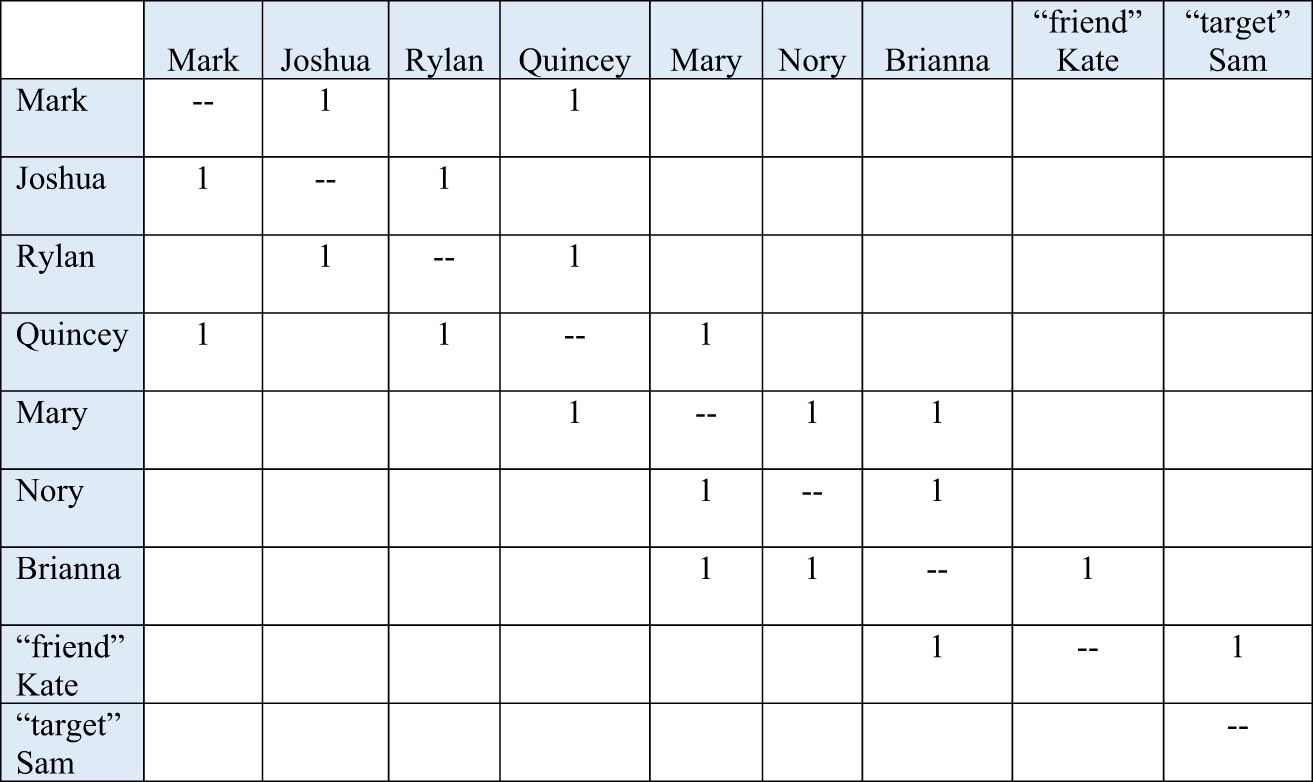
Figure 1
Example Path Matrix. Note 1. We ask each person to name another person. This can be considered a directed tie, in which case the example path matrix would not be symmetric. However, we explain that we are treating these as nondirected ties, presuming that no one would know and name someone who didn’t know them. So, we fill in the symmetric ties in the matrix. Note 2. In this example, Ego and the first three alters are a male cluster; there’s a cross-gender tie between Quincey and Mary; and then a cluster of three females who sit next to each other. Brianna says she doesn’t know anyone else in the class, so the instructor chooses a “friend” (Kate) from a different part of the classroom, perhaps a different ethnicity, trying to create a weak tie out of the physical cluster. Kate says she knows the “target,” Sam, and points to him. Sam stands up, and we all clap!
Source: Author’s contribution.
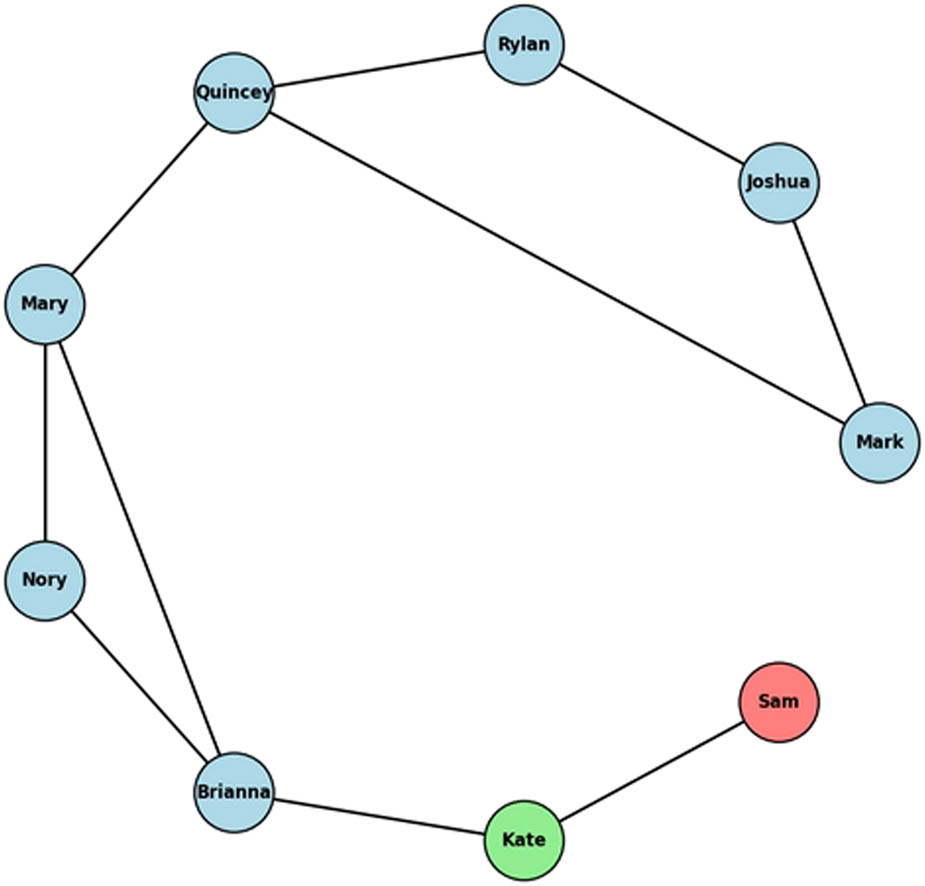
Figure 2
Sociogram of Example Path Matrix in Circle Layout.
Source: Author’s contribution.
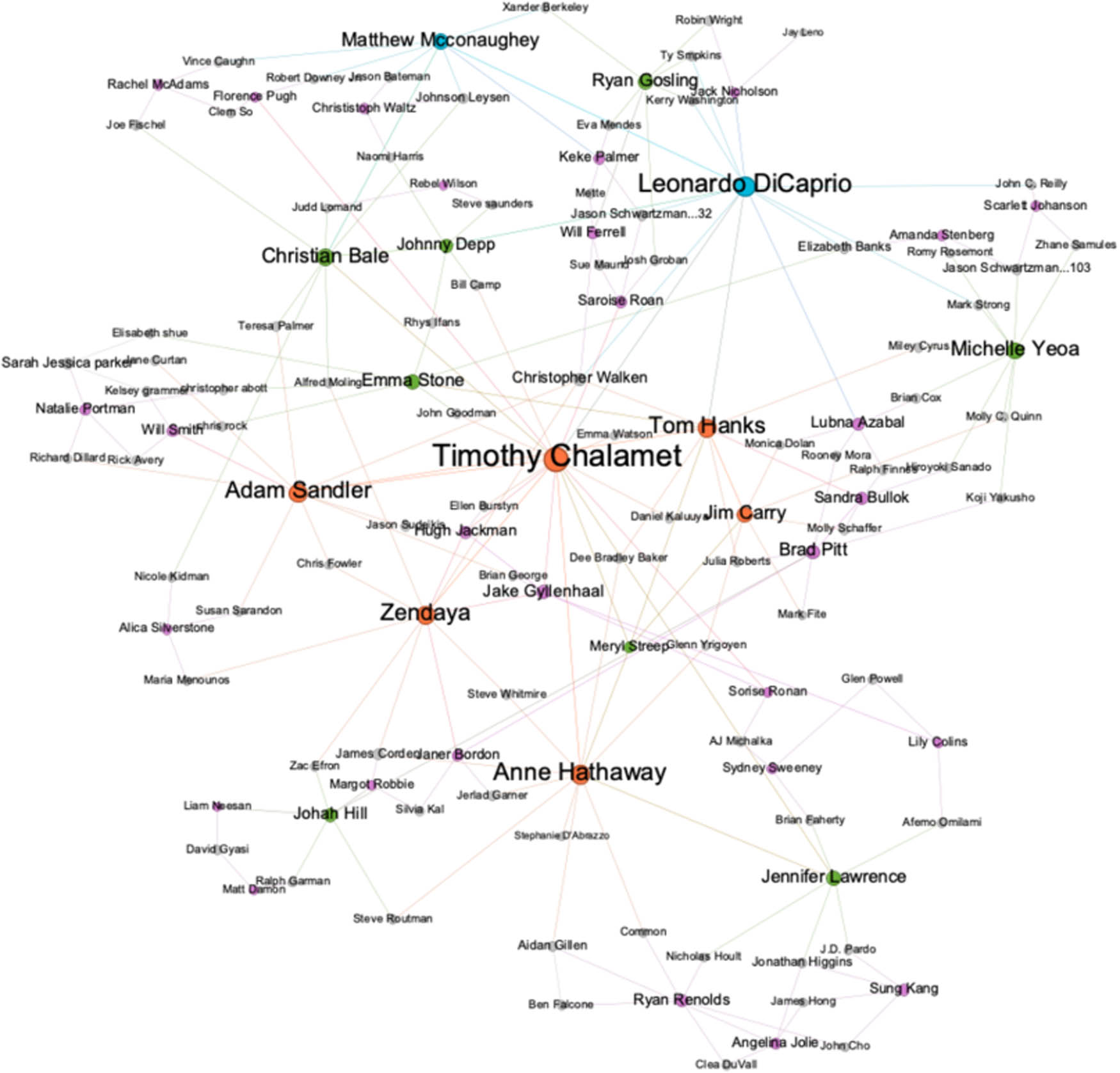
Figure 3
Example Overall Actor Sociogram Combining Sociogram Matrices from All Groups. Note. This type of result for a given class can be used to discuss actor preferences of the current class (i.e., actor preferences and network positions would vary by class, and by year), how sociograms and sociomatrices represent the same data, and how such data can be combined.
Source: Author’s contribution.
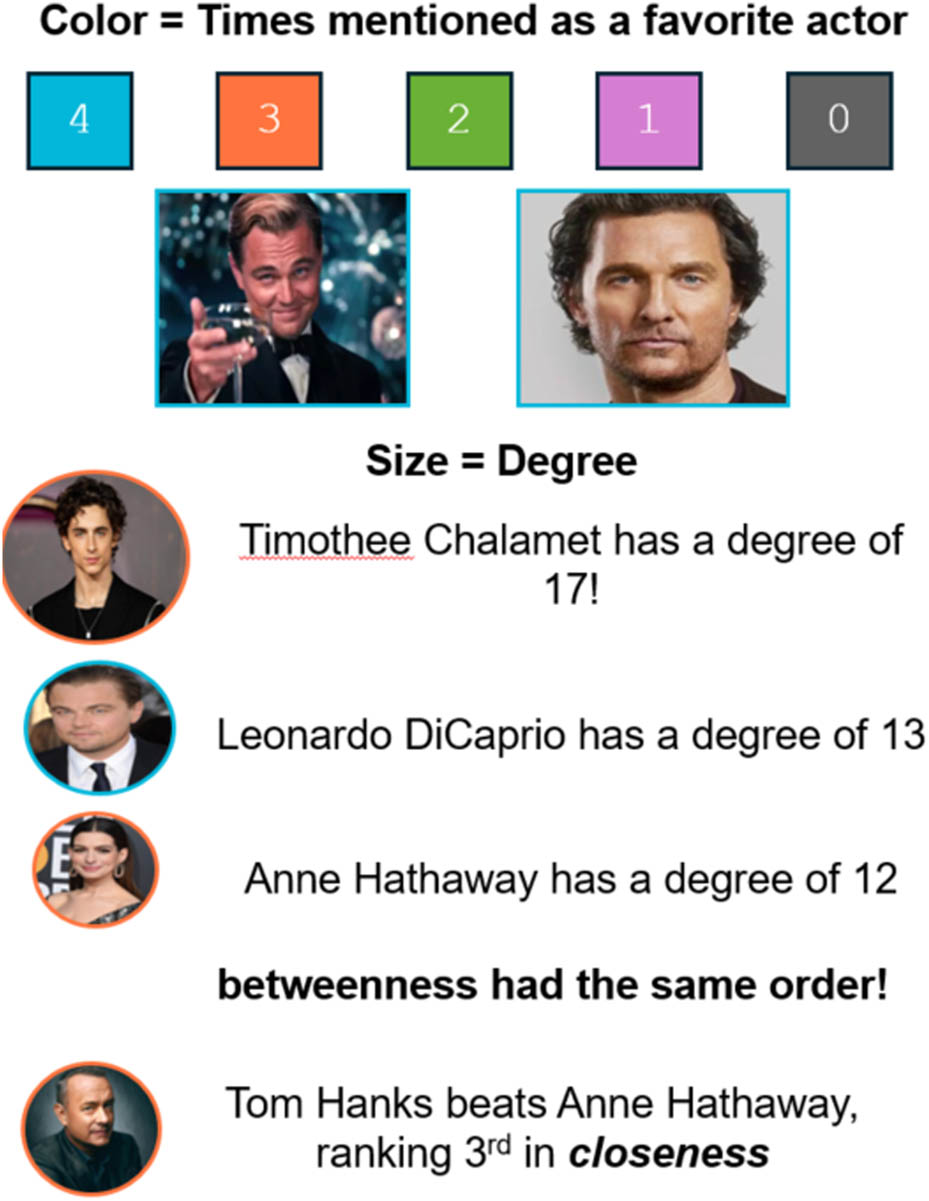
Figure 4
Brief Summary of Centrality Scores for the Most Frequently Listed Actors/Actresses, Computed from Combined Sociomatrices in Figure 3.
Source: Author’s contribution.