
INTRODUCTION
Predatory publishing is becoming an increasingly serious challenge for science and society worldwide owing to the scale and the scientific, economic and social impacts of this phenomenon. This issue has been acknowledged by major international actors, prompting them to take action to combat it (COPE, 2019; UNESCO, 2021; IAP, 2022; European Commission, 2022; ISC, 2023, etc.).
Researchers from low- and middle-income countries are among the most affected, with estimates suggesting that they constitute the target group for approximately 75% of predatory journals (Callaghan & Nicholson, 2020). In the Republic of Moldova, this phenomenon has also gained traction. In over half of the publicly funded research projects, predatory publications have been identified (Cuciureanu, 2025a). More concerning is the fact that many university professors, PhD supervisors and other academics who shape the behaviour of young researchers have also engaged in this practice (Cojocaru et al., 2022).
At the same time, the perspectives of scholars and researchers on predatory journals and conferences are rarely documented; their experiences remain largely untold (IAP, 2022, p. 36). However, such perspectives are essential for formulating appropriate policy responses. To date, no study has been conducted in the Republic of Moldova to examine researchers’ attitudes towards this phenomenon. For these reasons, we aimed to conduct a survey within the academic community of the Republic of Moldova to gather local researchers’ perspectives and personal experiences, identify the causes and motivations for publishing in predatory journals and conferences and assess the level of awareness regarding the risks of predatory publishing and its perceived impact on careers and scientific integrity.
In light of the above, the present study seeks to answer the following research questions:
RQ1: What is the level of awareness among Moldovan researchers regarding predatory journals and conferences?
RQ2: What are the personal experiences of Moldovan researchers with predatory publishing, including both journals and conferences?
RQ3: What factors contribute to Moldovan researchers’ engagement with predatory publishing outlets?
RQ4: How do Moldovan researchers perceive the impact of predatory publishing on academic integrity, career progression and national science policy?
RQ5: What measures and policy interventions do researchers in Moldova recommend to prevent and address predatory publishing practices?
LITERATURE REVIEW
The phenomenon of predatory journals represents a global threat, with the increasing number of such publications jeopardising the integrity of scientific communication (Shrestha, 2020). These outlets typically exploit unsuspecting researchers, particularly those unaware of the consequences of publishing in such venues (Clark & Thompson, 2017).
At their core, predatory journals seek to circumvent established academic publishing standards by omitting or imitating the peer-review process. They publish high volumes of content in exchange for processing fees, which vary depending on the journal, with the primary aim of maximising profit. Operating under a pay-to-publish model, these publishers prioritise revenue over scientific integrity, often lacking rigorous editorial oversight and ethical transparency (Richtig et al., 2019; Clark & Thompson, 2017). Their deceptive legitimacy is reinforced through mimicry – adopting names similar to reputable journals, using professional-looking websites and listing fabricated editorial boards.
This strategy has been found to be particularly effective in targeting early-career researchers, who may not be equipped to recognise predatory outlets (Clark & Thompson, 2017; Cuciureanu, 2025b). Such practices enable the dissemination of low-quality research, eroding trust in scientific communication systems (Six-Means, 2021; O’Rorke et al., 2024; Izabal, 2024).
Much of the current literature focuses on defining characteristics and historical development of predatory journals, aiming to increase awareness and provide tools for avoidance (Beall, 2012; Dadkhah & Bianciardi, 2016; Dadkhah et al., 2016; Eriksson & Helgesson, 2018; McLeod et al., 2018; Salehi et al., 2019). Other studies delve into levels of awareness among researchers, motivations behind choosing such outlets and personal experiences with predatory publishing (Bagues et al., 2019; Salehi et al., 2019).
In environments where quantity is favoured over quality, these journals thrive. Recent analyses of performance-based university funding systems in Central and Eastern Europe further illustrate how institutional frameworks emphasising publication output can unintentionally encourage researchers to pursue rapid, and at times lower-quality, publishing routes (Plaček et al., 2024). In countries like the Czech Republic and Slovakia, funding mechanisms tied to research metrics have reshaped academic behaviour, often prioritising quantity over quality and placing younger scholars at a disadvantage. Researchers facing publication quotas or tenure evaluations may resort to predatory outlets to meet institutional benchmarks (Alrawadieh, 2020; Martinio et al., 2024). The appeal of quick publication and indexing frequently conceals the absence of genuine peer review. As Cuciureanu (2025b) notes, this dynamic can compromise scholarly credibility and individual reputation.
This vulnerability is even more pronounced in highly competitive fields like medicine and dentistry, where academic progress hinges on publication output. In the UK, for instance, dental trainees are under significant pressure to publish peer-reviewed articles to qualify for speciality training (O’Rorke et al., 2024). Slow turnaround times in reputable journals and limited mentorship only heighten early-career researchers’ susceptibility to deceptive invitations (Martinio et al., 2024).
According to Martinio et al. (2024), several factors shape global attitudes towards academic publishing: pressure to publish rapidly, the normalisation of predatory practices and inconsistent implementation of research ethics. High rejection rates in reputable journals, alongside promotion and tenure requirements, exacerbate the problem. Alrawadieh (2020) emphasises the importance of awareness-building and revisiting academic criteria as key strategies to curb the spread of unethical publishing models.
While initially perceived as an issue affecting inexperienced scholars or those from developing countries, predatory publishing has evolved into a global threat. Its growth is particularly not only evident in oil-rich countries, but also among prestigious institutions in the USA and Europe, where even senior academics have been misled or have knowingly engaged with such publishers (Moher et al., 2017; Cobey, 2017). The InterAcademy Partnership (IAP) (2022) warns that underestimating the scale of this threat – often dismissed by elite institutions – may have inadvertently contributed to its proliferation.
Widespread concern is also reflected in international surveys. The IAP (2022) found that 80% of 1,800 researchers from 112 countries view predatory journals and conferences as a significant threat to professional integrity. Awareness levels vary by field, affiliation, rank, experience and country development level.
Among medical researchers in countries like Germany, Austria and the USA, awareness levels ranged from 50% to 70%, with literature being the primary source of information. Half of these respondents could identify a predatory journal (Richtig et al., 2019; Kharumnuid & Singh Deo, 2022). More experienced researchers and academic faculty were better equipped to assess journal quality than clinical staff (Swanberg et al., 2020; Maurer et al., 2021). Key decision factors include journal reputation, impact factor, peer-review procedures and indexing (Salehi et al., 2019; El Bairi et al., 2023; Richtig et al., 2019). Institutional ranking also plays a role, particularly regarding open-access publishing (Conlogue et al., 2022).
In response to these trends, recent scholarship advocates for stronger institutional and policy interventions. Martinio et al. (2024) call for national and international agencies to maintain registries of deceptive journals, develop validation tools and educate researchers. Similarly, the IAP (2022) underscores the importance of systemic reforms that bolster editorial transparency and accountability.
Debates have also emerged concerning the blurred boundaries between legitimate and potentially problematic publishing practices. Multidisciplinary Digital Publishing Institute (MDPI), despite indexing in Scopus and Web of Science, has drawn criticism for high acceptance rates, short review cycles and an overwhelming number of special issues. A bibliometric analysis of Moldovan authors’ publications in MDPI journals revealed a post-2019 spike, raising concerns about editorial quality and peer-review rigour (Țurcan & Cuciureanu, 2024). This highlights the need for institutional policies that differentiate efficient open-access platforms from compromised outlets.
The highest levels of concern are observed in low- and middle-income regions, including South Asia, Latin America, and sub-Saharan Africa. Compared to European Union (EU) respondents, a higher percentage (50%–90%) in these areas lacked awareness of what constitutes a predatory journal or the consequences of publishing in one (Hebrang Grgić & Guskić, 2019; Kamal, 2024; Wali et al., 2025).
One survey showed that over 87% of researchers cited lack of awareness as the main reason for submitting to predatory journals (Elliott et al., 2022). In other studies, around 30% published based on colleague recommendations or email solicitations and 10% after conference invitations – often without clear criteria for identifying predatory practices (Kurt, 2018; Cobey et al., 2019). Young and underexperienced researchers remain particularly vulnerable due to institutional pressure to publish and faster (Kurt, 2018; Martinio et al., 2024).
Overall, there remains a limited understanding within the academic community about the operational models of predatory journals. Addressing this issue requires multifaceted strategies: targeted education for students and junior researchers, reevaluation of promotion and credentialing standards and the implementation of robust institutional policies (Alrawadieh, 2020; Martinio et al., 2024). Only through coordinated efforts at multiple levels can the academic world hope to resist the spread of these unhealthy publishing practices.
Taken together, these findings emphasise the need for a multifaceted response – from individual awareness to institutional accountability – to preserve the integrity of scientific publishing in an increasingly complex and competitive academic environment. Future studies should continue to examine the institutional dynamics that incentivise predatory publishing and explore scalable solutions tailored to different academic contexts.
MATERIALS AND METHODS
Research Design
The study employs a quantitative, descriptive and exploratory approach, aiming to investigate the perceptions, knowledge and experiences of researchers in the Republic of Moldova concerning the phenomenon of predatory publishing. An online survey was conducted using a standardised questionnaire, facilitating the collection of comparable data from a wide sample of respondents.
Ethical Considerations
The research was conducted in accordance with the ethical principles applicable to social science research. Participation in the study was voluntary, and informed consent was obtained electronically on the first page of the questionnaire. Participants were informed about the purpose of the study, the voluntary nature of their involvement, their right to withdraw at any time and the assurance that all collected data would be treated confidentially and anonymously. The questionnaire was administered using the SurveyMonkey platform, which facilitated the implementation of technological measures to protect participants’ identities. Incomplete responses were included in the analysis only if they extended beyond the sociodemographic section.
Population and Sampling
The target population comprised researchers, doctoral students, PhD supervisors and other members of the academic community in the Republic of Moldova. According to data from the National Bureau of Statistics available at the time of data collection, the estimated population consisted of approximately 7,000 individuals, including 1,504 doctoral students, 35 postdoctoral researchers, 2,584 researchers and 3,600 individuals categorised as management, academic research and teaching staff in higher education institutions.
Participant recruitment was conducted using a mixed strategy that included direct email contact, institutional dissemination and promotion via social media. In total, invitation messages were sent to approximately 1,700 potential respondents, selected from the National Agency for Quality Assurance in Education and Research (ANACEC) database, public lists of PhD supervisors, registers of confirmed doctoral degrees (2020–2024) and the personal contacts of the research team. A snowball sampling method was also employed, encouraging respondents to share the questionnaire within their own professional networks. Invitations were dispatched in stages through personalised emails, social media messages, official announcements and public posts. The distribution of the survey was accompanied by a brief description of the study’s objectives, as well as information regarding the voluntary and anonymous nature of participation.
Participants’ Characteristics
To ensure appropriate contextualisation of the results, the sociodemographic profile of the 539 respondents who completed the questionnaire validly was analysed (see Table 1).
Tab. 1:
Demographics of survey participants.
| Variable | Level | Frequency (n) | Percentage (%) |
|---|---|---|---|
| Gender | Female | 333 | 61.8 |
| Male | 206 | 38.2 | |
| Academic stage | PhD student | 105 | 19.5 |
| Early-career researcher (0–10 years of research experience) | 67 | 12.4 | |
| Mid-career researcher (10–20 years of research experience) | 128 | 23.8 | |
| Advanced career researcher (more than 20 years of research experience) | 226 | 41.9 | |
| Other | 13 | 2.4 | |
| Scientific title | Doctor habilitat | 87 | 16.1 |
| Doctor | 327 | 60.7 | |
| No scientific title | 125 | 23.2 | |
| Scientific field | Natural sciences | 74 | 13.7 |
| Engineering sciences and technologies | 54 | 10.0 | |
| Medical sciences | 69 | 12.8 | |
| Agricultural sciences | 9 | 1.7 | |
| Economic sciences | 64 | 11.9 | |
| Social sciences | 98 | 18.2 | |
| Humanities | 171 | 31.7 |
The gender distribution indicates a higher level of female participation in the survey, which partially reflects recent trends towards increased female representation in research, particularly within certain academic fields.
The breakdown by academic career stage reveals a predominance of respondents with substantial professional experience, which may influence their level of awareness and the views expressed regarding the phenomena examined in the survey.
Most of the participants held a PhD, while nearly one quarter did not possess any academic title. The gender distribution shows that women were more numerous among those without a scientific title and those holding a PhD, whereas men were proportionally better represented among habilitated doctors.
Respondents hailed from all major scientific fields, with most participants active in the social sciences and humanities, suggesting a heightened interest in scientific integrity within these domains. This may be linked to the specific publishing practices in these fields, where the distinctions between legitimate and predatory journals are often more nuanced and the pressure to publish is frequently intensified. Simultaneously, Science, Technology, Engineering and Mathematics (STEM) disciplines were also well represented, allowing for a comparative analysis of perceptions across fields with differing paradigms and editorial practices.
Research Instrument
The questionnaire was developed following a review of similar international tools (e.g. IAP, 2022) and was adapted to fit the national context and the objectives of the study. It was organised into thematic sections, comprising a total of 33 questions, of which 29 directly addressed the issue of predatory publishing, while four were sociodemographic questions. Most items were closed-ended, featuring multiple-choice options and five-point Likert scales, supplemented by a few open-ended questions designed to elicit qualitative insights.
Before the actual survey, the questionnaire was piloted with a group of 10 experts from Information Society Development Institute (IDSI) and ANACEC to evaluate the clarity of the wording, relevance of the items and the overall feasibility. Based on the feedback received, the instrument was refined and internally validated. The final version was implemented on the SurveyMonkey platform, with an estimated average completion time of 20–25 min.
Data Collection
Data were collected between 31 January and 7 March 2025. In total, the questionnaire was accessed by 670 individuals. Of these, 539 provided complete or partially relevant responses, resulting in a valid response rate of 80.4%. This is considered a high response rate, as rates between 60% and 70% are generally deemed acceptable to ensure external validity (Craig & Egerton-Warburton, 2013). This is particularly notable in the context of online social research, where the global average response rate is significantly lower, at approximately 44.1% (Wu et al., 2022).
Data Analysis
In the initial stage, the collected data were analysed using the built-in analytical tools available on the SurveyMonkey platform. This enabled the generation of automatic descriptive statistics (frequencies and percentages), graphical representations and filtering for response segmentation. These functionalities proved useful for a preliminary and rapid assessment of response trends.
For a more comprehensive analysis and the preparation of research findings, all responses were exported into Excel format. This phase involved additional calculations, consistency checks and the creation of customised graphs. The analysis primarily utilised descriptive statistics, including absolute and relative frequencies, means and percentage distributions, which were appropriate for the item types. Open-ended responses were thematically coded to identify recurring patterns and significant perspectives, thereby enhancing the interpretation of the quantitative results.
As not all questions were answered by every respondent, the total number of responses varies from one item to another. For each item analysed, the number of respondents who provided answers is explicitly indicated.
RESULTS AND DISCUSSION
Awareness and knowledge of predatory publishing
To answer the first research question (RQ1), we analysed respondents’ awareness of predatory publications and events, as well as the sources through which they learned about this phenomenon.
The survey results indicated a relatively high level of awareness among researchers in the Republic of Moldova regarding the existence of predatory publications. Specifically, 85.3% of respondents reported that they had previously heard of the term ‘predatory journals’, while 68.5% were familiar with the concept of ‘predatory conferences’ (see Figure 1). This discrepancy suggests a greater visibility of predatory journals in public and academic discourse compared to the more subtle and recently theorised phenomenon of pseudoscientific conferences.
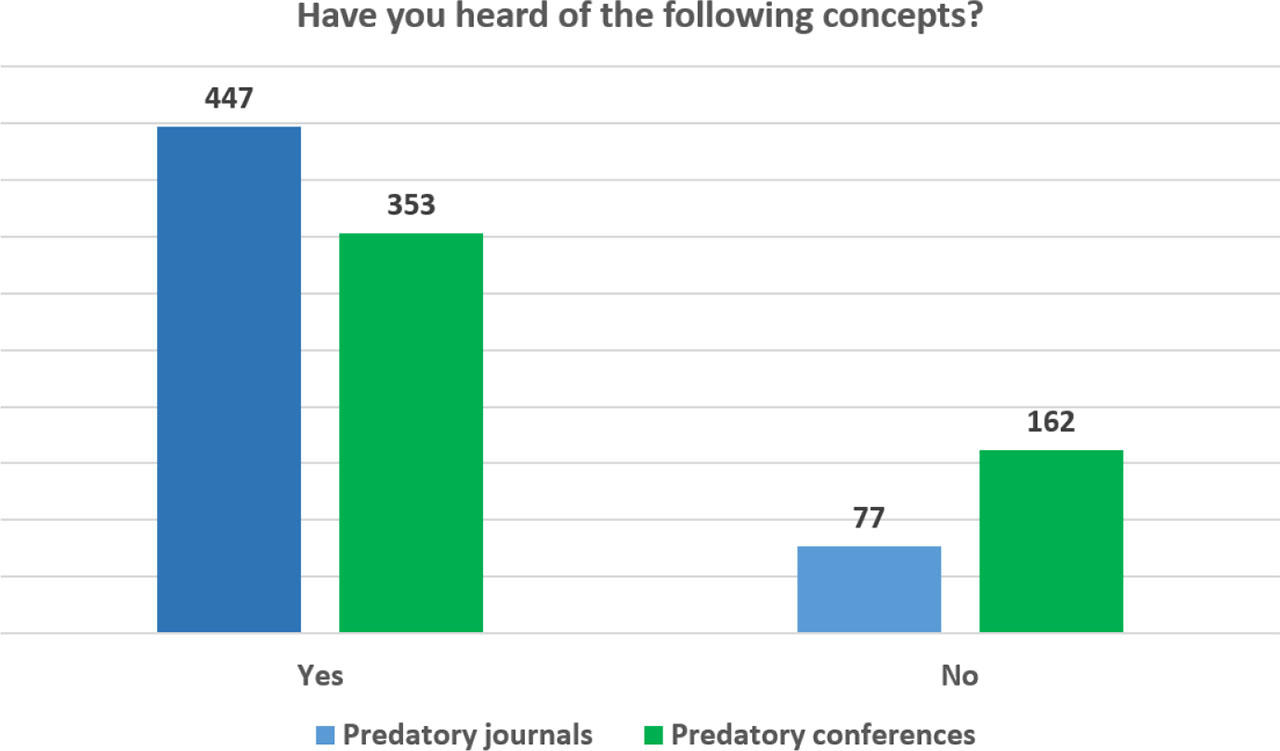
Fig. 1:
Familiarity of Moldovan researchers with the concepts of predatory journals and conferences (n = 524).
Source: Own elaboration based on the survey results.
Analysis by career stage revealed a clear trend: awareness increases with academic seniority. Among researchers at an advanced career stage, 91% reported familiarity with predatory journals, compared to 72.7% of doctoral students. A similar pattern was observed regarding predatory conferences; only 48% of PhD candidates were familiar with the concept, in contrast to 75.8% of senior researchers (see Table 2).
Tab. 2:
Knowledge of predatory journals and conferences.
| Academic stage | Predatory journals | Predatory conferences | ||||||||||
|---|---|---|---|---|---|---|---|---|---|---|---|---|
| Yes | No | Total | Yes | No | Total | |||||||
| n | % | n | % | n | % | n | % | n | % | n | % | |
| PhD student | 72 | 72.7 | 27 | 27.3 | 99 | 18.9 | 47 | 48.0 | 51 | 52.0 | 98 | 19.0 |
| Early-career researcher | 55 | 83.3 | 11 | 16.7 | 66 | 12.6 | 39 | 60.9 | 25 | 39.1 | 64 | 12.4 |
| Mid-career researcher | 106 | 85.5 | 18 | 14.5 | 124 | 23.4 | 90 | 73.8 | 32 | 26.2 | 122 | 23.7 |
| Advanced career researcher | 203 | 91.0 | 20 | 9.0 | 223 | 42.7 | 166 | 75.8 | 53 | 24.2 | 219 | 42.5 |
| Others | 11 | 91.7 | 1 | 8.3 | 12 | 2.3 | 11 | 91.7 | 1 | 8.3% | 12 | 2.3 |
| Total | 447 | 85.3 | 77 | 14.7 | 524 | 100 | 353 | 68.5 | 162 | 31.5 | 515 | 100 |
This phenomenon is not unique to researchers in the Republic of Moldova. The findings are consistent with results reported in the international literature. For instance, a study conducted by Kharumnuid and Singh Deo (2024) in India revealed that 41.2% of respondents were unaware of the existence of predatory journals, despite the regulatory framework established by the University Grants Commission Consortium for Academic Research and Ethics list. Similarly, a study undertaken in Croatia found that nearly 90% of researchers could not confidently define what constitutes a predatory journal (Hebrang Grgić & Guskić, 2019).
The fact that nearly one-third of respondents were unfamiliar with the phenomenon of predatory conferences – particularly among doctoral students and early-career researchers – highlights a systemic vulnerability. These findings warrant the introduction of targeted educational measures, such as incorporating training on publication ethics into doctoral programmes, developing institutional guidelines for selecting publishing venues and actively engaging university libraries in information literacy initiatives.
An analysis of the sources through which respondents learned about predatory journals and conferences revealed a diversity of both formal and informal channels (see Table 3). The most frequently cited sources were professional networks and colleagues, indicating that peer discussions play a crucial role in raising awareness of the issue. Consequently, informal, peer-to-peer dissemination appears to be a primary means of information transfer in the absence of well-established institutional frameworks.
Tab. 3:
Sources of information on the existence of predatory journals and conferences reported by respondents (n = 524).
| How did you find out about predatory journals or conferences? | n | % |
|---|---|---|
| Through colleagues | 191 | 36.5 |
| Through professional networks | 194 | 37.0 |
| Training courses or workshops organised by ANACEC | 150 | 28.6 |
| Training courses or workshops organised by other organisations | 63 | 12.0 |
| During a scientific presentation or conference | 82 | 15.7 |
| From information material provided by my institution | 98 | 18.7 |
| Through news, press articles or academic blogs | 161 | 30.7 |
| Through direct personal experience | 92 | 17.6 |
| Recommendations from librarians | 43 | 8.2 |
| From websites or lists dedicated to the prevention of predatory journals (e.g. ‚blacklists’) | 75 | 14.3 |
| From the ANACEC website | 133 | 25.4 |
| From the IBN website | 48 | 9.2 |
| Discussions in ethics or scientific review committees | 62 | 11.8 |
| I have not heard about it | 60 | 11.5 |
| Other | 17 | 3.2 |
Other frequently mentioned sources included news media, press articles, academic blogs, as well as training sessions or workshops organised by ANACEC and the agency’s official website. These latter sources highlight ANACEC’s active engagement in educating the academic community, while the presence of media and online academic platforms reflects both public interest in the subject and their potential as educational tools. In contrast, institutional sources such as informational materials provided by home institutions, blacklists, bibliometric tools or librarians appear to play a more limited role.
An important observation is that 11.5% of respondents indicated they had never heard of the phenomenon, which partially corroborates previous data regarding the lack of awareness, particularly among doctoral candidates and early-career researchers.
The role of various sources through which Moldovan researchers become aware of predatory publishing reflects patterns identified in other studies. For instance, research conducted by Cohen et al. (2019) in the biomedical field revealed that official sources – such as blacklists and libraries – were seldom consulted. Similarly, the Croatian study emphasised the limited involvement of librarians in educating users about predatory publishing, with fewer than 10% of respondents indicating that they had received such information from librarians (Hebrang Grgić & Guskić, 2019).
Almost half of the respondents (49.2%) perceived the phenomenon as either frequent (35.7%) or very frequent (13.5%) within their own academic fields, indicating a significant presence of predatory journals and conferences in the national academic landscape. Only a marginal proportion believed that such entities do not exist at all (3.6%), while a further 9.2% considered them to be ‘very rare’. This perception aligns with findings from the global survey conducted by the IAP, in which over 80% of researchers regarded predatory practices as either a serious problem or an emerging concern in their respective countries (IAP, 2022).
Notable differences were observed in perceptions across academic disciplines (see Figure 2). For instance, in the medical sciences, approximately 61% of participants reported that predatory journals or conferences occur ‘frequently’ or ‘very frequently’. In contrast, only 52% of those in engineering and technology shared this view, with 26% considering such occurrences to be ‘very rare’ or ‘non-existent’. Within the humanities, a significant proportion of respondents (46.7%) characterised the phenomenon as ‘occasional’, while a further 27.5% described it as ‘frequent’, suggesting that these practices are perceived as widespread even in fields with differing editorial traditions.
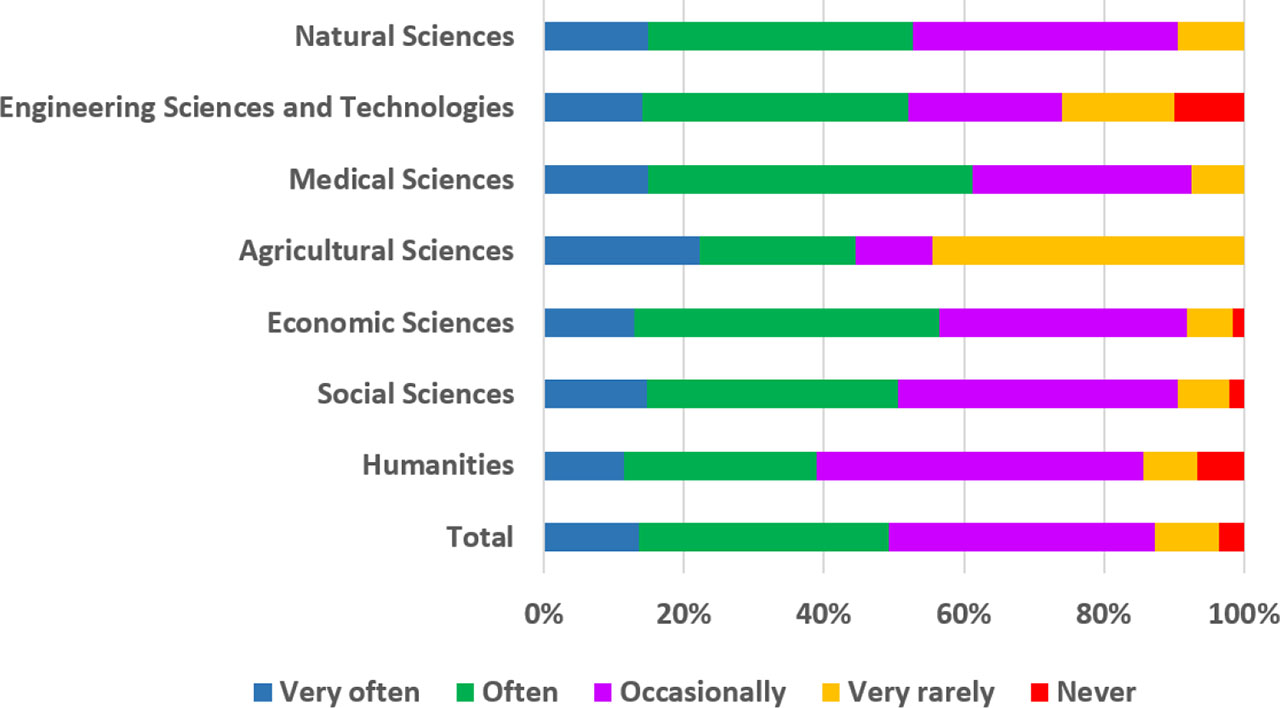
Fig. 2:
Respondents’ views on the prevalence of predatory journals and conferences in their research field (n = 524)
Source: Own elaboration based on the survey results.
For comparison, a study conducted in Zimbabwe (Jingura et al., 2023) revealed that predatory journals are disproportionately more prevalent in the social sciences, where validation standards and publication pressures differ from those in the hard sciences. Nicholas et al. (2023) also emphasised that early-career researchers in the humanities and social sciences tend to perceive predatory conferences as more common compared to their peers in STEM disciplines and often exhibit uncertainty when distinguishing between legitimate and fraudulent publishing.
However, the study conducted by Cohen et al. (2019) in the biomedical field revealed that 30% of surveyed authors had unknowingly published in predatory journals, indicating a systemic vulnerability even in disciplines with rigorous peer-review standards. The systematic review by Elliott et al. (2022) further demonstrated that perceptions of the prevalence of predatory journals vary significantly between countries and disciplines, with a higher incidence in fields that have limited access to editorial resources or scientific mentorship.
Regarding respondents’ confidence in their ability to recognise a predatory journal or conference, the distribution of responses revealed a heterogeneous picture. Most participants indicated that they felt capable of identifying such entities, while a quarter admitted to lacking sufficient information to make this distinction (see Table 4). When examining these data by academic title, a clear correlation emerged between academic qualifications and confidence in recognition ability. The proportion of well-informed respondents among habilitated doctors was approximately 2.5 times higher than that among those without a scientific title. The significant number of respondents without a doctoral title who expressed a need for more information underscores the necessity for targeted educational interventions aimed at early-stage researchers.
Tab. 4:
Opinion on the knowledge to recognise a predatory journal or conference (n = 524).
| Scientific title | Yes, I feel well informed | To a certain extent | No, I need more | Total | ||||
|---|---|---|---|---|---|---|---|---|
| % | n | % | n | % | n | % | n | |
| Doctor Habilitatus | 35.6 | 31 | 48.3 | 42 | 16.1 | 14 | 16.6 | 87 |
| Doctor | 21.6 | 68 | 54.3 | 171 | 24.1 | 76 | 60.1 | 315 |
| No scientific title | 13.9 | 17 | 50.0 | 61 | 36.1 | 44 | 23.3 | 122 |
| Total | 22.1 | 116 | 52.3 | 274 | 25.6 | 134 | 100.0 | 524 |
Survey participants were asked to select all features they associated with predatory journals or conferences. The results demonstrated a coherent recognition of traits commonly linked to these unethical editorial practices. The most frequently cited indicator was the unusually short duration between manuscript submission and acceptance, followed by the absence or superficiality of the peer-review process (see Table 5). Furthermore, over half of the respondents identified broad and appealing journal titles, overly general scientific scopes and a lack of indexing in relevant databases as warning signs.
Tab. 5:
Respondents’ views on the main characteristics of a predatory journal or conference (n = 524).
| Characteristics | n | % |
|---|---|---|
| Lack of or mimicry in manuscript evaluation (review) | 316 | 60.3 |
| Rapid manuscript acceptance and publication times | 327 | 62.4 |
| Unjustified publication or participation fees | 245 | 46.8 |
| Attractive, general, mimicry names | 266 | 50.8 |
| The editorial board and scientific committee are not functioning effectively and are often misrepresented | 215 | 41.0 |
| Broad scientific disciplines | 264 | 50.4 |
| Suspiciously high frequency of publication | 185 | 35.3 |
| Aggressive recruitment of authors, editorial board members and scientific committee members | 195 | 37.2 |
| Lack of indexing in major databases | 263 | 50.2 |
| False or inadequate bibliometric metrics | 208 | 39.7 |
| Lack of adherence to standards for conference proceedings and published articles | 181 | 34.5 |
| The website and its published materials are of low quality | 184 | 35.1 |
| Blacklisting of predatory pseudoscientific publishers | 208 | 39.7 |
| Other | 11 | 2.1 |
This perception aligns with findings from other research. For instance, the study conducted by Marar et al. (2023) among health researchers identified similar indicators as definitive of predatory publishing: the absence of rigorous peer review, unrealistically short editorial timelines and a lack of transparency regarding indexing or fees. The IAP report explicitly highlights mimicry – through misleading titles, fictitious editorial boards and promises of rapid publication – as deliberate strategies employed by predatory publishers to attract researchers, particularly those in the early stages of their careers or from regions with fragile academic infrastructures (IAP, 2022).
Although the findings indicate a relatively high level of declarative information literacy, these results, when considered alongside other survey data – such as the low levels of confidence in personal identification abilities – suggest that theoretical understanding does not always translate into practical competence. Therefore, future training for researchers should not only encompass information about the characteristics of the phenomenon, but also include practical exercises, such as case study analyses and the use of validated guidelines (e.g. Think. Check. Submit.). Academic institutions should develop checklists, infographics and interactive materials in collaboration with university libraries.
Survey participants were also invited to express their opinions regarding the level of awareness within the academic community in the Republic of Moldova concerning the existence and risks associated with predatory journals and conferences. The results (n = 524) indicated a predominantly critical perception: only 2.7% of respondents considered this community to be ‘very well informed’ and 11.8% rated it as ‘well informed’. The majority of respondents perceived the level of awareness as ‘moderate’ (37%) or ‘low’ (33.8%), while 5.7% believed the community was ‘not informed at all’.
These findings reinforce other survey data, which suggest that only around 20% of respondents feel personally well informed about predatory journals and conferences, while over 91% believe that better training is necessary for researchers in this area. This perceived lack of information aligns with conclusions drawn in the existing literature. In a qualitative study conducted across eight countries, Nicholas et al. (2023) found that early-career researchers tend to view predatory publishing as marginal or irrelevant to their field, reflecting an academic culture in which education on publication integrity is often implicit or absent. In another study, Cohen et al. (2019) reported that numerous biomedical authors had published in predatory journals without realising it, indicating systemic deficiencies in both editorial guidance and researcher education.
When asked whether there is a need for improved awareness raising among researchers regarding predatory journals and conferences, the data revealed an almost unanimous consensus: 91.2% of participants (n = 524) stated that further educational and awareness measures are necessary, while only 1.5% considered such efforts unnecessary. These results strongly support recognition of a systemic deficit in training related to scientific publishing integrity. The very small proportion of respondents who do not see the need for such instruction indicates that this phenomenon is already perceived as a genuine threat to research quality. This perceived need for training is also echoed in other studies. For instance, Marar et al. (2023) emphasised the necessity of a validated tool to assess researchers’ understanding of predatory publishing, particularly due to the absence of systematic training. This consensus aligns with findings from other international studies (e.g. Swanberg et al., 2020; Hashish et al., 2024), which indicate that the majority of researchers, including those with considerable experience, express a need for structured educational interventions to navigate the increasingly complex landscape of academic publishing more effectively. The findings support the proposal to incorporate responsible publishing modules into doctoral and postdoctoral training, as well as to develop institutional guidelines for identifying predatory publications. Consequently, the IAP report recommends providing professional training for doctoral students and early-career researchers, focusing on the standards of peer-reviewed scientific publishing and the identification of characteristics associated with predatory journals and conferences as a preventive measure (IAP, 2022).
Researchers’ experiences with predatory publishing
To explore RQ2, we examined Moldovan researchers’ self-reported experiences of publishing in predatory journals and attending pseudoscientific conferences. The majority of respondents believed they have not published with predatory publishers. However, notable differences emerged in their experiences with predatory journals compared to predatory conferences. Researchers from the Republic of Moldova appear significantly more confident that they have not participated in predatory conferences, with 74% stating they had not, while 20% were unsure. In contrast, when it comes to publishing in predatory journals, only 62% reported that they had not, while 24% were uncertain. This finding is somewhat paradoxical, considering that 32% of respondents indicated they had not heard of the concept of predatory conferences, compared to only 15% regarding predatory journals.
The proportion of individuals who believed they have published with predatory publishers was relatively small, ranging from 6% for conferences to 14% for journals. Notably, survey participants were more forthcoming than in comparable studies conducted in other countries. For instance, in a Croatian survey, 94.6% of respondents stated they had never published in a predatory journal, with only 5.4% expressing uncertainty. This is despite 30.4% acknowledging their unfamiliarity with the concept of predatory publishing and 58.9% having heard of it without possessing in-depth knowledge (Hebrang Grgić & Guskić, 2019). Similarly, in a survey involving researchers from Turkey and Ukraine, only 5.5% admitted to having published in predatory journals (Gupta, 2020). In contrast, surveys conducted in other regions revealed that the proportion of individuals acknowledging publication in predatory journals was comparable to, or even higher than, that found in our study: 11.9% in Jordan (Khabour, 2024), 13% in Africa (Kabulo et al., 2022), 15.2% in the United Arab Emirates (Ibrahim et al., 2022) and up to 30.1% among authors publishing in potentially predatory biomedical journals (Cohen et al., 2019). In a global survey, 14% of respondents reported having published in predatory journals or participated in predatory conferences (IAP, 2022), a proportion similar to that found in the Republic of Moldova.
Among the 69 individuals who acknowledged publishing in predatory journals, the following groups were overrepresented as a percentage of respondents in each respective category:
– men (11% more than women);
– mid-career researchers (16% more than doctoral students);
– holders of the degree of Doctor Habilitatus (14% more than those without a scientific title) and
– researchers in medical sciences (20% more likely to publish than those in the humanities). This contrasts with findings from the IAP global survey, which indicated that humanities scholars were more likely to report publishing in predatory journals (IAP, 2022, p. 44).
It is important to note that these figures reflect the level of recognition and awareness regarding the publication in predatory journals, rather than the actual prevalence of this phenomenon within each category. Of the 69 individuals surveyed, 17 also admitted to participating in predatory conferences. Among those who knowingly published in predatory journals, men, researchers with over 20 years of experience and scholars from the humanities and natural sciences were predominant.
One hundred and nineteen individuals reported uncertainty regarding whether they had published in predatory journals. Among this group, men were overrepresented, comprising 21% more than women. In addition, doctoral students were 10% more prevalent than early-career researchers, individuals without scientific titles were 5% more common than those holding the Doctor Habilitatus degree and researchers in the humanities outnumbered those in medical and engineering sciences by 12%.
In this context, it is important to highlight that women reported significantly greater certainty regarding their non-publication in predatory journals. The low percentage of certain categories among those who acknowledged publishing in predatory journals is more likely attributable to a lack of awareness about predatory publishing. For instance, when categorised by academic status, only 1% of doctoral students reported having published in predatory journals, while 25% were uncertain; a similar pattern was observed among respondents without a scientific title (5% and 25%, respectively) and in the field of humanities (6% and 29%, respectively). Interestingly, of those who were uncertain about whether they had published in predatory journals, approximately 35% stated they had not participated in predatory conferences. This suggests a better understanding of what constitutes a predatory conference compared to a predatory journal, despite the fact that overall, fewer respondents were familiar with the term ‘predatory conference’.
Motivations behind publishing with predatory publishers
To answer RQ3, we examined factors influencing respondents’ decision to publish in predatory journals and conferences. The majority of individuals who had published with predatory publishers were unaware of the illegitimate nature of these outlets (see Fig. 3). Among those who suspected or were aware of the nature of these outlets, the most frequently cited motivation was the pressure to publish for career advancement, with over 84% agreeing or strongly agreeing in the case of journals and over 64% for conferences. This result aligns with evidence from other other Central and Eastern European contexts, where performance-based funding and metric-driven assessment have intensified publication pressure and sometimes incentivised questionable publishing practices (Plaček et al., 2024).
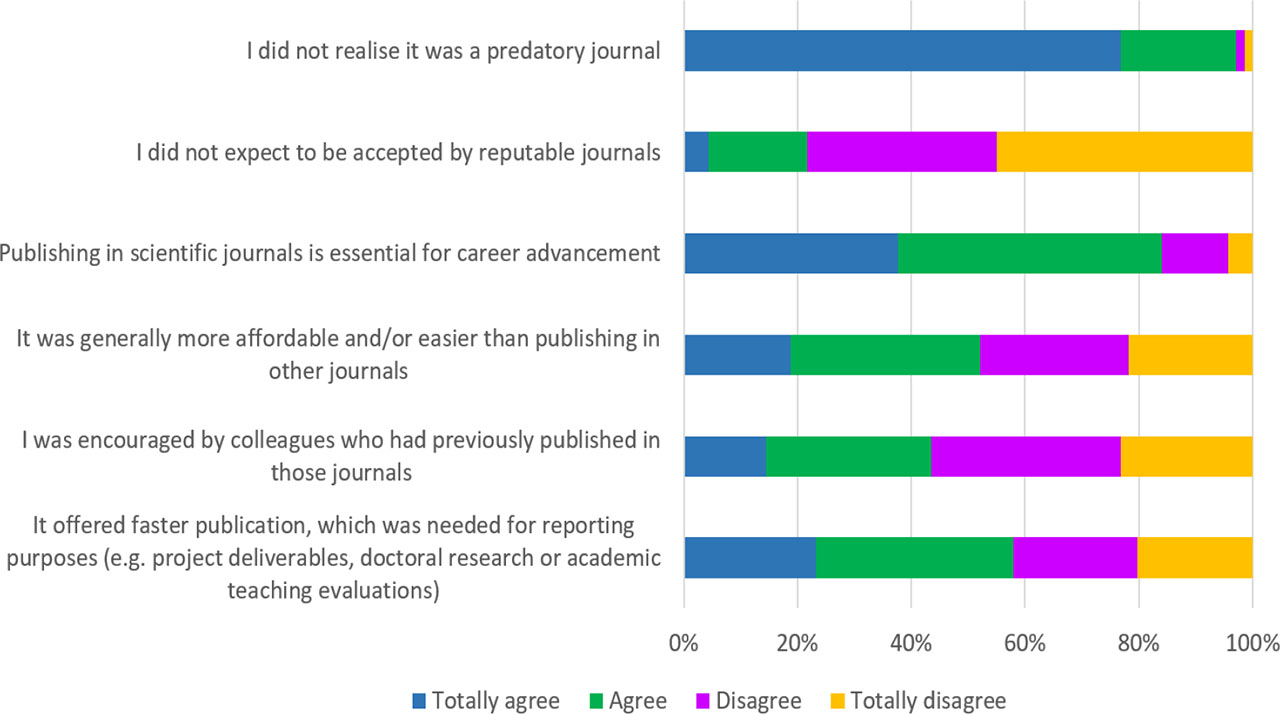
Fig. 3:
Respondents’ reasons for publishing in a predatory journal (n = 69)
Source: Own elaboration based on the survey results.
This was followed by the need for rapid publication, often driven by reporting obligations in projects, doctoral studies or academic teaching roles (54% for journals and 57% for conferences). Other motivating factors included the lower costs and/or ease of publishing (52% for journals and 50% for conferences). For predatory conferences, an additional significant motive was encouragement from colleagues who had previously participated (nearly 54%). Fear of rejection by reputable journals or major conferences was not a significant factor among Moldovan researchers, with 48% (journals) and 55% (conferences) disagreeing or strongly disagreeing with this reason.
The perceptions of the impact of publishing in predatory journals among the respondents (n = 38) were distributed as follows:
– Ten respondents reported no significant impact (in some cases, publication had occurred long ago, before the journals were widely recognised as predatory, and the authors had subsequently avoided them).
– Two respondents noted a positive impact (one response stated: ‘The paper received more citations. I was invited to join an international professional association’).
– Twenty-six respondents perceived a generally negative impact, although six of them described it as a useful learning experience that helped them understand what constitutes a predatory journal and how to recognise such practices (e.g. ‘Now I can identify predatory invitations to publish or participate’). Seven respondents expressed disappointment (e.g. ‘Disappointed, wasted money, regret for not researching before submitting’), while six mentioned wasted resources (e.g. ‘Time wasted and data lost’).
The perceptions of Moldovan researchers largely align with those of the 132 respondents in the global IAP survey, which highlighted the following professional and personal impacts: negative sentiment, no impact, behavioural change, loss of academic knowledge, acquisition of awareness/understanding and waste of time, energy and/or money (IAP, 2022, p. 44).
When considering all the survey participants (not only those who had published in predatory outlets), a lack of education and awareness regarding predatory publishing was identified as the most influential factor, with over 91% of respondents agreeing strongly, moderately or to some extent with this assertion. Career advancement pressure was cited by over 58% of respondents as a contributing factor, while 25% disagreed or agreed only to a limited extent.
When selecting from a predefined list of potential reasons, lack of knowledge remained the most significant factor (see Table 6), highlighting severe issues regarding academic, ethical and informational literacy. This rationale is frequently reported in the literature (Kurt, 2018; Cobey et al., 2019). For example, a survey of biomedical authors found that 18.3% selected potentially predatory journals based on ‘superficial’ criteria, including ‘reputation of the editor’, ‘familiar journal name’, ‘well-formatted manuscript submission platform’, ‘journal based in the USA’ or ‘papers already published in the journal by US and German scientists’ (Cobey et al., 2019).
Tab. 6:
Reasons why researchers may choose predatory journals or conferences.
| Reasons | n | % |
|---|---|---|
| Lack of knowledge about their predatory nature | 418 | 83.9 |
| Desire to have a paper accepted and presented quickly | 352 | 70.7 |
| Need to meet requirements for conference participation and journal publication for career advancement and activity reporting | 304 | 61.0 |
| Lower costs for participation and publication | 282 | 56.6 |
| Encouragement from colleagues or superiors to participate and publish | 99 | 19.9 |
| Other reasons | 11 | 2.2 |
| Total options selected (not unique respondents) | 1466 |
Other systemic drivers include the promise of rapid publication, pressure to advance in one’s career and lower publication costs. These findings are consistent with observations in other national contexts characterised by quantitative evaluation systems, fragile institutions and/or limited funding, such as India and Nigeria (Kurt, 2018). Indian researchers, for example, often cite the pressure placed on early-career academics to publish as one of the principal causes of publishing in predatory journals (Seethapathy et al., 2016).
Peer or supervisory encouragement appears to play a limited role, which may indicate relative autonomy in decision-making or underreporting of informal network influence. Based on the analysis of both quantitative and qualitative data, the most significant underlying factor behind Moldovan researchers’ engagement with predatory publishing is the pressure imposed by the national research evaluation system. This performance-oriented environment rewards publication quantity over quality, especially in contexts such as doctoral progress, research funding eligibility and academic promotion. In the absence of rigorous institutional guidance, training or support, researchers – particularly early-career academics – may view predatory outlets as efficient, low-risk solutions to meet institutional benchmarks. The findings show that this structural incentive framework outweighs other potential motivators such as peer influence or cost considerations.
Of the 11 additional opinions expressed, some emphasised the insignificance of quality publications in career promotion processes (‘As long as people without academic qualifications are promoted to administrative positions in universities, quality publications do not matter’). Others pointed to broader systemic issues in Moldova’s academic publishing environment: ‘inadequate research requirements’, ‘lack of institutional support for identifying trustworthy journals and conferences’ and ‘limited experience in the publishing process and lack of scientific mentorship’.
Attitudes towards predatory publishing
In relation to RQ5, we investigated respondents’ attitudes towards intervention solutions – both educational and public policy – to reduce vulnerability to predatory publications.
The need to combat predatory publishing. The majority of respondents (over 88%) believed that predatory publishing practices must be addressed. Among those advocating for action, the top reasons for prioritisation (based on strong agreement) included:
protection of personal and academic reputation (76.6%),
safeguarding the integrity of research (76.2%),
maintaining public trust in science (71.7%),
protecting the reputation of academic institutions (67.8%),
preventing the dissemination of unsubstantiated or false information that could have harmful consequences (64.5%) and
ensuring the rigour of evidence-based policymaking (57.8%).
Combining strong and moderate agreement responses, each of the six reasons received over 94% endorsement. This indicates a realistic perception of the consequences of inaction, comparable to or even more pronounced than that reported in other surveys (IAP, 2022; Elliott, 2022). Open-ended responses also emphasised the importance of tackling predatory practices to improve the quality of research in Moldova (e.g. ‘We must avoid reaching the tipping point where nonsense becomes the norm and inspiration is drawn from Google or social media platforms’).
Respondents’ views on the main obstacles to tackling predatory publishing and conference participation were fairly evenly divided between internal (academic community-related) and external (science policy and publishing system) factors. The most significant challenges identified (full and moderate agreement) were the commercial interests of the publishing industry (85%) and the difficulty many researchers faced in distinguishing predatory journals and conferences from legitimate ones (76%). Two further challenges, positioned at the intersection of policy and community practice, also garnered strong support: the lack of recognition of predatory publishing as a serious issue (70%) and the widespread infiltration of predatory practices among researchers (62%).
Two additional concerns received support from the majority: policymakers’ perceived unwillingness or incompetence to implement meaningful change (48%) and the excessive demand for predatory outlets (47%). This hierarchy of perceived challenges largely mirrors the results of the IAP global survey (IAP, 2022), with two notable deviations: difficulty in identifying predatory publications (20% higher in our survey) and demand for such publications (12% higher). This again highlights the need for scientific literacy interventions.
Of the listed challenges, only one received disagreement from the majority: too many colleagues publishing in predatory journals and conferences (Fig. 4). This finding is consistent with other responses and suggests that Moldovan authors are relatively less influenced by the behaviour of their peers in their publishing decisions. This contrasts with data from other countries: for example, one survey found that 33% of respondents had been suggested by colleagues to publish in a predatory journal (Cobey et al., 2019). Overall, the most significant perceived obstacles are structural rather than individual.
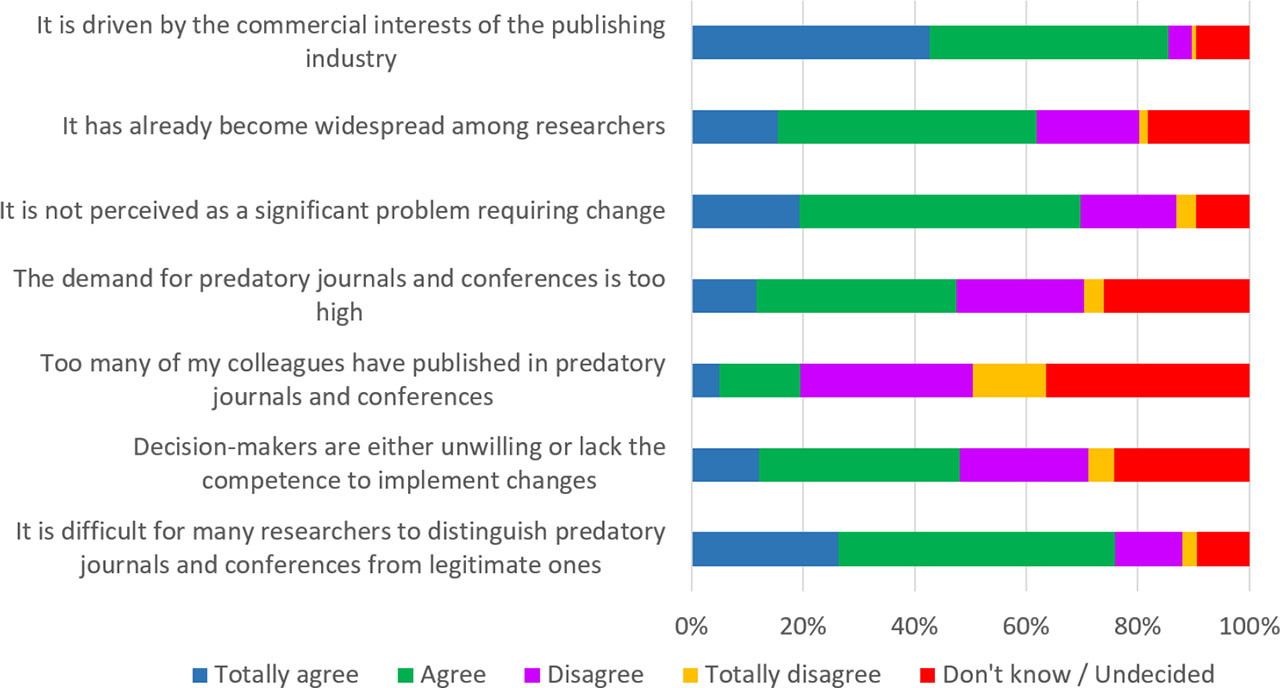
Fig. 4:
Key challenges and barriers to addressing predatory practices, as perceived by respondents (n = 482).
Source: Own elaboration based on the survey results.
Two critical concerns emerge from the open-ended responses: the declining quality of scientific research at the national level and that certain officially recognised journals and conferences in the Republic of Moldova reportedly adopt predatory practices. One respondent noted: ‘Some accredited journals and scientific conferences in Moldova display characteristics specific to predatory publishers. Their accredited status creates a perception of normality among researchers, reducing their vigilance regarding the quality of foreign publications’.
When it comes to viable solutions for countering predatory practices, educational interventions related to scientific literacy are considered especially important. This includes developing training materials for students, doctoral candidates and researchers at all stages of their academic careers, training institutional staff responsible for research management and providing formal educational programmes within academic institutions. These findings are consistent with those of other studies – for example, over 88% of surveyed researchers in Jordan expressed a willingness to attend a training course on identifying predatory journals (Khabour, 2024).
Nevertheless, the most widely supported solution was providing checklists for identifying legitimate and/or predatory journals and conferences, which received full agreement from around two-thirds of respondents (see Fig. 5). This reflects a limited understanding of the complexity of predatory publishing, characterised by thousands of predatory publishers and their evolving tactics, as well as a preference for simple, low-effort solutions over sustained efforts in information gathering and critical evaluation.
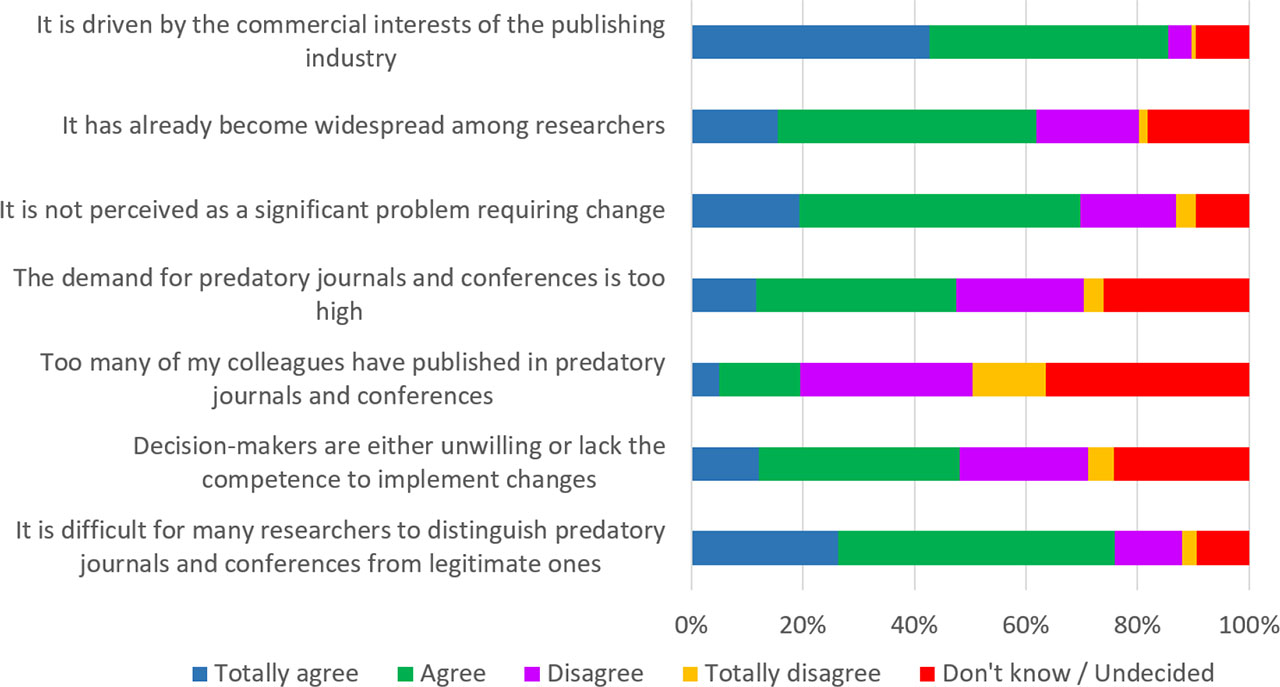
Fig. 5.
Respondents’ views on viable solutions to counter predatory practices (n = 482)
Source: Own elaboration based on the survey results.
The next two most favoured solutions are policy related: (1) publicly condemning and discouraging predatory journals and conferences and (2) reforming research assessment and career advancement criteria. These preferences suggest that the academic community is open to reforming research evaluation practices by reducing the influence of quantitative metrics, in line with the principles advocated by the Coalition for Advancing Research Assessment.
The following tier of proposed solutions relates to reforming the scholarly publishing system. Notably, administrative solutions involving restriction or prohibition enjoy significant support. These include halting the ‚author-pays’ publishing model (77% in agreement or strong agreement) and limiting article processing charges (73%). This again points to a preference for straightforward solutions, which may reflect residual attitudes inherited from the Soviet-style administrative system. However, there also appears to be a contradiction between certain preferences, which may indicate an incomplete understanding of how Open Science operates. For instance, the same level of support is given to proposals to eliminate the ‘author-pays’ model – essential to open access publishing – and to adopt open peer-review mechanisms – integral to open science. Finally, 74% of respondents supported the creation of independent, non-commercial, international bodies to accredit or certify journals. This further reinforces the preference for clear-cut, administratively managed solutions, revealing a degree of mistrust in the national institutions responsible for formulating and implementing science policy.
Most open-ended responses emphasise the need for science policy measures that improve the national research system as a whole. This would help to reduce the phenomenon of predatory publishing. Examples include: ‘The entire functioning of the scientific research system in the Republic of Moldova must be restructured’, ‘A high level of research and researchers automatically deters such “predators”’ and ‘Emphasis should be placed not on quantity, but on quality, honesty, integrity, and societal benefit – not on publications for the sake of career advancement’. A smaller number of respondents expressed the view that effective mitigation of predatory publishing would also require sanctions against those involved, such as ‘There should be adequate personal accountability’.
Lack of measures regarding predatory publishing. Most respondents agreed that, if left unchecked and unchallenged, predatory publishing practices will not naturally disappear over the next 10–20 years. Around half of the respondents believed that such practices will persist, but will not pose a significant problem for the majority. Nevertheless, in the absence of dedicated interventions, respondents foresee the following consequences over the next two decades:
– predatory journals and conferences will contribute to misinformation in public policy, potentially causing serious harm (87% agree or strongly agree);
– they will infiltrate and undermine the entire research enterprise (79%) and
– they will exacerbate the research gap between high- and low-income countries (68%).
These response rates are 5%–10% higher than those reported in the IAP global survey (IAP, 2022, p. 49), suggesting a heightened level of concern among Moldovan researchers. At the same time, however, some inconsistencies emerge – these three projected consequences are difficult to reconcile with the notion that the phenomenon would remain largely insignificant for the majority.
The most optimistic respondents, who believed that predatory publishing would either disappear or remain inconsequential if left unaddressed, were more frequently found in the following categories (as a percentage of respondents in each group):
– women (5% more than men),
– senior researchers with over 20 years’ experience (20% more than PhD candidates),
– habilitated doctors (19% more than PhD holders) and
– researchers from engineering and humanities fields (in contrast to those from the social sciences and agriculture, who were the least optimistic).
Open-ended responses also suggested that the evolution of predatory publishing depends on the quality of national research systems. For example, one respondent said, ‘This phenomenon spreads mainly in weak research environments’, and another said, ‘Predatory journals are the ones that publish poor-quality research. That is the core problem’.
Sanctioning authors who publish with predatory publishers. Although some institutions responsible for assessing research quality and identifying predatory outlets are considered important in tackling the issue in Moldova, the question of sanctions remains unresolved. Only 19.5% of respondents considered sanctioning authors who publish in predatory journals or attend predatory conferences to be a viable solution, while 44.4% disagreed. A balanced transition is advocated, focusing on education rather than punishment. However, there is a relative consensus around excluding such publications from performance evaluations and career advancement procedures – an indirect, institutional form of sanction.
Among the groups more inclined to support sanctions (as a percentage of respondents in each category), we noted the following: men (6% more than women), senior researchers (6% more than mid-career researchers), habilitated doctors and individuals without an academic degree (5% more than PhD holders) and researchers from the natural sciences and humanities (10%–14% more than those in the social sciences and economics). Opposition to sanctioning was strongest among researchers in engineering and agricultural sciences, with more than half expressing disagreement. Interestingly, despite being among the most optimistic about the long-term impact of inaction, senior researchers and habilitated doctors are also more likely to support punitive measures, possibly reflecting their concern about maintaining academic standards. In contrast, female researchers and those in engineering have more consistent views, considering the threat posed by predatory publishing to be low and sanctioning to be unnecessary.
Strengths and limitations of the study
Given the structure of the academic community in the Republic of Moldova, the collected data provide a broadly representative picture in terms of gender distribution, career stages and academic titles, as well as the range of research fields covered. Furthermore, the survey incorporated a wide variety of questions, many of which were adapted from or based on the instrument developed for the global study conducted by the IAP. This enables comprehensive thematic coverage and the potential for international comparative analysis.
Nevertheless, the study is subject to several limitations inherent in its design. Firstly, the sample is non-random and the open distribution of the questionnaire implies an unavoidable degree of self-selection. This tends to attract respondents who are already interested in or familiar with the topic, which may limit generalisability of the findings. Secondly, predominantly using social media and digital channels to disseminate the survey may have excluded certain segments of the academic community, particularly those who are less active online or have limited access to such platforms.
Another potential source of bias is that the survey was conducted with the support of ANACEC, an institution that had previously organised information sessions and webinars on predatory journals and conferences. It cannot be ruled out that some respondents may have answered in alignment with the messages conveyed at these events, or in accordance with what they perceived to be the ‘correct’ stance of the organisers – a phenomenon known in the literature as response bias shaped by source perception or prevailing social norms. These distortions often occur when respondents tailor their answers to what they perceive as socially acceptable or institutionally desirable, particularly in contexts where the survey’s source is associated with authority or institutional agendas (Kim, 2001).
In addition, as the study is cross sectional and relies on self-reported data, further limitations to validity are introduced. Responses reflect perceptions at a single point in time and do not enable changes in attitudes or behaviour to be tracked over time. Furthermore, self-assessments of knowledge or the ability to identify predatory journals may be subject to distortion, including the tendency to provide socially desirable responses.
An important contextual consideration is the well-documented methodological challenges specific to the post-Soviet space, where institutional caution and conformist tendencies may influence survey responses. Research has shown that, in such environments, respondents may refrain from expressing candid views, particularly on topics perceived as sensitive or normatively charged (Willerton & Sigelman, 1991; Dadabaev, 2017).
Therefore, while the data offer valuable insights into awareness and perceptions of predatory publishing in Moldova’s academic environment, they must be interpreted with caution, taking into account the sociological complexity of the context and the above-outlined methodological constraints.
CONCLUSIONS
The findings provide meaningful answers to the research questions related to awareness levels, personal exposure, motivating factors, perceived impacts and preferred interventions. Although most researchers are aware of the concept of predatory journals, their ability to identify and avoid such outlets is limited, especially among early-career researchers, who lack adequate training, institutional support and access to reliable guidance. Awareness is thus declarative rather than functional, and institutional responses remain insufficient.
A notable proportion of respondents were uncertain whether they had engaged with predatory outlets, indicating both conceptual confusion and the blurred boundaries between legitimate and deceptive publishing. Disciplines and career stages differ in vulnerability, with early-career researchers, humanities scholars and those without academic titles showing higher levels of uncertainty.
The main drivers behind engagement are systemic rather than individual: performance-based evaluation systems, pressure for rapid publication and the absence of structured education in publishing ethics. These structural pressures, exacerbated by insufficient mentorship and weak institutional policies, create an environment conducive to the proliferation of predatory practices.
Most respondents perceive predatory publishing as harmful to academic credibility, public trust and research quality. While punitive measures remain controversial, there is strong support for excluding predatory outputs from evaluation processes. The preferred solutions focus on educational initiatives, reform of assessment systems and clearer publishing guidelines. There is also a notable preference for administrative approaches, such as eliminating article Article Processing Charges or creating whitelists and blacklists of journals.
Evidence from this study indicates that the principal catalyst of predatory publishing in Moldova is the structural pressure generated by a metric-driven research evaluation system that rewards publication quantity over quality. When combined with limited publishing literacy, weak institutional oversight and scarce training opportunities, this pressure compels researchers, especially at early career stages, to resort to questionable publication venues.
The Moldovan case aligns with international trends in terms of awareness gaps, early-career vulnerability and structural drivers. However, the intensity of concern and preference for administrative interventions reflect a deeper fragility of institutional safeguards. As in other contexts with limited publishing infrastructure and rigid evaluation systems, combatting predatory practices in the Republic of Moldova cannot be addressed in isolation. It requires systemic reform that aligns research incentives with quality, integrity and societal value. Without such reforms, particularly in research evaluation and institutional governance, the integrity and credibility of Moldovan science remain at risk.
ACKNOWLEDGMENTS
This work was supported by a grant from the National Agency for Research and Development of the Republic of Moldova 24.80012.0807.14SE, ‘The Phenomenon of Publishing in Pseudoscientific Predatory Editions in the Academic Community of the Republic of Moldova’.
The authors gratefully acknowledge the respondents for providing valuable information and the Information Society Development Institute and the National Agency for Quality Assurance in Education and Research for support in conducting the survey.