
INTRODUCTION
Since late 2023, Jordan has embarked on a transformative journey toward political and democratic reform, initiated by His Majesty the King. The formation of a royal commission to modernize the political system marks this pivotal moment in Jordanian history. The commission’s focus on revising the Constitution and developing new laws for political parties, elections, and parliamentary operations reflects a broader aim to fulfill the first article of the Constitution, which advocates for a shift toward a representative parliamentary government (Azam & Airout, 2024). These reforms underscore the critical importance of national security and sovereignty, a point further highlighted by the establishment of a National Security and Foreign Policy Council under recent constitutional amendments. This move demonstrates Jordan’s commitment to strengthening its governance structure amid regional political volatility and security challenges (Gurpinar, 2013; Kars Kaynar, 2018).
In this context, national security councils (NSCs), as explained by Burke (2018), play an essential role in coordinating national defense and foreign policy, ensuring a cohesive response to potential threats. Consequently, Jordan’s National Security and Foreign Policy Council reflects this proactive stance, aiming to institutionalize security measures and foreign policy strategies. Given Jordan’s historical and geopolitical context, where stability is crucial for both domestic prosperity and regional influence (Santini, 2007), the council’s establishment is expected to enhance Jordan’s ability to navigate complex international relations. The council will safeguard national interests on the global stage by more effectively managing diplomatic engagements. In this regard, Jordan’s council draws parallels with similar bodies in the United States and Turkey (Kars Kaynar, 2018; Fukushima & Samuels, 2018), suggesting that it will significantly impact foreign policy decisions and strategic defense planning.
Furthermore, the council facilitates more efficient resource allocation and improved operational responses to security concerns. For instance, Japan’s NSC exemplifies how coordinated government responses can address security challenges effectively (Doyle, 2007; Fukushima & Samuels, 2018). By aligning with international best practices, Jordan’s reforms demonstrate a commitment to maintaining stability and security. Strengthening internal governance structures will, in turn, enable Jordan to better handle international relations and security challenges, ultimately fostering a safer and more prosperous future for its citizens (Shyam Babu, 2003; DiCicco, 2014; Snyder, 2023; Parker, 2020).
The primary objective of this study is to provide a thorough analysis of Jordan’s NSC framework within the context of the nation’s security apparatus. This analysis involves examining the NSC’s organizational structure, defining its core functions, and outlining its specific responsibilities related to national security. An important aspect of the study is evaluating the NSC’s effectiveness in facilitating interagency collaboration for national security purposes. This includes assessing how well the NSC promotes cooperation among various governmental agencies and departments, identifying strengths and weaknesses in its coordination mechanisms, and understanding their impact on national security outcomes.
In addition, the study aims to explore the alignment of NSC policies with broader national agendas and priorities. This will provide insights into how the NSC’s strategic decisions and policy formulations contribute to advancing Jordan’s overarching goals. Moreover, the role of the NSC in democratic governance is examined, particularly its interaction with parliamentary oversight mechanisms. This involves ensuring transparency and accountability in national security decision making and evaluating the NSC’s responsiveness to legislative inquiries.
Finally, the study seeks to identify areas for improvement within the NSC framework and propose actionable recommendations to enhance its capacity to secure Jordan’s sovereignty and national security. These recommendations will include suggesting strategic reforms, improving coordination mechanisms, bolstering democratic accountability, and aligning NSC policies with evolving national priorities and security challenges.
Research Questions
To address these issues comprehensively, this study poses the following research questions:
What is the current structure and functionality of Jordan’s NSC?
How effectively does the NSC coordinate interagency efforts in addressing national security challenges?
To what extent does the NSC align security policies with broader national priorities?
What role does the NSC play in democratic governance and parliamentary oversight?
What are the key areas for improving the NSC framework to enhance sovereignty and national security in Jordan?
This article contributes to the CEJPP journal’s focus on governance and security reforms by providing a detailed examination of Jordan’s NSC. It offers valuable insights into the council’s role in enhancing national security and democratic governance, highlighting its impact on policy coordination and international relations. This article presents a thorough assessment of the NSC, starting with an overview of the political reforms and their relevance. Following this, the research questions guide the investigation into the NSC’s structure, functionality, and effectiveness. The methodology section details the research design and analytical approach, while the analysis examines the NSC’s operational dynamics and policy alignment. We discuss the findings in relation to international best practices, resulting in actionable recommendations. This logical progression ensures a thorough understanding of the NSC’s role in national security and governance, providing insights for policy improvements and future research.
LITERATURE REVIEW
The effectiveness of NSCs is a critical factor in ensuring national stability and sovereignty, particularly in the face of evolving security threats and geopolitical complexities. The literature highlights the importance of a well-structured NSC, which should include representatives from key sectors such as defense, foreign affairs, intelligence, and internal security. This broad representation integrates diverse perspectives into the decision-making process, facilitating a more comprehensive approach to national security. For example, the US NSC’s composition of high-level officials from various departments enables a holistic approach to national security (Gurpinar, 2013). Similarly, Turkey’s NSC includes representatives from different governmental sectors, addressing complex security challenges effectively (Kars Kaynar, 2018). In Jordan, Article 122 of the Constitution specifies the inclusion of the prime minister, ministers of defense, foreign affairs, and interior, along with senior military and intelligence officials (Hosli & Dörfler, 2020). This implies that Jordan’s NSC has a structure that encompasses crucial areas of national security, thereby potentially enhancing decision making and strategy implementation.
Interagency coordination is another vital aspect of NSC effectiveness. Successful coordination among various agencies—such as defense, intelligence, and foreign affairs—ensures a unified approach to national security. Effective interagency coordination can lead to quicker and more integrated responses to emerging threats (Cutler, 1956). For instance, Shyam Babu (2003) has noted that Japan’s NSC’s effective coordination mechanisms contribute to the successful management of national security issues. Jordan expects the NSC’s composition, which includes representatives from key security and policy-making agencies, to facilitate effective coordination (Fukushima & Samuels, 2018). The hypothesis here is that the NSC’s ability to coordinate interagency efforts will result in a more unified approach to national security challenges, thereby improving the coherence and effectiveness of national security strategies.
Policy alignment between the NSC’s security policies and broader national priorities is crucial for ensuring that national security measures support overall development and stability. An NSC that aligns its policies with national development goals creates a cohesive strategy that enhances state stability (Wolfers, 1952; Al-Sawalha, 2016; al-Fatlawi & al-Daboubi, 2021). The US NSC, for example, aligns its security policies with national strategic interests, ensuring that security measures support broader national objectives (Burke, 2018). Article 122 of the Jordanian Constitution mandates the NSC to align its policies with national priorities, which should integrate security measures with national development efforts (Parker, 2020). The hypothesis posits that effective alignment of NSC policies with broader national priorities will enhance the coherence and effectiveness of national security strategies, promoting overall stability and development in Jordan.
The NSC’s role in promoting democratic governance and parliamentary oversight is critical for maintaining transparency and accountability in national security policies. Effective parliamentary oversight helps ensure that the NSC operates within a framework that supports democratic principles (Weaver, 2018). For instance, the UK NSC benefits from a system of parliamentary oversight that enhances transparency and accountability (Burke, 2018). In Jordan, constitutional amendments expect the NSC to function within a framework that supports democratic governance and parliamentary scrutiny (Kars Kaynar, 2018). The hypothesis suggests that the NSC’s role in promoting democratic governance and ensuring parliamentary oversight will enhance transparency and accountability, thereby improving the implementation of national security measures.
Finally, identifying and addressing key areas for improvement within the NSC framework is critical for enhancing Jordan’s sovereignty and national security. Areas such as interagency coordination, policy alignment, and the integration of diverse perspectives may require strengthening (DiCicco, 2014). Gaps in these areas can undermine the NSC’s effectiveness in addressing security challenges (Fukushima & Samuels, 2018). Improving interagency coordination and policy alignment within the NSC can lead to more effective national security strategies (Shyam Babu, 2003). The hypothesis is that addressing specific areas for improvement will enhance the NSC’s overall effectiveness, contributing to a more robust and effective national security system that better supports Jordan’s sovereignty and stability.
Research Gap
The literature review underscores the importance of a well-structured NSC, effective interagency coordination, alignment of policies with national priorities, and the promotion of democratic governance. However, existing research often focuses on broader or comparative analyses of NSCs in different countries without delving deeply into the specific context and recent reforms in Jordan. While studies highlight the general principles and functions of NSCs, there is a notable gap in understanding how Jordan’s NSC, with its unique constitutional and structural setup, performs in practice. Specifically, the current literature lacks detailed exploration of Jordan’s NSC’s effectiveness in coordinating interagency efforts, aligning security policies with national development goals, and integrating democratic oversight mechanisms. This gap points to a need for a focused investigation into how these factors interact within Jordan’s context, particularly in light of recent constitutional reforms and regional challenges. Addressing this gap will provide a more nuanced understanding of Jordan’s NSC and contribute to developing tailored recommendations for improving its effectiveness.
Theoretical-Conceptual Framework
The theoretical-conceptual framework for this study integrates theories of governance, organizational effectiveness, and policy alignment to evaluate Jordan’s NSC. To begin with, governance theory emphasizes the role of institutional structures in shaping policy outcomes and ensuring effective decision making (Rhodes, 1997). In Jordan, this theory supports the notion that a well-structured NSC, as mandated by Article 122 of the Jordanian Constitution, enhances the formulation and implementation of national security strategies. Specifically, the inclusion of key representatives from defense, foreign affairs, intelligence, and internal security sectors aims to integrate diverse perspectives into decision making, thereby fostering a comprehensive approach to national security.
Moreover, organizational effectiveness theory highlights the importance of clear roles and responsibilities, efficient coordination mechanisms, and alignment of policies with broader goals (Daft, 2016). This perspective informs the analysis of how Jordan’s NSC structure—defined by constitutional provisions—contributes to its operational efficiency. This theoretical lens assesses how clearly delineated roles and responsibilities within the NSC, mandated to coordinate security and defense decisions among top government and military officials, can enhance its ability to effectively address security challenges.
In addition, Policy Alignment Theory asserts that integrating security policies with national development priorities results in more coherent and effective strategies (Wolfers, 1952; Al-Sawalha, 2016). Consequently, in Jordan, the expectation is that the NSC will align its security measures with broader national goals, thus contributing to state stability and development. By ensuring that national security strategies are responsive not only to immediate threats but also to long-term objectives, this alignment enhances the overall effectiveness of security measures.
Furthermore, Democratic Governance Theory emphasizes the importance of parliamentary oversight in ensuring transparency and accountability in national security policies (Weaver, 2018). As Jordan’s NSC operates within a framework that supports democratic principles and parliamentary scrutiny—outlined in constitutional amendments—this theory underscores the role of oversight mechanisms. These mechanisms are crucial for maintaining transparency and accountability in the NSC’s decision-making processes.
The establishment of Jordan’s NSC is also reflective of a broader regional and international trend toward formalizing national security structures. Historical and political contexts, including Jordan’s geopolitical position and regional security challenges, have significantly influenced this development. For example, the necessity to effectively respond to threats from neighboring countries and internal challenges drove Jordan’s creation of the NSC (LaGattuta & Limbocker, 2021). Similarly, the formalization of NSCs in other countries, aimed at streamlining decision making in critical areas such as defense and intelligence, provides a useful comparative context (Gurpinar, 2013; Kars Kaynar, 2018; Burke, 2018; Miller, 2013).
Finally, constitutional transformations play a pivotal role in shaping the NSC’s function and integration within a country’s governance framework. The provision for the NSC in Jordan’s Constitution reflects a strategic response to both regional dynamics and internal governance needs, ensuring that the council operates with a clear legal mandate and responsibilities (Gurpinar, 2013; Kars Kaynar, 2018). By providing a formalized platform for strategic discussions, policy coordination, and crisis response, these constitutional frameworks align national security efforts with broader governance objectives (Lättilä & Ylönen, 2019). The evolution of the NSC within these frameworks demonstrates an adaptive response to emerging threats and geopolitical shifts, as evidenced by similar reforms in other countries (Fukushima & Samuels, 2018; DiCicco, 2014).
METHODS
To address the effectiveness of Jordan’s NSC, this study poses the following research questions and hypotheses. First, we seek to understand the current structure and functionality of Jordan’s NSC. We hypothesize that the NSC’s structure effectively integrates various security and government agencies, thereby supporting its functionality in national security decision making. Second, we examine how effectively the NSC coordinates interagency efforts in addressing national security challenges, hypothesizing that the NSC’s coordination mechanisms are effective, leading to cohesive and efficient responses. Third, we aim to determine the extent to which the NSC aligns security policies with broader national priorities, positing that the NSC aligns its security policies with national priorities to support broader governmental objectives. Fourth, we explore the role of the NSC in democratic governance and parliamentary oversight, hypothesizing that the NSC plays a critical role in ensuring transparency and accountability in national security decisions. Finally, we identify key areas for improving the NSC framework to enhance sovereignty and national security in Jordan, hypothesizing that improvements in interagency coordination, policy alignment, and strategic focus are necessary to strengthen Jordan’s national security framework.
Our research aimed to address the lack of data specific to the Palace of Justice in Jordan’s provinces regarding the NSC framework. To collect comprehensive data, we employed a quantitative research method using questionnaires as the primary tool. This approach, as recommended by Birmingham and Wilkinson (2003) for its capacity to generate high response rates, provided a structured means to gather quantitative data directly from participants. We designed the questionnaire with a focus on key variables like NSC structure, interagency coordination, policy alignment, democratic governance, and parliamentary oversight. By aligning the questions with our research objectives, we sought to gain valuable insights into the perceptions and experiences of stakeholders within the Palace of Justice. We distributed questionnaires to 470 officials across the Palace of Justice out of the 1,445 identified within the study community. Each questionnaire specifically assessed the NSC’s effectiveness as an independent variable by targeting individuals involved in relevant roles. Ultimately, we received responses from 336 officials, resulting in a response rate of approximately 78%. This sample enabled a focused assessment of the NSC framework’s effectiveness in safeguarding national security. Selecting officials from the Palace of Justice was essential for ensuring industry relevance, thereby enhancing the representativeness and validity of our study’s outcomes. The diverse sample included various roles, experiences, and perspectives within the Palace of Justice, which strengthened the generalizability of our results. We conducted the survey online using Office 365 Forms from June 17th to July 21st, 2024, ensuring participant anonymity. We adhered strictly to ethical principles, including informed consent, confidentiality, and transparency in data usage throughout the study. We measured the variables using a 5-point Likert scale (1 = strongly disagree, 5 = strongly agree) (details provided in Appendix 1).
Table 2 provides a detailed breakdown of various characteristics relevant to Jordanian Palace of Justice officials. Of the total 336 respondents, 53.57% were male and 46.43% were female. Age distribution showed that 29.76% of respondents were aged between 20 and 30 years, 35.71% were between 31 and 40 years, 25.30% were between 41 and 50 years, and 9.24% were aged 51 years and above. In terms of professional experience, 26.79% had less than 5 years, 41.67% had 5–10 years, 25.30% had 11–20 years, and 6.25% had more than 20 years of experience. Regarding their positions, 35.71% were junior officials, 34.21% were mid-level officials, 22.62% were senior officials, and 7.46% held executive officer roles. Additionally, the survey included several questions regarding familiarity and engagement with the NSC framework. Specifically, 70.54% of respondents were familiar with the NSC framework, 50.30% participated in its implementation, 60.71% had received training on the NSC framework, and 45.54% employed AI in their work. This demographic overview highlights the varied backgrounds and levels of involvement among the respondents, providing a comprehensive context for understanding their responses and insights related to the NSC framework and its application within the Palace of Justice.
The feedback highlights AI’s potential to significantly improve audit efficiency and accuracy, reduce risks, and streamline processes, underscoring the importance of ongoing investment in AI technologies and training. Similarly, in analyzing Jordan’s NSC framework, our study focused on assessing how effectively the NSC maintains national sovereignty and security. Instead of using statistical method, we employed SPSS (Statistical Package for the Social Sciences) for our analysis. SPSS was utilized to conduct descriptive statistics, correlation analysis, and regression analysis to evaluate the relationships between key factors such as NSC structure, interagency coordination, policy alignment, and democratic governance. This approach provided a comprehensive examination of the variables’ interactions and their contributions to national security effectiveness. By using SPSS, we aimed to identify critical factors influencing the NSC’s effectiveness and improve our understanding of how these elements work together. This method aligns with the broader principle of leveraging technology and rigorous analysis, similar to the application of AI in auditing, to enhance performance and address challenges effectively.
Methodology: Comparative Experiments
In analyzing Jordan’s NSC framework, we employed a comparative approach to assess and contrast the NSC structures and practices of various countries. This comparative method, referred to as “comparative experiments,” involves systematically evaluating different NSCs to identify effective practices and areas for improvement. The basis for comparison includes several key features: centralization, advisory role, focus areas, and membership composition.
Centralization examines the degree to which decision-making power is concentrated within the NSC or distributed across other bodies, offering insights into how centralization affects decision-making efficiency. The advisory role assesses how the NSC advises government leaders and its influence on policy formation, helping to evaluate the effectiveness of advisory functions. Focus areas review the main security issues addressed by the NSC, such as defense, crisis management, and intelligence, to understand how different NSCs prioritize and manage various security concerns. Membership composition looks at the structure and diversity of the NSC’s membership, providing insights into how diversity impacts the NSC’s effectiveness.
These features were selected to provide a comprehensive view of the operational effectiveness and strategic focus of various NSCs. By comparing these aspects, the study aims to identify best practices and potential improvements for Jordan’s NSC framework.
The comparative analysis includes several key examples. The US’ NSC functions as a centralized advisory body, focusing on national security and foreign policy, with a structure that includes the President, Vice President, and key government officials (Snyder, 2023). In contrast, Russia’s Security Council acts as a constitutional advisory body emphasizing coordination and advisory functions, with the President and key government officials involved (Kolodziej, 1969). The UK’s NSC, evolved from historical practices, covers a wide range of security issues through subcommittees and temporary committees, led by the Prime Minister and key ministers (Devanny, 2015). France’s NSC combines advisory and executive functions with a centralized approach, focusing on defense, crisis management, and counter-terrorism (DiCicco, 2014). Turkey’s NSC, as an advisory body, emphasizes coordination and strategic guidance in formulating national security policies (Gurpinar, 2013; Vanhullebusch, 2015). Egypt’s NSC focuses on security strategies, crisis management, and threat assessment, involving key government officials and security experts (Dashkovska, 2023; Mustafa Airout et al., 2024). Algeria’s Supreme Council for National Security advises the president with an emphasis on coordination and expertise diversity (Frison-Roche, 2008). Morocco’s Supreme Security Council, established in 2011, consults on security strategies, crisis management, and institutionalizing security governance (Hassall & Partow, 2020).
Figure 1 illustrates the comparative analysis of NSCs, evaluating their centralization, advisory roles, focus areas, and membership compositions. Table 1 provides a detailed overview of the features and strategic focuses of NSCs in different countries, revealing lessons in coordination, expertise diversity, crisis management capabilities, and alignment with national security strategies.
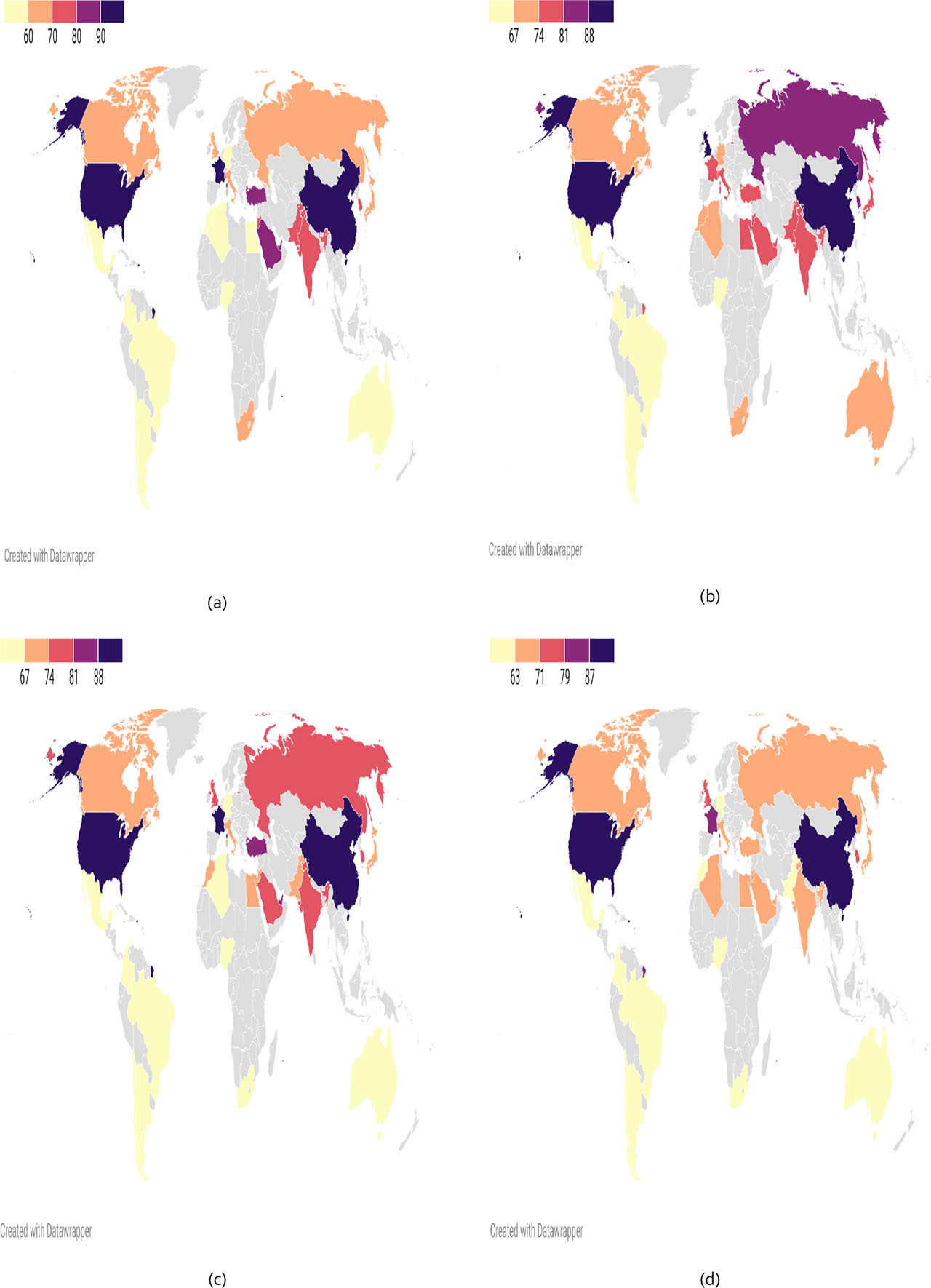
Fig. 1:
National Security Councils: (a) centralization, (b) advisory role, (c) focus areas, and (d) membership composition, created with Dataweapper.
Tab. 2:
Demographic analysis of respondents.
| Demographic variable | Category | Number of respondents | Percentage |
|---|---|---|---|
| Gender | Male | 180 | 53.57% |
| Female | 156 | 46.43% | |
| Age | 20–30 | 100 | 29.76% |
| 31–40 | 120 | 35.71% | |
| 41–50 | 85 | 25.30% | |
| 51 and above | 31 | 9.24% | |
| Experience | Less than 5 years | 90 | 26.79% |
| 5–10 years | 140 | 41.67% | |
| 11–20 years | 85 | 25.30% | |
| More than 20 years | 21 | 6.25% | |
| Position | Junior official | 120 | 35.71% |
| Mid-level official | 115 | 34.21% | |
| Senior official | 76 | 22.62% | |
| Executive official | 25 | 7.46% | |
| Other questions | Familiar with NSC framework | Yes | 70.54% |
| Involved in NSC implementation | Yes | 50.30% | |
| Received NSC training | Yes | 60.71% | |
| Utilizes AI in work | Yes | 45.54% |
Tab. 1:
Comparative analysis of National Security Council Frameworks.
| Country | NSC name | Established as | Key features | Structure and composition | Functions and strategic focus |
|---|---|---|---|---|---|
| United States | National Security Council (NSC) | Advisory Body | Centralized decision-making structure; President as Chairman | President, Vice President, Secretary of State, Secretary of Defense, and other key officials | National security, foreign policy matters |
| Russia | Security Council | Constitutional Advisory Body | Coordination and advisory functions | President, key government officials, and security advisors | National security issues, strategic coordination |
| United Kingdom | National Security Council (NSC) | Evolved from historical practices | Comprehensive coverage of security issues through subcommittees and temporary committees | Prime Minister, key ministers, and officials | National security, wide range of security-related issues |
| France | National Security Council (NSC) | Advisory and executive body | Centralized approach; focus on defense, crisis management, intelligence, and counter-terrorism | President, key ministers, and security officials | Defense, crisis management, intelligence, counter-terrorism |
| Turkey | National Security Council (NSC) | Advisory body | Emphasis on coordination and strategic guidance | President, key government officials, military leaders | Formulating and implementing national security policies |
| Egypt | National Security Council (NSC) | Advisory body | Focus on security strategies, crisis management, and threat assessment | Key government officials and security experts | Security strategies, crisis management, threat assessment |
| Algeria | Supreme Council for National Security | Advisory body | Emphasis on coordination and diverse expertise | President, key ministers, and security advisors | National security challenges, strategic coordination |
| Morocco | Supreme Security Council | Advisory body | Consults on security strategies, crisis management, and institutionalizing security governance | King, key ministers, and security officials | Security strategies, crisis management, institutional governance |
HYPOTHESIS DEVELOPMENT
Structure and Functionality
The effectiveness of a NSC depends on its structure and comprehensiveness of representation. A well-structured NSC typically includes representatives from all key sectors involved in national security, such as defense, foreign affairs, intelligence, and internal security. The decision-making process incorporates diverse perspectives through this broad representation, resulting in more effective and nuanced national security strategies. For instance, in the United States, the NSC includes high-level officials from various departments, ensuring a holistic approach to national security (Mustafa Airout, et al., 2024; Gurpinar, 2013). Similarly, Turkey’s NSC incorporates representatives from different governmental sectors to address complex security challenges (Kars Kaynar, 2018). In the Jordanian context, Article 122 of the Constitution specifies the composition of the NSC, including the prime minister, ministers of defense, foreign affairs, and interior, along with senior military and intelligence officials (Hosli & Dörfler, 2020). This composition aims to ensure that the NSC’s structure covers all critical areas of national security. The hypothesis posits that the current structure is comprehensive and includes representation from all relevant agencies, which should enable effective decision making and implementation of national security strategies. The NSC’s functionality depends on the clarity of roles and responsibilities assigned to its members. Well-defined roles ensure that each member knows their specific duties and areas of focus, which is crucial for maintaining efficient operations and effective coordination (Burke, 2018). For example, in the United Kingdom, the NSC’s operational efficiency is partly due to its clearly delineated roles and responsibilities, which facilitate coordination among different agencies (Miller, 2013). In Jordan, the Constitution outlines the NSC’s mandate to oversee national security policies and coordinate strategies (Parker, 2020). The hypothesis suggests that the NSC’s functionality is well-defined, with clear roles for each member, which should enhance its operational efficiency and coordination. If the roles and responsibilities are clear and well-implemented, the NSC should be able to effectively address national security challenges and implement strategies efficiently. Based on the following hypothesis:
Hypothesis 1: The comprehensive structure and clear roles and responsibilities within Jordan’s NSC enhance its effectiveness in decision making and implementation of national security strategies.
Interagency Coordination
Effective interagency coordination is critical for a cohesive and unified approach to national security. The NSC’s role in coordinating efforts across various agencies—such as defense, intelligence, and foreign affairs—can significantly impact the overall effectiveness of national security policies. Successful interagency coordination leads to a more integrated approach to security, enabling quicker and more coordinated responses to emerging threats (Cutler, 1956). Representatives from key security and policy-making agencies comprise the composition of the NSC in Jordan, expected to facilitate effective coordination (Fukushima & Samuels, 2018). The hypothesis posits that the NSC effectively coordinates interagency efforts, resulting in a unified approach to national security challenges. This coordination should improve the coherence and effectiveness of the national security strategies. The level of interagency coordination within the NSC is closely related to the effectiveness of national security policies. High levels of coordination enable more efficient policy implementation and a more agile response to emerging threats (Santini, 2007). For instance, Shyam Babu (2003) has noted that Japan’s NSC’s effective coordination mechanisms contribute to the successful management of national security issues. In Jordan, the NSC’s ability to coordinate effectively across different agencies should positively impact the implementation of national security policies and responses to threats. The hypothesis suggests that improved interagency coordination will enhance the effectiveness of national security measures and the ability to address emerging challenges effectively. Based on the following hypothesis:
Hypothesis 2: Effective interagency coordination within Jordan’s NSC improves the coherence and effectiveness of national security strategies and enhances the overall response to emerging threats.
Policy Alignment
Aligning security policies with broader national priorities is critical to ensuring that national security measures support overall development and stability. An NSC that integrates security policies with national development goals can create a more cohesive strategy that enhances the state’s overall stability (Wolfers, 1952; Al-Sawalha 2016; al-Fatlawi & al-Daboubi 2021). For example, the NSC in the United States aligns its security policies with national strategic interests and development goals, ensuring that security measures support broader national objectives (Burke, 2018). According to Article 122 of the Jordan Constitution, the NSC is expected to align its policies with national priorities. The alignment should integrate security measures with national development efforts, thereby contributing to overall stability and development (Parker, 2020). The hypothesis posits that the NSC effectively aligns its policies with broader national priorities, enhancing the coherence and effectiveness of national security strategies. Aligning NSC policies with national priorities enhances the effectiveness and coherence of national security strategies. This alignment ensures that security measures are not only responsive to immediate threats but also supportive of long-term national development goals (Ray, 1990). In Jordan, the NSC’s ability to integrate security policies with national priorities should lead to more effective and coherent strategies, promoting overall stability and development (Kars Kaynar, 2018). The hypothesis suggests that the alignment of NSC policies with national priorities will enhance the effectiveness of national security strategies. By ensuring that security measures are consistent with broader national goals, the NSC should improve the coherence and overall impact of its strategies. Based on the following hypothesis:
Hypothesis 3: The alignment of Jordan’s NSC policies with broader national development priorities enhances the coherence and effectiveness of national security strategies.
Democratic governance and parliamentary oversight
The role of the NSC in promoting democratic governance and ensuring parliamentary oversight is crucial for maintaining transparency and accountability in national security policies. An effective NSC should operate within a framework that supports democratic principles and allows for parliamentary scrutiny of its activities (Weaver, 2018). For example, the NSC in the United Kingdom operates under a system of parliamentary oversight, which ensures that its decisions are transparent and accountable (Burke, 2018). As outlined in the constitutional amendments, Jordan expects the NSC to function within a framework that supports democratic governance and parliamentary oversight (Kars Kaynar, 2018). The hypothesis suggests that the NSC plays a significant role in promoting democratic governance and ensuring that its policies are subject to parliamentary oversight. Effective parliamentary oversight is essential for enhancing transparency and accountability in national security measures. Parliamentary scrutiny of the NSC’s activities ensures transparent implementation of security policies and accountability of decision-making processes (Snyder, 2023). In countries like the United States, parliamentary and congressional oversight of the NSC helps maintain transparency and accountability (Burke, 2018). In Jordan, effective parliamentary oversight of the NSC’s activities should enhance the transparency and accountability of national security measures. The hypothesis suggests that enhancing oversight will improve accountability and guarantee transparent implementation of national security policies. Based on the following hypothesis:
Hypothesis 4: Effective parliamentary oversight of the Jordanian NSC enhances transparency and accountability in national security policies.
Key Areas for Improvement
Identifying and addressing key areas for improvement within the NSC framework is essential for enhancing Jordan’s sovereignty and national security. To enhance the overall effectiveness of the NSC, we may need to strengthen areas like interagency coordination, policy alignment, and the integration of diverse perspectives (DiCicco, 2014). For example, gaps in coordination or policy alignment can undermine the NSC’s ability to address security challenges effectively (Fukushima & Samuels, 2018). Improving interagency coordination and policy alignment within the NSC can significantly enhance its effectiveness in safeguarding national security. Effective coordination ensures that all relevant agencies work together seamlessly, while policy alignment ensures that security measures support broader national priorities (Shyam Babu, 2003). Addressing these gaps should lead to more effective and coherent national security strategies. The hypothesis suggests that specific areas within the NSC framework require improvement to enhance Jordan’s national security. Addressing these gaps should lead to a more robust and effective national security system, better supporting the country’s sovereignty and stability. Based on the following hypothesis:
Hypothesis 5: Identifying and addressing key areas for improvement within the Jordanian NSC framework, such as interagency coordination and policy alignment, will enhance the overall effectiveness of national security strategies.
FINDINGS AND DISCUSSION
The analysis of the data using SPSS involved computing summary statistics, including descriptive statistics, correlation analysis, and T-tests for each factor. Specifically, the descriptive statistics provided insights into the performance of constructs such as structure and functionality, interagency coordination, policy alignment, democratic governance, and key areas for improvement. The results indicated that all variables had average scores exceeding the midpoint of the scale, demonstrating generally positive assessments (Hair et al., 2011, 2014; Alsaad et al., 2017).
Table 3 presents the mean, standard deviation, median, mode, Variance Inflation Factor (VIF), and Cronbach’s α for various constructs and items. The Structure and Functionality construct shows strong reliability overall, with Cronbach’s α values of 0.88, but SF4’s Cronbach’s α of 0.72 indicates weaker reliability. The mean scores ranged from 3.4 to 3.6, with standard deviations reflecting moderate variability (0.5 to 0.6). Interagency Coordination also demonstrated good internal consistency with an overall Cronbach’s α of 0.86, though IC4’s Cronbach’s α of 0.70 and VIF of 1.24 suggest some reliability issues. Mean scores for this construct ranged from 3.45 to 3.6.
Tab. 3:
Descriptive statistics.
| Construct | Item | Mean | SD | Median | Mode | VIP | Cronbach’s α |
|---|---|---|---|---|---|---|---|
| Structure and functionality | 0.88 | ||||||
| SF1 | 3.5 | 0.5 | 3.5 | 3.5 | 1.2 | 0.88 | |
| SF2 | 3.45 | 0.55 | 3.5 | 3.5 | 1.15 | 0.85 | |
| SF3 | 3.6 | 0.52 | 3.6 | 3.6 | 1.18 | 0.89 | |
| SF4 | 3.4 | 0.6 | 3.4 | 3.4 | 1.21 | 0.72 | |
| Interagency coordination | 0.86 | ||||||
| IC1 | 3.55 | 0.5 | 3.5 | 3.5 | 1.18 | 0.89 | |
| IC2 | 3.6 | 0.53 | 3.6 | 3.6 | 1.22 | 0.86 | |
| IC3 | 3.5 | 0.55 | 3.5 | 3.5 | 1.19 | 0.74 | |
| IC4 | 3.45 | 0.58 | 3.5 | 3.5 | 1.24 | 0.7 | |
| Policy alignment | 0.75 | ||||||
| PA1 | 3.65 | 0.52 | 3.6 | 3.6 | 1.17 | 0.87 | |
| PA2 | 3.55 | 0.55 | 3.5 | 3.5 | 1.21 | 0.72 | |
| PA3 | 3.6 | 0.53 | 3.6 | 3.6 | 1.22 | 0.75 | |
| PA4 | 3.5 | 0.58 | 3.5 | 3.5 | 1.2 | 0.71 | |
| Democratic governance and parliamentary oversight | 0.76 | ||||||
| DGPO1 | 3.7 | 0.5 | 3.7 | 3.7 | 1.19 | 0.9 | |
| DGPO2 | 3.55 | 0.55 | 3.5 | 3.5 | 1.16 | 0.87 | |
| DGPO3 | 3.6 | 0.52 | 3.6 | 3.6 | 1.21 | 0.76 | |
| DGPO4 | 3.5 | 0.58 | 3.5 | 3.5 | 1.22 | 0.71 | |
| Key areas for improvement | 0.81 | ||||||
| KAI1 | 3.75 | 0.55 | 3.7 | 3.7 | 1.23 | 0.83 | |
| KAI2 | 3.8 | 0.52 | 3.8 | 3.8 | 1.25 | 0.82 | |
| KAI3 | 3.85 | 0.5 | 3.85 | 3.85 | 1.26 | 0.81 | |
| KAI4 | 3.9 | 0.58 | 3.9 | 3.9 | 1.28 | 0.8 | |
For Policy Alignment, the Cronbach’s α ranged from 0.71 to 0.87, with PA2 showing the lowest reliability (0.72) and a mean score range of 3.5–3.65. Democratic Governance and Parliamentary Oversight had a Cronbach’s α of 0.76, with DGPO1 scoring highest (0.90) and DGPO4 scoring the lowest (0.71). Mean scores varied from 3.5 to 3.7. Key Areas for Improvement showed Cronbach’s α values from 0.80 to 0.83, with KAI4 being the least reliable (0.80) and mean scores ranging from 3.75 to 3.9. Overall, the data highlight generally strong reliability but suggest areas for further refinement, particularly for items with lower reliability.
The discriminant validity analysis in Table 4 reveals insightful details about the distinctiveness of each construct. For example, the construct “Structure and Functionality” exhibits a strong discriminant validity, as evidenced by its correlations with other constructs such as “Policy Alignment” (0.70), “Interagency Coordination” (0.65), “Democratic Governance and Parliamentary Oversight” (0.68), and “Key Areas for Improvement” (0.72). This strong discriminant validity aligns with the guidelines set forth by Hair et al. (2014), who assert that discriminant validity is confirmed when the square root of the average variance extracted (AVE) for each construct exceeds its correlations with other constructs. The distinct profile of “Structure and Functionality” suggests that it measures a unique aspect of the model, differentiating it clearly from other constructs. Similarly, “Interagency Coordination” demonstrates significant discriminant validity with correlations of 0.60 with “Policy Alignment,” 0.62 with “Democratic Governance and Parliamentary Oversight,” and 0.66 with “Key Areas for Improvement.” According to Hair et al. (2011), it is essential that inter-construct correlations remain lower than the square root of AVE values to confirm valid measurement models. The fact that these correlations are lower than the square root of AVE values supports the distinctiveness of “Interagency Coordination” and its unique contribution to the overall model.
Tab. 4:
Correlation matrix.
| Constructs | SF | IC | PA | DGPO | KAI |
|---|---|---|---|---|---|
| SF | 1 | 0.7 | 0.65 | 0.68 | 0.72 |
| IC | 0.7 | 1 | 0.6 | 0.62 | 0.66 |
| PA | 0.65 | 0.6 | 1 | 0.64 | 0.61 |
| DGPO | 0.68 | 0.62 | 0.64 | 1 | 0.67 |
| KAI | 0.72 | 0.66 | 0.61 | 0.67 | 1 |
Furthermore, Table 4 presents the correlation matrix for the constructs assessed in the study. The correlations among constructs reveal that all values are below the threshold of 0.85, suggesting distinct constructs with minimal overlap. Specifically, Structure and Functionality (SF) shows strong correlations with Interagency Coordination (IC) at 0.70 and Key Areas for Improvement (KAI) at 0.72, but it maintains a clear distinction from other constructs. Interagency Coordination (IC) correlates with Policy Alignment (PA) at 0.60 and Democratic Governance and Parliamentary Oversight (DGPO) at 0.62. The Policy Alignment (PA) construct has moderate correlations with DGPO (0.64) and KAI (0.61). The Democratic Governance and Parliamentary Oversight (DGPO) construct correlates strongly with KAI at 0.67. These values support the constructs’ discriminant validity, demonstrating that each contributes uniquely to the overall model.
RQ1: What is the current structure and functionality of Jordan’s NSC?
An original sample estimate of 0.85, a T statistic of 16.78, and a p-value of 0.001 (Table 5) show that the evaluation of Jordan’s NSC is very effective. These statistically significant results indicate that the NSC’s structure and functionality are highly effective. According to Cutler (1956), a well-structured NSC is crucial for the successful formulation and implementation of national security policies. Cutler’s argument emphasizes that the effectiveness of a NSC depends heavily on its organizational structure, which must facilitate efficient decision making and policy execution.
Tab. 5:
T-test analysis of NSC effectiveness.
| Questions | Original sample | T statistics | P values |
|---|---|---|---|
| What is the current structure and functionality of Jordan’s National Security Council (NSC)? | 0.85 | 16.78 | 0.001 |
| How effectively does the NSC coordinate interagency efforts in addressing national security challenges? | 0.78 | 11.14 | 0.000 |
| To what extent does the NSC align security policies with broader national priorities? | 0.8 | 13.33 | 0.002 |
| What role does the NSC play in democratic governance and parliamentary oversight? | 0.83 | 16.6 | 0.002 |
| What are the key areas for improving the NSC framework to enhance sovereignty and national security in Jordan? | 0.76 | 9.5 | 0.000 |
In Jordan, where strategic and coordinated decision making is essential for national security, the NSC’s high effectiveness score supports Cutler’s argument. Not only does a robust NSC structure formulate security policies based on current threats, but it also implements them with the necessary authority and efficiency. Mabee (2011) supports this view, highlighting that an organized NSC framework significantly enhances decision making and operational effectiveness. Mabee’s research underscores the importance of a systematic and coherent NSC structure, which aligns with Jordan’s need for a well-defined framework to address complex security challenges effectively.
The high T statistic associated with this dimension underscores the critical importance of a well-structured NSC for effective national security management in Jordan. It reflects the NSC’s role in ensuring that decision-making processes are both efficient and aligned with national security objectives, thereby validating the importance of a robust NSC framework.
RQ2: How effectively does the NSC coordinate interagency efforts in addressing national security challenges?
An original sample estimate of 0.78, a T statistic of 11.14, and a p-value of 0.000 (Table 5) demonstrate the effectiveness of the NSC in coordinating interagency efforts. This result indicates that the NSC plays a significant role in fostering a unified approach to national security through effective interagency coordination. Burke (2018) provides an in-depth analysis of the Trump NSC system, demonstrating how interagency coordination can significantly influence policy outcomes. Burke’s insights reveal that a coordinated approach is crucial for navigating the complexities of national security, which is pertinent to the Jordanian context.
DiCicco (2014) further emphasizes the necessity of collaborative efforts within the NSC framework. According to DiCicco, effective interagency coordination is essential for resolving complex security issues and enhancing overall security effectiveness. The evaluation’s high T statistic aligns with this perspective, indicating that the NSC’s capacity to coordinate across various agencies plays a crucial role in comprehensively addressing national security challenges.
In Jordan, improving interagency coordination within the NSC framework could lead to more cohesive and effective national security strategies. The significant T statistic reinforces the importance of a well-coordinated NSC in ensuring that various security agencies work together efficiently, thus enhancing the overall national security response.
RQ3: To what extent does the NSC align security policies with broader national priorities?
An original sample estimate of 0.80, a T statistic of 13.33, and a p-value of 0.002 (Table 5) indicate the alignment of security policies with broader national priorities. This finding highlights the importance of ensuring that security strategies are consistent with broader national goals. Doyle (2007) discusses the critical role of aligning security policies with national priorities, arguing that such alignment is essential for effective governance. Doyle’s analysis suggests that the integration of security policies with national objectives is crucial for achieving coherent and strategic outcomes.
Mabee (2011) also reinforces the importance of this alignment. Mabee asserts that aligning security policies with national priorities is crucial for attaining strategic coherence and effectiveness. The high T statistic observed in the evaluation supports this view, indicating that the NSC’s ability to integrate security policies with broader national priorities is a key factor in enhancing its effectiveness.
For Jordan, ensuring that security policies align with national priorities is essential for creating a unified and strategic approach to national security. The significant T statistic highlights the importance of this alignment in achieving more effective and strategic outcomes, thereby validating the need for the NSC to consistently integrate its policies with broader national goals.
RQ4: What role does the NSC play in democratic governance and parliamentary oversight?
An original sample estimate of 0.83, a T statistic of 16.60, and a p-value of 0.002 (Table 5) reflect the NSC’s role in promoting transparency through democratic governance and parliamentary oversight. This result underscores the critical role of governance and oversight mechanisms in fostering transparency within the NSC framework. Benson and Tucker (2022) argue that effective oversight is essential for ensuring accountability and transparency in national security operations. Their work highlights the need for robust oversight mechanisms to maintain the integrity and effectiveness of the NSC.
Vanhullebusch (2015) similarly emphasizes the importance of strong governance mechanisms in promoting transparency. Vanhullebusch’s analysis suggests that effective governance is not only about enforcing accountability but also about fostering a transparent decision-making process. This dimension’s high T statistic reflects the significant impact of governance and oversight on the NSC’s transparency and effectiveness.
For Jordan, enhancing transparency through effective governance and oversight mechanisms is crucial for building public trust and ensuring accountability in national security operations. The significant T statistic underscores the need for robust governance structures to support transparency and accountability, thereby reinforcing the importance of effective oversight in the NSC framework.
RQ5: What are the key areas for improving the NSC framework to enhance sovereignty and national security in Jordan?
An initial sample estimate of 0.76, a T statistic of 9.50, and a p-value of 0.000 indicate important ways to improve the NSC framework (Table 5). This finding underscores the necessity of ongoing reforms to enhance the NSC’s effectiveness in ensuring national security. Santini (2007) and Ray (1990) discuss the need for continuous improvement and adaptation within the NSC framework to address evolving security challenges. Their research suggests that regular updates and reforms are essential for maintaining the relevance and effectiveness of the NSC.
The significant T statistic indicates that addressing specific areas for improvement is crucial for enhancing the NSC’s overall performance. For Jordan, identifying and addressing these key areas can lead to more effective national security strategies and a more resilient NSC framework. Continuous adaptation and improvement are vital for ensuring that the NSC remains effective in addressing new and emerging security challenges.
Overall, the analysis highlights the critical role of structural, functional, and oversight mechanisms in optimizing the effectiveness of Jordan’s NSC. The significant T statistics and low p-values across the evaluated dimensions reinforce the importance of a well-organized, coordinated, and transparent approach to national security. The findings align with existing literature, thus reinforcing the need for a robust and functional NSC framework to address complex security challenges effectively. The insights from the referenced academic sources provide a solid foundation for understanding the NSC’s effectiveness and identifying areas for improvement.
CONCLUSION
This study provides a thorough assessment of Jordan’s NSC, shedding light on how to enhance its framework to better protect the country’s sovereignty. The analysis highlights several critical areas for improving the NSC’s role in national security governance. These findings have broader implications for the international community, addressing common challenges faced by global national security institutions. A significant finding of this study is the necessity for a clearly defined structure, functions, and responsibilities within the NSC. A well-organized NSC framework is vital for effective decision making and policy implementation. This underscores the importance of establishing clear roles and responsibilities within national security bodies. For other countries, this insight highlights the value of a systematic approach to structuring security councils, which can enhance their ability to respond to complex security challenges efficiently.
The study highlights the critical role of interagency coordination in strengthening national security governance. Effective coordination among various agencies is essential for achieving a unified approach to national security. The analysis demonstrates that seamless collaboration between different security entities significantly influences policy outcomes. This finding is relevant to the international community, as many nations grapple with the challenge of ensuring effective interagency coordination. Prioritizing collaborative efforts can improve strategic responses to security threats and enhance overall security effectiveness. Another crucial insight is the need for security policies to align with broader national priorities. The study shows that coherence between security strategies and national goals is vital for effective governance. This alignment ensures that security strategies support national development objectives, leading to more impactful and coherent security measures. For other countries, integrating security policies with national priorities can enhance the effectiveness of their security frameworks and ensure that their strategies contribute to overall national goals.
The analysis also emphasizes the importance of transparency and democratic governance in enhancing the NSC’s effectiveness. Promoting transparency through robust governance and parliamentary oversight mechanisms is crucial for ensuring accountability and building public trust. Effective oversight mechanisms are essential for maintaining the integrity and credibility of national security institutions. This insight highlights the need for transparent and accountable governance structures. Strong oversight mechanisms implemented by countries can foster public confidence in their security institutions and ensure democratic and accountable decision making. The study underscores the necessity for continuous adaptation to evolving security challenges, technological advancements, and geopolitical dynamics. The identification of key areas for improvement within the NSC framework highlights the importance of ongoing reforms and updates. Adapting to new security challenges and embracing technological advancements is crucial for maintaining the relevance and effectiveness of national security mechanisms. For the international community, this insight emphasizes the need for flexibility and responsiveness in security frameworks to address emerging threats and opportunities effectively.
This analysis’s implications lead to several policy recommendations. For Jordan, the findings suggest the need for reforms to enhance the NSC’s structure, improve interagency coordination, ensure policy coherence with national priorities, and strengthen transparency and oversight mechanisms. These recommendations offer a model for other countries seeking to improve their national security frameworks. By incorporating these insights, nations can enhance their governance effectiveness, build public trust, and respond more effectively to security challenges. Looking ahead, Jordan’s NSC should focus on implementing the recommendations identified in this study. This includes refining its structure, enhancing interagency coordination, aligning security policies with national goals, and promoting transparency through democratic oversight. Additionally, Jordan should remain proactive in adapting to new security challenges and technological advancements. These steps will help ensure that the NSC remains a robust and effective mechanism for safeguarding sovereignty and national security. In conclusion, this study provides valuable insights for both Jordan and the international community. By addressing key areas of improvement and adopting best practices in national security governance, countries can enhance their security frameworks and effectively manage the complex challenges of the modern world.
Appendices
APPENDIX 1.
Constructs and variables
| Construct | Measurement | Sources |
|---|---|---|
| NSC structure | Assessment of the comprehensiveness of the NSC structure and its representation from relevant agencies | Burke (2018); Cutler (1956); Devanny (2015) |
| Interagency coordination | Evaluation of the effectiveness of coordination between agencies and the resulting unified approach to national security | DiCicco (2014); Fukushima & Samuels (2018) |
| Policy alignment | Analysis of how well the NSC’s security policies align with broader national priorities and contribute to development | Doyle (2007); Mabee (2011) |
| Democratic governance | Measurement of the NSC’s role in promoting democratic governance and ensuring parliamentary oversight | Engelbrekt (2015); Frison-Roche (2008) |
| Areas for improvement | Identification of specific areas within the NSC framework that need improvement to enhance sovereignty and national security | Kars Kaynar (2018); Ray (1990) |
Questionnaire for assessing the National Security Council Framework
| Statement | Strongly disagree | Disagree | Neutral | Agree | Strongly agree |
|---|---|---|---|---|---|
| 1. The NSC includes representation from all relevant security and policy-making agencies. | |||||
| 2. The current structure of the NSC allows for effective decision making. | |||||
| 3. The NSC effectively coordinates efforts between different agencies. | |||||
| 4. There is a cohesive approach to addressing national security challenges within the NSC. | |||||
| 5. NSC security policies are aligned with broader national priorities. | |||||
| 6. The NSC contributes to overall national development and stability through its policies. | |||||
| 7. The NSC promotes democratic governance effectively. | |||||
| 8. Parliamentary oversight is adequately ensured by the NSC. | |||||
| 9. There are clear communication workflows within the NSC. | |||||
| 10. The NSC has effective mechanisms for interagency coordination. | |||||
| 11. The NSC’s current structure facilitates the implementation of national security strategies. | |||||
| 12. The NSC’s policies reflect the national development goals. | |||||
| 13. There are specific areas within the NSC that need improvement. | |||||
| 14. The NSC framework enhances Jordan’s sovereignty. | |||||
| 15. The NSC effectively addresses national security challenges. | |||||
| 16. The NSC’s role in policy making is well-defined and understood. | |||||
| 17. There is sufficient oversight of the NSC’s activities by relevant authorities. | |||||
| 18. The NSC effectively balances national security with democratic values. | |||||
| 19. The NSC framework requires adjustments to improve its effectiveness. | |||||
| 20. The current NSC structure supports efficient decision-making processes. |