

Table 1.
Assumptions of the Review
| Periods | 1990–2025 |
|---|---|
| Database | Scopus, Web of Science Core Collection, Semantic Scholar, ResearchGate.com, Academia.com, Google Scholar, search engine Google |
| Inclusion criteria |
|
| Exclusion criteria |
|
| Search term used (keywords) |
|
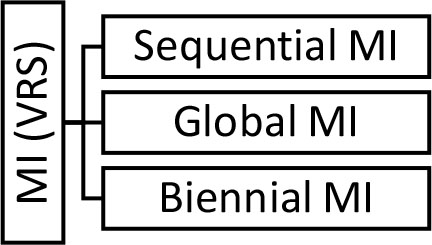
Figure 1.
MI under VRS
Table 2.
Definitions of Different Types of Efficiency (Apart From Technical Efficiency)
| Name of efficiency | Definition |
|---|---|
| Cost efficiency (CE) | “The cost efficiency of a producer using input vector x to produce output vector y when input prices are w is measured by the ratio of minimum cost to actual cost”. |
| Allocative efficiency (AE) | “The input allocative efficiency of a producer using input vector x to produce output vector y when input prices are w is measured by the ratio of cost efficiency to input technical efficiency”. AE=CE/TE “The output allocative efficiency of a producer producing output vector y with input vector x when output prices are p is measured by the ratio of revenue efficiency to output technical efficiency”. AE= RE/TE |
| Revenue efficiency (RE) | “The revenue efficiency of a producer producing output vector y with input vector x when output prices are p is measured by the ratio of maximum revenue to actual revenue”. |
| Profit efficiency (PE) | “The profit efficiency of a producer facing input prices w and output prices p is measured by the ratio of maximum profit to actual profit”. |
[i] Source: Lovell et al. (1994, pp. 182–183)
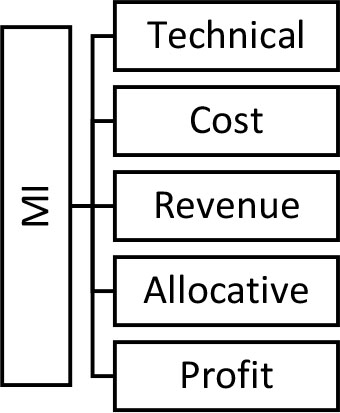
Figure 2.
Measuring Various Efficiency With the MI
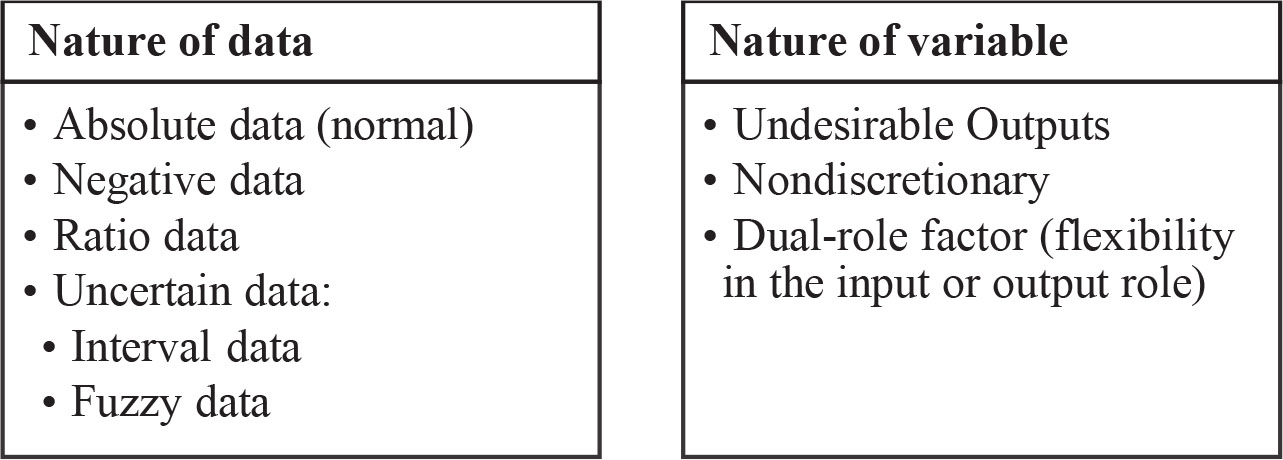
Figure 3.
The Different Nature of Variables and Data Used by the MI
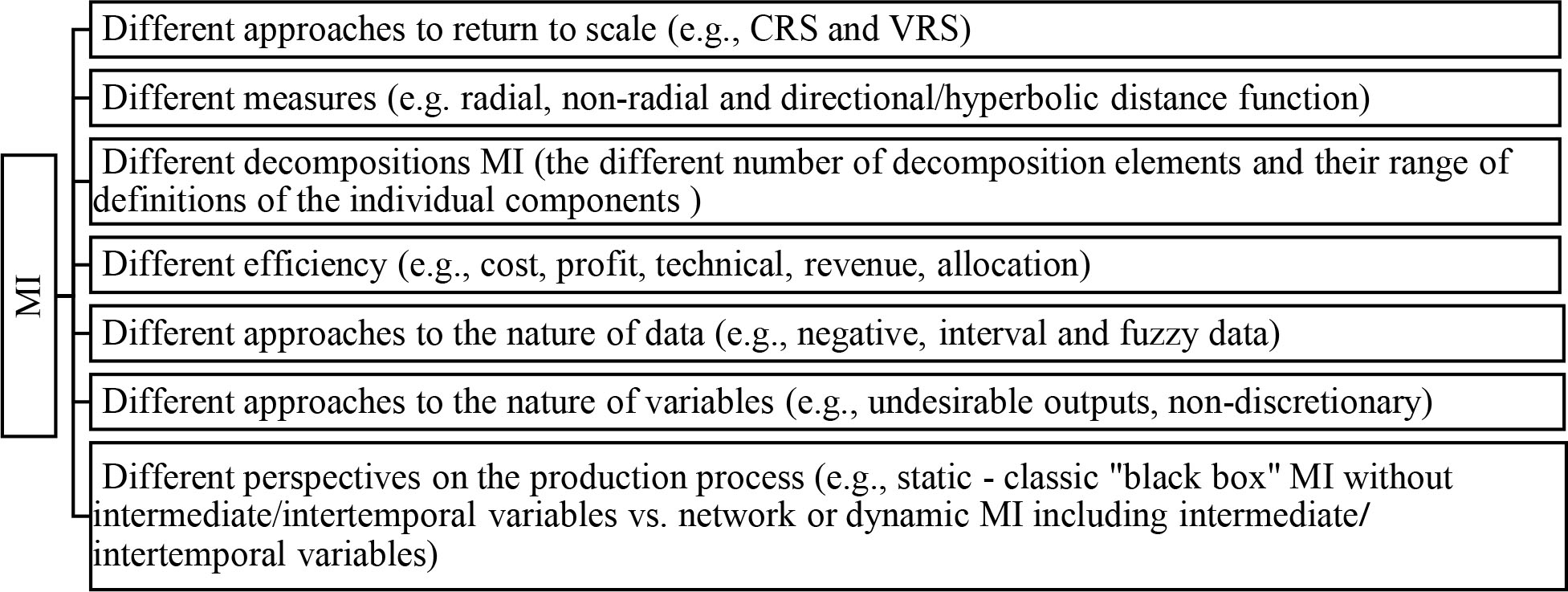
Figure 4.
Various Developments and Modifications of MI
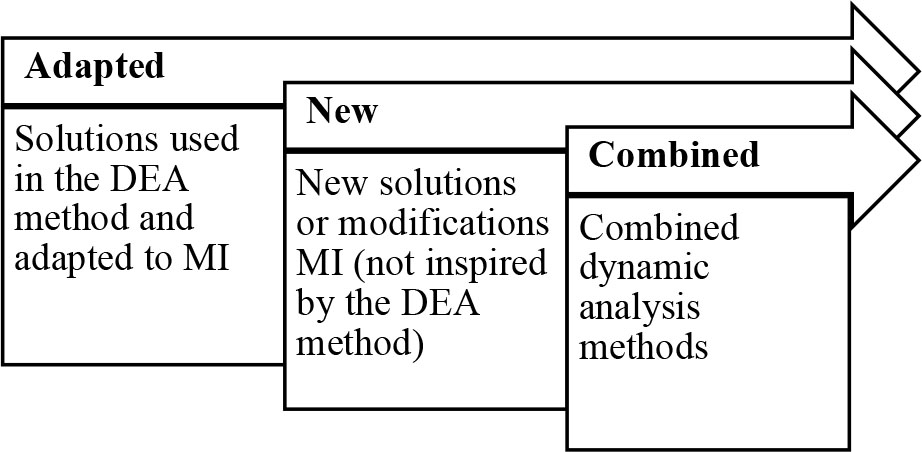
Figure 5.
MI Development and Modification Pathways