

Table 1
Comparison of the similarities and differences of the apportionment according to the CCCTB-Proposal and the Trade Tax Act
| Splitting according to CCCTB-Proposal | Splitting in accordance with Trade Tax Act | |
|---|---|---|
| Number of factors | 3 factors | 1 factor |
| Composition of the labour factor / content of the wage bill | - Wage bill and number of employees (half) - Concept of employee varies according to national definitions | - Wage total only - Definition of employee pursuant to § 7, para. IV, SGB IV |
| - Inclusion of social security expenses | ||
| - Inclusion of services to external parties who perform similar activities to those performed directly by employees | ||
| - Inclusion of temporary workers | ||
| - Presumably inclusion of vocational training | ||
| - Presumably inclusion of tax-free remuneration | ||
| - Capping limit | ||
| Alternative apportionment standards | Possible |
[i] Source: Authors’ own table
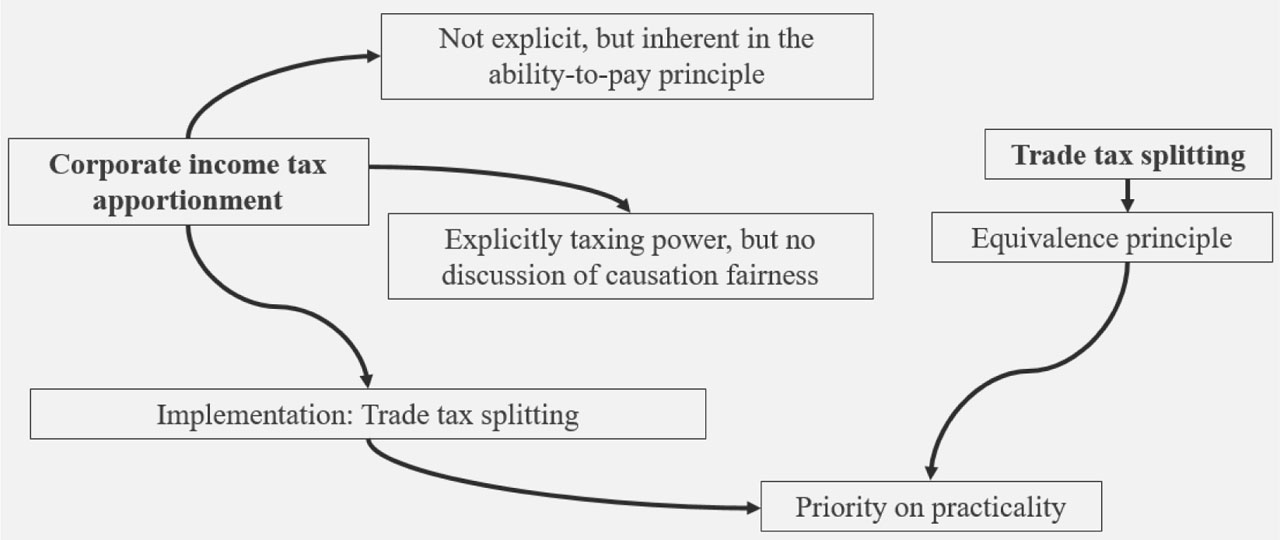
Figure 1
Relevant aspects of the German system regarding causation justice
Source: Authors’ own figure
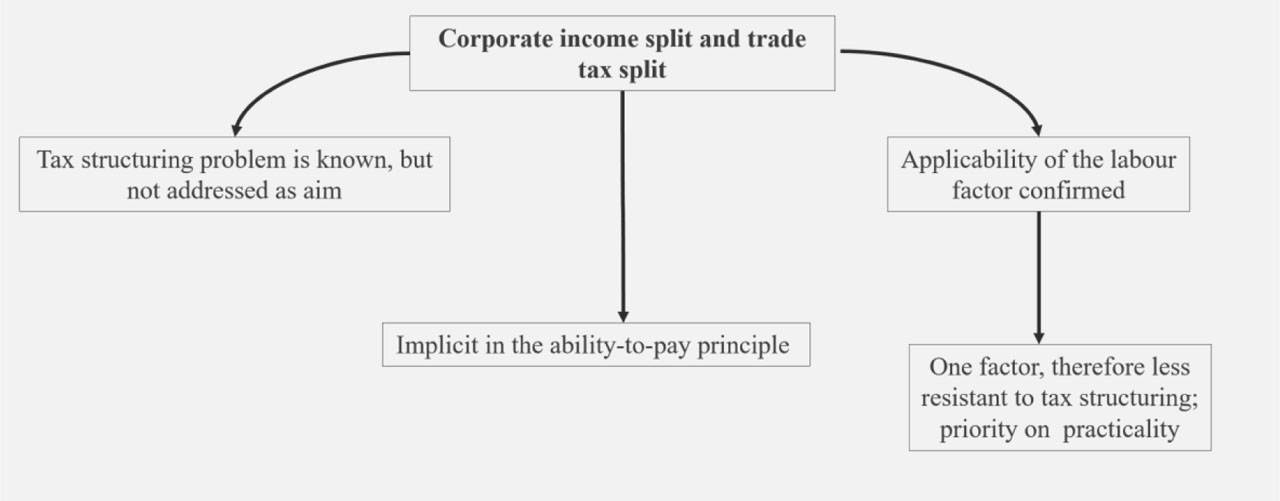
Figure 2
Appearance of the objective resistance to manipulation in the German system
Source: Authors’ own figure
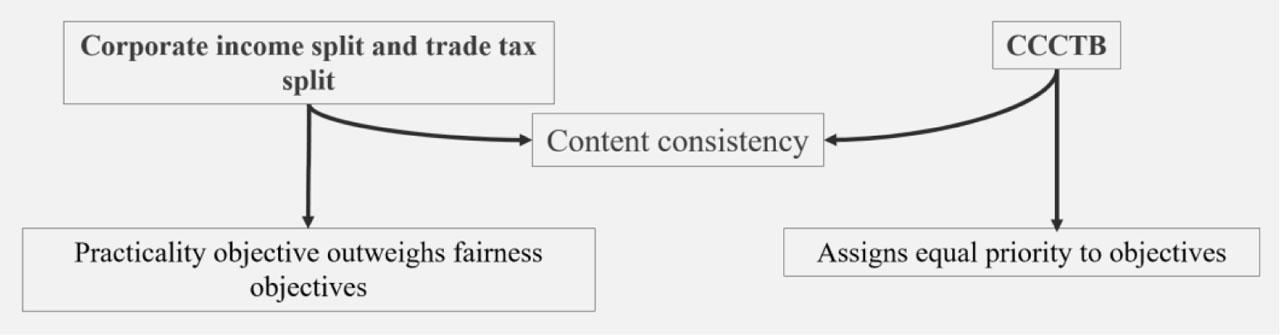
Figure 3
Similarities and differences regarding resistance to practicability
Source: Authors’ own figure
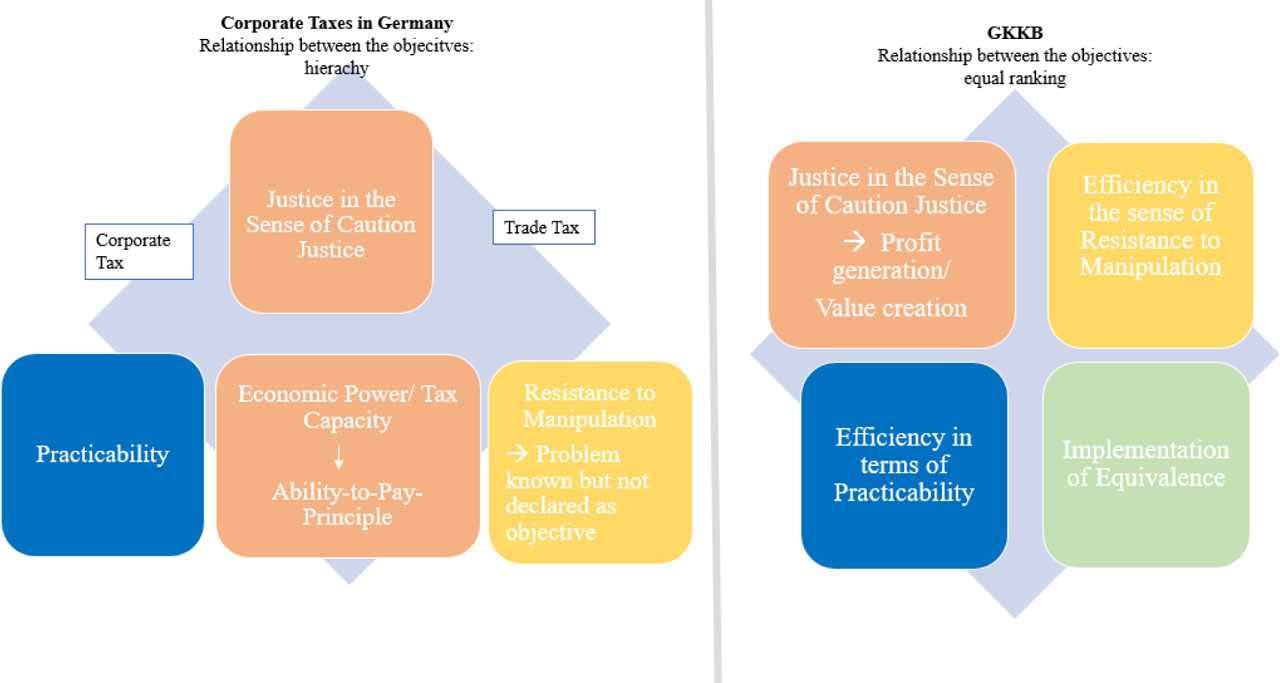
Figure 4
Comparison of the objectives of splitting according to German corporate taxes and the CCCTB
Source: Authors’ own figure